

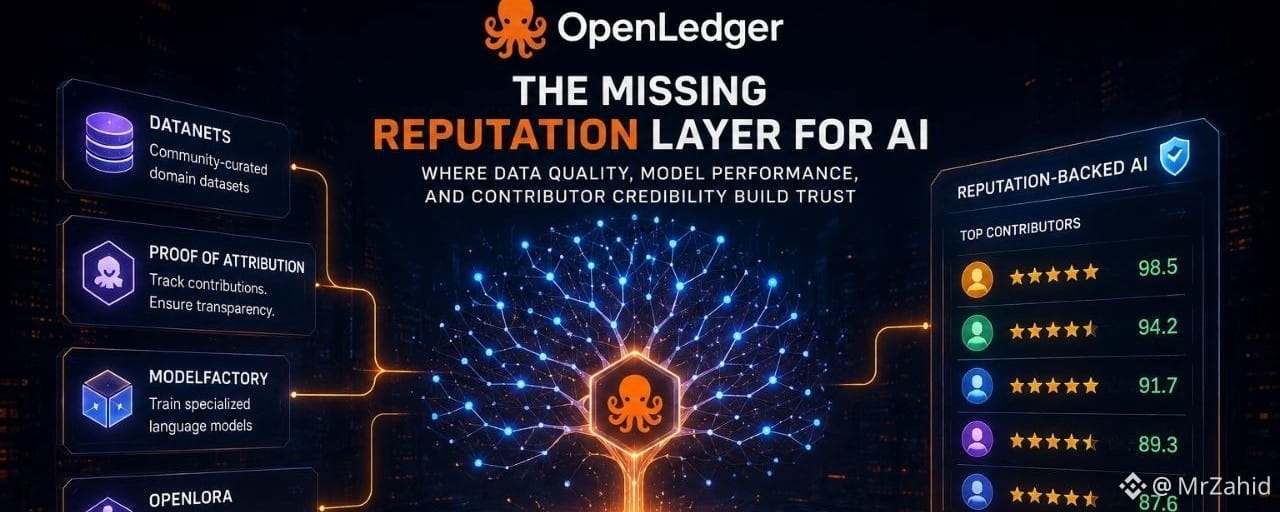

Una cosa que sigo notando en la IA cripto es que todos hablan de modelos, pero casi nadie menciona la reputación.
Es raro porque en el trading, la reputación es básicamente todo.
No confío en una señal solo porque suene inteligente. Confío en ella cuando sé:
de dónde provienen los datos,
quién la contribuyó,
si esos contribuyentes fueron precisos antes,
y si los incentivos están alineados.
Por eso la arquitectura de OpenLedger parece más importante de lo que la gente se da cuenta.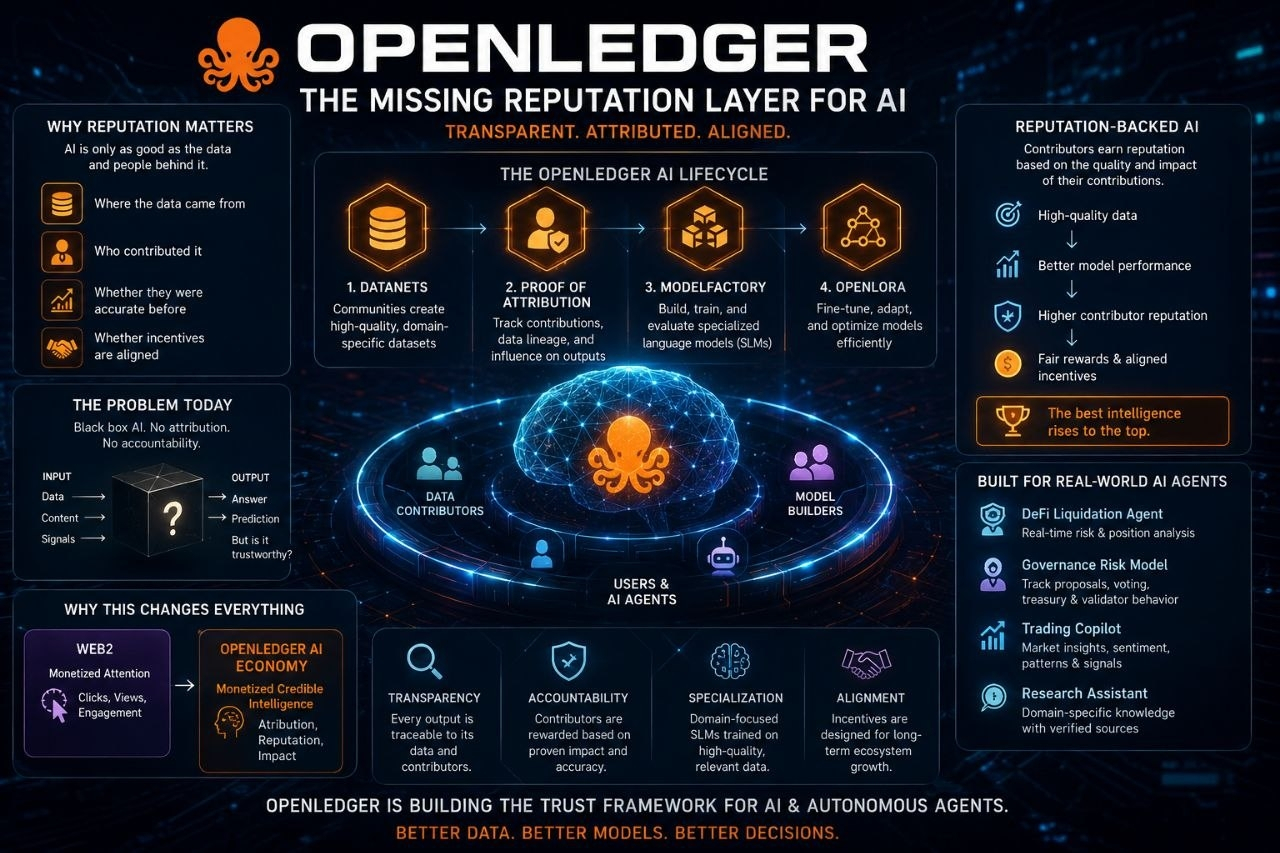
OpenLedger no solo está tratando de alojar modelos de IA en la cadena. La jugada más grande parece ser crear un sistema económico donde la calidad de los datos, el rendimiento del modelo y la credibilidad de los contribuyentes estén todos conectados a través de una atribución transparente. Su infraestructura combina Datanets, Prueba de Atribución, ModelFactory y OpenLoRA en un stack completo del ciclo de vida de la IA.
¿Lo interesante? Esto crea la base para una IA respaldada por reputación.
Y honestamente, creo que esa narrativa está muchísimo infravalorada ahora mismo.
La mayoría de los sistemas de IA hoy funcionan como cajas negras. Haces una pregunta, obtienes una respuesta y solo esperas que los datos subyacentes no fueran basura. Pero el mecanismo de Prueba de Atribución de OpenLedger está diseñado para rastrear qué conjuntos de datos y contribuidores influyeron en las salidas del modelo.
Eso cambia los incentivos por completo.
Imagina una Datanet de investigación cripto centrada solo en riesgo de gobernanza. Los contribuidores suben resúmenes de gobernanza, cambios en tesorería, comportamiento de validadores, discusiones de propuestas y anomalías de votación. Con el tiempo, el sistema puede identificar qué contribuidores aportan consistentemente información de alta señal que mejora las salidas de IA aguas abajo.
De repente, los contribuidores ya no son solo “usuarios”.
Se convierten en proveedores de inteligencia con reputación.
Eso es un gran cambio.
Porque probablemente la economía futura de IA no recompensará el volumen bruto de contenido. Recompensará la utilidad verificada.
Como trader, esto me importa muchísimo. Algunas de las mejores ideas de mercado que he encontrado jamás vinieron de investigadores de nicho con audiencias pequeñas pero un reconocimiento de patrones increíblemente preciso. Los sistemas de IA actuales aplanan toda la información en el mismo “caldo”. La estructura de OpenLedger potencialmente permite ponderar en función de la calidad de la atribución y el valor de la contribución histórica.
Eso es más parecido a cómo funciona la toma de decisiones real.
También creo que el enfoque de OpenLedger en Modelos de Lenguaje Especializados (SLMs) es más inteligente de lo que el mercado le da crédito. La investigación sobre OpenLedger recalca una y otra vez la inteligencia específica del dominio, en lugar de intentar construir un único modelo universal gigante.
Y honestamente… eso encaja con cómo funciona realmente la alfa.
El conocimiento general rara vez crea ventaja. El contexto especializado sí.
Un agente de liquidación DeFi no necesita entender poesía.
Un modelo de riesgo de gobernanza no necesita trivialidades de películas.
Un copiloto de trading no necesita ruido amplio de internet.
Necesitan contexto nítido y enfocado, entrenado con datos de dominio de alta calidad.
Las Datanets de OpenLedger básicamente están diseñadas con ese principio. Las comunidades crean conjuntos de datos dirigidos, los contribuidores los mejoran, los modelos se especializan en ellos y los mecanismos de atribución distribuyen recompensas de vuelta a través del sistema.
Lo que encuentro prometedor no es solo la tecnología. Es el diseño económico.
Si OpenLedger tiene éxito, el mercado de IA podría dejar de recompensar solo la escala y empezar a recompensar la pericia verificable.
Eso es una economía de internet totalmente distinta.
Las plataformas que dominaron Web2 monetizaron la atención.
La próxima generación de infraestructura de IA podría monetizar inteligencia creíble.
Y si eso sucede, OpenLedger podría convertirse en algo mucho más que una cadena de IA. Podría convertirse en el marco de confianza que los agentes autónomos usan para evaluar qué información — y qué contribuidores — realmente merecen influencia 🤝