

#robotic
robotic
2,949 visualizaciones
37 participa(n) en el debate
Populares
Novedades
·
--
Bajista
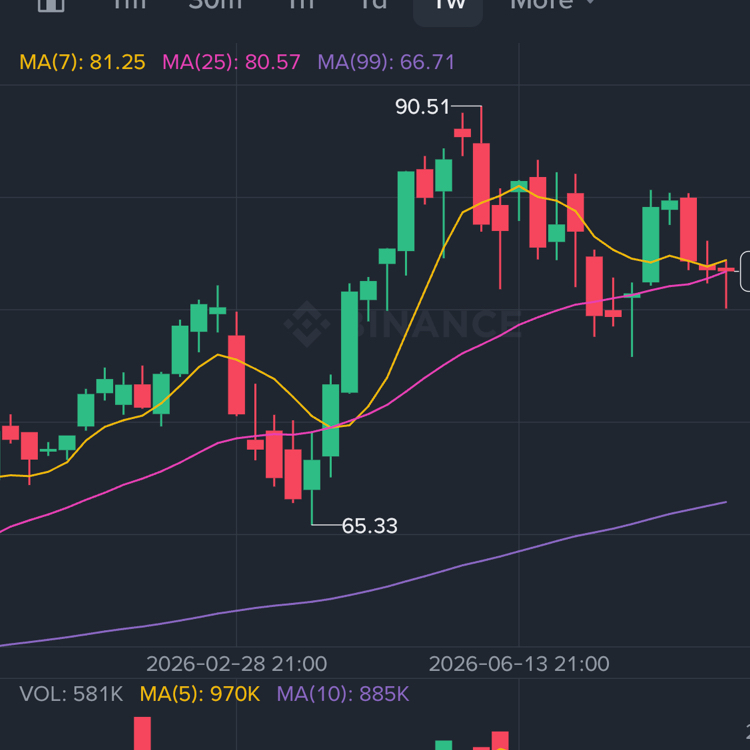
Manteniendo un ojo en $ROBO (ROBO Global Robotics & Automation Index ETF). Está rondando los $80.54, con una subida de +1.13% hoy y un ligero impulso en el after-market.
Parece que alcanzó un máximo de $90.51 hace unos meses, luego retrocedió cerca de $78, y ahora se está consolidando justo alrededor de las medias móviles.
Sin duda, un gráfico a vigilar para el próximo posible movimiento en tecnología y automatización.
#ROBO #Robotic #Investing #StockMarket
{future}(ROBOUSDT)
Manteniendo un ojo en $ROBO (ROBO Global Robotics & Automation Index ETF). Está rondando los $80.54, con una subida de +1.13% hoy y un ligero impulso en el after-market.
Parece que alcanzó un máximo de $90.51 hace unos meses, luego retrocedió cerca de $78, y ahora se está consolidando justo alrededor de las medias móviles.
Sin duda, un gráfico a vigilar para el próximo posible movimiento en tecnología y automatización.
#ROBO #Robotic #Investing #StockMarket
Parece que alcanzó un máximo de $90.51 hace unos meses, luego retrocedió cerca de $78, y ahora se está consolidando justo alrededor de las medias móviles.
Sin duda, un gráfico a vigilar para el próximo posible movimiento en tecnología y automatización.
#ROBO #Robotic #Investing #StockMarket
250

·
--
Alcista
1
58

·
--
Artículo
Fabric Foundation y $ROBO: Construyendo el Sistema Operativo de la Economía RobóticaEl panorama de las criptomonedas en 2026 está presenciando una convergencia fascinante entre la inteligencia artificial, la robótica y la descentralización. En el centro de esta evolución se encuentra Fabric Foundation, un proyecto que busca ir más allá de las simples promesas tecnológicas para construir una infraestructura económica real para máquinas autónomas.
¿Qué es Fabric Foundation?
No debemos ver a @FabricFND como una simple plataforma de tokens. Su visión es actuar como el "Android para robots", proporcionando la capa de inteligencia y pagos necesaria para que los sistemas autónomos operen de forma independiente. En lugar de robots aislados, la fundación propone una red donde estas máquinas pueden coordinarse, transaccionar y generar valor económico sin intervención humana constante.
El Rol Vital de $ROBO
El token $ROBO es el motor que impulsa este ecosistema. A diferencia de otros activos especulativos, su utilidad está profundamente arraigada en el funcionamiento del protocolo:
Gobernanza: Los holders participan en las decisiones clave sobre el desarrollo de la red.
Capa Económica: Permite que los robots reciban ingresos y realicen pagos de forma autónoma dentro de la cadena.
Incentivos: Alinea los intereses de los desarrolladores de hardware y software con los usuarios de la red.
Perspectivas para 2026
Con el reciente lanzamiento de su portal de reclamos y su integración en redes como Base L2, el proyecto ha demostrado una ejecución técnica sólida. La comunidad está observando de cerca cómo @FabricFND escala esta infraestructura, especialmente con el auge de los agentes de IA que requieren métodos de pago seguros y verificables en la blockchain.
La apuesta por $ROBO no es solo una inversión en un token, sino en la infraestructura que podría definir cómo las máquinas y los humanos interactúan financieramente en la próxima década. Si te apasiona la intersección de la IA y Web3, este es un ecosistema que merece estar en tu radar diario.
#ROBO #FabricFoundation #AI #Robotic #Web3
Fabric Foundation y $ROBO: Construyendo el Sistema Operativo de la Economía Robótica
El panorama de las criptomonedas en 2026 está presenciando una convergencia fascinante entre la inteligencia artificial, la robótica y la descentralización. En el centro de esta evolución se encuentra Fabric Foundation, un proyecto que busca ir más allá de las simples promesas tecnológicas para construir una infraestructura económica real para máquinas autónomas.
¿Qué es Fabric Foundation?
No debemos ver a @Fabric Foundation como una simple plataforma de tokens. Su visión es actuar como el "Android para robots", proporcionando la capa de inteligencia y pagos necesaria para que los sistemas autónomos operen de forma independiente. En lugar de robots aislados, la fundación propone una red donde estas máquinas pueden coordinarse, transaccionar y generar valor económico sin intervención humana constante.
El Rol Vital de $ROBO
El token $ROBO es el motor que impulsa este ecosistema. A diferencia de otros activos especulativos, su utilidad está profundamente arraigada en el funcionamiento del protocolo:
Gobernanza: Los holders participan en las decisiones clave sobre el desarrollo de la red.
Capa Económica: Permite que los robots reciban ingresos y realicen pagos de forma autónoma dentro de la cadena.
Incentivos: Alinea los intereses de los desarrolladores de hardware y software con los usuarios de la red.
Perspectivas para 2026
Con el reciente lanzamiento de su portal de reclamos y su integración en redes como Base L2, el proyecto ha demostrado una ejecución técnica sólida. La comunidad está observando de cerca cómo @Fabric Foundation escala esta infraestructura, especialmente con el auge de los agentes de IA que requieren métodos de pago seguros y verificables en la blockchain.
La apuesta por $ROBO no es solo una inversión en un token, sino en la infraestructura que podría definir cómo las máquinas y los humanos interactúan financieramente en la próxima década. Si te apasiona la intersección de la IA y Web3, este es un ecosistema que merece estar en tu radar diario.
#ROBO #FabricFoundation #AI #Robotic #Web3
¿Qué es Fabric Foundation?
No debemos ver a @Fabric Foundation como una simple plataforma de tokens. Su visión es actuar como el "Android para robots", proporcionando la capa de inteligencia y pagos necesaria para que los sistemas autónomos operen de forma independiente. En lugar de robots aislados, la fundación propone una red donde estas máquinas pueden coordinarse, transaccionar y generar valor económico sin intervención humana constante.
El Rol Vital de $ROBO
El token $ROBO es el motor que impulsa este ecosistema. A diferencia de otros activos especulativos, su utilidad está profundamente arraigada en el funcionamiento del protocolo:
Gobernanza: Los holders participan en las decisiones clave sobre el desarrollo de la red.
Capa Económica: Permite que los robots reciban ingresos y realicen pagos de forma autónoma dentro de la cadena.
Incentivos: Alinea los intereses de los desarrolladores de hardware y software con los usuarios de la red.
Perspectivas para 2026
Con el reciente lanzamiento de su portal de reclamos y su integración en redes como Base L2, el proyecto ha demostrado una ejecución técnica sólida. La comunidad está observando de cerca cómo @Fabric Foundation escala esta infraestructura, especialmente con el auge de los agentes de IA que requieren métodos de pago seguros y verificables en la blockchain.
La apuesta por $ROBO no es solo una inversión en un token, sino en la infraestructura que podría definir cómo las máquinas y los humanos interactúan financieramente en la próxima década. Si te apasiona la intersección de la IA y Web3, este es un ecosistema que merece estar en tu radar diario.
#ROBO #FabricFoundation #AI #Robotic #Web3
5
44

·
--
Alcista
🚨 $UNITREE La robótica causa un impresionante debut en Shanghái 🤖📈
$UNITREE Robotics, oficialmente conocida como Yushu Technology, se disparó un 629% en la apertura de su debut bursátil en Shanghái después de recaudar 6.1 mil millones de yuanes (904M de dólares).
🔹 Precio de la OPI: 150.8 yuan 🔹 Precio de apertura: 1,100 yuan🔹 Valor de mercado implícito: 445 mil millones de yuan 🔹 Ingresos de 2025: 1.7 mil millones de yuan, frente a 393M de yuan 🔹 Robots humanoides enviados en 2025: 5,500+🔹 Margen bruto: 60%+
La cotización convierte a Unitree en el primer fabricante de robots humanoides que cotiza públicamente en el continente de China, destacando el creciente interés de los inversores en la robótica física $AI y la robótica.
📊 JPMorgan espera que los envíos globales de robots humanoides alcancen 1.75 millones de unidades para 2030, en comparación con solo 18,000 en 2025.
⚠️ Sin embargo, los analistas advierten que el enorme repunte del primer día podría estar impulsado en gran medida por la demanda minorista, y que las valoraciones ya se consideran extremadamente altas.
🤖 La carrera de la robótica humanoide en China se está intensificando.
#AI #UnitreeRobotics #HumanoidRobot
#Robotic #Binance
🚨 $UNITREE La robótica causa un impresionante debut en Shanghái 🤖📈
$UNITREE Robotics, oficialmente conocida como Yushu Technology, se disparó un 629% en la apertura de su debut bursátil en Shanghái después de recaudar 6.1 mil millones de yuanes (904M de dólares).
🔹 Precio de la OPI: 150.8 yuan 🔹 Precio de apertura: 1,100 yuan🔹 Valor de mercado implícito: 445 mil millones de yuan 🔹 Ingresos de 2025: 1.7 mil millones de yuan, frente a 393M de yuan 🔹 Robots humanoides enviados en 2025: 5,500+🔹 Margen bruto: 60%+
La cotización convierte a Unitree en el primer fabricante de robots humanoides que cotiza públicamente en el continente de China, destacando el creciente interés de los inversores en la robótica física $AI y la robótica.
📊 JPMorgan espera que los envíos globales de robots humanoides alcancen 1.75 millones de unidades para 2030, en comparación con solo 18,000 en 2025.
⚠️ Sin embargo, los analistas advierten que el enorme repunte del primer día podría estar impulsado en gran medida por la demanda minorista, y que las valoraciones ya se consideran extremadamente altas.
🤖 La carrera de la robótica humanoide en China se está intensificando.
#AI #UnitreeRobotics #HumanoidRobot
#Robotic #Binance
$UNITREE Robotics, oficialmente conocida como Yushu Technology, se disparó un 629% en la apertura de su debut bursátil en Shanghái después de recaudar 6.1 mil millones de yuanes (904M de dólares).
🔹 Precio de la OPI: 150.8 yuan 🔹 Precio de apertura: 1,100 yuan🔹 Valor de mercado implícito: 445 mil millones de yuan 🔹 Ingresos de 2025: 1.7 mil millones de yuan, frente a 393M de yuan 🔹 Robots humanoides enviados en 2025: 5,500+🔹 Margen bruto: 60%+
La cotización convierte a Unitree en el primer fabricante de robots humanoides que cotiza públicamente en el continente de China, destacando el creciente interés de los inversores en la robótica física $AI y la robótica.
📊 JPMorgan espera que los envíos globales de robots humanoides alcancen 1.75 millones de unidades para 2030, en comparación con solo 18,000 en 2025.
⚠️ Sin embargo, los analistas advierten que el enorme repunte del primer día podría estar impulsado en gran medida por la demanda minorista, y que las valoraciones ya se consideran extremadamente altas.
🤖 La carrera de la robótica humanoide en China se está intensificando.
#AI #UnitreeRobotics #HumanoidRobot
#Robotic #Binance
86

·
--
$ROBO Opción 1: Visionario & Informativo (Mejor para audiencias generales)
A medida que los sistemas de IA salen del software y entran en el mundo físico, ¿quién gobierna las máquinas? 🤔🤖
Ingresa a la Fundación Fabric (https://fabric.foundation)—una organización sin fines de lucro dedicada a avanzar en la Robótica Abierta & AGI. Están construyendo la infraestructura descentralizada de bien público necesaria para que humanos y máquinas inteligentes trabajen juntos de manera segura y productiva.
Áreas clave de enfoque:
🔹 Alineación humano-máquina
🔹 Identidad de robot descentralizada & asignación de tareas
🔹 Robótica de IA de código abierto
Es hora de construir un futuro seguro, observable y accesible globalmente para la IA. 🌍🦾
Opción 2: Enfocado en Crypto/Web3 (Mejor para la comunidad cripto)
El futuro de los robots autónomos estará en la cadena. ⛓️🤖
https://fabric.foundation está construyendo la red de pago, identidad y asignación de capital que permitirá a los robots operar como participantes económicos autónomos.
Impulsado por el recién lanzado token ROBO, el Protocolo Fabric asegura que ninguna entidad única controle el futuro de las máquinas inteligentes. Desde tarifas de red hasta coordinación de robots financiada por la multitud, ROBO está impulsando la economía de máquinas descentralizada.
¿Listo para poseer la economía de robots? 🚀🛠️ #ROBO
Opción 3: Breve & Directo
La industria de la robótica está en un punto de inflexión. 📈🤖
La Fundación Fabric (https://fabric.foundation) está construyendo la infraestructura de gobernanza y económica de código abierto para asegurar que la IA y las máquinas autónomas permanezcan seguras, alineadas y accesibles para todos. Impulsados por $ROBO, están descentralizando el futuro de AGI. 🌐✨
¡Sumérgete en el futuro de la colaboración humano-máquina! 👇 #FabricFoundation #ArtificialIntelligence #Robotic #Crypto
$ROBO Opción 1: Visionario & Informativo (Mejor para audiencias generales)
A medida que los sistemas de IA salen del software y entran en el mundo físico, ¿quién gobierna las máquinas? 🤔🤖
Ingresa a la Fundación Fabric (https://fabric.foundation)—una organización sin fines de lucro dedicada a avanzar en la Robótica Abierta & AGI. Están construyendo la infraestructura descentralizada de bien público necesaria para que humanos y máquinas inteligentes trabajen juntos de manera segura y productiva.
Áreas clave de enfoque:
🔹 Alineación humano-máquina
🔹 Identidad de robot descentralizada & asignación de tareas
🔹 Robótica de IA de código abierto
Es hora de construir un futuro seguro, observable y accesible globalmente para la IA. 🌍🦾
Opción 2: Enfocado en Crypto/Web3 (Mejor para la comunidad cripto)
El futuro de los robots autónomos estará en la cadena. ⛓️🤖
https://fabric.foundation está construyendo la red de pago, identidad y asignación de capital que permitirá a los robots operar como participantes económicos autónomos.
Impulsado por el recién lanzado token ROBO, el Protocolo Fabric asegura que ninguna entidad única controle el futuro de las máquinas inteligentes. Desde tarifas de red hasta coordinación de robots financiada por la multitud, ROBO está impulsando la economía de máquinas descentralizada.
¿Listo para poseer la economía de robots? 🚀🛠️ #ROBO
Opción 3: Breve & Directo
La industria de la robótica está en un punto de inflexión. 📈🤖
La Fundación Fabric (https://fabric.foundation) está construyendo la infraestructura de gobernanza y económica de código abierto para asegurar que la IA y las máquinas autónomas permanezcan seguras, alineadas y accesibles para todos. Impulsados por $ROBO , están descentralizando el futuro de AGI. 🌐✨
¡Sumérgete en el futuro de la colaboración humano-máquina! 👇 #FabricFoundation #ArtificialIntelligence #Robotic #Crypto
A medida que los sistemas de IA salen del software y entran en el mundo físico, ¿quién gobierna las máquinas? 🤔🤖
Ingresa a la Fundación Fabric (https://fabric.foundation)—una organización sin fines de lucro dedicada a avanzar en la Robótica Abierta & AGI. Están construyendo la infraestructura descentralizada de bien público necesaria para que humanos y máquinas inteligentes trabajen juntos de manera segura y productiva.
Áreas clave de enfoque:
🔹 Alineación humano-máquina
🔹 Identidad de robot descentralizada & asignación de tareas
🔹 Robótica de IA de código abierto
Es hora de construir un futuro seguro, observable y accesible globalmente para la IA. 🌍🦾
Opción 2: Enfocado en Crypto/Web3 (Mejor para la comunidad cripto)
El futuro de los robots autónomos estará en la cadena. ⛓️🤖
https://fabric.foundation está construyendo la red de pago, identidad y asignación de capital que permitirá a los robots operar como participantes económicos autónomos.
Impulsado por el recién lanzado token ROBO, el Protocolo Fabric asegura que ninguna entidad única controle el futuro de las máquinas inteligentes. Desde tarifas de red hasta coordinación de robots financiada por la multitud, ROBO está impulsando la economía de máquinas descentralizada.
¿Listo para poseer la economía de robots? 🚀🛠️ #ROBO
Opción 3: Breve & Directo
La industria de la robótica está en un punto de inflexión. 📈🤖
La Fundación Fabric (https://fabric.foundation) está construyendo la infraestructura de gobernanza y económica de código abierto para asegurar que la IA y las máquinas autónomas permanezcan seguras, alineadas y accesibles para todos. Impulsados por $ROBO , están descentralizando el futuro de AGI. 🌐✨
¡Sumérgete en el futuro de la colaboración humano-máquina! 👇 #FabricFoundation #ArtificialIntelligence #Robotic #Crypto
47

·
--
No hay duda de que la tendencia de la robótica se desarrollará fuertemente en el futuro y Axis Robotics será el proyecto cripto líder en la industria.
Miren, la primera dama de los Estados Unidos aparece con un robot, afirmando que la tendencia robótica está siendo fuertemente invertida y proyectos de robótica web3 como Axis se desarrollarán aún más en el futuro.
Esto no es solo una narrativa pasajera, sino un ciclo tecnológico a largo plazo, donde la IA, el hardware y la blockchain se combinan para crear valor real y flujos de efectivo sostenibles.
Actualmente, las tareas ya están abiertas y las tareas antiguas están disponibles para que puedan familiarizarse en el hub de Axis.
#Axis #Robotic
No hay duda de que la tendencia de la robótica se desarrollará fuertemente en el futuro y Axis Robotics será el proyecto cripto líder en la industria.
Miren, la primera dama de los Estados Unidos aparece con un robot, afirmando que la tendencia robótica está siendo fuertemente invertida y proyectos de robótica web3 como Axis se desarrollarán aún más en el futuro.
Esto no es solo una narrativa pasajera, sino un ciclo tecnológico a largo plazo, donde la IA, el hardware y la blockchain se combinan para crear valor real y flujos de efectivo sostenibles.
Actualmente, las tareas ya están abiertas y las tareas antiguas están disponibles para que puedan familiarizarse en el hub de Axis.
#Axis #Robotic
Miren, la primera dama de los Estados Unidos aparece con un robot, afirmando que la tendencia robótica está siendo fuertemente invertida y proyectos de robótica web3 como Axis se desarrollarán aún más en el futuro.
Esto no es solo una narrativa pasajera, sino un ciclo tecnológico a largo plazo, donde la IA, el hardware y la blockchain se combinan para crear valor real y flujos de efectivo sostenibles.
Actualmente, las tareas ya están abiertas y las tareas antiguas están disponibles para que puedan familiarizarse en el hub de Axis.
#Axis #Robotic
2
6
4.1k
Inicia sesión para explorar más contenidos
Únete a usuarios de criptomonedas de todo el mundo en Binance Square
⚡️ Obtén la información más reciente y útil sobre criptomonedas.
💬 Confía en el mayor exchange de criptomonedas del mundo.
👍 Descubre opiniones reales de creadores verificados.
Correo electrónico/número de teléfono
Temas en tendencia
1
#BitcoinOptionsVolatilityHitsFiveYearLow
0 visualizaciones
406 participa(n) en el debate
2
#BitcoinReclaims$84K
0 visualizaciones
126 participa(n) en el debate
3
#FSBWarnsCrossBorderStablecoinRulesRemainUnderdeveloped
0 visualizaciones
50 participa(n) en el debate
4
#TokenizedStockMarketCapHitsRecord$3.9B
0 visualizaciones
41 participa(n) en el debate
5
#EthereumSpotETFsSee$542MNetOutflowLastWeek
0 visualizaciones
48 participa(n) en el debate
6
#SouthKoreaPushesTokenizedSecuritiesIntoBondsAndFunds
0 visualizaciones
43 participa(n) en el debate
7
#SolanaETFsEnd14WeekInflowStreak
0 visualizaciones
377 participa(n) en el debate
8
#SuiFoundationInvests$30MInDATANetwork
0 visualizaciones
41 participa(n) en el debate
9
#ArgentinaCentralBankWillNotPushCryptoIntoBankingForTwoYears
6,617 visualizaciones
256 participa(n) en el debate
10
#LedgerConfirmsUnauthorizedHardwareImplantInUserDevice
37,576 visualizaciones
325 participa(n) en el debate