

#walrus
walrus
9M visualizaciones
363,872 participa(n) en el debate
Populares
Novedades

·
--
Ver traducción
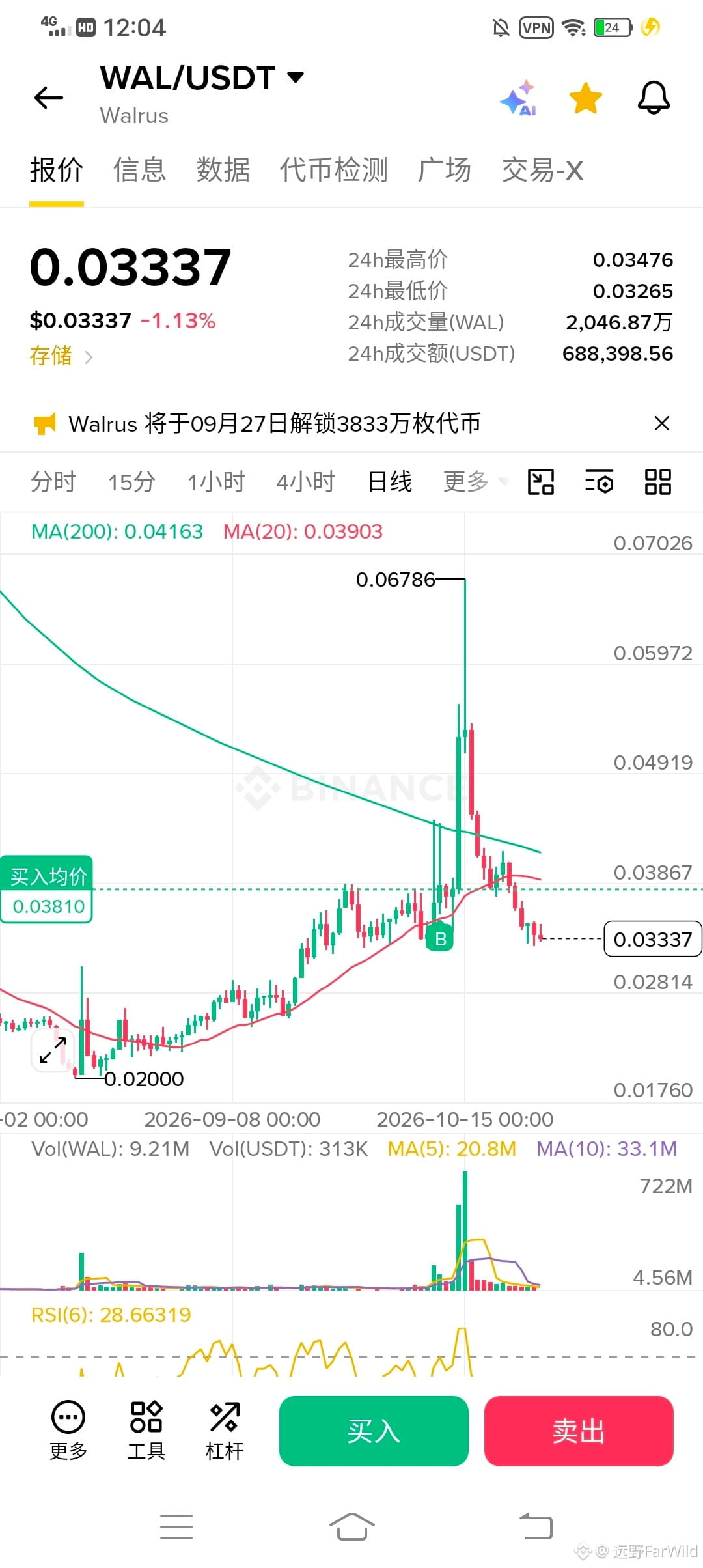
原来BNB想进攻存储这个赛道的,
不知道为什么后来没有进行下午,
存储现在是FIL顶着,但是FIL割死人啊。
wal是为ai代理做存储数据,代理取证服务的。
大家觉得wal还有希望吗?
现在感觉交易量低的吓人啊。
$WAL
{spot}(WALUSDT)
#walrus
原来BNB想进攻存储这个赛道的,
不知道为什么后来没有进行下午,
存储现在是FIL顶着,但是FIL割死人啊。
wal是为ai代理做存储数据,代理取证服务的。
大家觉得wal还有希望吗?
现在感觉交易量低的吓人啊。
$WAL
#walrus
不知道为什么后来没有进行下午,
存储现在是FIL顶着,但是FIL割死人啊。
wal是为ai代理做存储数据,代理取证服务的。
大家觉得wal还有希望吗?
现在感觉交易量低的吓人啊。
$WAL
#walrus
Feed-Creator-a56612906:
归零货别买
2
102

·
--
Bajista
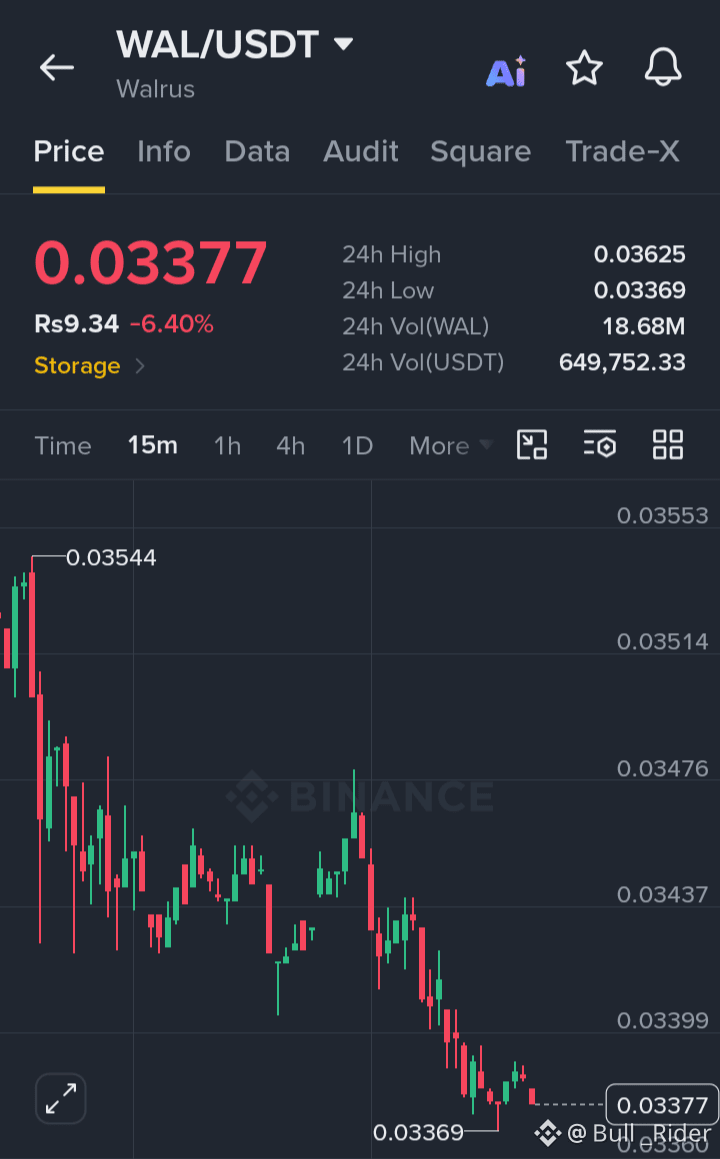
$WAL muestra señales de estabilización cerca del soporte, mientras los compradores observan la zona de $0.03360–$0.03369 ante una posible recuperación. Una ruptura por encima de la resistencia podría abrir la puerta a nuevas subidas, aunque sigue siendo esencial gestionar adecuadamente el riesgo.
Entrada: 0.03377
TP1: 0.03437
TP2: 0.03514
TP3: 0.03625
SL: 0.03300
Compra y opera $CFG
{future}(CFGUSDT)
$RLC
{future}(RLCUSDT)
{future}(WALUSDT)
#WAL #Walrus #Binance
$WAL muestra señales de estabilización cerca del soporte, mientras los compradores observan la zona de $0.03360–$0.03369 ante una posible recuperación. Una ruptura por encima de la resistencia podría abrir la puerta a nuevas subidas, aunque sigue siendo esencial gestionar adecuadamente el riesgo.
Entrada: 0.03377
TP1: 0.03437
TP2: 0.03514
TP3: 0.03625
SL: 0.03300
Compra y opera $CFG
$RLC
#WAL #Walrus #Binance
Entrada: 0.03377
TP1: 0.03437
TP2: 0.03514
TP3: 0.03625
SL: 0.03300
Compra y opera $CFG
$RLC
#WAL #Walrus #Binance
1
67


·
--
Alcista
🐋 WALRUS ($WAL) — ¡infraestructura de datos para el mundo de la IA y Web3!
Las criptomonedas del futuro no se limitan a las transacciones rápidas. El almacenamiento seguro y la disponibilidad de los datos también son de gran importancia. 🚀
🔹 ¿Qué es Walrus?
Construido sobre la blockchain Sui, Walrus es un protocolo creado para el almacenamiento descentralizado de grandes volúmenes de datos y para garantizar su disponibilidad.
🔹 ¿Para qué se utiliza $WAL ? ✅ Para pagar los costes de almacenamiento de datos
✅ Para contribuir a la seguridad de la red mediante el staking
✅ Para participar en la gestión del ecosistema
🤖 A medida que se desarrollan la inteligencia artificial, las aplicaciones Web3 y los mercados de datos digitales, el interés por este tipo de infraestructuras podría aumentar.
📌 La pregunta clave: ¿Podrá la tecnología de Walrus traducirse en un uso real y en una demanda dentro del ecosistema?
En mi opinión, $WAL es uno de los proyectos que merece la pena seguir. Sin embargo, que la tecnología sea prometedora no significa que el precio del token vaya a subir necesariamente. Hay que analizar cuidadosamente la tokenómica, la demanda del mercado y los movimientos del precio.
💬 ¿Creen que $WAL podría convertirse en uno de los proyectos principales del ecosistema Sui en el futuro? ¡Compartan su opinión en los comentarios!
@WalrusProtocol #Walrus #WAL
— FAMILIA QAZAXLİ3535
⚠️ Esta publicación no constituye asesoramiento de inversión. Las criptomonedas conllevan un alto riesgo. No inviertan sin investigar.
🐋 WALRUS ($WAL ) — ¡infraestructura de datos para el mundo de la IA y Web3!
Las criptomonedas del futuro no se limitan a las transacciones rápidas. El almacenamiento seguro y la disponibilidad de los datos también son de gran importancia. 🚀
🔹 ¿Qué es Walrus?
Construido sobre la blockchain Sui, Walrus es un protocolo creado para el almacenamiento descentralizado de grandes volúmenes de datos y para garantizar su disponibilidad.
🔹 ¿Para qué se utiliza $WAL ? ✅ Para pagar los costes de almacenamiento de datos
✅ Para contribuir a la seguridad de la red mediante el staking
✅ Para participar en la gestión del ecosistema
🤖 A medida que se desarrollan la inteligencia artificial, las aplicaciones Web3 y los mercados de datos digitales, el interés por este tipo de infraestructuras podría aumentar.
📌 La pregunta clave: ¿Podrá la tecnología de Walrus traducirse en un uso real y en una demanda dentro del ecosistema?
En mi opinión, $WAL es uno de los proyectos que merece la pena seguir. Sin embargo, que la tecnología sea prometedora no significa que el precio del token vaya a subir necesariamente. Hay que analizar cuidadosamente la tokenómica, la demanda del mercado y los movimientos del precio.
💬 ¿Creen que $WAL podría convertirse en uno de los proyectos principales del ecosistema Sui en el futuro? ¡Compartan su opinión en los comentarios!
@Walrus 🦭/acc #Walrus #WAL
— FAMILIA QAZAXLİ3535
⚠️ Esta publicación no constituye asesoramiento de inversión. Las criptomonedas conllevan un alto riesgo. No inviertan sin investigar.
Las criptomonedas del futuro no se limitan a las transacciones rápidas. El almacenamiento seguro y la disponibilidad de los datos también son de gran importancia. 🚀
🔹 ¿Qué es Walrus?
Construido sobre la blockchain Sui, Walrus es un protocolo creado para el almacenamiento descentralizado de grandes volúmenes de datos y para garantizar su disponibilidad.
🔹 ¿Para qué se utiliza $WAL ? ✅ Para pagar los costes de almacenamiento de datos
✅ Para contribuir a la seguridad de la red mediante el staking
✅ Para participar en la gestión del ecosistema
🤖 A medida que se desarrollan la inteligencia artificial, las aplicaciones Web3 y los mercados de datos digitales, el interés por este tipo de infraestructuras podría aumentar.
📌 La pregunta clave: ¿Podrá la tecnología de Walrus traducirse en un uso real y en una demanda dentro del ecosistema?
En mi opinión, $WAL es uno de los proyectos que merece la pena seguir. Sin embargo, que la tecnología sea prometedora no significa que el precio del token vaya a subir necesariamente. Hay que analizar cuidadosamente la tokenómica, la demanda del mercado y los movimientos del precio.
💬 ¿Creen que $WAL podría convertirse en uno de los proyectos principales del ecosistema Sui en el futuro? ¡Compartan su opinión en los comentarios!
@Walrus 🦭/acc #Walrus #WAL
— FAMILIA QAZAXLİ3535
⚠️ Esta publicación no constituye asesoramiento de inversión. Las criptomonedas conllevan un alto riesgo. No inviertan sin investigar.
4
484
·
--
Cuando cambias tu agente de un LLM a otro, el contexto que ha creado no se va con él. El nuevo modelo empieza desde cero. Walrus Memory mantiene esa memoria portátil entre modelos. Cambia de LLM y conserva todo lo que ha aprendido $WAL #walrus @WalrusProtocol
{spot}(WALUSDT)
Cuando cambias tu agente de un LLM a otro, el contexto que ha creado no se va con él. El nuevo modelo empieza desde cero. Walrus Memory mantiene esa memoria portátil entre modelos. Cambia de LLM y conserva todo lo que ha aprendido $WAL #walrus @Walrus 🦭/acc
3
511
·
--
🔥 WAL/USDT — ¡ATENCIÓN ANTES DE ENTRAR! 📉📈
$WAL está actualmente alrededor de 0.04104 USDT. En el gráfico de 1 hora, el precio retrocede tras la subida anterior y la tendencia a corto plazo aún parece débil.
📊 PLAN DE OPERACIÓN —
🟢 Zona de entrada: 0.0400 – 0.0405
🎯 TP1: 0.0420
🎯 TP2: 0.0440
🛑 SL: 0.0393
Confirmación de entrada: ✅ Que se mantenga el soporte de 0.0400
✅ Un cierre firme por encima de 0.0410
✅ Confirmación de un aumento del volumen
⚠️ Si el precio cae por debajo de 0.0398, no te apresures y espera a que se forme un nuevo soporte.
📌 Panorama técnico: MA(7) = 0.04086, MA(25) = 0.04190, MA(99) = 0.04849. Como el precio está por debajo de MA(25) y MA(99), todavía no hay confirmación de una subida.
💬 ¿Crees que $WAL puede volver a subir hasta el nivel de 0.0440? ¡Escribe tu opinión en los comentarios!
⚠️ Este plan es un escenario técnico basado en el gráfico que enviaste, no una señal confirmada en tiempo real. Arriesga solo una pequeña parte de tu capital y usa un stop-loss.
#WAL #Walrus @WalrusProtocol
🔥 WAL/USDT — ¡ATENCIÓN ANTES DE ENTRAR! 📉📈
$WAL está actualmente alrededor de 0.04104 USDT. En el gráfico de 1 hora, el precio retrocede tras la subida anterior y la tendencia a corto plazo aún parece débil.
📊 PLAN DE OPERACIÓN —
🟢 Zona de entrada: 0.0400 – 0.0405
🎯 TP1: 0.0420
🎯 TP2: 0.0440
🛑 SL: 0.0393
Confirmación de entrada: ✅ Que se mantenga el soporte de 0.0400
✅ Un cierre firme por encima de 0.0410
✅ Confirmación de un aumento del volumen
⚠️ Si el precio cae por debajo de 0.0398, no te apresures y espera a que se forme un nuevo soporte.
📌 Panorama técnico: MA(7) = 0.04086, MA(25) = 0.04190, MA(99) = 0.04849. Como el precio está por debajo de MA(25) y MA(99), todavía no hay confirmación de una subida.
💬 ¿Crees que $WAL puede volver a subir hasta el nivel de 0.0440? ¡Escribe tu opinión en los comentarios!
⚠️ Este plan es un escenario técnico basado en el gráfico que enviaste, no una señal confirmada en tiempo real. Arriesga solo una pequeña parte de tu capital y usa un stop-loss.
#WAL #Walrus @Walrus 🦭/acc
$WAL está actualmente alrededor de 0.04104 USDT. En el gráfico de 1 hora, el precio retrocede tras la subida anterior y la tendencia a corto plazo aún parece débil.
📊 PLAN DE OPERACIÓN —
🟢 Zona de entrada: 0.0400 – 0.0405
🎯 TP1: 0.0420
🎯 TP2: 0.0440
🛑 SL: 0.0393
Confirmación de entrada: ✅ Que se mantenga el soporte de 0.0400
✅ Un cierre firme por encima de 0.0410
✅ Confirmación de un aumento del volumen
⚠️ Si el precio cae por debajo de 0.0398, no te apresures y espera a que se forme un nuevo soporte.
📌 Panorama técnico: MA(7) = 0.04086, MA(25) = 0.04190, MA(99) = 0.04849. Como el precio está por debajo de MA(25) y MA(99), todavía no hay confirmación de una subida.
💬 ¿Crees que $WAL puede volver a subir hasta el nivel de 0.0440? ¡Escribe tu opinión en los comentarios!
⚠️ Este plan es un escenario técnico basado en el gráfico que enviaste, no una señal confirmada en tiempo real. Arriesga solo una pequeña parte de tu capital y usa un stop-loss.
#WAL #Walrus @Walrus 🦭/acc
1
331

·
--
🚨 $WALRUS ($WAL ) — Análisis del mercado del 17 de octubre 🐋📊
$WAL enfrenta presión vendedora a corto plazo tras un fuerte repunte reciente. La pregunta clave ahora es si los compradores pueden defender el soporte e impulsar el precio hacia una recuperación.
📍 Precio actual: alrededor de $0.043–$0.044
🟢 Zona de soporte: $0.0405–$0.0420
🔴 Resistencia 1: $0.0459
🎯 Resistencia 2: $0.0488
🚀 Próximo nivel al alza: $0.0511
$WAL
{future}(WALUSDT)
Escenario alcista: Una ruptura firme por encima de $0.0459, acompañada de un aumento del volumen, podría abrir el camino hacia $0.0488 y $0.0511.
Escenario bajista: Si pierde el soporte de $0.0405, el precio podría caer hasta $0.0381, el siguiente nivel a vigilar.
📊 Mi opinión: WAL está en una zona decisiva. Una ruptura confirmada podría reavivar el impulso alcista, pero primero debe mantenerse el soporte. Observa el volumen y la dirección de BTC antes de actuar.
¿Estás comprando esta caída o esperando una confirmación? 👀
#wallet_Trust #Walrus
🚨 $WALRUS ($WAL ) — Análisis del mercado del 17 de octubre 🐋📊
$WAL enfrenta presión vendedora a corto plazo tras un fuerte repunte reciente. La pregunta clave ahora es si los compradores pueden defender el soporte e impulsar el precio hacia una recuperación.
📍 Precio actual: alrededor de $0.043–$0.044
🟢 Zona de soporte: $0.0405–$0.0420
🔴 Resistencia 1: $0.0459
🎯 Resistencia 2: $0.0488
🚀 Próximo nivel al alza: $0.0511
$WAL
Escenario alcista: Una ruptura firme por encima de $0.0459, acompañada de un aumento del volumen, podría abrir el camino hacia $0.0488 y $0.0511.
Escenario bajista: Si pierde el soporte de $0.0405, el precio podría caer hasta $0.0381, el siguiente nivel a vigilar.
📊 Mi opinión: WAL está en una zona decisiva. Una ruptura confirmada podría reavivar el impulso alcista, pero primero debe mantenerse el soporte. Observa el volumen y la dirección de BTC antes de actuar.
¿Estás comprando esta caída o esperando una confirmación? 👀
#wallet_Trust #Walrus
$WAL enfrenta presión vendedora a corto plazo tras un fuerte repunte reciente. La pregunta clave ahora es si los compradores pueden defender el soporte e impulsar el precio hacia una recuperación.
📍 Precio actual: alrededor de $0.043–$0.044
🟢 Zona de soporte: $0.0405–$0.0420
🔴 Resistencia 1: $0.0459
🎯 Resistencia 2: $0.0488
🚀 Próximo nivel al alza: $0.0511
$WAL
Escenario alcista: Una ruptura firme por encima de $0.0459, acompañada de un aumento del volumen, podría abrir el camino hacia $0.0488 y $0.0511.
Escenario bajista: Si pierde el soporte de $0.0405, el precio podría caer hasta $0.0381, el siguiente nivel a vigilar.
📊 Mi opinión: WAL está en una zona decisiva. Una ruptura confirmada podría reavivar el impulso alcista, pero primero debe mantenerse el soporte. Observa el volumen y la dirección de BTC antes de actuar.
¿Estás comprando esta caída o esperando una confirmación? 👀
#wallet_Trust #Walrus
328

·
--
Alcista
🚨 $WAL
{future}(WALUSDT)
— ¡CAÍDA DEL 20%! ¿SE AVECINA UN REBOTE O LOS VENDEDORES EMPUJARÁN EL PRECIO MÁS ABAJO? 👀📉
Walrus ($WAL) está bajo una fuerte presión vendedora tras una brusca caída del 20,33 % en 24 horas. Con la actividad de trading en aumento, ¡la próxima reacción cerca del soporte podría ser crucial! ⚠️
💎 WALUSDT | Resumen del mercado
💰 Precio actual: $0.04656
📉 Variación en 24 h: -20.33%
🎯 Máximo en 24 h: $0.05964
📍 Mínimo en 24 h: $0.04477
🔥 Volumen en 24 h: 5.90B WAL
💵 Volumen de trading: $313.74M USDT
🔍 Análisis técnico
⚠️ MA(7): $0.05055 — el precio está por debajo de este nivel, lo que indica debilidad a corto plazo.
✅ MA(25): $0.04535 — el precio está ligeramente por encima de este nivel.
✅ MA(99): $0.03791 — el precio se mantiene por encima de la media móvil de largo plazo.
El gráfico sugiere presión bajista a corto plazo, aunque el precio se mantiene por encima de MA(25) y MA(99).
🎯 Niveles clave a observar
🔹 Soporte inmediato: $0.04477
🔹 Próxima zona de soporte: $0.03969–$0.03791
🔹 Resistencia inmediata: $0.04712–$0.05055
🔹 Resistencia principal: $0.05456
🔹 Resistencia superior: $0.05964
🚀 Escenario alcista: Si los compradores defienden los $0.04477 y recuperan los $0.05055 con mayor volumen, podría ser posible una recuperación hacia los $0.05456.
🐻 Escenario bajista: Una ruptura decisiva por debajo de los $0.04477 podría dejar al descubierto la zona de soporte inferior, cerca de los $0.03969.
📌 Mi estrategia: Evita comprar la caída a ciegas. Espera una reversión confirmada o una ruptura clara antes de tomar una decisión. La alta volatilidad hace esencial una buena gestión del riesgo.
🔥 ¿Qué le espera ahora a $WAL : un rebote de alivio o un nuevo tramo a la baja?
👇 ¡Comparte tu análisis!
#WAL #Walrus #WALUSDT #BinanceSquare #AnálisisCripto #Altcoins #AnálisisTécnico #TradingCripto #ActualizaciónDelMercado #DYOR
🚨 $WAL
— ¡CAÍDA DEL 20%! ¿SE AVECINA UN REBOTE O LOS VENDEDORES EMPUJARÁN EL PRECIO MÁS ABAJO? 👀📉
Walrus ($WAL ) está bajo una fuerte presión vendedora tras una brusca caída del 20,33 % en 24 horas. Con la actividad de trading en aumento, ¡la próxima reacción cerca del soporte podría ser crucial! ⚠️
💎 WALUSDT | Resumen del mercado
💰 Precio actual: $0.04656
📉 Variación en 24 h: -20.33%
🎯 Máximo en 24 h: $0.05964
📍 Mínimo en 24 h: $0.04477
🔥 Volumen en 24 h: 5.90B WAL
💵 Volumen de trading: $313.74M USDT
🔍 Análisis técnico
⚠️ MA(7): $0.05055 — el precio está por debajo de este nivel, lo que indica debilidad a corto plazo.
✅ MA(25): $0.04535 — el precio está ligeramente por encima de este nivel.
✅ MA(99): $0.03791 — el precio se mantiene por encima de la media móvil de largo plazo.
El gráfico sugiere presión bajista a corto plazo, aunque el precio se mantiene por encima de MA(25) y MA(99).
🎯 Niveles clave a observar
🔹 Soporte inmediato: $0.04477
🔹 Próxima zona de soporte: $0.03969–$0.03791
🔹 Resistencia inmediata: $0.04712–$0.05055
🔹 Resistencia principal: $0.05456
🔹 Resistencia superior: $0.05964
🚀 Escenario alcista: Si los compradores defienden los $0.04477 y recuperan los $0.05055 con mayor volumen, podría ser posible una recuperación hacia los $0.05456.
🐻 Escenario bajista: Una ruptura decisiva por debajo de los $0.04477 podría dejar al descubierto la zona de soporte inferior, cerca de los $0.03969.
📌 Mi estrategia: Evita comprar la caída a ciegas. Espera una reversión confirmada o una ruptura clara antes de tomar una decisión. La alta volatilidad hace esencial una buena gestión del riesgo.
🔥 ¿Qué le espera ahora a $WAL : un rebote de alivio o un nuevo tramo a la baja?
👇 ¡Comparte tu análisis!
#WAL #Walrus #WALUSDT #BinanceSquare #AnálisisCripto #Altcoins #AnálisisTécnico #TradingCripto #ActualizaciónDelMercado #DYOR
— ¡CAÍDA DEL 20%! ¿SE AVECINA UN REBOTE O LOS VENDEDORES EMPUJARÁN EL PRECIO MÁS ABAJO? 👀📉
Walrus ($WAL ) está bajo una fuerte presión vendedora tras una brusca caída del 20,33 % en 24 horas. Con la actividad de trading en aumento, ¡la próxima reacción cerca del soporte podría ser crucial! ⚠️
💎 WALUSDT | Resumen del mercado
💰 Precio actual: $0.04656
📉 Variación en 24 h: -20.33%
🎯 Máximo en 24 h: $0.05964
📍 Mínimo en 24 h: $0.04477
🔥 Volumen en 24 h: 5.90B WAL
💵 Volumen de trading: $313.74M USDT
🔍 Análisis técnico
⚠️ MA(7): $0.05055 — el precio está por debajo de este nivel, lo que indica debilidad a corto plazo.
✅ MA(25): $0.04535 — el precio está ligeramente por encima de este nivel.
✅ MA(99): $0.03791 — el precio se mantiene por encima de la media móvil de largo plazo.
El gráfico sugiere presión bajista a corto plazo, aunque el precio se mantiene por encima de MA(25) y MA(99).
🎯 Niveles clave a observar
🔹 Soporte inmediato: $0.04477
🔹 Próxima zona de soporte: $0.03969–$0.03791
🔹 Resistencia inmediata: $0.04712–$0.05055
🔹 Resistencia principal: $0.05456
🔹 Resistencia superior: $0.05964
🚀 Escenario alcista: Si los compradores defienden los $0.04477 y recuperan los $0.05055 con mayor volumen, podría ser posible una recuperación hacia los $0.05456.
🐻 Escenario bajista: Una ruptura decisiva por debajo de los $0.04477 podría dejar al descubierto la zona de soporte inferior, cerca de los $0.03969.
📌 Mi estrategia: Evita comprar la caída a ciegas. Espera una reversión confirmada o una ruptura clara antes de tomar una decisión. La alta volatilidad hace esencial una buena gestión del riesgo.
🔥 ¿Qué le espera ahora a $WAL : un rebote de alivio o un nuevo tramo a la baja?
👇 ¡Comparte tu análisis!
#WAL #Walrus #WALUSDT #BinanceSquare #AnálisisCripto #Altcoins #AnálisisTécnico #TradingCripto #ActualizaciónDelMercado #DYOR
323
·
--
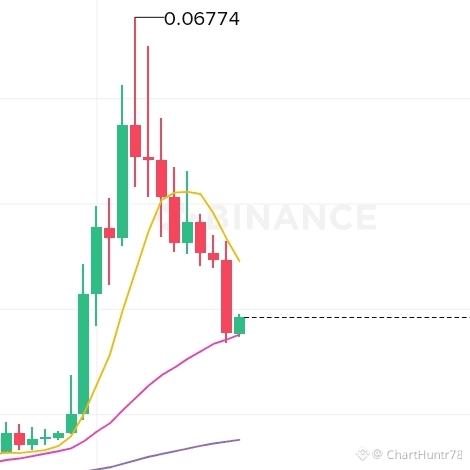
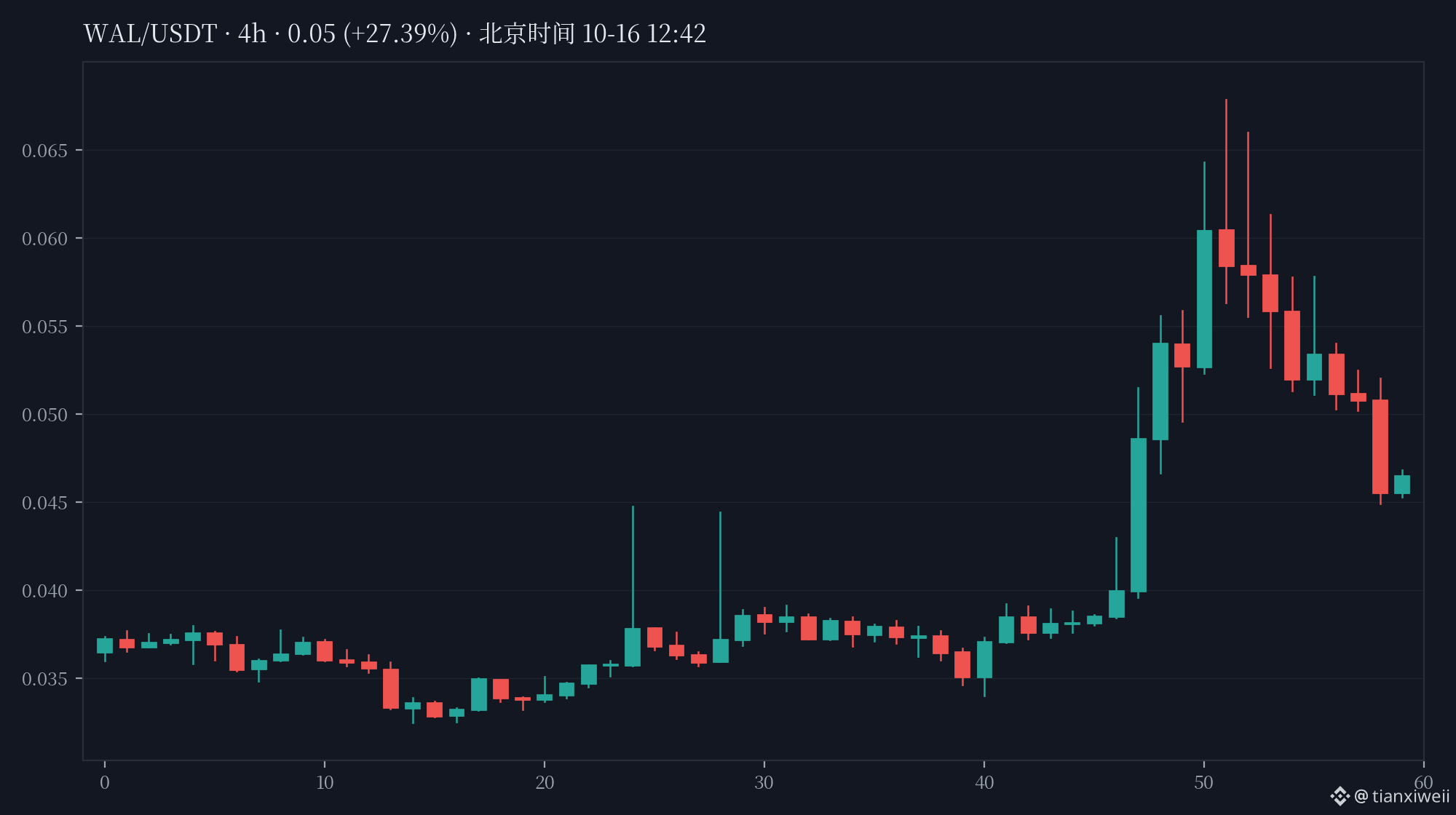
$WAL Confirmación de techo: el nivel de 0.048 resistió unas 33 horas; al cierre de las 12:00, la vela de 4 horas cerró oficialmente por debajo
Primero, la conclusión: se cumplieron todos los criterios de confirmación establecidos en la publicación de alerta de esta mañana.
A las 12:00 del mediodía, la vela de 4 horas de WAL cerró en 0.04554. No fue una mecha intradía: la caída en cascada de las 09:35 perforó primero el nivel de 0.048 y llegó a un mínimo de 0.04493. El cierre de la vela de 1 hora de las 09:00 ya había dado una primera alerta, al quedar en 0.04702; ahora también lo confirma el cierre de 4 horas. La situación pasa de ser una «ruptura intradía» a una «confirmación al cierre».
Pongamos las cifras en claro: desde el máximo de 0.06786 en la madrugada del 15 de octubre, la caída máxima ronda el 34 %; antes de publicar, el precio al contado era de 0.04655, con una variación de aproximadamente -21.3 % en 24 h y un volumen de operaciones al contado de unos 20.09 millones de USDT en 24 h. Mientras tanto, $BTC sigue en torno a los 82,000, con una variación aproximada de +0.6 % en 24 h. Esta retirada es propia de WAL, no se debe a una caída del mercado en general.
¿Por qué cae? Hasta ahora no se ha encontrado ninguna noticia negativa nueva y clara. El impulso de su fuerte subida seguía siendo la antigua noticia del 13 de octubre sobre la adquisición de DATA Network por parte de la Fundación Sui. El efecto de la noticia ya se disipó y el combustible para forzar el cierre de posiciones cortas también se agotó hace tiempo: la tasa de financiación de los perpetuos de OKX se redujo desde un mínimo de aproximadamente -0.48 % hasta alrededor de -0.074 %, y el interés abierto ronda los 1.73 millones de dólares. Las posiciones cortas ya no están tan saturadas, lo que también significa que no hay que esperar que un cierre forzado de cortos impulse un rebote.
A partir de ahora, solo hay que vigilar dos niveles: por arriba, 0.048 ha pasado de ser soporte a ser resistencia; solo una recuperación con aumento de volumen y consolidación por encima invalidaría la hipótesis de techo. Por el contrario, si las velas de 4 horas siguen cerrando por debajo de 0.045, habrá que dar esta subida por terminada. Por ahora, considera los rebotes intermedios como oportunidades para reducir posiciones, no como señales para comprar en mínimos. Desde una subida de aproximadamente el 70 % en 24 h hasta la confirmación del techo, solo pasó un día y medio. En este tipo de activos impulsados por cierres forzados de cortos, cuando se alcanza el nivel de invalidación, hay que aceptarlo; no te encariñes.
Aviso de riesgo: después de una caída pronunciada, puede producirse un rebote brusco en cualquier momento; abrir posiciones cortas también es arriesgado. Este artículo es un registro de la evolución del mercado y no constituye asesoramiento de inversión.
Elige un bando: ¿esta vez rompió de verdad el nivel de 0.048 o podrá recuperarlo esta noche? ¿Techo confirmado o recuperación?
#WAL #Walrus #山寨币 #SeguimientoDeSubidas
$WAL Confirmación de techo: el nivel de 0.048 resistió unas 33 horas; al cierre de las 12:00, la vela de 4 horas cerró oficialmente por debajo
Primero, la conclusión: se cumplieron todos los criterios de confirmación establecidos en la publicación de alerta de esta mañana.
A las 12:00 del mediodía, la vela de 4 horas de WAL cerró en 0.04554. No fue una mecha intradía: la caída en cascada de las 09:35 perforó primero el nivel de 0.048 y llegó a un mínimo de 0.04493. El cierre de la vela de 1 hora de las 09:00 ya había dado una primera alerta, al quedar en 0.04702; ahora también lo confirma el cierre de 4 horas. La situación pasa de ser una «ruptura intradía» a una «confirmación al cierre».
Pongamos las cifras en claro: desde el máximo de 0.06786 en la madrugada del 15 de octubre, la caída máxima ronda el 34 %; antes de publicar, el precio al contado era de 0.04655, con una variación de aproximadamente -21.3 % en 24 h y un volumen de operaciones al contado de unos 20.09 millones de USDT en 24 h. Mientras tanto, $BTC sigue en torno a los 82,000, con una variación aproximada de +0.6 % en 24 h. Esta retirada es propia de WAL, no se debe a una caída del mercado en general.
¿Por qué cae? Hasta ahora no se ha encontrado ninguna noticia negativa nueva y clara. El impulso de su fuerte subida seguía siendo la antigua noticia del 13 de octubre sobre la adquisición de DATA Network por parte de la Fundación Sui. El efecto de la noticia ya se disipó y el combustible para forzar el cierre de posiciones cortas también se agotó hace tiempo: la tasa de financiación de los perpetuos de OKX se redujo desde un mínimo de aproximadamente -0.48 % hasta alrededor de -0.074 %, y el interés abierto ronda los 1.73 millones de dólares. Las posiciones cortas ya no están tan saturadas, lo que también significa que no hay que esperar que un cierre forzado de cortos impulse un rebote.
A partir de ahora, solo hay que vigilar dos niveles: por arriba, 0.048 ha pasado de ser soporte a ser resistencia; solo una recuperación con aumento de volumen y consolidación por encima invalidaría la hipótesis de techo. Por el contrario, si las velas de 4 horas siguen cerrando por debajo de 0.045, habrá que dar esta subida por terminada. Por ahora, considera los rebotes intermedios como oportunidades para reducir posiciones, no como señales para comprar en mínimos. Desde una subida de aproximadamente el 70 % en 24 h hasta la confirmación del techo, solo pasó un día y medio. En este tipo de activos impulsados por cierres forzados de cortos, cuando se alcanza el nivel de invalidación, hay que aceptarlo; no te encariñes.
Aviso de riesgo: después de una caída pronunciada, puede producirse un rebote brusco en cualquier momento; abrir posiciones cortas también es arriesgado. Este artículo es un registro de la evolución del mercado y no constituye asesoramiento de inversión.
Elige un bando: ¿esta vez rompió de verdad el nivel de 0.048 o podrá recuperarlo esta noche? ¿Techo confirmado o recuperación?
#WAL #Walrus #山寨币 #SeguimientoDeSubidas
Primero, la conclusión: se cumplieron todos los criterios de confirmación establecidos en la publicación de alerta de esta mañana.
A las 12:00 del mediodía, la vela de 4 horas de WAL cerró en 0.04554. No fue una mecha intradía: la caída en cascada de las 09:35 perforó primero el nivel de 0.048 y llegó a un mínimo de 0.04493. El cierre de la vela de 1 hora de las 09:00 ya había dado una primera alerta, al quedar en 0.04702; ahora también lo confirma el cierre de 4 horas. La situación pasa de ser una «ruptura intradía» a una «confirmación al cierre».
Pongamos las cifras en claro: desde el máximo de 0.06786 en la madrugada del 15 de octubre, la caída máxima ronda el 34 %; antes de publicar, el precio al contado era de 0.04655, con una variación de aproximadamente -21.3 % en 24 h y un volumen de operaciones al contado de unos 20.09 millones de USDT en 24 h. Mientras tanto, $BTC sigue en torno a los 82,000, con una variación aproximada de +0.6 % en 24 h. Esta retirada es propia de WAL, no se debe a una caída del mercado en general.
¿Por qué cae? Hasta ahora no se ha encontrado ninguna noticia negativa nueva y clara. El impulso de su fuerte subida seguía siendo la antigua noticia del 13 de octubre sobre la adquisición de DATA Network por parte de la Fundación Sui. El efecto de la noticia ya se disipó y el combustible para forzar el cierre de posiciones cortas también se agotó hace tiempo: la tasa de financiación de los perpetuos de OKX se redujo desde un mínimo de aproximadamente -0.48 % hasta alrededor de -0.074 %, y el interés abierto ronda los 1.73 millones de dólares. Las posiciones cortas ya no están tan saturadas, lo que también significa que no hay que esperar que un cierre forzado de cortos impulse un rebote.
A partir de ahora, solo hay que vigilar dos niveles: por arriba, 0.048 ha pasado de ser soporte a ser resistencia; solo una recuperación con aumento de volumen y consolidación por encima invalidaría la hipótesis de techo. Por el contrario, si las velas de 4 horas siguen cerrando por debajo de 0.045, habrá que dar esta subida por terminada. Por ahora, considera los rebotes intermedios como oportunidades para reducir posiciones, no como señales para comprar en mínimos. Desde una subida de aproximadamente el 70 % en 24 h hasta la confirmación del techo, solo pasó un día y medio. En este tipo de activos impulsados por cierres forzados de cortos, cuando se alcanza el nivel de invalidación, hay que aceptarlo; no te encariñes.
Aviso de riesgo: después de una caída pronunciada, puede producirse un rebote brusco en cualquier momento; abrir posiciones cortas también es arriesgado. Este artículo es un registro de la evolución del mercado y no constituye asesoramiento de inversión.
Elige un bando: ¿esta vez rompió de verdad el nivel de 0.048 o podrá recuperarlo esta noche? ¿Techo confirmado o recuperación?
#WAL #Walrus #山寨币 #SeguimientoDeSubidas
356

·
--
Bajista
📊 $WAL /USDT: Configuración de trading: ¿comprar en la caída o esperar?
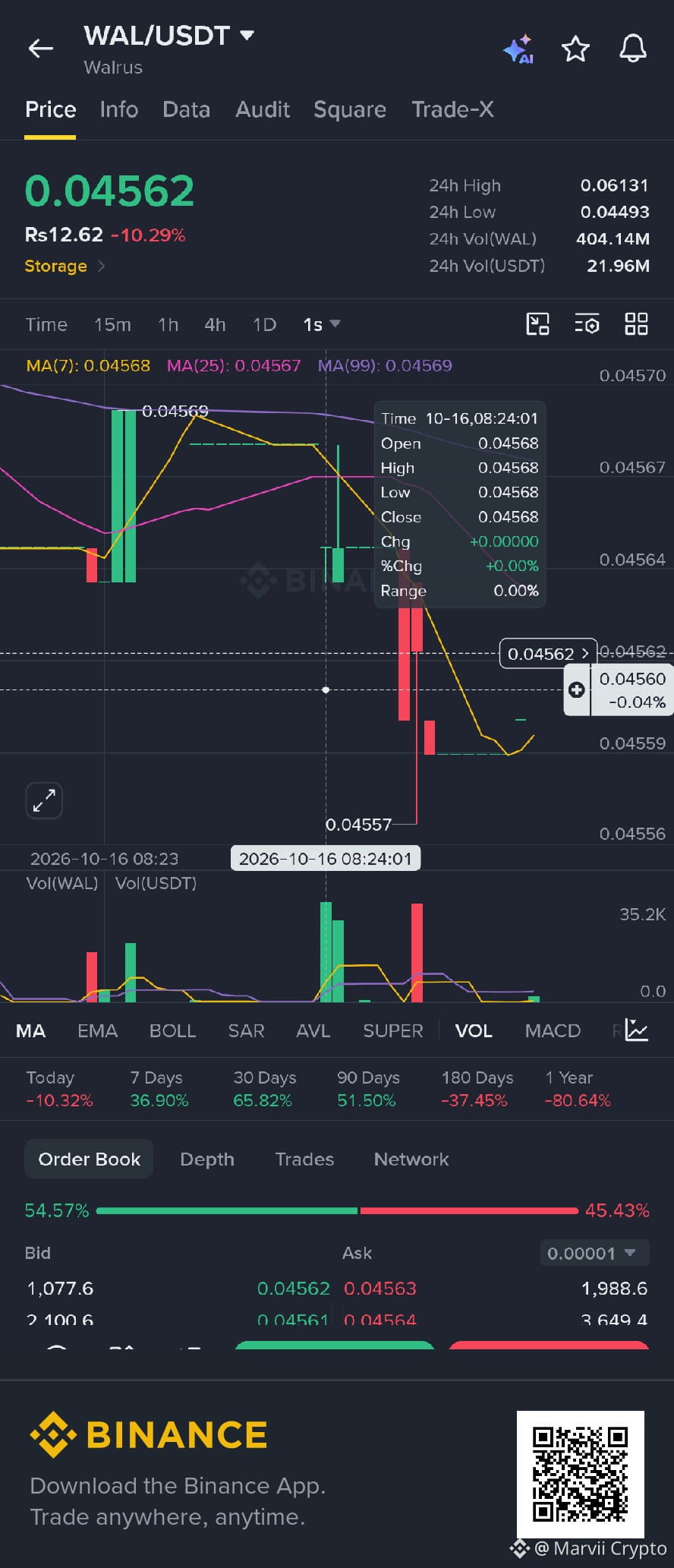
Walrus ($WAL) cotiza actualmente a 0.04562, con una caída diaria del -10.29%. Tras una corrección pronunciada, el precio está poniendo a prueba un nivel crucial de soporte a corto plazo.
Aquí tienes una estrategia de trading clara y sencilla basada en la estructura actual del gráfico:
⚡ Estrategia de trading
Zona de entrada (compra): $0.04550 - $0.04565 (zona de soporte actual)
Objetivo 1 (corto plazo): $0.04590
Objetivo 2 (medio plazo): $0.04630
Objetivo 3 (objetivo de ruptura): $0.04700+
Stop loss (gestión del riesgo): $0.04520 (Respétalo estrictamente si el precio cae por debajo de los mínimos recientes)
Stop loss (gestión del riesgo): $0.04520 (Respétalo estrictamente si el precio cae por debajo de los mínimos recientes)
🔍 Análisis del mercado
• Soporte y resistencia: 0.04557 está actuando como soporte inmediato. Si el precio se mantiene aquí, podría producirse un rápido rebote de alivio.
• Alerta de volumen: El volumen de ventas está disminuyendo ligeramente, lo que indica que los bajistas podrían estar perdiendo fuerza y que los alcistas podrían entrar.
⚠️ Aviso: El trading de criptomonedas implica un alto riesgo. Gestiona siempre tu riesgo e investiga por tu cuenta (DYOR) antes de realizar cualquier operación.
#WALUSDT #CryptoTrading #BinanceSquare #TradingSignals #Walrus
{future}(WALUSDT)
📊 $WAL /USDT: Configuración de trading: ¿comprar en la caída o esperar?
Walrus ($WAL ) cotiza actualmente a 0.04562, con una caída diaria del -10.29%. Tras una corrección pronunciada, el precio está poniendo a prueba un nivel crucial de soporte a corto plazo.
Aquí tienes una estrategia de trading clara y sencilla basada en la estructura actual del gráfico:
⚡ Estrategia de trading
Zona de entrada (compra): $0.04550 - $0.04565 (zona de soporte actual)
Objetivo 1 (corto plazo): $0.04590
Objetivo 2 (medio plazo): $0.04630
Objetivo 3 (objetivo de ruptura): $0.04700+
Stop loss (gestión del riesgo): $0.04520 (Respétalo estrictamente si el precio cae por debajo de los mínimos recientes)
Stop loss (gestión del riesgo): $0.04520 (Respétalo estrictamente si el precio cae por debajo de los mínimos recientes)
🔍 Análisis del mercado
• Soporte y resistencia: 0.04557 está actuando como soporte inmediato. Si el precio se mantiene aquí, podría producirse un rápido rebote de alivio.
• Alerta de volumen: El volumen de ventas está disminuyendo ligeramente, lo que indica que los bajistas podrían estar perdiendo fuerza y que los alcistas podrían entrar.
⚠️ Aviso: El trading de criptomonedas implica un alto riesgo. Gestiona siempre tu riesgo e investiga por tu cuenta (DYOR) antes de realizar cualquier operación.
#WALUSDT #CryptoTrading #BinanceSquare #TradingSignals #Walrus
Walrus ($WAL ) cotiza actualmente a 0.04562, con una caída diaria del -10.29%. Tras una corrección pronunciada, el precio está poniendo a prueba un nivel crucial de soporte a corto plazo.
Aquí tienes una estrategia de trading clara y sencilla basada en la estructura actual del gráfico:
⚡ Estrategia de trading
Zona de entrada (compra): $0.04550 - $0.04565 (zona de soporte actual)
Objetivo 1 (corto plazo): $0.04590
Objetivo 2 (medio plazo): $0.04630
Objetivo 3 (objetivo de ruptura): $0.04700+
Stop loss (gestión del riesgo): $0.04520 (Respétalo estrictamente si el precio cae por debajo de los mínimos recientes)
Stop loss (gestión del riesgo): $0.04520 (Respétalo estrictamente si el precio cae por debajo de los mínimos recientes)
🔍 Análisis del mercado
• Soporte y resistencia: 0.04557 está actuando como soporte inmediato. Si el precio se mantiene aquí, podría producirse un rápido rebote de alivio.
• Alerta de volumen: El volumen de ventas está disminuyendo ligeramente, lo que indica que los bajistas podrían estar perdiendo fuerza y que los alcistas podrían entrar.
⚠️ Aviso: El trading de criptomonedas implica un alto riesgo. Gestiona siempre tu riesgo e investiga por tu cuenta (DYOR) antes de realizar cualquier operación.
#WALUSDT #CryptoTrading #BinanceSquare #TradingSignals #Walrus
2
99
·
--
En 13 minutos perforó los 0,048: se rompió la última línea de defensa que $WAL había mantenido durante 33 horas
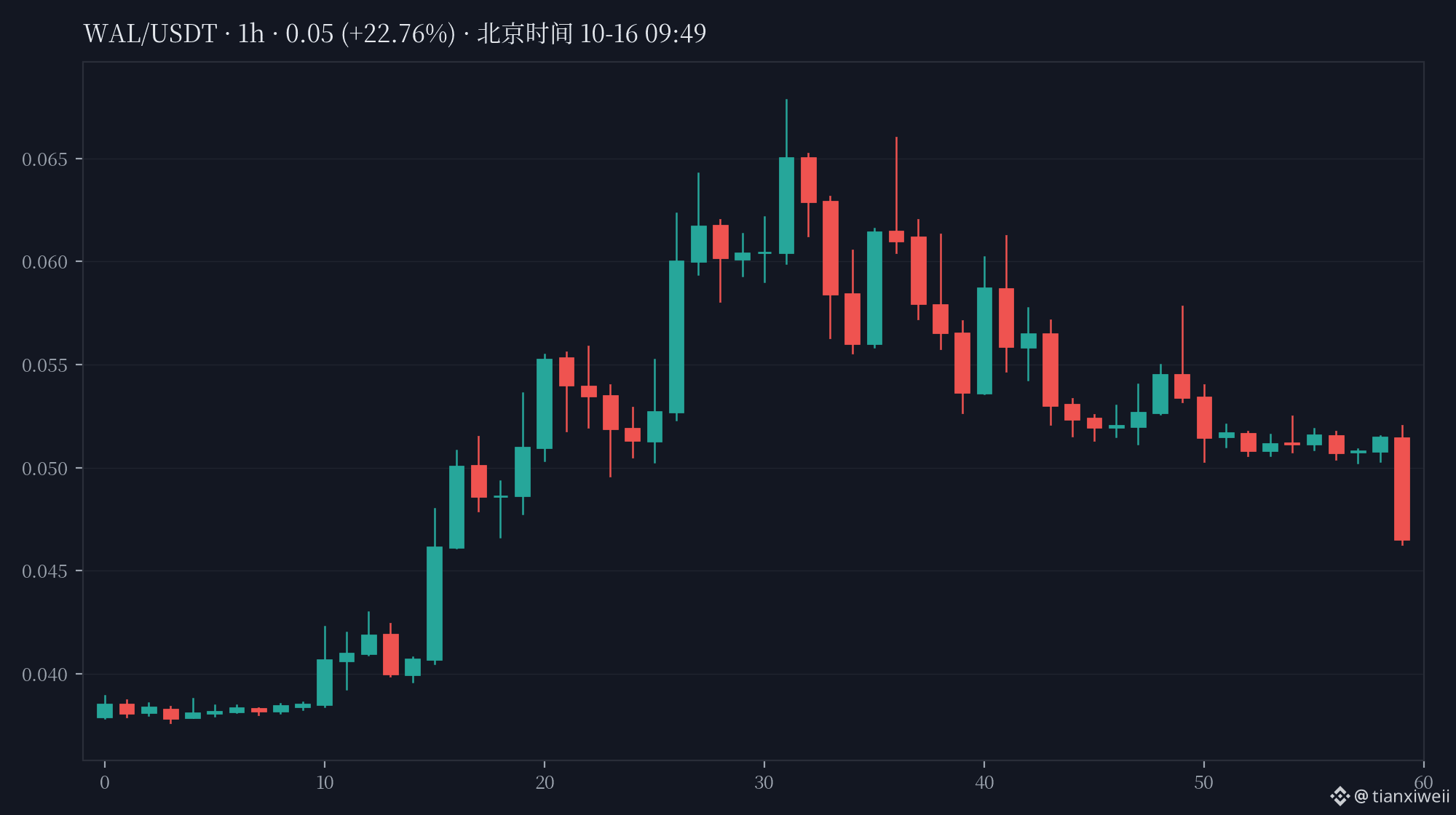
Antes de las 09:35 de esta mañana, $WAL todavía se movía alrededor de 0,051; desde las 09:35 se desplomó en línea recta, a las 09:41 cayó por debajo de 0,048 y a las 09:45 tocó un mínimo de 0,04629. Poco antes de la publicación rondaba los 0,0466: cayó aproximadamente un 9 % en 13 minutos. Desde el máximo de 0,06786 alcanzado anteayer de madrugada, el retroceso ya ronda el 31 %; en 24 h pasó de las ganancias a una caída de alrededor del 23 %.
¿Por qué es importante el nivel de 0,048? Desde el primer seguimiento, publicado de madrugada el 15 de octubre, este nivel se estableció como el principal punto de invalidación: si el cierre de 4 h cae por debajo, se considera que el precio ha alcanzado un techo. En estos dos días hubo varios amagos de ruptura y falsas rupturas, pero el precio nunca llegó a caer realmente por debajo. Hoy es la primera vez que lo perfora con un aumento del volumen y no recupera el nivel de inmediato. El volumen lo confirma: la vela de 15 minutos de las 09:30 registró un volumen de unos 388.000 USDT, entre 3 y 10 veces el de varias velas anteriores; no fue una caída gradual con poco volumen.
La estructura también ha cambiado. La tasa de financiación de los perpetuos de OKX ronda ahora el -0,074 %; ya se había reducido considerablemente desde el extremo del -0,62 % de ayer. El combustible para un short squeeze se había agotado antes de la ruptura, y esta caída está impulsada por la presión vendedora en el mercado al contado. Mientras tanto, $BTC sigue en torno a los 82.100, con una subida de aproximadamente el 0,5 % en 24 h: no es el mercado en general el que arrastra el precio, sino que el interés por WAL está decayendo. En cuanto a catalizadores, hoy no se ha encontrado ninguna noticia negativa nueva y clara. El movimiento sigue siendo una toma de ganancias tras la antigua noticia del 13 de octubre sobre la adquisición de DATA por parte de Sui. Algunos medios también mencionan un desbloqueo el 26 de octubre, pero eso es más adelante y no explica esta caída repentina de esta mañana.
La confirmación dependerá del cierre: si la vela de 1 h de las 10:00, y especialmente la de 4 h de las 12:00, cierra por debajo de 0,048, quedará confirmado el techo. Si el precio recupera rápidamente los 0,048 con un fuerte volumen y se mantiene por encima, se considerará una falsa ruptura y esta alerta quedará invalidada. En un rebote, primero hay que vigilar los 0,048 (que han pasado de ser soporte a resistencia); más arriba está el límite inferior del antiguo rango, en 0,0555. Un recordatorio: la tasa de financiación ya no está en niveles extremos y el precio también está sobrevendido a corto plazo. Esta moneda ya protagonizó ayer una «ruptura» que recuperó el nivel en una hora, así que abrir posiciones cortas en el suelo también puede salir mal si el precio rebota con fuerza.
Aviso de riesgo: los libros de órdenes de las criptomonedas pequeñas son poco profundos y su volatilidad puede ser extrema. Lo anterior es solo un registro de análisis retrospectivo y no constituye asesoramiento de inversión. ¿De qué lado estás: esta vez 0,048 confirma un techo de verdad, o es otra falsa ruptura que se recuperará en una hora?
#WAL #Walrus #Sui #山寨币
En 13 minutos perforó los 0,048: se rompió la última línea de defensa que $WAL había mantenido durante 33 horas
Antes de las 09:35 de esta mañana, $WAL todavía se movía alrededor de 0,051; desde las 09:35 se desplomó en línea recta, a las 09:41 cayó por debajo de 0,048 y a las 09:45 tocó un mínimo de 0,04629. Poco antes de la publicación rondaba los 0,0466: cayó aproximadamente un 9 % en 13 minutos. Desde el máximo de 0,06786 alcanzado anteayer de madrugada, el retroceso ya ronda el 31 %; en 24 h pasó de las ganancias a una caída de alrededor del 23 %.
¿Por qué es importante el nivel de 0,048? Desde el primer seguimiento, publicado de madrugada el 15 de octubre, este nivel se estableció como el principal punto de invalidación: si el cierre de 4 h cae por debajo, se considera que el precio ha alcanzado un techo. En estos dos días hubo varios amagos de ruptura y falsas rupturas, pero el precio nunca llegó a caer realmente por debajo. Hoy es la primera vez que lo perfora con un aumento del volumen y no recupera el nivel de inmediato. El volumen lo confirma: la vela de 15 minutos de las 09:30 registró un volumen de unos 388.000 USDT, entre 3 y 10 veces el de varias velas anteriores; no fue una caída gradual con poco volumen.
La estructura también ha cambiado. La tasa de financiación de los perpetuos de OKX ronda ahora el -0,074 %; ya se había reducido considerablemente desde el extremo del -0,62 % de ayer. El combustible para un short squeeze se había agotado antes de la ruptura, y esta caída está impulsada por la presión vendedora en el mercado al contado. Mientras tanto, $BTC sigue en torno a los 82.100, con una subida de aproximadamente el 0,5 % en 24 h: no es el mercado en general el que arrastra el precio, sino que el interés por WAL está decayendo. En cuanto a catalizadores, hoy no se ha encontrado ninguna noticia negativa nueva y clara. El movimiento sigue siendo una toma de ganancias tras la antigua noticia del 13 de octubre sobre la adquisición de DATA por parte de Sui. Algunos medios también mencionan un desbloqueo el 26 de octubre, pero eso es más adelante y no explica esta caída repentina de esta mañana.
La confirmación dependerá del cierre: si la vela de 1 h de las 10:00, y especialmente la de 4 h de las 12:00, cierra por debajo de 0,048, quedará confirmado el techo. Si el precio recupera rápidamente los 0,048 con un fuerte volumen y se mantiene por encima, se considerará una falsa ruptura y esta alerta quedará invalidada. En un rebote, primero hay que vigilar los 0,048 (que han pasado de ser soporte a resistencia); más arriba está el límite inferior del antiguo rango, en 0,0555. Un recordatorio: la tasa de financiación ya no está en niveles extremos y el precio también está sobrevendido a corto plazo. Esta moneda ya protagonizó ayer una «ruptura» que recuperó el nivel en una hora, así que abrir posiciones cortas en el suelo también puede salir mal si el precio rebota con fuerza.
Aviso de riesgo: los libros de órdenes de las criptomonedas pequeñas son poco profundos y su volatilidad puede ser extrema. Lo anterior es solo un registro de análisis retrospectivo y no constituye asesoramiento de inversión. ¿De qué lado estás: esta vez 0,048 confirma un techo de verdad, o es otra falsa ruptura que se recuperará en una hora?
#WAL #Walrus #Sui #山寨币
Antes de las 09:35 de esta mañana, $WAL todavía se movía alrededor de 0,051; desde las 09:35 se desplomó en línea recta, a las 09:41 cayó por debajo de 0,048 y a las 09:45 tocó un mínimo de 0,04629. Poco antes de la publicación rondaba los 0,0466: cayó aproximadamente un 9 % en 13 minutos. Desde el máximo de 0,06786 alcanzado anteayer de madrugada, el retroceso ya ronda el 31 %; en 24 h pasó de las ganancias a una caída de alrededor del 23 %.
¿Por qué es importante el nivel de 0,048? Desde el primer seguimiento, publicado de madrugada el 15 de octubre, este nivel se estableció como el principal punto de invalidación: si el cierre de 4 h cae por debajo, se considera que el precio ha alcanzado un techo. En estos dos días hubo varios amagos de ruptura y falsas rupturas, pero el precio nunca llegó a caer realmente por debajo. Hoy es la primera vez que lo perfora con un aumento del volumen y no recupera el nivel de inmediato. El volumen lo confirma: la vela de 15 minutos de las 09:30 registró un volumen de unos 388.000 USDT, entre 3 y 10 veces el de varias velas anteriores; no fue una caída gradual con poco volumen.
La estructura también ha cambiado. La tasa de financiación de los perpetuos de OKX ronda ahora el -0,074 %; ya se había reducido considerablemente desde el extremo del -0,62 % de ayer. El combustible para un short squeeze se había agotado antes de la ruptura, y esta caída está impulsada por la presión vendedora en el mercado al contado. Mientras tanto, $BTC sigue en torno a los 82.100, con una subida de aproximadamente el 0,5 % en 24 h: no es el mercado en general el que arrastra el precio, sino que el interés por WAL está decayendo. En cuanto a catalizadores, hoy no se ha encontrado ninguna noticia negativa nueva y clara. El movimiento sigue siendo una toma de ganancias tras la antigua noticia del 13 de octubre sobre la adquisición de DATA por parte de Sui. Algunos medios también mencionan un desbloqueo el 26 de octubre, pero eso es más adelante y no explica esta caída repentina de esta mañana.
La confirmación dependerá del cierre: si la vela de 1 h de las 10:00, y especialmente la de 4 h de las 12:00, cierra por debajo de 0,048, quedará confirmado el techo. Si el precio recupera rápidamente los 0,048 con un fuerte volumen y se mantiene por encima, se considerará una falsa ruptura y esta alerta quedará invalidada. En un rebote, primero hay que vigilar los 0,048 (que han pasado de ser soporte a resistencia); más arriba está el límite inferior del antiguo rango, en 0,0555. Un recordatorio: la tasa de financiación ya no está en niveles extremos y el precio también está sobrevendido a corto plazo. Esta moneda ya protagonizó ayer una «ruptura» que recuperó el nivel en una hora, así que abrir posiciones cortas en el suelo también puede salir mal si el precio rebota con fuerza.
Aviso de riesgo: los libros de órdenes de las criptomonedas pequeñas son poco profundos y su volatilidad puede ser extrema. Lo anterior es solo un registro de análisis retrospectivo y no constituye asesoramiento de inversión. ¿De qué lado estás: esta vez 0,048 confirma un techo de verdad, o es otra falsa ruptura que se recuperará en una hora?
#WAL #Walrus #Sui #山寨币
270

$WAL Acaba de dispararse y los vendedores en corto quedaron atrapados 🚀
Subió ~25% hoy y ~49% en la semana, y ronda los $0.058 después de que DATA Network nombrara a Walrus como su almacenamiento predeterminado. Se liquidaron posiciones cortas por valor de $5.67M.
🔹 Soporte: $0.0559 (promedio de 200 días)
🔹 Resistencia: $0.0658 y luego $0.075
🔹 Plan: no persigas el precio. Espera una nueva prueba de $0.0559 y usa un stop-loss.
💬 ¿Nueva prueba del soporte o subida hasta $0.075? 👇
{future}(WALUSDT)
⚠️ Esto no es asesoramiento financiero. Investiga por tu cuenta.
#WAL #Walrus #TechnicalAnalys #BinanceSquare
$WAL Acaba de dispararse y los vendedores en corto quedaron atrapados 🚀
Subió ~25% hoy y ~49% en la semana, y ronda los $0.058 después de que DATA Network nombrara a Walrus como su almacenamiento predeterminado. Se liquidaron posiciones cortas por valor de $5.67M.
🔹 Soporte: $0.0559 (promedio de 200 días)
🔹 Resistencia: $0.0658 y luego $0.075
🔹 Plan: no persigas el precio. Espera una nueva prueba de $0.0559 y usa un stop-loss.
💬 ¿Nueva prueba del soporte o subida hasta $0.075? 👇
⚠️ Esto no es asesoramiento financiero. Investiga por tu cuenta.
#WAL #Walrus #TechnicalAnalys #BinanceSquare
Subió ~25% hoy y ~49% en la semana, y ronda los $0.058 después de que DATA Network nombrara a Walrus como su almacenamiento predeterminado. Se liquidaron posiciones cortas por valor de $5.67M.
🔹 Soporte: $0.0559 (promedio de 200 días)
🔹 Resistencia: $0.0658 y luego $0.075
🔹 Plan: no persigas el precio. Espera una nueva prueba de $0.0559 y usa un stop-loss.
💬 ¿Nueva prueba del soporte o subida hasta $0.075? 👇
⚠️ Esto no es asesoramiento financiero. Investiga por tu cuenta.
#WAL #Walrus #TechnicalAnalys #BinanceSquare
1
236

$WAL : ¿LARGO O CORTO? 📈📉
🔹 Catalizador potencial: La creciente demanda de infraestructura de datos descentralizada podría impulsar su adopción a largo plazo.
🔹 Escenario alcista: Un volumen sostenido y una ruptura confirmada podrían crear una oportunidad de compra.
🔹 Escenario bajista: Tras un fuerte repunte, la toma de ganancias o la pérdida de un nivel de soporte podrían generar riesgo bajista.
⚠️ Alta volatilidad. No hay ganancias garantizadas. Gestiona el riesgo con cuidado.
#WAL #Walrus #BinanceSquare r #CryptoAnalysis
{spot}(WALUSDT)
#Altcoins
$WAL : ¿LARGO O CORTO? 📈📉
🔹 Catalizador potencial: La creciente demanda de infraestructura de datos descentralizada podría impulsar su adopción a largo plazo.
🔹 Escenario alcista: Un volumen sostenido y una ruptura confirmada podrían crear una oportunidad de compra.
🔹 Escenario bajista: Tras un fuerte repunte, la toma de ganancias o la pérdida de un nivel de soporte podrían generar riesgo bajista.
⚠️ Alta volatilidad. No hay ganancias garantizadas. Gestiona el riesgo con cuidado.
#WAL #Walrus #BinanceSquare r #CryptoAnalysis
#Altcoins
🔹 Catalizador potencial: La creciente demanda de infraestructura de datos descentralizada podría impulsar su adopción a largo plazo.
🔹 Escenario alcista: Un volumen sostenido y una ruptura confirmada podrían crear una oportunidad de compra.
🔹 Escenario bajista: Tras un fuerte repunte, la toma de ganancias o la pérdida de un nivel de soporte podrían generar riesgo bajista.
⚠️ Alta volatilidad. No hay ganancias garantizadas. Gestiona el riesgo con cuidado.
#WAL #Walrus #BinanceSquare r #CryptoAnalysis
#Altcoins
1
235

·
--
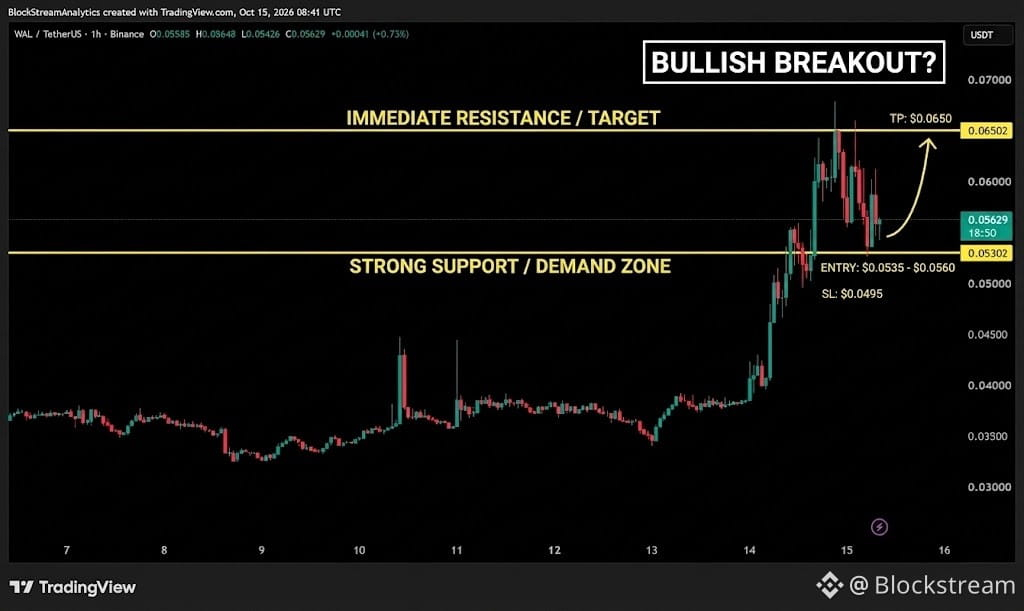
$WAL CONSOLIDACIÓN TRAS LA RUPTURA ANTES DEL PRÓXIMO IMPULSO ALCISTA. ¿LISTO PARA SUPERAR LOS $0.0650? 📈🚀
Entrada: $0.0535 – $0.0560
TP1: $0.0610 | TP2: $0.0650 | TP3: $0.0710
SL: $0.0495
Walrus ($WAL) mantiene un fuerte impulso alcista cerca de $0.0558 tras un importante movimiento impulsivo. Mantener el nivel de soporte de $0.0530 preserva intacta la estructura alcista del mercado y permite intentar una continuación hacia los $0.0650+.
¡Gestiona el riesgo con cuidado en configuraciones de activos con ganancias rápidas!
👉 Haz clic aquí para operar $WAL 📈
¡Síguenos para recibir configuraciones de trading rápidas a diario!
{spot}(WALUSDT)
#walrus
$WAL CONSOLIDACIÓN TRAS LA RUPTURA ANTES DEL PRÓXIMO IMPULSO ALCISTA. ¿LISTO PARA SUPERAR LOS $0.0650? 📈🚀
Entrada: $0.0535 – $0.0560
TP1: $0.0610 | TP2: $0.0650 | TP3: $0.0710
SL: $0.0495
Walrus ($WAL ) mantiene un fuerte impulso alcista cerca de $0.0558 tras un importante movimiento impulsivo. Mantener el nivel de soporte de $0.0530 preserva intacta la estructura alcista del mercado y permite intentar una continuación hacia los $0.0650+.
¡Gestiona el riesgo con cuidado en configuraciones de activos con ganancias rápidas!
👉 Haz clic aquí para operar $WAL 📈
¡Síguenos para recibir configuraciones de trading rápidas a diario!
#walrus
Entrada: $0.0535 – $0.0560
TP1: $0.0610 | TP2: $0.0650 | TP3: $0.0710
SL: $0.0495
Walrus ($WAL ) mantiene un fuerte impulso alcista cerca de $0.0558 tras un importante movimiento impulsivo. Mantener el nivel de soporte de $0.0530 preserva intacta la estructura alcista del mercado y permite intentar una continuación hacia los $0.0650+.
¡Gestiona el riesgo con cuidado en configuraciones de activos con ganancias rápidas!
👉 Haz clic aquí para operar $WAL 📈
¡Síguenos para recibir configuraciones de trading rápidas a diario!
#walrus
1
1
71
·
--
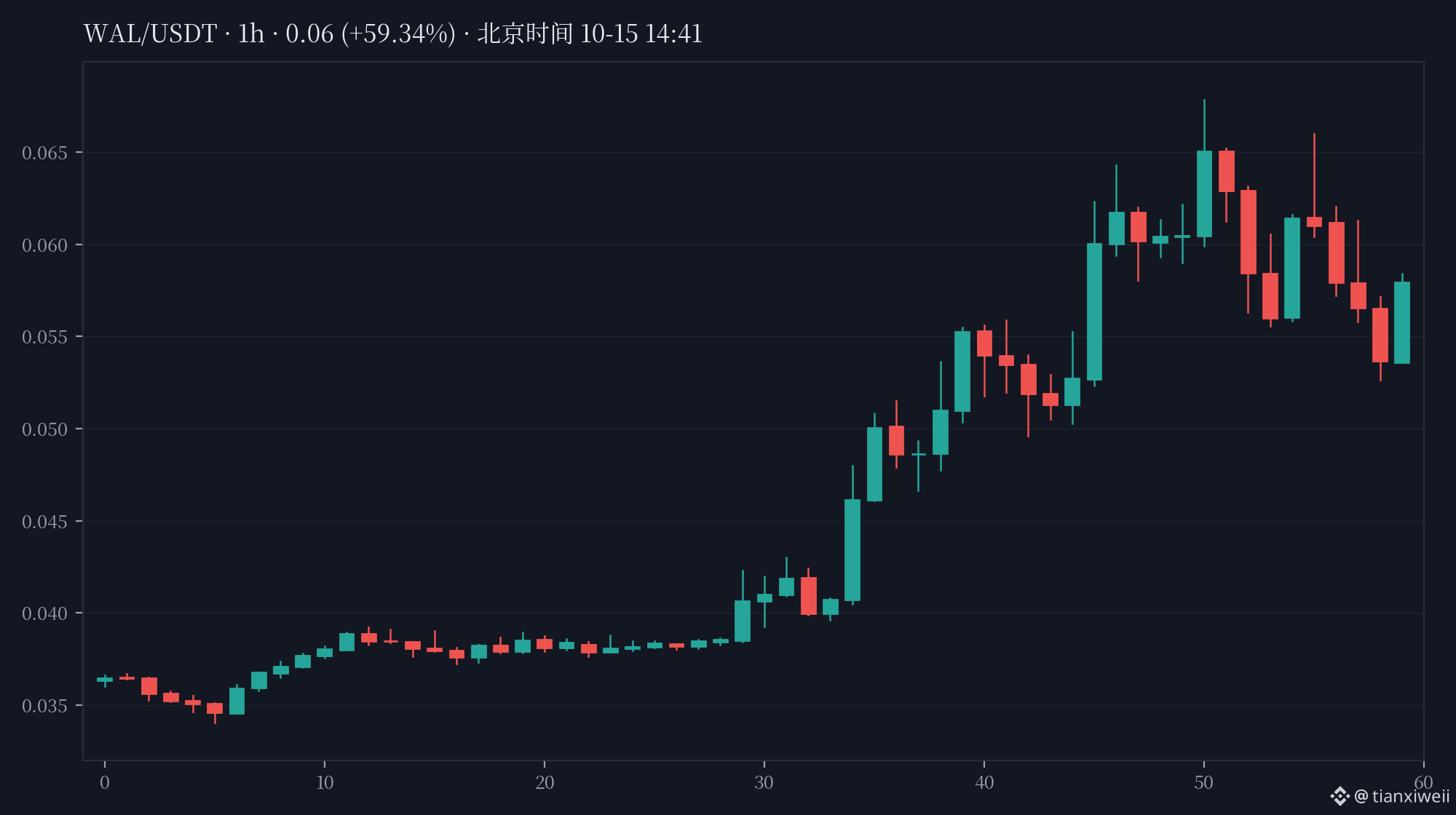
$WAL : actualización de seguimiento: acaba de romperse el límite inferior del rango, pero lo recuperó en menos de una hora
Al mediodía, $WAL todavía se movía dentro del rango de 0.0555–0.066. Pero la hora de las 13:00 trajo un cambio repentino: el volumen negociado subió hasta unos 2,12 millones de USDT, el precio tocó un mínimo de 0.05266 y cerró la hora en 0.05366. Fue el primer cierre por debajo del límite inferior desde que se formó este rango. Por un momento, volvió a la zona de consolidación previa al inicio de esta subida explosiva, con una caída de alrededor del 22% desde el máximo de la madrugada, de 0.06786.
Sin embargo, después de las 14:00 se recuperó rápidamente: en los primeros 40 minutos y pico de esa hora se negociaron unos 1,31 millones de USDT. A las 14:42, hora de Pekín, al volver a comprobarlo, el precio al contado rondaba los 0.0579 (prácticamente igual al precio del índice), recuperando el nivel de 0.0555 y rebotando alrededor de un 10% desde el mínimo.
¿Por qué tanta volatilidad? No he encontrado nuevas noticias negativas ni nuevos catalizadores; el catalizador original sigue siendo la adquisición de DATA Network por parte de la Fundación Sui el 13 de octubre. Parece más bien que, con el mercado general débil ($BTC , alrededor de -2.9%; $ETH , alrededor de -5.6%), los inversores tomaron ganancias primero y luego se vieron obligados a volver por las tasas de financiación muy negativas: la tasa de financiación de los perpetuos de OKX rondaba el -0.41%, y los perpetuos cotizaban con un descuento de aproximadamente el 2.6% frente al mercado al contado. Las posiciones cortas están más saturadas que por la mañana. En una estructura así, los rebotes pueden ser muy bruscos y rápidos; tanto perseguir las ventas como las compras puede acabar mal.
Por ahora, solo importa el cierre horario de las 15:00: si cierra por encima de 0.0555, consideraré esta ruptura como falsa, al menos de momento, y el siguiente nivel a vigilar por arriba será 0.0623. Si vuelve a cerrar por debajo de 0.0555, la ruptura continuará. El nivel de invalidación principal no cambia: si el cierre de 4 horas cae por debajo de 0.048, consideraré que esta subida ha tocado techo.
Aviso de riesgo: lo anterior es solo mi registro personal de análisis y no constituye asesoramiento de inversión. La volatilidad y el nivel de saturación de $WAL son muy elevados; prioricen la gestión del tamaño de las posiciones y los stop-loss.
¿Creen que es una sacudida para liquidar posiciones débiles o que, tras el rebote, seguirá cayendo? Hablemos en los comentarios.
#WAL #Walrus #山寨币 #Futuros
$WAL : actualización de seguimiento: acaba de romperse el límite inferior del rango, pero lo recuperó en menos de una hora
Al mediodía, $WAL todavía se movía dentro del rango de 0.0555–0.066. Pero la hora de las 13:00 trajo un cambio repentino: el volumen negociado subió hasta unos 2,12 millones de USDT, el precio tocó un mínimo de 0.05266 y cerró la hora en 0.05366. Fue el primer cierre por debajo del límite inferior desde que se formó este rango. Por un momento, volvió a la zona de consolidación previa al inicio de esta subida explosiva, con una caída de alrededor del 22% desde el máximo de la madrugada, de 0.06786.
Sin embargo, después de las 14:00 se recuperó rápidamente: en los primeros 40 minutos y pico de esa hora se negociaron unos 1,31 millones de USDT. A las 14:42, hora de Pekín, al volver a comprobarlo, el precio al contado rondaba los 0.0579 (prácticamente igual al precio del índice), recuperando el nivel de 0.0555 y rebotando alrededor de un 10% desde el mínimo.
¿Por qué tanta volatilidad? No he encontrado nuevas noticias negativas ni nuevos catalizadores; el catalizador original sigue siendo la adquisición de DATA Network por parte de la Fundación Sui el 13 de octubre. Parece más bien que, con el mercado general débil ($BTC , alrededor de -2.9%; $ETH , alrededor de -5.6%), los inversores tomaron ganancias primero y luego se vieron obligados a volver por las tasas de financiación muy negativas: la tasa de financiación de los perpetuos de OKX rondaba el -0.41%, y los perpetuos cotizaban con un descuento de aproximadamente el 2.6% frente al mercado al contado. Las posiciones cortas están más saturadas que por la mañana. En una estructura así, los rebotes pueden ser muy bruscos y rápidos; tanto perseguir las ventas como las compras puede acabar mal.
Por ahora, solo importa el cierre horario de las 15:00: si cierra por encima de 0.0555, consideraré esta ruptura como falsa, al menos de momento, y el siguiente nivel a vigilar por arriba será 0.0623. Si vuelve a cerrar por debajo de 0.0555, la ruptura continuará. El nivel de invalidación principal no cambia: si el cierre de 4 horas cae por debajo de 0.048, consideraré que esta subida ha tocado techo.
Aviso de riesgo: lo anterior es solo mi registro personal de análisis y no constituye asesoramiento de inversión. La volatilidad y el nivel de saturación de $WAL son muy elevados; prioricen la gestión del tamaño de las posiciones y los stop-loss.
¿Creen que es una sacudida para liquidar posiciones débiles o que, tras el rebote, seguirá cayendo? Hablemos en los comentarios.
#WAL #Walrus #山寨币 #Futuros
Al mediodía, $WAL todavía se movía dentro del rango de 0.0555–0.066. Pero la hora de las 13:00 trajo un cambio repentino: el volumen negociado subió hasta unos 2,12 millones de USDT, el precio tocó un mínimo de 0.05266 y cerró la hora en 0.05366. Fue el primer cierre por debajo del límite inferior desde que se formó este rango. Por un momento, volvió a la zona de consolidación previa al inicio de esta subida explosiva, con una caída de alrededor del 22% desde el máximo de la madrugada, de 0.06786.
Sin embargo, después de las 14:00 se recuperó rápidamente: en los primeros 40 minutos y pico de esa hora se negociaron unos 1,31 millones de USDT. A las 14:42, hora de Pekín, al volver a comprobarlo, el precio al contado rondaba los 0.0579 (prácticamente igual al precio del índice), recuperando el nivel de 0.0555 y rebotando alrededor de un 10% desde el mínimo.
¿Por qué tanta volatilidad? No he encontrado nuevas noticias negativas ni nuevos catalizadores; el catalizador original sigue siendo la adquisición de DATA Network por parte de la Fundación Sui el 13 de octubre. Parece más bien que, con el mercado general débil ($BTC , alrededor de -2.9%; $ETH , alrededor de -5.6%), los inversores tomaron ganancias primero y luego se vieron obligados a volver por las tasas de financiación muy negativas: la tasa de financiación de los perpetuos de OKX rondaba el -0.41%, y los perpetuos cotizaban con un descuento de aproximadamente el 2.6% frente al mercado al contado. Las posiciones cortas están más saturadas que por la mañana. En una estructura así, los rebotes pueden ser muy bruscos y rápidos; tanto perseguir las ventas como las compras puede acabar mal.
Por ahora, solo importa el cierre horario de las 15:00: si cierra por encima de 0.0555, consideraré esta ruptura como falsa, al menos de momento, y el siguiente nivel a vigilar por arriba será 0.0623. Si vuelve a cerrar por debajo de 0.0555, la ruptura continuará. El nivel de invalidación principal no cambia: si el cierre de 4 horas cae por debajo de 0.048, consideraré que esta subida ha tocado techo.
Aviso de riesgo: lo anterior es solo mi registro personal de análisis y no constituye asesoramiento de inversión. La volatilidad y el nivel de saturación de $WAL son muy elevados; prioricen la gestión del tamaño de las posiciones y los stop-loss.
¿Creen que es una sacudida para liquidar posiciones débiles o que, tras el rebote, seguirá cayendo? Hablemos en los comentarios.
#WAL #Walrus #山寨币 #Futuros
412

·
--
🚀 Actualización de la moneda WAL (Walrus) — 15 de octubre de 2026
🔥 ¡WAL está ganando atención en el mercado de las criptomonedas!
W🚀 Actualización de la moneda WAL (Walrus) — 15 de octubre de 2026
🔥 ¡$WAL está ganando atención en el mercado de las criptomonedas!
Walrus es un proyecto descentralizado de almacenamiento de datos que se centra en ayudar a las aplicaciones a almacenar y gestionar datos digitales de forma eficiente.
📊 Perspectiva del mercado: $WAL ha mostrado recientemente un fuerte movimiento de precios, lo que ha atraído la atención de los traders de criptomonedas. Sin embargo, la alta volatilidad puede traer tanto oportunidades como riesgos.
👀 Qué observar: el volumen de trading, el impulso del mercado y los niveles clave de soporte y resistencia.
⚠️ Investiga siempre por tu cuenta antes de tomar cualquier decisión de trading. Esto no es asesoramiento financiero.
🚀 Actualización de la moneda WAL (Walrus) — 15 de octubre de 2026 🔥 ¡WAL está ganando atención en el mercado de las criptomonedas! W
🚀 Actualización de la moneda WAL (Walrus) — 15 de octubre de 2026
🔥 ¡$WAL está ganando atención en el mercado de las criptomonedas!
Walrus es un proyecto descentralizado de almacenamiento de datos que se centra en ayudar a las aplicaciones a almacenar y gestionar datos digitales de forma eficiente.
📊 Perspectiva del mercado: $WAL ha mostrado recientemente un fuerte movimiento de precios, lo que ha atraído la atención de los traders de criptomonedas. Sin embargo, la alta volatilidad puede traer tanto oportunidades como riesgos.
👀 Qué observar: el volumen de trading, el impulso del mercado y los niveles clave de soporte y resistencia.
⚠️ Investiga siempre por tu cuenta antes de tomar cualquier decisión de trading. Esto no es asesoramiento financiero.
🔥 ¡$WAL está ganando atención en el mercado de las criptomonedas!
Walrus es un proyecto descentralizado de almacenamiento de datos que se centra en ayudar a las aplicaciones a almacenar y gestionar datos digitales de forma eficiente.
📊 Perspectiva del mercado: $WAL ha mostrado recientemente un fuerte movimiento de precios, lo que ha atraído la atención de los traders de criptomonedas. Sin embargo, la alta volatilidad puede traer tanto oportunidades como riesgos.
👀 Qué observar: el volumen de trading, el impulso del mercado y los niveles clave de soporte y resistencia.
⚠️ Investiga siempre por tu cuenta antes de tomar cualquier decisión de trading. Esto no es asesoramiento financiero.
203

·
--
💪 $WAL
{spot}(WALUSDT)
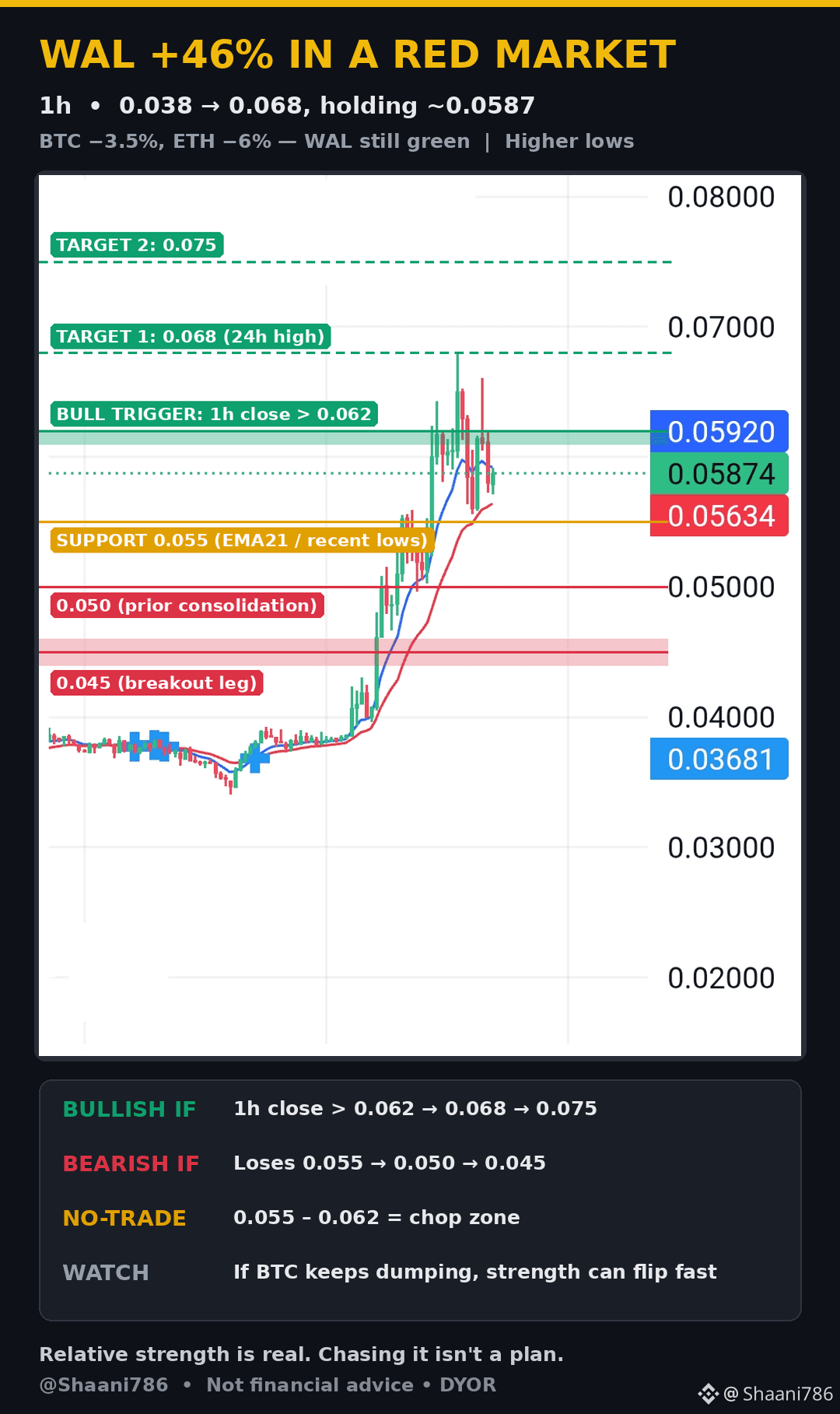
+46% — mientras todo el mercado cae
BTC −3.5%, ETH −6%, las altcoins bajan entre un 5 y un 10%... y Walrus está en verde. WAL subió por etapas de $0.038 a $0.068 y ahora se mantiene cerca de $0.0587, con mínimos crecientes.
Eso es fortaleza relativa: los compradores entran mientras venden todo lo demás. Pero si BTC sigue desplomándose, incluso las monedas más fuertes pueden darse la vuelta rápidamente.
📈 Alcista si: cierre de 1 h por encima de $0.062 → $0.068 → $0.075
📉 Bajista si: pierde $0.055 → $0.050 → $0.045
⏸️ $0.055 – $0.062 = zona lateral, no operar
La fortaleza relativa es real. Perseguirla no es una estrategia. Espera a que llegue al nivel.
¿Es WAL la moneda más fuerte de esta semana? 👇
#WAL #Walrus #Write2Earn #altcoins
Esto no es asesoramiento financiero • Investiga por tu cuenta
💪 $WAL
+46% — mientras todo el mercado cae
BTC −3.5%, ETH −6%, las altcoins bajan entre un 5 y un 10%... y Walrus está en verde. WAL subió por etapas de $0.038 a $0.068 y ahora se mantiene cerca de $0.0587, con mínimos crecientes.
Eso es fortaleza relativa: los compradores entran mientras venden todo lo demás. Pero si BTC sigue desplomándose, incluso las monedas más fuertes pueden darse la vuelta rápidamente.
📈 Alcista si: cierre de 1 h por encima de $0.062 → $0.068 → $0.075
📉 Bajista si: pierde $0.055 → $0.050 → $0.045
⏸️ $0.055 – $0.062 = zona lateral, no operar
La fortaleza relativa es real. Perseguirla no es una estrategia. Espera a que llegue al nivel.
¿Es WAL la moneda más fuerte de esta semana? 👇
#WAL #Walrus #Write2Earn #altcoins
Esto no es asesoramiento financiero • Investiga por tu cuenta
+46% — mientras todo el mercado cae
BTC −3.5%, ETH −6%, las altcoins bajan entre un 5 y un 10%... y Walrus está en verde. WAL subió por etapas de $0.038 a $0.068 y ahora se mantiene cerca de $0.0587, con mínimos crecientes.
Eso es fortaleza relativa: los compradores entran mientras venden todo lo demás. Pero si BTC sigue desplomándose, incluso las monedas más fuertes pueden darse la vuelta rápidamente.
📈 Alcista si: cierre de 1 h por encima de $0.062 → $0.068 → $0.075
📉 Bajista si: pierde $0.055 → $0.050 → $0.045
⏸️ $0.055 – $0.062 = zona lateral, no operar
La fortaleza relativa es real. Perseguirla no es una estrategia. Espera a que llegue al nivel.
¿Es WAL la moneda más fuerte de esta semana? 👇
#WAL #Walrus #Write2Earn #altcoins
Esto no es asesoramiento financiero • Investiga por tu cuenta
260

·
--
Bajista
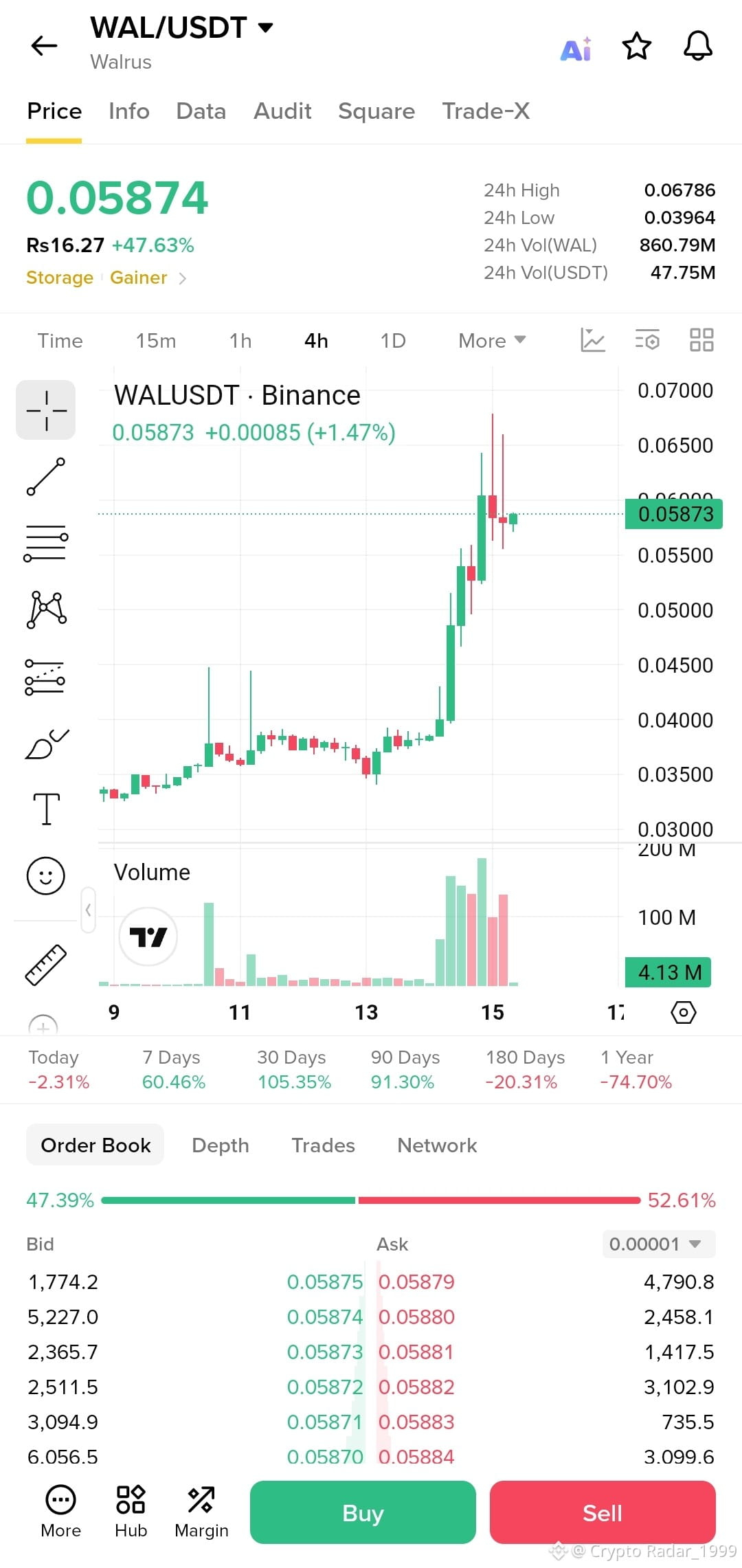
🚨 ¡ACABO DE ENCONTRAR UNA CONFIGURACIÓN CLARA DE 4H EN $WAL L! 👀
La mayoría no la verá. ¡Tú no te la pierdas! 🎯
CONFIGURACIÓN DE RETROCESO
📍 Entrada: $0.0500–$0.0520
🛑 SL: $0.0470
🎯 TP1: $0.0540
🎯 TP2: $0.0570
🚀 TP3: $0.0600
$WAL 💎 $POWER
{future}(WALUSDT)
#WAL #Walrus #Crypto #Trading #BinanceSquare
🚨 ¡ACABO DE ENCONTRAR UNA CONFIGURACIÓN CLARA DE 4H EN $WAL L! 👀
La mayoría no la verá. ¡Tú no te la pierdas! 🎯
CONFIGURACIÓN DE RETROCESO
📍 Entrada: $0.0500–$0.0520
🛑 SL: $0.0470
🎯 TP1: $0.0540
🎯 TP2: $0.0570
🚀 TP3: $0.0600
$WAL 💎 $POWER
#WAL #Walrus #Crypto #Trading #BinanceSquare
La mayoría no la verá. ¡Tú no te la pierdas! 🎯
CONFIGURACIÓN DE RETROCESO
📍 Entrada: $0.0500–$0.0520
🛑 SL: $0.0470
🎯 TP1: $0.0540
🎯 TP2: $0.0570
🚀 TP3: $0.0600
$WAL 💎 $POWER
#WAL #Walrus #Crypto #Trading #BinanceSquare
1
186

·
--
🚀 ALERTA DE MAYOR SUBIDA EN BINANCE: $WAL (WALRUS)
🔥 ¡Walrus ($WAL) muestra un fuerte impulso en el mercado!
Según el resumen del mercado de Binance de hoy, WAL ha subido aproximadamente un 53.38% en 24 horas.
📊 Por qué los traders están atentos a WAL:
Fuerte movimiento alcista del precio
Gran interés del mercado
Ganancia significativa en 24 horas
Posibles oportunidades de trading a corto plazo
⚠️ Estrategia de trading: ¡No persigas una vela verde a ciegas!
Consulta el gráfico en vivo de WAL/USDT.
Espera un posible retroceso.
Busca confirmación antes de entrar.
Usa siempre un stop loss.
Nunca arriesgues dinero que no puedas permitirte perder.
💬 Pregunta para los traders: ¿Creen que $WAL puede mantener su impulso alcista o veremos una corrección?
👇 ¡Compartan su análisis!
#WAL #walrus
{future}(WALUSDT)
#CryptoAnalysis #Altcoins! #CryptoMarket
🚀 ALERTA DE MAYOR SUBIDA EN BINANCE: $WAL (WALRUS)
🔥 ¡Walrus ($WAL) muestra un fuerte impulso en el mercado!
Según el resumen del mercado de Binance de hoy, WAL ha subido aproximadamente un 53.38% en 24 horas.
📊 Por qué los traders están atentos a WAL:
Fuerte movimiento alcista del precio
Gran interés del mercado
Ganancia significativa en 24 horas
Posibles oportunidades de trading a corto plazo
⚠️ Estrategia de trading: ¡No persigas una vela verde a ciegas!
Consulta el gráfico en vivo de WAL/USDT.
Espera un posible retroceso.
Busca confirmación antes de entrar.
Usa siempre un stop loss.
Nunca arriesgues dinero que no puedas permitirte perder.
💬 Pregunta para los traders: ¿Creen que $WAL puede mantener su impulso alcista o veremos una corrección?
👇 ¡Compartan su análisis!
#WAL #walrus
#CryptoAnalysis #Altcoins! #CryptoMarket
🔥 ¡Walrus ($WAL) muestra un fuerte impulso en el mercado!
Según el resumen del mercado de Binance de hoy, WAL ha subido aproximadamente un 53.38% en 24 horas.
📊 Por qué los traders están atentos a WAL:
Fuerte movimiento alcista del precio
Gran interés del mercado
Ganancia significativa en 24 horas
Posibles oportunidades de trading a corto plazo
⚠️ Estrategia de trading: ¡No persigas una vela verde a ciegas!
Consulta el gráfico en vivo de WAL/USDT.
Espera un posible retroceso.
Busca confirmación antes de entrar.
Usa siempre un stop loss.
Nunca arriesgues dinero que no puedas permitirte perder.
💬 Pregunta para los traders: ¿Creen que $WAL puede mantener su impulso alcista o veremos una corrección?
👇 ¡Compartan su análisis!
#WAL #walrus
#CryptoAnalysis #Altcoins! #CryptoMarket

167

·
--
WAL subió con fuerza hoy, pero la explicación del «sistema de doble token WAL + FROST» publicada en Plaza divide un mismo activo en dos. La subida es real; la explicación sobre la identidad de los tokens en la publicación antigua es incorrecta.
A las 11:07 del 15 de octubre, hora de Pekín, la variación diaria móvil del perpetuo WALUSDT de Binance era de aproximadamente un 47,3 %. Una publicación antigua del usuario de Plaza 乐天杰克-合一 presentaba WAL + FROST como un sistema de staking de doble token.
Sin embargo, la documentación oficial de Walrus incluye FROST en la sección de «unidad mínima» de WAL: 1 WAL = 10亿 FROST. Es como convertir yuanes en céntimos: aumenta la cantidad que muestra el saldo, pero el activo no se convierte en otro. Llevar las cuentas en FROST no crea una demanda adicional de un token independiente.
En los pagos reales, hay que distinguir entre WAL y SUI. Las preguntas frecuentes oficiales indican que WAL paga las tarifas de almacenamiento y escritura, mientras que SUI paga el gas de las transacciones en cadena. FROST es la unidad de medida del primero; SUI sí es el otro activo de pago en este caso.
La subida de WAL no demuestra que esta narrativa sea cierta.
$WAL #Walrus #EconomíaDeTokens
WAL subió con fuerza hoy, pero la explicación del «sistema de doble token WAL + FROST» publicada en Plaza divide un mismo activo en dos. La subida es real; la explicación sobre la identidad de los tokens en la publicación antigua es incorrecta.
A las 11:07 del 15 de octubre, hora de Pekín, la variación diaria móvil del perpetuo WALUSDT de Binance era de aproximadamente un 47,3 %. Una publicación antigua del usuario de Plaza 乐天杰克-合一 presentaba WAL + FROST como un sistema de staking de doble token.
Sin embargo, la documentación oficial de Walrus incluye FROST en la sección de «unidad mínima» de WAL: 1 WAL = 10亿 FROST. Es como convertir yuanes en céntimos: aumenta la cantidad que muestra el saldo, pero el activo no se convierte en otro. Llevar las cuentas en FROST no crea una demanda adicional de un token independiente.
En los pagos reales, hay que distinguir entre WAL y SUI. Las preguntas frecuentes oficiales indican que WAL paga las tarifas de almacenamiento y escritura, mientras que SUI paga el gas de las transacciones en cadena. FROST es la unidad de medida del primero; SUI sí es el otro activo de pago en este caso.
La subida de WAL no demuestra que esta narrativa sea cierta.
$WAL #Walrus #EconomíaDeTokens
A las 11:07 del 15 de octubre, hora de Pekín, la variación diaria móvil del perpetuo WALUSDT de Binance era de aproximadamente un 47,3 %. Una publicación antigua del usuario de Plaza 乐天杰克-合一 presentaba WAL + FROST como un sistema de staking de doble token.
Sin embargo, la documentación oficial de Walrus incluye FROST en la sección de «unidad mínima» de WAL: 1 WAL = 10亿 FROST. Es como convertir yuanes en céntimos: aumenta la cantidad que muestra el saldo, pero el activo no se convierte en otro. Llevar las cuentas en FROST no crea una demanda adicional de un token independiente.
En los pagos reales, hay que distinguir entre WAL y SUI. Las preguntas frecuentes oficiales indican que WAL paga las tarifas de almacenamiento y escritura, mientras que SUI paga el gas de las transacciones en cadena. FROST es la unidad de medida del primero; SUI sí es el otro activo de pago en este caso.
La subida de WAL no demuestra que esta narrativa sea cierta.
$WAL #Walrus #EconomíaDeTokens
600

·
--
Con verificación

Artículo
Walrus recibe un impulso de 30 millones de dólares mientras Sui amplía su infraestructura de datos para IAWalrus está acaparando atención después de que Sui Foundation anunciara una inversión prevista de 30 millones de dólares en DATA Network, que posiciona a Walrus como la capa de almacenamiento nativa de la red para datos de entrenamiento de IA. La alianza busca crear una cadena de suministro de datos escalable y verificable que ayude a establecer el origen, la propiedad y el uso autorizado de los datos empleados para entrenar modelos de inteligencia artificial.
Walrus
Como parte de la transición anunciada en octubre de 2026, DATA Network planea dejar de usar su blockchain independiente y reconstruir su protocolo sobre Sui. Según se informa, su registro Trace ha contabilizado más de 250 millones de contribuciones de datos, mientras que Walrus proporcionará almacenamiento descentralizado para copias cifradas e inmutables de los archivos de origen. Sui permitirá gestionar derechos programables y pagos, lo que ayudará a vincular la propiedad de los datos con los usos permitidos.
Walrus recibe un impulso de 30 millones de dólares mientras Sui amplía su infraestructura de datos para IA
Walrus está acaparando atención después de que Sui Foundation anunciara una inversión prevista de 30 millones de dólares en DATA Network, que posiciona a Walrus como la capa de almacenamiento nativa de la red para datos de entrenamiento de IA. La alianza busca crear una cadena de suministro de datos escalable y verificable que ayude a establecer el origen, la propiedad y el uso autorizado de los datos empleados para entrenar modelos de inteligencia artificial.
Walrus
Como parte de la transición anunciada en octubre de 2026, DATA Network planea dejar de usar su blockchain independiente y reconstruir su protocolo sobre Sui. Según se informa, su registro Trace ha contabilizado más de 250 millones de contribuciones de datos, mientras que Walrus proporcionará almacenamiento descentralizado para copias cifradas e inmutables de los archivos de origen. Sui permitirá gestionar derechos programables y pagos, lo que ayudará a vincular la propiedad de los datos con los usos permitidos.
Walrus
Como parte de la transición anunciada en octubre de 2026, DATA Network planea dejar de usar su blockchain independiente y reconstruir su protocolo sobre Sui. Según se informa, su registro Trace ha contabilizado más de 250 millones de contribuciones de datos, mientras que Walrus proporcionará almacenamiento descentralizado para copias cifradas e inmutables de los archivos de origen. Sui permitirá gestionar derechos programables y pagos, lo que ayudará a vincular la propiedad de los datos con los usos permitidos.
1
8
694
Inicia sesión para explorar más contenidos
Únete a usuarios de criptomonedas de todo el mundo en Binance Square
⚡️ Obtén la información más reciente y útil sobre criptomonedas.
💬 Confía en el mayor exchange de criptomonedas del mundo.
👍 Descubre opiniones reales de creadores verificados.
Correo electrónico/número de teléfono
Temas en tendencia
1
#BitcoinSlipsBelow$80KAgain
0 visualizaciones
0 participa(n) en el debate
2
#StrategySkipsBitcoinPurchasesSpends$205MOnSTRCBuybacks
2,100 visualizaciones
57 participa(n) en el debate
3
#BitmineAdds10452ETH
19,048 visualizaciones
393 participa(n) en el debate
4
#SouthKoreaConsidersEducationTaxOnCryptoExchanges
13,968 visualizaciones
328 participa(n) en el debate
5
#OCCUrgesCommunityBanksToEnterStablecoinPayments
11,379 visualizaciones
201 participa(n) en el debate
6
#RippleWinsFullApprovalAsNationalTrustBank
11,090 visualizaciones
210 participa(n) en el debate
7
#AkashSelectsSolanaAsMigrationTarget
8,291 visualizaciones
104 participa(n) en el debate
8
#OndoToOpenSubscriptionsForOpenAIPreIPOTokenizedNotes
452 visualizaciones
21 participa(n) en el debate
9
#AnthropicTTMRevenueGrewAbout1200%
64,596 visualizaciones
633 participa(n) en el debate
10
#AnthropicS1ExpectedToday
46,417 visualizaciones
430 participa(n) en el debate