
Square Alpha
7.6k Publicaciones

Square Alpha
Denunciar
Bloquear usuario
Web3 trader & market analyst – uncovering early opportunities, charts, and airdrops – pure alpha, no hype
Trader frecuente
5.4 año(s)
304 Siguiendo
12.3K+ Seguidores
12.5K+ Me gusta
Publicaciones
Todo
Citas
Live
·
--
Alcista
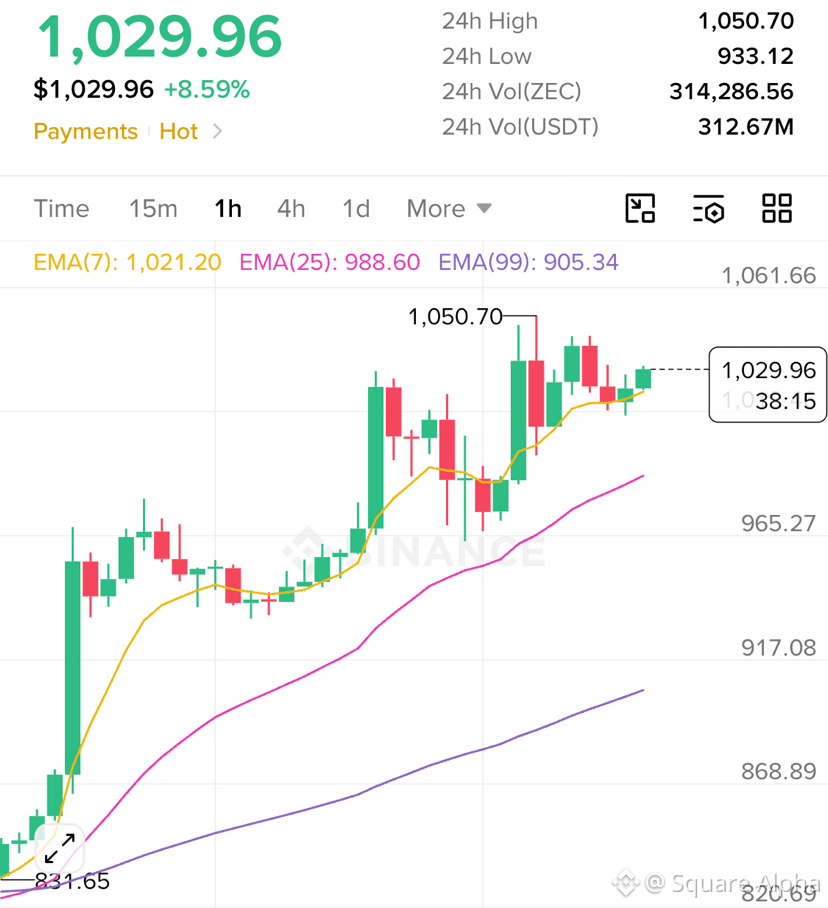
💥 $ZEC está consolidándose por encima de $1,000 como si fuera el dueño del lugar — ¡el gran nivel psicológico acaba de convertirse en soporte! 😤
LARGO (1H):
→ Entrada: 1,015 – 1,030
→ SL: 985
→ TP1: 1,050.70
→ TP2: 1,080, envío completo 1,100
por qué: mínimos cada vez más altos en marcha, RSI en 62 con espacio real antes de estar sobrecalentado, y he visto cómo cada toque de la EMA7 se compra dentro de la vela durante toda la semana. El precio se está comprimiendo justo debajo de 1,050 con el piso de $1,000 por debajo = configuración de ruptura con una línea de riesgo limpia. Una antigua resistencia convirtiéndose en soporte es el giro más fuerte en trading.
Un cierre de 1h por debajo de 985 y la idea muere, lo diré claramente. ¿Quién se sube a ZEC hasta 1,100? 👇
#zec #zcash $ZEC
{spot}(ZECUSDT)
💥 $ZEC está consolidándose por encima de $1,000 como si fuera el dueño del lugar — ¡el gran nivel psicológico acaba de convertirse en soporte! 😤
LARGO (1H):
→ Entrada: 1,015 – 1,030
→ SL: 985
→ TP1: 1,050.70
→ TP2: 1,080, envío completo 1,100
por qué: mínimos cada vez más altos en marcha, RSI en 62 con espacio real antes de estar sobrecalentado, y he visto cómo cada toque de la EMA7 se compra dentro de la vela durante toda la semana. El precio se está comprimiendo justo debajo de 1,050 con el piso de $1,000 por debajo = configuración de ruptura con una línea de riesgo limpia. Una antigua resistencia convirtiéndose en soporte es el giro más fuerte en trading.
Un cierre de 1h por debajo de 985 y la idea muere, lo diré claramente. ¿Quién se sube a ZEC hasta 1,100? 👇
#zec #zcash $ZEC
LARGO (1H):
→ Entrada: 1,015 – 1,030
→ SL: 985
→ TP1: 1,050.70
→ TP2: 1,080, envío completo 1,100
por qué: mínimos cada vez más altos en marcha, RSI en 62 con espacio real antes de estar sobrecalentado, y he visto cómo cada toque de la EMA7 se compra dentro de la vela durante toda la semana. El precio se está comprimiendo justo debajo de 1,050 con el piso de $1,000 por debajo = configuración de ruptura con una línea de riesgo limpia. Una antigua resistencia convirtiéndose en soporte es el giro más fuerte en trading.
Un cierre de 1h por debajo de 985 y la idea muere, lo diré claramente. ¿Quién se sube a ZEC hasta 1,100? 👇
#zec #zcash $ZEC
212
·
--
Alcista
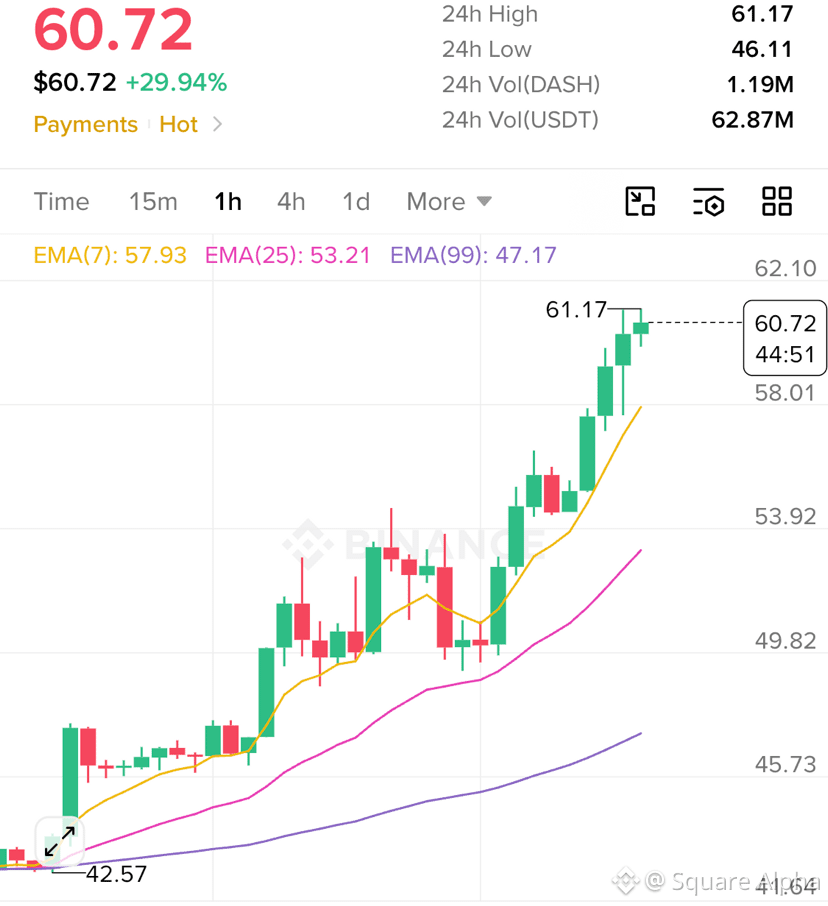
💥 $DASH está en +30% y se niega a enfriarse — ¡cada caída es absorbida en cuestión de velas! 😤
📊 LARGO (1H):
→ Entrada: 59.0 – 60.0
→ SL: 57.0
→ TP1: 61.17
→ TP2: 63.5, salida total 65
por qué: mínimos más altos todo el camino desde 42, EMAs abiertas en verde y el precio manteniéndose en los máximos en lugar de desinflarse. He visto que cinco caídas de este impulso se compran antes de que siquiera terminen de formarse. RSI está caliente, sí — pero en una carrera de momentum real, estar caliente es lo normal, no la señal de salida.
Un cierre de 1h por debajo de 57 y la idea está muerta, lo diré en voz alta. ¿quién se monta en la escalera? 👇
#DASH #Payments
{spot}(DASHUSDT)
💥 $DASH está en +30% y se niega a enfriarse — ¡cada caída es absorbida en cuestión de velas! 😤
📊 LARGO (1H):
→ Entrada: 59.0 – 60.0
→ SL: 57.0
→ TP1: 61.17
→ TP2: 63.5, salida total 65
por qué: mínimos más altos todo el camino desde 42, EMAs abiertas en verde y el precio manteniéndose en los máximos en lugar de desinflarse. He visto que cinco caídas de este impulso se compran antes de que siquiera terminen de formarse. RSI está caliente, sí — pero en una carrera de momentum real, estar caliente es lo normal, no la señal de salida.
Un cierre de 1h por debajo de 57 y la idea está muerta, lo diré en voz alta. ¿quién se monta en la escalera? 👇
#DASH #Payments
📊 LARGO (1H):
→ Entrada: 59.0 – 60.0
→ SL: 57.0
→ TP1: 61.17
→ TP2: 63.5, salida total 65
por qué: mínimos más altos todo el camino desde 42, EMAs abiertas en verde y el precio manteniéndose en los máximos en lugar de desinflarse. He visto que cinco caídas de este impulso se compran antes de que siquiera terminen de formarse. RSI está caliente, sí — pero en una carrera de momentum real, estar caliente es lo normal, no la señal de salida.
Un cierre de 1h por debajo de 57 y la idea está muerta, lo diré en voz alta. ¿quién se monta en la escalera? 👇
#DASH #Payments
197
·
--
Alcista
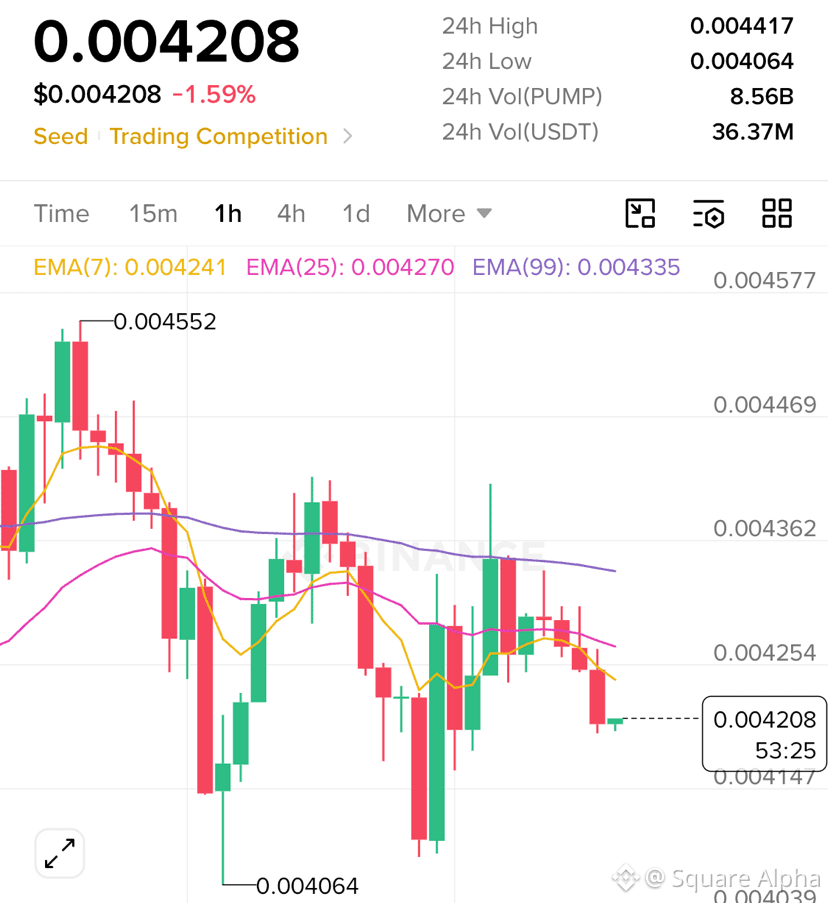
💥 $PUMP 's floor se mantuvo dos veces y los vendedores se quedaron sin munición — ¡carga en espiral bajo el muro! 😤
📊 LARGO (1H):
→ Entrada: 0.00415 – 0.00421
→ SL: 0.00403
→ TP1: 0.00433
→ TP2: 0.00455, envío completo 0.0047
por qué: 0.004064 fue golpeado dos veces y no se rompió, y el volumen rojo se está reduciendo a nada = vendedores agotados. He visto este mismo resorte dispararse antes en esta moneda, y un cierre por encima de 0.00433 exprime a todos los cortos del libro.
si 0.00403 se rompe, la idea está muerta, lo diré en voz alta. ¿quién está comprando el piso? 👇
#pump #pumpfun $PUMP
{spot}(PUMPUSDT)
💥 $PUMP 's floor se mantuvo dos veces y los vendedores se quedaron sin munición — ¡carga en espiral bajo el muro! 😤
📊 LARGO (1H):
→ Entrada: 0.00415 – 0.00421
→ SL: 0.00403
→ TP1: 0.00433
→ TP2: 0.00455, envío completo 0.0047
por qué: 0.004064 fue golpeado dos veces y no se rompió, y el volumen rojo se está reduciendo a nada = vendedores agotados. He visto este mismo resorte dispararse antes en esta moneda, y un cierre por encima de 0.00433 exprime a todos los cortos del libro.
si 0.00403 se rompe, la idea está muerta, lo diré en voz alta. ¿quién está comprando el piso? 👇
#pump #pumpfun $PUMP
📊 LARGO (1H):
→ Entrada: 0.00415 – 0.00421
→ SL: 0.00403
→ TP1: 0.00433
→ TP2: 0.00455, envío completo 0.0047
por qué: 0.004064 fue golpeado dos veces y no se rompió, y el volumen rojo se está reduciendo a nada = vendedores agotados. He visto este mismo resorte dispararse antes en esta moneda, y un cierre por encima de 0.00433 exprime a todos los cortos del libro.
si 0.00403 se rompe, la idea está muerta, lo diré en voz alta. ¿quién está comprando el piso? 👇
#pump #pumpfun $PUMP
138
·
--
Alcista
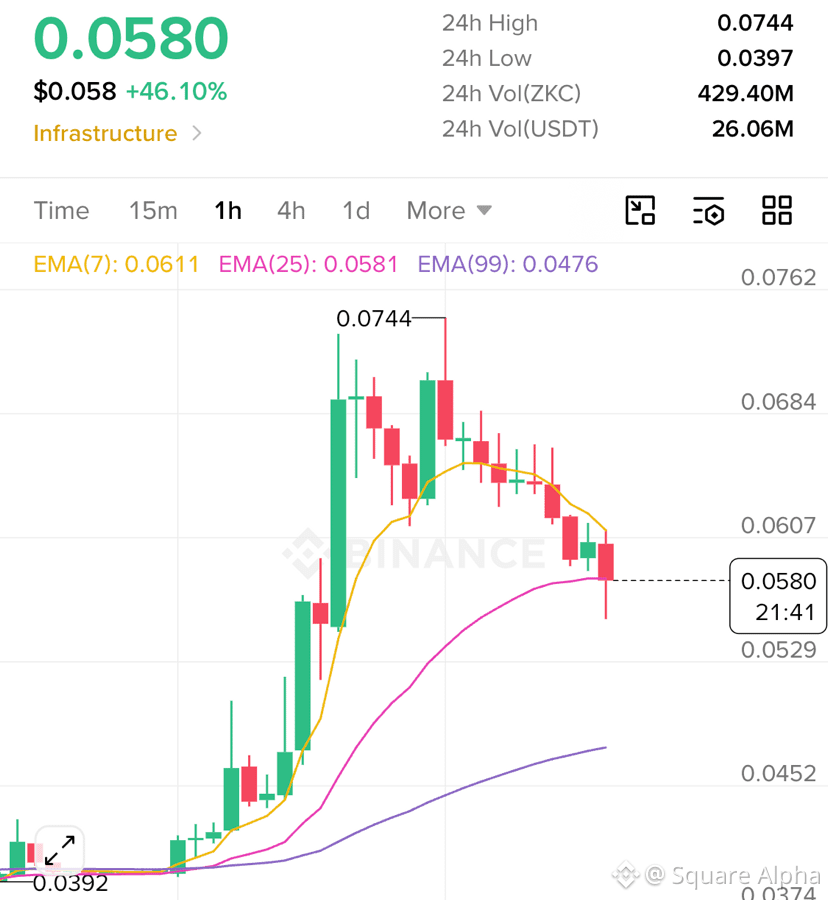
💥 $ZKC está +46% en el día y el primer retroceso real acaba de tocar la EMA25 — ¡el momentum vive o muere en esta línea exacta! 😤
📊 LARGO (1H):
→ Entrada: 0.0565 – 0.0585
→ SL: 0.0542
→ TP1: 0.0611
→ TP2: 0.0660, y 0.0744 full send
aquí está el porqué:
1️⃣ sigue +46% en el día incluso después de este pullback — es un día de momentum, no un “dead cat”
2️⃣ el precio está tocando la EMA25, la primera línea a la que el momentum le rinde respeto; y vi que los dos últimos mechas dentro de esta zona fueron compradas dentro de la vela
3️⃣ RSI(6) pasó de 90+ a 32 = reinicio de combustible, no un quiebre de tendencia — mientras esta línea se mantenga
si una vela de 1h cierra por debajo de 0.0542, la tesis muere y lo diré en voz alta en el siguiente post. ese es el trato.
Volveré con el gráfico y te mostraré lo que pasó. ¿quién compra el retroceso conmigo? 👇
#ZKC #boundless $ZKC
{spot}(ZKCUSDT)
💥 $ZKC está +46% en el día y el primer retroceso real acaba de tocar la EMA25 — ¡el momentum vive o muere en esta línea exacta! 😤
📊 LARGO (1H):
→ Entrada: 0.0565 – 0.0585
→ SL: 0.0542
→ TP1: 0.0611
→ TP2: 0.0660, y 0.0744 full send
aquí está el porqué:
1️⃣ sigue +46% en el día incluso después de este pullback — es un día de momentum, no un “dead cat”
2️⃣ el precio está tocando la EMA25, la primera línea a la que el momentum le rinde respeto; y vi que los dos últimos mechas dentro de esta zona fueron compradas dentro de la vela
3️⃣ RSI(6) pasó de 90+ a 32 = reinicio de combustible, no un quiebre de tendencia — mientras esta línea se mantenga
si una vela de 1h cierra por debajo de 0.0542, la tesis muere y lo diré en voz alta en el siguiente post. ese es el trato.
Volveré con el gráfico y te mostraré lo que pasó. ¿quién compra el retroceso conmigo? 👇
#ZKC #boundless $ZKC
📊 LARGO (1H):
→ Entrada: 0.0565 – 0.0585
→ SL: 0.0542
→ TP1: 0.0611
→ TP2: 0.0660, y 0.0744 full send
aquí está el porqué:
1️⃣ sigue +46% en el día incluso después de este pullback — es un día de momentum, no un “dead cat”
2️⃣ el precio está tocando la EMA25, la primera línea a la que el momentum le rinde respeto; y vi que los dos últimos mechas dentro de esta zona fueron compradas dentro de la vela
3️⃣ RSI(6) pasó de 90+ a 32 = reinicio de combustible, no un quiebre de tendencia — mientras esta línea se mantenga
si una vela de 1h cierra por debajo de 0.0542, la tesis muere y lo diré en voz alta en el siguiente post. ese es el trato.
Volveré con el gráfico y te mostraré lo que pasó. ¿quién compra el retroceso conmigo? 👇
#ZKC #boundless $ZKC
112
·
--
Alcista
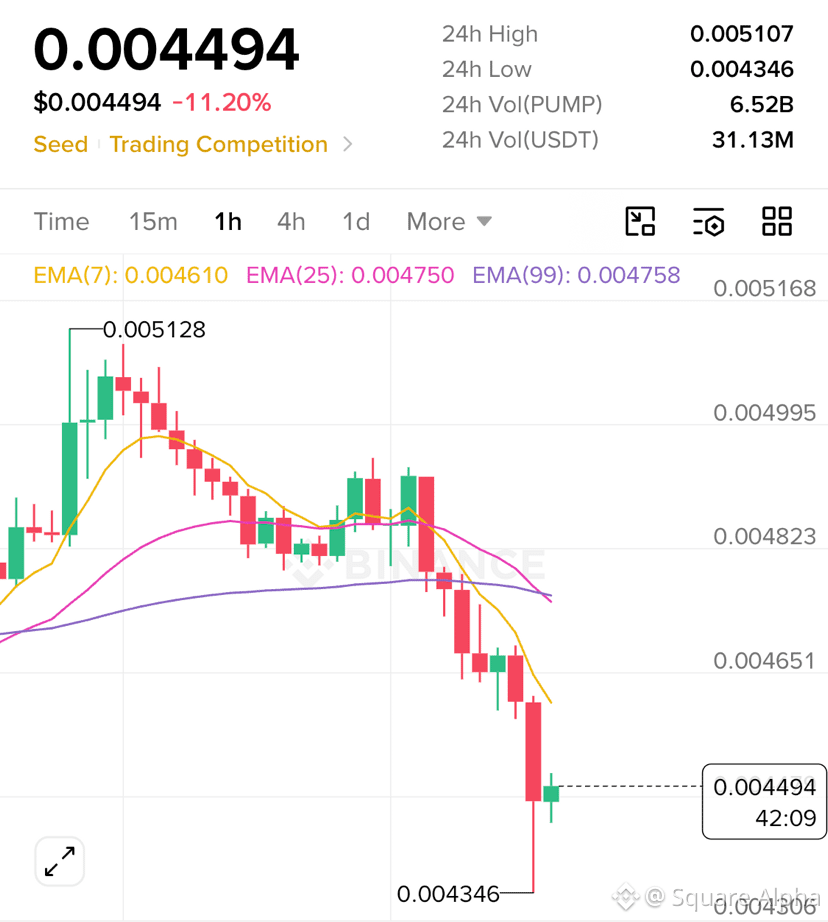
💥 $PUMP acabó de imprimir una mecha de capitulación — y esta es la parte que la mayoría se perdió 👇
LARGO (1H):
→ Entrada: 0.00445 – 0.00450
→ SL: 0.00430
→ TP1: 0.00461
→ TP2: 0.00475, y 0.0049 full send
esto es por qué:
1️⃣ esa barra de volumen roja = 3x el promedio semanal → se vendió en pánico en UN solo candle, no una caída lenta
2️⃣ RSI 20 = lo más sobrevendido desde el mínimo de 0.0036, y ese rebote +40%
3️⃣ el precio está de vuelta en la zona exacta donde se compraron las dos últimas ventas fuertes (0.0043–0.0045)
si se rompe 0.00430, la tesis muere y lo diré en voz alta en el siguiente post. así está el trato.
Volveré mañana con el gráfico y te mostraré qué pasó. ¿quién está dentro? 👇
#pump #pumpfun $PUMP
{spot}(PUMPUSDT)
💥 $PUMP acabó de imprimir una mecha de capitulación — y esta es la parte que la mayoría se perdió 👇
LARGO (1H):
→ Entrada: 0.00445 – 0.00450
→ SL: 0.00430
→ TP1: 0.00461
→ TP2: 0.00475, y 0.0049 full send
esto es por qué:
1️⃣ esa barra de volumen roja = 3x el promedio semanal → se vendió en pánico en UN solo candle, no una caída lenta
2️⃣ RSI 20 = lo más sobrevendido desde el mínimo de 0.0036, y ese rebote +40%
3️⃣ el precio está de vuelta en la zona exacta donde se compraron las dos últimas ventas fuertes (0.0043–0.0045)
si se rompe 0.00430, la tesis muere y lo diré en voz alta en el siguiente post. así está el trato.
Volveré mañana con el gráfico y te mostraré qué pasó. ¿quién está dentro? 👇
#pump #pumpfun $PUMP
LARGO (1H):
→ Entrada: 0.00445 – 0.00450
→ SL: 0.00430
→ TP1: 0.00461
→ TP2: 0.00475, y 0.0049 full send
esto es por qué:
1️⃣ esa barra de volumen roja = 3x el promedio semanal → se vendió en pánico en UN solo candle, no una caída lenta
2️⃣ RSI 20 = lo más sobrevendido desde el mínimo de 0.0036, y ese rebote +40%
3️⃣ el precio está de vuelta en la zona exacta donde se compraron las dos últimas ventas fuertes (0.0043–0.0045)
si se rompe 0.00430, la tesis muere y lo diré en voz alta en el siguiente post. así está el trato.
Volveré mañana con el gráfico y te mostraré qué pasó. ¿quién está dentro? 👇
#pump #pumpfun $PUMP
483
·
--
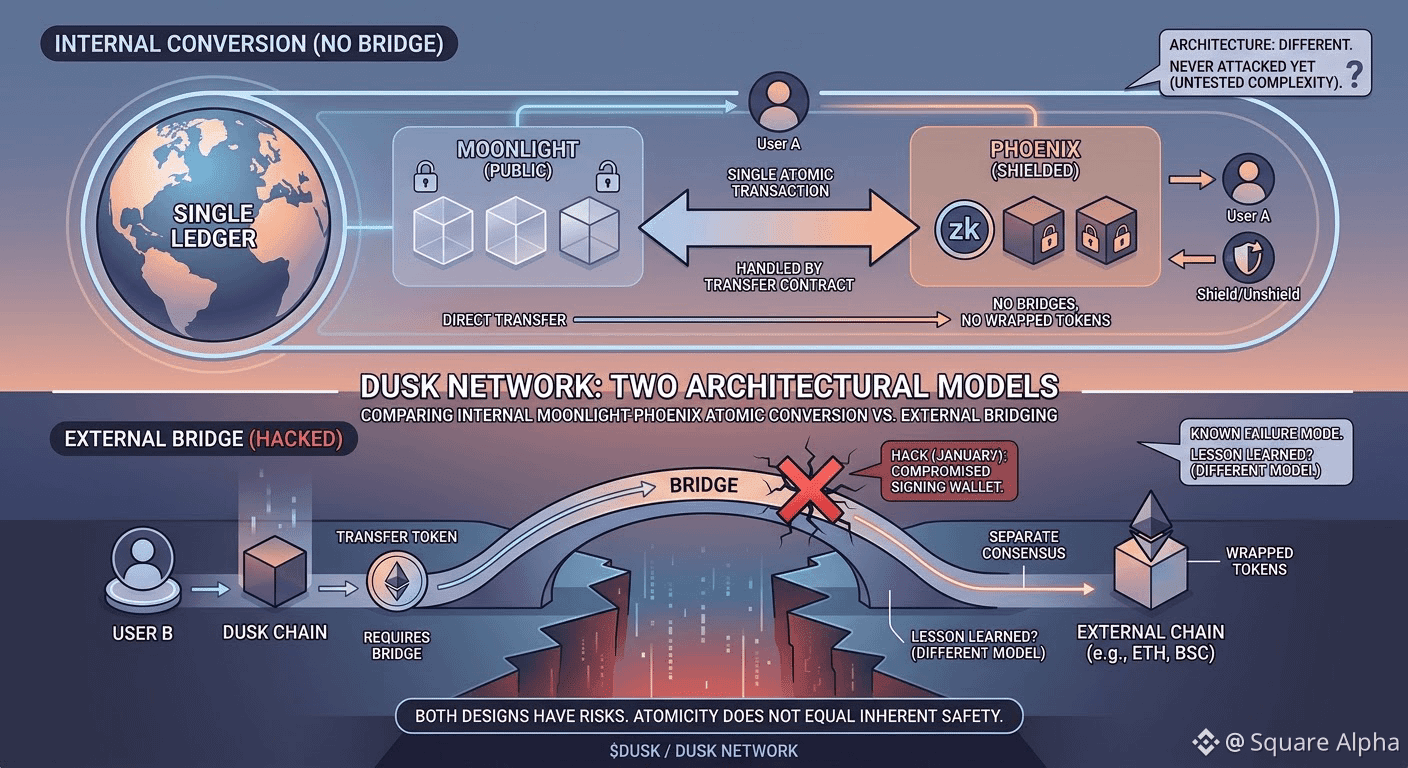
Volví hoy a los propios documentos de Dusk específicamente para comprobar algo después de escribir sobre su hack del puente la semana pasada, y encontré un detalle que lo conecta directamente.
dusk ejecuta dos modelos de transacción en el mismo libro mayor. moonlight es público: normal, transparente, como la mayoría de las cadenas. phoenix está protegido: privado, basado en zk. cambiar entre ellos, pasar de protegido a desprotegido o al revés, es una sola transacción atómica manejada por el contrato de transferencia propio de dusk.
no hay puente. no hay token envuelto. según sus propios documentos: “manejada por el contrato de transferencia en una sola transacción atómica — sin puentes, sin tokens envueltos.”
esa frase me detuvo, porque el hack de enero — el que realmente ocurrió — pasó exactamente por lo que este mecanismo está diseñado para evitar. un puente separado, hacia una cadena externa, con una billetera de firma comprometida como punto de fallo.
así que la parte de dusk que ya fue golpeada dependió de puentear. la parte que convierte internamente entre modos público y privado, deliberadamente, no.
quiero leerlo como “aprendieron la lección antes de necesitarla”. pero no puedo confirmar de verdad que el mecanismo interno de proteger y desproteger sea más seguro; solo que es arquitectónicamente diferente: que no haya puente externo no significa automáticamente que no exista superficie de ataque, solo que hay una distinta. la conversión atómica en el mismo libro mayor entre dos modelos de transacción totalmente diferentes sigue siendo código complejo que nunca ha sido probado por un atacante real como ya lo ha sido el puente.
una parte de dusk tiene ahora un modo de fallo conocido. la otra parte simplemente aún no ha sido atacada. esas cosas no son lo mismo que seguro, aunque el diseño parezca más cuidadoso.
#dusk @Dusk_Foundation $DUSK
{spot}(DUSKUSDT)
Volví hoy a los propios documentos de Dusk específicamente para comprobar algo después de escribir sobre su hack del puente la semana pasada, y encontré un detalle que lo conecta directamente.
dusk ejecuta dos modelos de transacción en el mismo libro mayor. moonlight es público: normal, transparente, como la mayoría de las cadenas. phoenix está protegido: privado, basado en zk. cambiar entre ellos, pasar de protegido a desprotegido o al revés, es una sola transacción atómica manejada por el contrato de transferencia propio de dusk.
no hay puente. no hay token envuelto. según sus propios documentos: “manejada por el contrato de transferencia en una sola transacción atómica — sin puentes, sin tokens envueltos.”
esa frase me detuvo, porque el hack de enero — el que realmente ocurrió — pasó exactamente por lo que este mecanismo está diseñado para evitar. un puente separado, hacia una cadena externa, con una billetera de firma comprometida como punto de fallo.
así que la parte de dusk que ya fue golpeada dependió de puentear. la parte que convierte internamente entre modos público y privado, deliberadamente, no.
quiero leerlo como “aprendieron la lección antes de necesitarla”. pero no puedo confirmar de verdad que el mecanismo interno de proteger y desproteger sea más seguro; solo que es arquitectónicamente diferente: que no haya puente externo no significa automáticamente que no exista superficie de ataque, solo que hay una distinta. la conversión atómica en el mismo libro mayor entre dos modelos de transacción totalmente diferentes sigue siendo código complejo que nunca ha sido probado por un atacante real como ya lo ha sido el puente.
una parte de dusk tiene ahora un modo de fallo conocido. la otra parte simplemente aún no ha sido atacada. esas cosas no son lo mismo que seguro, aunque el diseño parezca más cuidadoso.
#dusk @Dusk $DUSK
dusk ejecuta dos modelos de transacción en el mismo libro mayor. moonlight es público: normal, transparente, como la mayoría de las cadenas. phoenix está protegido: privado, basado en zk. cambiar entre ellos, pasar de protegido a desprotegido o al revés, es una sola transacción atómica manejada por el contrato de transferencia propio de dusk.
no hay puente. no hay token envuelto. según sus propios documentos: “manejada por el contrato de transferencia en una sola transacción atómica — sin puentes, sin tokens envueltos.”
esa frase me detuvo, porque el hack de enero — el que realmente ocurrió — pasó exactamente por lo que este mecanismo está diseñado para evitar. un puente separado, hacia una cadena externa, con una billetera de firma comprometida como punto de fallo.
así que la parte de dusk que ya fue golpeada dependió de puentear. la parte que convierte internamente entre modos público y privado, deliberadamente, no.
quiero leerlo como “aprendieron la lección antes de necesitarla”. pero no puedo confirmar de verdad que el mecanismo interno de proteger y desproteger sea más seguro; solo que es arquitectónicamente diferente: que no haya puente externo no significa automáticamente que no exista superficie de ataque, solo que hay una distinta. la conversión atómica en el mismo libro mayor entre dos modelos de transacción totalmente diferentes sigue siendo código complejo que nunca ha sido probado por un atacante real como ya lo ha sido el puente.
una parte de dusk tiene ahora un modo de fallo conocido. la otra parte simplemente aún no ha sido atacada. esas cosas no son lo mismo que seguro, aunque el diseño parezca más cuidadoso.
#dusk @Dusk $DUSK
1
2
157
·
--
Alcista
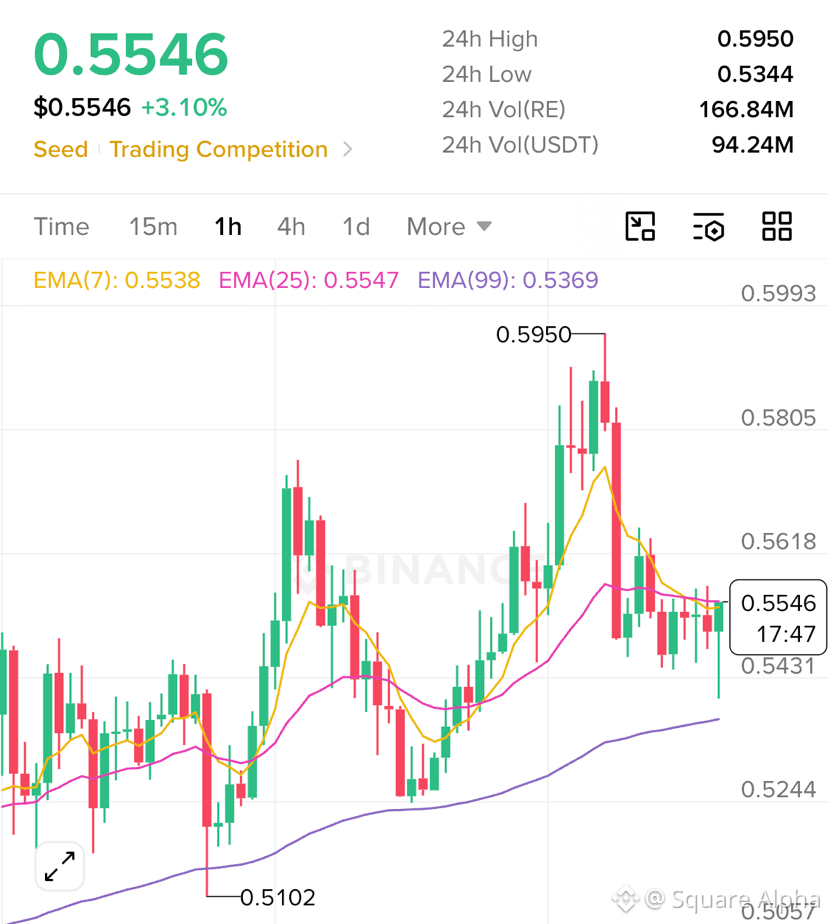
💥 $RE sacó a las manos débiles de 0.595 a 0.543 y ahora se está enrollando justo en el clúster de la EMA — ¡siguiente tramo cargándose! 😤
📊 LARGO (1H):
→ Entrada: 0.548 – 0.556
→ SL: 0.532
→ TP1: 0.580
→ TP2: 0.595, y 0.64 a tope
la lectura: He visto que el suelo de 0.543 aguanta tres veces esta semana mientras el RSI se enfriaba de “cocinado” de vuelta a 50 — esto es una recarga, no una reversión. Y los fundamentos están de verdad con picante: reUSD acaba de salir en vivo en Solana, el token gobierna un mercado real de reaseguro en cadena, y solo ~16% del suministro está circulando. Flotación baja + narrativa de RWA real + gráfico enroscado = mi tipo favorito de setup. A esta moneda le encanta imprimir velas de +30% de la nada.
¿quién está cargando la bobina conmigo? 👇
#RE #ReProtocol #RWA #setup #signal
{spot}(REUSDT)
💥 $RE sacó a las manos débiles de 0.595 a 0.543 y ahora se está enrollando justo en el clúster de la EMA — ¡siguiente tramo cargándose! 😤
📊 LARGO (1H):
→ Entrada: 0.548 – 0.556
→ SL: 0.532
→ TP1: 0.580
→ TP2: 0.595, y 0.64 a tope
la lectura: He visto que el suelo de 0.543 aguanta tres veces esta semana mientras el RSI se enfriaba de “cocinado” de vuelta a 50 — esto es una recarga, no una reversión. Y los fundamentos están de verdad con picante: reUSD acaba de salir en vivo en Solana, el token gobierna un mercado real de reaseguro en cadena, y solo ~16% del suministro está circulando. Flotación baja + narrativa de RWA real + gráfico enroscado = mi tipo favorito de setup. A esta moneda le encanta imprimir velas de +30% de la nada.
¿quién está cargando la bobina conmigo? 👇
#RE #ReProtocol #RWA #setup #signal
📊 LARGO (1H):
→ Entrada: 0.548 – 0.556
→ SL: 0.532
→ TP1: 0.580
→ TP2: 0.595, y 0.64 a tope
la lectura: He visto que el suelo de 0.543 aguanta tres veces esta semana mientras el RSI se enfriaba de “cocinado” de vuelta a 50 — esto es una recarga, no una reversión. Y los fundamentos están de verdad con picante: reUSD acaba de salir en vivo en Solana, el token gobierna un mercado real de reaseguro en cadena, y solo ~16% del suministro está circulando. Flotación baja + narrativa de RWA real + gráfico enroscado = mi tipo favorito de setup. A esta moneda le encanta imprimir velas de +30% de la nada.
¿quién está cargando la bobina conmigo? 👇
#RE #ReProtocol #RWA #setup #signal
99
·
--
Alcista
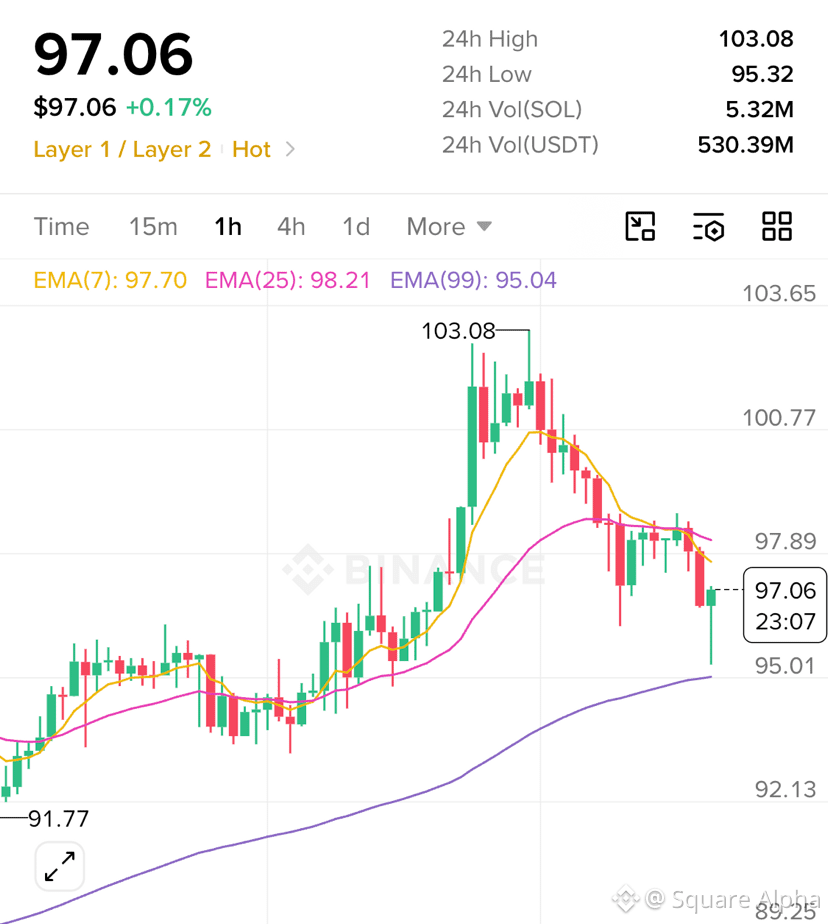
💥 $SOL acaba de imprimir una mecha inferior enorme justo en la EMA99 — ¡los compradores de la caída aparecieron exactamente a tiempo! 😤
📊 LARGO (1H):
→ Entrada: 96.5 – 97.2
→ SL: 94.6
→ TP1: 98.2
→ TP2: 100.7, y 103 full send
la lectura: la subida de 89 a 103 fue la tendencia; esta caída solo es el enfriamiento. El RSI pasó de 80 a 33 en algunas velas — eso es un reinicio, no un funeral. He estado vigilando 95 toda la semana como un halcón, y esa mecha que tocó 95.3 comprada al instante me dice que el dinero grande sigue defendiendo la línea. EMA99 al alza + defensa de la mecha + RSI lavado = la receta exacta para la próxima pierna al alza.
¿quién compra la mecha conmigo? 👇
#sol #Solana #setup #signal $SOL
{spot}(SOLUSDT)
💥 $SOL acaba de imprimir una mecha inferior enorme justo en la EMA99 — ¡los compradores de la caída aparecieron exactamente a tiempo! 😤
📊 LARGO (1H):
→ Entrada: 96.5 – 97.2
→ SL: 94.6
→ TP1: 98.2
→ TP2: 100.7, y 103 full send
la lectura: la subida de 89 a 103 fue la tendencia; esta caída solo es el enfriamiento. El RSI pasó de 80 a 33 en algunas velas — eso es un reinicio, no un funeral. He estado vigilando 95 toda la semana como un halcón, y esa mecha que tocó 95.3 comprada al instante me dice que el dinero grande sigue defendiendo la línea. EMA99 al alza + defensa de la mecha + RSI lavado = la receta exacta para la próxima pierna al alza.
¿quién compra la mecha conmigo? 👇
#sol #Solana #setup #signal $SOL
📊 LARGO (1H):
→ Entrada: 96.5 – 97.2
→ SL: 94.6
→ TP1: 98.2
→ TP2: 100.7, y 103 full send
la lectura: la subida de 89 a 103 fue la tendencia; esta caída solo es el enfriamiento. El RSI pasó de 80 a 33 en algunas velas — eso es un reinicio, no un funeral. He estado vigilando 95 toda la semana como un halcón, y esa mecha que tocó 95.3 comprada al instante me dice que el dinero grande sigue defendiendo la línea. EMA99 al alza + defensa de la mecha + RSI lavado = la receta exacta para la próxima pierna al alza.
¿quién compra la mecha conmigo? 👇
#sol #Solana #setup #signal $SOL
132
·
--
Alcista
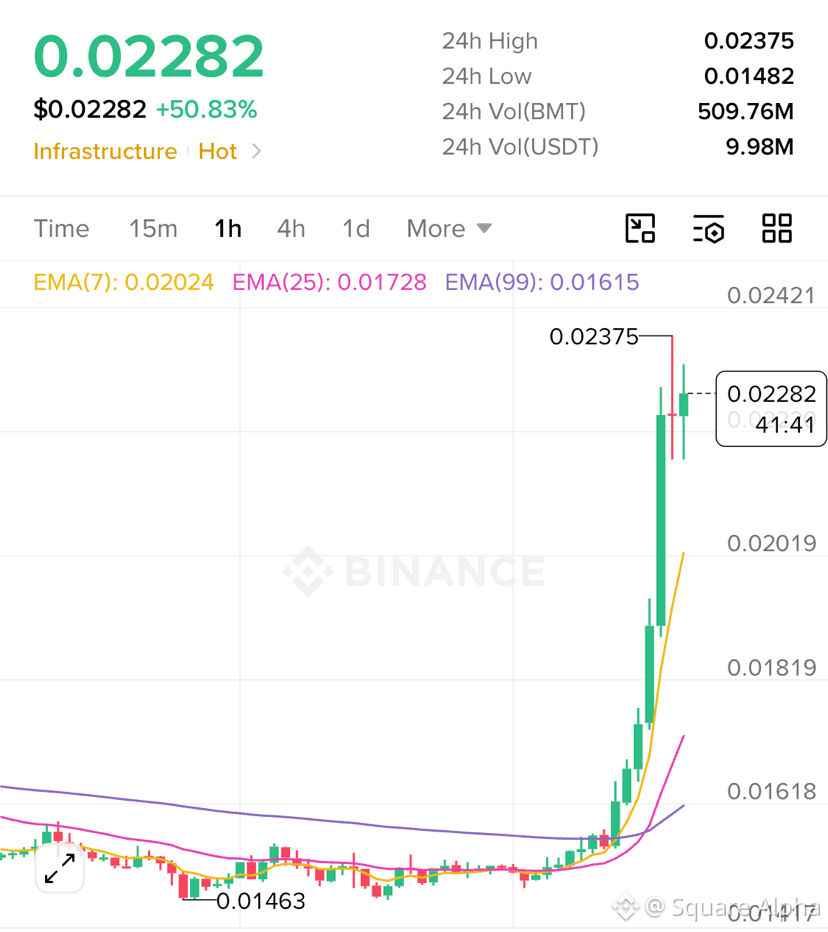
💥 $BMT acaba de recibir el tratamiento de listado en Corea: airdrop + nuevo exchange en la misma semana; no es de extrañar que esté en vertical. 😤
LARGO (1H):
→ Entrada: 0.0202 – 0.0210
→ SL: 0.0185
→ TP1: 0.02375
→ TP2: 0.0260, y 0.030 full send
a la lectura: esto no es un meme pump aleatorio. Binance metió BMT en el airdrop HODLer, Bithumb lo listó días después, y el interés abierto llegó a $15M — spot y apalancamiento entrando a la vez. He operado algunos runs de listados coreanos antes y rara vez terminan en una sola vela; el primer retroceso suele ser la entrada que todos desearían haber tomado. RSI está al máximo en 98, sí — así que no persigo el verde; lo dejo volver a la EMA7 y compro ahí. Temporada de listados + una herramienta que realmente usa todo el mundo para detectar wallets con insiders = mi combo favorito.
¿quién va montado en la ola coreana? 👇
#BMT #Bubblemaps
{spot}(BMTUSDT)
💥 $BMT acaba de recibir el tratamiento de listado en Corea: airdrop + nuevo exchange en la misma semana; no es de extrañar que esté en vertical. 😤
LARGO (1H):
→ Entrada: 0.0202 – 0.0210
→ SL: 0.0185
→ TP1: 0.02375
→ TP2: 0.0260, y 0.030 full send
a la lectura: esto no es un meme pump aleatorio. Binance metió BMT en el airdrop HODLer, Bithumb lo listó días después, y el interés abierto llegó a $15M — spot y apalancamiento entrando a la vez. He operado algunos runs de listados coreanos antes y rara vez terminan en una sola vela; el primer retroceso suele ser la entrada que todos desearían haber tomado. RSI está al máximo en 98, sí — así que no persigo el verde; lo dejo volver a la EMA7 y compro ahí. Temporada de listados + una herramienta que realmente usa todo el mundo para detectar wallets con insiders = mi combo favorito.
¿quién va montado en la ola coreana? 👇
#BMT #Bubblemaps
LARGO (1H):
→ Entrada: 0.0202 – 0.0210
→ SL: 0.0185
→ TP1: 0.02375
→ TP2: 0.0260, y 0.030 full send
a la lectura: esto no es un meme pump aleatorio. Binance metió BMT en el airdrop HODLer, Bithumb lo listó días después, y el interés abierto llegó a $15M — spot y apalancamiento entrando a la vez. He operado algunos runs de listados coreanos antes y rara vez terminan en una sola vela; el primer retroceso suele ser la entrada que todos desearían haber tomado. RSI está al máximo en 98, sí — así que no persigo el verde; lo dejo volver a la EMA7 y compro ahí. Temporada de listados + una herramienta que realmente usa todo el mundo para detectar wallets con insiders = mi combo favorito.
¿quién va montado en la ola coreana? 👇
#BMT #Bubblemaps
123
·
--
Alcista
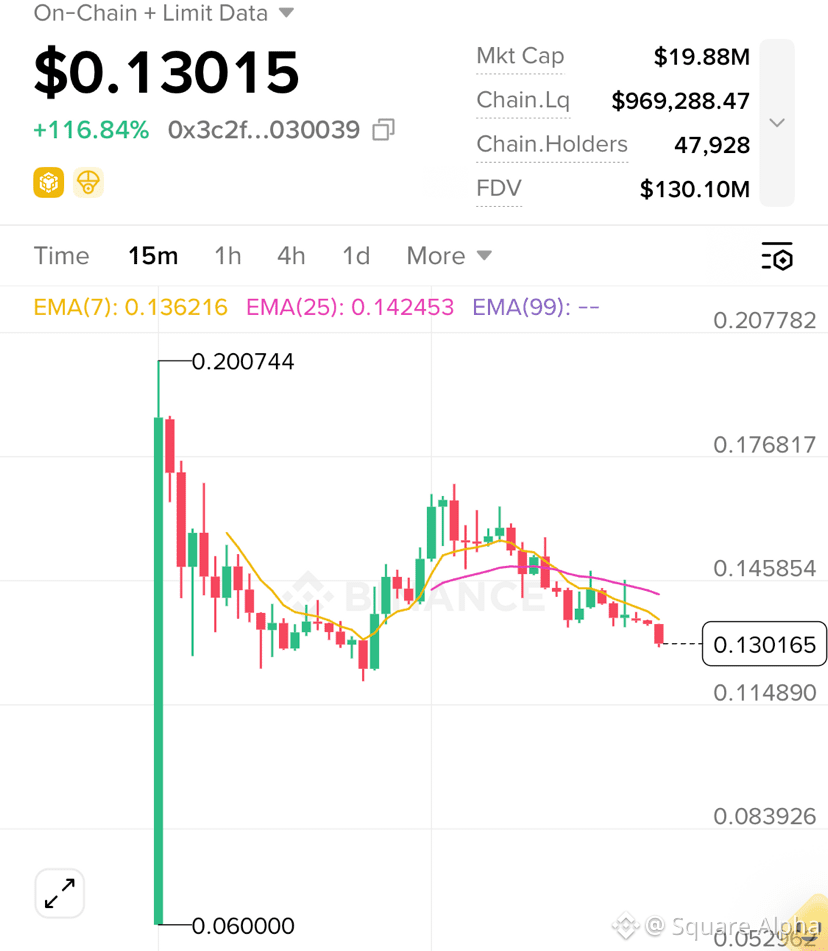
💥 $TMX está +116% en el día y el retroceso está justo en su suelo de lanzamiento — ¡rebote por sobreventa activándose! 😤
📊 LARGO (15M):
→ Entrada: 0.128 – 0.132
→ SL: 0.118
→ TP1: 0.1425
→ TP2: 0.160, y 0.20 envío total
He estado viendo cómo ponen a prueba el suelo de 0.122 tres veces y aguanta cada vez — eso no es suerte, es que los compradores defienden su línea. El RSI en 24 es un resorte comprimido, y aquí viene la parte que nadie comenta: $19.9M de mcap contra $130M de FDV significa que el float es diminuto, y los floats pequeños no necesitan mucho combustible para despegar. Me perdí la primera pierna desde 0.06 y todavía estoy molesto por eso, jaja, no me perderé la segunda. 48K holders y creciendo, la energía del día de lanzamiento todavía está en la sala.
se lavó el miedo, el suelo aguanta, resorte cargado. ¿quién compra el suelo conmigo? 👇
#TMX #TermMax
{alpha}(560x3c2f61f2e27c865981d2e7aaf6b2cdf823030039)
💥 $TMX está +116% en el día y el retroceso está justo en su suelo de lanzamiento — ¡rebote por sobreventa activándose! 😤
📊 LARGO (15M):
→ Entrada: 0.128 – 0.132
→ SL: 0.118
→ TP1: 0.1425
→ TP2: 0.160, y 0.20 envío total
He estado viendo cómo ponen a prueba el suelo de 0.122 tres veces y aguanta cada vez — eso no es suerte, es que los compradores defienden su línea. El RSI en 24 es un resorte comprimido, y aquí viene la parte que nadie comenta: $19.9M de mcap contra $130M de FDV significa que el float es diminuto, y los floats pequeños no necesitan mucho combustible para despegar. Me perdí la primera pierna desde 0.06 y todavía estoy molesto por eso, jaja, no me perderé la segunda. 48K holders y creciendo, la energía del día de lanzamiento todavía está en la sala.
se lavó el miedo, el suelo aguanta, resorte cargado. ¿quién compra el suelo conmigo? 👇
#TMX #TermMax
📊 LARGO (15M):
→ Entrada: 0.128 – 0.132
→ SL: 0.118
→ TP1: 0.1425
→ TP2: 0.160, y 0.20 envío total
He estado viendo cómo ponen a prueba el suelo de 0.122 tres veces y aguanta cada vez — eso no es suerte, es que los compradores defienden su línea. El RSI en 24 es un resorte comprimido, y aquí viene la parte que nadie comenta: $19.9M de mcap contra $130M de FDV significa que el float es diminuto, y los floats pequeños no necesitan mucho combustible para despegar. Me perdí la primera pierna desde 0.06 y todavía estoy molesto por eso, jaja, no me perderé la segunda. 48K holders y creciendo, la energía del día de lanzamiento todavía está en la sala.
se lavó el miedo, el suelo aguanta, resorte cargado. ¿quién compra el suelo conmigo? 👇
#TMX #TermMax
236
·
--
Alcista
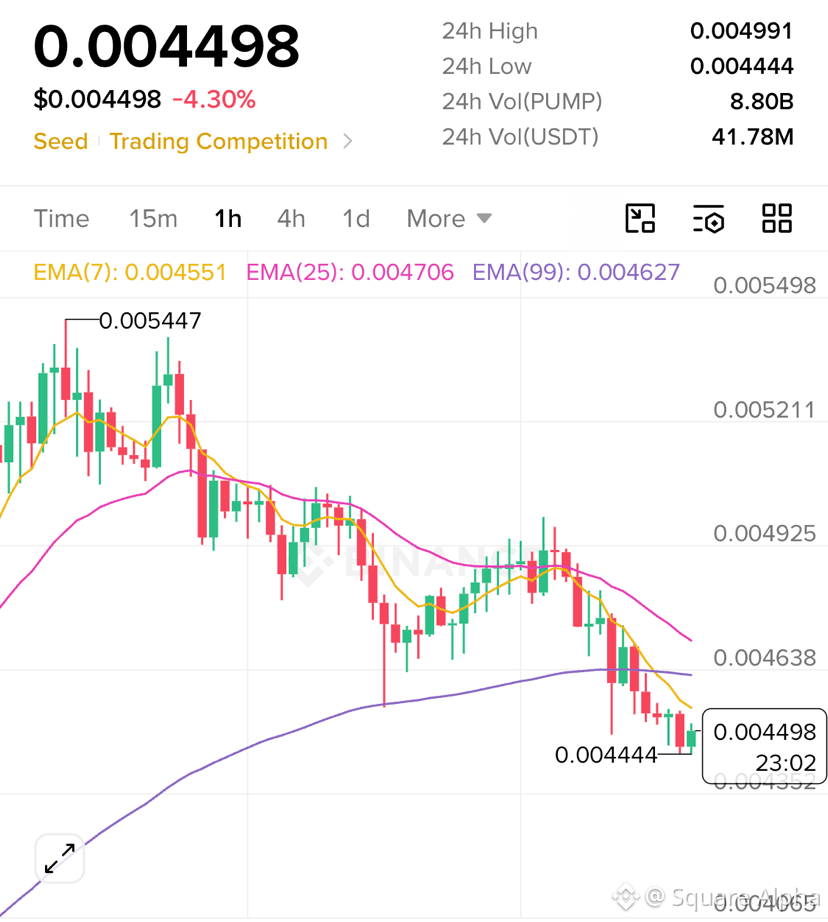
💥 El $PUMP tiene -17% de descuento de entrada, RSI lavado, y esa mecha larga solo probó que los compradores de la caída siguen vivos: ¡cargando el rebote! 😤
📊 LARGO (1H):
→ Entrada: 0.00445 – 0.00450
→ SL: 0.00432
→ TP1: 0.00463
→ TP2: 0.00472, y 0.00490 full send
he estado mirando esta mecha durante una hora y, honestamente? Vi cómo el dip de 0.004444 se lo comían en vivo. RSI en 30 es un resorte bien tensado, y el protocolo sigue imprimiendo ingresos récord mientras la máquina de recompra zumb(a). Me sacudieron en la última bajada (mi culpa, me puse impaciente jaja) pero no me voy a perder el rebote dos veces.
teme este fondo porque aquí nacen los rebotes. ¿quién compra conmigo? 👇
#PUMP
{spot}(PUMPUSDT)
💥 El $PUMP tiene -17% de descuento de entrada, RSI lavado, y esa mecha larga solo probó que los compradores de la caída siguen vivos: ¡cargando el rebote! 😤
📊 LARGO (1H):
→ Entrada: 0.00445 – 0.00450
→ SL: 0.00432
→ TP1: 0.00463
→ TP2: 0.00472, y 0.00490 full send
he estado mirando esta mecha durante una hora y, honestamente? Vi cómo el dip de 0.004444 se lo comían en vivo. RSI en 30 es un resorte bien tensado, y el protocolo sigue imprimiendo ingresos récord mientras la máquina de recompra zumb(a). Me sacudieron en la última bajada (mi culpa, me puse impaciente jaja) pero no me voy a perder el rebote dos veces.
teme este fondo porque aquí nacen los rebotes. ¿quién compra conmigo? 👇
#PUMP
📊 LARGO (1H):
→ Entrada: 0.00445 – 0.00450
→ SL: 0.00432
→ TP1: 0.00463
→ TP2: 0.00472, y 0.00490 full send
he estado mirando esta mecha durante una hora y, honestamente? Vi cómo el dip de 0.004444 se lo comían en vivo. RSI en 30 es un resorte bien tensado, y el protocolo sigue imprimiendo ingresos récord mientras la máquina de recompra zumb(a). Me sacudieron en la última bajada (mi culpa, me puse impaciente jaja) pero no me voy a perder el rebote dos veces.
teme este fondo porque aquí nacen los rebotes. ¿quién compra conmigo? 👇
#PUMP
241
·
--
Parcialmente cierto
Hoy abrí Dusk esperando otro L1 centrado en la privacidad con la típica presentación de “blockchain privada”.
En cambio, empecé a investigar cómo gestiona la privacidad sin ignorar por completo la regulación.
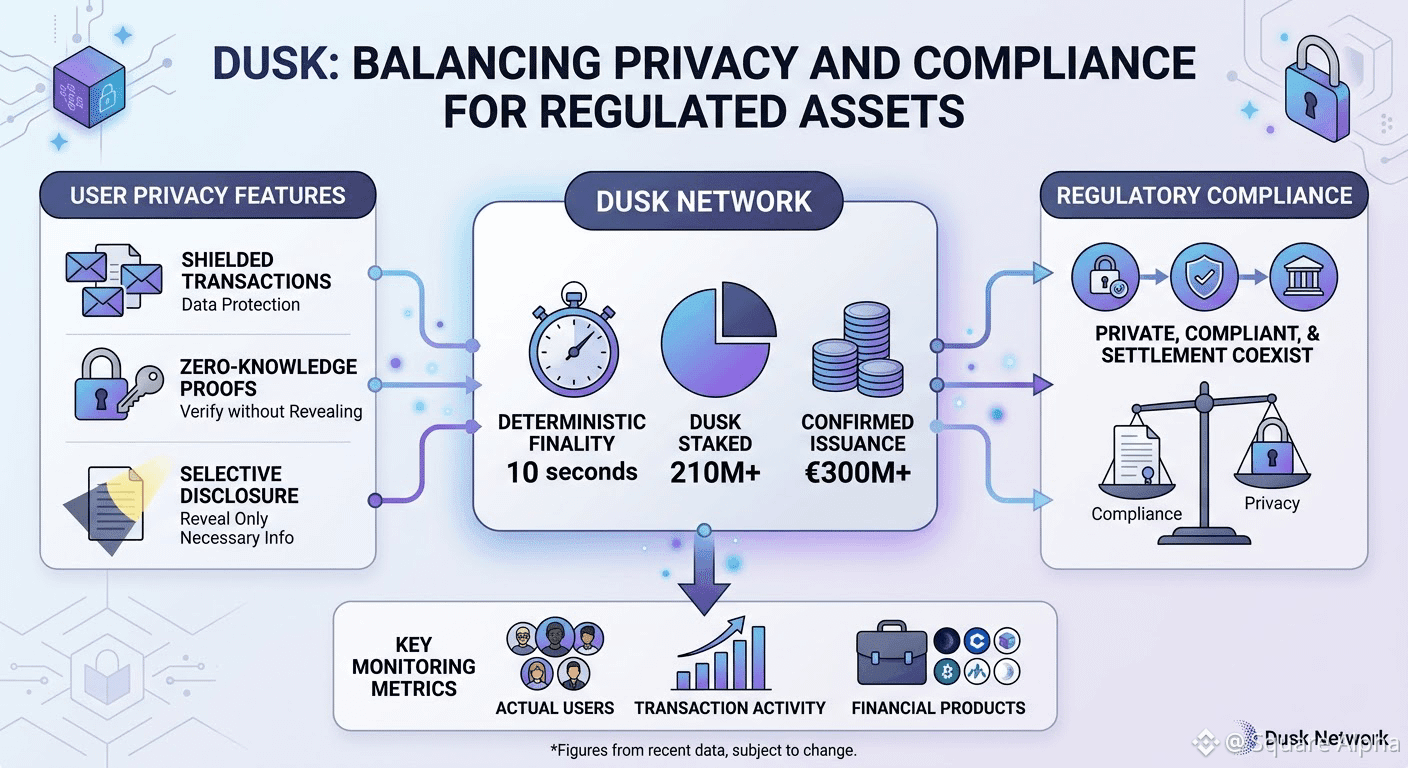
La documentación de Dusk fue lo primero que revisé. Lo que más me llamó la atención fue la combinación de transacciones blindadas, pruebas de conocimiento cero y divulgación selectiva. La privacidad no consiste simplemente en ocultarlo todo; el diseño permite revelar información específica cuando hace falta.
Eso me hizo mirar con más atención.
Dusk afirma que actualmente hay más de 210M DUSK en staking, mientras que la red apunta a una finalización determinista de aproximadamente 10 segundos. También destaca €300M+ en emisión confirmada.
No tomaría esos números por sí solos como prueba de que Dusk ya encontró encaje producto-mercado. Las cifras de emisión y la participación en el staking te dicen algo, pero el uso sostenido te dice mucho más.
Lo que encuentro más interesante es la dirección: Dusk está construyendo alrededor de activos regulados donde tienen que coexistir la privacidad, el cumplimiento y el settlement.
Ese es un problema más difícil que simplemente hacer privadas las transacciones.
Así que estoy observando qué ocurre después de que el relato se vuelve más silencioso: usuarios reales, actividad de transacciones y si los productos financieros siguen regresando a la red.
#dusk @Dusk_Foundation $DUSK
{spot}(DUSKUSDT)
Hoy abrí Dusk esperando otro L1 centrado en la privacidad con la típica presentación de “blockchain privada”.
En cambio, empecé a investigar cómo gestiona la privacidad sin ignorar por completo la regulación.
La documentación de Dusk fue lo primero que revisé. Lo que más me llamó la atención fue la combinación de transacciones blindadas, pruebas de conocimiento cero y divulgación selectiva. La privacidad no consiste simplemente en ocultarlo todo; el diseño permite revelar información específica cuando hace falta.
Eso me hizo mirar con más atención.
Dusk afirma que actualmente hay más de 210M DUSK en staking, mientras que la red apunta a una finalización determinista de aproximadamente 10 segundos. También destaca €300M+ en emisión confirmada.
No tomaría esos números por sí solos como prueba de que Dusk ya encontró encaje producto-mercado. Las cifras de emisión y la participación en el staking te dicen algo, pero el uso sostenido te dice mucho más.
Lo que encuentro más interesante es la dirección: Dusk está construyendo alrededor de activos regulados donde tienen que coexistir la privacidad, el cumplimiento y el settlement.
Ese es un problema más difícil que simplemente hacer privadas las transacciones.
Así que estoy observando qué ocurre después de que el relato se vuelve más silencioso: usuarios reales, actividad de transacciones y si los productos financieros siguen regresando a la red.
#dusk @Dusk $DUSK
En cambio, empecé a investigar cómo gestiona la privacidad sin ignorar por completo la regulación.
La documentación de Dusk fue lo primero que revisé. Lo que más me llamó la atención fue la combinación de transacciones blindadas, pruebas de conocimiento cero y divulgación selectiva. La privacidad no consiste simplemente en ocultarlo todo; el diseño permite revelar información específica cuando hace falta.
Eso me hizo mirar con más atención.
Dusk afirma que actualmente hay más de 210M DUSK en staking, mientras que la red apunta a una finalización determinista de aproximadamente 10 segundos. También destaca €300M+ en emisión confirmada.
No tomaría esos números por sí solos como prueba de que Dusk ya encontró encaje producto-mercado. Las cifras de emisión y la participación en el staking te dicen algo, pero el uso sostenido te dice mucho más.
Lo que encuentro más interesante es la dirección: Dusk está construyendo alrededor de activos regulados donde tienen que coexistir la privacidad, el cumplimiento y el settlement.
Ese es un problema más difícil que simplemente hacer privadas las transacciones.
Así que estoy observando qué ocurre después de que el relato se vuelve más silencioso: usuarios reales, actividad de transacciones y si los productos financieros siguen regresando a la red.
#dusk @Dusk $DUSK
2
164
·
--
Alcista
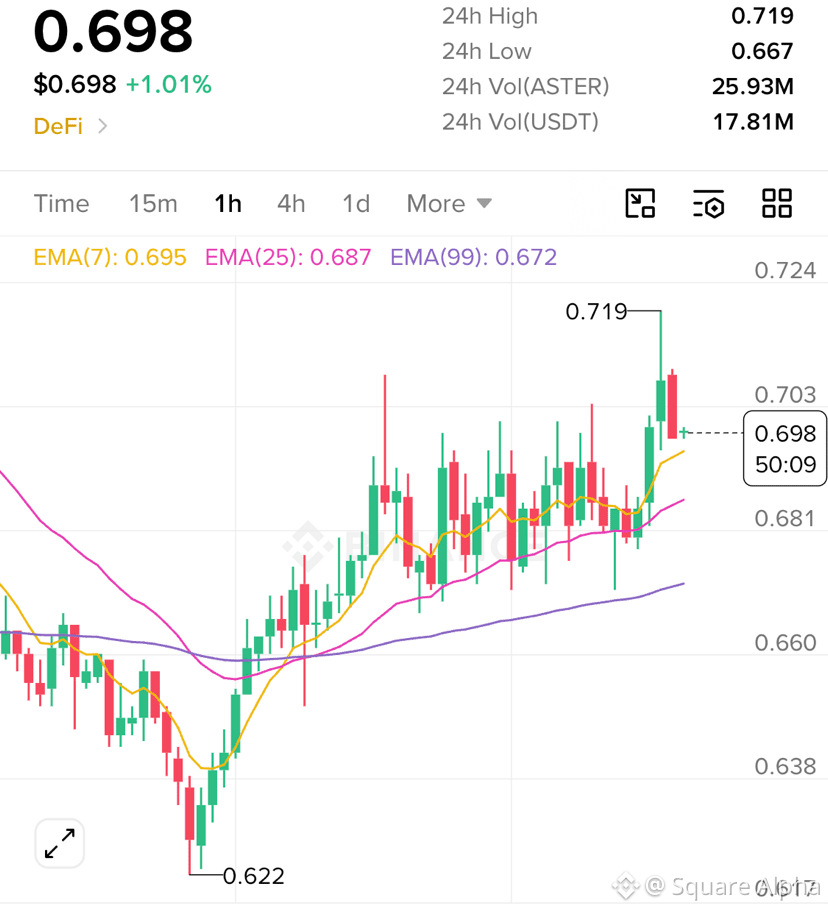
💥 $ASTER acaba de marcar 0.719 y está tomando aire — los rompimientos se recargan, ¡no mueren! 😤
📊 LARGO (1H):
→ Entrada: 0.690 – 0.698
→ SL: 0.678
→ TP1: 0.719
→ TP2: 0.74, y 0.777 full send
La lectura: la estructura en escalera sigue intacta, las EMAs están extendidas en verde y el retroceso se está manteniendo bien justo en la EMA7, como si estuviera parado sobre un piso. RSI en la zona de los 50 = todavía queda mucho combustible. Un cierre limpio por encima de 0.719 abre el “vacío” directo a 0.74 — y el recuerdo de 0.777 todavía está fresco en la mente de todos.
¿Quién va montando el rompimiento? 👇
#Aster
{spot}(ASTERUSDT)
💥 $ASTER acaba de marcar 0.719 y está tomando aire — los rompimientos se recargan, ¡no mueren! 😤
📊 LARGO (1H):
→ Entrada: 0.690 – 0.698
→ SL: 0.678
→ TP1: 0.719
→ TP2: 0.74, y 0.777 full send
La lectura: la estructura en escalera sigue intacta, las EMAs están extendidas en verde y el retroceso se está manteniendo bien justo en la EMA7, como si estuviera parado sobre un piso. RSI en la zona de los 50 = todavía queda mucho combustible. Un cierre limpio por encima de 0.719 abre el “vacío” directo a 0.74 — y el recuerdo de 0.777 todavía está fresco en la mente de todos.
¿Quién va montando el rompimiento? 👇
#Aster
📊 LARGO (1H):
→ Entrada: 0.690 – 0.698
→ SL: 0.678
→ TP1: 0.719
→ TP2: 0.74, y 0.777 full send
La lectura: la estructura en escalera sigue intacta, las EMAs están extendidas en verde y el retroceso se está manteniendo bien justo en la EMA7, como si estuviera parado sobre un piso. RSI en la zona de los 50 = todavía queda mucho combustible. Un cierre limpio por encima de 0.719 abre el “vacío” directo a 0.74 — y el recuerdo de 0.777 todavía está fresco en la mente de todos.
¿Quién va montando el rompimiento? 👇
#Aster
239
·
--
Alcista
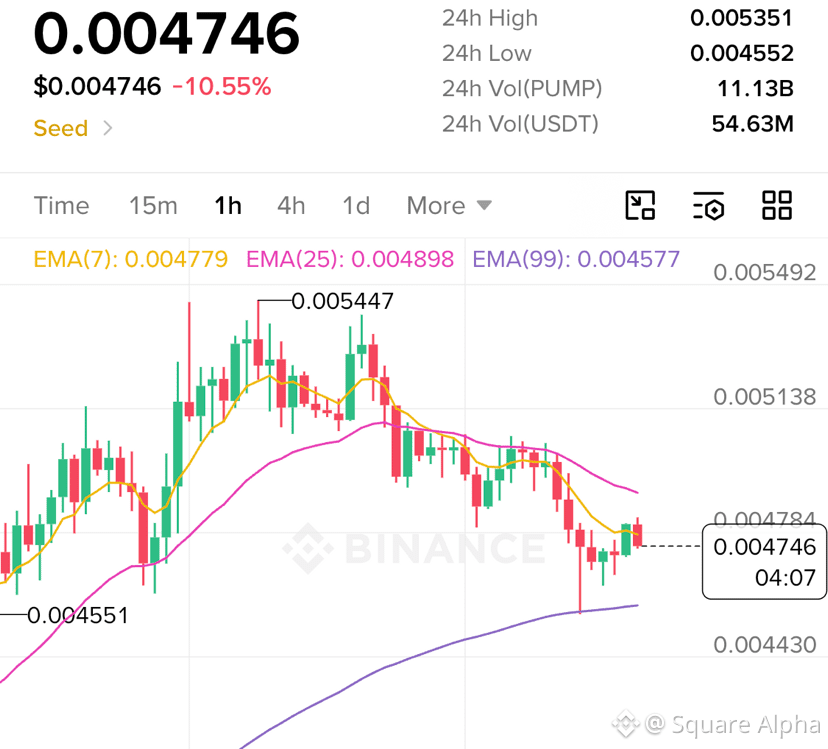
💥 $PUMP acaba de salir en fuerte -10% de golpe y directo hacia su suelo más fuerte — ¡eso es un shakeout, no un cambio de tendencia! 😤
📊 LARGO (1H):
→ Entrada: 0.00458 – 0.00475
→ SL: 0.00440
→ TP1: 0.00490
→ TP2: 0.00515, y 0.00545 a todo gas
La lectura: la EMA99 todavía está subiendo y nunca se perdió; toda la tendencia alcista desde 0.0036 sigue intacta, y el RSI en 37 está demasiado lavado. Este flush limpió el apalancamiento y las manos débiles en una sola vela. Último suelo + sobreventa + tendencia en alza = el punto exacto donde los rebotes llegan rápido y con violencia. Las caídas aquí se están comiendo vivas.
¿Quién está comprando este flush? 👇
#pump #pumpfun
{spot}(PUMPUSDT)
💥 $PUMP acaba de salir en fuerte -10% de golpe y directo hacia su suelo más fuerte — ¡eso es un shakeout, no un cambio de tendencia! 😤
📊 LARGO (1H):
→ Entrada: 0.00458 – 0.00475
→ SL: 0.00440
→ TP1: 0.00490
→ TP2: 0.00515, y 0.00545 a todo gas
La lectura: la EMA99 todavía está subiendo y nunca se perdió; toda la tendencia alcista desde 0.0036 sigue intacta, y el RSI en 37 está demasiado lavado. Este flush limpió el apalancamiento y las manos débiles en una sola vela. Último suelo + sobreventa + tendencia en alza = el punto exacto donde los rebotes llegan rápido y con violencia. Las caídas aquí se están comiendo vivas.
¿Quién está comprando este flush? 👇
#pump #pumpfun
📊 LARGO (1H):
→ Entrada: 0.00458 – 0.00475
→ SL: 0.00440
→ TP1: 0.00490
→ TP2: 0.00515, y 0.00545 a todo gas
La lectura: la EMA99 todavía está subiendo y nunca se perdió; toda la tendencia alcista desde 0.0036 sigue intacta, y el RSI en 37 está demasiado lavado. Este flush limpió el apalancamiento y las manos débiles en una sola vela. Último suelo + sobreventa + tendencia en alza = el punto exacto donde los rebotes llegan rápido y con violencia. Las caídas aquí se están comiendo vivas.
¿Quién está comprando este flush? 👇
#pump #pumpfun
206
·
--
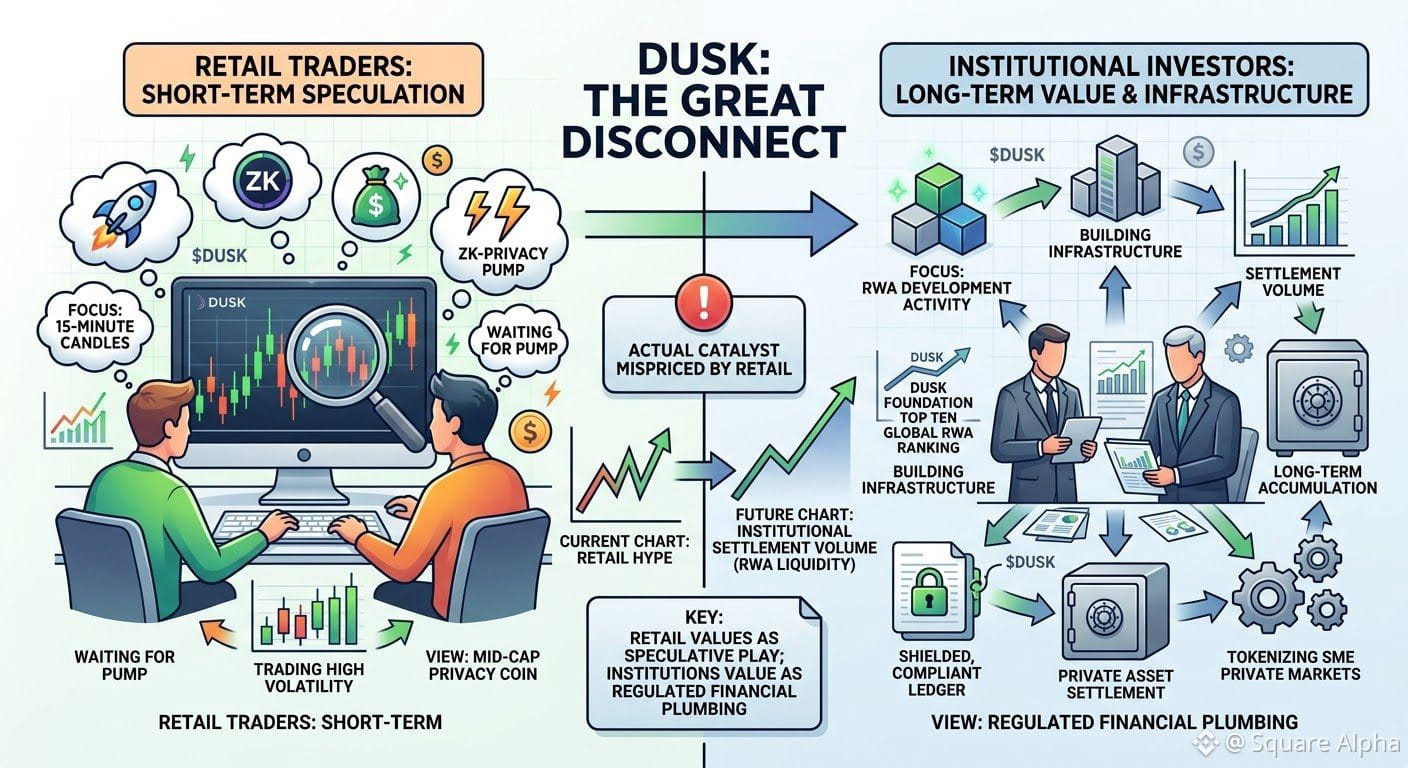
Revisando el gráfico de $DUSK hoy, está rondando justo por el nivel de 0,074 dólares. El calendario lo está tratando como una típica ruptura de una moneda de privacidad mid-cap, con traders minoristas mirando velas de 15 minutos y esperando un rápido impulso de privacidad con ZK.
Pero al observar los titulares institucionales de las últimas 48 horas, me di cuenta de que el mercado está valorando mal por completo el catalizador real.
Mientras el minorista se centra en el gráfico a corto plazo, las firmas de analítica de blockchain solo clasificaron en silencio el @Dusk_Foundation dentro del top diez global de actividad de desarrollo de activos del mundo real. Al mismo tiempo, el equipo está empujando activamente la infraestructura para tokenizar mercados privados de pymes.
La enorme desconexión entre el gráfico del minorista y la realidad institucional por fin cobró sentido al mirar su arquitectura de cumplimiento. Las finanzas tradicionales no quieren un mempool público y rápido para bonos corporativos. Necesitan un libro contable muy protegido y legalmente compatible para liquidar activos privados sin filtrar datos a bots de trading de alta frecuencia.
Mi lectura final sobre la acción del precio de hoy es sencilla. El mercado minorista todavía valora el token como una apuesta tecnológica especulativa, mientras que los compradores reales lo tratan como infraestructura financiera regulada. Cuando se abran más adelante este año las compuertas de liquidez de RWA, el gráfico dejará de reflejar el hype minorista y empezará a reflejar el volumen real de liquidación institucional.
#dusk @Dusk_Foundation $DUSK
{spot}(DUSKUSDT)
Revisando el gráfico de $DUSK hoy, está rondando justo por el nivel de 0,074 dólares. El calendario lo está tratando como una típica ruptura de una moneda de privacidad mid-cap, con traders minoristas mirando velas de 15 minutos y esperando un rápido impulso de privacidad con ZK.
Pero al observar los titulares institucionales de las últimas 48 horas, me di cuenta de que el mercado está valorando mal por completo el catalizador real.
Mientras el minorista se centra en el gráfico a corto plazo, las firmas de analítica de blockchain solo clasificaron en silencio el @Dusk dentro del top diez global de actividad de desarrollo de activos del mundo real. Al mismo tiempo, el equipo está empujando activamente la infraestructura para tokenizar mercados privados de pymes.
La enorme desconexión entre el gráfico del minorista y la realidad institucional por fin cobró sentido al mirar su arquitectura de cumplimiento. Las finanzas tradicionales no quieren un mempool público y rápido para bonos corporativos. Necesitan un libro contable muy protegido y legalmente compatible para liquidar activos privados sin filtrar datos a bots de trading de alta frecuencia.
Mi lectura final sobre la acción del precio de hoy es sencilla. El mercado minorista todavía valora el token como una apuesta tecnológica especulativa, mientras que los compradores reales lo tratan como infraestructura financiera regulada. Cuando se abran más adelante este año las compuertas de liquidez de RWA, el gráfico dejará de reflejar el hype minorista y empezará a reflejar el volumen real de liquidación institucional.
#dusk @Dusk $DUSK
Pero al observar los titulares institucionales de las últimas 48 horas, me di cuenta de que el mercado está valorando mal por completo el catalizador real.
Mientras el minorista se centra en el gráfico a corto plazo, las firmas de analítica de blockchain solo clasificaron en silencio el @Dusk dentro del top diez global de actividad de desarrollo de activos del mundo real. Al mismo tiempo, el equipo está empujando activamente la infraestructura para tokenizar mercados privados de pymes.
La enorme desconexión entre el gráfico del minorista y la realidad institucional por fin cobró sentido al mirar su arquitectura de cumplimiento. Las finanzas tradicionales no quieren un mempool público y rápido para bonos corporativos. Necesitan un libro contable muy protegido y legalmente compatible para liquidar activos privados sin filtrar datos a bots de trading de alta frecuencia.
Mi lectura final sobre la acción del precio de hoy es sencilla. El mercado minorista todavía valora el token como una apuesta tecnológica especulativa, mientras que los compradores reales lo tratan como infraestructura financiera regulada. Cuando se abran más adelante este año las compuertas de liquidez de RWA, el gráfico dejará de reflejar el hype minorista y empezará a reflejar el volumen real de liquidación institucional.
#dusk @Dusk $DUSK
5
5
152
·
--
Alcista
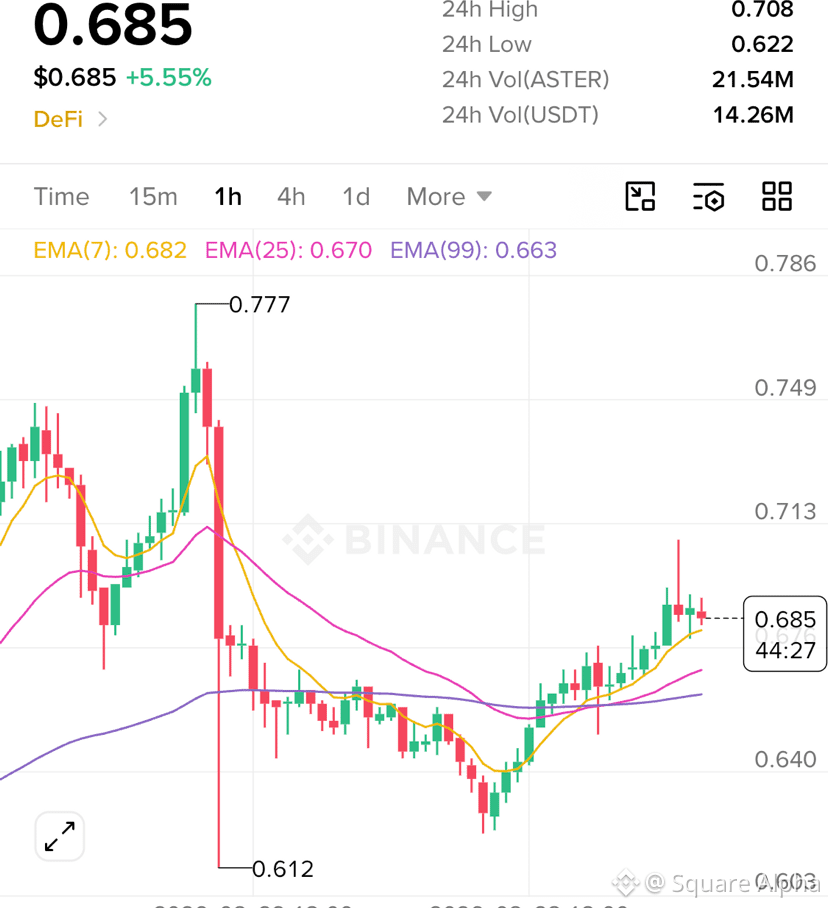
$ASTER volvió a subir en silencio por encima de cada EMA mientras todos miraban otras monedas 😌
LARGO (1H):
→ Entrada: 0.675 – 0.685
→ SL: 0.658 — se perdió la idea: se rompió el stack de EMA
→ TP1: 0.708
→ TP2: 0.74, y 0.777 si va con todo
La lectura: la recuperación desde 0.612 es una escalera limpia; el “nuke” de 0.777 fue digerido por completo, y el RSI aún tiene margen antes de quedar “cocinado”. Un cierre por encima de 0.708 abre el vacío de aire por arriba.
Si rompe 0.658 y me equivoco, será solo un pequeño rasguño: sigo adelante. Hasta entonces, estoy montando la recuperación tranquila.
¿ASTER volverá a tocar 0.777 esta semana? 👇
#Aster #defi
{spot}(ASTERUSDT)
$ASTER volvió a subir en silencio por encima de cada EMA mientras todos miraban otras monedas 😌
LARGO (1H):
→ Entrada: 0.675 – 0.685
→ SL: 0.658 — se perdió la idea: se rompió el stack de EMA
→ TP1: 0.708
→ TP2: 0.74, y 0.777 si va con todo
La lectura: la recuperación desde 0.612 es una escalera limpia; el “nuke” de 0.777 fue digerido por completo, y el RSI aún tiene margen antes de quedar “cocinado”. Un cierre por encima de 0.708 abre el vacío de aire por arriba.
Si rompe 0.658 y me equivoco, será solo un pequeño rasguño: sigo adelante. Hasta entonces, estoy montando la recuperación tranquila.
¿ASTER volverá a tocar 0.777 esta semana? 👇
#Aster #defi
LARGO (1H):
→ Entrada: 0.675 – 0.685
→ SL: 0.658 — se perdió la idea: se rompió el stack de EMA
→ TP1: 0.708
→ TP2: 0.74, y 0.777 si va con todo
La lectura: la recuperación desde 0.612 es una escalera limpia; el “nuke” de 0.777 fue digerido por completo, y el RSI aún tiene margen antes de quedar “cocinado”. Un cierre por encima de 0.708 abre el vacío de aire por arriba.
Si rompe 0.658 y me equivoco, será solo un pequeño rasguño: sigo adelante. Hasta entonces, estoy montando la recuperación tranquila.
¿ASTER volverá a tocar 0.777 esta semana? 👇
#Aster #defi
224
·
--
Alcista
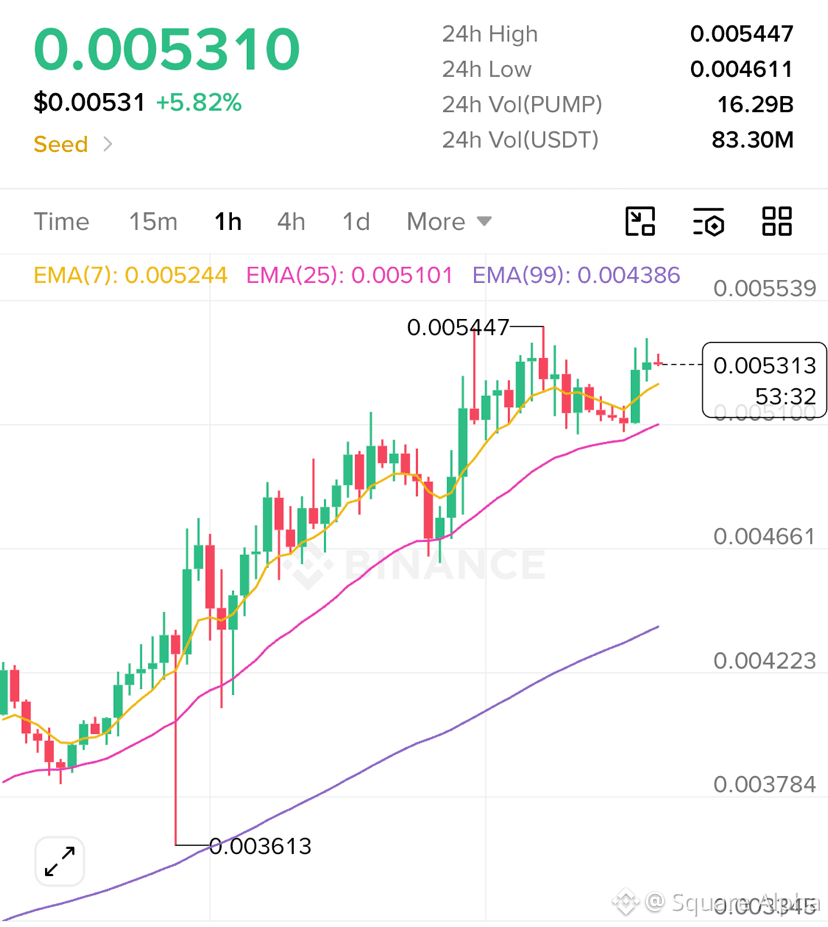
$PUMP está volviendo a hacer la escalera — enroscándose a la derecha bajo la alta 😌
📊 LARGO (1H):
→ Entrada: 0.0052 – 0.0053
→ SL: 0.00495 — EMA25 fuera = idea fuera
→ TP1: 0.00545
→ TP2: 0.0060 full send
La lectura: mínimos más altos, RSI 62 con margen para seguir, EMAs apiladas en verde, cada retroceso comprado en un par de velas. Una ruptura limpia de 0.00545 abre la zona de números redondos por encima.
Si se rompe 0.00495, me equivoqué: pequeño rasguño y a seguir. Hasta entonces, voy subiendo la escalera.
¿Quién está sosteniendo PUMP hasta 0.006? 👇
#pump #pumpfun $PUMP
{spot}(PUMPUSDT)
$PUMP está volviendo a hacer la escalera — enroscándose a la derecha bajo la alta 😌
📊 LARGO (1H):
→ Entrada: 0.0052 – 0.0053
→ SL: 0.00495 — EMA25 fuera = idea fuera
→ TP1: 0.00545
→ TP2: 0.0060 full send
La lectura: mínimos más altos, RSI 62 con margen para seguir, EMAs apiladas en verde, cada retroceso comprado en un par de velas. Una ruptura limpia de 0.00545 abre la zona de números redondos por encima.
Si se rompe 0.00495, me equivoqué: pequeño rasguño y a seguir. Hasta entonces, voy subiendo la escalera.
¿Quién está sosteniendo PUMP hasta 0.006? 👇
#pump #pumpfun $PUMP
📊 LARGO (1H):
→ Entrada: 0.0052 – 0.0053
→ SL: 0.00495 — EMA25 fuera = idea fuera
→ TP1: 0.00545
→ TP2: 0.0060 full send
La lectura: mínimos más altos, RSI 62 con margen para seguir, EMAs apiladas en verde, cada retroceso comprado en un par de velas. Una ruptura limpia de 0.00545 abre la zona de números redondos por encima.
Si se rompe 0.00495, me equivoqué: pequeño rasguño y a seguir. Hasta entonces, voy subiendo la escalera.
¿Quién está sosteniendo PUMP hasta 0.006? 👇
#pump #pumpfun $PUMP
146
·
--
Alcista
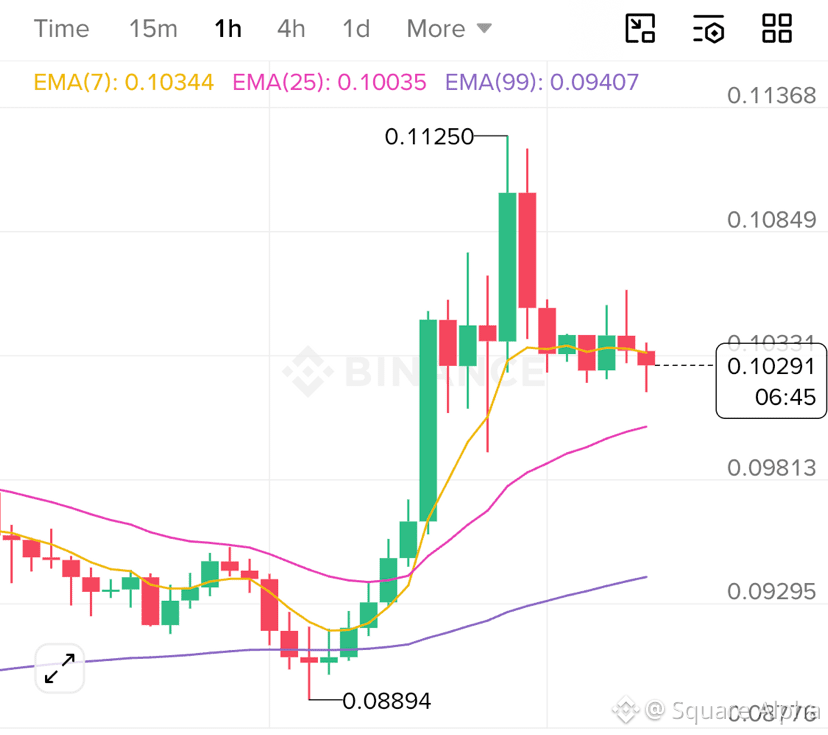
$XPL se disparó hasta 0.1125, sacudió las manos débiles, ahora está haciéndose un ovillo en 0.103 😌
Bajada con poco volumen + reinicio del RSI = bandera alcista de manual.
📊 LARGO (1H):
→ Entrada: 0.100 – 0.103 (zona de bandera, la EMA25 justo aquí)
→ SL: 0.0975 — bandera rota = me salgo
→ TP1: 0.1125
→ TP2: 0.12 envío completo
La lectura: spike con volumen real, caída sin nada, y la EMA25 subiendo directo hacia mi zona de entrada. Eso es acumulación, no agotamiento.
Se rompe 0.0975 y estaba equivocado — pequeño rasguño, seguimos. Pero banderas como esta normalmente se resuelven al alza, y estoy posicionado antes de la resolución, no después.
¿Quién está aguantando XPL por aquí? 👇
#XPL #Plasma
{spot}(XPLUSDT)
$XPL se disparó hasta 0.1125, sacudió las manos débiles, ahora está haciéndose un ovillo en 0.103 😌
Bajada con poco volumen + reinicio del RSI = bandera alcista de manual.
📊 LARGO (1H):
→ Entrada: 0.100 – 0.103 (zona de bandera, la EMA25 justo aquí)
→ SL: 0.0975 — bandera rota = me salgo
→ TP1: 0.1125
→ TP2: 0.12 envío completo
La lectura: spike con volumen real, caída sin nada, y la EMA25 subiendo directo hacia mi zona de entrada. Eso es acumulación, no agotamiento.
Se rompe 0.0975 y estaba equivocado — pequeño rasguño, seguimos. Pero banderas como esta normalmente se resuelven al alza, y estoy posicionado antes de la resolución, no después.
¿Quién está aguantando XPL por aquí? 👇
#XPL #Plasma
Bajada con poco volumen + reinicio del RSI = bandera alcista de manual.
📊 LARGO (1H):
→ Entrada: 0.100 – 0.103 (zona de bandera, la EMA25 justo aquí)
→ SL: 0.0975 — bandera rota = me salgo
→ TP1: 0.1125
→ TP2: 0.12 envío completo
La lectura: spike con volumen real, caída sin nada, y la EMA25 subiendo directo hacia mi zona de entrada. Eso es acumulación, no agotamiento.
Se rompe 0.0975 y estaba equivocado — pequeño rasguño, seguimos. Pero banderas como esta normalmente se resuelven al alza, y estoy posicionado antes de la resolución, no después.
¿Quién está aguantando XPL por aquí? 👇
#XPL #Plasma
203
·
--
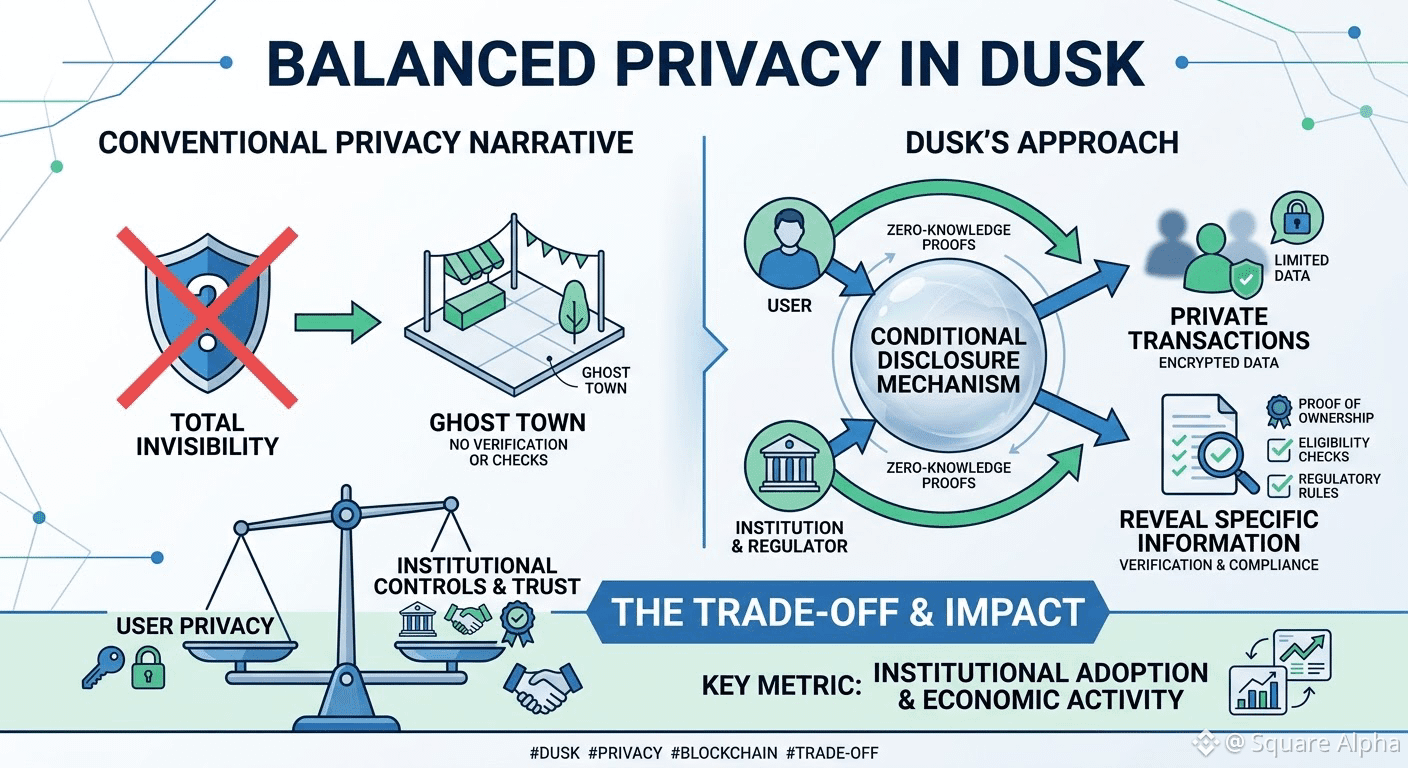
Pasé un tiempo hoy revisando Dusk, y lo que se me quedó no fue otro relato sobre la privacidad.
Fue el intercambio.
La mayoría de las conversaciones sobre privacidad parecen empezar con la idea de que la actividad financiera debería desaparecer por completo. Pero los mercados financieros reales no funcionan así. Alguien eventualmente necesita verificar algo, probar la propiedad, comprobar la elegibilidad o cumplir una regla.
Ahí es donde Dusk me resulta interesante.
La idea no es simplemente «hacer que todo sea invisible». Se trata de intentar que las transacciones sean privadas, pero a la vez permitir que cierta información se revele cuando hay un motivo para ello.
Creo que ese es un problema mucho más difícil.
Y sinceramente, todavía no sé si Dusk puede convertir esa arquitectura en una adopción significativa. Una cadena técnicamente elegante aun así puede terminar con muy poca actividad económica.
Así que no juzgaría Dusk por lo convincente que suene el relato sobre la privacidad.
Yo observaría lo que ocurre cuando productos financieros reales empiezan a usarla.
Si los usuarios pueden obtener privacidad sin renunciar a los controles que las instituciones requieren, entonces Dusk se convierte en algo más que otra historia de cadena de privacidad.
Esa es la parte que me interesa.
#dusk @Dusk_Foundation $DUSK
{spot}(DUSKUSDT)
Pasé un tiempo hoy revisando Dusk, y lo que se me quedó no fue otro relato sobre la privacidad.
Fue el intercambio.
La mayoría de las conversaciones sobre privacidad parecen empezar con la idea de que la actividad financiera debería desaparecer por completo. Pero los mercados financieros reales no funcionan así. Alguien eventualmente necesita verificar algo, probar la propiedad, comprobar la elegibilidad o cumplir una regla.
Ahí es donde Dusk me resulta interesante.
La idea no es simplemente «hacer que todo sea invisible». Se trata de intentar que las transacciones sean privadas, pero a la vez permitir que cierta información se revele cuando hay un motivo para ello.
Creo que ese es un problema mucho más difícil.
Y sinceramente, todavía no sé si Dusk puede convertir esa arquitectura en una adopción significativa. Una cadena técnicamente elegante aun así puede terminar con muy poca actividad económica.
Así que no juzgaría Dusk por lo convincente que suene el relato sobre la privacidad.
Yo observaría lo que ocurre cuando productos financieros reales empiezan a usarla.
Si los usuarios pueden obtener privacidad sin renunciar a los controles que las instituciones requieren, entonces Dusk se convierte en algo más que otra historia de cadena de privacidad.
Esa es la parte que me interesa.
#dusk @Dusk $DUSK
Fue el intercambio.
La mayoría de las conversaciones sobre privacidad parecen empezar con la idea de que la actividad financiera debería desaparecer por completo. Pero los mercados financieros reales no funcionan así. Alguien eventualmente necesita verificar algo, probar la propiedad, comprobar la elegibilidad o cumplir una regla.
Ahí es donde Dusk me resulta interesante.
La idea no es simplemente «hacer que todo sea invisible». Se trata de intentar que las transacciones sean privadas, pero a la vez permitir que cierta información se revele cuando hay un motivo para ello.
Creo que ese es un problema mucho más difícil.
Y sinceramente, todavía no sé si Dusk puede convertir esa arquitectura en una adopción significativa. Una cadena técnicamente elegante aun así puede terminar con muy poca actividad económica.
Así que no juzgaría Dusk por lo convincente que suene el relato sobre la privacidad.
Yo observaría lo que ocurre cuando productos financieros reales empiezan a usarla.
Si los usuarios pueden obtener privacidad sin renunciar a los controles que las instituciones requieren, entonces Dusk se convierte en algo más que otra historia de cadena de privacidad.
Esa es la parte que me interesa.
#dusk @Dusk $DUSK
4
3
138
·
--
Hace unos años, tuve una cuenta de intercambio con una retención temporal bloqueada únicamente para poder retirar fondos a una billetera centrada en la privacidad. El equipo de cumplimiento exigió una revisión manual, de una semana, del origen de los fondos. Ese problema personal cambió por completo la forma en que veo el relato de la “privacidad” en las criptomonedas. Me di cuenta de que las instituciones no odian realmente la criptografía; lo que odian es su falta de verificabilidad.
Al observar la reciente ola de deslistados de antiguas monedas de privacidad en grandes plataformas, veo que el mercado está clasificando mal severamente $DUSK dentro de ese mismo grupo de riesgo.
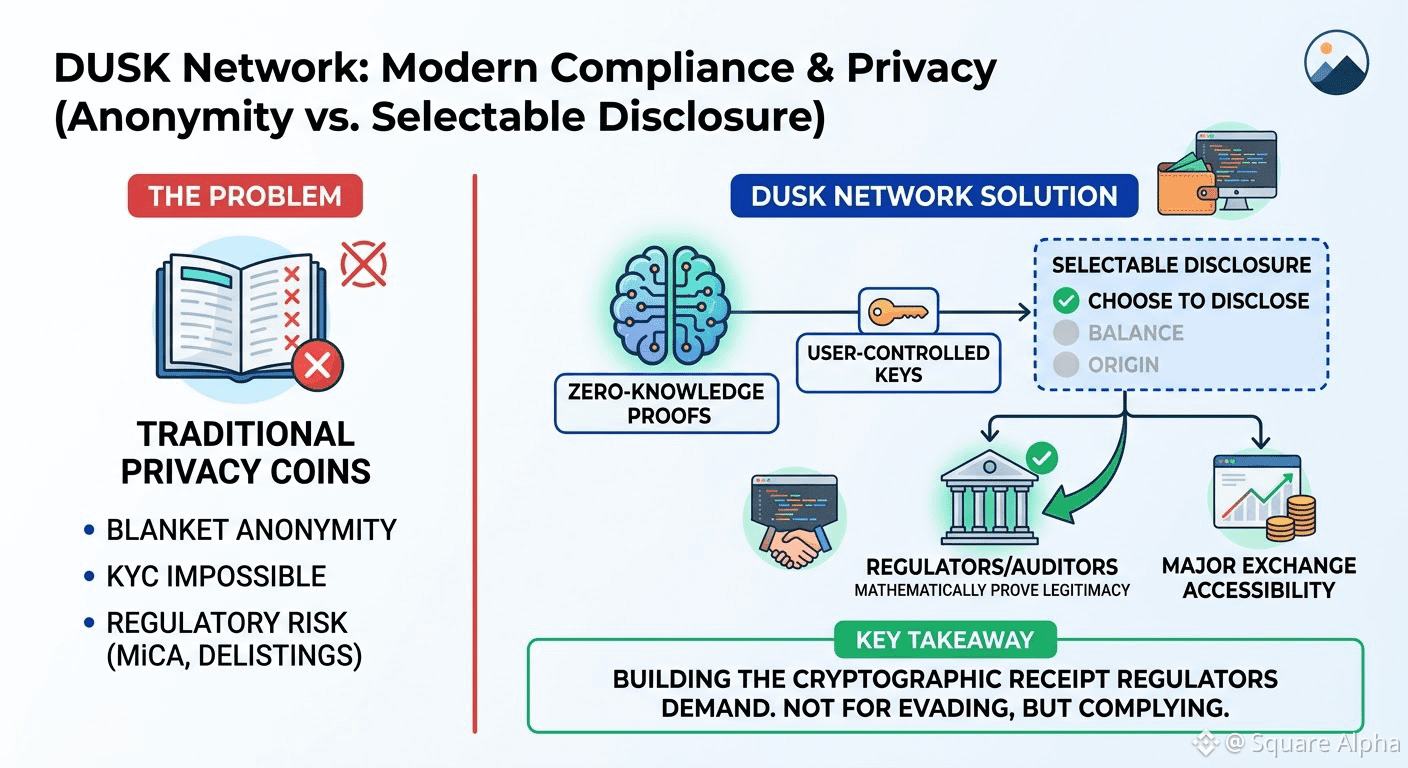
Cuando los exchanges eliminan redes de privacidad más antiguas, el problema regulatorio bajo marcos como MiCA no es la tecnología ZK en sí: es la anonimidad generalizada que vuelve imposible el KYC.
La distinción a nivel arquitectónico se me hizo evidente al revisar la documentación @Dusk_Foundation sobre divulgación selectiva. En lugar de ocultar todos los datos de las transacciones de forma predeterminada, su configuración permite que un usuario demuestre matemáticamente la legitimidad de una billetera ante un auditor sin exponer los saldos reales al libro mayor público.
No están construyendo una herramienta para evadir a los reguladores. Están construyendo el recibo criptográfico exacto que los reguladores están exigiendo ahora.
Mi lectura final es que el mercado está valorando el token actualmente como una apuesta especulativa de anonimato, agrupándolo con cadenas que enfrentan amenazas existenciales de deslistado. Una vez que el martillo de cumplimiento caiga por completo sobre redes opacas, los libros mayores que pueden demostrar matemáticamente que están limpios serán los únicos que queden en las principales órdenes.
#dusk
Hace unos años, tuve una cuenta de intercambio con una retención temporal bloqueada únicamente para poder retirar fondos a una billetera centrada en la privacidad. El equipo de cumplimiento exigió una revisión manual, de una semana, del origen de los fondos. Ese problema personal cambió por completo la forma en que veo el relato de la “privacidad” en las criptomonedas. Me di cuenta de que las instituciones no odian realmente la criptografía; lo que odian es su falta de verificabilidad.
Al observar la reciente ola de deslistados de antiguas monedas de privacidad en grandes plataformas, veo que el mercado está clasificando mal severamente $DUSK dentro de ese mismo grupo de riesgo.
Cuando los exchanges eliminan redes de privacidad más antiguas, el problema regulatorio bajo marcos como MiCA no es la tecnología ZK en sí: es la anonimidad generalizada que vuelve imposible el KYC.
La distinción a nivel arquitectónico se me hizo evidente al revisar la documentación @Dusk sobre divulgación selectiva. En lugar de ocultar todos los datos de las transacciones de forma predeterminada, su configuración permite que un usuario demuestre matemáticamente la legitimidad de una billetera ante un auditor sin exponer los saldos reales al libro mayor público.
No están construyendo una herramienta para evadir a los reguladores. Están construyendo el recibo criptográfico exacto que los reguladores están exigiendo ahora.
Mi lectura final es que el mercado está valorando el token actualmente como una apuesta especulativa de anonimato, agrupándolo con cadenas que enfrentan amenazas existenciales de deslistado. Una vez que el martillo de cumplimiento caiga por completo sobre redes opacas, los libros mayores que pueden demostrar matemáticamente que están limpios serán los únicos que queden en las principales órdenes.
#dusk
Al observar la reciente ola de deslistados de antiguas monedas de privacidad en grandes plataformas, veo que el mercado está clasificando mal severamente $DUSK dentro de ese mismo grupo de riesgo.
Cuando los exchanges eliminan redes de privacidad más antiguas, el problema regulatorio bajo marcos como MiCA no es la tecnología ZK en sí: es la anonimidad generalizada que vuelve imposible el KYC.
La distinción a nivel arquitectónico se me hizo evidente al revisar la documentación @Dusk sobre divulgación selectiva. En lugar de ocultar todos los datos de las transacciones de forma predeterminada, su configuración permite que un usuario demuestre matemáticamente la legitimidad de una billetera ante un auditor sin exponer los saldos reales al libro mayor público.
No están construyendo una herramienta para evadir a los reguladores. Están construyendo el recibo criptográfico exacto que los reguladores están exigiendo ahora.
Mi lectura final es que el mercado está valorando el token actualmente como una apuesta especulativa de anonimato, agrupándolo con cadenas que enfrentan amenazas existenciales de deslistado. Una vez que el martillo de cumplimiento caiga por completo sobre redes opacas, los libros mayores que pueden demostrar matemáticamente que están limpios serán los únicos que queden en las principales órdenes.
#dusk
9
9
201
Inicia sesión para explorar más contenidos
Únete a usuarios globales de criptomonedas en Binance Square
⚡️ Obtén información útil y actualizada sobre criptos.
💬 Avalado por el mayor exchange de criptomonedas en el mundo.
👍 Descubre perspectivas reales de creadores verificados.
Email/número de teléfono
Temas populares
CPIWatch
87.4M vistas
504,255 están debatiendo
Comparte y gana recompensas de tráfico en nuestra campaña de hashtags en tendencia
✨Tema: ¿El CPI activará una subida de la tasa?
👉Cómo participar:
Publica una publicación corta o un artículo con el hashtag #CPIWatch
Crea contenido basado en los dos enfoques siguientes:
- Los datos de nóminas no agrícolas superan las expectativas y el CPI está a la vuelta de la esquina; ¿crees que la Fed subirá o mantendrá la tasa?
- ¿Alcista o bajista? Comparte tu opinión y muestra tus acciones o tu trading de oro/tenencias con nuestro widget de compartir operaciones.
🚀Periodo de la campaña:
- 2026-09-11 3:00 - 2026-09-12 9:00 UTC
🎁Recompensa:
- Las publicaciones que cumplan con las pautas anteriores y contengan más de 100 palabras se revisarán y pueden recibir un impulso aleatorio de tráfico de 500 a 3,000 vistas. Recibirás una notificación de tu secretaria de feed si tu publicación se selecciona.
- Obtén la oportunidad de que tu artículo aparezca destacado en Binance Square Official
¿Necesitas ideas para tu publicación? Visita la página del tema #CPIWatch o la Square Guide on How to Post for Better Reach.
Binance Square Official
·619 me gusta
·1.7M vistas
USBankCompletesCrossBorderPaymentPilotOnStellar
6,026 vistas
215 están debatiendo
NvidiaInTalksToInvestUpTo$10BInAnthropicIPO
317 vistas
19 están debatiendo