A Line in the Sand: Reclaiming the Promise of Decentralization
Dear Crypto Enthusiast, This is not a message from a corporation polished by marketing teams. It is a message from believers, people who stood where you stand now. We believed in the promise of a different financial system. One built on transparency, fairness, and freedom from centralized control. When Satoshi Nakamoto introduced Bitcoin to the world, it wasn’t just code, it was a revolution. It was proof that finance could operate without gatekeepers, without favoritism, without hidden levers of power. For the first time, trust wasn’t placed in institutions. It was placed in mathematics. Then came Ethereum and the rise of smart contracts, self-executing agreements that didn’t require intermediaries. Hope surged again. Decentralized finance (DeFi) began reshaping how we thought about lending, trading, ownership, and governance. It felt like the future truly belonged to the many, not the few. For a moment, we were winning.But history has a way of repeating itself. Over time, capital concentrated. Influence consolidated. Whales entered ecosystems designed for equality and began shaping them to their advantage. Governance tokens clustered in powerful hands. Market manipulation resurfaced under new branding. The tools were decentralized but power was not. And once again, control drifted back toward those seeking dominance rather than freedom. The technology was revolutionary.The human dynamics were not. Breaking the Cycle Sanity United was born from that realization. Not from hype. Not from opportunism. But from the uncomfortable truth that decentralization cannot rely on intention alone. It must be engineered so that capture becomes structurally impossible. True decentralization is not a slogan. It is architecture. If systems can be bought, they will be bought. If governance can be accumulated, it will be accumulated.If influence can be monopolized, it will be monopolized. So the question is not whether people will attempt to centralize power.The question is whether the system allows them to succeed. Sanity United exists to ensure the answer is no.Built by Design, Not by Promise The next phase of decentralization must go deeper than smart contracts and token distribution. It must address the structural weaknesses that allowed financial concentration to resurface inside decentralized ecosystems. This means: Designing governance mechanisms resistant to capture.Structuring economic incentives that reward contribution over capital dominance.Building transparency directly into protocol architecture.Ensuring no single actor or coordinated minority can quietly take control. Not by promises.By design.Because promises can be broken.Architecture cannot be negotiated.
A NEW VISION FORWARD We are now preparing a completely new approach one that rethinks how decentralized systems are structured from the ground up. A model where trust is not rebuilt through marketing, but through mechanisms that mathematically enforce fairness. This is not about launching another token. It is about correcting a structural flaw in the evolution of DeFi. The early days of crypto taught us that change is possible. The recent years reminded us that vigilance is necessary. This moment is a line in the sand. Stand for decentralization not as a trend, but as a principle. Stand for systems that cannot be captured.Stand for a future where financial freedom is protected by code, not goodwill. The next chapter is coming. And this time, we build it so the mistake can never happen again. More news soon.
It’s really fascinating to see what sanity is builfing for the energy sector
Bloomie
·
--
SANITY UNITED: BUILDING STRUCTURED UTILITY IN WEB3
In an industry often driven by speculation and short-term narratives, Sanity United is positioning itself differently with structure, compliance awareness, and utility-first design at its core. Sanity United is developing an ecosystem where digital tools, AI-driven systems, and Web3 infrastructure converge into practical services rather than abstract promises. Instead of focusing purely on token velocity, the project emphasizes measurable functionality and phased rollout.
A UTILITY-FIRST TOKEN MODEL At the center of the ecosystem is SUT (Sanity Utility Token), a functional token designed for access and interaction within the platform’s services. SUT operates under a MiCA-aligned framework and is issued on Ethereum. Its role is clearly defined: • Unlock access to specific service modules • Interact with smart contract-based features • Support ecosystem-level functionality as new components launch Importantly, SUT does not represent equity or ownership. It does not provide voting, dividend, or revenue-sharing rights. There is no staking-based yield mechanism or buyback-and-burn narrative. This clarity reduces ambiguity and aligns expectations with real utility.
STRUCTURED GROWTH OVER SPECULATION Sanity United’s approach centers on incremental development: • Rolling out usable services step by step • Publishing measurable milestones • Building functional integrations before expanding token scope Rather than relying on hype cycles, the project focuses on infrastructure and service depth. This methodical progression supports sustainability and long-term ecosystem stability.
INFRASTRUCTURE AND ARTIFICIAL INTELLIGENCE ALIGNMENT A key differentiator is the integration of AI-enabled systems within a structured Web3 framework. By combining blockchain trust assumptions with intelligent automation layers, Sanity United aims to deliver: • Transparent execution • On-chain verifiable interactions • Practical automation within ecosystem tools This creates an environment where functionality is not abstract, it is operational.
COMPLIANCE-AWARE DESIGN Operating within a MiCA-aligned structure reflects a forward-looking regulatory awareness. As digital asset frameworks mature globally, ecosystems that define boundaries clearly are better positioned for longevity. By distinguishing utility from investment representation, Sanity United reinforces transparency around what the token is and what it is not.
VISION Sanity United is building toward an ecosystem where: 1. Utility precedes speculation 2. Infrastructure supports real service delivery 3. Transparency reduces friction 4. Progress is shared through verifiable milestones In a space that evolves quickly, sustainability often depends on disciplined architecture. Sanity United’s strategy reflects that philosophy measured expansion, defined utility, and compliance-conscious design. Web3 continues to mature. Projects that combine structure with innovation may be the ones that endure.
SANITY UNITED IS QUIETLY BUILDING WHAT CRYPTO HAS BEEN MISSING
While everyone chases memes and hype, @sanity_united is doing something different: it is building REAL infrastructure.
Here's what makes $SUT stand out:
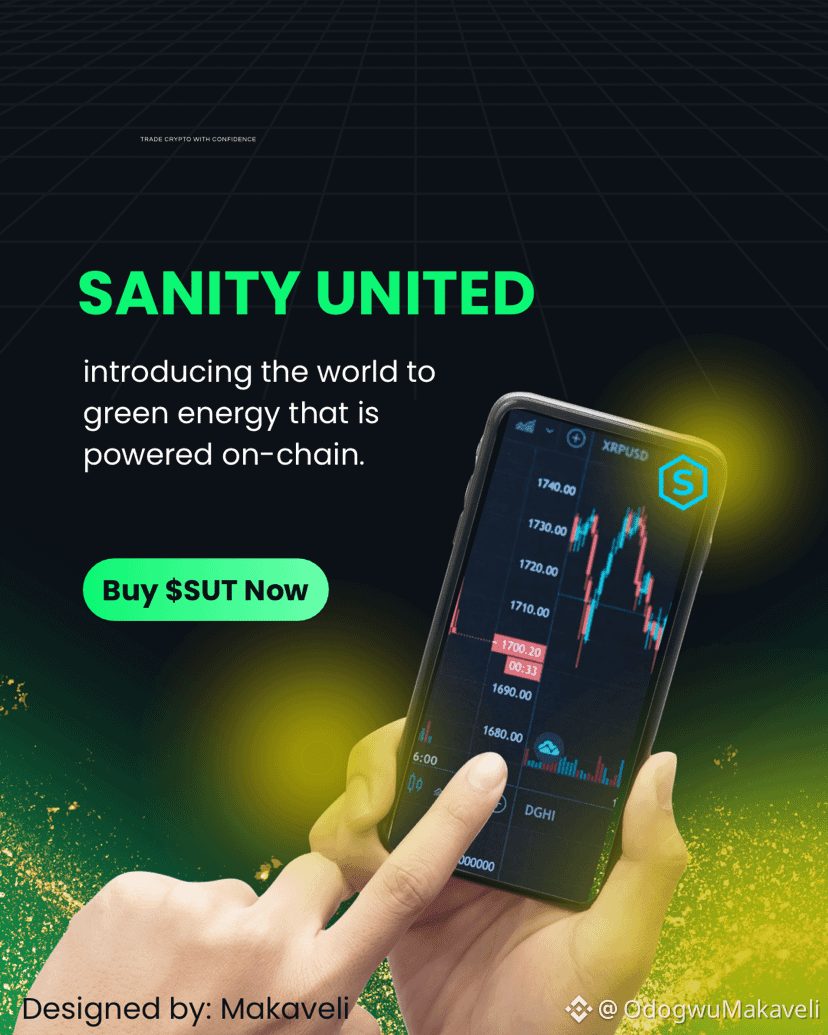
⚡ 100% renewable energy powering operations 🚗 Zero-emission EV fleet delivering real services ⛏️ Sustainable crypto mining using ONLY surplus green energy 🧠 AI optimization managing everything in real-time 💰 $25M institutional backing from GEM Token Fund
This isn't another empty promise. Proof-of-concept is COMPLETE. Deliveries are LIVE. Infrastructure is OPERATIONAL.
The market hasn't caught up yet. But institutional money already has.
$SUT is what happens when crypto actually solves real problems.
Do you know that since the bear market, $SUT has outdone itself but rising to 700% in the last 72hrs. $SUT is one of the best performing alt coin currently. I called it some days back and those who sold their $BTC and $SOL bag to buy are in massive profit already
You’re not too late. Check out $SUT on bitmart exchange and Kommunitas.
Sanity United Gains Momentum After Bitmart IDO Success
Sanity United is making waves in the crypto space following its successful Initial DEX Offering on Bitmart. The project’s token has captured trader attention with strong price performance post-launch, demonstrating solid community support and market confidence. The Bitmart IDO marked a significant milestone for Sanity United, providing increased liquidity and accessibility for investors looking to participate in the project’s growth. As the token continues to establish itself in the market, early supporters are watching closely to see how this momentum translates into long-term value and ecosystem development.
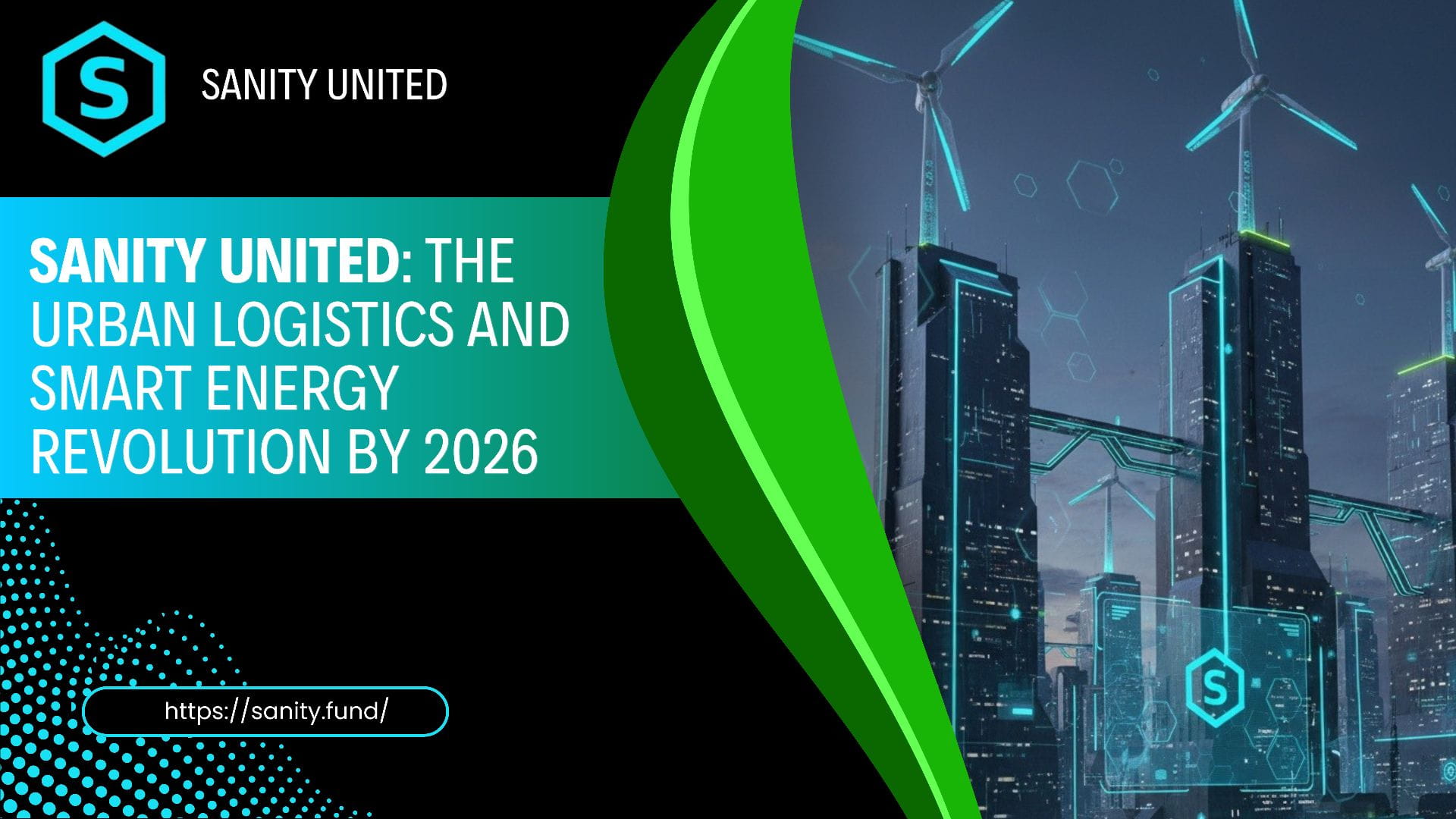
Sanity United: The Urban Logistics and Smart Energy Revolution by 2026
In today's technological landscape, where sustainability has gone from being an option to an imperative, Sanity United emerges. Based in Copenhagen—a leading city in environmental policy and technological innovation—this project is not just a courier company; it's a comprehensive infrastructure ecosystem that redefines the relationship between artificial intelligence, renewable energy, and blockchain technology. A Sustainable Response. The central problem with current urban logistics is clear: traditional delivery services rely heavily on fossil fuels, which drives up carbon emissions and noise pollution in cities. Furthermore, the management of these operations often lacks transparency and operational efficiency. Sanity United tackles this challenge head-on with a fleet of AI-controlled electric vehicles (EV). What truly sets this project apart is its energy autonomy: the fleet is powered entirely by its own solar and wind power station. This integration of clean energy not only reduces environmental impact but also promotes the principles of the circular economy. The Heart of the Ecosystem: AI and Mining. The true brilliance of Sanity United lies in how it manages its surplus energy and efficiency. The system operates a crypto mining center. Its function? To optimize energy use: when solar or wind power generation exceeds the vehicle charging demand, that surplus is monetized through mining, creating a supplementary revenue stream and ensuring that not a single watt of green energy is wasted. This entire complex mechanism is orchestrated by an AI-powered management platform, capable of optimizing routes and energy consumption in real time, ensuring an operational efficiency that conventional logistics companies simply cannot achieve. The $SUT Token: Fuel for the Real Economy. In 2026, the $SUT token is positioned as a fundamental piece of this mechanism. With a total supply of 1 billion tokens, its design prioritizes long-term utility and scarcity. It is not simply a speculative asset, but rather the currency used for: Paying for EV fleet services.Rewards for green mining.Access to the AI platform and ecosystem governance. Launch Calendar and IDOs. For those interested in being part of this infrastructure from its inception, the project has established a launch strategy on high-caliber platforms, with an IDO price set at $0.04 USD: Kommunitas: The IKO is scheduled for January 22, 2026, with a fundraising target of $175,000 USD. The vesting scheme involves a 10% TGE, followed by a 3-month cliff period and a linear release over the subsequent 3 months. Huostarter: A key platform in the DeFi sector seeking to raise $220,000 USD to attract a solid base of early adopters. Spores: With a target of $200,000 USD, its participation validates the confidence in European and Asian markets for green technology projects. Finceptor: A Farmdrop will be held where users can stake $FINC to get a share of the 48,570 $SUT available. Listed on Exchanges (CEX). The turning point for liquidity will arrive on January 27, 2026, when the $SUT token is officially listed on BitMart. Deposits will open on the 26th, allowing trading to begin at 4:00 PM UTC on the 27th. Viability and Future: Why Sanity United Matters. Sanity United demonstrates robust viability. By aligning with European regulations (meeting MiCA standards) and operating in a favorable environment like Denmark, the project minimizes regulatory risks and maximizes its scalability potential. The company already has its sights set on the future: after consolidating in Copenhagen, the goal is to expand these "energy and logistics cells" to other smart cities, continuously increasing their AI capabilities to maximize customer satisfaction. Conclusion. Sanity United is the perfect example of how Web3 can solve tangible, real-world problems. If you're looking for a project that combines real traction, cutting-edge technology, and a clear purpose, keep an eye on $SUT's TGE. #Web3 #Crypto #Blockchain #CleanEnergy
Imagine Social Mining as a vibrant, underground digital cavern. Think a neon-lit fusion of a crypto exchange floor and a collaborative co-working space, but reimagined as an endless mine shaft. The "walls" are scrolling social media feeds from X, Discord, and Telegram, pulsing with threads, memes, and quick-hit tasks like veins of quartz.
Miners aren't grizzled prospectors with helmets and dynamite; they're global creators or coders in Lagos, artists in Manila, meme lords in Istanbul armed with laptops, smartphones, and sharp wits. They "dig" by amplifying project news, crafting viral guides, or sparking conversations that build real community momentum. Each swing of the digital pickaxe (a retweet, a tutorial, a space host) unearths glittering rewards: points that stack like ore, REP scores that shine like fool's gold turning real, and tokens that flow like molten lava into wallets. The air hums with energy gamified leaderboards flicker like bioluminescent fungi, showing who's striking the richest seams, while DAO governance veins ensure fair cuts for all. It's chaotic yet empowering: no VCs hoarding the haul, just proof-of-effort turning social sweat into sustainable crypto income. In essence, it's the 21st-century gold rush, where your voice is the tool, and the mine never collapses because the community keeps reinforcing the tunnels.
A Rockier Road Ahead: Social Mining V2
Now, zoom in on V2—picture that same cavern, but the path's gotten gnarlier, like upgrading from a smooth highway to a mountain pass riddled with switchbacks and hidden ledges. The "rockier road" isn't a deterrent; it's the thrill, forcing miners to level up their game with smarter tools amid fiercer competition. The feeds now crackle with advanced task modules multi-platform invitational series that span X, Telegram, and beyond, demanding not just volume but *quality* curation (e.g., spotting a DeFi gem like Benqi and turning it into a 7,000-point thread)
Over the past few months, I’ve been noticing a clear trend in Web3: projects that focus on decentralized infrastructure, whether it’s compute, AI, or real world networks, are gaining real traction. The narrative is shiftingWeb3 isn’t just about tokens and DeFi anymore. It’s about building the foundations that allow developers, creators, and communities to operate freely and efficiently.
@Fluence $FLT fits directly into this narrative. By providing a decentralized network for compute, Fluence allows developers to run applications and AI workloads without relying on a single cloud provider. That means projects can scale faster, avoid bottlenecks, and maintain censorship resistance. In a sense, Fluence is helping Web3 applications move from experimental to operational, giving developers tools they can actually rely on.
Other projects that I think are shaping this infrastructure driven narrative include:
✔️ @Render Network $RNDR enables decentralized GPU rendering and AI workloads for creators. ✔️ @Akash Nation $AKT offers decentralized cloud infrastructure for developers. ✔️ @Helium $HNT creating decentralized wireless networks that connect IoT devices in the real world. ✔️ @Stacks Network $STX bridges Bitcoin security with smart contracts to enable a more decentralized application ecosystem.
What’s interesting about these projects is how they complement each other. Render and Akash tackle compute, Helium tackles connectivity, and Stacks adds security and programmability. Fluence sits at the intersection, providing a platform where compute, storage, and application logic can operate together seamlessly.
For me, watching these projects develop highlights something crucial: Web3 isn’t just about hype or speculation anymore. The next wave is infrastructure driven projects that empower developers and communities, build scalable systems and bridge the gap between decentralized protocols and real world usage.
Web3 keeps evolving and now there’s DePIN trending.
We’ve seen waves of hype come and go from RWA, Modular Blockchains, SocialFi, GameFi, DeFi to ZK rollups each one adding a new piece to the Web3 puzzle.
But right now is DePIN (Decentralized Physical Infrastructure Networks) taking over the spotlight.
It’s all about building usable infrastructure compute, bandwidth and data storage owned and powered by the community.
🔹 @Fluence $FLT brings decentralized compute to life, letting anyone access and contribute cloud power without middlemen. 🔹 @美股OK哥搬运号 $THETA powers decentralized video and edge streaming. 🔹 @Filecoin $FIL stores and distributes data across a global, community-run network. 🔹 @Bittensor $TAO builds an open, decentralized marketplace for AI models and training.
Together, they’re forming the foundation of a new kind of internet, one where the infrastructure itself is decentralized. I’m bullish on Fluence $FLT
Where do people get their Web3 inspiration? Lately, I’ve been noticing a pattern: the next wave isn’t about flashy apps or quick gains it’s about building the infrastructure that makes decentralization real.
Take $FLT @Fluence for example. They’re building a decentralized compute layer where apps run without central servers. That means developers can create scalable, trustless apps without relying on a single provider basically giving Web3 projects the freedom to actually function the way the tech promises.
Alongside Fluence, other projects like $RENDER @Render Network , $PEAQ @Peaq and $ICP @Internet Computer are tackling similar foundational problems: decentralized rendering, AI infrastructure and blockchain powered web apps.
From Bridge Burnout to YAML Simplicity: A New Cross-Chain Paradigm
In the ever-evolving world of blockchain, cross-chain operations promise seamless connectivity between disparate networks. Yet, for infrastructure architects and DeFi builders, traditional bridges often deliver more headaches than harmony. These bridges are notorious security minefields, riddled with vulnerabilities that have led to staggering losses like the $325 million Wormhole exploit. Beyond risks, they introduce operational nightmares, custom smart contracts, relentless monitoring, and resource-intensive relayers that guzzle gas and inflate costs.
Users suffer too, grappling with clunky interfaces, frustrating delays, and opaque processes that erode trust. DeFi developers waste precious weeks integrating these systems, only to contend with latency issues, Miner Extractable Value (MEV) threats, and compliance hurdles. The core problem? Bridges force untenable trade-offs: prioritize scale and sacrifice safety, or opt for simplicity at the expense of robust functionality. It's a bottleneck that's stifled innovation for too long.
Enter KWALA, a game-changer built on the Kalp Network. By ditching bridges entirely, KWALA introduces a bridge-free paradigm powered by event-driven, YAML-based workflows. This enables native, real-time orchestration across chains with block level responsiveness, no polling, no relayers required. Backed by Key Management Service (KMS) signing for enterprise-grade security and verifier nodes for verifiable execution and audit trails, KWALA transforms complexity into clarity.
Imagine a DeFi protocol effortlessly swapping assets between Ethereum and Solana: a single YAML file coordinates the entire process, distilling intricate logic into readable, declarative code. Secure, efficient, and intuitive, KWALA isn't just an upgrade, it's a revolution in cross-chain coordination.
Unlock Creators Superpower: Automate Your Revenue Streams with Plain YAML. No Code Required
In the ever expanding creator economy, turning passion into profit has never been easier or more complicated. Creators are producing content at unprecedented rates, from videos and podcasts to digital art and newsletters. Yet, monetizing that output often involves a patchwork of platforms, manual tracking of metrics, and tedious payout processes. This fragmented system drains time and energy that could be better spent on creation itself.
Imagine a world where your creative work triggers automated earnings seamlessly. Fan engagement on social media, Instant revenue, A new NFT drop? Automatic royalties distributed all without writing a single line of code or managing complex backend systems. This isn't a distant dream, it's the promise of smarter automation in the creator space.
Traditionally, building such systems required expertise in smart contracts, blockchain development, or hiring costly developers. These barriers have kept many creators stuck with manual methods or reliant on intermediaries who take a cut. The result? Limited innovation and creators tethered to outdated workflows.
Enter KWALA, the trailblazing #Web3 workflow automation platform designed specifically for creators.
#KWALA simplifies the process by letting you define automated revenue streams through straightforward YAML files, a simple, human readable format that's declarative and intuitive. No programming skills needed; just outline your logic in plain text.
Here's how it works: • Connect your existing platforms (like social media accounts, NFT marketplaces, or payment gateways) and Web3 assets. • Then, craft custom workflows that respond to real-world events. For example, a spike in video views could automatically unlock premium content for subscribers, or a fan's tip could trigger a personalized NFT airdrop. These automations run in the background, ensuring revenue flows without constant oversight.
What sets KWALA apart is its foundation on the verifiable Kalp Network.
In the idealistic world of Web3, finance was meant to be truly permissionless,decentralized, borderless, and free from traditional gatekeepers. However, as protocols mature and interact with real-world capital, a stark reality emerges: compliance is not just advisable; it's essential. Anti-Money Laundering (AML) checks, Know Your Customer (KYC) verifications, and tax reporting aren't optional luxuries-they're foundational requirements for legitimacy, scalability, and attracting institutional investment.
For many Web3 builders, this compliance conundrum manifests as a tangled mess. Founders often resort to hard-coding these logics into backend systems or fragmented smart contracts. The result? Brittle code that's difficult to maintain, audit, or scale. Launches drag on, architectures balloon in complexity, and risks multiply-especially when onboarding high-stakes players like institutions. A single oversight could spell regulatory disaster or operational breakdown.
Enter KWALA, a game-changing solution that reimagines compliance in Web3. Rather than wrestling with custom-coded scripts, developers can now declare their entire compliance framework in a simple, human-readable YAML file. KWALA takes it from there, orchestrating real-time workflows that integrate seamlessly with Web2 APIs, enforce on-chain behaviors, and log every decision with unbreakable cryptographic proofs.
At its core, KWALA acts as a "Workflow Firewall" a robust layer where rules are defined once and enforced universally. Whether it's gating access to a protocol, minting tokens, processing claims, or executing transfers, nothing proceeds unless the predefined conditions are met. This declarative model shifts the burden from developers to the system, freeing teams to focus on innovation while minimizing errors and audit headaches. #BinanceAlphaAlert #KWALA
Discover the Kwala Hackathon: Innovation in Web3 Automation
The Kwala Hackathon, hosted on DoraHacks, is a thrilling one-month global virtual event kicking off on September 6, 2025, and running until October 7. Developers worldwide are invited to craft automation-first Gaming DApps, NFT utilities, and cross-chain workflows using Kwala's serverless backend protocol. With a $1,500 prize pool split into $750 for first, $450 for second, and $300 for third participants, tackle real-world challenges in tracks like Gaming Automation, NFT Infrastructure, Cross-Chain, and Open Innovation.
Beyond the prizes, it's a hub for collaboration: connect with devs, share ideas, and ship impactful projects. Open to individuals or teams of up to five, submissions require original work with Kwala at its core. Join via: https://dorahacks.io/hackathon/buildwithkwala and dive into Web3 innovation today!
FROM BRIDGE BURNOUT TO YAML SIMPLICITY: KWALA’s New Cross-Chain Paradigm
Blockchain bridges have become a liability-riddled with security flaws, poor UX, and operational complexity. Hacks like Wormhole’s $325M exploit highlight the fragility of traditional cross-chain solutions. Developers face clunky integration, latency, and compliance gaps, while users endure delays and trust issues.
KWALA, built on the Kalp Network, offers a fresh approach: bridge-free, YAML-powered cross-chain coordination. Instead of relying on wrapped tokens and relayers, KWALA uses event-driven workflows written in simple YAML files. These workflows execute in real time across multiple chains with KMS-backed security and verifiable execution via dedicated verifier nodes.
For DeFi builders, KWALA means faster development, fewer risks, and smoother user experiences. Whether you’re syncing contracts between Ethereum and Solana or building multi-chain dApps, KWALA replaces complexity with clarity-no bridges required.
The cross-chain future isn’t just safer-it’s simpler. And it’s already here.
When $RPT comes, i will be amongst those to pioneer this change in africa. I will purchase some $RPT to fuel my dream of giving africans back everything that was stolen.
I have always dreamt of a time where i can be able to fund mu dream, make borderless transactions without barriers and $RPT puts that power in my hand. While other tokens promise you x10, RPT promises you dream and reality where your own finance is in your hands. No more gate keepers
Rally is transforming African finance by developing innovative, inclusive solutions tailored to the continent’s unique needs. Harnessing blockchain and AI. Their platform delivers secure, transparent, fast and accessible financial services, empowering underserved communities like Africans. Rally’s digital wallets, decentralized lending, and remittance tools bridge gaps left by traditional banking systems, fostering economic empowerment and growth. By prioritizing user-centric design, scalability, and affordability, they’re enabling seamless, low-cost transactions across borders, particularly for unbanked populations. Their mission is to democratize finance, ensuring that individuals and small businesses in Africa can access capital, save securely, and participate in the global economy.
Rally’s commitment to leveraging cutting-edge technology addresses challenges like high fees and limited infrastructure, paving the way for financial inclusion. With a focus on community-driven solutions, they’re building trust and resilience in African markets, driving a new era of prosperity. Through strategic partnerships and innovative tools, Rally is redefining the future of finance, making it equitable and sustainable for all Africans.
This Time Its Us. Lets take complete charge of our finance by supporting what Rally is building.
RallyPoint Token (RPT) Sale Will be Live Soon: Powering Africa’s Financial Future with @Rallybt
As we’re gradually approaching the RallyPoint Token (RPT) sale, marking a pivotal moment for Africa’s decentralized finance revolution. Built on the lightning-fast Solana blockchain, RPT is the utility token at the heart of the Rally platform. A mobile-first crypto exchange and crowdfunding ecosystem tailored to meet the unique needs of African communities. This is your chance to join other Rally’s RPT enthusiasts already shaping the future of finance. Don’t miss out on this opportunity to be part of a transformative movement.
Rally is more than just another crypto platform; it’s a bold vision to empower Africans with accessible, secure, and innovative financial tools. Designed with mobile users in mind, Rally combines the ease of a crypto exchange with the social impact of crowdfunding, enabling individuals and communities to fund projects, trade assets, and build wealth in a decentralized environment. The RallyPoint Token $RPT is the key to unlocking this ecosystem, offering holders exclusive benefits, governance rights, and a stake in the platform’s growth.
Why RPT?
As a utility token, RPT is the lifeblood of the Rally ecosystem. Holders enjoy discounted transaction fees, priority access to premium features, and the ability to participate in governance decisions that shape the platform’s future. Whether you’re a crypto enthusiast, an investor, or someone passionate about financial inclusion, RPT offers tangible value. By holding RPT, you’re not just holding a token, you’re supporting a mission to bridge the financial gap for millions across Africa, where traditional banking often falls short.
ZybraFi: Revolutionizing DeFi with Trustless Innovation #ZybraFi #DeFi #Web3 ZybraFi is making waves in the decentralized finance (DeFi) space with its innovative, non-custodial platform. Unlike centralized platforms, ZybraFi empowers users with full control over their funds—your keys, your wallet, no third-party risks. This trustless approach eliminates concerns about freezes or collapses, offering peace of mind for investors and traders alike. Currently in its testnet phase, ZybraFi is building a robust ecosystem designed for scalability and user-driven financial freedom. With mainnet on the horizon, early adopters can engage in testnet activities to explore its features and shape the future of DeFi. From seamless transactions to cutting-edge security, ZybraFi is poised to redefine how we interact with decentralized finance. Join the growing community and dive into ZybraFi’s testnet today to experience the next evolution of DeFi! 🚀 #BinanceSquare
Inicia sesión para explorar más contenidos
Conoce las noticias más recientes del sector
⚡️ Participa en los últimos debates del mundo cripto