Stop Guessing, Start Operating: The Blueprint for Becoming a Profitable Trader
Most traders wake up every morning trying to predict the future. They stare at charts looking for clues. They stack indicators hoping for certainty. They consume news, follow signals, join Discord calls, all searching for the answer to one question: Where is price going next? This is the wrong question. And it's why 90% of traders lose 90% of their capital within 90 days.
The Prediction Trap The trading industry has sold you a lie dressed up as education. The lie sounds like this: If you learn enough patterns, study enough indicators, and find the right system, you'll be able to predict market moves before they happen. So you learned Head and Shoulders. You memorized RSI overbought and oversold levels. You stacked MACD on top of Bollinger Bands on top of Stochastic. You learned all of the 69+ ict pd arrays. You joined communities where people draw lines on charts and say things like "targeting 4200 by Friday." And when the prediction works, you feel like a genius. When it fails, you blame the strategy and search for a new one. This is the trap, the endless search for certainty in a system that doesn't offer it. Here's what nobody told you: A casino doesn't know the outcome of a single spin of the roulette wheel. Not one. They have zero predictive ability on any individual bet. Yet casinos are the most profitable businesses on the planet. How? They stopped predicting. They started operating. The Casino Owner's Mind Walk into any casino and watch the house. They're not sweating individual bets. They're not hoping the next spin goes their way. They're not analyzing patterns in the roulette ball's trajectory. They built a system with a mathematical edge. Then they execute that system thousands of times without emotional attachment to any single outcome. Red or black. Win or lose. The casino doesn't care. Because they know something most traders never learn: Over a large enough sample size, the edge plays out. One spin means nothing. One hundred spins means nothing. Ten thousand spins? The math becomes destiny. The casino owner doesn't predict outcomes. They operate a system. This is the shift that separates the 90% who blow accounts from the 10% who build wealth. You Are Not a Fortune Teller Let me be direct. You don't know where price is going next. Neither do I. Neither does the guy on 𝕏 with 200,000 followers posting chart screenshots with rocket emojis. Nobody knows. The market is a complex adaptive system influenced by millions of participants, algorithmic flows, institutional positioning, geopolitical events, and randomness you can't model or predict. Anyone who tells you they know what's coming next is either lying or delusional. But here's the part that changes everything: You don't need to know what happens next to make money. You need a system with positive expectancy. Then you need the discipline to execute it without deviation. That's it. A 40% win rate is wildly profitable with a 3:1 reward-to-risk ratio. You can be wrong six times out of ten and still build wealth. The math doesn't lie. But most traders can't accept this. Being wrong 60% of the time feels like failure. So they chase higher win rates, tighter predictions, more certainty. And certainty is the most expensive thing in the market. we can all tell when we see PNL more like on $ONDO i saw around 600% with someone.
The Math That Sets You Free Let's run the numbers that the prediction-addicted will never accept. Assume you risk 1% of your account per trade. Your system has a 40% win rate. Your average winner is 3x your average loser. Over 100 trades: 40 wins × 3R = 120R gained60 losses × 1R = 60R lostNet: +60R You were wrong 60% of the time. You made 60% on your account. Now run the predictor's math. They chase a 90% win rate strategy. They find one (usually scalping), taking tiny profits while holding losers. The average winner is 0.5R. Average loser is 3R because they "give it room." Over 100 trades: 90 wins × 0.5R = 45R gained10 losses × 3R = 30R lostNet: +15R Looks profitable on paper. But here's what actually happens: One bad day. One news spike. One "this time is different" hold. They take a 10R loss. Now they're negative on the month and revenge trading to recover. The high win rate was an illusion. The certainty was a trap. The 40% win rate operator sleeps well. The 90% win rate predictor blows his account.
The Identity Shift Stopping prediction isn't a strategy change. It's an identity change. You have to stop seeing yourself as someone who reads markets and start seeing yourself as someone who executes systems. You're not a fortune teller. You're a factory manager. Your job is quality control. Did the setup meet specifications? Was the execution clean? Was risk managed according to protocol? The factory manager doesn't cry when a defective product comes off the line. It's expected. It's built into the model. They track the defect rate, optimize the process, and keep the line running. A losing trade is a defective product. Expected. Accounted for. Not emotional. This shift takes time. Your ego will resist. The prediction addiction runs deep, it's been chemically reinforced by every random win you've had. But on the other side of that resistance is calm. The calm of knowing you don't need to be right. The calm of executing without hope. The calm of watching a losing trade hit your stop and feeling nothing because you already knew this was possible, it was priced into the system, and one trade means nothing. Control what you can. Release what you can't. You can control your preparation. Your criteria. Your position size. Your stop loss. Your journal. You cannot control the next candle. Stop trying.
The Protocol Here's how you start operating today: Step 1: Define your edge in writing. What is your setup? Not five setups. One. What are the exact criteria? If you can't write it down in plain language, you don't have a system, you have a collection of impulses. Step 2: Know your numbers. What's your historical win rate? What's your average R? What's your expectancy per trade? If you don't know these numbers, you're gambling. You're hoping. You're predicting. Step 3: Pre-decide everything. Before the market opens, know your entries, stops, and targets. Know what you'll do in every scenario. The trade should be boring when you execute because you already made every decision in advance. Step 4: Remove prediction language from your vocabulary. Stop saying "I think it's going up." Start saying "If it breaks and retests this level, my criteria are met." The first is fortune telling. The second is operating. Step 5: Judge yourself on execution, not outcomes. Did you follow the plan? That's the only question. The P&L is a lagging indicator of your execution quality over time. It's meaningless on a single trade.
The Truth They Don't Want You to Know The trading education industry profits from your prediction addiction. Every new indicator, every signal service, every "secret institutional strategy," it's all selling certainty. Because certainty is what you crave. Certainty is what your brain, evolved for the savannah, demands before it feels safe. But certainty doesn't exist in markets. The traders who win accepted this. They stopped fighting it. They built systems that don't require certainty and executed them with the detachment of an actuary calculating insurance premiums. They stopped predicting. They started operating. You can make the same shift. But you have to let go of the fantasy first. The market will open tomorrow. You'll see setups. Your brain will whisper predictions. Let it whisper. Then ignore it. Open your plan. Check your criteria. Execute or wait. One trade in a thousand. The math will handle the rest.
Bonus For readers
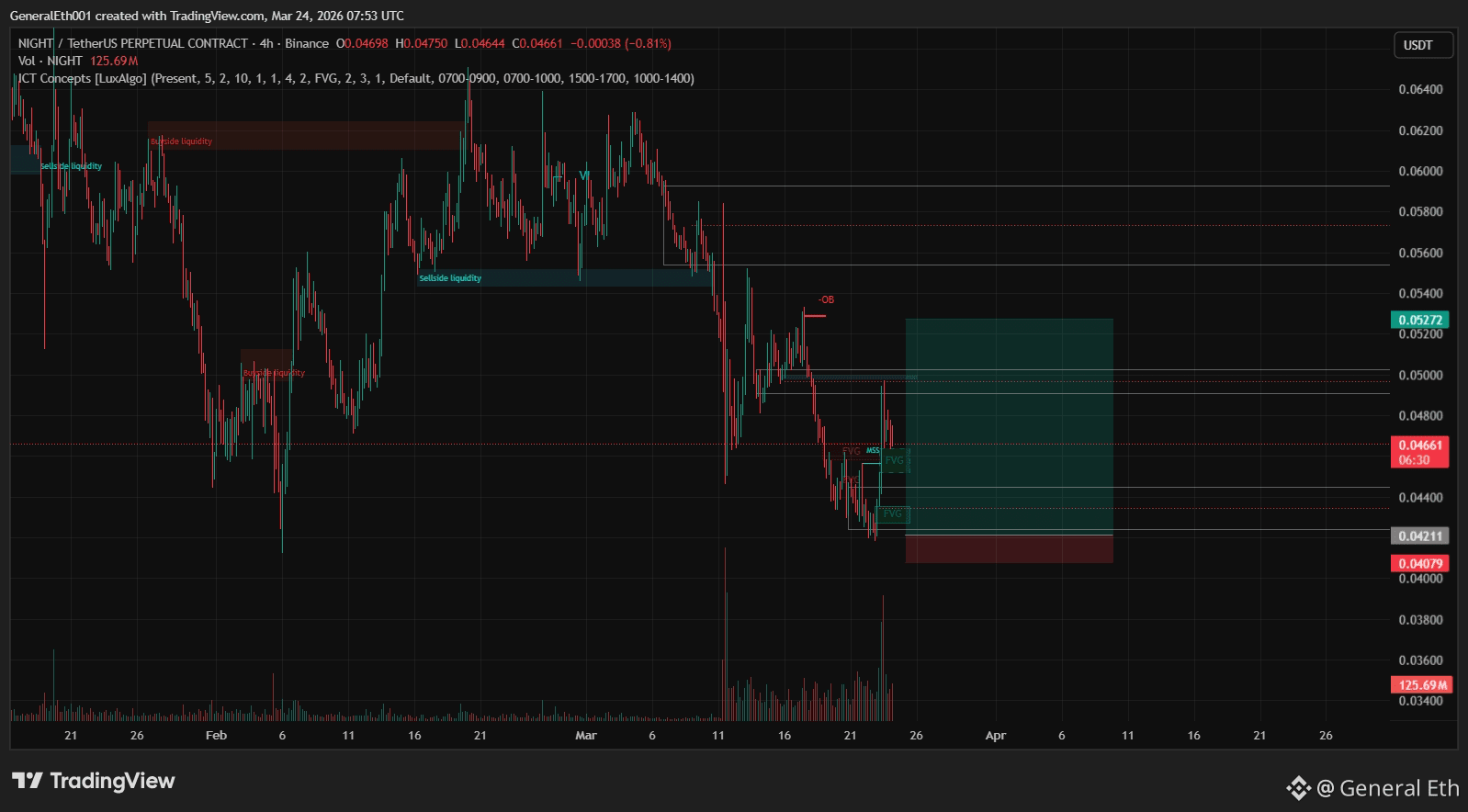
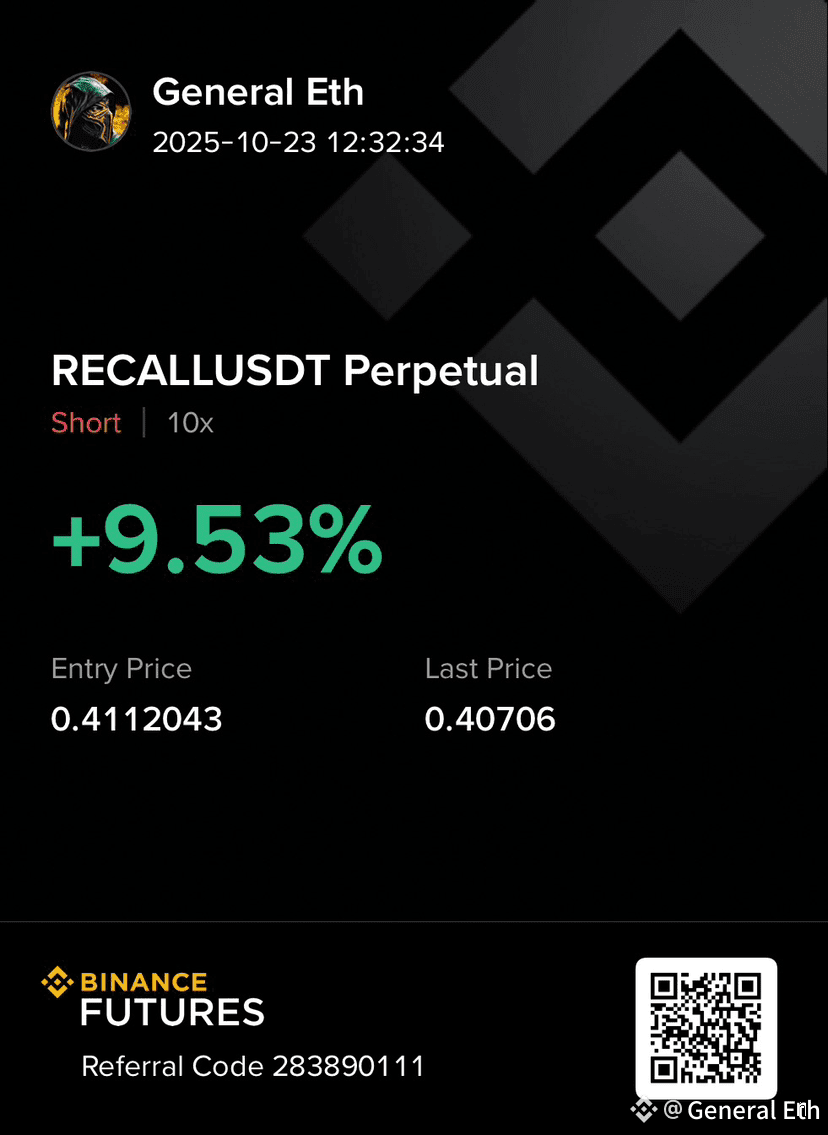
Short $VVV
The Trader doesn't predict the future. They prepare for it.
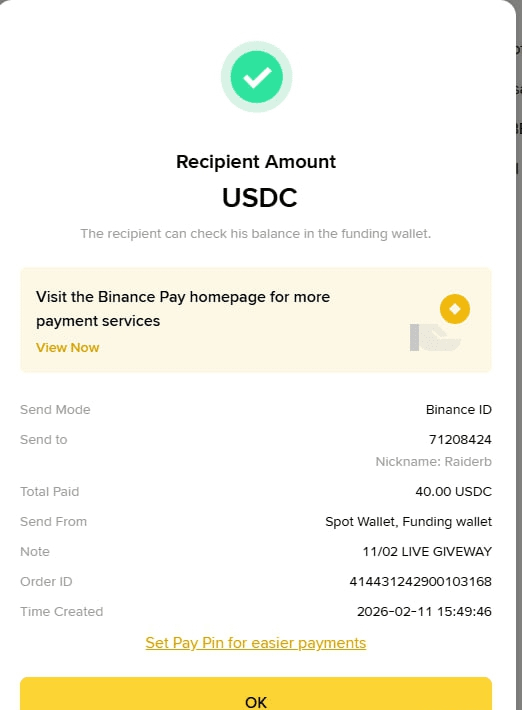
🐸🎁 $COA {alpha}(560xa992ffb0c9b753307b9704079c61db4e405deffd) COA – 40 USDC GIVEAWAY! 🎁🐸 Yes, you heard it right… 💰 40 $USDC {future}(USDCUSDT) up for grabs! Simple. Fast. Rewarding. 🚀 ✅ How to Join: 1️⃣ Follow this account 2️⃣ Like & share this post 3️⃣ Comment “COA COA” 🐸 That’s it — you’re in! More rewards, more opportunities, more winning chances coming soon 👀 Don’t miss out… next winner could be YOU! 🎯 #Trading #Binance #CryptoGiveaway #USDC
Bitcoin’s Short-Term Holder (STH) NUPL has dropped to around –0.5, a level that historically signals intense unrealized losses among recent buyers. But what does that actually mean and why does it matter ?
First, What Is STH NUPL? NUPL (Net Unrealized Profit/Loss) measures whether holders are, on average, sitting in profit or loss. Above 0 → holders are mostly in profitBelow 0 → holders are mostly in loss When we focus on Short-Term Holders (coins held <155 days), we’re looking at the most reactive participants in the market — traders and recent buyers who are more likely to panic sell during drawdowns. So when STH NUPL falls to –0.5, it means:
A large portion of recent buyers are deeply underwaterMarket sentiment among short-term players is extremely negativeFear is dominating decision-making Historically, this is where emotional selling peaks.
📉 Why –0.5 Is Important Levels this deep don’t happen often. Previous times STH NUPL reached similar depths: Mid-2022 post-ATH crashLate-stage bear market conditionsPeriods of forced exits and capitulation These moments were characterized by: Panic sellingRetail exhaustionWeak hands exiting the marketQuiet accumulation by stronger participants It’s important to note: these zones historically formed near macro bottoms, not at the beginning of fresh breakdowns.
🧠 Psychology Behind Capitulation Capitulation is not just a price event it’s an emotional event
It’s when: Traders lose conviction Social sentiment turns aggressively bearishIt’s over” narratives dominate Ironically, these are the environments where long-term investors begin accumulating, not distributing. Why? Because markets move from: Euphoria → Distribution Fear → AccumulationWhen short-term pain peaks, long-term opportunity often forms. 📊 Big Picture Takeaway When: Short-term holders are deeply underwaterFear dominates sentimentSelling pressure appears exhausted We’re often closer to a smart money accumulation window than a structural breakdown phase. The market punishes late buyers at the top… and rewards patient accumulators during peak discomfort.
Bitcoin’s Short-Term Holder (STH) NUPL has dropped to around –0.5, a level that historically signals intense unrealized losses among recent buyers. But what does that actually mean and why does it matter ?
First, What Is STH NUPL? NUPL (Net Unrealized Profit/Loss) measures whether holders are, on average, sitting in profit or loss. Above 0 → holders are mostly in profitBelow 0 → holders are mostly in loss When we focus on Short-Term Holders (coins held <155 days), we’re looking at the most reactive participants in the market — traders and recent buyers who are more likely to panic sell during drawdowns. So when STH NUPL falls to –0.5, it means:
A large portion of recent buyers are deeply underwaterMarket sentiment among short-term players is extremely negativeFear is dominating decision-making Historically, this is where emotional selling peaks.
📉 Why –0.5 Is Important Levels this deep don’t happen often. Previous times STH NUPL reached similar depths: Mid-2022 post-ATH crashLate-stage bear market conditionsPeriods of forced exits and capitulation These moments were characterized by: Panic sellingRetail exhaustionWeak hands exiting the marketQuiet accumulation by stronger participants It’s important to note: these zones historically formed near macro bottoms, not at the beginning of fresh breakdowns.
🧠 Psychology Behind Capitulation Capitulation is not just a price event it’s an emotional event
It’s when: Traders lose conviction Social sentiment turns aggressively bearishIt’s over” narratives dominate Ironically, these are the environments where long-term investors begin accumulating, not distributing. Why? Because markets move from: Euphoria → Distribution Fear → AccumulationWhen short-term pain peaks, long-term opportunity often forms. 📊 Big Picture Takeaway When: Short-term holders are deeply underwaterFear dominates sentimentSelling pressure appears exhausted We’re often closer to a smart money accumulation window than a structural breakdown phase. The market punishes late buyers at the top… and rewards patient accumulators during peak discomfort.
Appreciations to all the ecosystem players, $BTC maxis, $ETH holders, meme traders, ETF applicants, treasury pub cos, good regulators, and utility builders. 🙏 #CryptoClarityAct #ETHBreaks3700
$XRP is showing strong bullish momentum after breaking out of an inverse head and shoulders pattern.
The price surged from $1.96 to near $3.60 and is now consolidating just below the key $4 mark. Holding above $3.40 could lead to a fresh breakout toward $4. #xrp #tradingview
$SUI - $4.20 is the level to crack to test previous all time highs. The chart is still looking bullish, but a bigger pull back is possible if price can't advance past that resistance.
Analyzing Transfers from #Bitcoin — The $BTC Long Term Power Law has historically been a precise indicator for identifying market tops.
✅ Price is still well below the historical resistance zone (blue line).
✅ We are comfortably trending within the growth channel.
✅ No signs of a macro top yet — the long-term trend remains bullish. 📈
This suggests we are still in the middle phase of this cycle — accumulation and growth are ongoing. The potential upside remains huge for patient holders. 💎
$STONE StakeStone’s rising star is worth a look too. Set to list on Bitget April 3rd and backed by Binance Labs, it’s still flying under Binance’s radar for now. With its omnichain liquidity vision, $STONE could carve out a strong spot in DeFi by 2025.
$WAL tied to the Walrus Protocol on $SUI has some intriguing potential as a decentralized storage play. Built by Mysten Labs, it’s tackling big data think videos, images, and blockchain archives with a clever erasure-coding approach that keeps costs low (4-5x replication) and resilience high, even if nodes fail.
With a $140M token sale, a 5B total supply, and a mainnet launch this week, it’s got momentum and backing from heavyweights like $AIXBT . I like the tech angle programmable storage via Sui’s Move language could open doors for dApps, NFTs, and AI datasets but it’s still early, and adoption will be the real test.
I’m cautiously optimistic about Walrus. The tech seems smart cost-efficient, fault-tolerant storage is a solid pitch, and tying it to $SUI ’s high-performance blockchain feels like a strategic flex.
The team’s experience and funding are big pluses, seen the listing on Bitget with some nice event too. but the crowded storage space and reliance on ecosystem growth make me hesitant to call it a slam dunk. It’s got potential to shine if it delivers, but I’d need to see traction beyond hype to fully buy in.
if you’re looking for an early wealth creation shot, $KILO on BG might be it. Listed in their Innovation and DeFi Zone, this Binance Lab-backed gem is still flying under the radar but has serious potential. With its next-gen DEX and liquid staking integration, $KILO’s utility is solid, and buying in now could mean big profits as it catches more eyes.
Early movers have a real chance to stack gains before the crowd piles in think of it like getting $BROCCOLI714 cheap before its 80% pop. $KILO’s low FDV and locked tokens until Q3 2025 scream upside if momentum builds. Anyone else seeing this as an Opportunity ?
Hey all, I’ve been checking out $BANANAS31 , a meme token with some serious potential. Born from the “Banana for Scale” meme, it’s got a fun vibe and a growing community on Binance Smart Chain. With a $64M cap and 10B total supply, it’s in that sweet spot for growth — up 115% last week despite a shaky market.
Plus, rumors of a Bitget listing could boost it big time. It’s not just hype, though, there's an ongoing Candybom event on BG though to grab a share from the 9k Pool of .
They’re teasing an AI Quasi-Autonomous Agent Protocol and a CARV D.A.T.A. partnership, hinting at more than just meme appeal. Sure, it’s volatile, but with support at $0.005 and resistance near $0.0065, there’s room to run if momentum holds. What’s your take on this one?#BSCTrendingCoins