

EthioCoinGiram1
3.1k Publicaciones

EthioCoinGiram1
Denunciar
Bloquear usuario
@EthioCoinGram delivers the latest on crypto markets, trends, blockchain, ETFs, Web3, and media news — simple, fresh, and made for traders and enthusiasts alike
Abrir trade
Trader frecuente
2.4 año(s)
2.6K+ Siguiendo
7.3K+ Seguidores
5.9K+ Me gusta
Publicaciones
Cartera
Todo
Citas
Videos
Live
·
--
¡No olvides de dónde vienes para no perder de vista hacia dónde vas!
#BitcoinShortTermHoldersReach4.08MBTC #OctoberFedHikeOddsFallToAround17% #NEARRisesNearly10%
@EthioCoinGram1
¡No olvides de dónde vienes para no perder de vista hacia dónde vas!
#BitcoinShortTermHoldersReach4.08MBTC #OctoberFedHikeOddsFallToAround17% #NEARRisesNearly10%
@EthioCoinGiram1
#BitcoinShortTermHoldersReach4.08MBTC #OctoberFedHikeOddsFallToAround17% #NEARRisesNearly10%
@EthioCoinGiram1
75
·
--
🎙️ bienvenido mi amor, la gente se une a mí 😍 tú $
Finalizado
01 h 07 m 05 s
60
1
0
·
--
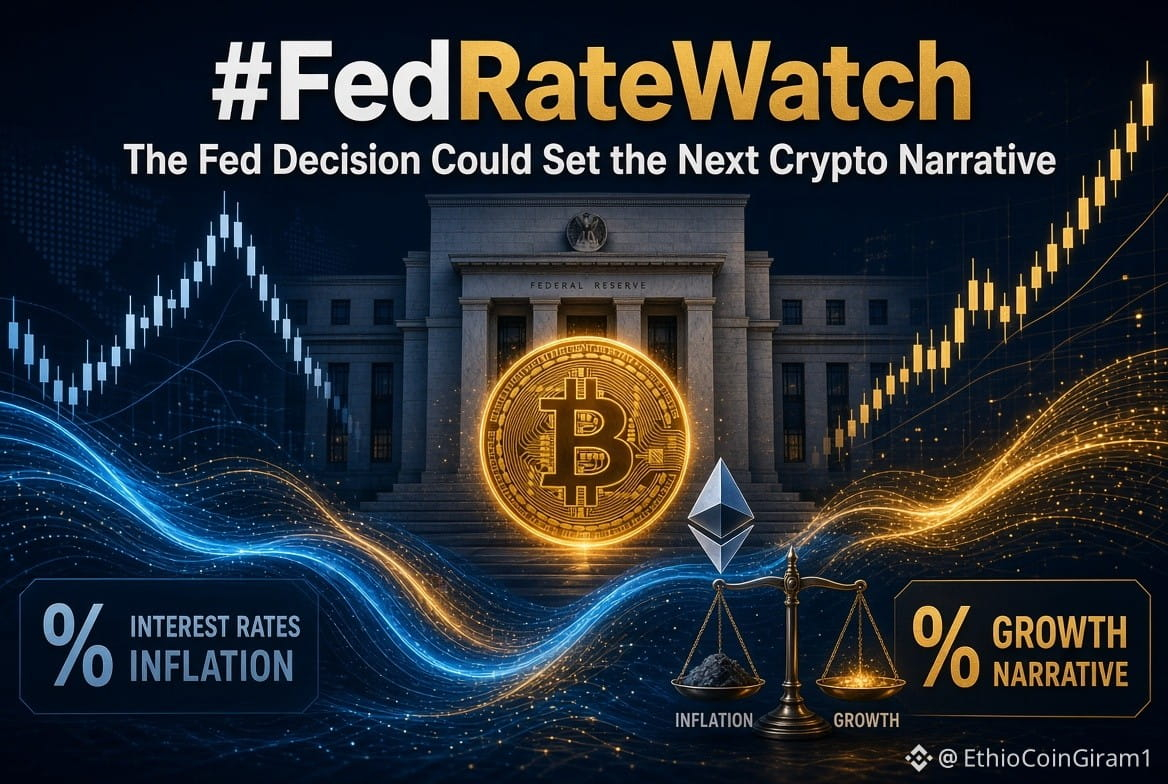
#fedratewatch #FedRateWatch: La decisión de la Fed podría marcar el próximo relato cripto
He estado siguiendo de cerca a la Fed porque la decisión de hoy trata más que de un solo número sobre la tasa de interés.
La reunión del FOMC de la Reserva Federal del 15–16 de septiembre concluye hoy, y la decisión sobre la tasa irá seguida de la conferencia de prensa.
Para los traders de cripto, la pregunta importante es sencilla:
¿Qué pasa con la liquidez después de la decisión?
🧠 ¿Por qué importa la Fed para Bitcoin?
Cuando las tasas de interés se mantienen altas, el efectivo y los rendimientos de los bonos del Tesoro se vuelven más atractivos. Al mismo tiempo, las condiciones financieras pueden seguir siendo más estrictas, lo que podría reducir el apetito por activos de mayor riesgo como Bitcoin y las altcoins.
Cuando los mercados esperan una política más laxa, puede desarrollarse la dinámica contraria: los inversores podrían estar más dispuestos a asumir riesgos.
Pero hay un detalle importante que muchos traders pasan por alto:
La cripto a menudo reacciona más al mensaje de la Fed que a la tasa del titular en sí.
El comunicado, las proyecciones económicas y la conferencia de prensa pueden cambiar las expectativas para las próximas varias reuniones.
📊 Lo que estoy vigilando hoy
1. La decisión sobre la tasa
Los mercados han estado reajustando con fuerza el precio de la reunión de septiembre. Datos del mercado relacionados con el CME mostraron recientemente que la probabilidad de una subida de 25 puntos básicos aumentó de forma considerable a medida que entraron datos de inflación.
2. El lenguaje de Powell
Si la Fed suena más preocupada por la inflación, los mercados podrían interpretarlo como una señal de una política más restrictiva en el futuro.
Si los responsables de la política subrayan debilidad económica o una disminución de la presión inflacionaria, los traders podrían centrarse más en la posibilidad de un alivio futuro.
3. La reacción de Bitcoin
Yo observaría el volumen de BTC y la estructura del precio en lugar de reaccionar a la primera vela después del anuncio.
Un movimiento brusco seguido de una reversión rápida podría indicar que la reacción inicial fue, en gran parte, por posicionamiento.
🔎 El panorama más amplio
La Reserva Federal está equilibrando la inflación con el crecimiento económico, mientras que los mercados, al mismo tiempo, observan los rendimientos del Tesoro, el dólar y las condiciones más amplias de liquidez.#bitcoin #BTC #Ethereum
#fedratewatch #FedRateWatch: La decisión de la Fed podría marcar el próximo relato cripto
He estado siguiendo de cerca a la Fed porque la decisión de hoy trata más que de un solo número sobre la tasa de interés.
La reunión del FOMC de la Reserva Federal del 15–16 de septiembre concluye hoy, y la decisión sobre la tasa irá seguida de la conferencia de prensa.
Para los traders de cripto, la pregunta importante es sencilla:
¿Qué pasa con la liquidez después de la decisión?
🧠 ¿Por qué importa la Fed para Bitcoin?
Cuando las tasas de interés se mantienen altas, el efectivo y los rendimientos de los bonos del Tesoro se vuelven más atractivos. Al mismo tiempo, las condiciones financieras pueden seguir siendo más estrictas, lo que podría reducir el apetito por activos de mayor riesgo como Bitcoin y las altcoins.
Cuando los mercados esperan una política más laxa, puede desarrollarse la dinámica contraria: los inversores podrían estar más dispuestos a asumir riesgos.
Pero hay un detalle importante que muchos traders pasan por alto:
La cripto a menudo reacciona más al mensaje de la Fed que a la tasa del titular en sí.
El comunicado, las proyecciones económicas y la conferencia de prensa pueden cambiar las expectativas para las próximas varias reuniones.
📊 Lo que estoy vigilando hoy
1. La decisión sobre la tasa
Los mercados han estado reajustando con fuerza el precio de la reunión de septiembre. Datos del mercado relacionados con el CME mostraron recientemente que la probabilidad de una subida de 25 puntos básicos aumentó de forma considerable a medida que entraron datos de inflación.
2. El lenguaje de Powell
Si la Fed suena más preocupada por la inflación, los mercados podrían interpretarlo como una señal de una política más restrictiva en el futuro.
Si los responsables de la política subrayan debilidad económica o una disminución de la presión inflacionaria, los traders podrían centrarse más en la posibilidad de un alivio futuro.
3. La reacción de Bitcoin
Yo observaría el volumen de BTC y la estructura del precio en lugar de reaccionar a la primera vela después del anuncio.
Un movimiento brusco seguido de una reversión rápida podría indicar que la reacción inicial fue, en gran parte, por posicionamiento.
🔎 El panorama más amplio
La Reserva Federal está equilibrando la inflación con el crecimiento económico, mientras que los mercados, al mismo tiempo, observan los rendimientos del Tesoro, el dólar y las condiciones más amplias de liquidez.#bitcoin #BTC #Ethereum
He estado siguiendo de cerca a la Fed porque la decisión de hoy trata más que de un solo número sobre la tasa de interés.
La reunión del FOMC de la Reserva Federal del 15–16 de septiembre concluye hoy, y la decisión sobre la tasa irá seguida de la conferencia de prensa.
Para los traders de cripto, la pregunta importante es sencilla:
¿Qué pasa con la liquidez después de la decisión?
🧠 ¿Por qué importa la Fed para Bitcoin?
Cuando las tasas de interés se mantienen altas, el efectivo y los rendimientos de los bonos del Tesoro se vuelven más atractivos. Al mismo tiempo, las condiciones financieras pueden seguir siendo más estrictas, lo que podría reducir el apetito por activos de mayor riesgo como Bitcoin y las altcoins.
Cuando los mercados esperan una política más laxa, puede desarrollarse la dinámica contraria: los inversores podrían estar más dispuestos a asumir riesgos.
Pero hay un detalle importante que muchos traders pasan por alto:
La cripto a menudo reacciona más al mensaje de la Fed que a la tasa del titular en sí.
El comunicado, las proyecciones económicas y la conferencia de prensa pueden cambiar las expectativas para las próximas varias reuniones.
📊 Lo que estoy vigilando hoy
1. La decisión sobre la tasa
Los mercados han estado reajustando con fuerza el precio de la reunión de septiembre. Datos del mercado relacionados con el CME mostraron recientemente que la probabilidad de una subida de 25 puntos básicos aumentó de forma considerable a medida que entraron datos de inflación.
2. El lenguaje de Powell
Si la Fed suena más preocupada por la inflación, los mercados podrían interpretarlo como una señal de una política más restrictiva en el futuro.
Si los responsables de la política subrayan debilidad económica o una disminución de la presión inflacionaria, los traders podrían centrarse más en la posibilidad de un alivio futuro.
3. La reacción de Bitcoin
Yo observaría el volumen de BTC y la estructura del precio en lugar de reaccionar a la primera vela después del anuncio.
Un movimiento brusco seguido de una reversión rápida podría indicar que la reacción inicial fue, en gran parte, por posicionamiento.
🔎 El panorama más amplio
La Reserva Federal está equilibrando la inflación con el crecimiento económico, mientras que los mercados, al mismo tiempo, observan los rendimientos del Tesoro, el dólar y las condiciones más amplias de liquidez.#bitcoin #BTC #Ethereum
663

·
--
🎙️ Aparece en la visibilidad de Live Binance Square hoy: noticias del mercado de criptomonedas
Finalizado
08 m 36 s
9

AMB
Holding
0
0
0
·
--
🎙️ bienvenidos a todos buen día de sol 💰💰💰$BNB
Finalizado
01 h 36 m 32 s
163
AMB
Holding
0
0
0
·
--
Artículo
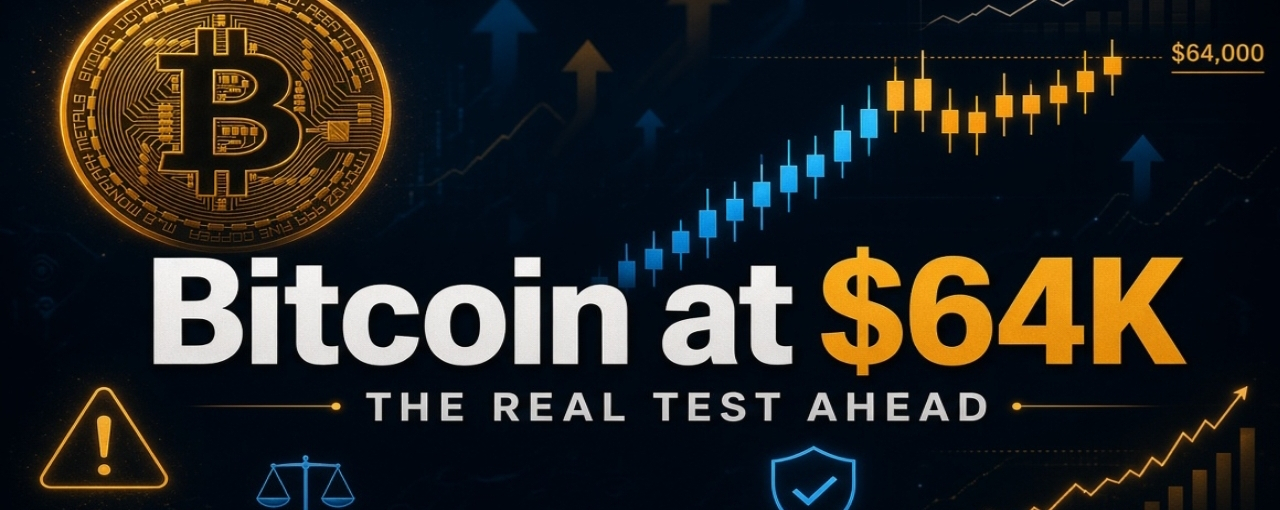
Bitcoin se toma un respiro en $64K — Pero la verdadera prueba podría venir despuésHe estado siguiendo Bitcoin de cerca hoy, y la parte interesante no es solo que el BTC ronda los $64,000. Es el motivo por el que el mercado está teniendo dificultades para avanzar a pesar de contar con varios posibles catalizadores delante de sí.
Bitcoin se ha recuperado recientemente de alrededor de $62,600 hacia $64,600, pero el impulso ha comenzado a enfriarse a medida que aumentan los rendimientos del Tesoro y los precios del petróleo. El crudo Brent ha vuelto a acercarse a $94 después de que el alto el fuego entre EE. UU. e Irán de 60 días expirara sin un nuevo acuerdo. Esto importa porque unos precios de energía más altos pueden reforzar las preocupaciones por la inflación, lo que puede mantener la presión sobre las expectativas de tipos de interés y sobre los activos de riesgo.
Bitcoin se toma un respiro en $64K — Pero la verdadera prueba podría venir después
He estado siguiendo Bitcoin de cerca hoy, y la parte interesante no es solo que el BTC ronda los $64,000. Es el motivo por el que el mercado está teniendo dificultades para avanzar a pesar de contar con varios posibles catalizadores delante de sí.
Bitcoin se ha recuperado recientemente de alrededor de $62,600 hacia $64,600, pero el impulso ha comenzado a enfriarse a medida que aumentan los rendimientos del Tesoro y los precios del petróleo. El crudo Brent ha vuelto a acercarse a $94 después de que el alto el fuego entre EE. UU. e Irán de 60 días expirara sin un nuevo acuerdo. Esto importa porque unos precios de energía más altos pueden reforzar las preocupaciones por la inflación, lo que puede mantener la presión sobre las expectativas de tipos de interés y sobre los activos de riesgo.
Bitcoin se ha recuperado recientemente de alrededor de $62,600 hacia $64,600, pero el impulso ha comenzado a enfriarse a medida que aumentan los rendimientos del Tesoro y los precios del petróleo. El crudo Brent ha vuelto a acercarse a $94 después de que el alto el fuego entre EE. UU. e Irán de 60 días expirara sin un nuevo acuerdo. Esto importa porque unos precios de energía más altos pueden reforzar las preocupaciones por la inflación, lo que puede mantener la presión sobre las expectativas de tipos de interés y sobre los activos de riesgo.
82
·
--
Noticias de cripto hoy: Bitcoin se detiene en 64.000 dólares mientras Brent salta a 94 dólares por barril tras vencer un alto el fuego — las tasas de financiación alcanzan un máximo de 20 meses, se publican las minutas de la FOMC y habrá una cumbre cripto en la Casa Blanca el miércoles
Bitcoin cotizó alrededor de 64.000 dólares — un -0,6% desde la medianoche UTC — después de haber repuntado desde 62.600 dólares el lunes, mientras los futuros del Nasdaq 100 cayeron un 1,1% y los rendimientos de los bonos del Tesoro subieron de cara a la publicación de las minutas de la reunión de julio de la FOMC el miércoles. El crudo Brent volvió a 94 dólares por barril después de que el alto el fuego entre EE. UU. e Irán de 60 días expirara el lunes sin un acuerdo, reavivando el viento en contra de la inflación del petróleo que ha limitado a Bitcoin durante todo el verano. Las tasas de financiación de futuros perpetuos de BTC se dispararon a un máximo de 20 meses según CryptoQuant — la expresión más fuerte de un sesgo alcista en futuros desde que comenzó el mercado bajista actual —, mientras que el CVD positivo de BTC mostró liderazgo de los compradores incluso cuando ETH, SOL, LTC, LINK y DOGE registraron CVD negativo, lo que sugiere que el sentimiento alcista está concentrado en Bitcoin y no distribuido de forma amplia. Además, el miércoles: se espera que el presidente de EE. UU., Trump, asista a una reunión con CEOs de cripto en la Casa Blanca — un catalizador de política que se ha identificado como un impulsor clave del desempeño irregular y limitado en rangos de Bitcoin."
$BTC
{future}(BTCUSDT)
#Binance
Noticias de cripto hoy: Bitcoin se detiene en 64.000 dólares mientras Brent salta a 94 dólares por barril tras vencer un alto el fuego — las tasas de financiación alcanzan un máximo de 20 meses, se publican las minutas de la FOMC y habrá una cumbre cripto en la Casa Blanca el miércoles
Bitcoin cotizó alrededor de 64.000 dólares — un -0,6% desde la medianoche UTC — después de haber repuntado desde 62.600 dólares el lunes, mientras los futuros del Nasdaq 100 cayeron un 1,1% y los rendimientos de los bonos del Tesoro subieron de cara a la publicación de las minutas de la reunión de julio de la FOMC el miércoles. El crudo Brent volvió a 94 dólares por barril después de que el alto el fuego entre EE. UU. e Irán de 60 días expirara el lunes sin un acuerdo, reavivando el viento en contra de la inflación del petróleo que ha limitado a Bitcoin durante todo el verano. Las tasas de financiación de futuros perpetuos de BTC se dispararon a un máximo de 20 meses según CryptoQuant — la expresión más fuerte de un sesgo alcista en futuros desde que comenzó el mercado bajista actual —, mientras que el CVD positivo de BTC mostró liderazgo de los compradores incluso cuando ETH, SOL, LTC, LINK y DOGE registraron CVD negativo, lo que sugiere que el sentimiento alcista está concentrado en Bitcoin y no distribuido de forma amplia. Además, el miércoles: se espera que el presidente de EE. UU., Trump, asista a una reunión con CEOs de cripto en la Casa Blanca — un catalizador de política que se ha identificado como un impulsor clave del desempeño irregular y limitado en rangos de Bitcoin."
$BTC
#Binance
Bitcoin cotizó alrededor de 64.000 dólares — un -0,6% desde la medianoche UTC — después de haber repuntado desde 62.600 dólares el lunes, mientras los futuros del Nasdaq 100 cayeron un 1,1% y los rendimientos de los bonos del Tesoro subieron de cara a la publicación de las minutas de la reunión de julio de la FOMC el miércoles. El crudo Brent volvió a 94 dólares por barril después de que el alto el fuego entre EE. UU. e Irán de 60 días expirara el lunes sin un acuerdo, reavivando el viento en contra de la inflación del petróleo que ha limitado a Bitcoin durante todo el verano. Las tasas de financiación de futuros perpetuos de BTC se dispararon a un máximo de 20 meses según CryptoQuant — la expresión más fuerte de un sesgo alcista en futuros desde que comenzó el mercado bajista actual —, mientras que el CVD positivo de BTC mostró liderazgo de los compradores incluso cuando ETH, SOL, LTC, LINK y DOGE registraron CVD negativo, lo que sugiere que el sentimiento alcista está concentrado en Bitcoin y no distribuido de forma amplia. Además, el miércoles: se espera que el presidente de EE. UU., Trump, asista a una reunión con CEOs de cripto en la Casa Blanca — un catalizador de política que se ha identificado como un impulsor clave del desempeño irregular y limitado en rangos de Bitcoin."
$BTC
#Binance
114
·
--
$COW: Por qué estoy vigilando de cerca este tokenHe estado observando cómo el mercado de las criptomonedas se desplaza desde narrativas simples hacia una infraestructura que realmente puede resolver problemas. La IA se ha convertido en uno de los temas más importantes, pero debajo de esa tendencia, se está desarrollando otra historia: cómo las finanzas descentralizadas pueden volverse más eficientes, automatizadas y fáciles de usar.
Ese es uno de los motivos por los que $COW ha llamado mi atención.
Las criptomonedas han pasado por varios ciclos importantes de narrativa. Primero llegaron los contratos inteligentes, luego DeFi, después el escalado de Capa 2 y ahora la infraestructura impulsada por IA. Cada ciclo cambió lo que el mercado consideraba valioso. Pero hay una lección común en todos ellos: las narrativas pueden atraer la atención, mientras que la utilidad real determina si esa atención perdura.
$COW: Por qué estoy vigilando de cerca este token
He estado observando cómo el mercado de las criptomonedas se desplaza desde narrativas simples hacia una infraestructura que realmente puede resolver problemas. La IA se ha convertido en uno de los temas más importantes, pero debajo de esa tendencia, se está desarrollando otra historia: cómo las finanzas descentralizadas pueden volverse más eficientes, automatizadas y fáciles de usar.
Ese es uno de los motivos por los que $COW ha llamado mi atención.
Las criptomonedas han pasado por varios ciclos importantes de narrativa. Primero llegaron los contratos inteligentes, luego DeFi, después el escalado de Capa 2 y ahora la infraestructura impulsada por IA. Cada ciclo cambió lo que el mercado consideraba valioso. Pero hay una lección común en todos ellos: las narrativas pueden atraer la atención, mientras que la utilidad real determina si esa atención perdura.
Ese es uno de los motivos por los que $COW ha llamado mi atención.
Las criptomonedas han pasado por varios ciclos importantes de narrativa. Primero llegaron los contratos inteligentes, luego DeFi, después el escalado de Capa 2 y ahora la infraestructura impulsada por IA. Cada ciclo cambió lo que el mercado consideraba valioso. Pero hay una lección común en todos ellos: las narrativas pueden atraer la atención, mientras que la utilidad real determina si esa atención perdura.
228
·
--
$APR
{alpha}(560x299ad4299da5b2b93fba4c96967b040c7f611099)
— Una a vigilar 👀
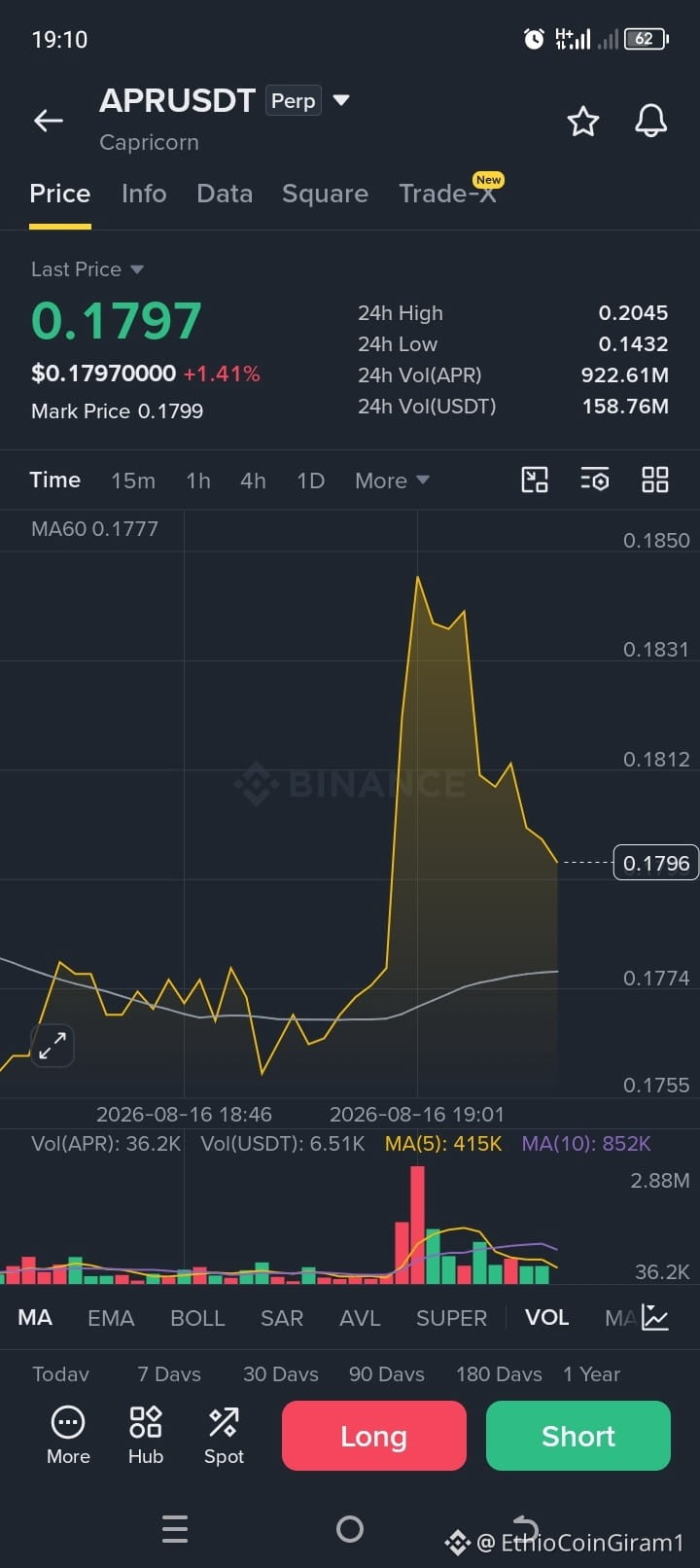
Estoy atento a $APR mientras la atención del mercado se desplaza hacia oportunidades de menor capitalización. La pregunta clave ahora es si el volumen y el impulso pueden respaldar un movimiento sostenido.
#APR #Crypto #BinanceSquare
$APR
— Una a vigilar 👀
Estoy atento a $APR mientras la atención del mercado se desplaza hacia oportunidades de menor capitalización. La pregunta clave ahora es si el volumen y el impulso pueden respaldar un movimiento sostenido.
#APR #Crypto #BinanceSquare
— Una a vigilar 👀
Estoy atento a $APR mientras la atención del mercado se desplaza hacia oportunidades de menor capitalización. La pregunta clave ahora es si el volumen y el impulso pueden respaldar un movimiento sostenido.
#APR #Crypto #BinanceSquare
159
·
--
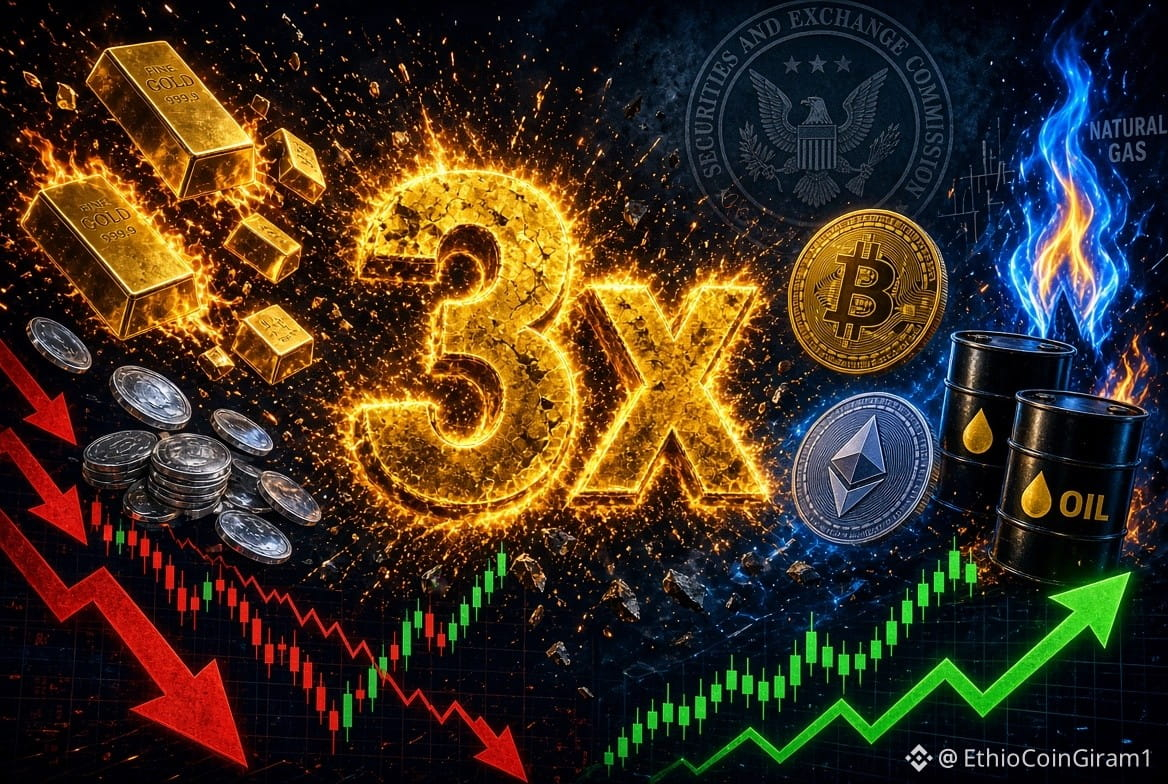
#SECReviewsSix3xLeveragedCommodityETFs Bueno, entonces, la SEC está echando un vistazo a estos nuevos y salvajes ETF apalancados al 3x que seguirían el oro, la plata, Bitcoin, Ethereum, el petróleo crudo y el gas natural. Básicamente, te dan el triple de los rendimientos diarios—para bien o para mal—de la dirección en la que se muevan esos activos. Suena a combustible de cohetes, ¿no? Pero honestamente, también es un poco jugar con fuego.
Recuerdo la primera vez que me metí con un ETF apalancado. Pensé que ya estaba listo para hacerla grande—como, dinero fácil. Solo que… no leí la letra pequeña sobre cómo estas cosas se “reinician” todos y cada uno de los días. Hice las cuentas en mi cabeza por una semana, revisé mi cuenta y—ugh. Digamos que no salió como yo imaginaba. El apalancamiento da, el apalancamiento quita. Puedes pillar una racha de suerte, pero si te equivocas una sola vez en la dirección contraria… ay.
Así que, lo que está haciendo la SEC ahora no es decir “sí” a estos ETF. Solo está abriendo la caja y mirando por dentro. Antes de que negocie nada, hay un montón de papeleo, revisiones y probablemente algunas discusiones acaloradas. Estos fondos, gestionados por Volatility Shares (nombre pegadizo, por cierto), no mantendrían lingotes de oro ni Bitcoin real: usan contratos de futuros. Eso añade otra capa de complejidad. Los costos por “rolar” futuros, el error de seguimiento, la volatilidad… todo ese lío puede destrozar tu gráfico limpio y bonito.
Los traders de corto plazo podrían amar la rapidez y la potencia. ¿Quieres tres veces la acción? Aquí está. Pero si estás pensando en comprar y mantenerlo durante meses, como un ETF clásico, probablemente te arrepientas. Solo el “arrastre” por volatilidad puede comerse las ganancias, incluso si eliges la dirección correcta.
Esta es mi opinión: la revisión de la SEC es un silbato de salida, no la línea de meta. No hay garantías de que estos ETF lleguen al mercado. Y aun si lo hacen, “mayor oportunidad” también significa “mayor riesgo”. Revisa bien tu tolerancia al riesgo antes de lanzarte. O al menos, no hagas lo que hice yo—pensar que encontraste una máquina para imprimir dinero, solo para descubrir que algunos días escupe confeti.
#USToPressNationsToPickUSOrChinaAICoalition
#SECReviewsSix3xLeveragedCommodityETFs Bueno, entonces, la SEC está echando un vistazo a estos nuevos y salvajes ETF apalancados al 3x que seguirían el oro, la plata, Bitcoin, Ethereum, el petróleo crudo y el gas natural. Básicamente, te dan el triple de los rendimientos diarios—para bien o para mal—de la dirección en la que se muevan esos activos. Suena a combustible de cohetes, ¿no? Pero honestamente, también es un poco jugar con fuego.
Recuerdo la primera vez que me metí con un ETF apalancado. Pensé que ya estaba listo para hacerla grande—como, dinero fácil. Solo que… no leí la letra pequeña sobre cómo estas cosas se “reinician” todos y cada uno de los días. Hice las cuentas en mi cabeza por una semana, revisé mi cuenta y—ugh. Digamos que no salió como yo imaginaba. El apalancamiento da, el apalancamiento quita. Puedes pillar una racha de suerte, pero si te equivocas una sola vez en la dirección contraria… ay.
Así que, lo que está haciendo la SEC ahora no es decir “sí” a estos ETF. Solo está abriendo la caja y mirando por dentro. Antes de que negocie nada, hay un montón de papeleo, revisiones y probablemente algunas discusiones acaloradas. Estos fondos, gestionados por Volatility Shares (nombre pegadizo, por cierto), no mantendrían lingotes de oro ni Bitcoin real: usan contratos de futuros. Eso añade otra capa de complejidad. Los costos por “rolar” futuros, el error de seguimiento, la volatilidad… todo ese lío puede destrozar tu gráfico limpio y bonito.
Los traders de corto plazo podrían amar la rapidez y la potencia. ¿Quieres tres veces la acción? Aquí está. Pero si estás pensando en comprar y mantenerlo durante meses, como un ETF clásico, probablemente te arrepientas. Solo el “arrastre” por volatilidad puede comerse las ganancias, incluso si eliges la dirección correcta.
Esta es mi opinión: la revisión de la SEC es un silbato de salida, no la línea de meta. No hay garantías de que estos ETF lleguen al mercado. Y aun si lo hacen, “mayor oportunidad” también significa “mayor riesgo”. Revisa bien tu tolerancia al riesgo antes de lanzarte. O al menos, no hagas lo que hice yo—pensar que encontraste una máquina para imprimir dinero, solo para descubrir que algunos días escupe confeti.
#USToPressNationsToPickUSOrChinaAICoalition
Recuerdo la primera vez que me metí con un ETF apalancado. Pensé que ya estaba listo para hacerla grande—como, dinero fácil. Solo que… no leí la letra pequeña sobre cómo estas cosas se “reinician” todos y cada uno de los días. Hice las cuentas en mi cabeza por una semana, revisé mi cuenta y—ugh. Digamos que no salió como yo imaginaba. El apalancamiento da, el apalancamiento quita. Puedes pillar una racha de suerte, pero si te equivocas una sola vez en la dirección contraria… ay.
Así que, lo que está haciendo la SEC ahora no es decir “sí” a estos ETF. Solo está abriendo la caja y mirando por dentro. Antes de que negocie nada, hay un montón de papeleo, revisiones y probablemente algunas discusiones acaloradas. Estos fondos, gestionados por Volatility Shares (nombre pegadizo, por cierto), no mantendrían lingotes de oro ni Bitcoin real: usan contratos de futuros. Eso añade otra capa de complejidad. Los costos por “rolar” futuros, el error de seguimiento, la volatilidad… todo ese lío puede destrozar tu gráfico limpio y bonito.
Los traders de corto plazo podrían amar la rapidez y la potencia. ¿Quieres tres veces la acción? Aquí está. Pero si estás pensando en comprar y mantenerlo durante meses, como un ETF clásico, probablemente te arrepientas. Solo el “arrastre” por volatilidad puede comerse las ganancias, incluso si eliges la dirección correcta.
Esta es mi opinión: la revisión de la SEC es un silbato de salida, no la línea de meta. No hay garantías de que estos ETF lleguen al mercado. Y aun si lo hacen, “mayor oportunidad” también significa “mayor riesgo”. Revisa bien tu tolerancia al riesgo antes de lanzarte. O al menos, no hagas lo que hice yo—pensar que encontraste una máquina para imprimir dinero, solo para descubrir que algunos días escupe confeti.
#USToPressNationsToPickUSOrChinaAICoalition
146
·
--
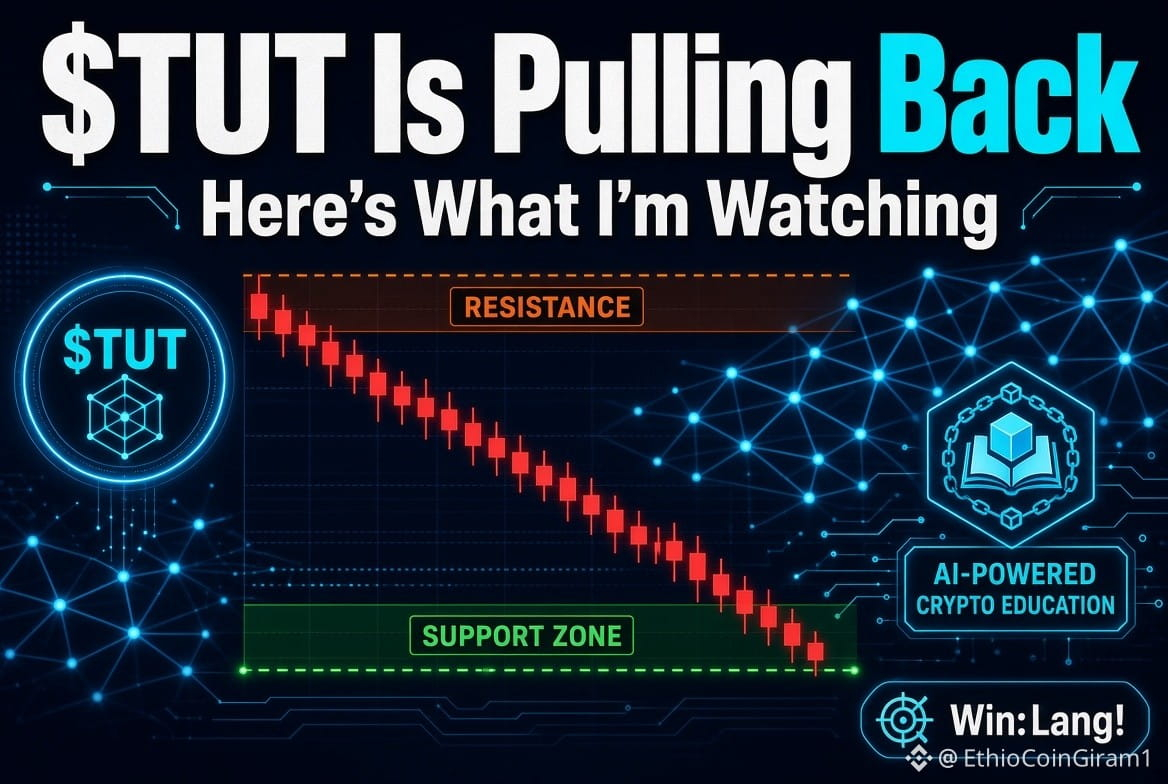
$TUT Está Retrocediendo — Esto es lo que Estoy Observando
He estado siguiendo $TUT
{future}(TUTUSDT)
(Tutorial) de cerca, y la acción del precio de hoy es un buen recordatorio de que el impulso puede cambiar rápidamente en activos cripto de menor capitalización.
TUT cotiza alrededor de $0.033, con Binance mostrando un rango de 24 horas cerca de $0.0292–$0.0384 y el token bajando aproximadamente 4% en las últimas 24 horas al momento de la consulta.
Lo que hace que TUT me parezca interesante no es solo el gráfico. Tutorial está posicionado en torno a la educación cripto impulsada por IA, con TUT diseñado para recompensas de la plataforma, acceso a funciones y gobernanza.
Desde la perspectiva del mercado, lo primero que observaría es si la zona de $0.029–$0.030 sigue atrayendo compradores. Mantener esa zona podría darle a los alcistas la oportunidad de reconstruir el impulso.
Al alza, $0.038–$0.040 parece una zona importante para recuperar. Un movimiento sostenido por encima de ese rango, especialmente con un volumen más fuerte, haría que la estructura de corto plazo sea más interesante.
Pero no ignoraría la parte bajista. Si el soporte se rompe con decisión, el mercado podría volverse más cauteloso y los vendedores podrían tomar el control.
Para mí, la pregunta más grande es si TUT puede convertir su narrativa de IA + educación cripto en una actividad sostenida del ecosistema, en lugar de depender principalmente de la atención del mercado a corto plazo.
$TUT definitivamente es uno que mantengo en la lista de seguimiento.
¿Qué estás observando aquí: una recuperación por encima de $0.040, o una nueva prueba del soporte primero?#SECReviewsSix3xLeveragedCommodityETFs #USToPressNationsToPickUSOrChinaAICoalition #SP500TopsRecord7800 #Write2Earn
$TUT Está Retrocediendo — Esto es lo que Estoy Observando
He estado siguiendo $TUT
(Tutorial) de cerca, y la acción del precio de hoy es un buen recordatorio de que el impulso puede cambiar rápidamente en activos cripto de menor capitalización.
TUT cotiza alrededor de $0.033, con Binance mostrando un rango de 24 horas cerca de $0.0292–$0.0384 y el token bajando aproximadamente 4% en las últimas 24 horas al momento de la consulta.
Lo que hace que TUT me parezca interesante no es solo el gráfico. Tutorial está posicionado en torno a la educación cripto impulsada por IA, con TUT diseñado para recompensas de la plataforma, acceso a funciones y gobernanza.
Desde la perspectiva del mercado, lo primero que observaría es si la zona de $0.029–$0.030 sigue atrayendo compradores. Mantener esa zona podría darle a los alcistas la oportunidad de reconstruir el impulso.
Al alza, $0.038–$0.040 parece una zona importante para recuperar. Un movimiento sostenido por encima de ese rango, especialmente con un volumen más fuerte, haría que la estructura de corto plazo sea más interesante.
Pero no ignoraría la parte bajista. Si el soporte se rompe con decisión, el mercado podría volverse más cauteloso y los vendedores podrían tomar el control.
Para mí, la pregunta más grande es si TUT puede convertir su narrativa de IA + educación cripto en una actividad sostenida del ecosistema, en lugar de depender principalmente de la atención del mercado a corto plazo.
$TUT definitivamente es uno que mantengo en la lista de seguimiento.
¿Qué estás observando aquí: una recuperación por encima de $0.040, o una nueva prueba del soporte primero?#SECReviewsSix3xLeveragedCommodityETFs #USToPressNationsToPickUSOrChinaAICoalition #SP500TopsRecord7800 #Write2Earn
He estado siguiendo $TUT
(Tutorial) de cerca, y la acción del precio de hoy es un buen recordatorio de que el impulso puede cambiar rápidamente en activos cripto de menor capitalización.
TUT cotiza alrededor de $0.033, con Binance mostrando un rango de 24 horas cerca de $0.0292–$0.0384 y el token bajando aproximadamente 4% en las últimas 24 horas al momento de la consulta.
Lo que hace que TUT me parezca interesante no es solo el gráfico. Tutorial está posicionado en torno a la educación cripto impulsada por IA, con TUT diseñado para recompensas de la plataforma, acceso a funciones y gobernanza.
Desde la perspectiva del mercado, lo primero que observaría es si la zona de $0.029–$0.030 sigue atrayendo compradores. Mantener esa zona podría darle a los alcistas la oportunidad de reconstruir el impulso.
Al alza, $0.038–$0.040 parece una zona importante para recuperar. Un movimiento sostenido por encima de ese rango, especialmente con un volumen más fuerte, haría que la estructura de corto plazo sea más interesante.
Pero no ignoraría la parte bajista. Si el soporte se rompe con decisión, el mercado podría volverse más cauteloso y los vendedores podrían tomar el control.
Para mí, la pregunta más grande es si TUT puede convertir su narrativa de IA + educación cripto en una actividad sostenida del ecosistema, en lugar de depender principalmente de la atención del mercado a corto plazo.
$TUT definitivamente es uno que mantengo en la lista de seguimiento.
¿Qué estás observando aquí: una recuperación por encima de $0.040, o una nueva prueba del soporte primero?#SECReviewsSix3xLeveragedCommodityETFs #USToPressNationsToPickUSOrChinaAICoalition #SP500TopsRecord7800 #Write2Earn
147
·
--
SNDK — El almacenamiento con IA se está convirtiendo en una historia más importante
Así que, de repente, SanDisk ($SNDK) tiene a todo el mundo hablando. Quiero decir, de verdad se siente el ambiente: todos están replanteándose cuán importante será la memoria flash NAND a medida que la IA se come cada vez más infraestructura.
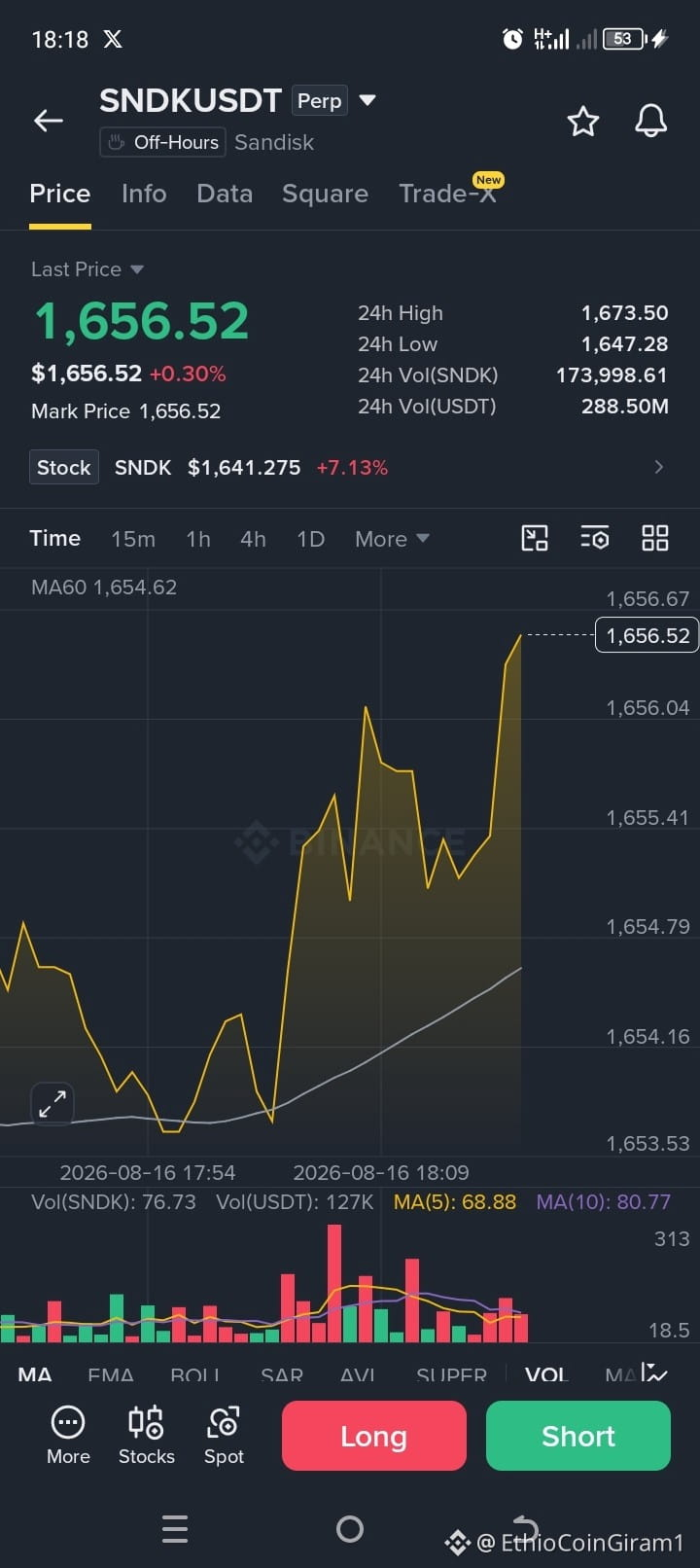
El viernes estuvo salvaje. La acción cerró alrededor de $1,628, con una subida del 6.5% en un solo día, y casi un 35% durante la semana. ¿No está mal, verdad? Pero honestamente, el salto del precio ni siquiera es lo más interesante para mí.
Esto es lo que realmente me enganchó: la dirección en su reciente Día del Inversionista expuso una visión grande y audaz. Hablan de un crecimiento de ingresos de mediados a altos de la adolescencia (en porcentaje) hasta 2030. Y ojo con esto: apuntan a un 80% de márgenes brutos ajustados, buscando un 75% de márgenes operativos. Son cifras disparadas. Es el tipo de cosa que te hace detenerte y pensar: ¿de verdad van a lograrlo?
Y luego está esta pequeña anécdota que dice mucho. Hace años, la industria de la memoria se sentía como subir y bajar en una montaña rusa—arriba, abajo, arriba, abajo—sin previsibilidad. Pero ahora, SanDisk dice que ha firmado acuerdos de varios años con ocho grandes clientes, compromisos que podrían cubrir dos tercios de su producción de memoria para 2028. Eso es un colchón enorme frente al viejo ciclo de “disfrútalo mientras dure”.
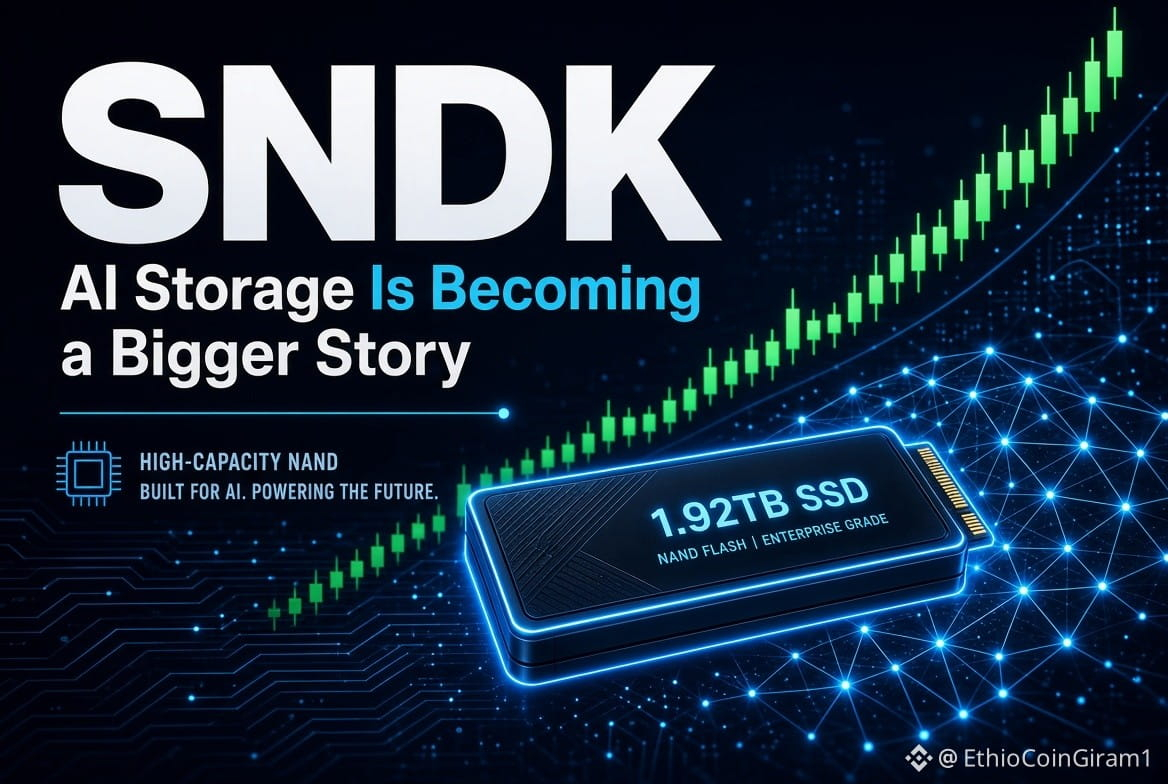
El enfoque en la IA lo hace todo todavía más intenso. La IA está haciendo oleadas de datos en todas partes. El almacenamiento de alta capacidad no es solo “bueno tenerlo”: es todo ahora. SanDisk está impulsando la memoria flash de alto ancho de banda solo para estas cargas de trabajo de aprendizaje automático. En serio, hace cinco años, ¿quién habría pensado que “el almacenamiento” sería la parte más sexy del stack de IA?
Pero, y es un gran “pero”, después de un movimiento como este en la acción—vaya, no me pondría a perseguir el hype a ciegas. La prueba real todavía está por venir: ¿puede SanDisk convertir esta avalancha de demanda de IA en ganancias reales y flujo de caja efectivo a largo plazo? Esos márgenes salvajes son bonitos sobre el papel, pero todos hemos visto PowerPoints optimistas antes.
$SNDK
{future}(SNDKUSDT)
#COWRises55.77%In24h #SECReviewsSix3xLeveragedCommodityETFs #Write2Earn @EthioCoinGram1
SNDK — El almacenamiento con IA se está convirtiendo en una historia más importante
Así que, de repente, SanDisk ($SNDK ) tiene a todo el mundo hablando. Quiero decir, de verdad se siente el ambiente: todos están replanteándose cuán importante será la memoria flash NAND a medida que la IA se come cada vez más infraestructura.
El viernes estuvo salvaje. La acción cerró alrededor de $1,628, con una subida del 6.5% en un solo día, y casi un 35% durante la semana. ¿No está mal, verdad? Pero honestamente, el salto del precio ni siquiera es lo más interesante para mí.
Esto es lo que realmente me enganchó: la dirección en su reciente Día del Inversionista expuso una visión grande y audaz. Hablan de un crecimiento de ingresos de mediados a altos de la adolescencia (en porcentaje) hasta 2030. Y ojo con esto: apuntan a un 80% de márgenes brutos ajustados, buscando un 75% de márgenes operativos. Son cifras disparadas. Es el tipo de cosa que te hace detenerte y pensar: ¿de verdad van a lograrlo?
Y luego está esta pequeña anécdota que dice mucho. Hace años, la industria de la memoria se sentía como subir y bajar en una montaña rusa—arriba, abajo, arriba, abajo—sin previsibilidad. Pero ahora, SanDisk dice que ha firmado acuerdos de varios años con ocho grandes clientes, compromisos que podrían cubrir dos tercios de su producción de memoria para 2028. Eso es un colchón enorme frente al viejo ciclo de “disfrútalo mientras dure”.
El enfoque en la IA lo hace todo todavía más intenso. La IA está haciendo oleadas de datos en todas partes. El almacenamiento de alta capacidad no es solo “bueno tenerlo”: es todo ahora. SanDisk está impulsando la memoria flash de alto ancho de banda solo para estas cargas de trabajo de aprendizaje automático. En serio, hace cinco años, ¿quién habría pensado que “el almacenamiento” sería la parte más sexy del stack de IA?
Pero, y es un gran “pero”, después de un movimiento como este en la acción—vaya, no me pondría a perseguir el hype a ciegas. La prueba real todavía está por venir: ¿puede SanDisk convertir esta avalancha de demanda de IA en ganancias reales y flujo de caja efectivo a largo plazo? Esos márgenes salvajes son bonitos sobre el papel, pero todos hemos visto PowerPoints optimistas antes.
$SNDK
#COWRises55.77%In24h #SECReviewsSix3xLeveragedCommodityETFs #Write2Earn @EthioCoinGiram1
Así que, de repente, SanDisk ($SNDK ) tiene a todo el mundo hablando. Quiero decir, de verdad se siente el ambiente: todos están replanteándose cuán importante será la memoria flash NAND a medida que la IA se come cada vez más infraestructura.
El viernes estuvo salvaje. La acción cerró alrededor de $1,628, con una subida del 6.5% en un solo día, y casi un 35% durante la semana. ¿No está mal, verdad? Pero honestamente, el salto del precio ni siquiera es lo más interesante para mí.
Esto es lo que realmente me enganchó: la dirección en su reciente Día del Inversionista expuso una visión grande y audaz. Hablan de un crecimiento de ingresos de mediados a altos de la adolescencia (en porcentaje) hasta 2030. Y ojo con esto: apuntan a un 80% de márgenes brutos ajustados, buscando un 75% de márgenes operativos. Son cifras disparadas. Es el tipo de cosa que te hace detenerte y pensar: ¿de verdad van a lograrlo?
Y luego está esta pequeña anécdota que dice mucho. Hace años, la industria de la memoria se sentía como subir y bajar en una montaña rusa—arriba, abajo, arriba, abajo—sin previsibilidad. Pero ahora, SanDisk dice que ha firmado acuerdos de varios años con ocho grandes clientes, compromisos que podrían cubrir dos tercios de su producción de memoria para 2028. Eso es un colchón enorme frente al viejo ciclo de “disfrútalo mientras dure”.
El enfoque en la IA lo hace todo todavía más intenso. La IA está haciendo oleadas de datos en todas partes. El almacenamiento de alta capacidad no es solo “bueno tenerlo”: es todo ahora. SanDisk está impulsando la memoria flash de alto ancho de banda solo para estas cargas de trabajo de aprendizaje automático. En serio, hace cinco años, ¿quién habría pensado que “el almacenamiento” sería la parte más sexy del stack de IA?
Pero, y es un gran “pero”, después de un movimiento como este en la acción—vaya, no me pondría a perseguir el hype a ciegas. La prueba real todavía está por venir: ¿puede SanDisk convertir esta avalancha de demanda de IA en ganancias reales y flujo de caja efectivo a largo plazo? Esos márgenes salvajes son bonitos sobre el papel, pero todos hemos visto PowerPoints optimistas antes.
$SNDK
#COWRises55.77%In24h #SECReviewsSix3xLeveragedCommodityETFs #Write2Earn @EthioCoinGiram1
276
·
--
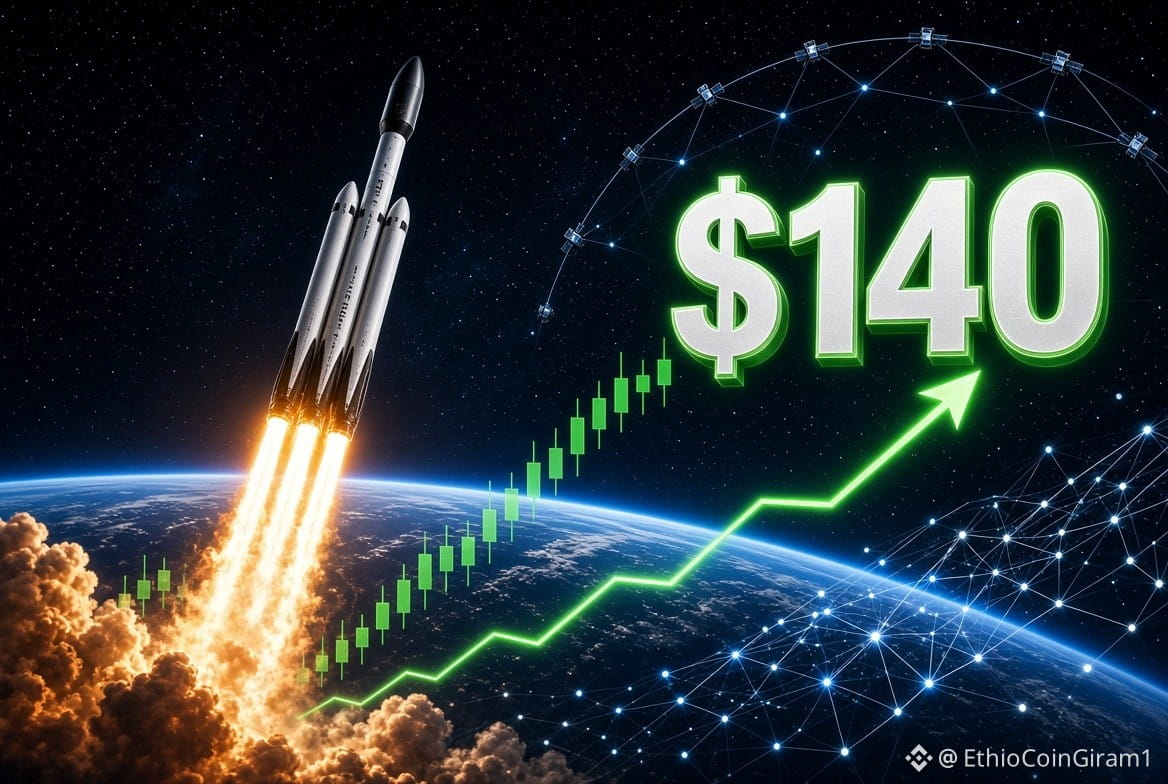
#Las acciones de SpaceX suben hacia los 140 dólares — ¿El mercado está recalibrando la historia? 🚀
He estado siguiendo de cerca a SpaceX, y el movimiento de regreso hacia la zona de 140 dólares es interesante, no solo por el precio, sino por lo que dice sobre el sentimiento de los inversores.
SpaceX ha atravesado un periodo posterior a la salida a bolsa altamente volátil. Después de caer con fuerza desde sus máximos iniciales, la acción se recuperó recientemente por encima de su precio de IPO de 135 dólares, y las acciones cerraron alrededor de 138.74 el 10 de agosto.
Lo que más me llama la atención es la resistencia alrededor del precio de la IPO. Las preocupaciones por liberaciones de acciones de insiders crearon un posible exceso de oferta, pero la ola esperada de ventas no se materializó de inmediato. Eso ayudó a restablecer algo de confianza.
La historia más grande sigue siendo la combinación de Starlink, servicios de lanzamiento, infraestructura de IA y el ecosistema tecnológico más amplio de Musk. Nvidia ha revelado una participación importante en SpaceX, mientras que la inversión de Alphabet también se ha vuelto extremadamente valiosa.
Pero no ignoraría el riesgo de valoración. En estos niveles, el mercado ya está descontando un crecimiento futuro significativo. La pregunta es si SpaceX puede convertir sus planes ambiciosos en un crecimiento sostenido de ingresos y ganancias.
Para mí, 140 dólares tiene menos que ver con un número mágico y más con el sentimiento. Si los compradores pueden seguir defendiendo esta zona, la narrativa de la recuperación se vuelve más interesante. Si el impulso se desvanece, las preocupaciones por la valoración podrían regresar rápidamente.
#SECReviewsSix3xLeveragedCommodityETFs #USToPressNationsToPickUSOrChinaAICoalition #SP500TopsRecord7800 #Write2Earn
#Las acciones de SpaceX suben hacia los 140 dólares — ¿El mercado está recalibrando la historia? 🚀
He estado siguiendo de cerca a SpaceX, y el movimiento de regreso hacia la zona de 140 dólares es interesante, no solo por el precio, sino por lo que dice sobre el sentimiento de los inversores.
SpaceX ha atravesado un periodo posterior a la salida a bolsa altamente volátil. Después de caer con fuerza desde sus máximos iniciales, la acción se recuperó recientemente por encima de su precio de IPO de 135 dólares, y las acciones cerraron alrededor de 138.74 el 10 de agosto.
Lo que más me llama la atención es la resistencia alrededor del precio de la IPO. Las preocupaciones por liberaciones de acciones de insiders crearon un posible exceso de oferta, pero la ola esperada de ventas no se materializó de inmediato. Eso ayudó a restablecer algo de confianza.
La historia más grande sigue siendo la combinación de Starlink, servicios de lanzamiento, infraestructura de IA y el ecosistema tecnológico más amplio de Musk. Nvidia ha revelado una participación importante en SpaceX, mientras que la inversión de Alphabet también se ha vuelto extremadamente valiosa.
Pero no ignoraría el riesgo de valoración. En estos niveles, el mercado ya está descontando un crecimiento futuro significativo. La pregunta es si SpaceX puede convertir sus planes ambiciosos en un crecimiento sostenido de ingresos y ganancias.
Para mí, 140 dólares tiene menos que ver con un número mágico y más con el sentimiento. Si los compradores pueden seguir defendiendo esta zona, la narrativa de la recuperación se vuelve más interesante. Si el impulso se desvanece, las preocupaciones por la valoración podrían regresar rápidamente.
#SECReviewsSix3xLeveragedCommodityETFs #USToPressNationsToPickUSOrChinaAICoalition #SP500TopsRecord7800 #Write2Earn
He estado siguiendo de cerca a SpaceX, y el movimiento de regreso hacia la zona de 140 dólares es interesante, no solo por el precio, sino por lo que dice sobre el sentimiento de los inversores.
SpaceX ha atravesado un periodo posterior a la salida a bolsa altamente volátil. Después de caer con fuerza desde sus máximos iniciales, la acción se recuperó recientemente por encima de su precio de IPO de 135 dólares, y las acciones cerraron alrededor de 138.74 el 10 de agosto.
Lo que más me llama la atención es la resistencia alrededor del precio de la IPO. Las preocupaciones por liberaciones de acciones de insiders crearon un posible exceso de oferta, pero la ola esperada de ventas no se materializó de inmediato. Eso ayudó a restablecer algo de confianza.
La historia más grande sigue siendo la combinación de Starlink, servicios de lanzamiento, infraestructura de IA y el ecosistema tecnológico más amplio de Musk. Nvidia ha revelado una participación importante en SpaceX, mientras que la inversión de Alphabet también se ha vuelto extremadamente valiosa.
Pero no ignoraría el riesgo de valoración. En estos niveles, el mercado ya está descontando un crecimiento futuro significativo. La pregunta es si SpaceX puede convertir sus planes ambiciosos en un crecimiento sostenido de ingresos y ganancias.
Para mí, 140 dólares tiene menos que ver con un número mágico y más con el sentimiento. Si los compradores pueden seguir defendiendo esta zona, la narrativa de la recuperación se vuelve más interesante. Si el impulso se desvanece, las preocupaciones por la valoración podrían regresar rápidamente.
#SECReviewsSix3xLeveragedCommodityETFs #USToPressNationsToPickUSOrChinaAICoalition #SP500TopsRecord7800 #Write2Earn
72
·
--
El titular de Bitcoin pierde fondos del intercambio tras el hack de la cuenta de Google: una llamada de atención sobre seguridadUna cuenta comprometida puede convertirse en una puerta de entrada para fondos de criptomonedas
Introducción
Una cuenta reciente de un titular de Bitcoin pone de manifiesto un riesgo de seguridad que es fácil de subestimar: tu intercambio de criptomonedas puede estar protegido, pero el correo electrónico y las cuentas conectadas a él pueden convertirse en el eslabón más débil.
La víctima reportada dijo que un ataque de phishing comprometió su cuenta de Google, exponiendo acceso a contraseñas, información de autenticación y correos electrónicos relacionados con el intercambio. Los atacantes, presuntamente, usaron ese acceso para llegar a las cuentas de intercambio de criptomonedas y retirar fondos.
El titular de Bitcoin pierde fondos del intercambio tras el hack de la cuenta de Google: una llamada de atención sobre seguridad
Una cuenta comprometida puede convertirse en una puerta de entrada para fondos de criptomonedas
Introducción
Una cuenta reciente de un titular de Bitcoin pone de manifiesto un riesgo de seguridad que es fácil de subestimar: tu intercambio de criptomonedas puede estar protegido, pero el correo electrónico y las cuentas conectadas a él pueden convertirse en el eslabón más débil.
La víctima reportada dijo que un ataque de phishing comprometió su cuenta de Google, exponiendo acceso a contraseñas, información de autenticación y correos electrónicos relacionados con el intercambio. Los atacantes, presuntamente, usaron ese acceso para llegar a las cuentas de intercambio de criptomonedas y retirar fondos.
Introducción
Una cuenta reciente de un titular de Bitcoin pone de manifiesto un riesgo de seguridad que es fácil de subestimar: tu intercambio de criptomonedas puede estar protegido, pero el correo electrónico y las cuentas conectadas a él pueden convertirse en el eslabón más débil.
La víctima reportada dijo que un ataque de phishing comprometió su cuenta de Google, exponiendo acceso a contraseñas, información de autenticación y correos electrónicos relacionados con el intercambio. Los atacantes, presuntamente, usaron ese acceso para llegar a las cuentas de intercambio de criptomonedas y retirar fondos.
75
·
--
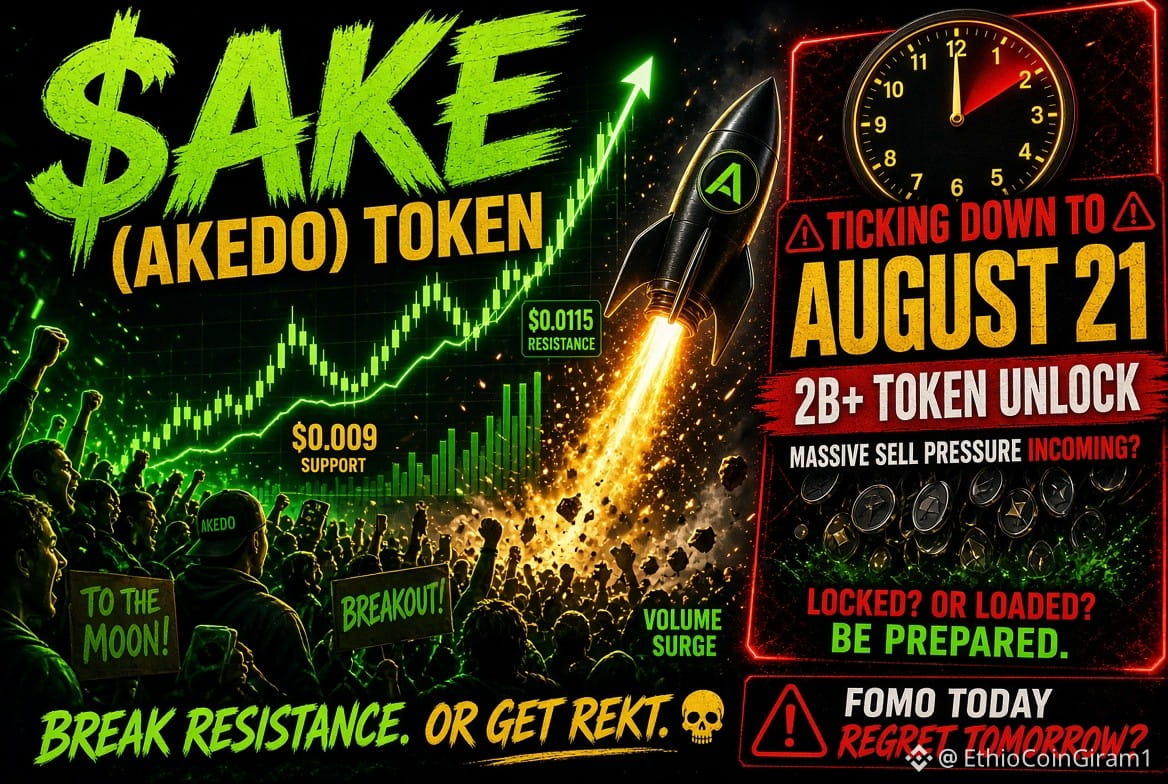
$AKE (AKEDO) Hoy: Fiebre por la ruptura, pero se avecina un gran desbloqueo
Hoy, la comunidad $AKE está absolutamente en ebullición. Es uno de esos días en los que sientes el FOMO a través de la pantalla: AKEDO sigue bombeando después de esa ruptura salvaje. Lo vi oscilando alrededor de $0.0098 la última vez que lo comprobé, con movimientos entre aproximadamente $0.0088 y $0.0116. ¿Volumen? Increíble. Estamos hablando de $23.4 millones moviéndose sin parar. Quiero decir, me acuerdo de la última vez que vi números de este tipo: la corrección casi parecía inevitable… pero la gente seguía comprando.
Ahora, aquí está lo que todos están comentando (y, honestamente, la parte que me tiene pegado a los gráficos): viene un enorme desbloqueo de tokens. Sin broma: más de 2 mil millones de tokens AKE se liberan el 21 de agosto, con un valor de unos $16.3 millones. Eso me pone los nervios de punta, porque todos hemos visto lo que pasa cuando esa oferta fresca entra en juego.
Pero retrocedamos un poco: ¿cómo llegamos hasta aquí? Respuesta corta: puro impulso, sin filtrar. Esto se duplicó en un día durante la ruptura, y en todas partes que miras, los cortos están recibiendo la paliza. ¿Como que 88% de alrededor de $8.5 millones en liquidaciones? Ay.
Así que esto es lo que estoy vigilando ahora—
Primero, la resistencia: esa zona de $0.0115 aprox. Si atraviesa con fuerza y el volumen se mantiene, me comeré mi sombrero—los compradores siguen con hambre. Pero si se frena y empieza a deslizarse de nuevo hacia $0.009, esa es una señal bastante clara de que la fiesta podría estar llegando a su fin.
Honestamente, lo más aterrador es el desbloqueo del 21 de agosto. Ya me han quemado antes por pensar que la demanda absorbería todos los tokens nuevos, solo para que el precio… baje goteando durante días. Empiezas a tener esa sensación de “uy”, cuando la presión vendedora comienza a hacerse notar.
Entonces, ¿dónde tengo la cabeza? Me encanta una buena racha de hype, claro, y la narrativa aquí es fuerte. Pero con ese desbloqueo acechando, perseguir la vela verde se siente—sí, un poco alocada. La demanda real necesita aparecer y capturar toda esa oferta, o esto podría deshacerse rápido.
$AKE
{alpha}(560x2c3a8ee94ddd97244a93bc48298f97d2c412f7db)
#Write2Earn #SECReviewsSix3xLeveragedCommodityETFs #USToPressNationsToPickUSOrChinaAICoalition
$AKE (AKEDO) Hoy: Fiebre por la ruptura, pero se avecina un gran desbloqueo
Hoy, la comunidad $AKE está absolutamente en ebullición. Es uno de esos días en los que sientes el FOMO a través de la pantalla: AKEDO sigue bombeando después de esa ruptura salvaje. Lo vi oscilando alrededor de $0.0098 la última vez que lo comprobé, con movimientos entre aproximadamente $0.0088 y $0.0116. ¿Volumen? Increíble. Estamos hablando de $23.4 millones moviéndose sin parar. Quiero decir, me acuerdo de la última vez que vi números de este tipo: la corrección casi parecía inevitable… pero la gente seguía comprando.
Ahora, aquí está lo que todos están comentando (y, honestamente, la parte que me tiene pegado a los gráficos): viene un enorme desbloqueo de tokens. Sin broma: más de 2 mil millones de tokens AKE se liberan el 21 de agosto, con un valor de unos $16.3 millones. Eso me pone los nervios de punta, porque todos hemos visto lo que pasa cuando esa oferta fresca entra en juego.
Pero retrocedamos un poco: ¿cómo llegamos hasta aquí? Respuesta corta: puro impulso, sin filtrar. Esto se duplicó en un día durante la ruptura, y en todas partes que miras, los cortos están recibiendo la paliza. ¿Como que 88% de alrededor de $8.5 millones en liquidaciones? Ay.
Así que esto es lo que estoy vigilando ahora—
Primero, la resistencia: esa zona de $0.0115 aprox. Si atraviesa con fuerza y el volumen se mantiene, me comeré mi sombrero—los compradores siguen con hambre. Pero si se frena y empieza a deslizarse de nuevo hacia $0.009, esa es una señal bastante clara de que la fiesta podría estar llegando a su fin.
Honestamente, lo más aterrador es el desbloqueo del 21 de agosto. Ya me han quemado antes por pensar que la demanda absorbería todos los tokens nuevos, solo para que el precio… baje goteando durante días. Empiezas a tener esa sensación de “uy”, cuando la presión vendedora comienza a hacerse notar.
Entonces, ¿dónde tengo la cabeza? Me encanta una buena racha de hype, claro, y la narrativa aquí es fuerte. Pero con ese desbloqueo acechando, perseguir la vela verde se siente—sí, un poco alocada. La demanda real necesita aparecer y capturar toda esa oferta, o esto podría deshacerse rápido.
$AKE
#Write2Earn #SECReviewsSix3xLeveragedCommodityETFs #USToPressNationsToPickUSOrChinaAICoalition
Hoy, la comunidad $AKE está absolutamente en ebullición. Es uno de esos días en los que sientes el FOMO a través de la pantalla: AKEDO sigue bombeando después de esa ruptura salvaje. Lo vi oscilando alrededor de $0.0098 la última vez que lo comprobé, con movimientos entre aproximadamente $0.0088 y $0.0116. ¿Volumen? Increíble. Estamos hablando de $23.4 millones moviéndose sin parar. Quiero decir, me acuerdo de la última vez que vi números de este tipo: la corrección casi parecía inevitable… pero la gente seguía comprando.
Ahora, aquí está lo que todos están comentando (y, honestamente, la parte que me tiene pegado a los gráficos): viene un enorme desbloqueo de tokens. Sin broma: más de 2 mil millones de tokens AKE se liberan el 21 de agosto, con un valor de unos $16.3 millones. Eso me pone los nervios de punta, porque todos hemos visto lo que pasa cuando esa oferta fresca entra en juego.
Pero retrocedamos un poco: ¿cómo llegamos hasta aquí? Respuesta corta: puro impulso, sin filtrar. Esto se duplicó en un día durante la ruptura, y en todas partes que miras, los cortos están recibiendo la paliza. ¿Como que 88% de alrededor de $8.5 millones en liquidaciones? Ay.
Así que esto es lo que estoy vigilando ahora—
Primero, la resistencia: esa zona de $0.0115 aprox. Si atraviesa con fuerza y el volumen se mantiene, me comeré mi sombrero—los compradores siguen con hambre. Pero si se frena y empieza a deslizarse de nuevo hacia $0.009, esa es una señal bastante clara de que la fiesta podría estar llegando a su fin.
Honestamente, lo más aterrador es el desbloqueo del 21 de agosto. Ya me han quemado antes por pensar que la demanda absorbería todos los tokens nuevos, solo para que el precio… baje goteando durante días. Empiezas a tener esa sensación de “uy”, cuando la presión vendedora comienza a hacerse notar.
Entonces, ¿dónde tengo la cabeza? Me encanta una buena racha de hype, claro, y la narrativa aquí es fuerte. Pero con ese desbloqueo acechando, perseguir la vela verde se siente—sí, un poco alocada. La demanda real necesita aparecer y capturar toda esa oferta, o esto podría deshacerse rápido.
$AKE
#Write2Earn #SECReviewsSix3xLeveragedCommodityETFs #USToPressNationsToPickUSOrChinaAICoalition
412
·
--
Este desglose da en el clavo con la tensión estructural exacta, haciendo que $AKE
{alpha}(560x2c3a8ee94ddd97244a93bc48298f97d2c412f7db)
sea uno de los montajes de corto plazo más interesantes del mercado ahora mismo. La colisión entre el impulso de alta velocidad y un próximo shock de oferta crea un perfil de riesgo de manual.
Dinámicas Clave del Catalizador
Vientos de Cola para el Short Squeeze: El reciente lavado de posiciones cortas (~88% de las liquidaciones) proporcionó el combustible necesario para romper la resistencia por encima. Sin embargo, las subidas impulsadas por squeezes tienden a decaer rápidamente una vez que las tasas de financiación de derivados se estabilizan, a menos que la demanda spot entre en escena para absorber la oferta."
Este desglose da en el clavo con la tensión estructural exacta, haciendo que $AKE
sea uno de los montajes de corto plazo más interesantes del mercado ahora mismo. La colisión entre el impulso de alta velocidad y un próximo shock de oferta crea un perfil de riesgo de manual.
Dinámicas Clave del Catalizador
Vientos de Cola para el Short Squeeze: El reciente lavado de posiciones cortas (~88% de las liquidaciones) proporcionó el combustible necesario para romper la resistencia por encima. Sin embargo, las subidas impulsadas por squeezes tienden a decaer rápidamente una vez que las tasas de financiación de derivados se estabilizan, a menos que la demanda spot entre en escena para absorber la oferta."
sea uno de los montajes de corto plazo más interesantes del mercado ahora mismo. La colisión entre el impulso de alta velocidad y un próximo shock de oferta crea un perfil de riesgo de manual.
Dinámicas Clave del Catalizador
Vientos de Cola para el Short Squeeze: El reciente lavado de posiciones cortas (~88% de las liquidaciones) proporcionó el combustible necesario para romper la resistencia por encima. Sin embargo, las subidas impulsadas por squeezes tienden a decaer rápidamente una vez que las tasas de financiación de derivados se estabilizan, a menos que la demanda spot entre en escena para absorber la oferta."
267
Inicia sesión para explorar más contenidos
Únete a usuarios globales de criptomonedas en Binance Square
⚡️ Obtén información útil y actualizada sobre criptos.
💬 Avalado por el mayor exchange de criptomonedas en el mundo.
👍 Descubre perspectivas reales de creadores verificados.
Email/número de teléfono
Temas populares
BinancePick
2.9M vistas
149,401 están debatiendo
¡Únete a #TemporadaDeResultados: predice resultados en Binance Pick y comparte tu opinión en Binance Square!
Binance Square Official
·405 me gusta
·341.5k vistas
EarningsSeason
5.2M vistas
25,491 están debatiendo
AnthropicTTMRevenueGrewAbout1200%
7,725 vistas
226 están debatiendo