Binance Square

Crypto Expert BNB

image
Creador verificado
Abrir trade
Holder de DOGE
Holder de DOGE
Traders de alta frecuencia
2.1 año(s)
i am crypto expert have 6 year experience of trading.i am master of economics and teacher
182 Siguiendo
93.0K+ Seguidores
42.8K+ Me gusta
8.7K+ compartieron
Todo el contenido
Cartera
PINNED
--
Alcista
Guys comment $BNB and get 👉 🎁 let's goo 🔥
Mi PnL de 30 días
2025-10-31~2025-11-29
+$2,419.91
+25.80%
PINNED
--
Bajista
$ZEC High ALERT Something isn’t adding up. A jump from $70 to $572 in such a short window isn’t normal trading behavior. This kind of spike usually signals heavy manipulation or a planned trap. If you spot this item anywhere, report it right away and warn others. Protect your capital and stay away from anything that looks this suspicious.$ZEC
$ZEC High ALERT
Something isn’t adding up. A jump from $70 to $572 in such a short window isn’t normal trading behavior.

This kind of spike usually signals heavy manipulation or a planned trap. If you spot this item anywhere, report it right away and warn others.

Protect your capital and stay away from anything that looks this suspicious.$ZEC
S
ZECUSDT
Cerrada
PnL
-67.12%
The discussion around Bitcoin and tokenized gold keeps getting louder as more people try to figure out which store of value makes more sense in today’s market. Both attract serious investors, but the way they operate couldn’t be more different. Bitcoin is a digital asset built on a fixed supply and a transparent network. No central authority decides its fate, and no physical limitations hold it back. It moves freely across borders and continues to grow as more users, institutions, and countries adopt it. It represents a shift toward a financial system that runs on code instead of old-world structures. Tokenized gold sits on the other side of the equation. It brings the stability of real gold onto the blockchain. You get the reliability of an asset that has survived every crisis for thousands of years, but with the convenience of digital transfer. It’s calm, predictable, and easier for people who trust traditional commodities. My take: both options have value, but Bitcoin still pulls ahead. Its independence, limited supply, and global network give it a level of growth potential that gold-backed tokens simply can’t match. Tokenized gold is great for preserving value, but Bitcoin is better for creating it. my stance leans the same way. my view tokenized gold as a solid hedge, but when it comes to long-term conviction, innovation, and real digital ownership, Bitcoin feels like the stronger bet. #BinanceBlockchainWeek #BTCVSGOLD $BTC {future}(BTCUSDT) $PAXG {future}(PAXGUSDT)
The discussion around Bitcoin and tokenized gold keeps getting louder as more people try to figure out which store of value makes more sense in today’s market. Both attract serious investors, but the way they operate couldn’t be more different.
Bitcoin is a digital asset built on a fixed supply and a transparent network. No central authority decides its fate, and no physical limitations hold it back. It moves freely across borders and continues to grow as more users, institutions, and countries adopt it. It represents a shift toward a financial system that runs on code instead of old-world structures.
Tokenized gold sits on the other side of the equation. It brings the stability of real gold onto the blockchain. You get the reliability of an asset that has survived every crisis for thousands of years, but with the convenience of digital transfer. It’s calm, predictable, and easier for people who trust traditional commodities.
My take: both options have value, but Bitcoin still pulls ahead. Its independence, limited supply, and global network give it a level of growth potential that gold-backed tokens simply can’t match. Tokenized gold is great for preserving value, but Bitcoin is better for creating it.
my stance leans the same way. my view tokenized gold as a solid hedge, but when it comes to long-term conviction, innovation, and real digital ownership, Bitcoin feels like the stronger bet.
#BinanceBlockchainWeek #BTCVSGOLD $BTC
$PAXG
Bitcoin vs Tokenized Gold has become one of the most talked-about comparisons in today’s market. Both represent value, both appeal to investors looking for safety, and both are getting attention as the financial system evolves. But they’re built on completely different foundations. Bitcoin is digital scarcity at its purest. It doesn’t rely on physical storage, borders, or intermediaries. Its supply is fixed, its network runs on open rules, and its adoption keeps climbing. It behaves more like a global asset built for the digital age. Tokenized Gold, on the other hand, mirrors the security of real gold but brings it onto the blockchain. It’s stable, familiar, and tied to something people have trusted for centuries. You don’t worry about extreme volatility, and it feels safer for traditional investors stepping into crypto. My view: both have their place, but Bitcoin still stands in a category of its own. Its independence from the physical world gives it an edge that gold-backed tokens can’t match. Gold has history, but Bitcoin has momentum and a completely new economic model built on openness and verifiable scarcity. In the long run, that gives it more upside and a stronger value proposition. my stance: i lean toward Bitcoin as well. i see tokenized gold as a useful tool for stability, but when it comes to long-term conviction, innovation, and true digital ownership, Bitcoin wins the debate for you. #BinanceBlockchainWeek #BTCvsGold $BTC {future}(BTCUSDT) $PAXG {future}(PAXGUSDT)
Bitcoin vs Tokenized Gold has become one of the most talked-about comparisons in today’s market. Both represent value, both appeal to investors looking for safety, and both are getting attention as the financial system evolves. But they’re built on completely different foundations.

Bitcoin is digital scarcity at its purest. It doesn’t rely on physical storage, borders, or intermediaries. Its supply is fixed, its network runs on open rules, and its adoption keeps climbing. It behaves more like a global asset built for the digital age.

Tokenized Gold, on the other hand, mirrors the security of real gold but brings it onto the blockchain. It’s stable, familiar, and tied to something people have trusted for centuries. You don’t worry about extreme volatility, and it feels safer for traditional investors stepping into crypto.

My view: both have their place, but Bitcoin still stands in a category of its own. Its independence from the physical world gives it an edge that gold-backed tokens can’t match. Gold has history, but Bitcoin has momentum and a completely new economic model built on openness and verifiable scarcity. In the long run, that gives it more upside and a stronger value proposition.

my stance: i lean toward Bitcoin as well. i see tokenized gold as a useful tool for stability, but when it comes to long-term conviction, innovation, and true digital ownership, Bitcoin wins the debate for you.
#BinanceBlockchainWeek #BTCvsGold
$BTC
$PAXG
Yield Guild Games: The Future of NFT-Powered Gaming Yield Guild Games has become a major force in blockchain gaming, reshaping how players earn, own, and interact with digital assets. Looking at a few of the core questions around the project helps explain why it has grown so quickly. To start, YGG operates as a decentralized organization that manages and invests in NFTs used across different virtual worlds. This structure lets the community guide decisions while the guild collects high-value gaming assets and makes them available to players who want to earn from play-to-earn games. A key part of the system is the YGG token. It is more than just a tradable asset. It gives holders a voice in governance and access to various earning tools inside the ecosystem. Staking this token in YGG Vaults is one of the ways members generate passive income. These vaults pool funds, distribute rewards, and make it easier for users to participate without needing to manage complex strategies on their own. SubDAOs are another strength of the project. Each SubDAO focuses on a specific game or gaming universe, which allows the guild to operate in many environments at once. This structure helps the community specialize, coordinate, and support players more effectively while keeping each gaming economy organized. Together, these elements show how YGG blends investment, community ownership, and gaming opportunities. The project continues to expand as more games adopt NFT models, and players look for ways to enter virtual economies without large upfront costs. @YieldGuildGames #YGGPlay $YGG {future}(YGGUSDT)
Yield Guild Games: The Future of NFT-Powered Gaming

Yield Guild Games has become a major force in blockchain gaming, reshaping how players earn, own, and interact with digital assets. Looking at a few of the core questions around the project helps explain why it has grown so quickly.

To start, YGG operates as a decentralized organization that manages and invests in NFTs used across different virtual worlds. This structure lets the community guide decisions while the guild collects high-value gaming assets and makes them available to players who want to earn from play-to-earn games.

A key part of the system is the YGG token. It is more than just a tradable asset. It gives holders a voice in governance and access to various earning tools inside the ecosystem. Staking this token in YGG Vaults is one of the ways members generate passive income. These vaults pool funds, distribute rewards, and make it easier for users to participate without needing to manage complex strategies on their own.

SubDAOs are another strength of the project. Each SubDAO focuses on a specific game or gaming universe, which allows the guild to operate in many environments at once. This structure helps the community specialize, coordinate, and support players more effectively while keeping each gaming economy organized.

Together, these elements show how YGG blends investment, community ownership, and gaming opportunities. The project continues to expand as more games adopt NFT models, and players look for ways to enter virtual economies without large upfront costs.

@Yield Guild Games #YGGPlay $YGG
$PIPPIN best time put Short order with low X 3 to 5X only intry point $ 0.18245 Tp $0.1500 Sl $0.2142 DYOR before investment this my own analysis $PIPPIN {future}(PIPPINUSDT) #CryptoIn401k
$PIPPIN best time put Short order with low X 3 to 5X only

intry point $ 0.18245

Tp $0.1500
Sl $0.2142

DYOR before investment

this my own analysis

$PIPPIN
#CryptoIn401k
PIPPINUSDT Trade Signal (Short Setup) Entry Zone: 0.1900 – 0.2050 Current Price: 0.1950 Take Profit Targets: TP1: 0.1500 TP2: 0.0950 TP3: 0.0550 (Major support zone) Stop Loss: 0.2150 $PIPPIN {future}(PIPPINUSDT) PIPPIN is still showing signs of an exhausted pump, and the chart suggests a strong pullback is likely. If the price enters the short zone again, watch for weakness and manage risk carefully. #WriteToEarnUpgrade
PIPPINUSDT Trade Signal (Short Setup)

Entry Zone: 0.1900 – 0.2050
Current Price: 0.1950

Take Profit Targets:

TP1: 0.1500

TP2: 0.0950

TP3: 0.0550 (Major support zone)

Stop Loss: 0.2150
$PIPPIN

PIPPIN is still showing signs of an exhausted pump, and the chart suggests a strong pullback is likely. If the price enters the short zone again, watch for weakness and manage risk carefully.
#WriteToEarnUpgrade
$pippin PIPPIN/USDT Trade signal or full detail analysis 📉📉 Current Price: 0.1920 Trend: Strong pump, but overheated Risk: Very high (whale-controlled moves) Chart Analysis Price has pumped almost vertically from 0.04 → 0.20, which is a 5x run in a short time. The candles are stretched far above the moving averages, a sign of exhaustion. Volume shows big green spikes followed by red, which often signals market makers preparing for a reversal. Stoch RSI is already in the overbought area and losing strength. Bollinger Bands are extremely wide, showing volatility is peaking. This kind of setup usually ends with a sharp correction. Trade Idea Short/Sell Entry Zone: 0.1900 – 0.2050 Take Profit (TP): $pippin {future}(PIPPINUSDT) TP1: 0.1500 TP2: 0.0950 TP3: 0.0550 (Strong support area) Stop Loss (SL): 0.2150 Summary PIPPIN is showing a classic blow-off top pattern. After such a massive pump, a deep correction is very likely. The blue arrow you marked aligns with the expected move. If you enter a short, manage risk carefully because whales can move this chart quickly. #BTC86kJPShock #BTCRebound90kNext? #BinanceAlphaAlert #USJobsData
$pippin PIPPIN/USDT Trade signal or full detail analysis 📉📉

Current Price: 0.1920
Trend: Strong pump, but overheated
Risk: Very high (whale-controlled moves)

Chart Analysis

Price has pumped almost vertically from 0.04 → 0.20, which is a 5x run in a short time.

The candles are stretched far above the moving averages, a sign of exhaustion.

Volume shows big green spikes followed by red, which often signals market makers preparing for a reversal.

Stoch RSI is already in the overbought area and losing strength.

Bollinger Bands are extremely wide, showing volatility is peaking.

This kind of setup usually ends with a sharp correction.

Trade Idea

Short/Sell Entry Zone: 0.1900 – 0.2050
Take Profit (TP):
$pippin

TP1: 0.1500

TP2: 0.0950

TP3: 0.0550 (Strong support area)

Stop Loss (SL): 0.2150

Summary

PIPPIN is showing a classic blow-off top pattern. After such a massive pump, a deep correction is very likely. The blue arrow you marked aligns with the expected move.
If you enter a short, manage risk carefully because whales can move this chart quickly.
#BTC86kJPShock #BTCRebound90kNext? #BinanceAlphaAlert #USJobsData
$PIPPIN High alert $PIPPIN Holders Be Careful If you’re thinking about entering $PIPPIN, take a moment and look at its recent moves. The price action is controlled by a few big wallets, and those whales are playing a classic game of sudden pumps followed by sharp dumps. Traders get excited during the spike, but the drop comes so fast that most people can’t react in time. This kind of manipulation can wipe out your account in minutes. It’s better to stay away from coins where liquidity is low and big players can move the chart however they want. Protect your capital and focus on projects with stable volume and real market structure. Trade smart, not emotional. $pippin {future}(PIPPINUSDT) #BTCRebound90kNext?
$PIPPIN High alert
$PIPPIN Holders Be Careful

If you’re thinking about entering $PIPPIN, take a moment and look at its recent moves. The price action is controlled by a few big wallets, and those whales are playing a classic game of sudden pumps followed by sharp dumps. Traders get excited during the spike, but the drop comes so fast that most people can’t react in time.

This kind of manipulation can wipe out your account in minutes. It’s better to stay away from coins where liquidity is low and big players can move the chart however they want. Protect your capital and focus on projects with stable volume and real market structure.

Trade smart, not emotional.

$pippin
#BTCRebound90kNext?
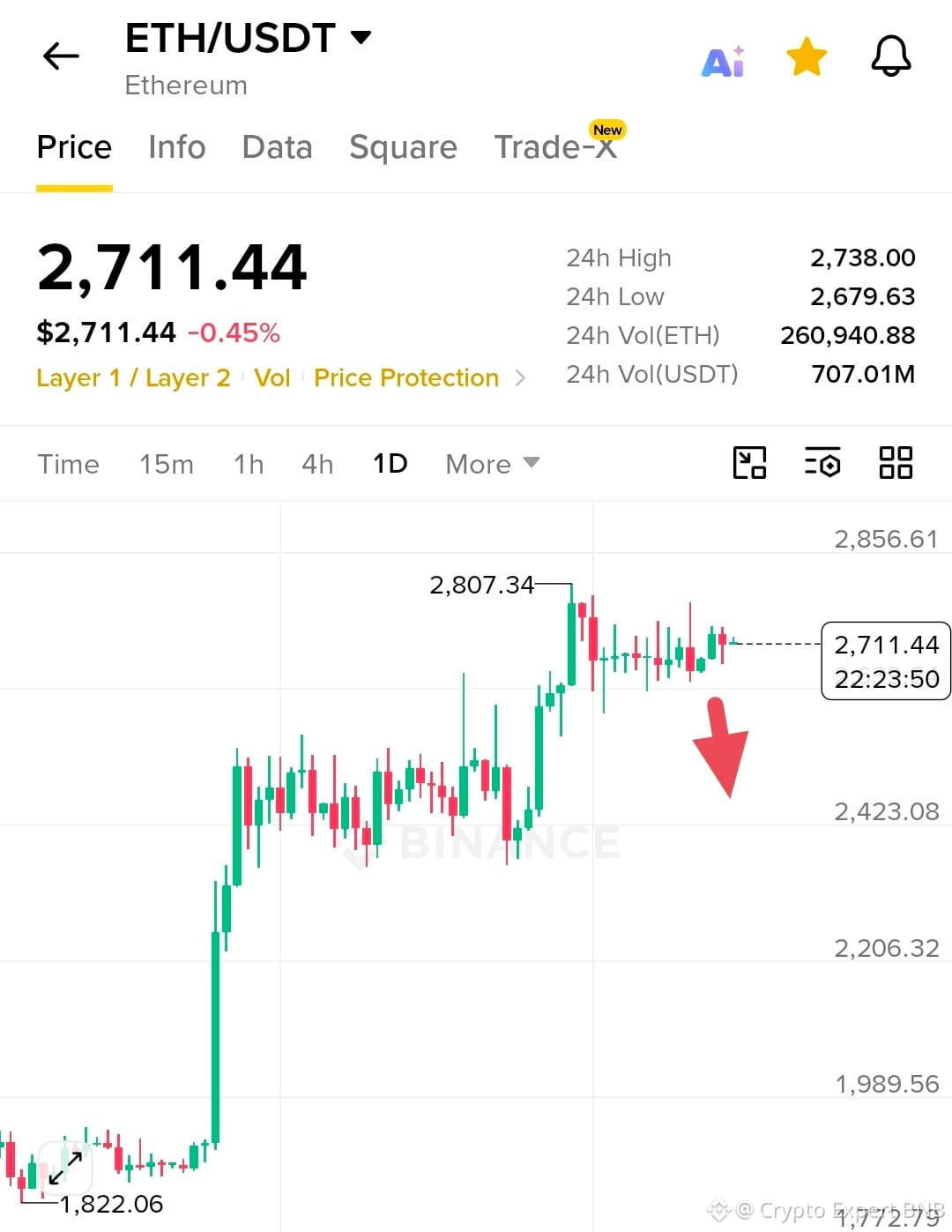
ETH/USDT Trade Signal For Short-Term Traders Sell/Short Entry: 2,730 – 2,750 Take Profit (TP): TP1: 2,650 TP2: 2,600 TP3: 2,550 Stop Loss (SL): 2,820$ETH {future}(ETHUSDT) For Spot Buyers (Safer Approach) Wait for ETH to come near 2,600 – 2,550 support. That zone is safer for fresh buying because sellers may slow down there. Summary ETH still looks weak. Trend is not showing reversal yet. Selling pressure dominates unless BTC reverses strongly. Trade with risk control. #BTCRebound90kNext?
ETH/USDT Trade Signal

For Short-Term Traders

Sell/Short Entry: 2,730 – 2,750
Take Profit (TP):

TP1: 2,650

TP2: 2,600

TP3: 2,550

Stop Loss (SL): 2,820$ETH

For Spot Buyers (Safer Approach)
Wait for ETH to come near 2,600 – 2,550 support. That zone is safer for fresh buying because sellers may slow down there.

Summary

ETH still looks weak. Trend is not showing reversal yet. Selling pressure dominates unless BTC reverses strongly. Trade with risk control.
#BTCRebound90kNext?
Market Panic or Opportunity? CZ Thinks You’re Looking at a Discount Take a look around. The charts are bleeding, the headlines sound hopeless, and the atmosphere feels heavy. Moments like this make even confident investors doubt their own plans. Panic spreads fast, and that’s exactly what we’re watching right now. But while most people are reacting emotionally, Binance founder CZ sees the same chaos through a completely different lens. Instead of fear, he sees a window of possibility. His message is simple and hits hard. What’s CZ Really Saying? He keeps reminding the community of an old principle: the crowd is usually late. When everyone feels unstoppable and even random strangers talk about buying Bitcoin, the market is usually topping out. When confidence disappears and long-term believers start questioning everything, that’s when strong entry points start forming under the surface. According to CZ, the market is sitting in one of those emotional extremes right now. Prices move up and down, but the real turbulence is in people’s heads. A Quick Look at Sentiment The data backs it up. The Crypto Fear & Greed Index is hovering around 20, which signals Extreme Fear. Just days ago it touched 10, one of the most panicked readings we’ve seen in a long time. Compare that with November 2024, when the index was at 84 during peak excitement. The gap between price moves and emotions is huge. Sentiment has collapsed far more dramatically than Bitcoin itself. That’s the distortion CZ is talking about. Yes, BTC Bounced — But Confidence Didn’t Bitcoin managed to rebound from roughly $81,000 to around $91,000, but the mood hasn’t recovered with it. CZ isn’t calling targets or offering a blueprint for your next trade. His point goes deeper: fear itself is a metric. If you follow panic, you’re likely to miss the real opportunities. If you understand fear and recognize how it shapes crowd behavior, you might catch the moments that others ignore. $BTC $ETH $BNB
Market Panic or Opportunity? CZ Thinks You’re Looking at a Discount

Take a look around. The charts are bleeding, the headlines sound hopeless, and the atmosphere feels heavy. Moments like this make even confident investors doubt their own plans. Panic spreads fast, and that’s exactly what we’re watching right now.

But while most people are reacting emotionally, Binance founder CZ sees the same chaos through a completely different lens. Instead of fear, he sees a window of possibility. His message is simple and hits hard.

What’s CZ Really Saying?

He keeps reminding the community of an old principle: the crowd is usually late.
When everyone feels unstoppable and even random strangers talk about buying Bitcoin, the market is usually topping out.
When confidence disappears and long-term believers start questioning everything, that’s when strong entry points start forming under the surface.

According to CZ, the market is sitting in one of those emotional extremes right now. Prices move up and down, but the real turbulence is in people’s heads.

A Quick Look at Sentiment

The data backs it up. The Crypto Fear & Greed Index is hovering around 20, which signals Extreme Fear.
Just days ago it touched 10, one of the most panicked readings we’ve seen in a long time.
Compare that with November 2024, when the index was at 84 during peak excitement.

The gap between price moves and emotions is huge. Sentiment has collapsed far more dramatically than Bitcoin itself. That’s the distortion CZ is talking about.

Yes, BTC Bounced — But Confidence Didn’t

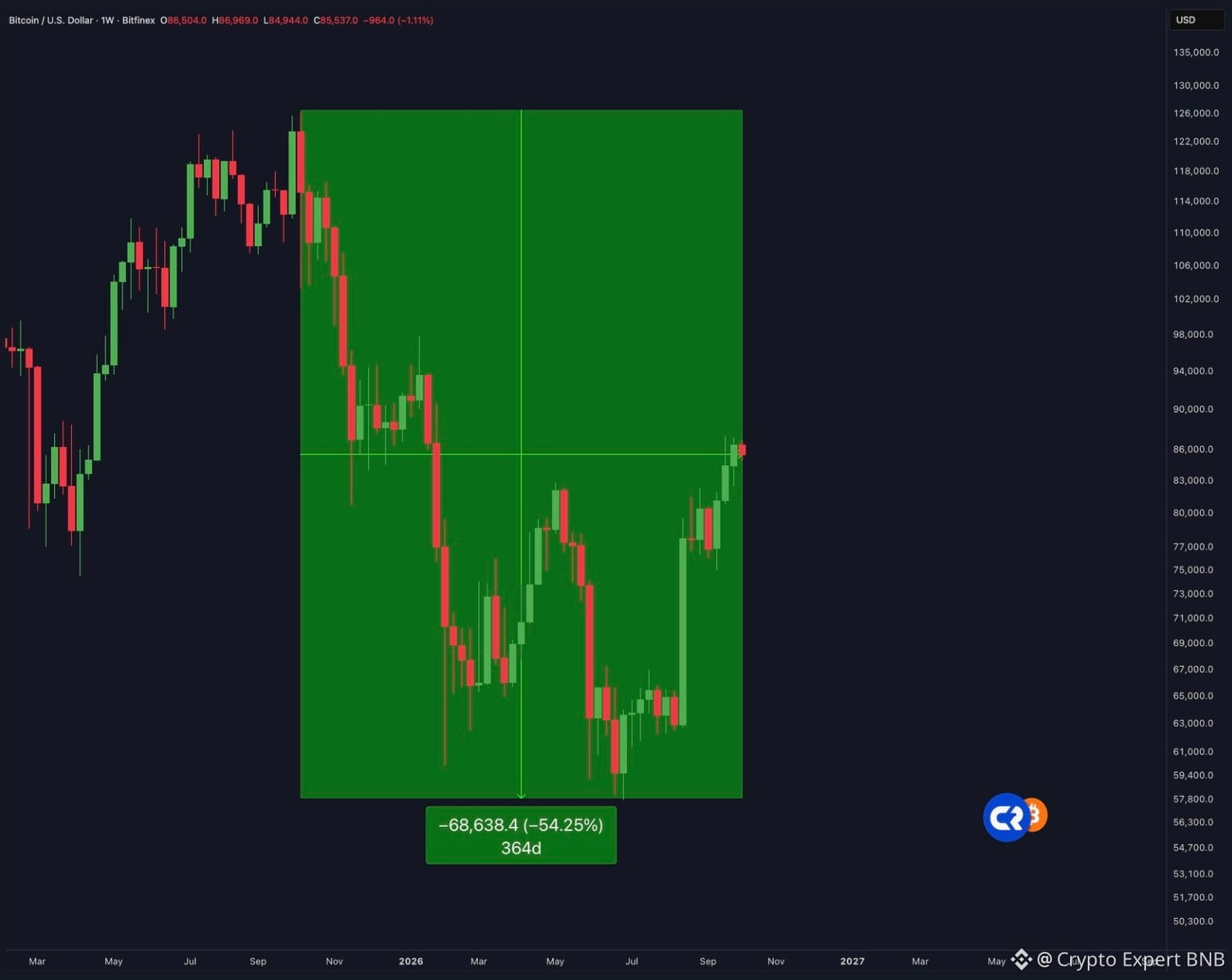
Bitcoin managed to rebound from roughly $81,000 to around $91,000, but the mood hasn’t recovered with it.

CZ isn’t calling targets or offering a blueprint for your next trade. His point goes deeper: fear itself is a metric.
If you follow panic, you’re likely to miss the real opportunities. If you understand fear and recognize how it shapes crowd behavior, you might catch the moments that others ignore.
$BTC $ETH $BNB
B
SOLUSDC
Cerrada
PnL
+1.64%
🚨 Breaking News 🚨 The market just took a heavy hit, and it happened fast. The entire crypto market cap slipped under $3 trillion, wiping out around $165 billion in barely five hours. Bitcoin did most of the damage on its own, dropping hard enough to erase nearly $100 billion from its market value. Sharp moves like this usually come from a mix of aggressive profit-taking, panic selling, and leveraged positions getting flushed out. When liquidity thins out, the fall gets even steeper. If you're in the market, keep an eye on volatility. These kinds of drops often shake out weak hands before the next direction becomes clear. Stay calm, stay informed, and don’t let fear push you into rushed decisions. $BTC {spot}(BTCUSDT) $ETH {future}(ETHUSDT) $SOL {spot}(SOLUSDT) #BTCRebound90kNext?
🚨 Breaking News 🚨
The market just took a heavy hit, and it happened fast.

The entire crypto market cap slipped under $3 trillion, wiping out around $165 billion in barely five hours. Bitcoin did most of the damage on its own, dropping hard enough to erase nearly $100 billion from its market value.

Sharp moves like this usually come from a mix of aggressive profit-taking, panic selling, and leveraged positions getting flushed out. When liquidity thins out, the fall gets even steeper.

If you're in the market, keep an eye on volatility. These kinds of drops often shake out weak hands before the next direction becomes clear. Stay calm, stay informed, and don’t let fear push you into rushed decisions.
$BTC
$ETH
$SOL
#BTCRebound90kNext?
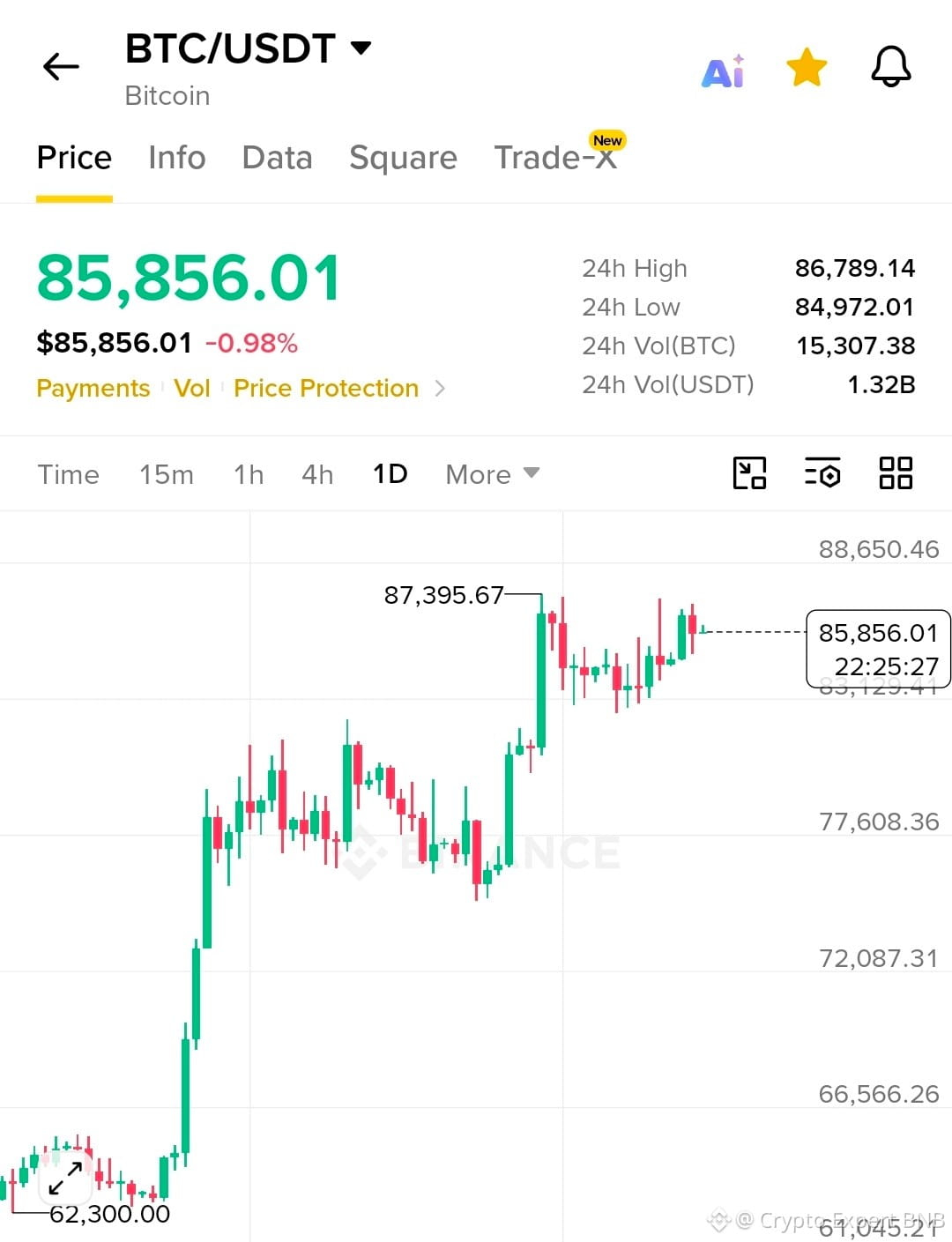
$BTC Trade Signal (1D Chart) Trend: BTC is still below the middle Bollinger band and under MA indicators, showing the bearish trend is not finished yet. For Buyers (Safer Entry) If BTC stays above 85,600 and shows a green candle reversal: Buy Entry: 85,700 – 86,000 Take Profit (TP): 88,300 / 91,000 Stop Loss (SL): 84,800 $BTC {future}(BTCUSDT) For Dip Buyers (Stronger Level) If BTC falls towards 80,600: This is a strong buy zone Buy Entry: 80,600 – 81,000 TP: 85,000 / 88,000 SL: 78,000 For Sellers (Short-Term Short) If BTC keeps rejecting around 88,300 – 88,500: Sell Entry: 88,300 – 88,500 TP: 86,000 / 85,600 SL: 89,300 $BTC Summary BTC is sitting at support. If 85,600 breaks, price may retest 80,600. If price bounces, 88,300 is the first target. #BTCRebound90kNext?
$BTC
Trade Signal (1D Chart)

Trend:
BTC is still below the middle Bollinger band and under MA indicators, showing the bearish trend is not finished yet.

For Buyers (Safer Entry)

If BTC stays above 85,600 and shows a green candle reversal:

Buy Entry: 85,700 – 86,000

Take Profit (TP): 88,300 / 91,000

Stop Loss (SL): 84,800
$BTC

For Dip Buyers (Stronger Level)

If BTC falls towards 80,600:

This is a strong buy zone

Buy Entry: 80,600 – 81,000

TP: 85,000 / 88,000

SL: 78,000

For Sellers (Short-Term Short)

If BTC keeps rejecting around 88,300 – 88,500:

Sell Entry: 88,300 – 88,500

TP: 86,000 / 85,600

SL: 89,300

$BTC
Summary

BTC is sitting at support.
If 85,600 breaks, price may retest 80,600.
If price bounces, 88,300 is the first target.
#BTCRebound90kNext?
XPL: Tokenomics, Governance, and Security 💰 The Plasma Layer 1 network is secured and governed by its native utility token, $XPL. While the network's main goal is to facilitate zero-fee stablecoin payments, XPL provides the essential economic and security backbone to make that service sustainable and decentralized. XPL Token Utility and Economics The XPL token performs several critical functions to align the interests of validators, developers, and the community with the health of the network. * Token Ticker and Supply: The native token's ticker symbol is XPL. The total supply is capped at 10 billion XPL, with a portion circulating at launch and the rest subject to vesting schedules. * Native Token Utility: XPL is the foundational utility asset for the Plasma Proof-of-Stake chain. Its uses are: * Security/Staking: Validators must stake XPL to participate in block production and secure the network. * Gas: XPL is the required gas token for complex transactions (e.g., smart contract deployments, DeFi interactions). It is abstracted away only for simple stablecoin transfers. * Governance: XPL holders have the right to vote on protocol upgrades and key treasury decisions. * Initial Token Distribution: The token allocation is structured to support long-term growth. Distributions typically include allocations for: Ecosystem Growth (the largest portion, funding the paymaster and grants), the Team/Founders, Early Investors, and a Public Sale. * Inflation Rate: To incentivize validators to secure the network, XPL has a native inflation mechanism. Validator rewards start at an annual rate of 5%, which is designed to gradually taper down to 3% over time to balance security incentives against token dilution. * Token Burn/Fee-Recycling: Plasma utilizes an economic model similar to Ethereum's EIP-1559. A portion of the transaction fees generated from complex transactions are burned, creating deflationary pressure on the XPL supply and helping to offset the token inflation from validator rewards. Security and Decentralization Model The economic design is directly linked to the network's security and progressive decentralization roadmap. * Protection Against Sybil Attacks: The network is protected from Sybil and double-spending attacks through the Proof-of-Stake (PoS) consensus mechanism. The high cost required to acquire the necessary XPL to control 51\% of the staked amount serves as the primary economic deterrent. * Vesting Schedules: Team and investor tokens are subject to strict vesting schedules, typically over three years, which helps prevent sudden, massive sell-offs that could destabilize the market, ensuring long-term alignment with the project's success. * Staking/Delegation: Holders of XPL who do not run a full validator node can participate in network security through delegation. They can delegate their XPL stake to an active validator and earn a proportional share of the validator's block rewards. * Treasury Management: The large Ecosystem Growth Fund is managed under the overall governance structure. The community and the Plasma Foundation determine its use for grants, paymaster funding, and strategic ecosystem investments via on-chain voting. Key Operational Questions * On-Chain Voting/Governance: Plasma uses a formal, on-chain voting mechanism tied to XPL holdings. Token holders submit proposals, and if a quorum is met and the proposal passes with a supermajority, it is enacted on the protocol. * Token's Value Proposition: The XPL token's value proposition is derived from its necessity as the security layer and gas layer for all high-value activity. If the stablecoin payment network successfully attracts billions in liquidity, the demand for XPL as the secured asset and fee token will grow in tandem. #Plasma $XPL @Plasma

XPL: Tokenomics, Governance, and Security

💰 The Plasma Layer 1 network is secured and governed by its native utility token, $XPL . While the network's main goal is to facilitate zero-fee stablecoin payments, XPL provides the essential economic and security backbone to make that service sustainable and decentralized.
XPL Token Utility and Economics
The XPL token performs several critical functions to align the interests of validators, developers, and the community with the health of the network.
* Token Ticker and Supply: The native token's ticker symbol is XPL. The total supply is capped at 10 billion XPL, with a portion circulating at launch and the rest subject to vesting schedules.
* Native Token Utility: XPL is the foundational utility asset for the Plasma Proof-of-Stake chain. Its uses are:
* Security/Staking: Validators must stake XPL to participate in block production and secure the network.
* Gas: XPL is the required gas token for complex transactions (e.g., smart contract deployments, DeFi interactions). It is abstracted away only for simple stablecoin transfers.
* Governance: XPL holders have the right to vote on protocol upgrades and key treasury decisions.
* Initial Token Distribution: The token allocation is structured to support long-term growth. Distributions typically include allocations for: Ecosystem Growth (the largest portion, funding the paymaster and grants), the Team/Founders, Early Investors, and a Public Sale.
* Inflation Rate: To incentivize validators to secure the network, XPL has a native inflation mechanism. Validator rewards start at an annual rate of 5%, which is designed to gradually taper down to 3% over time to balance security incentives against token dilution.
* Token Burn/Fee-Recycling: Plasma utilizes an economic model similar to Ethereum's EIP-1559. A portion of the transaction fees generated from complex transactions are burned, creating deflationary pressure on the XPL supply and helping to offset the token inflation from validator rewards.
Security and Decentralization Model
The economic design is directly linked to the network's security and progressive decentralization roadmap.
* Protection Against Sybil Attacks: The network is protected from Sybil and double-spending attacks through the Proof-of-Stake (PoS) consensus mechanism. The high cost required to acquire the necessary XPL to control 51\% of the staked amount serves as the primary economic deterrent.
* Vesting Schedules: Team and investor tokens are subject to strict vesting schedules, typically over three years, which helps prevent sudden, massive sell-offs that could destabilize the market, ensuring long-term alignment with the project's success.
* Staking/Delegation: Holders of XPL who do not run a full validator node can participate in network security through delegation. They can delegate their XPL stake to an active validator and earn a proportional share of the validator's block rewards.
* Treasury Management: The large Ecosystem Growth Fund is managed under the overall governance structure. The community and the Plasma Foundation determine its use for grants, paymaster funding, and strategic ecosystem investments via on-chain voting.
Key Operational Questions
* On-Chain Voting/Governance: Plasma uses a formal, on-chain voting mechanism tied to XPL holdings. Token holders submit proposals, and if a quorum is met and the proposal passes with a supermajority, it is enacted on the protocol.
* Token's Value Proposition: The XPL token's value proposition is derived from its necessity as the security layer and gas layer for all high-value activity. If the stablecoin payment network successfully attracts billions in liquidity, the demand for XPL as the secured asset and fee token will grow in tandem.
#Plasma $XPL @Plasma
{future}(PIPPINUSDT) RED ALERT: $PIPPIN 🚨 Heads up, everyone. "Pure minpolation wheels are playing" is a major red flag. This is classic pump-and-dump manipulation talk. This coin is being set up to trap small traders. The insiders will dump their bags, and retail will be left holding the worthless tokens.$PIPPIN 🔻 AVOID $PIPPIN AT ALL COSTS. 🔻 Do not FOMO in. Protect your capital. This is a recipe for getting rekt. #Pippin #ScamCoin #PumpAndDump #CryptoWarning
RED ALERT: $PIPPIN 🚨

Heads up, everyone. "Pure minpolation wheels are playing" is a major red flag. This is classic pump-and-dump manipulation talk.

This coin is being set up to trap small traders. The insiders will dump their bags, and retail will be left holding the worthless tokens.$PIPPIN

🔻 AVOID $PIPPIN AT ALL COSTS. 🔻

Do not FOMO in. Protect your capital. This is a recipe for getting rekt.

#Pippin #ScamCoin #PumpAndDump #CryptoWarning
Plasma: The Stablecoin Specialist Layer 1 ⚡ Plasma is a Layer 1 EVM-compatible blockchain designed from the ground up to solve the core challenges of stablecoin mass adoption: high costs and slow settlement times. By prioritizing payments and financial utility, it differentiates itself from general-purpose chains. ⚙️ Core Technology and Performance * Native Consensus Mechanism: Plasma is secured by PlasmaBFT, a Proof-of-Stake (PoS) consensus protocol derived from the high-speed Fast HotStuff mechanism. This custom consensus is key to achieving rapid, efficient finality. * Architectural Differentiation: While EVM-compatible, Plasma is built as a stablecoin-native chain. Its architecture specifically optimizes every system component for high-throughput, low-latency financial settlement, rather than general smart contract execution. * High-Volume Optimization: Plasma achieves high volume through its PlasmaBFT consensus, which facilitates parallel processing and ensures the network maintains high block capacity and low block times, even under stress. * EVM Compatibility: Plasma offers full EVM compatibility via a Reth-based implementation. This means developers can deploy any existing Solidity smart contract and use all familiar Ethereum tooling (like MetaMask) seamlessly. There are no reported missing opcodes. * Transaction Finality Time: The network is engineered for near-instant settlement, targeting sub-second finality (around 800ms) to ensure payments are irreversible quickly, which is critical for merchant and consumer confidence. * Scalability Technique: Unlike older scaling solutions bearing the same name, the Plasma Layer 1 achieves scalability through its high-throughput consensus protocol (PlasmaBFT) and a highly optimized architecture, rather than sharding. * Practical TPS Capacity: Plasma is designed to handle thousands of Transactions Per Second (TPS), giving it the capacity required for global-scale payment and remittance use. * Data Availability: As a Layer 1 blockchain, data availability is handled on-chain. All transaction data is secured and verifiable by the distributed validator set participating in the PlasmaBFT consensus. * Supported Programming Languages: Smart contracts are written in languages compatible with the EVM, primarily Solidity, but also any language that compiles to EVM bytecode. * Cross-Chain Bridge Integration: Plasma features built-in, trust-minimized cross-chain bridge architecture. For example, it integrates a decentralized bridge for Bitcoin (BTC) to mint pBTC on Plasma, enabling users to leverage major crypto liquidity securely within the EVM environment. 💰 Stablecoin Economics and User Experience Plasma's economic model radically simplifies stablecoin transfers by eliminating one of the biggest points of friction: gas fees. * Stablecoins Supported: Plasma natively supports and is deeply integrated with USD₮ (Tether), with plans to expand support for other major fiat-backed stablecoins like USDC. * Achieving Low-Cost Fee Structure: The low-cost, near-zero fee structure is achieved through a protocol-level paymaster system. This system subsidizes the gas costs for simple stablecoin transfers. * Zero-Fee Transactions & Subsidy: Simple USD₮ transfers are indeed effectively zero-fee for the end-user. The fee is subsidized by the protocol’s paymaster, which is funded by the network's native utility token, $XPL. * Sustaining Fee Abstraction: The long-term economic model is to capture value from high-margin activities and complex transactions (like trading, lending, and smart contract execution), which still require the XPL gas token. The zero-fee transfers act as a loss-leader to acquire liquidity and users, monetizing the ecosystem through downstream financial services and application-layer revenue. This specialized focus on making stablecoins usable as everyday money positions Plasma as a unique infrastructure play in the future of global digital finance. #Plasma $XPL @Plasma

Plasma: The Stablecoin Specialist Layer 1

⚡ Plasma is a Layer 1 EVM-compatible blockchain designed from the ground up to solve the core challenges of stablecoin mass adoption: high costs and slow settlement times. By prioritizing payments and financial utility, it differentiates itself from general-purpose chains.
⚙️ Core Technology and Performance
* Native Consensus Mechanism: Plasma is secured by PlasmaBFT, a Proof-of-Stake (PoS) consensus protocol derived from the high-speed Fast HotStuff mechanism. This custom consensus is key to achieving rapid, efficient finality.
* Architectural Differentiation: While EVM-compatible, Plasma is built as a stablecoin-native chain. Its architecture specifically optimizes every system component for high-throughput, low-latency financial settlement, rather than general smart contract execution.
* High-Volume Optimization: Plasma achieves high volume through its PlasmaBFT consensus, which facilitates parallel processing and ensures the network maintains high block capacity and low block times, even under stress.
* EVM Compatibility: Plasma offers full EVM compatibility via a Reth-based implementation. This means developers can deploy any existing Solidity smart contract and use all familiar Ethereum tooling (like MetaMask) seamlessly. There are no reported missing opcodes.
* Transaction Finality Time: The network is engineered for near-instant settlement, targeting sub-second finality (around 800ms) to ensure payments are irreversible quickly, which is critical for merchant and consumer confidence.
* Scalability Technique: Unlike older scaling solutions bearing the same name, the Plasma Layer 1 achieves scalability through its high-throughput consensus protocol (PlasmaBFT) and a highly optimized architecture, rather than sharding.
* Practical TPS Capacity: Plasma is designed to handle thousands of Transactions Per Second (TPS), giving it the capacity required for global-scale payment and remittance use.
* Data Availability: As a Layer 1 blockchain, data availability is handled on-chain. All transaction data is secured and verifiable by the distributed validator set participating in the PlasmaBFT consensus.
* Supported Programming Languages: Smart contracts are written in languages compatible with the EVM, primarily Solidity, but also any language that compiles to EVM bytecode.
* Cross-Chain Bridge Integration: Plasma features built-in, trust-minimized cross-chain bridge architecture. For example, it integrates a decentralized bridge for Bitcoin (BTC) to mint pBTC on Plasma, enabling users to leverage major crypto liquidity securely within the EVM environment.
💰 Stablecoin Economics and User Experience
Plasma's economic model radically simplifies stablecoin transfers by eliminating one of the biggest points of friction: gas fees.
* Stablecoins Supported: Plasma natively supports and is deeply integrated with USD₮ (Tether), with plans to expand support for other major fiat-backed stablecoins like USDC.
* Achieving Low-Cost Fee Structure: The low-cost, near-zero fee structure is achieved through a protocol-level paymaster system. This system subsidizes the gas costs for simple stablecoin transfers.
* Zero-Fee Transactions & Subsidy: Simple USD₮ transfers are indeed effectively zero-fee for the end-user. The fee is subsidized by the protocol’s paymaster, which is funded by the network's native utility token, $XPL .
* Sustaining Fee Abstraction: The long-term economic model is to capture value from high-margin activities and complex transactions (like trading, lending, and smart contract execution), which still require the XPL gas token. The zero-fee transfers act as a loss-leader to acquire liquidity and users, monetizing the ecosystem through downstream financial services and application-layer revenue.
This specialized focus on making stablecoins usable as everyday money positions Plasma as a unique infrastructure play in the future of global digital finance.
#Plasma $XPL @Plasma
Trade Signal ETH is still moving in a bearish trend after getting rejected from the middle Bollinger Band near 3,000. Selling pressure is increasing again. 📉 Short Setup Entry: 2,850 – 2,880 Take Profit (TP): TP1: 2,730 TP2: 2,650 TP3: 2,580 (only if momentum stays weak) Stop Loss (SL): SL: 3,020 (above the mid-band and recent rejection point) $ETH {future}(ETHUSDT) Why this setup: ETH failed to break the middle Bollinger Band. Sellers stepped back in with a strong red candle. Trend is still downward with weak recovery candles. Volume does not support a reversal yet. If ETH holds above 3,000 again, the short setup becomes invalid.
Trade Signal
ETH is still moving in a bearish trend after getting rejected from the middle Bollinger Band near 3,000. Selling pressure is increasing again.

📉 Short Setup

Entry: 2,850 – 2,880
Take Profit (TP):

TP1: 2,730

TP2: 2,650

TP3: 2,580 (only if momentum stays weak)

Stop Loss (SL):

SL: 3,020 (above the mid-band and recent rejection point)
$ETH

Why this setup:

ETH failed to break the middle Bollinger Band.

Sellers stepped back in with a strong red candle.

Trend is still downward with weak recovery candles.

Volume does not support a reversal yet.

If ETH holds above 3,000 again, the short setup becomes invalid.
Plasma: A Global Economic Engine with Clear Risks 🌐 Plasma is carving out a specialized niche as the first Layer 1 EVM-compatible blockchain hyper-focused on stablecoin payments. Its long-term strategy is not just to be a blockchain, but a foundational financial operating system for the digital economy, leveraging its zero-fee model to onboard millions of global users. 🚀 Vision and Target Demographics Plasma’s vision extends far beyond typical crypto use cases, aiming to become a ubiquitous rail for real-world money movement. * Long-Term Vision Beyond Payments: The long-term vision positions Plasma as a "stablecoin-native neobank" and economic engine. This involves creating a seamless ecosystem, branded in part by the Plasma One consumer app, that enables users to save, spend, earn, and settle using stablecoins permissionlessly. This strategy aims to integrate advanced DeFi, tokenized real-world assets (RWAs), and even central bank digital currency (CBDC) interoperability. * Target Demographic: Plasma directly targets users who are underserved by traditional finance and those exposed to unstable local currencies (e.g., in Turkey, Argentina, and parts of Africa). For these users, the immediate utility of a fast, stable digital dollar (like USD₮) is extremely high, making the zero-fee transfer model a massive incentive for adoption. The network also targets fintechs, payment processors, and corporate treasuries seeking to reduce costs and gain real-time settlement capabilities. * Biggest Technical and Market Risks: * Market Risk (Competition): Plasma faces intense competition from high-throughput L1s (like Solana) and established L2s (like Polygon/Base) that are aggressively subsidizing stablecoin transactions. * Technical Risk (Paymaster Sustainability): The protocol-managed paymaster that enables zero-fee transfers is a novel, crucial component. Its long-term reliability and the economic sustainability of its funding (using XPL from the ecosystem fund) must be proven over time and under extreme load. * Tokenomics Risk: The XPL token has faced extreme market volatility, with sell-off fears often triggered by large pre-scheduled token unlocks. The team must successfully balance ecosystem growth and adoption with managing supply shocks from these unlocks. ⚖️ Competitive Edge and Global Ambition Plasma's specialized design gives it a clear competitive advantage in the stablecoin vertical. * Prioritizing Low-Cost vs. Decentralization: Plasma's design prioritizes a predictable, low-cost user experience over maximizing absolute, philosophical decentralization from Day 1. The trade-off is often seen in a slightly higher initial barrier for new validators compared to general-purpose chains, aiming instead for a set of professional, high-uptime validators required to guarantee the speed and stability necessary for a global payment network. * Defining "Global" Stablecoin Payments: "Global" refers to leveraging the existing, borderless network effect of major stablecoins like USD₮ for cross-border remittances, merchant settlement, and P2P transfers anywhere in the world, unconstrained by traditional banking hours or international transfer costs. Plasma's success hinges on whether its focused design, zero-fee UX, and integration with the stablecoin giants can convert its technical advantages into widespread, everyday financial utility . #Plasma $XPL @Plasma

Plasma: A Global Economic Engine with Clear Risks

🌐 Plasma is carving out a specialized niche as the first Layer 1 EVM-compatible blockchain hyper-focused on stablecoin payments. Its long-term strategy is not just to be a blockchain, but a foundational financial operating system for the digital economy, leveraging its zero-fee model to onboard millions of global users.
🚀 Vision and Target Demographics
Plasma’s vision extends far beyond typical crypto use cases, aiming to become a ubiquitous rail for real-world money movement.
* Long-Term Vision Beyond Payments: The long-term vision positions Plasma as a "stablecoin-native neobank" and economic engine. This involves creating a seamless ecosystem, branded in part by the Plasma One consumer app, that enables users to save, spend, earn, and settle using stablecoins permissionlessly. This strategy aims to integrate advanced DeFi, tokenized real-world assets (RWAs), and even central bank digital currency (CBDC) interoperability.
* Target Demographic: Plasma directly targets users who are underserved by traditional finance and those exposed to unstable local currencies (e.g., in Turkey, Argentina, and parts of Africa). For these users, the immediate utility of a fast, stable digital dollar (like USD₮) is extremely high, making the zero-fee transfer model a massive incentive for adoption. The network also targets fintechs, payment processors, and corporate treasuries seeking to reduce costs and gain real-time settlement capabilities.
* Biggest Technical and Market Risks:
* Market Risk (Competition): Plasma faces intense competition from high-throughput L1s (like Solana) and established L2s (like Polygon/Base) that are aggressively subsidizing stablecoin transactions.
* Technical Risk (Paymaster Sustainability): The protocol-managed paymaster that enables zero-fee transfers is a novel, crucial component. Its long-term reliability and the economic sustainability of its funding (using XPL from the ecosystem fund) must be proven over time and under extreme load.
* Tokenomics Risk: The XPL token has faced extreme market volatility, with sell-off fears often triggered by large pre-scheduled token unlocks. The team must successfully balance ecosystem growth and adoption with managing supply shocks from these unlocks.
⚖️ Competitive Edge and Global Ambition
Plasma's specialized design gives it a clear competitive advantage in the stablecoin vertical.
* Prioritizing Low-Cost vs. Decentralization: Plasma's design prioritizes a predictable, low-cost user experience over maximizing absolute, philosophical decentralization from Day 1. The trade-off is often seen in a slightly higher initial barrier for new validators compared to general-purpose chains, aiming instead for a set of professional, high-uptime validators required to guarantee the speed and stability necessary for a global payment network.
* Defining "Global" Stablecoin Payments: "Global" refers to leveraging the existing, borderless network effect of major stablecoins like USD₮ for cross-border remittances, merchant settlement, and P2P transfers anywhere in the world, unconstrained by traditional banking hours or international transfer costs.
Plasma's success hinges on whether its focused design, zero-fee UX, and integration with the stablecoin giants can convert its technical advantages into widespread, everyday financial utility .
#Plasma $XPL @Plasma
Plasma: User Experience, Compliance, and Competitive Edge 🎯 Plasma is more than just a fast blockchain; it is a meticulously crafted financial rail built for global commerce. Its focus on user experience, compliance tooling, and a unique economic model positions it as a direct competitor to traditional payment networks in the stablecoin sector. 💼 Institutional Strategy and Compliance Institutional adoption is a core pillar of Plasma's strategy, requiring a proactive stance on compliance. * Plasma vs. Layer 2 Solutions (L2s): The names may be similar, but their architectures are vastly different. Plasma (the project) is a sovereign, specialized Layer 1 EVM-compatible chain. Plasma (the L2 technology) is a scaling solution that historically relies on fraud proofs and roots its security to Ethereum. Plasma was built as an L1 to retain full control over the consensus and fee model necessary for its unique economic incentives. * Key Partnerships to Drive Adoption: Plasma has secured partnerships essential for both retail and institutional use. This includes major stablecoin issuers (like Tether), DeFi protocols (like Aave and Euler) to establish deep stablecoin liquidity, and fintech partners like Zerohash for single-layer compliance and settlement integration, bridging traditional finance to the Plasma L1. * Institutional Adoption and Compliance: The strategy is built on providing a compliant infrastructure layer. Through partnerships and built-in tooling, Plasma offers features that enable businesses to transact cheaply while being regulatory-friendly. This positions the network as the default choice for organizations seeking to modernize payments and unlock institutional liquidity. 👤 User Experience and Target Demographics Plasma's primary goal is to make stablecoin use as simple and predictable as using cash or a messaging app. * Simplifying User Experience (UX): The key UX simplification is the zero-fee transaction model for stablecoins. Users can send USD₮ without needing to acquire the native token XPL for gas, eliminating a major pain point and making the network feel less like a blockchain and more like an instant payment system. * Merchant Adoption: Plasma incentivizes merchant adoption by offering the lowest possible transaction costs and instant finality for settlement, eliminating the high interchange fees and long settlement times associated with credit card processing. * User Education: The platform focuses on educating new users about the utility of a "digital dollar" in unstable economies. The core message is simple: fast, free, and stable money movement, which has immediate and tangible value for remittances and daily transactions. * Non-Stablecoin Fiat Currencies: While the current focus is on USD₮, the platform's architecture is capable of tokenizing other fiat currencies or assets. The long-term plan includes integrating tokenized real-world assets (RWAs) and other tokenized fiat to expand its utility as a global financial operating system. ⚖️ Legal and Comparative Edge * Identity Verification (KYC/AML): Plasma addresses KYC/AML not at the core Layer 1 level (which remains permissionless), but through optional application-layer tooling and partnerships. This approach allows institutional partners to implement necessary compliance checks for their users without compromising the decentralized nature of the underlying blockchain protocol. * Dispute Resolution/Reversibility: As a public, decentralized blockchain, transactions are immutable and generally not reversible. However, for disputes arising from smart contract issues or non-performance, Plasma supports the use of external arbitration services (like JAMS for smart contract disputes) to provide a legal framework for resolving conflicts that occur on-chain. #Plasma $XPL @Plasma

Plasma: User Experience, Compliance, and Competitive Edge

🎯 Plasma is more than just a fast blockchain; it is a meticulously crafted financial rail built for global commerce. Its focus on user experience, compliance tooling, and a unique economic model positions it as a direct competitor to traditional payment networks in the stablecoin sector.
💼 Institutional Strategy and Compliance
Institutional adoption is a core pillar of Plasma's strategy, requiring a proactive stance on compliance.
* Plasma vs. Layer 2 Solutions (L2s): The names may be similar, but their architectures are vastly different. Plasma (the project) is a sovereign, specialized Layer 1 EVM-compatible chain. Plasma (the L2 technology) is a scaling solution that historically relies on fraud proofs and roots its security to Ethereum. Plasma was built as an L1 to retain full control over the consensus and fee model necessary for its unique economic incentives.
* Key Partnerships to Drive Adoption: Plasma has secured partnerships essential for both retail and institutional use. This includes major stablecoin issuers (like Tether), DeFi protocols (like Aave and Euler) to establish deep stablecoin liquidity, and fintech partners like Zerohash for single-layer compliance and settlement integration, bridging traditional finance to the Plasma L1.
* Institutional Adoption and Compliance: The strategy is built on providing a compliant infrastructure layer. Through partnerships and built-in tooling, Plasma offers features that enable businesses to transact cheaply while being regulatory-friendly. This positions the network as the default choice for organizations seeking to modernize payments and unlock institutional liquidity.
👤 User Experience and Target Demographics
Plasma's primary goal is to make stablecoin use as simple and predictable as using cash or a messaging app.
* Simplifying User Experience (UX): The key UX simplification is the zero-fee transaction model for stablecoins. Users can send USD₮ without needing to acquire the native token XPL for gas, eliminating a major pain point and making the network feel less like a blockchain and more like an instant payment system.
* Merchant Adoption: Plasma incentivizes merchant adoption by offering the lowest possible transaction costs and instant finality for settlement, eliminating the high interchange fees and long settlement times associated with credit card processing.
* User Education: The platform focuses on educating new users about the utility of a "digital dollar" in unstable economies. The core message is simple: fast, free, and stable money movement, which has immediate and tangible value for remittances and daily transactions.
* Non-Stablecoin Fiat Currencies: While the current focus is on USD₮, the platform's architecture is capable of tokenizing other fiat currencies or assets. The long-term plan includes integrating tokenized real-world assets (RWAs) and other tokenized fiat to expand its utility as a global financial operating system.
⚖️ Legal and Comparative Edge
* Identity Verification (KYC/AML): Plasma addresses KYC/AML not at the core Layer 1 level (which remains permissionless), but through optional application-layer tooling and partnerships. This approach allows institutional partners to implement necessary compliance checks for their users without compromising the decentralized nature of the underlying blockchain protocol.
* Dispute Resolution/Reversibility: As a public, decentralized blockchain, transactions are immutable and generally not reversible. However, for disputes arising from smart contract issues or non-performance, Plasma supports the use of external arbitration services (like JAMS for smart contract disputes) to provide a legal framework for resolving conflicts that occur on-chain.
#Plasma $XPL @Plasma
Plasma: Roadmap, Competition, and Global Vision 🚀 Plasma is positioned as a Layer 1 solution, intentionally designed to compete with high-throughput chains by offering a specialized environment for stablecoin payments. Its success hinges on executing a clear roadmap and proving its competitive edge in the global payments market. Project Trajectory and Core Team * Immediate Next Milestones: The Plasma roadmap focuses heavily on ecosystem growth and decentralization following its Mainnet Beta launch (which occurred on September 25, 2025). Key milestones include: * Staking/Delegation: Implementing full functionality for XPL holders to stake and delegate. * Ecosystem Build-out: Fostering growth in non-transfer activity, such as DeFi protocols and remittance applications. * New Integrations: Adding support for more major stablecoins beyond USD₮ (Tether) and potentially a native Bitcoin bridge (\text{pBTC}) to connect BTC liquidity to the chain. * Geographic Focus for Initial Adoption: The initial focus for global expansion is on unstable currency markets and regions with high remittance traffic, such as Turkey, Argentina, and parts of Africa. These regions stand to gain the most from low-cost, stable digital currency rails. * Core Team: Plasma was founded by Paul Faecks and Christian Angermayer. The team has expanded with senior hires in product, global payments, and protocol security, bringing experience from traditional finance and crypto. Paul Faecks is the Founder and CEO. Comparative Analysis and Market Edge * Single Biggest Competitive Advantage: Plasma’s primary competitive advantage is its protocol-level fee abstraction (the paymaster system) for stablecoin transfers. By offering zero-fee USD₮ transfers to the end-user on a dedicated, high-throughput Layer 1, it eliminates the main friction point—cost—that hinders mass adoption of crypto payments. * L1 vs. L2 Decision: The decision to build a Layer 1 was based on the need for complete architectural control and sovereignty over the execution and economic environment. This allows Plasma to implement custom, protocol-level changes like the fee-abstraction mechanism and the PlasmaBFT consensus, which would be impossible or severely constrained on a Layer 2 built atop Ethereum. * Prioritization in Extreme Usage: In a scenario of extreme network usage, the design prioritizes low cost and predictable fees over maximizing absolute throughput. The entire point of the chain is to ensure that 0 fee stablecoin transfers remain 0, preventing the user experience from deteriorating into unpredictable fee markets like those seen on other chains. * Differentiating from Solana and Tron: * vs. Solana: Solana is a general-purpose L1 known for its extremely high TPS, but it has faced periods of network instability and is not purely focused on stablecoins. Plasma is stablecoin-native, focusing its economic and consensus model on predictable settlement over raw, general-purpose speed. * vs. Tron: Tron dominates low-fee remittances, but Plasma seeks to achieve even lower friction (zero-fee via abstraction) and leverages full EVM compatibility, which is more attractive to a broader base of DeFi and fintech developers. Long-Term Vision * Long-Term Vision Beyond Payments: While stablecoin payments are the core use case, the long-term vision positions Plasma as a "stablecoin-native neobank" and financial operating system. This involves integrating products like tokenized real-world assets (RWAs), advanced DeFi tools, and card integrations, allowing users to save, spend, and earn permissionlessly using the stablecoins they trust. The long-term success of the Plasma project will depend on proving that its specialized, payment-centric Layer 1 design can withstand market volatility and deliver real-world utility .#Plasma $XPL @Plasma

Plasma: Roadmap, Competition, and Global Vision

🚀 Plasma is positioned as a Layer 1 solution, intentionally designed to compete with high-throughput chains by offering a specialized environment for stablecoin payments. Its success hinges on executing a clear roadmap and proving its competitive edge in the global payments market.
Project Trajectory and Core Team
* Immediate Next Milestones: The Plasma roadmap focuses heavily on ecosystem growth and decentralization following its Mainnet Beta launch (which occurred on September 25, 2025). Key milestones include:
* Staking/Delegation: Implementing full functionality for XPL holders to stake and delegate.
* Ecosystem Build-out: Fostering growth in non-transfer activity, such as DeFi protocols and remittance applications.
* New Integrations: Adding support for more major stablecoins beyond USD₮ (Tether) and potentially a native Bitcoin bridge (\text{pBTC}) to connect BTC liquidity to the chain.
* Geographic Focus for Initial Adoption: The initial focus for global expansion is on unstable currency markets and regions with high remittance traffic, such as Turkey, Argentina, and parts of Africa. These regions stand to gain the most from low-cost, stable digital currency rails.
* Core Team: Plasma was founded by Paul Faecks and Christian Angermayer. The team has expanded with senior hires in product, global payments, and protocol security, bringing experience from traditional finance and crypto. Paul Faecks is the Founder and CEO.
Comparative Analysis and Market Edge
* Single Biggest Competitive Advantage: Plasma’s primary competitive advantage is its protocol-level fee abstraction (the paymaster system) for stablecoin transfers. By offering zero-fee USD₮ transfers to the end-user on a dedicated, high-throughput Layer 1, it eliminates the main friction point—cost—that hinders mass adoption of crypto payments.
* L1 vs. L2 Decision: The decision to build a Layer 1 was based on the need for complete architectural control and sovereignty over the execution and economic environment. This allows Plasma to implement custom, protocol-level changes like the fee-abstraction mechanism and the PlasmaBFT consensus, which would be impossible or severely constrained on a Layer 2 built atop Ethereum.
* Prioritization in Extreme Usage: In a scenario of extreme network usage, the design prioritizes low cost and predictable fees over maximizing absolute throughput. The entire point of the chain is to ensure that 0 fee stablecoin transfers remain 0, preventing the user experience from deteriorating into unpredictable fee markets like those seen on other chains.
* Differentiating from Solana and Tron:
* vs. Solana: Solana is a general-purpose L1 known for its extremely high TPS, but it has faced periods of network instability and is not purely focused on stablecoins. Plasma is stablecoin-native, focusing its economic and consensus model on predictable settlement over raw, general-purpose speed.
* vs. Tron: Tron dominates low-fee remittances, but Plasma seeks to achieve even lower friction (zero-fee via abstraction) and leverages full EVM compatibility, which is more attractive to a broader base of DeFi and fintech developers.
Long-Term Vision
* Long-Term Vision Beyond Payments: While stablecoin payments are the core use case, the long-term vision positions Plasma as a "stablecoin-native neobank" and financial operating system. This involves integrating products like tokenized real-world assets (RWAs), advanced DeFi tools, and card integrations, allowing users to save, spend, and earn permissionlessly using the stablecoins they trust.
The long-term success of the Plasma project will depend on proving that its specialized, payment-centric Layer 1 design can withstand market volatility and deliver real-world utility .#Plasma $XPL @Plasma
Inicia sesión para explorar más contenidos
Conoce las noticias más recientes del sector
⚡️ Participa en los últimos debates del mundo cripto
💬 Interactúa con tus creadores favoritos
👍 Disfruta contenido de tu interés
Email/número de teléfono

Lo más reciente

--
Ver más
Mapa del sitio
Preferencias de cookies
Términos y condiciones de la plataforma