

Marcus Corvinus
16k Publicaciones

Marcus Corvinus
 Verificado Plus de Binance Square
Denunciar
Bloquear usuario
Marcus is Here. Crypto since 2015. Web3 builder. Verified KOL on Binance Square. Let's grow together: X- @CryptoBull009

Traders League Badge Beginner

Top Voices
129 Siguiendo
78.8K+ Seguidores
95.1K+ Me gusta
2 Insignias
Publicaciones
Todo
Citas
PINNED

PINNED
Artículo
Por qué Binance Square se siente como mi hogar en criptomonedasLo diré de manera simple.
No me gusta llevar “cuadrado”. Nunca lo hice. No me gustan las cajas, los carriles fijos o las plataformas que te obligan a pensar en una sola dirección.
Pero Binance Square no es una caja.
Es más como una calle de criptomonedas en vivo: abierta, ruidosa de una buena manera, llena de personas reales, opiniones reales y actualizaciones reales sucediendo al mismo tiempo. Cada vez que la abro, siento que estoy entrando en el lugar donde realmente se discuten las criptomonedas de manera adecuada, no solo se publican.
Y por eso sigo eligiéndolo.
Por qué Binance Square se siente como mi hogar en criptomonedas
Lo diré de manera simple.
No me gusta llevar “cuadrado”. Nunca lo hice. No me gustan las cajas, los carriles fijos o las plataformas que te obligan a pensar en una sola dirección.
Pero Binance Square no es una caja.
Es más como una calle de criptomonedas en vivo: abierta, ruidosa de una buena manera, llena de personas reales, opiniones reales y actualizaciones reales sucediendo al mismo tiempo. Cada vez que la abro, siento que estoy entrando en el lugar donde realmente se discuten las criptomonedas de manera adecuada, no solo se publican.
Y por eso sigo eligiéndolo.
No me gusta llevar “cuadrado”. Nunca lo hice. No me gustan las cajas, los carriles fijos o las plataformas que te obligan a pensar en una sola dirección.
Pero Binance Square no es una caja.
Es más como una calle de criptomonedas en vivo: abierta, ruidosa de una buena manera, llena de personas reales, opiniones reales y actualizaciones reales sucediendo al mismo tiempo. Cada vez que la abro, siento que estoy entrando en el lugar donde realmente se discuten las criptomonedas de manera adecuada, no solo se publican.
Y por eso sigo eligiéndolo.
117
18
293
50.4k
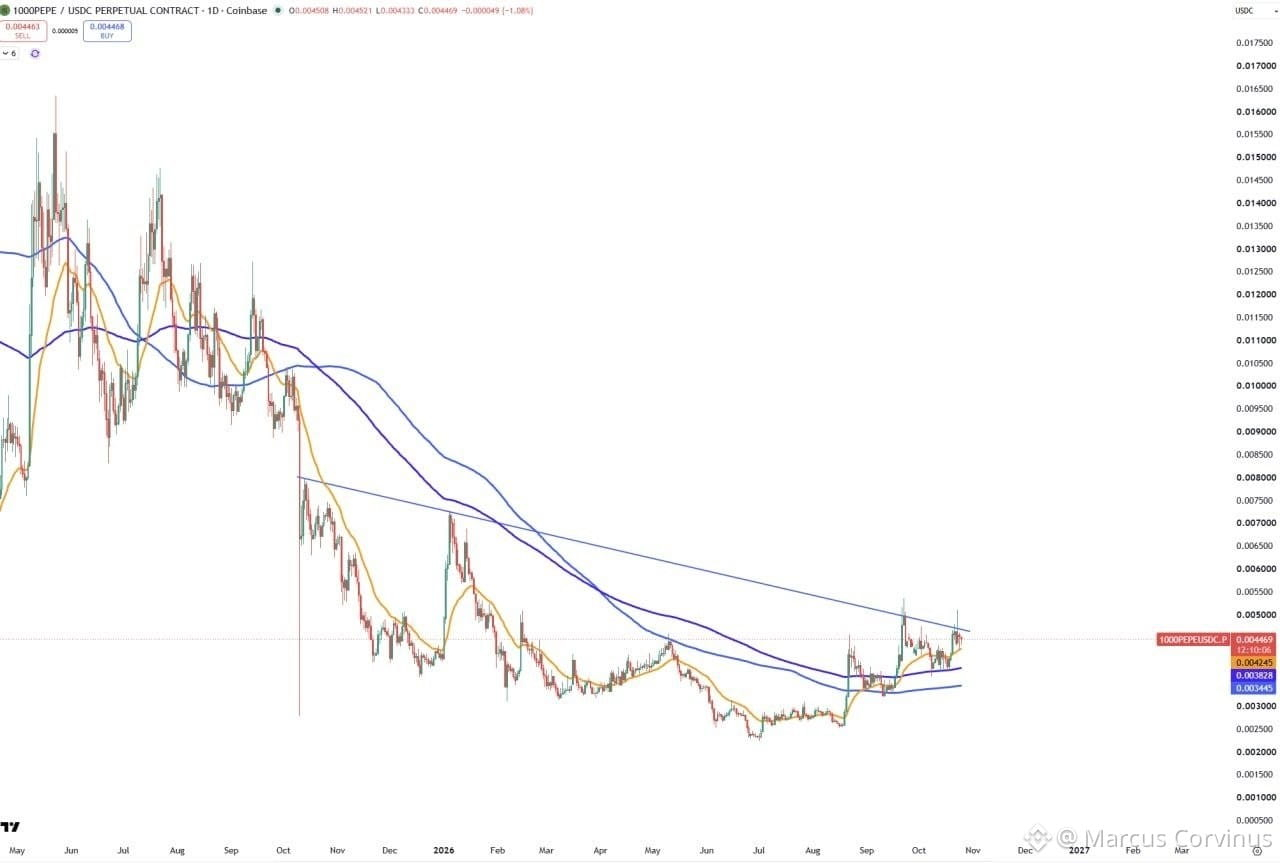
$PEPE se está preparando para un movimiento potencialmente explosivo!
Compra y mantén mientras crece la expectación ante una posible ruptura alcista.
La fuerte presión compradora y el aumento del volumen de negociación podrían impulsar un repunte masivo.
El impulso de las memecoins está cobrando fuerza, y PEPE podría atraer mucha atención del mercado.
Los inversores pacientes siguen de cerca la situación mientras se acerca el próximo gran movimiento.
Una ruptura confirmada podría desencadenar ganancias importantes, pero la volatilidad sigue siendo alta.
PEPE podría sorprender a todo el mercado cripto. ¡El próximo gran movimiento podría estar más cerca de lo esperado!
$PEPE se está preparando para un movimiento potencialmente explosivo!
Compra y mantén mientras crece la expectación ante una posible ruptura alcista.
La fuerte presión compradora y el aumento del volumen de negociación podrían impulsar un repunte masivo.
El impulso de las memecoins está cobrando fuerza, y PEPE podría atraer mucha atención del mercado.
Los inversores pacientes siguen de cerca la situación mientras se acerca el próximo gran movimiento.
Una ruptura confirmada podría desencadenar ganancias importantes, pero la volatilidad sigue siendo alta.
PEPE podría sorprender a todo el mercado cripto. ¡El próximo gran movimiento podría estar más cerca de lo esperado!
Compra y mantén mientras crece la expectación ante una posible ruptura alcista.
La fuerte presión compradora y el aumento del volumen de negociación podrían impulsar un repunte masivo.
El impulso de las memecoins está cobrando fuerza, y PEPE podría atraer mucha atención del mercado.
Los inversores pacientes siguen de cerca la situación mientras se acerca el próximo gran movimiento.
Una ruptura confirmada podría desencadenar ganancias importantes, pero la volatilidad sigue siendo alta.
PEPE podría sorprender a todo el mercado cripto. ¡El próximo gran movimiento podría estar más cerca de lo esperado!
7
19
5.1k
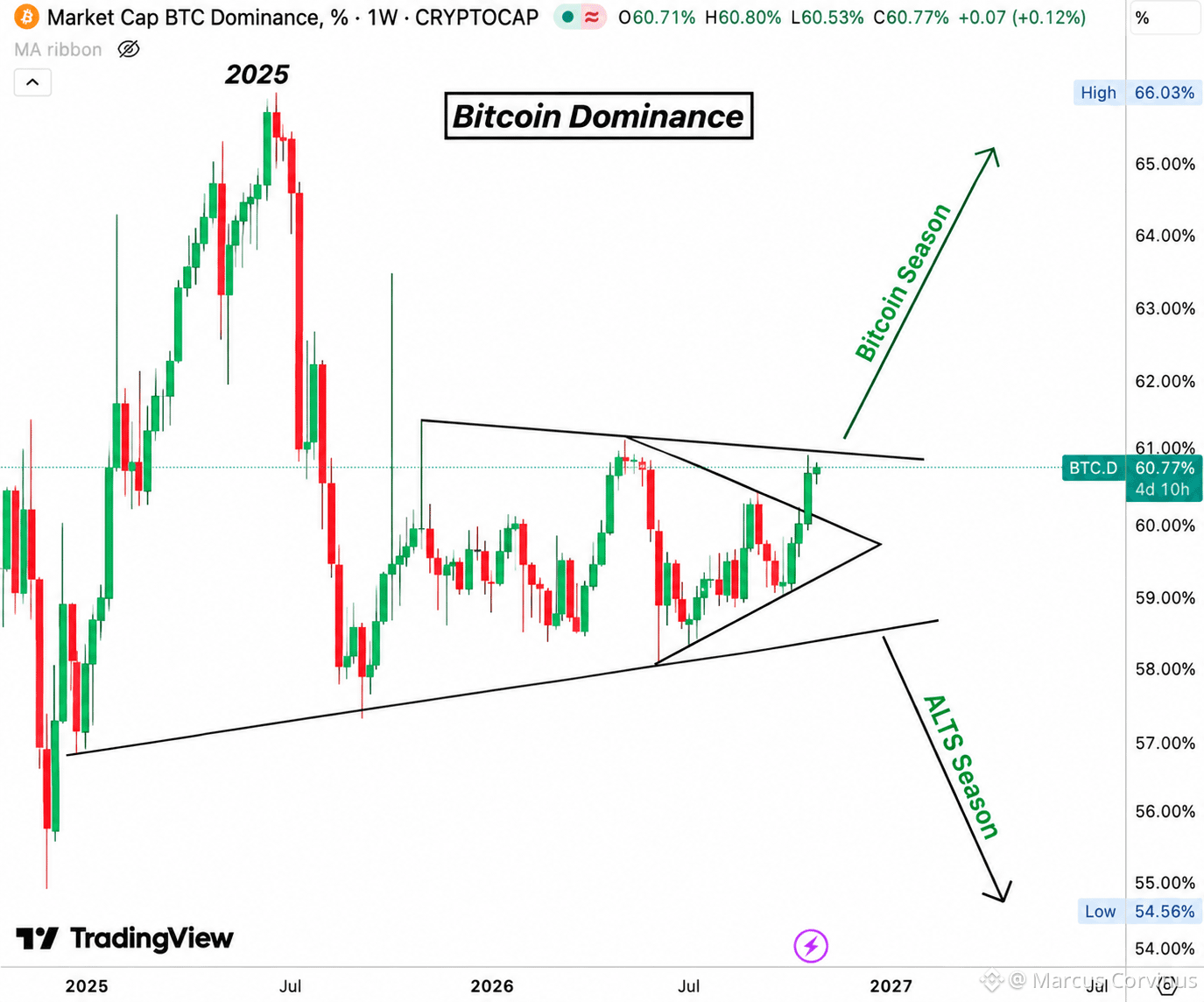
$BTC La dominancia se acerca a un punto de inflexión importante.
La dominancia de Bitcoin ronda el 61 %, y la próxima ruptura podría sacudir todo el mercado de las criptomonedas.
Una ruptura por encima del 61,5 % podría reforzar el liderazgo de Bitcoin.
Eso significa que BTC seguirá dominando, mientras ETH y las altcoins tienen dificultades para ganar impulso.
Pero una caída por debajo del 58 % podría cambiarlo todo.
El capital podría empezar a rotar hacia Ethereum y las altcoins más pequeñas.
Esto podría desencadenar un poderoso repunte de las altcoins a medida que el impulso del mercado comience a cambiar.
$ETH ha mostrado una fortaleza impresionante durante los últimos cuatro meses.
Pero su próximo gran repunte podría depender de que la dominancia de Bitcoin sea rechazada cerca del 61 %.
Si la dominancia empieza a caer, Ethereum podría ganar impulso y las altcoins podrían seguirlo.
Por encima del 61,5 %, la temporada de Bitcoin podría continuar.
Por debajo del 58 %, la temporada de altcoins podría cobrar un impulso considerable.
Las próximas velas semanales podrían determinar qué lado toma el control.
El mercado se acerca a una decisión crucial, y la próxima gran rotación de criptomonedas podría estar más cerca de lo que la mayoría de los operadores espera.
$BTC La dominancia se acerca a un punto de inflexión importante.
La dominancia de Bitcoin ronda el 61 %, y la próxima ruptura podría sacudir todo el mercado de las criptomonedas.
Una ruptura por encima del 61,5 % podría reforzar el liderazgo de Bitcoin.
Eso significa que BTC seguirá dominando, mientras ETH y las altcoins tienen dificultades para ganar impulso.
Pero una caída por debajo del 58 % podría cambiarlo todo.
El capital podría empezar a rotar hacia Ethereum y las altcoins más pequeñas.
Esto podría desencadenar un poderoso repunte de las altcoins a medida que el impulso del mercado comience a cambiar.
$ETH ha mostrado una fortaleza impresionante durante los últimos cuatro meses.
Pero su próximo gran repunte podría depender de que la dominancia de Bitcoin sea rechazada cerca del 61 %.
Si la dominancia empieza a caer, Ethereum podría ganar impulso y las altcoins podrían seguirlo.
Por encima del 61,5 %, la temporada de Bitcoin podría continuar.
Por debajo del 58 %, la temporada de altcoins podría cobrar un impulso considerable.
Las próximas velas semanales podrían determinar qué lado toma el control.
El mercado se acerca a una decisión crucial, y la próxima gran rotación de criptomonedas podría estar más cerca de lo que la mayoría de los operadores espera.
La dominancia de Bitcoin ronda el 61 %, y la próxima ruptura podría sacudir todo el mercado de las criptomonedas.
Una ruptura por encima del 61,5 % podría reforzar el liderazgo de Bitcoin.
Eso significa que BTC seguirá dominando, mientras ETH y las altcoins tienen dificultades para ganar impulso.
Pero una caída por debajo del 58 % podría cambiarlo todo.
El capital podría empezar a rotar hacia Ethereum y las altcoins más pequeñas.
Esto podría desencadenar un poderoso repunte de las altcoins a medida que el impulso del mercado comience a cambiar.
$ETH ha mostrado una fortaleza impresionante durante los últimos cuatro meses.
Pero su próximo gran repunte podría depender de que la dominancia de Bitcoin sea rechazada cerca del 61 %.
Si la dominancia empieza a caer, Ethereum podría ganar impulso y las altcoins podrían seguirlo.
Por encima del 61,5 %, la temporada de Bitcoin podría continuar.
Por debajo del 58 %, la temporada de altcoins podría cobrar un impulso considerable.
Las próximas velas semanales podrían determinar qué lado toma el control.
El mercado se acerca a una decisión crucial, y la próxima gran rotación de criptomonedas podría estar más cerca de lo que la mayoría de los operadores espera.
9
15
3.2k
·
--
Alcista
Verificado
Aevo está aportando algo diferente al trading perpetuo, y la verdadera historia es el control del riesgo.
La mayoría de los traders confía en órdenes stop loss que pueden activarse durante mechas repentinas del mercado.
PERPS+ de Aevo adopta otro enfoque.
$AEVO representa el token nativo de este ecosistema descentralizado de trading de derivados.
Con PERPS+, los traders pueden añadir protección a sus posiciones perpetuas de BTC y ETH directamente al abrirlas.
Limitar mis pérdidas → Limita las pérdidas durante un período determinado.
Cobrar por mantener → Ofrece una prima por adelantado a cambio de limitar las ganancias.
Fijar mi rango → Define los límites potenciales de ganancias y pérdidas con un costo neto aproximado de cero.
Aunque $DYDX y $HYPE son nombres conocidos en el mundo de los derivados, Aevo se centra en ofrecer a los traders más control sobre los resultados de sus posiciones.
La mayor ventaja al hacer trading quizá no sea predecir el próximo movimiento, sino entender el riesgo antes de que se materialice.
¡A por ello! 🥂
Esto no es asesoramiento financiero. Investiga por tu cuenta.
#AEVO #DeFi
Aevo está aportando algo diferente al trading perpetuo, y la verdadera historia es el control del riesgo.
La mayoría de los traders confía en órdenes stop loss que pueden activarse durante mechas repentinas del mercado.
PERPS+ de Aevo adopta otro enfoque.
$AEVO representa el token nativo de este ecosistema descentralizado de trading de derivados.
Con PERPS+, los traders pueden añadir protección a sus posiciones perpetuas de BTC y ETH directamente al abrirlas.
Limitar mis pérdidas → Limita las pérdidas durante un período determinado.
Cobrar por mantener → Ofrece una prima por adelantado a cambio de limitar las ganancias.
Fijar mi rango → Define los límites potenciales de ganancias y pérdidas con un costo neto aproximado de cero.
Aunque $DYDX y $HYPE son nombres conocidos en el mundo de los derivados, Aevo se centra en ofrecer a los traders más control sobre los resultados de sus posiciones.
La mayor ventaja al hacer trading quizá no sea predecir el próximo movimiento, sino entender el riesgo antes de que se materialice.
¡A por ello! 🥂
Esto no es asesoramiento financiero. Investiga por tu cuenta.
#AEVO #DeFi
La mayoría de los traders confía en órdenes stop loss que pueden activarse durante mechas repentinas del mercado.
PERPS+ de Aevo adopta otro enfoque.
$AEVO representa el token nativo de este ecosistema descentralizado de trading de derivados.
Con PERPS+, los traders pueden añadir protección a sus posiciones perpetuas de BTC y ETH directamente al abrirlas.
Limitar mis pérdidas → Limita las pérdidas durante un período determinado.
Cobrar por mantener → Ofrece una prima por adelantado a cambio de limitar las ganancias.
Fijar mi rango → Define los límites potenciales de ganancias y pérdidas con un costo neto aproximado de cero.
Aunque $DYDX y $HYPE son nombres conocidos en el mundo de los derivados, Aevo se centra en ofrecer a los traders más control sobre los resultados de sus posiciones.
La mayor ventaja al hacer trading quizá no sea predecir el próximo movimiento, sino entender el riesgo antes de que se materialice.
¡A por ello! 🥂
Esto no es asesoramiento financiero. Investiga por tu cuenta.
#AEVO #DeFi
123
68
11.9k
$BTC y $ETH podrían estar preparándose para un regreso arrollador en Uptober.
No voy a dar por perdido Uptober hasta que octubre haya terminado oficialmente, y esto no es optimismo ciego.
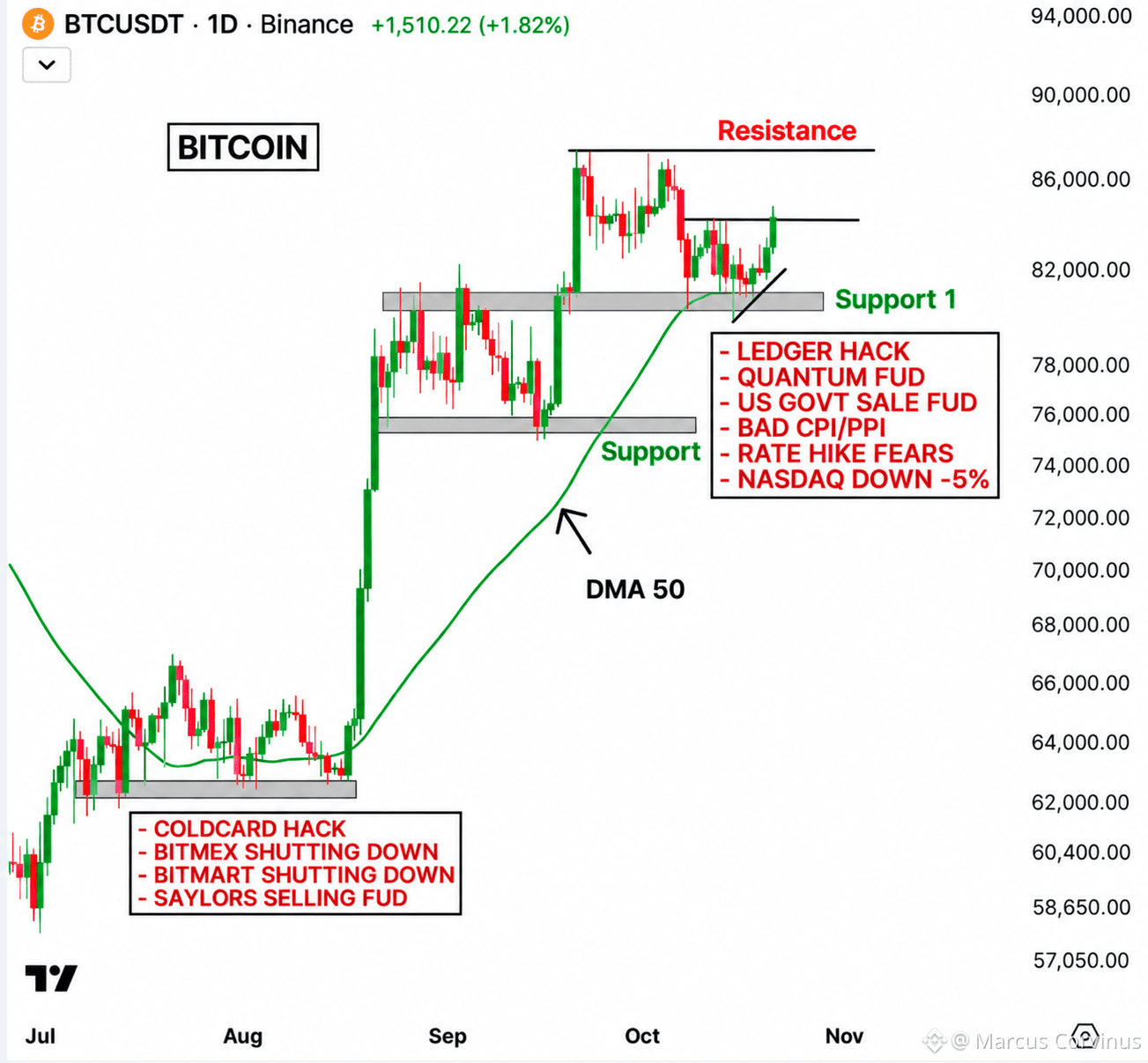
A pesar de todas las noticias negativas y la presión vendedora, tanto BTC como ETH siguen manteniéndose por encima de su crucial soporte WMA50.
Ya hemos visto esto antes, cuando Bitcoin rondaba los $62K.
Las preocupaciones por las ventas de Saylor, los informes sobre el hackeo de Coldcard, los cierres de exchanges y el miedo extremo del mercado dominaban los titulares.
Sin embargo, Bitcoin ignoró el pánico y protagonizó un repunte explosivo de $25,000.
Ahora, los $87.5K son la resistencia clave que hay que vigilar.
Una ruptura confirmada por encima de este nivel podría desencadenar el próximo fuerte impulso alcista, tomando desprevenidos a los bajistas y haciendo que los compradores regresen en masa.
El mercado parece temeroso, pero los gráficos siguen mostrando fortaleza.
Uptober aún no ha terminado. La mayor sorpresa todavía podría estar por llegar.
[Vote For Me](https://app.binance.com/uni-qr/cact26user/532?uc=app_square_share_link&us=copylink)
$BTC y $ETH podrían estar preparándose para un regreso arrollador en Uptober.
No voy a dar por perdido Uptober hasta que octubre haya terminado oficialmente, y esto no es optimismo ciego.
A pesar de todas las noticias negativas y la presión vendedora, tanto BTC como ETH siguen manteniéndose por encima de su crucial soporte WMA50.
Ya hemos visto esto antes, cuando Bitcoin rondaba los $62K.
Las preocupaciones por las ventas de Saylor, los informes sobre el hackeo de Coldcard, los cierres de exchanges y el miedo extremo del mercado dominaban los titulares.
Sin embargo, Bitcoin ignoró el pánico y protagonizó un repunte explosivo de $25,000.
Ahora, los $87.5K son la resistencia clave que hay que vigilar.
Una ruptura confirmada por encima de este nivel podría desencadenar el próximo fuerte impulso alcista, tomando desprevenidos a los bajistas y haciendo que los compradores regresen en masa.
El mercado parece temeroso, pero los gráficos siguen mostrando fortaleza.
Uptober aún no ha terminado. La mayor sorpresa todavía podría estar por llegar.
Vote For Me
No voy a dar por perdido Uptober hasta que octubre haya terminado oficialmente, y esto no es optimismo ciego.
A pesar de todas las noticias negativas y la presión vendedora, tanto BTC como ETH siguen manteniéndose por encima de su crucial soporte WMA50.
Ya hemos visto esto antes, cuando Bitcoin rondaba los $62K.
Las preocupaciones por las ventas de Saylor, los informes sobre el hackeo de Coldcard, los cierres de exchanges y el miedo extremo del mercado dominaban los titulares.
Sin embargo, Bitcoin ignoró el pánico y protagonizó un repunte explosivo de $25,000.
Ahora, los $87.5K son la resistencia clave que hay que vigilar.
Una ruptura confirmada por encima de este nivel podría desencadenar el próximo fuerte impulso alcista, tomando desprevenidos a los bajistas y haciendo que los compradores regresen en masa.
El mercado parece temeroso, pero los gráficos siguen mostrando fortaleza.
Uptober aún no ha terminado. La mayor sorpresa todavía podría estar por llegar.
Vote For Me
14
10
1.2k
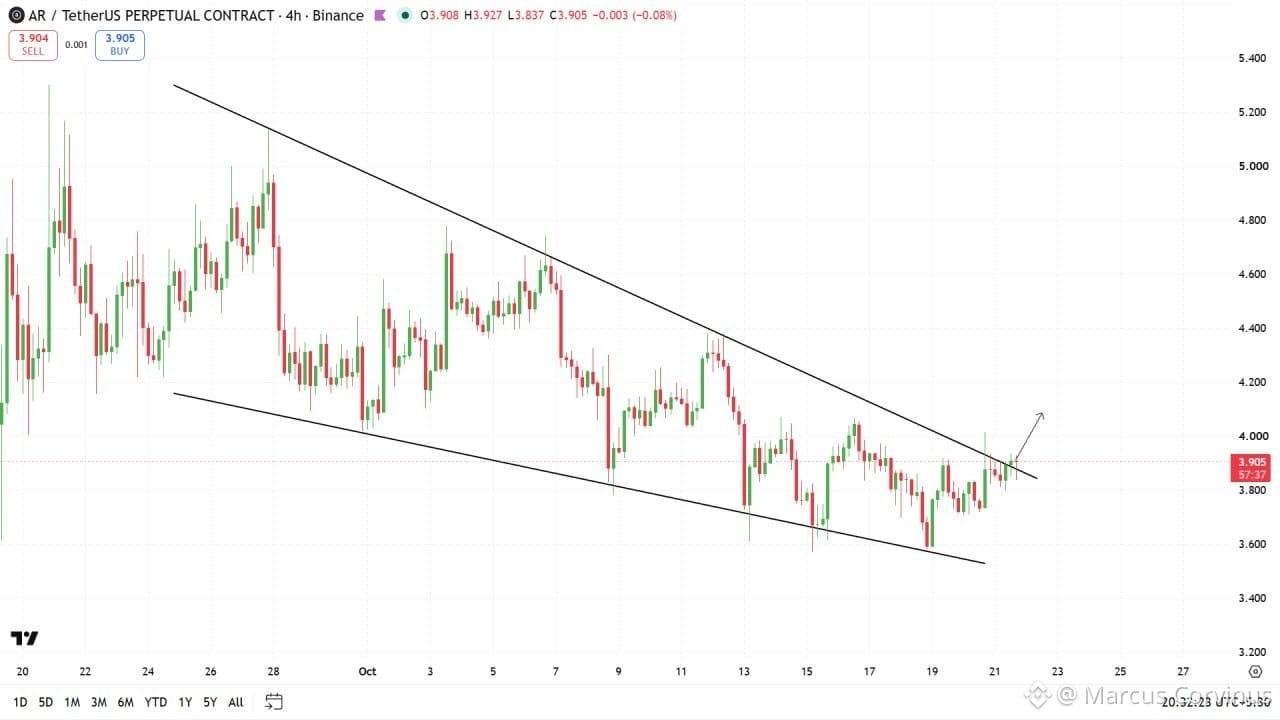
$AR está mostrando un impresionante impulso alcista tras una fuerte ruptura.
Los compradores están ganando confianza y la reciente acción del precio sugiere que algo emocionante podría estar gestándose.
La ruptura ha abierto la puerta a un posible movimiento alcista importante.
Si el precio se mantiene por encima de la zona de ruptura, la presión compradora podría intensificarse.
Una nueva prueba exitosa podría atraer un impulso renovado y desencadenar otro potente repunte.
El volumen de operaciones será crucial para confirmar la solidez de esta configuración alcista.
Las próximas velas podrían revelar si los alcistas están listos para tomar el control total.
La atención del mercado va en aumento y podría estar acercándose una expansión explosiva del precio.
Mantén esta moneda en tu radar mientras sigue desarrollándose el impulso.
Puede que el mayor movimiento aún esté por venir.
[Vote For Me](https://app.binance.com/uni-qr/cact26user/532?uc=app_square_share_link&us=copylink)
$AR está mostrando un impresionante impulso alcista tras una fuerte ruptura.
Los compradores están ganando confianza y la reciente acción del precio sugiere que algo emocionante podría estar gestándose.
La ruptura ha abierto la puerta a un posible movimiento alcista importante.
Si el precio se mantiene por encima de la zona de ruptura, la presión compradora podría intensificarse.
Una nueva prueba exitosa podría atraer un impulso renovado y desencadenar otro potente repunte.
El volumen de operaciones será crucial para confirmar la solidez de esta configuración alcista.
Las próximas velas podrían revelar si los alcistas están listos para tomar el control total.
La atención del mercado va en aumento y podría estar acercándose una expansión explosiva del precio.
Mantén esta moneda en tu radar mientras sigue desarrollándose el impulso.
Puede que el mayor movimiento aún esté por venir.
Vote For Me
Los compradores están ganando confianza y la reciente acción del precio sugiere que algo emocionante podría estar gestándose.
La ruptura ha abierto la puerta a un posible movimiento alcista importante.
Si el precio se mantiene por encima de la zona de ruptura, la presión compradora podría intensificarse.
Una nueva prueba exitosa podría atraer un impulso renovado y desencadenar otro potente repunte.
El volumen de operaciones será crucial para confirmar la solidez de esta configuración alcista.
Las próximas velas podrían revelar si los alcistas están listos para tomar el control total.
La atención del mercado va en aumento y podría estar acercándose una expansión explosiva del precio.
Mantén esta moneda en tu radar mientras sigue desarrollándose el impulso.
Puede que el mayor movimiento aún esté por venir.
Vote For Me
9
2
15
4.7k
$ETH Los alcistas aún no se rinden.
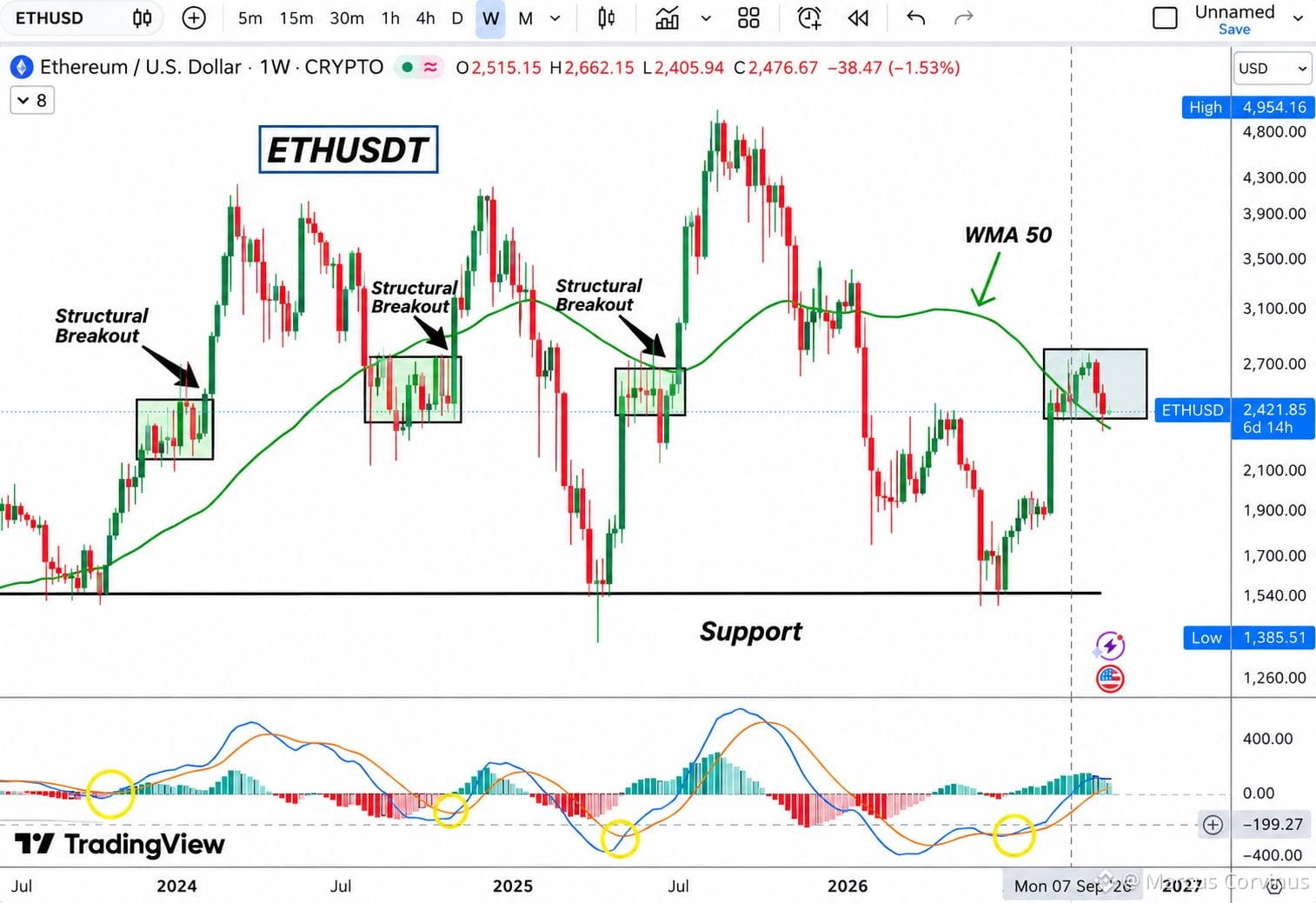
A pesar de una caída semanal del 5 %, Ethereum defendió su media móvil de 50 semanas, cerca de los 2.332 $, manteniendo viva la estructura alcista.
ETH sigue atrapado entre los 2.300 $ y los 2.800 $, pero este rango no durará para siempre.
Una subida por encima de los 2.550 $ podría abrir el camino hacia los 2.800 $, donde comienza la verdadera prueba de ruptura.
Sin embargo, si pierde los 2.300 $, los 1.900 $ se convertirían en el próximo objetivo bajista.
Los alcistas aún llevan ventaja, pero la próxima ruptura decidirá quién controla realmente el mercado.
[Cast Your Vote](https://app.binance.com/uni-qr/cact26user/532?uc=app_square_share_link&us=copylink)
$ETH Los alcistas aún no se rinden.
A pesar de una caída semanal del 5 %, Ethereum defendió su media móvil de 50 semanas, cerca de los 2.332 $, manteniendo viva la estructura alcista.
ETH sigue atrapado entre los 2.300 $ y los 2.800 $, pero este rango no durará para siempre.
Una subida por encima de los 2.550 $ podría abrir el camino hacia los 2.800 $, donde comienza la verdadera prueba de ruptura.
Sin embargo, si pierde los 2.300 $, los 1.900 $ se convertirían en el próximo objetivo bajista.
Los alcistas aún llevan ventaja, pero la próxima ruptura decidirá quién controla realmente el mercado.
Cast Your Vote
A pesar de una caída semanal del 5 %, Ethereum defendió su media móvil de 50 semanas, cerca de los 2.332 $, manteniendo viva la estructura alcista.
ETH sigue atrapado entre los 2.300 $ y los 2.800 $, pero este rango no durará para siempre.
Una subida por encima de los 2.550 $ podría abrir el camino hacia los 2.800 $, donde comienza la verdadera prueba de ruptura.
Sin embargo, si pierde los 2.300 $, los 1.900 $ se convertirían en el próximo objetivo bajista.
Los alcistas aún llevan ventaja, pero la próxima ruptura decidirá quién controla realmente el mercado.
Cast Your Vote
16
28
10.1k
·
--
Alcista
¡UN GRAN MOMENTO. ¡UN NUEVO HITO!
¡Desde compartir mi pasión por las criptomonedas hasta formar parte de una increíble comunidad Web3, el viaje no deja de ser cada vez más emocionante!
¡Me hace muchísima ilusión estar nominada al premio Estrella Emergente de los 100 Mejores Creadores de Binance Square 2026!
Este reconocimiento no se trata solo de crear contenido. Se trata de las conexiones que hemos forjado, los conocimientos que hemos compartido y la comunidad que se fortalece cada día.
¡Ahora es el momento de convertir esta nominación en una victoria!
Tu apoyo puede marcar una gran diferencia. Si mi contenido te ha aportado valor, te ha inspirado o te ha ayudado en tu recorrido por el mundo de las criptomonedas, ¡te agradecería muchísimo que me votaras!
[My Profile](https://app.binance.com/uni-qr/cpro/CryptoBull009?l=en&r=COXDQCEV&uc=app_square_share_link&us=copylink)
[Cast Your Vote](https://app.binance.com/uni-qr/cact26user/532?uc=app_square_share_link&us=copylink)
¡Una comunidad. Un sueño. ¡Una estrella emergente!
¡Hagamos que 2026 sea inolvidable!
¡Vamos con todo! 🥂
¡UN GRAN MOMENTO. ¡UN NUEVO HITO!
¡Desde compartir mi pasión por las criptomonedas hasta formar parte de una increíble comunidad Web3, el viaje no deja de ser cada vez más emocionante!
¡Me hace muchísima ilusión estar nominada al premio Estrella Emergente de los 100 Mejores Creadores de Binance Square 2026!
Este reconocimiento no se trata solo de crear contenido. Se trata de las conexiones que hemos forjado, los conocimientos que hemos compartido y la comunidad que se fortalece cada día.
¡Ahora es el momento de convertir esta nominación en una victoria!
Tu apoyo puede marcar una gran diferencia. Si mi contenido te ha aportado valor, te ha inspirado o te ha ayudado en tu recorrido por el mundo de las criptomonedas, ¡te agradecería muchísimo que me votaras!
My Profile
Cast Your Vote
¡Una comunidad. Un sueño. ¡Una estrella emergente!
¡Hagamos que 2026 sea inolvidable!
¡Vamos con todo! 🥂
¡Desde compartir mi pasión por las criptomonedas hasta formar parte de una increíble comunidad Web3, el viaje no deja de ser cada vez más emocionante!
¡Me hace muchísima ilusión estar nominada al premio Estrella Emergente de los 100 Mejores Creadores de Binance Square 2026!
Este reconocimiento no se trata solo de crear contenido. Se trata de las conexiones que hemos forjado, los conocimientos que hemos compartido y la comunidad que se fortalece cada día.
¡Ahora es el momento de convertir esta nominación en una victoria!
Tu apoyo puede marcar una gran diferencia. Si mi contenido te ha aportado valor, te ha inspirado o te ha ayudado en tu recorrido por el mundo de las criptomonedas, ¡te agradecería muchísimo que me votaras!
My Profile
Cast Your Vote
¡Una comunidad. Un sueño. ¡Una estrella emergente!
¡Hagamos que 2026 sea inolvidable!
¡Vamos con todo! 🥂


63
1
89
41.5k
·
--
Alcista
Verificado
Pyth Network se está convirtiendo en una fuerza importante para el futuro de los datos de los mercados financieros.
La mayoría de los datos financieros pasan por intermediarios. Pyth va directamente a las instituciones que generan los precios.
• Más de $3.25T de volumen acumulado asegurado
• Más de 710 empresas utilizan los datos de Pyth
• Más de 114 blockchains reciben feeds
• Más de 125 proveedores institucionales
• El 60 % del mercado de perpetuos on-chain
El crecimiento comercial es igual de interesante.
→ Pyth Pro superó los $6M de ARR a los pocos meses de su lanzamiento.
→ El ARR por suscripciones creció un 109 % intertrimestral.
→ Durante tres meses consecutivos se superó $1M en nuevo ARR bruto.
Pyth está ampliando su oferta más allá de los feeds de precios básicos.
• Pyth Pro → Precios institucionales de múltiples activos
• Pyth Indices → Precios disponibles continuamente para mercados 24/7
• Data Marketplace → Distribución de datos institucionales
• Agentes de IA → Datos fiables para las finanzas autónomas
Mientras $LINK se centra en una infraestructura de oráculos más amplia y $ONDO apunta a los activos tokenizados, Pyth se centra en la infraestructura de precios que necesitan los mercados financieros.
$PYTH es el token nativo que respalda la gobernanza de la red y las funciones del ecosistema; no representa la propiedad de los ingresos comerciales.
-> A medida que los mercados financieros globales avanzan hacia operaciones 24/7, los datos fiables de primera mano se están convirtiendo en infraestructura esencial.
¡Vamos! 🤝
NFA + DYOR
#PYTH #CryptoInfrastructure
Pyth Network se está convirtiendo en una fuerza importante para el futuro de los datos de los mercados financieros.
La mayoría de los datos financieros pasan por intermediarios. Pyth va directamente a las instituciones que generan los precios.
• Más de $3.25T de volumen acumulado asegurado
• Más de 710 empresas utilizan los datos de Pyth
• Más de 114 blockchains reciben feeds
• Más de 125 proveedores institucionales
• El 60 % del mercado de perpetuos on-chain
El crecimiento comercial es igual de interesante.
→ Pyth Pro superó los $6M de ARR a los pocos meses de su lanzamiento.
→ El ARR por suscripciones creció un 109 % intertrimestral.
→ Durante tres meses consecutivos se superó $1M en nuevo ARR bruto.
Pyth está ampliando su oferta más allá de los feeds de precios básicos.
• Pyth Pro → Precios institucionales de múltiples activos
• Pyth Indices → Precios disponibles continuamente para mercados 24/7
• Data Marketplace → Distribución de datos institucionales
• Agentes de IA → Datos fiables para las finanzas autónomas
Mientras $LINK se centra en una infraestructura de oráculos más amplia y $ONDO apunta a los activos tokenizados, Pyth se centra en la infraestructura de precios que necesitan los mercados financieros.
$PYTH es el token nativo que respalda la gobernanza de la red y las funciones del ecosistema; no representa la propiedad de los ingresos comerciales.
-> A medida que los mercados financieros globales avanzan hacia operaciones 24/7, los datos fiables de primera mano se están convirtiendo en infraestructura esencial.
¡Vamos! 🤝
NFA + DYOR
#PYTH #CryptoInfrastructure
La mayoría de los datos financieros pasan por intermediarios. Pyth va directamente a las instituciones que generan los precios.
• Más de $3.25T de volumen acumulado asegurado
• Más de 710 empresas utilizan los datos de Pyth
• Más de 114 blockchains reciben feeds
• Más de 125 proveedores institucionales
• El 60 % del mercado de perpetuos on-chain
El crecimiento comercial es igual de interesante.
→ Pyth Pro superó los $6M de ARR a los pocos meses de su lanzamiento.
→ El ARR por suscripciones creció un 109 % intertrimestral.
→ Durante tres meses consecutivos se superó $1M en nuevo ARR bruto.
Pyth está ampliando su oferta más allá de los feeds de precios básicos.
• Pyth Pro → Precios institucionales de múltiples activos
• Pyth Indices → Precios disponibles continuamente para mercados 24/7
• Data Marketplace → Distribución de datos institucionales
• Agentes de IA → Datos fiables para las finanzas autónomas
Mientras $LINK se centra en una infraestructura de oráculos más amplia y $ONDO apunta a los activos tokenizados, Pyth se centra en la infraestructura de precios que necesitan los mercados financieros.
$PYTH es el token nativo que respalda la gobernanza de la red y las funciones del ecosistema; no representa la propiedad de los ingresos comerciales.
-> A medida que los mercados financieros globales avanzan hacia operaciones 24/7, los datos fiables de primera mano se están convirtiendo en infraestructura esencial.
¡Vamos! 🤝
NFA + DYOR
#PYTH #CryptoInfrastructure
88
102
36.8k
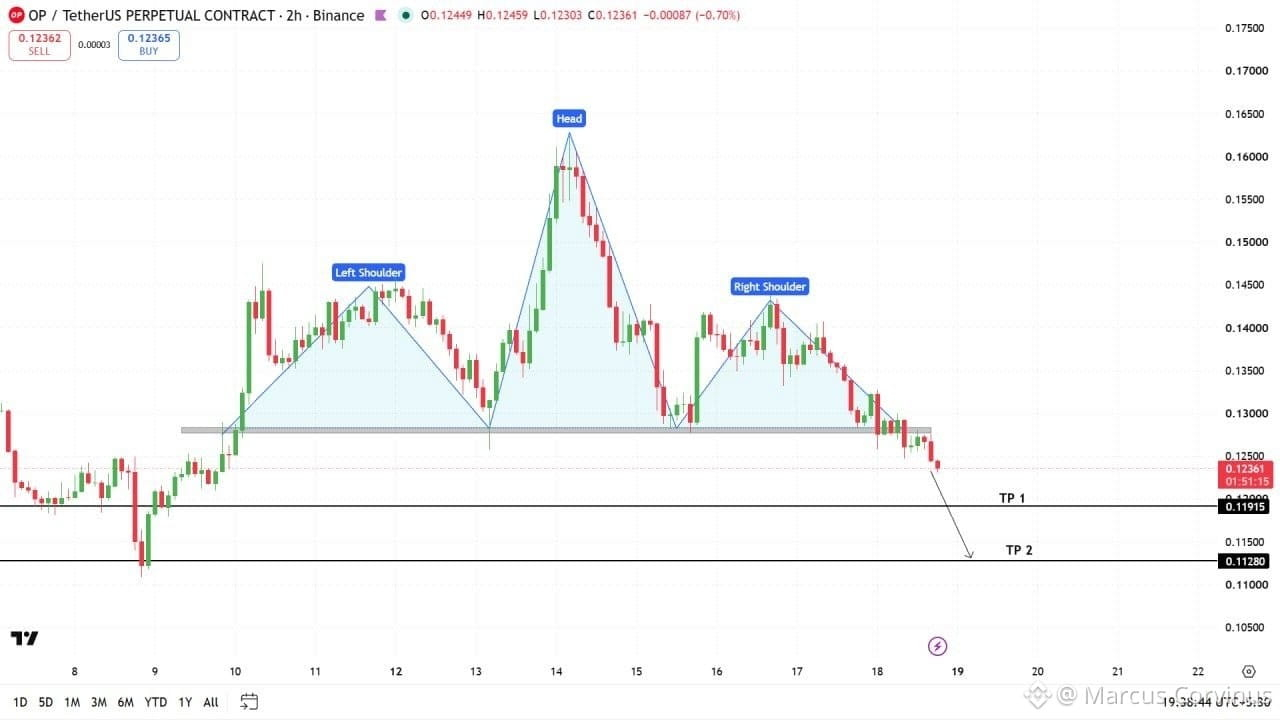
$OP está mostrando señales bajistas graves, ya que la reciente ruptura deja el control en manos de los vendedores.
El precio ha caído por debajo de una zona de soporte clave, lo que aumenta la preocupación por una corrección más profunda.
La presión vendedora va en aumento, mientras que los compradores tienen dificultades para recuperar el impulso.
Si el soporte roto se convierte en resistencia, podría producirse otro fuerte movimiento a la baja.
Los niveles de soporte más bajos y las zonas de liquidez se están convirtiendo en objetivos importantes a vigilar.
Cualquier recuperación débil podría atraer nuevas ventas, por lo que las próximas velas serán cruciales.
El mercado está entrando en una fase crítica y la volatilidad podría aumentar rápidamente.
Vigila de cerca $OP , ya que los bajistas parecen listos para empujar el precio aún más abajo.
$OP está mostrando señales bajistas graves, ya que la reciente ruptura deja el control en manos de los vendedores.
El precio ha caído por debajo de una zona de soporte clave, lo que aumenta la preocupación por una corrección más profunda.
La presión vendedora va en aumento, mientras que los compradores tienen dificultades para recuperar el impulso.
Si el soporte roto se convierte en resistencia, podría producirse otro fuerte movimiento a la baja.
Los niveles de soporte más bajos y las zonas de liquidez se están convirtiendo en objetivos importantes a vigilar.
Cualquier recuperación débil podría atraer nuevas ventas, por lo que las próximas velas serán cruciales.
El mercado está entrando en una fase crítica y la volatilidad podría aumentar rápidamente.
Vigila de cerca $OP , ya que los bajistas parecen listos para empujar el precio aún más abajo.
El precio ha caído por debajo de una zona de soporte clave, lo que aumenta la preocupación por una corrección más profunda.
La presión vendedora va en aumento, mientras que los compradores tienen dificultades para recuperar el impulso.
Si el soporte roto se convierte en resistencia, podría producirse otro fuerte movimiento a la baja.
Los niveles de soporte más bajos y las zonas de liquidez se están convirtiendo en objetivos importantes a vigilar.
Cualquier recuperación débil podría atraer nuevas ventas, por lo que las próximas velas serán cruciales.
El mercado está entrando en una fase crítica y la volatilidad podría aumentar rápidamente.
Vigila de cerca $OP , ya que los bajistas parecen listos para empujar el precio aún más abajo.
5
15
3.1k
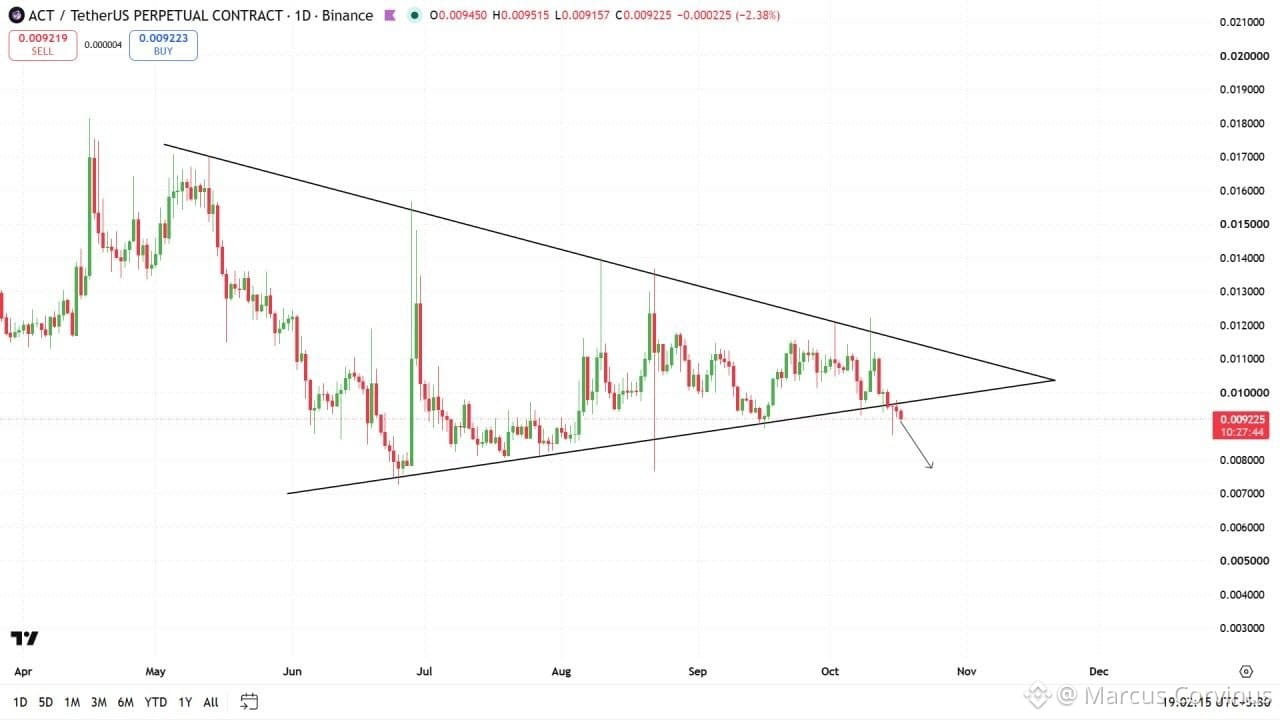
$ACT está mostrando señales bajistas preocupantes tras una ruptura importante, y el próximo movimiento podría tomar desprevenidos a los traders.
El precio ha caído por debajo de un nivel de soporte importante, lo que sugiere que los vendedores están ganando fuerza mientras los compradores luchan por recuperar el control.
La estructura del mercado se está volviendo cada vez más bajista, lo que aumenta la preocupación por otro posible movimiento a la baja.
• La ruptura del soporte indica una presión vendedora creciente.
• El débil impulso comprador sugiere que los alcistas están perdiendo el control.
• No recuperar el soporte perdido podría desencadenar nuevas caídas.
• La próxima zona de soporte importante podría convertirse en el objetivo inmediato.
ACT está entrando ahora en una fase crítica en la que una recuperación fallida podría acelerar la presión vendedora.
Si continúa el impulso bajista, podría avecinarse otra caída pronunciada.
Los traders deberían seguir de cerca la evolución del precio y esperar una confirmación antes de realizar su próximo movimiento.
La ruptura es una advertencia. El próximo movimiento podría ser aún mayor.
$ACT está mostrando señales bajistas preocupantes tras una ruptura importante, y el próximo movimiento podría tomar desprevenidos a los traders.
El precio ha caído por debajo de un nivel de soporte importante, lo que sugiere que los vendedores están ganando fuerza mientras los compradores luchan por recuperar el control.
La estructura del mercado se está volviendo cada vez más bajista, lo que aumenta la preocupación por otro posible movimiento a la baja.
• La ruptura del soporte indica una presión vendedora creciente.
• El débil impulso comprador sugiere que los alcistas están perdiendo el control.
• No recuperar el soporte perdido podría desencadenar nuevas caídas.
• La próxima zona de soporte importante podría convertirse en el objetivo inmediato.
ACT está entrando ahora en una fase crítica en la que una recuperación fallida podría acelerar la presión vendedora.
Si continúa el impulso bajista, podría avecinarse otra caída pronunciada.
Los traders deberían seguir de cerca la evolución del precio y esperar una confirmación antes de realizar su próximo movimiento.
La ruptura es una advertencia. El próximo movimiento podría ser aún mayor.
El precio ha caído por debajo de un nivel de soporte importante, lo que sugiere que los vendedores están ganando fuerza mientras los compradores luchan por recuperar el control.
La estructura del mercado se está volviendo cada vez más bajista, lo que aumenta la preocupación por otro posible movimiento a la baja.
• La ruptura del soporte indica una presión vendedora creciente.
• El débil impulso comprador sugiere que los alcistas están perdiendo el control.
• No recuperar el soporte perdido podría desencadenar nuevas caídas.
• La próxima zona de soporte importante podría convertirse en el objetivo inmediato.
ACT está entrando ahora en una fase crítica en la que una recuperación fallida podría acelerar la presión vendedora.
Si continúa el impulso bajista, podría avecinarse otra caída pronunciada.
Los traders deberían seguir de cerca la evolución del precio y esperar una confirmación antes de realizar su próximo movimiento.
La ruptura es una advertencia. El próximo movimiento podría ser aún mayor.
8
19
2.1k
·
--
Alcista
Verificado
Nillion está creando algo que podría transformar la forma en que los datos confidenciales circulan entre las criptomonedas y la IA.
La mayoría de las blockchains son transparentes, pero la información valiosa, como las estrategias de trading, las instrucciones de IA y los datos financieros, necesita protección.
Nillion aborda este desafío mediante el cómputo ciego, que permite almacenar y procesar datos cifrados sin exponer información confidencial.
• Covenants → El producto principal de Nillion, diseñado para mantener privadas las instrucciones cifradas hasta que se cumplan ciertas condiciones.
• Dusk → El primer lanzamiento de Covenants, que incorpora capacidades de ejecución confidencial a Ethereum.
Aquí es donde la cosa se pone interesante.
→ Los traders podrían preparar estrategias automatizadas sin revelar sus instrucciones antes de ejecutarlas.
→ Los agentes de IA podrían realizar tareas y, al mismo tiempo, proteger la información operativa confidencial.
→ Los desarrolladores podrían crear aplicaciones que combinen automatización, privacidad e infraestructura blockchain.
NIL es el token nativo de Nillion y permite pagar comisiones de red, hacer staking y proteger la red.
La gran oportunidad está en convertir la tecnología de privacidad en algo que los desarrolladores y los usuarios realmente necesiten.
-> Más desarrolladores podrían dar lugar a nuevas aplicaciones.
-> El uso real podría aumentar la demanda de cómputo confidencial.
-> Una adopción creciente podría reforzar la utilidad de NIL a largo plazo.
Lo que me llama la atención es que Nillion está pasando de desarrollar infraestructura de privacidad a centrarse en la ejecución práctica.
Covenants y Dusk son pasos importantes, pero la adopción sostenida determinará su impacto real.
Nillion trabaja para hacer realidad un futuro en el que la información más valiosa pueda impulsar aplicaciones blockchain sin llegar a hacerse pública.
¡A por todas! 🥂
#nil $NIL @nillionnetwork
Nillion está creando algo que podría transformar la forma en que los datos confidenciales circulan entre las criptomonedas y la IA.
La mayoría de las blockchains son transparentes, pero la información valiosa, como las estrategias de trading, las instrucciones de IA y los datos financieros, necesita protección.
Nillion aborda este desafío mediante el cómputo ciego, que permite almacenar y procesar datos cifrados sin exponer información confidencial.
• Covenants → El producto principal de Nillion, diseñado para mantener privadas las instrucciones cifradas hasta que se cumplan ciertas condiciones.
• Dusk → El primer lanzamiento de Covenants, que incorpora capacidades de ejecución confidencial a Ethereum.
Aquí es donde la cosa se pone interesante.
→ Los traders podrían preparar estrategias automatizadas sin revelar sus instrucciones antes de ejecutarlas.
→ Los agentes de IA podrían realizar tareas y, al mismo tiempo, proteger la información operativa confidencial.
→ Los desarrolladores podrían crear aplicaciones que combinen automatización, privacidad e infraestructura blockchain.
NIL es el token nativo de Nillion y permite pagar comisiones de red, hacer staking y proteger la red.
La gran oportunidad está en convertir la tecnología de privacidad en algo que los desarrolladores y los usuarios realmente necesiten.
-> Más desarrolladores podrían dar lugar a nuevas aplicaciones.
-> El uso real podría aumentar la demanda de cómputo confidencial.
-> Una adopción creciente podría reforzar la utilidad de NIL a largo plazo.
Lo que me llama la atención es que Nillion está pasando de desarrollar infraestructura de privacidad a centrarse en la ejecución práctica.
Covenants y Dusk son pasos importantes, pero la adopción sostenida determinará su impacto real.
Nillion trabaja para hacer realidad un futuro en el que la información más valiosa pueda impulsar aplicaciones blockchain sin llegar a hacerse pública.
¡A por todas! 🥂
#nil $NIL @Nillion
La mayoría de las blockchains son transparentes, pero la información valiosa, como las estrategias de trading, las instrucciones de IA y los datos financieros, necesita protección.
Nillion aborda este desafío mediante el cómputo ciego, que permite almacenar y procesar datos cifrados sin exponer información confidencial.
• Covenants → El producto principal de Nillion, diseñado para mantener privadas las instrucciones cifradas hasta que se cumplan ciertas condiciones.
• Dusk → El primer lanzamiento de Covenants, que incorpora capacidades de ejecución confidencial a Ethereum.
Aquí es donde la cosa se pone interesante.
→ Los traders podrían preparar estrategias automatizadas sin revelar sus instrucciones antes de ejecutarlas.
→ Los agentes de IA podrían realizar tareas y, al mismo tiempo, proteger la información operativa confidencial.
→ Los desarrolladores podrían crear aplicaciones que combinen automatización, privacidad e infraestructura blockchain.
NIL es el token nativo de Nillion y permite pagar comisiones de red, hacer staking y proteger la red.
La gran oportunidad está en convertir la tecnología de privacidad en algo que los desarrolladores y los usuarios realmente necesiten.
-> Más desarrolladores podrían dar lugar a nuevas aplicaciones.
-> El uso real podría aumentar la demanda de cómputo confidencial.
-> Una adopción creciente podría reforzar la utilidad de NIL a largo plazo.
Lo que me llama la atención es que Nillion está pasando de desarrollar infraestructura de privacidad a centrarse en la ejecución práctica.
Covenants y Dusk son pasos importantes, pero la adopción sostenida determinará su impacto real.
Nillion trabaja para hacer realidad un futuro en el que la información más valiosa pueda impulsar aplicaciones blockchain sin llegar a hacerse pública.
¡A por todas! 🥂
#nil $NIL @Nillion

111
72
3.9k
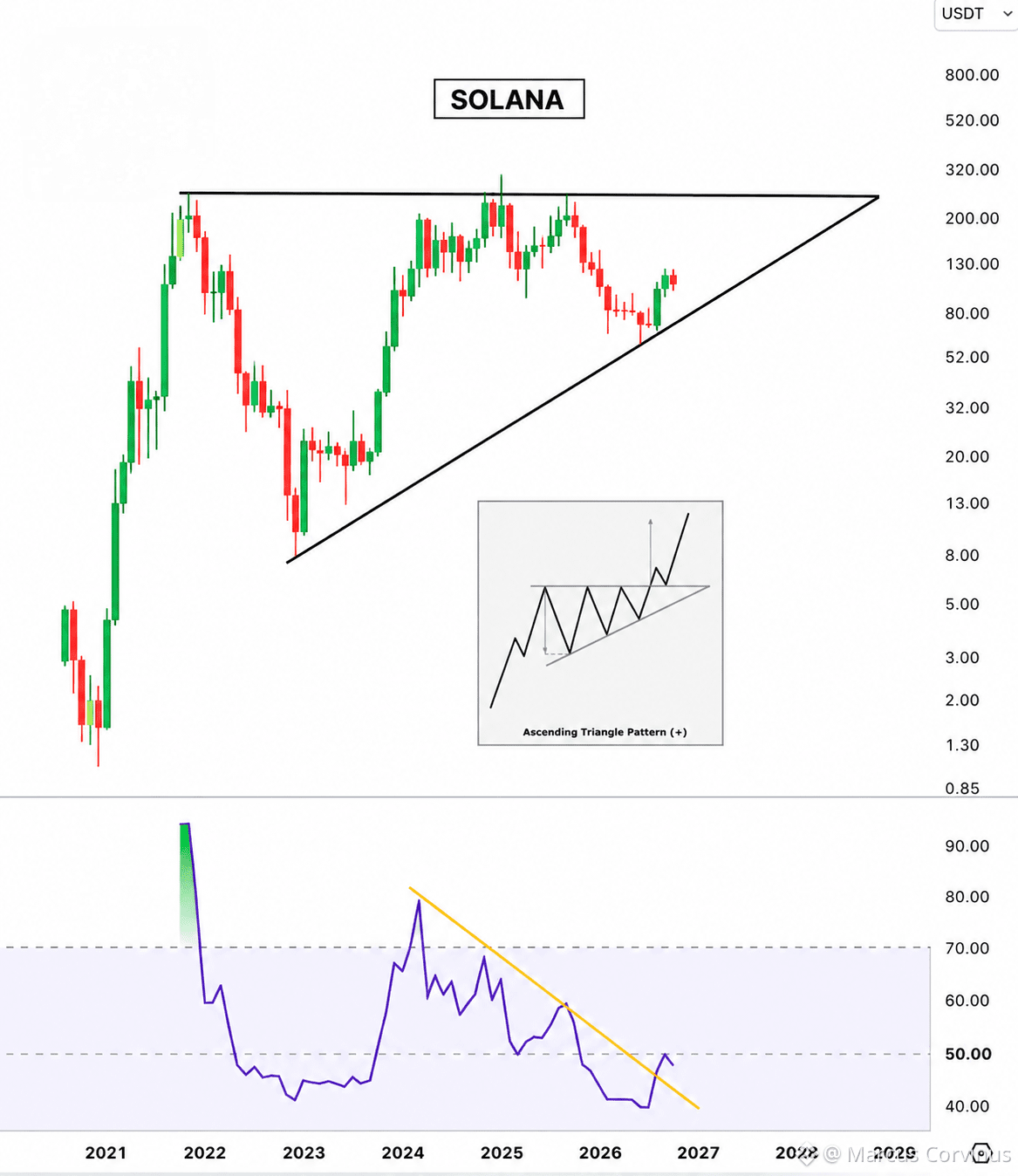
$SOL está formando un enorme triángulo ascendente alcista en el marco temporal mensual, ¡y algo grande podría estar gestándose!
Tras varios intentos de superar la resistencia, Solana sigue formando mínimos cada vez más altos mientras respeta su línea de tendencia ascendente de soporte a largo plazo.
La principal zona de resistencia se sitúa en torno a los 250–260 $, un nivel crítico que podría determinar el próximo gran movimiento.
Una ruptura mensual confirmada por encima de esta zona podría desatar un fuerte impulso alcista, abriendo potencialmente el camino hacia los 300–350 $ y más allá.
Mientras tanto, el RSI mensual muestra señales de recuperación, y el impulso intenta superar su línea de tendencia descendente.
Esto crea una configuración interesante en la que tanto la acción del precio como el impulso se acercan a niveles de ruptura cruciales.
Mientras se mantenga el soporte ascendente, la estructura alcista general seguirá intacta. Sin embargo, perder ese soporte podría invalidar la configuración.
Si los compradores logran superar la resistencia con un volumen sólido, $SOL podría entrar en una nueva y potente fase de expansión.
¡El próximo gran movimiento podría estar más cerca de lo que muchos esperan!
$SOL está formando un enorme triángulo ascendente alcista en el marco temporal mensual, ¡y algo grande podría estar gestándose!
Tras varios intentos de superar la resistencia, Solana sigue formando mínimos cada vez más altos mientras respeta su línea de tendencia ascendente de soporte a largo plazo.
La principal zona de resistencia se sitúa en torno a los 250–260 $, un nivel crítico que podría determinar el próximo gran movimiento.
Una ruptura mensual confirmada por encima de esta zona podría desatar un fuerte impulso alcista, abriendo potencialmente el camino hacia los 300–350 $ y más allá.
Mientras tanto, el RSI mensual muestra señales de recuperación, y el impulso intenta superar su línea de tendencia descendente.
Esto crea una configuración interesante en la que tanto la acción del precio como el impulso se acercan a niveles de ruptura cruciales.
Mientras se mantenga el soporte ascendente, la estructura alcista general seguirá intacta. Sin embargo, perder ese soporte podría invalidar la configuración.
Si los compradores logran superar la resistencia con un volumen sólido, $SOL podría entrar en una nueva y potente fase de expansión.
¡El próximo gran movimiento podría estar más cerca de lo que muchos esperan!
Tras varios intentos de superar la resistencia, Solana sigue formando mínimos cada vez más altos mientras respeta su línea de tendencia ascendente de soporte a largo plazo.
La principal zona de resistencia se sitúa en torno a los 250–260 $, un nivel crítico que podría determinar el próximo gran movimiento.
Una ruptura mensual confirmada por encima de esta zona podría desatar un fuerte impulso alcista, abriendo potencialmente el camino hacia los 300–350 $ y más allá.
Mientras tanto, el RSI mensual muestra señales de recuperación, y el impulso intenta superar su línea de tendencia descendente.
Esto crea una configuración interesante en la que tanto la acción del precio como el impulso se acercan a niveles de ruptura cruciales.
Mientras se mantenga el soporte ascendente, la estructura alcista general seguirá intacta. Sin embargo, perder ese soporte podría invalidar la configuración.
Si los compradores logran superar la resistencia con un volumen sólido, $SOL podría entrar en una nueva y potente fase de expansión.
¡El próximo gran movimiento podría estar más cerca de lo que muchos esperan!
15
44
28.7k
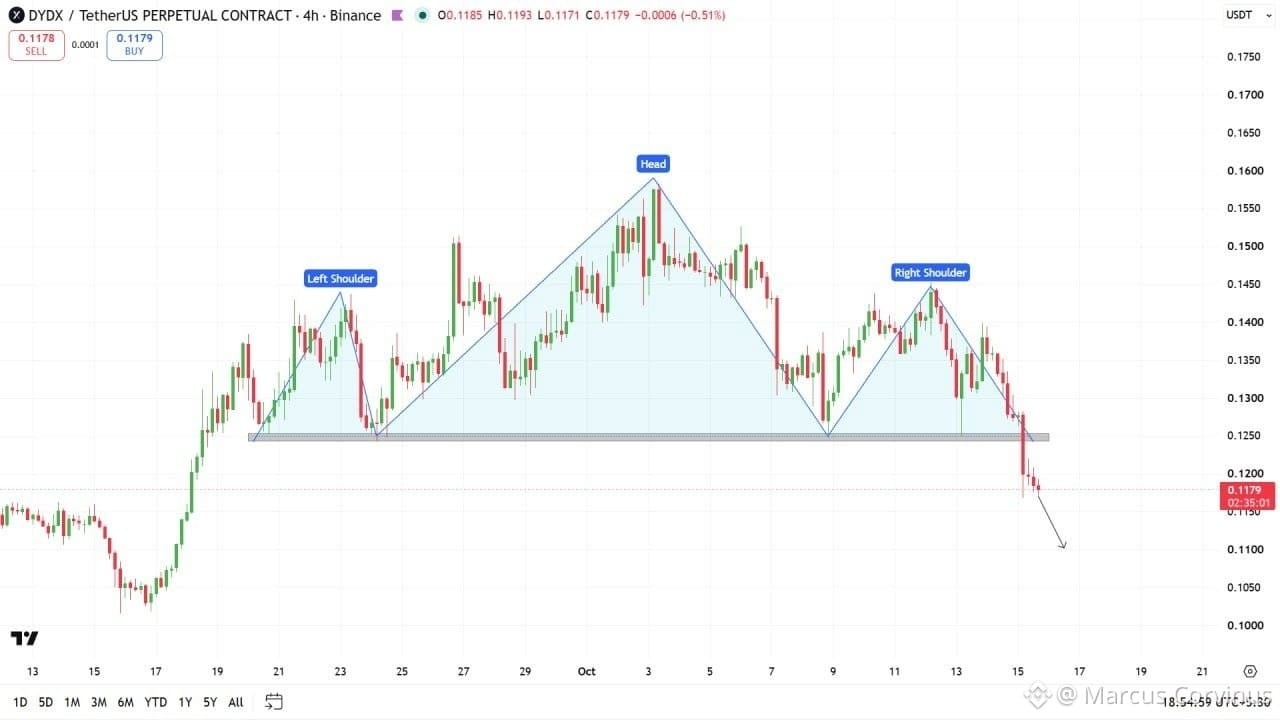
$DYDX está mostrando señales bajistas contundentes tras una ruptura importante.
La reciente evolución del precio sugiere que los vendedores están ganando el control y que el impulso bajista podría intensificarse en las próximas sesiones.
La ruptura ha debilitado la estructura del mercado y ha dejado a DYDX en una posición vulnerable, mientras los compradores luchan por recuperar el impulso.
Si el precio no logra recuperar el nivel de soporte perdido, otra oleada de presión vendedora podría empujar a DYDX hacia zonas de demanda más bajas.
Cualquier recuperación a corto plazo podría enfrentarse a una fuerte resistencia, ya que los operadores buscan cerrar sus posiciones cerca de niveles clave.
El factor más importante ahora es si los compradores pueden defender la siguiente zona de soporte o si los bajistas seguirán dominando la tendencia.
$DYDX podría estar acercándose a un momento decisivo, y el próximo gran movimiento podría tomar desprevenidos a los operadores.
No pierdas de vista a $DYDX. La configuración bajista está tomando forma y la próxima ruptura podría generar una volatilidad aún mayor.
$DYDX está mostrando señales bajistas contundentes tras una ruptura importante.
La reciente evolución del precio sugiere que los vendedores están ganando el control y que el impulso bajista podría intensificarse en las próximas sesiones.
La ruptura ha debilitado la estructura del mercado y ha dejado a DYDX en una posición vulnerable, mientras los compradores luchan por recuperar el impulso.
Si el precio no logra recuperar el nivel de soporte perdido, otra oleada de presión vendedora podría empujar a DYDX hacia zonas de demanda más bajas.
Cualquier recuperación a corto plazo podría enfrentarse a una fuerte resistencia, ya que los operadores buscan cerrar sus posiciones cerca de niveles clave.
El factor más importante ahora es si los compradores pueden defender la siguiente zona de soporte o si los bajistas seguirán dominando la tendencia.
$DYDX podría estar acercándose a un momento decisivo, y el próximo gran movimiento podría tomar desprevenidos a los operadores.
No pierdas de vista a $DYDX . La configuración bajista está tomando forma y la próxima ruptura podría generar una volatilidad aún mayor.
La reciente evolución del precio sugiere que los vendedores están ganando el control y que el impulso bajista podría intensificarse en las próximas sesiones.
La ruptura ha debilitado la estructura del mercado y ha dejado a DYDX en una posición vulnerable, mientras los compradores luchan por recuperar el impulso.
Si el precio no logra recuperar el nivel de soporte perdido, otra oleada de presión vendedora podría empujar a DYDX hacia zonas de demanda más bajas.
Cualquier recuperación a corto plazo podría enfrentarse a una fuerte resistencia, ya que los operadores buscan cerrar sus posiciones cerca de niveles clave.
El factor más importante ahora es si los compradores pueden defender la siguiente zona de soporte o si los bajistas seguirán dominando la tendencia.
$DYDX podría estar acercándose a un momento decisivo, y el próximo gran movimiento podría tomar desprevenidos a los operadores.
No pierdas de vista a $DYDX . La configuración bajista está tomando forma y la próxima ruptura podría generar una volatilidad aún mayor.
13
12
2.4k
·
--
Alcista
Verificado
¡Aevo está cambiando la economía de los tokens!
La mayoría de los proyectos cripto todavía tienen dificultades con la inflación de tokens y la presión de los desbloqueos. Aevo ya ha tomado otro camino.
◆ 74M AEVO quemados de forma permanente.
◆ Ya no quedan desbloqueos programados.
◆ Recompras mensuales financiadas con las comisiones de trading.
▸ 1M AEVO distribuidos semanalmente de la oferta fija existente de 1B, no mediante nuevas emisiones.
▸ Más de 20M AEVO en staking, y quienes hacen staking reciben posiciones de LP que generan comisiones.
$AEVO representa mucho más que gobernanza. Su modelo económico conecta la actividad real de trading con el staking y la reducción de la oferta.
Mientras $DYDX y $GMX compiten en el sector de los derivados descentralizados, Aevo destaca por su estructura de recompras y quema financiada con comisiones.
Actividad real de trading. Quemas cuantificables. Una estructura de token basada en el uso real.
¡A por todas! 🥂
NFA + DYOR
#AEVO #Crypto
¡Aevo está cambiando la economía de los tokens!
La mayoría de los proyectos cripto todavía tienen dificultades con la inflación de tokens y la presión de los desbloqueos. Aevo ya ha tomado otro camino.
◆ 74M AEVO quemados de forma permanente.
◆ Ya no quedan desbloqueos programados.
◆ Recompras mensuales financiadas con las comisiones de trading.
▸ 1M AEVO distribuidos semanalmente de la oferta fija existente de 1B, no mediante nuevas emisiones.
▸ Más de 20M AEVO en staking, y quienes hacen staking reciben posiciones de LP que generan comisiones.
$AEVO representa mucho más que gobernanza. Su modelo económico conecta la actividad real de trading con el staking y la reducción de la oferta.
Mientras $DYDX y $GMX compiten en el sector de los derivados descentralizados, Aevo destaca por su estructura de recompras y quema financiada con comisiones.
Actividad real de trading. Quemas cuantificables. Una estructura de token basada en el uso real.
¡A por todas! 🥂
NFA + DYOR
#AEVO #Crypto
La mayoría de los proyectos cripto todavía tienen dificultades con la inflación de tokens y la presión de los desbloqueos. Aevo ya ha tomado otro camino.
◆ 74M AEVO quemados de forma permanente.
◆ Ya no quedan desbloqueos programados.
◆ Recompras mensuales financiadas con las comisiones de trading.
▸ 1M AEVO distribuidos semanalmente de la oferta fija existente de 1B, no mediante nuevas emisiones.
▸ Más de 20M AEVO en staking, y quienes hacen staking reciben posiciones de LP que generan comisiones.
$AEVO representa mucho más que gobernanza. Su modelo económico conecta la actividad real de trading con el staking y la reducción de la oferta.
Mientras $DYDX y $GMX compiten en el sector de los derivados descentralizados, Aevo destaca por su estructura de recompras y quema financiada con comisiones.
Actividad real de trading. Quemas cuantificables. Una estructura de token basada en el uso real.
¡A por todas! 🥂
NFA + DYOR
#AEVO #Crypto
91
1
64
17k
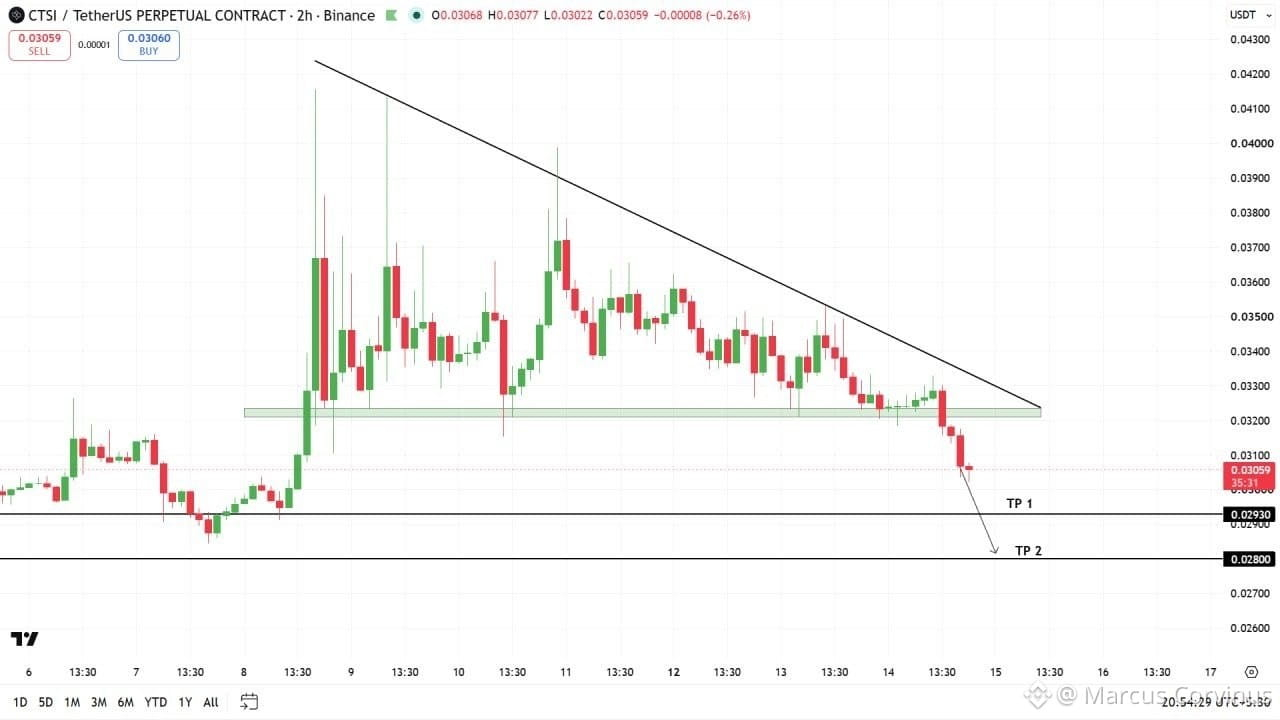
$CTSI está mostrando fuertes señales bajistas tras caer por debajo de un nivel de soporte clave.
La presión vendedora está aumentando, y la reciente ruptura sugiere que los bajistas están ganando el control.
Si $CTSI no logra recuperar el soporte perdido, podría producirse una corrección más profunda hacia niveles de precios más bajos.
El débil impulso comprador y la persistente presión vendedora podrían acelerar el descenso.
Los operadores deben vigilar de cerca las próximas zonas de soporte, ya que otra ruptura podría desencadenar una liquidación más pronunciada.
$CTSI está entrando en una fase crítica, y el próximo movimiento importante podría traer una volatilidad significativa.
Sigue atento. Puede que los bajistas aún no hayan terminado.
$CTSI está mostrando fuertes señales bajistas tras caer por debajo de un nivel de soporte clave.
La presión vendedora está aumentando, y la reciente ruptura sugiere que los bajistas están ganando el control.
Si $CTSI no logra recuperar el soporte perdido, podría producirse una corrección más profunda hacia niveles de precios más bajos.
El débil impulso comprador y la persistente presión vendedora podrían acelerar el descenso.
Los operadores deben vigilar de cerca las próximas zonas de soporte, ya que otra ruptura podría desencadenar una liquidación más pronunciada.
$CTSI está entrando en una fase crítica, y el próximo movimiento importante podría traer una volatilidad significativa.
Sigue atento. Puede que los bajistas aún no hayan terminado.
La presión vendedora está aumentando, y la reciente ruptura sugiere que los bajistas están ganando el control.
Si $CTSI no logra recuperar el soporte perdido, podría producirse una corrección más profunda hacia niveles de precios más bajos.
El débil impulso comprador y la persistente presión vendedora podrían acelerar el descenso.
Los operadores deben vigilar de cerca las próximas zonas de soporte, ya que otra ruptura podría desencadenar una liquidación más pronunciada.
$CTSI está entrando en una fase crítica, y el próximo movimiento importante podría traer una volatilidad significativa.
Sigue atento. Puede que los bajistas aún no hayan terminado.
4
12
1.5k
$BTC La volatilidad está alcanzando niveles demenciales.
El mercado cripto acaba de presenciar una batalla brutal entre alcistas y bajistas.
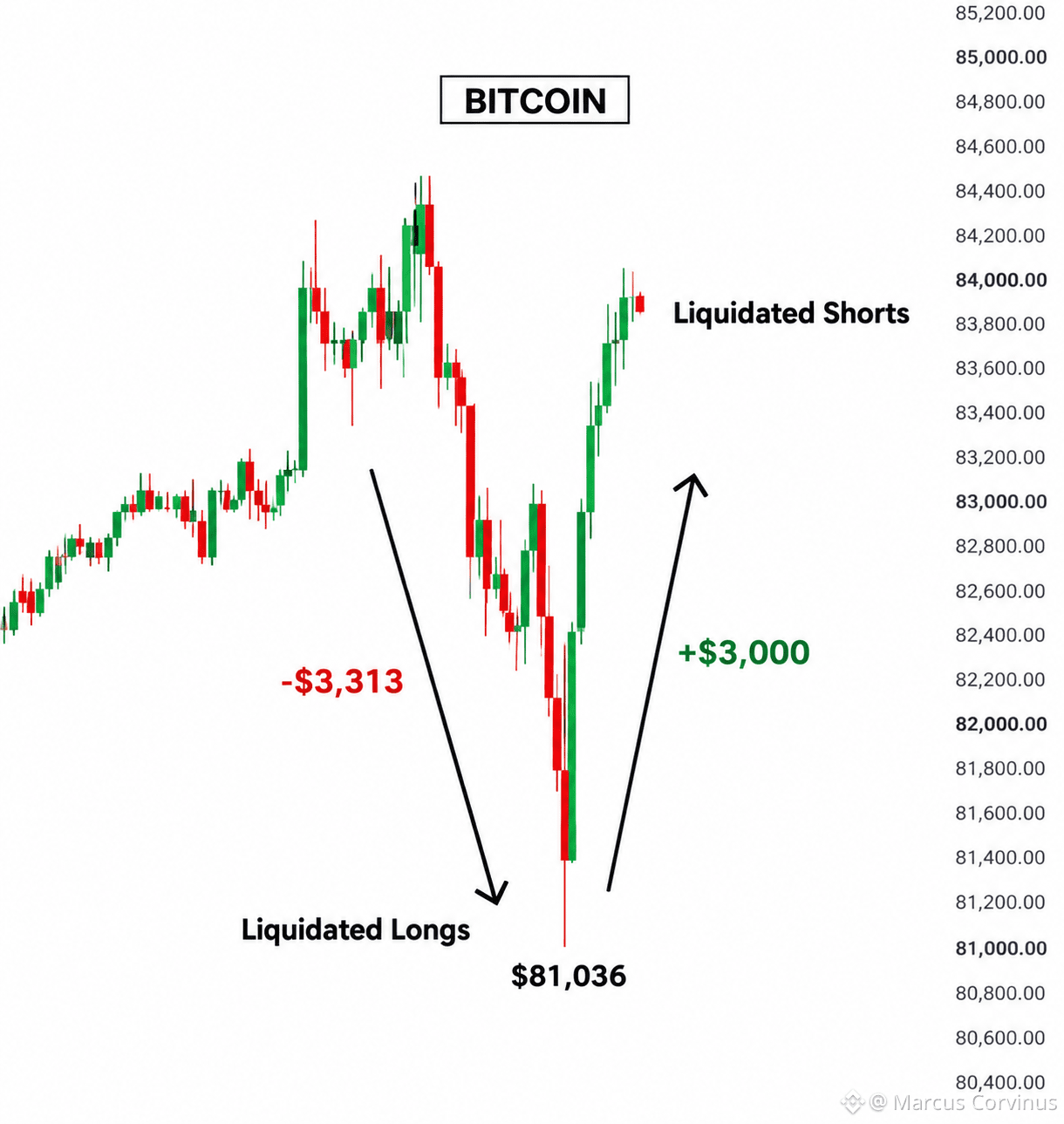
$BTC Se desplomó más de $3,300 en apenas 18 horas.
Durante la masiva ola de ventas, se liquidaron posiciones largas por más de $600 millones.
Bitcoin cayó hasta los $81,036, desatando el pánico en todo el mercado.
Pero la verdadera sorpresa llegó después.
BTC cambió de rumbo de repente.
En apenas 8 horas, Bitcoin se disparó más de $3,000.
La explosiva recuperación provocó otras liquidaciones de posiciones cortas por valor de $107 millones.
Durante el potente rebote, se sumaron casi $60 mil millones al valor de mercado.
Primero, el mercado aplastó a los alcistas con apalancamiento excesivo.
Luego, dio un giro y atrapó a los bajistas agresivos.
Dos movimientos masivos.
Dos brutales oleadas de liquidaciones.
Cientos de millones liquidados en cuestión de horas.
El mercado no está teniendo ninguna piedad con los operadores apalancados.
BTC está atrapando tanto a alcistas como a bajistas mientras la volatilidad extrema toma el control.
Con la liquidez siendo barrida en ambas direcciones, el próximo gran movimiento podría ser aún más explosivo.
$BTC La volatilidad está alcanzando niveles demenciales.
El mercado cripto acaba de presenciar una batalla brutal entre alcistas y bajistas.
$BTC Se desplomó más de $3,300 en apenas 18 horas.
Durante la masiva ola de ventas, se liquidaron posiciones largas por más de $600 millones.
Bitcoin cayó hasta los $81,036, desatando el pánico en todo el mercado.
Pero la verdadera sorpresa llegó después.
BTC cambió de rumbo de repente.
En apenas 8 horas, Bitcoin se disparó más de $3,000.
La explosiva recuperación provocó otras liquidaciones de posiciones cortas por valor de $107 millones.
Durante el potente rebote, se sumaron casi $60 mil millones al valor de mercado.
Primero, el mercado aplastó a los alcistas con apalancamiento excesivo.
Luego, dio un giro y atrapó a los bajistas agresivos.
Dos movimientos masivos.
Dos brutales oleadas de liquidaciones.
Cientos de millones liquidados en cuestión de horas.
El mercado no está teniendo ninguna piedad con los operadores apalancados.
BTC está atrapando tanto a alcistas como a bajistas mientras la volatilidad extrema toma el control.
Con la liquidez siendo barrida en ambas direcciones, el próximo gran movimiento podría ser aún más explosivo.
El mercado cripto acaba de presenciar una batalla brutal entre alcistas y bajistas.
$BTC Se desplomó más de $3,300 en apenas 18 horas.
Durante la masiva ola de ventas, se liquidaron posiciones largas por más de $600 millones.
Bitcoin cayó hasta los $81,036, desatando el pánico en todo el mercado.
Pero la verdadera sorpresa llegó después.
BTC cambió de rumbo de repente.
En apenas 8 horas, Bitcoin se disparó más de $3,000.
La explosiva recuperación provocó otras liquidaciones de posiciones cortas por valor de $107 millones.
Durante el potente rebote, se sumaron casi $60 mil millones al valor de mercado.
Primero, el mercado aplastó a los alcistas con apalancamiento excesivo.
Luego, dio un giro y atrapó a los bajistas agresivos.
Dos movimientos masivos.
Dos brutales oleadas de liquidaciones.
Cientos de millones liquidados en cuestión de horas.
El mercado no está teniendo ninguna piedad con los operadores apalancados.
BTC está atrapando tanto a alcistas como a bajistas mientras la volatilidad extrema toma el control.
Con la liquidez siendo barrida en ambas direcciones, el próximo gran movimiento podría ser aún más explosivo.
11
9
1.2k
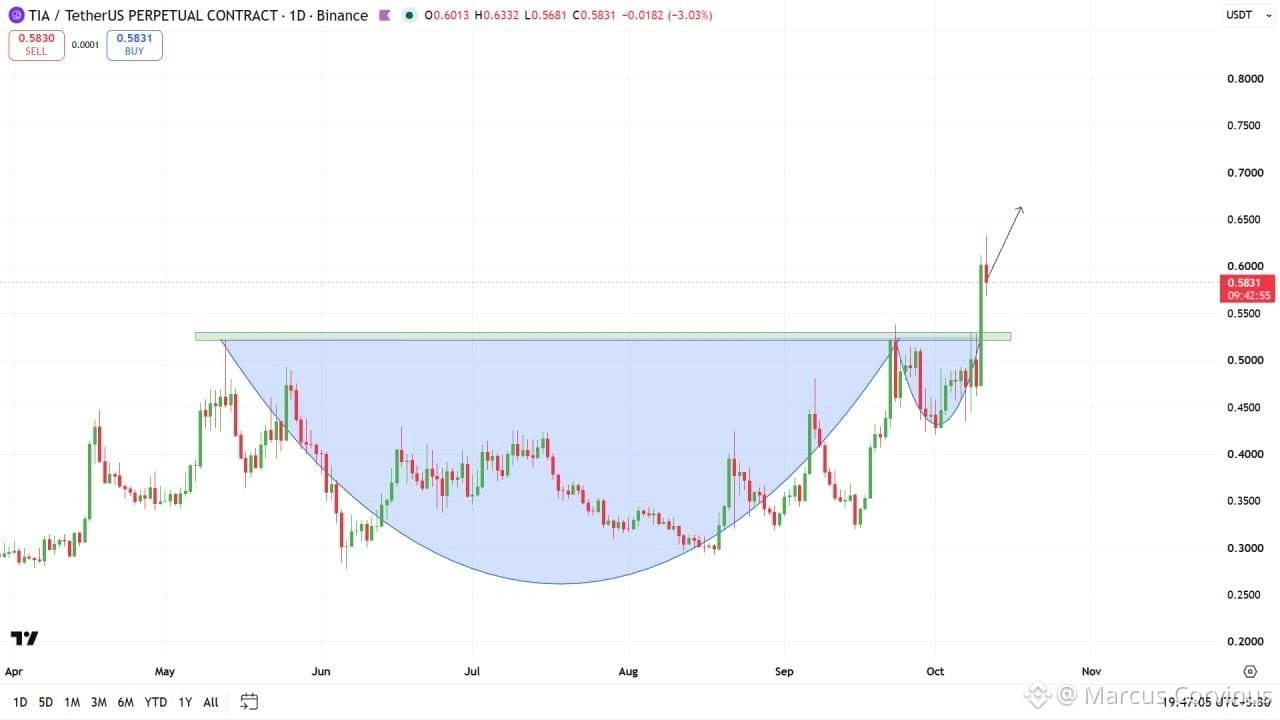
$TIA está ganando impulso alcista tras una fuerte ruptura.
Los compradores están entrando en el mercado, y la estructura del mercado muestra señales de fortaleza.
La ruptura podría ser el comienzo de un movimiento alcista mucho mayor.
Si $TIA se mantiene por encima de la zona de ruptura, podría producirse otro repunte potente.
El aumento de la presión compradora y un gran volumen podrían impulsar el precio hacia niveles de resistencia más altos.
Las próximas velas serán cruciales para confirmar el impulso alcista.
$TIA podría estar preparándose para un movimiento explosivo.
No pierdas de vista a $TIA. La próxima gran subida podría estar más cerca de lo esperado.
$TIA está ganando impulso alcista tras una fuerte ruptura.
Los compradores están entrando en el mercado, y la estructura del mercado muestra señales de fortaleza.
La ruptura podría ser el comienzo de un movimiento alcista mucho mayor.
Si $TIA se mantiene por encima de la zona de ruptura, podría producirse otro repunte potente.
El aumento de la presión compradora y un gran volumen podrían impulsar el precio hacia niveles de resistencia más altos.
Las próximas velas serán cruciales para confirmar el impulso alcista.
$TIA podría estar preparándose para un movimiento explosivo.
No pierdas de vista a $TIA . La próxima gran subida podría estar más cerca de lo esperado.
Los compradores están entrando en el mercado, y la estructura del mercado muestra señales de fortaleza.
La ruptura podría ser el comienzo de un movimiento alcista mucho mayor.
Si $TIA se mantiene por encima de la zona de ruptura, podría producirse otro repunte potente.
El aumento de la presión compradora y un gran volumen podrían impulsar el precio hacia niveles de resistencia más altos.
Las próximas velas serán cruciales para confirmar el impulso alcista.
$TIA podría estar preparándose para un movimiento explosivo.
No pierdas de vista a $TIA . La próxima gran subida podría estar más cerca de lo esperado.
7
13
4.5k
·
--
Alcista
Verificado
Polymarket está convirtiendo los acontecimientos del mundo real en poderosas oportunidades de trading.
Polymarket permite a los traders predecir resultados en diversos mercados.
• Precios de las criptomonedas y Bitcoin
• IA y tecnología
• Deportes y economía
• Acontecimientos mundiales y política
El sistema de trading es sencillo.
• SÍ a $0.40 -\u003e probabilidad implícita del 40%
• Predicción correcta -\u003e pago de $1 por participación
• Ganancia potencial -\u003e $0.60 por participación antes de comisiones • Salida anticipada -\u003e opera con tus participaciones antes de que se resuelva el mercado
La campaña destaca el sólido crecimiento de la plataforma.
• Traders activos mensuales -\u003e 250K–500K
• Volumen previsto para 2025 -\u003e $18B
• Visitas mensuales al sitio web -\u003e 17M+
Los proyectos asociados con $UMA , $REP y $TRU destacan el ecosistema más amplio de los mercados de predicción, los oráculos y la verificación de resultados.
Polymarket se distingue por convertir la información del mundo real en mercados donde los traders pueden aprovechar sus conocimientos y elegir el momento adecuado.
La verdadera ventaja proviene de investigar, comprender las probabilidades e identificar oportunidades antes de que se ajusten los precios del mercado.
La información se está convirtiendo en una oportunidad de trading, y Polymarket está poniendo de relieve este cambio.
¡Vamos! 🥂
NFA + DYOR
#Polymarket #CryptoTrading
Polymarket está convirtiendo los acontecimientos del mundo real en poderosas oportunidades de trading.
Polymarket permite a los traders predecir resultados en diversos mercados.
• Precios de las criptomonedas y Bitcoin
• IA y tecnología
• Deportes y economía
• Acontecimientos mundiales y política
El sistema de trading es sencillo.
• SÍ a $0.40 -\u003e probabilidad implícita del 40%
• Predicción correcta -\u003e pago de $1 por participación
• Ganancia potencial -\u003e $0.60 por participación antes de comisiones • Salida anticipada -\u003e opera con tus participaciones antes de que se resuelva el mercado
La campaña destaca el sólido crecimiento de la plataforma.
• Traders activos mensuales -\u003e 250K–500K
• Volumen previsto para 2025 -\u003e $18B
• Visitas mensuales al sitio web -\u003e 17M+
Los proyectos asociados con $UMA , $REP y $TRU destacan el ecosistema más amplio de los mercados de predicción, los oráculos y la verificación de resultados.
Polymarket se distingue por convertir la información del mundo real en mercados donde los traders pueden aprovechar sus conocimientos y elegir el momento adecuado.
La verdadera ventaja proviene de investigar, comprender las probabilidades e identificar oportunidades antes de que se ajusten los precios del mercado.
La información se está convirtiendo en una oportunidad de trading, y Polymarket está poniendo de relieve este cambio.
¡Vamos! 🥂
NFA + DYOR
#Polymarket #CryptoTrading
Polymarket permite a los traders predecir resultados en diversos mercados.
• Precios de las criptomonedas y Bitcoin
• IA y tecnología
• Deportes y economía
• Acontecimientos mundiales y política
El sistema de trading es sencillo.
• SÍ a $0.40 -\u003e probabilidad implícita del 40%
• Predicción correcta -\u003e pago de $1 por participación
• Ganancia potencial -\u003e $0.60 por participación antes de comisiones • Salida anticipada -\u003e opera con tus participaciones antes de que se resuelva el mercado
La campaña destaca el sólido crecimiento de la plataforma.
• Traders activos mensuales -\u003e 250K–500K
• Volumen previsto para 2025 -\u003e $18B
• Visitas mensuales al sitio web -\u003e 17M+
Los proyectos asociados con $UMA , $REP y $TRU destacan el ecosistema más amplio de los mercados de predicción, los oráculos y la verificación de resultados.
Polymarket se distingue por convertir la información del mundo real en mercados donde los traders pueden aprovechar sus conocimientos y elegir el momento adecuado.
La verdadera ventaja proviene de investigar, comprender las probabilidades e identificar oportunidades antes de que se ajusten los precios del mercado.
La información se está convirtiendo en una oportunidad de trading, y Polymarket está poniendo de relieve este cambio.
¡Vamos! 🥂
NFA + DYOR
#Polymarket #CryptoTrading

80
53
13.6k
Inicia sesión para explorar más contenidos
Únete a usuarios globales de criptomonedas en Binance Square
⚡️ Obtén información útil y actualizada sobre criptos.
💬 Avalado por el mayor exchange de criptomonedas en el mundo.
👍 Descubre perspectivas reales de creadores verificados.
Email/número de teléfono
Temas populares
BinancePick
2.8M vistas
147,821 están debatiendo
¡Únete a #TemporadaDeResultados: predice resultados en Binance Pick y comparte tu opinión en Binance Square!
Binance Square Official
·403 me gusta
·340.9k vistas
EarningsSeason
5.1M vistas
25,250 están debatiendo
AnthropicTTMRevenueGrewAbout1200%
2,360 vistas
135 están debatiendo