

Bitrelix
4.5k Publicaciones

Bitrelix
 Verificado de Binance Square
Denunciar
Bloquear usuario
X (Twitter): @Bitrelix_786 | Bitcoin Analyst | Price Action & Market Structure | Daily Bitcoin Charts & Real-Time Market Updates
Abrir trade
Trader frecuente
1.6 año(s)
42 Siguiendo
33.4K+ Seguidores
21.7K+ Me gusta
Publicaciones
Cartera
Todo
Citas
Videos
·
--
Alcista
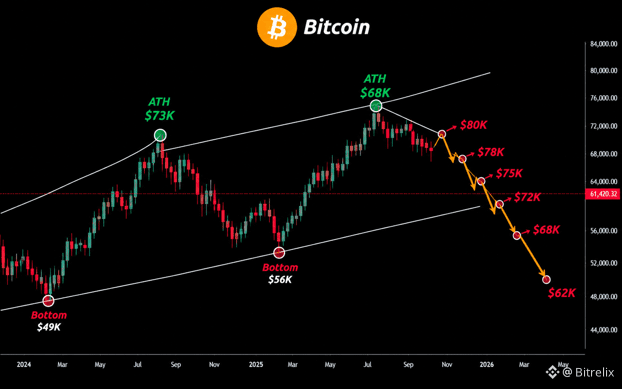
🚨 ADVERTENCIA: EL PRÓXIMO MOVIMIENTO DE BITCOIN FAVORECE A LOS BAJISTAS — $BTC CERCA DE LOS $80K Bitcoin ha perdido la zona de soporte de $80.5K–$81K, y los vendedores tienen actualmente la ventaja a corto plazo
Una caída por debajo de los $78K podría dejar al descubierto los $75K y potencialmente los $72K, mientras que una recuperación sólida por encima de los $80.6K debilitaría este escenario bajista.
La tendencia actual es bajista, pero eso no garantiza un desplome; la confirmación del precio importa más que una convicción ciega.
$80K → $78K → $75K → $72K → $68K → $62K
No te apresures a abrir posiciones largas. Guarda esta publicación y compara estos niveles durante las próximas semanas. Sígueme y activa las alertas. La próxima actualización será importante. Publicaré cada novedad importante a medida que ocurra.
{future}(BTCUSDT)
🚨 ADVERTENCIA: EL PRÓXIMO MOVIMIENTO DE BITCOIN FAVORECE A LOS BAJISTAS — $BTC CERCA DE LOS $80K Bitcoin ha perdido la zona de soporte de $80.5K–$81K, y los vendedores tienen actualmente la ventaja a corto plazo
Una caída por debajo de los $78K podría dejar al descubierto los $75K y potencialmente los $72K, mientras que una recuperación sólida por encima de los $80.6K debilitaría este escenario bajista.
La tendencia actual es bajista, pero eso no garantiza un desplome; la confirmación del precio importa más que una convicción ciega.
$80K → $78K → $75K → $72K → $68K → $62K
No te apresures a abrir posiciones largas. Guarda esta publicación y compara estos niveles durante las próximas semanas. Sígueme y activa las alertas. La próxima actualización será importante. Publicaré cada novedad importante a medida que ocurra.
Una caída por debajo de los $78K podría dejar al descubierto los $75K y potencialmente los $72K, mientras que una recuperación sólida por encima de los $80.6K debilitaría este escenario bajista.
La tendencia actual es bajista, pero eso no garantiza un desplome; la confirmación del precio importa más que una convicción ciega.
$80K → $78K → $75K → $72K → $68K → $62K
No te apresures a abrir posiciones largas. Guarda esta publicación y compara estos niveles durante las próximas semanas. Sígueme y activa las alertas. La próxima actualización será importante. Publicaré cada novedad importante a medida que ocurra.
9
873
·
--
Alcista
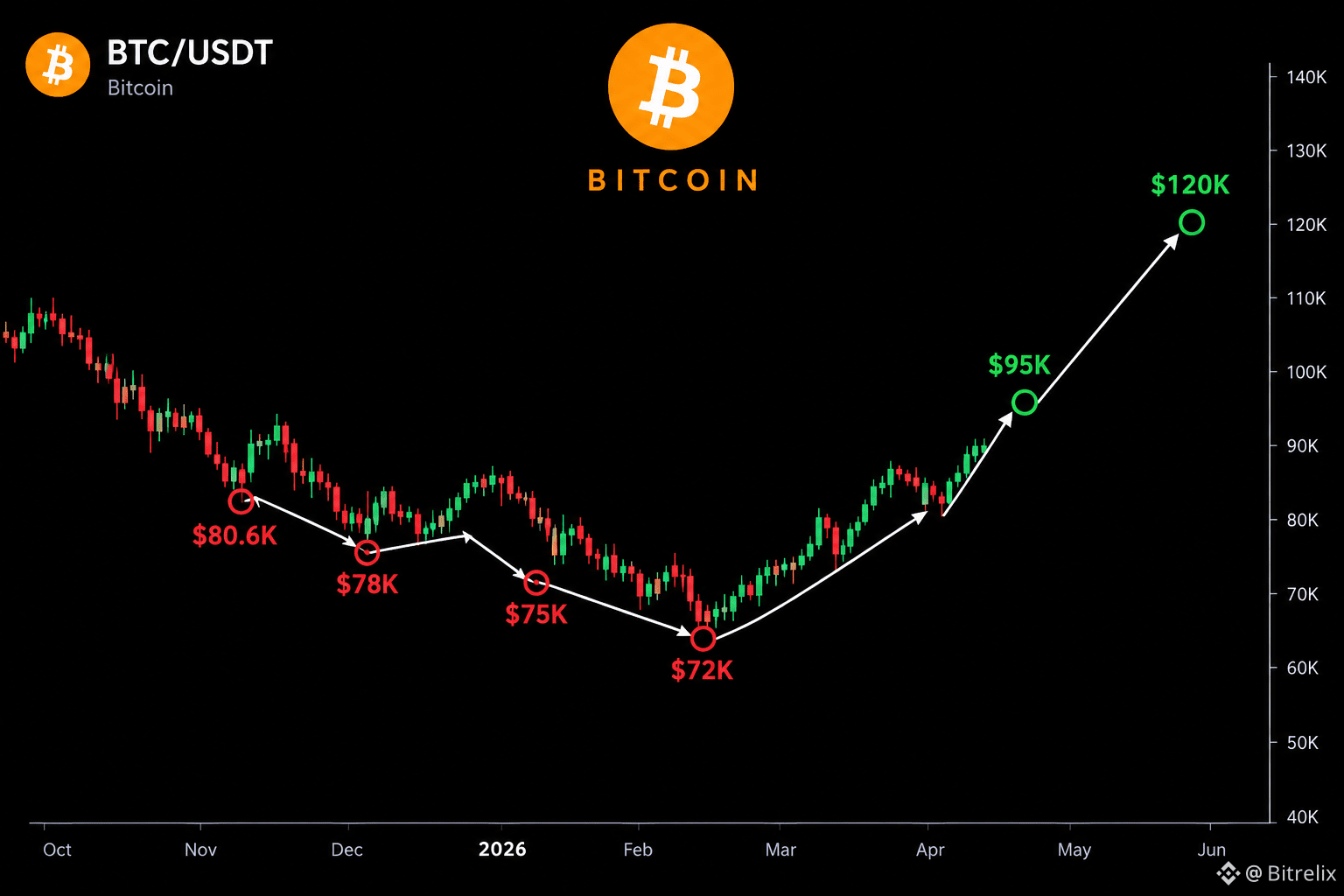
🚨 LA SACUDIDA FINAL $BTC PODRÍA TOMAR A TODOS POR SORPRESA
Bitcoin cotiza cerca de los 80,6 mil dólares tras un rechazo brusco en la zona de los 84 mil. Si los compradores pierden los 80 mil,
la siguiente prueba de liquidez podría provocar una caída más profunda antes de que comience la recuperación.
Mi plan de ejecución sigue centrado en niveles clave, confirmaciones
y el próximo gran cambio del mercado. 80,6 mil $ → 78 mil $ → 75 mil $ → 72 mil $ → 95 mil $ → 120 mil $. Guarda este gráfico y compáralo de nuevo dentro de unas semanas.
Sígueme y activa las notificaciones. No llegues tarde. Publicaré cada novedad importante en cuanto ocurra.
🚨 LA SACUDIDA FINAL $BTC PODRÍA TOMAR A TODOS POR SORPRESA
Bitcoin cotiza cerca de los 80,6 mil dólares tras un rechazo brusco en la zona de los 84 mil. Si los compradores pierden los 80 mil,
la siguiente prueba de liquidez podría provocar una caída más profunda antes de que comience la recuperación.
Mi plan de ejecución sigue centrado en niveles clave, confirmaciones
y el próximo gran cambio del mercado. 80,6 mil $ → 78 mil $ → 75 mil $ → 72 mil $ → 95 mil $ → 120 mil $. Guarda este gráfico y compáralo de nuevo dentro de unas semanas.
Sígueme y activa las notificaciones. No llegues tarde. Publicaré cada novedad importante en cuanto ocurra.
Bitcoin cotiza cerca de los 80,6 mil dólares tras un rechazo brusco en la zona de los 84 mil. Si los compradores pierden los 80 mil,
la siguiente prueba de liquidez podría provocar una caída más profunda antes de que comience la recuperación.
Mi plan de ejecución sigue centrado en niveles clave, confirmaciones
y el próximo gran cambio del mercado. 80,6 mil $ → 78 mil $ → 75 mil $ → 72 mil $ → 95 mil $ → 120 mil $. Guarda este gráfico y compáralo de nuevo dentro de unas semanas.
Sígueme y activa las notificaciones. No llegues tarde. Publicaré cada novedad importante en cuanto ocurra.
1
13
3.4k
·
--
🚨 BITCOIN SIGUE VIVO 🚨
$BTC sigue cotizando por encima de su media móvil de 50 semanas. En ciclos anteriores, subió un 680 % en 2020–2021 y un 415 % en 2023–2025.
Ha sobrevivido a la guerra entre EE. UU. e Irán, al FUD por el hackeo de Ledger, al FUD cuántico y a las ventas de BlackRock y del gobierno de EE. UU. Estamos bien. 🚀
🚨 BITCOIN SIGUE VIVO 🚨
$BTC sigue cotizando por encima de su media móvil de 50 semanas. En ciclos anteriores, subió un 680 % en 2020–2021 y un 415 % en 2023–2025.
Ha sobrevivido a la guerra entre EE. UU. e Irán, al FUD por el hackeo de Ledger, al FUD cuántico y a las ventas de BlackRock y del gobierno de EE. UU. Estamos bien. 🚀
$BTC sigue cotizando por encima de su media móvil de 50 semanas. En ciclos anteriores, subió un 680 % en 2020–2021 y un 415 % en 2023–2025.
Ha sobrevivido a la guerra entre EE. UU. e Irán, al FUD por el hackeo de Ledger, al FUD cuántico y a las ventas de BlackRock y del gobierno de EE. UU. Estamos bien. 🚀
1
6
714
·
--
Alcista
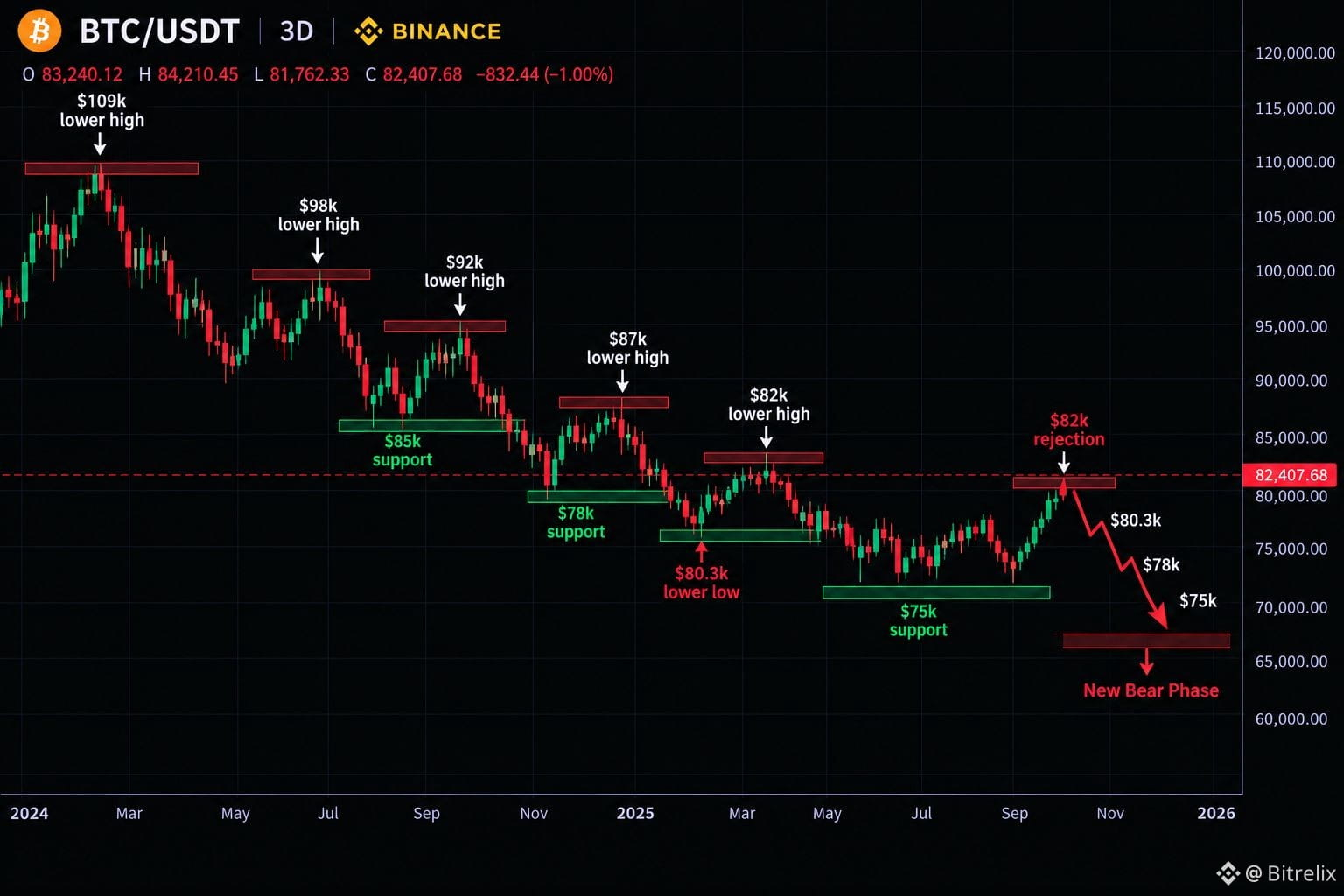
🚨 ADVERTENCIA: TODAVÍA NO ABRAS POSICIONES LARGAS EN $BTC
La caída final de $BTC es inevitable.
Esta semana comienza la fase final de liquidación.
Todo está ocurriendo exactamente como predije hace semanas.
$82K → $80.3K → $78K → $75K → Nueva fase bajista
Guarda esto ahora. Comprueba los resultados la próxima semana.
Sígueme y activa las notificaciones. La próxima actualización es importante.
Publicaré cada acontecimiento clave a medida que ocurra.
#BinancePick #ChinaSeeksToSeize61800BTC
🚨 ADVERTENCIA: TODAVÍA NO ABRAS POSICIONES LARGAS EN $BTC
La caída final de $BTC es inevitable.
Esta semana comienza la fase final de liquidación.
Todo está ocurriendo exactamente como predije hace semanas.
$82K → $80.3K → $78K → $75K → Nueva fase bajista
Guarda esto ahora. Comprueba los resultados la próxima semana.
Sígueme y activa las notificaciones. La próxima actualización es importante.
Publicaré cada acontecimiento clave a medida que ocurra.
#BinancePick #ChinaSeeksToSeize61800BTC
La caída final de $BTC es inevitable.
Esta semana comienza la fase final de liquidación.
Todo está ocurriendo exactamente como predije hace semanas.
$82K → $80.3K → $78K → $75K → Nueva fase bajista
Guarda esto ahora. Comprueba los resultados la próxima semana.
Sígueme y activa las notificaciones. La próxima actualización es importante.
Publicaré cada acontecimiento clave a medida que ocurra.
#BinancePick #ChinaSeeksToSeize61800BTC
5
2.5k
·
--
Alcista
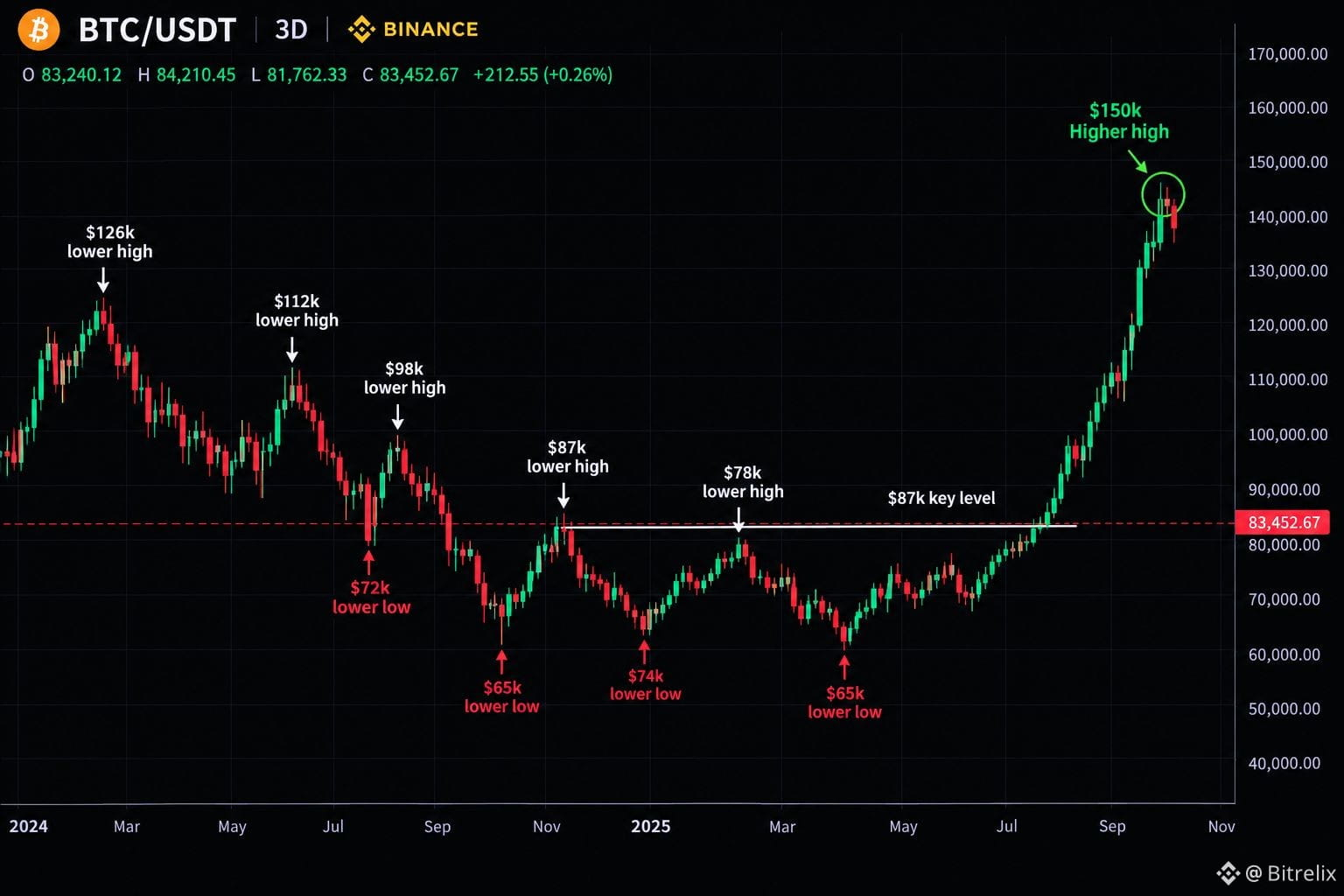
🚨 ALERTA: NO VENDAS EN CORTO $BTC TODAVÍA
La ruptura final de $BTC es inevitable.
Esta semana comienza la fase final de acumulación.
Todo está ocurriendo exactamente como predije hace semanas.
$83.4K → $84K → $85.5K → $87K → Nuevo mercado alcista
Guarda esto ahora. Comprueba los resultados la próxima semana.
Sígueme y activa las notificaciones. La próxima actualización es importante.
Publicaré cada novedad clave a medida que ocurra.
#EarningsSeason
{future}(BTCUSDT)
🚨 ALERTA: NO VENDAS EN CORTO $BTC TODAVÍA
La ruptura final de $BTC es inevitable.
Esta semana comienza la fase final de acumulación.
Todo está ocurriendo exactamente como predije hace semanas.
$83.4K → $84K → $85.5K → $87K → Nuevo mercado alcista
Guarda esto ahora. Comprueba los resultados la próxima semana.
Sígueme y activa las notificaciones. La próxima actualización es importante.
Publicaré cada novedad clave a medida que ocurra.
#EarningsSeason
La ruptura final de $BTC es inevitable.
Esta semana comienza la fase final de acumulación.
Todo está ocurriendo exactamente como predije hace semanas.
$83.4K → $84K → $85.5K → $87K → Nuevo mercado alcista
Guarda esto ahora. Comprueba los resultados la próxima semana.
Sígueme y activa las notificaciones. La próxima actualización es importante.
Publicaré cada novedad clave a medida que ocurra.
#EarningsSeason
3
6
2.6k
·
--
Alcista
🚨 ADVERTENCIA: ACTUALIZACIÓN DEL MERCADO DE BTC 🚨
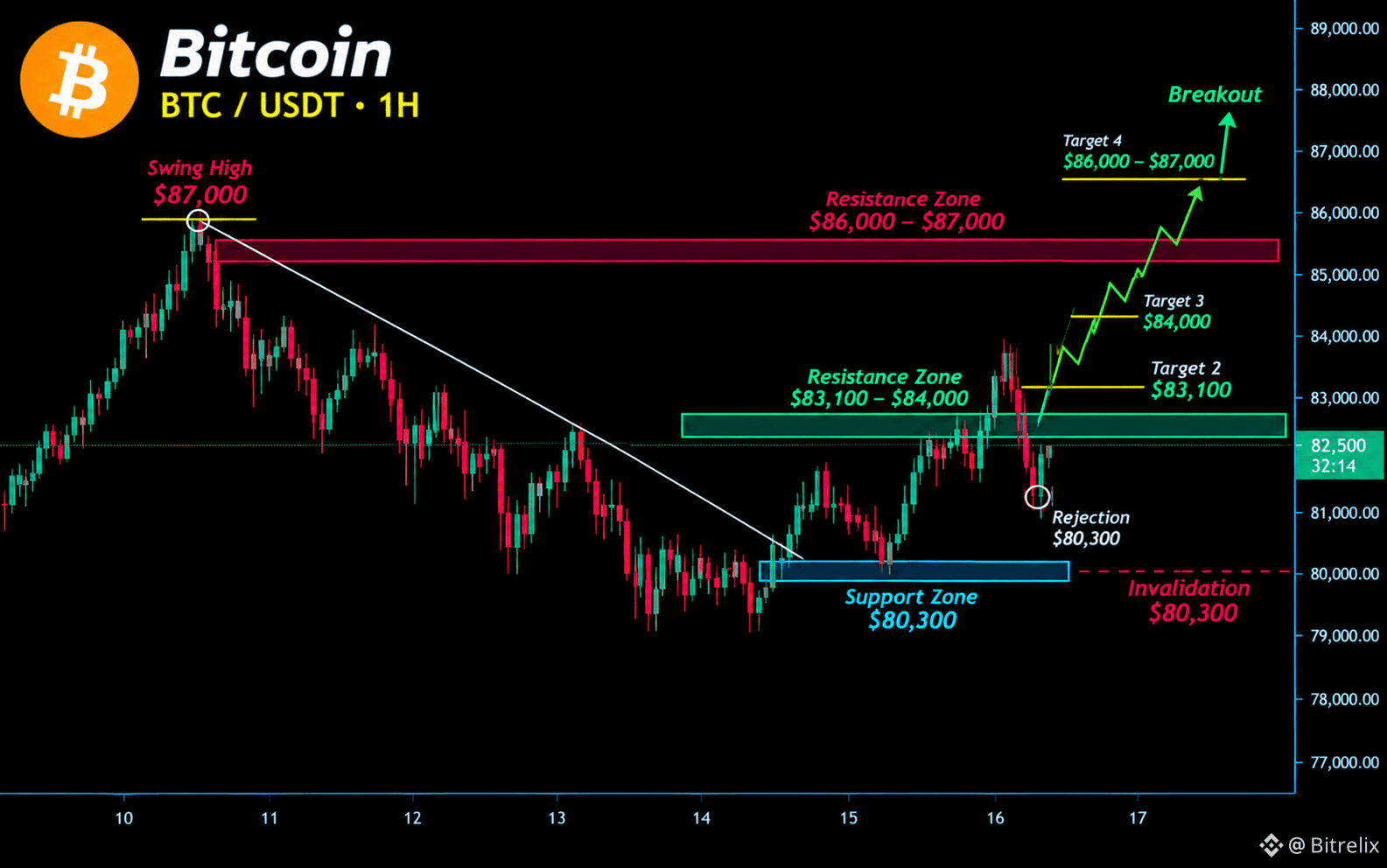
$BTC está rebotando cerca de los $82,500, pero la estructura general sigue moviéndose en un rango tras el rechazo cerca de los $87,000.
Los alcistas necesitan una ruptura confirmada por encima de $83,100–$84,000; perder los $80,300 podría provocar otra barrida bajista.
📈 Recorrido:
$82,500 ➡️ $83,100 ➡️ $84,000 ➡️ $86,000–$87,000 ➡️ Ruptura.
No te apresures con el retesteo. La verdadera expansión ocurre después de que se rompen resistencias clave. Guarda esta publicación y vuelve a consultarla dentro de unas semanas. 👇
{future}(BTCUSDT)
🚨 ADVERTENCIA: ACTUALIZACIÓN DEL MERCADO DE BTC 🚨
$BTC está rebotando cerca de los $82,500, pero la estructura general sigue moviéndose en un rango tras el rechazo cerca de los $87,000.
Los alcistas necesitan una ruptura confirmada por encima de $83,100–$84,000; perder los $80,300 podría provocar otra barrida bajista.
📈 Recorrido:
$82,500 ➡️ $83,100 ➡️ $84,000 ➡️ $86,000–$87,000 ➡️ Ruptura.
No te apresures con el retesteo. La verdadera expansión ocurre después de que se rompen resistencias clave. Guarda esta publicación y vuelve a consultarla dentro de unas semanas. 👇
$BTC está rebotando cerca de los $82,500, pero la estructura general sigue moviéndose en un rango tras el rechazo cerca de los $87,000.
Los alcistas necesitan una ruptura confirmada por encima de $83,100–$84,000; perder los $80,300 podría provocar otra barrida bajista.
📈 Recorrido:
$82,500 ➡️ $83,100 ➡️ $84,000 ➡️ $86,000–$87,000 ➡️ Ruptura.
No te apresures con el retesteo. La verdadera expansión ocurre después de que se rompen resistencias clave. Guarda esta publicación y vuelve a consultarla dentro de unas semanas. 👇
6
964
·
--
Alcista
Parcialmente cierto
Más allá del anuncio: por qué el próximo paso de Kite importa
La mayoría de las alianzas generan titulares. La pregunta más interesante es si generan un impulso que perdura mucho después de que el anuncio haya pasado.
Por eso estoy observando a Kite desde otra perspectiva. Convertirse en Socio Premium exclusivo de The Blockchain crea la oportunidad de presentar su visión a un público mucho más amplio, pero también eleva las expectativas. Más personas empezarán a preguntarse qué diferencia a Kite y si su enfoque de la economía de agentes puede traducirse en una adopción real.
Lo que más me interesa es saber si esta mayor exposición anima a más desarrolladores, investigadores y creadores a participar en el ecosistema. Las comunidades sólidas rara vez se construyen solo con anuncios. Crecen cuando la gente sigue debatiendo ideas, probando productos y encontrando casos de uso prácticos con el tiempo.
Me interesa menos la emoción a corto plazo que el progreso que viene después de que los focos empiezan a apagarse. Si esta alianza conduce a una mayor participación y a un crecimiento significativo del ecosistema, podría llegar a ser mucho más importante que un simple titular.
Por ahora, estoy pendiente del rumbo, no del ruido, porque el siguiente capítulo suele ser donde comienza la verdadera historia.
$KITE #KiteBBW @GoKiteAI
Más allá del anuncio: por qué el próximo paso de Kite importa
La mayoría de las alianzas generan titulares. La pregunta más interesante es si generan un impulso que perdura mucho después de que el anuncio haya pasado.
Por eso estoy observando a Kite desde otra perspectiva. Convertirse en Socio Premium exclusivo de The Blockchain crea la oportunidad de presentar su visión a un público mucho más amplio, pero también eleva las expectativas. Más personas empezarán a preguntarse qué diferencia a Kite y si su enfoque de la economía de agentes puede traducirse en una adopción real.
Lo que más me interesa es saber si esta mayor exposición anima a más desarrolladores, investigadores y creadores a participar en el ecosistema. Las comunidades sólidas rara vez se construyen solo con anuncios. Crecen cuando la gente sigue debatiendo ideas, probando productos y encontrando casos de uso prácticos con el tiempo.
Me interesa menos la emoción a corto plazo que el progreso que viene después de que los focos empiezan a apagarse. Si esta alianza conduce a una mayor participación y a un crecimiento significativo del ecosistema, podría llegar a ser mucho más importante que un simple titular.
Por ahora, estoy pendiente del rumbo, no del ruido, porque el siguiente capítulo suele ser donde comienza la verdadera historia.
$KITE #KiteBBW @KITE AI 中文
La mayoría de las alianzas generan titulares. La pregunta más interesante es si generan un impulso que perdura mucho después de que el anuncio haya pasado.
Por eso estoy observando a Kite desde otra perspectiva. Convertirse en Socio Premium exclusivo de The Blockchain crea la oportunidad de presentar su visión a un público mucho más amplio, pero también eleva las expectativas. Más personas empezarán a preguntarse qué diferencia a Kite y si su enfoque de la economía de agentes puede traducirse en una adopción real.
Lo que más me interesa es saber si esta mayor exposición anima a más desarrolladores, investigadores y creadores a participar en el ecosistema. Las comunidades sólidas rara vez se construyen solo con anuncios. Crecen cuando la gente sigue debatiendo ideas, probando productos y encontrando casos de uso prácticos con el tiempo.
Me interesa menos la emoción a corto plazo que el progreso que viene después de que los focos empiezan a apagarse. Si esta alianza conduce a una mayor participación y a un crecimiento significativo del ecosistema, podría llegar a ser mucho más importante que un simple titular.
Por ahora, estoy pendiente del rumbo, no del ruido, porque el siguiente capítulo suele ser donde comienza la verdadera historia.
$KITE #KiteBBW @KITE AI 中文

1
10
133
·
--
Alcista
🚨 ADVERTENCIA: ACTUALIZACIÓN DEL MERCADO DE BITCOIN 🚨
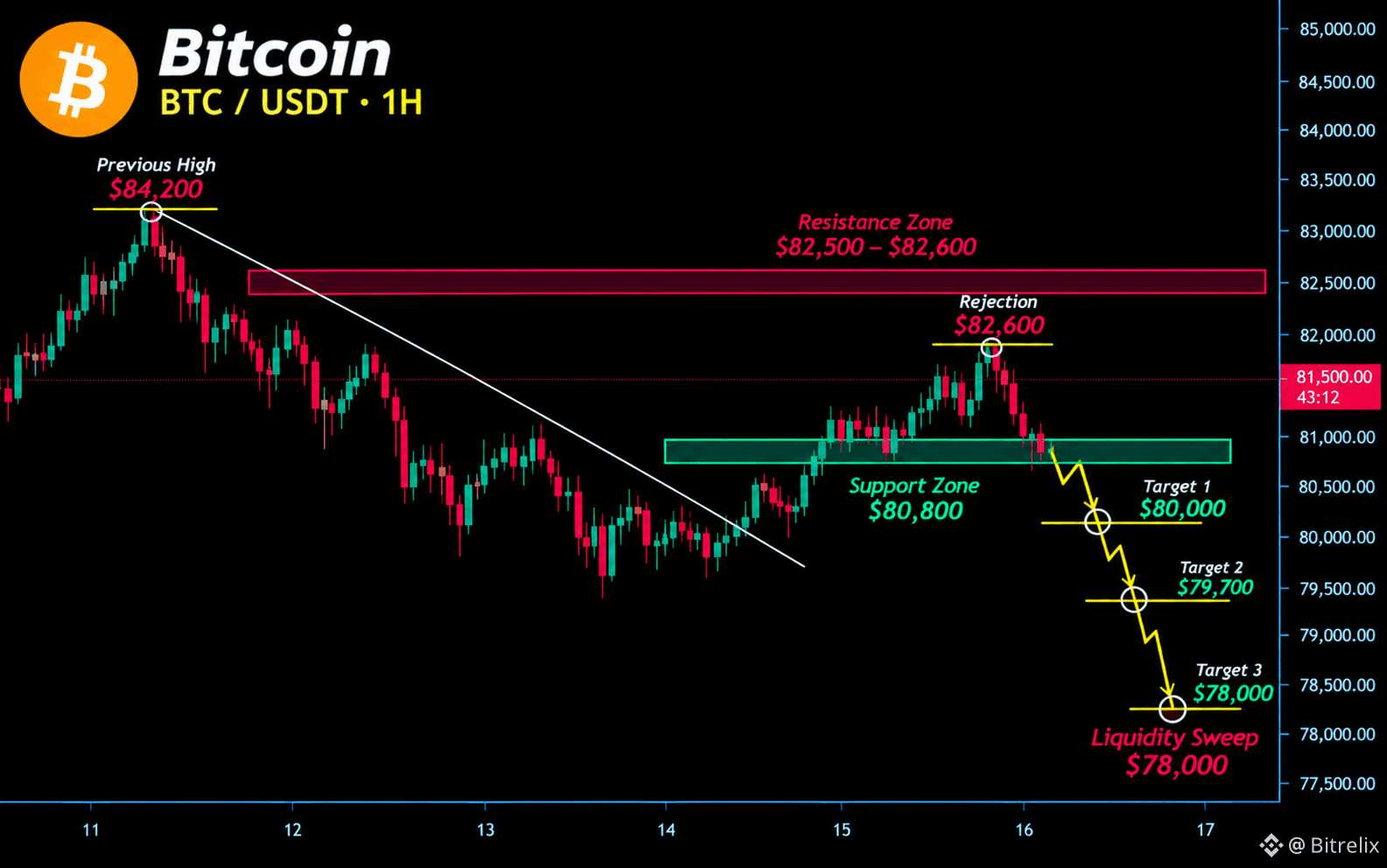
Bitcoin cotiza cerca de los $81,500, mientras el impulso a corto plazo sigue siendo débil y los vendedores defienden la zona de resistencia de $82,500–$82,600.
📉 Una caída por debajo de $80,800 podría dejar al descubierto zonas de soporte más bajas, con $79,700 como nivel clave a la baja.
📉 Ruta: $80,800 ➡️ $80,000 ➡️ $79,700 ➡️ $78,000 Barrido de liquidez.
No entres en pánico ante el barrido de liquidez. La verdadera acumulación ocurre después de la caída. Guarda esta publicación y vuelve a consultarla en unas semanas. 👇
🚨 ADVERTENCIA: ACTUALIZACIÓN DEL MERCADO DE BITCOIN 🚨
Bitcoin cotiza cerca de los $81,500, mientras el impulso a corto plazo sigue siendo débil y los vendedores defienden la zona de resistencia de $82,500–$82,600.
📉 Una caída por debajo de $80,800 podría dejar al descubierto zonas de soporte más bajas, con $79,700 como nivel clave a la baja.
📉 Ruta: $80,800 ➡️ $80,000 ➡️ $79,700 ➡️ $78,000 Barrido de liquidez.
No entres en pánico ante el barrido de liquidez. La verdadera acumulación ocurre después de la caída. Guarda esta publicación y vuelve a consultarla en unas semanas. 👇
Bitcoin cotiza cerca de los $81,500, mientras el impulso a corto plazo sigue siendo débil y los vendedores defienden la zona de resistencia de $82,500–$82,600.
📉 Una caída por debajo de $80,800 podría dejar al descubierto zonas de soporte más bajas, con $79,700 como nivel clave a la baja.
📉 Ruta: $80,800 ➡️ $80,000 ➡️ $79,700 ➡️ $78,000 Barrido de liquidez.
No entres en pánico ante el barrido de liquidez. La verdadera acumulación ocurre después de la caída. Guarda esta publicación y vuelve a consultarla en unas semanas. 👇
3
163
·
--
Alcista
🚨 ADVERTENCIA: ACTUALIZACIÓN DEL MERCADO DE BITCOIN 🚨
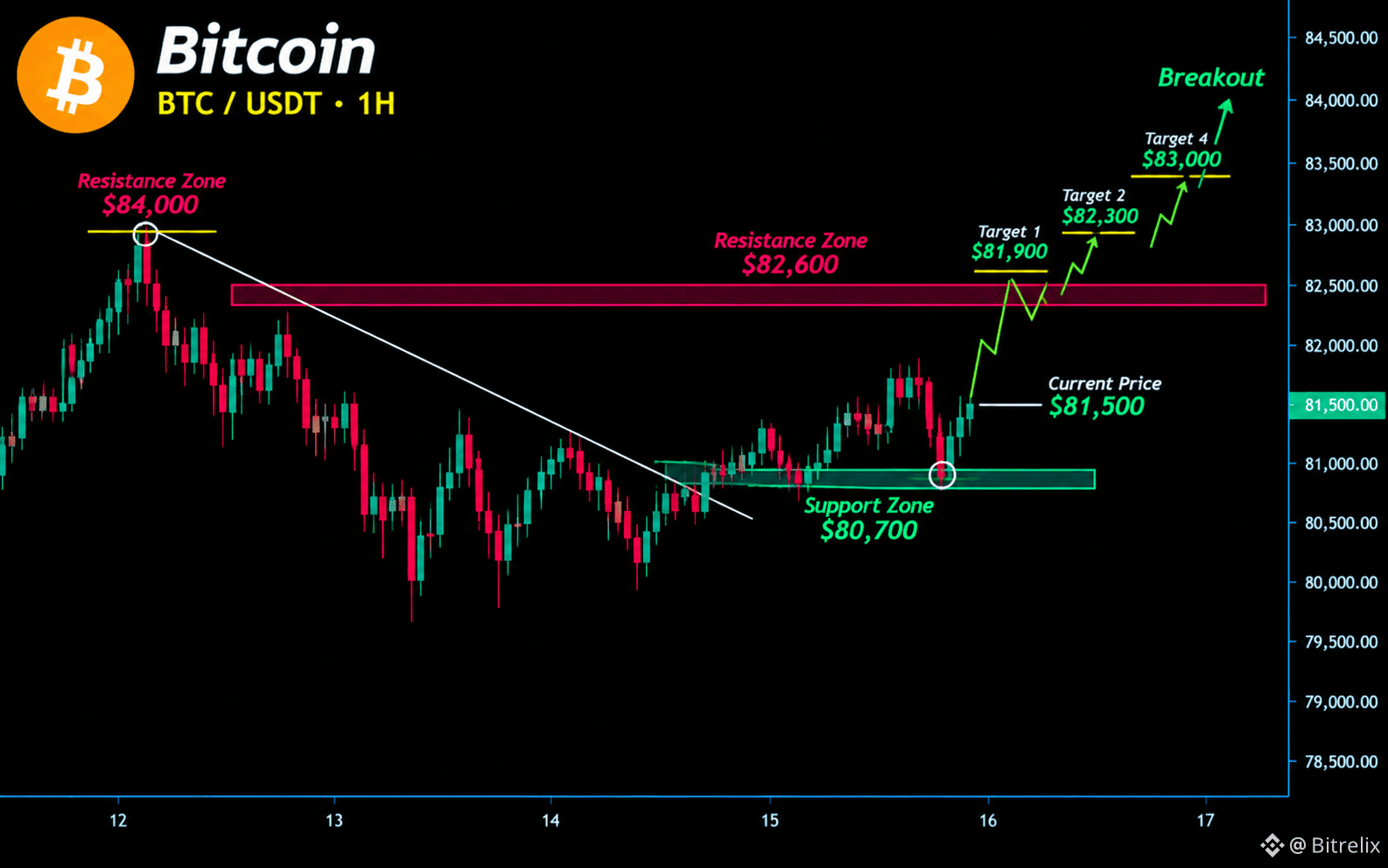
Bitcoin se está estabilizando cerca de los $81,500 después de que los compradores defendieran la zona de soporte de $80,700. 📈
Ahora los alcistas necesitan recuperar los $81,900–$82,300 para ganar impulso hacia la resistencia de $82,600. Una ruptura podría abrir la puerta a nuevas subidas.
📈 Recorrido:
$81,900 ➡️ $82,300 ➡️ $82,600 ➡️ $83,000 ➡️ Ruptura.
No te apresures con el retesteo. La verdadera expansión ocurre después de que se rompe una resistencia clave. Guarda esta publicación y vuelve a revisarla en unas semanas. 👇
$BTC
{future}(BTCUSDT)
🚨 ADVERTENCIA: ACTUALIZACIÓN DEL MERCADO DE BITCOIN 🚨
Bitcoin se está estabilizando cerca de los $81,500 después de que los compradores defendieran la zona de soporte de $80,700. 📈
Ahora los alcistas necesitan recuperar los $81,900–$82,300 para ganar impulso hacia la resistencia de $82,600. Una ruptura podría abrir la puerta a nuevas subidas.
📈 Recorrido:
$81,900 ➡️ $82,300 ➡️ $82,600 ➡️ $83,000 ➡️ Ruptura.
No te apresures con el retesteo. La verdadera expansión ocurre después de que se rompe una resistencia clave. Guarda esta publicación y vuelve a revisarla en unas semanas. 👇
$BTC
Bitcoin se está estabilizando cerca de los $81,500 después de que los compradores defendieran la zona de soporte de $80,700. 📈
Ahora los alcistas necesitan recuperar los $81,900–$82,300 para ganar impulso hacia la resistencia de $82,600. Una ruptura podría abrir la puerta a nuevas subidas.
📈 Recorrido:
$81,900 ➡️ $82,300 ➡️ $82,600 ➡️ $83,000 ➡️ Ruptura.
No te apresures con el retesteo. La verdadera expansión ocurre después de que se rompe una resistencia clave. Guarda esta publicación y vuelve a revisarla en unas semanas. 👇
$BTC
1
3
141
·
--
Alcista
🚨 ADVERTENCIA: ACTUALIZACIÓN DEL MERCADO DE ETHEREUM 🚨
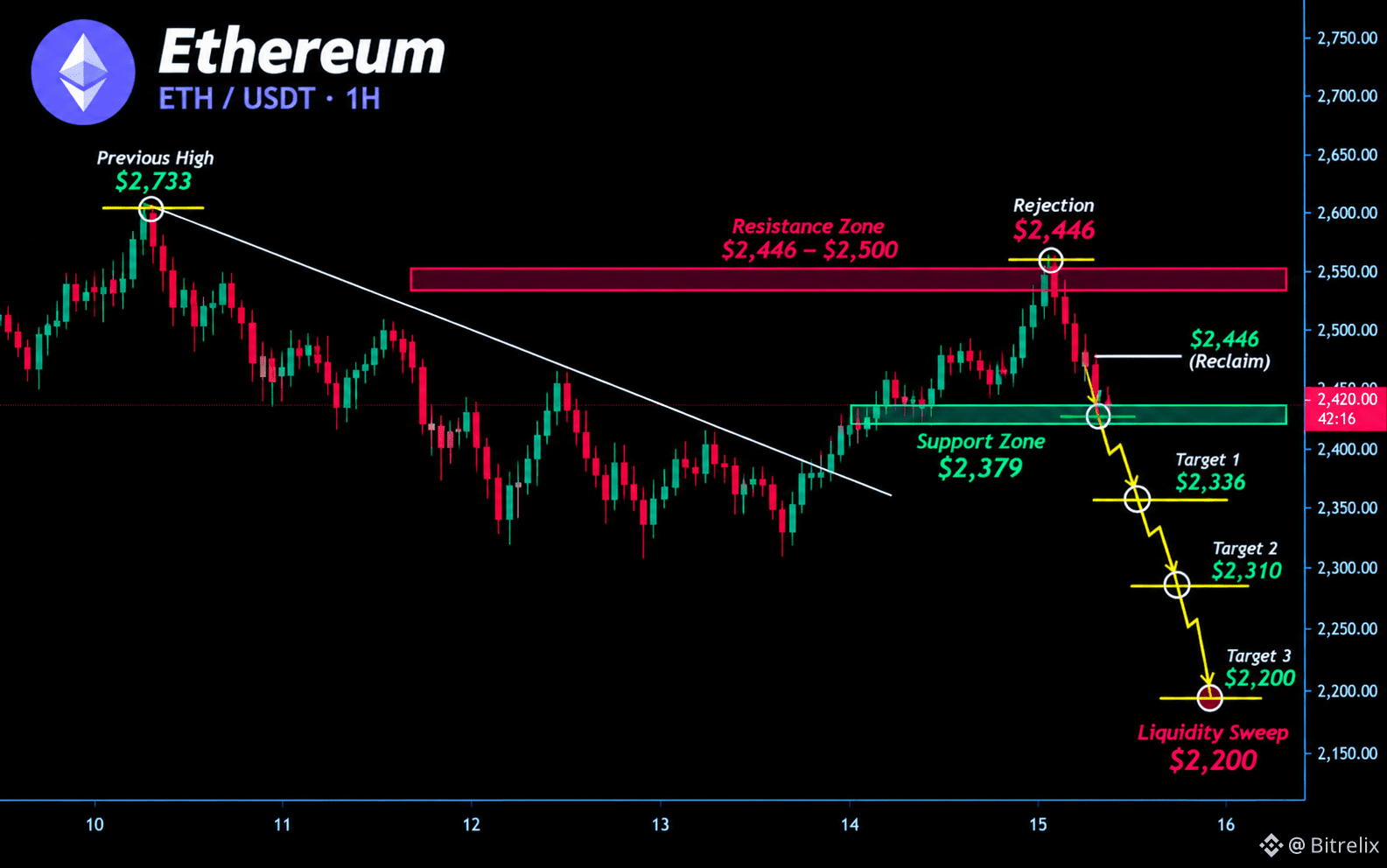
Ethereum cotiza cerca de los $2,420 y enfrenta presión bajista a corto plazo por debajo de una resistencia clave. 📉
Los alcistas deben recuperar los $2,446, mientras que perder los $2,379 podría desencadenar otra caída.
📉 Trayectoria:
$2,379 ➡️ $2,336 ➡️ $2,310 ➡️ Barrido de liquidez en $2,200.
No entres en pánico ante el barrido de liquidez. La acumulación real ocurre después de la caída. Guarda esta publicación y vuelve a revisarla en unas semanas. 👇
#ETHDropsBelow2400USDT
🚨 ADVERTENCIA: ACTUALIZACIÓN DEL MERCADO DE ETHEREUM 🚨
Ethereum cotiza cerca de los $2,420 y enfrenta presión bajista a corto plazo por debajo de una resistencia clave. 📉
Los alcistas deben recuperar los $2,446, mientras que perder los $2,379 podría desencadenar otra caída.
📉 Trayectoria:
$2,379 ➡️ $2,336 ➡️ $2,310 ➡️ Barrido de liquidez en $2,200.
No entres en pánico ante el barrido de liquidez. La acumulación real ocurre después de la caída. Guarda esta publicación y vuelve a revisarla en unas semanas. 👇
#ETHDropsBelow2400USDT
Ethereum cotiza cerca de los $2,420 y enfrenta presión bajista a corto plazo por debajo de una resistencia clave. 📉
Los alcistas deben recuperar los $2,446, mientras que perder los $2,379 podría desencadenar otra caída.
📉 Trayectoria:
$2,379 ➡️ $2,336 ➡️ $2,310 ➡️ Barrido de liquidez en $2,200.
No entres en pánico ante el barrido de liquidez. La acumulación real ocurre después de la caída. Guarda esta publicación y vuelve a revisarla en unas semanas. 👇
#ETHDropsBelow2400USDT
1
2
197
·
--
Alcista
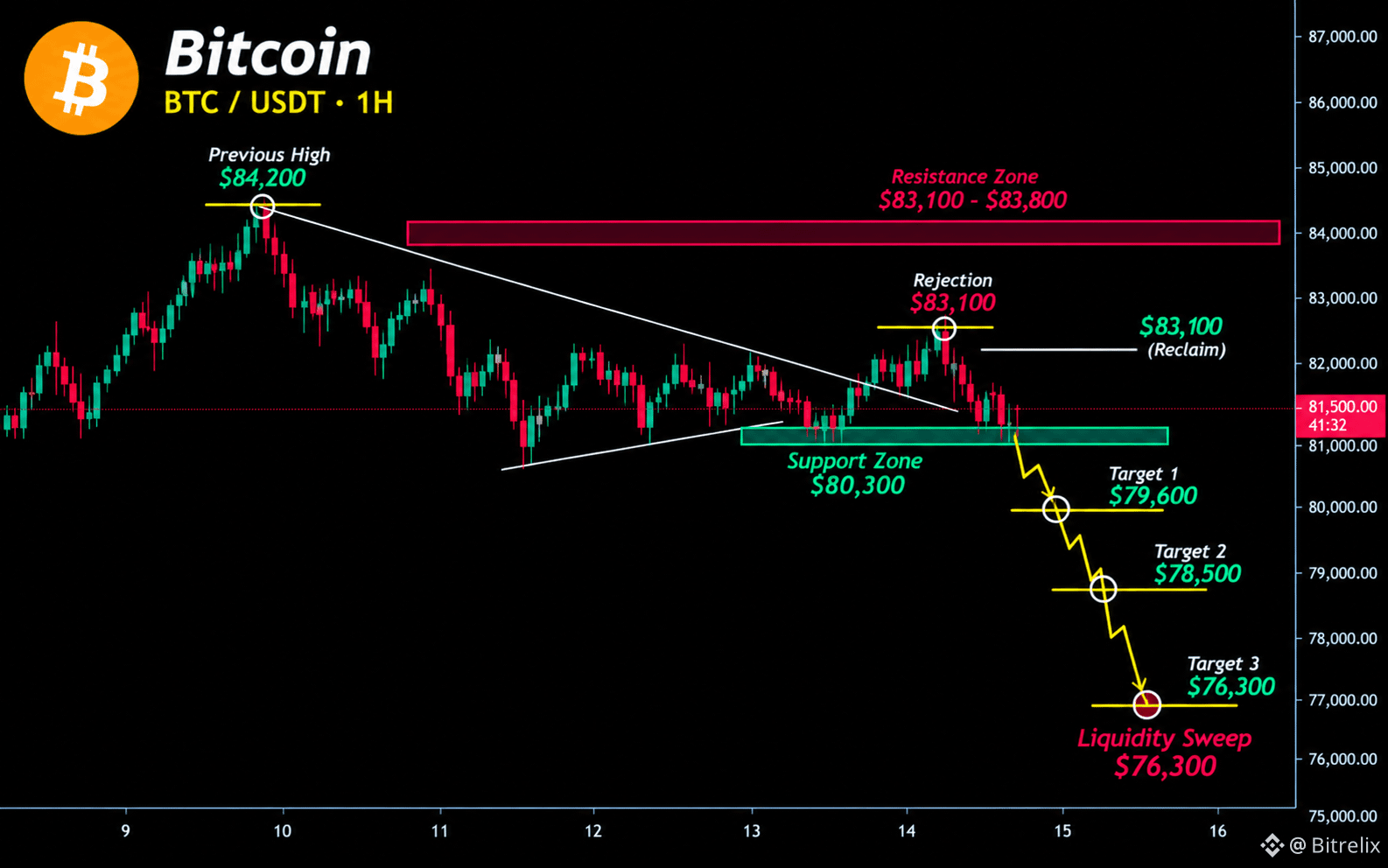
🚨 ADVERTENCIA: ACTUALIZACIÓN DEL MERCADO $BTC 🚨
Bitcoin cotiza cerca de los 81.500 $, bajo presión bajista a corto plazo tras ser rechazado en niveles más altos. 📉
Los alcistas deben recuperar los 83.100 $, mientras que una caída por debajo de los 80.300 $ podría abrir la puerta a otro movimiento bajista.
📉 Trayectoria:
80.300 $ ➡️ 79.600 $ ➡️ 78.500 $ ➡️ 76.300 $ Barrido de liquidez.
No entres en pánico ante el barrido de liquidez. La acumulación real ocurre después de la caída. Guarda esta publicación y vuelve a consultarla dentro de unas semanas. 👇
{future}(BTCUSDT)
🚨 ADVERTENCIA: ACTUALIZACIÓN DEL MERCADO $BTC 🚨
Bitcoin cotiza cerca de los 81.500 $, bajo presión bajista a corto plazo tras ser rechazado en niveles más altos. 📉
Los alcistas deben recuperar los 83.100 $, mientras que una caída por debajo de los 80.300 $ podría abrir la puerta a otro movimiento bajista.
📉 Trayectoria:
80.300 $ ➡️ 79.600 $ ➡️ 78.500 $ ➡️ 76.300 $ Barrido de liquidez.
No entres en pánico ante el barrido de liquidez. La acumulación real ocurre después de la caída. Guarda esta publicación y vuelve a consultarla dentro de unas semanas. 👇
Bitcoin cotiza cerca de los 81.500 $, bajo presión bajista a corto plazo tras ser rechazado en niveles más altos. 📉
Los alcistas deben recuperar los 83.100 $, mientras que una caída por debajo de los 80.300 $ podría abrir la puerta a otro movimiento bajista.
📉 Trayectoria:
80.300 $ ➡️ 79.600 $ ➡️ 78.500 $ ➡️ 76.300 $ Barrido de liquidez.
No entres en pánico ante el barrido de liquidez. La acumulación real ocurre después de la caída. Guarda esta publicación y vuelve a consultarla dentro de unas semanas. 👇
2
148
·
--
Alcista
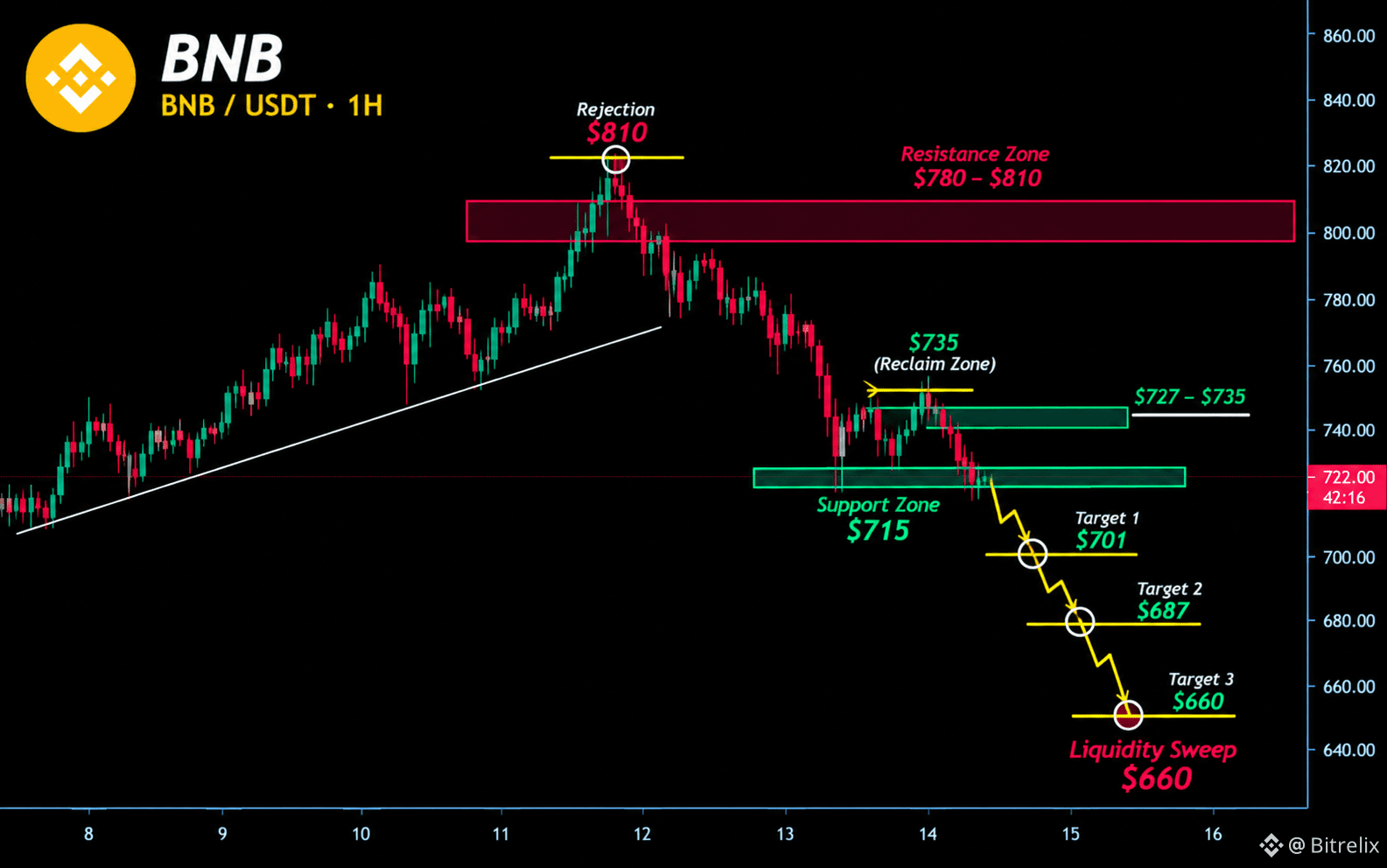
🚨 ADVERTENCIA: ACTUALIZACIÓN DEL MERCADO DE BNB 🚨
$BNB cotiza cerca de los $722 y enfrenta presión bajista a corto plazo tras ser rechazado cerca de los $810. 📉
Los compradores deben recuperar el nivel de $727–$735, mientras que una caída por debajo de $715 podría desencadenar otro movimiento bajista.
📉 Trayectoria:
$715 ➡️ $701 ➡️ $687 ➡️ $660 Barrido de liquidez.
No entres en pánico durante el barrido de liquidez. La acumulación real ocurre después de la caída. Guarda esta publicación y vuelve a consultarla dentro de unas semanas. 👇
{future}(BNBUSDT)
🚨 ADVERTENCIA: ACTUALIZACIÓN DEL MERCADO DE BNB 🚨
$BNB cotiza cerca de los $722 y enfrenta presión bajista a corto plazo tras ser rechazado cerca de los $810. 📉
Los compradores deben recuperar el nivel de $727–$735, mientras que una caída por debajo de $715 podría desencadenar otro movimiento bajista.
📉 Trayectoria:
$715 ➡️ $701 ➡️ $687 ➡️ $660 Barrido de liquidez.
No entres en pánico durante el barrido de liquidez. La acumulación real ocurre después de la caída. Guarda esta publicación y vuelve a consultarla dentro de unas semanas. 👇
$BNB cotiza cerca de los $722 y enfrenta presión bajista a corto plazo tras ser rechazado cerca de los $810. 📉
Los compradores deben recuperar el nivel de $727–$735, mientras que una caída por debajo de $715 podría desencadenar otro movimiento bajista.
📉 Trayectoria:
$715 ➡️ $701 ➡️ $687 ➡️ $660 Barrido de liquidez.
No entres en pánico durante el barrido de liquidez. La acumulación real ocurre después de la caída. Guarda esta publicación y vuelve a consultarla dentro de unas semanas. 👇
1
110
·
--
Alcista
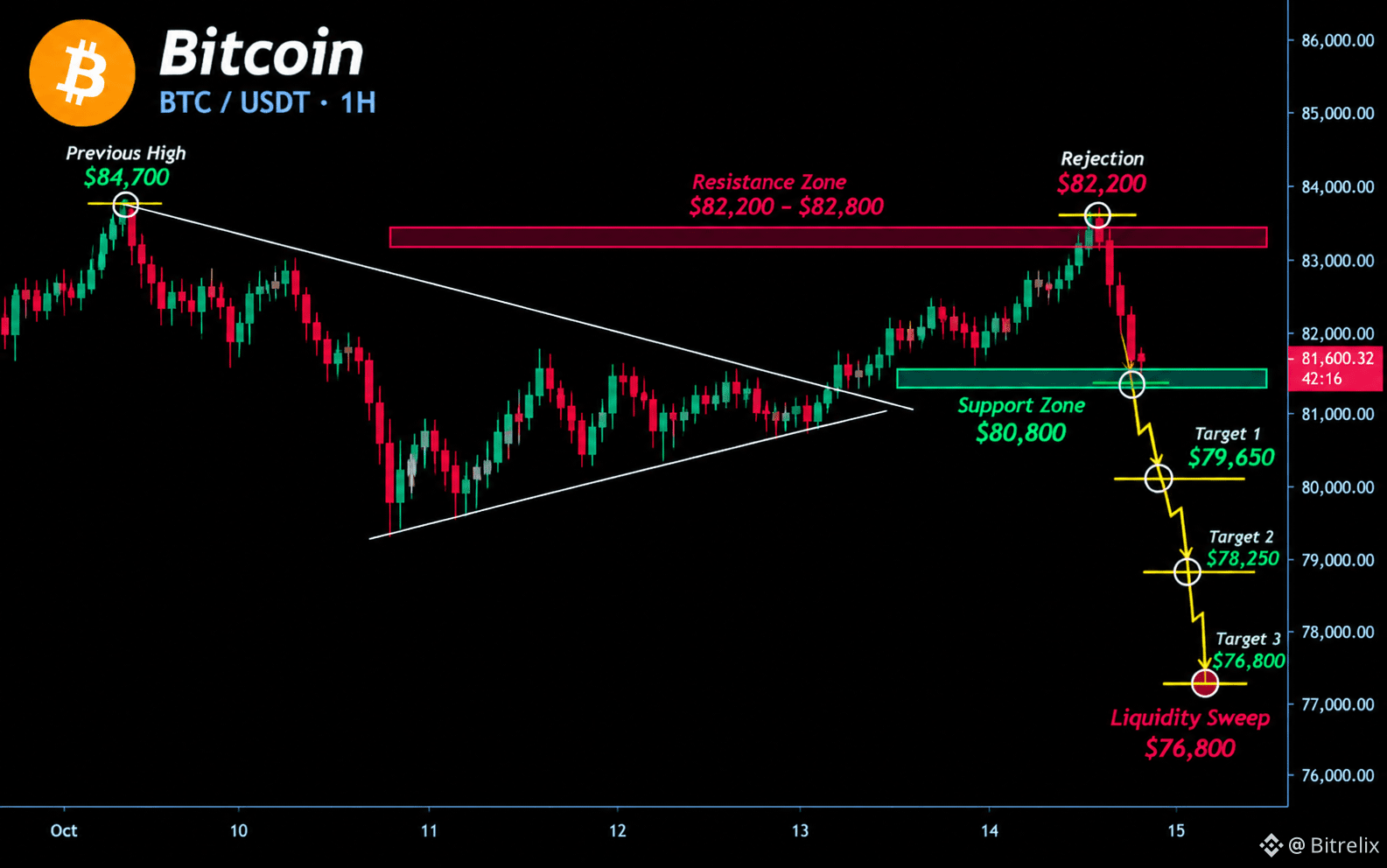
🚨 ADVERTENCIA: ACTUALIZACIÓN DEL MERCADO DE BTC 🚨
$BTC cotiza cerca de los 81.600 $, tras una fuerte venta masiva, y el impulso a corto plazo sigue bajo presión. 📉
Los alcistas necesitan recuperar los 82.200 $, mientras que una caída por debajo de los 80.800 $ podría abrir la puerta a otro movimiento bajista.
📉 Trayectoria:
80.800 $ ➡️ 79.650 $ ➡️ 78.250 $ ➡️ 76.800 $ Barrido de liquidez.
No entres en pánico durante el barrido de liquidez. La verdadera acumulación ocurre después de la caída. Guarda esta publicación y vuelve a consultarla dentro de unas semanas. 👇
{future}(BTCUSDT)
#BitcoinShortTermHoldersReach4.08MBTC
🚨 ADVERTENCIA: ACTUALIZACIÓN DEL MERCADO DE BTC 🚨
$BTC cotiza cerca de los 81.600 $, tras una fuerte venta masiva, y el impulso a corto plazo sigue bajo presión. 📉
Los alcistas necesitan recuperar los 82.200 $, mientras que una caída por debajo de los 80.800 $ podría abrir la puerta a otro movimiento bajista.
📉 Trayectoria:
80.800 $ ➡️ 79.650 $ ➡️ 78.250 $ ➡️ 76.800 $ Barrido de liquidez.
No entres en pánico durante el barrido de liquidez. La verdadera acumulación ocurre después de la caída. Guarda esta publicación y vuelve a consultarla dentro de unas semanas. 👇
#BitcoinShortTermHoldersReach4.08MBTC
$BTC cotiza cerca de los 81.600 $, tras una fuerte venta masiva, y el impulso a corto plazo sigue bajo presión. 📉
Los alcistas necesitan recuperar los 82.200 $, mientras que una caída por debajo de los 80.800 $ podría abrir la puerta a otro movimiento bajista.
📉 Trayectoria:
80.800 $ ➡️ 79.650 $ ➡️ 78.250 $ ➡️ 76.800 $ Barrido de liquidez.
No entres en pánico durante el barrido de liquidez. La verdadera acumulación ocurre después de la caída. Guarda esta publicación y vuelve a consultarla dentro de unas semanas. 👇
#BitcoinShortTermHoldersReach4.08MBTC
1
214
·
--
Alcista
He estado dedicando algo de tiempo a investigar Nillion, y su enfoque de la computación ciega me parece realmente interesante.
En lugar de exponer información confidencial, Nillion busca permitir realizar operaciones con datos cifrados. Esto podría ser útil para agentes de IA, estrategias de trading y aplicaciones que necesitan procesar datos valiosos sin revelarlos innecesariamente.
Lo que más me interesa es el problema real que intenta resolver: ¿cómo podemos aprovechar los datos sin sacrificar la privacidad?
Por supuesto, la adopción dependerá del rendimiento, la seguridad, la experiencia de los desarrolladores y la demanda real. Estaré atento a las aplicaciones prácticas, los desarrolladores activos y los usuarios que vuelvan una y otra vez.
¿Conoces algún caso de uso real en el que la computación ciega de Nillion pueda marcar una diferencia significativa?
#nil $NIL @nillionnetwork
He estado dedicando algo de tiempo a investigar Nillion, y su enfoque de la computación ciega me parece realmente interesante.
En lugar de exponer información confidencial, Nillion busca permitir realizar operaciones con datos cifrados. Esto podría ser útil para agentes de IA, estrategias de trading y aplicaciones que necesitan procesar datos valiosos sin revelarlos innecesariamente.
Lo que más me interesa es el problema real que intenta resolver: ¿cómo podemos aprovechar los datos sin sacrificar la privacidad?
Por supuesto, la adopción dependerá del rendimiento, la seguridad, la experiencia de los desarrolladores y la demanda real. Estaré atento a las aplicaciones prácticas, los desarrolladores activos y los usuarios que vuelvan una y otra vez.
¿Conoces algún caso de uso real en el que la computación ciega de Nillion pueda marcar una diferencia significativa?
#nil $NIL @Nillion
En lugar de exponer información confidencial, Nillion busca permitir realizar operaciones con datos cifrados. Esto podría ser útil para agentes de IA, estrategias de trading y aplicaciones que necesitan procesar datos valiosos sin revelarlos innecesariamente.
Lo que más me interesa es el problema real que intenta resolver: ¿cómo podemos aprovechar los datos sin sacrificar la privacidad?
Por supuesto, la adopción dependerá del rendimiento, la seguridad, la experiencia de los desarrolladores y la demanda real. Estaré atento a las aplicaciones prácticas, los desarrolladores activos y los usuarios que vuelvan una y otra vez.
¿Conoces algún caso de uso real en el que la computación ciega de Nillion pueda marcar una diferencia significativa?
#nil $NIL @Nillion

4
136
·
--
Alcista
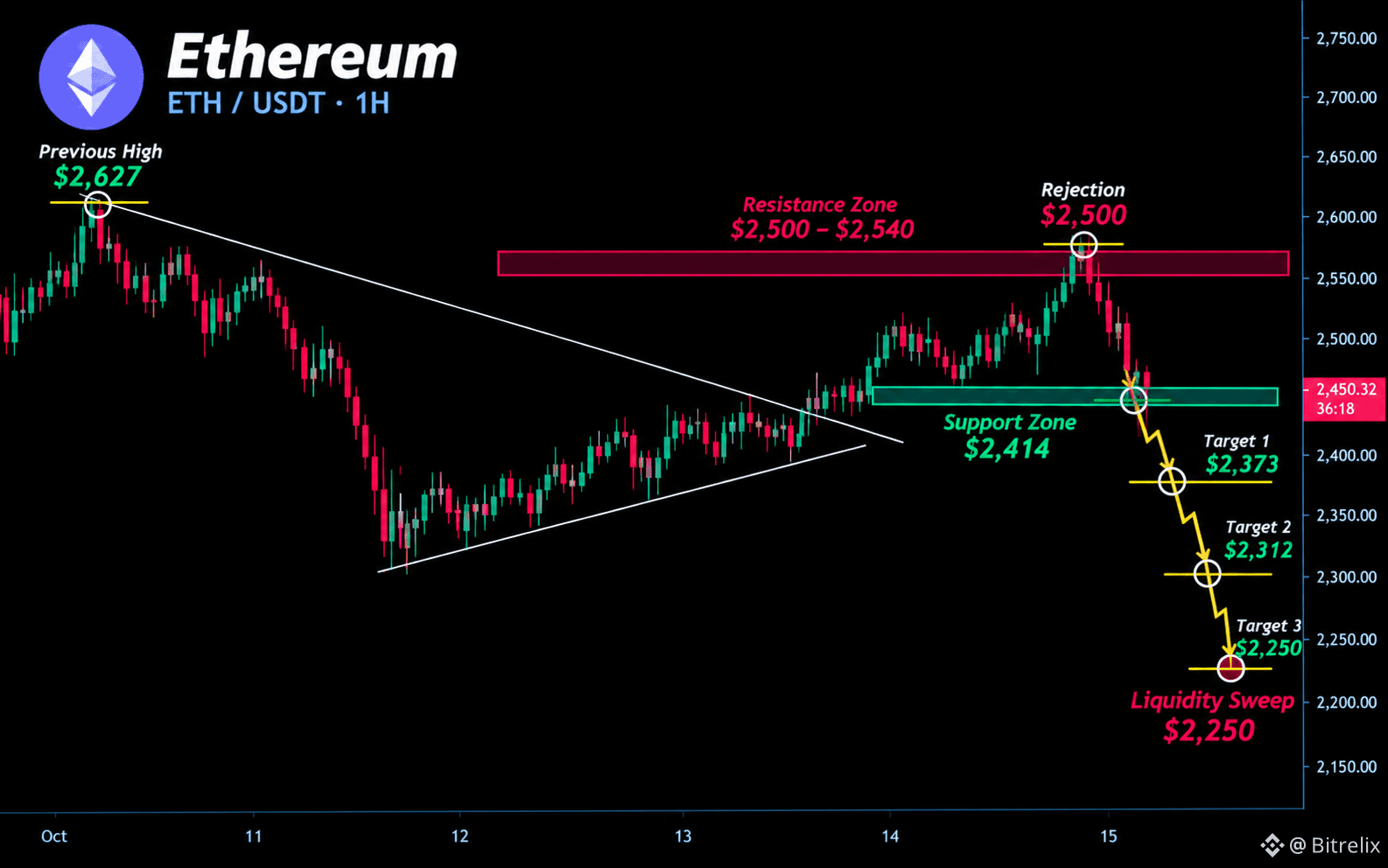
🚨 ADVERTENCIA: ACTUALIZACIÓN DEL MERCADO DE ETH 🚨
$ETH cotiza cerca de los $2,450 tras un rebote de alivio, pero la estructura general a corto plazo sigue bajo presión. 📉
Los alcistas deben recuperar los $2,500, mientras que perder los $2,414 podría provocar otra caída.
📉 Trayectoria:
$2,414 ➡️ $2,373 ➡️ $2,312 ➡️ $2,250: barrido de liquidez.
No entres en pánico ante el barrido de liquidez. La acumulación real ocurre después de la caída. Guarda esta publicación y vuelve a consultarla dentro de unas semanas. 👇
🚨 ADVERTENCIA: ACTUALIZACIÓN DEL MERCADO DE ETH 🚨
$ETH cotiza cerca de los $2,450 tras un rebote de alivio, pero la estructura general a corto plazo sigue bajo presión. 📉
Los alcistas deben recuperar los $2,500, mientras que perder los $2,414 podría provocar otra caída.
📉 Trayectoria:
$2,414 ➡️ $2,373 ➡️ $2,312 ➡️ $2,250: barrido de liquidez.
No entres en pánico ante el barrido de liquidez. La acumulación real ocurre después de la caída. Guarda esta publicación y vuelve a consultarla dentro de unas semanas. 👇
$ETH cotiza cerca de los $2,450 tras un rebote de alivio, pero la estructura general a corto plazo sigue bajo presión. 📉
Los alcistas deben recuperar los $2,500, mientras que perder los $2,414 podría provocar otra caída.
📉 Trayectoria:
$2,414 ➡️ $2,373 ➡️ $2,312 ➡️ $2,250: barrido de liquidez.
No entres en pánico ante el barrido de liquidez. La acumulación real ocurre después de la caída. Guarda esta publicación y vuelve a consultarla dentro de unas semanas. 👇
5
157
·
--
Alcista
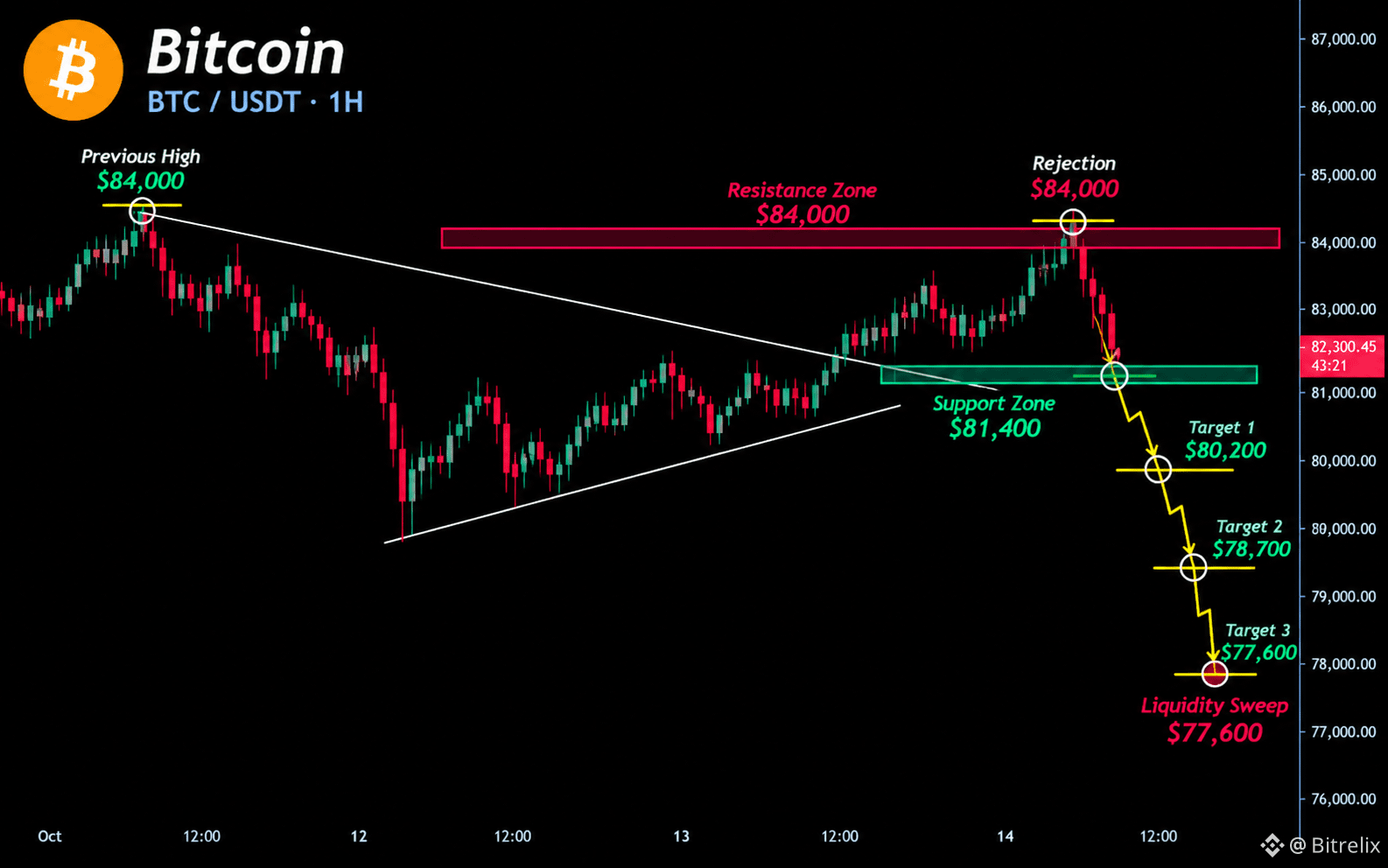
🚨 ADVERTENCIA: ACTUALIZACIÓN DEL MERCADO DE BTC 🚨
$BTC cotiza cerca de los $82,300 tras un fuerte rechazo desde los $84,000, y la presión vendedora a corto plazo sigue vigente. 📉
Los compradores deben defender los $81,400 para evitar otra caída; recuperar los $83,800 podría reavivar el impulso alcista.
📉 Trayectoria:
$81,400 ➡️ $80,200 ➡️ $78,700 ➡️ $77,600 Barrido de liquidez.
No entres en pánico durante el barrido de liquidez. La verdadera acumulación ocurre después de la caída. Guarda esta publicación y vuelve a consultarla dentro de unas semanas. 👇
{future}(BTCUSDT)
🚨 ADVERTENCIA: ACTUALIZACIÓN DEL MERCADO DE BTC 🚨
$BTC cotiza cerca de los $82,300 tras un fuerte rechazo desde los $84,000, y la presión vendedora a corto plazo sigue vigente. 📉
Los compradores deben defender los $81,400 para evitar otra caída; recuperar los $83,800 podría reavivar el impulso alcista.
📉 Trayectoria:
$81,400 ➡️ $80,200 ➡️ $78,700 ➡️ $77,600 Barrido de liquidez.
No entres en pánico durante el barrido de liquidez. La verdadera acumulación ocurre después de la caída. Guarda esta publicación y vuelve a consultarla dentro de unas semanas. 👇
$BTC cotiza cerca de los $82,300 tras un fuerte rechazo desde los $84,000, y la presión vendedora a corto plazo sigue vigente. 📉
Los compradores deben defender los $81,400 para evitar otra caída; recuperar los $83,800 podría reavivar el impulso alcista.
📉 Trayectoria:
$81,400 ➡️ $80,200 ➡️ $78,700 ➡️ $77,600 Barrido de liquidez.
No entres en pánico durante el barrido de liquidez. La verdadera acumulación ocurre después de la caída. Guarda esta publicación y vuelve a consultarla dentro de unas semanas. 👇
3
777
·
--
Alcista
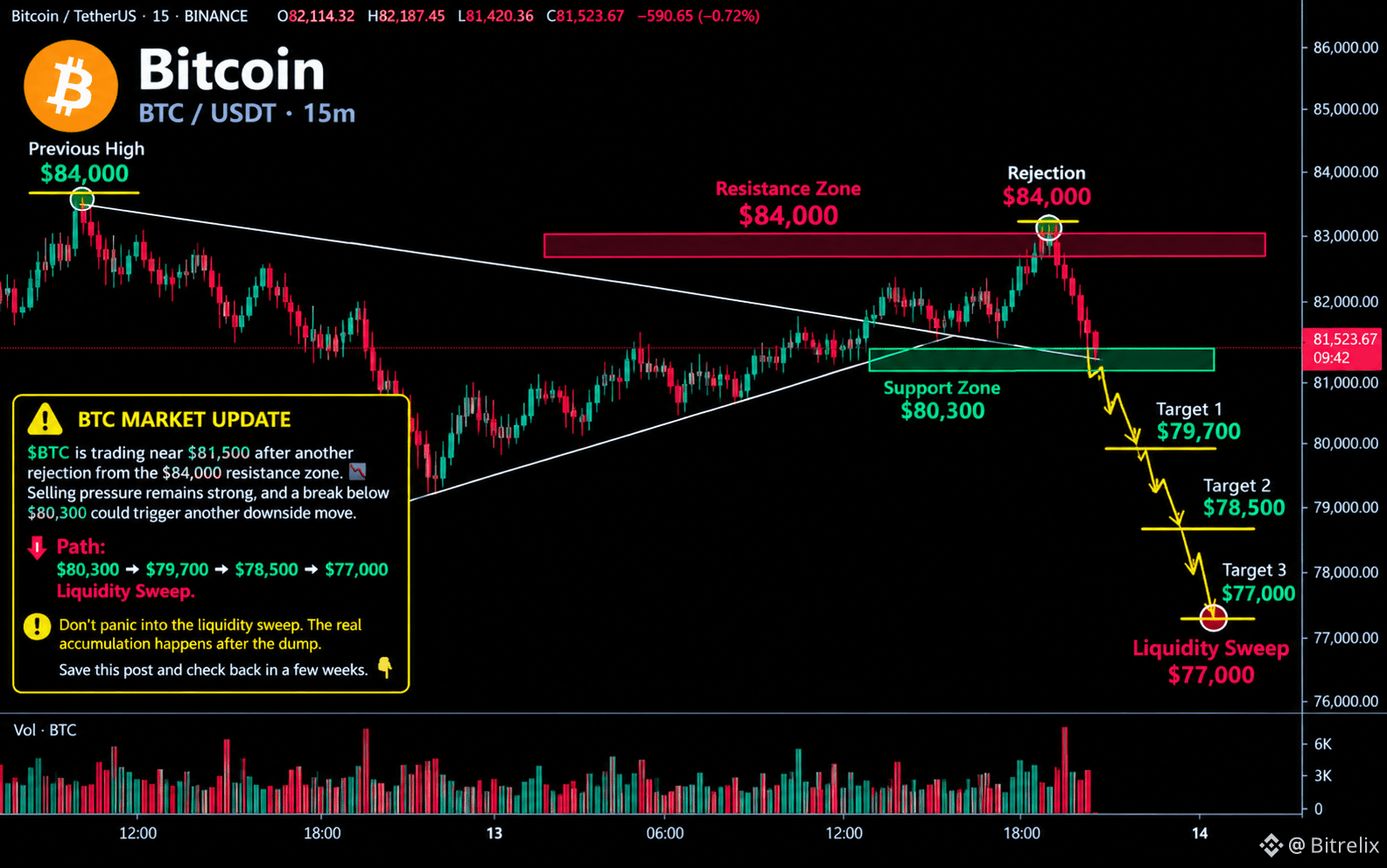
🚨 ADVERTENCIA: ACTUALIZACIÓN DEL MERCADO DE BTC 🚨
$BTC cotiza cerca de $81,500 tras otro rechazo en la zona de resistencia de $84,000. 📉
La presión vendedora sigue siendo fuerte, y una caída por debajo de $80,300 podría desencadenar otro movimiento bajista.
📉 Recorrido:
$80,300 ➡️ $79,700 ➡️ $78,500 ➡️ $77,000: barrido de liquidez.
No entres en pánico durante el barrido de liquidez. La verdadera acumulación ocurre después del desplome. Guarda esta publicación y vuelve a consultarla dentro de unas semanas. 👇
#CPIWatch
{future}(BTCUSDT)
🚨 ADVERTENCIA: ACTUALIZACIÓN DEL MERCADO DE BTC 🚨
$BTC cotiza cerca de $81,500 tras otro rechazo en la zona de resistencia de $84,000. 📉
La presión vendedora sigue siendo fuerte, y una caída por debajo de $80,300 podría desencadenar otro movimiento bajista.
📉 Recorrido:
$80,300 ➡️ $79,700 ➡️ $78,500 ➡️ $77,000: barrido de liquidez.
No entres en pánico durante el barrido de liquidez. La verdadera acumulación ocurre después del desplome. Guarda esta publicación y vuelve a consultarla dentro de unas semanas. 👇
#CPIWatch
$BTC cotiza cerca de $81,500 tras otro rechazo en la zona de resistencia de $84,000. 📉
La presión vendedora sigue siendo fuerte, y una caída por debajo de $80,300 podría desencadenar otro movimiento bajista.
📉 Recorrido:
$80,300 ➡️ $79,700 ➡️ $78,500 ➡️ $77,000: barrido de liquidez.
No entres en pánico durante el barrido de liquidez. La verdadera acumulación ocurre después del desplome. Guarda esta publicación y vuelve a consultarla dentro de unas semanas. 👇
#CPIWatch
1
2
163
·
--
Alcista
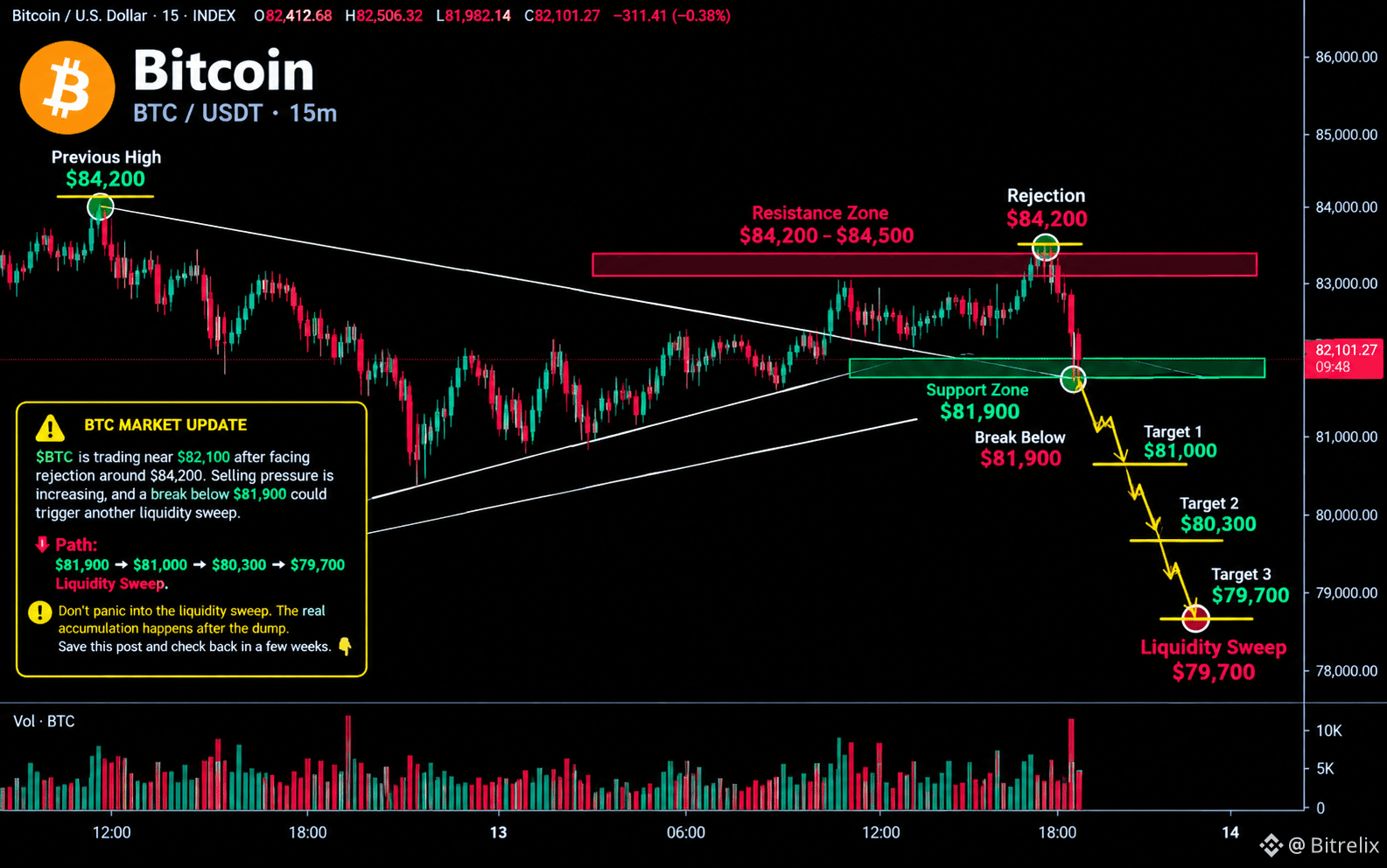
🚨 ADVERTENCIA: ACTUALIZACIÓN DEL MERCADO DE BTC 🚨
$BTC cotiza cerca de los $82,100 tras ser rechazado alrededor de los $84,200. 📉
La presión vendedora está aumentando, y una caída por debajo de $81,900 podría provocar otro barrido de liquidez.
📉 Trayectoria:
$81,900 ➡️ $81,000 ➡️ $80,300 ➡️ $79,700 Barrido de liquidez.
No entres en pánico durante el barrido de liquidez. La verdadera acumulación ocurre después de la caída. Guarda esta publicación y vuelve a revisarla en unas semanas. 👇
{future}(BTCUSDT)
#CPIWatch #BTC
🚨 ADVERTENCIA: ACTUALIZACIÓN DEL MERCADO DE BTC 🚨
$BTC cotiza cerca de los $82,100 tras ser rechazado alrededor de los $84,200. 📉
La presión vendedora está aumentando, y una caída por debajo de $81,900 podría provocar otro barrido de liquidez.
📉 Trayectoria:
$81,900 ➡️ $81,000 ➡️ $80,300 ➡️ $79,700 Barrido de liquidez.
No entres en pánico durante el barrido de liquidez. La verdadera acumulación ocurre después de la caída. Guarda esta publicación y vuelve a revisarla en unas semanas. 👇
#CPIWatch #BTC
$BTC cotiza cerca de los $82,100 tras ser rechazado alrededor de los $84,200. 📉
La presión vendedora está aumentando, y una caída por debajo de $81,900 podría provocar otro barrido de liquidez.
📉 Trayectoria:
$81,900 ➡️ $81,000 ➡️ $80,300 ➡️ $79,700 Barrido de liquidez.
No entres en pánico durante el barrido de liquidez. La verdadera acumulación ocurre después de la caída. Guarda esta publicación y vuelve a revisarla en unas semanas. 👇
#CPIWatch #BTC
2
140
·
--
Alcista
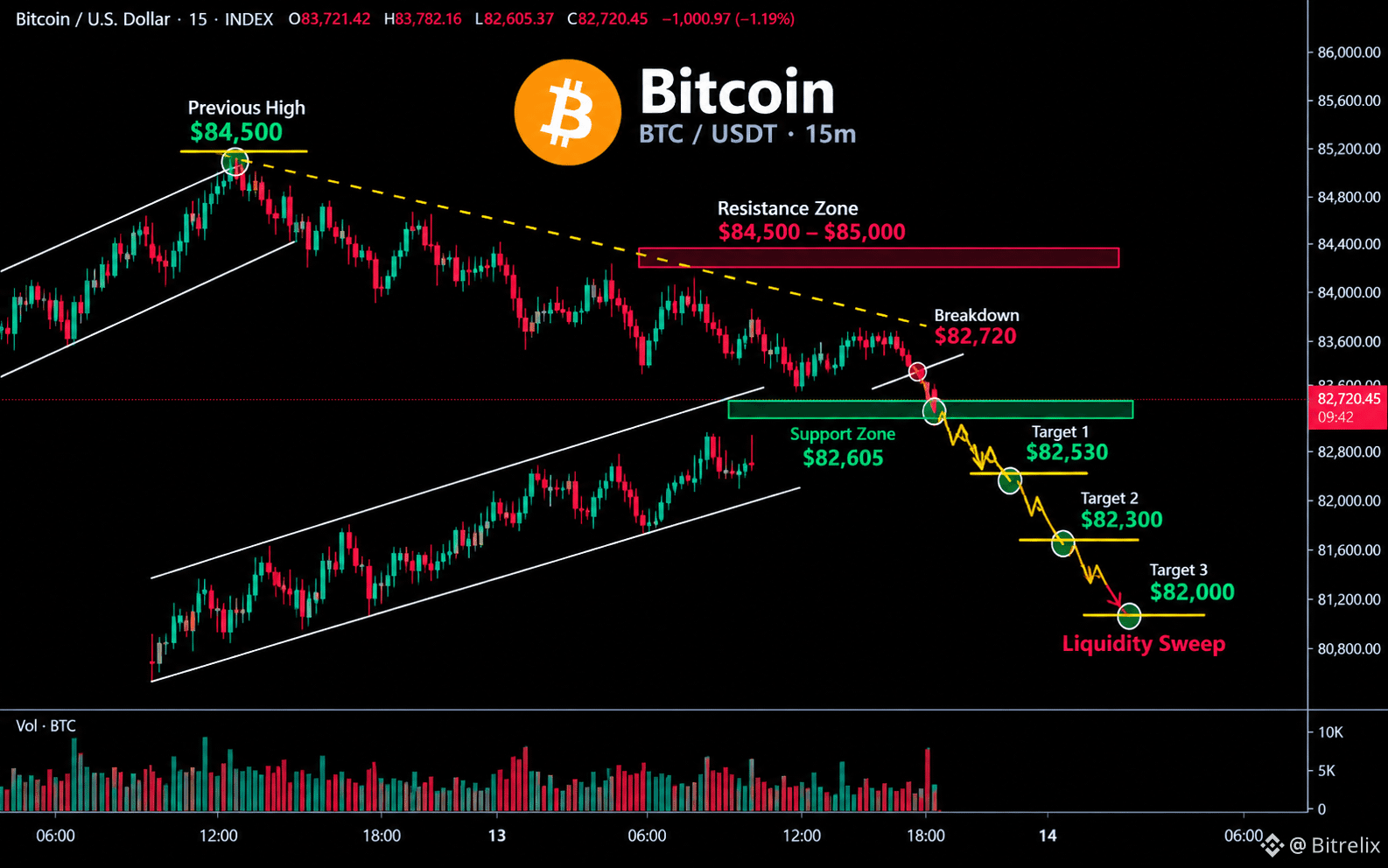
🚨 ADVERTENCIA: ACTUALIZACIÓN DEL MERCADO DE BTC 🚨
$BTC está enfrentando una fuerte presión de venta cerca de los $82,720 tras una abrupta caída en 15 minutos. 📉
El soporte de $82,605 es fundamental; una ruptura clara podría desencadenar otro barrido de liquidez.
📉 Trayectoria:
$82,605 ➡️ $82,530 ➡️ $82,300 ➡️ $82,000 Barrido de liquidez.
No entres en pánico durante el barrido de liquidez. La acumulación real ocurre después de la caída. Guarda esta publicación y vuelve a consultarla dentro de unas semanas. 👇
{future}(BTCUSDT)
#BitcoinOptionsVolatilityHitsFiveYearLow #BTC
🚨 ADVERTENCIA: ACTUALIZACIÓN DEL MERCADO DE BTC 🚨
$BTC está enfrentando una fuerte presión de venta cerca de los $82,720 tras una abrupta caída en 15 minutos. 📉
El soporte de $82,605 es fundamental; una ruptura clara podría desencadenar otro barrido de liquidez.
📉 Trayectoria:
$82,605 ➡️ $82,530 ➡️ $82,300 ➡️ $82,000 Barrido de liquidez.
No entres en pánico durante el barrido de liquidez. La acumulación real ocurre después de la caída. Guarda esta publicación y vuelve a consultarla dentro de unas semanas. 👇
#BitcoinOptionsVolatilityHitsFiveYearLow #BTC
$BTC está enfrentando una fuerte presión de venta cerca de los $82,720 tras una abrupta caída en 15 minutos. 📉
El soporte de $82,605 es fundamental; una ruptura clara podría desencadenar otro barrido de liquidez.
📉 Trayectoria:
$82,605 ➡️ $82,530 ➡️ $82,300 ➡️ $82,000 Barrido de liquidez.
No entres en pánico durante el barrido de liquidez. La acumulación real ocurre después de la caída. Guarda esta publicación y vuelve a consultarla dentro de unas semanas. 👇
#BitcoinOptionsVolatilityHitsFiveYearLow #BTC
269
·
--
Alcista
🚨 ADVERTENCIA: ACTUALIZACIÓN DEL MERCADO DE BTC 🚨
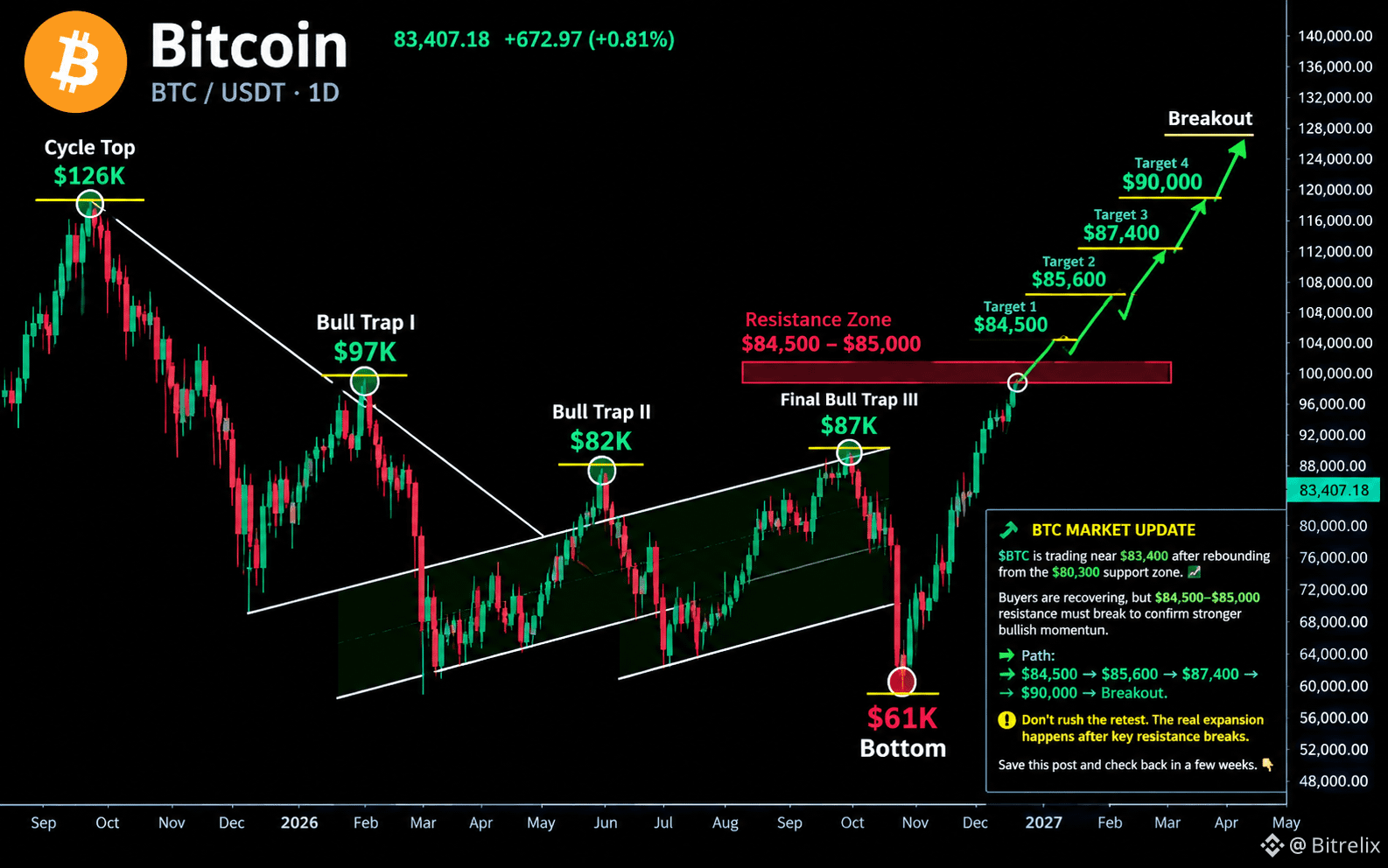
$BTC cotiza cerca de los $83,400 tras recuperarse desde la zona de soporte de $80,300. 📈
Los compradores se están recuperando, pero la resistencia de $84,500–$85,000 debe romperse para confirmar un impulso alcista más fuerte.
📈 Trayectoria:
$84,500 → $85,600 → $87,400 → $90,000 → Ruptura.
No te apresures con la nueva prueba. La verdadera expansión ocurre después de romper una resistencia clave. Guarda esta publicación y vuelve a consultarla en unas semanas. 👇#BitcoinOptionsVolatilityHitsFiveYearLow
🚨 ADVERTENCIA: ACTUALIZACIÓN DEL MERCADO DE BTC 🚨
$BTC cotiza cerca de los $83,400 tras recuperarse desde la zona de soporte de $80,300. 📈
Los compradores se están recuperando, pero la resistencia de $84,500–$85,000 debe romperse para confirmar un impulso alcista más fuerte.
📈 Trayectoria:
$84,500 → $85,600 → $87,400 → $90,000 → Ruptura.
No te apresures con la nueva prueba. La verdadera expansión ocurre después de romper una resistencia clave. Guarda esta publicación y vuelve a consultarla en unas semanas. 👇#BitcoinOptionsVolatilityHitsFiveYearLow
$BTC cotiza cerca de los $83,400 tras recuperarse desde la zona de soporte de $80,300. 📈
Los compradores se están recuperando, pero la resistencia de $84,500–$85,000 debe romperse para confirmar un impulso alcista más fuerte.
📈 Trayectoria:
$84,500 → $85,600 → $87,400 → $90,000 → Ruptura.
No te apresures con la nueva prueba. La verdadera expansión ocurre después de romper una resistencia clave. Guarda esta publicación y vuelve a consultarla en unas semanas. 👇#BitcoinOptionsVolatilityHitsFiveYearLow
3
11
162
Inicia sesión para explorar más contenidos
Únete a usuarios globales de criptomonedas en Binance Square
⚡️ Obtén información útil y actualizada sobre criptos.
💬 Avalado por el mayor exchange de criptomonedas en el mundo.
👍 Descubre perspectivas reales de creadores verificados.
Email/número de teléfono
Temas populares
BinancePick
2.6M vistas
140,919 están debatiendo
¡Únete a #TemporadaDeResultados: predice resultados en Binance Pick y comparte tu opinión en Binance Square!
Binance Square Official
·401 me gusta
·338.3k vistas
EarningsSeason
5M vistas
24,292 están debatiendo
FranklinTempletonFilesForTwoDividendToBitcoinETFs
1,001 vistas
61 están debatiendo