

Erica 1
149 Publicaciones

Erica 1
Denunciar
Bloquear usuario
Binance KOL | Crypto Analyst | #BTC Holder | #SOL and #ETH
0 Siguiendo
6 Seguidores
13 Me gusta
Publicaciones
·
--
La cuota de atención fuera de internet se está convirtiendo en una competencia real 🔥
Las comunidades en torno a $SOL y $HYPE dominan las conversaciones digitales, pero la temporada de conferencias demuestra que la atención también tiene ahora una dimensión presencial.
Tener visibilidad en el feed es distinto de convertirse en la comunidad que la gente no para de ver por distintas ciudades, escenarios y eventos paralelos.
La reciente gira de $Trump Coin Club combinó apariciones como ponentes principales en KBW y TOKEN2049 con experiencias privadas en Seúl y Singapur.
Esa presencia reiterada importa porque cada entorno presenta a la comunidad en un contexto social distinto.
Alguien puede fijarse por primera vez en el Club durante una conferencia y llegar a entenderlo a través de las experiencias que tienen lugar esa misma semana.
En mi opinión, la cuota de atención presencial crece cuando una comunidad pasa a formar parte de la conversación general sobre los eventos en distintos entornos.
La próxima batalla por la atención podría darse después de que la gente cierre la aplicación 👀
#Perspectivas Macro#
La cuota de atención fuera de internet se está convirtiendo en una competencia real 🔥
Las comunidades en torno a $SOL y $HYPE dominan las conversaciones digitales, pero la temporada de conferencias demuestra que la atención también tiene ahora una dimensión presencial.
Tener visibilidad en el feed es distinto de convertirse en la comunidad que la gente no para de ver por distintas ciudades, escenarios y eventos paralelos.
La reciente gira de $Trump Coin Club combinó apariciones como ponentes principales en KBW y TOKEN2049 con experiencias privadas en Seúl y Singapur.
Esa presencia reiterada importa porque cada entorno presenta a la comunidad en un contexto social distinto.
Alguien puede fijarse por primera vez en el Club durante una conferencia y llegar a entenderlo a través de las experiencias que tienen lugar esa misma semana.
En mi opinión, la cuota de atención presencial crece cuando una comunidad pasa a formar parte de la conversación general sobre los eventos en distintos entornos.
La próxima batalla por la atención podría darse después de que la gente cierre la aplicación 👀
#Perspectivas Macro#
Las comunidades en torno a $SOL y $HYPE dominan las conversaciones digitales, pero la temporada de conferencias demuestra que la atención también tiene ahora una dimensión presencial.
Tener visibilidad en el feed es distinto de convertirse en la comunidad que la gente no para de ver por distintas ciudades, escenarios y eventos paralelos.
La reciente gira de $Trump Coin Club combinó apariciones como ponentes principales en KBW y TOKEN2049 con experiencias privadas en Seúl y Singapur.
Esa presencia reiterada importa porque cada entorno presenta a la comunidad en un contexto social distinto.
Alguien puede fijarse por primera vez en el Club durante una conferencia y llegar a entenderlo a través de las experiencias que tienen lugar esa misma semana.
En mi opinión, la cuota de atención presencial crece cuando una comunidad pasa a formar parte de la conversación general sobre los eventos en distintos entornos.
La próxima batalla por la atención podría darse después de que la gente cierre la aplicación 👀
#Perspectivas Macro#

84
·
--
Lanzar un token es una ronda de financiación con mejor horario 💼
$VIRTUAL planteó ese argumento para los agentes y $BNKR construyó la maquinaria que lo hace posible. Lo que la mayoría pasa por alto es que este mecanismo está abierto a cualquiera, no solo a equipos que tengan una presentación.
Lanza un token y las operaciones que genera producen comisiones. La mayor parte de esas comisiones por intercambio va al creador, no a la plataforma.
Comparado con las alternativas, es un instrumento peculiar e interesante.
Recaudar capital implica ceder participación, encontrar gente que ya te conozca y pasar meses en un proceso con pocas probabilidades de éxito. Las subvenciones implican solicitudes y comités. Para generar ingresos, primero necesitas tener un producto.
Un lanzamiento genera capital de trabajo a partir de la atención, el único recurso que suele tener un proyecto en sus primeras etapas antes de contar con cualquier otra cosa. Que eso sea saludable depende por completo de lo que se construya con ese capital.
La salvedad obvia es importante: las comisiones necesitan volumen, el volumen necesita una razón de ser y la mayoría de los lanzamientos no consigue ninguna de las dos cosas después de la primera semana. Este mecanismo de financiación tiene un problema de supervivencia, y nadie debería interpretarlo como dinero gratis.
Pero un creador que puede financiar el desarrollo con el mercado que creó, sin pedir permiso, es una categoría de participante realmente nueva.
#DeFi #AI
Lanzar un token es una ronda de financiación con mejor horario 💼
$VIRTUAL planteó ese argumento para los agentes y $BNKR construyó la maquinaria que lo hace posible. Lo que la mayoría pasa por alto es que este mecanismo está abierto a cualquiera, no solo a equipos que tengan una presentación.
Lanza un token y las operaciones que genera producen comisiones. La mayor parte de esas comisiones por intercambio va al creador, no a la plataforma.
Comparado con las alternativas, es un instrumento peculiar e interesante.
Recaudar capital implica ceder participación, encontrar gente que ya te conozca y pasar meses en un proceso con pocas probabilidades de éxito. Las subvenciones implican solicitudes y comités. Para generar ingresos, primero necesitas tener un producto.
Un lanzamiento genera capital de trabajo a partir de la atención, el único recurso que suele tener un proyecto en sus primeras etapas antes de contar con cualquier otra cosa. Que eso sea saludable depende por completo de lo que se construya con ese capital.
La salvedad obvia es importante: las comisiones necesitan volumen, el volumen necesita una razón de ser y la mayoría de los lanzamientos no consigue ninguna de las dos cosas después de la primera semana. Este mecanismo de financiación tiene un problema de supervivencia, y nadie debería interpretarlo como dinero gratis.
Pero un creador que puede financiar el desarrollo con el mercado que creó, sin pedir permiso, es una categoría de participante realmente nueva.
#DeFi #AI
$VIRTUAL planteó ese argumento para los agentes y $BNKR construyó la maquinaria que lo hace posible. Lo que la mayoría pasa por alto es que este mecanismo está abierto a cualquiera, no solo a equipos que tengan una presentación.
Lanza un token y las operaciones que genera producen comisiones. La mayor parte de esas comisiones por intercambio va al creador, no a la plataforma.
Comparado con las alternativas, es un instrumento peculiar e interesante.
Recaudar capital implica ceder participación, encontrar gente que ya te conozca y pasar meses en un proceso con pocas probabilidades de éxito. Las subvenciones implican solicitudes y comités. Para generar ingresos, primero necesitas tener un producto.
Un lanzamiento genera capital de trabajo a partir de la atención, el único recurso que suele tener un proyecto en sus primeras etapas antes de contar con cualquier otra cosa. Que eso sea saludable depende por completo de lo que se construya con ese capital.
La salvedad obvia es importante: las comisiones necesitan volumen, el volumen necesita una razón de ser y la mayoría de los lanzamientos no consigue ninguna de las dos cosas después de la primera semana. Este mecanismo de financiación tiene un problema de supervivencia, y nadie debería interpretarlo como dinero gratis.
Pero un creador que puede financiar el desarrollo con el mercado que creó, sin pedir permiso, es una categoría de participante realmente nueva.
#DeFi #AI
65
·
--
¡La cesta personalizada sube un +24.07%! :chart_with_upwards_trend: A veces, los traders perezosos conocen todos los trucos y consejos. Con $DRV y PRL añadidos recientemente a Pear Protocol, los mejores traders no perdieron tiempo y pusieron en práctica nuevas estrategias. Dos traders a los que sigo crearon una cesta personalizada con $HYPE y PRL, y literalmente podías unirte con un solo clic. Ya sube un +24.07% con un esfuerzo mínimo. Si confías en el trader, las nuevas funciones de Pear Protocol hacen que sea muy fácil seguir sus operaciones. Aunque no estés convencido, puedes pedirle a su trader de IA, Agent Pear, que analice la estrategia según los datos de sentimiento y cuantitativos antes de decidir. A veces no siempre tienes tiempo para investigar a fondo o estar pendiente de los gráficos. Tener acceso a las estrategias de otros traders y contar con análisis de IA para evaluarlas facilita mucho mantenerse al día con el mercado. pear.garden/trade #Temporada de altcoins#
¡La cesta personalizada sube un +24.07%! :chart_with_upwards_trend: A veces, los traders perezosos conocen todos los trucos y consejos. Con $DRV y PRL añadidos recientemente a Pear Protocol, los mejores traders no perdieron tiempo y pusieron en práctica nuevas estrategias. Dos traders a los que sigo crearon una cesta personalizada con $HYPE y PRL, y literalmente podías unirte con un solo clic. Ya sube un +24.07% con un esfuerzo mínimo. Si confías en el trader, las nuevas funciones de Pear Protocol hacen que sea muy fácil seguir sus operaciones. Aunque no estés convencido, puedes pedirle a su trader de IA, Agent Pear, que analice la estrategia según los datos de sentimiento y cuantitativos antes de decidir. A veces no siempre tienes tiempo para investigar a fondo o estar pendiente de los gráficos. Tener acceso a las estrategias de otros traders y contar con análisis de IA para evaluarlas facilita mucho mantenerse al día con el mercado. pear.garden/trade #Temporada de altcoins#
·
--
Las acciones tokenizadas se están convirtiendo en recompensas 👀
El mercado suele hablar de las acciones tokenizadas a través de narrativas en torno a $STONK y a los perpetuos de acciones que están ganando atención en $HYPE, pero la mayor parte de esa conversación se centra en el acceso y el volumen de trading.
Creo que el siguiente paso es usar las acciones tokenizadas como herramienta de distribución que dé a las comunidades un motivo para participar.
Las acciones ya son conocidas por los usuarios convencionales, lo que las convierte en un puente interesante entre los mercados tradicionales y los sistemas de recompensas propios del mundo cripto.
Injective está poniendo a prueba ese modelo con Stockdrop.
Las primeras recompensas de Stockdrop ya llegaron a los participantes elegibles de Community BuyBack, y el programa continuará durante todo octubre.
La asignación no está garantizada, pero la estructura conecta la participación de la comunidad, la quema recurrente de INJ y las recompensas de RWA en un solo programa.
Para mí, es una forma inteligente de darles utilidad a las acciones tokenizadas más allá de ser otro activo que la gente puede intercambiar 🔥
#Temporada de altcoins#
Las acciones tokenizadas se están convirtiendo en recompensas 👀
El mercado suele hablar de las acciones tokenizadas a través de narrativas en torno a $STONK y a los perpetuos de acciones que están ganando atención en $HYPE, pero la mayor parte de esa conversación se centra en el acceso y el volumen de trading.
Creo que el siguiente paso es usar las acciones tokenizadas como herramienta de distribución que dé a las comunidades un motivo para participar.
Las acciones ya son conocidas por los usuarios convencionales, lo que las convierte en un puente interesante entre los mercados tradicionales y los sistemas de recompensas propios del mundo cripto.
Injective está poniendo a prueba ese modelo con Stockdrop.
Las primeras recompensas de Stockdrop ya llegaron a los participantes elegibles de Community BuyBack, y el programa continuará durante todo octubre.
La asignación no está garantizada, pero la estructura conecta la participación de la comunidad, la quema recurrente de INJ y las recompensas de RWA en un solo programa.
Para mí, es una forma inteligente de darles utilidad a las acciones tokenizadas más allá de ser otro activo que la gente puede intercambiar 🔥
#Temporada de altcoins#
El mercado suele hablar de las acciones tokenizadas a través de narrativas en torno a $STONK y a los perpetuos de acciones que están ganando atención en $HYPE, pero la mayor parte de esa conversación se centra en el acceso y el volumen de trading.
Creo que el siguiente paso es usar las acciones tokenizadas como herramienta de distribución que dé a las comunidades un motivo para participar.
Las acciones ya son conocidas por los usuarios convencionales, lo que las convierte en un puente interesante entre los mercados tradicionales y los sistemas de recompensas propios del mundo cripto.
Injective está poniendo a prueba ese modelo con Stockdrop.
Las primeras recompensas de Stockdrop ya llegaron a los participantes elegibles de Community BuyBack, y el programa continuará durante todo octubre.
La asignación no está garantizada, pero la estructura conecta la participación de la comunidad, la quema recurrente de INJ y las recompensas de RWA en un solo programa.
Para mí, es una forma inteligente de darles utilidad a las acciones tokenizadas más allá de ser otro activo que la gente puede intercambiar 🔥
#Temporada de altcoins#
68
·
--
Los destinos se convierten con el tiempo en referencias compartidas por la comunidad 🌏
Las comunidades en torno a $PEPE y $WIF muestran cómo una sola referencia puede transmitir un significado que quienes no pertenecen a ellas quizá no entiendan de inmediato. Y, aunque la cultura en línea crea estas referencias mediante bromas compartidas e imágenes recurrentes, sí creo que las comunidades en la vida real las crean a través de lugares.
Cuando un grupo comparte una experiencia en una ciudad, el destino puede convertirse en el nombre de todo ese capítulo.
Por ejemplo, el Club de $Trump Coin ya tiene Nueva York y Singapur en el historial de eventos realizados en 2026.
La experiencia en Singapur concluyó tras celebrarse del 9 al 11 de octubre, mientras que los resúmenes aprobados acabarán dando forma a cómo se recordará ese fin de semana con más detalle.
El destino ya le da al Club otro capítulo concluido al que su comunidad puede hacer referencia.
Con una cena de gala prevista para la próxima ocasión, el calendario sigue sumando nuevos escenarios a la misma historia.
#Temporada de altcoins#
Los destinos se convierten con el tiempo en referencias compartidas por la comunidad 🌏
Las comunidades en torno a $PEPE y $WIF muestran cómo una sola referencia puede transmitir un significado que quienes no pertenecen a ellas quizá no entiendan de inmediato. Y, aunque la cultura en línea crea estas referencias mediante bromas compartidas e imágenes recurrentes, sí creo que las comunidades en la vida real las crean a través de lugares.
Cuando un grupo comparte una experiencia en una ciudad, el destino puede convertirse en el nombre de todo ese capítulo.
Por ejemplo, el Club de $Trump Coin ya tiene Nueva York y Singapur en el historial de eventos realizados en 2026.
La experiencia en Singapur concluyó tras celebrarse del 9 al 11 de octubre, mientras que los resúmenes aprobados acabarán dando forma a cómo se recordará ese fin de semana con más detalle.
El destino ya le da al Club otro capítulo concluido al que su comunidad puede hacer referencia.
Con una cena de gala prevista para la próxima ocasión, el calendario sigue sumando nuevos escenarios a la misma historia.
#Temporada de altcoins#
Las comunidades en torno a $PEPE y $WIF muestran cómo una sola referencia puede transmitir un significado que quienes no pertenecen a ellas quizá no entiendan de inmediato. Y, aunque la cultura en línea crea estas referencias mediante bromas compartidas e imágenes recurrentes, sí creo que las comunidades en la vida real las crean a través de lugares.
Cuando un grupo comparte una experiencia en una ciudad, el destino puede convertirse en el nombre de todo ese capítulo.
Por ejemplo, el Club de $Trump Coin ya tiene Nueva York y Singapur en el historial de eventos realizados en 2026.
La experiencia en Singapur concluyó tras celebrarse del 9 al 11 de octubre, mientras que los resúmenes aprobados acabarán dando forma a cómo se recordará ese fin de semana con más detalle.
El destino ya le da al Club otro capítulo concluido al que su comunidad puede hacer referencia.
Con una cena de gala prevista para la próxima ocasión, el calendario sigue sumando nuevos escenarios a la misma historia.
#Temporada de altcoins#

52
·
--
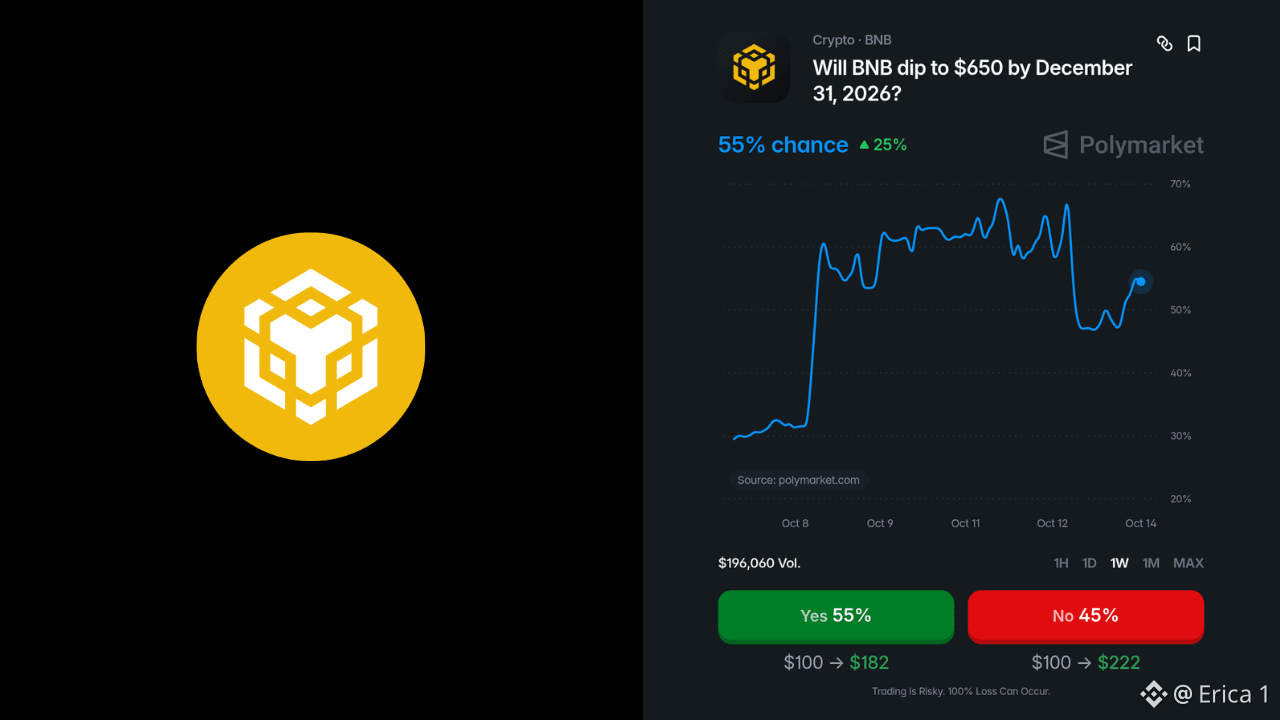
$BNB Las probabilidades de caída acaban de dispararse 🚨
¡Un salto de 25 puntos porcentuales en una semana!
Los traders de Polymarket ahora asignan una probabilidad del 55 % a que BNB toque los 650 $ antes del 31 de diciembre de 2026.
Eso supone un cambio importante en las expectativas del mercado.
Y hay algo importante sobre cómo funciona esta predicción.
El mercado no pregunta si BNB termina el año por debajo de los 650 $.
Pregunta si el precio toca ese nivel antes de la fecha límite.
Esa diferencia importa.
📉 SÍ al 55 % → Pago aproximado de 1,82x.
💰 NO al 45 % → Pago aproximado de 2,22x.
Ahora pensemos en qué pasa si se intensifica el sentimiento bajista.
Una posición de SÍ abierta al 55 % podría revalorizarse aproximadamente un 27 % si la probabilidad sube al 70 %.
No hace falta esperar a que BNB toque realmente los 650 $ para salir potencialmente con ganancias.
Personalmente, estoy observando si este repentino aumento de las expectativas bajistas continúa.
Polymarket ofrece una alternativa interesante a vender directamente la criptomoneda en corto, aunque las posiciones todavía pueden perder todo su valor.
#TemporadaDeAltcoins#
$BNB Las probabilidades de caída acaban de dispararse 🚨
¡Un salto de 25 puntos porcentuales en una semana!
Los traders de Polymarket ahora asignan una probabilidad del 55 % a que BNB toque los 650 $ antes del 31 de diciembre de 2026.
Eso supone un cambio importante en las expectativas del mercado.
Y hay algo importante sobre cómo funciona esta predicción.
El mercado no pregunta si BNB termina el año por debajo de los 650 $.
Pregunta si el precio toca ese nivel antes de la fecha límite.
Esa diferencia importa.
📉 SÍ al 55 % → Pago aproximado de 1,82x.
💰 NO al 45 % → Pago aproximado de 2,22x.
Ahora pensemos en qué pasa si se intensifica el sentimiento bajista.
Una posición de SÍ abierta al 55 % podría revalorizarse aproximadamente un 27 % si la probabilidad sube al 70 %.
No hace falta esperar a que BNB toque realmente los 650 $ para salir potencialmente con ganancias.
Personalmente, estoy observando si este repentino aumento de las expectativas bajistas continúa.
Polymarket ofrece una alternativa interesante a vender directamente la criptomoneda en corto, aunque las posiciones todavía pueden perder todo su valor.
#TemporadaDeAltcoins#
¡Un salto de 25 puntos porcentuales en una semana!
Los traders de Polymarket ahora asignan una probabilidad del 55 % a que BNB toque los 650 $ antes del 31 de diciembre de 2026.
Eso supone un cambio importante en las expectativas del mercado.
Y hay algo importante sobre cómo funciona esta predicción.
El mercado no pregunta si BNB termina el año por debajo de los 650 $.
Pregunta si el precio toca ese nivel antes de la fecha límite.
Esa diferencia importa.
📉 SÍ al 55 % → Pago aproximado de 1,82x.
💰 NO al 45 % → Pago aproximado de 2,22x.
Ahora pensemos en qué pasa si se intensifica el sentimiento bajista.
Una posición de SÍ abierta al 55 % podría revalorizarse aproximadamente un 27 % si la probabilidad sube al 70 %.
No hace falta esperar a que BNB toque realmente los 650 $ para salir potencialmente con ganancias.
Personalmente, estoy observando si este repentino aumento de las expectativas bajistas continúa.
Polymarket ofrece una alternativa interesante a vender directamente la criptomoneda en corto, aunque las posiciones todavía pueden perder todo su valor.
#TemporadaDeAltcoins#
66
·
--
¿La próxima inversión en privacidad con potencial de 100x? 🔐
La inversión en IA ha girado en torno a las GPU y los modelos.
Pero, mientras miles de millones fluyen hacia la infraestructura de IA, está surgiendo otra narrativa.
Privacidad y propiedad.
$VVV ya está abordando la primera parte.
Venice distingue entre la inferencia privada estándar y la ejecución cifrada verificada por hardware.
En su modo de privacidad más estricto, las instrucciones se cifran en tu dispositivo y solo se descifran dentro de hardware verificado.
Pero ¿quién es realmente propietario de la GPU que las procesa?
Ahí es donde entra $B3.
A través de B3IQ, los clientes son propietarios de máquinas NVIDIA dedicadas, mientras que B3 se encarga del alojamiento y las operaciones.
Y las reglas son sencillas:
• Las claves de API solo dan acceso a las GPU que pertenecen a la cuenta.
• ¿No hay GPU disponible? Las solicitudes fallan en lugar de enviarse a terceros.
• Las máquinas en modo Earn salen por completo del entorno de servicio privado.
Ahora piensa en el potencial.
Los bancos, los fondos de cobertura y las empresas no van a dejar de usar la IA. Necesitarán más, y gran parte de su uso implicará información sensible.
Aquí van las cuentas optimistas:
Ninguno de los dos proyectos necesita hacerse con todo el mercado de la IA.
Incluso una pequeña parte de la demanda empresarial que se incline por la inferencia privada y las GPU propiedad de los clientes podría representar una oportunidad enorme.
Dos apuestas distintas sobre la misma narrativa de la IA, valorada en billones de dólares.
Y la IA privada podría estar apenas empezando.
#Temporada de altcoins#
¿La próxima inversión en privacidad con potencial de 100x? 🔐
La inversión en IA ha girado en torno a las GPU y los modelos.
Pero, mientras miles de millones fluyen hacia la infraestructura de IA, está surgiendo otra narrativa.
Privacidad y propiedad.
$VVV ya está abordando la primera parte.
Venice distingue entre la inferencia privada estándar y la ejecución cifrada verificada por hardware.
En su modo de privacidad más estricto, las instrucciones se cifran en tu dispositivo y solo se descifran dentro de hardware verificado.
Pero ¿quién es realmente propietario de la GPU que las procesa?
Ahí es donde entra $B3.
A través de B3IQ, los clientes son propietarios de máquinas NVIDIA dedicadas, mientras que B3 se encarga del alojamiento y las operaciones.
Y las reglas son sencillas:
• Las claves de API solo dan acceso a las GPU que pertenecen a la cuenta.
• ¿No hay GPU disponible? Las solicitudes fallan en lugar de enviarse a terceros.
• Las máquinas en modo Earn salen por completo del entorno de servicio privado.
Ahora piensa en el potencial.
Los bancos, los fondos de cobertura y las empresas no van a dejar de usar la IA. Necesitarán más, y gran parte de su uso implicará información sensible.
Aquí van las cuentas optimistas:
Ninguno de los dos proyectos necesita hacerse con todo el mercado de la IA.
Incluso una pequeña parte de la demanda empresarial que se incline por la inferencia privada y las GPU propiedad de los clientes podría representar una oportunidad enorme.
Dos apuestas distintas sobre la misma narrativa de la IA, valorada en billones de dólares.
Y la IA privada podría estar apenas empezando.
#Temporada de altcoins#
La inversión en IA ha girado en torno a las GPU y los modelos.
Pero, mientras miles de millones fluyen hacia la infraestructura de IA, está surgiendo otra narrativa.
Privacidad y propiedad.
$VVV ya está abordando la primera parte.
Venice distingue entre la inferencia privada estándar y la ejecución cifrada verificada por hardware.
En su modo de privacidad más estricto, las instrucciones se cifran en tu dispositivo y solo se descifran dentro de hardware verificado.
Pero ¿quién es realmente propietario de la GPU que las procesa?
Ahí es donde entra $B3.
A través de B3IQ, los clientes son propietarios de máquinas NVIDIA dedicadas, mientras que B3 se encarga del alojamiento y las operaciones.
Y las reglas son sencillas:
• Las claves de API solo dan acceso a las GPU que pertenecen a la cuenta.
• ¿No hay GPU disponible? Las solicitudes fallan en lugar de enviarse a terceros.
• Las máquinas en modo Earn salen por completo del entorno de servicio privado.
Ahora piensa en el potencial.
Los bancos, los fondos de cobertura y las empresas no van a dejar de usar la IA. Necesitarán más, y gran parte de su uso implicará información sensible.
Aquí van las cuentas optimistas:
Ninguno de los dos proyectos necesita hacerse con todo el mercado de la IA.
Incluso una pequeña parte de la demanda empresarial que se incline por la inferencia privada y las GPU propiedad de los clientes podría representar una oportunidad enorme.
Dos apuestas distintas sobre la misma narrativa de la IA, valorada en billones de dólares.
Y la IA privada podría estar apenas empezando.
#Temporada de altcoins#
62
·
--
El modelo que nunca sale de tu teléfono 📱
$ZEC convirtió la privacidad en una categoría y $ICP defendió que el lugar de ejecución es una decisión de diseño. El fundador de Bankr ahora está trabajando en la versión en la que el modelo se ejecuta en el dispositivo.
Ha descrito cómo entrenar un modelo pequeño con sesiones anonimizadas de agentes para que la conversación se mantenga local.
Tómalo como un plan anunciado, no como una función ya disponible, porque eso es lo que es. Lo interesante es el razonamiento que hay detrás.
Un agente que gestiona dinero lee cosas que un asistente de chat no lee: saldos, posiciones, intenciones, la secuencia de lo que intentas hacer y cuándo. Eso es un perfil, y revela más de lo que la mayoría cree estar compartiendo cuando escribe una frase en un cuadro.
La inferencia en la nube implica que esa secuencia sale de tu dispositivo. Los entornos de ejecución privados reducen la exposición. Un modelo local elimina por completo ese trayecto en todo lo que pueda gestionar.
La contrapartida es la capacidad. Un modelo pequeño en el dispositivo no estará a la altura de uno de frontera, así que el diseño realista es usar el modelo local para las tareas rutinarias y uno remoto para las preguntas difíciles, con el enrutamiento decidido por ti.
Lo que plantea una pregunta que vale la pena hacerle a cualquiera que lance algo así: ¿qué se envía fuera, quién lo decide y puedes verlo después?
En cualquier caso, la dirección es la correcta. Lo menos privado de la mayoría de los productos con agentes no es la cadena. Es la conversación.
#AI #Privacy
El modelo que nunca sale de tu teléfono 📱
$ZEC convirtió la privacidad en una categoría y $ICP defendió que el lugar de ejecución es una decisión de diseño. El fundador de Bankr ahora está trabajando en la versión en la que el modelo se ejecuta en el dispositivo.
Ha descrito cómo entrenar un modelo pequeño con sesiones anonimizadas de agentes para que la conversación se mantenga local.
Tómalo como un plan anunciado, no como una función ya disponible, porque eso es lo que es. Lo interesante es el razonamiento que hay detrás.
Un agente que gestiona dinero lee cosas que un asistente de chat no lee: saldos, posiciones, intenciones, la secuencia de lo que intentas hacer y cuándo. Eso es un perfil, y revela más de lo que la mayoría cree estar compartiendo cuando escribe una frase en un cuadro.
La inferencia en la nube implica que esa secuencia sale de tu dispositivo. Los entornos de ejecución privados reducen la exposición. Un modelo local elimina por completo ese trayecto en todo lo que pueda gestionar.
La contrapartida es la capacidad. Un modelo pequeño en el dispositivo no estará a la altura de uno de frontera, así que el diseño realista es usar el modelo local para las tareas rutinarias y uno remoto para las preguntas difíciles, con el enrutamiento decidido por ti.
Lo que plantea una pregunta que vale la pena hacerle a cualquiera que lance algo así: ¿qué se envía fuera, quién lo decide y puedes verlo después?
En cualquier caso, la dirección es la correcta. Lo menos privado de la mayoría de los productos con agentes no es la cadena. Es la conversación.
#AI #Privacy
$ZEC convirtió la privacidad en una categoría y $ICP defendió que el lugar de ejecución es una decisión de diseño. El fundador de Bankr ahora está trabajando en la versión en la que el modelo se ejecuta en el dispositivo.
Ha descrito cómo entrenar un modelo pequeño con sesiones anonimizadas de agentes para que la conversación se mantenga local.
Tómalo como un plan anunciado, no como una función ya disponible, porque eso es lo que es. Lo interesante es el razonamiento que hay detrás.
Un agente que gestiona dinero lee cosas que un asistente de chat no lee: saldos, posiciones, intenciones, la secuencia de lo que intentas hacer y cuándo. Eso es un perfil, y revela más de lo que la mayoría cree estar compartiendo cuando escribe una frase en un cuadro.
La inferencia en la nube implica que esa secuencia sale de tu dispositivo. Los entornos de ejecución privados reducen la exposición. Un modelo local elimina por completo ese trayecto en todo lo que pueda gestionar.
La contrapartida es la capacidad. Un modelo pequeño en el dispositivo no estará a la altura de uno de frontera, así que el diseño realista es usar el modelo local para las tareas rutinarias y uno remoto para las preguntas difíciles, con el enrutamiento decidido por ti.
Lo que plantea una pregunta que vale la pena hacerle a cualquiera que lance algo así: ¿qué se envía fuera, quién lo decide y puedes verlo después?
En cualquier caso, la dirección es la correcta. Lo menos privado de la mayoría de los productos con agentes no es la cadena. Es la conversación.
#AI #Privacy
65
·
--
¿Se acerca un airdrop de $PUMP? 💊
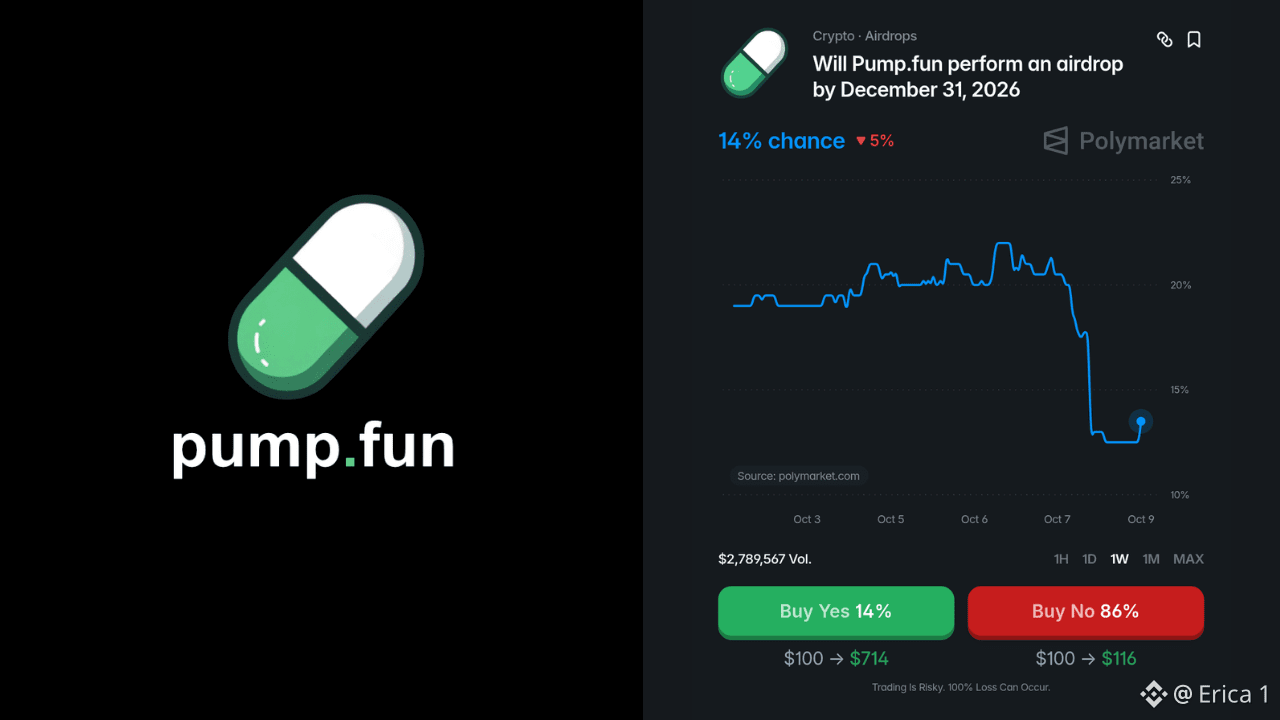
14% SÍ. 86% NO. Y casi 2,8 millones de dólares en volumen de operaciones.
Los traders de Polymarket no están particularmente seguros de que Pump Fun vaya a realizar un airdrop antes del 31 de diciembre.
La probabilidad ha caído 5 puntos porcentuales durante la última semana, lo que sugiere que las expectativas se están enfriando.
Pero veamos los números.
💊 SÍ al 14% → 100 dólares podrían generar un retorno de aproximadamente 714 dólares.
❌ NO al 86% → 100 dólares podrían generar un retorno de aproximadamente 116 dólares.
Es una diferencia considerable entre las posibles ganancias.
Y teniendo en cuenta toda la atención que ha recibido Pump Fun dentro del ecosistema de las memecoins, no me sorprendería que este mercado reaccionara con fuerza ante cualquier anuncio creíble relacionado con un airdrop.
Esto es lo que me parece interesante.
No necesito necesariamente que se produzca un airdrop.
Si aumenta la especulación y las probabilidades del SÍ pasan del 14% al 28%, una posición existente en SÍ podría aproximadamente duplicar su valor de mercado.
Eso significa que podría salir potencialmente antes de que se realice cualquier distribución.
Es parecido a cómo los traders especulan con los lanzamientos de tokens, salvo que Polymarket te permite operar con la probabilidad de que ocurra un evento específico.
Como Pump Fun sigue atrayendo la atención de los traders de memecoins, estoy observando cómo evolucionan las expectativas.
La posibilidad de operar con estas probabilidades ofrece otra perspectiva para quienes siguen el ecosistema más amplio de memecoins de Solana.
¿Apostarías por un airdrop antes de que termine el año?
#TemporadaDeAltcoins#
¿Se acerca un airdrop de $PUMP? 💊
14% SÍ. 86% NO. Y casi 2,8 millones de dólares en volumen de operaciones.
Los traders de Polymarket no están particularmente seguros de que Pump Fun vaya a realizar un airdrop antes del 31 de diciembre.
La probabilidad ha caído 5 puntos porcentuales durante la última semana, lo que sugiere que las expectativas se están enfriando.
Pero veamos los números.
💊 SÍ al 14% → 100 dólares podrían generar un retorno de aproximadamente 714 dólares.
❌ NO al 86% → 100 dólares podrían generar un retorno de aproximadamente 116 dólares.
Es una diferencia considerable entre las posibles ganancias.
Y teniendo en cuenta toda la atención que ha recibido Pump Fun dentro del ecosistema de las memecoins, no me sorprendería que este mercado reaccionara con fuerza ante cualquier anuncio creíble relacionado con un airdrop.
Esto es lo que me parece interesante.
No necesito necesariamente que se produzca un airdrop.
Si aumenta la especulación y las probabilidades del SÍ pasan del 14% al 28%, una posición existente en SÍ podría aproximadamente duplicar su valor de mercado.
Eso significa que podría salir potencialmente antes de que se realice cualquier distribución.
Es parecido a cómo los traders especulan con los lanzamientos de tokens, salvo que Polymarket te permite operar con la probabilidad de que ocurra un evento específico.
Como Pump Fun sigue atrayendo la atención de los traders de memecoins, estoy observando cómo evolucionan las expectativas.
La posibilidad de operar con estas probabilidades ofrece otra perspectiva para quienes siguen el ecosistema más amplio de memecoins de Solana.
¿Apostarías por un airdrop antes de que termine el año?
#TemporadaDeAltcoins#
14% SÍ. 86% NO. Y casi 2,8 millones de dólares en volumen de operaciones.
Los traders de Polymarket no están particularmente seguros de que Pump Fun vaya a realizar un airdrop antes del 31 de diciembre.
La probabilidad ha caído 5 puntos porcentuales durante la última semana, lo que sugiere que las expectativas se están enfriando.
Pero veamos los números.
💊 SÍ al 14% → 100 dólares podrían generar un retorno de aproximadamente 714 dólares.
❌ NO al 86% → 100 dólares podrían generar un retorno de aproximadamente 116 dólares.
Es una diferencia considerable entre las posibles ganancias.
Y teniendo en cuenta toda la atención que ha recibido Pump Fun dentro del ecosistema de las memecoins, no me sorprendería que este mercado reaccionara con fuerza ante cualquier anuncio creíble relacionado con un airdrop.
Esto es lo que me parece interesante.
No necesito necesariamente que se produzca un airdrop.
Si aumenta la especulación y las probabilidades del SÍ pasan del 14% al 28%, una posición existente en SÍ podría aproximadamente duplicar su valor de mercado.
Eso significa que podría salir potencialmente antes de que se realice cualquier distribución.
Es parecido a cómo los traders especulan con los lanzamientos de tokens, salvo que Polymarket te permite operar con la probabilidad de que ocurra un evento específico.
Como Pump Fun sigue atrayendo la atención de los traders de memecoins, estoy observando cómo evolucionan las expectativas.
La posibilidad de operar con estas probabilidades ofrece otra perspectiva para quienes siguen el ecosistema más amplio de memecoins de Solana.
¿Apostarías por un airdrop antes de que termine el año?
#TemporadaDeAltcoins#
68
·
--
Verificado
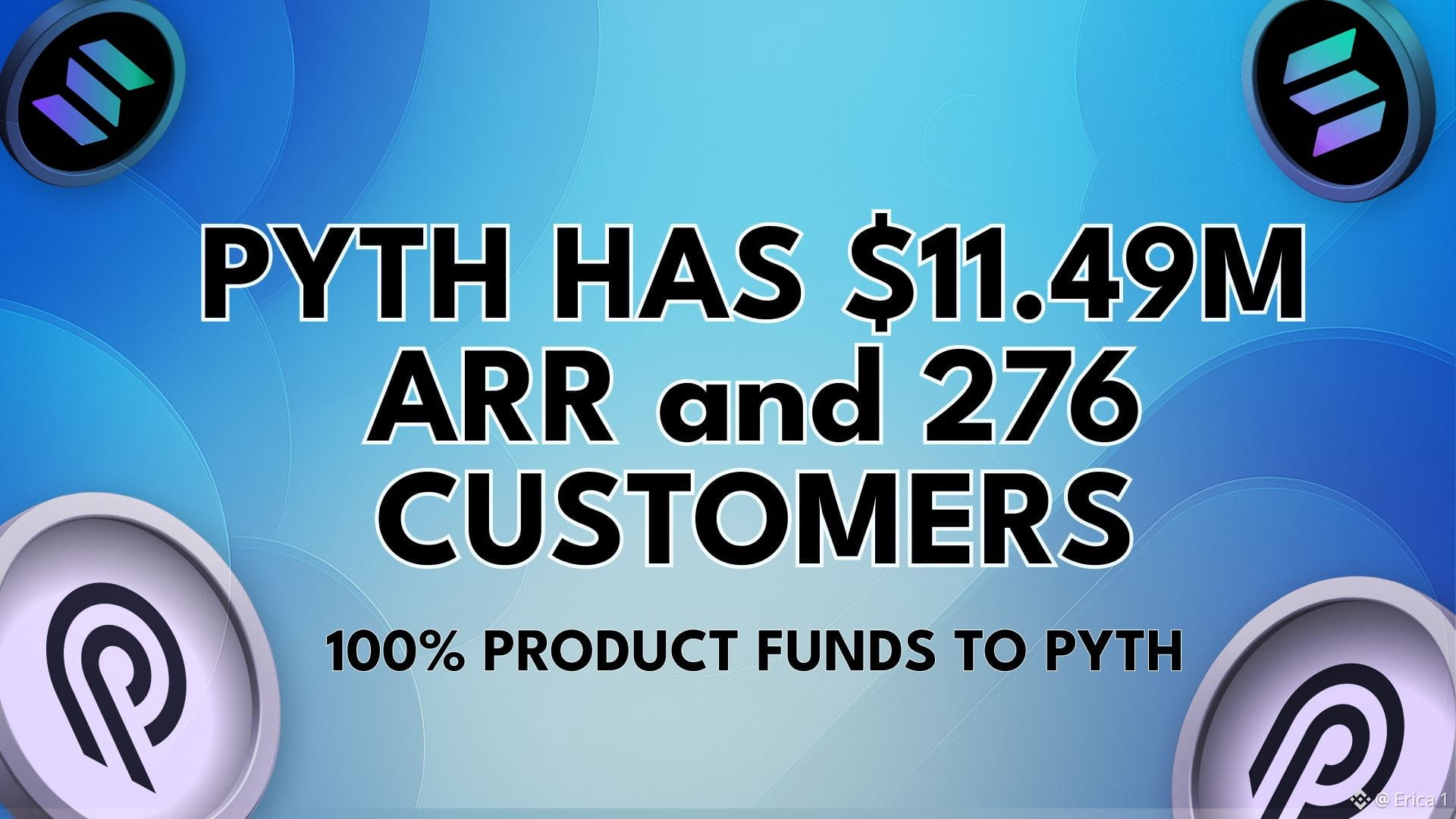
$PYTH tiene 276 cuentas de pago, 11,49 M$ de ARR y el 100 % de los ingresos de los productos se destina a PYTH 🔥
Los holders de $SOL han vivido suficientes ciclos de infraestructura como para distinguir entre el «potencial del ecosistema» y la demanda real, y ese es el enfoque que usaría para analizar Pyth tras esta actualización del tercer trimestre.
Pyth no le está pidiendo al mercado que crea que quizá algún día aparecerán clientes.
El negocio ya cuenta con 276 cuentas de pago, 11,49 M$ de ARR activo y un crecimiento intertrimestral del 86 %. Pyth Pro por sí solo alcanzó un ARR de 9,68 M$, mientras que Pyth Indices llegó a 1,81 M$ a finales de septiembre.
Después, la DAO añadió el detalle que hace que la actualización sea mucho más relevante para los holders de $PYTH.
Según la Regla del 100 %, cada dólar que la DAO recibe de los productos de Pyth se destina ahora a comprar PYTH en el mercado abierto.
Esa es la idea que seguiría repitiendo hasta que el mercado la entienda.
Pyth está creciendo como negocio de datos de mercado, y los fondos vinculados a sus productos que recibe la DAO ahora tienen una vía directa para acumular PYTH, en lugar de quedarse como un dato impreciso de tesorería.
El contexto general lo refuerza: en el tercer trimestre, los perpetuos de RWA registraron un volumen de 2,09 billones de dólares; el 94,1 % se negoció en plataformas impulsadas por Pyth; Nasdaq Basic está disponible a través de Pyth Data Marketplace; y Kalshi, Coinbase y Polymarket ya usan Pyth en productos de mercados del mundo real.
Creo que la antigua etiqueta de oráculo ya se queda pequeña.
$PYTH se parece más a una historia de infraestructura de datos de mercado respaldada por ingresos, donde el mecanismo del token por fin resulta más fácil de entender para los inversores.
#TemporadaDeAltcoins# #SOL
$PYTH tiene 276 cuentas de pago, 11,49 M$ de ARR y el 100 % de los ingresos de los productos se destina a PYTH 🔥
Los holders de $SOL han vivido suficientes ciclos de infraestructura como para distinguir entre el «potencial del ecosistema» y la demanda real, y ese es el enfoque que usaría para analizar Pyth tras esta actualización del tercer trimestre.
Pyth no le está pidiendo al mercado que crea que quizá algún día aparecerán clientes.
El negocio ya cuenta con 276 cuentas de pago, 11,49 M$ de ARR activo y un crecimiento intertrimestral del 86 %. Pyth Pro por sí solo alcanzó un ARR de 9,68 M$, mientras que Pyth Indices llegó a 1,81 M$ a finales de septiembre.
Después, la DAO añadió el detalle que hace que la actualización sea mucho más relevante para los holders de $PYTH.
Según la Regla del 100 %, cada dólar que la DAO recibe de los productos de Pyth se destina ahora a comprar PYTH en el mercado abierto.
Esa es la idea que seguiría repitiendo hasta que el mercado la entienda.
Pyth está creciendo como negocio de datos de mercado, y los fondos vinculados a sus productos que recibe la DAO ahora tienen una vía directa para acumular PYTH, en lugar de quedarse como un dato impreciso de tesorería.
El contexto general lo refuerza: en el tercer trimestre, los perpetuos de RWA registraron un volumen de 2,09 billones de dólares; el 94,1 % se negoció en plataformas impulsadas por Pyth; Nasdaq Basic está disponible a través de Pyth Data Marketplace; y Kalshi, Coinbase y Polymarket ya usan Pyth en productos de mercados del mundo real.
Creo que la antigua etiqueta de oráculo ya se queda pequeña.
$PYTH se parece más a una historia de infraestructura de datos de mercado respaldada por ingresos, donde el mecanismo del token por fin resulta más fácil de entender para los inversores.
#TemporadaDeAltcoins# #SOL
Los holders de $SOL han vivido suficientes ciclos de infraestructura como para distinguir entre el «potencial del ecosistema» y la demanda real, y ese es el enfoque que usaría para analizar Pyth tras esta actualización del tercer trimestre.
Pyth no le está pidiendo al mercado que crea que quizá algún día aparecerán clientes.
El negocio ya cuenta con 276 cuentas de pago, 11,49 M$ de ARR activo y un crecimiento intertrimestral del 86 %. Pyth Pro por sí solo alcanzó un ARR de 9,68 M$, mientras que Pyth Indices llegó a 1,81 M$ a finales de septiembre.
Después, la DAO añadió el detalle que hace que la actualización sea mucho más relevante para los holders de $PYTH.
Según la Regla del 100 %, cada dólar que la DAO recibe de los productos de Pyth se destina ahora a comprar PYTH en el mercado abierto.
Esa es la idea que seguiría repitiendo hasta que el mercado la entienda.
Pyth está creciendo como negocio de datos de mercado, y los fondos vinculados a sus productos que recibe la DAO ahora tienen una vía directa para acumular PYTH, en lugar de quedarse como un dato impreciso de tesorería.
El contexto general lo refuerza: en el tercer trimestre, los perpetuos de RWA registraron un volumen de 2,09 billones de dólares; el 94,1 % se negoció en plataformas impulsadas por Pyth; Nasdaq Basic está disponible a través de Pyth Data Marketplace; y Kalshi, Coinbase y Polymarket ya usan Pyth en productos de mercados del mundo real.
Creo que la antigua etiqueta de oráculo ya se queda pequeña.
$PYTH se parece más a una historia de infraestructura de datos de mercado respaldada por ingresos, donde el mecanismo del token por fin resulta más fácil de entender para los inversores.
#TemporadaDeAltcoins# #SOL
61
·
--
Un mercado cripto más activo hace que Edge sea más interesante 📈
$2Z resulta cada vez más atractivo a medida que la actividad cripto se extiende a más mercados.
$HYPE ya forma parte de un catálogo de Edge que ahora abarca varias categorías distintas de datos en tiempo real.
Solana.
Hyperliquid.
Phoenix.
Datos del mercado de futuros de Binance.
Mercados muy distintos bajo una misma capa de distribución en expansión.
Creo que ese es el aspecto que mejor encaja con el escenario de altseason.
A medida que los traders empiezan a seguir más ecosistemas y plataformas, aumenta el valor de obtener más información a través de una misma conexión.
Una mayor actividad del mercado le da a Edge más cosas que conectar.
Y cada nuevo feed hace que la red sea más útil.
#AltcoinSeason #DeFi
Un mercado cripto más activo hace que Edge sea más interesante 📈
$2Z resulta cada vez más atractivo a medida que la actividad cripto se extiende a más mercados.
$HYPE ya forma parte de un catálogo de Edge que ahora abarca varias categorías distintas de datos en tiempo real.
Solana.
Hyperliquid.
Phoenix.
Datos del mercado de futuros de Binance.
Mercados muy distintos bajo una misma capa de distribución en expansión.
Creo que ese es el aspecto que mejor encaja con el escenario de altseason.
A medida que los traders empiezan a seguir más ecosistemas y plataformas, aumenta el valor de obtener más información a través de una misma conexión.
Una mayor actividad del mercado le da a Edge más cosas que conectar.
Y cada nuevo feed hace que la red sea más útil.
#AltcoinSeason #DeFi
$2Z resulta cada vez más atractivo a medida que la actividad cripto se extiende a más mercados.
$HYPE ya forma parte de un catálogo de Edge que ahora abarca varias categorías distintas de datos en tiempo real.
Solana.
Hyperliquid.
Phoenix.
Datos del mercado de futuros de Binance.
Mercados muy distintos bajo una misma capa de distribución en expansión.
Creo que ese es el aspecto que mejor encaja con el escenario de altseason.
A medida que los traders empiezan a seguir más ecosistemas y plataformas, aumenta el valor de obtener más información a través de una misma conexión.
Una mayor actividad del mercado le da a Edge más cosas que conectar.
Y cada nuevo feed hace que la red sea más útil.
#AltcoinSeason #DeFi
62
·
--
Una participación en las comisiones que nadie puede desactivar a escondidas 📜
Los holders de $INJ saben lo que significa que un mecanismo de ingresos esté integrado en el protocolo, y no en una página de políticas. $BNKR está poniendo a prueba la misma idea en la capa de lanzamiento, en Arbitrum y Arc.
Allí hay dos funciones experimentales. Los tokens pueden quedar sujetos a vesting directamente para los holders, y un lanzamiento puede destinar parte o la totalidad de sus comisiones a los holders, pagaderas en el token de cotización, el token base o ambos.
El detalle de la implementación es lo importante: ambas funciones están integradas en el nivel del contrato inteligente.
Esa diferencia determina si se puede construir algo sobre ellas.
Una política de plataforma es una promesa que mantiene quien gestiona la plataforma. Puede cambiar por una decisión de la hoja de ruta, y ningún tercero puede verificarla sin confiar en quien la opera. Una garantía a nivel de contrato se puede consultar directamente, integrar y usar como base para una aplicación que no tenga ninguna relación con el emisor.
Y eso es exactamente lo que necesita un producto de reparto de comisiones. Nadie crea un panel, un índice o una posición estructurada basándose en una regla que podrían cambiar el próximo trimestre.
El alcance, dicho claramente: solo Arbitrum y Arc, descritas por el equipo como experimentales, con Base y Robinhood Chain mencionadas para un posible despliegue si se implementan las funciones.
Lo que observaría no es cuántos lanzamientos las usan, sino si un tercero consulta estos campos y publica algo que dependa de ellos.
El diseño a nivel de contrato solo se justifica cuando alguien más adelante realmente lo utiliza.
#DeFi #Arbitrum
Una participación en las comisiones que nadie puede desactivar a escondidas 📜
Los holders de $INJ saben lo que significa que un mecanismo de ingresos esté integrado en el protocolo, y no en una página de políticas. $BNKR está poniendo a prueba la misma idea en la capa de lanzamiento, en Arbitrum y Arc.
Allí hay dos funciones experimentales. Los tokens pueden quedar sujetos a vesting directamente para los holders, y un lanzamiento puede destinar parte o la totalidad de sus comisiones a los holders, pagaderas en el token de cotización, el token base o ambos.
El detalle de la implementación es lo importante: ambas funciones están integradas en el nivel del contrato inteligente.
Esa diferencia determina si se puede construir algo sobre ellas.
Una política de plataforma es una promesa que mantiene quien gestiona la plataforma. Puede cambiar por una decisión de la hoja de ruta, y ningún tercero puede verificarla sin confiar en quien la opera. Una garantía a nivel de contrato se puede consultar directamente, integrar y usar como base para una aplicación que no tenga ninguna relación con el emisor.
Y eso es exactamente lo que necesita un producto de reparto de comisiones. Nadie crea un panel, un índice o una posición estructurada basándose en una regla que podrían cambiar el próximo trimestre.
El alcance, dicho claramente: solo Arbitrum y Arc, descritas por el equipo como experimentales, con Base y Robinhood Chain mencionadas para un posible despliegue si se implementan las funciones.
Lo que observaría no es cuántos lanzamientos las usan, sino si un tercero consulta estos campos y publica algo que dependa de ellos.
El diseño a nivel de contrato solo se justifica cuando alguien más adelante realmente lo utiliza.
#DeFi #Arbitrum
Los holders de $INJ saben lo que significa que un mecanismo de ingresos esté integrado en el protocolo, y no en una página de políticas. $BNKR está poniendo a prueba la misma idea en la capa de lanzamiento, en Arbitrum y Arc.
Allí hay dos funciones experimentales. Los tokens pueden quedar sujetos a vesting directamente para los holders, y un lanzamiento puede destinar parte o la totalidad de sus comisiones a los holders, pagaderas en el token de cotización, el token base o ambos.
El detalle de la implementación es lo importante: ambas funciones están integradas en el nivel del contrato inteligente.
Esa diferencia determina si se puede construir algo sobre ellas.
Una política de plataforma es una promesa que mantiene quien gestiona la plataforma. Puede cambiar por una decisión de la hoja de ruta, y ningún tercero puede verificarla sin confiar en quien la opera. Una garantía a nivel de contrato se puede consultar directamente, integrar y usar como base para una aplicación que no tenga ninguna relación con el emisor.
Y eso es exactamente lo que necesita un producto de reparto de comisiones. Nadie crea un panel, un índice o una posición estructurada basándose en una regla que podrían cambiar el próximo trimestre.
El alcance, dicho claramente: solo Arbitrum y Arc, descritas por el equipo como experimentales, con Base y Robinhood Chain mencionadas para un posible despliegue si se implementan las funciones.
Lo que observaría no es cuántos lanzamientos las usan, sino si un tercero consulta estos campos y publica algo que dependa de ellos.
El diseño a nivel de contrato solo se justifica cuando alguien más adelante realmente lo utiliza.
#DeFi #Arbitrum
73
·
--
La gobernanza cripto tiene un gran problema 👇
Protocolos como $UNI convirtieron la propiedad de tokens en poder de voto. Para $VFY, la oportunidad que se suele pasar por alto está en lo que ocurre cuando esos votos necesitan privacidad sin sacrificar la confianza en el resultado.
La mayoría de los sistemas de gobernanza on-chain exponen para siempre al votante, su billetera y su decisión.
Esa visibilidad puede provocar presión social, represalias y que las billeteras más grandes influyan en el voto de otras.
Una votación privada resuelve el problema de la exposición solo si los participantes pueden verificar que la elección fue legítima.
Veravote ofrece un modelo funcional.
Su aplicación de votación genera pruebas de conocimiento cero que pueden confirmar:
• Que el votante cumplía los requisitos
• Que la papeleta no se duplicó
• Que el recuento final coincidía con los votos emitidos
La identidad y el voto individual permanecen ocultos.
zkVerify comprueba de forma independiente las pruebas de las papeletas y del recuento, en vez de pedir a los participantes que confíen en el veredicto de la propia plataforma de votación.
No elige a los votantes que cumplen los requisitos, no crea privacidad para las papeletas ni decide el resultado.
Verifica las pruebas criptográficas generadas por la aplicación.
VFY se utiliza cuando esas pruebas se envían a la red de verificación especializada.
Creo que el voto privado y auditable tiene potencial mucho más allá de las DAO. Las empresas, las universidades y las comunidades en línea se enfrentan al mismo conflicto entre la confidencialidad y la credibilidad de los resultados.
Veravote ya integra zkVerify y convierte ese caso de uso más amplio en algo tangible.
#Temporada de altcoins#
La gobernanza cripto tiene un gran problema 👇
Protocolos como $UNI convirtieron la propiedad de tokens en poder de voto. Para $VFY, la oportunidad que se suele pasar por alto está en lo que ocurre cuando esos votos necesitan privacidad sin sacrificar la confianza en el resultado.
La mayoría de los sistemas de gobernanza on-chain exponen para siempre al votante, su billetera y su decisión.
Esa visibilidad puede provocar presión social, represalias y que las billeteras más grandes influyan en el voto de otras.
Una votación privada resuelve el problema de la exposición solo si los participantes pueden verificar que la elección fue legítima.
Veravote ofrece un modelo funcional.
Su aplicación de votación genera pruebas de conocimiento cero que pueden confirmar:
• Que el votante cumplía los requisitos
• Que la papeleta no se duplicó
• Que el recuento final coincidía con los votos emitidos
La identidad y el voto individual permanecen ocultos.
zkVerify comprueba de forma independiente las pruebas de las papeletas y del recuento, en vez de pedir a los participantes que confíen en el veredicto de la propia plataforma de votación.
No elige a los votantes que cumplen los requisitos, no crea privacidad para las papeletas ni decide el resultado.
Verifica las pruebas criptográficas generadas por la aplicación.
VFY se utiliza cuando esas pruebas se envían a la red de verificación especializada.
Creo que el voto privado y auditable tiene potencial mucho más allá de las DAO. Las empresas, las universidades y las comunidades en línea se enfrentan al mismo conflicto entre la confidencialidad y la credibilidad de los resultados.
Veravote ya integra zkVerify y convierte ese caso de uso más amplio en algo tangible.
#Temporada de altcoins#
Protocolos como $UNI convirtieron la propiedad de tokens en poder de voto. Para $VFY, la oportunidad que se suele pasar por alto está en lo que ocurre cuando esos votos necesitan privacidad sin sacrificar la confianza en el resultado.
La mayoría de los sistemas de gobernanza on-chain exponen para siempre al votante, su billetera y su decisión.
Esa visibilidad puede provocar presión social, represalias y que las billeteras más grandes influyan en el voto de otras.
Una votación privada resuelve el problema de la exposición solo si los participantes pueden verificar que la elección fue legítima.
Veravote ofrece un modelo funcional.
Su aplicación de votación genera pruebas de conocimiento cero que pueden confirmar:
• Que el votante cumplía los requisitos
• Que la papeleta no se duplicó
• Que el recuento final coincidía con los votos emitidos
La identidad y el voto individual permanecen ocultos.
zkVerify comprueba de forma independiente las pruebas de las papeletas y del recuento, en vez de pedir a los participantes que confíen en el veredicto de la propia plataforma de votación.
No elige a los votantes que cumplen los requisitos, no crea privacidad para las papeletas ni decide el resultado.
Verifica las pruebas criptográficas generadas por la aplicación.
VFY se utiliza cuando esas pruebas se envían a la red de verificación especializada.
Creo que el voto privado y auditable tiene potencial mucho más allá de las DAO. Las empresas, las universidades y las comunidades en línea se enfrentan al mismo conflicto entre la confidencialidad y la credibilidad de los resultados.
Veravote ya integra zkVerify y convierte ese caso de uso más amplio en algo tangible.
#Temporada de altcoins#
62
·
--
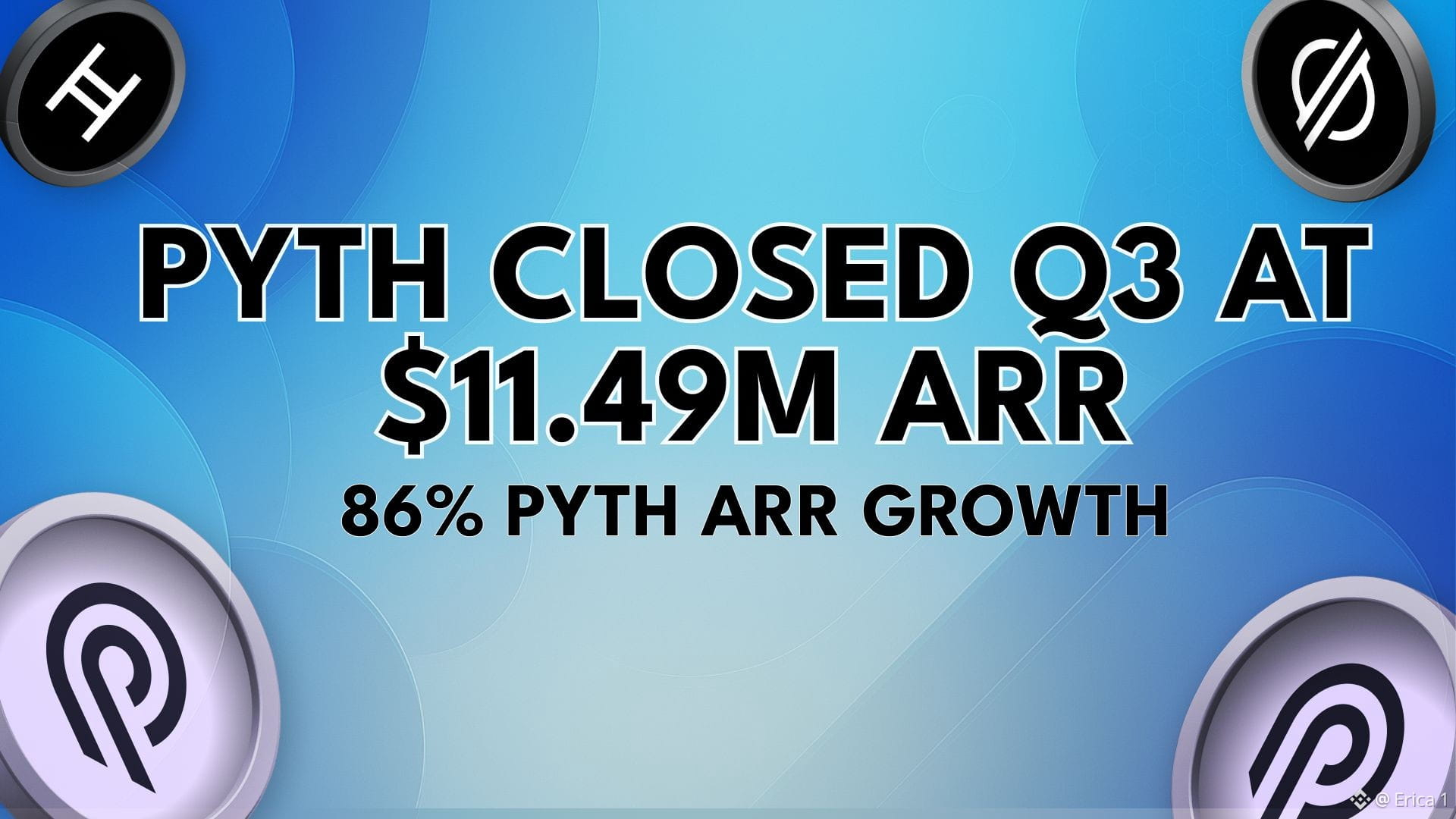
El interés abierto en RWA alcanza los 12,61 mil millones de dólares, junto con un crecimiento del 86 % en el ARR de Pyth 📊
Las comunidades de $HBAR y $XLM entienden mejor que la mayoría de los grupos cripto los rieles de activos del mundo real, así que la señal importante aquí no es solo el volumen. Es la cantidad de exposición que los traders están dispuestos a mantener abierta ahora en los mercados de perpetuos de RWA.
El volumen de perpetuos de RWA se enfrió en septiembre respecto a agosto, pero el interés abierto diario promedio aumentó un 12 % y alcanzó un récord de 12,61 mil millones de dólares el 30 de septiembre.
Eso significa que el mercado no se limitó a operar y desaparecer.
Los traders mantuvieron más exposición abierta a lo largo del mes, y eso hace que la capa de precios subyacente de estos mercados sea mucho más importante.
Ahora relacionemos esto con la actualización de Pyth del tercer trimestre.
Pyth cerró el tercer trimestre con un ARR de 11,49 millones de dólares, un 86 % más que en el segundo trimestre, y la DAO aprobó la Regla del 100 %, según la cual cada dólar que recibe de los productos de Pyth ahora se destina a comprar PYTH en el mercado abierto.
Por eso no considero que el récord de interés abierto sea un dato secundario aleatorio.
Si los traders mantienen una mayor exposición a perpetuos de acciones, oro, petróleo e índices, entonces el margen, la financiación, la lógica de liquidación y los motores de riesgo dependen cada vez más de precios de referencia fiables.
Justo ahí es donde Pyth quiere estar.
Mi lectura es que el crecimiento de los ingresos de Pyth y la tendencia del interés abierto en RWA se refuerzan mutuamente. Uno demuestra que el negocio está creciendo, mientras que el otro muestra que el mercado al que presta servicio se está volviendo más profundo y serio.
La Regla del 100 % hace que esta combinación sea más relevante para quienes tienen PYTH, porque ahora la tracción de los productos tiene una vía más directa para traducirse en acumulación en el mercado abierto.
#TemporadaDeAltcoins# #RWA
El interés abierto en RWA alcanza los 12,61 mil millones de dólares, junto con un crecimiento del 86 % en el ARR de Pyth 📊
Las comunidades de $HBAR y $XLM entienden mejor que la mayoría de los grupos cripto los rieles de activos del mundo real, así que la señal importante aquí no es solo el volumen. Es la cantidad de exposición que los traders están dispuestos a mantener abierta ahora en los mercados de perpetuos de RWA.
El volumen de perpetuos de RWA se enfrió en septiembre respecto a agosto, pero el interés abierto diario promedio aumentó un 12 % y alcanzó un récord de 12,61 mil millones de dólares el 30 de septiembre.
Eso significa que el mercado no se limitó a operar y desaparecer.
Los traders mantuvieron más exposición abierta a lo largo del mes, y eso hace que la capa de precios subyacente de estos mercados sea mucho más importante.
Ahora relacionemos esto con la actualización de Pyth del tercer trimestre.
Pyth cerró el tercer trimestre con un ARR de 11,49 millones de dólares, un 86 % más que en el segundo trimestre, y la DAO aprobó la Regla del 100 %, según la cual cada dólar que recibe de los productos de Pyth ahora se destina a comprar PYTH en el mercado abierto.
Por eso no considero que el récord de interés abierto sea un dato secundario aleatorio.
Si los traders mantienen una mayor exposición a perpetuos de acciones, oro, petróleo e índices, entonces el margen, la financiación, la lógica de liquidación y los motores de riesgo dependen cada vez más de precios de referencia fiables.
Justo ahí es donde Pyth quiere estar.
Mi lectura es que el crecimiento de los ingresos de Pyth y la tendencia del interés abierto en RWA se refuerzan mutuamente. Uno demuestra que el negocio está creciendo, mientras que el otro muestra que el mercado al que presta servicio se está volviendo más profundo y serio.
La Regla del 100 % hace que esta combinación sea más relevante para quienes tienen PYTH, porque ahora la tracción de los productos tiene una vía más directa para traducirse en acumulación en el mercado abierto.
#TemporadaDeAltcoins# #RWA
Las comunidades de $HBAR y $XLM entienden mejor que la mayoría de los grupos cripto los rieles de activos del mundo real, así que la señal importante aquí no es solo el volumen. Es la cantidad de exposición que los traders están dispuestos a mantener abierta ahora en los mercados de perpetuos de RWA.
El volumen de perpetuos de RWA se enfrió en septiembre respecto a agosto, pero el interés abierto diario promedio aumentó un 12 % y alcanzó un récord de 12,61 mil millones de dólares el 30 de septiembre.
Eso significa que el mercado no se limitó a operar y desaparecer.
Los traders mantuvieron más exposición abierta a lo largo del mes, y eso hace que la capa de precios subyacente de estos mercados sea mucho más importante.
Ahora relacionemos esto con la actualización de Pyth del tercer trimestre.
Pyth cerró el tercer trimestre con un ARR de 11,49 millones de dólares, un 86 % más que en el segundo trimestre, y la DAO aprobó la Regla del 100 %, según la cual cada dólar que recibe de los productos de Pyth ahora se destina a comprar PYTH en el mercado abierto.
Por eso no considero que el récord de interés abierto sea un dato secundario aleatorio.
Si los traders mantienen una mayor exposición a perpetuos de acciones, oro, petróleo e índices, entonces el margen, la financiación, la lógica de liquidación y los motores de riesgo dependen cada vez más de precios de referencia fiables.
Justo ahí es donde Pyth quiere estar.
Mi lectura es que el crecimiento de los ingresos de Pyth y la tendencia del interés abierto en RWA se refuerzan mutuamente. Uno demuestra que el negocio está creciendo, mientras que el otro muestra que el mercado al que presta servicio se está volviendo más profundo y serio.
La Regla del 100 % hace que esta combinación sea más relevante para quienes tienen PYTH, porque ahora la tracción de los productos tiene una vía más directa para traducirse en acumulación en el mercado abierto.
#TemporadaDeAltcoins# #RWA
46
·
--
Cuenta los pasos antes del clic 📱
Un usuario de $SOL ve un proyecto que reconoce.
Abre la página.
Entonces llega la parte importante.
¿Puede entender de qué se trata y explorarlo con herramientas que ya conoce?
Cada decisión adicional exige más atención.
La disponibilidad de DMC de DeLorean en Solana ofrece a los usuarios actuales un ecosistema familiar para empezar.
Es una decisión de distribución útil.
Ahora, la marca, la explicación y la experiencia del producto deben funcionar en conjunto.
Así es como analizo la oportunidad de la propiedad intelectual desde la perspectiva del producto.
La temporada de altcoins puede generar la primera visita.
Una experiencia clara aumenta las posibilidades de que esa visita se convierta en algo más.
Los pequeños detalles importan cuando la curiosidad dura poco.
#Temporada de altcoins#
Cuenta los pasos antes del clic 📱
Un usuario de $SOL ve un proyecto que reconoce.
Abre la página.
Entonces llega la parte importante.
¿Puede entender de qué se trata y explorarlo con herramientas que ya conoce?
Cada decisión adicional exige más atención.
La disponibilidad de DMC de DeLorean en Solana ofrece a los usuarios actuales un ecosistema familiar para empezar.
Es una decisión de distribución útil.
Ahora, la marca, la explicación y la experiencia del producto deben funcionar en conjunto.
Así es como analizo la oportunidad de la propiedad intelectual desde la perspectiva del producto.
La temporada de altcoins puede generar la primera visita.
Una experiencia clara aumenta las posibilidades de que esa visita se convierta en algo más.
Los pequeños detalles importan cuando la curiosidad dura poco.
#Temporada de altcoins#
Un usuario de $SOL ve un proyecto que reconoce.
Abre la página.
Entonces llega la parte importante.
¿Puede entender de qué se trata y explorarlo con herramientas que ya conoce?
Cada decisión adicional exige más atención.
La disponibilidad de DMC de DeLorean en Solana ofrece a los usuarios actuales un ecosistema familiar para empezar.
Es una decisión de distribución útil.
Ahora, la marca, la explicación y la experiencia del producto deben funcionar en conjunto.
Así es como analizo la oportunidad de la propiedad intelectual desde la perspectiva del producto.
La temporada de altcoins puede generar la primera visita.
Una experiencia clara aumenta las posibilidades de que esa visita se convierta en algo más.
Los pequeños detalles importan cuando la curiosidad dura poco.
#Temporada de altcoins#
75
·
--
La privacidad podría ser una de las narrativas más infravaloradas de las criptomonedas 🌙
$ZEC demostró que la privacidad con conocimiento cero podía funcionar a nivel de transacción. $NIGHT está llevando esa idea mucho más lejos al hacer la privacidad programable a nivel de aplicación.
Esa es una distinción más grande de lo que suena.
La mayoría de las blockchains, efectivamente, les dan a los desarrolladores dos opciones: Hacer la información pública u ocultarla
.
Midnight le ofrece a las aplicaciones una opción adicional: decidir exactamente qué debe ser privado, qué debe ser público y qué solo necesita ser probado.
Eso significa que una aplicación podría verificar que:
→ Un usuario cumple un requisito de colateral
→ Una institución siguió una regla de cumplimiento
→ Una wallet satisface una condición de elegibilidad
Sin exponer toda la información privada detrás de esos hechos.
Ahí es donde creo que la narrativa de la privacidad se vuelve mucho más grande.
La próxima generación de infraestructura de privacidad no se trata solo de ocultar transacciones.
Se trata de permitir que las aplicaciones usen información sensible sin poner esa información permanentemente en la cadena.
Si la privacidad se convierte en un elemento fundamental para la próxima ola de aplicaciones cripto, Midnight está construyendo directamente en esa tesis.
#Privacidad #DeFi
La privacidad podría ser una de las narrativas más infravaloradas de las criptomonedas 🌙
$ZEC demostró que la privacidad con conocimiento cero podía funcionar a nivel de transacción. $NIGHT está llevando esa idea mucho más lejos al hacer la privacidad programable a nivel de aplicación.
Esa es una distinción más grande de lo que suena.
La mayoría de las blockchains, efectivamente, les dan a los desarrolladores dos opciones: Hacer la información pública u ocultarla
.
Midnight le ofrece a las aplicaciones una opción adicional: decidir exactamente qué debe ser privado, qué debe ser público y qué solo necesita ser probado.
Eso significa que una aplicación podría verificar que:
→ Un usuario cumple un requisito de colateral
→ Una institución siguió una regla de cumplimiento
→ Una wallet satisface una condición de elegibilidad
Sin exponer toda la información privada detrás de esos hechos.
Ahí es donde creo que la narrativa de la privacidad se vuelve mucho más grande.
La próxima generación de infraestructura de privacidad no se trata solo de ocultar transacciones.
Se trata de permitir que las aplicaciones usen información sensible sin poner esa información permanentemente en la cadena.
Si la privacidad se convierte en un elemento fundamental para la próxima ola de aplicaciones cripto, Midnight está construyendo directamente en esa tesis.
#Privacidad #DeFi
$ZEC demostró que la privacidad con conocimiento cero podía funcionar a nivel de transacción. $NIGHT está llevando esa idea mucho más lejos al hacer la privacidad programable a nivel de aplicación.
Esa es una distinción más grande de lo que suena.
La mayoría de las blockchains, efectivamente, les dan a los desarrolladores dos opciones: Hacer la información pública u ocultarla
.
Midnight le ofrece a las aplicaciones una opción adicional: decidir exactamente qué debe ser privado, qué debe ser público y qué solo necesita ser probado.
Eso significa que una aplicación podría verificar que:
→ Un usuario cumple un requisito de colateral
→ Una institución siguió una regla de cumplimiento
→ Una wallet satisface una condición de elegibilidad
Sin exponer toda la información privada detrás de esos hechos.
Ahí es donde creo que la narrativa de la privacidad se vuelve mucho más grande.
La próxima generación de infraestructura de privacidad no se trata solo de ocultar transacciones.
Se trata de permitir que las aplicaciones usen información sensible sin poner esa información permanentemente en la cadena.
Si la privacidad se convierte en un elemento fundamental para la próxima ola de aplicaciones cripto, Midnight está construyendo directamente en esa tesis.
#Privacidad #DeFi
119
·
--
$SUI acaba de pulverizar los 41 millones de TPS 🤯
La gente se reía cuando Sui afirmaba que estaba diseñada para soportar actividad a escala de internet.
$SUI acaba de darles una cifra mucho más difícil de ridiculizar.
Durante el experimento en vivo de Basecamp, la pantalla supuestamente llegó a unos 41 millones de transacciones efectivas por segundo.
El récord anterior de Sui era de 6.086.766 TPS.
Eso significa que el resultado mostrado hoy fue casi siete veces superior al récord establecido hace apenas tres meses.
CertiK todavía debe confirmar la cifra final auditada, y la prueba utilizó túneles programables cuyas transacciones finalmente se liquidan en Sui.
¡No hay que subestimar esto!
Pero tampoco hay que subestimar lo que significa demostrar esta capacidad en vivo, en público y bajo observación independiente.
La mayoría de las afirmaciones sobre el rendimiento de las blockchains de capa 1 aparecen en documentos técnicos que los usuarios comunes nunca leerán.
Sui convirtió su rendimiento en el momento más destacado del escenario de Basecamp.
La verdadera tesis alcista es el margen de capacidad que esto crea para las aplicaciones basadas en actividad a velocidad de máquina.
Los agentes de IA realizarán transacciones con mucha más frecuencia de la que los humanos podrían alcanzar.
Si CertiK confirma una cifra cercana a los 41 millones de TPS efectivos, Sui habrá llevado la conversación sobre el rendimiento de las blockchains a un territorio completamente nuevo.
Soy extremadamente optimista respecto a lo que esto significa para la posición de la red en la economía agéntica.
#DeFi #AI
$SUI acaba de pulverizar los 41 millones de TPS 🤯
La gente se reía cuando Sui afirmaba que estaba diseñada para soportar actividad a escala de internet.
$SUI acaba de darles una cifra mucho más difícil de ridiculizar.
Durante el experimento en vivo de Basecamp, la pantalla supuestamente llegó a unos 41 millones de transacciones efectivas por segundo.
El récord anterior de Sui era de 6.086.766 TPS.
Eso significa que el resultado mostrado hoy fue casi siete veces superior al récord establecido hace apenas tres meses.
CertiK todavía debe confirmar la cifra final auditada, y la prueba utilizó túneles programables cuyas transacciones finalmente se liquidan en Sui.
¡No hay que subestimar esto!
Pero tampoco hay que subestimar lo que significa demostrar esta capacidad en vivo, en público y bajo observación independiente.
La mayoría de las afirmaciones sobre el rendimiento de las blockchains de capa 1 aparecen en documentos técnicos que los usuarios comunes nunca leerán.
Sui convirtió su rendimiento en el momento más destacado del escenario de Basecamp.
La verdadera tesis alcista es el margen de capacidad que esto crea para las aplicaciones basadas en actividad a velocidad de máquina.
Los agentes de IA realizarán transacciones con mucha más frecuencia de la que los humanos podrían alcanzar.
Si CertiK confirma una cifra cercana a los 41 millones de TPS efectivos, Sui habrá llevado la conversación sobre el rendimiento de las blockchains a un territorio completamente nuevo.
Soy extremadamente optimista respecto a lo que esto significa para la posición de la red en la economía agéntica.
#DeFi #AI
La gente se reía cuando Sui afirmaba que estaba diseñada para soportar actividad a escala de internet.
$SUI acaba de darles una cifra mucho más difícil de ridiculizar.
Durante el experimento en vivo de Basecamp, la pantalla supuestamente llegó a unos 41 millones de transacciones efectivas por segundo.
El récord anterior de Sui era de 6.086.766 TPS.
Eso significa que el resultado mostrado hoy fue casi siete veces superior al récord establecido hace apenas tres meses.
CertiK todavía debe confirmar la cifra final auditada, y la prueba utilizó túneles programables cuyas transacciones finalmente se liquidan en Sui.
¡No hay que subestimar esto!
Pero tampoco hay que subestimar lo que significa demostrar esta capacidad en vivo, en público y bajo observación independiente.
La mayoría de las afirmaciones sobre el rendimiento de las blockchains de capa 1 aparecen en documentos técnicos que los usuarios comunes nunca leerán.
Sui convirtió su rendimiento en el momento más destacado del escenario de Basecamp.
La verdadera tesis alcista es el margen de capacidad que esto crea para las aplicaciones basadas en actividad a velocidad de máquina.
Los agentes de IA realizarán transacciones con mucha más frecuencia de la que los humanos podrían alcanzar.
Si CertiK confirma una cifra cercana a los 41 millones de TPS efectivos, Sui habrá llevado la conversación sobre el rendimiento de las blockchains a un territorio completamente nuevo.
Soy extremadamente optimista respecto a lo que esto significa para la posición de la red en la economía agéntica.
#DeFi #AI
81
·
--
Tu estrategia solo es tan buena como su ejecución ⚙️
Que traders especializados gestionen tu capital es una cosa, pero respaldarlos con un conjunto de herramientas automatizadas y una infraestructura incentivada por las ganancias es la ventaja profesional a la que la mayoría de los traders no puede acceder.
Los gestores de Pear Vault tienen acceso a la misma infraestructura de trading automatizado que Pear creó para estrategias sofisticadas long/short.
Supongamos que un gestor detecta una oportunidad entre $LINK y $ZEC.
Puede crear el par, ajustar el tamaño de cada lado según la beta y la volatilidad, establecer stops y objetivos de ganancias en función de la relación entre los dos activos y rebalancear sistemáticamente la posición a medida que esta cambia.
También tiene acceso a pruebas retrospectivas, análisis de financiación, órdenes activadas por condiciones, TWAP, ejecución escalonada y stops dinámicos basados en la proporción.
Eso significa que gran parte del dimensionamiento, la ejecución, el seguimiento y el ajuste que requiere una estrategia sofisticada long/short puede gestionarse de forma sistemática en lugar de manual.
He visto muchos vaults en los que depositar tu dinero es básicamente todo el producto. Lo que me gusta de este es la infraestructura que pone a disposición de quienes realmente lo gestionan.
Especialistas con las herramientas necesarias para gestionarlo de verdad, y comisiones por rendimiento estructuradas para generar también nuevas ganancias para los depositantes.
Vaults.pear.garden
#TemporadaDeAltcoins#
Tu estrategia solo es tan buena como su ejecución ⚙️
Que traders especializados gestionen tu capital es una cosa, pero respaldarlos con un conjunto de herramientas automatizadas y una infraestructura incentivada por las ganancias es la ventaja profesional a la que la mayoría de los traders no puede acceder.
Los gestores de Pear Vault tienen acceso a la misma infraestructura de trading automatizado que Pear creó para estrategias sofisticadas long/short.
Supongamos que un gestor detecta una oportunidad entre $LINK y $ZEC.
Puede crear el par, ajustar el tamaño de cada lado según la beta y la volatilidad, establecer stops y objetivos de ganancias en función de la relación entre los dos activos y rebalancear sistemáticamente la posición a medida que esta cambia.
También tiene acceso a pruebas retrospectivas, análisis de financiación, órdenes activadas por condiciones, TWAP, ejecución escalonada y stops dinámicos basados en la proporción.
Eso significa que gran parte del dimensionamiento, la ejecución, el seguimiento y el ajuste que requiere una estrategia sofisticada long/short puede gestionarse de forma sistemática en lugar de manual.
He visto muchos vaults en los que depositar tu dinero es básicamente todo el producto. Lo que me gusta de este es la infraestructura que pone a disposición de quienes realmente lo gestionan.
Especialistas con las herramientas necesarias para gestionarlo de verdad, y comisiones por rendimiento estructuradas para generar también nuevas ganancias para los depositantes.
Vaults.pear.garden
#TemporadaDeAltcoins#
Que traders especializados gestionen tu capital es una cosa, pero respaldarlos con un conjunto de herramientas automatizadas y una infraestructura incentivada por las ganancias es la ventaja profesional a la que la mayoría de los traders no puede acceder.
Los gestores de Pear Vault tienen acceso a la misma infraestructura de trading automatizado que Pear creó para estrategias sofisticadas long/short.
Supongamos que un gestor detecta una oportunidad entre $LINK y $ZEC.
Puede crear el par, ajustar el tamaño de cada lado según la beta y la volatilidad, establecer stops y objetivos de ganancias en función de la relación entre los dos activos y rebalancear sistemáticamente la posición a medida que esta cambia.
También tiene acceso a pruebas retrospectivas, análisis de financiación, órdenes activadas por condiciones, TWAP, ejecución escalonada y stops dinámicos basados en la proporción.
Eso significa que gran parte del dimensionamiento, la ejecución, el seguimiento y el ajuste que requiere una estrategia sofisticada long/short puede gestionarse de forma sistemática en lugar de manual.
He visto muchos vaults en los que depositar tu dinero es básicamente todo el producto. Lo que me gusta de este es la infraestructura que pone a disposición de quienes realmente lo gestionan.
Especialistas con las herramientas necesarias para gestionarlo de verdad, y comisiones por rendimiento estructuradas para generar también nuevas ganancias para los depositantes.
Vaults.pear.garden
#TemporadaDeAltcoins#
76
·
--
Más del 10 % de la oferta está fuera del mercado 🔥
Seguir a $SUI y $AVAX me enseñó a distinguir entre la oferta retirada permanentemente y los tokens bloqueados temporalmente.
Una quema elimina tokens para siempre.
El staking saca tokens de circulación hoy, pero pueden volver una vez que termine el bloqueo.
Los mecanismos son diferentes, así que combinarlos sin explicar esa diferencia puede resultar engañoso.
Actualmente, Aevo tiene 77 millones de AEVO quemados permanentemente mediante AGP-3 y su programa mensual de recompra.
Además, hay más de 26 millones de AEVO bloqueados en sus distintos niveles de staking.
En conjunto, esto deja más de 103 millones de AEVO fuera del mercado líquido hoy.
¡Eso es más del 10 % de la oferta original! ¡ENORME! ⚡️
#Temporada de altcoins#
Más del 10 % de la oferta está fuera del mercado 🔥
Seguir a $SUI y $AVAX me enseñó a distinguir entre la oferta retirada permanentemente y los tokens bloqueados temporalmente.
Una quema elimina tokens para siempre.
El staking saca tokens de circulación hoy, pero pueden volver una vez que termine el bloqueo.
Los mecanismos son diferentes, así que combinarlos sin explicar esa diferencia puede resultar engañoso.
Actualmente, Aevo tiene 77 millones de AEVO quemados permanentemente mediante AGP-3 y su programa mensual de recompra.
Además, hay más de 26 millones de AEVO bloqueados en sus distintos niveles de staking.
En conjunto, esto deja más de 103 millones de AEVO fuera del mercado líquido hoy.
¡Eso es más del 10 % de la oferta original! ¡ENORME! ⚡️
#Temporada de altcoins#
Seguir a $SUI y $AVAX me enseñó a distinguir entre la oferta retirada permanentemente y los tokens bloqueados temporalmente.
Una quema elimina tokens para siempre.
El staking saca tokens de circulación hoy, pero pueden volver una vez que termine el bloqueo.
Los mecanismos son diferentes, así que combinarlos sin explicar esa diferencia puede resultar engañoso.
Actualmente, Aevo tiene 77 millones de AEVO quemados permanentemente mediante AGP-3 y su programa mensual de recompra.
Además, hay más de 26 millones de AEVO bloqueados en sus distintos niveles de staking.
En conjunto, esto deja más de 103 millones de AEVO fuera del mercado líquido hoy.
¡Eso es más del 10 % de la oferta original! ¡ENORME! ⚡️
#Temporada de altcoins#
43
·
--
Aquí está el momento “ajá” 💡
No necesariamente necesitas rehacer un cálculo para verificar que se hizo correctamente.
Ese fue el concepto que hizo que Espacio y Tiempo encajaran para mí.
Piensa en una consulta SQL enorme que involucra historial de blockchain y conjuntos de datos externos.
En lugar de enviar toda la carga de trabajo a un smart contract:
1️⃣ Ejecuta el cálculo
2️⃣ Genera la prueba criptográfica
3️⃣ Verifica la prueba
4️⃣ Usa el resultado
La prueba de SQL es lo que permite ese modelo.
Y dado que las redes de cómputo descentralizadas como $RENDER empujan la conversación hacia dónde ocurre el cómputo, creo que surge otra pregunta igual de interesante:
¿Cómo verificamos la salida?
Cómputo en cualquier lugar.
La confianza no debería tener que seguir ciegamente.
#Altcoin Season#
Aquí está el momento “ajá” 💡
No necesariamente necesitas rehacer un cálculo para verificar que se hizo correctamente.
Ese fue el concepto que hizo que Espacio y Tiempo encajaran para mí.
Piensa en una consulta SQL enorme que involucra historial de blockchain y conjuntos de datos externos.
En lugar de enviar toda la carga de trabajo a un smart contract:
1️⃣ Ejecuta el cálculo
2️⃣ Genera la prueba criptográfica
3️⃣ Verifica la prueba
4️⃣ Usa el resultado
La prueba de SQL es lo que permite ese modelo.
Y dado que las redes de cómputo descentralizadas como $RENDER empujan la conversación hacia dónde ocurre el cómputo, creo que surge otra pregunta igual de interesante:
¿Cómo verificamos la salida?
Cómputo en cualquier lugar.
La confianza no debería tener que seguir ciegamente.
#Altcoin Season#
No necesariamente necesitas rehacer un cálculo para verificar que se hizo correctamente.
Ese fue el concepto que hizo que Espacio y Tiempo encajaran para mí.
Piensa en una consulta SQL enorme que involucra historial de blockchain y conjuntos de datos externos.
En lugar de enviar toda la carga de trabajo a un smart contract:
1️⃣ Ejecuta el cálculo
2️⃣ Genera la prueba criptográfica
3️⃣ Verifica la prueba
4️⃣ Usa el resultado
La prueba de SQL es lo que permite ese modelo.
Y dado que las redes de cómputo descentralizadas como $RENDER empujan la conversación hacia dónde ocurre el cómputo, creo que surge otra pregunta igual de interesante:
¿Cómo verificamos la salida?
Cómputo en cualquier lugar.
La confianza no debería tener que seguir ciegamente.
#Altcoin Season#
47
Inicia sesión para explorar más contenidos
Únete a usuarios globales de criptomonedas en Binance Square
⚡️ Obtén información útil y actualizada sobre criptos.
💬 Avalado por el mayor exchange de criptomonedas en el mundo.
👍 Descubre perspectivas reales de creadores verificados.
Email/número de teléfono
Temas populares
BinancePick
3M vistas
151,495 están debatiendo
¡Únete a #TemporadaDeResultados: predice resultados en Binance Pick y comparte tu opinión en Binance Square!
Binance Square Official
·408 me gusta
·342.2k vistas
EarningsSeason
5.2M vistas
25,762 están debatiendo
AnthropicTTMRevenueGrewAbout1200%
18,112 vistas
326 están debatiendo