

#stacks
stacks
131,132 vistas
753 están debatiendo
Hot
Lo último

·
--
¿Compras $STX o te quedas mirando?
Con Bitcoin pagando yield en Stacks, el largo de STX se defiende solo
La tensión se siente: la mayoría corta ve subir justo lo que vendió.
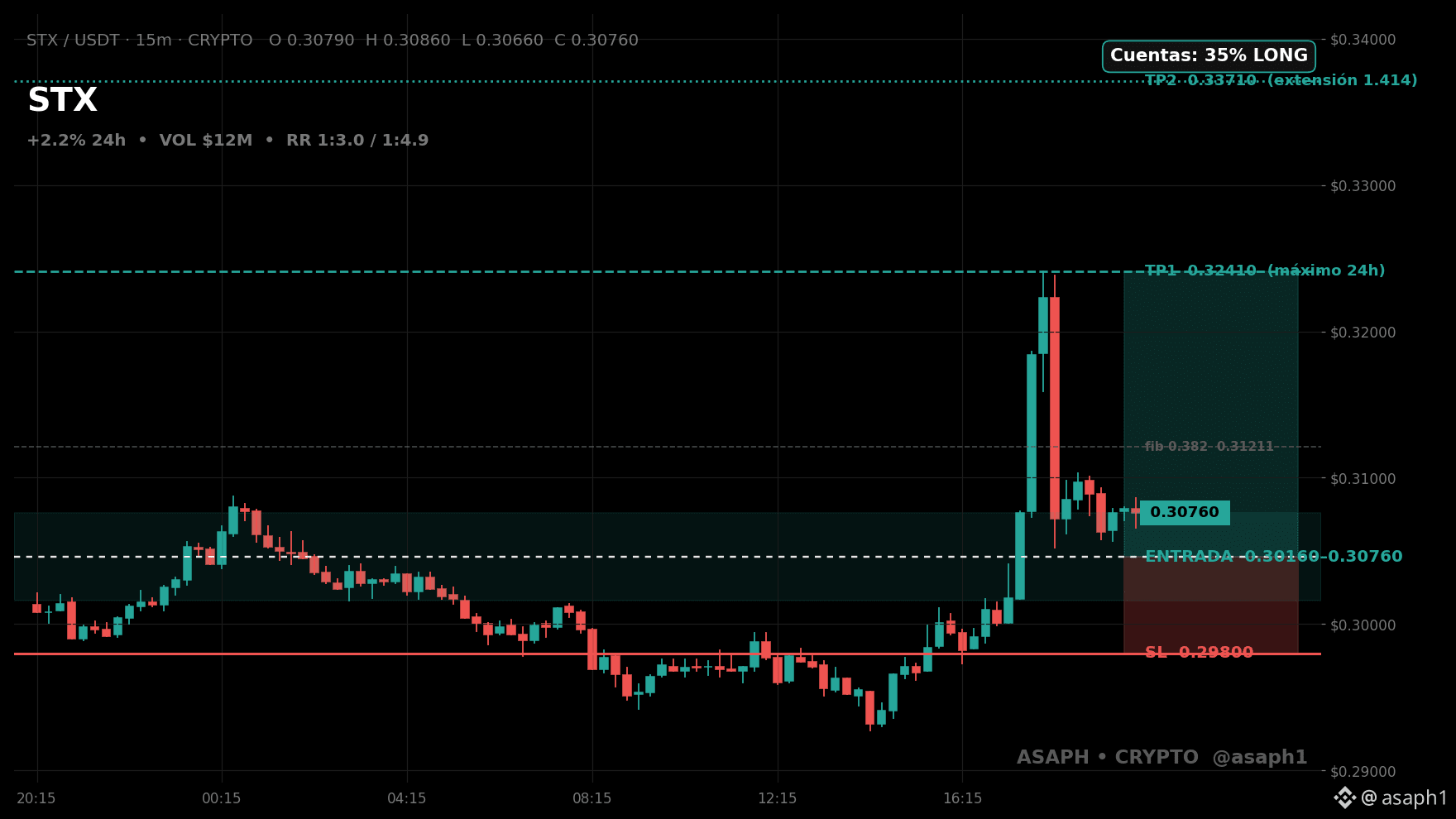
El precio rebotó desde el soporte de 24h en $0.2927 y ahora mira el máximo de 24h en $0.3241 → la puerta está arriba.
Solo el 35.2% de las cuentas va largo en STX → la multitud está corta mientras el precio se levanta.
El interés abierto subió 4.9% hasta $7.41M → entra dinero nuevo, no es un rebote vacío.
Si el precio cierra sobre $0.3241, esos cortos pagan la fiesta → ahí está el combustible del segundo objetivo.
Los DEX movieron $6,283M en 24h (-18%): menos ruido en el mercado, más peso para el dato de cada moneda.
Nivel que ya habló: 43 toques de velas de 15m en 24h sobre esta zona.
📊 Señal LONG STX
📍 Precio ahora: $0.3076
🎯 Zona de entrada: $0.3016–$0.3076
Entrada: orden límite en la zona, media $0.3046
🛑 Stop loss: $0.2980 (-2.17% desde la media), confirmado ANTES de entrar; si lo pierde, el plan muere
✅ TP1: $0.3241, el máximo de 24h — primer take profit: cobrar el 50% y llevar el stop a mi entrada
🏁 TP2: $0.3371 (ext. 1.414) — el nivel que deja atrás todo el rango de 24h
R/R: 1:2.95 · 1:4.92
Riesgo por trade: 2% del capital
Precio en vivo aquí 👇 STX
STX #Stacks #ShortSqueeze #Crypto
Esto es un plan, no consejo financiero.
¿Compras $STX o te quedas mirando?
Con Bitcoin pagando yield en Stacks, el largo de STX se defiende solo
La tensión se siente: la mayoría corta ve subir justo lo que vendió.
El precio rebotó desde el soporte de 24h en $0.2927 y ahora mira el máximo de 24h en $0.3241 → la puerta está arriba.
Solo el 35.2% de las cuentas va largo en STX → la multitud está corta mientras el precio se levanta.
El interés abierto subió 4.9% hasta $7.41M → entra dinero nuevo, no es un rebote vacío.
Si el precio cierra sobre $0.3241, esos cortos pagan la fiesta → ahí está el combustible del segundo objetivo.
Los DEX movieron $6,283M en 24h (-18%): menos ruido en el mercado, más peso para el dato de cada moneda.
Nivel que ya habló: 43 toques de velas de 15m en 24h sobre esta zona.
📊 Señal LONG STX
📍 Precio ahora: $0.3076
🎯 Zona de entrada: $0.3016–$0.3076
Entrada: orden límite en la zona, media $0.3046
🛑 Stop loss: $0.2980 (-2.17% desde la media), confirmado ANTES de entrar; si lo pierde, el plan muere
✅ TP1: $0.3241, el máximo de 24h — primer take profit: cobrar el 50% y llevar el stop a mi entrada
🏁 TP2: $0.3371 (ext. 1.414) — el nivel que deja atrás todo el rango de 24h
R/R: 1:2.95 · 1:4.92
Riesgo por trade: 2% del capital
Precio en vivo aquí 👇 STX
STX #Stacks #ShortSqueeze #Crypto
Esto es un plan, no consejo financiero.
Con Bitcoin pagando yield en Stacks, el largo de STX se defiende solo
La tensión se siente: la mayoría corta ve subir justo lo que vendió.
El precio rebotó desde el soporte de 24h en $0.2927 y ahora mira el máximo de 24h en $0.3241 → la puerta está arriba.
Solo el 35.2% de las cuentas va largo en STX → la multitud está corta mientras el precio se levanta.
El interés abierto subió 4.9% hasta $7.41M → entra dinero nuevo, no es un rebote vacío.
Si el precio cierra sobre $0.3241, esos cortos pagan la fiesta → ahí está el combustible del segundo objetivo.
Los DEX movieron $6,283M en 24h (-18%): menos ruido en el mercado, más peso para el dato de cada moneda.
Nivel que ya habló: 43 toques de velas de 15m en 24h sobre esta zona.
📊 Señal LONG STX
📍 Precio ahora: $0.3076
🎯 Zona de entrada: $0.3016–$0.3076
Entrada: orden límite en la zona, media $0.3046
🛑 Stop loss: $0.2980 (-2.17% desde la media), confirmado ANTES de entrar; si lo pierde, el plan muere
✅ TP1: $0.3241, el máximo de 24h — primer take profit: cobrar el 50% y llevar el stop a mi entrada
🏁 TP2: $0.3371 (ext. 1.414) — el nivel que deja atrás todo el rango de 24h
R/R: 1:2.95 · 1:4.92
Riesgo por trade: 2% del capital
Precio en vivo aquí 👇 STX
STX #Stacks #ShortSqueeze #Crypto
Esto es un plan, no consejo financiero.
27

·
--
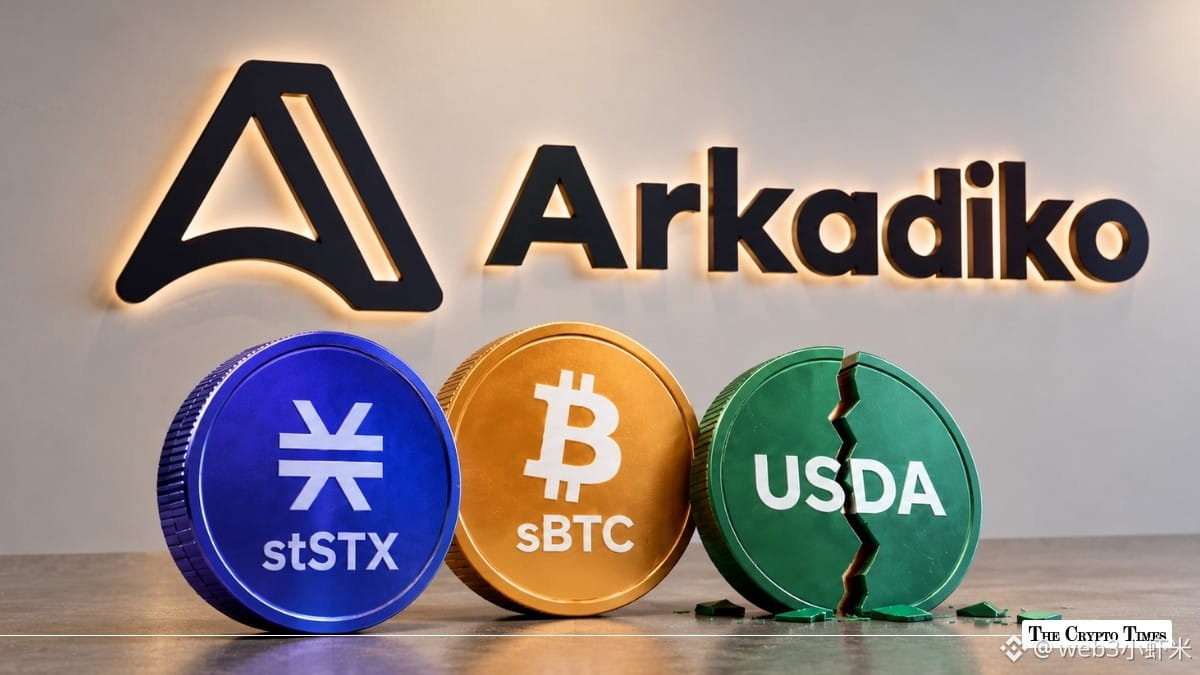
Acabo de ver que Arkadiko, en Stacks, vuelve a tener problemas; esta vez no se trata de una vulnerabilidad corriente de un contrato, sino de una brecha en el proceso de gobernanza.
Según el equipo, el 22 de octubre alguien aprovechó el proceso de gobernanza para aprobar un contrato malicioso y vaciar casi por completo las garantías de la tesorería: las cifras preliminares indican que se transfirieron unos 2 millones de stSTX y aproximadamente 1.65 sBTC. La stablecoin del protocolo, USDA, también perdió su paridad. Según DeFiLlama, el TVL cayó de unos 1.4 millones de dólares a unos 140 mil, una bajada de casi el 90 %.
El equipo ya ha desactivado el contrato malicioso, suspendido la gobernanza y cerrado los retiros y las liquidaciones de la tesorería; también está contactando a los exchanges para congelar los activos y preparando una denuncia. Este es el segundo incidente de seguridad público de Arkadiko (en 2021 también vaciaron un pool de Swap). Las votaciones de gobernanza también pueden convertirse en un vector de ataque. $STX : en BTCFi todavía hay que reforzar la seguridad con bloqueos temporales y revisiones de propuestas.
#Stacks #DeFi #Stablecoins
Acabo de ver que Arkadiko, en Stacks, vuelve a tener problemas; esta vez no se trata de una vulnerabilidad corriente de un contrato, sino de una brecha en el proceso de gobernanza.
Según el equipo, el 22 de octubre alguien aprovechó el proceso de gobernanza para aprobar un contrato malicioso y vaciar casi por completo las garantías de la tesorería: las cifras preliminares indican que se transfirieron unos 2 millones de stSTX y aproximadamente 1.65 sBTC. La stablecoin del protocolo, USDA, también perdió su paridad. Según DeFiLlama, el TVL cayó de unos 1.4 millones de dólares a unos 140 mil, una bajada de casi el 90 %.
El equipo ya ha desactivado el contrato malicioso, suspendido la gobernanza y cerrado los retiros y las liquidaciones de la tesorería; también está contactando a los exchanges para congelar los activos y preparando una denuncia. Este es el segundo incidente de seguridad público de Arkadiko (en 2021 también vaciaron un pool de Swap). Las votaciones de gobernanza también pueden convertirse en un vector de ataque. $STX : en BTCFi todavía hay que reforzar la seguridad con bloqueos temporales y revisiones de propuestas.
#Stacks #DeFi #Stablecoins
Según el equipo, el 22 de octubre alguien aprovechó el proceso de gobernanza para aprobar un contrato malicioso y vaciar casi por completo las garantías de la tesorería: las cifras preliminares indican que se transfirieron unos 2 millones de stSTX y aproximadamente 1.65 sBTC. La stablecoin del protocolo, USDA, también perdió su paridad. Según DeFiLlama, el TVL cayó de unos 1.4 millones de dólares a unos 140 mil, una bajada de casi el 90 %.
El equipo ya ha desactivado el contrato malicioso, suspendido la gobernanza y cerrado los retiros y las liquidaciones de la tesorería; también está contactando a los exchanges para congelar los activos y preparando una denuncia. Este es el segundo incidente de seguridad público de Arkadiko (en 2021 también vaciaron un pool de Swap). Las votaciones de gobernanza también pueden convertirse en un vector de ataque. $STX : en BTCFi todavía hay que reforzar la seguridad con bloqueos temporales y revisiones de propuestas.
#Stacks #DeFi #Stablecoins
169


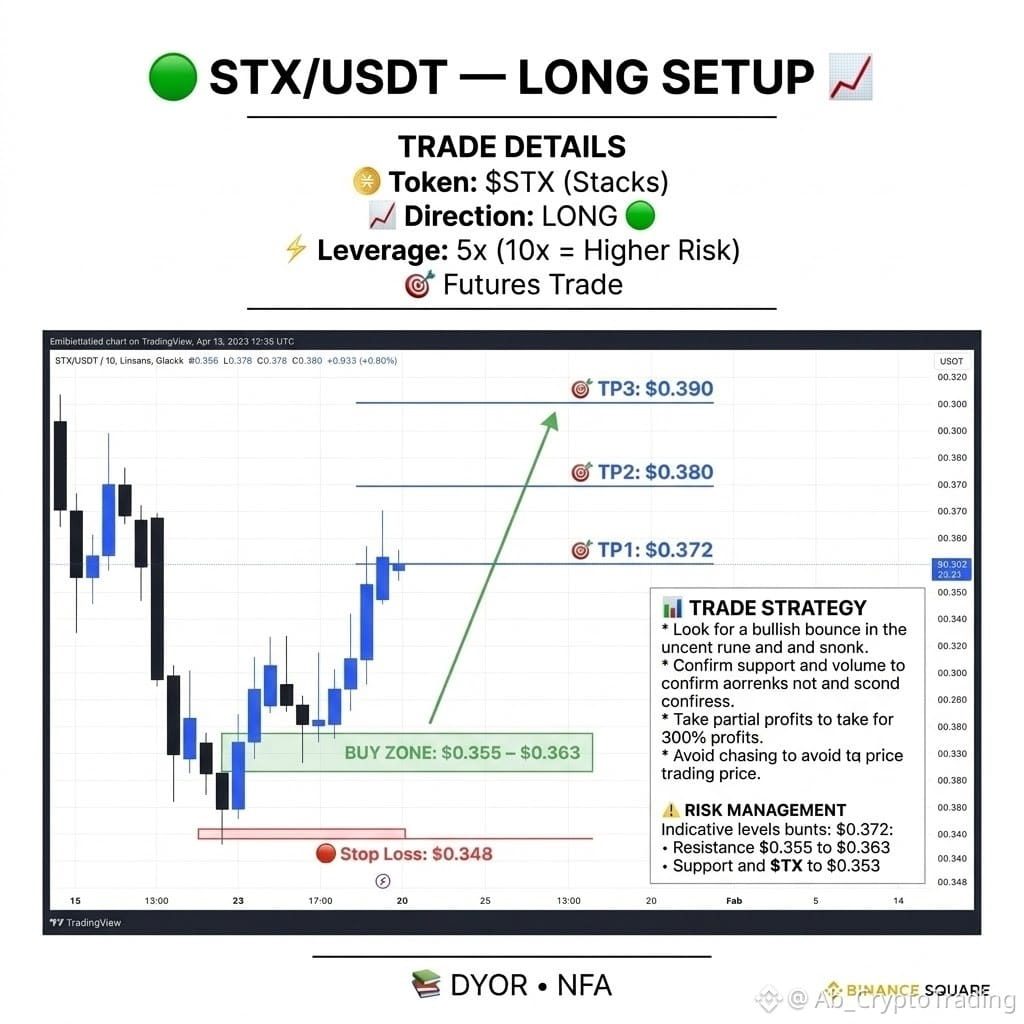
🟢 $STX /USDT — CONFIGURACIÓN LONG 📈
🪙 Token: $STX (Stacks) 📈 Dirección: LONG 🟢 ⚡ Apalancamiento: 5x (10x = Mayor riesgo) 🎯 Operación de futuros
━━━━━━━━━━━━━━
💰 Zona de entrada: $0.355 – $0.363
✅ TP1: $0.372 ✅ TP2: $0.380 ✅ TP3: $0.390
🛑 Stop loss: $0.348
━━━━━━━━━━━━━━
📊 Estrategia de la operación:
* Busca un rebote alcista cerca de la zona de entrada.
* Confirma el soporte y el volumen antes de entrar.
* Considera tomar ganancias parciales en cada objetivo.
* Evita perseguir el precio si sube por encima de la zona de entrada.
⚠️ Gestión del riesgo: Estos niveles son indicativos, no son señales garantizadas. El análisis técnico reciente identifica una resistencia cerca de $0.384 y un soporte alrededor de $0.350.
📚 Investiga por tu cuenta • Esto no es asesoría financiera
#STX #Stacks #cryptotrading #BinanceSquare #Write2Earn
🟢 $STX /USDT — CONFIGURACIÓN LONG 📈
🪙 Token: $STX (Stacks) 📈 Dirección: LONG 🟢 ⚡ Apalancamiento: 5x (10x = Mayor riesgo) 🎯 Operación de futuros
━━━━━━━━━━━━━━
💰 Zona de entrada: $0.355 – $0.363
✅ TP1: $0.372 ✅ TP2: $0.380 ✅ TP3: $0.390
🛑 Stop loss: $0.348
━━━━━━━━━━━━━━
📊 Estrategia de la operación:
* Busca un rebote alcista cerca de la zona de entrada.
* Confirma el soporte y el volumen antes de entrar.
* Considera tomar ganancias parciales en cada objetivo.
* Evita perseguir el precio si sube por encima de la zona de entrada.
⚠️ Gestión del riesgo: Estos niveles son indicativos, no son señales garantizadas. El análisis técnico reciente identifica una resistencia cerca de $0.384 y un soporte alrededor de $0.350.
📚 Investiga por tu cuenta • Esto no es asesoría financiera
#STX #Stacks #cryptotrading #BinanceSquare #Write2Earn
🪙 Token: $STX (Stacks) 📈 Dirección: LONG 🟢 ⚡ Apalancamiento: 5x (10x = Mayor riesgo) 🎯 Operación de futuros
━━━━━━━━━━━━━━
💰 Zona de entrada: $0.355 – $0.363
✅ TP1: $0.372 ✅ TP2: $0.380 ✅ TP3: $0.390
🛑 Stop loss: $0.348
━━━━━━━━━━━━━━
📊 Estrategia de la operación:
* Busca un rebote alcista cerca de la zona de entrada.
* Confirma el soporte y el volumen antes de entrar.
* Considera tomar ganancias parciales en cada objetivo.
* Evita perseguir el precio si sube por encima de la zona de entrada.
⚠️ Gestión del riesgo: Estos niveles son indicativos, no son señales garantizadas. El análisis técnico reciente identifica una resistencia cerca de $0.384 y un soporte alrededor de $0.350.
📚 Investiga por tu cuenta • Esto no es asesoría financiera
#STX #Stacks #cryptotrading #BinanceSquare #Write2Earn
1
329

·
--
🪙 ACTIVOS BASADOS EN BITCOIN: ¿PUEDE LA ACTIVIDAD ON-CHAIN CREAR UNA NUEVA NARRATIVA?
$STX | $ORDI | $SATS.US
Stacks permite crear contratos inteligentes conectados a Bitcoin, mientras que ORDI y SATS están asociados al ecosistema de inscripciones de Bitcoin. El interés puede aumentar rápidamente, pero la demanda especulativa también puede desvanecerse con la misma rapidez.
🔎 Sigue de cerca: la actividad del ecosistema de Bitcoin, la liquidez y la profundidad del mercado.
#Stacks #ORDI #SATS #BitcoinEcosystem #CryptoTrends
Esto no es asesoramiento financiero. Investiga por tu cuenta.
🪙 ACTIVOS BASADOS EN BITCOIN: ¿PUEDE LA ACTIVIDAD ON-CHAIN CREAR UNA NUEVA NARRATIVA?
$STX | $ORDI | $SATS.US
Stacks permite crear contratos inteligentes conectados a Bitcoin, mientras que ORDI y SATS están asociados al ecosistema de inscripciones de Bitcoin. El interés puede aumentar rápidamente, pero la demanda especulativa también puede desvanecerse con la misma rapidez.
🔎 Sigue de cerca: la actividad del ecosistema de Bitcoin, la liquidez y la profundidad del mercado.
#Stacks #ORDI #SATS #BitcoinEcosystem #CryptoTrends
Esto no es asesoramiento financiero. Investiga por tu cuenta.
$STX | $ORDI | $SATS.US
Stacks permite crear contratos inteligentes conectados a Bitcoin, mientras que ORDI y SATS están asociados al ecosistema de inscripciones de Bitcoin. El interés puede aumentar rápidamente, pero la demanda especulativa también puede desvanecerse con la misma rapidez.
🔎 Sigue de cerca: la actividad del ecosistema de Bitcoin, la liquidez y la profundidad del mercado.
#Stacks #ORDI #SATS #BitcoinEcosystem #CryptoTrends
Esto no es asesoramiento financiero. Investiga por tu cuenta.
1
10

·
--
Verificado
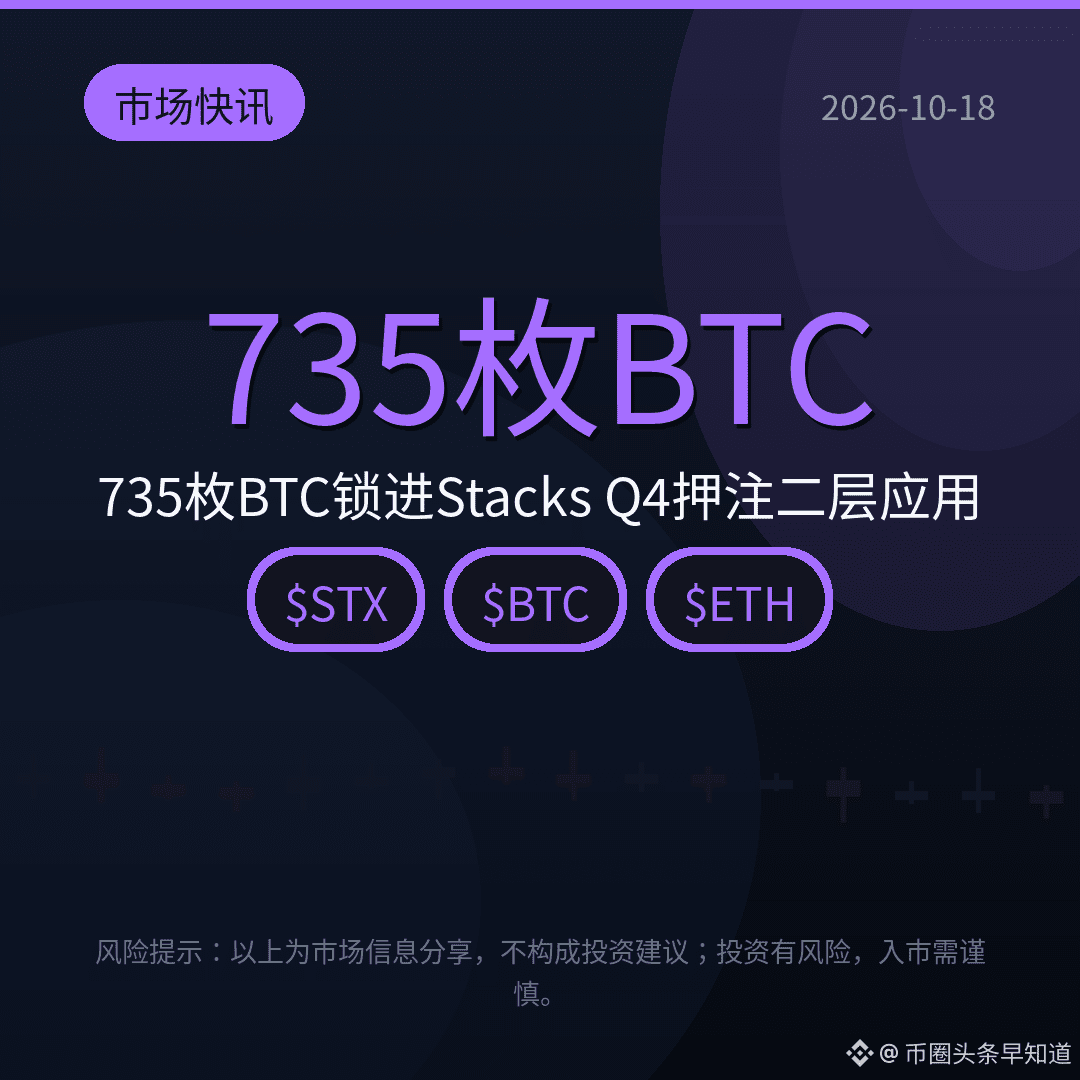
【Última hora del mercado】735 BTC ya están bloqueados en Stacks. Las dos primeras emisiones de bonos atrajeron esta cantidad: las soluciones de capa 2 de Bitcoin empiezan a competir con la red principal por capital a largo plazo. Stacks se centrará en el cuarto trimestre en abrir mensualmente los bonos de BTC y en integrar los BTC bloqueados en aplicaciones del ecosistema. Se prevé que la tercera emisión, Bond 3, comience alrededor del 10 de noviembre. La actualización de la red Epoch 4.1 está prevista para principios de diciembre, y Clarity 7 será la versión predeterminada para los nuevos contratos. Mientras tanto, los STX en staking han pasado de 392 millones a 493 millones, un aumento superior al 25 %. Una vez que BTC llega a una solución de capa 2, ¿puede realmente ponerse en marcha dentro de las aplicaciones?
(Fuente: CryptoBriefing)
$STX $BTC $ETH
#币安广场 #比特币 #Stacks
⚠️Aviso de riesgo: La información anterior se comparte con fines informativos sobre el mercado y no constituye asesoramiento de inversión. Toda inversión conlleva riesgos; actúe con prudencia.
【Última hora del mercado】735 BTC ya están bloqueados en Stacks. Las dos primeras emisiones de bonos atrajeron esta cantidad: las soluciones de capa 2 de Bitcoin empiezan a competir con la red principal por capital a largo plazo. Stacks se centrará en el cuarto trimestre en abrir mensualmente los bonos de BTC y en integrar los BTC bloqueados en aplicaciones del ecosistema. Se prevé que la tercera emisión, Bond 3, comience alrededor del 10 de noviembre. La actualización de la red Epoch 4.1 está prevista para principios de diciembre, y Clarity 7 será la versión predeterminada para los nuevos contratos. Mientras tanto, los STX en staking han pasado de 392 millones a 493 millones, un aumento superior al 25 %. Una vez que BTC llega a una solución de capa 2, ¿puede realmente ponerse en marcha dentro de las aplicaciones?
(Fuente: CryptoBriefing)
$STX $BTC $ETH
#币安广场 #比特币 #Stacks
⚠️Aviso de riesgo: La información anterior se comparte con fines informativos sobre el mercado y no constituye asesoramiento de inversión. Toda inversión conlleva riesgos; actúe con prudencia.
(Fuente: CryptoBriefing)
$STX $BTC $ETH
#币安广场 #比特币 #Stacks
⚠️Aviso de riesgo: La información anterior se comparte con fines informativos sobre el mercado y no constituye asesoramiento de inversión. Toda inversión conlleva riesgos; actúe con prudencia.
556

Stacks acaba de poner 735 BTC a trabajar
El staking de Bitcoin en Stacks ha atraído unos 735 $BTC en sus dos primeros bonos. El Genesis Bond completó los 230 BTC en septiembre, y el Bond 2 recibió 505 BTC tras abrirse el 8 de octubre. $STX en staking ha subido un 25 % hasta los 493M. El rendimiento objetivo del Genesis es de alrededor del 3 %, pagado semanalmente en BTC, y cada mes se abren nuevos bonos.
¿Bloquearías tus BTC por un 3 %?
#Stacks #BitcoinStaking #BTCFi
Fuente: Informe del ecosistema de Stacks del tercer trimestre de 2026, resumen del Genesis Bond
{spot}(STXUSDT)
Stacks acaba de poner 735 BTC a trabajar
El staking de Bitcoin en Stacks ha atraído unos 735 $BTC en sus dos primeros bonos. El Genesis Bond completó los 230 BTC en septiembre, y el Bond 2 recibió 505 BTC tras abrirse el 8 de octubre. $STX en staking ha subido un 25 % hasta los 493M. El rendimiento objetivo del Genesis es de alrededor del 3 %, pagado semanalmente en BTC, y cada mes se abren nuevos bonos.
¿Bloquearías tus BTC por un 3 %? #Stacks #BitcoinStaking #BTCFi
Fuente: Informe del ecosistema de Stacks del tercer trimestre de 2026, resumen del Genesis Bond
El staking de Bitcoin en Stacks ha atraído unos 735 $BTC en sus dos primeros bonos. El Genesis Bond completó los 230 BTC en septiembre, y el Bond 2 recibió 505 BTC tras abrirse el 8 de octubre. $STX en staking ha subido un 25 % hasta los 493M. El rendimiento objetivo del Genesis es de alrededor del 3 %, pagado semanalmente en BTC, y cada mes se abren nuevos bonos.
¿Bloquearías tus BTC por un 3 %? #Stacks #BitcoinStaking #BTCFi
Fuente: Informe del ecosistema de Stacks del tercer trimestre de 2026, resumen del Genesis Bond
269

·
--
Las dos rondas de bonding de Stacks captaron unos 735 $BTC: más de la mitad pasó por el staking líquidoEn el informe del tercer trimestre de Stacks, la cifra más contundente no es un eslogan: es la entrada de $BTC contante y sonante.
Desde el lanzamiento de la red principal de Bitcoin Staking, las dos primeras rondas de bonding suman unos 735 $BTC: Genesis Bond (10 de septiembre) alcanzó el máximo de 230; Bond 2 (8 de octubre) sumó 505, casi el doble. De estos, unos 483 se canalizaron a través de stBTC de Stacking DAO: las posiciones siguen generando recompensas por staking y también pueden usarse como garantía en DeFi.
Los datos complementarios tampoco se quedan atrás: la cantidad de $STX en staking pasó de unos 392 millones tras la bifurcación dura PoX-5 a unos 493 millones, un aumento de más del 25 %. Entre las primeras instituciones figuran 21shares, HashKey Cloud, UTXO Management y Sypher Capital; en custodia ya se han integrado Fireblocks, Fordefi y Anchorage Digital. Muneeb Ali también asumió oficialmente el cargo de CEO de Stacks Labs el 15 de octubre.
Las dos rondas de bonding de Stacks captaron unos 735 $BTC: más de la mitad pasó por el staking líquido
En el informe del tercer trimestre de Stacks, la cifra más contundente no es un eslogan: es la entrada de $BTC contante y sonante.
Desde el lanzamiento de la red principal de Bitcoin Staking, las dos primeras rondas de bonding suman unos 735 $BTC : Genesis Bond (10 de septiembre) alcanzó el máximo de 230; Bond 2 (8 de octubre) sumó 505, casi el doble. De estos, unos 483 se canalizaron a través de stBTC de Stacking DAO: las posiciones siguen generando recompensas por staking y también pueden usarse como garantía en DeFi.
Los datos complementarios tampoco se quedan atrás: la cantidad de $STX en staking pasó de unos 392 millones tras la bifurcación dura PoX-5 a unos 493 millones, un aumento de más del 25 %. Entre las primeras instituciones figuran 21shares, HashKey Cloud, UTXO Management y Sypher Capital; en custodia ya se han integrado Fireblocks, Fordefi y Anchorage Digital. Muneeb Ali también asumió oficialmente el cargo de CEO de Stacks Labs el 15 de octubre.
Desde el lanzamiento de la red principal de Bitcoin Staking, las dos primeras rondas de bonding suman unos 735 $BTC : Genesis Bond (10 de septiembre) alcanzó el máximo de 230; Bond 2 (8 de octubre) sumó 505, casi el doble. De estos, unos 483 se canalizaron a través de stBTC de Stacking DAO: las posiciones siguen generando recompensas por staking y también pueden usarse como garantía en DeFi.
Los datos complementarios tampoco se quedan atrás: la cantidad de $STX en staking pasó de unos 392 millones tras la bifurcación dura PoX-5 a unos 493 millones, un aumento de más del 25 %. Entre las primeras instituciones figuran 21shares, HashKey Cloud, UTXO Management y Sypher Capital; en custodia ya se han integrado Fireblocks, Fordefi y Anchorage Digital. Muneeb Ali también asumió oficialmente el cargo de CEO de Stacks Labs el 15 de octubre.
353

·
--
📰 En el informe del tercer trimestre de Stacks hay un cambio bastante evidente: durante los dos primeros periodos de bloqueo se depositaron en total 735 BTC.
🔥 En el primer periodo se depositaron 230 BTC y en el segundo, 505 BTC: el volumen de depósitos se duplicó. Entre los participantes están 21shares, HashKey Cloud, UTXO Management y Sypher Capital. A decir verdad, el rápido aumento de la segunda ronda revela más sobre el crecimiento de la participación que la cifra total por sí sola.
💡 Otro dato tiene que ver con el staking de STX. Después de la bifurcación dura PoX-5, los STX participantes en el staking pasaron de 392 millones a 493 millones, un aumento superior al 25 %. Esto indica que también está aumentando la participación en el bloqueo, aunque habrá que ver si el crecimiento se mantiene en los próximos periodos.
👀 El informe también señala que Stacks planea lanzar en el cuarto trimestre una función de préstamos de autocustodia respaldados por BTC en staking y bóvedas Earn, además de seguir integrando stBTC con Zest, Bitflow y Hermetica. Actualmente, Zest tiene más de 80 millones de dólares en valor bloqueado, más de 122 millones de dólares en depósitos y más de 42 millones de dólares en préstamos totales; además, ha desplegado 800 BTC como garantía.
🤔 A principios de diciembre también está prevista la actualización de la red Epoch 4.1, que incluye mejoras en el lenguaje de contratos inteligentes Clarity. De cara al futuro, ¿cuál te entusiasma más: que los productos de préstamos o las bóvedas conviertan esta participación en staking en un uso real?
#Stacks #BTC质押 #STX #生态比特币
📰 En el informe del tercer trimestre de Stacks hay un cambio bastante evidente: durante los dos primeros periodos de bloqueo se depositaron en total 735 BTC.
🔥 En el primer periodo se depositaron 230 BTC y en el segundo, 505 BTC: el volumen de depósitos se duplicó. Entre los participantes están 21shares, HashKey Cloud, UTXO Management y Sypher Capital. A decir verdad, el rápido aumento de la segunda ronda revela más sobre el crecimiento de la participación que la cifra total por sí sola.
💡 Otro dato tiene que ver con el staking de STX. Después de la bifurcación dura PoX-5, los STX participantes en el staking pasaron de 392 millones a 493 millones, un aumento superior al 25 %. Esto indica que también está aumentando la participación en el bloqueo, aunque habrá que ver si el crecimiento se mantiene en los próximos periodos.
👀 El informe también señala que Stacks planea lanzar en el cuarto trimestre una función de préstamos de autocustodia respaldados por BTC en staking y bóvedas Earn, además de seguir integrando stBTC con Zest, Bitflow y Hermetica. Actualmente, Zest tiene más de 80 millones de dólares en valor bloqueado, más de 122 millones de dólares en depósitos y más de 42 millones de dólares en préstamos totales; además, ha desplegado 800 BTC como garantía.
🤔 A principios de diciembre también está prevista la actualización de la red Epoch 4.1, que incluye mejoras en el lenguaje de contratos inteligentes Clarity. De cara al futuro, ¿cuál te entusiasma más: que los productos de préstamos o las bóvedas conviertan esta participación en staking en un uso real?
#Stacks #BTC质押 #STX #生态比特币
🔥 En el primer periodo se depositaron 230 BTC y en el segundo, 505 BTC: el volumen de depósitos se duplicó. Entre los participantes están 21shares, HashKey Cloud, UTXO Management y Sypher Capital. A decir verdad, el rápido aumento de la segunda ronda revela más sobre el crecimiento de la participación que la cifra total por sí sola.
💡 Otro dato tiene que ver con el staking de STX. Después de la bifurcación dura PoX-5, los STX participantes en el staking pasaron de 392 millones a 493 millones, un aumento superior al 25 %. Esto indica que también está aumentando la participación en el bloqueo, aunque habrá que ver si el crecimiento se mantiene en los próximos periodos.
👀 El informe también señala que Stacks planea lanzar en el cuarto trimestre una función de préstamos de autocustodia respaldados por BTC en staking y bóvedas Earn, además de seguir integrando stBTC con Zest, Bitflow y Hermetica. Actualmente, Zest tiene más de 80 millones de dólares en valor bloqueado, más de 122 millones de dólares en depósitos y más de 42 millones de dólares en préstamos totales; además, ha desplegado 800 BTC como garantía.
🤔 A principios de diciembre también está prevista la actualización de la red Epoch 4.1, que incluye mejoras en el lenguaje de contratos inteligentes Clarity. De cara al futuro, ¿cuál te entusiasma más: que los productos de préstamos o las bóvedas conviertan esta participación en staking en un uso real?
#Stacks #BTC质押 #STX #生态比特币

85

·
--
$STX ₿ ¡Contratos inteligentes para Bitcoin! Stacks lleva aplicaciones y DeFi a la red Bitcoin. 💵 Precio: $[PRICE] | 📊 ¿Es $STX la apuesta DeFi de Bitcoin? #STX #Stacks #BinanceSquare
No es asesoramiento financiero. Investiga siempre por tu cuenta.
$STX ₿ ¡Contratos inteligentes para Bitcoin! Stacks lleva aplicaciones y DeFi a la red Bitcoin. 💵 Precio: $[PRICE] | 📊 ¿Es $STX la apuesta DeFi de Bitcoin? #STX #Stacks #BinanceSquare
No es asesoramiento financiero. Investiga siempre por tu cuenta.
No es asesoramiento financiero. Investiga siempre por tu cuenta.
119

$STX muestra una evolución positiva del precio
Stacks registró una subida de alrededor del 6 % en un rastreador de mercado que sigue los criptoactivos con mayor movimiento de hoy.
Esto es lo que hace que valga la pena seguir de cerca el próximo movimiento:
📌 ¿Podrán los compradores defender el soporte reciente?
📌 ¿Se mantendrá saludable el volumen de negociación?
📌 ¿Podrá el precio superar la resistencia y mantenerse por encima?
Una ruptura confirmada es más significativa que una mecha rápida por encima de la resistencia.
Ten paciencia, sigue el gráfico y gestiona el riesgo con cuidado.
#Stacks #STX #BitcoinEcosystem #CryptoMarket
$STX muestra una evolución positiva del precio
Stacks registró una subida de alrededor del 6 % en un rastreador de mercado que sigue los criptoactivos con mayor movimiento de hoy.
Esto es lo que hace que valga la pena seguir de cerca el próximo movimiento:
📌 ¿Podrán los compradores defender el soporte reciente?
📌 ¿Se mantendrá saludable el volumen de negociación?
📌 ¿Podrá el precio superar la resistencia y mantenerse por encima?
Una ruptura confirmada es más significativa que una mecha rápida por encima de la resistencia.
Ten paciencia, sigue el gráfico y gestiona el riesgo con cuidado.
#Stacks #STX #BitcoinEcosystem #CryptoMarket
Stacks registró una subida de alrededor del 6 % en un rastreador de mercado que sigue los criptoactivos con mayor movimiento de hoy.
Esto es lo que hace que valga la pena seguir de cerca el próximo movimiento:
📌 ¿Podrán los compradores defender el soporte reciente?
📌 ¿Se mantendrá saludable el volumen de negociación?
📌 ¿Podrá el precio superar la resistencia y mantenerse por encima?
Una ruptura confirmada es más significativa que una mecha rápida por encima de la resistencia.
Ten paciencia, sigue el gráfico y gestiona el riesgo con cuidado.
#Stacks #STX #BitcoinEcosystem #CryptoMarket
2
1
171

·
--
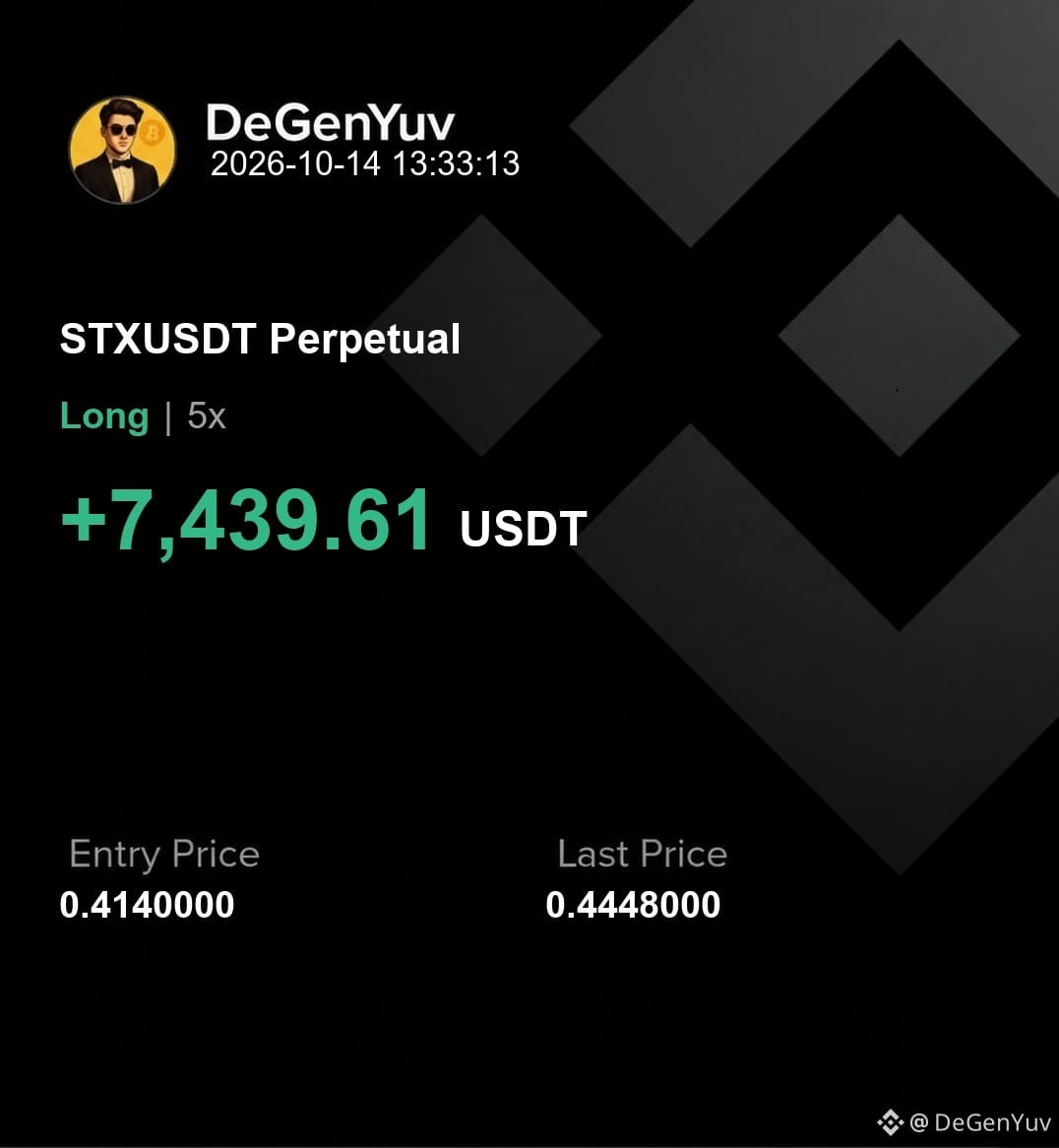
¡Acertamos!: $STX LONG alcanza el TAKE PROFIT 2 🎯
Anticipamos ese movimiento. $STX alcanzó nuestro TP2 en 0.4448, una ganancia del +7.54% desde la entrada. La acción del precio fue sólida: superó la zona de entrada y mantuvo el impulso. Los números no mienten. 📈💰
Síguenos para recibir actualizaciones diarias sobre criptomonedas.
#DeGenYuv #Stacks
¡Acertamos!: $STX LONG alcanza el TAKE PROFIT 2 🎯
Anticipamos ese movimiento. $STX alcanzó nuestro TP2 en 0.4448, una ganancia del +7.54% desde la entrada. La acción del precio fue sólida: superó la zona de entrada y mantuvo el impulso. Los números no mienten. 📈💰
Síguenos para recibir actualizaciones diarias sobre criptomonedas.
#DeGenYuv #Stacks
Anticipamos ese movimiento. $STX alcanzó nuestro TP2 en 0.4448, una ganancia del +7.54% desde la entrada. La acción del precio fue sólida: superó la zona de entrada y mantuvo el impulso. Los números no mienten. 📈💰
Síguenos para recibir actualizaciones diarias sobre criptomonedas.
#DeGenYuv #Stacks
9
·
--
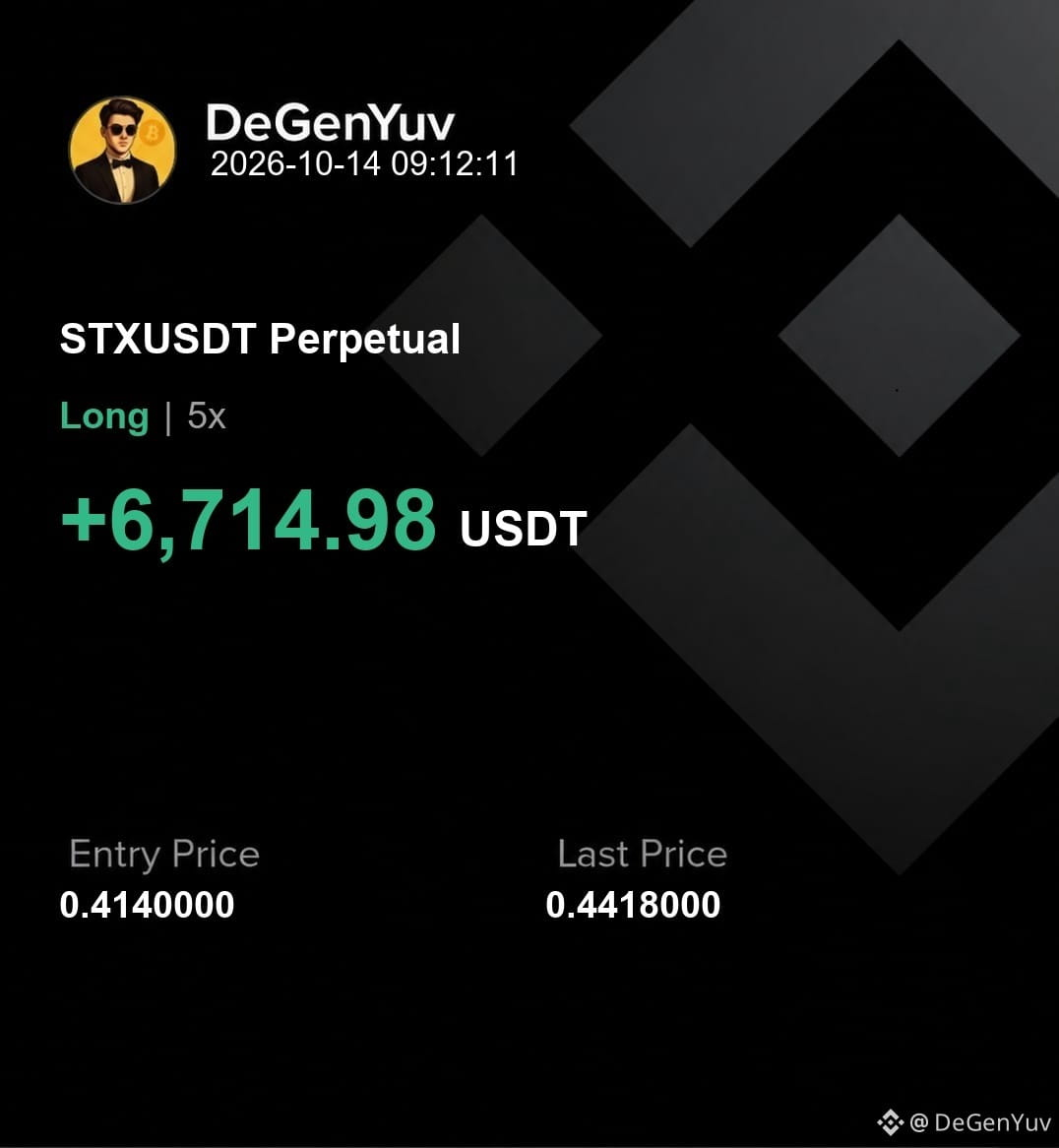
$STX Cumple — ¡Objetivo de ganancias 1 alcanzado! 🎯
Los números no mienten. Publicamos la configuración de posición larga $STX a 0.4136 y el mercado acaba de darnos resultados.
El precio atravesó nuestra zona de entrada y se disparó directamente hacia nuestros objetivos, alcanzando un precio de activación de 0.4418. Eso supone un movimiento limpio del +6.82% desde la configuración original y asegura el Objetivo de ganancias 1 en 0.432319, con una relación riesgo/recompensa de 1.25. 💰
El plan se ejecutó a la perfección. El objetivo 1 ya está cumplido; ahora veamos hasta dónde llega este impulso rumbo al TP2.
Síguenos para más configuraciones de criptomonedas.
#DeGenYuv #Stacks
$STX Cumple — ¡Objetivo de ganancias 1 alcanzado! 🎯
Los números no mienten. Publicamos la configuración de posición larga $STX a 0.4136 y el mercado acaba de darnos resultados.
El precio atravesó nuestra zona de entrada y se disparó directamente hacia nuestros objetivos, alcanzando un precio de activación de 0.4418. Eso supone un movimiento limpio del +6.82% desde la configuración original y asegura el Objetivo de ganancias 1 en 0.432319, con una relación riesgo/recompensa de 1.25. 💰
El plan se ejecutó a la perfección. El objetivo 1 ya está cumplido; ahora veamos hasta dónde llega este impulso rumbo al TP2.
Síguenos para más configuraciones de criptomonedas.
#DeGenYuv #Stacks
Los números no mienten. Publicamos la configuración de posición larga $STX a 0.4136 y el mercado acaba de darnos resultados.
El precio atravesó nuestra zona de entrada y se disparó directamente hacia nuestros objetivos, alcanzando un precio de activación de 0.4418. Eso supone un movimiento limpio del +6.82% desde la configuración original y asegura el Objetivo de ganancias 1 en 0.432319, con una relación riesgo/recompensa de 1.25. 💰
El plan se ejecutó a la perfección. El objetivo 1 ya está cumplido; ahora veamos hasta dónde llega este impulso rumbo al TP2.
Síguenos para más configuraciones de criptomonedas.
#DeGenYuv #Stacks
77

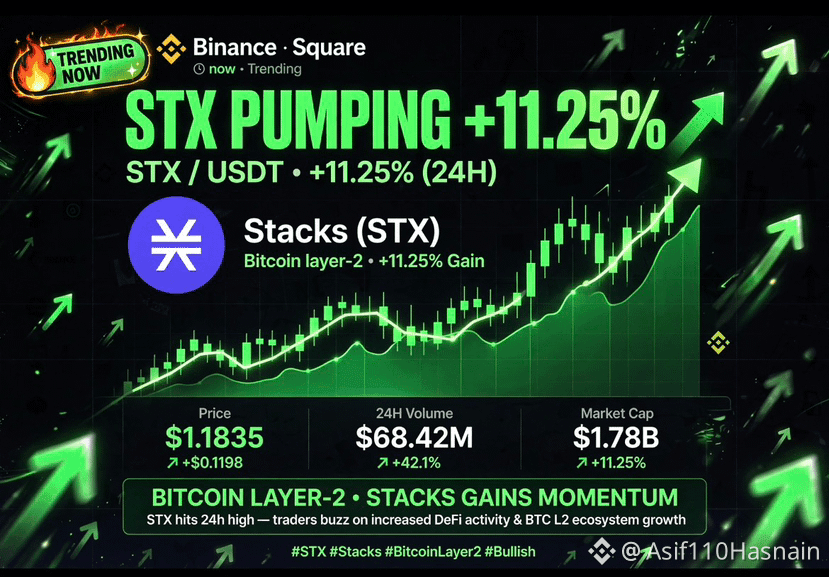
🔥 TENDENCIA AHORA: $ STX SUBE +11.25% (24H)
¡STX / USDT lidera hoy el top 100!
¿Por qué está subiendo $ STX?
- La narrativa de Bitcoin Layer-2 vuelve a cobrar fuerza
- El TVL de Stacks DeFi está aumentando
- $ BTC manteniéndose en $83k = las monedas L2 despegan
Abrí una posición larga en $ STX a $0.41; ahora va +11%. Objetivo: $0.48
¿Estás dentro de $ STX o sigues apostando en su contra?
$STX $BTC $ETH
#STX #Stacks #bitcoin #crypto #Bullish
{spot}(BTCUSDT)
{spot}(ETHUSDT)
{spot}(STXUSDT)
🔥 TENDENCIA AHORA: $ STX SUBE +11.25% (24H)
¡STX / USDT lidera hoy el top 100!
¿Por qué está subiendo $ STX?
- La narrativa de Bitcoin Layer-2 vuelve a cobrar fuerza
- El TVL de Stacks DeFi está aumentando
- $ BTC manteniéndose en $83k = las monedas L2 despegan
Abrí una posición larga en $ STX a $0.41; ahora va +11%. Objetivo: $0.48
¿Estás dentro de $ STX o sigues apostando en su contra?
$STX $BTC $ETH
#STX #Stacks #bitcoin #crypto #Bullish
¡STX / USDT lidera hoy el top 100!
¿Por qué está subiendo $ STX?
- La narrativa de Bitcoin Layer-2 vuelve a cobrar fuerza
- El TVL de Stacks DeFi está aumentando
- $ BTC manteniéndose en $83k = las monedas L2 despegan
Abrí una posición larga en $ STX a $0.41; ahora va +11%. Objetivo: $0.48
¿Estás dentro de $ STX o sigues apostando en su contra?
$STX $BTC $ETH
#STX #Stacks #bitcoin #crypto #Bullish
1
164

·
--
Artículo
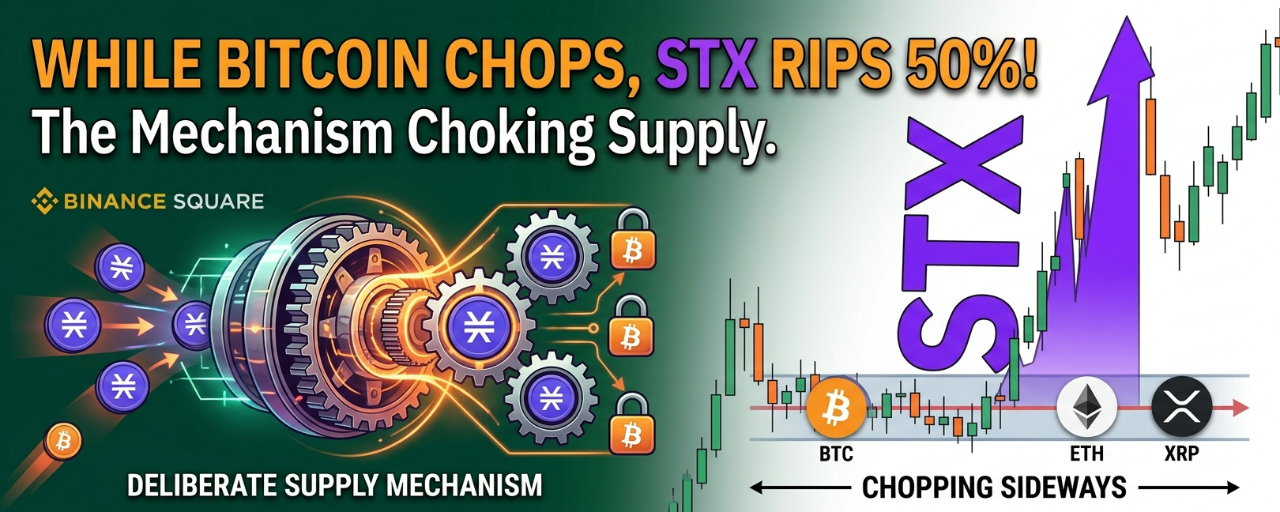
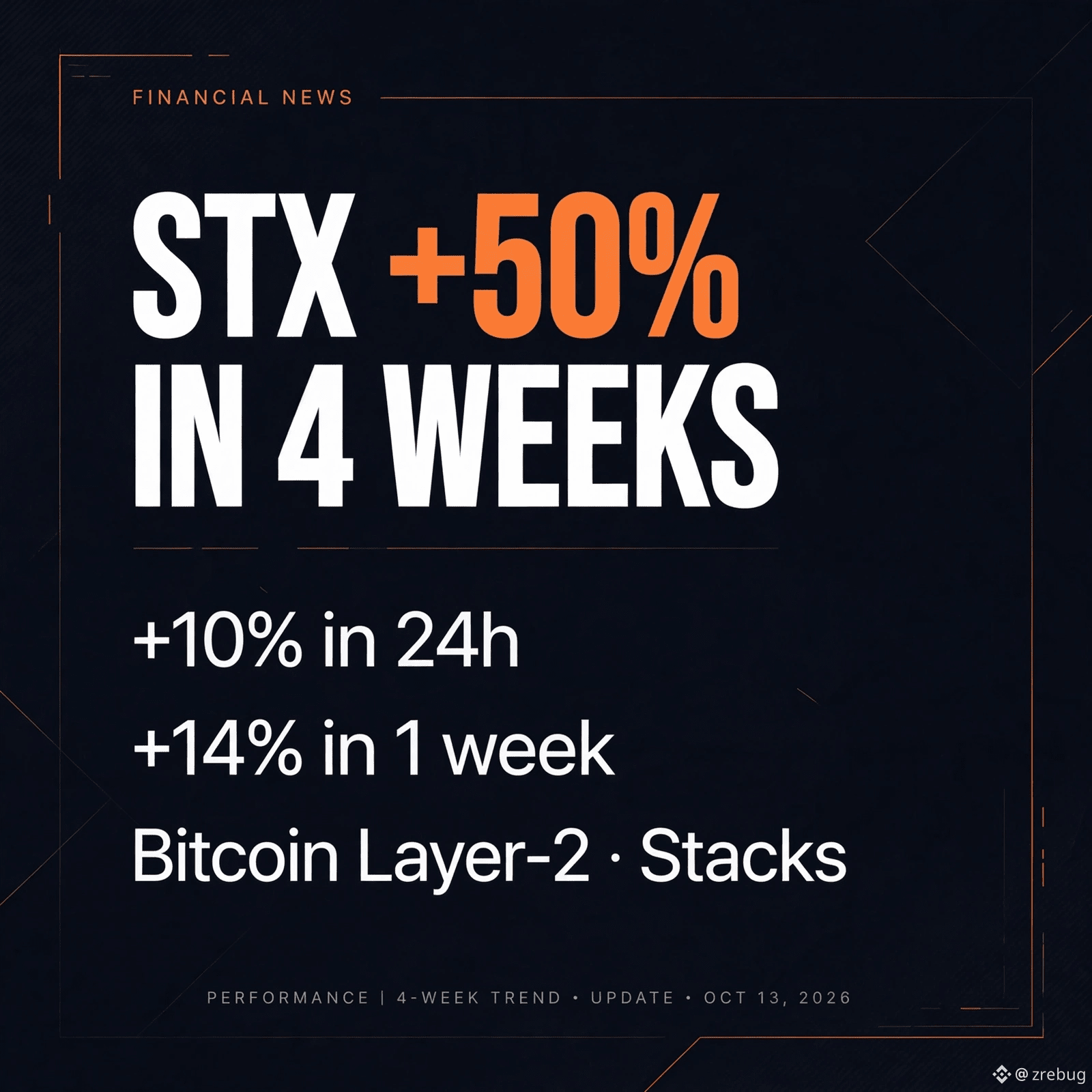
Bitcoin fluctúa y STX se dispara un 50% en un mes: un mecanismo diseñado para restringir la ofertaMientras Bitcoin, Ether y XRP fluctuaban en una semana marcada por la volatilidad macroeconómica, un token vinculado a Bitcoin los dejó atrás discretamente. $STX Ha subido casi un 10% en 24 horas, un 14% en la última semana y más de un 50% en el último mes, superando a todas las principales criptomonedas del mercado.
DATOS CLAVE
▪️ STX: +10% (24 h), +14% (7 días), +50%+ (4 semanas): supera a
,
y XRP
▪️ Bitcoin: ~83.576 $ | Ether: ~2.519,77 $, ambos prácticamente sin cambios en comparación
▪️ Stacks permite a los titulares de BTC hacer staking y obtener rendimiento directamente en la cadena de bloques de Bitcoin, sin convertirlos en wBTC ni usar puentes
Bitcoin fluctúa y STX se dispara un 50% en un mes: un mecanismo diseñado para restringir la oferta
Mientras Bitcoin, Ether y XRP fluctuaban en una semana marcada por la volatilidad macroeconómica, un token vinculado a Bitcoin los dejó atrás discretamente. $STX Ha subido casi un 10% en 24 horas, un 14% en la última semana y más de un 50% en el último mes, superando a todas las principales criptomonedas del mercado.
DATOS CLAVE
▪️ STX: +10% (24 h), +14% (7 días), +50%+ (4 semanas): supera a
,
y XRP
▪️ Bitcoin: ~83.576 $ | Ether: ~2.519,77 $, ambos prácticamente sin cambios en comparación
▪️ Stacks permite a los titulares de BTC hacer staking y obtener rendimiento directamente en la cadena de bloques de Bitcoin, sin convertirlos en wBTC ni usar puentes
DATOS CLAVE
▪️ STX: +10% (24 h), +14% (7 días), +50%+ (4 semanas): supera a
,
y XRP
▪️ Bitcoin: ~83.576 $ | Ether: ~2.519,77 $, ambos prácticamente sin cambios en comparación
▪️ Stacks permite a los titulares de BTC hacer staking y obtener rendimiento directamente en la cadena de bloques de Bitcoin, sin convertirlos en wBTC ni usar puentes
181

·
--
Mientras las principales criptomonedas se mueven lateralmente, una solución de capa 2 de Bitcoin avanza discretamente por delante del resto. STX, el token nativo de Stacks, sube casi un 10 % en 24 horas, un 14 % en la última semana y más de un 50 % en cuatro semanas, según CoinDesk Daybook (7:26 a. m. ET del 13 de oct. / 7:26 p. m. CST del 13 de oct.).
El impulso parece estructural, no fruto de la expectación. Stacks permite a los titulares de BTC hacer staking y obtener rendimiento directamente en Bitcoin, sin perder el control de sus claves privadas: no hacen falta tokens envueltos ni puentes entre cadenas. De cara al Bonding Period 3, en noviembre, los participantes deben bloquear STX por un valor aproximado del 5 % de sus BTC para asegurar capacidad de stacking, lo que retira STX de la circulación de forma sistemática.
Conclusión: cuando BTC se queda quieto, el capital busca rendimientos vinculados a él. Habrá que ver si STX mantiene su ventaja hasta noviembre. Esto no es asesoramiento financiero.
---
Mientras el mercado general se mueve lateralmente, una solución de capa 2 de Bitcoin lidera la carrera. El token STX de Stacks: sube casi un 10 % en 24 horas y más de un 50 % en cuatro semanas (CoinDesk, 13 de oct., 07:26 hora del Este de EE. UU., 19:26 hora de Pekín).
El impulso parece estructural: Stacks permite a los titulares de BTC hacer staking y obtener rendimiento en la cadena principal, manteniendo el control de sus claves privadas y sin necesidad de puentes entre cadenas. Antes del Bonding Period 3 de noviembre, los participantes deben bloquear STX por un valor equivalente a aproximadamente el 5 % de sus BTC; así, se reduce la cantidad en circulación.
Conclusión: cuando BTC se mueve lateralmente, el capital busca rendimientos vinculados a él. Vale la pena observar si STX mantiene su ventaja hasta noviembre. No es asesoramiento financiero; solo información de carácter general.
$STX $BTC
#Stacks #Bitcoin #Altcoins #Crypto
Mientras las principales criptomonedas se mueven lateralmente, una solución de capa 2 de Bitcoin avanza discretamente por delante del resto. STX, el token nativo de Stacks, sube casi un 10 % en 24 horas, un 14 % en la última semana y más de un 50 % en cuatro semanas, según CoinDesk Daybook (7:26 a. m. ET del 13 de oct. / 7:26 p. m. CST del 13 de oct.).
El impulso parece estructural, no fruto de la expectación. Stacks permite a los titulares de BTC hacer staking y obtener rendimiento directamente en Bitcoin, sin perder el control de sus claves privadas: no hacen falta tokens envueltos ni puentes entre cadenas. De cara al Bonding Period 3, en noviembre, los participantes deben bloquear STX por un valor aproximado del 5 % de sus BTC para asegurar capacidad de stacking, lo que retira STX de la circulación de forma sistemática.
Conclusión: cuando BTC se queda quieto, el capital busca rendimientos vinculados a él. Habrá que ver si STX mantiene su ventaja hasta noviembre. Esto no es asesoramiento financiero.
---
Mientras el mercado general se mueve lateralmente, una solución de capa 2 de Bitcoin lidera la carrera. El token STX de Stacks: sube casi un 10 % en 24 horas y más de un 50 % en cuatro semanas (CoinDesk, 13 de oct., 07:26 hora del Este de EE. UU., 19:26 hora de Pekín).
El impulso parece estructural: Stacks permite a los titulares de BTC hacer staking y obtener rendimiento en la cadena principal, manteniendo el control de sus claves privadas y sin necesidad de puentes entre cadenas. Antes del Bonding Period 3 de noviembre, los participantes deben bloquear STX por un valor equivalente a aproximadamente el 5 % de sus BTC; así, se reduce la cantidad en circulación.
Conclusión: cuando BTC se mueve lateralmente, el capital busca rendimientos vinculados a él. Vale la pena observar si STX mantiene su ventaja hasta noviembre. No es asesoramiento financiero; solo información de carácter general.
$STX $BTC
#Stacks #Bitcoin #Altcoins #Crypto
El impulso parece estructural, no fruto de la expectación. Stacks permite a los titulares de BTC hacer staking y obtener rendimiento directamente en Bitcoin, sin perder el control de sus claves privadas: no hacen falta tokens envueltos ni puentes entre cadenas. De cara al Bonding Period 3, en noviembre, los participantes deben bloquear STX por un valor aproximado del 5 % de sus BTC para asegurar capacidad de stacking, lo que retira STX de la circulación de forma sistemática.
Conclusión: cuando BTC se queda quieto, el capital busca rendimientos vinculados a él. Habrá que ver si STX mantiene su ventaja hasta noviembre. Esto no es asesoramiento financiero.
---
Mientras el mercado general se mueve lateralmente, una solución de capa 2 de Bitcoin lidera la carrera. El token STX de Stacks: sube casi un 10 % en 24 horas y más de un 50 % en cuatro semanas (CoinDesk, 13 de oct., 07:26 hora del Este de EE. UU., 19:26 hora de Pekín).
El impulso parece estructural: Stacks permite a los titulares de BTC hacer staking y obtener rendimiento en la cadena principal, manteniendo el control de sus claves privadas y sin necesidad de puentes entre cadenas. Antes del Bonding Period 3 de noviembre, los participantes deben bloquear STX por un valor equivalente a aproximadamente el 5 % de sus BTC; así, se reduce la cantidad en circulación.
Conclusión: cuando BTC se mueve lateralmente, el capital busca rendimientos vinculados a él. Vale la pena observar si STX mantiene su ventaja hasta noviembre. No es asesoramiento financiero; solo información de carácter general.
$STX $BTC
#Stacks #Bitcoin #Altcoins #Crypto
170

·
--
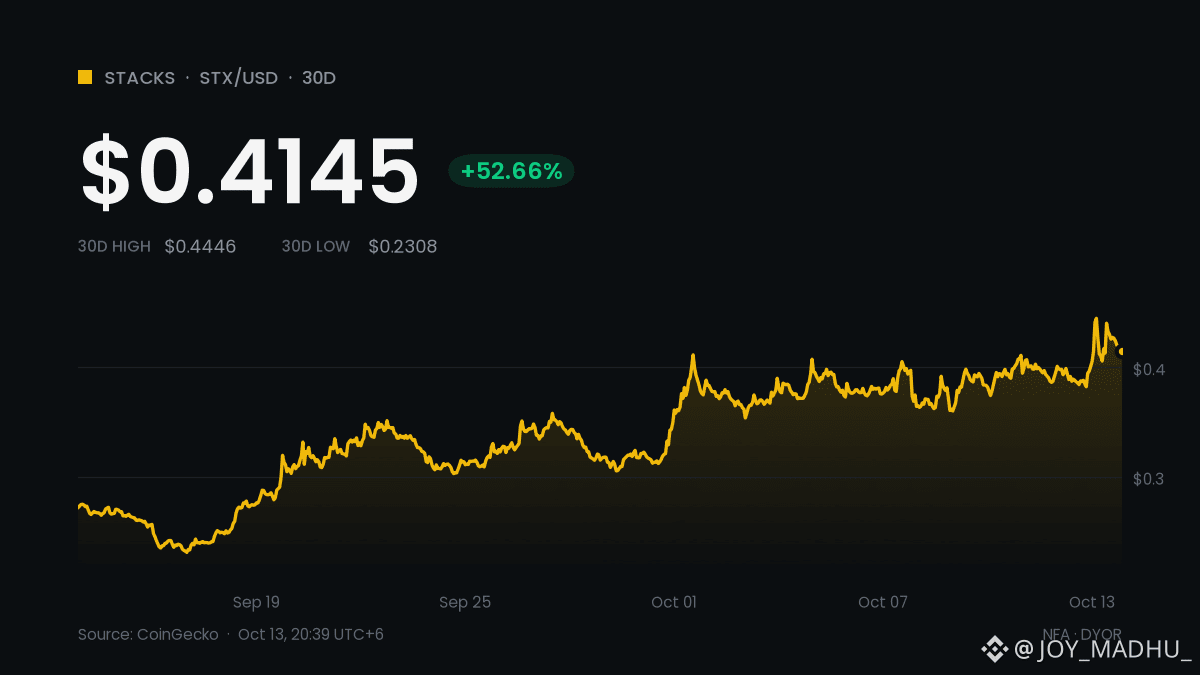
$STX sube alrededor de un 50% en un mes. El staking de Bitcoin es la clave.
Stacks cotiza cerca de $0.41, con una subida de alrededor del 8% hoy, mientras que $BTC apenas se movió.
El atractivo, según CoinDesk: quienes tienen BTC pueden hacer staking y obtener rendimientos sobre el propio Bitcoin, conservando sus propias claves, sin tokens envueltos ni puentes.
El próximo hito es el Bonding Period 3, en noviembre. Quienes hagan staking tendrán que bloquear también STX por un valor aproximado del 5% de sus BTC.
Ese bloqueo solo reduce la oferta si llega BTC real. Esa es la cifra que hay que vigilar de aquí a noviembre.
Esto no es asesoramiento financiero.
#Stacks #StakingDeBitcoin
$STX sube alrededor de un 50% en un mes. El staking de Bitcoin es la clave.
Stacks cotiza cerca de $0.41, con una subida de alrededor del 8% hoy, mientras que $BTC apenas se movió.
El atractivo, según CoinDesk: quienes tienen BTC pueden hacer staking y obtener rendimientos sobre el propio Bitcoin, conservando sus propias claves, sin tokens envueltos ni puentes.
El próximo hito es el Bonding Period 3, en noviembre. Quienes hagan staking tendrán que bloquear también STX por un valor aproximado del 5% de sus BTC.
Ese bloqueo solo reduce la oferta si llega BTC real. Esa es la cifra que hay que vigilar de aquí a noviembre.
Esto no es asesoramiento financiero.
#Stacks #StakingDeBitcoin
Stacks cotiza cerca de $0.41, con una subida de alrededor del 8% hoy, mientras que $BTC apenas se movió.
El atractivo, según CoinDesk: quienes tienen BTC pueden hacer staking y obtener rendimientos sobre el propio Bitcoin, conservando sus propias claves, sin tokens envueltos ni puentes.
El próximo hito es el Bonding Period 3, en noviembre. Quienes hagan staking tendrán que bloquear también STX por un valor aproximado del 5% de sus BTC.
Ese bloqueo solo reduce la oferta si llega BTC real. Esa es la cifra que hay que vigilar de aquí a noviembre.
Esto no es asesoramiento financiero.
#Stacks #StakingDeBitcoin
48

🚀 MONEDA A SEGUIR HOY: STACKS (STX) 🔥
📅 13 de octubre de 2026
💎 Moneda: Stacks (STX)
📈 Variación en 24 h: +10.50%
💰 Precio: alrededor de $0.43
🔥 Tendencia del mercado: fuerte impulso alcista
¡Stacks (STX) está captando la atención hoy con un fuerte movimiento de precio! 📊 Los traders están atentos a su impulso en busca de posibles oportunidades, pero recuerda que los precios de las criptomonedas pueden cambiar rápidamente.
🎯 Mi elección para la lista de seguimiento de hoy: $STX
✅ Investiga por tu cuenta
✅ Comprueba el volumen de operaciones y los niveles de soporte y resistencia
✅ Gestiona siempre el riesgo
❌ Nunca inviertas más de lo que puedas permitirte perder
💬 ¿Qué opinas? ¿Podrá STX mantener su impulso alcista?
👇 ¡Comenta tu precio objetivo!
#STX #Stacks #CryptoNews #TradingDeCriptomonedas #Altcoins #Bitcoin #MercadoCripto #InvestigaPorTuCuenta
🚀 MONEDA A SEGUIR HOY: STACKS (STX) 🔥
📅 13 de octubre de 2026
💎 Moneda: Stacks (STX)
📈 Variación en 24 h: +10.50%
💰 Precio: alrededor de $0.43
🔥 Tendencia del mercado: fuerte impulso alcista
¡Stacks (STX) está captando la atención hoy con un fuerte movimiento de precio! 📊 Los traders están atentos a su impulso en busca de posibles oportunidades, pero recuerda que los precios de las criptomonedas pueden cambiar rápidamente.
🎯 Mi elección para la lista de seguimiento de hoy: $STX
✅ Investiga por tu cuenta
✅ Comprueba el volumen de operaciones y los niveles de soporte y resistencia
✅ Gestiona siempre el riesgo
❌ Nunca inviertas más de lo que puedas permitirte perder
💬 ¿Qué opinas? ¿Podrá STX mantener su impulso alcista?
👇 ¡Comenta tu precio objetivo!
#STX #Stacks #CryptoNews #TradingDeCriptomonedas #Altcoins #Bitcoin #MercadoCripto #InvestigaPorTuCuenta
📅 13 de octubre de 2026
💎 Moneda: Stacks (STX)
📈 Variación en 24 h: +10.50%
💰 Precio: alrededor de $0.43
🔥 Tendencia del mercado: fuerte impulso alcista
¡Stacks (STX) está captando la atención hoy con un fuerte movimiento de precio! 📊 Los traders están atentos a su impulso en busca de posibles oportunidades, pero recuerda que los precios de las criptomonedas pueden cambiar rápidamente.
🎯 Mi elección para la lista de seguimiento de hoy: $STX
✅ Investiga por tu cuenta
✅ Comprueba el volumen de operaciones y los niveles de soporte y resistencia
✅ Gestiona siempre el riesgo
❌ Nunca inviertas más de lo que puedas permitirte perder
💬 ¿Qué opinas? ¿Podrá STX mantener su impulso alcista?
👇 ¡Comenta tu precio objetivo!
#STX #Stacks #CryptoNews #TradingDeCriptomonedas #Altcoins #Bitcoin #MercadoCripto #InvestigaPorTuCuenta
1
192

Acabo de echar un vistazo al mercado: BTC, clavado en los 83.000 y como si estuviera muerto; un montón de monedas principales en verde. Pero esta se disparó casi un 10% sin hacer ruido y subió más de un 50% en un mes: la estrella indiscutible.
La mecánica es bastante interesante: dejas los BTC bloqueados en la cadena principal, sin entregar las claves privadas, y generas rendimiento mientras tanto. En noviembre se abre el Bonding Period 3, y para hacer staking de BTC también tendrás que bloquear STX. En la ronda anterior, las instituciones —entre ellas 21Shares y HashKey— se llevaron los 230 BTC emparejados con 3,57 millones de STX.
Si BTC sube, esta también; si BTC se queda lateral, sube por su cuenta. ¿Esta vez la capa 2 de Bitcoin va en serio o es otra máquina para desplumar inversores?
#Stacks
Acabo de echar un vistazo al mercado: BTC, clavado en los 83.000 y como si estuviera muerto; un montón de monedas principales en verde. Pero esta se disparó casi un 10% sin hacer ruido y subió más de un 50% en un mes: la estrella indiscutible.
La mecánica es bastante interesante: dejas los BTC bloqueados en la cadena principal, sin entregar las claves privadas, y generas rendimiento mientras tanto. En noviembre se abre el Bonding Period 3, y para hacer staking de BTC también tendrás que bloquear STX. En la ronda anterior, las instituciones —entre ellas 21Shares y HashKey— se llevaron los 230 BTC emparejados con 3,57 millones de STX.
Si BTC sube, esta también; si BTC se queda lateral, sube por su cuenta. ¿Esta vez la capa 2 de Bitcoin va en serio o es otra máquina para desplumar inversores?
#Stacks
La mecánica es bastante interesante: dejas los BTC bloqueados en la cadena principal, sin entregar las claves privadas, y generas rendimiento mientras tanto. En noviembre se abre el Bonding Period 3, y para hacer staking de BTC también tendrás que bloquear STX. En la ronda anterior, las instituciones —entre ellas 21Shares y HashKey— se llevaron los 230 BTC emparejados con 3,57 millones de STX.
Si BTC sube, esta también; si BTC se queda lateral, sube por su cuenta. ¿Esta vez la capa 2 de Bitcoin va en serio o es otra máquina para desplumar inversores?
#Stacks

120

·
--
El ecosistema de segunda capa de Bitcoin rebota: $STX ha subido aproximadamente un 50 % en las últimas cuatro semanas, convirtiéndose en uno de los tokens de segunda capa con mejor rendimiento de este ciclo. Como token nativo de Stacks, una red de segunda capa de Bitcoin, $STX ha mantenido una tendencia alcista constante durante varias semanas y ha seguido una trayectoria independiente en esta recuperación del mercado. Su rendimiento ha superado notablemente al de la mayoría de las principales criptomonedas, y el interés por el sector de segunda capa de Bitcoin ha aumentado. Aún es necesario seguir de cerca su evolución a corto plazo.
(Fuente: CoinDesk)
⚠️Aviso de riesgo: La información anterior se comparte con fines informativos y no constituye asesoramiento de inversión. Toda inversión conlleva riesgos; actúe con cautela.
#Stacks #STX #SegundaCapaDeBitcoin
El ecosistema de segunda capa de Bitcoin rebota: $STX ha subido aproximadamente un 50 % en las últimas cuatro semanas, convirtiéndose en uno de los tokens de segunda capa con mejor rendimiento de este ciclo. Como token nativo de Stacks, una red de segunda capa de Bitcoin, $STX ha mantenido una tendencia alcista constante durante varias semanas y ha seguido una trayectoria independiente en esta recuperación del mercado. Su rendimiento ha superado notablemente al de la mayoría de las principales criptomonedas, y el interés por el sector de segunda capa de Bitcoin ha aumentado. Aún es necesario seguir de cerca su evolución a corto plazo.
(Fuente: CoinDesk)
⚠️Aviso de riesgo: La información anterior se comparte con fines informativos y no constituye asesoramiento de inversión. Toda inversión conlleva riesgos; actúe con cautela.
#Stacks #STX #SegundaCapaDeBitcoin
(Fuente: CoinDesk)
⚠️Aviso de riesgo: La información anterior se comparte con fines informativos y no constituye asesoramiento de inversión. Toda inversión conlleva riesgos; actúe con cautela.
#Stacks #STX #SegundaCapaDeBitcoin
32

El impulso de la capa 2 de Bitcoin está creciendo
Stacks (STX) ha subido un 50 % en el último mes, ya que los operadores apuestan fuerte por la creciente narrativa de la capa 2 de Bitcoin.
#Stacks #BitcoinL2
El impulso de la capa 2 de Bitcoin está creciendo
Stacks (STX) ha subido un 50 % en el último mes, ya que los operadores apuestan fuerte por la creciente narrativa de la capa 2 de Bitcoin.
#Stacks #BitcoinL2
Stacks (STX) ha subido un 50 % en el último mes, ya que los operadores apuestan fuerte por la creciente narrativa de la capa 2 de Bitcoin.
#Stacks #BitcoinL2
65
Inicia sesión para explorar más contenidos
Únete a usuarios globales de criptomonedas en Binance Square
⚡️ Obtén información útil y actualizada sobre criptos.
💬 Avalado por el mayor exchange de criptomonedas en el mundo.
👍 Descubre perspectivas reales de creadores verificados.
Email/número de teléfono
Temas populares
1
#BinancePick
2.6M vistas
140,561 están debatiendo
2
#EarningsSeason
5M vistas
24,253 están debatiendo
3
#FranklinTempletonFilesForTwoDividendToBitcoinETFs
427 vistas
46 están debatiendo
4
#StrategyMSTRSurpassesNasdaqInMarketCap
607 vistas
59 están debatiendo
5
#CanadaProposesStablecoinRedemptionWithin3BusinessDays
63 vistas
9 están debatiendo
6
#ElectrumWalletBugLetRogueServersStealFunds
7,034 vistas
214 están debatiendo
7
#ArgentineCourtDismissesLIBRACaseAgainstMilei
16,066 vistas
294 están debatiendo
8
#SKHynixReportedlyPlansSpecialDividendFromKioxiaStakeSale
2,989 vistas
48 están debatiendo
9
#KeystoneWebsiteBreachExposesBuyersShippingAddresses
1,614 vistas
40 están debatiendo
10
#USQ3GDPAndSeptemberPCEDueNextWeek
92,514 vistas
1,110 están debatiendo