

Zarrar_X 1
839 Publicaciones

Zarrar_X 1
Denunciar
Bloquear usuario
DeFi Researcher || Crypto Analyst || Web3 explorer || one chart at a time.
0 Siguiendo
60 Seguidores
121 Me gusta
Publicaciones
·
--
Ver traducción
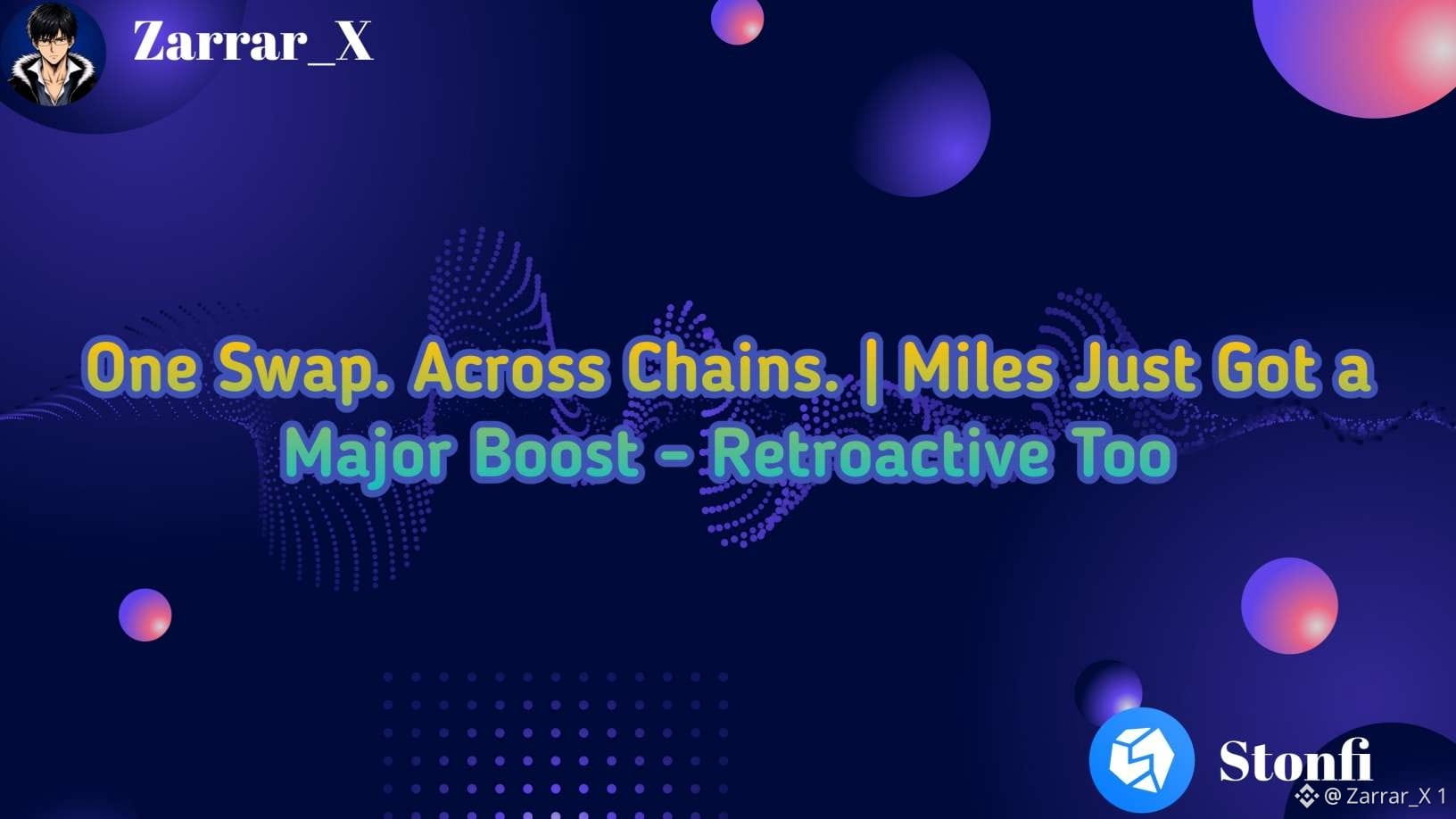
Campaign Update | Miles Just Got a Major Boost on Selected Routes.
Good news for everyone on the "One Swap. Across Chains" campaign, rewards just increased on two key missions and the upgrade is retroactive.
–All-chains mission: 300 → 3,000 miles
The reward for completing swaps across all supported chains just jumped 10x. If you have already completed this mission, the additional miles will be added to your balance automatically.
– TRON volume miles: 25% → 100%
Cross-chain swaps to or from TRON now generate 100% of swap volume in miles instead of 25%. A qualifying $100 swap to or from TRON now brings 100 miles instead of 25. Already made eligible TRON swaps during the campaign? The extra miles are coming your way too.
For all other supported networks, volume-based miles remain at 25%.
Check your missions, explore cross-chain swaps, and visit the Flight Deals board before this week's offers refresh.
– Join the Campaign and Enjoy Increased Rewards : https://cross-chain.ston.fi/
$LINK $GRAM #Meme Alpha# #TON #Bullish
Campaign Update | Miles Just Got a Major Boost on Selected Routes.
Good news for everyone on the "One Swap. Across Chains" campaign, rewards just increased on two key missions and the upgrade is retroactive.
–All-chains mission: 300 → 3,000 miles
The reward for completing swaps across all supported chains just jumped 10x. If you have already completed this mission, the additional miles will be added to your balance automatically.
– TRON volume miles: 25% → 100%
Cross-chain swaps to or from TRON now generate 100% of swap volume in miles instead of 25%. A qualifying $100 swap to or from TRON now brings 100 miles instead of 25. Already made eligible TRON swaps during the campaign? The extra miles are coming your way too.
For all other supported networks, volume-based miles remain at 25%.
Check your missions, explore cross-chain swaps, and visit the Flight Deals board before this week's offers refresh.
– Join the Campaign and Enjoy Increased Rewards : https://cross-chain.ston.fi/
$LINK $GRAM #Meme Alpha# #TON #Bullish
Good news for everyone on the "One Swap. Across Chains" campaign, rewards just increased on two key missions and the upgrade is retroactive.
–All-chains mission: 300 → 3,000 miles
The reward for completing swaps across all supported chains just jumped 10x. If you have already completed this mission, the additional miles will be added to your balance automatically.
– TRON volume miles: 25% → 100%
Cross-chain swaps to or from TRON now generate 100% of swap volume in miles instead of 25%. A qualifying $100 swap to or from TRON now brings 100 miles instead of 25. Already made eligible TRON swaps during the campaign? The extra miles are coming your way too.
For all other supported networks, volume-based miles remain at 25%.
Check your missions, explore cross-chain swaps, and visit the Flight Deals board before this week's offers refresh.
– Join the Campaign and Enjoy Increased Rewards : https://cross-chain.ston.fi/
$LINK $GRAM #Meme Alpha# #TON #Bullish
25
·
--
Ver traducción
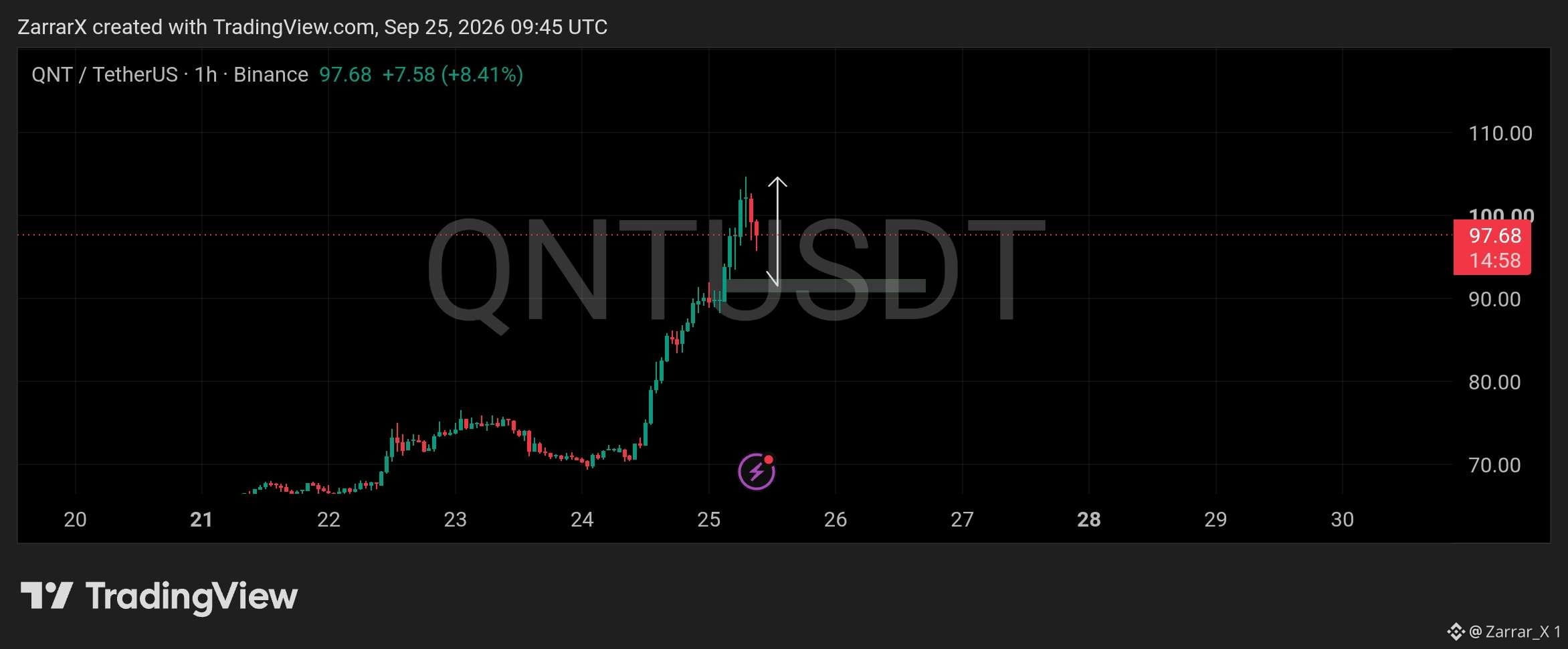
$QNT pushed into a strong upward impulse on the 1-hour chart, surging off its prior consolidation base near $72.00 to print a local high above $102.00 before retracing slightly toward $97.68.
The price has built a solid horizontal demand shelf around the $90.00 – $92.00 region, which serves as the primary support floor where buyers are expected to step in to absorb short-term pullback pressure.
The technical roadmap points to a brief corrective downswing into this demand shelf for a structural retest before triggering a secondary expansion wave toward the $105.00 – $108.00 overhead targets.
Chasing the initial breakout at current elevated levels offers an unfavorable risk-to-reward ratio, making a patient entry off the lower support floor the cleaner play.
#Macro Insights# #Crypto #Altcoin Season#
$QNT pushed into a strong upward impulse on the 1-hour chart, surging off its prior consolidation base near $72.00 to print a local high above $102.00 before retracing slightly toward $97.68.
The price has built a solid horizontal demand shelf around the $90.00 – $92.00 region, which serves as the primary support floor where buyers are expected to step in to absorb short-term pullback pressure.
The technical roadmap points to a brief corrective downswing into this demand shelf for a structural retest before triggering a secondary expansion wave toward the $105.00 – $108.00 overhead targets.
Chasing the initial breakout at current elevated levels offers an unfavorable risk-to-reward ratio, making a patient entry off the lower support floor the cleaner play.
#Macro Insights# #Crypto #Altcoin Season#
The price has built a solid horizontal demand shelf around the $90.00 – $92.00 region, which serves as the primary support floor where buyers are expected to step in to absorb short-term pullback pressure.
The technical roadmap points to a brief corrective downswing into this demand shelf for a structural retest before triggering a secondary expansion wave toward the $105.00 – $108.00 overhead targets.
Chasing the initial breakout at current elevated levels offers an unfavorable risk-to-reward ratio, making a patient entry off the lower support floor the cleaner play.
#Macro Insights# #Crypto #Altcoin Season#
40
·
--
Ver traducción
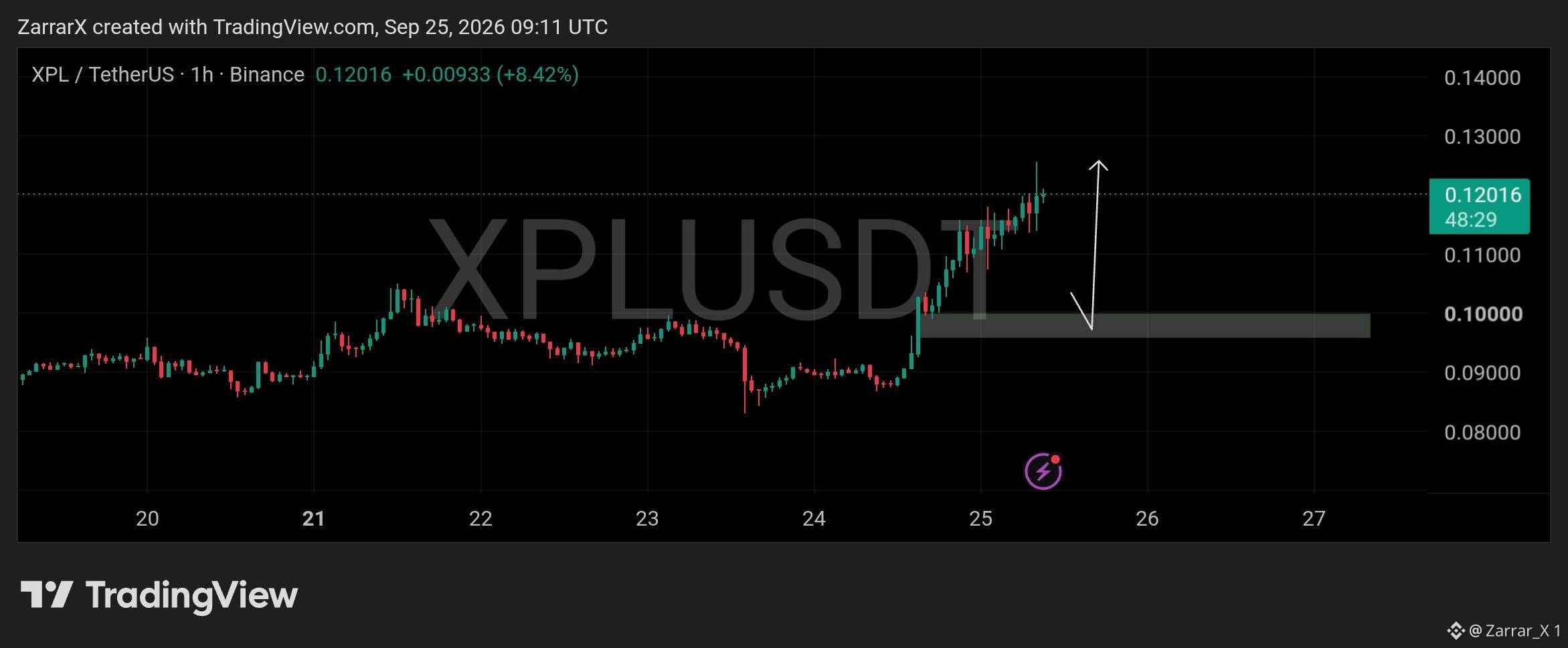
$XPL has continued its 1H breakout, pushing from the $0.09 area to around $0.12 with strong momentum. Price is now extended after several consecutive pushes higher, so a pullback would not be surprising.
The marked demand zone around $0.096-$0.99 is the key area to watch on a retracement. A reaction there would keep the current bullish structure intact and could give buyers room to continue higher.
If the zone holds, the chart points toward $0.13 next, with momentum potentially carrying the move further. Losing the marked demand would weaken the current structure.
#XPL #Macro Insights# #Crypto
$XPL has continued its 1H breakout, pushing from the $0.09 area to around $0.12 with strong momentum. Price is now extended after several consecutive pushes higher, so a pullback would not be surprising.
The marked demand zone around $0.096-$0.99 is the key area to watch on a retracement. A reaction there would keep the current bullish structure intact and could give buyers room to continue higher.
If the zone holds, the chart points toward $0.13 next, with momentum potentially carrying the move further. Losing the marked demand would weaken the current structure.
#XPL #Macro Insights# #Crypto
The marked demand zone around $0.096-$0.99 is the key area to watch on a retracement. A reaction there would keep the current bullish structure intact and could give buyers room to continue higher.
If the zone holds, the chart points toward $0.13 next, with momentum potentially carrying the move further. Losing the marked demand would weaken the current structure.
#XPL #Macro Insights# #Crypto
56
·
--
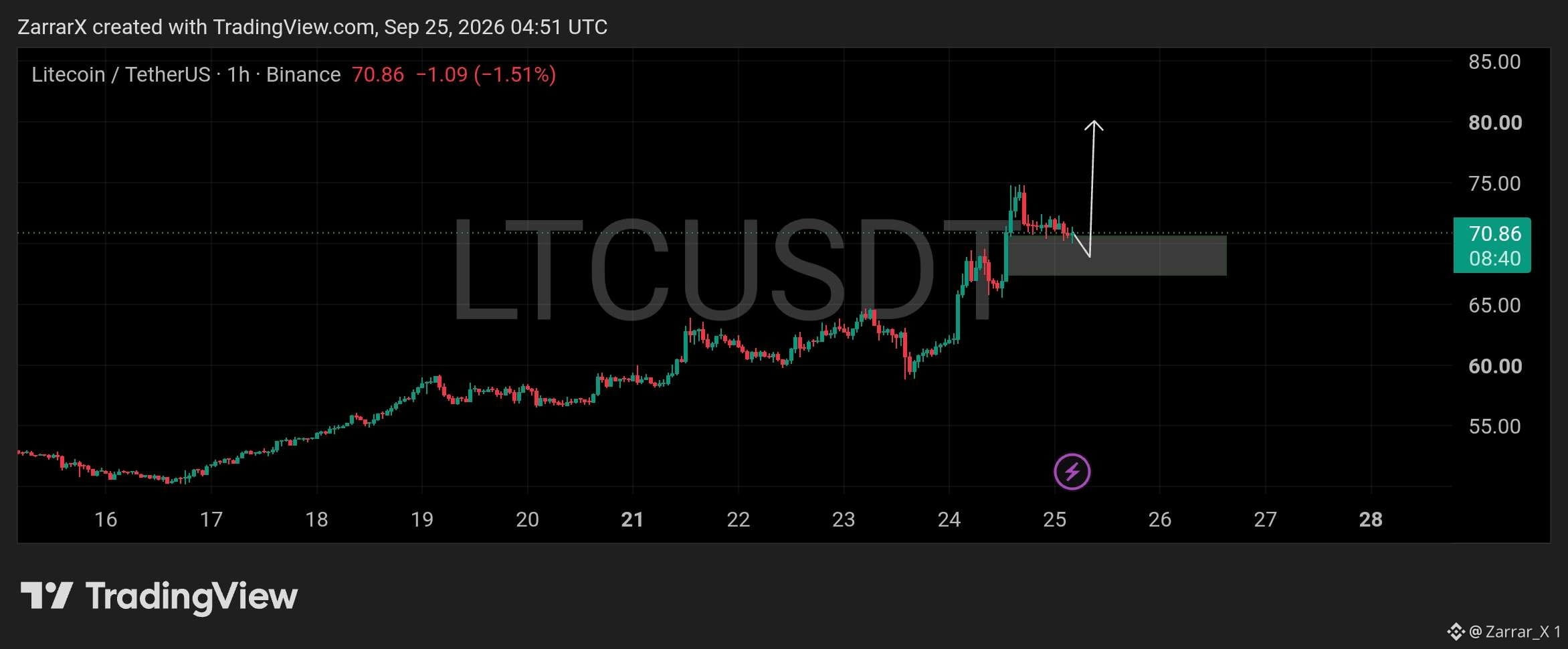
$LTC ha estado tendiendo al alza en el gráfico de 1H después de un movimiento fuerte desde la zona de $60, llegando hasta alrededor de $75 antes de retroceder hacia la consolidación. El precio actualmente está cerca de $71 y se mantiene por encima de la zona de demanda marcada alrededor de $67-$70.
Un retroceso hacia esa zona podría ofrecer el siguiente punto de reacción, especialmente si los compradores siguen defendiendo la estructura de ruptura reciente.
Si la zona se mantiene, el gráfico apunta a un movimiento de regreso por encima de $75, con la siguiente área alcista alrededor de $80. Una pérdida sostenida de la demanda marcada debilitaría ese camino y expondría la estructura inferior.
#LTC #Macro Insights# #Altcoin Season#
$LTC ha estado tendiendo al alza en el gráfico de 1H después de un movimiento fuerte desde la zona de $60, llegando hasta alrededor de $75 antes de retroceder hacia la consolidación. El precio actualmente está cerca de $71 y se mantiene por encima de la zona de demanda marcada alrededor de $67-$70.
Un retroceso hacia esa zona podría ofrecer el siguiente punto de reacción, especialmente si los compradores siguen defendiendo la estructura de ruptura reciente.
Si la zona se mantiene, el gráfico apunta a un movimiento de regreso por encima de $75, con la siguiente área alcista alrededor de $80. Una pérdida sostenida de la demanda marcada debilitaría ese camino y expondría la estructura inferior.
#LTC #Macro Insights# #Altcoin Season#
Un retroceso hacia esa zona podría ofrecer el siguiente punto de reacción, especialmente si los compradores siguen defendiendo la estructura de ruptura reciente.
Si la zona se mantiene, el gráfico apunta a un movimiento de regreso por encima de $75, con la siguiente área alcista alrededor de $80. Una pérdida sostenida de la demanda marcada debilitaría ese camino y expondría la estructura inferior.
#LTC #Macro Insights# #Altcoin Season#
72
·
--
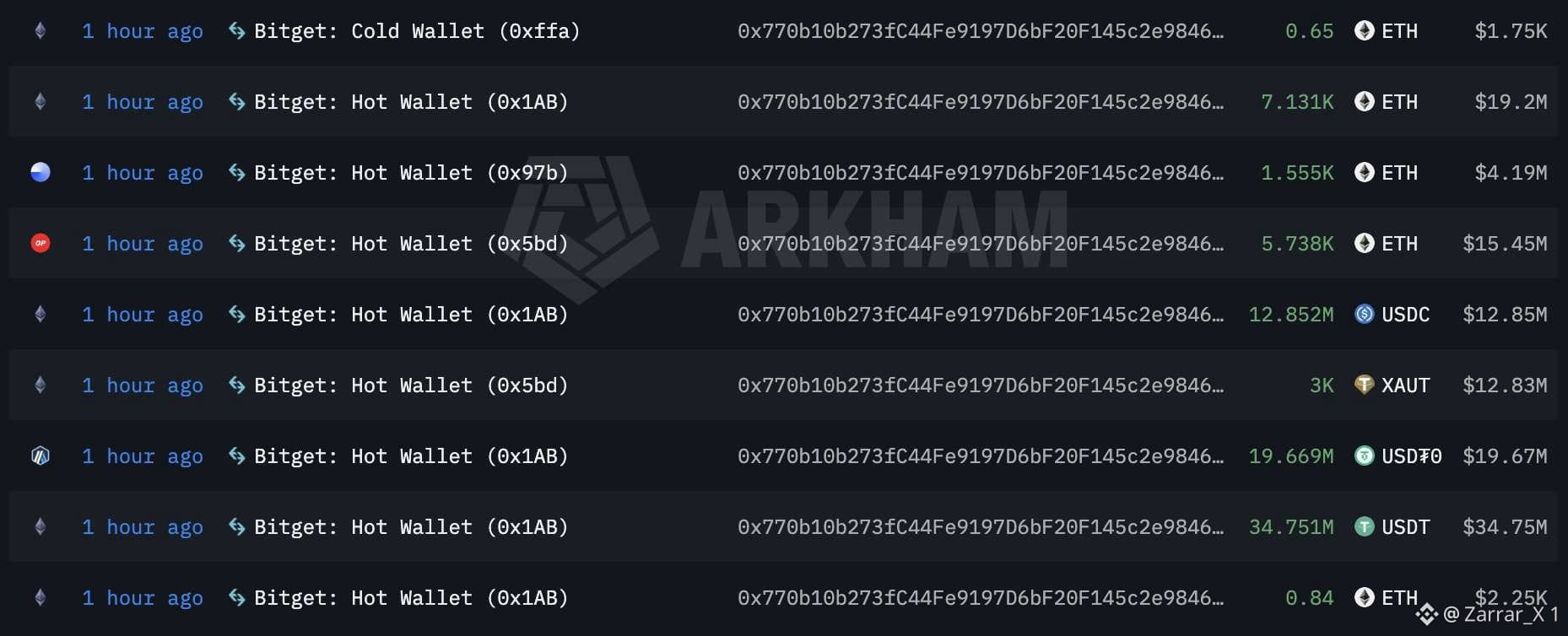
Informe de Bitget: se reporta un incidente de seguridad de billeteras por más de 170 millones de dólares.
Bitget enfrenta reportes de una posible filtración de seguridad después de que el monitoreo on-chain identificara aproximadamente 176 millones de dólares en activos moviéndose desde varias billeteras etiquetadas como pertenecientes al exchange. Los usuarios también han reportado problemas con retiros, aunque la situación completa sigue sin confirmarse.
La actividad reportada involucra tres billeteras calientes y al menos una billetera fría, con múltiples activos que incluyen ETH, AVAX, BNB, USDT, USDC y XAUT transferidos, y algunos posteriormente convertidos en ETH.
Vinculado a la dirección de Ethereum: "0x770b10b273fC44Fe9197D6bF20F145c2e98463Ee"
Cerca de 530 millones de dólares en activos, según se informa, permanecen en las billeteras afectadas, lo que significa que la cantidad potencialmente en riesgo podría cambiar a medida que continúen las transferencias.
El vector de ataque, las pérdidas reales y si se trata de un exploit externo o de una operación interna de billetera siguen sin confirmarse. Bitget no había explicado públicamente los movimientos al momento del reporte, por lo que las cifras deben tratarse como preliminares y no como pérdidas confirmadas.
$LTC $ONDO #Macro Insights# #Crypto #Bitget
Informe de Bitget: se reporta un incidente de seguridad de billeteras por más de 170 millones de dólares.
Bitget enfrenta reportes de una posible filtración de seguridad después de que el monitoreo on-chain identificara aproximadamente 176 millones de dólares en activos moviéndose desde varias billeteras etiquetadas como pertenecientes al exchange. Los usuarios también han reportado problemas con retiros, aunque la situación completa sigue sin confirmarse.
La actividad reportada involucra tres billeteras calientes y al menos una billetera fría, con múltiples activos que incluyen ETH, AVAX, BNB, USDT, USDC y XAUT transferidos, y algunos posteriormente convertidos en ETH.
Vinculado a la dirección de Ethereum: "0x770b10b273fC44Fe9197D6bF20F145c2e98463Ee"
Cerca de 530 millones de dólares en activos, según se informa, permanecen en las billeteras afectadas, lo que significa que la cantidad potencialmente en riesgo podría cambiar a medida que continúen las transferencias.
El vector de ataque, las pérdidas reales y si se trata de un exploit externo o de una operación interna de billetera siguen sin confirmarse. Bitget no había explicado públicamente los movimientos al momento del reporte, por lo que las cifras deben tratarse como preliminares y no como pérdidas confirmadas.
$LTC $ONDO #Macro Insights# #Crypto #Bitget
Bitget enfrenta reportes de una posible filtración de seguridad después de que el monitoreo on-chain identificara aproximadamente 176 millones de dólares en activos moviéndose desde varias billeteras etiquetadas como pertenecientes al exchange. Los usuarios también han reportado problemas con retiros, aunque la situación completa sigue sin confirmarse.
La actividad reportada involucra tres billeteras calientes y al menos una billetera fría, con múltiples activos que incluyen ETH, AVAX, BNB, USDT, USDC y XAUT transferidos, y algunos posteriormente convertidos en ETH.
Vinculado a la dirección de Ethereum: "0x770b10b273fC44Fe9197D6bF20F145c2e98463Ee"
Cerca de 530 millones de dólares en activos, según se informa, permanecen en las billeteras afectadas, lo que significa que la cantidad potencialmente en riesgo podría cambiar a medida que continúen las transferencias.
El vector de ataque, las pérdidas reales y si se trata de un exploit externo o de una operación interna de billetera siguen sin confirmarse. Bitget no había explicado públicamente los movimientos al momento del reporte, por lo que las cifras deben tratarse como preliminares y no como pérdidas confirmadas.
$LTC $ONDO #Macro Insights# #Crypto #Bitget
·
--
$1 mil millones en un día, pero solo la 9.ª mayor entrada de un ETF de Bitcoin.
Los ETF estadounidenses de Bitcoin al contado registraron 998,95 millones de dólares en entradas netas el lunes, marcando su mayor captación en un solo día desde el 6 de octubre de 2025, cuando Bitcoin alcanzó su máximo histórico anterior cerca de $126.200. La entrada se ubica como la novena más grande desde que los ETF se lanzaron en enero de 2024.
BlackRock’s IBIT lideró con 381,37 millones de dólares, seguido por ARK 21Shares’ ARKB con 289,12 millones de dólares y el de Fidelity, FBTC, con 238,84 millones de dólares. Ningún ETF listado de Bitcoin al contado registró una salida neta durante la sesión.
El momento es notable. El repunte llegó solo días después de que el Senado de EE. UU. bloqueara la Ley CLARITY y de que la Reserva Federal subiera las tasas de interés, sin embargo la demanda institucional de ETF se aceleró en lugar de debilitarse. Bitcoin también ha ganado aproximadamente un 44% este trimestre, y recientemente se negociaba alrededor de $85.000.
Sin embargo, la imagen general de los ETF sigue siendo mixta. Los ETF estadounidenses de Bitcoin al contado aún están alrededor de $450 millones en salidas netas acumuladas en lo que va de año, lo que significa que el último salto representa una recuperación importante de la demanda, pero no ha revertido por completo los retiros anteriores.
$BTC #BTC Price Analysis# #Macro Insights#
$1 mil millones en un día, pero solo la 9.ª mayor entrada de un ETF de Bitcoin.
Los ETF estadounidenses de Bitcoin al contado registraron 998,95 millones de dólares en entradas netas el lunes, marcando su mayor captación en un solo día desde el 6 de octubre de 2025, cuando Bitcoin alcanzó su máximo histórico anterior cerca de $126.200. La entrada se ubica como la novena más grande desde que los ETF se lanzaron en enero de 2024.
BlackRock’s IBIT lideró con 381,37 millones de dólares, seguido por ARK 21Shares’ ARKB con 289,12 millones de dólares y el de Fidelity, FBTC, con 238,84 millones de dólares. Ningún ETF listado de Bitcoin al contado registró una salida neta durante la sesión.
El momento es notable. El repunte llegó solo días después de que el Senado de EE. UU. bloqueara la Ley CLARITY y de que la Reserva Federal subiera las tasas de interés, sin embargo la demanda institucional de ETF se aceleró en lugar de debilitarse. Bitcoin también ha ganado aproximadamente un 44% este trimestre, y recientemente se negociaba alrededor de $85.000.
Sin embargo, la imagen general de los ETF sigue siendo mixta. Los ETF estadounidenses de Bitcoin al contado aún están alrededor de $450 millones en salidas netas acumuladas en lo que va de año, lo que significa que el último salto representa una recuperación importante de la demanda, pero no ha revertido por completo los retiros anteriores.
$BTC #BTC Price Analysis# #Macro Insights#
Los ETF estadounidenses de Bitcoin al contado registraron 998,95 millones de dólares en entradas netas el lunes, marcando su mayor captación en un solo día desde el 6 de octubre de 2025, cuando Bitcoin alcanzó su máximo histórico anterior cerca de $126.200. La entrada se ubica como la novena más grande desde que los ETF se lanzaron en enero de 2024.
BlackRock’s IBIT lideró con 381,37 millones de dólares, seguido por ARK 21Shares’ ARKB con 289,12 millones de dólares y el de Fidelity, FBTC, con 238,84 millones de dólares. Ningún ETF listado de Bitcoin al contado registró una salida neta durante la sesión.
El momento es notable. El repunte llegó solo días después de que el Senado de EE. UU. bloqueara la Ley CLARITY y de que la Reserva Federal subiera las tasas de interés, sin embargo la demanda institucional de ETF se aceleró en lugar de debilitarse. Bitcoin también ha ganado aproximadamente un 44% este trimestre, y recientemente se negociaba alrededor de $85.000.
Sin embargo, la imagen general de los ETF sigue siendo mixta. Los ETF estadounidenses de Bitcoin al contado aún están alrededor de $450 millones en salidas netas acumuladas en lo que va de año, lo que significa que el último salto representa una recuperación importante de la demanda, pero no ha revertido por completo los retiros anteriores.
$BTC #BTC Price Analysis# #Macro Insights#
17
·
--
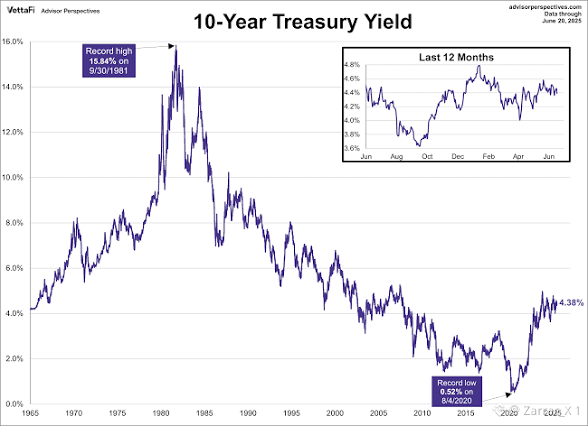
La divergencia entre un rendimiento del Tesoro a 10 años del 5,12% y el $BTC que vuelve a subir hacia los $86.000 pone de relieve dos fuerzas del mercado en competencia: la competencia de rendimientos macro frente a la absorción estructural en spot.
El Viento En Contra del Rendimiento: El alto punto de referencia libre de riesgo
Un rendimiento libre de riesgo del 5%+ normalmente actúa como una fuerza gravitacional sobre el capital especulativo:
– Coste del capital: Los gestores de activos institucionales se enfrentan a tasas mínimas más altas. Mantener activos que no generan rendimiento como el oro o Bitcoin conlleva un coste de oportunidad importante cuando la deuda soberana libre de riesgo rinde por encima del 5%.
– Apretón macro: La fortaleza persistente de los rendimientos a largo plazo refleja condiciones monetarias restrictivas y expectativas de inflación “pegajosas”, dejando a los mercados de riesgo más amplios vulnerables a una contracción brusca de liquidez.
El Contrapeso Cripto: Entradas Institucionales en Spot
A pesar de los altos rendimientos, el $BTC se mantiene firme cerca de
$86K debido a dinámicas de mercado distintas:
– Los ETF absorben la oferta: Los ETF de Bitcoin en spot registraron recientemente casi $1B en entradas netas en un solo día, absorbiendo la oferta de los exchanges más rápido de lo que los rendimientos macro pueden desincentivar el interés de los compradores.
– Cobertura del riesgo de carga de deuda soberana: A medida que crece la deuda nacional de EE. UU. y suben los rendimientos del Tesoro, un subconjunto de inversores institucionales ve el $BTC como una cobertura frente a la degradación a largo plazo del fiat, más que simplemente como un activo tecnológico de alta beta.
– Restablecimiento trimestral de opciones por $16B: Con una enorme concentración de posiciones de vencimiento de opciones alrededor de los strikes $86K–$90K, la cobertura gamma de los creadores de mercado de derivados está amortiguando la volatilidad y manteniendo el precio spot sostenido por encima de pisos estructurales clave.
=> Si el rendimiento a 10 años se mantiene anclado por encima del 5,10%, el Bitcoin eventualmente necesitará una demanda sostenida de ETF y una ruptura limpia por encima de la zona de oferta de $89.000–$90.000 para compensar la barrera del alto rendimiento libre de riesgo. Una caída por debajo de $82.000 señalaría que la competencia de rendimientos finalmente está alcanzando a las valoraciones de los activos de riesgo.
#Análisis del precio de BTC# #Perspectivas macro# #Cripto
La divergencia entre un rendimiento del Tesoro a 10 años del 5,12% y el $BTC que vuelve a subir hacia los $86.000 pone de relieve dos fuerzas del mercado en competencia: la competencia de rendimientos macro frente a la absorción estructural en spot.
El Viento En Contra del Rendimiento: El alto punto de referencia libre de riesgo
Un rendimiento libre de riesgo del 5%+ normalmente actúa como una fuerza gravitacional sobre el capital especulativo:
– Coste del capital: Los gestores de activos institucionales se enfrentan a tasas mínimas más altas. Mantener activos que no generan rendimiento como el oro o Bitcoin conlleva un coste de oportunidad importante cuando la deuda soberana libre de riesgo rinde por encima del 5%.
– Apretón macro: La fortaleza persistente de los rendimientos a largo plazo refleja condiciones monetarias restrictivas y expectativas de inflación “pegajosas”, dejando a los mercados de riesgo más amplios vulnerables a una contracción brusca de liquidez.
El Contrapeso Cripto: Entradas Institucionales en Spot
A pesar de los altos rendimientos, el $BTC se mantiene firme cerca de
$86K debido a dinámicas de mercado distintas:
– Los ETF absorben la oferta: Los ETF de Bitcoin en spot registraron recientemente casi $1B en entradas netas en un solo día, absorbiendo la oferta de los exchanges más rápido de lo que los rendimientos macro pueden desincentivar el interés de los compradores.
– Cobertura del riesgo de carga de deuda soberana: A medida que crece la deuda nacional de EE. UU. y suben los rendimientos del Tesoro, un subconjunto de inversores institucionales ve el $BTC como una cobertura frente a la degradación a largo plazo del fiat, más que simplemente como un activo tecnológico de alta beta.
– Restablecimiento trimestral de opciones por $16B: Con una enorme concentración de posiciones de vencimiento de opciones alrededor de los strikes $86K–$90K, la cobertura gamma de los creadores de mercado de derivados está amortiguando la volatilidad y manteniendo el precio spot sostenido por encima de pisos estructurales clave.
=> Si el rendimiento a 10 años se mantiene anclado por encima del 5,10%, el Bitcoin eventualmente necesitará una demanda sostenida de ETF y una ruptura limpia por encima de la zona de oferta de $89.000–$90.000 para compensar la barrera del alto rendimiento libre de riesgo. Una caída por debajo de $82.000 señalaría que la competencia de rendimientos finalmente está alcanzando a las valoraciones de los activos de riesgo.
#Análisis del precio de BTC# #Perspectivas macro# #Cripto
El Viento En Contra del Rendimiento: El alto punto de referencia libre de riesgo
Un rendimiento libre de riesgo del 5%+ normalmente actúa como una fuerza gravitacional sobre el capital especulativo:
– Coste del capital: Los gestores de activos institucionales se enfrentan a tasas mínimas más altas. Mantener activos que no generan rendimiento como el oro o Bitcoin conlleva un coste de oportunidad importante cuando la deuda soberana libre de riesgo rinde por encima del 5%.
– Apretón macro: La fortaleza persistente de los rendimientos a largo plazo refleja condiciones monetarias restrictivas y expectativas de inflación “pegajosas”, dejando a los mercados de riesgo más amplios vulnerables a una contracción brusca de liquidez.
El Contrapeso Cripto: Entradas Institucionales en Spot
A pesar de los altos rendimientos, el $BTC se mantiene firme cerca de
$86K debido a dinámicas de mercado distintas:
– Los ETF absorben la oferta: Los ETF de Bitcoin en spot registraron recientemente casi $1B en entradas netas en un solo día, absorbiendo la oferta de los exchanges más rápido de lo que los rendimientos macro pueden desincentivar el interés de los compradores.
– Cobertura del riesgo de carga de deuda soberana: A medida que crece la deuda nacional de EE. UU. y suben los rendimientos del Tesoro, un subconjunto de inversores institucionales ve el $BTC como una cobertura frente a la degradación a largo plazo del fiat, más que simplemente como un activo tecnológico de alta beta.
– Restablecimiento trimestral de opciones por $16B: Con una enorme concentración de posiciones de vencimiento de opciones alrededor de los strikes $86K–$90K, la cobertura gamma de los creadores de mercado de derivados está amortiguando la volatilidad y manteniendo el precio spot sostenido por encima de pisos estructurales clave.
=> Si el rendimiento a 10 años se mantiene anclado por encima del 5,10%, el Bitcoin eventualmente necesitará una demanda sostenida de ETF y una ruptura limpia por encima de la zona de oferta de $89.000–$90.000 para compensar la barrera del alto rendimiento libre de riesgo. Una caída por debajo de $82.000 señalaría que la competencia de rendimientos finalmente está alcanzando a las valoraciones de los activos de riesgo.
#Análisis del precio de BTC# #Perspectivas macro# #Cripto
1
·
--
$1.000 millones en un día, pero solo el noveno mayor ingreso en un ETF de Bitcoin.
Los ETF spot de Bitcoin en EE. UU. registraron 998,95 millones de dólares en entradas netas el lunes, marcando su mayor captación en un solo día desde el 6 de octubre de 2025, cuando Bitcoin alcanzó su anterior máximo histórico cerca de los 126.200 dólares. La entrada ocupa el noveno lugar en tamaño desde que los ETF se lanzaron en enero de 2024.
BlackRock’s IBIT lideró con 381,37 millones de dólares, seguido por ARK 21Shares’ ARKB con 289,12 millones y Fidelity’s FBTC con 238,84 millones. Ningún ETF spot de Bitcoin cotizado registró una salida neta durante la sesión.
El momento es notable. El repunte se produjo solo días después de que el Senado de EE. UU. bloqueara la Ley CLARITY y de que la Reserva Federal subiera las tasas de interés, pero la demanda institucional de ETF se aceleró en lugar de debilitarse. Bitcoin también ha ganado aproximadamente un 44% en el trimestre, cotizando recientemente alrededor de los 85.000 dólares.
Sin embargo, la imagen general de los ETF sigue siendo mixta. Los ETF spot de Bitcoin en EE. UU. aún están alrededor de 450 millones de dólares en salidas netas acumuladas en el año, lo que significa que el último repunte representa una recuperación importante de la demanda, pero no ha revertido por completo los retiros anteriores.
#Análisis del precio de BTC# #Perspectivas macro# #Crypto
$1.000 millones en un día, pero solo el noveno mayor ingreso en un ETF de Bitcoin.
Los ETF spot de Bitcoin en EE. UU. registraron 998,95 millones de dólares en entradas netas el lunes, marcando su mayor captación en un solo día desde el 6 de octubre de 2025, cuando Bitcoin alcanzó su anterior máximo histórico cerca de los 126.200 dólares. La entrada ocupa el noveno lugar en tamaño desde que los ETF se lanzaron en enero de 2024.
BlackRock’s IBIT lideró con 381,37 millones de dólares, seguido por ARK 21Shares’ ARKB con 289,12 millones y Fidelity’s FBTC con 238,84 millones. Ningún ETF spot de Bitcoin cotizado registró una salida neta durante la sesión.
El momento es notable. El repunte se produjo solo días después de que el Senado de EE. UU. bloqueara la Ley CLARITY y de que la Reserva Federal subiera las tasas de interés, pero la demanda institucional de ETF se aceleró en lugar de debilitarse. Bitcoin también ha ganado aproximadamente un 44% en el trimestre, cotizando recientemente alrededor de los 85.000 dólares.
Sin embargo, la imagen general de los ETF sigue siendo mixta. Los ETF spot de Bitcoin en EE. UU. aún están alrededor de 450 millones de dólares en salidas netas acumuladas en el año, lo que significa que el último repunte representa una recuperación importante de la demanda, pero no ha revertido por completo los retiros anteriores.
#Análisis del precio de BTC# #Perspectivas macro# #Crypto
Los ETF spot de Bitcoin en EE. UU. registraron 998,95 millones de dólares en entradas netas el lunes, marcando su mayor captación en un solo día desde el 6 de octubre de 2025, cuando Bitcoin alcanzó su anterior máximo histórico cerca de los 126.200 dólares. La entrada ocupa el noveno lugar en tamaño desde que los ETF se lanzaron en enero de 2024.
BlackRock’s IBIT lideró con 381,37 millones de dólares, seguido por ARK 21Shares’ ARKB con 289,12 millones y Fidelity’s FBTC con 238,84 millones. Ningún ETF spot de Bitcoin cotizado registró una salida neta durante la sesión.
El momento es notable. El repunte se produjo solo días después de que el Senado de EE. UU. bloqueara la Ley CLARITY y de que la Reserva Federal subiera las tasas de interés, pero la demanda institucional de ETF se aceleró en lugar de debilitarse. Bitcoin también ha ganado aproximadamente un 44% en el trimestre, cotizando recientemente alrededor de los 85.000 dólares.
Sin embargo, la imagen general de los ETF sigue siendo mixta. Los ETF spot de Bitcoin en EE. UU. aún están alrededor de 450 millones de dólares en salidas netas acumuladas en el año, lo que significa que el último repunte representa una recuperación importante de la demanda, pero no ha revertido por completo los retiros anteriores.
#Análisis del precio de BTC# #Perspectivas macro# #Crypto
28
·
--
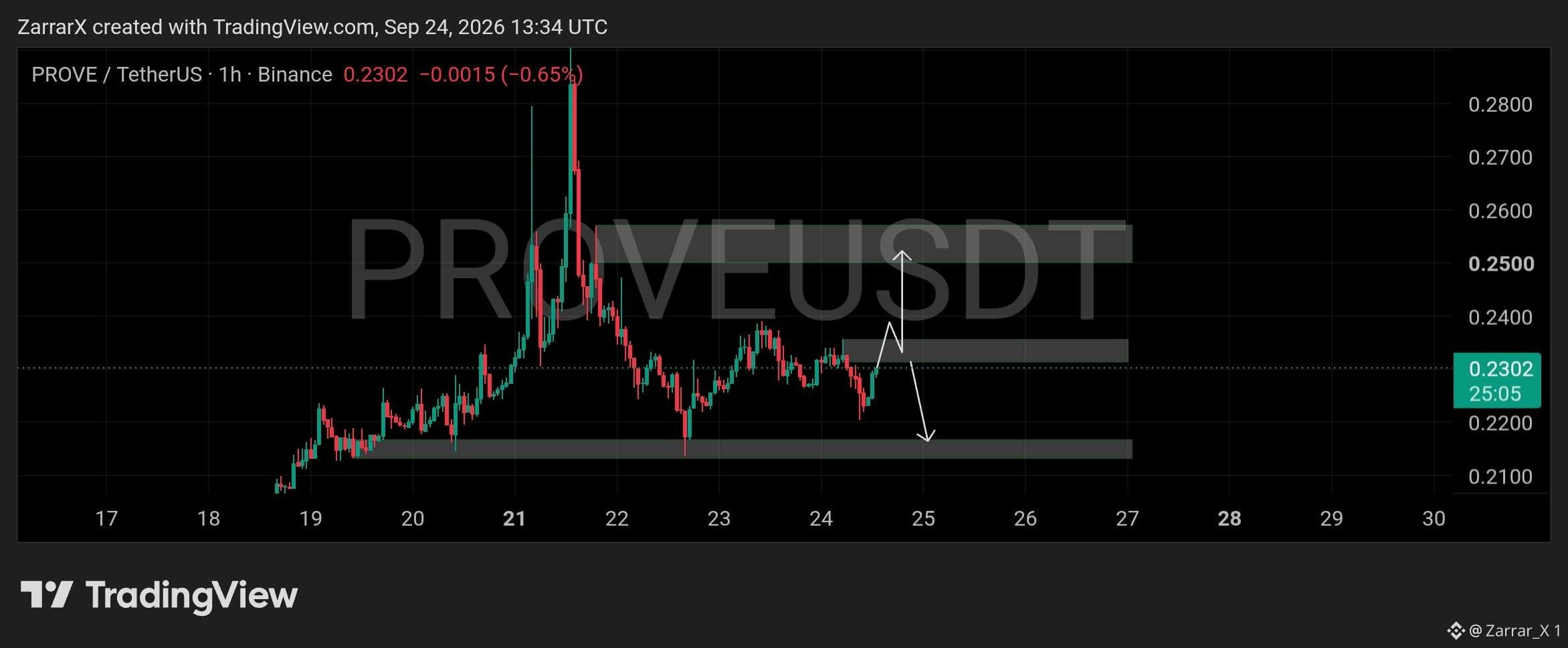
$PROVE se mantiene en torno a $0.23 después de rebotar desde la zona de demanda inferior cerca de $0.215-$0.218. La estructura de 1H aún está en rango, con el precio empujando de nuevo hacia la oferta cercana alrededor de $0.232-$0.236.
Un movimiento limpio a través de esa zona podría darle espacio al rebote para extenderse hacia el área de oferta de $0.25-$0.26 marcada arriba. Esa sería la región clave a vigilar para la próxima reacción.
Si el precio es rechazado alrededor de la resistencia actual, sigue siendo posible una corrección hacia la zona de demanda de $0.215-$0.218. La reacción allí debería determinar si los compradores pueden mantener intacta la estructura a corto plazo.
#PROVE #Macro Insights#
$PROVE se mantiene en torno a $0.23 después de rebotar desde la zona de demanda inferior cerca de $0.215-$0.218. La estructura de 1H aún está en rango, con el precio empujando de nuevo hacia la oferta cercana alrededor de $0.232-$0.236.
Un movimiento limpio a través de esa zona podría darle espacio al rebote para extenderse hacia el área de oferta de $0.25-$0.26 marcada arriba. Esa sería la región clave a vigilar para la próxima reacción.
Si el precio es rechazado alrededor de la resistencia actual, sigue siendo posible una corrección hacia la zona de demanda de $0.215-$0.218. La reacción allí debería determinar si los compradores pueden mantener intacta la estructura a corto plazo.
#PROVE #Macro Insights#
Un movimiento limpio a través de esa zona podría darle espacio al rebote para extenderse hacia el área de oferta de $0.25-$0.26 marcada arriba. Esa sería la región clave a vigilar para la próxima reacción.
Si el precio es rechazado alrededor de la resistencia actual, sigue siendo posible una corrección hacia la zona de demanda de $0.215-$0.218. La reacción allí debería determinar si los compradores pueden mantener intacta la estructura a corto plazo.
#PROVE #Macro Insights#
33
·
--
Ondo y BlackRock lanzan “carteras inteligentes” tokenizadas onchain.
Ondo Finance y BlackRock han lanzado una nueva categoría de productos de inversión tokenizados llamada Ondo Intelligent Portfolios, que brinda a los inversores onchain elegibles acceso a estrategias de carteras diseñadas profesionalmente mediante un único token transferible.
Las primeras carteras se basan en estrategias desarrolladas por BlackRock y mantienen cestas de activos tradicionales, incluidos acciones, bonos y ETFs de Bitcoin. En lugar de comprar cada activo subyacente por separado, los inversores reciben un token que representa su posición en la cartera, con los activos adquiridos y gestionados a través de la estructura subyacente.
El lanzamiento marca otro paso en la tokenización más amplia de activos financieros tradicionales, llevando estrategias de inversión diversificadas a las cadenas de bloques. Los productos iniciales se ponen a disposición de inversores no estadounidenses, reflejando las diferencias regulatorias en torno a los valores tokenizados en Estados Unidos.
Para $ONDO, la alianza sitúa su infraestructura de tokenización directamente junto a uno de los mayores gestores de activos del mundo. Además, se suma a la reciente expansión de Ondo en valores y fondos tokenizados, ya que los mercados financieros tradicionales exploran cada vez más la distribución y la liquidación basadas en blockchain.
$XAUt #Macro Insights# #Crypto #ONDO
Ondo y BlackRock lanzan “carteras inteligentes” tokenizadas onchain.
Ondo Finance y BlackRock han lanzado una nueva categoría de productos de inversión tokenizados llamada Ondo Intelligent Portfolios, que brinda a los inversores onchain elegibles acceso a estrategias de carteras diseñadas profesionalmente mediante un único token transferible.
Las primeras carteras se basan en estrategias desarrolladas por BlackRock y mantienen cestas de activos tradicionales, incluidos acciones, bonos y ETFs de Bitcoin. En lugar de comprar cada activo subyacente por separado, los inversores reciben un token que representa su posición en la cartera, con los activos adquiridos y gestionados a través de la estructura subyacente.
El lanzamiento marca otro paso en la tokenización más amplia de activos financieros tradicionales, llevando estrategias de inversión diversificadas a las cadenas de bloques. Los productos iniciales se ponen a disposición de inversores no estadounidenses, reflejando las diferencias regulatorias en torno a los valores tokenizados en Estados Unidos.
Para $ONDO, la alianza sitúa su infraestructura de tokenización directamente junto a uno de los mayores gestores de activos del mundo. Además, se suma a la reciente expansión de Ondo en valores y fondos tokenizados, ya que los mercados financieros tradicionales exploran cada vez más la distribución y la liquidación basadas en blockchain.
$XAUt #Macro Insights# #Crypto #ONDO
Ondo Finance y BlackRock han lanzado una nueva categoría de productos de inversión tokenizados llamada Ondo Intelligent Portfolios, que brinda a los inversores onchain elegibles acceso a estrategias de carteras diseñadas profesionalmente mediante un único token transferible.
Las primeras carteras se basan en estrategias desarrolladas por BlackRock y mantienen cestas de activos tradicionales, incluidos acciones, bonos y ETFs de Bitcoin. En lugar de comprar cada activo subyacente por separado, los inversores reciben un token que representa su posición en la cartera, con los activos adquiridos y gestionados a través de la estructura subyacente.
El lanzamiento marca otro paso en la tokenización más amplia de activos financieros tradicionales, llevando estrategias de inversión diversificadas a las cadenas de bloques. Los productos iniciales se ponen a disposición de inversores no estadounidenses, reflejando las diferencias regulatorias en torno a los valores tokenizados en Estados Unidos.
Para $ONDO, la alianza sitúa su infraestructura de tokenización directamente junto a uno de los mayores gestores de activos del mundo. Además, se suma a la reciente expansión de Ondo en valores y fondos tokenizados, ya que los mercados financieros tradicionales exploran cada vez más la distribución y la liquidación basadas en blockchain.
$XAUt #Macro Insights# #Crypto #ONDO

43
·
--
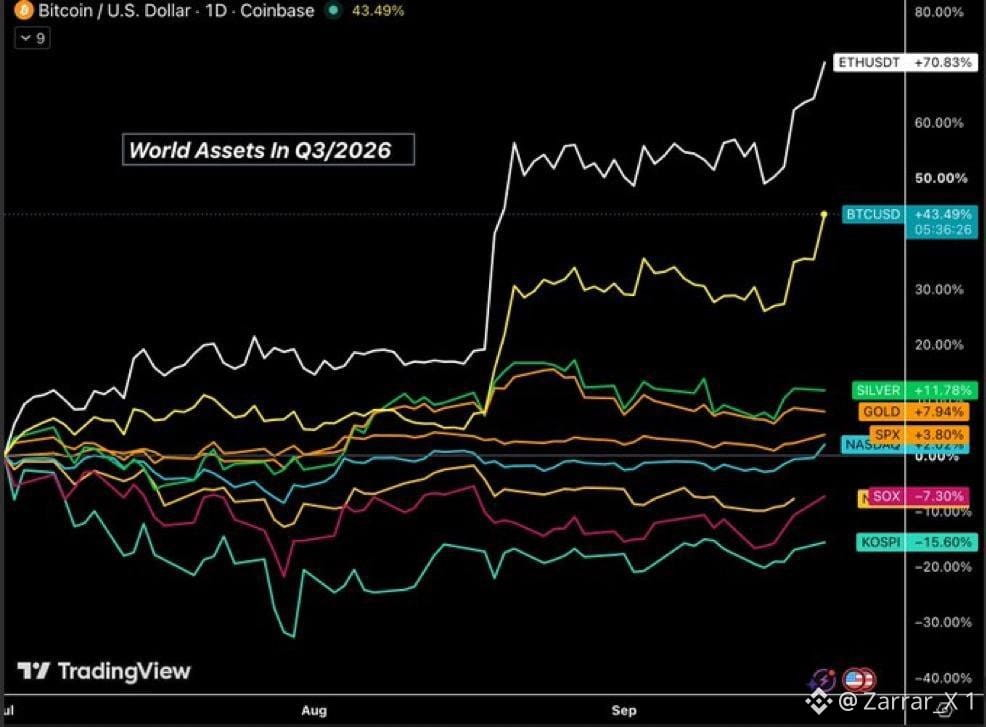
Crypto ha impulsado un rebote importante en el T3 de 2026.
Las criptomonedas han surgido como una de las áreas con mejor desempeño del mercado durante la segunda parte del T3 de 2026, con Bitcoin liderando una recuperación amplia en el ecosistema de criptoactivos.
$BTC ganó aproximadamente un 25% en agosto y otro 8,8% en septiembre hasta el 22 de septiembre, elevándose recientemente por encima de $87.000 y alcanzando su nivel más alto desde enero. El movimiento también ha impulsado a importantes altcoins y acciones relacionadas con cripto.
La recuperación ha estado respaldada por una demanda renovada de ETFs spot de Bitcoin, mejorando el sentimiento regulatorio, el cierre de posiciones cortas y una mayor tolerancia al riesgo. Los ETFs spot de Bitcoin en EE. UU. también han vuelto a ubicarse en un territorio de fuertes entradas después de las grandes salidas registradas a principios de mes.
Aun así, llamar a las criptomonedas la “mejor inversión” del T3 requeriría comparar su rendimiento de todo el trimestre con otras clases de activos importantes una vez finalizado el trimestre. Por ahora, los datos muestran con claridad que el cripto ha protagonizado uno de sus rebotes más sólidos de 2026.
#Análisis del precio de BTC# #Perspectivas macro#
Crypto ha impulsado un rebote importante en el T3 de 2026.
Las criptomonedas han surgido como una de las áreas con mejor desempeño del mercado durante la segunda parte del T3 de 2026, con Bitcoin liderando una recuperación amplia en el ecosistema de criptoactivos.
$BTC ganó aproximadamente un 25% en agosto y otro 8,8% en septiembre hasta el 22 de septiembre, elevándose recientemente por encima de $87.000 y alcanzando su nivel más alto desde enero. El movimiento también ha impulsado a importantes altcoins y acciones relacionadas con cripto.
La recuperación ha estado respaldada por una demanda renovada de ETFs spot de Bitcoin, mejorando el sentimiento regulatorio, el cierre de posiciones cortas y una mayor tolerancia al riesgo. Los ETFs spot de Bitcoin en EE. UU. también han vuelto a ubicarse en un territorio de fuertes entradas después de las grandes salidas registradas a principios de mes.
Aun así, llamar a las criptomonedas la “mejor inversión” del T3 requeriría comparar su rendimiento de todo el trimestre con otras clases de activos importantes una vez finalizado el trimestre. Por ahora, los datos muestran con claridad que el cripto ha protagonizado uno de sus rebotes más sólidos de 2026.
#Análisis del precio de BTC# #Perspectivas macro#
Las criptomonedas han surgido como una de las áreas con mejor desempeño del mercado durante la segunda parte del T3 de 2026, con Bitcoin liderando una recuperación amplia en el ecosistema de criptoactivos.
$BTC ganó aproximadamente un 25% en agosto y otro 8,8% en septiembre hasta el 22 de septiembre, elevándose recientemente por encima de $87.000 y alcanzando su nivel más alto desde enero. El movimiento también ha impulsado a importantes altcoins y acciones relacionadas con cripto.
La recuperación ha estado respaldada por una demanda renovada de ETFs spot de Bitcoin, mejorando el sentimiento regulatorio, el cierre de posiciones cortas y una mayor tolerancia al riesgo. Los ETFs spot de Bitcoin en EE. UU. también han vuelto a ubicarse en un territorio de fuertes entradas después de las grandes salidas registradas a principios de mes.
Aun así, llamar a las criptomonedas la “mejor inversión” del T3 requeriría comparar su rendimiento de todo el trimestre con otras clases de activos importantes una vez finalizado el trimestre. Por ahora, los datos muestran con claridad que el cripto ha protagonizado uno de sus rebotes más sólidos de 2026.
#Análisis del precio de BTC# #Perspectivas macro#
78
·
--
Nuevo ejemplo de código abierto: TON a EVM entre cadenas en una Mini App de Telegram.
Los creadores acaban de obtener un punto de partida práctico para llevar usuarios de TON a productos basados en EVM sin pedirles que gestionen la complejidad de la interconexión entre cadenas por su cuenta.
STONfi lanzó un nuevo ejemplo de integración de código abierto que muestra exactamente cómo funciona esto. Un usuario conecta su billetera de TON mediante TonConnect; en segundo plano se crea una billetera EVM embebida dinámica y Omniston gestiona la ejecución entre cadenas entre TON y EVM. La ruta del ejemplo es TON USDT → Arbitrum USDT0.
Ese trabajo de base ahora se empaqueta en un ejemplo reutilizable. Cualquier protocolo nativo de EVM puede hacer que su producto sea accesible para usuarios de TON a través de Omniston, sin convertirse en un proyecto nativo de TON.
Ya hay dos productos en producción que ofrecen esta experiencia, vale la pena echarles un vistazo. Predict con Polymarket permite a los usuarios depositar USDT en TON y acceder a los mercados de Polymarket sin puentear manualmente a Polygon. WenLong permite a los usuarios depositar desde TON para acceder a Hyperliquid en Arbitrum con el flujo entre cadenas gestionado entre bastidores.
Si estás construyendo algo similar en una Mini App de Telegram o en un producto nativo de EVM y quieres que los usuarios de TON lleguen con menos pasos, la integración de referencia en GitHub es el lugar más rápido para empezar.
– Consulta el repositorio de GitHub: https://github.com/ston-fi/omniston-ton-evm-miniapp-example
$BTC $LTC #Macro Insights# #Altcoin Season# #Crypto
Nuevo ejemplo de código abierto: TON a EVM entre cadenas en una Mini App de Telegram.
Los creadores acaban de obtener un punto de partida práctico para llevar usuarios de TON a productos basados en EVM sin pedirles que gestionen la complejidad de la interconexión entre cadenas por su cuenta.
STONfi lanzó un nuevo ejemplo de integración de código abierto que muestra exactamente cómo funciona esto. Un usuario conecta su billetera de TON mediante TonConnect; en segundo plano se crea una billetera EVM embebida dinámica y Omniston gestiona la ejecución entre cadenas entre TON y EVM. La ruta del ejemplo es TON USDT → Arbitrum USDT0.
Ese trabajo de base ahora se empaqueta en un ejemplo reutilizable. Cualquier protocolo nativo de EVM puede hacer que su producto sea accesible para usuarios de TON a través de Omniston, sin convertirse en un proyecto nativo de TON.
Ya hay dos productos en producción que ofrecen esta experiencia, vale la pena echarles un vistazo. Predict con Polymarket permite a los usuarios depositar USDT en TON y acceder a los mercados de Polymarket sin puentear manualmente a Polygon. WenLong permite a los usuarios depositar desde TON para acceder a Hyperliquid en Arbitrum con el flujo entre cadenas gestionado entre bastidores.
Si estás construyendo algo similar en una Mini App de Telegram o en un producto nativo de EVM y quieres que los usuarios de TON lleguen con menos pasos, la integración de referencia en GitHub es el lugar más rápido para empezar.
– Consulta el repositorio de GitHub: https://github.com/ston-fi/omniston-ton-evm-miniapp-example
$BTC $LTC #Macro Insights# #Altcoin Season# #Crypto
Los creadores acaban de obtener un punto de partida práctico para llevar usuarios de TON a productos basados en EVM sin pedirles que gestionen la complejidad de la interconexión entre cadenas por su cuenta.
STONfi lanzó un nuevo ejemplo de integración de código abierto que muestra exactamente cómo funciona esto. Un usuario conecta su billetera de TON mediante TonConnect; en segundo plano se crea una billetera EVM embebida dinámica y Omniston gestiona la ejecución entre cadenas entre TON y EVM. La ruta del ejemplo es TON USDT → Arbitrum USDT0.
Ese trabajo de base ahora se empaqueta en un ejemplo reutilizable. Cualquier protocolo nativo de EVM puede hacer que su producto sea accesible para usuarios de TON a través de Omniston, sin convertirse en un proyecto nativo de TON.
Ya hay dos productos en producción que ofrecen esta experiencia, vale la pena echarles un vistazo. Predict con Polymarket permite a los usuarios depositar USDT en TON y acceder a los mercados de Polymarket sin puentear manualmente a Polygon. WenLong permite a los usuarios depositar desde TON para acceder a Hyperliquid en Arbitrum con el flujo entre cadenas gestionado entre bastidores.
Si estás construyendo algo similar en una Mini App de Telegram o en un producto nativo de EVM y quieres que los usuarios de TON lleguen con menos pasos, la integración de referencia en GitHub es el lugar más rápido para empezar.
– Consulta el repositorio de GitHub: https://github.com/ston-fi/omniston-ton-evm-miniapp-example
$BTC $LTC #Macro Insights# #Altcoin Season# #Crypto

70
·
--
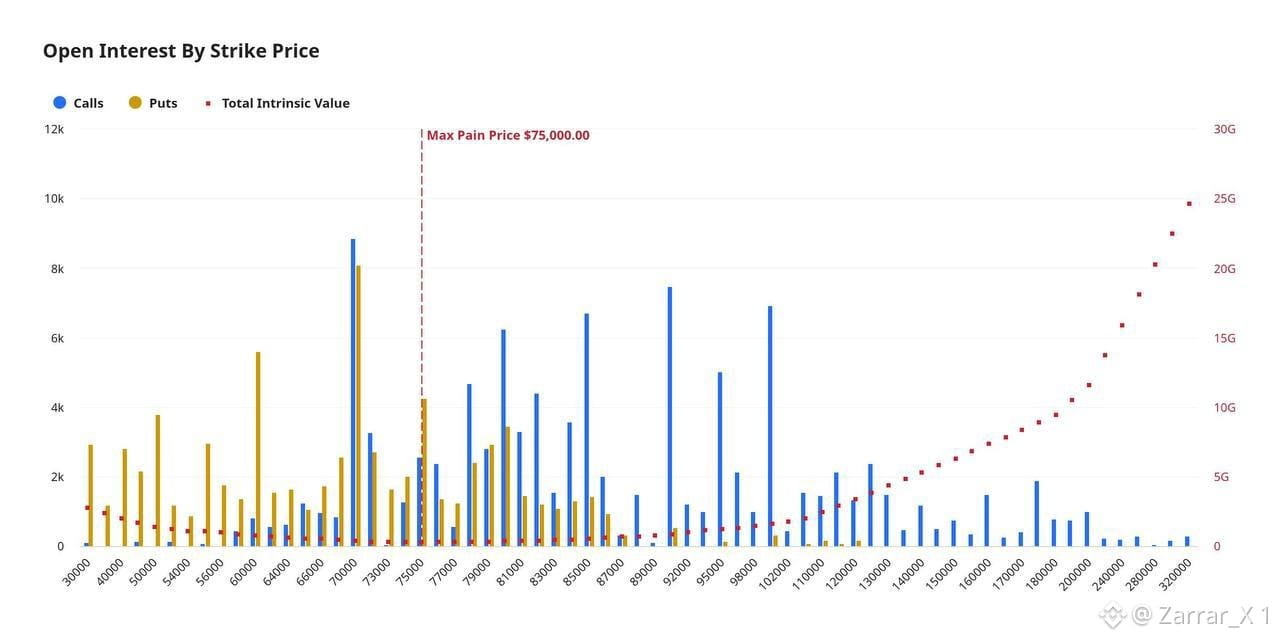
El vencimiento de opciones de Bitcoin de 18B$ pone en el foco un máximo de “pain” (dolor) de 76.000$.
Casi 18.000 millones en opciones de Bitcoin y Ethereum están programadas para vencer el viernes, y alrededor de 15.900 millones de dólares en opciones sobre BTC representan la mayor parte del vencimiento. El nivel de max-pain de Bitcoin está actualmente en torno a los 76.000$, aproximadamente 8.000$–10.000$ por debajo del precio spot.
El gran vencimiento está fuertemente ponderado a llamadas (calls). Están programados para expirar más de 9.400 millones en nocional de calls de BTC, y más de la mitad ya está en la zona de ganancias, mientras que la mayoría de las puts sigue fuera del dinero. Esta colocación sugiere que los flujos de cobertura (hedging) de los dealers probablemente han contribuido al reciente repunte de Bitcoin, y parte de esa presión compradora podría desvanecerse después de la liquidación.
Pero el max pain no es un objetivo de precio garantizado. Representa el nivel en el que, de forma colectiva, los compradores de opciones afrontan la mayor pérdida en el vencimiento, y no existe una regla que obligue a Bitcoin a acercarse a ese nivel. Con BTC actualmente alrededor de la franja de los 80.000$ altos, la distancia hasta el max pain es considerable.
La pregunta más importante es qué ocurre después de que las opciones se liquiden a las 8:00 a. m. (UTC) del viernes. Una vez que las grandes posiciones se desplacen (roll off), Bitcoin podría perder parte del soporte relacionado con la cobertura del vencimiento, lo que podría aumentar la volatilidad mientras el mercado encuentra su siguiente dirección.
$BTC #BTC Price Analysis# #Macro Insights#
El vencimiento de opciones de Bitcoin de 18B$ pone en el foco un máximo de “pain” (dolor) de 76.000$.
Casi 18.000 millones en opciones de Bitcoin y Ethereum están programadas para vencer el viernes, y alrededor de 15.900 millones de dólares en opciones sobre BTC representan la mayor parte del vencimiento. El nivel de max-pain de Bitcoin está actualmente en torno a los 76.000$, aproximadamente 8.000$–10.000$ por debajo del precio spot.
El gran vencimiento está fuertemente ponderado a llamadas (calls). Están programados para expirar más de 9.400 millones en nocional de calls de BTC, y más de la mitad ya está en la zona de ganancias, mientras que la mayoría de las puts sigue fuera del dinero. Esta colocación sugiere que los flujos de cobertura (hedging) de los dealers probablemente han contribuido al reciente repunte de Bitcoin, y parte de esa presión compradora podría desvanecerse después de la liquidación.
Pero el max pain no es un objetivo de precio garantizado. Representa el nivel en el que, de forma colectiva, los compradores de opciones afrontan la mayor pérdida en el vencimiento, y no existe una regla que obligue a Bitcoin a acercarse a ese nivel. Con BTC actualmente alrededor de la franja de los 80.000$ altos, la distancia hasta el max pain es considerable.
La pregunta más importante es qué ocurre después de que las opciones se liquiden a las 8:00 a. m. (UTC) del viernes. Una vez que las grandes posiciones se desplacen (roll off), Bitcoin podría perder parte del soporte relacionado con la cobertura del vencimiento, lo que podría aumentar la volatilidad mientras el mercado encuentra su siguiente dirección.
$BTC #BTC Price Analysis# #Macro Insights#
Casi 18.000 millones en opciones de Bitcoin y Ethereum están programadas para vencer el viernes, y alrededor de 15.900 millones de dólares en opciones sobre BTC representan la mayor parte del vencimiento. El nivel de max-pain de Bitcoin está actualmente en torno a los 76.000$, aproximadamente 8.000$–10.000$ por debajo del precio spot.
El gran vencimiento está fuertemente ponderado a llamadas (calls). Están programados para expirar más de 9.400 millones en nocional de calls de BTC, y más de la mitad ya está en la zona de ganancias, mientras que la mayoría de las puts sigue fuera del dinero. Esta colocación sugiere que los flujos de cobertura (hedging) de los dealers probablemente han contribuido al reciente repunte de Bitcoin, y parte de esa presión compradora podría desvanecerse después de la liquidación.
Pero el max pain no es un objetivo de precio garantizado. Representa el nivel en el que, de forma colectiva, los compradores de opciones afrontan la mayor pérdida en el vencimiento, y no existe una regla que obligue a Bitcoin a acercarse a ese nivel. Con BTC actualmente alrededor de la franja de los 80.000$ altos, la distancia hasta el max pain es considerable.
La pregunta más importante es qué ocurre después de que las opciones se liquiden a las 8:00 a. m. (UTC) del viernes. Una vez que las grandes posiciones se desplacen (roll off), Bitcoin podría perder parte del soporte relacionado con la cobertura del vencimiento, lo que podría aumentar la volatilidad mientras el mercado encuentra su siguiente dirección.
$BTC #BTC Price Analysis# #Macro Insights#
25
·
--
Arc Network se lanzó hace menos de una semana | STONfi ya lo conecta.
La nueva red Arc de Circle se lanzó hace apenas unos días y STONfi ya está en funcionamiento con swaps entre cadenas para ella. Ahora los usuarios pueden intercambiar USDC en Arc entre TON y otras redes compatibles en un solo flujo.
Arc es una red abierta de capa 1 diseñada para las finanzas en stablecoins. Es compatible con EVM, usa USDC como gas nativo y está pensada para pagos, cambio de divisas, mercados de capitales y activos tokenizados. Circle, la empresa detrás de USDC y EURC, la construyó como infraestructura central para las finanzas on-chain.
Aquí tienes la visión completa de las redes compatibles:
– USDT en TON y TRON
– USDT y USDC en Ethereum, BNB Chain, Base, Avalanche
– USDC y USDT0 en Arbitrum
– PUSD y USDC en Polygon
– USDG en Robinhood Chain
– USDC y USDT0 en X Layer
– USDC en Arc
Cada swap se ejecuta a través de Omniston. Tú eliges qué intercambiar; Omniston coordina el flujo desde la cotización hasta la liquidación. El volumen de swaps está temporalmente limitado a $1,000 por transacción en esta etapa.
Cuantas más redes se conectan, menos tienes que pensar en ellas.
– Prueba los swaps entre cadenas en STONfi : https://app.ston.fi/swap?mode=cross-chain&in=ton%3AUSD%E2%82%AE
$BTC $ETH
#BTC Price Analysis# #ETH #Macro Insights#
Arc Network se lanzó hace menos de una semana | STONfi ya lo conecta.
La nueva red Arc de Circle se lanzó hace apenas unos días y STONfi ya está en funcionamiento con swaps entre cadenas para ella. Ahora los usuarios pueden intercambiar USDC en Arc entre TON y otras redes compatibles en un solo flujo.
Arc es una red abierta de capa 1 diseñada para las finanzas en stablecoins. Es compatible con EVM, usa USDC como gas nativo y está pensada para pagos, cambio de divisas, mercados de capitales y activos tokenizados. Circle, la empresa detrás de USDC y EURC, la construyó como infraestructura central para las finanzas on-chain.
Aquí tienes la visión completa de las redes compatibles:
– USDT en TON y TRON
– USDT y USDC en Ethereum, BNB Chain, Base, Avalanche
– USDC y USDT0 en Arbitrum
– PUSD y USDC en Polygon
– USDG en Robinhood Chain
– USDC y USDT0 en X Layer
– USDC en Arc
Cada swap se ejecuta a través de Omniston. Tú eliges qué intercambiar; Omniston coordina el flujo desde la cotización hasta la liquidación. El volumen de swaps está temporalmente limitado a $1,000 por transacción en esta etapa.
Cuantas más redes se conectan, menos tienes que pensar en ellas.
– Prueba los swaps entre cadenas en STONfi : https://app.ston.fi/swap?mode=cross-chain&in=ton%3AUSD%E2%82%AE
$BTC $ETH
#BTC Price Analysis# #ETH #Macro Insights#
La nueva red Arc de Circle se lanzó hace apenas unos días y STONfi ya está en funcionamiento con swaps entre cadenas para ella. Ahora los usuarios pueden intercambiar USDC en Arc entre TON y otras redes compatibles en un solo flujo.
Arc es una red abierta de capa 1 diseñada para las finanzas en stablecoins. Es compatible con EVM, usa USDC como gas nativo y está pensada para pagos, cambio de divisas, mercados de capitales y activos tokenizados. Circle, la empresa detrás de USDC y EURC, la construyó como infraestructura central para las finanzas on-chain.
Aquí tienes la visión completa de las redes compatibles:
– USDT en TON y TRON
– USDT y USDC en Ethereum, BNB Chain, Base, Avalanche
– USDC y USDT0 en Arbitrum
– PUSD y USDC en Polygon
– USDG en Robinhood Chain
– USDC y USDT0 en X Layer
– USDC en Arc
Cada swap se ejecuta a través de Omniston. Tú eliges qué intercambiar; Omniston coordina el flujo desde la cotización hasta la liquidación. El volumen de swaps está temporalmente limitado a $1,000 por transacción en esta etapa.
Cuantas más redes se conectan, menos tienes que pensar en ellas.
– Prueba los swaps entre cadenas en STONfi : https://app.ston.fi/swap?mode=cross-chain&in=ton%3AUSD%E2%82%AE
$BTC $ETH
#BTC Price Analysis# #ETH #Macro Insights#
32
·
--
Banquero de Hong Kong encarcelado tras aceptar sobornos en cripto por 470.000 dólares.
El ex gerente de relaciones con clientes del China Construction Bank (Asia), Lam Chun-yin, ha sido condenado a cuatro años de prisión después de declararse culpable de aceptar más de 470.000 dólares en Tether (USDT) para autenticar falsamente documentos financieros por un valor superior a 1,6 mil millones de dólares.
El esquema tuvo lugar entre abril y junio de 2022. Lam ayudó a autenticar cartas de crédito standby falsas que parecían haber sido emitidas por el CCB, a pesar de no estar autorizado para gestionar facilidades de crédito comercial ni cartas de crédito. Los documentos estaban vinculados a transacciones relacionadas con la firma fintech Vesttoo.
El fraude finalmente fue descubierto mediante una investigación interna del CCB (Asia), que halló que ni el banco ni sus entidades relacionadas habían emitido los documentos. También se le ordenó a Lam devolver cerca de 3,7 millones de HKD, aproximadamente en línea con el valor de los sobornos.
La ICAC de Hong Kong ha obtenido órdenes de arresto para otras personas supuestamente vinculadas al esquema. El caso también pone de relieve cómo criptomonedas como USDT pueden utilizarse para transferir pagos ilícitos, mientras siguen siendo rastreables a través de transacciones en blockchain durante las investigaciones financieras.
$BTC #Macro Insights# #Crypto #BTC Price Analysis#
Banquero de Hong Kong encarcelado tras aceptar sobornos en cripto por 470.000 dólares.
El ex gerente de relaciones con clientes del China Construction Bank (Asia), Lam Chun-yin, ha sido condenado a cuatro años de prisión después de declararse culpable de aceptar más de 470.000 dólares en Tether (USDT) para autenticar falsamente documentos financieros por un valor superior a 1,6 mil millones de dólares.
El esquema tuvo lugar entre abril y junio de 2022. Lam ayudó a autenticar cartas de crédito standby falsas que parecían haber sido emitidas por el CCB, a pesar de no estar autorizado para gestionar facilidades de crédito comercial ni cartas de crédito. Los documentos estaban vinculados a transacciones relacionadas con la firma fintech Vesttoo.
El fraude finalmente fue descubierto mediante una investigación interna del CCB (Asia), que halló que ni el banco ni sus entidades relacionadas habían emitido los documentos. También se le ordenó a Lam devolver cerca de 3,7 millones de HKD, aproximadamente en línea con el valor de los sobornos.
La ICAC de Hong Kong ha obtenido órdenes de arresto para otras personas supuestamente vinculadas al esquema. El caso también pone de relieve cómo criptomonedas como USDT pueden utilizarse para transferir pagos ilícitos, mientras siguen siendo rastreables a través de transacciones en blockchain durante las investigaciones financieras.
$BTC #Macro Insights# #Crypto #BTC Price Analysis#
El ex gerente de relaciones con clientes del China Construction Bank (Asia), Lam Chun-yin, ha sido condenado a cuatro años de prisión después de declararse culpable de aceptar más de 470.000 dólares en Tether (USDT) para autenticar falsamente documentos financieros por un valor superior a 1,6 mil millones de dólares.
El esquema tuvo lugar entre abril y junio de 2022. Lam ayudó a autenticar cartas de crédito standby falsas que parecían haber sido emitidas por el CCB, a pesar de no estar autorizado para gestionar facilidades de crédito comercial ni cartas de crédito. Los documentos estaban vinculados a transacciones relacionadas con la firma fintech Vesttoo.
El fraude finalmente fue descubierto mediante una investigación interna del CCB (Asia), que halló que ni el banco ni sus entidades relacionadas habían emitido los documentos. También se le ordenó a Lam devolver cerca de 3,7 millones de HKD, aproximadamente en línea con el valor de los sobornos.
La ICAC de Hong Kong ha obtenido órdenes de arresto para otras personas supuestamente vinculadas al esquema. El caso también pone de relieve cómo criptomonedas como USDT pueden utilizarse para transferir pagos ilícitos, mientras siguen siendo rastreables a través de transacciones en blockchain durante las investigaciones financieras.
$BTC #Macro Insights# #Crypto #BTC Price Analysis#

·
--
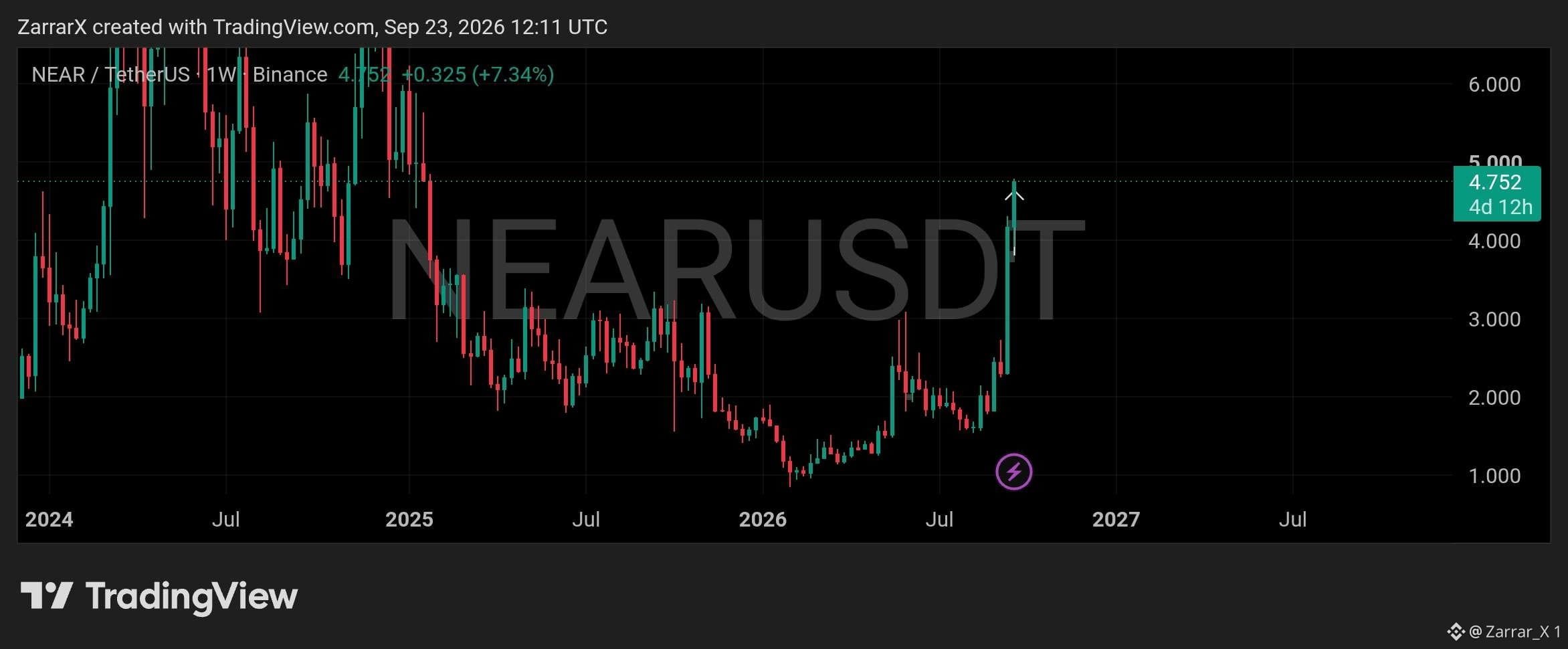
$NEAR registra un alza del 78% en una semana mientras el volumen de intenciones se acerca a los $30B.
$NEAR ha subido aproximadamente un 78% en los últimos siete días, pasando de alrededor de $2.41 a $4.29, mientras que el mercado cripto en general ganó cerca de un 6%. La recuperación llega cuando las Intenciones de NEAR se aproximan a un hito importante de adopción con $29.3 mil millones en volumen acumulado.
Las Intenciones de NEAR permiten a los usuarios solicitar intercambios entre cadenas, mientras los creadores de mercado en competencia gestionan la ejecución. La plataforma procesó alrededor de $842 millones durante los últimos siete días, lo que muestra que la cifra acumulada está respaldada por una actividad reciente significativa.
La privacidad también se ha convertido en una parte importante del relato. NEAR recientemente realizó depósitos y retiros para operaciones de futuros perpetuos a través de near.com confidencial por defecto, mientras que ZODL, la billetera de Zcash, generó aproximadamente $3.8 millones en 458 transacciones en un periodo reciente de 24 horas, ubicándose como la tercera fuente de referencia por volumen.
El analista de Bitwise Camran Khosravi describió a NEAR y Zcash como “complementos”, pero añadió una advertencia importante: el TVL de las Intenciones de NEAR puede aumentar simplemente porque el ZEC ya mantenido en el sistema aprecia, sin que entre ningún capital nuevo. Esa distinción es relevante al evaluar si el crecimiento refleja depósitos recientes o el aumento de los precios de los activos.
#NEAR #Altcoin Season# #Macro Insights#
$NEAR registra un alza del 78% en una semana mientras el volumen de intenciones se acerca a los $30B.
$NEAR ha subido aproximadamente un 78% en los últimos siete días, pasando de alrededor de $2.41 a $4.29, mientras que el mercado cripto en general ganó cerca de un 6%. La recuperación llega cuando las Intenciones de NEAR se aproximan a un hito importante de adopción con $29.3 mil millones en volumen acumulado.
Las Intenciones de NEAR permiten a los usuarios solicitar intercambios entre cadenas, mientras los creadores de mercado en competencia gestionan la ejecución. La plataforma procesó alrededor de $842 millones durante los últimos siete días, lo que muestra que la cifra acumulada está respaldada por una actividad reciente significativa.
La privacidad también se ha convertido en una parte importante del relato. NEAR recientemente realizó depósitos y retiros para operaciones de futuros perpetuos a través de near.com confidencial por defecto, mientras que ZODL, la billetera de Zcash, generó aproximadamente $3.8 millones en 458 transacciones en un periodo reciente de 24 horas, ubicándose como la tercera fuente de referencia por volumen.
El analista de Bitwise Camran Khosravi describió a NEAR y Zcash como “complementos”, pero añadió una advertencia importante: el TVL de las Intenciones de NEAR puede aumentar simplemente porque el ZEC ya mantenido en el sistema aprecia, sin que entre ningún capital nuevo. Esa distinción es relevante al evaluar si el crecimiento refleja depósitos recientes o el aumento de los precios de los activos.
#NEAR #Altcoin Season# #Macro Insights#
$NEAR ha subido aproximadamente un 78% en los últimos siete días, pasando de alrededor de $2.41 a $4.29, mientras que el mercado cripto en general ganó cerca de un 6%. La recuperación llega cuando las Intenciones de NEAR se aproximan a un hito importante de adopción con $29.3 mil millones en volumen acumulado.
Las Intenciones de NEAR permiten a los usuarios solicitar intercambios entre cadenas, mientras los creadores de mercado en competencia gestionan la ejecución. La plataforma procesó alrededor de $842 millones durante los últimos siete días, lo que muestra que la cifra acumulada está respaldada por una actividad reciente significativa.
La privacidad también se ha convertido en una parte importante del relato. NEAR recientemente realizó depósitos y retiros para operaciones de futuros perpetuos a través de near.com confidencial por defecto, mientras que ZODL, la billetera de Zcash, generó aproximadamente $3.8 millones en 458 transacciones en un periodo reciente de 24 horas, ubicándose como la tercera fuente de referencia por volumen.
El analista de Bitwise Camran Khosravi describió a NEAR y Zcash como “complementos”, pero añadió una advertencia importante: el TVL de las Intenciones de NEAR puede aumentar simplemente porque el ZEC ya mantenido en el sistema aprecia, sin que entre ningún capital nuevo. Esa distinción es relevante al evaluar si el crecimiento refleja depósitos recientes o el aumento de los precios de los activos.
#NEAR #Altcoin Season# #Macro Insights#
42
·
--
$15.9B en opciones sobre Bitcoin listas para vencer el viernes.
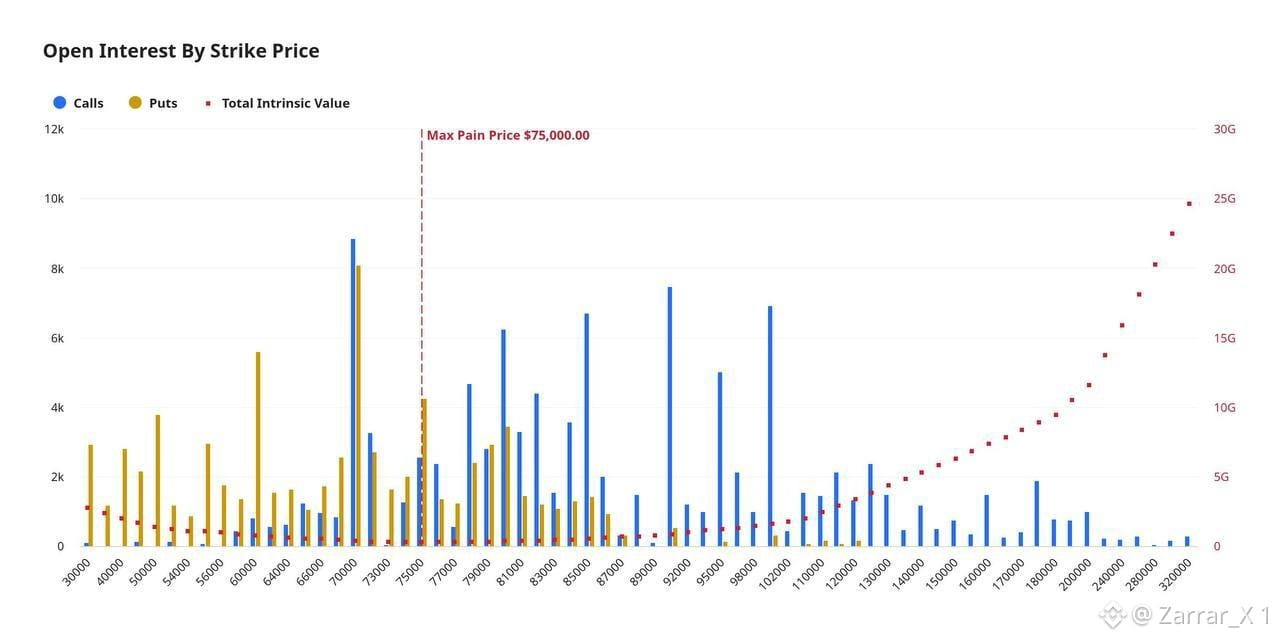
Aproximadamente 184,000 opciones $BTC están programadas para vencer en Deribit este viernes a las 8:00 a. m. UTC, con un valor nocional combinado de alrededor de $15.90 mil millones.
La ratio put/call actual es 0.69, lo que significa que el interés abierto en calls supera al de puts para este vencimiento. Los datos monitoreados de Deribit muestran aproximadamente $9.56 mil millones en interés abierto en calls frente a $6.35 mil millones en puts.
El precio de máximo dolor estimado es de $75,000, el nivel en el que teóricamente expiraría sin valor la mayor cantidad de valor de opciones. Sin embargo, el máximo dolor no predice dónde operará Bitcoin en el vencimiento, y el gran interés abierto por sí solo no establece un resultado direccional.
Deribit confirma que las opciones semanales sobre Bitcoin vencen a las 8:00 a. m. UTC, y el precio final de liquidación se calcula con un TWAP de 30 minutos entre las 7:30 y las 8:00 a. m. UTC.
Con casi $16 mil millones en contratos por vencer, la liquidación del viernes podría traer una mayor volatilidad alrededor de la ventana de vencimiento mientras los operadores ajustan o cierran posiciones.
#BTC Price Analysis# #Macro Insights# #Crypto
$15.9B en opciones sobre Bitcoin listas para vencer el viernes.
Aproximadamente 184,000 opciones $BTC están programadas para vencer en Deribit este viernes a las 8:00 a. m. UTC, con un valor nocional combinado de alrededor de $15.90 mil millones.
La ratio put/call actual es 0.69, lo que significa que el interés abierto en calls supera al de puts para este vencimiento. Los datos monitoreados de Deribit muestran aproximadamente $9.56 mil millones en interés abierto en calls frente a $6.35 mil millones en puts.
El precio de máximo dolor estimado es de $75,000, el nivel en el que teóricamente expiraría sin valor la mayor cantidad de valor de opciones. Sin embargo, el máximo dolor no predice dónde operará Bitcoin en el vencimiento, y el gran interés abierto por sí solo no establece un resultado direccional.
Deribit confirma que las opciones semanales sobre Bitcoin vencen a las 8:00 a. m. UTC, y el precio final de liquidación se calcula con un TWAP de 30 minutos entre las 7:30 y las 8:00 a. m. UTC.
Con casi $16 mil millones en contratos por vencer, la liquidación del viernes podría traer una mayor volatilidad alrededor de la ventana de vencimiento mientras los operadores ajustan o cierran posiciones.
#BTC Price Analysis# #Macro Insights# #Crypto
Aproximadamente 184,000 opciones $BTC están programadas para vencer en Deribit este viernes a las 8:00 a. m. UTC, con un valor nocional combinado de alrededor de $15.90 mil millones.
La ratio put/call actual es 0.69, lo que significa que el interés abierto en calls supera al de puts para este vencimiento. Los datos monitoreados de Deribit muestran aproximadamente $9.56 mil millones en interés abierto en calls frente a $6.35 mil millones en puts.
El precio de máximo dolor estimado es de $75,000, el nivel en el que teóricamente expiraría sin valor la mayor cantidad de valor de opciones. Sin embargo, el máximo dolor no predice dónde operará Bitcoin en el vencimiento, y el gran interés abierto por sí solo no establece un resultado direccional.
Deribit confirma que las opciones semanales sobre Bitcoin vencen a las 8:00 a. m. UTC, y el precio final de liquidación se calcula con un TWAP de 30 minutos entre las 7:30 y las 8:00 a. m. UTC.
Con casi $16 mil millones en contratos por vencer, la liquidación del viernes podría traer una mayor volatilidad alrededor de la ventana de vencimiento mientras los operadores ajustan o cierran posiciones.
#BTC Price Analysis# #Macro Insights# #Crypto
56
·
--
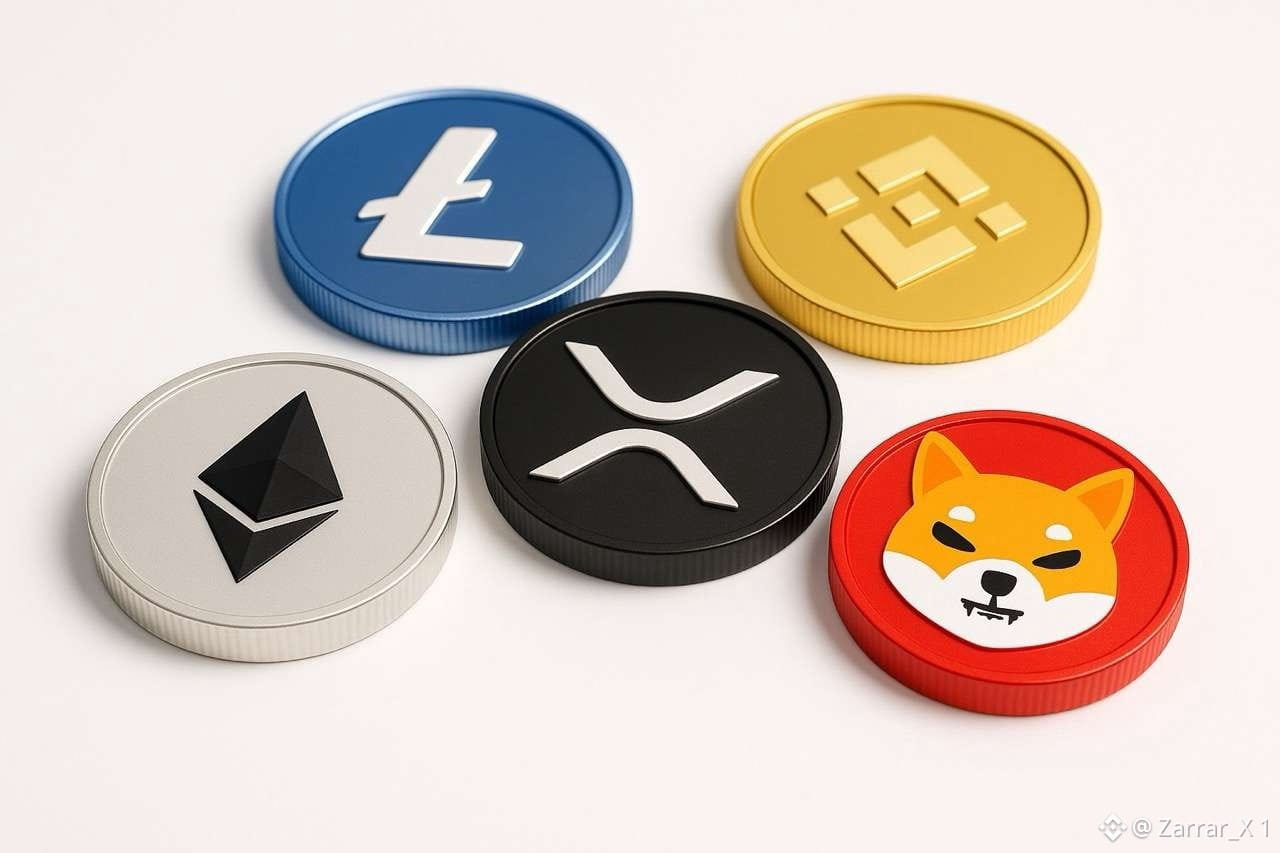
Cómo distinguir un auténtico repunte de altcoins de un falso impulso por liquidez.
No todo movimiento de una altcoin que supera a Bitcoin es el inicio de una nueva tendencia. La diferencia suele depender de la demanda en spot, la estructura del mercado, la dominancia de BTC y los catalizadores subyacentes, más que solo del precio.
$XRP está mostrando un setup más estructural: el precio se mantiene por encima de EMAs clave y se está desarrollando una estructura de acumulación de varios meses. Los avances en XRPL y la actividad de liquidación institucional aportan catalizadores adicionales, haciendo que los máximos y mínimos más altos sostenidos sean más importantes que una sola vela de ruptura.
$NEAR es otro caso de alta beta: con una ruptura de la estructura del mercado en marcos temporales superiores respaldada por sus narrativas de IA y abstracción en cadena. Una fuerte actividad de usuarios y la expansión del ecosistema podrían aportar una demanda subyacente, pero el movimiento aún necesita sostener esa ruptura estructural y no depender únicamente de los derivados.
$DOGE y $BCH requieren más cautela. DOGE está probando una resistencia importante, mientras que las entradas en spot y el aumento del interés abierto en futuros están impulsando la volatilidad, lo que crea un escenario potencial de “barrido de liquidez”. BCH también ha generado movimientos verticales agudos desde rangos prolongados, algo que puede ser característico de squeezes de cortos cuando la demanda orgánica en spot es limitada.
Cuando se evalúa un movimiento de altcoin desacoplado de BTC, importan tres confirmaciones: absorción en spot por encima de la expansión del interés abierto, debilitamiento o consolidación de la dominancia de BTC mientras sube la capitalización total del mercado, y mantenimiento de mínimos más altos después de la ruptura de la estructura en marcos temporales superiores. Sin eso, un movimiento explosivo aún puede convertirse en un ida y vuelta rápido.
#Temporada de Altcoins# #Perspectivas Macroeconómicas# #Análisis del Precio de BTC#
Cómo distinguir un auténtico repunte de altcoins de un falso impulso por liquidez.
No todo movimiento de una altcoin que supera a Bitcoin es el inicio de una nueva tendencia. La diferencia suele depender de la demanda en spot, la estructura del mercado, la dominancia de BTC y los catalizadores subyacentes, más que solo del precio.
$XRP está mostrando un setup más estructural: el precio se mantiene por encima de EMAs clave y se está desarrollando una estructura de acumulación de varios meses. Los avances en XRPL y la actividad de liquidación institucional aportan catalizadores adicionales, haciendo que los máximos y mínimos más altos sostenidos sean más importantes que una sola vela de ruptura.
$NEAR es otro caso de alta beta: con una ruptura de la estructura del mercado en marcos temporales superiores respaldada por sus narrativas de IA y abstracción en cadena. Una fuerte actividad de usuarios y la expansión del ecosistema podrían aportar una demanda subyacente, pero el movimiento aún necesita sostener esa ruptura estructural y no depender únicamente de los derivados.
$DOGE y $BCH requieren más cautela. DOGE está probando una resistencia importante, mientras que las entradas en spot y el aumento del interés abierto en futuros están impulsando la volatilidad, lo que crea un escenario potencial de “barrido de liquidez”. BCH también ha generado movimientos verticales agudos desde rangos prolongados, algo que puede ser característico de squeezes de cortos cuando la demanda orgánica en spot es limitada.
Cuando se evalúa un movimiento de altcoin desacoplado de BTC, importan tres confirmaciones: absorción en spot por encima de la expansión del interés abierto, debilitamiento o consolidación de la dominancia de BTC mientras sube la capitalización total del mercado, y mantenimiento de mínimos más altos después de la ruptura de la estructura en marcos temporales superiores. Sin eso, un movimiento explosivo aún puede convertirse en un ida y vuelta rápido.
#Temporada de Altcoins# #Perspectivas Macroeconómicas# #Análisis del Precio de BTC#
No todo movimiento de una altcoin que supera a Bitcoin es el inicio de una nueva tendencia. La diferencia suele depender de la demanda en spot, la estructura del mercado, la dominancia de BTC y los catalizadores subyacentes, más que solo del precio.
$XRP está mostrando un setup más estructural: el precio se mantiene por encima de EMAs clave y se está desarrollando una estructura de acumulación de varios meses. Los avances en XRPL y la actividad de liquidación institucional aportan catalizadores adicionales, haciendo que los máximos y mínimos más altos sostenidos sean más importantes que una sola vela de ruptura.
$NEAR es otro caso de alta beta: con una ruptura de la estructura del mercado en marcos temporales superiores respaldada por sus narrativas de IA y abstracción en cadena. Una fuerte actividad de usuarios y la expansión del ecosistema podrían aportar una demanda subyacente, pero el movimiento aún necesita sostener esa ruptura estructural y no depender únicamente de los derivados.
$DOGE y $BCH requieren más cautela. DOGE está probando una resistencia importante, mientras que las entradas en spot y el aumento del interés abierto en futuros están impulsando la volatilidad, lo que crea un escenario potencial de “barrido de liquidez”. BCH también ha generado movimientos verticales agudos desde rangos prolongados, algo que puede ser característico de squeezes de cortos cuando la demanda orgánica en spot es limitada.
Cuando se evalúa un movimiento de altcoin desacoplado de BTC, importan tres confirmaciones: absorción en spot por encima de la expansión del interés abierto, debilitamiento o consolidación de la dominancia de BTC mientras sube la capitalización total del mercado, y mantenimiento de mínimos más altos después de la ruptura de la estructura en marcos temporales superiores. Sin eso, un movimiento explosivo aún puede convertirse en un ida y vuelta rápido.
#Temporada de Altcoins# #Perspectivas Macroeconómicas# #Análisis del Precio de BTC#
67
·
--
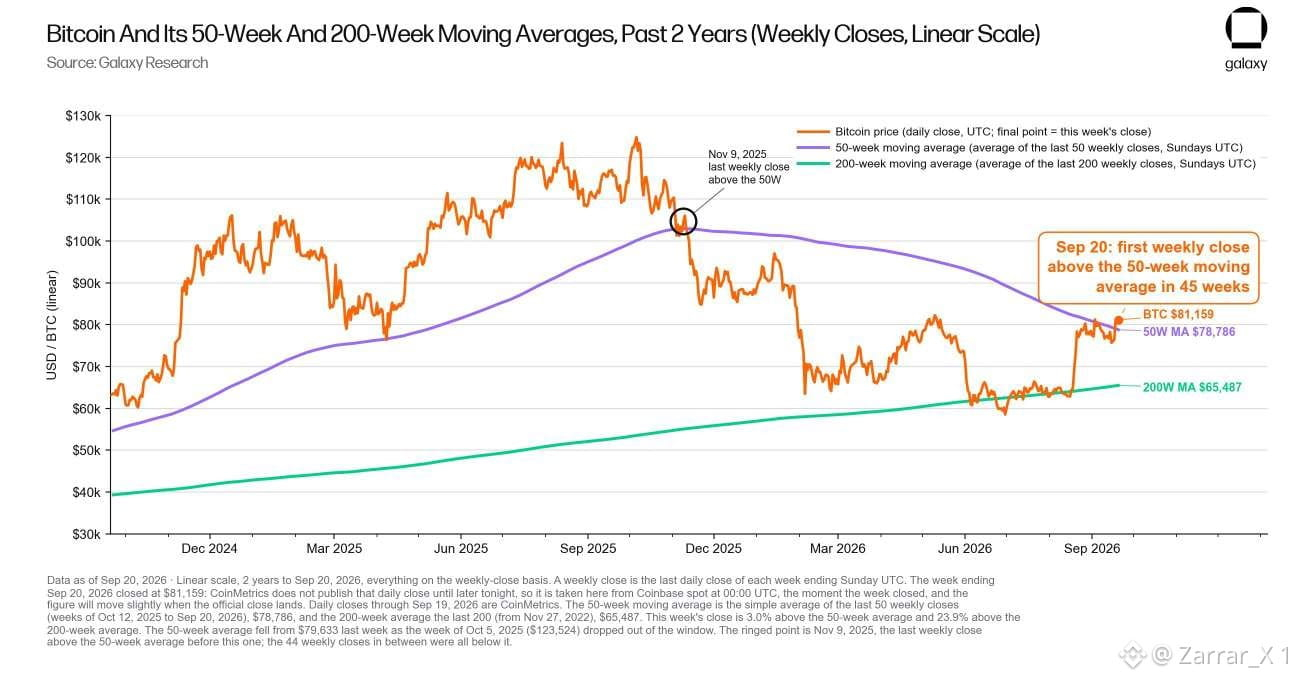
Bitcoin recupera la media móvil de 50 semanas después de 45 semanas por debajo de ella.
Bitcoin cerró la última vela semanal en 81,159 dólares, volviendo a superar su media móvil de 50 semanas en 78,788 dólares por primera vez en 45 semanas. Según Galaxy Research, este tipo de recuperación históricamente ha sido una señal importante durante las grandes reversiones del ciclo de Bitcoin.
En 13 instancias históricas en las que Bitcoin recuperó la media móvil de 50 semanas después de romperla durante un mercado bajista, 11 finalmente marcaron el punto más bajo del ciclo y precedieron a nuevos máximos históricos, según el análisis histórico citado. Eso supone una tasa de acierto histórica del 84.6%, aunque la muestra es pequeña y los patrones del pasado no garantizan el mismo resultado esta vez.
El obstáculo técnico inmediato es la zona de resistencia de 83,000–84,400 dólares. Un cierre semanal sostenido por encima de 83K rompería la estructura de máximos descendentes que ha limitado a Bitcoin desde su pico anterior, mientras que al superar 84.4K dejaría el área de 90,000 dólares como la siguiente gran resistencia y nivel psicológico.
El nivel clave a la baja es la media móvil de 50 semanas en 78,788 dólares. Mantenerse por encima en cierres semanales posteriores preservaría la recuperación, mientras que un retroceso más profundo por debajo de 75,000 dólares debilitaría la señal y aumentaría la posibilidad de otro intento fallido de ruptura.
$BTC #BTC Price Analysis# #BTC Correction Incoming?# #Macro Insights#
Bitcoin recupera la media móvil de 50 semanas después de 45 semanas por debajo de ella.
Bitcoin cerró la última vela semanal en 81,159 dólares, volviendo a superar su media móvil de 50 semanas en 78,788 dólares por primera vez en 45 semanas. Según Galaxy Research, este tipo de recuperación históricamente ha sido una señal importante durante las grandes reversiones del ciclo de Bitcoin.
En 13 instancias históricas en las que Bitcoin recuperó la media móvil de 50 semanas después de romperla durante un mercado bajista, 11 finalmente marcaron el punto más bajo del ciclo y precedieron a nuevos máximos históricos, según el análisis histórico citado. Eso supone una tasa de acierto histórica del 84.6%, aunque la muestra es pequeña y los patrones del pasado no garantizan el mismo resultado esta vez.
El obstáculo técnico inmediato es la zona de resistencia de 83,000–84,400 dólares. Un cierre semanal sostenido por encima de 83K rompería la estructura de máximos descendentes que ha limitado a Bitcoin desde su pico anterior, mientras que al superar 84.4K dejaría el área de 90,000 dólares como la siguiente gran resistencia y nivel psicológico.
El nivel clave a la baja es la media móvil de 50 semanas en 78,788 dólares. Mantenerse por encima en cierres semanales posteriores preservaría la recuperación, mientras que un retroceso más profundo por debajo de 75,000 dólares debilitaría la señal y aumentaría la posibilidad de otro intento fallido de ruptura.
$BTC #BTC Price Analysis# #BTC Correction Incoming?# #Macro Insights#
Bitcoin cerró la última vela semanal en 81,159 dólares, volviendo a superar su media móvil de 50 semanas en 78,788 dólares por primera vez en 45 semanas. Según Galaxy Research, este tipo de recuperación históricamente ha sido una señal importante durante las grandes reversiones del ciclo de Bitcoin.
En 13 instancias históricas en las que Bitcoin recuperó la media móvil de 50 semanas después de romperla durante un mercado bajista, 11 finalmente marcaron el punto más bajo del ciclo y precedieron a nuevos máximos históricos, según el análisis histórico citado. Eso supone una tasa de acierto histórica del 84.6%, aunque la muestra es pequeña y los patrones del pasado no garantizan el mismo resultado esta vez.
El obstáculo técnico inmediato es la zona de resistencia de 83,000–84,400 dólares. Un cierre semanal sostenido por encima de 83K rompería la estructura de máximos descendentes que ha limitado a Bitcoin desde su pico anterior, mientras que al superar 84.4K dejaría el área de 90,000 dólares como la siguiente gran resistencia y nivel psicológico.
El nivel clave a la baja es la media móvil de 50 semanas en 78,788 dólares. Mantenerse por encima en cierres semanales posteriores preservaría la recuperación, mientras que un retroceso más profundo por debajo de 75,000 dólares debilitaría la señal y aumentaría la posibilidad de otro intento fallido de ruptura.
$BTC #BTC Price Analysis# #BTC Correction Incoming?# #Macro Insights#
·
--
Las nuevas misiones y ofertas de vuelos ya están disponibles | Ya estamos en la semana dos.
Una semana de «One Swap. Across Chains» completada y el vuelo se pone cada vez más emocionante. Acaban de publicarse nuevas misiones y ofertas de vuelos, y si todavía no te has unido, todavía hay un asiento esperándote.
Nuevas misiones para revisar esta semana:
– Introduce el código secreto de AMA que se activará en vivo el 23 de septiembre durante la sesión de AMA «Inside the Cross-Chain Flight», regístrate y preséntate para conseguirlo
– Misión de cadena cruzada de Keeper, una popular billetera cripto de autocustodia multichain
– Misión especial de XPocket, una aplicación de Trading en TON
Las nuevas ofertas de vuelos de socios también están activas en el tablero de SafePal con un lote actualizado de billeteras de hardware: Getgems, My Wallet, Mira, WenLong y Keeper. Revisa a qué recompensas ya eres elegible y reclámalas antes de que se cierre la ventana de 7 días. Las ofertas se actualizan cada martes; no dejes que la programación de esta semana expire.
Las millas siguen acumulándose con cada misión que completes.
– Únete a la campaña y disfruta tu vuelo : https://cross-chain.ston.fi/
$BCH $NEAR #Macro Insights# #Altcoin Season# #Crypto
Las nuevas misiones y ofertas de vuelos ya están disponibles | Ya estamos en la semana dos.
Una semana de «One Swap. Across Chains» completada y el vuelo se pone cada vez más emocionante. Acaban de publicarse nuevas misiones y ofertas de vuelos, y si todavía no te has unido, todavía hay un asiento esperándote.
Nuevas misiones para revisar esta semana:
– Introduce el código secreto de AMA que se activará en vivo el 23 de septiembre durante la sesión de AMA «Inside the Cross-Chain Flight», regístrate y preséntate para conseguirlo
– Misión de cadena cruzada de Keeper, una popular billetera cripto de autocustodia multichain
– Misión especial de XPocket, una aplicación de Trading en TON
Las nuevas ofertas de vuelos de socios también están activas en el tablero de SafePal con un lote actualizado de billeteras de hardware: Getgems, My Wallet, Mira, WenLong y Keeper. Revisa a qué recompensas ya eres elegible y reclámalas antes de que se cierre la ventana de 7 días. Las ofertas se actualizan cada martes; no dejes que la programación de esta semana expire.
Las millas siguen acumulándose con cada misión que completes.
– Únete a la campaña y disfruta tu vuelo : https://cross-chain.ston.fi/
$BCH $NEAR #Macro Insights# #Altcoin Season# #Crypto
Una semana de «One Swap. Across Chains» completada y el vuelo se pone cada vez más emocionante. Acaban de publicarse nuevas misiones y ofertas de vuelos, y si todavía no te has unido, todavía hay un asiento esperándote.
Nuevas misiones para revisar esta semana:
– Introduce el código secreto de AMA que se activará en vivo el 23 de septiembre durante la sesión de AMA «Inside the Cross-Chain Flight», regístrate y preséntate para conseguirlo
– Misión de cadena cruzada de Keeper, una popular billetera cripto de autocustodia multichain
– Misión especial de XPocket, una aplicación de Trading en TON
Las nuevas ofertas de vuelos de socios también están activas en el tablero de SafePal con un lote actualizado de billeteras de hardware: Getgems, My Wallet, Mira, WenLong y Keeper. Revisa a qué recompensas ya eres elegible y reclámalas antes de que se cierre la ventana de 7 días. Las ofertas se actualizan cada martes; no dejes que la programación de esta semana expire.
Las millas siguen acumulándose con cada misión que completes.
– Únete a la campaña y disfruta tu vuelo : https://cross-chain.ston.fi/
$BCH $NEAR #Macro Insights# #Altcoin Season# #Crypto

Inicia sesión para explorar más contenidos
Únete a usuarios globales de criptomonedas en Binance Square
⚡️ Obtén información útil y actualizada sobre criptos.
💬 Avalado por el mayor exchange de criptomonedas en el mundo.
👍 Descubre perspectivas reales de creadores verificados.
Email/número de teléfono
Temas populares
QNTRises39%
20,316 vistas
879 están debatiendo
🚨🔥 $QNT +40%: ¿RALLY REAL O YA DEMASIADO TARDE?
Quant acaba de convertirse en uno de los grandes protagonistas del mercado. 📈
$QNT llegó a dispararse cerca de 40% en el movimiento, alcanzando la zona de $97-$98, mientras gran parte del mercado estaba mucho más tranquilo.
¿El motivo? 👀
🏦 The Clearing House seleccionó a Quant como capa de interoperabilidad para su iniciativa de depósitos tokenizados en EE.UU.
Y esto es importante porque no estamos hablando solamente de especulación cripto: la noticia conecta directamente a Quant con infraestructura financiera institucional y con el crecimiento de la tokenización de activos.
Pero ojo ⚠️
Después de una subida tan vertical, entrar persiguiendo la vela puede ser peligroso. Los indicadores muestran un mercado extremadamente sobrecomprado y el volumen también se disparó con el movimiento.
Mi lectura:
🟢 Breakout + retest: interesante para buscar LONG
🟡 Precio extendido: esperar pullback puede tener más sentido
🔴 Pérdida de soportes: podría activar toma de ganancias
Ahora la pregunta es:
¿QNT tiene combustible para romper los $100 o primero necesita respirar? 👇
🔥 LONG QNT
⏳ ESPERO PULLBACK
🔴 SHORT QNT
$QNT #Quant #QNTRises39%
Mundo Cripto
·1 me gusta
·56 vistas
EthereumBreaksAbove$2700
2,103 vistas
84 están debatiendo
BitgetBreachForgedRequestsNotStolenKeys
17,619 vistas
683 están debatiendo