

Bitcoinworld
69.1k Publicaciones

Bitcoinworld
 Verificado Plus de Binance Square
Denunciar
Bloquear usuario
BitcoinWorld is a leading media publication bringing the latest happenings in the Blockchain and Crypto Space.

#BinanceTurns7

Excellence Award (Market Buzz)

Creator of the Year
2 Siguiendo
100.7K+ Seguidores
287.4K+ Me gusta
4 Insignias
Publicaciones
Todo
Videos
Live
·
--
Artículo
Ver traducción
Project Eleven Launches Strongpoint for Post-Quantum Custody With Zcash Foundation As Initial Dev...BitcoinWorldProject Eleven Launches Strongpoint for Post-Quantum Custody with Zcash Foundation as Initial Development Partner
Zcash Foundation joins Project Eleven to shape institutional custody infrastructure for the post-quantum and AI era as more than $1 trillion in digital assets remain at risk of attack by sufficiently powerful quantum computers.
NEW YORK, Oct. 6, 2026 /PRNewswire/ — Project Eleven, the post-quantum security company for digital assets, today introduced Strongpoint, its flagship custody platform built for navigating the transition to post-quantum cryptography. Zcash Foundation joins Project Eleven as an initial development partner, helping shape Strongpoint’s institutional custody architecture.
Strongpoint is designed to give institutions a consistent control layer for securing and managing digital assets as networks change the cryptographic standards underneath them. Rather than rebuilding key-management, transaction approval, and audit infrastructure for each new signature scheme or network migration, institutions can maintain a common set of security controls while the underlying cryptography evolves.
“Institutional digital asset custody was built for a world where the cryptography underneath it rarely changed,” said Alex Pruden, CEO of Project Eleven. “Quantum computing is upending that model. If every network adopts a different solution, institutions could be forced to rebuild their security infrastructure again and again. Strongpoint is built around crypto-agility, so the cryptography can change without the infrastructure changing with it.”
“Institutions holding shielded ZEC need custody infrastructure that respects Zcash’s privacy model today and can adapt as cryptographic standards change,” said Alex Bornstein, Executive Director of Zcash Foundation. “Project Eleven is building Strongpoint with the crypto-agility and technical foundation needed to support those requirements over time, helping strengthen custody infrastructure for the broader ecosystem.”
Zcash Foundation Joins as an Initial Development PartnerZcash Foundation joins as an initial development partner for Strongpoint, bringing its expertise in privacy-preserving cryptography and protocol engineering to Strongpoint’s institutional custody architecture. Zcash’s privacy-preserving design introduces sophisticated key-management and transaction requirements, making it a valuable environment for developing custody infrastructure capable of supporting evolving cryptographic standards.
The collaboration will help inform how Strongpoint handles network-specific requirements while maintaining a consistent institutional control framework across assets and cryptographic schemes.
Post-Quantum Migrations Are Taking Different PathsThe digital asset industry’s post-quantum transition is becoming a coordination challenge. Among the networks represented by the 20 largest assets in CoinGecko’s Layer 1 (L1) category by market capitalization, Project Eleven found that only 10 have published a network-specific technical proposal, roadmap or implementation path for migrating transaction or account authentication to post-quantum cryptography.
Those approaches span at least six proposed post-quantum signature schemes and vary significantly in how they address account migration, key rotation and legacy-asset recovery. Even where technical roadmaps exist, operational readiness remains uneven, leaving institutions to navigate different standards and requirements across networks.
For institutions operating across multiple networks, that fragmentation means accommodating different cryptographic standards and migration requirements without losing a consistent security model. Strongpoint is designed to provide that common operating layer while allowing the cryptography beneath it to change independently.
Early Access and DeploymentProject Eleven targets production deployment in Q4 2026 and is working with a limited group of development partners ahead of general availability. Additional development partners and supported networks will be announced. Institutions interested in early access can request more information at projecteleven.com/strongpoint.
Founded in 2024 by Alex Pruden and Conor Deegan, Project Eleven raised a $20 million Series A led by Castle Island Ventures in January 2026, bringing its total funding to $26 million. The company recently acquired Riva Labs, a specialized engineering firm with deep expertise in post-quantum signatures, wallet infrastructure and blockchain cryptography, expanding Project Eleven’s in-house research and protocol-engineering capabilities.
Methodology: Project Eleven reviewed the 20 largest assets in CoinGecko’s Layer 1 (L1) category by market capitalization on September 25, 2026. A network was counted only where an official network organization, foundation, core development team or recognized protocol-improvement process had published a network-specific technical proposal, roadmap or implementation path for migrating transaction or account authentication to post-quantum cryptography. General research programs, statements of intent and post-quantum work that did not specify such a migration path were not counted. Draft technical proposals were included and do not imply network approval or adoption.
Alex Pruden and Conor Deegan are available for interview.
About Project ElevenProject Eleven builds resilient infrastructure and tooling for the post-quantum era. The company develops scalable solutions that strengthen security across a rapidly evolving quantum threat landscape. With deep expertise in cryptography, blockchain, and financial systems, Project Eleven bridges advanced post-quantum research with real-world implementations that prepare the digital asset ecosystem for the future. For more information, visit www.projecteleven.com.
About Zcash FoundationZcash Foundation, a 501(c)(3) public charity, builds financial privacy infrastructure for the public good, primarily serving users of the Zcash protocol and blockchain. With expertise in cryptography, protocol engineering, and open-source development, Zcash Foundation works to sustain and improve open financial networks that allow anyone to protect their own privacy, on their own terms. For more information, visit zfnd.org.
Media ContactsAubrey Strobel / Elena Nisonoff, Halcyon Communicationsprojecteleven@halcyonpr.xyz
View original content to download multimedia:https://www.prnewswire.com/news-releases/project-eleven-launches-strongpoint-for-post-quantum-custody-with-zcash-foundation-as-initial-development-partner-302900327.html
SOURCE Project Eleven
This post Project Eleven Launches Strongpoint for Post-Quantum Custody with Zcash Foundation as Initial Development Partner first appeared on BitcoinWorld.
Project Eleven Launches Strongpoint for Post-Quantum Custody With Zcash Foundation As Initial Dev...
BitcoinWorldProject Eleven Launches Strongpoint for Post-Quantum Custody with Zcash Foundation as Initial Development Partner
Zcash Foundation joins Project Eleven to shape institutional custody infrastructure for the post-quantum and AI era as more than $1 trillion in digital assets remain at risk of attack by sufficiently powerful quantum computers.
NEW YORK, Oct. 6, 2026 /PRNewswire/ — Project Eleven, the post-quantum security company for digital assets, today introduced Strongpoint, its flagship custody platform built for navigating the transition to post-quantum cryptography. Zcash Foundation joins Project Eleven as an initial development partner, helping shape Strongpoint’s institutional custody architecture.
Strongpoint is designed to give institutions a consistent control layer for securing and managing digital assets as networks change the cryptographic standards underneath them. Rather than rebuilding key-management, transaction approval, and audit infrastructure for each new signature scheme or network migration, institutions can maintain a common set of security controls while the underlying cryptography evolves.
“Institutional digital asset custody was built for a world where the cryptography underneath it rarely changed,” said Alex Pruden, CEO of Project Eleven. “Quantum computing is upending that model. If every network adopts a different solution, institutions could be forced to rebuild their security infrastructure again and again. Strongpoint is built around crypto-agility, so the cryptography can change without the infrastructure changing with it.”
“Institutions holding shielded ZEC need custody infrastructure that respects Zcash’s privacy model today and can adapt as cryptographic standards change,” said Alex Bornstein, Executive Director of Zcash Foundation. “Project Eleven is building Strongpoint with the crypto-agility and technical foundation needed to support those requirements over time, helping strengthen custody infrastructure for the broader ecosystem.”
Zcash Foundation Joins as an Initial Development PartnerZcash Foundation joins as an initial development partner for Strongpoint, bringing its expertise in privacy-preserving cryptography and protocol engineering to Strongpoint’s institutional custody architecture. Zcash’s privacy-preserving design introduces sophisticated key-management and transaction requirements, making it a valuable environment for developing custody infrastructure capable of supporting evolving cryptographic standards.
The collaboration will help inform how Strongpoint handles network-specific requirements while maintaining a consistent institutional control framework across assets and cryptographic schemes.
Post-Quantum Migrations Are Taking Different PathsThe digital asset industry’s post-quantum transition is becoming a coordination challenge. Among the networks represented by the 20 largest assets in CoinGecko’s Layer 1 (L1) category by market capitalization, Project Eleven found that only 10 have published a network-specific technical proposal, roadmap or implementation path for migrating transaction or account authentication to post-quantum cryptography.
Those approaches span at least six proposed post-quantum signature schemes and vary significantly in how they address account migration, key rotation and legacy-asset recovery. Even where technical roadmaps exist, operational readiness remains uneven, leaving institutions to navigate different standards and requirements across networks.
For institutions operating across multiple networks, that fragmentation means accommodating different cryptographic standards and migration requirements without losing a consistent security model. Strongpoint is designed to provide that common operating layer while allowing the cryptography beneath it to change independently.
Early Access and DeploymentProject Eleven targets production deployment in Q4 2026 and is working with a limited group of development partners ahead of general availability. Additional development partners and supported networks will be announced. Institutions interested in early access can request more information at projecteleven.com/strongpoint.
Founded in 2024 by Alex Pruden and Conor Deegan, Project Eleven raised a $20 million Series A led by Castle Island Ventures in January 2026, bringing its total funding to $26 million. The company recently acquired Riva Labs, a specialized engineering firm with deep expertise in post-quantum signatures, wallet infrastructure and blockchain cryptography, expanding Project Eleven’s in-house research and protocol-engineering capabilities.
Methodology: Project Eleven reviewed the 20 largest assets in CoinGecko’s Layer 1 (L1) category by market capitalization on September 25, 2026. A network was counted only where an official network organization, foundation, core development team or recognized protocol-improvement process had published a network-specific technical proposal, roadmap or implementation path for migrating transaction or account authentication to post-quantum cryptography. General research programs, statements of intent and post-quantum work that did not specify such a migration path were not counted. Draft technical proposals were included and do not imply network approval or adoption.
Alex Pruden and Conor Deegan are available for interview.
About Project ElevenProject Eleven builds resilient infrastructure and tooling for the post-quantum era. The company develops scalable solutions that strengthen security across a rapidly evolving quantum threat landscape. With deep expertise in cryptography, blockchain, and financial systems, Project Eleven bridges advanced post-quantum research with real-world implementations that prepare the digital asset ecosystem for the future. For more information, visit www.projecteleven.com.
About Zcash FoundationZcash Foundation, a 501(c)(3) public charity, builds financial privacy infrastructure for the public good, primarily serving users of the Zcash protocol and blockchain. With expertise in cryptography, protocol engineering, and open-source development, Zcash Foundation works to sustain and improve open financial networks that allow anyone to protect their own privacy, on their own terms. For more information, visit zfnd.org.
Media ContactsAubrey Strobel / Elena Nisonoff, Halcyon Communicationsprojecteleven@halcyonpr.xyz
View original content to download multimedia:https://www.prnewswire.com/news-releases/project-eleven-launches-strongpoint-for-post-quantum-custody-with-zcash-foundation-as-initial-development-partner-302900327.html
SOURCE Project Eleven
This post Project Eleven Launches Strongpoint for Post-Quantum Custody with Zcash Foundation as Initial Development Partner first appeared on BitcoinWorld.
Zcash Foundation joins Project Eleven to shape institutional custody infrastructure for the post-quantum and AI era as more than $1 trillion in digital assets remain at risk of attack by sufficiently powerful quantum computers.
NEW YORK, Oct. 6, 2026 /PRNewswire/ — Project Eleven, the post-quantum security company for digital assets, today introduced Strongpoint, its flagship custody platform built for navigating the transition to post-quantum cryptography. Zcash Foundation joins Project Eleven as an initial development partner, helping shape Strongpoint’s institutional custody architecture.
Strongpoint is designed to give institutions a consistent control layer for securing and managing digital assets as networks change the cryptographic standards underneath them. Rather than rebuilding key-management, transaction approval, and audit infrastructure for each new signature scheme or network migration, institutions can maintain a common set of security controls while the underlying cryptography evolves.
“Institutional digital asset custody was built for a world where the cryptography underneath it rarely changed,” said Alex Pruden, CEO of Project Eleven. “Quantum computing is upending that model. If every network adopts a different solution, institutions could be forced to rebuild their security infrastructure again and again. Strongpoint is built around crypto-agility, so the cryptography can change without the infrastructure changing with it.”
“Institutions holding shielded ZEC need custody infrastructure that respects Zcash’s privacy model today and can adapt as cryptographic standards change,” said Alex Bornstein, Executive Director of Zcash Foundation. “Project Eleven is building Strongpoint with the crypto-agility and technical foundation needed to support those requirements over time, helping strengthen custody infrastructure for the broader ecosystem.”
Zcash Foundation Joins as an Initial Development PartnerZcash Foundation joins as an initial development partner for Strongpoint, bringing its expertise in privacy-preserving cryptography and protocol engineering to Strongpoint’s institutional custody architecture. Zcash’s privacy-preserving design introduces sophisticated key-management and transaction requirements, making it a valuable environment for developing custody infrastructure capable of supporting evolving cryptographic standards.
The collaboration will help inform how Strongpoint handles network-specific requirements while maintaining a consistent institutional control framework across assets and cryptographic schemes.
Post-Quantum Migrations Are Taking Different PathsThe digital asset industry’s post-quantum transition is becoming a coordination challenge. Among the networks represented by the 20 largest assets in CoinGecko’s Layer 1 (L1) category by market capitalization, Project Eleven found that only 10 have published a network-specific technical proposal, roadmap or implementation path for migrating transaction or account authentication to post-quantum cryptography.
Those approaches span at least six proposed post-quantum signature schemes and vary significantly in how they address account migration, key rotation and legacy-asset recovery. Even where technical roadmaps exist, operational readiness remains uneven, leaving institutions to navigate different standards and requirements across networks.
For institutions operating across multiple networks, that fragmentation means accommodating different cryptographic standards and migration requirements without losing a consistent security model. Strongpoint is designed to provide that common operating layer while allowing the cryptography beneath it to change independently.
Early Access and DeploymentProject Eleven targets production deployment in Q4 2026 and is working with a limited group of development partners ahead of general availability. Additional development partners and supported networks will be announced. Institutions interested in early access can request more information at projecteleven.com/strongpoint.
Founded in 2024 by Alex Pruden and Conor Deegan, Project Eleven raised a $20 million Series A led by Castle Island Ventures in January 2026, bringing its total funding to $26 million. The company recently acquired Riva Labs, a specialized engineering firm with deep expertise in post-quantum signatures, wallet infrastructure and blockchain cryptography, expanding Project Eleven’s in-house research and protocol-engineering capabilities.
Methodology: Project Eleven reviewed the 20 largest assets in CoinGecko’s Layer 1 (L1) category by market capitalization on September 25, 2026. A network was counted only where an official network organization, foundation, core development team or recognized protocol-improvement process had published a network-specific technical proposal, roadmap or implementation path for migrating transaction or account authentication to post-quantum cryptography. General research programs, statements of intent and post-quantum work that did not specify such a migration path were not counted. Draft technical proposals were included and do not imply network approval or adoption.
Alex Pruden and Conor Deegan are available for interview.
About Project ElevenProject Eleven builds resilient infrastructure and tooling for the post-quantum era. The company develops scalable solutions that strengthen security across a rapidly evolving quantum threat landscape. With deep expertise in cryptography, blockchain, and financial systems, Project Eleven bridges advanced post-quantum research with real-world implementations that prepare the digital asset ecosystem for the future. For more information, visit www.projecteleven.com.
About Zcash FoundationZcash Foundation, a 501(c)(3) public charity, builds financial privacy infrastructure for the public good, primarily serving users of the Zcash protocol and blockchain. With expertise in cryptography, protocol engineering, and open-source development, Zcash Foundation works to sustain and improve open financial networks that allow anyone to protect their own privacy, on their own terms. For more information, visit zfnd.org.
Media ContactsAubrey Strobel / Elena Nisonoff, Halcyon Communicationsprojecteleven@halcyonpr.xyz
View original content to download multimedia:https://www.prnewswire.com/news-releases/project-eleven-launches-strongpoint-for-post-quantum-custody-with-zcash-foundation-as-initial-development-partner-302900327.html
SOURCE Project Eleven
This post Project Eleven Launches Strongpoint for Post-Quantum Custody with Zcash Foundation as Initial Development Partner first appeared on BitcoinWorld.
7
·
--
Artículo
Tether y el banco central de Kazajistán firman un memorando de entendimiento sobre una moneda estable vinculada al tengeBitcoinWorld
Tether y el banco central de Kazajistán firman un memorando de entendimiento sobre una moneda estable vinculada al tenge
Tether firmó un memorando de entendimiento con el Banco Nacional de Kazajistán y la Autoridad de la Ciudad de Alatau el 7 de octubre de 2026, según Cointelegraph, para estudiar una moneda estable vinculada al tenge y un marco para tokenizar activos del mundo real. El acuerdo es exploratorio: no se ha anunciado ninguna fecha de emisión, cadena de bloques, estructura de reservas ni emisor comercial para los posibles tokens.
Tether, el banco central de Kazajistán y la Autoridad de la Ciudad de Alatau firmaron un memorando de entendimiento el 7 de octubre de 2026 para explorar un proyecto piloto de moneda estable respaldada por el tenge y un marco para la tokenización de activos del mundo real. El acuerdo corresponde a una fase de estudio, no al lanzamiento de un token, y no se ha aprobado ni emitido ninguna moneda estable.
Tether y el banco central de Kazajistán firman un memorando de entendimiento sobre una moneda estable vinculada al tenge
BitcoinWorld
Tether y el banco central de Kazajistán firman un memorando de entendimiento sobre una moneda estable vinculada al tenge
Tether firmó un memorando de entendimiento con el Banco Nacional de Kazajistán y la Autoridad de la Ciudad de Alatau el 7 de octubre de 2026, según Cointelegraph, para estudiar una moneda estable vinculada al tenge y un marco para tokenizar activos del mundo real. El acuerdo es exploratorio: no se ha anunciado ninguna fecha de emisión, cadena de bloques, estructura de reservas ni emisor comercial para los posibles tokens.
Tether, el banco central de Kazajistán y la Autoridad de la Ciudad de Alatau firmaron un memorando de entendimiento el 7 de octubre de 2026 para explorar un proyecto piloto de moneda estable respaldada por el tenge y un marco para la tokenización de activos del mundo real. El acuerdo corresponde a una fase de estudio, no al lanzamiento de un token, y no se ha aprobado ni emitido ninguna moneda estable.
Tether y el banco central de Kazajistán firman un memorando de entendimiento sobre una moneda estable vinculada al tenge
Tether firmó un memorando de entendimiento con el Banco Nacional de Kazajistán y la Autoridad de la Ciudad de Alatau el 7 de octubre de 2026, según Cointelegraph, para estudiar una moneda estable vinculada al tenge y un marco para tokenizar activos del mundo real. El acuerdo es exploratorio: no se ha anunciado ninguna fecha de emisión, cadena de bloques, estructura de reservas ni emisor comercial para los posibles tokens.
Tether, el banco central de Kazajistán y la Autoridad de la Ciudad de Alatau firmaron un memorando de entendimiento el 7 de octubre de 2026 para explorar un proyecto piloto de moneda estable respaldada por el tenge y un marco para la tokenización de activos del mundo real. El acuerdo corresponde a una fase de estudio, no al lanzamiento de un token, y no se ha aprobado ni emitido ninguna moneda estable.
2
·
--
Artículo
Ver traducción
ChainIT® Brings “Your Face Is Your Password” to Web3 With Organizational MPC WalletsBitcoinWorldChainIT® Brings “Your Face Is Your Password” to Web3 with Organizational MPC Wallets
Production wallets combine passwordless ChainIT ID with transaction-specific authority checks, advancing Agentic Web3 Complete Commerce during TOKEN2049 Week.
SINGAPORE, Oct. 7, 2026 /PRNewswire/ — ChainIT Inc. today announced production availability of its organizational Multi-Party Computation (MPC) wallets, connecting passwordless ChainIT ID with transaction-specific authority checks before signing. This release requires a verified, authorized organizational member to approve each transaction signed through the wallet. The capability is included at no additional cost in each ChainIT organizational digital identity profile.
The announcement follows ChainIT’s October 6 presentation of its Agentic Web3 Complete Commerce architecture during TOKEN2049 Week. The wallet launch focuses on the people and organizations behind those transactions: confirming who they are, confirming they are currently authorized to act, and requiring their approval before any funds move.
“A password is not a verified identity, and logging in is not authority to move company assets,” said Jeremy Blackburn, Founder and Chief Executive Officer of ChainIT. “ChainIT connects who you are, what you are authorized to do and the transaction you approve. Your face is your password. Your authority is verified before the wallet signs. That is a Web3 solution for Web3 companies.”
No memorized password. No blanket permission.
Passwords and passphrases can be copied, shared, phished or forgotten. ChainIT ID removes the need for a memorized account password or passphrase, combining biometric liveness, device verification and cryptographic proof of identity. One-time verification challenges remain part of applicable security workflows.
In the organizational wallet flow, the member completes biometric liveness and wallet authentication, then signs an operation-specific approval using their own wallet identity. The live-person check occurs outside the signing enclaves. The Primary enclave—the isolated environment that verifies authorization before signing—then confirms that the wallet-signed approval came from a registered member of the organization and matches the requested action.
Authority before every transaction – not just at onboarding
Before any transaction is signed through the organization’s wallet, the Primary enclave runs a series of checks. It confirms that the wallet approval is valid, that the person is still an active member of the organization, and that the approval matches the exact action and transaction being requested. Each approval also expires after a short time and can be used only once. Logging in or approving one transaction does not give anyone permission to carry out a different one.
ChainIT’s organizational governance model connects officer registration, assigned roles and authority, and attested wallet policy. Invitations, member additions and member removals require their own verified authorization. The objective is to connect not only who may transact, but also who may change the permissions governing future transactions.
Distributed signing without assembling the private key
The organizational wallet uses two-party Multi-Party Computation (MPC) signing. Its signing key is represented by two separate cryptographic shares, each protected inside an isolated AWS Nitro Enclave. Both enclaves must participate to produce a standard Ethereum-compatible signature without reconstructing the complete private key. Persisted MPC key material is encrypted.
A member’s personal authorization key is separate from those organizational signing shares. The member approves the specific action; the Primary enclave verifies the authorization before initiating the joint signing process. The organizational shares remain within the enclave infrastructure, not on members’ devices. Neither MPC party can produce the organizational signature alone.
A Web3 solution for Web3 companies
ChainIT ID can be used wherever ChainIT-enabled applications support it, rather than requiring a new password for each participating service. Each integration retains its applicable verification, authorization and product requirements. ChainIT invites wallet providers, exchanges, marketplaces, payment platforms and enterprise Web3 teams to explore integrations for verified access and governed organizational transactions.
“Web3 companies need more than just another way to sign a transaction,” said Eric Tacl, PhD, Executive Vice President, Verified Payments and Commerce, at ChainIT. “They need to connect the verified person, the organization, the appropriate level of authority and the action. Passwordless access simplifies the experience. Verifying authority for each specific transaction gives businesses control over what happens next.”
The production wallet adds a human-authorized execution component to ChainIT’s broader Complete Commerce architecture, which places authority and transaction-specific compliance before execution and preserves transaction evidence. This release covers transactions approved by people. Full integration with partners’ systems and transactions carried out by AI agents within set limits are being developed and tested separately.
Availability and TOKEN2049 meetings
The organizational MPC wallet is available in production as of October 6, 2026 and is included in new ChainIT organizational digital identity profiles at no additional cost. Existing organizational wallets are being migrated from the prior model. Supported functionality and integrations vary by deployment.
Dr. Eric Tacl is representing ChainIT at TOKEN2049 in Singapore and is available for media, product and integration discussions. Meeting requests and further information are available through ChainIT’s TOKEN2049 Singapore page.
About ChainIT®
ChainIT is native Web3 infrastructure for verified identity, provable authority, compliance and Complete Commerce. Its Web3 architecture is supported by a portfolio of 15 issued patents. ChainIT connects passwordless identity, organizational governance, digital agreements, payments and verifiable transaction evidence, bringing authority and accountability to commerce involving people, organizations and AI agents.
ChainIT technology already supports treasury operations at major U.S. banks, connecting its Web3 foundation to established financial infrastructure. Through ChainIT ID, organizational MPC wallets, Pactvera and ChainIT Pay, the platform connects who is acting, what they are authorized to do and the transaction they approve across ChainIT-enabled environments.
ChainIT® — The Authority on Authority™ for Agentic Commerce.
https://chainit.com/singapore-token2049/
View original content to download multimedia:https://www.prnewswire.com/news-releases/chainit-brings-your-face-is-your-password-to-web3-with-organizational-mpc-wallets-302900665.html
SOURCE ChainIT Inc
This post ChainIT® Brings “Your Face Is Your Password” to Web3 with Organizational MPC Wallets first appeared on BitcoinWorld.
ChainIT® Brings “Your Face Is Your Password” to Web3 With Organizational MPC Wallets
BitcoinWorldChainIT® Brings “Your Face Is Your Password” to Web3 with Organizational MPC Wallets
Production wallets combine passwordless ChainIT ID with transaction-specific authority checks, advancing Agentic Web3 Complete Commerce during TOKEN2049 Week.
SINGAPORE, Oct. 7, 2026 /PRNewswire/ — ChainIT Inc. today announced production availability of its organizational Multi-Party Computation (MPC) wallets, connecting passwordless ChainIT ID with transaction-specific authority checks before signing. This release requires a verified, authorized organizational member to approve each transaction signed through the wallet. The capability is included at no additional cost in each ChainIT organizational digital identity profile.
The announcement follows ChainIT’s October 6 presentation of its Agentic Web3 Complete Commerce architecture during TOKEN2049 Week. The wallet launch focuses on the people and organizations behind those transactions: confirming who they are, confirming they are currently authorized to act, and requiring their approval before any funds move.
“A password is not a verified identity, and logging in is not authority to move company assets,” said Jeremy Blackburn, Founder and Chief Executive Officer of ChainIT. “ChainIT connects who you are, what you are authorized to do and the transaction you approve. Your face is your password. Your authority is verified before the wallet signs. That is a Web3 solution for Web3 companies.”
No memorized password. No blanket permission.
Passwords and passphrases can be copied, shared, phished or forgotten. ChainIT ID removes the need for a memorized account password or passphrase, combining biometric liveness, device verification and cryptographic proof of identity. One-time verification challenges remain part of applicable security workflows.
In the organizational wallet flow, the member completes biometric liveness and wallet authentication, then signs an operation-specific approval using their own wallet identity. The live-person check occurs outside the signing enclaves. The Primary enclave—the isolated environment that verifies authorization before signing—then confirms that the wallet-signed approval came from a registered member of the organization and matches the requested action.
Authority before every transaction – not just at onboarding
Before any transaction is signed through the organization’s wallet, the Primary enclave runs a series of checks. It confirms that the wallet approval is valid, that the person is still an active member of the organization, and that the approval matches the exact action and transaction being requested. Each approval also expires after a short time and can be used only once. Logging in or approving one transaction does not give anyone permission to carry out a different one.
ChainIT’s organizational governance model connects officer registration, assigned roles and authority, and attested wallet policy. Invitations, member additions and member removals require their own verified authorization. The objective is to connect not only who may transact, but also who may change the permissions governing future transactions.
Distributed signing without assembling the private key
The organizational wallet uses two-party Multi-Party Computation (MPC) signing. Its signing key is represented by two separate cryptographic shares, each protected inside an isolated AWS Nitro Enclave. Both enclaves must participate to produce a standard Ethereum-compatible signature without reconstructing the complete private key. Persisted MPC key material is encrypted.
A member’s personal authorization key is separate from those organizational signing shares. The member approves the specific action; the Primary enclave verifies the authorization before initiating the joint signing process. The organizational shares remain within the enclave infrastructure, not on members’ devices. Neither MPC party can produce the organizational signature alone.
A Web3 solution for Web3 companies
ChainIT ID can be used wherever ChainIT-enabled applications support it, rather than requiring a new password for each participating service. Each integration retains its applicable verification, authorization and product requirements. ChainIT invites wallet providers, exchanges, marketplaces, payment platforms and enterprise Web3 teams to explore integrations for verified access and governed organizational transactions.
“Web3 companies need more than just another way to sign a transaction,” said Eric Tacl, PhD, Executive Vice President, Verified Payments and Commerce, at ChainIT. “They need to connect the verified person, the organization, the appropriate level of authority and the action. Passwordless access simplifies the experience. Verifying authority for each specific transaction gives businesses control over what happens next.”
The production wallet adds a human-authorized execution component to ChainIT’s broader Complete Commerce architecture, which places authority and transaction-specific compliance before execution and preserves transaction evidence. This release covers transactions approved by people. Full integration with partners’ systems and transactions carried out by AI agents within set limits are being developed and tested separately.
Availability and TOKEN2049 meetings
The organizational MPC wallet is available in production as of October 6, 2026 and is included in new ChainIT organizational digital identity profiles at no additional cost. Existing organizational wallets are being migrated from the prior model. Supported functionality and integrations vary by deployment.
Dr. Eric Tacl is representing ChainIT at TOKEN2049 in Singapore and is available for media, product and integration discussions. Meeting requests and further information are available through ChainIT’s TOKEN2049 Singapore page.
About ChainIT®
ChainIT is native Web3 infrastructure for verified identity, provable authority, compliance and Complete Commerce. Its Web3 architecture is supported by a portfolio of 15 issued patents. ChainIT connects passwordless identity, organizational governance, digital agreements, payments and verifiable transaction evidence, bringing authority and accountability to commerce involving people, organizations and AI agents.
ChainIT technology already supports treasury operations at major U.S. banks, connecting its Web3 foundation to established financial infrastructure. Through ChainIT ID, organizational MPC wallets, Pactvera and ChainIT Pay, the platform connects who is acting, what they are authorized to do and the transaction they approve across ChainIT-enabled environments.
ChainIT® — The Authority on Authority™ for Agentic Commerce.
https://chainit.com/singapore-token2049/
View original content to download multimedia:https://www.prnewswire.com/news-releases/chainit-brings-your-face-is-your-password-to-web3-with-organizational-mpc-wallets-302900665.html
SOURCE ChainIT Inc
This post ChainIT® Brings “Your Face Is Your Password” to Web3 with Organizational MPC Wallets first appeared on BitcoinWorld.
Production wallets combine passwordless ChainIT ID with transaction-specific authority checks, advancing Agentic Web3 Complete Commerce during TOKEN2049 Week.
SINGAPORE, Oct. 7, 2026 /PRNewswire/ — ChainIT Inc. today announced production availability of its organizational Multi-Party Computation (MPC) wallets, connecting passwordless ChainIT ID with transaction-specific authority checks before signing. This release requires a verified, authorized organizational member to approve each transaction signed through the wallet. The capability is included at no additional cost in each ChainIT organizational digital identity profile.
The announcement follows ChainIT’s October 6 presentation of its Agentic Web3 Complete Commerce architecture during TOKEN2049 Week. The wallet launch focuses on the people and organizations behind those transactions: confirming who they are, confirming they are currently authorized to act, and requiring their approval before any funds move.
“A password is not a verified identity, and logging in is not authority to move company assets,” said Jeremy Blackburn, Founder and Chief Executive Officer of ChainIT. “ChainIT connects who you are, what you are authorized to do and the transaction you approve. Your face is your password. Your authority is verified before the wallet signs. That is a Web3 solution for Web3 companies.”
No memorized password. No blanket permission.
Passwords and passphrases can be copied, shared, phished or forgotten. ChainIT ID removes the need for a memorized account password or passphrase, combining biometric liveness, device verification and cryptographic proof of identity. One-time verification challenges remain part of applicable security workflows.
In the organizational wallet flow, the member completes biometric liveness and wallet authentication, then signs an operation-specific approval using their own wallet identity. The live-person check occurs outside the signing enclaves. The Primary enclave—the isolated environment that verifies authorization before signing—then confirms that the wallet-signed approval came from a registered member of the organization and matches the requested action.
Authority before every transaction – not just at onboarding
Before any transaction is signed through the organization’s wallet, the Primary enclave runs a series of checks. It confirms that the wallet approval is valid, that the person is still an active member of the organization, and that the approval matches the exact action and transaction being requested. Each approval also expires after a short time and can be used only once. Logging in or approving one transaction does not give anyone permission to carry out a different one.
ChainIT’s organizational governance model connects officer registration, assigned roles and authority, and attested wallet policy. Invitations, member additions and member removals require their own verified authorization. The objective is to connect not only who may transact, but also who may change the permissions governing future transactions.
Distributed signing without assembling the private key
The organizational wallet uses two-party Multi-Party Computation (MPC) signing. Its signing key is represented by two separate cryptographic shares, each protected inside an isolated AWS Nitro Enclave. Both enclaves must participate to produce a standard Ethereum-compatible signature without reconstructing the complete private key. Persisted MPC key material is encrypted.
A member’s personal authorization key is separate from those organizational signing shares. The member approves the specific action; the Primary enclave verifies the authorization before initiating the joint signing process. The organizational shares remain within the enclave infrastructure, not on members’ devices. Neither MPC party can produce the organizational signature alone.
A Web3 solution for Web3 companies
ChainIT ID can be used wherever ChainIT-enabled applications support it, rather than requiring a new password for each participating service. Each integration retains its applicable verification, authorization and product requirements. ChainIT invites wallet providers, exchanges, marketplaces, payment platforms and enterprise Web3 teams to explore integrations for verified access and governed organizational transactions.
“Web3 companies need more than just another way to sign a transaction,” said Eric Tacl, PhD, Executive Vice President, Verified Payments and Commerce, at ChainIT. “They need to connect the verified person, the organization, the appropriate level of authority and the action. Passwordless access simplifies the experience. Verifying authority for each specific transaction gives businesses control over what happens next.”
The production wallet adds a human-authorized execution component to ChainIT’s broader Complete Commerce architecture, which places authority and transaction-specific compliance before execution and preserves transaction evidence. This release covers transactions approved by people. Full integration with partners’ systems and transactions carried out by AI agents within set limits are being developed and tested separately.
Availability and TOKEN2049 meetings
The organizational MPC wallet is available in production as of October 6, 2026 and is included in new ChainIT organizational digital identity profiles at no additional cost. Existing organizational wallets are being migrated from the prior model. Supported functionality and integrations vary by deployment.
Dr. Eric Tacl is representing ChainIT at TOKEN2049 in Singapore and is available for media, product and integration discussions. Meeting requests and further information are available through ChainIT’s TOKEN2049 Singapore page.
About ChainIT®
ChainIT is native Web3 infrastructure for verified identity, provable authority, compliance and Complete Commerce. Its Web3 architecture is supported by a portfolio of 15 issued patents. ChainIT connects passwordless identity, organizational governance, digital agreements, payments and verifiable transaction evidence, bringing authority and accountability to commerce involving people, organizations and AI agents.
ChainIT technology already supports treasury operations at major U.S. banks, connecting its Web3 foundation to established financial infrastructure. Through ChainIT ID, organizational MPC wallets, Pactvera and ChainIT Pay, the platform connects who is acting, what they are authorized to do and the transaction they approve across ChainIT-enabled environments.
ChainIT® — The Authority on Authority™ for Agentic Commerce.
https://chainit.com/singapore-token2049/
View original content to download multimedia:https://www.prnewswire.com/news-releases/chainit-brings-your-face-is-your-password-to-web3-with-organizational-mpc-wallets-302900665.html
SOURCE ChainIT Inc
This post ChainIT® Brings “Your Face Is Your Password” to Web3 with Organizational MPC Wallets first appeared on BitcoinWorld.
·
--

Artículo
Verifact Markets presenta la primera plataforma de negociación para descubrir la verdad sobre hechos controvertidosBitcoinWorld
Verifact Markets presenta la primera plataforma de negociación para descubrir la verdad sobre hechos controvertidos
Piensa en los mercados de predicción, pero en lugar de preguntar qué ocurrirá, Verifact Markets combina el análisis de pruebas con la estructura de mercado para determinar qué sucedió realmente.
CHICAGO, 6 de octubre de 2026 /PRNewswire/ — Verifact Markets lanza la primera plataforma de negociación diseñada para resolver controversias sobre hechos. Se trata de una nueva categoría de mercados centrada en temas de interés público sobre los que la gente discrepa genuinamente acerca de qué es verdad.
Verifact Markets presenta la primera plataforma de negociación para descubrir la verdad sobre hechos controvertidos
BitcoinWorld
Verifact Markets presenta la primera plataforma de negociación para descubrir la verdad sobre hechos controvertidos
Piensa en los mercados de predicción, pero en lugar de preguntar qué ocurrirá, Verifact Markets combina el análisis de pruebas con la estructura de mercado para determinar qué sucedió realmente.
CHICAGO, 6 de octubre de 2026 /PRNewswire/ — Verifact Markets lanza la primera plataforma de negociación diseñada para resolver controversias sobre hechos. Se trata de una nueva categoría de mercados centrada en temas de interés público sobre los que la gente discrepa genuinamente acerca de qué es verdad.
Verifact Markets presenta la primera plataforma de negociación para descubrir la verdad sobre hechos controvertidos
Piensa en los mercados de predicción, pero en lugar de preguntar qué ocurrirá, Verifact Markets combina el análisis de pruebas con la estructura de mercado para determinar qué sucedió realmente.
CHICAGO, 6 de octubre de 2026 /PRNewswire/ — Verifact Markets lanza la primera plataforma de negociación diseñada para resolver controversias sobre hechos. Se trata de una nueva categoría de mercados centrada en temas de interés público sobre los que la gente discrepa genuinamente acerca de qué es verdad.
59
·
--
Artículo
Robinhood compra 25 millones de dólares en Bitcoin para su propio balanceBitcoinWorld
Robinhood compra 25 millones de dólares en Bitcoin para su propio balance
Robinhood ha incorporado Bitcoin por valor de 25 millones de dólares a su propio balance, según declaró el 7 de octubre Johann Kerbrat, director de criptomonedas de la empresa. Es la primera vez que la casa de bolsa, que cotiza en el Nasdaq, mantiene este activo con capital de la empresa y no en nombre de sus usuarios. Kerbrat, vicepresidente sénior y gerente general de criptomonedas y operaciones internacionales, dijo a medios especializados en criptomonedas que la asignación tiene que ver con el posicionamiento, no con el tamaño, según Crypto.news.
Robinhood compra 25 millones de dólares en Bitcoin para su propio balance
BitcoinWorld
Robinhood compra 25 millones de dólares en Bitcoin para su propio balance
Robinhood ha incorporado Bitcoin por valor de 25 millones de dólares a su propio balance, según declaró el 7 de octubre Johann Kerbrat, director de criptomonedas de la empresa. Es la primera vez que la casa de bolsa, que cotiza en el Nasdaq, mantiene este activo con capital de la empresa y no en nombre de sus usuarios. Kerbrat, vicepresidente sénior y gerente general de criptomonedas y operaciones internacionales, dijo a medios especializados en criptomonedas que la asignación tiene que ver con el posicionamiento, no con el tamaño, según Crypto.news.
Robinhood compra 25 millones de dólares en Bitcoin para su propio balance
Robinhood ha incorporado Bitcoin por valor de 25 millones de dólares a su propio balance, según declaró el 7 de octubre Johann Kerbrat, director de criptomonedas de la empresa. Es la primera vez que la casa de bolsa, que cotiza en el Nasdaq, mantiene este activo con capital de la empresa y no en nombre de sus usuarios. Kerbrat, vicepresidente sénior y gerente general de criptomonedas y operaciones internacionales, dijo a medios especializados en criptomonedas que la asignación tiene que ver con el posicionamiento, no con el tamaño, según Crypto.news.
144
·
--

Artículo
Solo queda una semana: las principales cumbres del juego de África Occidental y África francófona llegan a DakarBitcoinWorld
Solo queda una semana: las principales cumbres del juego de África Occidental y África francófona llegan a Dakar
¡Ha comenzado oficialmente la cuenta regresiva de los últimos siete días para los encuentros más influyentes de África Occidental en los sectores del juego, la tecnología financiera y la regulación: la 11.ª edición anual de la cumbre Sports Betting West Africa+ (SBWA+) y la 2.ª edición anual del evento Gaming Event Francophone Africa (GEFA) 2026, que se celebrará en paralelo!
Del 14 al 16 de octubre de 2026, en el King Fahd Palace Hotel de Dakar, Senegal, este evento emblemático de tres días reunirá a altos directivos, ejecutivos de loterías estatales, reguladores financieros, asesores jurídicos e innovadores tecnológicos de todo el continente. Con sede en la vibrante capital de Senegal, esta cumbre conjunta ofrece una plataforma dinámica para cerrar acuerdos y explorar marcos de concesión de licencias en múltiples jurisdicciones, la optimización de juegos para conexiones de bajo ancho de banda, la integración del dinero móvil y la expansión en mercados locales.
Solo queda una semana: las principales cumbres del juego de África Occidental y África francófona llegan a Dakar
BitcoinWorld
Solo queda una semana: las principales cumbres del juego de África Occidental y África francófona llegan a Dakar
¡Ha comenzado oficialmente la cuenta regresiva de los últimos siete días para los encuentros más influyentes de África Occidental en los sectores del juego, la tecnología financiera y la regulación: la 11.ª edición anual de la cumbre Sports Betting West Africa+ (SBWA+) y la 2.ª edición anual del evento Gaming Event Francophone Africa (GEFA) 2026, que se celebrará en paralelo!
Del 14 al 16 de octubre de 2026, en el King Fahd Palace Hotel de Dakar, Senegal, este evento emblemático de tres días reunirá a altos directivos, ejecutivos de loterías estatales, reguladores financieros, asesores jurídicos e innovadores tecnológicos de todo el continente. Con sede en la vibrante capital de Senegal, esta cumbre conjunta ofrece una plataforma dinámica para cerrar acuerdos y explorar marcos de concesión de licencias en múltiples jurisdicciones, la optimización de juegos para conexiones de bajo ancho de banda, la integración del dinero móvil y la expansión en mercados locales.
Solo queda una semana: las principales cumbres del juego de África Occidental y África francófona llegan a Dakar
¡Ha comenzado oficialmente la cuenta regresiva de los últimos siete días para los encuentros más influyentes de África Occidental en los sectores del juego, la tecnología financiera y la regulación: la 11.ª edición anual de la cumbre Sports Betting West Africa+ (SBWA+) y la 2.ª edición anual del evento Gaming Event Francophone Africa (GEFA) 2026, que se celebrará en paralelo!
Del 14 al 16 de octubre de 2026, en el King Fahd Palace Hotel de Dakar, Senegal, este evento emblemático de tres días reunirá a altos directivos, ejecutivos de loterías estatales, reguladores financieros, asesores jurídicos e innovadores tecnológicos de todo el continente. Con sede en la vibrante capital de Senegal, esta cumbre conjunta ofrece una plataforma dinámica para cerrar acuerdos y explorar marcos de concesión de licencias en múltiples jurisdicciones, la optimización de juegos para conexiones de bajo ancho de banda, la integración del dinero móvil y la expansión en mercados locales.
238
·
--

Artículo
Faltan 2 semanas para la Scandinavian & Nordic Gaming Show 2026: expertos legales analizan los cambios regulatoriosBitcoinWorld
Faltan 2 semanas para la Scandinavian & Nordic Gaming Show 2026: expertos legales analizan los cambios regulatorios
Solo faltan 2 semanas para la 8.ª edición anual de la Scandinavian & Nordic Gaming Show (SNGS) 2026, mientras la comunidad del juego de los países nórdicos se prepara para reunirse en el Radisson Blu Scandinavia Hotel de Copenhague, Dinamarca, los días 22 y 23 de octubre. La edición de este año llega en un momento en que los marcos regulatorios y los enfoques de aplicación de la normativa están cambiando en todo el mercado del juego nórdico, lo que plantea una serie de preguntas importantes para operadores, proveedores y otras empresas activas en la región.
Faltan 2 semanas para la Scandinavian & Nordic Gaming Show 2026: expertos legales analizan los cambios regulatorios
BitcoinWorld
Faltan 2 semanas para la Scandinavian & Nordic Gaming Show 2026: expertos legales analizan los cambios regulatorios
Solo faltan 2 semanas para la 8.ª edición anual de la Scandinavian & Nordic Gaming Show (SNGS) 2026, mientras la comunidad del juego de los países nórdicos se prepara para reunirse en el Radisson Blu Scandinavia Hotel de Copenhague, Dinamarca, los días 22 y 23 de octubre. La edición de este año llega en un momento en que los marcos regulatorios y los enfoques de aplicación de la normativa están cambiando en todo el mercado del juego nórdico, lo que plantea una serie de preguntas importantes para operadores, proveedores y otras empresas activas en la región.
Faltan 2 semanas para la Scandinavian & Nordic Gaming Show 2026: expertos legales analizan los cambios regulatorios
Solo faltan 2 semanas para la 8.ª edición anual de la Scandinavian & Nordic Gaming Show (SNGS) 2026, mientras la comunidad del juego de los países nórdicos se prepara para reunirse en el Radisson Blu Scandinavia Hotel de Copenhague, Dinamarca, los días 22 y 23 de octubre. La edición de este año llega en un momento en que los marcos regulatorios y los enfoques de aplicación de la normativa están cambiando en todo el mercado del juego nórdico, lo que plantea una serie de preguntas importantes para operadores, proveedores y otras empresas activas en la región.
1
116
·
--

Artículo
Polymarket implementa la renovación de contratos inteligentes Protocol V2BitcoinWorld
Polymarket implementa la renovación de contratos inteligentes Protocol V2
Polymarket comenzó a implementar su sistema de contratos inteligentes Protocol V2 el lunes 5 de octubre de 2026, según Cointelegraph. La plataforma de mercados de predicción está probando la nueva infraestructura en un número limitado de mercados activos hasta el 30 de octubre, con el 2 de noviembre como fecha tentativa para migrar los nuevos mercados a V2. Rajath Alex, responsable de protocolo de Polymarket, anunció la implementación en una publicación en X.
Polymarket ha lanzado Protocol V2, un sistema de contratos inteligentes para mercados de predicción reconstruido que utiliza pUSD como único token de garantía. Las pruebas se realizan en un número limitado de mercados activos hasta el 30 de octubre, con el 2 de noviembre como fecha tentativa para que los nuevos mercados pasen a V2. Las posiciones existentes permanecerán en el sistema actual y no se convertirán. Datos clave
Polymarket implementa la renovación de contratos inteligentes Protocol V2
BitcoinWorld
Polymarket implementa la renovación de contratos inteligentes Protocol V2
Polymarket comenzó a implementar su sistema de contratos inteligentes Protocol V2 el lunes 5 de octubre de 2026, según Cointelegraph. La plataforma de mercados de predicción está probando la nueva infraestructura en un número limitado de mercados activos hasta el 30 de octubre, con el 2 de noviembre como fecha tentativa para migrar los nuevos mercados a V2. Rajath Alex, responsable de protocolo de Polymarket, anunció la implementación en una publicación en X.
Polymarket ha lanzado Protocol V2, un sistema de contratos inteligentes para mercados de predicción reconstruido que utiliza pUSD como único token de garantía. Las pruebas se realizan en un número limitado de mercados activos hasta el 30 de octubre, con el 2 de noviembre como fecha tentativa para que los nuevos mercados pasen a V2. Las posiciones existentes permanecerán en el sistema actual y no se convertirán. Datos clave
Polymarket implementa la renovación de contratos inteligentes Protocol V2
Polymarket comenzó a implementar su sistema de contratos inteligentes Protocol V2 el lunes 5 de octubre de 2026, según Cointelegraph. La plataforma de mercados de predicción está probando la nueva infraestructura en un número limitado de mercados activos hasta el 30 de octubre, con el 2 de noviembre como fecha tentativa para migrar los nuevos mercados a V2. Rajath Alex, responsable de protocolo de Polymarket, anunció la implementación en una publicación en X.
Polymarket ha lanzado Protocol V2, un sistema de contratos inteligentes para mercados de predicción reconstruido que utiliza pUSD como único token de garantía. Las pruebas se realizan en un número limitado de mercados activos hasta el 30 de octubre, con el 2 de noviembre como fecha tentativa para que los nuevos mercados pasen a V2. Las posiciones existentes permanecerán en el sistema actual y no se convertirán. Datos clave
1
250
·
--

Artículo
OKX obtiene nuevo capital con una valoración de 25.000 millones de dólares tras la entrada de cuatro sociosBitcoinWorld
OKX obtiene nuevo capital con una valoración de 25.000 millones de dólares tras la entrada de cuatro socios
OKX anunció el martes que cerró una inversión estratégica de Circle, Ripple, Qube Research & Technologies y SC Ventures, de Standard Chartered, con una valoración pre-money de 25.000 millones de dólares, según Cryptopotato. La plataforma de intercambio no quiso revelar cuánto aportó cada una de las cuatro empresas ni qué participaciones adquirieron.
OKX obtuvo nuevo capital de Circle, Ripple, QRT y SC Ventures con una valoración pre-money de 25.000 millones de dólares, ampliando la ronda que lideró en marzo Intercontinental Exchange, matriz de la NYSE. Ninguno de los cuatro inversores es nuevo en el negocio: todos ya proporcionan a OKX stablecoins, liquidez, garantías o infraestructura de custodia. Datos clave
OKX obtiene nuevo capital con una valoración de 25.000 millones de dólares tras la entrada de cuatro socios
BitcoinWorld
OKX obtiene nuevo capital con una valoración de 25.000 millones de dólares tras la entrada de cuatro socios
OKX anunció el martes que cerró una inversión estratégica de Circle, Ripple, Qube Research & Technologies y SC Ventures, de Standard Chartered, con una valoración pre-money de 25.000 millones de dólares, según Cryptopotato. La plataforma de intercambio no quiso revelar cuánto aportó cada una de las cuatro empresas ni qué participaciones adquirieron.
OKX obtuvo nuevo capital de Circle, Ripple, QRT y SC Ventures con una valoración pre-money de 25.000 millones de dólares, ampliando la ronda que lideró en marzo Intercontinental Exchange, matriz de la NYSE. Ninguno de los cuatro inversores es nuevo en el negocio: todos ya proporcionan a OKX stablecoins, liquidez, garantías o infraestructura de custodia. Datos clave
OKX obtiene nuevo capital con una valoración de 25.000 millones de dólares tras la entrada de cuatro socios
OKX anunció el martes que cerró una inversión estratégica de Circle, Ripple, Qube Research & Technologies y SC Ventures, de Standard Chartered, con una valoración pre-money de 25.000 millones de dólares, según Cryptopotato. La plataforma de intercambio no quiso revelar cuánto aportó cada una de las cuatro empresas ni qué participaciones adquirieron.
OKX obtuvo nuevo capital de Circle, Ripple, QRT y SC Ventures con una valoración pre-money de 25.000 millones de dólares, ampliando la ronda que lideró en marzo Intercontinental Exchange, matriz de la NYSE. Ninguno de los cuatro inversores es nuevo en el negocio: todos ya proporcionan a OKX stablecoins, liquidez, garantías o infraestructura de custodia. Datos clave
84
·
--

Artículo
Bloomberg Terminal añade precios de contratos perpetuos de HyperliquidBitcoinWorld
Bloomberg Terminal añade precios de contratos perpetuos de Hyperliquid
Bloomberg Terminal ha integrado precios en streaming las 24 horas de determinados contratos perpetuos de Hyperliquid, según un informe de Crypto.news del 5 de octubre de 2026. Esta medida permite a los operadores profesionales seguir los mercados de Hyperliquid junto con referencias de activos tradicionales directamente en Terminal, sin necesidad de otra plataforma de datos.
Los usuarios de Bloomberg Terminal ahora pueden consultar precios en tiempo real de determinados contratos perpetuos de Hyperliquid introduciendo el ticker WSL HYPE. La cobertura incluye criptomonedas, acciones, materias primas, divisas e índices. Por el momento, la integración se limita a datos de mercado: no permite ejecutar operaciones en la plataforma Hyperliquid a través de Bloomberg. Datos clave
Bloomberg Terminal añade precios de contratos perpetuos de Hyperliquid
BitcoinWorld
Bloomberg Terminal añade precios de contratos perpetuos de Hyperliquid
Bloomberg Terminal ha integrado precios en streaming las 24 horas de determinados contratos perpetuos de Hyperliquid, según un informe de Crypto.news del 5 de octubre de 2026. Esta medida permite a los operadores profesionales seguir los mercados de Hyperliquid junto con referencias de activos tradicionales directamente en Terminal, sin necesidad de otra plataforma de datos.
Los usuarios de Bloomberg Terminal ahora pueden consultar precios en tiempo real de determinados contratos perpetuos de Hyperliquid introduciendo el ticker WSL HYPE. La cobertura incluye criptomonedas, acciones, materias primas, divisas e índices. Por el momento, la integración se limita a datos de mercado: no permite ejecutar operaciones en la plataforma Hyperliquid a través de Bloomberg. Datos clave
Bloomberg Terminal añade precios de contratos perpetuos de Hyperliquid
Bloomberg Terminal ha integrado precios en streaming las 24 horas de determinados contratos perpetuos de Hyperliquid, según un informe de Crypto.news del 5 de octubre de 2026. Esta medida permite a los operadores profesionales seguir los mercados de Hyperliquid junto con referencias de activos tradicionales directamente en Terminal, sin necesidad de otra plataforma de datos.
Los usuarios de Bloomberg Terminal ahora pueden consultar precios en tiempo real de determinados contratos perpetuos de Hyperliquid introduciendo el ticker WSL HYPE. La cobertura incluye criptomonedas, acciones, materias primas, divisas e índices. Por el momento, la integración se limita a datos de mercado: no permite ejecutar operaciones en la plataforma Hyperliquid a través de Bloomberg. Datos clave
464
·
--
Artículo
ChainIT presenta su arquitectura de comercio completo agéntico Web3 durante la semana de TOKEN2049 en SingapurBitcoinWorld
ChainIT presenta su arquitectura de comercio completo agéntico Web3 durante la semana de TOKEN2049 en Singapur
El libro blanco «La verdad de las transacciones» explica cómo los agentes de IA pueden realizar transacciones mediante una autoridad verificada, el cumplimiento normativo en tiempo de ejecución y una ejecución controlada en billeteras Web3, monedas estables y canales de pago tradicionales.
SCOTTSDALE, Arizona, 6 de octubre de 2026 /PRNewswire/ — ChainIT Inc. presentó hoy su arquitectura para el comercio completo agéntico Web3, en el marco de la semana de TOKEN2049 en Singapur, y destacó el libro blanco ejecutivo «La verdad de las transacciones de ChainIT: monedas estables, billeteras Web3 y comercio multicanal». La publicación describe cómo las transacciones iniciadas por IA pueden vincular una identidad verificada y una autoridad delegada con el cumplimiento normativo en tiempo de ejecución, una ejecución controlada y resultados comerciales verificables.
ChainIT presenta su arquitectura de comercio completo agéntico Web3 durante la semana de TOKEN2049 en Singapur
BitcoinWorld
ChainIT presenta su arquitectura de comercio completo agéntico Web3 durante la semana de TOKEN2049 en Singapur
El libro blanco «La verdad de las transacciones» explica cómo los agentes de IA pueden realizar transacciones mediante una autoridad verificada, el cumplimiento normativo en tiempo de ejecución y una ejecución controlada en billeteras Web3, monedas estables y canales de pago tradicionales.
SCOTTSDALE, Arizona, 6 de octubre de 2026 /PRNewswire/ — ChainIT Inc. presentó hoy su arquitectura para el comercio completo agéntico Web3, en el marco de la semana de TOKEN2049 en Singapur, y destacó el libro blanco ejecutivo «La verdad de las transacciones de ChainIT: monedas estables, billeteras Web3 y comercio multicanal». La publicación describe cómo las transacciones iniciadas por IA pueden vincular una identidad verificada y una autoridad delegada con el cumplimiento normativo en tiempo de ejecución, una ejecución controlada y resultados comerciales verificables.
ChainIT presenta su arquitectura de comercio completo agéntico Web3 durante la semana de TOKEN2049 en Singapur
El libro blanco «La verdad de las transacciones» explica cómo los agentes de IA pueden realizar transacciones mediante una autoridad verificada, el cumplimiento normativo en tiempo de ejecución y una ejecución controlada en billeteras Web3, monedas estables y canales de pago tradicionales.
SCOTTSDALE, Arizona, 6 de octubre de 2026 /PRNewswire/ — ChainIT Inc. presentó hoy su arquitectura para el comercio completo agéntico Web3, en el marco de la semana de TOKEN2049 en Singapur, y destacó el libro blanco ejecutivo «La verdad de las transacciones de ChainIT: monedas estables, billeteras Web3 y comercio multicanal». La publicación describe cómo las transacciones iniciadas por IA pueden vincular una identidad verificada y una autoridad delegada con el cumplimiento normativo en tiempo de ejecución, una ejecución controlada y resultados comerciales verificables.
3
273
·
--
Artículo
Umia recauda 6 millones de dólares para crear la plataforma en cadena de constitución de proyectos nativos de tokens, con la participación ...BitcoinWorld
Umia recauda 6 millones de dólares para crear la plataforma en cadena de constitución de proyectos nativos de tokens, con la participación de Galaxy Ventures, DCG y Draper Associates
La mayoría de los tokens no tienen ningún vínculo formal con la empresa que los respalda: su propiedad intelectual, sus ingresos y su tesorería suelen estar en una entidad separada. Umia integra los tres en una misma estructura jurídica junto con el token, y las decisiones de tesorería se toman mediante mercados de decisión en cadena.
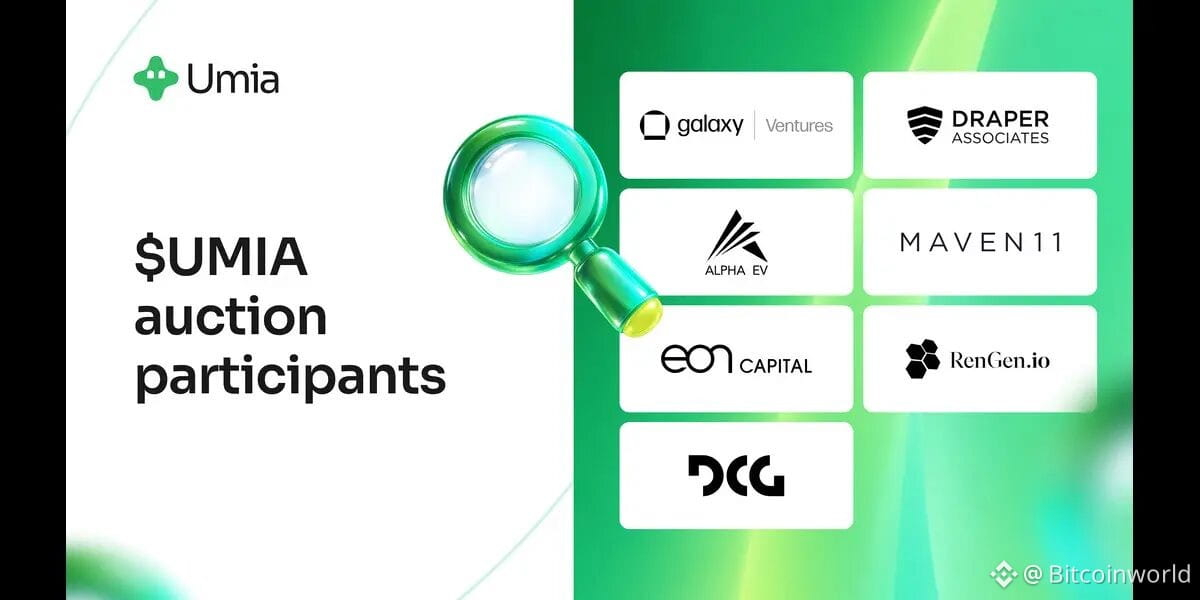
NUEVA YORK, 5 de octubre de 2026 /PRNewswire/ — Umia (umia.finance), la plataforma en cadena para lanzar, financiar y gobernar proyectos, anunció hoy que ha recaudado 6 millones de dólares mediante la subasta de $UMIA, el primer token lanzado a través de su propio sistema. Diez fondos y cerca de 700 participantes individuales tomaron parte en la venta de siete días, que se llevó a cabo en Base del 26 de agosto al 2 de septiembre y comenzó con una ronda anticipada de tres días para fondos previamente evaluados y miembros de la comunidad verificados mediante zkTLS. La ronda pública alcanzó su límite siete minutos después de abrirse, el 29 de agosto, y la venta cerró con una recaudación superior en más de 3 veces a su mínimo de 2 millones de dólares. Galaxy Ventures, DCG, Draper Associates, RenGen, Alpha EV, Maven 11 y Eon Capital estuvieron entre los fondos participantes. Todos pujaron en las mismas condiciones que los demás participantes, sin descuentos.
Umia recauda 6 millones de dólares para crear la plataforma en cadena de constitución de proyectos nativos de tokens, con la participación ...
BitcoinWorld
Umia recauda 6 millones de dólares para crear la plataforma en cadena de constitución de proyectos nativos de tokens, con la participación de Galaxy Ventures, DCG y Draper Associates
La mayoría de los tokens no tienen ningún vínculo formal con la empresa que los respalda: su propiedad intelectual, sus ingresos y su tesorería suelen estar en una entidad separada. Umia integra los tres en una misma estructura jurídica junto con el token, y las decisiones de tesorería se toman mediante mercados de decisión en cadena.
NUEVA YORK, 5 de octubre de 2026 /PRNewswire/ — Umia (umia.finance), la plataforma en cadena para lanzar, financiar y gobernar proyectos, anunció hoy que ha recaudado 6 millones de dólares mediante la subasta de $UMIA, el primer token lanzado a través de su propio sistema. Diez fondos y cerca de 700 participantes individuales tomaron parte en la venta de siete días, que se llevó a cabo en Base del 26 de agosto al 2 de septiembre y comenzó con una ronda anticipada de tres días para fondos previamente evaluados y miembros de la comunidad verificados mediante zkTLS. La ronda pública alcanzó su límite siete minutos después de abrirse, el 29 de agosto, y la venta cerró con una recaudación superior en más de 3 veces a su mínimo de 2 millones de dólares. Galaxy Ventures, DCG, Draper Associates, RenGen, Alpha EV, Maven 11 y Eon Capital estuvieron entre los fondos participantes. Todos pujaron en las mismas condiciones que los demás participantes, sin descuentos.
Umia recauda 6 millones de dólares para crear la plataforma en cadena de constitución de proyectos nativos de tokens, con la participación de Galaxy Ventures, DCG y Draper Associates
La mayoría de los tokens no tienen ningún vínculo formal con la empresa que los respalda: su propiedad intelectual, sus ingresos y su tesorería suelen estar en una entidad separada. Umia integra los tres en una misma estructura jurídica junto con el token, y las decisiones de tesorería se toman mediante mercados de decisión en cadena.
NUEVA YORK, 5 de octubre de 2026 /PRNewswire/ — Umia (umia.finance), la plataforma en cadena para lanzar, financiar y gobernar proyectos, anunció hoy que ha recaudado 6 millones de dólares mediante la subasta de $UMIA, el primer token lanzado a través de su propio sistema. Diez fondos y cerca de 700 participantes individuales tomaron parte en la venta de siete días, que se llevó a cabo en Base del 26 de agosto al 2 de septiembre y comenzó con una ronda anticipada de tres días para fondos previamente evaluados y miembros de la comunidad verificados mediante zkTLS. La ronda pública alcanzó su límite siete minutos después de abrirse, el 29 de agosto, y la venta cerró con una recaudación superior en más de 3 veces a su mínimo de 2 millones de dólares. Galaxy Ventures, DCG, Draper Associates, RenGen, Alpha EV, Maven 11 y Eon Capital estuvieron entre los fondos participantes. Todos pujaron en las mismas condiciones que los demás participantes, sin descuentos.
1
5
159
·
--

Artículo
Preparar la criptografía mundial para la era de la IA: Eigen Labs y Shielded Labs, organización de Zcash...BitcoinWorld
Eigen Labs y Shielded Labs, organización de Zcash, preparan la criptografía mundial para la era de la IA y lanzan HashSmash, una competencia abierta y multijugador para poner a prueba hasta dónde puede llegar la IA en el avance de ataques contra funciones hash de uso generalizado
Cualquiera puede dirigir agentes de IA contra SHA-256, SHA-3, BLAKE3 y Poseidon en Yukon, y todos los resultados se publican y son revisados por criptógrafos. La competencia abierta, organizada en Yukon, pondrá a prueba hasta dónde puede llegar la IA en el avance de ataques contra las funciones hash que sustentan la criptografía en todo internet.
Preparar la criptografía mundial para la era de la IA: Eigen Labs y Shielded Labs, organización de Zcash...
BitcoinWorld
Eigen Labs y Shielded Labs, organización de Zcash, preparan la criptografía mundial para la era de la IA y lanzan HashSmash, una competencia abierta y multijugador para poner a prueba hasta dónde puede llegar la IA en el avance de ataques contra funciones hash de uso generalizado
Cualquiera puede dirigir agentes de IA contra SHA-256, SHA-3, BLAKE3 y Poseidon en Yukon, y todos los resultados se publican y son revisados por criptógrafos. La competencia abierta, organizada en Yukon, pondrá a prueba hasta dónde puede llegar la IA en el avance de ataques contra las funciones hash que sustentan la criptografía en todo internet.
Eigen Labs y Shielded Labs, organización de Zcash, preparan la criptografía mundial para la era de la IA y lanzan HashSmash, una competencia abierta y multijugador para poner a prueba hasta dónde puede llegar la IA en el avance de ataques contra funciones hash de uso generalizado
Cualquiera puede dirigir agentes de IA contra SHA-256, SHA-3, BLAKE3 y Poseidon en Yukon, y todos los resultados se publican y son revisados por criptógrafos. La competencia abierta, organizada en Yukon, pondrá a prueba hasta dónde puede llegar la IA en el avance de ataques contra las funciones hash que sustentan la criptografía en todo internet.
479
·
--
Artículo
Reap y Collinson International sellan una alianza histórica para llevar las experiencias aeroportuarias de Priority Pass...BitcoinWorld
Reap y Collinson International sellan una alianza histórica para llevar las experiencias aeroportuarias de Priority Pass al ecosistema de las criptomonedas y las monedas estables
La colaboración conecta a los clientes de activos digitales con beneficios de viaje prémium y brinda a los titulares de tarjetas que cumplan los requisitos acceso a la red global de Priority Pass, que cuenta con más de 1.900 salas VIP en aeropuertos y experiencias de viaje.
SINGAPUR, 5 de octubre de 2026 /PRNewswire/ — Reap, una empresa global de tecnología financiera que facilita la conectividad y el acceso financieros a empresas de todo el mundo mediante una infraestructura habilitada para monedas estables, ha establecido una alianza estratégica con Collinson International, líder global en la oferta de experiencias aeroportuarias, soluciones de fidelización y participación de clientes, y propietaria y operadora de Priority Pass.
Reap y Collinson International sellan una alianza histórica para llevar las experiencias aeroportuarias de Priority Pass...
BitcoinWorld
Reap y Collinson International sellan una alianza histórica para llevar las experiencias aeroportuarias de Priority Pass al ecosistema de las criptomonedas y las monedas estables
La colaboración conecta a los clientes de activos digitales con beneficios de viaje prémium y brinda a los titulares de tarjetas que cumplan los requisitos acceso a la red global de Priority Pass, que cuenta con más de 1.900 salas VIP en aeropuertos y experiencias de viaje.
SINGAPUR, 5 de octubre de 2026 /PRNewswire/ — Reap, una empresa global de tecnología financiera que facilita la conectividad y el acceso financieros a empresas de todo el mundo mediante una infraestructura habilitada para monedas estables, ha establecido una alianza estratégica con Collinson International, líder global en la oferta de experiencias aeroportuarias, soluciones de fidelización y participación de clientes, y propietaria y operadora de Priority Pass.
Reap y Collinson International sellan una alianza histórica para llevar las experiencias aeroportuarias de Priority Pass al ecosistema de las criptomonedas y las monedas estables
La colaboración conecta a los clientes de activos digitales con beneficios de viaje prémium y brinda a los titulares de tarjetas que cumplan los requisitos acceso a la red global de Priority Pass, que cuenta con más de 1.900 salas VIP en aeropuertos y experiencias de viaje.
SINGAPUR, 5 de octubre de 2026 /PRNewswire/ — Reap, una empresa global de tecnología financiera que facilita la conectividad y el acceso financieros a empresas de todo el mundo mediante una infraestructura habilitada para monedas estables, ha establecido una alianza estratégica con Collinson International, líder global en la oferta de experiencias aeroportuarias, soluciones de fidelización y participación de clientes, y propietaria y operadora de Priority Pass.
1
258
·
--

Artículo
Los pagos con tarjetas de Visa vinculadas a stablecoins aumentan casi un 200 % interanualBitcoinWorld
Los pagos con tarjetas de Visa vinculadas a stablecoins aumentan casi un 200 % interanual
Visa informó el 1 de octubre que el volumen de pagos de sus programas de tarjetas vinculadas a stablecoins creció casi un 200 % interanual, y que ya hay más de 160 programas para consumidores y empresas en funcionamiento en su red. La compañía no reveló el valor total en dólares que respalda esa cifra de crecimiento, y la información distingue el volumen de pagos con tarjetas de la actividad de liquidación con stablecoins de Visa, que mide otra parte de la red.
El volumen de pagos con tarjetas de Visa vinculadas a stablecoins aumentó casi un 200 % interanual, con más de 160 programas en funcionamiento. Los programas de tarjetas comerciales y empresariales generaron cerca del 17 % de ese volumen en lo que va del ejercicio fiscal 2026, y Visa indicó que la actividad de liquidación con stablecoins superó recientemente un ritmo anualizado de 20.000 millones de dólares.
Los pagos con tarjetas de Visa vinculadas a stablecoins aumentan casi un 200 % interanual
BitcoinWorld
Los pagos con tarjetas de Visa vinculadas a stablecoins aumentan casi un 200 % interanual
Visa informó el 1 de octubre que el volumen de pagos de sus programas de tarjetas vinculadas a stablecoins creció casi un 200 % interanual, y que ya hay más de 160 programas para consumidores y empresas en funcionamiento en su red. La compañía no reveló el valor total en dólares que respalda esa cifra de crecimiento, y la información distingue el volumen de pagos con tarjetas de la actividad de liquidación con stablecoins de Visa, que mide otra parte de la red.
El volumen de pagos con tarjetas de Visa vinculadas a stablecoins aumentó casi un 200 % interanual, con más de 160 programas en funcionamiento. Los programas de tarjetas comerciales y empresariales generaron cerca del 17 % de ese volumen en lo que va del ejercicio fiscal 2026, y Visa indicó que la actividad de liquidación con stablecoins superó recientemente un ritmo anualizado de 20.000 millones de dólares.
Los pagos con tarjetas de Visa vinculadas a stablecoins aumentan casi un 200 % interanual
Visa informó el 1 de octubre que el volumen de pagos de sus programas de tarjetas vinculadas a stablecoins creció casi un 200 % interanual, y que ya hay más de 160 programas para consumidores y empresas en funcionamiento en su red. La compañía no reveló el valor total en dólares que respalda esa cifra de crecimiento, y la información distingue el volumen de pagos con tarjetas de la actividad de liquidación con stablecoins de Visa, que mide otra parte de la red.
El volumen de pagos con tarjetas de Visa vinculadas a stablecoins aumentó casi un 200 % interanual, con más de 160 programas en funcionamiento. Los programas de tarjetas comerciales y empresariales generaron cerca del 17 % de ese volumen en lo que va del ejercicio fiscal 2026, y Visa indicó que la actividad de liquidación con stablecoins superó recientemente un ritmo anualizado de 20.000 millones de dólares.
215
·
--
Artículo
Más y más organizará la Cumbre de Finanzas Agentic con Etoro, Pantera Capital y Chainlink durante TOKE...BitcoinWorld
Más y más organizará la Cumbre de Finanzas Agentic con etoro, Pantera Capital y Chainlink durante TOKEN2049 Singapur
La cumbre solo por invitación el 8 de octubre reúne a 400 ejecutivos de bancos, bolsas, redes de pagos y fondos en Suntec City para analizar cómo los agentes de IA están entrando en el trading, los pagos y el cumplimiento.
Singapur, 5 de octubre de 2026 — More & More organizará la Cumbre de Finanzas Agentic el 8 de octubre de 2026 en el Suntec Singapore Convention and Exhibition Centre, un evento secundario oficial de TOKEN2049 Singapur. etoro es el socio principal de la cumbre.
Más y más organizará la Cumbre de Finanzas Agentic con Etoro, Pantera Capital y Chainlink durante TOKE...
BitcoinWorld
Más y más organizará la Cumbre de Finanzas Agentic con etoro, Pantera Capital y Chainlink durante TOKEN2049 Singapur
La cumbre solo por invitación el 8 de octubre reúne a 400 ejecutivos de bancos, bolsas, redes de pagos y fondos en Suntec City para analizar cómo los agentes de IA están entrando en el trading, los pagos y el cumplimiento.
Singapur, 5 de octubre de 2026 — More & More organizará la Cumbre de Finanzas Agentic el 8 de octubre de 2026 en el Suntec Singapore Convention and Exhibition Centre, un evento secundario oficial de TOKEN2049 Singapur. etoro es el socio principal de la cumbre.
Más y más organizará la Cumbre de Finanzas Agentic con etoro, Pantera Capital y Chainlink durante TOKEN2049 Singapur
La cumbre solo por invitación el 8 de octubre reúne a 400 ejecutivos de bancos, bolsas, redes de pagos y fondos en Suntec City para analizar cómo los agentes de IA están entrando en el trading, los pagos y el cumplimiento.
Singapur, 5 de octubre de 2026 — More & More organizará la Cumbre de Finanzas Agentic el 8 de octubre de 2026 en el Suntec Singapore Convention and Exhibition Centre, un evento secundario oficial de TOKEN2049 Singapur. etoro es el socio principal de la cumbre.
237
·
--
Artículo
Payward y Singapore Gulf Bank se asocian para ofrecer liquidación 24/7 a mercados institucionales de activos digitales M...BitcoinWorld
Payward y Singapore Gulf Bank se asocian para ofrecer liquidación 24/7 a mercados institucionales de activos digitales
Payward ha integrado SGB Net, la red de compensación en tiempo real de Singapore Gulf Bank, lo que permite a los clientes institucionales en Asia y la región del Golfo liquidar de forma instantánea en cualquier momento. SGB también incorporará a Kraken Prime como una fuente adicional de liquidez en activos digitales.
SYDNEY, 5 de octubre de 2026 /PRNewswire/ — Payward, la plataforma unificada de infraestructura financiera detrás de Kraken, y Singapore Gulf Bank (SGB), un banco digital con licencia completa regulado por el Banco Central de Bahréin, anunciaron hoy una asociación estratégica para ofrecer una liquidación siempre activa (always-on) a los mercados institucionales de activos digitales disponibles únicamente para jurisdicciones específicas.
Payward y Singapore Gulf Bank se asocian para ofrecer liquidación 24/7 a mercados institucionales de activos digitales M...
BitcoinWorld
Payward y Singapore Gulf Bank se asocian para ofrecer liquidación 24/7 a mercados institucionales de activos digitales
Payward ha integrado SGB Net, la red de compensación en tiempo real de Singapore Gulf Bank, lo que permite a los clientes institucionales en Asia y la región del Golfo liquidar de forma instantánea en cualquier momento. SGB también incorporará a Kraken Prime como una fuente adicional de liquidez en activos digitales.
SYDNEY, 5 de octubre de 2026 /PRNewswire/ — Payward, la plataforma unificada de infraestructura financiera detrás de Kraken, y Singapore Gulf Bank (SGB), un banco digital con licencia completa regulado por el Banco Central de Bahréin, anunciaron hoy una asociación estratégica para ofrecer una liquidación siempre activa (always-on) a los mercados institucionales de activos digitales disponibles únicamente para jurisdicciones específicas.
Payward y Singapore Gulf Bank se asocian para ofrecer liquidación 24/7 a mercados institucionales de activos digitales
Payward ha integrado SGB Net, la red de compensación en tiempo real de Singapore Gulf Bank, lo que permite a los clientes institucionales en Asia y la región del Golfo liquidar de forma instantánea en cualquier momento. SGB también incorporará a Kraken Prime como una fuente adicional de liquidez en activos digitales.
SYDNEY, 5 de octubre de 2026 /PRNewswire/ — Payward, la plataforma unificada de infraestructura financiera detrás de Kraken, y Singapore Gulf Bank (SGB), un banco digital con licencia completa regulado por el Banco Central de Bahréin, anunciaron hoy una asociación estratégica para ofrecer una liquidación siempre activa (always-on) a los mercados institucionales de activos digitales disponibles únicamente para jurisdicciones específicas.
119
·
--

Artículo
El volumen cripto de Corea del Sur cae 19,56% en una semanaBitcoinWorld
El volumen cripto de Corea del Sur cae 19,56% en una semana
El volumen de operaciones combinado de las cinco mayores bolsas de criptomonedas de Corea del Sur cayó a unos 20,5 billones de wones, o aproximadamente 15,1 mil millones de dólares, en la semana que terminó el 2 de octubre, lo que representa una disminución del 19,56% frente a la semana anterior, según Crypto.news, citando datos de Digital Asset. La caída eliminó alrededor de 5 billones de wones, o aproximadamente 3,7 mil millones de dólares, de la actividad en el periodo de siete días que finalizó a las 2 p. m. hora estándar de Corea del Sur el 2 de octubre.
Las cinco principales bolsas de Corea del Sur negociaron aproximadamente 20,5 billones de wones en la semana hasta el 2 de octubre, una caída del 19,56% semana contra semana. El retroceso semanal siguió a datos gubernamentales que mostraron que el volumen promedio diario de intercambio en el país cayó un 44% en la primera mitad de 2026 y que el beneficio operativo se redujo un 78%.
El volumen cripto de Corea del Sur cae 19,56% en una semana
BitcoinWorld
El volumen cripto de Corea del Sur cae 19,56% en una semana
El volumen de operaciones combinado de las cinco mayores bolsas de criptomonedas de Corea del Sur cayó a unos 20,5 billones de wones, o aproximadamente 15,1 mil millones de dólares, en la semana que terminó el 2 de octubre, lo que representa una disminución del 19,56% frente a la semana anterior, según Crypto.news, citando datos de Digital Asset. La caída eliminó alrededor de 5 billones de wones, o aproximadamente 3,7 mil millones de dólares, de la actividad en el periodo de siete días que finalizó a las 2 p. m. hora estándar de Corea del Sur el 2 de octubre.
Las cinco principales bolsas de Corea del Sur negociaron aproximadamente 20,5 billones de wones en la semana hasta el 2 de octubre, una caída del 19,56% semana contra semana. El retroceso semanal siguió a datos gubernamentales que mostraron que el volumen promedio diario de intercambio en el país cayó un 44% en la primera mitad de 2026 y que el beneficio operativo se redujo un 78%.
El volumen cripto de Corea del Sur cae 19,56% en una semana
El volumen de operaciones combinado de las cinco mayores bolsas de criptomonedas de Corea del Sur cayó a unos 20,5 billones de wones, o aproximadamente 15,1 mil millones de dólares, en la semana que terminó el 2 de octubre, lo que representa una disminución del 19,56% frente a la semana anterior, según Crypto.news, citando datos de Digital Asset. La caída eliminó alrededor de 5 billones de wones, o aproximadamente 3,7 mil millones de dólares, de la actividad en el periodo de siete días que finalizó a las 2 p. m. hora estándar de Corea del Sur el 2 de octubre.
Las cinco principales bolsas de Corea del Sur negociaron aproximadamente 20,5 billones de wones en la semana hasta el 2 de octubre, una caída del 19,56% semana contra semana. El retroceso semanal siguió a datos gubernamentales que mostraron que el volumen promedio diario de intercambio en el país cayó un 44% en la primera mitad de 2026 y que el beneficio operativo se redujo un 78%.
290
·
--
Verificado

Artículo
OpenPayd Apunta a una Cotización en Nasdaq Para Finales de Año Bajo el Ticker OPBitcoinWorld
OpenPayd apunta a una cotización en Nasdaq para finales de año bajo el ticker OP
OpenPayd, la empresa de infraestructura de pagos con stablecoins con sede en Londres, espera completar su fusión con Titan Acquisition Corp. y cotizar en Nasdaq bajo el ticker OP para finales de 2026, según Crypto.news. La transacción, anunciada por aproximadamente 1.100 millones de dólares, otorgaría a la empresa combinada una valoración patrimonial pro forma implícita de hasta 1.145 millones de dólares.
OpenPayd planea cerrar su fusión con Titan Acquisition Corp. y cotizar en Nasdaq bajo OP para finales de 2026, valorando a la empresa combinada en hasta 1.145 millones de dólares. La firma de pagos con stablecoins busca lanzar servicios en EE. UU. para abril de 2027 utilizando 43 licencias de transmisor de dinero adquiridas en septiembre.
OpenPayd Apunta a una Cotización en Nasdaq Para Finales de Año Bajo el Ticker OP
BitcoinWorld
OpenPayd apunta a una cotización en Nasdaq para finales de año bajo el ticker OP
OpenPayd, la empresa de infraestructura de pagos con stablecoins con sede en Londres, espera completar su fusión con Titan Acquisition Corp. y cotizar en Nasdaq bajo el ticker OP para finales de 2026, según Crypto.news. La transacción, anunciada por aproximadamente 1.100 millones de dólares, otorgaría a la empresa combinada una valoración patrimonial pro forma implícita de hasta 1.145 millones de dólares.
OpenPayd planea cerrar su fusión con Titan Acquisition Corp. y cotizar en Nasdaq bajo OP para finales de 2026, valorando a la empresa combinada en hasta 1.145 millones de dólares. La firma de pagos con stablecoins busca lanzar servicios en EE. UU. para abril de 2027 utilizando 43 licencias de transmisor de dinero adquiridas en septiembre.
OpenPayd apunta a una cotización en Nasdaq para finales de año bajo el ticker OP
OpenPayd, la empresa de infraestructura de pagos con stablecoins con sede en Londres, espera completar su fusión con Titan Acquisition Corp. y cotizar en Nasdaq bajo el ticker OP para finales de 2026, según Crypto.news. La transacción, anunciada por aproximadamente 1.100 millones de dólares, otorgaría a la empresa combinada una valoración patrimonial pro forma implícita de hasta 1.145 millones de dólares.
OpenPayd planea cerrar su fusión con Titan Acquisition Corp. y cotizar en Nasdaq bajo OP para finales de 2026, valorando a la empresa combinada en hasta 1.145 millones de dólares. La firma de pagos con stablecoins busca lanzar servicios en EE. UU. para abril de 2027 utilizando 43 licencias de transmisor de dinero adquiridas en septiembre.
1
4
1.2k
·
--

Artículo
Chainalysis AI rastrea el hack de Bitget de 387M dólares hasta Corea del NorteBitcoinWorld
Chainalysis rastrea con IA el hack de Bitget de 387 millones de dólares y lo vincula con Corea del Norte
La firma de análisis de blockchain Chainalysis atribuyó el hack de 387 millones de dólares a actores vinculados con Corea del Norte, empujando el total de robos de criptomonedas de ese país en 2026 a superar los 1.000 millones de dólares, según un informe publicado el miércoles y cubierto por Decrypt. La brecha del 24 de septiembre vio cómo salieron 387 millones de dólares de Bitget en 23 transferencias en cuatro blockchains en un plazo de tres horas. Chainalysis dijo que utilizó IA interna para acelerar el rastreo, comprimiendo lo que estimó como más de 20 horas de conciliación manual de puentes en menos de 10 minutos.
Chainalysis AI rastrea el hack de Bitget de 387M dólares hasta Corea del Norte
BitcoinWorld
Chainalysis rastrea con IA el hack de Bitget de 387 millones de dólares y lo vincula con Corea del Norte
La firma de análisis de blockchain Chainalysis atribuyó el hack de 387 millones de dólares a actores vinculados con Corea del Norte, empujando el total de robos de criptomonedas de ese país en 2026 a superar los 1.000 millones de dólares, según un informe publicado el miércoles y cubierto por Decrypt. La brecha del 24 de septiembre vio cómo salieron 387 millones de dólares de Bitget en 23 transferencias en cuatro blockchains en un plazo de tres horas. Chainalysis dijo que utilizó IA interna para acelerar el rastreo, comprimiendo lo que estimó como más de 20 horas de conciliación manual de puentes en menos de 10 minutos.
Chainalysis rastrea con IA el hack de Bitget de 387 millones de dólares y lo vincula con Corea del Norte
La firma de análisis de blockchain Chainalysis atribuyó el hack de 387 millones de dólares a actores vinculados con Corea del Norte, empujando el total de robos de criptomonedas de ese país en 2026 a superar los 1.000 millones de dólares, según un informe publicado el miércoles y cubierto por Decrypt. La brecha del 24 de septiembre vio cómo salieron 387 millones de dólares de Bitget en 23 transferencias en cuatro blockchains en un plazo de tres horas. Chainalysis dijo que utilizó IA interna para acelerar el rastreo, comprimiendo lo que estimó como más de 20 horas de conciliación manual de puentes en menos de 10 minutos.
1
2
329
Inicia sesión para explorar más contenidos
Únete a usuarios globales de criptomonedas en Binance Square
⚡️ Obtén información útil y actualizada sobre criptos.
💬 Avalado por el mayor exchange de criptomonedas en el mundo.
👍 Descubre perspectivas reales de creadores verificados.
Email/número de teléfono
Temas populares
FedMinutesFocusOnOctoberPause
400,489 vistas
2,533 están debatiendo
🚨 LA FED ACABA DE DAR UNA GRAN PISTA: ¿PAUSA EN OCTUBRE A LA VISTA?
Wall Street apuesta a que la Fed PISARÁ EL FRENO en octubre. Y los operadores de criptomonedas están muy atentos. 👀
Las últimas actas del FOMC han centrado la atención en una posible pausa en la reunión del 27 y 28 de octubre.
📊 El panorama del mercado:
🔥 Mantener las tasas en octubre: aproximadamente un 82,8 % según las últimas probabilidades publicadas.
🔥 Probabilidad de una subida de tasas: aproximadamente un 17,2 %.
🔥 El debilitamiento del mercado laboral hace más difícil justificar una subida inmediata.
Pero aquí viene el giro.
UNA PAUSA NO ES UN RECORTE DE TASAS.
La Fed podría mantener las tasas en octubre y dejar abierta la posibilidad de volver a endurecer la política monetaria más adelante.
Para $BTC, $ ETH y $XAU, esa diferencia importa.
Una pausa podría aliviar la presión inmediata sobre los activos de riesgo. Pero la inflación persistente y los elevados rendimientos de los bonos del Tesoro aún podrían frenar el impulso alcista.
⚠️ LA GRAN PREGUNTA:
¿Se está posicionando Wall Street ante una ruptura alcista de las criptomonedas o preparando otra enorme trampa alcista antes de la próxima decisión de la Fed?
$BTC $ETH $BNB $SOL $XAU
#fedminutesfocusonoctoberpause #BinanceLaunchesBinanceIntelligence #EvernorthDelaysNasdaqDebutToOct12 #RobinhoodAdds25MInBitcoinToBalanceSheet $25MInBitcoinToBalanceSh #SP500AndNasdaqHitRecordHighs
Carmelita Gilliland zXSW
·10 me gusta
·14.1k vistas
VitalikWarnsAICouldWeakenCryptographySecurity
4,392 vistas
201 están debatiendo
XRPSpotETFsHold$1.7BWeeklyInflowsSlow
762 vistas
29 están debatiendo