
Santiment Re-poster
265 Publicaciones

Santiment Re-poster
Denunciar
Bloquear usuario
📊 Market intelligence platform with on-chain & social metrics for 3,500+ cryptocurrencies. See what others in crypto can't! 😀
🔗 https://t.co/JetPYSRDGV
0 Siguiendo
5 Seguidores
0 Me gusta
Publicaciones
Todo
Videos
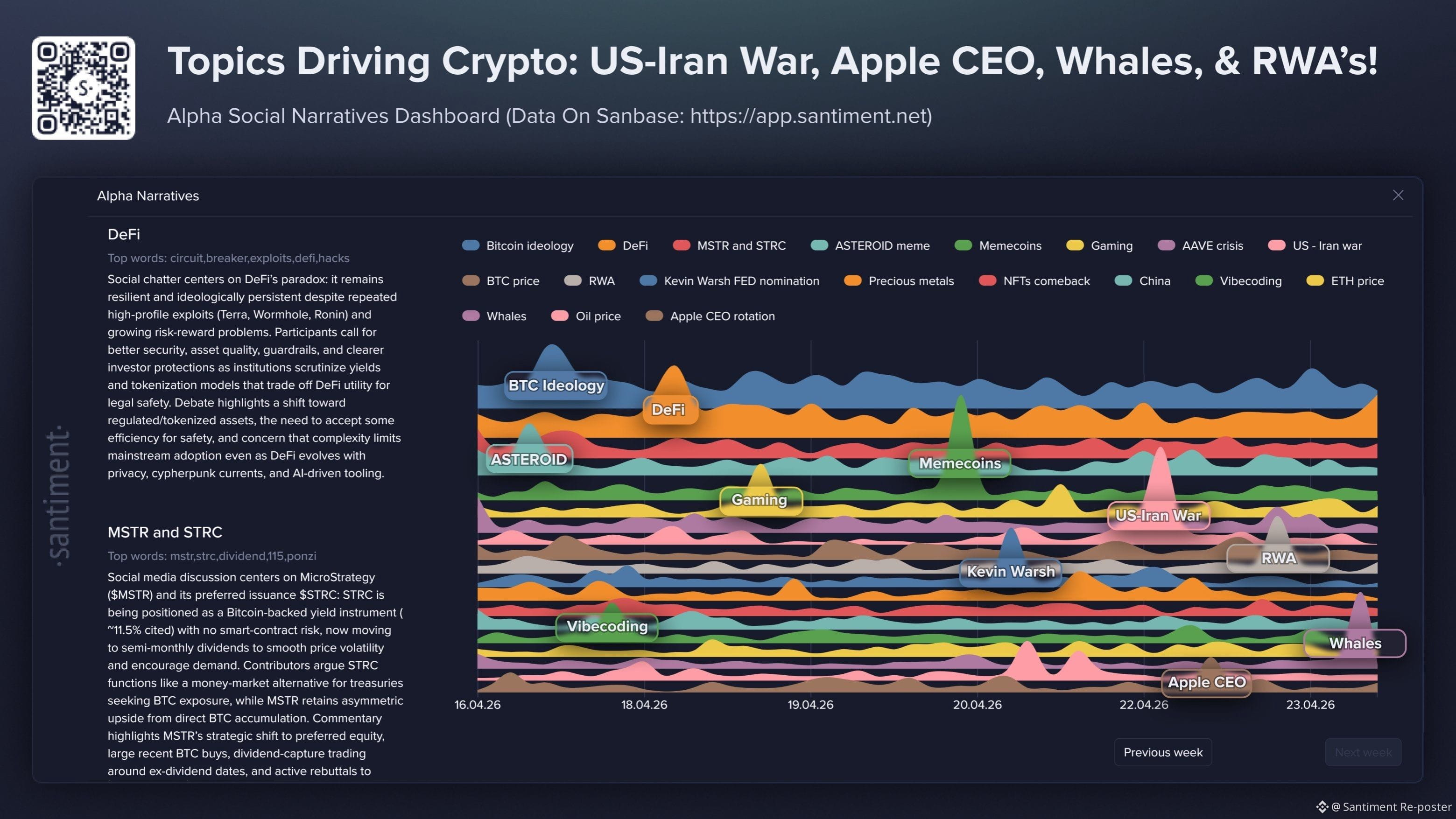
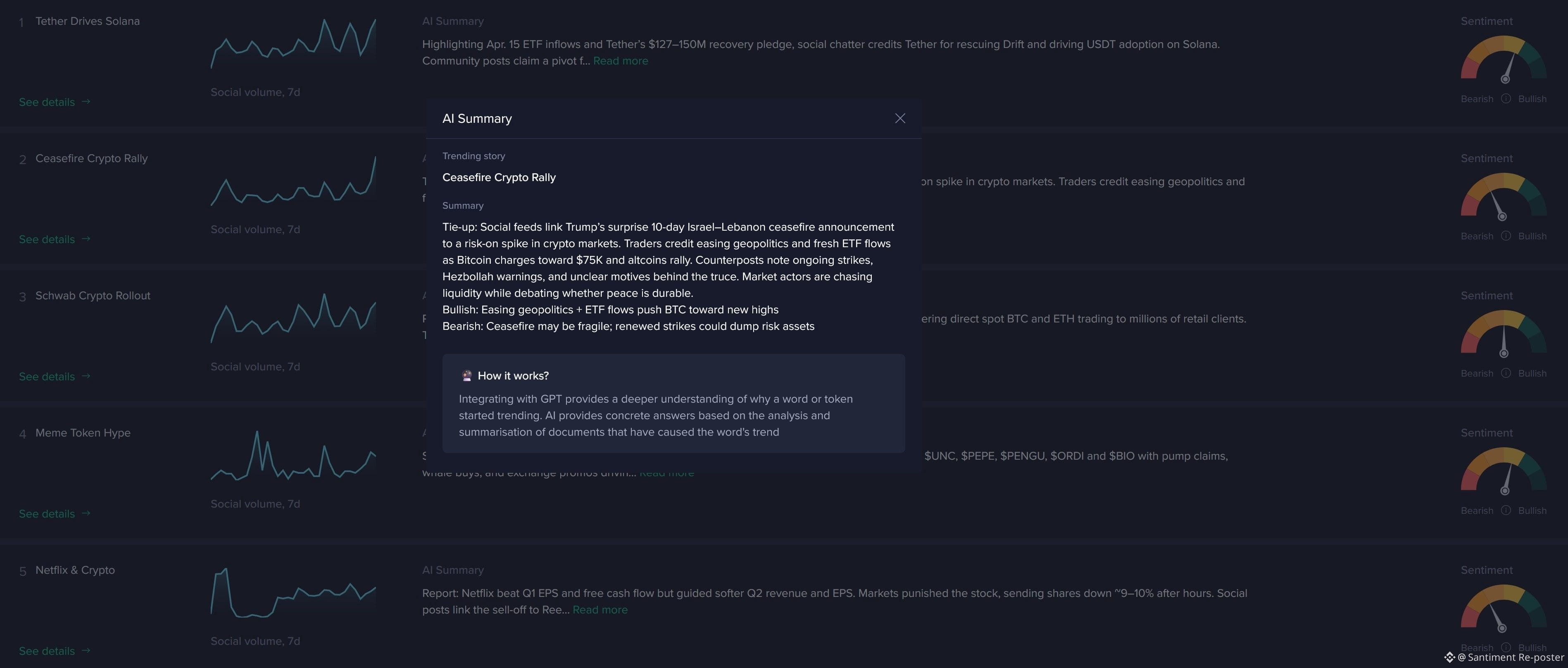
Una variedad diversa de temas de criptomonedas ha influido en los movimientos del mercado a lo largo de esta semana. Para identificar los momentos precisos en que las discusiones sobre la guerra entre EE. UU. e Irán, los RWA, la transición del CEO de Apple y varias otras tendencias alcanzaron su punto máximo cada semana, te invitamos a explorar nuestro panel de Narrativas Sociales Alpha. Descubre los detalles siguiendo el enlace proporcionado.
https://app.santiment.net/social-trends/crypto-narratives?dialog=alpha_narratives&utm_source=x&utm_medium=post&utm_campaign=alpha_narratives_b_042426#alpha-narratives&aff=3
Una variedad diversa de temas de criptomonedas ha influido en los movimientos del mercado a lo largo de esta semana. Para identificar los momentos precisos en que las discusiones sobre la guerra entre EE. UU. e Irán, los RWA, la transición del CEO de Apple y varias otras tendencias alcanzaron su punto máximo cada semana, te invitamos a explorar nuestro panel de Narrativas Sociales Alpha. Descubre los detalles siguiendo el enlace proporcionado.
https://app.santiment.net/social-trends/crypto-narratives?dialog=alpha_narratives&utm_source=x&utm_medium=post&utm_campaign=alpha_narratives_b_042426#alpha-narratives&aff=3
https://app.santiment.net/social-trends/crypto-narratives?dialog=alpha_narratives&utm_source=x&utm_medium=post&utm_campaign=alpha_narratives_b_042426#alpha-narratives&aff=3
87
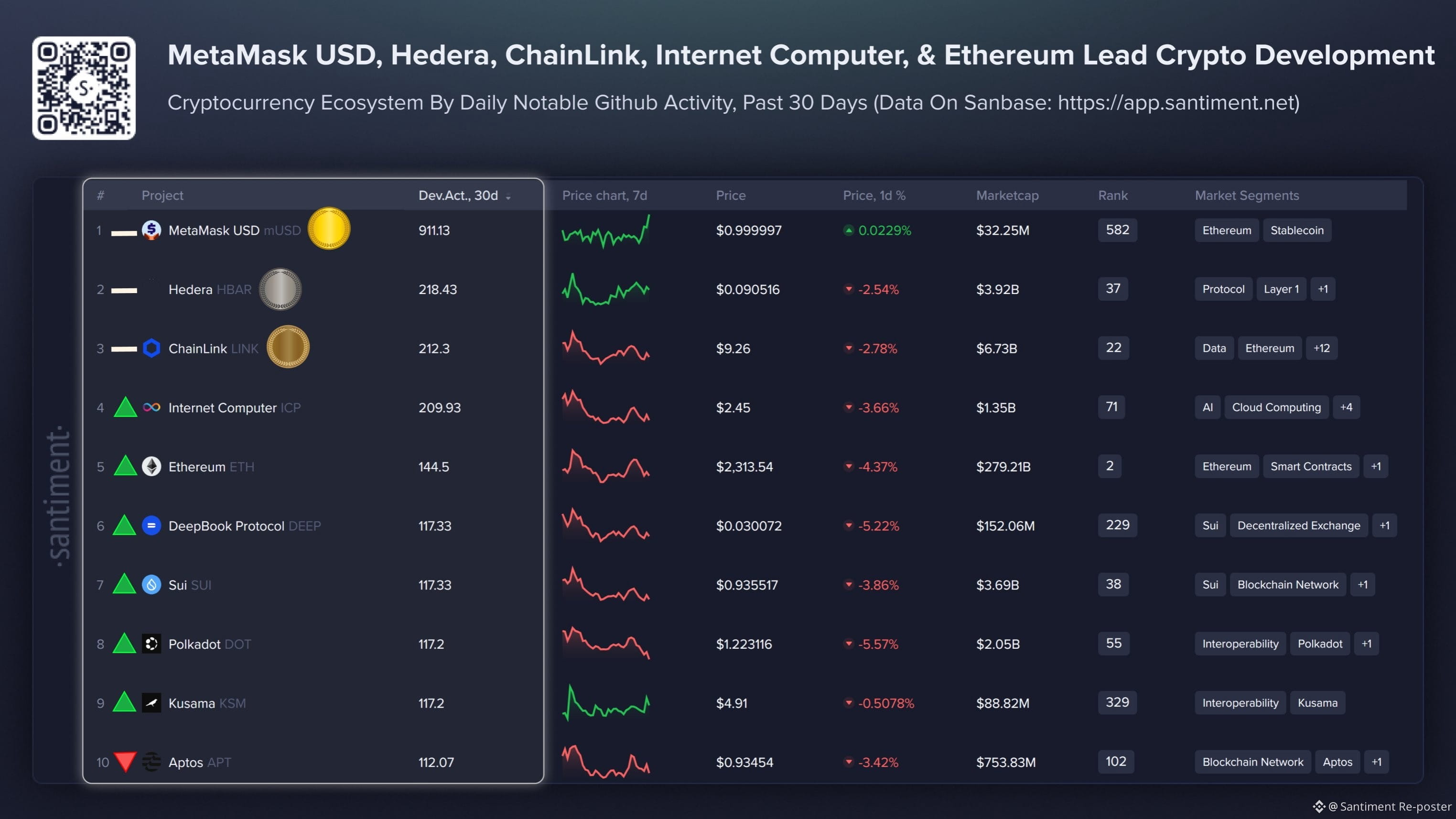
Durante los últimos 30 días, un grupo específico de criptomonedas se ha destacado debido a su notable actividad de desarrollo. El desglose a continuación resalta estos proyectos líderes e indica si su clasificación general ha mejorado, disminuido o se ha mantenido igual en comparación con el mes anterior.
Manteniéndose firme en la cima de la tabla, @metamask $mUSD mantuvo su posición en primer lugar sin ningún movimiento. Justo detrás, @hedera $HBAR también se mantuvo estable en el segundo puesto, mientras que @chainlink $LINK no experimentó cambios y aseguró el tercer lugar.
Un gran grupo de proyectos vio un impulso ascendente durante este período. @dfinity escaló posiciones para capturar el cuarto lugar, y @ethereum $ETH experimentó un movimiento positivo para llegar al número cinco. Avanzando en la lista para tomar la sexta posición estuvo @deepbookonsui $DEEP. Continuando la tendencia al alza, @suinetwork $SUI avanzó desde su posición anterior para clasificarse séptimo. Cerrando el grupo de los que suben, @polkadot $DOT y @kusama $KSM lograron ascender a los puestos octavo y noveno, respectivamente.
Por otro lado, @aptos $APT experimentó una caída desde su clasificación anterior, cayendo al décimo lugar.
Para una explicación completa de cómo se recopila esta información, consulta la metodología de @santimentfeed. Describe el proceso preciso para extraer datos de actividad de github directamente de los repositorios de los proyectos. La guía también desglosa exactamente por qué rastrear esta información proporciona una ventaja tan importante para cualquier persona involucrada en el trading de criptomonedas, la inversión y la investigación de mercado. Puedes encontrar todos los detalles en este enlace: https://t.co/hPpga2LHWZ
Te invitamos cordialmente a utilizar nuestro screener de datos cuando lo desees. La plataforma te permite ordenar sin esfuerzo por la mejor actividad de desarrollo, o puedes usarla para explorar una variedad de otras señales bajistas y alcistas.
Durante los últimos 30 días, un grupo específico de criptomonedas se ha destacado debido a su notable actividad de desarrollo. El desglose a continuación resalta estos proyectos líderes e indica si su clasificación general ha mejorado, disminuido o se ha mantenido igual en comparación con el mes anterior.
Manteniéndose firme en la cima de la tabla, @metamask $mUSD mantuvo su posición en primer lugar sin ningún movimiento. Justo detrás, @hedera $HBAR también se mantuvo estable en el segundo puesto, mientras que @chainlink $LINK no experimentó cambios y aseguró el tercer lugar.
Un gran grupo de proyectos vio un impulso ascendente durante este período. @dfinity escaló posiciones para capturar el cuarto lugar, y @ethereum $ETH experimentó un movimiento positivo para llegar al número cinco. Avanzando en la lista para tomar la sexta posición estuvo @deepbookonsui $DEEP. Continuando la tendencia al alza, @suinetwork $SUI avanzó desde su posición anterior para clasificarse séptimo. Cerrando el grupo de los que suben, @polkadot $DOT y @kusama $KSM lograron ascender a los puestos octavo y noveno, respectivamente.
Por otro lado, @aptos $APT experimentó una caída desde su clasificación anterior, cayendo al décimo lugar.
Para una explicación completa de cómo se recopila esta información, consulta la metodología de @santimentfeed. Describe el proceso preciso para extraer datos de actividad de github directamente de los repositorios de los proyectos. La guía también desglosa exactamente por qué rastrear esta información proporciona una ventaja tan importante para cualquier persona involucrada en el trading de criptomonedas, la inversión y la investigación de mercado. Puedes encontrar todos los detalles en este enlace: https://t.co/hPpga2LHWZ
Te invitamos cordialmente a utilizar nuestro screener de datos cuando lo desees. La plataforma te permite ordenar sin esfuerzo por la mejor actividad de desarrollo, o puedes usarla para explorar una variedad de otras señales bajistas y alcistas.
Manteniéndose firme en la cima de la tabla, @metamask $mUSD mantuvo su posición en primer lugar sin ningún movimiento. Justo detrás, @hedera $HBAR también se mantuvo estable en el segundo puesto, mientras que @chainlink $LINK no experimentó cambios y aseguró el tercer lugar.
Un gran grupo de proyectos vio un impulso ascendente durante este período. @dfinity escaló posiciones para capturar el cuarto lugar, y @ethereum $ETH experimentó un movimiento positivo para llegar al número cinco. Avanzando en la lista para tomar la sexta posición estuvo @deepbookonsui $DEEP. Continuando la tendencia al alza, @suinetwork $SUI avanzó desde su posición anterior para clasificarse séptimo. Cerrando el grupo de los que suben, @polkadot $DOT y @kusama $KSM lograron ascender a los puestos octavo y noveno, respectivamente.
Por otro lado, @aptos $APT experimentó una caída desde su clasificación anterior, cayendo al décimo lugar.
Para una explicación completa de cómo se recopila esta información, consulta la metodología de @santimentfeed. Describe el proceso preciso para extraer datos de actividad de github directamente de los repositorios de los proyectos. La guía también desglosa exactamente por qué rastrear esta información proporciona una ventaja tan importante para cualquier persona involucrada en el trading de criptomonedas, la inversión y la investigación de mercado. Puedes encontrar todos los detalles en este enlace: https://t.co/hPpga2LHWZ
Te invitamos cordialmente a utilizar nuestro screener de datos cuando lo desees. La plataforma te permite ordenar sin esfuerzo por la mejor actividad de desarrollo, o puedes usarla para explorar una variedad de otras señales bajistas y alcistas.
32
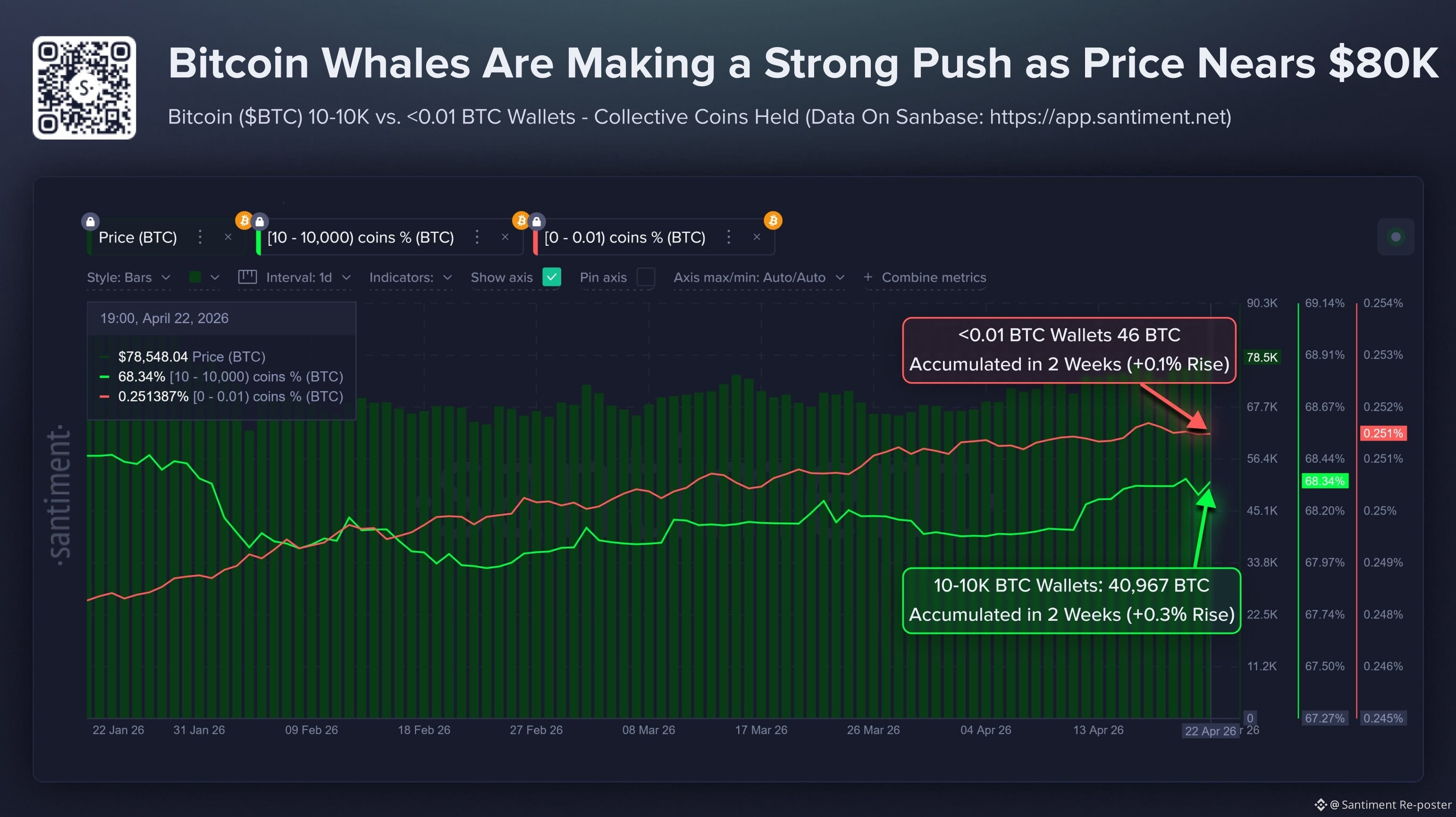
La criptomoneda líder ha visto un aumento del +15% en su capitalización de mercado durante abril, llevando el precio de $BTC hasta $78.3K. Junto a esta acción positiva del precio, los principales actores de Bitcoin están expandiendo rápidamente sus posiciones.
Los datos en cadena recientes destacan esta tendencia exacta en las últimas 2 semanas. Los portafolios que poseen entre 10 y 10K BTC han agregado colectivamente 40,967 $BTC a sus saldos, representando una ganancia del +0.3%. Al mismo tiempo, las billeteras más pequeñas que poseen menos de 0.01 BTC han experimentado un ligero crecimiento del +0.1%, acumulando 46 $BTC en el mismo período.
Para los observadores del mercado, el escenario óptimo de cara al futuro implica que los inversores minoristas comiencen a tomar sus ganancias mientras estos actores clave continúan acumulando. Esta combinación específica de comportamientos sirve como un indicador increíblemente poderoso para un ciclo alcista sostenido a largo plazo. En última instancia, podría ser el catalizador exacto necesario para encender el rally de 2026 que muchos han estado esperando pacientemente.
Puedes seguir el comportamiento en curso de los actores clave frente a los micro actores en los principales activos del sector de criptomonedas visitando este enlace de Santiment:
La criptomoneda líder ha visto un aumento del +15% en su capitalización de mercado durante abril, llevando el precio de $BTC hasta $78.3K. Junto a esta acción positiva del precio, los principales actores de Bitcoin están expandiendo rápidamente sus posiciones.
Los datos en cadena recientes destacan esta tendencia exacta en las últimas 2 semanas. Los portafolios que poseen entre 10 y 10K BTC han agregado colectivamente 40,967 $BTC a sus saldos, representando una ganancia del +0.3%. Al mismo tiempo, las billeteras más pequeñas que poseen menos de 0.01 BTC han experimentado un ligero crecimiento del +0.1%, acumulando 46 $BTC en el mismo período.
Para los observadores del mercado, el escenario óptimo de cara al futuro implica que los inversores minoristas comiencen a tomar sus ganancias mientras estos actores clave continúan acumulando. Esta combinación específica de comportamientos sirve como un indicador increíblemente poderoso para un ciclo alcista sostenido a largo plazo. En última instancia, podría ser el catalizador exacto necesario para encender el rally de 2026 que muchos han estado esperando pacientemente.
Puedes seguir el comportamiento en curso de los actores clave frente a los micro actores en los principales activos del sector de criptomonedas visitando este enlace de Santiment:
Los datos en cadena recientes destacan esta tendencia exacta en las últimas 2 semanas. Los portafolios que poseen entre 10 y 10K BTC han agregado colectivamente 40,967 $BTC a sus saldos, representando una ganancia del +0.3%. Al mismo tiempo, las billeteras más pequeñas que poseen menos de 0.01 BTC han experimentado un ligero crecimiento del +0.1%, acumulando 46 $BTC en el mismo período.
Para los observadores del mercado, el escenario óptimo de cara al futuro implica que los inversores minoristas comiencen a tomar sus ganancias mientras estos actores clave continúan acumulando. Esta combinación específica de comportamientos sirve como un indicador increíblemente poderoso para un ciclo alcista sostenido a largo plazo. En última instancia, podría ser el catalizador exacto necesario para encender el rally de 2026 que muchos han estado esperando pacientemente.
Puedes seguir el comportamiento en curso de los actores clave frente a los micro actores en los principales activos del sector de criptomonedas visitando este enlace de Santiment:
23
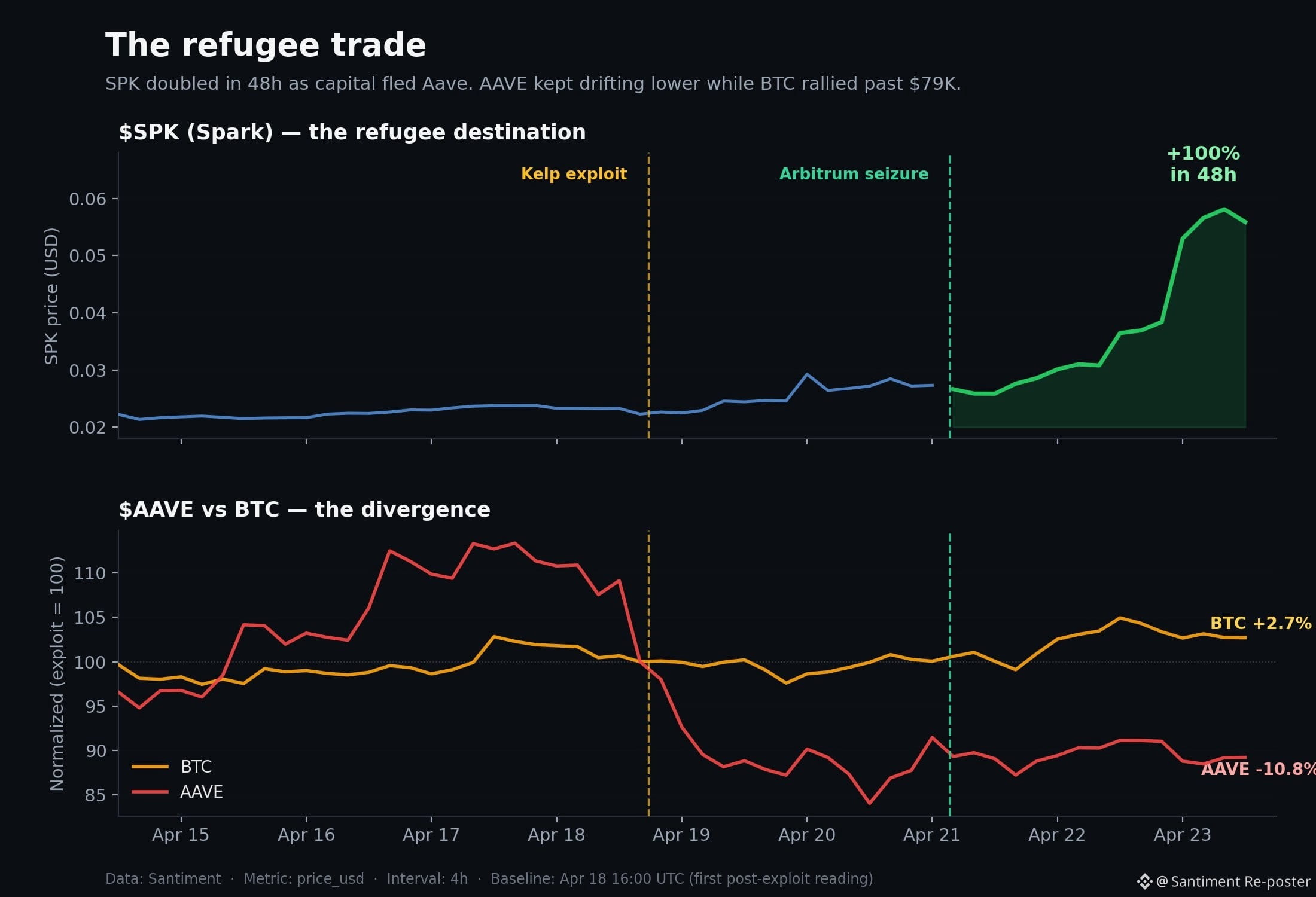
Han pasado seis días desde el inicio de la caída de Kelp, y un comercio de refugiados se está formando claramente en el mercado, según el análisis de Santiment MCP y Claude. La reciente contagión hizo mucho más que causar daño, ya que actuó como un mecanismo para redistribuir la riqueza. Actualmente estamos presenciando cómo una severa crisis de liquidez en un protocolo puede alimentar directamente un bull run para otro.
Este cambio de capital es evidente al observar $SPK, también conocido como Spark, que registró una ganancia del +100% en un periodo de 48h, subiendo de $0.029 a $0.058. La actividad entre los grandes holders está validando esta tendencia también. Las transacciones de ballenas, específicamente aquellas valoradas en >$100K, registraron un masivo aumento de 6x. Alejándose de una línea base típica de ~30/día, estas grandes transferencias se dispararon a 183 hoy.
Por otro lado, $AAVE está actualmente descendiendo a un precio de ~$92. Este movimiento a la baja destaca, especialmente considerando que BTC ya había superado la marca de $79K a principios de esta semana.
Han pasado seis días desde el inicio de la caída de Kelp, y un comercio de refugiados se está formando claramente en el mercado, según el análisis de Santiment MCP y Claude. La reciente contagión hizo mucho más que causar daño, ya que actuó como un mecanismo para redistribuir la riqueza. Actualmente estamos presenciando cómo una severa crisis de liquidez en un protocolo puede alimentar directamente un bull run para otro.
Este cambio de capital es evidente al observar $SPK, también conocido como Spark, que registró una ganancia del +100% en un periodo de 48h, subiendo de $0.029 a $0.058. La actividad entre los grandes holders está validando esta tendencia también. Las transacciones de ballenas, específicamente aquellas valoradas en >$100K, registraron un masivo aumento de 6x. Alejándose de una línea base típica de ~30/día, estas grandes transferencias se dispararon a 183 hoy.
Por otro lado, $AAVE está actualmente descendiendo a un precio de ~$92. Este movimiento a la baja destaca, especialmente considerando que BTC ya había superado la marca de $79K a principios de esta semana.
Este cambio de capital es evidente al observar $SPK, también conocido como Spark, que registró una ganancia del +100% en un periodo de 48h, subiendo de $0.029 a $0.058. La actividad entre los grandes holders está validando esta tendencia también. Las transacciones de ballenas, específicamente aquellas valoradas en >$100K, registraron un masivo aumento de 6x. Alejándose de una línea base típica de ~30/día, estas grandes transferencias se dispararon a 183 hoy.
Por otro lado, $AAVE está actualmente descendiendo a un precio de ~$92. Este movimiento a la baja destaca, especialmente considerando que BTC ya había superado la marca de $79K a principios de esta semana.
34
Actualización sobre las consecuencias de Kelp (explorado con Santiment MCP + Claude):
☝️ Aave publicó su informe formal sobre el incidente — la deuda mala podría ser de $124M (si las pérdidas se socializan entre todos los rsETH) o $230M (si se aíslan a los L2s).
☝️ ¿La reacción de $AAVE? Sin movimientos dramáticos — ~$92, manteniéndose en un rango ajustado.
El mercado ya ha descontado todo el rango o está apostando por el Escenario 1 + el tesorería de $181M de Aave lo cubre.
Mientras tanto: el atacante supuestamente movió ~$175M a nuevas direcciones a pesar de la congelación de $71M de Arbitrum, con intentos de lavado de THORChain señalados. La persecución y el caso aún no han terminado.
(Hilo completo rastreando la cascada:
Actualización sobre las consecuencias de Kelp (explorado con Santiment MCP + Claude):
☝️ Aave publicó su informe formal sobre el incidente — la deuda mala podría ser de $124M (si las pérdidas se socializan entre todos los rsETH) o $230M (si se aíslan a los L2s).
☝️ ¿La reacción de $AAVE? Sin movimientos dramáticos — ~$92, manteniéndose en un rango ajustado.
El mercado ya ha descontado todo el rango o está apostando por el Escenario 1 + el tesorería de $181M de Aave lo cubre.
Mientras tanto: el atacante supuestamente movió ~$175M a nuevas direcciones a pesar de la congelación de $71M de Arbitrum, con intentos de lavado de THORChain señalados. La persecución y el caso aún no han terminado.
(Hilo completo rastreando la cascada:
☝️ Aave publicó su informe formal sobre el incidente — la deuda mala podría ser de $124M (si las pérdidas se socializan entre todos los rsETH) o $230M (si se aíslan a los L2s).
☝️ ¿La reacción de $AAVE? Sin movimientos dramáticos — ~$92, manteniéndose en un rango ajustado.
El mercado ya ha descontado todo el rango o está apostando por el Escenario 1 + el tesorería de $181M de Aave lo cubre.
Mientras tanto: el atacante supuestamente movió ~$175M a nuevas direcciones a pesar de la congelación de $71M de Arbitrum, con intentos de lavado de THORChain señalados. La persecución y el caso aún no han terminado.
(Hilo completo rastreando la cascada:
22
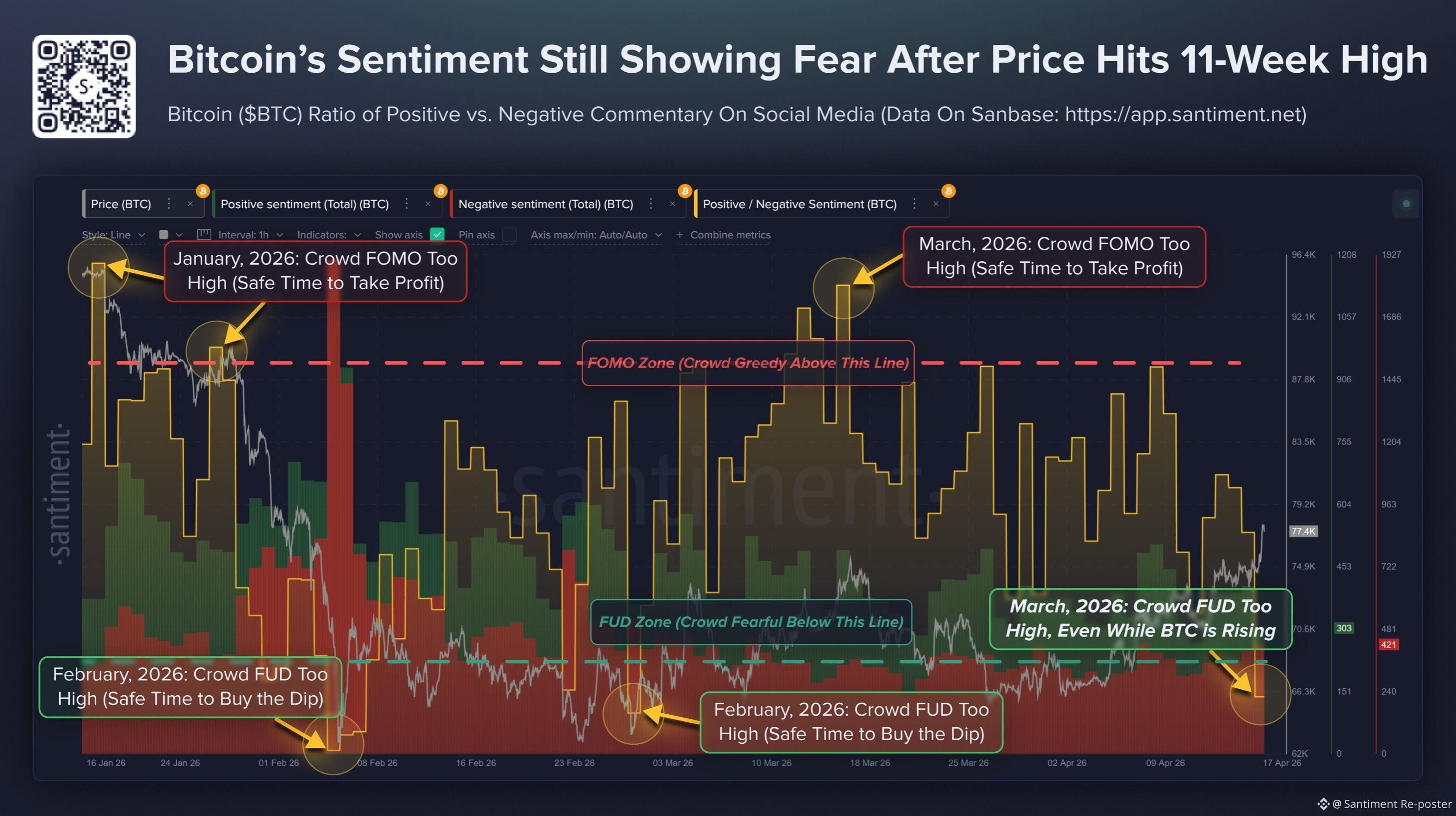
Es bastante sorprendente ver el estado de ánimo general en torno a Bitcoin en un mínimo tan drástico en este momento, especialmente durante un período en el que podrías anticipar que el miedo a perderse algo comenzara a infiltrarse en el mercado. Hoy, BTC superó los $77K por primera vez en 11 semanas. A pesar de este hito, actualmente estamos viendo 3 comentarios bajistas por cada 2 comentarios alcistas sobre la criptomoneda.
Los inversores cotidianos están lidiando con una severa agotamiento debido al conflicto persistente y al constante flujo de anuncios de alto el fuego, que han demostrado ser altamente inconsistentes en su precisión. Por lo tanto, aunque ha surgido un repunte al final de la semana a raíz del último anuncio de alto el fuego de Trump, los participantes minoristas parecen estar abordando la noticia con una gran dosis de escepticismo.
En una nota positiva, este miedo, incertidumbre, duda y toma de ganancias generalizada elevan sustancialmente las posibilidades de un aumento sostenido. Numerosos comerciantes siguen convencidos de que BTC alcanzará un máximo de $84K como mucho. Esta suposición colectiva es en realidad un indicador alentador de que el impulso actual podría fácilmente superar los resultados esperados por los pequeños comerciantes y potencialmente dispararse a más de $90K. Dado que los mercados financieros casi universalmente se comportan en oposición directa a las expectativas populares, generalmente es una buena idea evitar simplemente seguir a la manada.
Naturalmente, los titulares pueden cambiar en un abrir y cerrar de ojos, lo que significa que las condiciones son susceptibles a cambios rápidos. La trayectoria futura depende de una variedad de factores, incluyendo si la guerra está realmente disminuyendo, si el S&P 500 puede seguir avanzando hacia nuevos máximos históricos, y si la Ley de Claridad logra su aprobación completa.
Puedes monitorear fácilmente los niveles cambiantes de miedo y codicia para Bitcoin revisando este gráfico, que también te permite alternar sin problemas entre miles de otras criptomonedas.
Es bastante sorprendente ver el estado de ánimo general en torno a Bitcoin en un mínimo tan drástico en este momento, especialmente durante un período en el que podrías anticipar que el miedo a perderse algo comenzara a infiltrarse en el mercado. Hoy, BTC superó los $77K por primera vez en 11 semanas. A pesar de este hito, actualmente estamos viendo 3 comentarios bajistas por cada 2 comentarios alcistas sobre la criptomoneda.
Los inversores cotidianos están lidiando con una severa agotamiento debido al conflicto persistente y al constante flujo de anuncios de alto el fuego, que han demostrado ser altamente inconsistentes en su precisión. Por lo tanto, aunque ha surgido un repunte al final de la semana a raíz del último anuncio de alto el fuego de Trump, los participantes minoristas parecen estar abordando la noticia con una gran dosis de escepticismo.
En una nota positiva, este miedo, incertidumbre, duda y toma de ganancias generalizada elevan sustancialmente las posibilidades de un aumento sostenido. Numerosos comerciantes siguen convencidos de que BTC alcanzará un máximo de $84K como mucho. Esta suposición colectiva es en realidad un indicador alentador de que el impulso actual podría fácilmente superar los resultados esperados por los pequeños comerciantes y potencialmente dispararse a más de $90K. Dado que los mercados financieros casi universalmente se comportan en oposición directa a las expectativas populares, generalmente es una buena idea evitar simplemente seguir a la manada.
Naturalmente, los titulares pueden cambiar en un abrir y cerrar de ojos, lo que significa que las condiciones son susceptibles a cambios rápidos. La trayectoria futura depende de una variedad de factores, incluyendo si la guerra está realmente disminuyendo, si el S&P 500 puede seguir avanzando hacia nuevos máximos históricos, y si la Ley de Claridad logra su aprobación completa.
Puedes monitorear fácilmente los niveles cambiantes de miedo y codicia para Bitcoin revisando este gráfico, que también te permite alternar sin problemas entre miles de otras criptomonedas.
Los inversores cotidianos están lidiando con una severa agotamiento debido al conflicto persistente y al constante flujo de anuncios de alto el fuego, que han demostrado ser altamente inconsistentes en su precisión. Por lo tanto, aunque ha surgido un repunte al final de la semana a raíz del último anuncio de alto el fuego de Trump, los participantes minoristas parecen estar abordando la noticia con una gran dosis de escepticismo.
En una nota positiva, este miedo, incertidumbre, duda y toma de ganancias generalizada elevan sustancialmente las posibilidades de un aumento sostenido. Numerosos comerciantes siguen convencidos de que BTC alcanzará un máximo de $84K como mucho. Esta suposición colectiva es en realidad un indicador alentador de que el impulso actual podría fácilmente superar los resultados esperados por los pequeños comerciantes y potencialmente dispararse a más de $90K. Dado que los mercados financieros casi universalmente se comportan en oposición directa a las expectativas populares, generalmente es una buena idea evitar simplemente seguir a la manada.
Naturalmente, los titulares pueden cambiar en un abrir y cerrar de ojos, lo que significa que las condiciones son susceptibles a cambios rápidos. La trayectoria futura depende de una variedad de factores, incluyendo si la guerra está realmente disminuyendo, si el S&P 500 puede seguir avanzando hacia nuevos máximos históricos, y si la Ley de Claridad logra su aprobación completa.
Puedes monitorear fácilmente los niveles cambiantes de miedo y codicia para Bitcoin revisando este gráfico, que también te permite alternar sin problemas entre miles de otras criptomonedas.
7
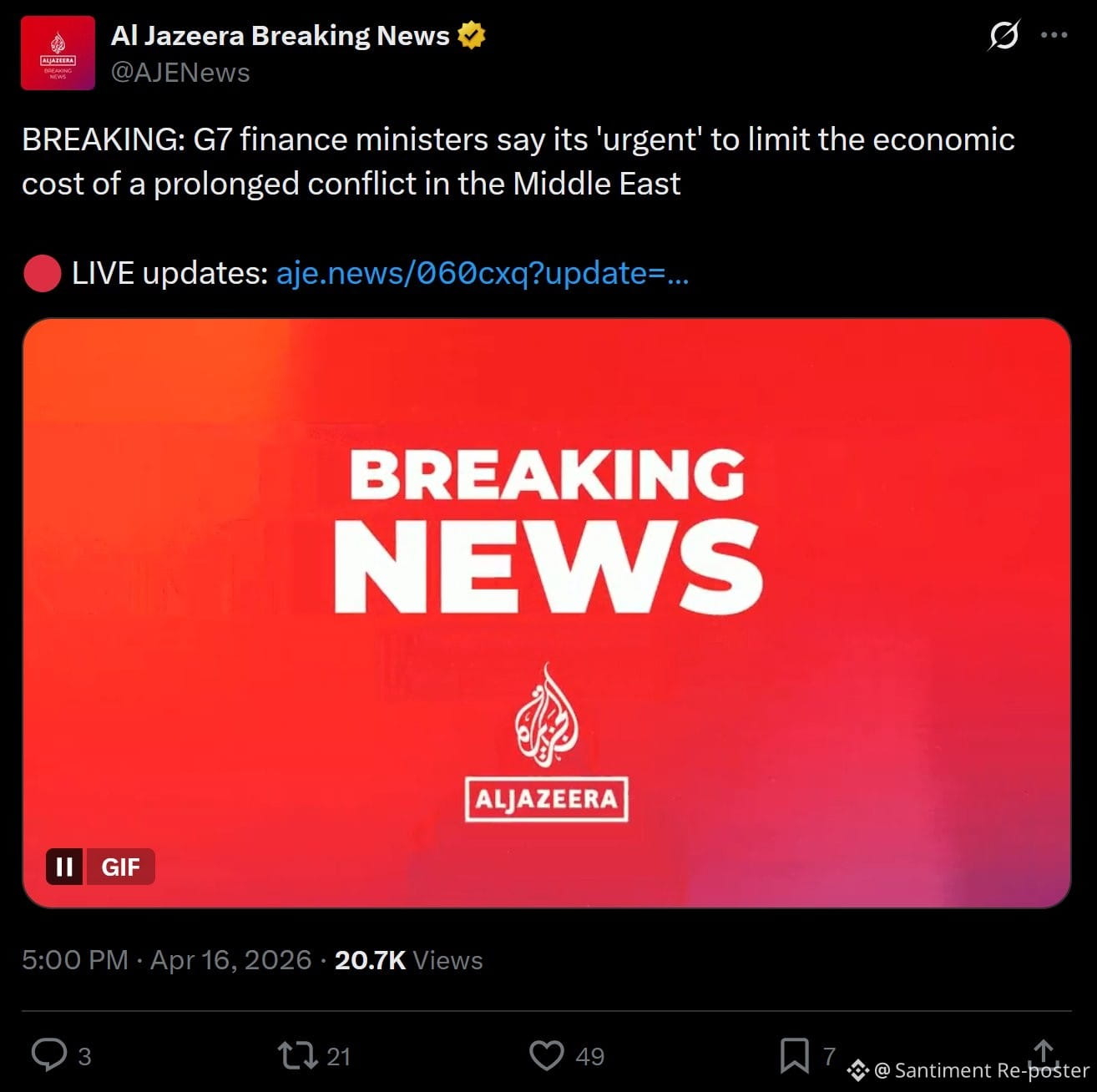
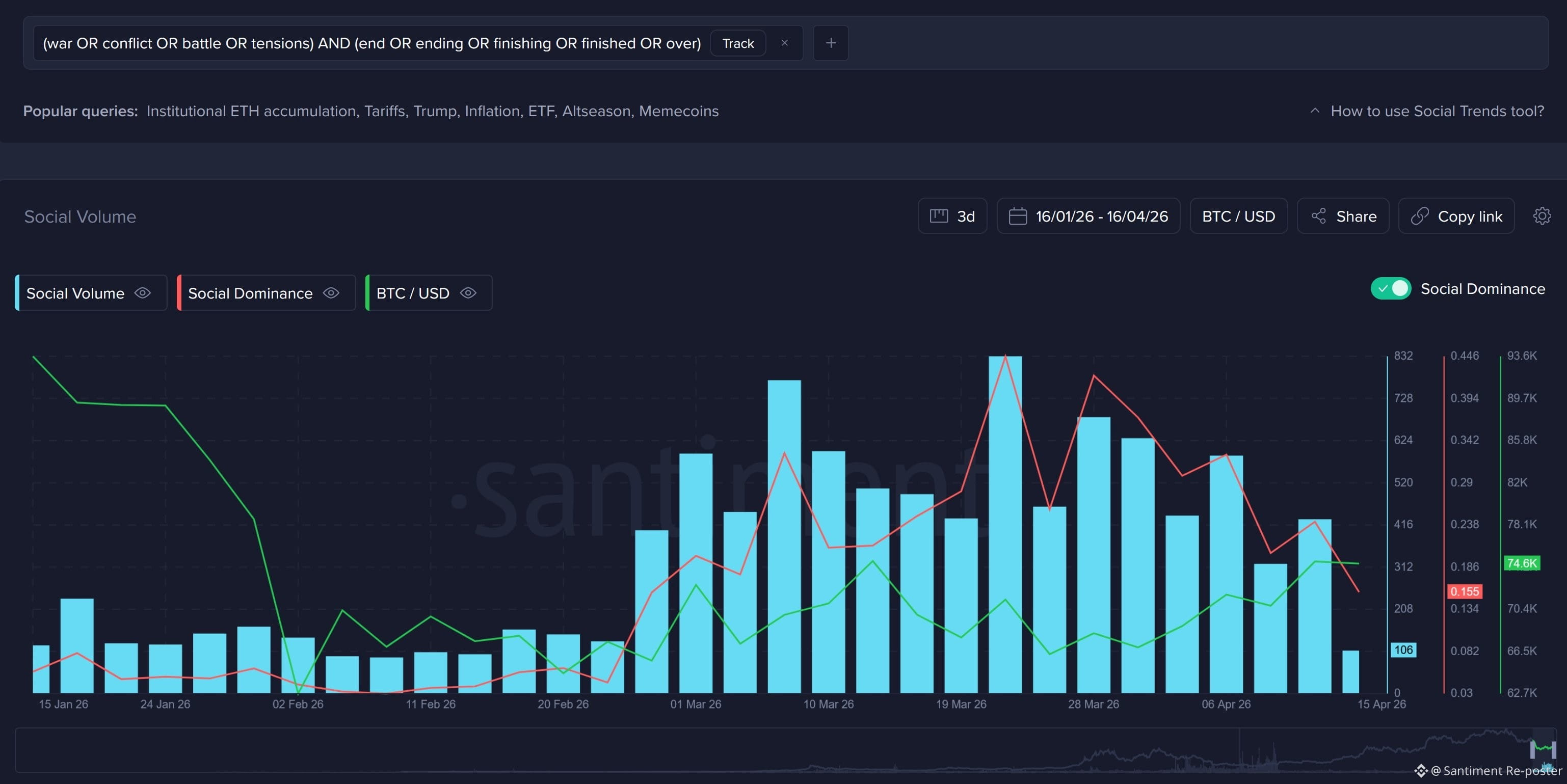
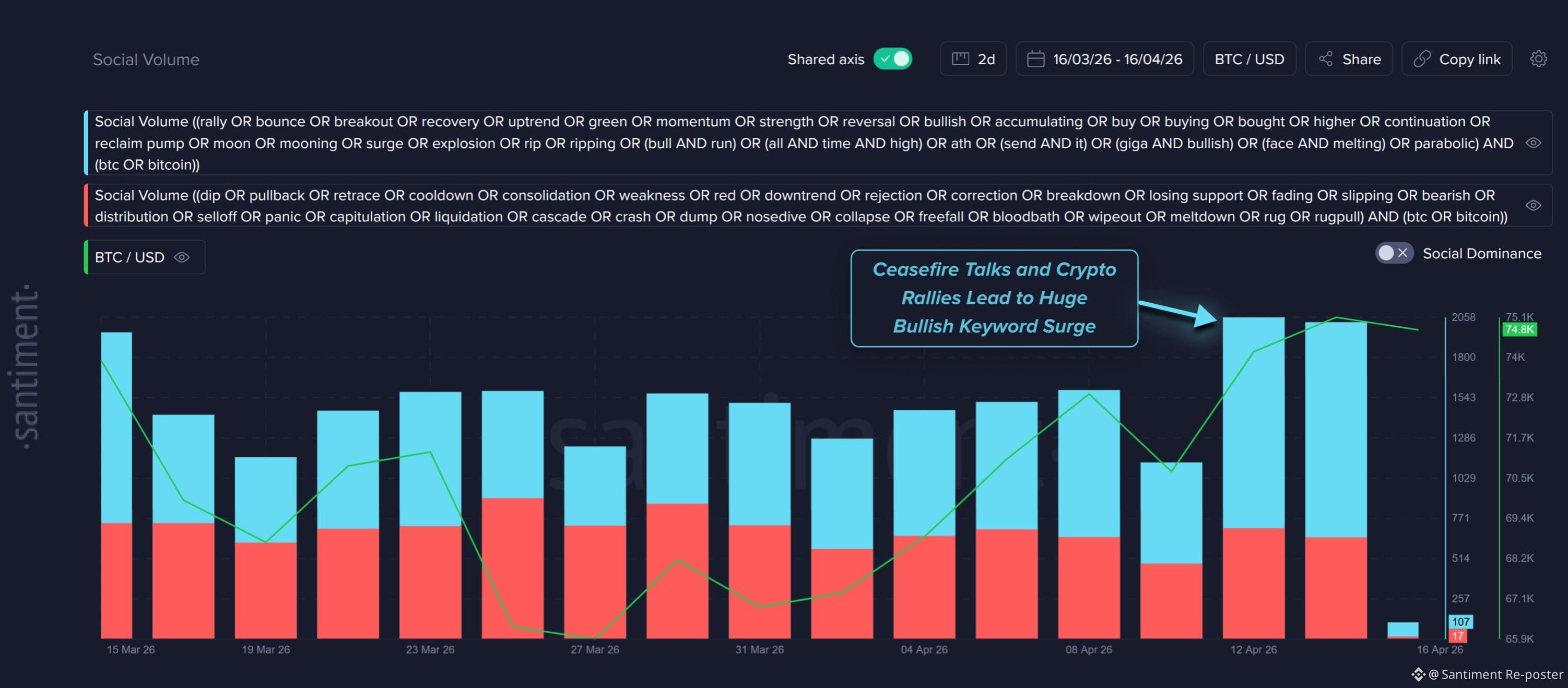
☮️ El rally positivo de criptomonedas que estamos experimentando este abril ha sido provocado principalmente por titulares de alto el fuego. Como explica nuestra nueva visión publicada, la verdad real a menudo importa mucho menos que la forma en que el público reacciona a ella. Consulta el enlace a continuación para descubrir exactamente cómo los mercados financieros están siendo moldeados actualmente por la psicología colectiva de la multitud, rumores no verificados y el sentimiento general. 👇
https://app.santiment.net/insights/read/deep-dive-how-ceasefires-have-driven-april-s-crypto-rally-10769?utm_source=x&utm_medium=post&utm_campaign=deepdive_how_ceasefires_have_driven_crypto_b_041626&aff=3
☮️ El rally positivo de criptomonedas que estamos experimentando este abril ha sido provocado principalmente por titulares de alto el fuego. Como explica nuestra nueva visión publicada, la verdad real a menudo importa mucho menos que la forma en que el público reacciona a ella. Consulta el enlace a continuación para descubrir exactamente cómo los mercados financieros están siendo moldeados actualmente por la psicología colectiva de la multitud, rumores no verificados y el sentimiento general. 👇
https://app.santiment.net/insights/read/deep-dive-how-ceasefires-have-driven-april-s-crypto-rally-10769?utm_source=x&utm_medium=post&utm_campaign=deepdive_how_ceasefires_have_driven_crypto_b_041626&aff=3
https://app.santiment.net/insights/read/deep-dive-how-ceasefires-have-driven-april-s-crypto-rally-10769?utm_source=x&utm_medium=post&utm_campaign=deepdive_how_ceasefires_have_driven_crypto_b_041626&aff=3
1
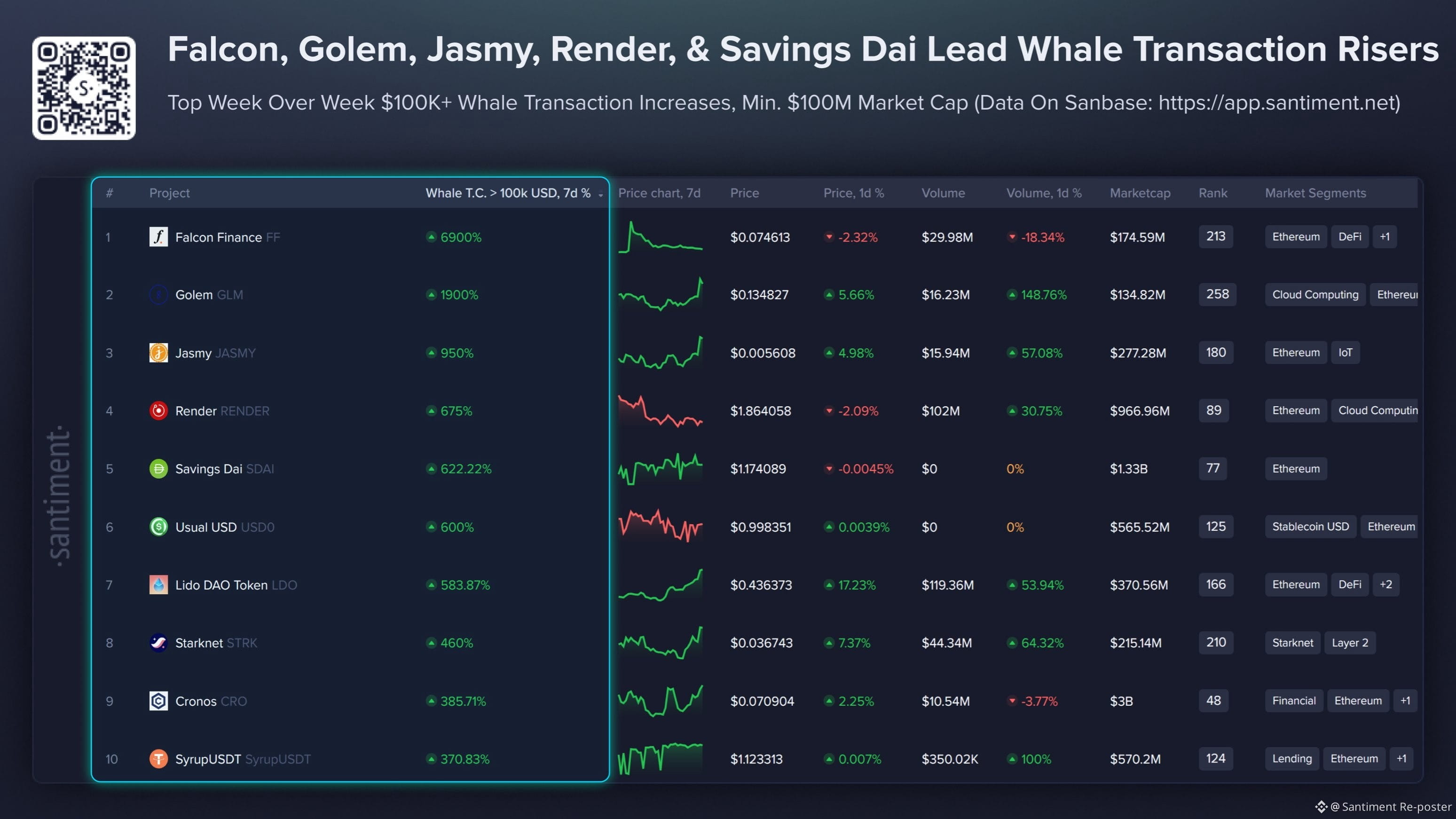
A continuación, se presenta un vistazo a los activos de criptomonedas con capitalizaciones de mercado superiores a $100M que han experimentado los mayores picos semanales en transacciones de ballenas, que se definen como transferencias en la red de $100K o más.
1. Liderando el grupo está @falconfinance $FF, que experimentó un aumento del 6,500% en transacciones de ballenas.
2. @golemproject $GLM sigue con un aumento del 1,900%.
3. @jasmycrypto $JASMY registró un aumento del 950%.
4. @rendernetwork $RENDER vio un salto del 675%.
5. @skyecosystem $SDAI subió un 622%.
6. @usualmoney #USD0 aumentó un 600%.
7. @lidofinance $LDO publicó una ganancia del 584%.
8. @starknet $STRK creció un 460%.
9. @cronosapp $CRO avanzó un 386%.
10. Cerrando el top diez, @maplefinance $SyrupUSDT aumentó un 371%.
Si deseas revisar más datos sobre los proyectos que sigues de cerca o analizar otros indicadores cruciales, puedes encontrar la herramienta de análisis completa en Santiment justo aquí:
A continuación, se presenta un vistazo a los activos de criptomonedas con capitalizaciones de mercado superiores a $100M que han experimentado los mayores picos semanales en transacciones de ballenas, que se definen como transferencias en la red de $100K o más.
1. Liderando el grupo está @falconfinance $FF, que experimentó un aumento del 6,500% en transacciones de ballenas.
2. @golemproject $GLM sigue con un aumento del 1,900%.
3. @jasmycrypto $JASMY registró un aumento del 950%.
4. @rendernetwork $RENDER vio un salto del 675%.
5. @skyecosystem $SDAI subió un 622%.
6. @usualmoney #USD0 aumentó un 600%.
7. @lidofinance $LDO publicó una ganancia del 584%.
8. @starknet $STRK creció un 460%.
9. @cronosapp $CRO avanzó un 386%.
10. Cerrando el top diez, @maplefinance $SyrupUSDT aumentó un 371%.
Si deseas revisar más datos sobre los proyectos que sigues de cerca o analizar otros indicadores cruciales, puedes encontrar la herramienta de análisis completa en Santiment justo aquí:
1. Liderando el grupo está @falconfinance $FF, que experimentó un aumento del 6,500% en transacciones de ballenas.
2. @golemproject $GLM sigue con un aumento del 1,900%.
3. @jasmycrypto $JASMY registró un aumento del 950%.
4. @rendernetwork $RENDER vio un salto del 675%.
5. @skyecosystem $SDAI subió un 622%.
6. @usualmoney #USD0 aumentó un 600%.
7. @lidofinance $LDO publicó una ganancia del 584%.
8. @starknet $STRK creció un 460%.
9. @cronosapp $CRO avanzó un 386%.
10. Cerrando el top diez, @maplefinance $SyrupUSDT aumentó un 371%.
Si deseas revisar más datos sobre los proyectos que sigues de cerca o analizar otros indicadores cruciales, puedes encontrar la herramienta de análisis completa en Santiment justo aquí:
25
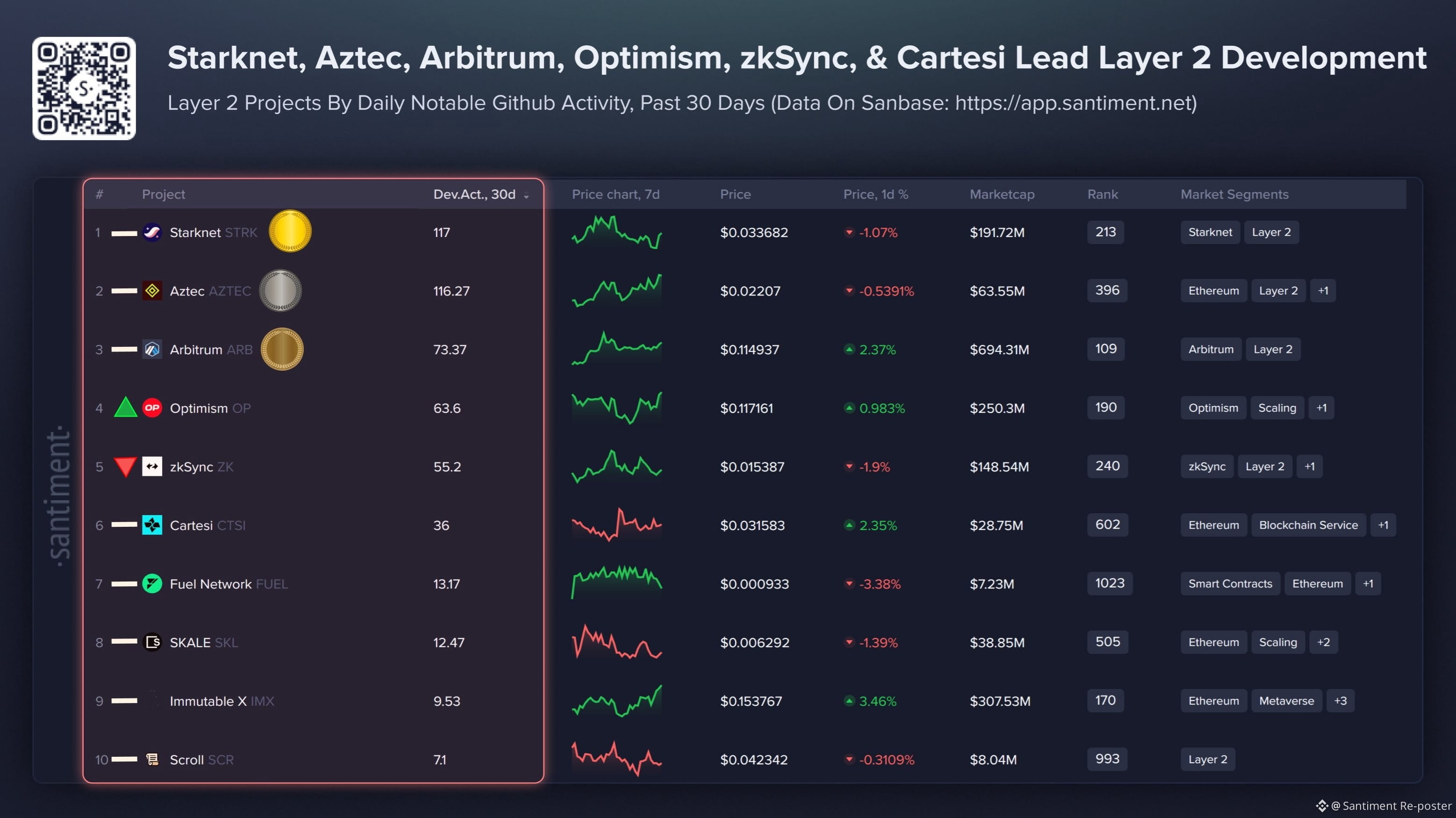
A continuación se presenta un desglose de las principales redes de criptomonedas de Capa 2, clasificadas según su actividad de desarrollo reciente. Los indicadores direccionales proporcionados junto a cada entrada ilustran si un proyecto ha subido, bajado o mantenido su clasificación desde el mes anterior:
➡️ 1) @starknet $STRK
➡️ 2) @aztecnetwork $AZTEC
➡️ 3) @arbitrum $ARB
📈 4) @optimism $OP
📉 5) @zksync $ZK
➡️ 6) @cartesiproject $CTSI
➡️ 7) @fuel_network $FUEL
➡️ 8) @skale $SKL
➡️ 9) @immutable $IMX
➡️ 10) @scroll_zk $SCR
Si deseas entender cómo se extraen los datos de actividad de github directamente de los repositorios del proyecto y por qué esta métrica es altamente beneficiosa para el comercio de criptomonedas, por favor revisa la metodología de @santimentfeed en este enlace: https://t.co/hPpga2LHWZ
Finalmente, asegúrate de marcar nuestro nuevo escáner de tokens de Capa 2 justo aquí. Utilizar este recurso te ayudará a descubrir información exclusiva del mercado que otros en el espacio cripto no pueden ver:
A continuación se presenta un desglose de las principales redes de criptomonedas de Capa 2, clasificadas según su actividad de desarrollo reciente. Los indicadores direccionales proporcionados junto a cada entrada ilustran si un proyecto ha subido, bajado o mantenido su clasificación desde el mes anterior:
➡️ 1) @starknet $STRK
➡️ 2) @aztecnetwork $AZTEC
➡️ 3) @arbitrum $ARB
📈 4) @optimism $OP
📉 5) @zksync $ZK
➡️ 6) @cartesiproject $CTSI
➡️ 7) @fuel_network $FUEL
➡️ 8) @skale $SKL
➡️ 9) @immutable $IMX
➡️ 10) @scroll_zk $SCR
Si deseas entender cómo se extraen los datos de actividad de github directamente de los repositorios del proyecto y por qué esta métrica es altamente beneficiosa para el comercio de criptomonedas, por favor revisa la metodología de @santimentfeed en este enlace: https://t.co/hPpga2LHWZ
Finalmente, asegúrate de marcar nuestro nuevo escáner de tokens de Capa 2 justo aquí. Utilizar este recurso te ayudará a descubrir información exclusiva del mercado que otros en el espacio cripto no pueden ver:
➡️ 1) @starknet $STRK
➡️ 2) @aztecnetwork $AZTEC
➡️ 3) @arbitrum $ARB
📈 4) @optimism $OP
📉 5) @zksync $ZK
➡️ 6) @cartesiproject $CTSI
➡️ 7) @fuel_network $FUEL
➡️ 8) @skale $SKL
➡️ 9) @immutable $IMX
➡️ 10) @scroll_zk $SCR
Si deseas entender cómo se extraen los datos de actividad de github directamente de los repositorios del proyecto y por qué esta métrica es altamente beneficiosa para el comercio de criptomonedas, por favor revisa la metodología de @santimentfeed en este enlace: https://t.co/hPpga2LHWZ
Finalmente, asegúrate de marcar nuestro nuevo escáner de tokens de Capa 2 justo aquí. Utilizar este recurso te ayudará a descubrir información exclusiva del mercado que otros en el espacio cripto no pueden ver:
11
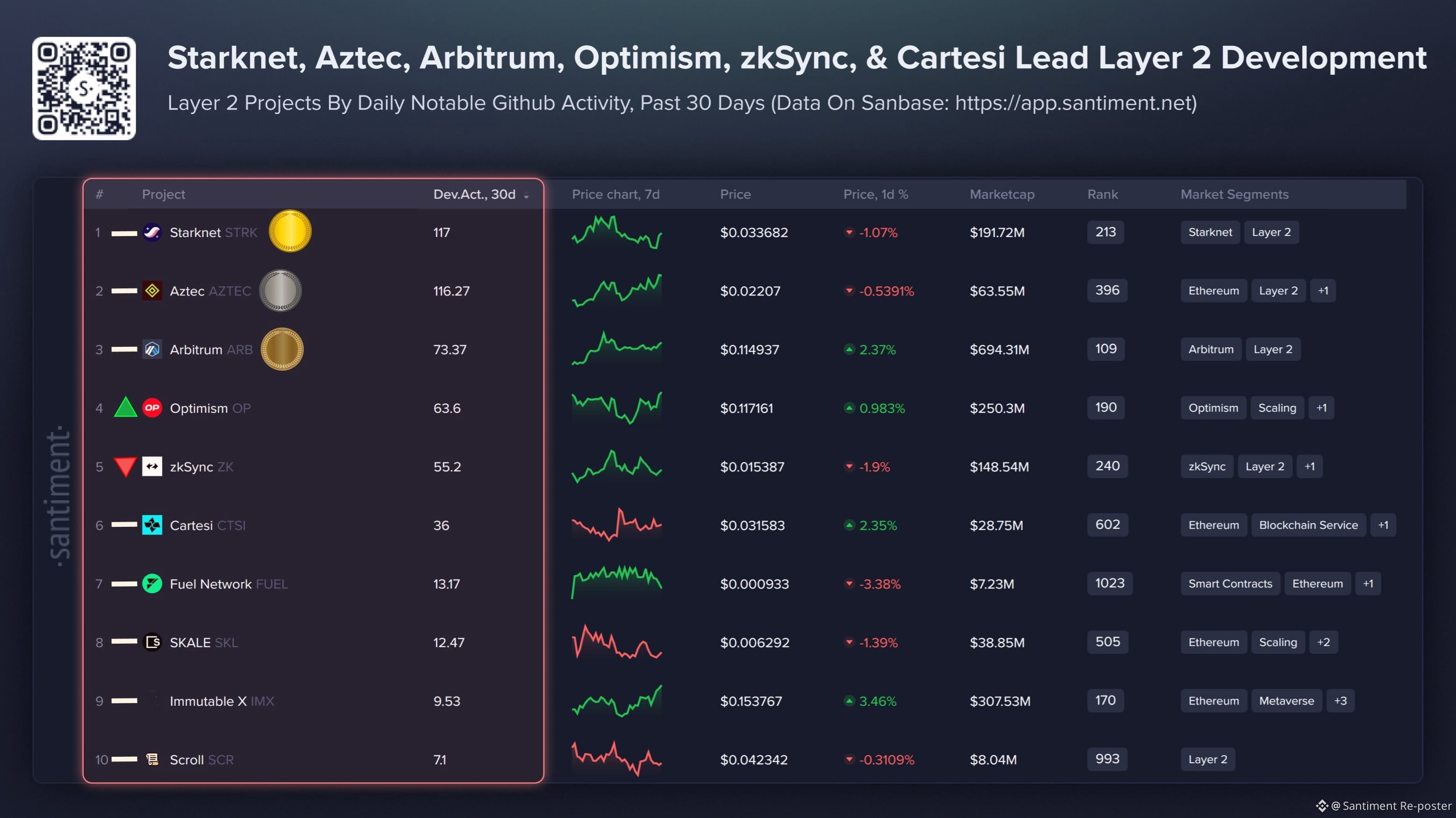
🧑💻 Aquí están los principales proyectos de Layer 2 de cripto por desarrollo. Los indicadores direccionales representan el aumento o la caída en el ranking de cada proyecto desde el mes pasado:
➡️ 1) @starknet $STRK
➡️ 2) @aztecnetwork $AZTEC
➡️ 3) @arbitrum $ARB
📈 4) @zksync $ZK
📉 5) @optimism $OP
➡️ 6) @cartesiproject $CTSI
➡️ 7) @fuel_network $FUEL
➡️ 8) @skale $SKL
➡️ 9) @immutable $IMX
➡️ 10) @scroll_zk $SCR
📖 Lee sobre la metodología de @santimentfeed para extraer datos de actividad de github de los repositorios de proyectos, y por qué es tan útil para el trading de cripto: https://t.co/hPpga2LHWZ
🔖 Marca nuestro nuevo escáner de tokens Layer 2 aquí, y ve lo que otros en cripto no pueden:
🧑💻 Aquí están los principales proyectos de Layer 2 de cripto por desarrollo. Los indicadores direccionales representan el aumento o la caída en el ranking de cada proyecto desde el mes pasado:
➡️ 1) @starknet $STRK
➡️ 2) @aztecnetwork $AZTEC
➡️ 3) @arbitrum $ARB
📈 4) @zksync $ZK
📉 5) @optimism $OP
➡️ 6) @cartesiproject $CTSI
➡️ 7) @fuel_network $FUEL
➡️ 8) @skale $SKL
➡️ 9) @immutable $IMX
➡️ 10) @scroll_zk $SCR
📖 Lee sobre la metodología de @santimentfeed para extraer datos de actividad de github de los repositorios de proyectos, y por qué es tan útil para el trading de cripto: https://t.co/hPpga2LHWZ
🔖 Marca nuestro nuevo escáner de tokens Layer 2 aquí, y ve lo que otros en cripto no pueden:
➡️ 1) @starknet $STRK
➡️ 2) @aztecnetwork $AZTEC
➡️ 3) @arbitrum $ARB
📈 4) @zksync $ZK
📉 5) @optimism $OP
➡️ 6) @cartesiproject $CTSI
➡️ 7) @fuel_network $FUEL
➡️ 8) @skale $SKL
➡️ 9) @immutable $IMX
➡️ 10) @scroll_zk $SCR
📖 Lee sobre la metodología de @santimentfeed para extraer datos de actividad de github de los repositorios de proyectos, y por qué es tan útil para el trading de cripto: https://t.co/hPpga2LHWZ
🔖 Marca nuestro nuevo escáner de tokens Layer 2 aquí, y ve lo que otros en cripto no pueden:
11
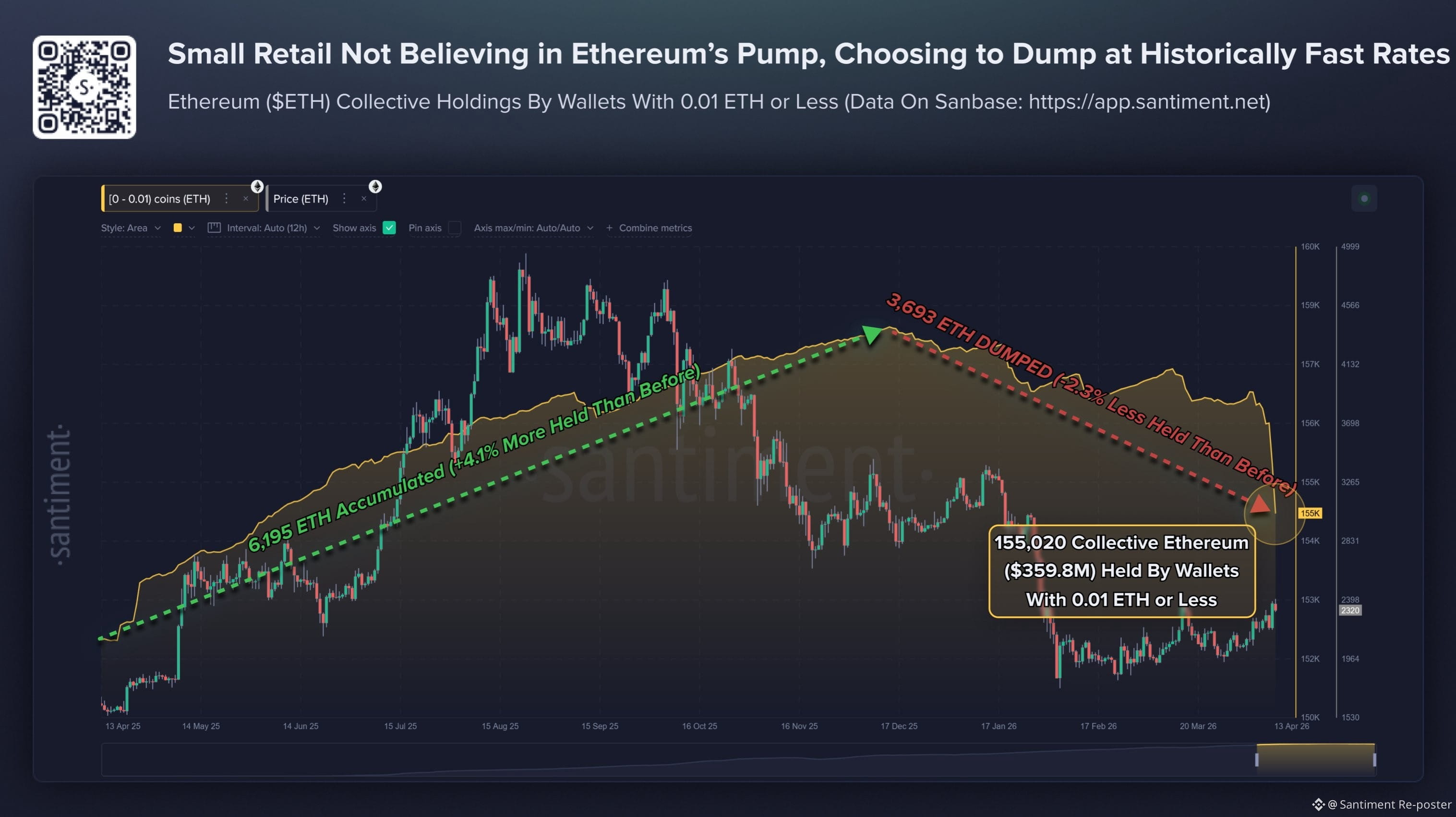
El sentimiento público indica una fuerte creencia de que el aumento de precio del +17% experimentado desde el 29 de marzo es simplemente una trampa alcista. Impulsados por este escepticismo, los inversores cotidianos han descargado rápidamente su Ethereum en los últimos dos días. De hecho, las direcciones que mantienen saldos de 0.01 $ETH o menos han acumulado colectivamente 1,791 ETH, que están valorados en $4.16M. Curiosamente, esta duda generalizada en realidad aumenta las posibilidades de que la tendencia alcista del mercado persista. De cara al futuro, cualquier aseguramiento de ganancias adicional o venta de tokens por parte de estas cuentas más pequeñas puede interpretarse como un indicador de mercado alentador. Estás invitado a mantener un ojo atento sobre cómo los comerciantes minoristas están gestionando sus carteras directamente a través de Santiment.
El sentimiento público indica una fuerte creencia de que el aumento de precio del +17% experimentado desde el 29 de marzo es simplemente una trampa alcista. Impulsados por este escepticismo, los inversores cotidianos han descargado rápidamente su Ethereum en los últimos dos días. De hecho, las direcciones que mantienen saldos de 0.01 $ETH o menos han acumulado colectivamente 1,791 ETH, que están valorados en $4.16M. Curiosamente, esta duda generalizada en realidad aumenta las posibilidades de que la tendencia alcista del mercado persista. De cara al futuro, cualquier aseguramiento de ganancias adicional o venta de tokens por parte de estas cuentas más pequeñas puede interpretarse como un indicador de mercado alentador. Estás invitado a mantener un ojo atento sobre cómo los comerciantes minoristas están gestionando sus carteras directamente a través de Santiment.
2
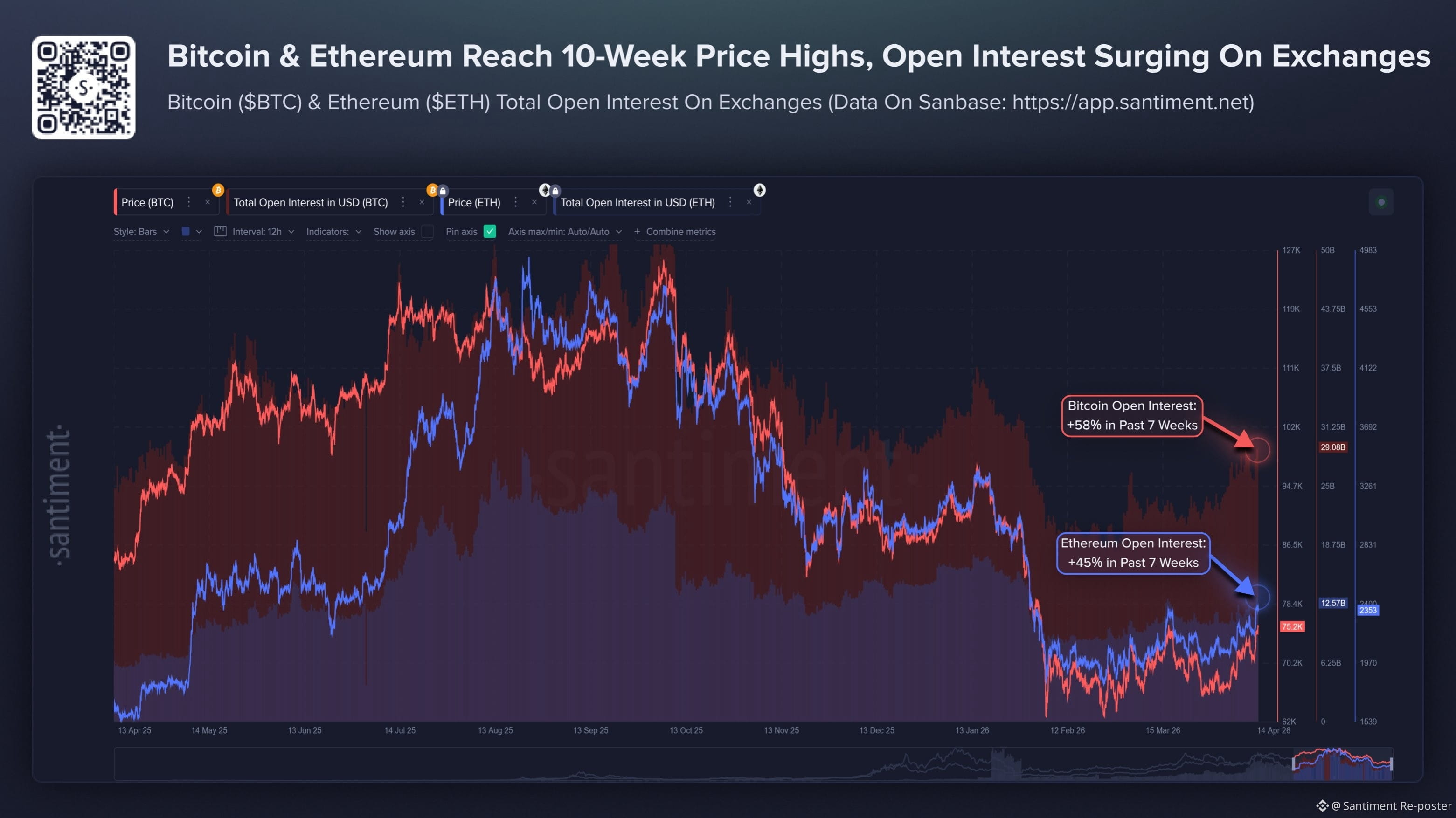
Desde el comienzo de febrero, tanto Bitcoin como Ethereum han alcanzado sus más altas valoraciones de mercado, llegando a $76,070 y $2,395 respectivamente. Este movimiento ascendente en los precios va acompañado de una notable ola de optimismo, lo que resulta en la rápida creación de posiciones con margen y apalancadas.
Los participantes del mercado están mostrando suficiente confianza en este momento para asumir un nivel elevado de riesgo. En un periodo de apenas 7 semanas, el interés abierto ha aumentado un 59% para $BTC y un 45% para $ETH. Si bien este notable aumento demuestra un sólido fortalecimiento en la convicción de los traders, al mismo tiempo introduce un mayor grado de vulnerabilidad.
Siempre que el interés abierto aumenta junto con los precios en ascenso, generalmente conduce a una mayor volatilidad en el mercado. Densas concentraciones de operaciones apalancadas tienen el potencial de deshacerse a un ritmo rápido. Debido a esto, las posibilidades de experimentar apretones repentinos en el mercado, ya sea en dirección ascendente o descendente, se incrementan sustancialmente.
Te animamos a mantenerte informado a medida que el mercado evoluciona. Puedes observar exactamente cómo estos niveles cambiantes de interés abierto influyen en los eventos de liquidación durante los próximos días y semanas siguiendo este gráfico de Santiment.
Desde el comienzo de febrero, tanto Bitcoin como Ethereum han alcanzado sus más altas valoraciones de mercado, llegando a $76,070 y $2,395 respectivamente. Este movimiento ascendente en los precios va acompañado de una notable ola de optimismo, lo que resulta en la rápida creación de posiciones con margen y apalancadas.
Los participantes del mercado están mostrando suficiente confianza en este momento para asumir un nivel elevado de riesgo. En un periodo de apenas 7 semanas, el interés abierto ha aumentado un 59% para $BTC y un 45% para $ETH. Si bien este notable aumento demuestra un sólido fortalecimiento en la convicción de los traders, al mismo tiempo introduce un mayor grado de vulnerabilidad.
Siempre que el interés abierto aumenta junto con los precios en ascenso, generalmente conduce a una mayor volatilidad en el mercado. Densas concentraciones de operaciones apalancadas tienen el potencial de deshacerse a un ritmo rápido. Debido a esto, las posibilidades de experimentar apretones repentinos en el mercado, ya sea en dirección ascendente o descendente, se incrementan sustancialmente.
Te animamos a mantenerte informado a medida que el mercado evoluciona. Puedes observar exactamente cómo estos niveles cambiantes de interés abierto influyen en los eventos de liquidación durante los próximos días y semanas siguiendo este gráfico de Santiment.
Los participantes del mercado están mostrando suficiente confianza en este momento para asumir un nivel elevado de riesgo. En un periodo de apenas 7 semanas, el interés abierto ha aumentado un 59% para $BTC y un 45% para $ETH. Si bien este notable aumento demuestra un sólido fortalecimiento en la convicción de los traders, al mismo tiempo introduce un mayor grado de vulnerabilidad.
Siempre que el interés abierto aumenta junto con los precios en ascenso, generalmente conduce a una mayor volatilidad en el mercado. Densas concentraciones de operaciones apalancadas tienen el potencial de deshacerse a un ritmo rápido. Debido a esto, las posibilidades de experimentar apretones repentinos en el mercado, ya sea en dirección ascendente o descendente, se incrementan sustancialmente.
Te animamos a mantenerte informado a medida que el mercado evoluciona. Puedes observar exactamente cómo estos niveles cambiantes de interés abierto influyen en los eventos de liquidación durante los próximos días y semanas siguiendo este gráfico de Santiment.
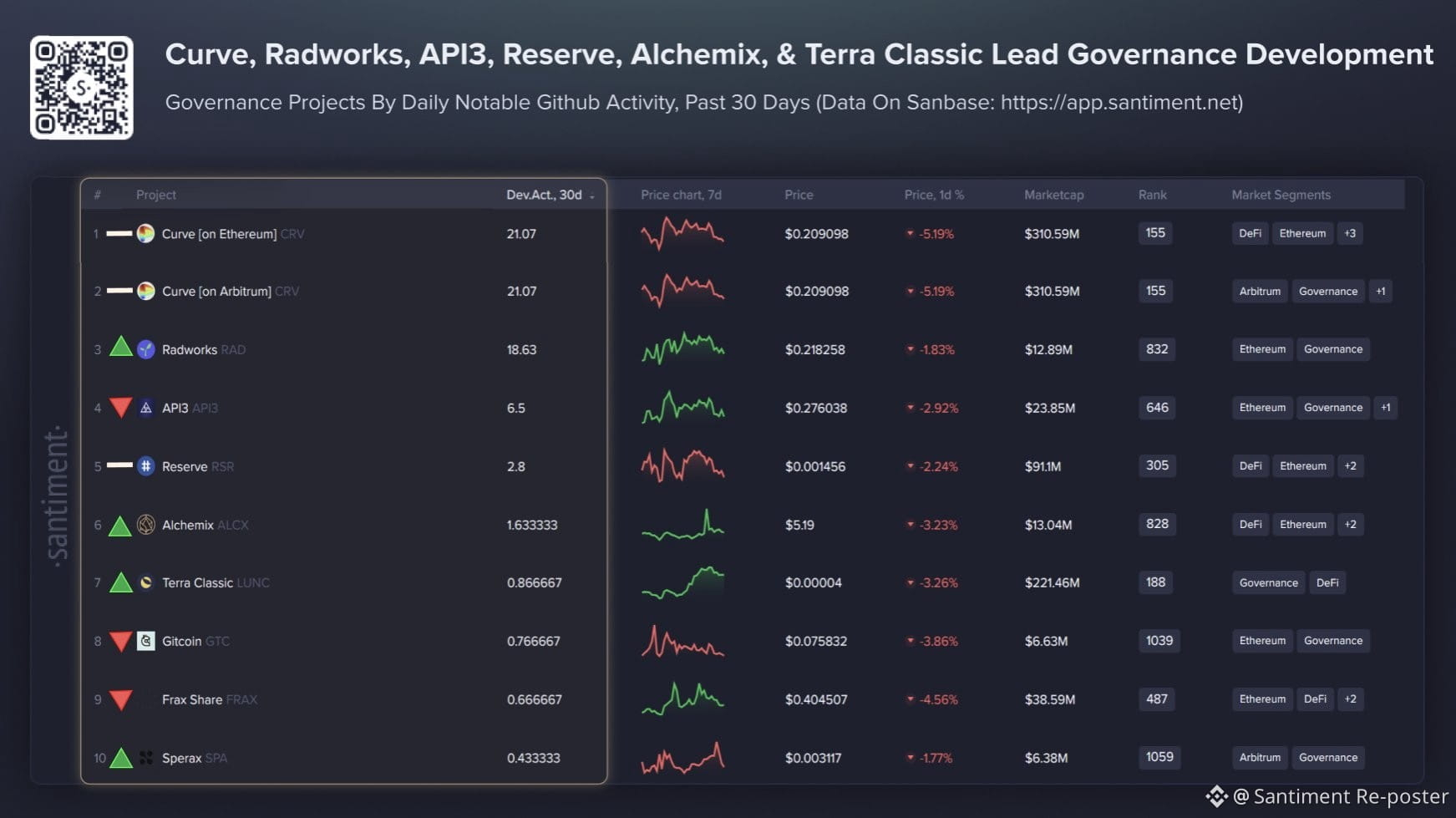
🧑💻 Aquí están los principales proyectos de Gobernanza de cripto por desarrollo. Los indicadores direccionales representan el aumento o disminución en el ranking de cada proyecto desde el mes pasado:
➡️ 1T) @curvefinance $CRV (En Ethereum)
➡️ 1T) @curvefinance $CRV (En Arbitrum)
📈 3) @radworks_ $RAD
📉 4) @api3dao #API3
➡️ 5) @reserveprotocol $RSR
📈 6) @alchemix $ALCX
📈 7) @terra_money $LUNC
📉 8) @gitcoin $GTC
📈 9) @frax $FRAX
📈 10) @speraxusd $SPA
📖 Lee sobre la metodología de @santimentfeed para extraer datos de actividad de github de los repositorios de proyectos, y por qué es tan útil para el trading de cripto: https://t.co/hPpga2MfMx
🔖 Guarda nuestro escáner de proyectos de Gobernanza aquí, y ve lo que otros en cripto no pueden:
🧑💻 Aquí están los principales proyectos de Gobernanza de cripto por desarrollo. Los indicadores direccionales representan el aumento o disminución en el ranking de cada proyecto desde el mes pasado:
➡️ 1T) @curvefinance $CRV (En Ethereum)
➡️ 1T) @curvefinance $CRV (En Arbitrum)
📈 3) @radworks_ $RAD
📉 4) @api3dao #API3
➡️ 5) @reserveprotocol $RSR
📈 6) @alchemix $ALCX
📈 7) @terra_money $LUNC
📉 8) @gitcoin $GTC
📈 9) @frax $FRAX
📈 10) @speraxusd $SPA
📖 Lee sobre la metodología de @santimentfeed para extraer datos de actividad de github de los repositorios de proyectos, y por qué es tan útil para el trading de cripto: https://t.co/hPpga2MfMx
🔖 Guarda nuestro escáner de proyectos de Gobernanza aquí, y ve lo que otros en cripto no pueden:
➡️ 1T) @curvefinance $CRV (En Ethereum)
➡️ 1T) @curvefinance $CRV (En Arbitrum)
📈 3) @radworks_ $RAD
📉 4) @api3dao #API3
➡️ 5) @reserveprotocol $RSR
📈 6) @alchemix $ALCX
📈 7) @terra_money $LUNC
📉 8) @gitcoin $GTC
📈 9) @frax $FRAX
📈 10) @speraxusd $SPA
📖 Lee sobre la metodología de @santimentfeed para extraer datos de actividad de github de los repositorios de proyectos, y por qué es tan útil para el trading de cripto: https://t.co/hPpga2MfMx
🔖 Guarda nuestro escáner de proyectos de Gobernanza aquí, y ve lo que otros en cripto no pueden:
49
En nuestro video recién publicado, analizamos los eventos de la semana pasada, destacando las tendencias al alza de Bitcoin, Ethereum y Bittensor durante un período en el que la mayoría de las altcoins permanecieron en gran medida estancadas. La discusión también evalúa el rendimiento de las ballenas, cubre las últimas noticias geopolíticas y explora exactamente lo que el mercado de criptomonedas requiere para experimentar un gran despegue. Puedes ver el análisis completo a continuación.
https://www.youtube.com/watch?v=AVN-RESf3l8
En nuestro video recién publicado, analizamos los eventos de la semana pasada, destacando las tendencias al alza de Bitcoin, Ethereum y Bittensor durante un período en el que la mayoría de las altcoins permanecieron en gran medida estancadas. La discusión también evalúa el rendimiento de las ballenas, cubre las últimas noticias geopolíticas y explora exactamente lo que el mercado de criptomonedas requiere para experimentar un gran despegue. Puedes ver el análisis completo a continuación.
https://www.youtube.com/watch?v=AVN-RESf3l8
https://www.youtube.com/watch?v=AVN-RESf3l8

4
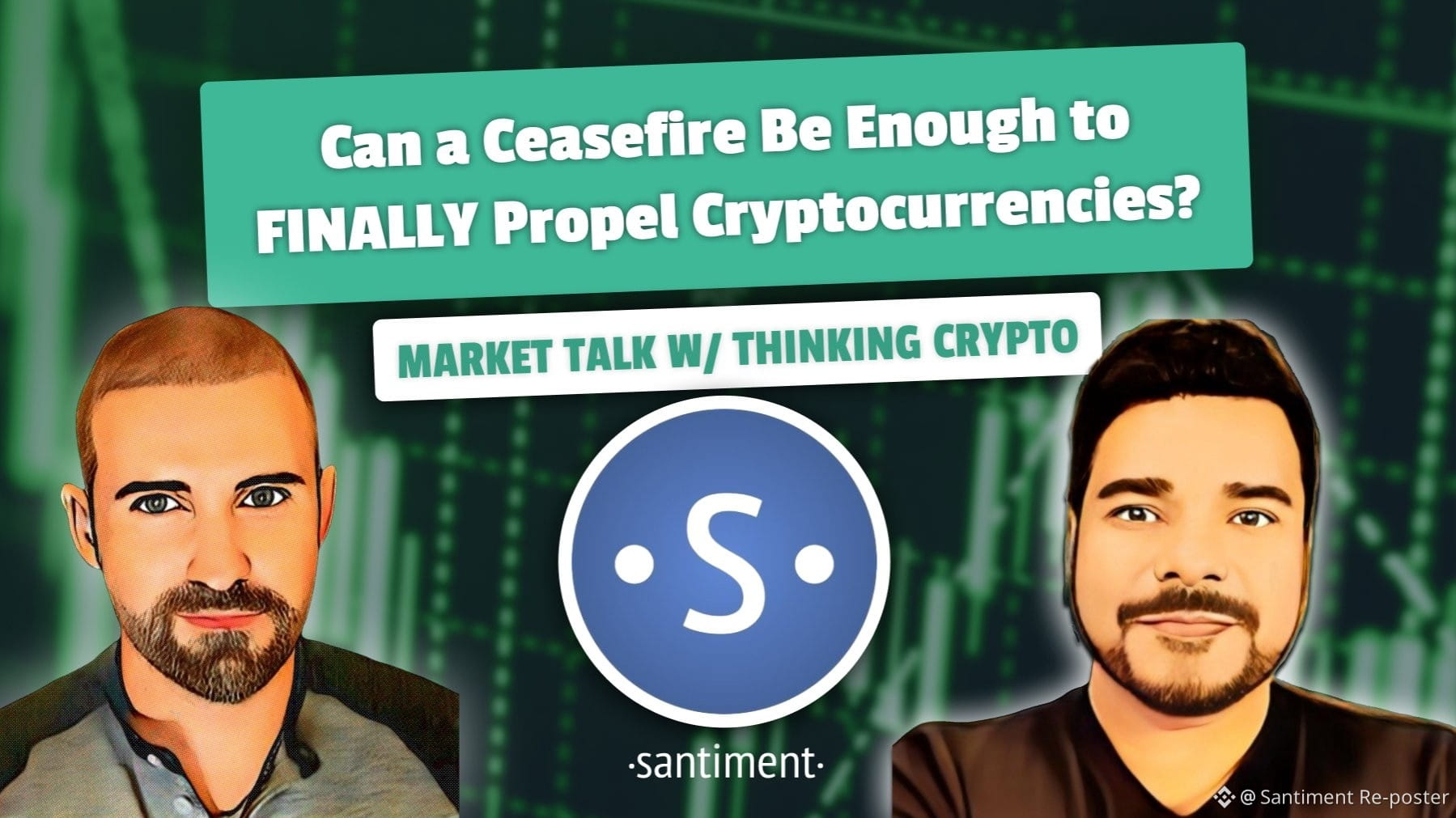
Fue un privilegio genuino conectar con @ThinkingCrypto para una discusión en profundidad sobre el futuro de las criptomonedas, examinando tanto las métricas en cadena como el sentimiento general del mercado. Curiosamente, nuestra conversación ocurrió solo unas horas antes de que Trump anunciara el alto el fuego de 2 semanas. La entrevista completa está disponible aquí: https://t.co/3MbBh1imcV.
A la luz de esta reciente declaración, los invitamos cordialmente a unirse a nosotros este viernes para #ThisWeekInCrypto. Durante la transmisión, investigaremos si Irán, EE. UU. e Israel están realmente honrando este supuesto acuerdo, una situación que podría crear un entorno ideal para que Bitcoin y las altcoins prosperen.
Fue un privilegio genuino conectar con @ThinkingCrypto para una discusión en profundidad sobre el futuro de las criptomonedas, examinando tanto las métricas en cadena como el sentimiento general del mercado. Curiosamente, nuestra conversación ocurrió solo unas horas antes de que Trump anunciara el alto el fuego de 2 semanas. La entrevista completa está disponible aquí: https://t.co/3MbBh1imcV.
A la luz de esta reciente declaración, los invitamos cordialmente a unirse a nosotros este viernes para #ThisWeekInCrypto. Durante la transmisión, investigaremos si Irán, EE. UU. e Israel están realmente honrando este supuesto acuerdo, una situación que podría crear un entorno ideal para que Bitcoin y las altcoins prosperen.
A la luz de esta reciente declaración, los invitamos cordialmente a unirse a nosotros este viernes para #ThisWeekInCrypto. Durante la transmisión, investigaremos si Irán, EE. UU. e Israel están realmente honrando este supuesto acuerdo, una situación que podría crear un entorno ideal para que Bitcoin y las altcoins prosperen.
27
Desde que la zona de comida se queda sin comida a media hora del almuerzo hasta personas navegando en LinkedIn mientras escuchan paneles, la #vibra es especial en el @EthCC de este año.
¿Lo sientes?
Comparte en los comentarios 👇
#mercadobajista #trump #ganando
Desde que la zona de comida se queda sin comida a media hora del almuerzo hasta personas navegando en LinkedIn mientras escuchan paneles, la #vibra es especial en el @EthCC de este año.
¿Lo sientes?
Comparte en los comentarios 👇
#mercadobajista #trump #ganando
¿Lo sientes?
Comparte en los comentarios 👇
#mercadobajista #trump #ganando

1
Dirijámonos al día 2 de @EthCC dando un paseo por la icónica alfombra roja de #Cannes.
Una vez que llegues, por favor, pasa y visita al equipo de Santiment ubicado en el piso verde a lo largo de Sponsor Boulevard. Nos encantaría conversar contigo sobre una amplia gama de temas. Ven a descubrir nuestro Claude #MCP, o aprende cómo evitar perder dinero en predicciones de criptomonedas gamificadas a través de nuestra nueva aplicación @PlaySantiment. Además, nos encantaría compartir detalles sobre la API de inteligencia de Santiment para constructores, aunque también estamos igualmente felices de discutir cualquier otra cosa que tengas en mente.
Que tengas un tiempo maravilloso disfrutando de @EthCC, y esperamos conectarnos contigo allí.
Dirijámonos al día 2 de @EthCC dando un paseo por la icónica alfombra roja de #Cannes.
Una vez que llegues, por favor, pasa y visita al equipo de Santiment ubicado en el piso verde a lo largo de Sponsor Boulevard. Nos encantaría conversar contigo sobre una amplia gama de temas. Ven a descubrir nuestro Claude #MCP, o aprende cómo evitar perder dinero en predicciones de criptomonedas gamificadas a través de nuestra nueva aplicación @PlaySantiment. Además, nos encantaría compartir detalles sobre la API de inteligencia de Santiment para constructores, aunque también estamos igualmente felices de discutir cualquier otra cosa que tengas en mente.
Que tengas un tiempo maravilloso disfrutando de @EthCC, y esperamos conectarnos contigo allí.
Una vez que llegues, por favor, pasa y visita al equipo de Santiment ubicado en el piso verde a lo largo de Sponsor Boulevard. Nos encantaría conversar contigo sobre una amplia gama de temas. Ven a descubrir nuestro Claude #MCP, o aprende cómo evitar perder dinero en predicciones de criptomonedas gamificadas a través de nuestra nueva aplicación @PlaySantiment. Además, nos encantaría compartir detalles sobre la API de inteligencia de Santiment para constructores, aunque también estamos igualmente felices de discutir cualquier otra cosa que tengas en mente.
Que tengas un tiempo maravilloso disfrutando de @EthCC, y esperamos conectarnos contigo allí.

14
¡Santiment MCP para @claudeai ya está aquí! 🔌
Potencia tu Claude con la inteligencia de mercado de Santiment en minutos.
Explora más de 30 métricas, narrativas en tendencia, perspectivas de analistas, y sentimiento social a través de más de 500 activos cripto. Investiga, valida, analiza — todo con un simple aviso 🔮
Aprende más & añade Santiment MCP a tu Claude ahora👇
¡Santiment MCP para @claudeai ya está aquí! 🔌
Potencia tu Claude con la inteligencia de mercado de Santiment en minutos.
Explora más de 30 métricas, narrativas en tendencia, perspectivas de analistas, y sentimiento social a través de más de 500 activos cripto. Investiga, valida, analiza — todo con un simple aviso 🔮
Aprende más & añade Santiment MCP a tu Claude ahora👇
Potencia tu Claude con la inteligencia de mercado de Santiment en minutos.
Explora más de 30 métricas, narrativas en tendencia, perspectivas de analistas, y sentimiento social a través de más de 500 activos cripto. Investiga, valida, analiza — todo con un simple aviso 🔮
Aprende más & añade Santiment MCP a tu Claude ahora👇
1
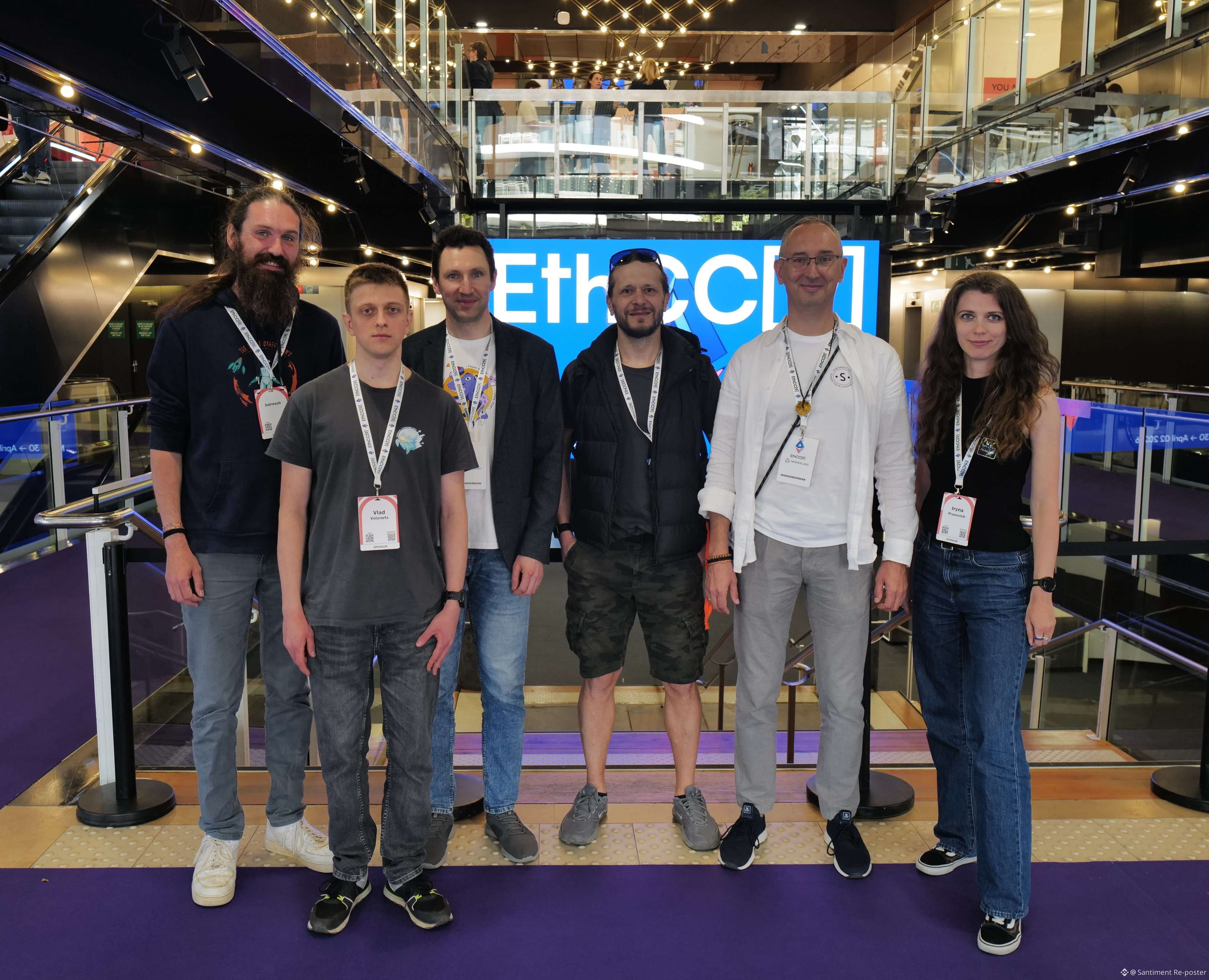
Queremos expresar nuestra sincera gratitud a todos los que trajeron un entusiasmo tan fantástico al evento de hoy. Participar en excelentes discusiones, hacer nuevas conexiones y asistir a las emocionantes sesiones de panel hicieron que el primer día de @EthCC 2026 en Cannes fuera verdaderamente memorable para toda la organización Santiment.
Al cerrar oficialmente el programa de hoy, estamos emocionados de haber tenido la oportunidad de presentar las características de predicción de la aplicación @PlaySantiment. Además de la aplicación, fue un placer demostrar nuestra integración #MCP para #Claude, junto con varios otros desarrollos emocionantes.
Aunque desafortunadamente perdimos nuestra oportunidad de tomar una fotografía en la alfombra roja hoy, estamos apuntando a capturar esa toma perfecta mañana #fail.
Estén atentos para más actualizaciones de nuestra parte pronto.
Queremos expresar nuestra sincera gratitud a todos los que trajeron un entusiasmo tan fantástico al evento de hoy. Participar en excelentes discusiones, hacer nuevas conexiones y asistir a las emocionantes sesiones de panel hicieron que el primer día de @EthCC 2026 en Cannes fuera verdaderamente memorable para toda la organización Santiment.
Al cerrar oficialmente el programa de hoy, estamos emocionados de haber tenido la oportunidad de presentar las características de predicción de la aplicación @PlaySantiment. Además de la aplicación, fue un placer demostrar nuestra integración #MCP para #Claude, junto con varios otros desarrollos emocionantes.
Aunque desafortunadamente perdimos nuestra oportunidad de tomar una fotografía en la alfombra roja hoy, estamos apuntando a capturar esa toma perfecta mañana #fail.
Estén atentos para más actualizaciones de nuestra parte pronto.
Al cerrar oficialmente el programa de hoy, estamos emocionados de haber tenido la oportunidad de presentar las características de predicción de la aplicación @PlaySantiment. Además de la aplicación, fue un placer demostrar nuestra integración #MCP para #Claude, junto con varios otros desarrollos emocionantes.
Aunque desafortunadamente perdimos nuestra oportunidad de tomar una fotografía en la alfombra roja hoy, estamos apuntando a capturar esa toma perfecta mañana #fail.
Estén atentos para más actualizaciones de nuestra parte pronto.
3
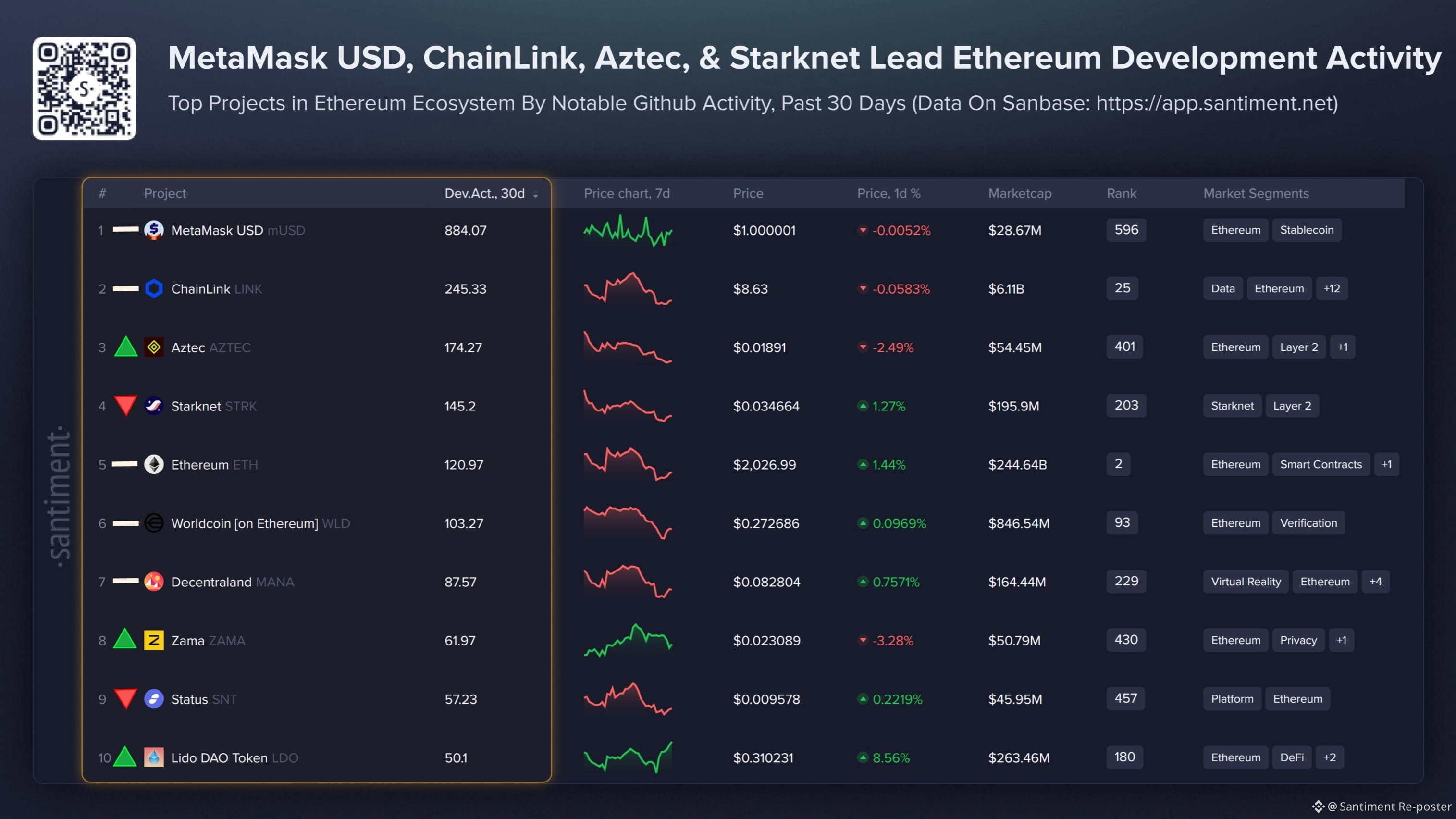
Hemos compilado un ranking actualizado de los principales activos digitales vinculados total o parcialmente al ecosistema basado en Ethereum, organizados por su nivel de actividad de desarrollo. Para darte una visión clara de su rendimiento reciente, hemos indicado cómo ha cambiado la posición de cada proyecto desde el mes pasado.
1. @metamask $mUSD permaneciendo firme en la delantera
2. @chainlink $LINK manteniendo su posición en segundo
3. @aztecnetwork $AZTEC ascendiendo en las clasificaciones a tercero
4. @starknet $STRK cayendo al cuarto lugar
5. @ethereum $ETH manteniendo su colocación en quinto
6. @worldcoin $WLD permaneciendo sin cambios en sexto
7. @decentraland $MANA manteniendo el séptimo rango
8. @zama $ZAMA moviéndose hacia arriba a octavo
9. @ethstatus $SNT bajando al noveno
10. @lidofinance $LDO ascendiendo a la décima posición
Para entender cómo obtenemos estas métricas, echa un vistazo a la metodología de Santiment. Desglosa exactamente cómo filtramos datos de actividad notable de github directamente de los repositorios de proyectos, mientras también explica por qué este enfoque proporciona una ventaja tan poderosa para el trading de criptomonedas. Puedes leer el desglose completo en https://t.co/hPpga2LHWZ
No olvides marcar nuestra lista de seguimiento de proyectos basados en ETH aquí, para que puedas descubrir ideas valiosas que la mayoría de los demás en el espacio cripto simplemente no pueden ver.
Hemos compilado un ranking actualizado de los principales activos digitales vinculados total o parcialmente al ecosistema basado en Ethereum, organizados por su nivel de actividad de desarrollo. Para darte una visión clara de su rendimiento reciente, hemos indicado cómo ha cambiado la posición de cada proyecto desde el mes pasado.
1. @metamask $mUSD permaneciendo firme en la delantera
2. @chainlink $LINK manteniendo su posición en segundo
3. @aztecnetwork $AZTEC ascendiendo en las clasificaciones a tercero
4. @starknet $STRK cayendo al cuarto lugar
5. @ethereum $ETH manteniendo su colocación en quinto
6. @worldcoin $WLD permaneciendo sin cambios en sexto
7. @decentraland $MANA manteniendo el séptimo rango
8. @zama $ZAMA moviéndose hacia arriba a octavo
9. @ethstatus $SNT bajando al noveno
10. @lidofinance $LDO ascendiendo a la décima posición
Para entender cómo obtenemos estas métricas, echa un vistazo a la metodología de Santiment. Desglosa exactamente cómo filtramos datos de actividad notable de github directamente de los repositorios de proyectos, mientras también explica por qué este enfoque proporciona una ventaja tan poderosa para el trading de criptomonedas. Puedes leer el desglose completo en https://t.co/hPpga2LHWZ
No olvides marcar nuestra lista de seguimiento de proyectos basados en ETH aquí, para que puedas descubrir ideas valiosas que la mayoría de los demás en el espacio cripto simplemente no pueden ver.
1. @metamask $mUSD permaneciendo firme en la delantera
2. @chainlink $LINK manteniendo su posición en segundo
3. @aztecnetwork $AZTEC ascendiendo en las clasificaciones a tercero
4. @starknet $STRK cayendo al cuarto lugar
5. @ethereum $ETH manteniendo su colocación en quinto
6. @worldcoin $WLD permaneciendo sin cambios en sexto
7. @decentraland $MANA manteniendo el séptimo rango
8. @zama $ZAMA moviéndose hacia arriba a octavo
9. @ethstatus $SNT bajando al noveno
10. @lidofinance $LDO ascendiendo a la décima posición
Para entender cómo obtenemos estas métricas, echa un vistazo a la metodología de Santiment. Desglosa exactamente cómo filtramos datos de actividad notable de github directamente de los repositorios de proyectos, mientras también explica por qué este enfoque proporciona una ventaja tan poderosa para el trading de criptomonedas. Puedes leer el desglose completo en https://t.co/hPpga2LHWZ
No olvides marcar nuestra lista de seguimiento de proyectos basados en ETH aquí, para que puedas descubrir ideas valiosas que la mayoría de los demás en el espacio cripto simplemente no pueden ver.
1
Inicia sesión para explorar más contenidos
Únete a usuarios globales de criptomonedas en Binance Square
⚡️ Obtén información útil y actualizada sobre criptos.
💬 Avalado por el mayor exchange de criptomonedas en el mundo.
👍 Descubre perspectivas reales de creadores verificados.
Email/número de teléfono