
WuBlockchain
12k Publicaciones

WuBlockchain
 Verificado Plus de Binance Square
Denunciar
Bloquear usuario
Important Crypto News mainly Asia
Lead by Colin Wu 吴说
0 Siguiendo
14.0K+ Seguidores
41.1K+ Me gusta
Publicaciones
Todo
Videos
·
--
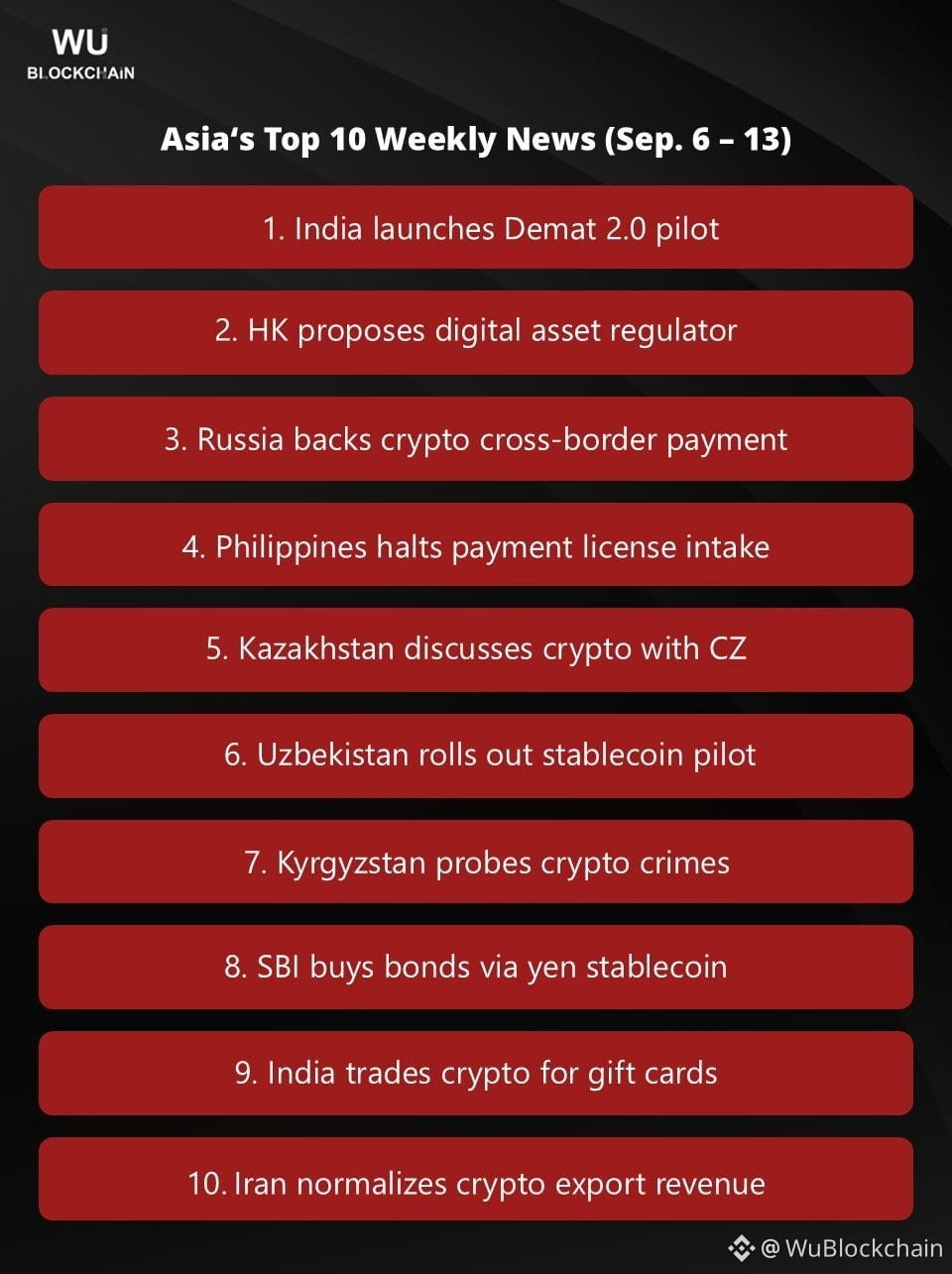
Las TOP10 Noticias Cripto Semanales de AsiaIndia explora la deuda tokenizada de EE. UU., Kazajistán se reúne con CZ sobre infraestructura digital, Hong Kong busca un regulador independiente de cripto, Uzbekistán lanza un piloto de stablecoin y Irán normaliza los pagos cripto. Para el artículo completo y los informes semanales seleccionados, suscríbete a nuestro Substack:
Las TOP10 Noticias Cripto Semanales de Asia
India explora la deuda tokenizada de EE. UU., Kazajistán se reúne con CZ sobre infraestructura digital, Hong Kong busca un regulador independiente de cripto, Uzbekistán lanza un piloto de stablecoin y Irán normaliza los pagos cripto. Para el artículo completo y los informes semanales seleccionados, suscríbete a nuestro Substack:
59
·
--
Artículo
Las 10 noticias cripto semanales principales de Asia: India explora deuda estadounidense tokenizada, Kazajistán se reúne con CZ sobre digital...1. India lanza el piloto Demat 2.0 para tokenizar el mercado de bonos corporativos por 620 mil millones de dólares link
La Comisión de Valores y Bolsa de la India (SEBI) ha lanzado el piloto Demat 2.0, aprovechando la cadena de bloques y el rupia digital mayorista del Banco de la Reserva de la India (RBI) para emitir y liquidar bonos corporativos tokenizados. El financiador de energía estatal REC emitió bonos por valor de 5 mil millones de rupias indias (aproximadamente 56 millones de dólares) mediante el sistema este mes. Larsen & Toubro le siguió con una emisión del mismo tamaño, mientras que la institución financiera no bancaria IIFL Finance emitió 250 millones de rupias indias (alrededor de 2,8 millones de dólares) en bonos. Los bonos conservan tasas de cupón fijas, fechas de vencimiento y derechos de los inversionistas. A través de la Interfaz Unificada de Mercado del RBI, Demat 2.0 vincula el libro mayor de bonos tokenizados con la rupia digital mayorista, permitiendo la transferencia simultánea de bonos y fondos de pago para mitigar el riesgo de liquidación. Las fases posteriores planean introducir la negociación en el mercado secundario y el acceso gradual para inversionistas minoristas.
Las 10 noticias cripto semanales principales de Asia: India explora deuda estadounidense tokenizada, Kazajistán se reúne con CZ sobre digital...
1. India lanza el piloto Demat 2.0 para tokenizar el mercado de bonos corporativos por 620 mil millones de dólares link
La Comisión de Valores y Bolsa de la India (SEBI) ha lanzado el piloto Demat 2.0, aprovechando la cadena de bloques y el rupia digital mayorista del Banco de la Reserva de la India (RBI) para emitir y liquidar bonos corporativos tokenizados. El financiador de energía estatal REC emitió bonos por valor de 5 mil millones de rupias indias (aproximadamente 56 millones de dólares) mediante el sistema este mes. Larsen & Toubro le siguió con una emisión del mismo tamaño, mientras que la institución financiera no bancaria IIFL Finance emitió 250 millones de rupias indias (alrededor de 2,8 millones de dólares) en bonos. Los bonos conservan tasas de cupón fijas, fechas de vencimiento y derechos de los inversionistas. A través de la Interfaz Unificada de Mercado del RBI, Demat 2.0 vincula el libro mayor de bonos tokenizados con la rupia digital mayorista, permitiendo la transferencia simultánea de bonos y fondos de pago para mitigar el riesgo de liquidación. Las fases posteriores planean introducir la negociación en el mercado secundario y el acceso gradual para inversionistas minoristas.
La Comisión de Valores y Bolsa de la India (SEBI) ha lanzado el piloto Demat 2.0, aprovechando la cadena de bloques y el rupia digital mayorista del Banco de la Reserva de la India (RBI) para emitir y liquidar bonos corporativos tokenizados. El financiador de energía estatal REC emitió bonos por valor de 5 mil millones de rupias indias (aproximadamente 56 millones de dólares) mediante el sistema este mes. Larsen & Toubro le siguió con una emisión del mismo tamaño, mientras que la institución financiera no bancaria IIFL Finance emitió 250 millones de rupias indias (alrededor de 2,8 millones de dólares) en bonos. Los bonos conservan tasas de cupón fijas, fechas de vencimiento y derechos de los inversionistas. A través de la Interfaz Unificada de Mercado del RBI, Demat 2.0 vincula el libro mayor de bonos tokenizados con la rupia digital mayorista, permitiendo la transferencia simultánea de bonos y fondos de pago para mitigar el riesgo de liquidación. Las fases posteriores planean introducir la negociación en el mercado secundario y el acceso gradual para inversionistas minoristas.
148
·
--
Un generador de semillas de Bitcoin está usando desintegración radiactiva para obtener entropíaUn proyecto de código abierto llamado Entropy32 Plus utiliza la desintegración radiactiva como una fuente física de entropía para generar frases semilla de Bitcoin BIP39. Un contador Geiger captura los eventos de decaimiento, cuyo momento se procesa mediante SHA-256 antes de asignarse a la lista de palabras BIP39. El dispositivo está diseñado para funcionar completamente sin conexión, sin conectividad inalámbrica ni almacenamiento persistente de semillas. El desarrollador señala que la calidad de su entropía aún no ha sido validada bajo la NIST SP 800-90B y describe el proyecto como experimental, en lugar de estar auditado de forma independiente para asegurar fondos significativos.
Un generador de semillas de Bitcoin está usando desintegración radiactiva para obtener entropía
Un proyecto de código abierto llamado Entropy32 Plus utiliza la desintegración radiactiva como una fuente física de entropía para generar frases semilla de Bitcoin BIP39. Un contador Geiger captura los eventos de decaimiento, cuyo momento se procesa mediante SHA-256 antes de asignarse a la lista de palabras BIP39. El dispositivo está diseñado para funcionar completamente sin conexión, sin conectividad inalámbrica ni almacenamiento persistente de semillas. El desarrollador señala que la calidad de su entropía aún no ha sido validada bajo la NIST SP 800-90B y describe el proyecto como experimental, en lugar de estar auditado de forma independiente para asegurar fondos significativos.
1
125
·
--
El volumen mensual de operaciones de Uniswap supera los 70.000 millones de dólares, superando el total de los próximos tres DEXUniswap dijo que su protocolo procesó más de 70.000 millones de dólares en volumen de operaciones durante el último mes, superando el volumen combinado de los próximos tres DEX más grandes. Las cifras se obtuvieron de la investigación de DeFiLlama. Uniswap afirmó que los datos reflejan una actividad comercial sólida y su posición de liderazgo en el trading de spot descentralizado tanto por liquidez como por volumen.
El volumen mensual de operaciones de Uniswap supera los 70.000 millones de dólares, superando el total de los próximos tres DEX
Uniswap dijo que su protocolo procesó más de 70.000 millones de dólares en volumen de operaciones durante el último mes, superando el volumen combinado de los próximos tres DEX más grandes. Las cifras se obtuvieron de la investigación de DeFiLlama. Uniswap afirmó que los datos reflejan una actividad comercial sólida y su posición de liderazgo en el trading de spot descentralizado tanto por liquidez como por volumen.
263
·
--
La SEC de Tailandia Propone Límites a las Transferencias de Stablecoins a Monederos de Terceros, Con ~150K Diarios...La SEC de Tailandia abrió una consulta sobre nuevas normas de stablecoins que exigirían que los depósitos y retiros se realicen a través de operadores regulados de activos digitales, para que se originen en cuentas o monederos verificados como pertenecientes al mismo cliente y a ellos se dirijan. Las transferencias entrantes y salientes se limitarían en cada caso a aproximadamente $151,000 por persona, por operador, por día. El límite no se aplicaría a las transferencias entre operadores regulados en Tailandia que cumplan con la Travel Rule. La SEC dijo que la propuesta busca reducir riesgos relacionados con el lavado de dinero, el ciberdelito y la elusión de las normas de transferencia transfronteriza.
La SEC de Tailandia Propone Límites a las Transferencias de Stablecoins a Monederos de Terceros, Con ~150K Diarios...
La SEC de Tailandia abrió una consulta sobre nuevas normas de stablecoins que exigirían que los depósitos y retiros se realicen a través de operadores regulados de activos digitales, para que se originen en cuentas o monederos verificados como pertenecientes al mismo cliente y a ellos se dirijan. Las transferencias entrantes y salientes se limitarían en cada caso a aproximadamente $151,000 por persona, por operador, por día. El límite no se aplicaría a las transferencias entre operadores regulados en Tailandia que cumplan con la Travel Rule. La SEC dijo que la propuesta busca reducir riesgos relacionados con el lavado de dinero, el ciberdelito y la elusión de las normas de transferencia transfronteriza.
126
·
--
ZachXBT: Supuestamente Revolut Filtra Datos de Usuarios, Probablemente Dirigido a Personas con Alto Patrimonio Net-NetEl investigador en cadena ZachXBT emitió una alerta en su canal indicando que el gigante fintech Revolut parece haber confundido una solicitud fraudulenta de información gubernamental con una legítima, revelando en consecuencia datos de usuarios a partes no autorizadas. Se informó que los datos comprometidos incluyen nombres completos, información de contacto, copias de documentos de identidad, selfies de verificación, números IBAN, extractos bancarios, registros de retiros y el historial completo de transacciones, incluidas transferencias de Bitcoin. ZachXBT señaló que, aunque el número total de cuentas afectadas parece limitado en esta etapa, el ataque podría haber apuntado específicamente a personas con alto patrimonio neto, y varios usuarios afectados ya habrían recibido correos electrónicos de notificación oficial de Revolut.
ZachXBT: Supuestamente Revolut Filtra Datos de Usuarios, Probablemente Dirigido a Personas con Alto Patrimonio Net-Net
El investigador en cadena ZachXBT emitió una alerta en su canal indicando que el gigante fintech Revolut parece haber confundido una solicitud fraudulenta de información gubernamental con una legítima, revelando en consecuencia datos de usuarios a partes no autorizadas. Se informó que los datos comprometidos incluyen nombres completos, información de contacto, copias de documentos de identidad, selfies de verificación, números IBAN, extractos bancarios, registros de retiros y el historial completo de transacciones, incluidas transferencias de Bitcoin. ZachXBT señaló que, aunque el número total de cuentas afectadas parece limitado en esta etapa, el ataque podría haber apuntado específicamente a personas con alto patrimonio neto, y varios usuarios afectados ya habrían recibido correos electrónicos de notificación oficial de Revolut.
45
·
--
El fundador de Huobi, Leon Li, vende una mansión de Londres por £190M después de comprarla por £139MSegún el Financial Times, el fundador de Huobi, Leon Li, recientemente vendió The Holme, una mansión en el Regent's Park de Londres, por aproximadamente £190 millones. Li compró la propiedad por £139 millones en 2024, lo que dio como resultado una diferencia de precio de alrededor de £51 millones en menos de dos años. No se había hecho público anteriormente que Li fuera propietario de la vivienda porque la propiedad estaba en manos de una filial del Reino Unido del proveedor de servicios fiduciarios Zedra. El comprador fue Abbas Sajwani, hijo del promotor inmobiliario de Dubái, Hussain Sajwani.
El fundador de Huobi, Leon Li, vende una mansión de Londres por £190M después de comprarla por £139M
Según el Financial Times, el fundador de Huobi, Leon Li, recientemente vendió The Holme, una mansión en el Regent's Park de Londres, por aproximadamente £190 millones. Li compró la propiedad por £139 millones en 2024, lo que dio como resultado una diferencia de precio de alrededor de £51 millones en menos de dos años. No se había hecho público anteriormente que Li fuera propietario de la vivienda porque la propiedad estaba en manos de una filial del Reino Unido del proveedor de servicios fiduciarios Zedra. El comprador fue Abbas Sajwani, hijo del promotor inmobiliario de Dubái, Hussain Sajwani.
71
·
--
Los ETF de Bitcoin registran 13,29M de dólares en salidas netas el 11 de septiembre (ET), ampliando la racha de salidas a cuatro días...Según los datos de SoSoValue, los ETF de Bitcoin al contado en EE. UU. registraron salidas netas totales de 13,29 millones de dólares el 11 de septiembre (ET), marcando el cuarto día consecutivo de salidas netas. El fondo MSBT de Morgan Stanley registró la mayor entrada neta en un solo día entre los ETF de Bitcoin al contado, con 3,76 millones de dólares. Los ETF de Ethereum al contado registraron entradas netas totales por 216 millones de dólares, con ETHA de BlackRock liderando con 149 millones de dólares.
Los ETF de Bitcoin registran 13,29M de dólares en salidas netas el 11 de septiembre (ET), ampliando la racha de salidas a cuatro días...
Según los datos de SoSoValue, los ETF de Bitcoin al contado en EE. UU. registraron salidas netas totales de 13,29 millones de dólares el 11 de septiembre (ET), marcando el cuarto día consecutivo de salidas netas. El fondo MSBT de Morgan Stanley registró la mayor entrada neta en un solo día entre los ETF de Bitcoin al contado, con 3,76 millones de dólares. Los ETF de Ethereum al contado registraron entradas netas totales por 216 millones de dólares, con ETHA de BlackRock liderando con 149 millones de dólares.
74
·
--
WSJ: Los mercados empiezan a descontar una serie de subidas de tipos de la FedSegún The Wall Street Journal, los inversores han dado prácticamente por hecho que la Reserva Federal subirá los tipos de interés la próxima semana por primera vez en tres años, y ahora la atención se desplaza hacia la senda de política que seguirá. Dado que casi nadie en el banco central cree que un aumento único de 25 puntos básicos por sí solo serviría de mucho para frenar la inflación, una subida de tipos la próxima semana podría indicar que los responsables consideran que el nivel actual de los tipos es demasiado bajo y que podrían tomar nuevas medidas. El ex vicepresidente de la Fed, Richard Clarida, dijo que si la Fed sube los tipos la próxima semana, ciertamente le seguirán más subidas. Ahora, los mercados esperan al menos tres subidas de tipos en total para junio del próximo año, frente a dos anteriormente.
WSJ: Los mercados empiezan a descontar una serie de subidas de tipos de la Fed
Según The Wall Street Journal, los inversores han dado prácticamente por hecho que la Reserva Federal subirá los tipos de interés la próxima semana por primera vez en tres años, y ahora la atención se desplaza hacia la senda de política que seguirá. Dado que casi nadie en el banco central cree que un aumento único de 25 puntos básicos por sí solo serviría de mucho para frenar la inflación, una subida de tipos la próxima semana podría indicar que los responsables consideran que el nivel actual de los tipos es demasiado bajo y que podrían tomar nuevas medidas. El ex vicepresidente de la Fed, Richard Clarida, dijo que si la Fed sube los tipos la próxima semana, ciertamente le seguirán más subidas. Ahora, los mercados esperan al menos tres subidas de tipos en total para junio del próximo año, frente a dos anteriormente.
114
·
--
El cofundador de BitMEX Ben Delo dona un récord de 36 millones de libras a Reform UKEl cofundador de BitMEX, Ben Delo, ha donado 36 millones de libras a Reform UK, marcando la mayor donación individual jamás recibida por un partido político británico. Delo dijo que en un principio había planeado donar 1 millón de libras al mes desde ahora hasta que el gobierno laborista celebre una elección general, que debe celebrarse antes de 2029. Sin embargo, preocupado por que el gobierno pudiera imponer límites a las grandes donaciones políticas, decidió transferir el importe completo de una sola vez. En la actualidad, el Reino Unido no impone ningún límite sobre cuánto pueden donar los donantes nacionales a los partidos políticos. Delo había donado anteriormente 4 millones de libras a Reform UK y recibió el año pasado un indulto incondicional del presidente de EE. UU., Donald Trump, por su condena en virtud de la Ley de Secreto Bancario.
El cofundador de BitMEX Ben Delo dona un récord de 36 millones de libras a Reform UK
El cofundador de BitMEX, Ben Delo, ha donado 36 millones de libras a Reform UK, marcando la mayor donación individual jamás recibida por un partido político británico. Delo dijo que en un principio había planeado donar 1 millón de libras al mes desde ahora hasta que el gobierno laborista celebre una elección general, que debe celebrarse antes de 2029. Sin embargo, preocupado por que el gobierno pudiera imponer límites a las grandes donaciones políticas, decidió transferir el importe completo de una sola vez. En la actualidad, el Reino Unido no impone ningún límite sobre cuánto pueden donar los donantes nacionales a los partidos políticos. Delo había donado anteriormente 4 millones de libras a Reform UK y recibió el año pasado un indulto incondicional del presidente de EE. UU., Donald Trump, por su condena en virtud de la Ley de Secreto Bancario.
87
·
--
Anthropic Busca Hasta $100 Mil Millones en IPO con una Valoración de Alrededor de $2 Billones; Nvidia Evalúa Hasta $1...Anthropic está en conversaciones con Nvidia para incorporar a la empresa de chips como inversor ancla en su plan de IPO, informó Reuters, citando a personas familiarizadas con el tema. Anthropic busca recaudar hasta 100.000 millones de dólares con una valoración de alrededor de 2 billones de dólares, mientras que Nvidia está considerando invertir hasta 10.000 millones de dólares en la oferta. Los planes siguen en discusión y podrían cambiar. Se espera que la cotización se complete antes de las elecciones de mitad de mandato en EE. UU. en noviembre. Anthropic recaudó 65.000 millones de dólares en mayo, con una valoración post-money de 965.000 millones de dólares, y su tasa de ingresos anualizada superó los 65.000 millones de dólares a finales de julio.
Anthropic Busca Hasta $100 Mil Millones en IPO con una Valoración de Alrededor de $2 Billones; Nvidia Evalúa Hasta $1...
Anthropic está en conversaciones con Nvidia para incorporar a la empresa de chips como inversor ancla en su plan de IPO, informó Reuters, citando a personas familiarizadas con el tema. Anthropic busca recaudar hasta 100.000 millones de dólares con una valoración de alrededor de 2 billones de dólares, mientras que Nvidia está considerando invertir hasta 10.000 millones de dólares en la oferta. Los planes siguen en discusión y podrían cambiar. Se espera que la cotización se complete antes de las elecciones de mitad de mandato en EE. UU. en noviembre. Anthropic recaudó 65.000 millones de dólares en mayo, con una valoración post-money de 965.000 millones de dólares, y su tasa de ingresos anualizada superó los 65.000 millones de dólares a finales de julio.
133
·
--
Binance Research: Las acciones tokenizadas pasan de la emisión a la distribución y el usoBinance Research dijo que el mercado de valores tokenizados está pasando de una carrera de emisión a una competencia por la distribución y el uso. La capitalización bursátil activa del mercado de valores tokenizados ha subido un 314% en lo que va de año hasta alcanzar los 4.000 millones de dólares, mientras que el volumen de operaciones mensual aumentó de 237 millones de dólares en enero a 7,9 mil millones de dólares en agosto y la rotación pasó de 0,23x a 2,14x. La participación combinada de bStocks y Robinhood en el volumen de emisores supervisados saltó del 0,8% en junio al 82,3% en agosto y al 87,8% hasta ahora en septiembre.
El TVL activo de DeFi para acciones tokenizadas también aumentó de 21,6 millones de dólares a 289,1 millones de dólares, pasando de un 2,2% a un 7,2% de la capitalización bursátil activa. Binance Research señaló que la emisión por sí sola no determina hacia dónde fluyen la liquidez; las plataformas más sólidas serán las que puedan convertir a los usuarios, retener la liquidez después de la emisión y dar a las acciones tokenizadas una utilidad adicional en cadena.
Binance Research: Las acciones tokenizadas pasan de la emisión a la distribución y el uso
Binance Research dijo que el mercado de valores tokenizados está pasando de una carrera de emisión a una competencia por la distribución y el uso. La capitalización bursátil activa del mercado de valores tokenizados ha subido un 314% en lo que va de año hasta alcanzar los 4.000 millones de dólares, mientras que el volumen de operaciones mensual aumentó de 237 millones de dólares en enero a 7,9 mil millones de dólares en agosto y la rotación pasó de 0,23x a 2,14x. La participación combinada de bStocks y Robinhood en el volumen de emisores supervisados saltó del 0,8% en junio al 82,3% en agosto y al 87,8% hasta ahora en septiembre.
El TVL activo de DeFi para acciones tokenizadas también aumentó de 21,6 millones de dólares a 289,1 millones de dólares, pasando de un 2,2% a un 7,2% de la capitalización bursátil activa. Binance Research señaló que la emisión por sí sola no determina hacia dónde fluyen la liquidez; las plataformas más sólidas serán las que puedan convertir a los usuarios, retener la liquidez después de la emisión y dar a las acciones tokenizadas una utilidad adicional en cadena.
El TVL activo de DeFi para acciones tokenizadas también aumentó de 21,6 millones de dólares a 289,1 millones de dólares, pasando de un 2,2% a un 7,2% de la capitalización bursátil activa. Binance Research señaló que la emisión por sí sola no determina hacia dónde fluyen la liquidez; las plataformas más sólidas serán las que puedan convertir a los usuarios, retener la liquidez después de la emisión y dar a las acciones tokenizadas una utilidad adicional en cadena.
38
·
--
CoinShares: El último dato de IPC no es particularmente útil para BitcoinCoinShares dijo que el último dato de IPC no fue particularmente útil para Bitcoin. La inflación general estuvo en línea con las expectativas, mientras que la inflación subyacente llegó ligeramente por encima de las previsiones, elevando la probabilidad de una subida de tipos en septiembre y el riesgo de que la política monetaria se mantenga restrictiva durante más tiempo. Sin un catalizador favorable a partir del IPC, el posible alza a corto plazo de Bitcoin probablemente seguirá estando limitada, y un movimiento por encima de los $80,000 podría requerir datos económicos más débiles, una Reserva Federal (Fed) más inclinada a la moderación, u otro catalizador de política.
CoinShares: El último dato de IPC no es particularmente útil para Bitcoin
CoinShares dijo que el último dato de IPC no fue particularmente útil para Bitcoin. La inflación general estuvo en línea con las expectativas, mientras que la inflación subyacente llegó ligeramente por encima de las previsiones, elevando la probabilidad de una subida de tipos en septiembre y el riesgo de que la política monetaria se mantenga restrictiva durante más tiempo. Sin un catalizador favorable a partir del IPC, el posible alza a corto plazo de Bitcoin probablemente seguirá estando limitada, y un movimiento por encima de los $80,000 podría requerir datos económicos más débiles, una Reserva Federal (Fed) más inclinada a la moderación, u otro catalizador de política.
160
·
--
El mayor banco digital de América Latina, Nu, lanza en EE. UU. y presenta su cuenta global USDC/EURCNu ha lanzado operaciones en EE. UU. al mismo tiempo que introduce, por separado, Nu Global, una cuenta digital multimoneda para usuarios transfronterizos. Su oferta en EE. UU. incluye cuentas de depósito, tarjetas de crédito y transferencias internacionales a través del banco asociado Lead Bank, mientras que Nu Global convierte los depósitos en USDC o EURC y admite transferencias en más de 35 países. Nu dijo que atiende a más de 140 millones de clientes a nivel mundial.
El mayor banco digital de América Latina, Nu, lanza en EE. UU. y presenta su cuenta global USDC/EURC
Nu ha lanzado operaciones en EE. UU. al mismo tiempo que introduce, por separado, Nu Global, una cuenta digital multimoneda para usuarios transfronterizos. Su oferta en EE. UU. incluye cuentas de depósito, tarjetas de crédito y transferencias internacionales a través del banco asociado Lead Bank, mientras que Nu Global convierte los depósitos en USDC o EURC y admite transferencias en más de 35 países. Nu dijo que atiende a más de 140 millones de clientes a nivel mundial.
48
·
--
Canadá Afirma que los Depósitos Tokenizados Son Legalmente Iguales a los Depósitos Bancarios TradicionalesCanadá Afirma que los Depósitos Tokenizados Son Legalmente Iguales a los Depósitos Bancarios Tradicionales El regulador bancario de Canadá, la OSFI, dijo que los depósitos tokenizados no son legalmente distintos de los depósitos bancarios tradicionales, reforzando un enfoque regulatorio neutral en cuanto a la tecnología. La aclaración significa que los bancos regulados federalmente pueden desarrollar productos de depósitos basados en blockchain sin requerir una categoría regulatoria separada, mientras que continúan aplicándose las normas prudenciales, tecnológicas y de gestión de riesgos existentes.
Canadá Afirma que los Depósitos Tokenizados Son Legalmente Iguales a los Depósitos Bancarios Tradicionales
Canadá Afirma que los Depósitos Tokenizados Son Legalmente Iguales a los Depósitos Bancarios Tradicionales El regulador bancario de Canadá, la OSFI, dijo que los depósitos tokenizados no son legalmente distintos de los depósitos bancarios tradicionales, reforzando un enfoque regulatorio neutral en cuanto a la tecnología. La aclaración significa que los bancos regulados federalmente pueden desarrollar productos de depósitos basados en blockchain sin requerir una categoría regulatoria separada, mientras que continúan aplicándose las normas prudenciales, tecnológicas y de gestión de riesgos existentes.
431
·
--
Artículo
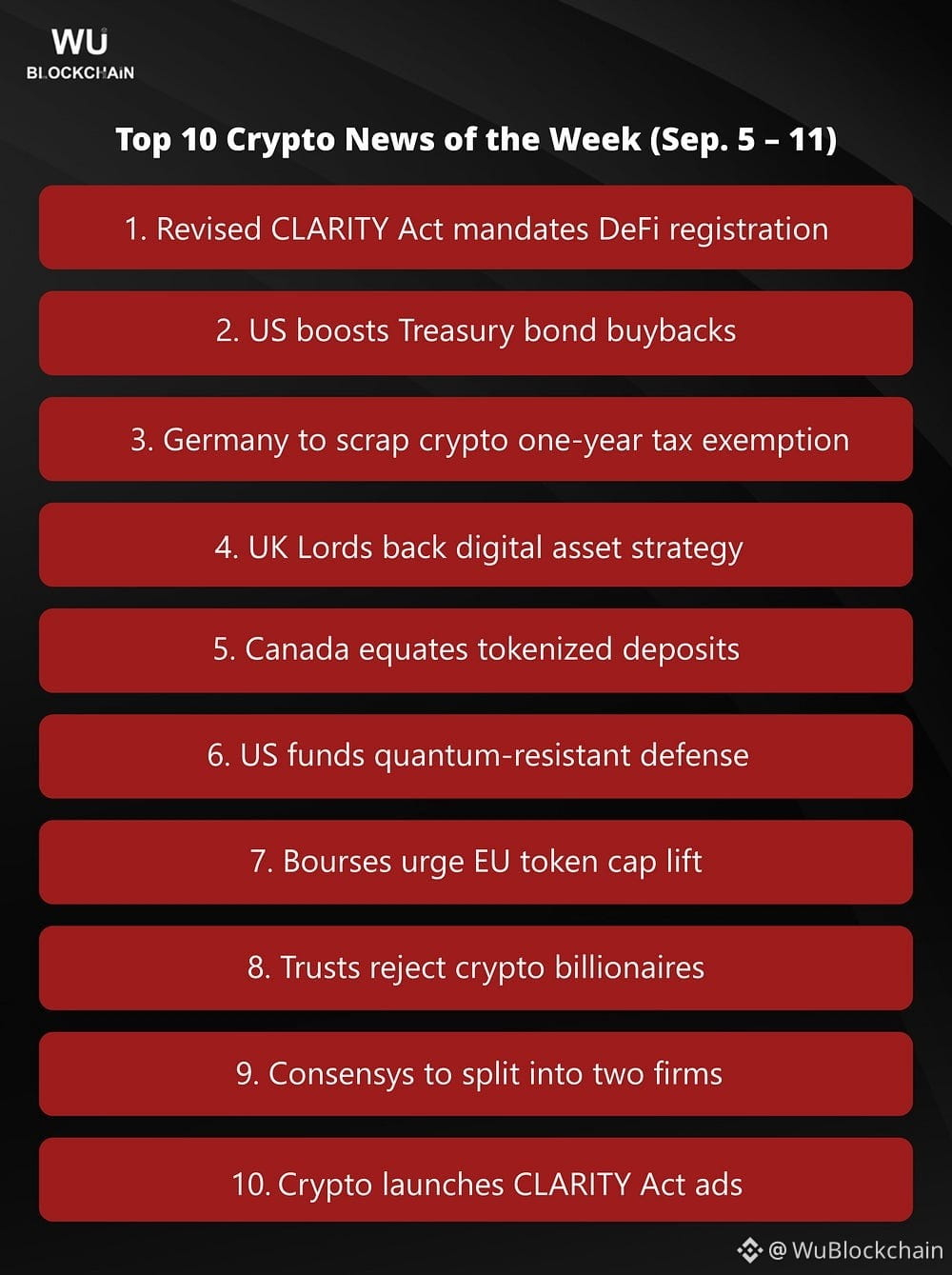
WuBlockchain Weekly: La Ley CLARITY revisada exige el registro de DeFi, los fondos de EE. UU. para defensa cuántica y...1. Los republicanos del Senado de EE. UU. presentan la Ley de Claridad revisada: los protocolos DeFi no descentralizados deben registrarse ante la CFTC link
La periodista cripto Eleanor Terrett informa que los republicanos del Senado en EE. UU. han publicado el texto revisado de la Ley de Claridad después de negociaciones durante el receso de agosto. Las disposiciones sobre reglas de ética, los BRCA y los ingresos de las stablecoin permanecen sin cambios. Las revisiones clave incluyen exigir que los protocolos DeFi no descentralizados se registren ante la CFTC, alineándose con la Sección 10301 de la versión del Comité de Banca del Senado; limitar las disposiciones sobre DeFi a transacciones spot de productos digitales o de efectivo para abordar las preocupaciones tribales sobre los mercados de predicción basados en blockchain; y aclarar aún más la autoridad de las cooperativas de crédito para realizar actividades relacionadas con cripto.
WuBlockchain Weekly: La Ley CLARITY revisada exige el registro de DeFi, los fondos de EE. UU. para defensa cuántica y...
1. Los republicanos del Senado de EE. UU. presentan la Ley de Claridad revisada: los protocolos DeFi no descentralizados deben registrarse ante la CFTC link
La periodista cripto Eleanor Terrett informa que los republicanos del Senado en EE. UU. han publicado el texto revisado de la Ley de Claridad después de negociaciones durante el receso de agosto. Las disposiciones sobre reglas de ética, los BRCA y los ingresos de las stablecoin permanecen sin cambios. Las revisiones clave incluyen exigir que los protocolos DeFi no descentralizados se registren ante la CFTC, alineándose con la Sección 10301 de la versión del Comité de Banca del Senado; limitar las disposiciones sobre DeFi a transacciones spot de productos digitales o de efectivo para abordar las preocupaciones tribales sobre los mercados de predicción basados en blockchain; y aclarar aún más la autoridad de las cooperativas de crédito para realizar actividades relacionadas con cripto.
La periodista cripto Eleanor Terrett informa que los republicanos del Senado en EE. UU. han publicado el texto revisado de la Ley de Claridad después de negociaciones durante el receso de agosto. Las disposiciones sobre reglas de ética, los BRCA y los ingresos de las stablecoin permanecen sin cambios. Las revisiones clave incluyen exigir que los protocolos DeFi no descentralizados se registren ante la CFTC, alineándose con la Sección 10301 de la versión del Comité de Banca del Senado; limitar las disposiciones sobre DeFi a transacciones spot de productos digitales o de efectivo para abordar las preocupaciones tribales sobre los mercados de predicción basados en blockchain; y aclarar aún más la autoridad de las cooperativas de crédito para realizar actividades relacionadas con cripto.
34
·
--
El IPC de EE. UU. de agosto se mantiene en 3,4%, y la inflación subyacente cae al nivel más bajo desde marzo de 2021El IPC de EE. UU. subió un 0,4% mes a mes en agosto, el mayor aumento en tres meses, mientras que la tasa de inflación anual se mantuvo en el 3,4%, en línea con las expectativas. Los precios de la gasolina se dispararon un 3,9% y representaron más de un tercio del aumento mensual. El IPC subyacente avanzó un 0,3% en el mes, también coincidiendo con las previsiones, mientras que la tasa anual subyacente se desaceleró hasta el 2,4% desde el 2,5%, su nivel más bajo desde marzo de 2021.
El IPC de EE. UU. de agosto se mantiene en 3,4%, y la inflación subyacente cae al nivel más bajo desde marzo de 2021
El IPC de EE. UU. subió un 0,4% mes a mes en agosto, el mayor aumento en tres meses, mientras que la tasa de inflación anual se mantuvo en el 3,4%, en línea con las expectativas. Los precios de la gasolina se dispararon un 3,9% y representaron más de un tercio del aumento mensual. El IPC subyacente avanzó un 0,3% en el mes, también coincidiendo con las previsiones, mientras que la tasa anual subyacente se desaceleró hasta el 2,4% desde el 2,5%, su nivel más bajo desde marzo de 2021.
1
128
·
--
Coinbase y Grayscale Ven Avanzar la Claridad Regulatoria de Cripto en EE. UU. Incluso Si se Atrasara la Ley CLARITYEl CEO de Coinbase, Brian Armstrong, le dijo a CNBC que la Ley CLARITY está cerca de conseguir el apoyo suficiente del Senado, y que los desacuerdos restantes se centran en gran medida en temas como disposiciones de ética. Se espera que el proyecto de ley se enfrente a una votación clave en el Senado el 15 de septiembre, donde alcanzar el umbral de 60 votos sigue siendo el principal obstáculo. Armstrong dijo que la aprobación podría desbloquear más capital institucional y respaldar productos como las acciones tokenizadas en EE. UU.
Por separado, el director de investigación de Grayscale, Zach Pandl, dijo que la claridad regulatoria ya está mejorando incluso sin CLARITY, citando avances en stablecoins, emisión de tokens, valores tokenizados y futuros perpetuos regulados. Ambos señalaron que, incluso si el proyecto de ley fracasa en 2026, la SEC y la CFTC aún podrían avanzar con normas que ofrezcan a la industria cripto un marco regulatorio más claro.
Coinbase y Grayscale Ven Avanzar la Claridad Regulatoria de Cripto en EE. UU. Incluso Si se Atrasara la Ley CLARITY
El CEO de Coinbase, Brian Armstrong, le dijo a CNBC que la Ley CLARITY está cerca de conseguir el apoyo suficiente del Senado, y que los desacuerdos restantes se centran en gran medida en temas como disposiciones de ética. Se espera que el proyecto de ley se enfrente a una votación clave en el Senado el 15 de septiembre, donde alcanzar el umbral de 60 votos sigue siendo el principal obstáculo. Armstrong dijo que la aprobación podría desbloquear más capital institucional y respaldar productos como las acciones tokenizadas en EE. UU.
Por separado, el director de investigación de Grayscale, Zach Pandl, dijo que la claridad regulatoria ya está mejorando incluso sin CLARITY, citando avances en stablecoins, emisión de tokens, valores tokenizados y futuros perpetuos regulados. Ambos señalaron que, incluso si el proyecto de ley fracasa en 2026, la SEC y la CFTC aún podrían avanzar con normas que ofrezcan a la industria cripto un marco regulatorio más claro.
Por separado, el director de investigación de Grayscale, Zach Pandl, dijo que la claridad regulatoria ya está mejorando incluso sin CLARITY, citando avances en stablecoins, emisión de tokens, valores tokenizados y futuros perpetuos regulados. Ambos señalaron que, incluso si el proyecto de ley fracasa en 2026, la SEC y la CFTC aún podrían avanzar con normas que ofrezcan a la industria cripto un marco regulatorio más claro.
56
·
--
Blockstream Se Niega a Pagar el Rescate Tras Devolverse el 85% del Liquid BTC RobadoBlockstream dijo que no pagará un rescate para recuperar el bitcoin robado de la Liquid Network, argumentando que tomar activos sin autorización y retener su devolución constituye un robo, en lugar de una actividad de “white-hat”. El atacante había devuelto previamente alrededor de 3.400 BTC, o aproximadamente el 85% de los fondos robados, mientras que aún quedan pendientes unos 598,5 BTC.
Blockstream dijo que emprenderá esfuerzos legales de recuperación con las fuerzas del orden, exchanges y especialistas forenses si los fondos restantes no son devueltos. El fundador de SlowMist, Cos, dijo que la respuesta firme de la empresa fue “puzzling”, y señaló que podría haber comunicaciones no divulgadas entre ambas partes.
Blockstream Se Niega a Pagar el Rescate Tras Devolverse el 85% del Liquid BTC Robado
Blockstream dijo que no pagará un rescate para recuperar el bitcoin robado de la Liquid Network, argumentando que tomar activos sin autorización y retener su devolución constituye un robo, en lugar de una actividad de “white-hat”. El atacante había devuelto previamente alrededor de 3.400 BTC, o aproximadamente el 85% de los fondos robados, mientras que aún quedan pendientes unos 598,5 BTC.
Blockstream dijo que emprenderá esfuerzos legales de recuperación con las fuerzas del orden, exchanges y especialistas forenses si los fondos restantes no son devueltos. El fundador de SlowMist, Cos, dijo que la respuesta firme de la empresa fue “puzzling”, y señaló que podría haber comunicaciones no divulgadas entre ambas partes.
Blockstream dijo que emprenderá esfuerzos legales de recuperación con las fuerzas del orden, exchanges y especialistas forenses si los fondos restantes no son devueltos. El fundador de SlowMist, Cos, dijo que la respuesta firme de la empresa fue “puzzling”, y señaló que podría haber comunicaciones no divulgadas entre ambas partes.
69
·
--
India Lanza Piloto de Bonos Tokenizados para el Mercado de Deuda Corporativa de $620BEl regulador de valores de India, SEBI, y el Banco de la Reserva de India han lanzado el piloto Demat 2.0 para probar bonos corporativos tokenizados mediante tecnología de libro mayor distribuido. El piloto utiliza el dólar digital mayorista del RBI para la liquidación atómica, lo que permite que los valores y los pagos se liquiden simultáneamente en la cadena. REC, L&T y IIFL han emitido en conjunto ₹10.25 mil millones ($116 millones) en bonos bajo el programa, que forma parte del impulso más amplio de India para modernizar su mercado de deuda corporativa, de aproximadamente $620 mil millones.
India Lanza Piloto de Bonos Tokenizados para el Mercado de Deuda Corporativa de $620B
El regulador de valores de India, SEBI, y el Banco de la Reserva de India han lanzado el piloto Demat 2.0 para probar bonos corporativos tokenizados mediante tecnología de libro mayor distribuido. El piloto utiliza el dólar digital mayorista del RBI para la liquidación atómica, lo que permite que los valores y los pagos se liquiden simultáneamente en la cadena. REC, L&T y IIFL han emitido en conjunto ₹10.25 mil millones ($116 millones) en bonos bajo el programa, que forma parte del impulso más amplio de India para modernizar su mercado de deuda corporativa, de aproximadamente $620 mil millones.
29
Inicia sesión para explorar más contenidos
Únete a usuarios globales de criptomonedas en Binance Square
⚡️ Obtén información útil y actualizada sobre criptos.
💬 Avalado por el mayor exchange de criptomonedas en el mundo.
👍 Descubre perspectivas reales de creadores verificados.
Email/número de teléfono
Temas populares
AnthropicCEOCallsForAISlowdown
44,714 vistas
617 están debatiendo
#anthropicceocallsforaislowdown
"Necesitamos desacelerar la IA": ¿Por qué hasta los líderes del sector están pidiendo una pausa?
El ecosistema tecnológico está acostumbrado a romper cosas y avanzar rápido ("move fast and break things"). Sin embargo, el CEO de Anthropic se ha sumado al llamado global de actuar con mayor prudencia en el desarrollo de la Inteligencia Artificial.
No se trata de frenar la innovación por miedo, sino de adelantarse a los riesgos antes de que la velocidad del desarrollo supere nuestra capacidad de regulación y control.
¿Qué está en juego?
Seguridad y alineación: Asegurar que los modelos más avanzados sigan siendo seguros y alineados con los valores humanos antes de su despliegue masivo.
Marcos regulatorios realistas: Dar tiempo a los gobiernos e instituciones para entender la tecnología y crear leyes eficaces, no reactivas.
Mitigación de riesgos sistémicos: Evitar una "carrera armamentista" comercial entre gigantes tecnológicos que priorice la velocidad sobre la estabilidad social y económica.
La verdadera innovación no es solo lanzar el modelo más rápido, sino construir la infraestructura más segura y confiable a largo plazo.
$VTHO
$SCR
$CVC
Joseph RRG S7
·2 me gusta
·952 vistas
AnthropicChoosesNasdaqForPotentialIPO
18,387 vistas
240 están debatiendo
SECReceivesGrayscaleLitecoinTrustETFFiling
172,120 vistas
2,002 están debatiendo