

SanAndreas
404 Publicaciones

SanAndreas
Denunciar
Bloquear usuario
Trading for life, and Life for trading
Holder de VANA
Traders de alta frecuencia
5.8 año(s)
44 Siguiendo
102 Seguidores
151 Me gusta
Publicaciones
Todo
Citas
·
--
Ver traducción
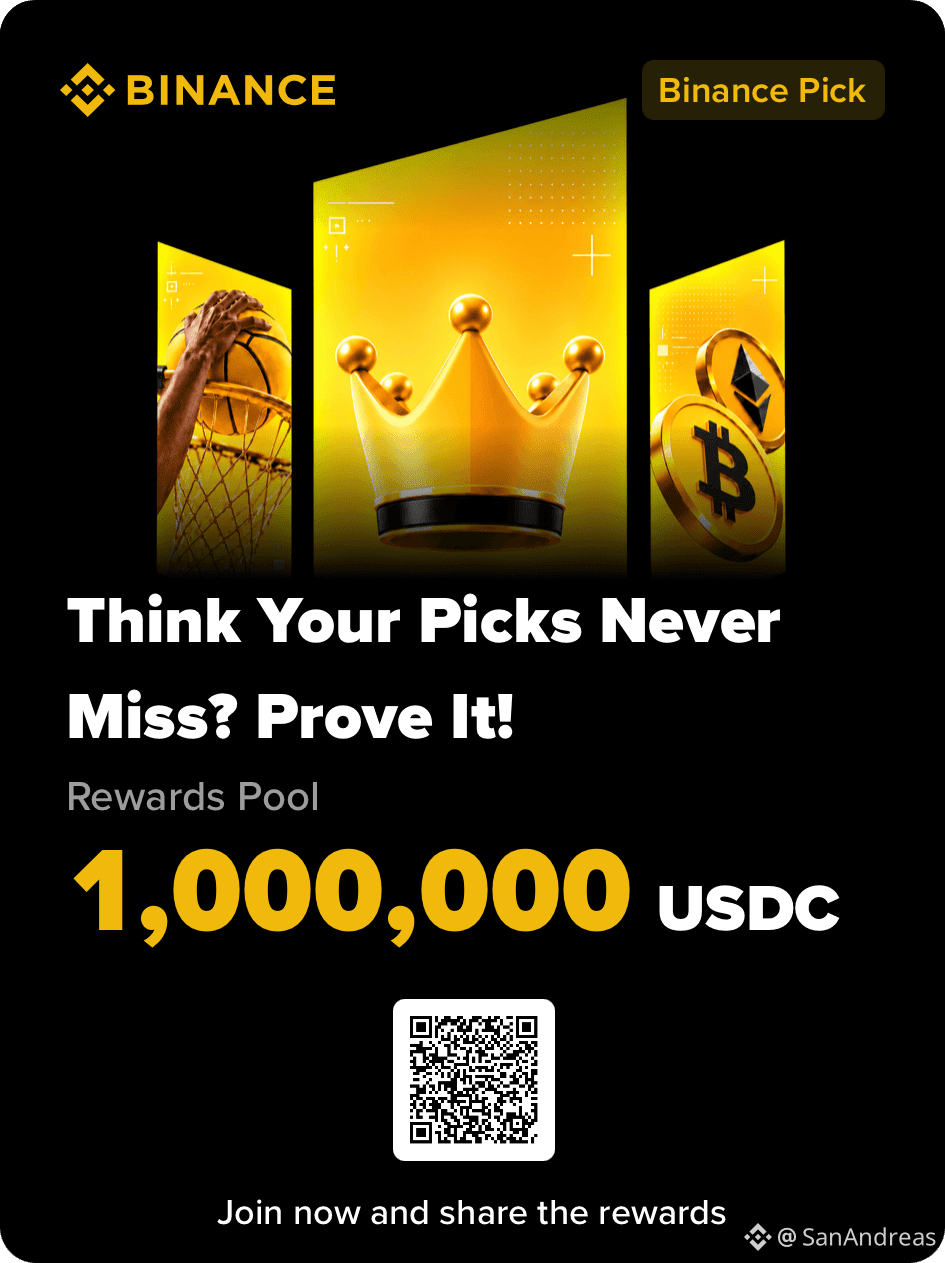
#BinancePick predict and grab the point, just it
#BinancePick predict and grab the point, just it
·
--
Ver traducción
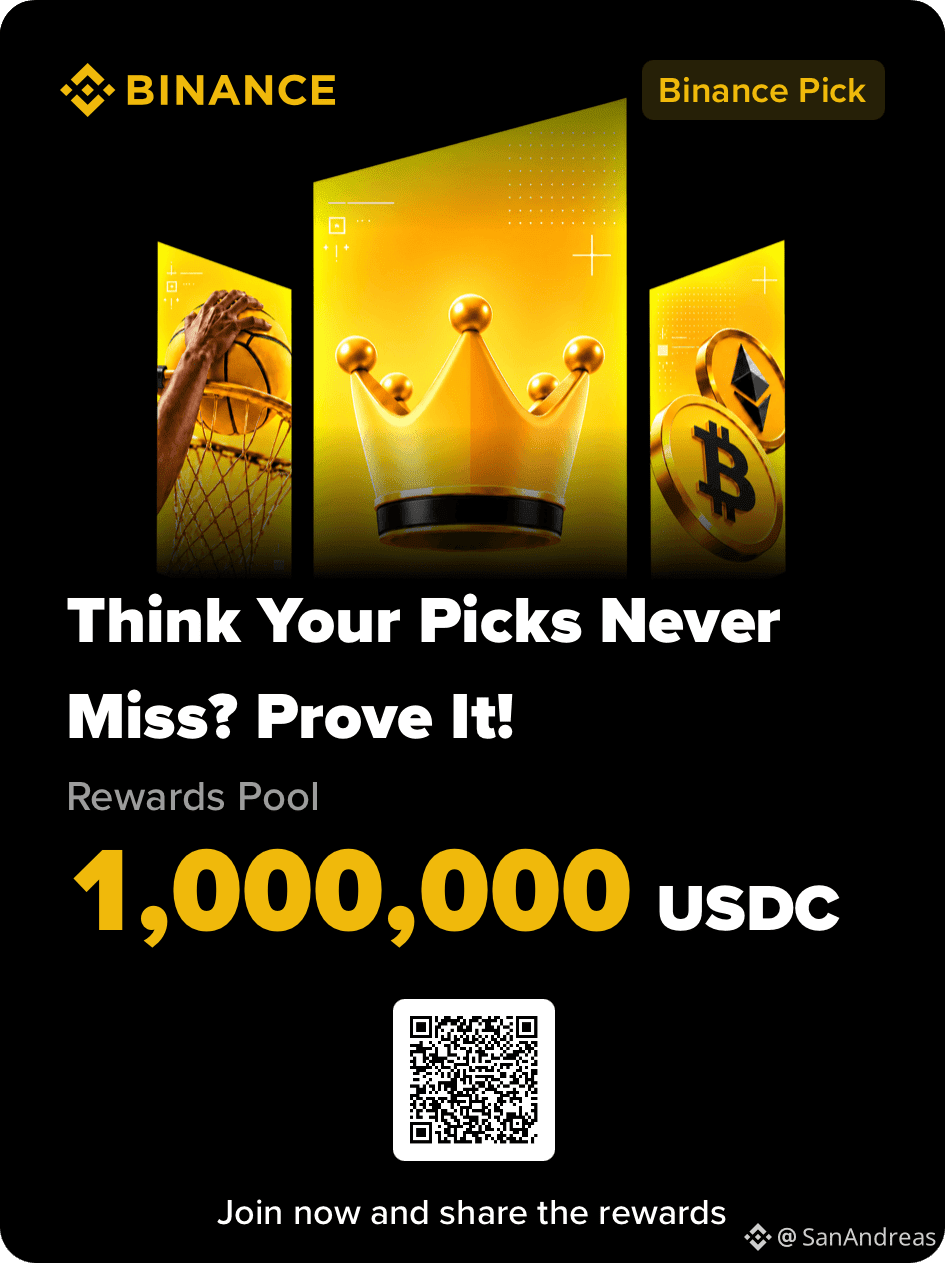
#BinancePick Dont miss this binance campaign
#BinancePick Dont miss this binance campaign
1
·
--
Ver traducción
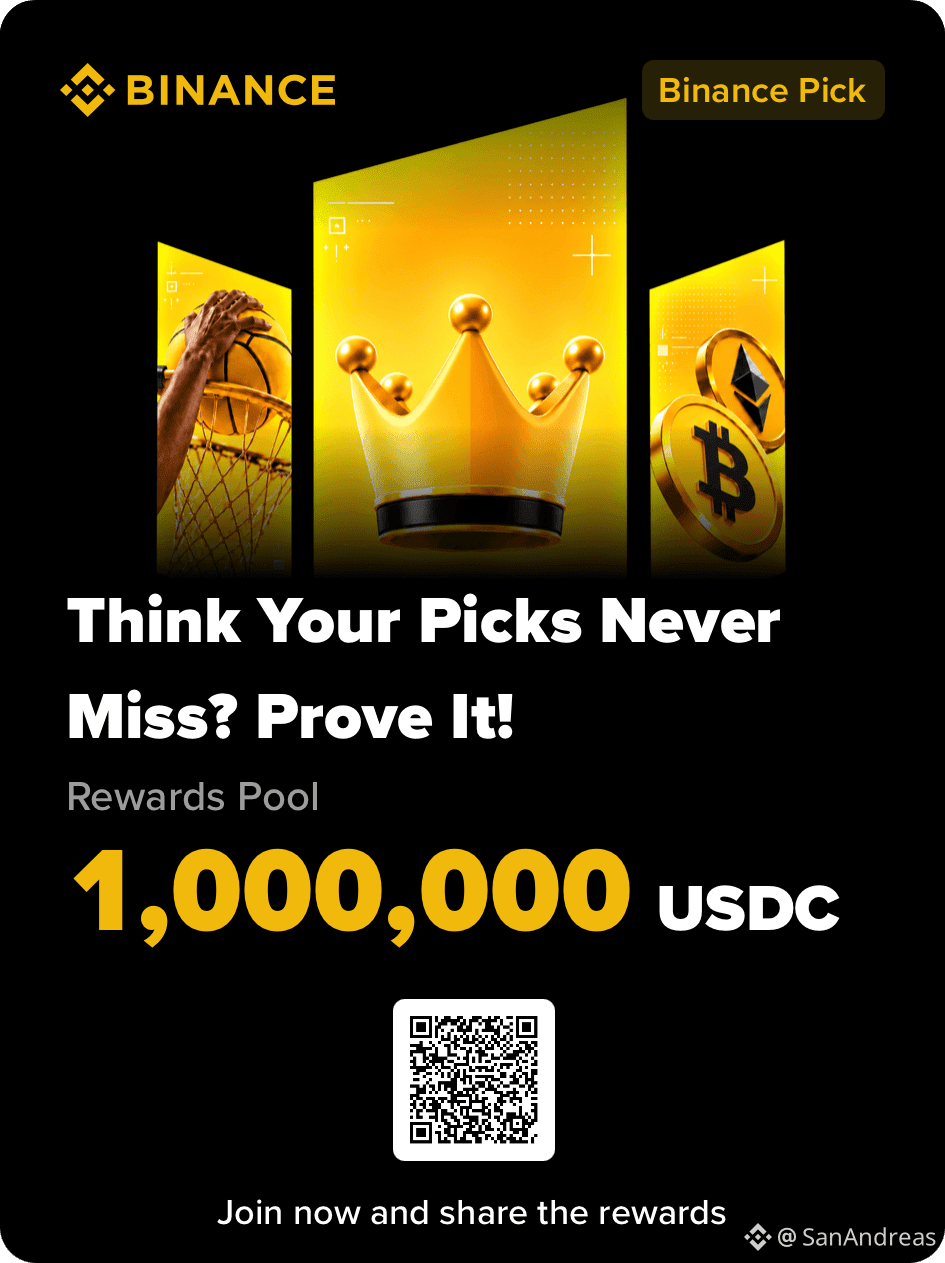
#BinancePick the fun campaign from binance. let joined
#BinancePick the fun campaign from binance. let joined
9
·
--
74
·
--
#BinancePick nueva campaña divertida de Binance
#BinancePick nueva campaña divertida de Binance
2
1
156
·
--
66
·
--
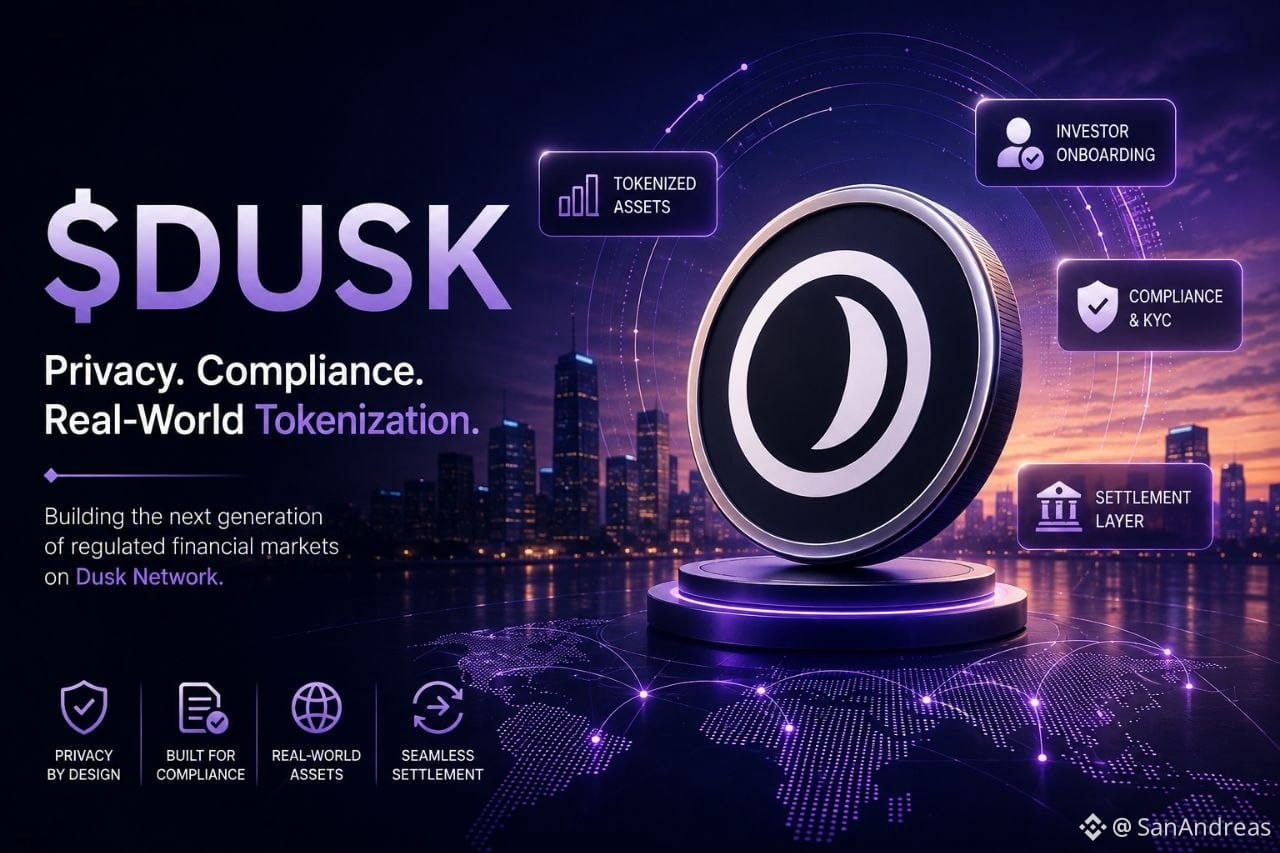
@Dusk_Foundation #dusk $DUSK
{spot}(DUSKUSDT)
DuskVM
DuskVM es el entorno de ejecución para contratos Rust/WASM basado en Wasmtime que se ejecuta directamente en la Dusk L1. Es la vía para contratos que necesitan acceso directo a los activos de L1, a los modelos de transacciones, privacidad o capacidades de conocimiento cero.
DuskEVM
DuskEVM es un entorno de ejecución equivalente a EVM basado en OP Stack. Te permite desplegar contratos Solidity usando herramientas EVM estándar mientras utilizas DuskDS para la liquidación y la disponibilidad de datos.
Capa de red: Kadcast
Kadcast es la capa de red P2P de Dusk. Utiliza un overlay estructurado (en lugar de gossip aleatorio) para reducir el ancho de banda y mejorar la previsibilidad de la latencia.
Contratos de génesis
Dusk incluye dos contratos de génesis:
Stake: realiza seguimiento a provisioners, stakes, recompensas y la gestión del conjunto de validadores. (source)
Transfer: transfiere DUSK y es el punto de entrada para la ejecución de transacciones y el pago de gas. (source)
Para operadores de nodos: Ejecuta un nodo provisioner.
Aplicaciones
Sobre el protocolo base, Dusk admite protocolos y herramientas de capa de aplicación para mercados regulados.
Dusk Trade
Dusk Trade es la capa de aplicación para activos financieros tokenizados en Dusk. Se está construyendo en torno a flujos de trabajo reales de mercado: incorporación de inversores, vinculación de wallets, transferencias controladas, coordinación de pagos y liquidación conforme.
Zedger / Hedger
Zedger y Hedger son protocolos para emitir y gestionar activos regulados con restricciones integradas de cumplimiento y privacidad.
Zedger utiliza contratos DuskVM en la Dusk L1.
Hedger se ejecuta en DuskEVM para ofrecer una experiencia para desarrolladores centrada en EVM.
Citadel
Citadel
Citadel es la capa de identidad y acceso de Dusk. Admite divulgación selectiva para que los usuarios puedan probar atributos (p. ej., residencia, rango de edad, acreditación) sin revelar más de lo necesario.
@Dusk #dusk $DUSK
DuskVM
DuskVM es el entorno de ejecución para contratos Rust/WASM basado en Wasmtime que se ejecuta directamente en la Dusk L1. Es la vía para contratos que necesitan acceso directo a los activos de L1, a los modelos de transacciones, privacidad o capacidades de conocimiento cero.
DuskEVM
DuskEVM es un entorno de ejecución equivalente a EVM basado en OP Stack. Te permite desplegar contratos Solidity usando herramientas EVM estándar mientras utilizas DuskDS para la liquidación y la disponibilidad de datos.
Capa de red: Kadcast
Kadcast es la capa de red P2P de Dusk. Utiliza un overlay estructurado (en lugar de gossip aleatorio) para reducir el ancho de banda y mejorar la previsibilidad de la latencia.
Contratos de génesis
Dusk incluye dos contratos de génesis:
Stake: realiza seguimiento a provisioners, stakes, recompensas y la gestión del conjunto de validadores. (source)
Transfer: transfiere DUSK y es el punto de entrada para la ejecución de transacciones y el pago de gas. (source)
Para operadores de nodos: Ejecuta un nodo provisioner.
Aplicaciones
Sobre el protocolo base, Dusk admite protocolos y herramientas de capa de aplicación para mercados regulados.
Dusk Trade
Dusk Trade es la capa de aplicación para activos financieros tokenizados en Dusk. Se está construyendo en torno a flujos de trabajo reales de mercado: incorporación de inversores, vinculación de wallets, transferencias controladas, coordinación de pagos y liquidación conforme.
Zedger / Hedger
Zedger y Hedger son protocolos para emitir y gestionar activos regulados con restricciones integradas de cumplimiento y privacidad.
Zedger utiliza contratos DuskVM en la Dusk L1.
Hedger se ejecuta en DuskEVM para ofrecer una experiencia para desarrolladores centrada en EVM.
Citadel
Citadel
Citadel es la capa de identidad y acceso de Dusk. Admite divulgación selectiva para que los usuarios puedan probar atributos (p. ej., residencia, rango de edad, acreditación) sin revelar más de lo necesario.
DuskVM
DuskVM es el entorno de ejecución para contratos Rust/WASM basado en Wasmtime que se ejecuta directamente en la Dusk L1. Es la vía para contratos que necesitan acceso directo a los activos de L1, a los modelos de transacciones, privacidad o capacidades de conocimiento cero.
DuskEVM
DuskEVM es un entorno de ejecución equivalente a EVM basado en OP Stack. Te permite desplegar contratos Solidity usando herramientas EVM estándar mientras utilizas DuskDS para la liquidación y la disponibilidad de datos.
Capa de red: Kadcast
Kadcast es la capa de red P2P de Dusk. Utiliza un overlay estructurado (en lugar de gossip aleatorio) para reducir el ancho de banda y mejorar la previsibilidad de la latencia.
Contratos de génesis
Dusk incluye dos contratos de génesis:
Stake: realiza seguimiento a provisioners, stakes, recompensas y la gestión del conjunto de validadores. (source)
Transfer: transfiere DUSK y es el punto de entrada para la ejecución de transacciones y el pago de gas. (source)
Para operadores de nodos: Ejecuta un nodo provisioner.
Aplicaciones
Sobre el protocolo base, Dusk admite protocolos y herramientas de capa de aplicación para mercados regulados.
Dusk Trade
Dusk Trade es la capa de aplicación para activos financieros tokenizados en Dusk. Se está construyendo en torno a flujos de trabajo reales de mercado: incorporación de inversores, vinculación de wallets, transferencias controladas, coordinación de pagos y liquidación conforme.
Zedger / Hedger
Zedger y Hedger son protocolos para emitir y gestionar activos regulados con restricciones integradas de cumplimiento y privacidad.
Zedger utiliza contratos DuskVM en la Dusk L1.
Hedger se ejecuta en DuskEVM para ofrecer una experiencia para desarrolladores centrada en EVM.
Citadel
Citadel
Citadel es la capa de identidad y acceso de Dusk. Admite divulgación selectiva para que los usuarios puedan probar atributos (p. ej., residencia, rango de edad, acreditación) sin revelar más de lo necesario.
94
·
--
#termmax @termmax
3. Utilidad TMX
Los titulares de TMX pueden participar en la gobernanza y orientar las funciones del producto y los parámetros del protocolo.
Los titulares de TMX también pueden proporcionar liquidez a un pool de DEX como PancakeSwap o apostar sus tokens $TMX para recibir sTMX (tokens FT del protocolo en TMX), lo que permite que los titulares obtengan los siguientes beneficios:
Recompensas de staking, incluidas emisiones de TMX que pueden proceder de la asignación de la Comunidad (en Tokenomics) y/o una porción de tokens de los fondos del Tesoro TermMax
Derechos de gobernanza mejorados para ajustar los parámetros del protocolo, incluidos los parámetros de riesgo de mercado, y la inclusión en lista blanca del curador
Los fondos del Tesoro pueden generarse a partir de:
Comisiones de trading de los tokens de producto TermMax FT/XT en todos los mercados
Comisiones del protocolo cobradas por actividad de préstamo
Comisiones por liquidación
Otras fuentes
Este mecanismo alinea los intereses de los titulares a largo plazo con la sostenibilidad y el crecimiento del protocolo.
#termmax @TermMax
3. Utilidad TMX
Los titulares de TMX pueden participar en la gobernanza y orientar las funciones del producto y los parámetros del protocolo.
Los titulares de TMX también pueden proporcionar liquidez a un pool de DEX como PancakeSwap o apostar sus tokens $TMX para recibir sTMX (tokens FT del protocolo en TMX), lo que permite que los titulares obtengan los siguientes beneficios:
Recompensas de staking, incluidas emisiones de TMX que pueden proceder de la asignación de la Comunidad (en Tokenomics) y/o una porción de tokens de los fondos del Tesoro TermMax
Derechos de gobernanza mejorados para ajustar los parámetros del protocolo, incluidos los parámetros de riesgo de mercado, y la inclusión en lista blanca del curador
Los fondos del Tesoro pueden generarse a partir de:
Comisiones de trading de los tokens de producto TermMax FT/XT en todos los mercados
Comisiones del protocolo cobradas por actividad de préstamo
Comisiones por liquidación
Otras fuentes
Este mecanismo alinea los intereses de los titulares a largo plazo con la sostenibilidad y el crecimiento del protocolo.
3. Utilidad TMX
Los titulares de TMX pueden participar en la gobernanza y orientar las funciones del producto y los parámetros del protocolo.
Los titulares de TMX también pueden proporcionar liquidez a un pool de DEX como PancakeSwap o apostar sus tokens $TMX para recibir sTMX (tokens FT del protocolo en TMX), lo que permite que los titulares obtengan los siguientes beneficios:
Recompensas de staking, incluidas emisiones de TMX que pueden proceder de la asignación de la Comunidad (en Tokenomics) y/o una porción de tokens de los fondos del Tesoro TermMax
Derechos de gobernanza mejorados para ajustar los parámetros del protocolo, incluidos los parámetros de riesgo de mercado, y la inclusión en lista blanca del curador
Los fondos del Tesoro pueden generarse a partir de:
Comisiones de trading de los tokens de producto TermMax FT/XT en todos los mercados
Comisiones del protocolo cobradas por actividad de préstamo
Comisiones por liquidación
Otras fuentes
Este mecanismo alinea los intereses de los titulares a largo plazo con la sostenibilidad y el crecimiento del protocolo.
76
·
--
@Dusk_Foundation #dusk $DUSK
{spot}(DUSKUSDT)
DuskDS es la capa de Disponibilidad de Datos y Liquidación de Dusk. Es el fundamento de consenso, finalidad y disponibilidad de datos de Dusk L1 e incluye los modelos de transacciones Moonlight y Phoenix usados para transferir DUSK y pagar por la ejecución.
DuskDS no es un nombre para la red completa de Dusk. Dusk L1 también incluye la ejecución de contratos inteligentes DuskVM, mientras que DuskEVM es una capa de ejecución compatible con EVM que liquida y publica datos a través de DuskDS.
DuskDS admite dos modelos de transacciones: Moonlight para cuentas públicas transparentes y Phoenix para transferencias confidenciales protegidas. Ver: Modelos de Transacciones en Dusk.
Rusk
Rusk es la implementación del nodo en Rust para Dusk L1. Ejecuta el consenso de DuskDS, mantiene el estado de la cadena, ejecuta contratos de DuskVM y expone la API HTTP y el sistema de eventos RUES usados por billeteras, indexadores e integradores.
Acreditación Concisa (Succinct Attestation)
Succinct Attestation (SA) es el protocolo de consenso de prueba de participación (proof-of-stake) sin permisos y basado en comités de DuskDS. Utiliza provisioners seleccionados aleatoriamente para proponer, validar y ratificar bloques, proporcionando una finalidad rápida y determinista adecuada para los mercados financieros.
A alto nivel, cada ronda pasa por tres pasos:
Propuesta – un provisioner crea y difunde un bloque candidato.
Validación – un comité comprueba la validez del bloque.
Ratificación – otro comité confirma el resultado de la validación y finaliza el bloque.
Para la especificación completa del protocolo y el análisis de seguridad (incluida la selección de comités, la finalidad y el slashing), consulte la Sección 3 “Mecanismo de consenso” del Dusk Whitepaper (2024).
Transacciones en DuskDS
Las transacciones en DuskDS las gestiona el contrato de Transfer, que admite tanto transferencias públicas como transferencias protegidas.
Moonlight es basado en cuentas y es público. Phoenix es basado en UTXO y está protegido. Ambos se usan para transferir DUSK, pagar el gas y actuar como punto de entrada para la ejecución de contratos.
@Dusk #dusk $DUSK
DuskDS es la capa de Disponibilidad de Datos y Liquidación de Dusk. Es el fundamento de consenso, finalidad y disponibilidad de datos de Dusk L1 e incluye los modelos de transacciones Moonlight y Phoenix usados para transferir DUSK y pagar por la ejecución.
DuskDS no es un nombre para la red completa de Dusk. Dusk L1 también incluye la ejecución de contratos inteligentes DuskVM, mientras que DuskEVM es una capa de ejecución compatible con EVM que liquida y publica datos a través de DuskDS.
DuskDS admite dos modelos de transacciones: Moonlight para cuentas públicas transparentes y Phoenix para transferencias confidenciales protegidas. Ver: Modelos de Transacciones en Dusk.
Rusk
Rusk es la implementación del nodo en Rust para Dusk L1. Ejecuta el consenso de DuskDS, mantiene el estado de la cadena, ejecuta contratos de DuskVM y expone la API HTTP y el sistema de eventos RUES usados por billeteras, indexadores e integradores.
Acreditación Concisa (Succinct Attestation)
Succinct Attestation (SA) es el protocolo de consenso de prueba de participación (proof-of-stake) sin permisos y basado en comités de DuskDS. Utiliza provisioners seleccionados aleatoriamente para proponer, validar y ratificar bloques, proporcionando una finalidad rápida y determinista adecuada para los mercados financieros.
A alto nivel, cada ronda pasa por tres pasos:
Propuesta – un provisioner crea y difunde un bloque candidato.
Validación – un comité comprueba la validez del bloque.
Ratificación – otro comité confirma el resultado de la validación y finaliza el bloque.
Para la especificación completa del protocolo y el análisis de seguridad (incluida la selección de comités, la finalidad y el slashing), consulte la Sección 3 “Mecanismo de consenso” del Dusk Whitepaper (2024).
Transacciones en DuskDS
Las transacciones en DuskDS las gestiona el contrato de Transfer, que admite tanto transferencias públicas como transferencias protegidas.
Moonlight es basado en cuentas y es público. Phoenix es basado en UTXO y está protegido. Ambos se usan para transferir DUSK, pagar el gas y actuar como punto de entrada para la ejecución de contratos.
DuskDS es la capa de Disponibilidad de Datos y Liquidación de Dusk. Es el fundamento de consenso, finalidad y disponibilidad de datos de Dusk L1 e incluye los modelos de transacciones Moonlight y Phoenix usados para transferir DUSK y pagar por la ejecución.
DuskDS no es un nombre para la red completa de Dusk. Dusk L1 también incluye la ejecución de contratos inteligentes DuskVM, mientras que DuskEVM es una capa de ejecución compatible con EVM que liquida y publica datos a través de DuskDS.
DuskDS admite dos modelos de transacciones: Moonlight para cuentas públicas transparentes y Phoenix para transferencias confidenciales protegidas. Ver: Modelos de Transacciones en Dusk.
Rusk
Rusk es la implementación del nodo en Rust para Dusk L1. Ejecuta el consenso de DuskDS, mantiene el estado de la cadena, ejecuta contratos de DuskVM y expone la API HTTP y el sistema de eventos RUES usados por billeteras, indexadores e integradores.
Acreditación Concisa (Succinct Attestation)
Succinct Attestation (SA) es el protocolo de consenso de prueba de participación (proof-of-stake) sin permisos y basado en comités de DuskDS. Utiliza provisioners seleccionados aleatoriamente para proponer, validar y ratificar bloques, proporcionando una finalidad rápida y determinista adecuada para los mercados financieros.
A alto nivel, cada ronda pasa por tres pasos:
Propuesta – un provisioner crea y difunde un bloque candidato.
Validación – un comité comprueba la validez del bloque.
Ratificación – otro comité confirma el resultado de la validación y finaliza el bloque.
Para la especificación completa del protocolo y el análisis de seguridad (incluida la selección de comités, la finalidad y el slashing), consulte la Sección 3 “Mecanismo de consenso” del Dusk Whitepaper (2024).
Transacciones en DuskDS
Las transacciones en DuskDS las gestiona el contrato de Transfer, que admite tanto transferencias públicas como transferencias protegidas.
Moonlight es basado en cuentas y es público. Phoenix es basado en UTXO y está protegido. Ambos se usan para transferir DUSK, pagar el gas y actuar como punto de entrada para la ejecución de contratos.
1
100
·
--
2. Introducción a TermMax
2.1 El Problema
Los mercados de DeFi operan principalmente con tipos de interés variables, creando incertidumbre tanto para prestatarios como para prestamistas. Las instituciones tradicionales y los traders profesionales requieren previsibilidad de tipos para:
Planificar estrategias de asignación de capital
Hedgear la exposición a tipos de interés
Optimizar los costes y rendimientos del apalancamiento
Gestionar el flujo de caja con certeza
2.2 La Solución
TermMax proporciona infraestructura descentralizada de préstamos y empréstitos con tasa y plazo fijos mediante un sistema de tres tokens y un AMM personalizado:
FT (Token de Tasa Fija) — Un token tipo bono cupón cero que representa el derecho a canjear el valor nominal de una posición de deuda al vencimiento. Los prestamistas compran FT con descuento y lo canjean a la par, fijando un rendimiento fijo desde el momento en que entran.
XT (Token de Rendimiento) — El componente complementario de FT, donde 1 FT + 1 XT = 1 token de deuda. Los prestatarios reciben XT cuando contratan un préstamo y pueden venderlo inmediatamente para obtener liquidez, fijando su coste de endeudamiento al momento de entrar. XT también funciona como un token similar a una prima de opción, que representa el instrumento de opciones en los mercados TermMax Alpha.
GT (Token de Gearing) — Un NFT que encapsula una posición apalancada, registrando en cadena la información de su colateral y deuda asociadas. En lugar de hacer manualmente el bucle de colateral y pedir prestado múltiples veces, los usuarios pueden acuñar un GT en una sola transacción para lograr el apalancamiento objetivo con costes de gas significativamente más bajos.
Curadores & Eficiencia de Capital
Los mercados de TermMax son gestionados por curadores profesionales: gestores especializados de liquidez que establecen curvas de precios, gestionan parámetros de riesgo y optimizan la asignación de capital. Los curadores actuales incluyen Keyrock, Hardcoded Lab, Edge Capital, AlphaPing y Origami Crypto.
Dos mecanismos garantizan que el capital de los curadores funcione con la máxima eficiencia:
Órdenes Atómicas: Antes de que los fondos sean prestados, la liquidez virtual puede distribuirse simultáneamente entre múltiples órdenes, asegurando que el capital esté siempre colocado donde más se necesita sin fragmentación.
@termmax #TermMax
2. Introducción a TermMax
2.1 El Problema
Los mercados de DeFi operan principalmente con tipos de interés variables, creando incertidumbre tanto para prestatarios como para prestamistas. Las instituciones tradicionales y los traders profesionales requieren previsibilidad de tipos para:
Planificar estrategias de asignación de capital
Hedgear la exposición a tipos de interés
Optimizar los costes y rendimientos del apalancamiento
Gestionar el flujo de caja con certeza
2.2 La Solución
TermMax proporciona infraestructura descentralizada de préstamos y empréstitos con tasa y plazo fijos mediante un sistema de tres tokens y un AMM personalizado:
FT (Token de Tasa Fija) — Un token tipo bono cupón cero que representa el derecho a canjear el valor nominal de una posición de deuda al vencimiento. Los prestamistas compran FT con descuento y lo canjean a la par, fijando un rendimiento fijo desde el momento en que entran.
XT (Token de Rendimiento) — El componente complementario de FT, donde 1 FT + 1 XT = 1 token de deuda. Los prestatarios reciben XT cuando contratan un préstamo y pueden venderlo inmediatamente para obtener liquidez, fijando su coste de endeudamiento al momento de entrar. XT también funciona como un token similar a una prima de opción, que representa el instrumento de opciones en los mercados TermMax Alpha.
GT (Token de Gearing) — Un NFT que encapsula una posición apalancada, registrando en cadena la información de su colateral y deuda asociadas. En lugar de hacer manualmente el bucle de colateral y pedir prestado múltiples veces, los usuarios pueden acuñar un GT en una sola transacción para lograr el apalancamiento objetivo con costes de gas significativamente más bajos.
Curadores & Eficiencia de Capital
Los mercados de TermMax son gestionados por curadores profesionales: gestores especializados de liquidez que establecen curvas de precios, gestionan parámetros de riesgo y optimizan la asignación de capital. Los curadores actuales incluyen Keyrock, Hardcoded Lab, Edge Capital, AlphaPing y Origami Crypto.
Dos mecanismos garantizan que el capital de los curadores funcione con la máxima eficiencia:
Órdenes Atómicas: Antes de que los fondos sean prestados, la liquidez virtual puede distribuirse simultáneamente entre múltiples órdenes, asegurando que el capital esté siempre colocado donde más se necesita sin fragmentación.
@TermMax #TermMax
2.1 El Problema
Los mercados de DeFi operan principalmente con tipos de interés variables, creando incertidumbre tanto para prestatarios como para prestamistas. Las instituciones tradicionales y los traders profesionales requieren previsibilidad de tipos para:
Planificar estrategias de asignación de capital
Hedgear la exposición a tipos de interés
Optimizar los costes y rendimientos del apalancamiento
Gestionar el flujo de caja con certeza
2.2 La Solución
TermMax proporciona infraestructura descentralizada de préstamos y empréstitos con tasa y plazo fijos mediante un sistema de tres tokens y un AMM personalizado:
FT (Token de Tasa Fija) — Un token tipo bono cupón cero que representa el derecho a canjear el valor nominal de una posición de deuda al vencimiento. Los prestamistas compran FT con descuento y lo canjean a la par, fijando un rendimiento fijo desde el momento en que entran.
XT (Token de Rendimiento) — El componente complementario de FT, donde 1 FT + 1 XT = 1 token de deuda. Los prestatarios reciben XT cuando contratan un préstamo y pueden venderlo inmediatamente para obtener liquidez, fijando su coste de endeudamiento al momento de entrar. XT también funciona como un token similar a una prima de opción, que representa el instrumento de opciones en los mercados TermMax Alpha.
GT (Token de Gearing) — Un NFT que encapsula una posición apalancada, registrando en cadena la información de su colateral y deuda asociadas. En lugar de hacer manualmente el bucle de colateral y pedir prestado múltiples veces, los usuarios pueden acuñar un GT en una sola transacción para lograr el apalancamiento objetivo con costes de gas significativamente más bajos.
Curadores & Eficiencia de Capital
Los mercados de TermMax son gestionados por curadores profesionales: gestores especializados de liquidez que establecen curvas de precios, gestionan parámetros de riesgo y optimizan la asignación de capital. Los curadores actuales incluyen Keyrock, Hardcoded Lab, Edge Capital, AlphaPing y Origami Crypto.
Dos mecanismos garantizan que el capital de los curadores funcione con la máxima eficiencia:
Órdenes Atómicas: Antes de que los fondos sean prestados, la liquidez virtual puede distribuirse simultáneamente entre múltiples órdenes, asegurando que el capital esté siempre colocado donde más se necesita sin fragmentación.
@TermMax #TermMax
18
·
--
#termmax @termmax
Libro Blanco del Token TMX
Versión 1.0 | Marzo de 2026
Aviso legal:
Este libro blanco es solo para fines informativos y no constituye asesoramiento financiero, legal ni de inversión. La información contenida en este documento puede estar sujeta a cambios sin previo aviso. Term Structure Labs y sus entidades afiliadas no realizan declaraciones ni ofrecen garantías sobre la exactitud o integridad de este documento. Los participantes potenciales deben realizar su propia diligencia debida y consultar con asesores profesionales antes de tomar cualquier decisión.
1. Resumen ejecutivo
TMX es el token de utilidad y de gobernanza para TermMax, un protocolo descentralizado de préstamos y empréstitos a tasa fija que ofrece tasas de interés predecibles en DeFi mediante una tokenización innovadora y tecnología de market maker automatizado (AMM).
Aspectos clave:
Suministro total: 1.000.000.000 TMX (fijo, sin inflación)
Estándar de token: ERC20 (OFT en múltiples blockchains)
Fecha de TGE: por anunciar
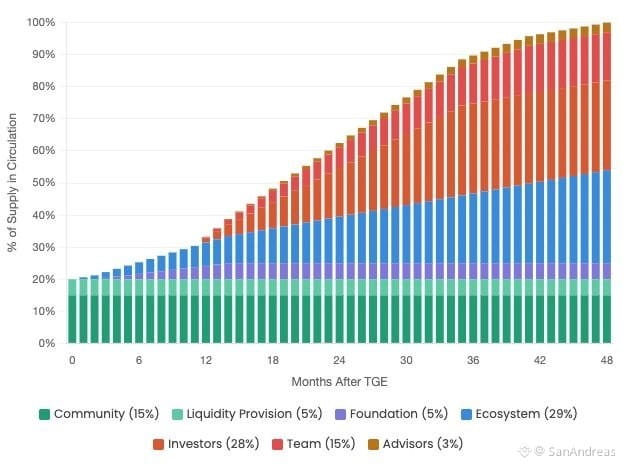
Circulación inicial: ~20% en el momento del TGE
Función principal: gobernanza del protocolo, recompensas de staking e incentivos del ecosistema
#termmax @TermMax
Libro Blanco del Token TMX
Versión 1.0 | Marzo de 2026
Aviso legal:
Este libro blanco es solo para fines informativos y no constituye asesoramiento financiero, legal ni de inversión. La información contenida en este documento puede estar sujeta a cambios sin previo aviso. Term Structure Labs y sus entidades afiliadas no realizan declaraciones ni ofrecen garantías sobre la exactitud o integridad de este documento. Los participantes potenciales deben realizar su propia diligencia debida y consultar con asesores profesionales antes de tomar cualquier decisión.
1. Resumen ejecutivo
TMX es el token de utilidad y de gobernanza para TermMax, un protocolo descentralizado de préstamos y empréstitos a tasa fija que ofrece tasas de interés predecibles en DeFi mediante una tokenización innovadora y tecnología de market maker automatizado (AMM).
Aspectos clave:
Suministro total: 1.000.000.000 TMX (fijo, sin inflación)
Estándar de token: ERC20 (OFT en múltiples blockchains)
Fecha de TGE: por anunciar
Circulación inicial: ~20% en el momento del TGE
Función principal: gobernanza del protocolo, recompensas de staking e incentivos del ecosistema
Libro Blanco del Token TMX
Versión 1.0 | Marzo de 2026
Aviso legal:
Este libro blanco es solo para fines informativos y no constituye asesoramiento financiero, legal ni de inversión. La información contenida en este documento puede estar sujeta a cambios sin previo aviso. Term Structure Labs y sus entidades afiliadas no realizan declaraciones ni ofrecen garantías sobre la exactitud o integridad de este documento. Los participantes potenciales deben realizar su propia diligencia debida y consultar con asesores profesionales antes de tomar cualquier decisión.
1. Resumen ejecutivo
TMX es el token de utilidad y de gobernanza para TermMax, un protocolo descentralizado de préstamos y empréstitos a tasa fija que ofrece tasas de interés predecibles en DeFi mediante una tokenización innovadora y tecnología de market maker automatizado (AMM).
Aspectos clave:
Suministro total: 1.000.000.000 TMX (fijo, sin inflación)
Estándar de token: ERC20 (OFT en múltiples blockchains)
Fecha de TGE: por anunciar
Circulación inicial: ~20% en el momento del TGE
Función principal: gobernanza del protocolo, recompensas de staking e incentivos del ecosistema
33
·
--
@Dusk_Foundation #dusk
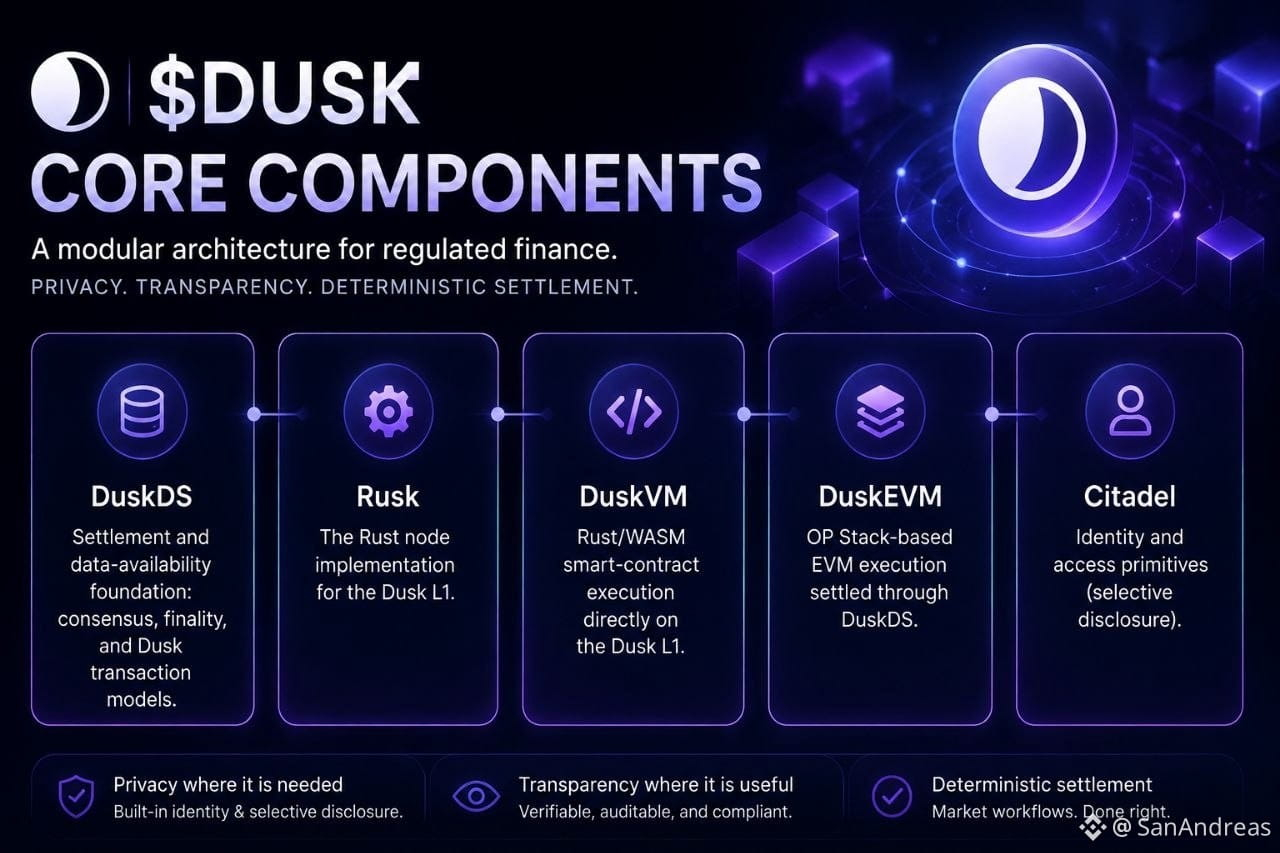
$DUSK Componente principal:
5.Citadel
Rol: Primitivas de identidad y acceso (divulgación selectiva)
A dónde ir a continuación:
Citadel 2
Citadel 2 es una versión mejorada del protocolo de identidad auto-soberana de Dusk. Permite que alguien demuestre que posee una credencial válida, llamada licencia, sin poner sus datos personales ni la licencia exacta que usó en la cadena (on-chain).
La idea central
Piensa en una licencia de Citadel como una credencial privada.
Un usuario solicita una licencia a un Proveedor de Licencias (LP) de confianza.
El LP comprueba al usuario fuera de la cadena (off-chain), firma los datos de atributos relevantes, publica una licencia cifrada y registra esa licencia en un contrato de Citadel.
Más tarde, el usuario quiere acceder a un servicio. Genera una prueba de conocimiento cero que demuestra que posee una licencia registrada y firmada por el LP, sin revelar qué licencia se está usando.
El contrato de Citadel verifica la prueba y registra una sesión pública.
El usuario envía una cookie de sesión al Proveedor de Servicios (SP), y el SP decide si concede el acceso.
Ese último punto es importante: Citadel prueba que la sesión es válida criptográficamente, pero no decide la política del servicio. El SP sigue decidiendo en qué LPs confía, qué atributos se aceptan, si la sesión está vencida o revocada, y si la cookie puede reutilizarse.
Qué permanece privado
Citadel 2 está diseñado para que los atributos personales no se escriban en la blockchain. La sesión on-chain no revela la clave de la billetera del usuario, la licencia usada, la clave del LP, la clave del SP, los atributos firmados ni la ruta de la prueba Merkle. Si un servicio necesita aprender o verificar un atributo, el usuario divulga o prueba solo lo que requiere la política de ese servicio.
Usando Citadel 2
Los desarrolladores pueden implementar su propio contrato de licencia de Citadel en Dusk. El repositorio de Citadel incluye la biblioteca central en Rust, el contrato de licencia y zk-citadel-wallet, un CLI/TUI respaldado por una billetera para implementar un contrato, solicitar y emitir licencias, usar una licencia, listar cookies de sesión guardadas y verificar sesiones.
@Dusk #dusk
$DUSK Componente principal:
5.Citadel
Rol: Primitivas de identidad y acceso (divulgación selectiva)
A dónde ir a continuación:
Citadel 2
Citadel 2 es una versión mejorada del protocolo de identidad auto-soberana de Dusk. Permite que alguien demuestre que posee una credencial válida, llamada licencia, sin poner sus datos personales ni la licencia exacta que usó en la cadena (on-chain).
La idea central
Piensa en una licencia de Citadel como una credencial privada.
Un usuario solicita una licencia a un Proveedor de Licencias (LP) de confianza.
El LP comprueba al usuario fuera de la cadena (off-chain), firma los datos de atributos relevantes, publica una licencia cifrada y registra esa licencia en un contrato de Citadel.
Más tarde, el usuario quiere acceder a un servicio. Genera una prueba de conocimiento cero que demuestra que posee una licencia registrada y firmada por el LP, sin revelar qué licencia se está usando.
El contrato de Citadel verifica la prueba y registra una sesión pública.
El usuario envía una cookie de sesión al Proveedor de Servicios (SP), y el SP decide si concede el acceso.
Ese último punto es importante: Citadel prueba que la sesión es válida criptográficamente, pero no decide la política del servicio. El SP sigue decidiendo en qué LPs confía, qué atributos se aceptan, si la sesión está vencida o revocada, y si la cookie puede reutilizarse.
Qué permanece privado
Citadel 2 está diseñado para que los atributos personales no se escriban en la blockchain. La sesión on-chain no revela la clave de la billetera del usuario, la licencia usada, la clave del LP, la clave del SP, los atributos firmados ni la ruta de la prueba Merkle. Si un servicio necesita aprender o verificar un atributo, el usuario divulga o prueba solo lo que requiere la política de ese servicio.
Usando Citadel 2
Los desarrolladores pueden implementar su propio contrato de licencia de Citadel en Dusk. El repositorio de Citadel incluye la biblioteca central en Rust, el contrato de licencia y zk-citadel-wallet, un CLI/TUI respaldado por una billetera para implementar un contrato, solicitar y emitir licencias, usar una licencia, listar cookies de sesión guardadas y verificar sesiones.
$DUSK Componente principal:
5.Citadel
Rol: Primitivas de identidad y acceso (divulgación selectiva)
A dónde ir a continuación:
Citadel 2
Citadel 2 es una versión mejorada del protocolo de identidad auto-soberana de Dusk. Permite que alguien demuestre que posee una credencial válida, llamada licencia, sin poner sus datos personales ni la licencia exacta que usó en la cadena (on-chain).
La idea central
Piensa en una licencia de Citadel como una credencial privada.
Un usuario solicita una licencia a un Proveedor de Licencias (LP) de confianza.
El LP comprueba al usuario fuera de la cadena (off-chain), firma los datos de atributos relevantes, publica una licencia cifrada y registra esa licencia en un contrato de Citadel.
Más tarde, el usuario quiere acceder a un servicio. Genera una prueba de conocimiento cero que demuestra que posee una licencia registrada y firmada por el LP, sin revelar qué licencia se está usando.
El contrato de Citadel verifica la prueba y registra una sesión pública.
El usuario envía una cookie de sesión al Proveedor de Servicios (SP), y el SP decide si concede el acceso.
Ese último punto es importante: Citadel prueba que la sesión es válida criptográficamente, pero no decide la política del servicio. El SP sigue decidiendo en qué LPs confía, qué atributos se aceptan, si la sesión está vencida o revocada, y si la cookie puede reutilizarse.
Qué permanece privado
Citadel 2 está diseñado para que los atributos personales no se escriban en la blockchain. La sesión on-chain no revela la clave de la billetera del usuario, la licencia usada, la clave del LP, la clave del SP, los atributos firmados ni la ruta de la prueba Merkle. Si un servicio necesita aprender o verificar un atributo, el usuario divulga o prueba solo lo que requiere la política de ese servicio.
Usando Citadel 2
Los desarrolladores pueden implementar su propio contrato de licencia de Citadel en Dusk. El repositorio de Citadel incluye la biblioteca central en Rust, el contrato de licencia y zk-citadel-wallet, un CLI/TUI respaldado por una billetera para implementar un contrato, solicitar y emitir licencias, usar una licencia, listar cookies de sesión guardadas y verificar sesiones.
45
·
--
Artículo
Componente central de DUSK:5. Ciudadela
Rol : Identidad y primitivas de acceso (divulgación selectiva)
¿A dónde ir después?:
Ciudadela 2
La Ciudadela 2 es una versión mejorada del protocolo de identidad autosoberana de Dusk. Permite que alguien demuestre que posee una credencial válida, llamada licencia, sin publicar sus datos personales ni la licencia exacta que usó en la cadena de bloques (on-chain).
La idea central
Piensa en una licencia de Ciudadela como una credencial privada.
Un usuario le pide a un Proveedor de licencias confiable (LP) una licencia.
El LP revisa al usuario fuera de la cadena (off-chain), firma los datos de atributos relevantes, publica una licencia cifrada y registra esa licencia en un contrato de Ciudadela.
Componente central de DUSK:
5. Ciudadela
Rol : Identidad y primitivas de acceso (divulgación selectiva)
¿A dónde ir después?:
Ciudadela 2
La Ciudadela 2 es una versión mejorada del protocolo de identidad autosoberana de Dusk. Permite que alguien demuestre que posee una credencial válida, llamada licencia, sin publicar sus datos personales ni la licencia exacta que usó en la cadena de bloques (on-chain).
La idea central
Piensa en una licencia de Ciudadela como una credencial privada.
Un usuario le pide a un Proveedor de licencias confiable (LP) una licencia.
El LP revisa al usuario fuera de la cadena (off-chain), firma los datos de atributos relevantes, publica una licencia cifrada y registra esa licencia en un contrato de Ciudadela.
Rol : Identidad y primitivas de acceso (divulgación selectiva)
¿A dónde ir después?:
Ciudadela 2
La Ciudadela 2 es una versión mejorada del protocolo de identidad autosoberana de Dusk. Permite que alguien demuestre que posee una credencial válida, llamada licencia, sin publicar sus datos personales ni la licencia exacta que usó en la cadena de bloques (on-chain).
La idea central
Piensa en una licencia de Ciudadela como una credencial privada.
Un usuario le pide a un Proveedor de licencias confiable (LP) una licencia.
El LP revisa al usuario fuera de la cadena (off-chain), firma los datos de atributos relevantes, publica una licencia cifrada y registra esa licencia en un contrato de Ciudadela.
63
·
--
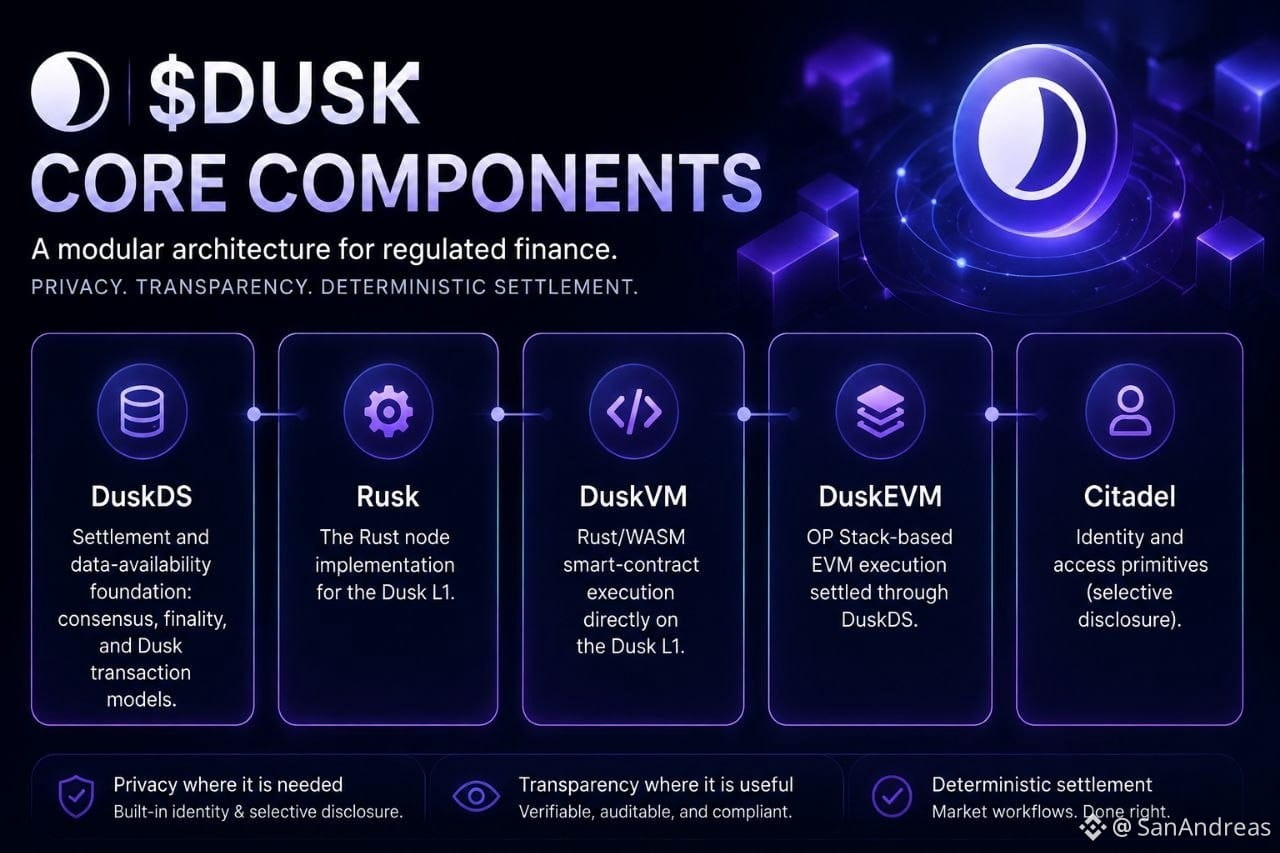
$DUSK Componente principal:
4. DuskEVM
Rol : Ejecución EVM basada en OP Stack liquidada mediante DuskDS
A dónde ir a continuación :
DuskEVM
DuskEVM aporta Solidity, carteras EVM y herramientas de Ethereum a Dusk. Las aplicaciones EVM existentes pueden dirigirse a DuskEVM con contratos y flujos de trabajo familiares, mientras usan DUSK para el gas y DuskDS para la liquidación y la disponibilidad de datos.
Por qué DuskEVM
Empieza con la pila EVM. Usa Solidity o Vyper con Foundry, Hardhat, viem, ethers y carteras EVM estándar.
Usa DUSK en todo momento. DUSK paga la ejecución y se mueve entre Dusk L1 y DuskEVM a través del puente.
Liquida en DuskDS. Los lotes y los compromisos de estado anclan la actividad de DuskEVM al consenso y a la capa de disponibilidad de datos de Dusk.
Alcanza el stack más amplio de Dusk. Las aplicaciones EVM pueden conectarse a activos de Dusk L1, infraestructura y flujos de trabajo orientados a la privacidad a medida que las integraciones lo requieran.
Una transacción de DuskEVM sigue un ciclo de vida tipo rollup:
La transacción se envía al secuenciador de DuskEVM.
La capa de ejecución la incluye en un bloque L2.
El “batcher” publica los datos de la transacción en DuskDS.
Los compromisos de estado y las pruebas de fallos conectan el estado resultante con la liquidación en DuskDS.
La inclusión es rápida, pero la inclusión y la liquidación son etapas diferentes. Las aplicaciones que mueven valor entre DuskEVM y Dusk L1 deberían usar el estado del protocolo o de la cartera en lugar de inferir la finalización a partir del tiempo transcurrido.
Elige un entorno de ejecución
Elige DuskEVM para aplicaciones en Solidity, carteras EVM, librerías existentes de Ethereum e infraestructura EVM.
Elige DuskVM para contratos en Rust/WASM que deben ejecutarse directamente en Dusk L1 o integrarse estrechamente con sus modelos de transacción, activos de protocolo, privacidad o capacidades de cero conocimiento.
@Dusk_Foundation #dusk
$DUSK Componente principal:
4. DuskEVM
Rol : Ejecución EVM basada en OP Stack liquidada mediante DuskDS
A dónde ir a continuación :
DuskEVM
DuskEVM aporta Solidity, carteras EVM y herramientas de Ethereum a Dusk. Las aplicaciones EVM existentes pueden dirigirse a DuskEVM con contratos y flujos de trabajo familiares, mientras usan DUSK para el gas y DuskDS para la liquidación y la disponibilidad de datos.
Por qué DuskEVM
Empieza con la pila EVM. Usa Solidity o Vyper con Foundry, Hardhat, viem, ethers y carteras EVM estándar.
Usa DUSK en todo momento. DUSK paga la ejecución y se mueve entre Dusk L1 y DuskEVM a través del puente.
Liquida en DuskDS. Los lotes y los compromisos de estado anclan la actividad de DuskEVM al consenso y a la capa de disponibilidad de datos de Dusk.
Alcanza el stack más amplio de Dusk. Las aplicaciones EVM pueden conectarse a activos de Dusk L1, infraestructura y flujos de trabajo orientados a la privacidad a medida que las integraciones lo requieran.
Una transacción de DuskEVM sigue un ciclo de vida tipo rollup:
La transacción se envía al secuenciador de DuskEVM.
La capa de ejecución la incluye en un bloque L2.
El “batcher” publica los datos de la transacción en DuskDS.
Los compromisos de estado y las pruebas de fallos conectan el estado resultante con la liquidación en DuskDS.
La inclusión es rápida, pero la inclusión y la liquidación son etapas diferentes. Las aplicaciones que mueven valor entre DuskEVM y Dusk L1 deberían usar el estado del protocolo o de la cartera en lugar de inferir la finalización a partir del tiempo transcurrido.
Elige un entorno de ejecución
Elige DuskEVM para aplicaciones en Solidity, carteras EVM, librerías existentes de Ethereum e infraestructura EVM.
Elige DuskVM para contratos en Rust/WASM que deben ejecutarse directamente en Dusk L1 o integrarse estrechamente con sus modelos de transacción, activos de protocolo, privacidad o capacidades de cero conocimiento.
@Dusk #dusk
4. DuskEVM
Rol : Ejecución EVM basada en OP Stack liquidada mediante DuskDS
A dónde ir a continuación :
DuskEVM
DuskEVM aporta Solidity, carteras EVM y herramientas de Ethereum a Dusk. Las aplicaciones EVM existentes pueden dirigirse a DuskEVM con contratos y flujos de trabajo familiares, mientras usan DUSK para el gas y DuskDS para la liquidación y la disponibilidad de datos.
Por qué DuskEVM
Empieza con la pila EVM. Usa Solidity o Vyper con Foundry, Hardhat, viem, ethers y carteras EVM estándar.
Usa DUSK en todo momento. DUSK paga la ejecución y se mueve entre Dusk L1 y DuskEVM a través del puente.
Liquida en DuskDS. Los lotes y los compromisos de estado anclan la actividad de DuskEVM al consenso y a la capa de disponibilidad de datos de Dusk.
Alcanza el stack más amplio de Dusk. Las aplicaciones EVM pueden conectarse a activos de Dusk L1, infraestructura y flujos de trabajo orientados a la privacidad a medida que las integraciones lo requieran.
Una transacción de DuskEVM sigue un ciclo de vida tipo rollup:
La transacción se envía al secuenciador de DuskEVM.
La capa de ejecución la incluye en un bloque L2.
El “batcher” publica los datos de la transacción en DuskDS.
Los compromisos de estado y las pruebas de fallos conectan el estado resultante con la liquidación en DuskDS.
La inclusión es rápida, pero la inclusión y la liquidación son etapas diferentes. Las aplicaciones que mueven valor entre DuskEVM y Dusk L1 deberían usar el estado del protocolo o de la cartera en lugar de inferir la finalización a partir del tiempo transcurrido.
Elige un entorno de ejecución
Elige DuskEVM para aplicaciones en Solidity, carteras EVM, librerías existentes de Ethereum e infraestructura EVM.
Elige DuskVM para contratos en Rust/WASM que deben ejecutarse directamente en Dusk L1 o integrarse estrechamente con sus modelos de transacción, activos de protocolo, privacidad o capacidades de cero conocimiento.
@Dusk #dusk
67
·
--
@Dusk_Foundation #dusk
$DUSK Componente central:
3. DuskVM
Rol: Ejecución directa de contratos inteligentes Rust/WASM en la L1 de Dusk
Adónde ir a continuación:
DuskVM es la máquina virtual WASM para contratos inteligentes que se ejecutan directamente en la L1 de Dusk. Se basa en el runtime Wasmtime, con soporte personalizado para el modelo de ejecución de Dusk.
Usa DuskVM para contratos Rust/WASM, activos a nivel de protocolo, ejecución personalizada, lógica de mercado, flujos conscientes de la privacidad o capacidades de conocimiento cero que deben ejecutarse directamente en la L1.
Usa DuskEVM en su lugar cuando tu aplicación esté diseñada en torno a Solidity, billeteras EVM y herramientas compatibles con Ethereum. Consulta DuskEVM.
Dónde encaja DuskVM
DuskVM es el componente de ejecución de contratos inteligentes de la L1 de Dusk. DuskVM ejecuta el código del contrato, mientras que DuskDS proporciona la base de consenso, liquidación y disponibilidad de datos que finaliza el estado resultante.
A alto nivel, DuskVM ofrece:
Un mecanismo específico de gestión de memoria
Soporte para la ABI de Dusk
Soporte para llamadas entre contratos
DuskVM funciona como la interfaz del lado del host, gestionando el entorno de ejecución y las operaciones a nivel del sistema.
Compilación de contratos a WASM
DuskVM espera WASM como bytecode, lo que significa que los contratos inteligentes deben compilarse en bytecode WASM para que DuskVM pueda ejecutarlos. Los contratos inteligentes son completamente responsables de validar sus entradas, procesarlas según la lógica del contrato y devolver las salidas apropiadas. Esto garantiza que los contratos inteligentes operen de forma predecible y segura dentro del entorno de ejecución estandarizado proporcionado por DuskVM.
Los contratos compilados a WASM pueden ser ejecutados por DuskVM, con las siguientes salvedades:
El contrato debe exponer el “argument buffer” (argbuf), que es una región especial de 64KB en la memoria del contrato
Cada función expuesta cumple la siguiente convención de llamada: fn foo(u32) -> u32
El valor u32 recibido indica la longitud de los datos de entrada, que el llamador ha colocado en el argbuf. Esta longitud de entrada especifica cuántos bytes de datos debe leer el contrato desde el argbuf.
{spot}(DUSKUSDT)
@Dusk #dusk
$DUSK Componente central:
3. DuskVM
Rol: Ejecución directa de contratos inteligentes Rust/WASM en la L1 de Dusk
Adónde ir a continuación:
DuskVM es la máquina virtual WASM para contratos inteligentes que se ejecutan directamente en la L1 de Dusk. Se basa en el runtime Wasmtime, con soporte personalizado para el modelo de ejecución de Dusk.
Usa DuskVM para contratos Rust/WASM, activos a nivel de protocolo, ejecución personalizada, lógica de mercado, flujos conscientes de la privacidad o capacidades de conocimiento cero que deben ejecutarse directamente en la L1.
Usa DuskEVM en su lugar cuando tu aplicación esté diseñada en torno a Solidity, billeteras EVM y herramientas compatibles con Ethereum. Consulta DuskEVM.
Dónde encaja DuskVM
DuskVM es el componente de ejecución de contratos inteligentes de la L1 de Dusk. DuskVM ejecuta el código del contrato, mientras que DuskDS proporciona la base de consenso, liquidación y disponibilidad de datos que finaliza el estado resultante.
A alto nivel, DuskVM ofrece:
Un mecanismo específico de gestión de memoria
Soporte para la ABI de Dusk
Soporte para llamadas entre contratos
DuskVM funciona como la interfaz del lado del host, gestionando el entorno de ejecución y las operaciones a nivel del sistema.
Compilación de contratos a WASM
DuskVM espera WASM como bytecode, lo que significa que los contratos inteligentes deben compilarse en bytecode WASM para que DuskVM pueda ejecutarlos. Los contratos inteligentes son completamente responsables de validar sus entradas, procesarlas según la lógica del contrato y devolver las salidas apropiadas. Esto garantiza que los contratos inteligentes operen de forma predecible y segura dentro del entorno de ejecución estandarizado proporcionado por DuskVM.
Los contratos compilados a WASM pueden ser ejecutados por DuskVM, con las siguientes salvedades:
El contrato debe exponer el “argument buffer” (argbuf), que es una región especial de 64KB en la memoria del contrato
Cada función expuesta cumple la siguiente convención de llamada: fn foo(u32) -> u32
El valor u32 recibido indica la longitud de los datos de entrada, que el llamador ha colocado en el argbuf. Esta longitud de entrada especifica cuántos bytes de datos debe leer el contrato desde el argbuf.
$DUSK Componente central:
3. DuskVM
Rol: Ejecución directa de contratos inteligentes Rust/WASM en la L1 de Dusk
Adónde ir a continuación:
DuskVM es la máquina virtual WASM para contratos inteligentes que se ejecutan directamente en la L1 de Dusk. Se basa en el runtime Wasmtime, con soporte personalizado para el modelo de ejecución de Dusk.
Usa DuskVM para contratos Rust/WASM, activos a nivel de protocolo, ejecución personalizada, lógica de mercado, flujos conscientes de la privacidad o capacidades de conocimiento cero que deben ejecutarse directamente en la L1.
Usa DuskEVM en su lugar cuando tu aplicación esté diseñada en torno a Solidity, billeteras EVM y herramientas compatibles con Ethereum. Consulta DuskEVM.
Dónde encaja DuskVM
DuskVM es el componente de ejecución de contratos inteligentes de la L1 de Dusk. DuskVM ejecuta el código del contrato, mientras que DuskDS proporciona la base de consenso, liquidación y disponibilidad de datos que finaliza el estado resultante.
A alto nivel, DuskVM ofrece:
Un mecanismo específico de gestión de memoria
Soporte para la ABI de Dusk
Soporte para llamadas entre contratos
DuskVM funciona como la interfaz del lado del host, gestionando el entorno de ejecución y las operaciones a nivel del sistema.
Compilación de contratos a WASM
DuskVM espera WASM como bytecode, lo que significa que los contratos inteligentes deben compilarse en bytecode WASM para que DuskVM pueda ejecutarlos. Los contratos inteligentes son completamente responsables de validar sus entradas, procesarlas según la lógica del contrato y devolver las salidas apropiadas. Esto garantiza que los contratos inteligentes operen de forma predecible y segura dentro del entorno de ejecución estandarizado proporcionado por DuskVM.
Los contratos compilados a WASM pueden ser ejecutados por DuskVM, con las siguientes salvedades:
El contrato debe exponer el “argument buffer” (argbuf), que es una región especial de 64KB en la memoria del contrato
Cada función expuesta cumple la siguiente convención de llamada: fn foo(u32) -> u32
El valor u32 recibido indica la longitud de los datos de entrada, que el llamador ha colocado en el argbuf. Esta longitud de entrada especifica cuántos bytes de datos debe leer el contrato desde el argbuf.
83
·
--
@Dusk_Foundation #dusk
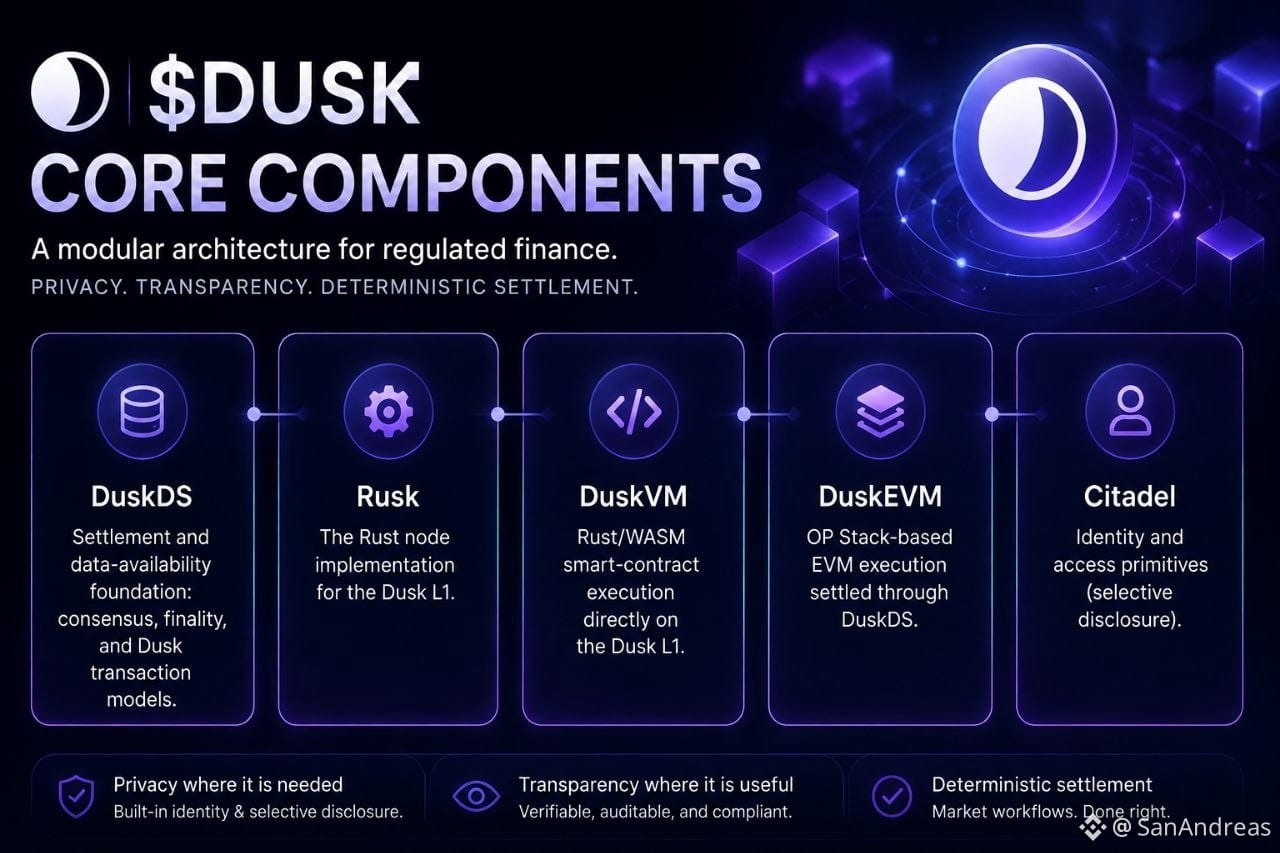
$DUSK Componentes principales :
2. Rusk
Función : La implementación del nodo Rust para Dusk L1
A dónde ir a continuación :
Los nodos de Dusk exponen dos superficies HTTP de bajo nivel principales:
GraphQL para consultar cadena, bloque, transacción, mempool, archivo y otras consultas indexadas por el nodo.
Rutas estilo RUES /on/... para envío de transacciones, llamadas de contratos, operaciones del nodo, generación de pruebas, gestión de drivers y suscripciones de eventos.
Usa esta página como guía de implementación para integraciones directas de nodo. El código de la aplicación normalmente debe usar W3sper u otra capa SDK, a menos que necesite acceso de bajo nivel al nodo.
URLs base
Mainnet: https://nodes.dusk.network
Testnet: https://testnet.nodes.dusk.network
Elegir la superficie correcta
Usa GraphQL cuando necesites datos de cadena, bloque, transacción, mempool, archivo u otros datos indexados por el nodo que no formen parte de una ABI de contrato.
Usa /on/contracts:<contract_id>/<method> cuando estés consultando un método expuesto por una ABI de contrato.
Usa otras rutas /on/... para operaciones del nodo como envío de transacciones, generación de pruebas, gestión de drivers y suscripciones de eventos.
Algunas rutas antiguas /on/... todavía funcionan para compatibilidad, pero están deprecadas.
{spot}(DUSKUSDT)
@Dusk #dusk
$DUSK Componentes principales :
2. Rusk
Función : La implementación del nodo Rust para Dusk L1
A dónde ir a continuación :
Los nodos de Dusk exponen dos superficies HTTP de bajo nivel principales:
GraphQL para consultar cadena, bloque, transacción, mempool, archivo y otras consultas indexadas por el nodo.
Rutas estilo RUES /on/... para envío de transacciones, llamadas de contratos, operaciones del nodo, generación de pruebas, gestión de drivers y suscripciones de eventos.
Usa esta página como guía de implementación para integraciones directas de nodo. El código de la aplicación normalmente debe usar W3sper u otra capa SDK, a menos que necesite acceso de bajo nivel al nodo.
URLs base
Mainnet: https://nodes.dusk.network
Testnet: https://testnet.nodes.dusk.network
Elegir la superficie correcta
Usa GraphQL cuando necesites datos de cadena, bloque, transacción, mempool, archivo u otros datos indexados por el nodo que no formen parte de una ABI de contrato.
Usa /on/contracts:<contract_id>/<method> cuando estés consultando un método expuesto por una ABI de contrato.
Usa otras rutas /on/... para operaciones del nodo como envío de transacciones, generación de pruebas, gestión de drivers y suscripciones de eventos.
Algunas rutas antiguas /on/... todavía funcionan para compatibilidad, pero están deprecadas.
$DUSK Componentes principales :
2. Rusk
Función : La implementación del nodo Rust para Dusk L1
A dónde ir a continuación :
Los nodos de Dusk exponen dos superficies HTTP de bajo nivel principales:
GraphQL para consultar cadena, bloque, transacción, mempool, archivo y otras consultas indexadas por el nodo.
Rutas estilo RUES /on/... para envío de transacciones, llamadas de contratos, operaciones del nodo, generación de pruebas, gestión de drivers y suscripciones de eventos.
Usa esta página como guía de implementación para integraciones directas de nodo. El código de la aplicación normalmente debe usar W3sper u otra capa SDK, a menos que necesite acceso de bajo nivel al nodo.
URLs base
Mainnet: https://nodes.dusk.network
Testnet: https://testnet.nodes.dusk.network
Elegir la superficie correcta
Usa GraphQL cuando necesites datos de cadena, bloque, transacción, mempool, archivo u otros datos indexados por el nodo que no formen parte de una ABI de contrato.
Usa /on/contracts:<contract_id>/<method> cuando estés consultando un método expuesto por una ABI de contrato.
Usa otras rutas /on/... para operaciones del nodo como envío de transacciones, generación de pruebas, gestión de drivers y suscripciones de eventos.
Algunas rutas antiguas /on/... todavía funcionan para compatibilidad, pero están deprecadas.
77
·
--
@Dusk_Foundation #dusk
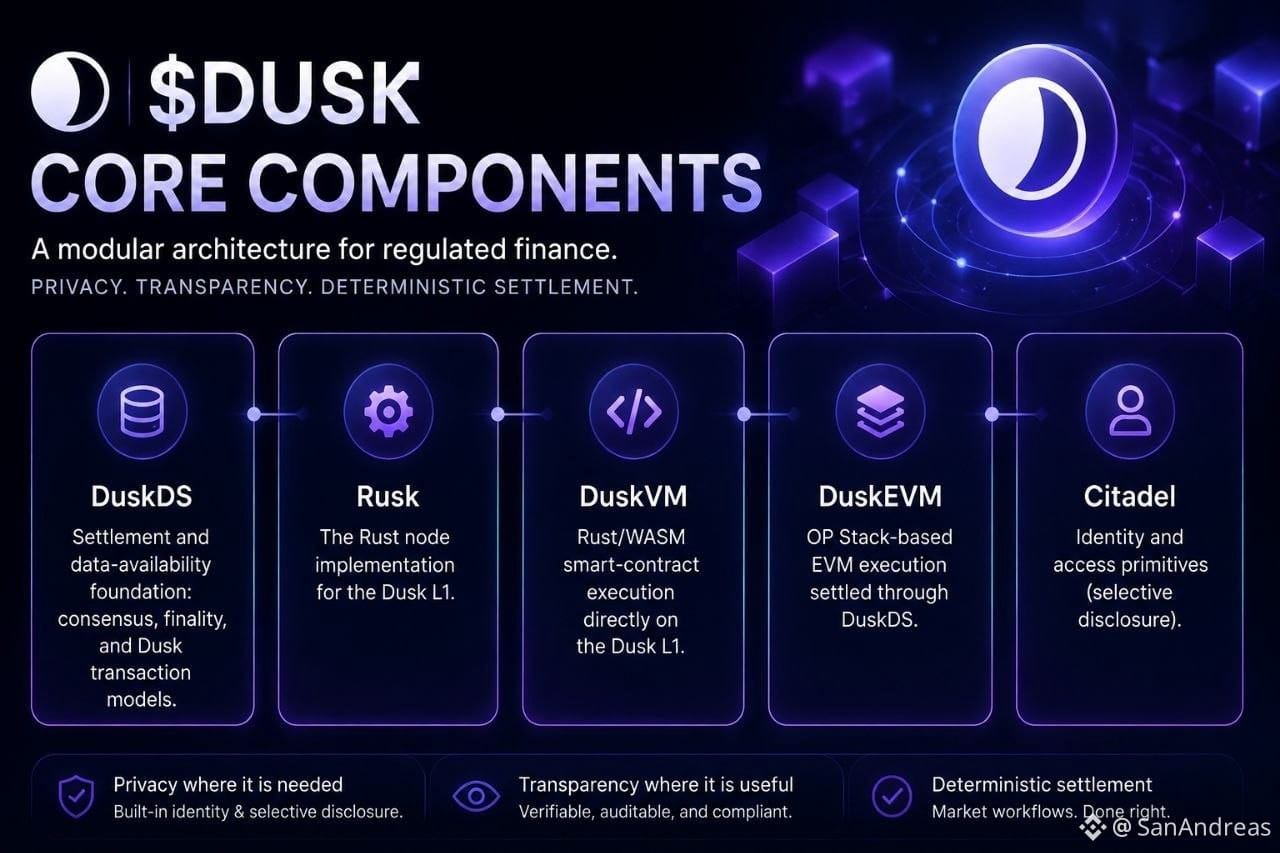
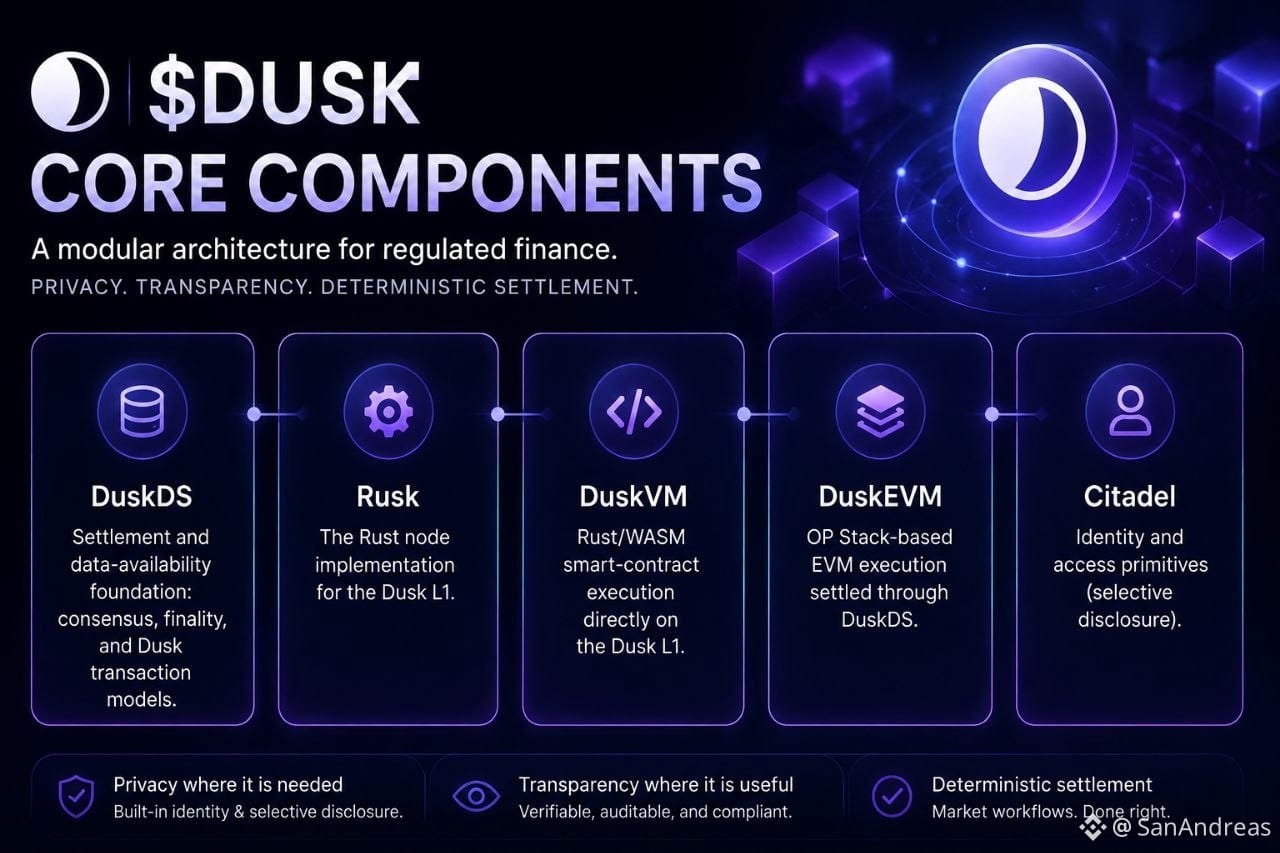
$DUSK Componentes principales
La red Dusk utiliza una arquitectura modular diseñada para las finanzas reguladas: privacidad cuando es necesaria, transparencia cuando es útil y liquidación determinista cuando los flujos del mercado la requieren. A alto nivel:
Componente :
1. DuskDS
Rol :
Base de asentamiento y disponibilidad de datos: consenso, finalidad y modelos de transacciones de Dusk
A dónde ir a continuación :
Dusk tiene una arquitectura de dos capas:
DuskDS – la capa de liquidación y datos (consenso, disponibilidad de datos, modelos de transacciones)
DuskEVM – la capa de ejecución de EVM donde se ejecutan los smart contracts y donde vive Hedger
Esta página describe los modelos de transacciones en DuskDS. Es el contexto para quienes quieren entender cómo funcionan la liquidación y la privacidad por debajo del capó. Si estás construyendo dApps en DuskEVM, en su mayor parte interactuarás con Hedger y con contratos EVM en lugar de esto.
Phoenix vs Moonlight (en DuskDS)En DuskDS, el valor puede moverse de dos maneras nativas:
Moonlight – transferencias públicas, basadas en cuentas
Phoenix – transferencias protegidas, basadas en notas, usando pruebas de conocimiento cero
Ambas, en última instancia, se liquidan en la misma cadena, pero exponen información diferente a quienes observan.
Para los detalles completos de la implementación, puedes consultar el Whitepaper.
Moonlight – saldos públicos
Moonlight es el modelo de transacciones transparente:
Las cuentas tienen saldos visibles.
Las transferencias muestran el remitente, el destinatario y el monto.
Es adecuado para flujos que deben ser observables (por ejemplo, algunos escenarios de tesorería o reportes).
Conceptualmente se comporta como un modelo de cuenta estándar.
Para la mayoría de los usuarios, esta es “la forma transparente de mover DUSK” a nivel de protocolo.
Phoenix – saldos protegidos
Phoenix es el modelo que preserva la privacidad:
Los fondos viven como “notas” cifradas en lugar de saldos explícitos.
Las transacciones prueban la corrección (sin dobles gastos, suficientes fondos) con pruebas de conocimiento cero sin revelar: cuánto se mueve, quién envió la nota, salvo al receptor, entre qué notas específicas.
Los usuarios pueden revelar información selectivamente mediante claves de visualización cuando la regulación o la auditoría lo requieren.
{spot}(DUSKUSDT)
@Dusk #dusk
$DUSK Componentes principales
La red Dusk utiliza una arquitectura modular diseñada para las finanzas reguladas: privacidad cuando es necesaria, transparencia cuando es útil y liquidación determinista cuando los flujos del mercado la requieren. A alto nivel:
Componente :
1. DuskDS
Rol :
Base de asentamiento y disponibilidad de datos: consenso, finalidad y modelos de transacciones de Dusk
A dónde ir a continuación :
Dusk tiene una arquitectura de dos capas:
DuskDS – la capa de liquidación y datos (consenso, disponibilidad de datos, modelos de transacciones)
DuskEVM – la capa de ejecución de EVM donde se ejecutan los smart contracts y donde vive Hedger
Esta página describe los modelos de transacciones en DuskDS. Es el contexto para quienes quieren entender cómo funcionan la liquidación y la privacidad por debajo del capó. Si estás construyendo dApps en DuskEVM, en su mayor parte interactuarás con Hedger y con contratos EVM en lugar de esto.
Phoenix vs Moonlight (en DuskDS)En DuskDS, el valor puede moverse de dos maneras nativas:
Moonlight – transferencias públicas, basadas en cuentas
Phoenix – transferencias protegidas, basadas en notas, usando pruebas de conocimiento cero
Ambas, en última instancia, se liquidan en la misma cadena, pero exponen información diferente a quienes observan.
Para los detalles completos de la implementación, puedes consultar el Whitepaper.
Moonlight – saldos públicos
Moonlight es el modelo de transacciones transparente:
Las cuentas tienen saldos visibles.
Las transferencias muestran el remitente, el destinatario y el monto.
Es adecuado para flujos que deben ser observables (por ejemplo, algunos escenarios de tesorería o reportes).
Conceptualmente se comporta como un modelo de cuenta estándar.
Para la mayoría de los usuarios, esta es “la forma transparente de mover DUSK” a nivel de protocolo.
Phoenix – saldos protegidos
Phoenix es el modelo que preserva la privacidad:
Los fondos viven como “notas” cifradas en lugar de saldos explícitos.
Las transacciones prueban la corrección (sin dobles gastos, suficientes fondos) con pruebas de conocimiento cero sin revelar: cuánto se mueve, quién envió la nota, salvo al receptor, entre qué notas específicas.
Los usuarios pueden revelar información selectivamente mediante claves de visualización cuando la regulación o la auditoría lo requieren.
$DUSK Componentes principales
La red Dusk utiliza una arquitectura modular diseñada para las finanzas reguladas: privacidad cuando es necesaria, transparencia cuando es útil y liquidación determinista cuando los flujos del mercado la requieren. A alto nivel:
Componente :
1. DuskDS
Rol :
Base de asentamiento y disponibilidad de datos: consenso, finalidad y modelos de transacciones de Dusk
A dónde ir a continuación :
Dusk tiene una arquitectura de dos capas:
DuskDS – la capa de liquidación y datos (consenso, disponibilidad de datos, modelos de transacciones)
DuskEVM – la capa de ejecución de EVM donde se ejecutan los smart contracts y donde vive Hedger
Esta página describe los modelos de transacciones en DuskDS. Es el contexto para quienes quieren entender cómo funcionan la liquidación y la privacidad por debajo del capó. Si estás construyendo dApps en DuskEVM, en su mayor parte interactuarás con Hedger y con contratos EVM en lugar de esto.
Phoenix vs Moonlight (en DuskDS)En DuskDS, el valor puede moverse de dos maneras nativas:
Moonlight – transferencias públicas, basadas en cuentas
Phoenix – transferencias protegidas, basadas en notas, usando pruebas de conocimiento cero
Ambas, en última instancia, se liquidan en la misma cadena, pero exponen información diferente a quienes observan.
Para los detalles completos de la implementación, puedes consultar el Whitepaper.
Moonlight – saldos públicos
Moonlight es el modelo de transacciones transparente:
Las cuentas tienen saldos visibles.
Las transferencias muestran el remitente, el destinatario y el monto.
Es adecuado para flujos que deben ser observables (por ejemplo, algunos escenarios de tesorería o reportes).
Conceptualmente se comporta como un modelo de cuenta estándar.
Para la mayoría de los usuarios, esta es “la forma transparente de mover DUSK” a nivel de protocolo.
Phoenix – saldos protegidos
Phoenix es el modelo que preserva la privacidad:
Los fondos viven como “notas” cifradas en lugar de saldos explícitos.
Las transacciones prueban la corrección (sin dobles gastos, suficientes fondos) con pruebas de conocimiento cero sin revelar: cuánto se mueve, quién envió la nota, salvo al receptor, entre qué notas específicas.
Los usuarios pueden revelar información selectivamente mediante claves de visualización cuando la regulación o la auditoría lo requieren.
101
·
--
@Dusk_Foundation #dusk
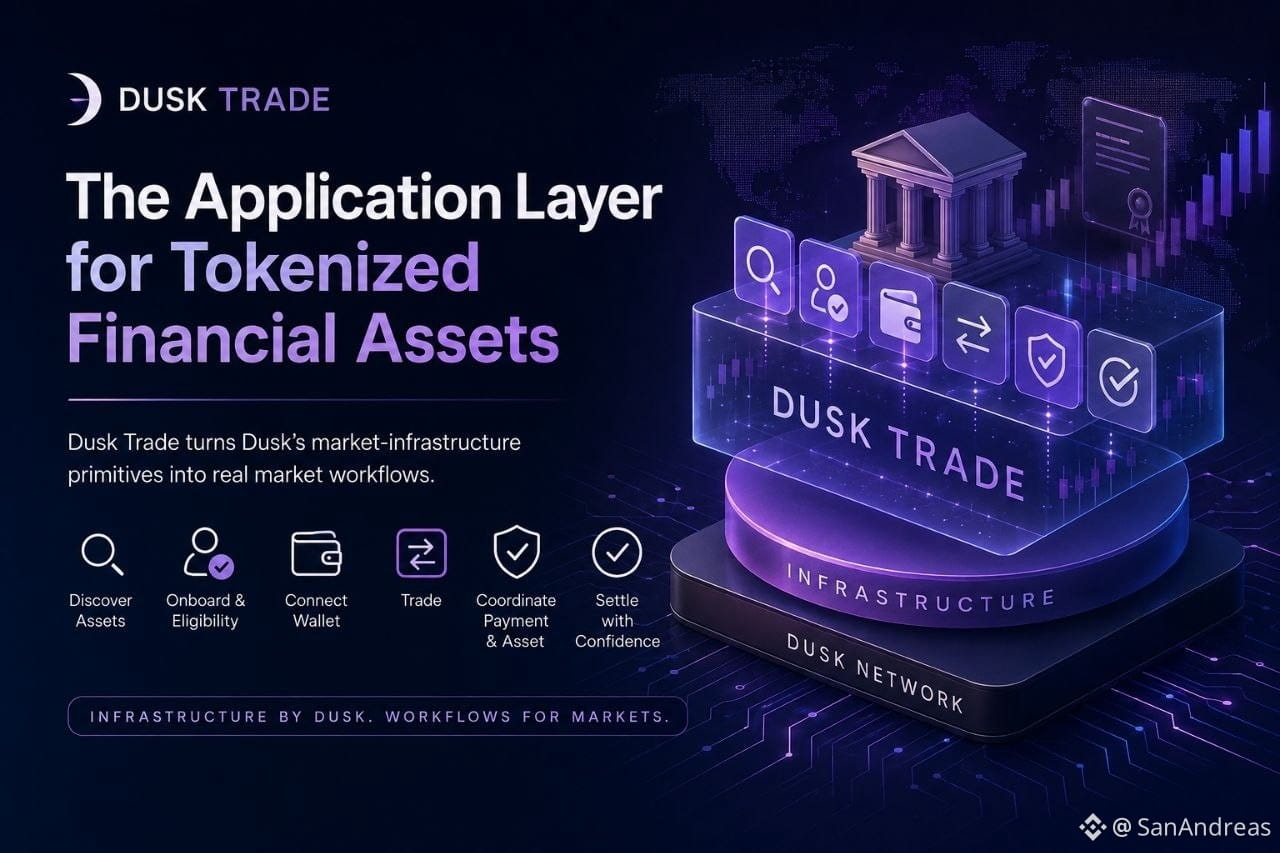
continuando la discusión anterior sobre $DUSK Trade.
Parte 4
La imagen más amplia
La tokenización suele analizarse en términos de lo que puede colocarse en cadena.
Pero la pregunta más importante puede ser:
¿Qué ocurre después de que el activo está en cadena?
¿Cómo lo descubre un inversor?
¿Cómo se determina la elegibilidad?
¿Cómo se presentan las divulgaciones?
¿Cómo ocurre una operación?
¿Cómo se coordinan los pagos y los movimientos de activos?
¿Cómo se liquida la transacción?
¿Y cómo interactúan los emisores, los centros, los inversores y los participantes autorizados con la misma infraestructura?
Estas son preguntas de capa de aplicación.
Dusk Trade está diseñado para abordarlas.
Si la tokenización va a pasar de la experimentación y convertirse en parte de mercados financieros reales, la infraestructura blockchain deberá funcionar en conjunto con aplicaciones que comprendan la complejidad de los activos regulados.
Dusk Trade se sitúa en esa intersección: transformar la infraestructura de mercado subyacente de Dusk en flujos de trabajo prácticos para activos financieros tokenizados.
El objetivo final no es simplemente hacer que los activos financieros sean transferibles en cadena.
Es hacer que todo el recorrido, desde el descubrimiento hasta la elegibilidad, la negociación, el pago y la liquidación, funcione como una experiencia coherente de mercado financiero digital.
$DUSK
{spot}(DUSKUSDT)
@Dusk #dusk
continuando la discusión anterior sobre $DUSK Trade.
Parte 4
La imagen más amplia
La tokenización suele analizarse en términos de lo que puede colocarse en cadena.
Pero la pregunta más importante puede ser:
¿Qué ocurre después de que el activo está en cadena?
¿Cómo lo descubre un inversor?
¿Cómo se determina la elegibilidad?
¿Cómo se presentan las divulgaciones?
¿Cómo ocurre una operación?
¿Cómo se coordinan los pagos y los movimientos de activos?
¿Cómo se liquida la transacción?
¿Y cómo interactúan los emisores, los centros, los inversores y los participantes autorizados con la misma infraestructura?
Estas son preguntas de capa de aplicación.
Dusk Trade está diseñado para abordarlas.
Si la tokenización va a pasar de la experimentación y convertirse en parte de mercados financieros reales, la infraestructura blockchain deberá funcionar en conjunto con aplicaciones que comprendan la complejidad de los activos regulados.
Dusk Trade se sitúa en esa intersección: transformar la infraestructura de mercado subyacente de Dusk en flujos de trabajo prácticos para activos financieros tokenizados.
El objetivo final no es simplemente hacer que los activos financieros sean transferibles en cadena.
Es hacer que todo el recorrido, desde el descubrimiento hasta la elegibilidad, la negociación, el pago y la liquidación, funcione como una experiencia coherente de mercado financiero digital.
$DUSK
continuando la discusión anterior sobre $DUSK Trade.
Parte 4
La imagen más amplia
La tokenización suele analizarse en términos de lo que puede colocarse en cadena.
Pero la pregunta más importante puede ser:
¿Qué ocurre después de que el activo está en cadena?
¿Cómo lo descubre un inversor?
¿Cómo se determina la elegibilidad?
¿Cómo se presentan las divulgaciones?
¿Cómo ocurre una operación?
¿Cómo se coordinan los pagos y los movimientos de activos?
¿Cómo se liquida la transacción?
¿Y cómo interactúan los emisores, los centros, los inversores y los participantes autorizados con la misma infraestructura?
Estas son preguntas de capa de aplicación.
Dusk Trade está diseñado para abordarlas.
Si la tokenización va a pasar de la experimentación y convertirse en parte de mercados financieros reales, la infraestructura blockchain deberá funcionar en conjunto con aplicaciones que comprendan la complejidad de los activos regulados.
Dusk Trade se sitúa en esa intersección: transformar la infraestructura de mercado subyacente de Dusk en flujos de trabajo prácticos para activos financieros tokenizados.
El objetivo final no es simplemente hacer que los activos financieros sean transferibles en cadena.
Es hacer que todo el recorrido, desde el descubrimiento hasta la elegibilidad, la negociación, el pago y la liquidación, funcione como una experiencia coherente de mercado financiero digital.
$DUSK
2
66
·
--
continuando a partir de la discusión anterior sobre $DUSK Trade.
Parte 3
Esta separación puede ser importante porque la infraestructura y las aplicaciones de usuario tienen responsabilidades diferentes.
El protocolo puede centrarse en proporcionar primitivas confiables de blockchain y del mercado financiero, mientras que las aplicaciones pueden centrarse en cómo se utilizan esas primitivas en flujos de trabajo específicos.
Por qué esto es importante para la tokenización
La promesa a largo plazo de la tokenización no es simplemente poner activos tradicionales en una blockchain.
La oportunidad más grande es crear mercados financieros donde la emisión, la propiedad, el trading, el cumplimiento y la liquidación puedan interactuar con infraestructura programable.
Eso requiere más que tokens.
Requiere infraestructura de mercado y aplicaciones que comprendan los flujos de trabajo financieros.
Dusk Trade representa el lado de la aplicación de esa ecuación.
Su papel es conectar la infraestructura blockchain con las actividades prácticas que realizan los participantes al interactuar con activos financieros tokenizados.
Una forma diferente de pensar sobre Dusk Trade
Puede ser tentador pensar en Dusk Trade simplemente como otra interfaz de trading.
Pero su propósito más amplio es más interesante.
Se puede ver como un puente entre la infraestructura blockchain y los flujos de trabajo regulados de los mercados financieros.
La diferencia es sutil pero importante.
Una aplicación cripto típica podría centrarse principalmente en:
Billetera → Token → Operación
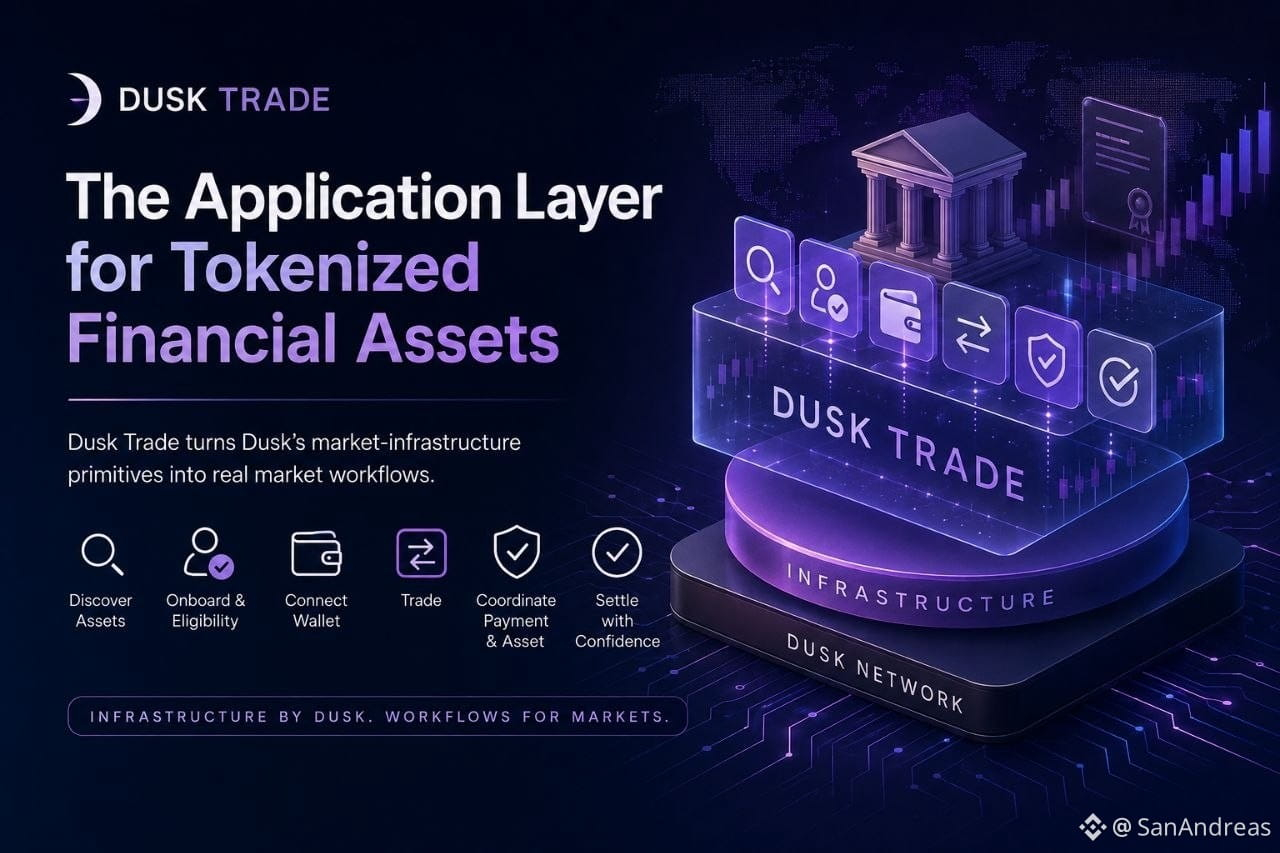
Un flujo de trabajo regulado de activos tokenizados puede ser mucho más complejo:
Descubrimiento de activos → Incorporación de inversores → Elegibilidad → Divulgación → Billetera → Operación → Coordinación de pagos → Liquidación
Dusk Trade está diseñado en torno al segundo modelo.
@Dusk_Foundation #dusk
continuando a partir de la discusión anterior sobre $DUSK Trade.
Parte 3
Esta separación puede ser importante porque la infraestructura y las aplicaciones de usuario tienen responsabilidades diferentes.
El protocolo puede centrarse en proporcionar primitivas confiables de blockchain y del mercado financiero, mientras que las aplicaciones pueden centrarse en cómo se utilizan esas primitivas en flujos de trabajo específicos.
Por qué esto es importante para la tokenización
La promesa a largo plazo de la tokenización no es simplemente poner activos tradicionales en una blockchain.
La oportunidad más grande es crear mercados financieros donde la emisión, la propiedad, el trading, el cumplimiento y la liquidación puedan interactuar con infraestructura programable.
Eso requiere más que tokens.
Requiere infraestructura de mercado y aplicaciones que comprendan los flujos de trabajo financieros.
Dusk Trade representa el lado de la aplicación de esa ecuación.
Su papel es conectar la infraestructura blockchain con las actividades prácticas que realizan los participantes al interactuar con activos financieros tokenizados.
Una forma diferente de pensar sobre Dusk Trade
Puede ser tentador pensar en Dusk Trade simplemente como otra interfaz de trading.
Pero su propósito más amplio es más interesante.
Se puede ver como un puente entre la infraestructura blockchain y los flujos de trabajo regulados de los mercados financieros.
La diferencia es sutil pero importante.
Una aplicación cripto típica podría centrarse principalmente en:
Billetera → Token → Operación
Un flujo de trabajo regulado de activos tokenizados puede ser mucho más complejo:
Descubrimiento de activos → Incorporación de inversores → Elegibilidad → Divulgación → Billetera → Operación → Coordinación de pagos → Liquidación
Dusk Trade está diseñado en torno al segundo modelo.
@Dusk #dusk
Parte 3
Esta separación puede ser importante porque la infraestructura y las aplicaciones de usuario tienen responsabilidades diferentes.
El protocolo puede centrarse en proporcionar primitivas confiables de blockchain y del mercado financiero, mientras que las aplicaciones pueden centrarse en cómo se utilizan esas primitivas en flujos de trabajo específicos.
Por qué esto es importante para la tokenización
La promesa a largo plazo de la tokenización no es simplemente poner activos tradicionales en una blockchain.
La oportunidad más grande es crear mercados financieros donde la emisión, la propiedad, el trading, el cumplimiento y la liquidación puedan interactuar con infraestructura programable.
Eso requiere más que tokens.
Requiere infraestructura de mercado y aplicaciones que comprendan los flujos de trabajo financieros.
Dusk Trade representa el lado de la aplicación de esa ecuación.
Su papel es conectar la infraestructura blockchain con las actividades prácticas que realizan los participantes al interactuar con activos financieros tokenizados.
Una forma diferente de pensar sobre Dusk Trade
Puede ser tentador pensar en Dusk Trade simplemente como otra interfaz de trading.
Pero su propósito más amplio es más interesante.
Se puede ver como un puente entre la infraestructura blockchain y los flujos de trabajo regulados de los mercados financieros.
La diferencia es sutil pero importante.
Una aplicación cripto típica podría centrarse principalmente en:
Billetera → Token → Operación
Un flujo de trabajo regulado de activos tokenizados puede ser mucho más complejo:
Descubrimiento de activos → Incorporación de inversores → Elegibilidad → Divulgación → Billetera → Operación → Coordinación de pagos → Liquidación
Dusk Trade está diseñado en torno al segundo modelo.
@Dusk #dusk
79
·
--
Continuando la discusión anterior sobre $DUSK Trade.
Parte 2
6. Liquidación
El paso final es la liquidación.
Aquí es donde la transacción se convierte en algo más que una intención de trading.
Los movimientos relevantes de activos y pagos deben completarse de acuerdo con las reglas que rigen la transacción.
Al integrar los flujos de trading y liquidación, la capa de aplicación puede ayudar a convertir una transacción on-chain en algo más cercano a un proceso completo de mercado financiero.
La importancia de la elegibilidad y la divulgación
Uno de los aspectos más interesantes de Dusk Trade es que está diseñado en torno a los requisitos de los mercados regulados.
En las finanzas tradicionales, no todos los productos financieros están disponibles para todos los inversores.
Pueden existir restricciones basadas en la jurisdicción, el estado del inversor, el tipo de activo u otros requisitos regulatorios.
La información también puede importar tanto como la transacción en sí.
Es posible que los inversores necesiten acceso a divulgaciones y a otra información relevante antes de participar.
Esto significa que un mercado financiero tokenizado necesita responder preguntas como:
¿Quién puede comprar este activo?
¿Qué información debe recibir el inversor?
¿Quién está autorizado para acceder a cierta información?
¿En qué condiciones puede transferirse el activo?
El enfoque de capa de aplicación de Dusk Trade está destinado a que estas consideraciones formen parte del flujo de trabajo en lugar de tratarlas como algo separado de la actividad en blockchain.
Dusk Trade y el ecosistema de Dusk
Es útil distinguir entre el protocolo base y la capa de aplicación.
La red de Dusk proporciona la infraestructura subyacente y primitivas orientadas al mercado.
Dusk Trade opera por encima de esa infraestructura.
Una forma sencilla de visualizar la relación es:
Red de Dusk → Infraestructura de mercado → Dusk Trade → Usuarios y participantes del mercado
La capa base proporciona los cimientos.
La capa de aplicación convierte esos cimientos en experiencias que los emisores, inversores, centros y otros participantes autorizados pueden utilizar realmente.
@Dusk_Foundation #dusk
Continuando la discusión anterior sobre $DUSK Trade.
Parte 2
6. Liquidación
El paso final es la liquidación.
Aquí es donde la transacción se convierte en algo más que una intención de trading.
Los movimientos relevantes de activos y pagos deben completarse de acuerdo con las reglas que rigen la transacción.
Al integrar los flujos de trading y liquidación, la capa de aplicación puede ayudar a convertir una transacción on-chain en algo más cercano a un proceso completo de mercado financiero.
La importancia de la elegibilidad y la divulgación
Uno de los aspectos más interesantes de Dusk Trade es que está diseñado en torno a los requisitos de los mercados regulados.
En las finanzas tradicionales, no todos los productos financieros están disponibles para todos los inversores.
Pueden existir restricciones basadas en la jurisdicción, el estado del inversor, el tipo de activo u otros requisitos regulatorios.
La información también puede importar tanto como la transacción en sí.
Es posible que los inversores necesiten acceso a divulgaciones y a otra información relevante antes de participar.
Esto significa que un mercado financiero tokenizado necesita responder preguntas como:
¿Quién puede comprar este activo?
¿Qué información debe recibir el inversor?
¿Quién está autorizado para acceder a cierta información?
¿En qué condiciones puede transferirse el activo?
El enfoque de capa de aplicación de Dusk Trade está destinado a que estas consideraciones formen parte del flujo de trabajo en lugar de tratarlas como algo separado de la actividad en blockchain.
Dusk Trade y el ecosistema de Dusk
Es útil distinguir entre el protocolo base y la capa de aplicación.
La red de Dusk proporciona la infraestructura subyacente y primitivas orientadas al mercado.
Dusk Trade opera por encima de esa infraestructura.
Una forma sencilla de visualizar la relación es:
Red de Dusk → Infraestructura de mercado → Dusk Trade → Usuarios y participantes del mercado
La capa base proporciona los cimientos.
La capa de aplicación convierte esos cimientos en experiencias que los emisores, inversores, centros y otros participantes autorizados pueden utilizar realmente.
@Dusk #dusk
Parte 2
6. Liquidación
El paso final es la liquidación.
Aquí es donde la transacción se convierte en algo más que una intención de trading.
Los movimientos relevantes de activos y pagos deben completarse de acuerdo con las reglas que rigen la transacción.
Al integrar los flujos de trading y liquidación, la capa de aplicación puede ayudar a convertir una transacción on-chain en algo más cercano a un proceso completo de mercado financiero.
La importancia de la elegibilidad y la divulgación
Uno de los aspectos más interesantes de Dusk Trade es que está diseñado en torno a los requisitos de los mercados regulados.
En las finanzas tradicionales, no todos los productos financieros están disponibles para todos los inversores.
Pueden existir restricciones basadas en la jurisdicción, el estado del inversor, el tipo de activo u otros requisitos regulatorios.
La información también puede importar tanto como la transacción en sí.
Es posible que los inversores necesiten acceso a divulgaciones y a otra información relevante antes de participar.
Esto significa que un mercado financiero tokenizado necesita responder preguntas como:
¿Quién puede comprar este activo?
¿Qué información debe recibir el inversor?
¿Quién está autorizado para acceder a cierta información?
¿En qué condiciones puede transferirse el activo?
El enfoque de capa de aplicación de Dusk Trade está destinado a que estas consideraciones formen parte del flujo de trabajo en lugar de tratarlas como algo separado de la actividad en blockchain.
Dusk Trade y el ecosistema de Dusk
Es útil distinguir entre el protocolo base y la capa de aplicación.
La red de Dusk proporciona la infraestructura subyacente y primitivas orientadas al mercado.
Dusk Trade opera por encima de esa infraestructura.
Una forma sencilla de visualizar la relación es:
Red de Dusk → Infraestructura de mercado → Dusk Trade → Usuarios y participantes del mercado
La capa base proporciona los cimientos.
La capa de aplicación convierte esos cimientos en experiencias que los emisores, inversores, centros y otros participantes autorizados pueden utilizar realmente.
@Dusk #dusk
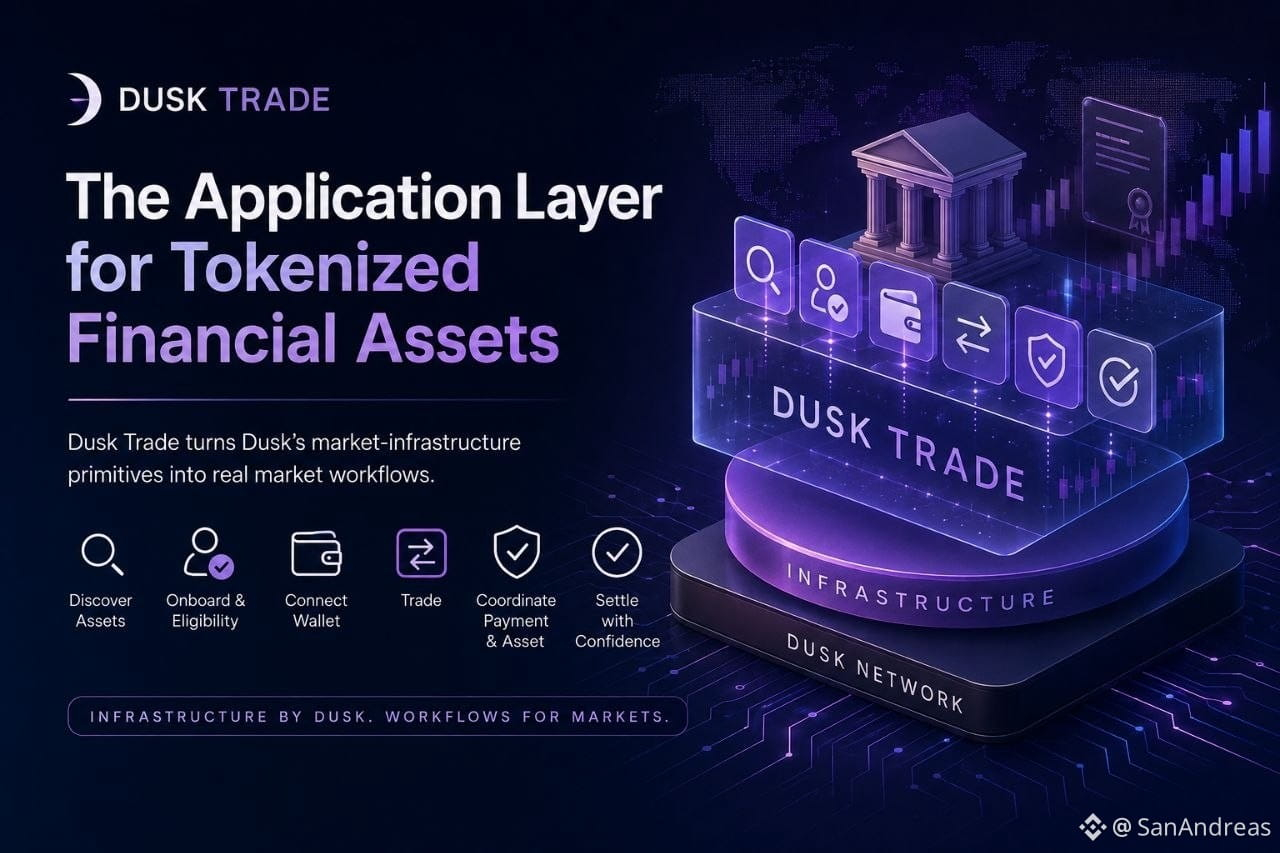
21
Inicia sesión para explorar más contenidos
Únete a usuarios globales de criptomonedas en Binance Square
⚡️ Obtén información útil y actualizada sobre criptos.
💬 Avalado por el mayor exchange de criptomonedas en el mundo.
👍 Descubre perspectivas reales de creadores verificados.
Email/número de teléfono
Temas populares
BinancePick
2.7M vistas
143,489 están debatiendo
¡Únete a #TemporadaDeResultados: predice resultados en Binance Pick y comparte tu opinión en Binance Square!
Binance Square Official
·402 me gusta
·339.1k vistas
EarningsSeason
5M vistas
24,614 están debatiendo
SouthKoreaReportedlyWeighsFourthCryptoTaxDelay
1,176 vistas
94 están debatiendo