

OroCryptoTrends
9.1k Publicaciones

OroCryptoTrends
 Verificado Plus de Binance Square
Denunciar
Bloquear usuario
OroCryptoTrends | Crypto Insights: Real-time crypto news, market analysis, Web3, DeFi & emerging trends. Research-driven, actionable insights. No hype.
Abrir trade
Trader frecuente
3.3 año(s)
3.4K+ Siguiendo
52.1K+ Seguidores
49.5K+ Me gusta
Publicaciones
Cartera
Todo
Citas
Videos
Live
PINNED
❤️🙏 Queridos seguidores, ¡cuento con vuestro amable apoyo!
👇
👉[🗳️ Vote here](https://app.binance.com/uni-qr/cact26user/428?uc=app_square_share_link&us=copylink)
Habéis sido parte de mi camino y hoy os pido un pequeño favor. 🥹💛
Si mis análisis y perspectivas sobre las criptomonedas os han sido útiles alguna vez, ¡dedicad unos segundos a votarme!
O visitad mi perfil de Binance Square @Orocryptonc y votad.
🏆 Actualmente estamos en el puesto 68. ¿Podemos llegar juntos al Top 20? 🚀
Si ya habéis votado, ¡compartid una captura de pantalla aquí abajo para celebrarlo juntos! ❤️
Cada voto cuenta, y vuestro apoyo significa para mí más de lo que puedo expresar con palabras.
¡Gracias por formar parte de mi camino! 🫶💛
#BinanceSquare #TheBlockchain100 #OroCryptoTrends
❤️🙏 Queridos seguidores, ¡cuento con vuestro amable apoyo!
👇
👉🗳️ Vote here
Habéis sido parte de mi camino y hoy os pido un pequeño favor. 🥹💛
Si mis análisis y perspectivas sobre las criptomonedas os han sido útiles alguna vez, ¡dedicad unos segundos a votarme!
O visitad mi perfil de Binance Square @OroCryptoTrends y votad.
🏆 Actualmente estamos en el puesto 68. ¿Podemos llegar juntos al Top 20? 🚀
Si ya habéis votado, ¡compartid una captura de pantalla aquí abajo para celebrarlo juntos! ❤️
Cada voto cuenta, y vuestro apoyo significa para mí más de lo que puedo expresar con palabras.
¡Gracias por formar parte de mi camino! 🫶💛
#BinanceSquare #TheBlockchain100 #OroCryptoTrends
👇
👉🗳️ Vote here
Habéis sido parte de mi camino y hoy os pido un pequeño favor. 🥹💛
Si mis análisis y perspectivas sobre las criptomonedas os han sido útiles alguna vez, ¡dedicad unos segundos a votarme!
O visitad mi perfil de Binance Square @OroCryptoTrends y votad.
🏆 Actualmente estamos en el puesto 68. ¿Podemos llegar juntos al Top 20? 🚀
Si ya habéis votado, ¡compartid una captura de pantalla aquí abajo para celebrarlo juntos! ❤️
Cada voto cuenta, y vuestro apoyo significa para mí más de lo que puedo expresar con palabras.
¡Gracias por formar parte de mi camino! 🫶💛
#BinanceSquare #TheBlockchain100 #OroCryptoTrends

10
1
6
422
🎙️ Votación de los premios Binance Blockchain 100 de 2026

Finalizado
02 h 43 m 49 s
1.6k

BNB
Holding
+0.2
6
0
$BTC cayó por debajo de los 80.000 $. El rebote no demuestra que el peligro haya pasado.
{future}(BTCUSDT)
Bitcoin cayó brevemente hasta alrededor de los 79.000 dólares el 24 de octubre, mientras se disparaban las liquidaciones de criptomonedas. Según datos de CoinGlass citados en los medios, en apenas cuatro horas se liquidaron posiciones largas apalancadas por valor de más de 400 millones de dólares. Después, BTC volvió a superar los 80.000 $. «Fuente: The Block»
Sigo interpretando esto de forma distinta a la típica narrativa de «comprar en la caída».
Lo interesante no es simplemente que Bitcoin haya rebotado. Es cuántos traders estaban posicionados para que el precio subiera y lo rápido que desaparecieron esas posiciones cuando el mercado se movió en su contra.
Eso importa porque las liquidaciones pueden acelerar una caída más allá de lo que provocaría por sí sola la venta en el mercado al contado. Cuando se obliga a cerrar las posiciones largas apalancadas, el mercado puede rebotar. Pero eso no significa automáticamente que hayan llegado suficientes compradores nuevos como para sostener la recuperación.
Hay otra complicación: la acumulación de las ballenas puede parecer alcista en la cadena de bloques, mientras el precio encuentra dificultades por debajo de una resistencia técnica. La actividad de las grandes carteras importa, pero no garantiza una presión compradora inmediata ni nos dice cuándo podrían vender esos inversores.
Mi interpretación: recuperar los 80.000 $ es una señal positiva a corto plazo, no una confirmación de que Bitcoin haya encontrado un suelo duradero. Querría ver una fortaleza sostenida del precio y pruebas de una demanda real en el mercado al contado antes de llamarlo recuperación.
El riesgo es que los traders confundan un rebote de alivio tras las liquidaciones forzadas con un cambio de tendencia.
¿Estoy interpretando mal la situación o el mercado está considerando el rebote una prueba más sólida de lo que realmente es?
#BTC #Write2Earn
$BTC cayó por debajo de los 80.000 $. El rebote no demuestra que el peligro haya pasado.
Bitcoin cayó brevemente hasta alrededor de los 79.000 dólares el 24 de octubre, mientras se disparaban las liquidaciones de criptomonedas. Según datos de CoinGlass citados en los medios, en apenas cuatro horas se liquidaron posiciones largas apalancadas por valor de más de 400 millones de dólares. Después, BTC volvió a superar los 80.000 $. «Fuente: The Block»
Sigo interpretando esto de forma distinta a la típica narrativa de «comprar en la caída».
Lo interesante no es simplemente que Bitcoin haya rebotado. Es cuántos traders estaban posicionados para que el precio subiera y lo rápido que desaparecieron esas posiciones cuando el mercado se movió en su contra.
Eso importa porque las liquidaciones pueden acelerar una caída más allá de lo que provocaría por sí sola la venta en el mercado al contado. Cuando se obliga a cerrar las posiciones largas apalancadas, el mercado puede rebotar. Pero eso no significa automáticamente que hayan llegado suficientes compradores nuevos como para sostener la recuperación.
Hay otra complicación: la acumulación de las ballenas puede parecer alcista en la cadena de bloques, mientras el precio encuentra dificultades por debajo de una resistencia técnica. La actividad de las grandes carteras importa, pero no garantiza una presión compradora inmediata ni nos dice cuándo podrían vender esos inversores.
Mi interpretación: recuperar los 80.000 $ es una señal positiva a corto plazo, no una confirmación de que Bitcoin haya encontrado un suelo duradero. Querría ver una fortaleza sostenida del precio y pruebas de una demanda real en el mercado al contado antes de llamarlo recuperación.
El riesgo es que los traders confundan un rebote de alivio tras las liquidaciones forzadas con un cambio de tendencia.
¿Estoy interpretando mal la situación o el mercado está considerando el rebote una prueba más sólida de lo que realmente es?
#BTC #Write2Earn
Bitcoin cayó brevemente hasta alrededor de los 79.000 dólares el 24 de octubre, mientras se disparaban las liquidaciones de criptomonedas. Según datos de CoinGlass citados en los medios, en apenas cuatro horas se liquidaron posiciones largas apalancadas por valor de más de 400 millones de dólares. Después, BTC volvió a superar los 80.000 $. «Fuente: The Block»
Sigo interpretando esto de forma distinta a la típica narrativa de «comprar en la caída».
Lo interesante no es simplemente que Bitcoin haya rebotado. Es cuántos traders estaban posicionados para que el precio subiera y lo rápido que desaparecieron esas posiciones cuando el mercado se movió en su contra.
Eso importa porque las liquidaciones pueden acelerar una caída más allá de lo que provocaría por sí sola la venta en el mercado al contado. Cuando se obliga a cerrar las posiciones largas apalancadas, el mercado puede rebotar. Pero eso no significa automáticamente que hayan llegado suficientes compradores nuevos como para sostener la recuperación.
Hay otra complicación: la acumulación de las ballenas puede parecer alcista en la cadena de bloques, mientras el precio encuentra dificultades por debajo de una resistencia técnica. La actividad de las grandes carteras importa, pero no garantiza una presión compradora inmediata ni nos dice cuándo podrían vender esos inversores.
Mi interpretación: recuperar los 80.000 $ es una señal positiva a corto plazo, no una confirmación de que Bitcoin haya encontrado un suelo duradero. Querría ver una fortaleza sostenida del precio y pruebas de una demanda real en el mercado al contado antes de llamarlo recuperación.
El riesgo es que los traders confundan un rebote de alivio tras las liquidaciones forzadas con un cambio de tendencia.
¿Estoy interpretando mal la situación o el mercado está considerando el rebote una prueba más sólida de lo que realmente es?
#BTC #Write2Earn
3
3
1.2k
🎙️ Invertir periódicamente en BNB: hablemos de trading
Finalizado
01 h 40 m 03 s
5.1k
9
7
$BNB sube un 1.34 %. Entonces, ¿por qué los datos del flujo de dinero parecen débiles?
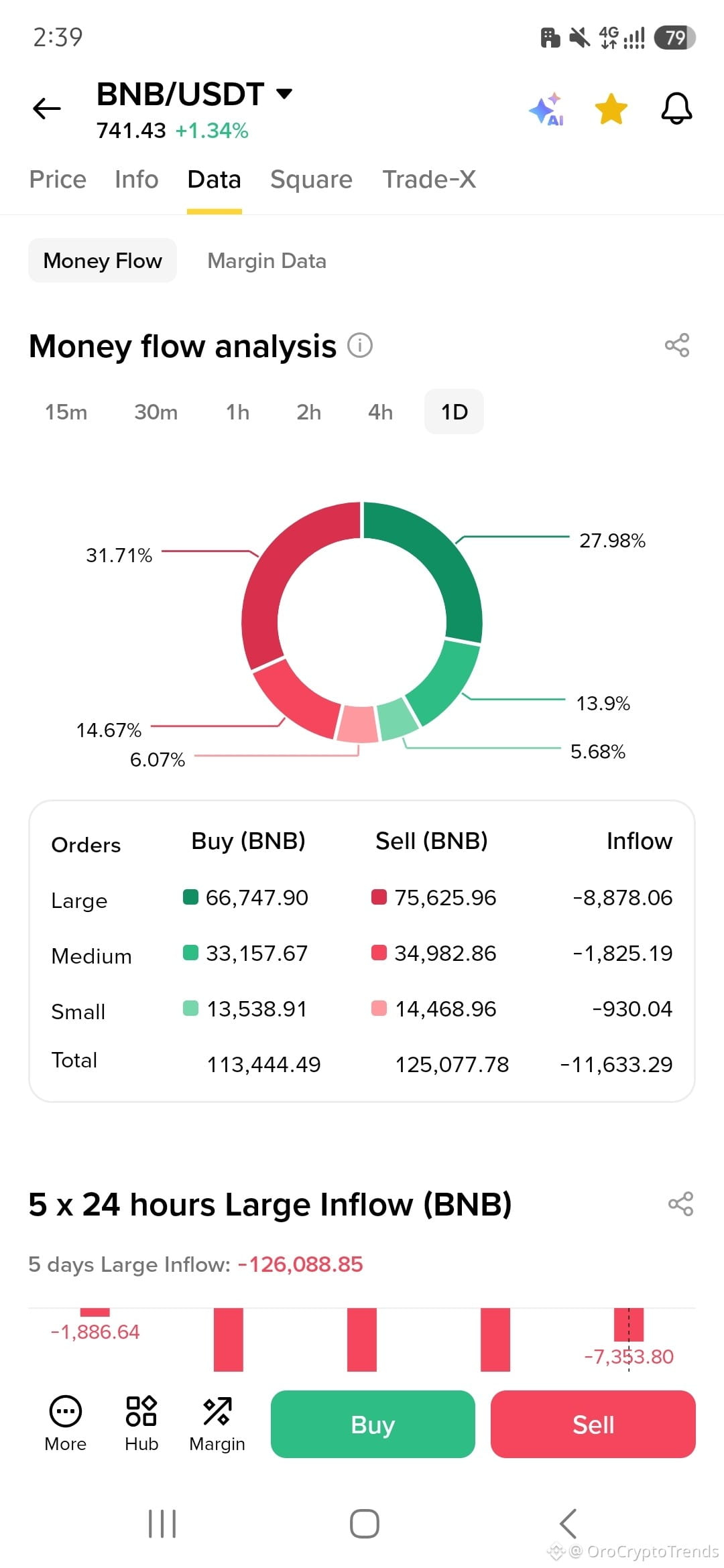
BNB/USDT ronda los $741.43 en la captura proporcionada, pero el desglose de órdenes de 1D cuenta otra historia.
Los compradores adquirieron 113,444.49 BNB, mientras que los vendedores representaron 125,077.78 BNB. Eso supone un desequilibrio neto de ventas de 11,633.29 BNB.
Las órdenes grandes encabezaron la presión, con ventas netas de 8,878.06 BNB. La entrada de órdenes grandes reportada para cinco días también es negativa: 126,088.85 BNB.
Mi interpretación: el acceso ampliado a BNB de Futu es una evolución positiva a largo plazo, pero esta instantánea todavía no confirma una fuerte presión compradora. El precio puede subir incluso mientras el flujo de órdenes medido siga siendo negativo.
El escenario alcista es que los compradores absorban las ventas. El escenario bajista es que las persistentes salidas de órdenes grandes debiliten el rebote.
Los datos del flujo de dinero son una instantánea, no una imagen completa del mercado. Esto no es asesoramiento financiero.
¿Qué cambiaría primero tu opinión: que los flujos de órdenes grandes se volvieran positivos o que BNB mantuviera precios más altos pese a las ventas continuas?
#bnb #BNBChain #Write2Earn
{future}(BNBUSDT)
$BNB sube un 1.34 %. Entonces, ¿por qué los datos del flujo de dinero parecen débiles?
BNB/USDT ronda los $741.43 en la captura proporcionada, pero el desglose de órdenes de 1D cuenta otra historia.
Los compradores adquirieron 113,444.49 BNB, mientras que los vendedores representaron 125,077.78 BNB. Eso supone un desequilibrio neto de ventas de 11,633.29 BNB.
Las órdenes grandes encabezaron la presión, con ventas netas de 8,878.06 BNB. La entrada de órdenes grandes reportada para cinco días también es negativa: 126,088.85 BNB.
Mi interpretación: el acceso ampliado a BNB de Futu es una evolución positiva a largo plazo, pero esta instantánea todavía no confirma una fuerte presión compradora. El precio puede subir incluso mientras el flujo de órdenes medido siga siendo negativo.
El escenario alcista es que los compradores absorban las ventas. El escenario bajista es que las persistentes salidas de órdenes grandes debiliten el rebote.
Los datos del flujo de dinero son una instantánea, no una imagen completa del mercado. Esto no es asesoramiento financiero.
¿Qué cambiaría primero tu opinión: que los flujos de órdenes grandes se volvieran positivos o que BNB mantuviera precios más altos pese a las ventas continuas?
#bnb #BNBChain #Write2Earn
BNB/USDT ronda los $741.43 en la captura proporcionada, pero el desglose de órdenes de 1D cuenta otra historia.
Los compradores adquirieron 113,444.49 BNB, mientras que los vendedores representaron 125,077.78 BNB. Eso supone un desequilibrio neto de ventas de 11,633.29 BNB.
Las órdenes grandes encabezaron la presión, con ventas netas de 8,878.06 BNB. La entrada de órdenes grandes reportada para cinco días también es negativa: 126,088.85 BNB.
Mi interpretación: el acceso ampliado a BNB de Futu es una evolución positiva a largo plazo, pero esta instantánea todavía no confirma una fuerte presión compradora. El precio puede subir incluso mientras el flujo de órdenes medido siga siendo negativo.
El escenario alcista es que los compradores absorban las ventas. El escenario bajista es que las persistentes salidas de órdenes grandes debiliten el rebote.
Los datos del flujo de dinero son una instantánea, no una imagen completa del mercado. Esto no es asesoramiento financiero.
¿Qué cambiaría primero tu opinión: que los flujos de órdenes grandes se volvieran positivos o que BNB mantuviera precios más altos pese a las ventas continuas?
#bnb #BNBChain #Write2Earn
373
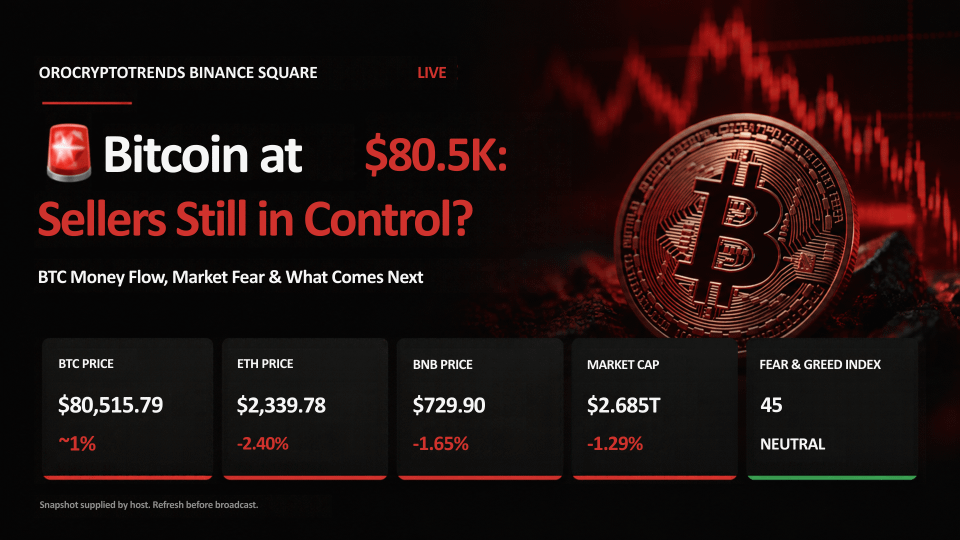
🎙️ 🚨 BTC a 80,5 mil dólares: flujo M de BTC, F del mercado y qué viene después
Finalizado
01 h 10 m 19 s
270
BNB
Holding
+0.2
4
0
Las criptomonedas están cayendo y las posiciones largas apalancadas están sintiendo la presión. Pero ¿se trata de un movimiento más amplio de aversión al riesgo o de una purga del apalancamiento?
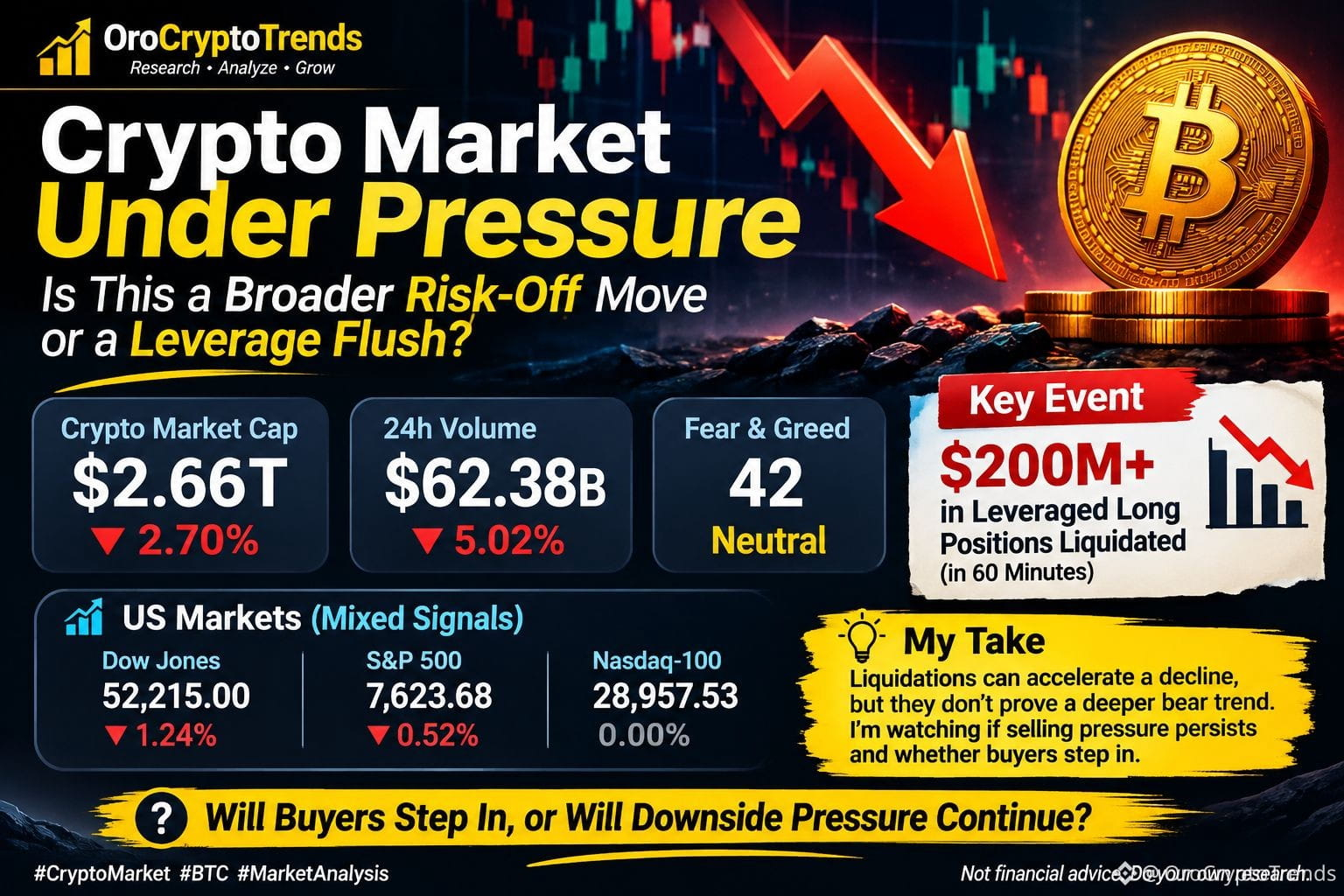
La capitalización total del mercado cripto cayó a $2.66T, un 2.70% menos, mientras que el volumen de negociación de 24 horas bajó un 5.02%, hasta $62.38B. El índice Fear & Greed se situó en 42, calificado como Neutral en la captura de pantalla.
La venta reportada fue pronunciada. WatcherGuru informó que BTC cayó por debajo de $80,000, ETH por debajo de $2,350 y XRP por debajo de $1.30, con más de $200 millones en posiciones largas apalancadas liquidadas en 60 minutos.
Las acciones estadounidenses tuvieron resultados mixtos: el Dow Jones cayó un 1.24%, el S&P 500 bajó un 0.52% y el Nasdaq-100 se mantuvo prácticamente sin cambios.
Mi opinión: estoy observando si esta presión se extiende más allá de los operadores apalancados. Las liquidaciones pueden acelerar una caída, ya que las ventas forzadas empujan los precios a la baja, pero no demuestran que haya comenzado una tendencia bajista más profunda. La próxima señal será si la presión vendedora persiste después de la ola inicial de liquidaciones. También vigilaría la demanda al contado y los flujos de ETF para detectar indicios de nuevas compras o de una debilidad continuada. Las capturas de pantalla no proporcionan información suficiente para confirmar esas señales, así que evitaría declarar que se ha tocado fondo o dar por hecho que la venta ha terminado.
Por ahora, la pregunta clave es si los compradores entrarán en el mercado o si continuará la presión bajista.
Esto no es asesoramiento financiero. Investiga por tu cuenta.
Las criptomonedas están cayendo y las posiciones largas apalancadas están sintiendo la presión. Pero ¿se trata de un movimiento más amplio de aversión al riesgo o de una purga del apalancamiento?
La capitalización total del mercado cripto cayó a $2.66T, un 2.70% menos, mientras que el volumen de negociación de 24 horas bajó un 5.02%, hasta $62.38B. El índice Fear & Greed se situó en 42, calificado como Neutral en la captura de pantalla.
La venta reportada fue pronunciada. WatcherGuru informó que BTC cayó por debajo de $80,000, ETH por debajo de $2,350 y XRP por debajo de $1.30, con más de $200 millones en posiciones largas apalancadas liquidadas en 60 minutos.
Las acciones estadounidenses tuvieron resultados mixtos: el Dow Jones cayó un 1.24%, el S&P 500 bajó un 0.52% y el Nasdaq-100 se mantuvo prácticamente sin cambios.
Mi opinión: estoy observando si esta presión se extiende más allá de los operadores apalancados. Las liquidaciones pueden acelerar una caída, ya que las ventas forzadas empujan los precios a la baja, pero no demuestran que haya comenzado una tendencia bajista más profunda. La próxima señal será si la presión vendedora persiste después de la ola inicial de liquidaciones. También vigilaría la demanda al contado y los flujos de ETF para detectar indicios de nuevas compras o de una debilidad continuada. Las capturas de pantalla no proporcionan información suficiente para confirmar esas señales, así que evitaría declarar que se ha tocado fondo o dar por hecho que la venta ha terminado.
Por ahora, la pregunta clave es si los compradores entrarán en el mercado o si continuará la presión bajista.
Esto no es asesoramiento financiero. Investiga por tu cuenta.
La capitalización total del mercado cripto cayó a $2.66T, un 2.70% menos, mientras que el volumen de negociación de 24 horas bajó un 5.02%, hasta $62.38B. El índice Fear & Greed se situó en 42, calificado como Neutral en la captura de pantalla.
La venta reportada fue pronunciada. WatcherGuru informó que BTC cayó por debajo de $80,000, ETH por debajo de $2,350 y XRP por debajo de $1.30, con más de $200 millones en posiciones largas apalancadas liquidadas en 60 minutos.
Las acciones estadounidenses tuvieron resultados mixtos: el Dow Jones cayó un 1.24%, el S&P 500 bajó un 0.52% y el Nasdaq-100 se mantuvo prácticamente sin cambios.
Mi opinión: estoy observando si esta presión se extiende más allá de los operadores apalancados. Las liquidaciones pueden acelerar una caída, ya que las ventas forzadas empujan los precios a la baja, pero no demuestran que haya comenzado una tendencia bajista más profunda. La próxima señal será si la presión vendedora persiste después de la ola inicial de liquidaciones. También vigilaría la demanda al contado y los flujos de ETF para detectar indicios de nuevas compras o de una debilidad continuada. Las capturas de pantalla no proporcionan información suficiente para confirmar esas señales, así que evitaría declarar que se ha tocado fondo o dar por hecho que la venta ha terminado.
Por ahora, la pregunta clave es si los compradores entrarán en el mercado o si continuará la presión bajista.
Esto no es asesoramiento financiero. Investiga por tu cuenta.
1
1
403
🎙️ Bitcoin en 80.000 dólares: ¿lo sostendrán los compradores o se avecina una caída? Flujos de ETF y semana de la Fed

Finalizado
01 h 17 m 28 s
345
BNB
Holding
+0.19
0
0
🎙️ ¡Bienvenida, familia! ¡Hagámoslo juntos, BBW 2026! 🏆🚀
Finalizado
02 h 54 m 53 s
2.8k
4
2
Parcialmente cierto
$META.US
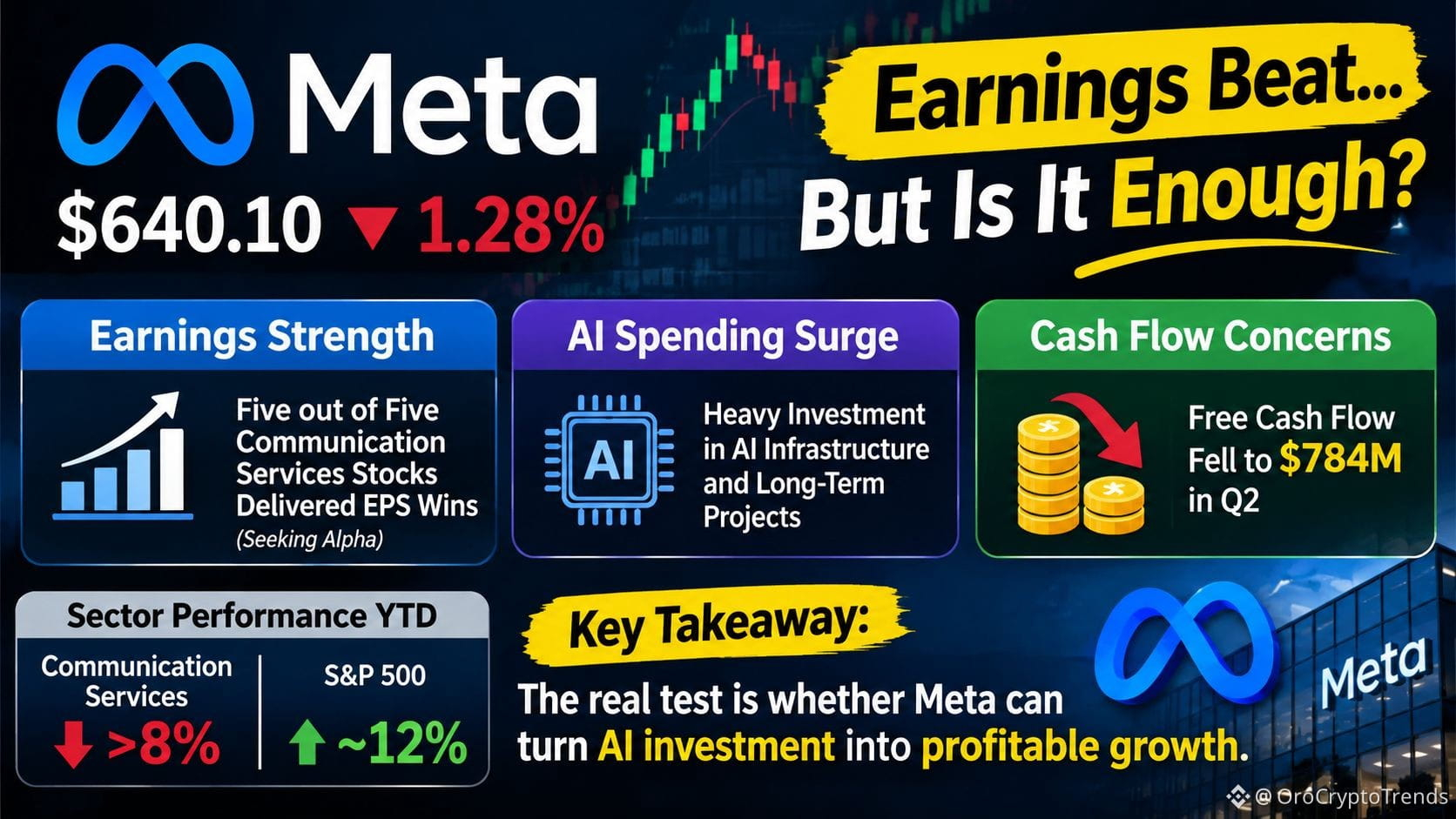
$META cae un 1,28% pese a los titulares positivos sobre sus resultados. Es posible que los inversores esperen algo más que superar las estimaciones de BPA.
Meta Platforms forma parte de un panorama más amplio de resultados del sector de servicios de comunicación. Seeking Alpha informó que las cinco acciones del sector analizadas en su revisión semanal superaron las estimaciones de BPA, y que Meta y Netflix estuvieron entre las principales empresas cuyos resultados evaluaban los inversores.
Los datos de mercado proporcionados muestran que $META cotiza a 640,10 $, con una caída del 1,28%.
Mi opinión: Esta es la distinción a la que siempre vuelvo: superar las expectativas de resultados y crear valor para los accionistas no son lo mismo.
La tesis de inversión en IA de Meta depende de que convierta el gasto en infraestructura en mejoras cuantificables en el rendimiento de la publicidad, la rentabilidad operativa y, con el tiempo, el flujo de caja. Unos resultados sólidos por sí solos quizá no resuelvan esa cuestión si los gastos y las inversiones de capital siguen limitando la flexibilidad financiera.
Estoy pendiente del crecimiento de la publicidad, el control de gastos, las previsiones de gasto en IA y las pérdidas de Reality Labs. Las pruebas de que la IA está mejorando la segmentación y la monetización de los anuncios podrían reforzar la tesis alcista. El aumento de los costos sin rendimientos visibles la debilitaría.
También importa el contexto general del sector. Seeking Alpha informó que los servicios de comunicación habían caído más de un 8% en lo que va del año, mientras que el S&P 500 subía casi un 12%. Esta divergencia plantea la pregunta de si unos resultados positivos pueden traducirse en un nuevo liderazgo del sector.
La prueba clave es si Meta puede demostrar que obtiene rendimientos de su gasto en IA, no simplemente anunciar más inversiones.
{future}(METAUSDT)
Esto no es asesoramiento financiero. Investiga por tu cuenta.
$META .US
$META cae un 1,28% pese a los titulares positivos sobre sus resultados. Es posible que los inversores esperen algo más que superar las estimaciones de BPA.
Meta Platforms forma parte de un panorama más amplio de resultados del sector de servicios de comunicación. Seeking Alpha informó que las cinco acciones del sector analizadas en su revisión semanal superaron las estimaciones de BPA, y que Meta y Netflix estuvieron entre las principales empresas cuyos resultados evaluaban los inversores.
Los datos de mercado proporcionados muestran que $META cotiza a 640,10 $, con una caída del 1,28%.
Mi opinión: Esta es la distinción a la que siempre vuelvo: superar las expectativas de resultados y crear valor para los accionistas no son lo mismo.
La tesis de inversión en IA de Meta depende de que convierta el gasto en infraestructura en mejoras cuantificables en el rendimiento de la publicidad, la rentabilidad operativa y, con el tiempo, el flujo de caja. Unos resultados sólidos por sí solos quizá no resuelvan esa cuestión si los gastos y las inversiones de capital siguen limitando la flexibilidad financiera.
Estoy pendiente del crecimiento de la publicidad, el control de gastos, las previsiones de gasto en IA y las pérdidas de Reality Labs. Las pruebas de que la IA está mejorando la segmentación y la monetización de los anuncios podrían reforzar la tesis alcista. El aumento de los costos sin rendimientos visibles la debilitaría.
También importa el contexto general del sector. Seeking Alpha informó que los servicios de comunicación habían caído más de un 8% en lo que va del año, mientras que el S&P 500 subía casi un 12%. Esta divergencia plantea la pregunta de si unos resultados positivos pueden traducirse en un nuevo liderazgo del sector.
La prueba clave es si Meta puede demostrar que obtiene rendimientos de su gasto en IA, no simplemente anunciar más inversiones.
Esto no es asesoramiento financiero. Investiga por tu cuenta.
$META cae un 1,28% pese a los titulares positivos sobre sus resultados. Es posible que los inversores esperen algo más que superar las estimaciones de BPA.
Meta Platforms forma parte de un panorama más amplio de resultados del sector de servicios de comunicación. Seeking Alpha informó que las cinco acciones del sector analizadas en su revisión semanal superaron las estimaciones de BPA, y que Meta y Netflix estuvieron entre las principales empresas cuyos resultados evaluaban los inversores.
Los datos de mercado proporcionados muestran que $META cotiza a 640,10 $, con una caída del 1,28%.
Mi opinión: Esta es la distinción a la que siempre vuelvo: superar las expectativas de resultados y crear valor para los accionistas no son lo mismo.
La tesis de inversión en IA de Meta depende de que convierta el gasto en infraestructura en mejoras cuantificables en el rendimiento de la publicidad, la rentabilidad operativa y, con el tiempo, el flujo de caja. Unos resultados sólidos por sí solos quizá no resuelvan esa cuestión si los gastos y las inversiones de capital siguen limitando la flexibilidad financiera.
Estoy pendiente del crecimiento de la publicidad, el control de gastos, las previsiones de gasto en IA y las pérdidas de Reality Labs. Las pruebas de que la IA está mejorando la segmentación y la monetización de los anuncios podrían reforzar la tesis alcista. El aumento de los costos sin rendimientos visibles la debilitaría.
También importa el contexto general del sector. Seeking Alpha informó que los servicios de comunicación habían caído más de un 8% en lo que va del año, mientras que el S&P 500 subía casi un 12%. Esta divergencia plantea la pregunta de si unos resultados positivos pueden traducirse en un nuevo liderazgo del sector.
La prueba clave es si Meta puede demostrar que obtiene rendimientos de su gasto en IA, no simplemente anunciar más inversiones.
Esto no es asesoramiento financiero. Investiga por tu cuenta.
1
825
#LasAppsDeTradingAlgorítmicoDeCriptomonedasDelReinoUnidoPodríanNecesitarAutorizaciónDeLaFCA
Las normas del Reino Unido sobre los bots de criptomonedas podrían cambiar más que los propios bots. La verdadera cuestión es qué hace realmente la aplicación.
Está previsto que el nuevo régimen de criptomonedas de la FCA entre en vigor el 25 de octubre de 2027. El plazo para presentar solicitudes estará abierto del 30 de septiembre de 2026 al 28 de febrero de 2027. Las empresas que realicen actividades reguladas con criptomonedas necesitarán la autorización correspondiente. Guía oficial de la FCA.
Mi interpretación: el análisis de mercado y la ejecución automatizada de operaciones no deberían considerarse el mismo servicio. El alcance legal importa más que la etiqueta de «bot de trading».
Argumento alcista: una supervisión más estricta podría mejorar la rendición de cuentas y la protección de los consumidores.
Argumento bajista: los costes de cumplimiento normativo podrían perjudicar a los desarrolladores más pequeños y concentrar el mercado.
Cambiaría de opinión si las directrices de la FCA sobre el alcance de la normativa o las medidas de ejecución posteriores mostraran un impacto sustancialmente distinto en los proveedores independientes.
Se trata de un marco normativo futuro, no de una norma general según la cual todos los bots necesiten automáticamente una autorización. Las criptomonedas siguen siendo arriesgadas; haz tu propia investigación.
¿El nuevo régimen del Reino Unido hará más seguro el trading automatizado de criptomonedas o dará una ventaja competitiva a las plataformas más grandes?
#Write2Earn
#LasAppsDeTradingAlgorítmicoDeCriptomonedasDelReinoUnidoPodríanNecesitarAutorizaciónDeLaFCA
Las normas del Reino Unido sobre los bots de criptomonedas podrían cambiar más que los propios bots. La verdadera cuestión es qué hace realmente la aplicación.
Está previsto que el nuevo régimen de criptomonedas de la FCA entre en vigor el 25 de octubre de 2027. El plazo para presentar solicitudes estará abierto del 30 de septiembre de 2026 al 28 de febrero de 2027. Las empresas que realicen actividades reguladas con criptomonedas necesitarán la autorización correspondiente. Guía oficial de la FCA.
Mi interpretación: el análisis de mercado y la ejecución automatizada de operaciones no deberían considerarse el mismo servicio. El alcance legal importa más que la etiqueta de «bot de trading».
Argumento alcista: una supervisión más estricta podría mejorar la rendición de cuentas y la protección de los consumidores.
Argumento bajista: los costes de cumplimiento normativo podrían perjudicar a los desarrolladores más pequeños y concentrar el mercado.
Cambiaría de opinión si las directrices de la FCA sobre el alcance de la normativa o las medidas de ejecución posteriores mostraran un impacto sustancialmente distinto en los proveedores independientes.
Se trata de un marco normativo futuro, no de una norma general según la cual todos los bots necesiten automáticamente una autorización. Las criptomonedas siguen siendo arriesgadas; haz tu propia investigación.
¿El nuevo régimen del Reino Unido hará más seguro el trading automatizado de criptomonedas o dará una ventaja competitiva a las plataformas más grandes?
#Write2Earn
Las normas del Reino Unido sobre los bots de criptomonedas podrían cambiar más que los propios bots. La verdadera cuestión es qué hace realmente la aplicación.
Está previsto que el nuevo régimen de criptomonedas de la FCA entre en vigor el 25 de octubre de 2027. El plazo para presentar solicitudes estará abierto del 30 de septiembre de 2026 al 28 de febrero de 2027. Las empresas que realicen actividades reguladas con criptomonedas necesitarán la autorización correspondiente. Guía oficial de la FCA.
Mi interpretación: el análisis de mercado y la ejecución automatizada de operaciones no deberían considerarse el mismo servicio. El alcance legal importa más que la etiqueta de «bot de trading».
Argumento alcista: una supervisión más estricta podría mejorar la rendición de cuentas y la protección de los consumidores.
Argumento bajista: los costes de cumplimiento normativo podrían perjudicar a los desarrolladores más pequeños y concentrar el mercado.
Cambiaría de opinión si las directrices de la FCA sobre el alcance de la normativa o las medidas de ejecución posteriores mostraran un impacto sustancialmente distinto en los proveedores independientes.
Se trata de un marco normativo futuro, no de una norma general según la cual todos los bots necesiten automáticamente una autorización. Las criptomonedas siguen siendo arriesgadas; haz tu propia investigación.
¿El nuevo régimen del Reino Unido hará más seguro el trading automatizado de criptomonedas o dará una ventaja competitiva a las plataformas más grandes?
#Write2Earn
1
650
$MSFT.US
MSFT se mantiene por encima de su promedio de 25 días, pero la prueba de resultados es más importante que el gráfico.
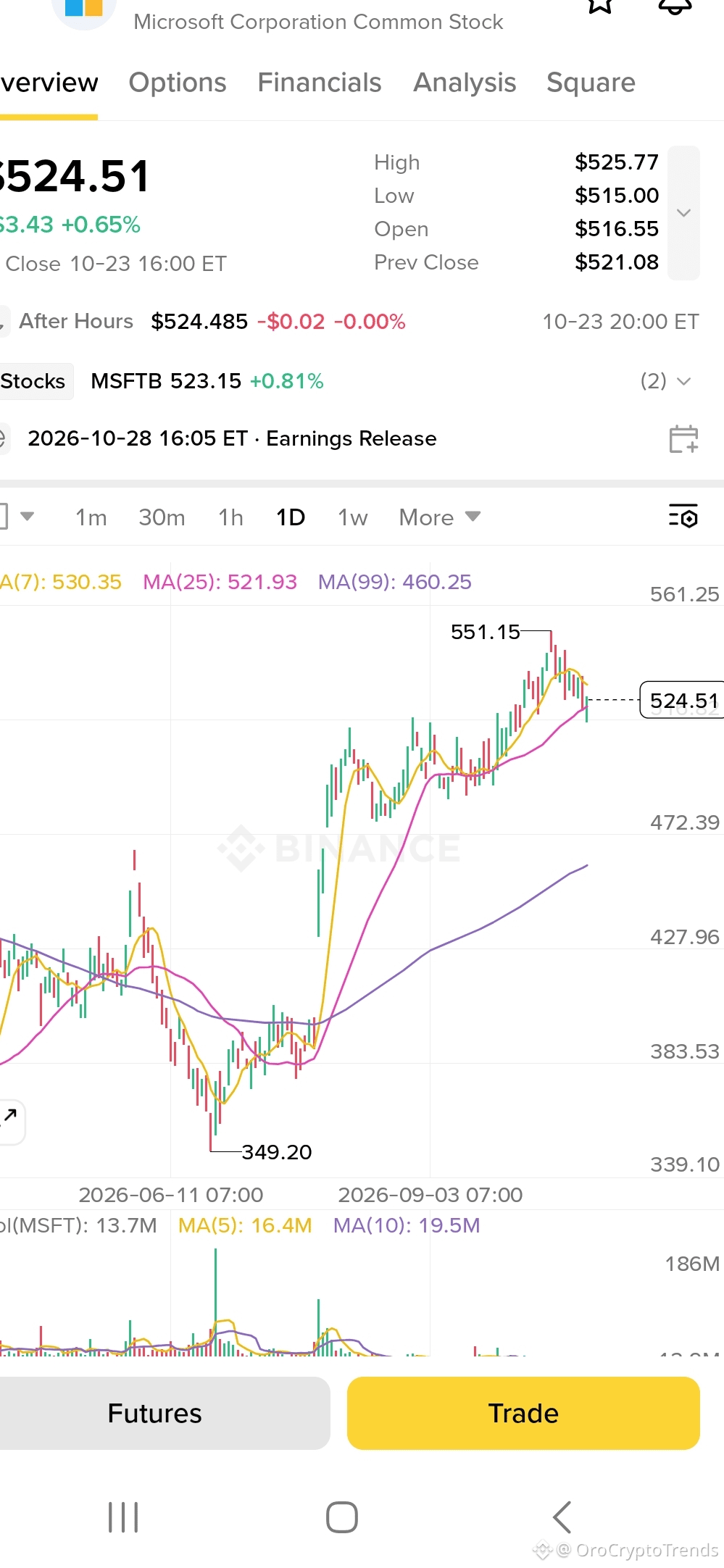
Microsoft cerró a $524.51 el 23 de octubre, con una subida del 0.65%, según mi gráfico de mercado en vivo de Binance. El gráfico diario muestra que el precio está por debajo de su promedio móvil de 7 días ($530.35), pero por encima de los promedios de 25 días ($521.93) y 99 días ($460.25).
Mi lectura: el impulso a corto plazo se ha enfriado, pero la tendencia general no se ha quebrado claramente. El próximo catalizador será el informe de resultados de Microsoft del 28 de octubre. La pregunta clave es si el crecimiento de Azure y la monetización de la IA pueden justificar la magnitud del gasto en infraestructura.
El argumento alcista se basa en la fuerte demanda de servicios en la nube y en la mejora de los rendimientos de la inversión en IA. El argumento bajista es que el gasto de capital sigue creciendo más rápido que la confianza del mercado en las ganancias futuras.
Reevaluaría mi perspectiva positiva sobre el gráfico si el precio cae por debajo del promedio de 25 días y no logra recuperarlo. Una subida por encima del promedio de 7 días mejoraría el panorama a corto plazo, pero no garantizaría una reacción positiva a los resultados.
$MSFT
{future}(MSFTUSDT)
Esto no es asesoramiento financiero. Los resultados conllevan riesgos.
¿Le darías más importancia al nivel técnico de $521.93 o a las previsiones de Microsoft sobre Azure y el gasto de capital?
#MSFT
$MSFT .US
MSFT se mantiene por encima de su promedio de 25 días, pero la prueba de resultados es más importante que el gráfico.
Microsoft cerró a $524.51 el 23 de octubre, con una subida del 0.65%, según mi gráfico de mercado en vivo de Binance. El gráfico diario muestra que el precio está por debajo de su promedio móvil de 7 días ($530.35), pero por encima de los promedios de 25 días ($521.93) y 99 días ($460.25).
Mi lectura: el impulso a corto plazo se ha enfriado, pero la tendencia general no se ha quebrado claramente. El próximo catalizador será el informe de resultados de Microsoft del 28 de octubre. La pregunta clave es si el crecimiento de Azure y la monetización de la IA pueden justificar la magnitud del gasto en infraestructura.
El argumento alcista se basa en la fuerte demanda de servicios en la nube y en la mejora de los rendimientos de la inversión en IA. El argumento bajista es que el gasto de capital sigue creciendo más rápido que la confianza del mercado en las ganancias futuras.
Reevaluaría mi perspectiva positiva sobre el gráfico si el precio cae por debajo del promedio de 25 días y no logra recuperarlo. Una subida por encima del promedio de 7 días mejoraría el panorama a corto plazo, pero no garantizaría una reacción positiva a los resultados.
$MSFT
Esto no es asesoramiento financiero. Los resultados conllevan riesgos.
¿Le darías más importancia al nivel técnico de $521.93 o a las previsiones de Microsoft sobre Azure y el gasto de capital?
#MSFT
MSFT se mantiene por encima de su promedio de 25 días, pero la prueba de resultados es más importante que el gráfico.
Microsoft cerró a $524.51 el 23 de octubre, con una subida del 0.65%, según mi gráfico de mercado en vivo de Binance. El gráfico diario muestra que el precio está por debajo de su promedio móvil de 7 días ($530.35), pero por encima de los promedios de 25 días ($521.93) y 99 días ($460.25).
Mi lectura: el impulso a corto plazo se ha enfriado, pero la tendencia general no se ha quebrado claramente. El próximo catalizador será el informe de resultados de Microsoft del 28 de octubre. La pregunta clave es si el crecimiento de Azure y la monetización de la IA pueden justificar la magnitud del gasto en infraestructura.
El argumento alcista se basa en la fuerte demanda de servicios en la nube y en la mejora de los rendimientos de la inversión en IA. El argumento bajista es que el gasto de capital sigue creciendo más rápido que la confianza del mercado en las ganancias futuras.
Reevaluaría mi perspectiva positiva sobre el gráfico si el precio cae por debajo del promedio de 25 días y no logra recuperarlo. Una subida por encima del promedio de 7 días mejoraría el panorama a corto plazo, pero no garantizaría una reacción positiva a los resultados.
$MSFT
Esto no es asesoramiento financiero. Los resultados conllevan riesgos.
¿Le darías más importancia al nivel técnico de $521.93 o a las previsiones de Microsoft sobre Azure y el gasto de capital?
#MSFT
276
Verificado
Mantienes $BNB 0.1 USDT
$BNB
{future}(BNBUSDT)
Se está ampliando el acceso al canal de corretaje regulado de Hong Kong. ¿Le seguirá la adopción?
El canal de anuncios de Binance informa que Futu Securities Hong Kong ha habilitado los depósitos y retiros de BNB a través de BNB Smart Chain (BEP20) para inversores profesionales que cumplan los requisitos. El fundador de Binance, CZ, también reconoció públicamente el anuncio en X.
Panorama del mercado
$BNB / USDT: 732.49
Variación mostrada: -1.89%
Considero que esto podría representar una mejora significativa en el acceso a BNB, pero no es un catalizador alcista automático.
Conectar una plataforma de corretaje con transferencias de BNB en cadena podría facilitar el movimiento de activos a los inversores que cumplan los requisitos. La pregunta más importante es si esa comodidad se traduce en un uso sostenido, una participación más amplia y una demanda medible de BNB.
El panorama del mercado que se muestra indica que BNBUSDT está en 732.49, con una caída del 1.89%. Esta es una observación independiente; no demuestra que la noticia haya causado la caída del precio.
Estoy atento a las pruebas de adopción real y a si esta integración pasa a formar parte de una tendencia más amplia que conecte los activos digitales con los servicios financieros regulados. Si el uso sigue siendo limitado, el impacto inmediato en la demanda de BNB podría ser modesto.
El acceso abre la puerta. La adopción determina si importa.
Esto no es asesoramiento financiero. Investiga por tu cuenta.
#bnb #Write2Earn
$BNB
Se está ampliando el acceso al canal de corretaje regulado de Hong Kong. ¿Le seguirá la adopción?
El canal de anuncios de Binance informa que Futu Securities Hong Kong ha habilitado los depósitos y retiros de BNB a través de BNB Smart Chain (BEP20) para inversores profesionales que cumplan los requisitos. El fundador de Binance, CZ, también reconoció públicamente el anuncio en X.
Panorama del mercado
$BNB / USDT: 732.49
Variación mostrada: -1.89%
Considero que esto podría representar una mejora significativa en el acceso a BNB, pero no es un catalizador alcista automático.
Conectar una plataforma de corretaje con transferencias de BNB en cadena podría facilitar el movimiento de activos a los inversores que cumplan los requisitos. La pregunta más importante es si esa comodidad se traduce en un uso sostenido, una participación más amplia y una demanda medible de BNB.
El panorama del mercado que se muestra indica que BNBUSDT está en 732.49, con una caída del 1.89%. Esta es una observación independiente; no demuestra que la noticia haya causado la caída del precio.
Estoy atento a las pruebas de adopción real y a si esta integración pasa a formar parte de una tendencia más amplia que conecte los activos digitales con los servicios financieros regulados. Si el uso sigue siendo limitado, el impacto inmediato en la demanda de BNB podría ser modesto.
El acceso abre la puerta. La adopción determina si importa.
Esto no es asesoramiento financiero. Investiga por tu cuenta.
#bnb #Write2Earn
Se está ampliando el acceso al canal de corretaje regulado de Hong Kong. ¿Le seguirá la adopción?
El canal de anuncios de Binance informa que Futu Securities Hong Kong ha habilitado los depósitos y retiros de BNB a través de BNB Smart Chain (BEP20) para inversores profesionales que cumplan los requisitos. El fundador de Binance, CZ, también reconoció públicamente el anuncio en X.
Panorama del mercado
$BNB / USDT: 732.49
Variación mostrada: -1.89%
Considero que esto podría representar una mejora significativa en el acceso a BNB, pero no es un catalizador alcista automático.
Conectar una plataforma de corretaje con transferencias de BNB en cadena podría facilitar el movimiento de activos a los inversores que cumplan los requisitos. La pregunta más importante es si esa comodidad se traduce en un uso sostenido, una participación más amplia y una demanda medible de BNB.
El panorama del mercado que se muestra indica que BNBUSDT está en 732.49, con una caída del 1.89%. Esta es una observación independiente; no demuestra que la noticia haya causado la caída del precio.
Estoy atento a las pruebas de adopción real y a si esta integración pasa a formar parte de una tendencia más amplia que conecte los activos digitales con los servicios financieros regulados. Si el uso sigue siendo limitado, el impacto inmediato en la demanda de BNB podría ser modesto.
El acceso abre la puerta. La adopción determina si importa.
Esto no es asesoramiento financiero. Investiga por tu cuenta.
#bnb #Write2Earn

3
1.1k
La entrevista de CZ en Japón plantea una pregunta más amplia: ¿cómo darán forma la IA y la cadena de bloques a la próxima etapa del crecimiento?
El fundador de Binance, CZ, participó en una entrevista exclusiva con el medio japonés PIVOT, en la que habló sobre IA, cadena de bloques y estrategias de expansión global.
También anunció que próximamente estará disponible en Spotify una versión de audio de *Freedom of Money* generada por IA, lo que refleja su creciente interés por esta tecnología.
Activos relacionados: La información proporcionada no permite establecer un impacto directo en ningún token.
Lo que me interesa aquí es la intersección entre la IA, la cadena de bloques y la expansión global. A menudo se habla de estos temas como historias de crecimiento independientes, pero su importancia a largo plazo depende de que se traduzcan en productos útiles, una adopción más amplia y modelos de negocio sostenibles.
El audiolibro generado por IA es un ejemplo concreto de cómo se aplica esta tecnología a un producto de contenido existente. Sin embargo, por sí solo no demuestra una nueva adopción de la cadena de bloques ni un beneficio directo para ningún criptoactivo en particular.
Estaría atento a detalles concretos sobre la estrategia de expansión, las aplicaciones prácticas de la IA y la adopción medible dentro del ecosistema. Hasta que surjan esos detalles, lo considero un debate estratégico que vale la pena seguir, más que un catalizador de mercado por sí solo.
Esto no es asesoramiento financiero. Investiga por tu cuenta.
#CZ #Binance
La entrevista de CZ en Japón plantea una pregunta más amplia: ¿cómo darán forma la IA y la cadena de bloques a la próxima etapa del crecimiento?
El fundador de Binance, CZ, participó en una entrevista exclusiva con el medio japonés PIVOT, en la que habló sobre IA, cadena de bloques y estrategias de expansión global.
También anunció que próximamente estará disponible en Spotify una versión de audio de *Freedom of Money* generada por IA, lo que refleja su creciente interés por esta tecnología.
Activos relacionados: La información proporcionada no permite establecer un impacto directo en ningún token.
Lo que me interesa aquí es la intersección entre la IA, la cadena de bloques y la expansión global. A menudo se habla de estos temas como historias de crecimiento independientes, pero su importancia a largo plazo depende de que se traduzcan en productos útiles, una adopción más amplia y modelos de negocio sostenibles.
El audiolibro generado por IA es un ejemplo concreto de cómo se aplica esta tecnología a un producto de contenido existente. Sin embargo, por sí solo no demuestra una nueva adopción de la cadena de bloques ni un beneficio directo para ningún criptoactivo en particular.
Estaría atento a detalles concretos sobre la estrategia de expansión, las aplicaciones prácticas de la IA y la adopción medible dentro del ecosistema. Hasta que surjan esos detalles, lo considero un debate estratégico que vale la pena seguir, más que un catalizador de mercado por sí solo.
Esto no es asesoramiento financiero. Investiga por tu cuenta.
#CZ #Binance
El fundador de Binance, CZ, participó en una entrevista exclusiva con el medio japonés PIVOT, en la que habló sobre IA, cadena de bloques y estrategias de expansión global.
También anunció que próximamente estará disponible en Spotify una versión de audio de *Freedom of Money* generada por IA, lo que refleja su creciente interés por esta tecnología.
Activos relacionados: La información proporcionada no permite establecer un impacto directo en ningún token.
Lo que me interesa aquí es la intersección entre la IA, la cadena de bloques y la expansión global. A menudo se habla de estos temas como historias de crecimiento independientes, pero su importancia a largo plazo depende de que se traduzcan en productos útiles, una adopción más amplia y modelos de negocio sostenibles.
El audiolibro generado por IA es un ejemplo concreto de cómo se aplica esta tecnología a un producto de contenido existente. Sin embargo, por sí solo no demuestra una nueva adopción de la cadena de bloques ni un beneficio directo para ningún criptoactivo en particular.
Estaría atento a detalles concretos sobre la estrategia de expansión, las aplicaciones prácticas de la IA y la adopción medible dentro del ecosistema. Hasta que surjan esos detalles, lo considero un debate estratégico que vale la pena seguir, más que un catalizador de mercado por sí solo.
Esto no es asesoramiento financiero. Investiga por tu cuenta.
#CZ #Binance

197
🎙️ 🚨 Bitcoin por debajo de `$82K: ¿retroceso saludable? Flujos de ETF y lo que viene después

Finalizado
01 h 31 m 54 s
672
BNB
Holding
+0.2
4
0
$MSFT: Soy moderadamente optimista de cara a los resultados, pero el gasto en IA es la verdadera prueba.
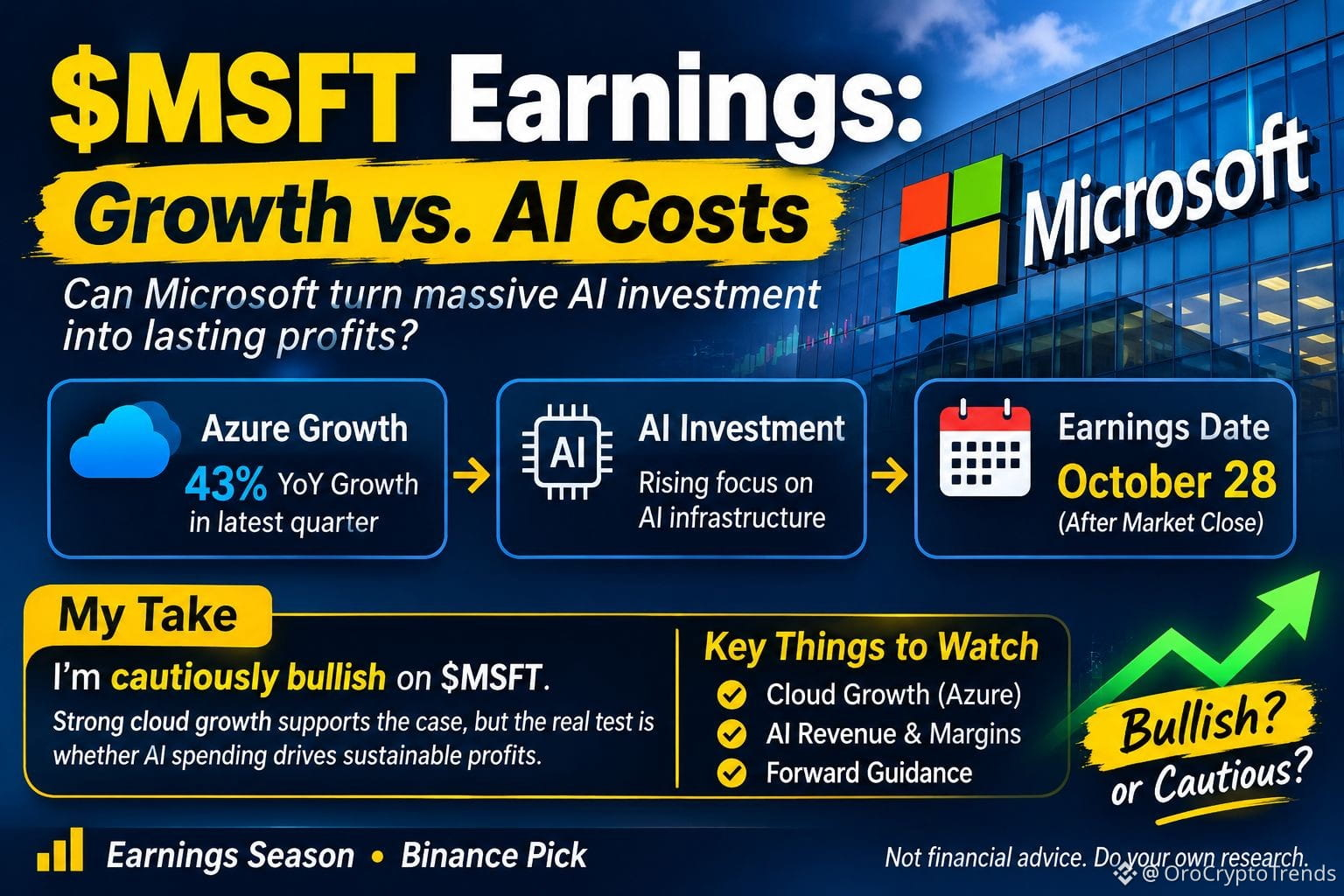
Está previsto que Microsoft presente sus resultados del primer trimestre fiscal de 2027 el 28 de octubre, después del cierre del mercado. Los inversores estarán atentos a si el crecimiento de la nube y la adopción de la IA pueden justificar la considerable inversión de la empresa en infraestructura de IA.
Mi predicción: alcista, con una condición importante.
El trimestre anterior de Microsoft mostró un sólido impulso empresarial, incluido un crecimiento del 43 % en Azure y otros servicios en la nube. Esto respalda una perspectiva alcista, pero los resultados anteriores no garantizan que vuelva a superar las expectativas. <Cite refs={["turn432956news17"]}/>
La pregunta clave es si Microsoft puede seguir expandiendo su negocio en la nube y, al mismo tiempo, convertir la demanda de IA en ingresos y beneficios sostenibles.
Estoy pendiente de tres cosas:
- Resultados: ¿Puede Microsoft igualar o superar las expectativas del mercado?
- Azure: ¿Se mantiene sólido el crecimiento de la nube?
- Gasto en IA: ¿Empiezan los rendimientos a justificar los costes de infraestructura?
Mi tesis alcista pierde fuerza si el crecimiento de la nube decepciona o si las perspectivas de la dirección no justifican que se siga invirtiendo en IA. Incluso superar las expectativas en los resultados podría desencadenar una venta masiva si las expectativas ya son demasiado altas.
Mi predicción de Binance Pick: alcista para $MSFT, pero las previsiones importan tanto como las cifras principales.
#EarningsSeason #BinancePick
Esto no es asesoramiento financiero. Investiga por tu cuenta.
$MSFT: Soy moderadamente optimista de cara a los resultados, pero el gasto en IA es la verdadera prueba.
Está previsto que Microsoft presente sus resultados del primer trimestre fiscal de 2027 el 28 de octubre, después del cierre del mercado. Los inversores estarán atentos a si el crecimiento de la nube y la adopción de la IA pueden justificar la considerable inversión de la empresa en infraestructura de IA.
Mi predicción: alcista, con una condición importante.
El trimestre anterior de Microsoft mostró un sólido impulso empresarial, incluido un crecimiento del 43 % en Azure y otros servicios en la nube. Esto respalda una perspectiva alcista, pero los resultados anteriores no garantizan que vuelva a superar las expectativas. <Cite refs={["turn432956news17"]}/>
La pregunta clave es si Microsoft puede seguir expandiendo su negocio en la nube y, al mismo tiempo, convertir la demanda de IA en ingresos y beneficios sostenibles.
Estoy pendiente de tres cosas:
- Resultados: ¿Puede Microsoft igualar o superar las expectativas del mercado?
- Azure: ¿Se mantiene sólido el crecimiento de la nube?
- Gasto en IA: ¿Empiezan los rendimientos a justificar los costes de infraestructura?
Mi tesis alcista pierde fuerza si el crecimiento de la nube decepciona o si las perspectivas de la dirección no justifican que se siga invirtiendo en IA. Incluso superar las expectativas en los resultados podría desencadenar una venta masiva si las expectativas ya son demasiado altas.
Mi predicción de Binance Pick: alcista para $MSFT, pero las previsiones importan tanto como las cifras principales.
#EarningsSeason #BinancePick
Esto no es asesoramiento financiero. Investiga por tu cuenta.
Está previsto que Microsoft presente sus resultados del primer trimestre fiscal de 2027 el 28 de octubre, después del cierre del mercado. Los inversores estarán atentos a si el crecimiento de la nube y la adopción de la IA pueden justificar la considerable inversión de la empresa en infraestructura de IA.
Mi predicción: alcista, con una condición importante.
El trimestre anterior de Microsoft mostró un sólido impulso empresarial, incluido un crecimiento del 43 % en Azure y otros servicios en la nube. Esto respalda una perspectiva alcista, pero los resultados anteriores no garantizan que vuelva a superar las expectativas. <Cite refs={["turn432956news17"]}/>
La pregunta clave es si Microsoft puede seguir expandiendo su negocio en la nube y, al mismo tiempo, convertir la demanda de IA en ingresos y beneficios sostenibles.
Estoy pendiente de tres cosas:
- Resultados: ¿Puede Microsoft igualar o superar las expectativas del mercado?
- Azure: ¿Se mantiene sólido el crecimiento de la nube?
- Gasto en IA: ¿Empiezan los rendimientos a justificar los costes de infraestructura?
Mi tesis alcista pierde fuerza si el crecimiento de la nube decepciona o si las perspectivas de la dirección no justifican que se siga invirtiendo en IA. Incluso superar las expectativas en los resultados podría desencadenar una venta masiva si las expectativas ya son demasiado altas.
Mi predicción de Binance Pick: alcista para $MSFT, pero las previsiones importan tanto como las cifras principales.
#EarningsSeason #BinancePick
Esto no es asesoramiento financiero. Investiga por tu cuenta.
1
301
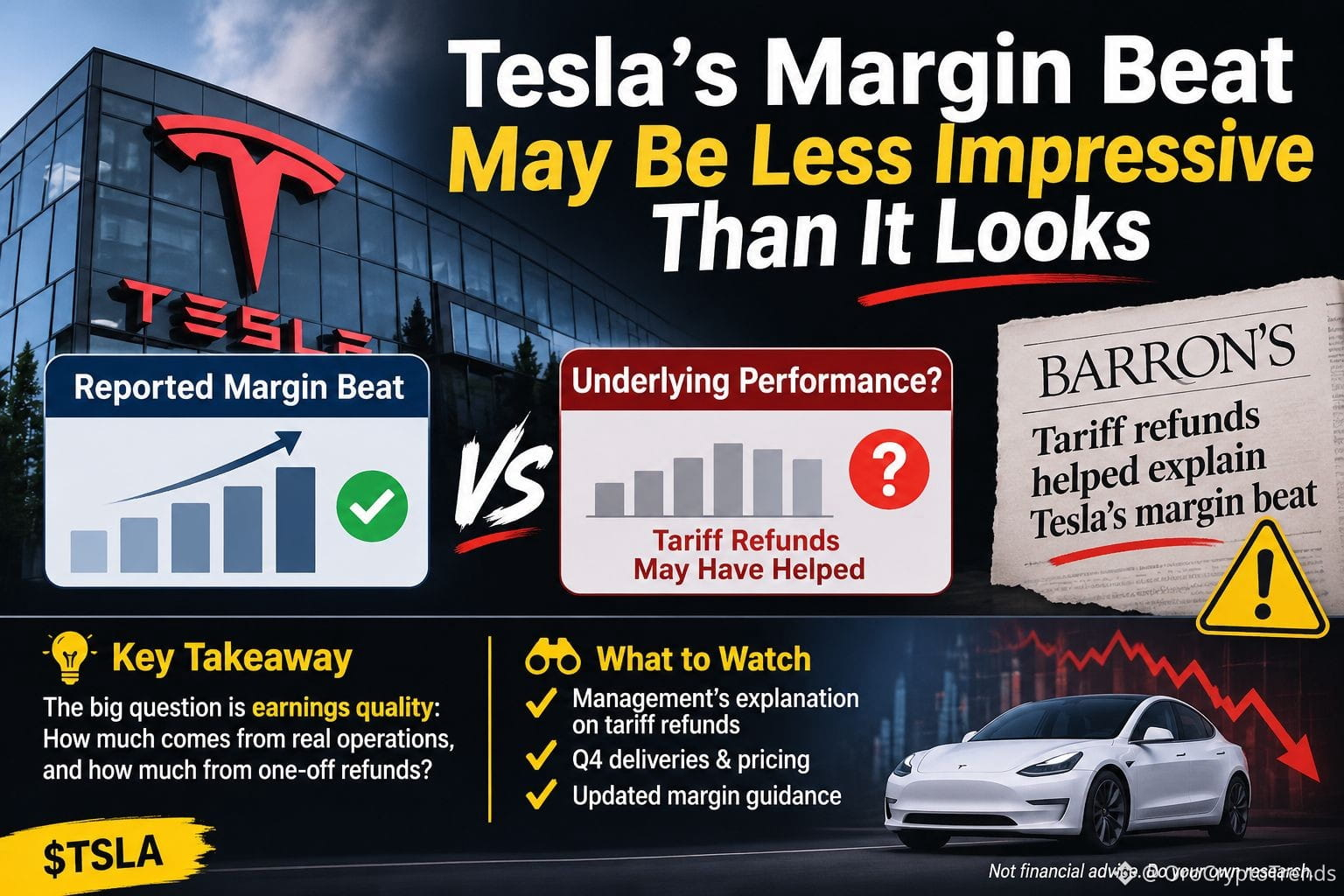
$TSLA.US La superación de las previsiones de margen de Tesla quizá sea menos impresionante de lo que parece.
Los resultados del tercer trimestre de Tesla están siendo objeto de escrutinio después de que Barron’s informara que los reembolsos de aranceles ayudaron a explicar una mejora del margen que había desconcertado a los inversores.
La verdadera pregunta es la calidad de las ganancias: ¿cuánto de la mejora provino de las operaciones subyacentes y cuánto de los reembolsos?
$TSLA | Mi opinión
Estoy mirando más allá de las cifras principales. Unos márgenes más sólidos resultan más convincentes cuando reflejan una mayor eficiencia de fabricación, poder de fijación de precios o una combinación de productos más rentable. Si los reembolsos de aranceles respaldaron significativamente el trimestre, quizá sea más difícil repetir esa mejora.
El riesgo bajista es que los inversores tengan que rebajar sus expectativas de rentabilidad normalizada. Pero no concluiría, basándome únicamente en este informe, que el negocio subyacente de Tesla se esté deteriorando. La clave es si la empresa puede mantener sus márgenes sin un apoyo extraordinario similar.
Estoy pendiente de la explicación de la dirección sobre los reembolsos, las entregas del cuarto trimestre, los precios de los vehículos y las previsiones actualizadas de márgenes. La tesis se vuelve más bajista si las ganancias normalizadas se debilitan y los márgenes no se mantienen. Una evidencia clara de una mejora operativa duradera pondría en duda esa perspectiva.
La distinción importa: la rentabilidad comunicada no siempre equivale a una rentabilidad sostenible.
Esto no es asesoramiento financiero. Investiga por tu cuenta.
$TSLA.US La superación de las previsiones de margen de Tesla quizá sea menos impresionante de lo que parece.
Los resultados del tercer trimestre de Tesla están siendo objeto de escrutinio después de que Barron’s informara que los reembolsos de aranceles ayudaron a explicar una mejora del margen que había desconcertado a los inversores.
La verdadera pregunta es la calidad de las ganancias: ¿cuánto de la mejora provino de las operaciones subyacentes y cuánto de los reembolsos?
$TSLA | Mi opinión
Estoy mirando más allá de las cifras principales. Unos márgenes más sólidos resultan más convincentes cuando reflejan una mayor eficiencia de fabricación, poder de fijación de precios o una combinación de productos más rentable. Si los reembolsos de aranceles respaldaron significativamente el trimestre, quizá sea más difícil repetir esa mejora.
El riesgo bajista es que los inversores tengan que rebajar sus expectativas de rentabilidad normalizada. Pero no concluiría, basándome únicamente en este informe, que el negocio subyacente de Tesla se esté deteriorando. La clave es si la empresa puede mantener sus márgenes sin un apoyo extraordinario similar.
Estoy pendiente de la explicación de la dirección sobre los reembolsos, las entregas del cuarto trimestre, los precios de los vehículos y las previsiones actualizadas de márgenes. La tesis se vuelve más bajista si las ganancias normalizadas se debilitan y los márgenes no se mantienen. Una evidencia clara de una mejora operativa duradera pondría en duda esa perspectiva.
La distinción importa: la rentabilidad comunicada no siempre equivale a una rentabilidad sostenible.
Esto no es asesoramiento financiero. Investiga por tu cuenta.
Los resultados del tercer trimestre de Tesla están siendo objeto de escrutinio después de que Barron’s informara que los reembolsos de aranceles ayudaron a explicar una mejora del margen que había desconcertado a los inversores.
La verdadera pregunta es la calidad de las ganancias: ¿cuánto de la mejora provino de las operaciones subyacentes y cuánto de los reembolsos?
$TSLA | Mi opinión
Estoy mirando más allá de las cifras principales. Unos márgenes más sólidos resultan más convincentes cuando reflejan una mayor eficiencia de fabricación, poder de fijación de precios o una combinación de productos más rentable. Si los reembolsos de aranceles respaldaron significativamente el trimestre, quizá sea más difícil repetir esa mejora.
El riesgo bajista es que los inversores tengan que rebajar sus expectativas de rentabilidad normalizada. Pero no concluiría, basándome únicamente en este informe, que el negocio subyacente de Tesla se esté deteriorando. La clave es si la empresa puede mantener sus márgenes sin un apoyo extraordinario similar.
Estoy pendiente de la explicación de la dirección sobre los reembolsos, las entregas del cuarto trimestre, los precios de los vehículos y las previsiones actualizadas de márgenes. La tesis se vuelve más bajista si las ganancias normalizadas se debilitan y los márgenes no se mantienen. Una evidencia clara de una mejora operativa duradera pondría en duda esa perspectiva.
La distinción importa: la rentabilidad comunicada no siempre equivale a una rentabilidad sostenible.
Esto no es asesoramiento financiero. Investiga por tu cuenta.
1
351
🎙️ El mercado cripto bajo presión: ¿Es esta corrección saludable o un riesgo mayor?
Finalizado
58 m 24 s
85
BNB
Holding
+0.2
0
0
🏆 ¡OroCryptoTrends participa en The Blockchain 100 – 2026!
Me alegra compartir que participo en Binance Square Top 100 Creators 2026, en la categoría de Mejor creador de contenido extenso. 💛
Para mí, crear contenido sobre criptomonedas va más allá de publicar actualizaciones del mercado. Se trata de investigar las ideas detrás de los titulares, comprender la infraestructura blockchain, explicar temas complejos de Web3 y ayudar a las personas a tomar decisiones mejor informadas.
Cada publicación es una oportunidad para aprender, compartir ideas y crecer juntos en esta increíble comunidad.
Si mi contenido te ha ayudado a entender un poco mejor las criptomonedas, ha puesto tus ideas a prueba o te ha ofrecido una perspectiva útil, te agradecería muchísimo que me apoyaras. 🙏
🗳️ ¡Vota por OroCryptoTrends!
🏅 Categoría: Mejor creador de contenido extenso
👤 Creador: OroCryptoTrends
🌐 Evento: The Blockchain 100 – 2026
Tu voto significaría mucho para mí. Gracias por leer, interactuar con mi trabajo y formar parte de este camino. ¡Sigamos aprendiendo y construyendo juntos! 🚀
Vota por OroCryptoTrends y apoya el contenido independiente sobre criptomonedas basado en la investigación.
#BinanceSquare #TheBlockchain100 #OroCryptoTrends
🏆 ¡OroCryptoTrends participa en The Blockchain 100 – 2026!
Me alegra compartir que participo en Binance Square Top 100 Creators 2026, en la categoría de Mejor creador de contenido extenso. 💛
Para mí, crear contenido sobre criptomonedas va más allá de publicar actualizaciones del mercado. Se trata de investigar las ideas detrás de los titulares, comprender la infraestructura blockchain, explicar temas complejos de Web3 y ayudar a las personas a tomar decisiones mejor informadas.
Cada publicación es una oportunidad para aprender, compartir ideas y crecer juntos en esta increíble comunidad.
Si mi contenido te ha ayudado a entender un poco mejor las criptomonedas, ha puesto tus ideas a prueba o te ha ofrecido una perspectiva útil, te agradecería muchísimo que me apoyaras. 🙏
🗳️ ¡Vota por OroCryptoTrends!
🏅 Categoría: Mejor creador de contenido extenso
👤 Creador: OroCryptoTrends
🌐 Evento: The Blockchain 100 – 2026
Tu voto significaría mucho para mí. Gracias por leer, interactuar con mi trabajo y formar parte de este camino. ¡Sigamos aprendiendo y construyendo juntos! 🚀
Vota por OroCryptoTrends y apoya el contenido independiente sobre criptomonedas basado en la investigación.
#BinanceSquare #TheBlockchain100 #OroCryptoTrends
Me alegra compartir que participo en Binance Square Top 100 Creators 2026, en la categoría de Mejor creador de contenido extenso. 💛
Para mí, crear contenido sobre criptomonedas va más allá de publicar actualizaciones del mercado. Se trata de investigar las ideas detrás de los titulares, comprender la infraestructura blockchain, explicar temas complejos de Web3 y ayudar a las personas a tomar decisiones mejor informadas.
Cada publicación es una oportunidad para aprender, compartir ideas y crecer juntos en esta increíble comunidad.
Si mi contenido te ha ayudado a entender un poco mejor las criptomonedas, ha puesto tus ideas a prueba o te ha ofrecido una perspectiva útil, te agradecería muchísimo que me apoyaras. 🙏
🗳️ ¡Vota por OroCryptoTrends!
🏅 Categoría: Mejor creador de contenido extenso
👤 Creador: OroCryptoTrends
🌐 Evento: The Blockchain 100 – 2026
Tu voto significaría mucho para mí. Gracias por leer, interactuar con mi trabajo y formar parte de este camino. ¡Sigamos aprendiendo y construyendo juntos! 🚀
Vota por OroCryptoTrends y apoya el contenido independiente sobre criptomonedas basado en la investigación.
#BinanceSquare #TheBlockchain100 #OroCryptoTrends
OroCryptoTrends
·
--
🏆 ¡Cuento con tu apoyo! 💛
👇 : Vote Here
¡Me postulo a The Blockchain 100 – 2026 | Mejor creador de contenido de formato largo en Binance Square!
Si valoras mis investigaciones sobre criptomonedas, mis perspectivas sobre blockchain y mis análisis en profundidad, 🗳️ ¡vota por OroCryptoTrends!
Cada voto significa mucho. ¡Hagámoslo realidad juntos! 🚀
#BinanceSquare #TheBlockchain100 #OroCryptoTrends
👇 : Vote Here
¡Me postulo a The Blockchain 100 – 2026 | Mejor creador de contenido de formato largo en Binance Square!
Si valoras mis investigaciones sobre criptomonedas, mis perspectivas sobre blockchain y mis análisis en profundidad, 🗳️ ¡vota por OroCryptoTrends!
Cada voto significa mucho. ¡Hagámoslo realidad juntos! 🚀
#BinanceSquare #TheBlockchain100 #OroCryptoTrends

196
Inicia sesión para explorar más contenidos
Únete a usuarios globales de criptomonedas en Binance Square
⚡️ Obtén información útil y actualizada sobre criptos.
💬 Avalado por el mayor exchange de criptomonedas en el mundo.
👍 Descubre perspectivas reales de creadores verificados.
Email/número de teléfono
Temas populares
BinancePick
2.6M vistas
139,560 están debatiendo
¡Únete a #TemporadaDeResultados: predice resultados en Binance Pick y comparte tu opinión en Binance Square!
Binance Square Official
·400 me gusta
·337.7k vistas
EarningsSeason
5M vistas
24,102 están debatiendo
StrategyMSTRSurpassesNasdaqInMarketCap
21 vistas
15 están debatiendo