Binance Square
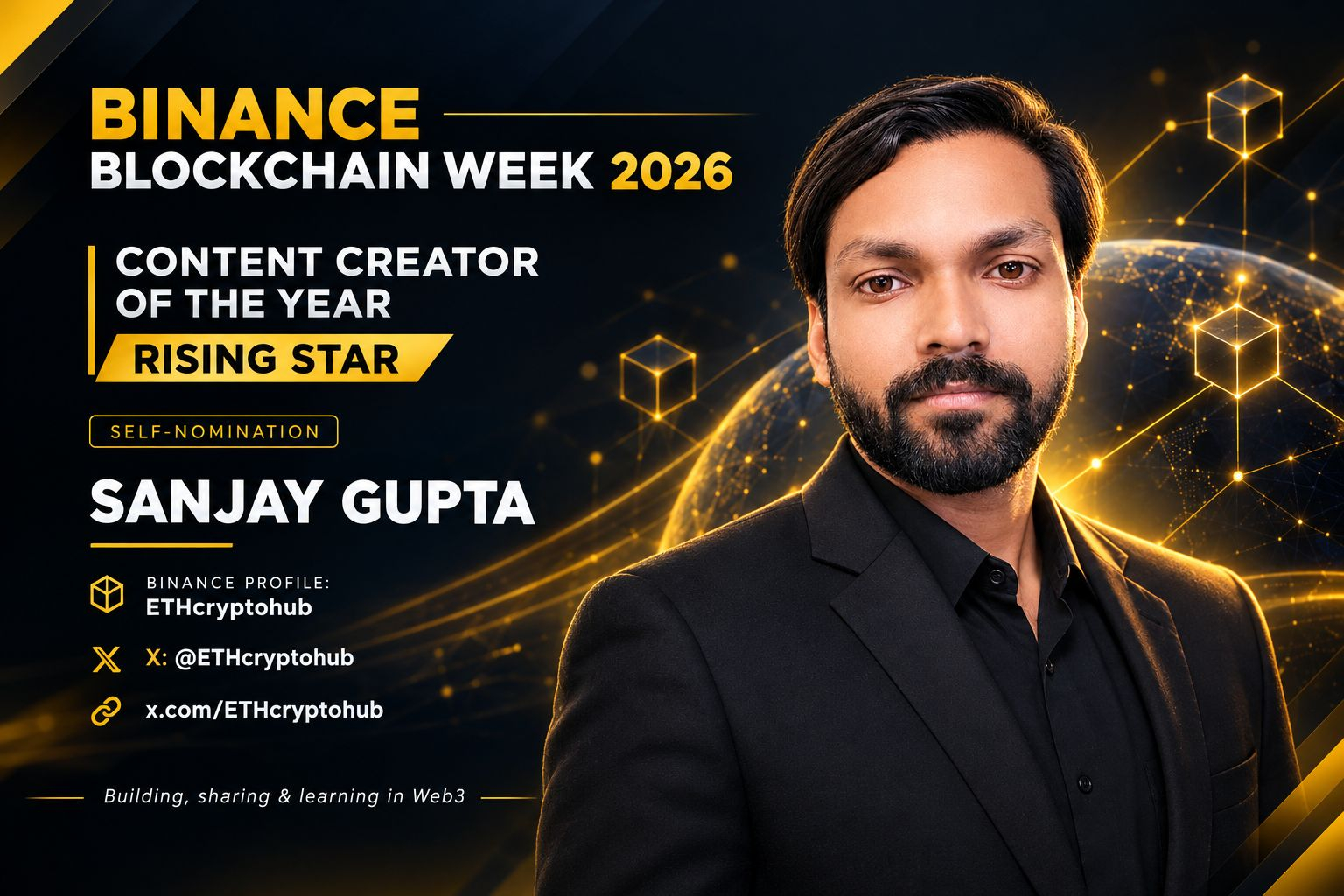
ETHcryptohub
16.4k Publicaciones
LIVE

ETHcryptohub

Verificado Plus de Binance Square
Gold Standard Club, the Founding Co-builder of Binance's Top Guild! Verified KOL ✅ Binance Future Scalper ✅ Content Writer ✅ X : @Sanjaygupt74977
Holder de GRVT
Holder de GRVT
Traders de alta frecuencia
5.7 año(s)
1.3K+ Siguiendo
47.0K+ Seguidores
44.0K+ Me gusta
Publicaciones
PINNED
·
--
Operación de 30 días $DUSK195.3 USDT
#dusk $DUSK @Dusk_Foundation Selective Disclosure: Why Financial Privacy Needs an “Authorized View” I’ve been looking at Dusk from a slightly different angle lately: privacy isn’t really about hiding everything. In financial markets, the more useful idea is being able to show the right information to the right person. Think about a private investment. The issuer may need to confirm that I’m eligible, an auditor may need proof of a transaction, and a regulator may need certain records. But none of them necessarily needs my full balance, every previous transfer, or unrelated financial activity. That’s where selective disclosure gets interesting. Dusk supports confidential transactions and lets users reveal specific information to authorized parties when required. Its Citadel identity layer is also designed around proving attributes without exposing more than necessary. I like this model because it matches how finance already works in the real world: controlled access, not total secrecy or total transparency. The harder question is execution. Privacy tools still need simple user experiences, trusted identity processes, and enough adoption for institutions to actually use them at scale. For me, that’s the part worth watching. Would you prefer financial systems to be mostly private, mostly transparent, or selectively visible?
#dusk $DUSK @Dusk

Selective Disclosure: Why Financial Privacy Needs an “Authorized View”

I’ve been looking at Dusk from a slightly different angle lately: privacy isn’t really about hiding everything. In financial markets, the more useful idea is being able to show the right information to the right person.

Think about a private investment. The issuer may need to confirm that I’m eligible, an auditor may need proof of a transaction, and a regulator may need certain records. But none of them necessarily needs my full balance, every previous transfer, or unrelated financial activity.

That’s where selective disclosure gets interesting. Dusk supports confidential transactions and lets users reveal specific information to authorized parties when required. Its Citadel identity layer is also designed around proving attributes without exposing more than necessary.

I like this model because it matches how finance already works in the real world: controlled access, not total secrecy or total transparency.

The harder question is execution. Privacy tools still need simple user experiences, trusted identity processes, and enough adoption for institutions to actually use them at scale.

For me, that’s the part worth watching.

Would you prefer financial systems to be mostly private, mostly transparent, or selectively visible?
Mostly private
Mostly transparent
Selectively visible
2 día(s) restante(s)
PINNED
#termmax @termmax When I first looked at lending in DeFi, I mostly thought about the asset being borrowed and the interest being paid. TermMax made me look at the agreement underneath it. The interesting part is that a loan is also a set of terms: how much capital is involved, what rate applies, when the position ends, and what happens along the way. Those terms can matter just as much as the money itself. I think this is where fixed term markets become interesting. Instead of treating borrowing as one simple transaction, the different sides of the agreement can be separated and represented onchain. That creates room for people to take different positions depending on what they actually want from the market. For example, a lender may care about locking in a return until a known maturity, while a borrower may care more about knowing the cost of capital in advance. Someone else might be interested in trading the position itself. The capital stays at the center, but the terms surrounding it become something participants can work with rather than simply accept. That changes how I think about capital efficiency. DeFi does not only need more liquidity; it also needs better ways to express different preferences around time, risk, and return. Fixed term markets could give that capital more structure, although liquidity around those positions and maturity management still need to work well. For me, the bigger question is whether DeFi eventually treats lending terms as markets in their own right. If that happens, borrowing may become less about simply accessing money and more about choosing exactly what kind of agreement you want. #TermMax @termmax
#termmax @TermMax

When I first looked at lending in DeFi, I mostly thought about the asset being borrowed and the interest being paid. TermMax made me look at the agreement underneath it. The interesting part is that a loan is also a set of terms: how much capital is involved, what rate applies, when the position ends, and what happens along the way. Those terms can matter just as much as the money itself.

I think this is where fixed term markets become interesting. Instead of treating borrowing as one simple transaction, the different sides of the agreement can be separated and represented onchain. That creates room for people to take different positions depending on what they actually want from the market.

For example, a lender may care about locking in a return until a known maturity, while a borrower may care more about knowing the cost of capital in advance. Someone else might be interested in trading the position itself. The capital stays at the center, but the terms surrounding it become something participants can work with rather than simply accept.

That changes how I think about capital efficiency. DeFi does not only need more liquidity; it also needs better ways to express different preferences around time, risk, and return. Fixed term markets could give that capital more structure, although liquidity around those positions and maturity management still need to work well.

For me, the bigger question is whether DeFi eventually treats lending terms as markets in their own right. If that happens, borrowing may become less about simply accessing money and more about choosing exactly what kind of agreement you want. #TermMax @TermMax
MrRUHUL
·
--
As a Binance square Creator What we want... What our Expectations From Binance
Guys today I'm going to say something important to the binance team after hearing lot's of creator opinion... So
Dear Binance we as a consistent creator we spend and we give 24/7 hours time to the Binance Day after day months after month year after years with a expectation that We as a creator We can Earn lots of money Form square as a creator we expect that Binance give us some permanent earning solution but our hope and expectations completely going to breaking.

We know that there is a creator pad there is a alpha section write to earn but those are not a permanent solution and we also know what's going on behind the creator paid or alpha section and write to earn etc.

We also see binance always give more priority to the new user and ignore old creator that's why lots of old creator day by day inactive.... But binance forgot that community makes community.
So our Request to the Binance team that Give us a permanent Earning Like Monitization or something like that and the Creator feel more energetic and we will create more Quality Contant..

As a world Largest Exchange Its very easy to solve this issue and one more thing that is if creator getting earning then Binance with the creator will make history...
@Binance Margin @Binance South Africa Official
@Binance Square Official @CZ @ETHcryptohub @AloNe72 @undefined @Jia Lilly @Dr Nohawn @Naccy小妹 @Crypto-First21 @Triple_S @Nadyisom
🎙️ Let's explore $DUSK
avatar
liveEN VIVO
991 escuchan · 3 en el trading en vivo
red envelope
1
0
#termmax @termmax I used to think of interest rates as something that changes with the market and nothing more. But looking at TermMax made me look at the role of time differently. In its fixed-rate markets, the agreement is not only about how much someone lends or borrows. The maturity date is part of the trade itself. That small change that can make the whole position easier to understand from the beginning. Imagine lending a friend money with a clear return date. You already know when the money should come back and what you will receive. There is no need to keep renegotiating the terms every few days. TermMax brings a similar idea onchain, with lending and borrowing tied to a defined maturity rather than an open-ended floating rate. What I find interesting is how this changes capital planning. A lender can buy Fixed-rate Tokens at a discount and redeem them for the full amount at maturity, while a borrower can lock the borrowing cost upfront. The system uses its FT, XT and GT structure to represent these positions and keep the terms visible onchain. That does not remove risk. Collateral can still fall in value, liquidity can change, and a borrower still has to deal with the maturity date. Fixed terms simply make some parts of that risk easier to see before entering the position. For me, that is the bigger idea behind TermMax: treating time as something that can be priced and traded, rather than just something that happens in the background. Could fixed-term markets become a more important part of how DeFi manages capital? @termmax #TermMax
#termmax @TermMax I used to think of interest rates as something that changes with the market and nothing more. But looking at TermMax made me look at the role of time differently. In its fixed-rate markets, the agreement is not only about how much someone lends or borrows. The maturity date is part of the trade itself. That small change that can make the whole position easier to understand from the beginning.

Imagine lending a friend money with a clear return date. You already know when the money should come back and what you will receive. There is no need to keep renegotiating the terms every few days. TermMax brings a similar idea onchain, with lending and borrowing tied to a defined maturity rather than an open-ended floating rate.

What I find interesting is how this changes capital planning. A lender can buy Fixed-rate Tokens at a discount and redeem them for the full amount at maturity, while a borrower can lock the borrowing cost upfront. The system uses its FT, XT and GT structure to represent these positions and keep the terms visible onchain.

That does not remove risk. Collateral can still fall in value, liquidity can change, and a borrower still has to deal with the maturity date. Fixed terms simply make some parts of that risk easier to see before entering the position.

For me, that is the bigger idea behind TermMax: treating time as something that can be priced and traded, rather than just something that happens in the background. Could fixed-term markets become a more important part of how DeFi manages capital? @TermMax #TermMax
#dusk $DUSK @Dusk_Foundation Imagine a financial application where every transaction needs to settle correctly, but not every detail should be visible to everyone watching the network. That is the part of Dusk’s design that interests me. Instead of treating privacy as something separate from the financial system, Dusk brings confidentiality into a stack that also covers settlement, identity, and asset workflows. Think about a company moving valuable assets between different parties. The transaction needs to be verifiable, the right people need to be identified, and the asset needs to follow the required rules. But showing every financial detail to the entire public is not always practical. Dusk’s approach is interesting because these needs can exist together rather than forcing users to choose between complete openness and complete secrecy. For me, privacy is the key piece connecting the rest. Settlement tells the network that something happened, identity helps establish who is allowed to participate, and asset workflows define how those assets can move. Confidential transactions can then limit unnecessary exposure while still allowing the required information to be verified. That could be especially useful for financial applications where privacy is part of normal business, not an optional extra. There are still questions around adoption, usability, and how easily institutions will actually move existing processes onto this kind of infrastructure. Privacy only becomes useful at scale if developers and users can work with it without adding too much friction. If financial blockchains are going to handle serious real-world activity, should privacy be treated as a basic part of the system rather than an extra feature? @Dusk_Foundation
#dusk $DUSK @Dusk

Imagine a financial application where every transaction needs to settle correctly, but not every detail should be visible to everyone watching the network. That is the part of Dusk’s design that interests me. Instead of treating privacy as something separate from the financial system, Dusk brings confidentiality into a stack that also covers settlement, identity, and asset workflows.

Think about a company moving valuable assets between different parties. The transaction needs to be verifiable, the right people need to be identified, and the asset needs to follow the required rules. But showing every financial detail to the entire public is not always practical. Dusk’s approach is interesting because these needs can exist together rather than forcing users to choose between complete openness and complete secrecy.

For me, privacy is the key piece connecting the rest. Settlement tells the network that something happened, identity helps establish who is allowed to participate, and asset workflows define how those assets can move. Confidential transactions can then limit unnecessary exposure while still allowing the required information to be verified. That could be especially useful for financial applications where privacy is part of normal business, not an optional extra.

There are still questions around adoption, usability, and how easily institutions will actually move existing processes onto this kind of infrastructure. Privacy only becomes useful at scale if developers and users can work with it without adding too much friction.

If financial blockchains are going to handle serious real-world activity, should privacy be treated as a basic part of the system rather than an extra feature? @Dusk
Operación de 30 días $DUSK146.6 USDT
#dusk $DUSK @Dusk_Foundation I was looking at Dusk and came across an interesting problem. Developers already know how to build with EVM tools, but what happens when the application also needs transactions where sensitive details should not be visible to everyone? That is where Dusk's approach caught my attention: keeping EVM compatibility while building confidentiality into the network. Imagine a developer who has already built a financial app using familiar Ethereum style tools. The application works, but some information balances, trade details, or other sensitive data should not sit openly on a public ledger. Instead of forcing the developer to choose between familiar EVM development and confidential transactions, Dusk is trying to bring both ideas into the same environment. The part which I find interesting is, how this changes the design space. EVM compatibility can make the transition easier for developers who already understand Ethereum's tooling, while confidential transactions that can give applications more control over what information becomes publicly visible. For financial use cases especially, that combination could matter because transparency does not always mean exposing every piece of data to everyone. There is still a practical question around adoption. Compatibility alone does not guarantee developers will move, and privacy features have to work without making applications difficult to use. The real test is whether builders can get the benefits of confidentiality without feeling like they have left the familiar EVM world behind. If Dusk can make those two sides work together smoothly, could confidential EVM-based finance become a more realistic path for developers? @Dusk_Foundation $DUSK #dusk
#dusk $DUSK @Dusk

I was looking at Dusk and came across an interesting problem. Developers already know how to build with EVM tools, but what happens when the application also needs transactions where sensitive details should not be visible to everyone? That is where Dusk's approach caught my attention: keeping EVM compatibility while building confidentiality into the network.

Imagine a developer who has already built a financial app using familiar Ethereum style tools. The application works, but some information balances, trade details, or other sensitive data should not sit openly on a public ledger. Instead of forcing the developer to choose between familiar EVM development and confidential transactions, Dusk is trying to bring both ideas into the same environment.

The part which I find interesting is, how this changes the design space. EVM compatibility can make the transition easier for developers who already understand Ethereum's tooling, while confidential transactions that can give applications more control over what information becomes publicly visible. For financial use cases especially, that combination could matter because transparency does not always mean exposing every piece of data to everyone.

There is still a practical question around adoption. Compatibility alone does not guarantee developers will move, and privacy features have to work without making applications difficult to use. The real test is whether builders can get the benefits of confidentiality without feeling like they have left the familiar EVM world behind.

If Dusk can make those two sides work together smoothly, could confidential EVM-based finance become a more realistic path for developers? @Dusk $DUSK #dusk
@Dusk_Foundation Imagine a bond being brought onchain. At first, the idea sounds simple: create a digital token that represents the asset. But what happens after that? Who owns it, how is it transferred, how does settlement happen, and what happens when the asset reaches another stage of it's lifecycle? That is where I think Dusk takes a different angle. For me, tokenization shouldn’t stop at creating a digital representation. The bigger opportunity is moving more of the asset’s lifecycle onto infrastructure that can handle issuance, ownership, transfers and settlement in a coordinated way. Dusk is building its Layer 1 around regulated financial markets, with infrastructure capable of supporting native issuance workflows for regulated securities when the required authorization and product setup are in place. Dusk Trade adds another layer to this picture by focusing on tokenized financial assets such as MMFs, ETFs, bonds and RWAs. The interesting part is how these pieces connect. Instead of having token creation in one system, trading somewhere else and settlement handled separately, the goal is to bring more of that process together while still accounting for regulatory requirements. I see this as less about putting existing assets “onchain” and more about asking what parts of the financial lifecycle can actually benefit from being onchain. That’s the direction from @Dusk_Foundation that interests me most. $DUSK #dusk $COW $CYS
@Dusk
Imagine a bond being brought onchain. At first, the idea sounds simple: create a digital token that represents the asset. But what happens after that? Who owns it, how is it transferred, how does settlement happen, and what happens when the asset reaches another stage of it's lifecycle?

That is where I think Dusk takes a different angle.

For me, tokenization shouldn’t stop at creating a digital representation. The bigger opportunity is moving more of the asset’s lifecycle onto infrastructure that can handle issuance, ownership, transfers and settlement in a coordinated way.

Dusk is building its Layer 1 around regulated financial markets, with infrastructure capable of supporting native issuance workflows for regulated securities when the required authorization and product setup are in place. Dusk Trade adds another layer to this picture by focusing on tokenized financial assets such as MMFs, ETFs, bonds and RWAs.

The interesting part is how these pieces connect. Instead of having token creation in one system, trading somewhere else and settlement handled separately, the goal is to bring more of that process together while still accounting for regulatory requirements.

I see this as less about putting existing assets “onchain” and more about asking what parts of the financial lifecycle can actually benefit from being onchain.

That’s the direction from @Dusk that interests me most.

$DUSK #dusk $COW $CYS
Verificado
@Dusk_Foundation Dusk’s Programmable Privacy: Balancing Privacy and Regulatory Access Imagine a regulated asset moving onchain. The transaction needs privacy because sensitive financial details shouldn’t be visible to everyone. But at the same time, regulators, auditors, or authorized institutions may need access to specific information when required. This is where I find Dusk’s approach interesting. Instead of treating privacy as simply “hide everything,” Dusk is working around a more practical idea: privacy where it’s needed, transparency where it’s useful, and selective disclosure when authorized parties need to review something. Think of it's like a private room, with an controlled door. Most of the people outside cannot see what is happening inside, but the right person can still enter when they have the required permission. For regulated financial markets, that distinction could be important. Dusk combines this programmable privacy approach with deterministic settlement and infrastructure designed for regulated securities and RWAs. With DuskEVM and Hedger, confidential EVM workflows can also become part of this model, using technologies such as homomorphic encryption and zero-knowledge proofs. For me, the bigger question is whether blockchain can make privacy and compliance work together instead of forcing institutions to choose between them. That’s the part of @Dusk_Foundation I’m watching closely. #dusk $DUSK {future}(DUSKUSDT)
@Dusk Dusk’s Programmable Privacy: Balancing Privacy and Regulatory Access

Imagine a regulated asset moving onchain. The transaction needs privacy because sensitive financial details shouldn’t be visible to everyone. But at the same time, regulators, auditors, or authorized institutions may need access to specific information when required.

This is where I find Dusk’s approach interesting.

Instead of treating privacy as simply “hide everything,” Dusk is working around a more practical idea: privacy where it’s needed, transparency where it’s useful, and selective disclosure when authorized parties need to review something.

Think of it's like a private room, with an controlled door. Most of the people outside cannot see what is happening inside, but the right person can still enter when they have the required permission. For regulated financial markets, that distinction could be important.

Dusk combines this programmable privacy approach with deterministic settlement and infrastructure designed for regulated securities and RWAs. With DuskEVM and Hedger, confidential EVM workflows can also become part of this model, using technologies such as homomorphic encryption and zero-knowledge proofs.

For me, the bigger question is whether blockchain can make privacy and compliance work together instead of forcing institutions to choose between them.

That’s the part of @Dusk I’m watching closely.

#dusk $DUSK
The more I look at @Dusk_Foundation , the more I think its real opportunity isn't simply “private blockchain.” It’s confidential finance that can still be verified. Think about a tokenized bond. An investor shouldn’t necessarily have to expose their full position, pricing details or financial activity to everyone onchain. But regulators, issuers and authorized counterparties still need to verify that transactions are valid and compliant. That creates a difficult trade-off: Public enough to verify. Private enough to protect financial data. This is where DuskEVM becomes interesting to me. Builders can work with a familiar EVM/Solidity environment while accessing Dusk’s privacy infrastructure. And Hedger is particularly interesting because it is designed around confidential EVM workflows using homomorphic encryption and zero-knowledge proofs. That changes the question from: “Can blockchain be private?” to something much more useful: “Can privacy itself become programmable?” For tokenized securities and RWAs, that could be a much bigger deal than privacy as a standalone feature. Because institutional finance doesn't just need confidentiality. It needs confidentiality + compliance + auditability + deterministic settlement to coexist. That’s the part of @Dusk_Foundation I’ll be watching most closely. If DuskEVM can make that combination practical for real financial workflows, I think the conversation around onchain finance gets a lot more interesting. Which comes first on confidential EVMs: tokenized securities, institutional DeFi, or private settlement? @Dusk_Foundation $DUSK #dusk
The more I look at @Dusk , the more I think its real opportunity isn't simply “private blockchain.”

It’s confidential finance that can still be verified.

Think about a tokenized bond.

An investor shouldn’t necessarily have to expose their full position, pricing details or financial activity to everyone onchain.

But regulators, issuers and authorized counterparties still need to verify that transactions are valid and compliant.

That creates a difficult trade-off:

Public enough to verify.
Private enough to protect financial data.

This is where DuskEVM becomes interesting to me.

Builders can work with a familiar EVM/Solidity environment while accessing Dusk’s privacy infrastructure. And Hedger is particularly interesting because it is designed around confidential EVM workflows using homomorphic encryption and zero-knowledge proofs.

That changes the question from:

“Can blockchain be private?”

to something much more useful:

“Can privacy itself become programmable?”

For tokenized securities and RWAs, that could be a much bigger deal than privacy as a standalone feature.

Because institutional finance doesn't just need confidentiality.

It needs confidentiality + compliance + auditability + deterministic settlement to coexist.

That’s the part of @Dusk I’ll be watching most closely.

If DuskEVM can make that combination practical for real financial workflows, I think the conversation around onchain finance gets a lot more interesting.

Which comes first on confidential EVMs: tokenized securities, institutional DeFi, or private settlement?

@Dusk $DUSK #dusk
🎁🎁🎁 Claim Your Free Gifts 🎁🎁🎁 Gifts 🎁🎁🎁 #Ethcryptohub
🎁🎁🎁 Claim Your Free Gifts 🎁🎁🎁

Gifts 🎁🎁🎁
#Ethcryptohub
@babylonlabs_io I sometimes think about the biggest obstacle to Bitcoin DeFi is not technology but mindset. Many long term Bitcoin holders are comfortable holding their BTC for years because they value certainty. The moment they are asked to introduce extra trust or unnecessary complexity, many simply choose not to participate. That is why one part of Babylon's Trustless Bitcoin Vaults (TBV) keeps standing out to me more than anything else. For me, the most important feature is not about accessing another protocol or unlocking another opportunity. It is the effort to let Bitcoin remain closer to its native form while still becoming useful in a wider financial ecosystem. If that approach works as intended, it removes a question that has held many people back: "Do I have to compromise my Bitcoin to use it?" I believe that matters because adoption usually follows confidence, not curiosity. Bitcoin already has deep pools of capital. The challenge has been encouraging that capital to participate without changing the principles that attracted holders in the first place. If more people feel comfortable taking that first step, the effects could extend far beyond one application. Lending, liquidity, and other parts of DeFi may all benefit from a broader base of native Bitcoin participation. Whether this becomes the defining feature of TBVs will depend on how people respond in practice. A good idea only becomes meaningful when it changes the real behavior over time. If you had to identify the single feature most likely to bring more Bitcoin's holders into DeFi, what would it be, and why? $BABY #baby #Ethcryptohub
@BabylonLabs_io

I sometimes think about the biggest obstacle to Bitcoin DeFi is not technology but mindset. Many long term Bitcoin holders are comfortable holding their BTC for years because they value certainty. The moment they are asked to introduce extra trust or unnecessary complexity, many simply choose not to participate. That is why one part of Babylon's Trustless Bitcoin Vaults (TBV) keeps standing out to me more than anything else.

For me, the most important feature is not about accessing another protocol or unlocking another opportunity. It is the effort to let Bitcoin remain closer to its native form while still becoming useful in a wider financial ecosystem. If that approach works as intended, it removes a question that has held many people back: "Do I have to compromise my Bitcoin to use it?"

I believe that matters because adoption usually follows confidence, not curiosity. Bitcoin already has deep pools of capital. The challenge has been encouraging that capital to participate without changing the principles that attracted holders in the first place. If more people feel comfortable taking that first step, the effects could extend far beyond one application. Lending, liquidity, and other parts of DeFi may all benefit from a broader base of native Bitcoin participation.

Whether this becomes the defining feature of TBVs will depend on how people respond in practice. A good idea only becomes meaningful when it changes the real behavior over time.

If you had to identify the single feature most likely to bring more Bitcoin's holders into DeFi, what would it be, and why? $BABY #baby #Ethcryptohub
@babylonlabs_io When people started to talk about the Bitcoin, the conversation usually that revolves around price, adoption, or its role as digital money. I still find myself paying closer attention to something less visible; the infrastructure that determines what Bitcoin can actually do. For me, Babylon is interesting because it is not trying to change Bitcoin itself. Instead, it is exploring how better infrastructure could expand the ways native Bitcoin participates in financial activity. A railway network is rarely the destination, yet it changes how an entire economy functions. Once the tracks are in place, people, goods, and businesses can connect in many ways that were difficult before. I see infrastructure in a similar light. Its value comes from what it enables rather than what it asks people to notice. That is why I think Babylon's trustless design deserves attention. If developers can build around native Bitcoin without depending on the same intermediary models that have limited participation in the past, it could encourage a wider range of financial applications. More importantly, it gives long-term Bitcoin holders another way to think about their assets—not simply as something to store, but as capital that can support a broader ecosystem while staying aligned with Bitcoin's underlying principles. None of this means the outcome is guaranteed. Infrastructure succeeds only when developers continue building on it and users continue finding it worthwhile. Good ideas create possibilities, but consistent use is what turns them into lasting systems. As Bitcoin finance continues to evolve, do you think the biggest breakthroughs will come from new financial products, or from stronger infrastructure that quietly supports everything built on top of it? $BABY #baby #Ethcryptohub
@BabylonLabs_io
When people started to talk about the Bitcoin, the conversation usually that revolves around price, adoption, or its role as digital money. I still find myself paying closer attention to something less visible; the infrastructure that determines what Bitcoin can actually do. For me, Babylon is interesting because it is not trying to change Bitcoin itself. Instead, it is exploring how better infrastructure could expand the ways native Bitcoin participates in financial activity.

A railway network is rarely the destination, yet it changes how an entire economy functions. Once the tracks are in place, people, goods, and businesses can connect in many ways that were difficult before. I see infrastructure in a similar light. Its value comes from what it enables rather than what it asks people to notice.

That is why I think Babylon's trustless design deserves attention. If developers can build around native Bitcoin without depending on the same intermediary models that have limited participation in the past, it could encourage a wider range of financial applications. More importantly, it gives long-term Bitcoin holders another way to think about their assets—not simply as something to store, but as capital that can support a broader ecosystem while staying aligned with Bitcoin's underlying principles.

None of this means the outcome is guaranteed. Infrastructure succeeds only when developers continue building on it and users continue finding it worthwhile. Good ideas create possibilities, but consistent use is what turns them into lasting systems.

As Bitcoin finance continues to evolve, do you think the biggest breakthroughs will come from new financial products, or from stronger infrastructure that quietly supports everything built on top of it? $BABY #baby #Ethcryptohub
@Binance_Square_Official Very Nice Tricks to degrade the Rank by giving 0 points in spite of spending loss. Customer Service can't see the losses and arguing that the trade was PNL was 0. The trade point was given 0 which was executed on 28 July 2026 for the $BABY campaign. I am so much frustrated everytime same issue happens once or twice and Degrade my Rank from leaderboard. I need proper resolution on Case Id : 166551104. @heyi @CZ
@Binance Square Official

Very Nice Tricks to degrade the Rank by giving 0 points in spite of spending loss. Customer Service can't see the losses and arguing that the trade was PNL was 0. The trade point was given 0 which was executed on 28 July 2026 for the $BABY campaign. I am so much frustrated everytime same issue happens once or twice and Degrade my Rank from leaderboard. I need proper resolution on Case Id : 166551104. @Yi He @CZ
Parcialmente cierto
@babylonlabs_io One habit I have tried to build in crypto is using a protocol before forming a strong opinion about it. Today is 2nd August 2026, While Reading documentation is helpful, but it rarely answers the small questions that only come from interacting with a product yourself. That is why I think Babylon's official testnet is worth exploring. It always gives anyone the opportunity to understand how the protocol works without putting real Bitcoin or real money at risk. To me, it is similar like walking through a house before deciding whether to buy it or not. The floor plan might look great on paper, but you only notice that how everything fits together than once you step inside. A testnet offers that same kind of experience. You can claim test tokens through the official faucet, connect your wallet, and explore the protocol, knowing those tokens have no monetary value and cannot be used for real BTC staking or rewards. What I find valuable is that the experience goes beyond clicking buttons. You begin to understand how the protocol is designed, how different actions flow together, and why certain decisions were made. Even details like Babylon currently securing more than $130 million and requiring a 50,000 BABY minimum deposit to submit the governance proposals make more sense once you have explored the ecosystem yourself. For me, learning through participation is far more useful than relying only on social media opinions. Of course, a testnet is not just a proof that a project will succeed. It is simply a place to learn, experiment, and understand the system before deciding whether it deserves your attention, or the capital. That feels me like a healthier approach than investing first and then asking questions later on. Have you actually spent any time exploring Babylon's testnet, or is your opinion based mostly on what you have read and heard from others? $BABY #baby #Ethcryptohub
@BabylonLabs_io
One habit I have tried to build in crypto is using a protocol before forming a strong opinion about it. Today is 2nd August 2026, While Reading documentation is helpful, but it rarely answers the small questions that only come from interacting with a product yourself. That is why I think Babylon's official testnet is worth exploring. It always gives anyone the opportunity to understand how the protocol works without putting real Bitcoin or real money at risk.

To me, it is similar like walking through a house before deciding whether to buy it or not. The floor plan might look great on paper, but you only notice that how everything fits together than once you step inside. A testnet offers that same kind of experience. You can claim test tokens through the official faucet, connect your wallet, and explore the protocol, knowing those tokens have no monetary value and cannot be used for real BTC staking or rewards.

What I find valuable is that the experience goes beyond clicking buttons. You begin to understand how the protocol is designed, how different actions flow together, and why certain decisions were made. Even details like Babylon currently securing more than $130 million and requiring a 50,000 BABY minimum deposit to submit the governance proposals make more sense once you have explored the ecosystem yourself. For me, learning through participation is far more useful than relying only on social media opinions.

Of course, a testnet is not just a proof that a project will succeed. It is simply a place to learn, experiment, and understand the system before deciding whether it deserves your attention, or the capital. That feels me like a healthier approach than investing first and then asking questions later on.

Have you actually spent any time exploring Babylon's testnet, or is your opinion based mostly on what you have read and heard from others? $BABY #baby #Ethcryptohub
@babylonlabs_io Price is usually the first thing people look at when evaluating a token. I have started paying more attention to something else first: the supply behind that price. While reading through BABY's tokenomics, I noticed that only about 31.76% of the total supply is currently in circulation, with the remaining 68.24% scheduled to unlock over time. That immediately changed how I thought about the project. A price chart only shows where the market is today, but tokenomics can shape how the market evolves in the years ahead. I think of it like a growing town where many new homes are planned but have not been built yet. Looking only at today's population would not tell the full story. You also need to understand how many new homes will enter the market and whether enough people will move in to keep demand healthy. The same principle applies to token supply. For me, the more interesting question is whether Babylon's ecosystem can grow fast enough to support that future supply. The project currently has a market cap of around $53.27 million, while it's fully diluted valuation is about $135.64 million. On top of that, 26.50% of the supply is allocated to protocol inflation and 22.42% to investors, which means that additional tokens will gradually enter circulation. That does not automatically make the token attractive or unattractive, but it does make ecosystem activity, and real utility far more important than short term price movements. None of this guarantees how the market will respond. Unlock schedules are not inherently good or bad. What matters is whether network adoption, user demand, and practical use cases grow alongside the expanding supply. If they do not, increasing circulation could become an important factor for long term holders to watch. When I evaluate a crypto project, I try to spend as much time understanding its tokenomics as I do looking at its chart. Do you think long term success is driven more by price momentum, or by whether a project's utility can keep pace with its expanding token supply? $BABY #baby Do Your Own Research.
@BabylonLabs_io
Price is usually the first thing people look at when evaluating a token. I have started paying more attention to something else first: the supply behind that price. While reading through BABY's tokenomics, I noticed that only about 31.76% of the total supply is currently in circulation, with the remaining 68.24% scheduled to unlock over time. That immediately changed how I thought about the project. A price chart only shows where the market is today, but tokenomics can shape how the market evolves in the years ahead.

I think of it like a growing town where many new homes are planned but have not been built yet. Looking only at today's population would not tell the full story. You also need to understand how many new homes will enter the market and whether enough people will move in to keep demand healthy. The same principle applies to token supply.

For me, the more interesting question is whether Babylon's ecosystem can grow fast enough to support that future supply. The project currently has a market cap of around $53.27 million, while it's fully diluted valuation is about $135.64 million. On top of that, 26.50% of the supply is allocated to protocol inflation and 22.42% to investors, which means that additional tokens will gradually enter circulation. That does not automatically make the token attractive or unattractive, but it does make ecosystem activity, and real utility far more important than short term price movements.

None of this guarantees how the market will respond. Unlock schedules are not inherently good or bad. What matters is whether network adoption, user demand, and practical use cases grow alongside the expanding supply. If they do not, increasing circulation could become an important factor for long term holders to watch.

When I evaluate a crypto project, I try to spend as much time understanding its tokenomics as I do looking at its chart. Do you think long term success is driven more by price momentum, or by whether a project's utility can keep pace with its expanding token supply? $BABY #baby
Do Your Own Research.
@babylonlabs_io My love is BTC, I have noticed one thinking about is that infrastructure often creates the biggest impact where people notice it the least. In DeFi, most of the attention goes to lending platforms, exchanges, or yield opportunities. But when I started looking at Babylon's approach to native Bitcoin collateral, I feel the bigger story is how stronger infrastructure could quietly improve many different parts of the ecosystem instead of benefiting just one application. I think of it is just like building a reliable water supply for a city. The pipes themselves are rarely the main attraction, homes, hospitals, factories, and businesses all depend on the same network. If the foundation is dependable, every service connected to it has a better chance to operate smoothly. Infrastructure creates more value because many different participants can build on top of it. For me, Babylon's infrastructure could have a similar effect across DeFi. Lending markets may gain access to more native Bitcoin collateral, decentralized exchanges could benefit from deeper liquidity, staking and yield strategies might expand, and developers would have a stronger base for creating new financial applications. Rather than solving one isolated problem, the goal seems to be making native Bitcoin more useful across multiple sectors. If that happens, the benefits could extend well beyond any single protocol. Ofcourse, the infrastructure only becomes valuable when people decide to use it. Developers needs confidence that it is more reliable, while Bitcoin holders need to believe it respects the principles that made them hold BTC in the first place. Without both groups participating, even well designed infrastructure can struggle to reach it's potential. I keep wondering whether the next phase of DeFi growth will come from creating more applications, or from strengthening the infrastructure that allows all of those applications to work better together. Which do you think will have the greater impact over the long term? $BABY #baby $COTI #Ethcryptohub $RE
@BabylonLabs_io

My love is BTC, I have noticed one thinking about is that infrastructure often creates the biggest impact where people notice it the least. In DeFi, most of the attention goes to lending platforms, exchanges, or yield opportunities. But when I started looking at Babylon's approach to native Bitcoin collateral, I feel the bigger story is how stronger infrastructure could quietly improve many different parts of the ecosystem instead of benefiting just one application.

I think of it is just like building a reliable water supply for a city. The pipes themselves are rarely the main attraction, homes, hospitals, factories, and businesses all depend on the same network. If the foundation is dependable, every service connected to it has a better chance to operate smoothly. Infrastructure creates more value because many different participants can build on top of it.

For me, Babylon's infrastructure could have a similar effect across DeFi. Lending markets may gain access to more native Bitcoin collateral, decentralized exchanges could benefit from deeper liquidity, staking and yield strategies might expand, and developers would have a stronger base for creating new financial applications. Rather than solving one isolated problem, the goal seems to be making native Bitcoin more useful across multiple sectors. If that happens, the benefits could extend well beyond any single protocol.

Ofcourse, the infrastructure only becomes valuable when people decide to use it. Developers needs confidence that it is more reliable, while Bitcoin holders need to believe it respects the principles that made them hold BTC in the first place. Without both groups participating, even well designed infrastructure can struggle to reach it's potential.

I keep wondering whether the next phase of DeFi growth will come from creating more applications, or from strengthening the infrastructure that allows all of those applications to work better together. Which do you think will have the greater impact over the long term? $BABY #baby $COTI #Ethcryptohub $RE
Verificado
@babylonlabs_io Yesterday I have noticed one thing is that many Bitcoin holders are not avoiding DeFi because they dislike innovation. They are cautious because they do not want to take on custody risk just to make their Bitcoin more useful. That is why Babylon's TBV Public Testnet caught my attention. For me, the milestone is not simply about launching new technology. It is just about giving people a chance to see whether a different approach to Bitcoin custody that can actually work in practice. I think of it's like the test driving a car before making a long term commitment. Reading the specifications can tell you what the car is designed to do, but driving it is what builds a confidence. A public testnet serves a similar purpose. It also allows developers and the community to observe how the system behaves before it is trusted with larger amounts of value. What interests me most is what this could mean for participation. If Babylon can show that Bitcoin which can be used without relying on the custody models that have made many holders uncomfortable, more long term capital may gradually become willing to explore DeFi. That could also encourage developers to build around native Bitcoin, knowing there is a growing group of users looking for solutions that stays closer to Bitcoin's original principles. Of course, a testnet is only the beginning. It can demonstrate ideas, but it cannot replace the confidence that comes from consistent performance over the time. In the end, trust is earned through repeated experience, not a single milestone. I keep thinking that's the real value of this testnet is not whether it attracts immediate attention, but whether it helps reduce one of the biggest barriers keeping Bitcoin on the sidelines. Do you think lowering custody risk is the key to bringing more native Bitcoin into DeFi? $BABY #baby
@BabylonLabs_io

Yesterday I have noticed one thing is that many Bitcoin holders are not avoiding DeFi because they dislike innovation. They are cautious because they do not want to take on custody risk just to make their Bitcoin more useful. That is why Babylon's TBV Public Testnet caught my attention. For me, the milestone is not simply about launching new technology. It is just about giving people a chance to see whether a different approach to Bitcoin custody that can actually work in practice.

I think of it's like the test driving a car before making a long term commitment. Reading the specifications can tell you what the car is designed to do, but driving it is what builds a confidence. A public testnet serves a similar purpose. It also allows developers and the community to observe how the system behaves before it is trusted with larger amounts of value.

What interests me most is what this could mean for participation. If Babylon can show that Bitcoin which can be used without relying on the custody models that have made many holders uncomfortable, more long term capital may gradually become willing to explore DeFi. That could also encourage developers to build around native Bitcoin, knowing there is a growing group of users looking for solutions that stays closer to Bitcoin's original principles.

Of course, a testnet is only the beginning. It can demonstrate ideas, but it cannot replace the confidence that comes from consistent performance over the time. In the end, trust is earned through repeated experience, not a single milestone.

I keep thinking that's the real value of this testnet is not whether it attracts immediate attention, but whether it helps reduce one of the biggest barriers keeping Bitcoin on the sidelines. Do you think lowering custody risk is the key to bringing more native Bitcoin into DeFi? $BABY #baby
One thing I have noticed is that many Bitcoin DeFi discussions focus on what users can do with their BTC, but not enough attention is given to the path Bitcoin takes before it gets there. That path matters because every additional bridge or custodian can introduce another point of dependence. When I read Babylon's whitepaper, what stood out to me was that it approaches the problem from a different angle. Instead of building around extra trust layers, it tries to keep Bitcoin closer to its native security model while expanding what it can do. I think of it like transporting valuable cargo across countries. Every time the shipment is unloaded, handed to a different company, and loaded again, the process becomes more complicated and the chances of something going wrong gets increase. A route with fewer transfers is often easier to manage because there are fewer places where mistakes or unexpected events that can occur. For me, that is where Babylon's infrastructure becomes interesting. By reducing reliance on bridges and custodians, it aims to lower unnecessary trust assumptions while making native Bitcoin more useful across different ecosystems. If that approach proves reliable, it could encourage more long term Bitcoin holders to participate, give developers a stronger foundation to build on, and also allow capital to move with greater confidence instead of relying on the multiple intermediaries. Of course, reducing trust assumptions does not eliminate risk altogether. Any infrastructure handling valuable assets has to prove itself through consistent performance over time. Earning confidence from Bitcoin holders will depend far more on reliability than on new features. I keep thinking that the future of Bitcoin DeFi may not be decided by who offers the most products, but by who removes the most unnecessary complexity. Do you think simplifying the trust model is more important than adding new financial features? $BABY #baby @babylonlabs_io $ON $BTC
One thing I have noticed is that many Bitcoin DeFi discussions focus on what users can do with their BTC, but not enough attention is given to the path Bitcoin takes before it gets there. That path matters because every additional bridge or custodian can introduce another point of dependence. When I read Babylon's whitepaper, what stood out to me was that it approaches the problem from a different angle. Instead of building around extra trust layers, it tries to keep Bitcoin closer to its native security model while expanding what it can do.

I think of it like transporting valuable cargo across countries. Every time the shipment is unloaded, handed to a different company, and loaded again, the process becomes more complicated and the chances of something going wrong gets increase. A route with fewer transfers is often easier to manage because there are fewer places where mistakes or unexpected events that can occur.

For me, that is where Babylon's infrastructure becomes interesting. By reducing reliance on bridges and custodians, it aims to lower unnecessary trust assumptions while making native Bitcoin more useful across different ecosystems. If that approach proves reliable, it could encourage more long term Bitcoin holders to participate, give developers a stronger foundation to build on, and also allow capital to move with greater confidence instead of relying on the multiple intermediaries.

Of course, reducing trust assumptions does not eliminate risk altogether. Any infrastructure handling valuable assets has to prove itself through consistent performance over time. Earning confidence from Bitcoin holders will depend far more on reliability than on new features.

I keep thinking that the future of Bitcoin DeFi may not be decided by who offers the most products, but by who removes the most unnecessary complexity. Do you think simplifying the trust model is more important than adding new financial features? $BABY #baby @BabylonLabs_io $ON $BTC
@babylonlabs_io One thing I have noticed is that Bitcoin has never had a shortage of value. The real limitation has been mobility. A huge amount of BTC sits with long-term holders, while much of DeFi activity happens across different blockchains. When I looked into Babylon's Trustless Bitcoin Vaults (TBV), what interested me was not simply unlocking liquidity, but doing it in a way that stays closer to Bitcoin's original ownership model. I think of it like a major railway station connecting several cities. The station does not create new passengers. It simply makes it easier for people to reach different destinations without changing who they are or where they came from. To me, Bitcoin liquidity faces a similar challenge. The capital already exists, the question is how it can move where it is needed without introducing unnecessary friction. For me, that is the core problem Babylon is trying to solve. If native Bitcoin can participate across multiple blockchain ecosystems without depending on the traditional wrapped asset model, existing capital has more opportunities to become productive. That could encourage developers to build around native BTC, while giving holders more reasons to participate instead of leaving their assets completely idle. The result is not just more activity, but potentially a stronger connection between Bitcoin and the wider DeFi ecosystem. Of course, making liquidity available across different networks is only the first step. Long term success depends on whether users believe the system is reliable enough to trust with their Bitcoin. Interest may attract people initially, but confidence is what keeps liquidity in the ecosystem over time. I keep coming back to one question: if Bitcoin liquidity can move more freely without asking holders to compromise on their core assumptions, could that become one of the biggest shifts in DeFi over the next few years? $BABY $CROSS #baby #Ethcryptohub $CROSS
@BabylonLabs_io

One thing I have noticed is that Bitcoin has never had a shortage of value. The real limitation has been mobility. A huge amount of BTC sits with long-term holders, while much of DeFi activity happens across different blockchains. When I looked into Babylon's Trustless Bitcoin Vaults (TBV), what interested me was not simply unlocking liquidity, but doing it in a way that stays closer to Bitcoin's original ownership model.

I think of it like a major railway station connecting several cities. The station does not create new passengers. It simply makes it easier for people to reach different destinations without changing who they are or where they came from. To me, Bitcoin liquidity faces a similar challenge. The capital already exists, the question is how it can move where it is needed without introducing unnecessary friction.

For me, that is the core problem Babylon is trying to solve. If native Bitcoin can participate across multiple blockchain ecosystems without depending on the traditional wrapped asset model, existing capital has more opportunities to become productive. That could encourage developers to build around native BTC, while giving holders more reasons to participate instead of leaving their assets completely idle. The result is not just more activity, but potentially a stronger connection between Bitcoin and the wider DeFi ecosystem.

Of course, making liquidity available across different networks is only the first step. Long term success depends on whether users believe the system is reliable enough to trust with their Bitcoin. Interest may attract people initially, but confidence is what keeps liquidity in the ecosystem over time.

I keep coming back to one question: if Bitcoin liquidity can move more freely without asking holders to compromise on their core assumptions, could that become one of the biggest shifts in DeFi over the next few years? $BABY $CROSS #baby #Ethcryptohub $CROSS
Inicia sesión para explorar más contenidos
Únete a usuarios globales de criptomonedas en Binance Square
⚡️ Obtén información útil y actualizada sobre criptos.
💬 Avalado por el mayor exchange de criptomonedas en el mundo.
👍 Descubre perspectivas reales de creadores verificados.
Email/número de teléfono
Mapa del sitio
Preferencias de cookies
Términos y condiciones de la plataforma