

danrobinson
11 Publicaciones

danrobinson
Denunciar
Bloquear usuario
0 Siguiendo
1 Seguidores
1 Me gusta
Publicaciones
·
--
Intentando hacer que o3 escriba un artículo para mí y se quedó atascado en un malentendido bastante básico sobre AMMs y la dependencia de caminos
Así que ahora estamos 10 mensajes en una discusión al respecto
Increíblemente adictivo, esto reemplazará a Twitter
Intentando hacer que o3 escriba un artículo para mí y se quedó atascado en un malentendido bastante básico sobre AMMs y la dependencia de caminos
Así que ahora estamos 10 mensajes en una discusión al respecto
Increíblemente adictivo, esto reemplazará a Twitter
Así que ahora estamos 10 mensajes en una discusión al respecto
Increíblemente adictivo, esto reemplazará a Twitter
6
·
--
Cuanto más te adentras en el diseño de DEX, más absurdo se siente ser dogmático sobre cualquiera de sus aspectos
Todo depende de detalles microestructurales engorrosos
Cuanto más te adentras en el diseño de DEX, más absurdo se siente ser dogmático sobre cualquiera de sus aspectos
Todo depende de detalles microestructurales engorrosos
Todo depende de detalles microestructurales engorrosos
96
·
--
¿Hay alguna forma de hacer un mercado de predicciones en cadena para p(doom)?
Dada la imposibilidad de liquidación en el apocalipsis y la dificultad del crédito en el caso de no apocalipsis
¿Hay alguna forma de hacer un mercado de predicciones en cadena para p(doom)?
Dada la imposibilidad de liquidación en el apocalipsis y la dificultad del crédito en el caso de no apocalipsis
Dada la imposibilidad de liquidación en el apocalipsis y la dificultad del crédito en el caso de no apocalipsis
121
·
--
“No utilices cadenas con secuenciadores centralizados, ya que algún día podrían extraer valor de ti sutilmente
En su lugar, utiliza secuenciadores descentralizados que garantizan extraer el máximo valor de ti, hoy”
“No utilices cadenas con secuenciadores centralizados, ya que algún día podrían extraer valor de ti sutilmente
En su lugar, utiliza secuenciadores descentralizados que garantizan extraer el máximo valor de ti, hoy”
En su lugar, utiliza secuenciadores descentralizados que garantizan extraer el máximo valor de ti, hoy”
177
·
--
No creo que importe demasiado si un secuenciador es descentralizado
Lo que más importa son las reglas que siguen, y particularmente si usan su poder para perjudicar a los usuarios o extraer valor
Puedes tener secuenciadores descentralizados extractivos, o centralizados no extractivos
No creo que importe demasiado si un secuenciador es descentralizado
Lo que más importa son las reglas que siguen, y particularmente si usan su poder para perjudicar a los usuarios o extraer valor
Puedes tener secuenciadores descentralizados extractivos, o centralizados no extractivos
Lo que más importa son las reglas que siguen, y particularmente si usan su poder para perjudicar a los usuarios o extraer valor
Puedes tener secuenciadores descentralizados extractivos, o centralizados no extractivos
480
·
--
¿Algún investigador en Solana Accelerate que quiera reunirse? Los DMs están abiertos
¿Algún investigador en Solana Accelerate que quiera reunirse? Los DMs están abiertos
8
·
--
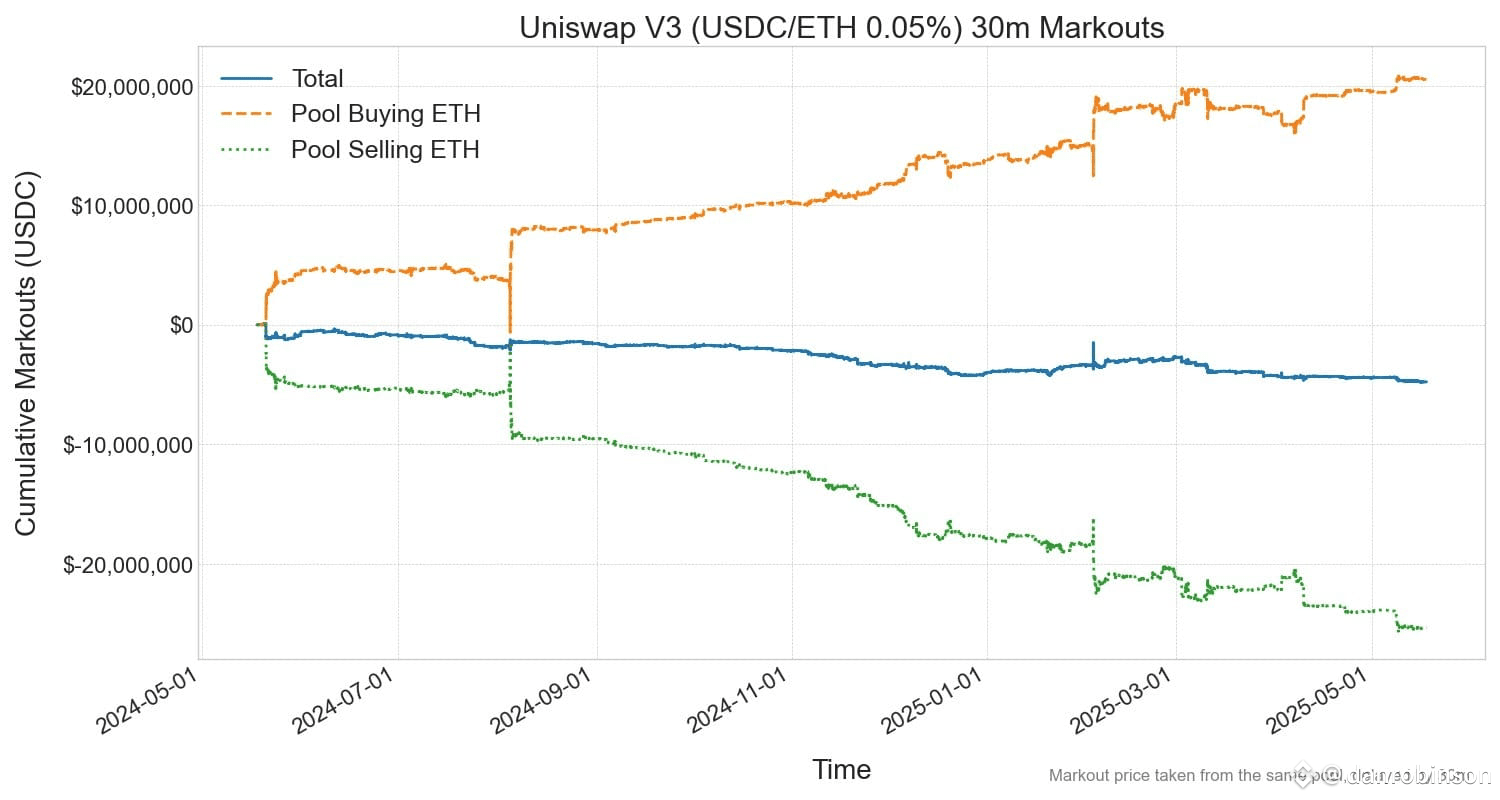
Aquí hay un misterio:
Los AMMs parecen ser mucho más rentables al comprar ETH que al venderlo
Mira cómo estos márgenes acumulativos (agrupados por dirección) divergen con el tiempo
¡El fondo ganó más de $20 millones con sus compras de ETH, pero perdió más de $24 millones con sus ventas de ETH!
¿Alguna teoría?
Aquí hay un misterio:
Los AMMs parecen ser mucho más rentables al comprar ETH que al venderlo
Mira cómo estos márgenes acumulativos (agrupados por dirección) divergen con el tiempo
¡El fondo ganó más de $20 millones con sus compras de ETH, pero perdió más de $24 millones con sus ventas de ETH!
¿Alguna teoría?
Los AMMs parecen ser mucho más rentables al comprar ETH que al venderlo
Mira cómo estos márgenes acumulativos (agrupados por dirección) divergen con el tiempo
¡El fondo ganó más de $20 millones con sus compras de ETH, pero perdió más de $24 millones con sus ventas de ETH!
¿Alguna teoría?
6
·
--
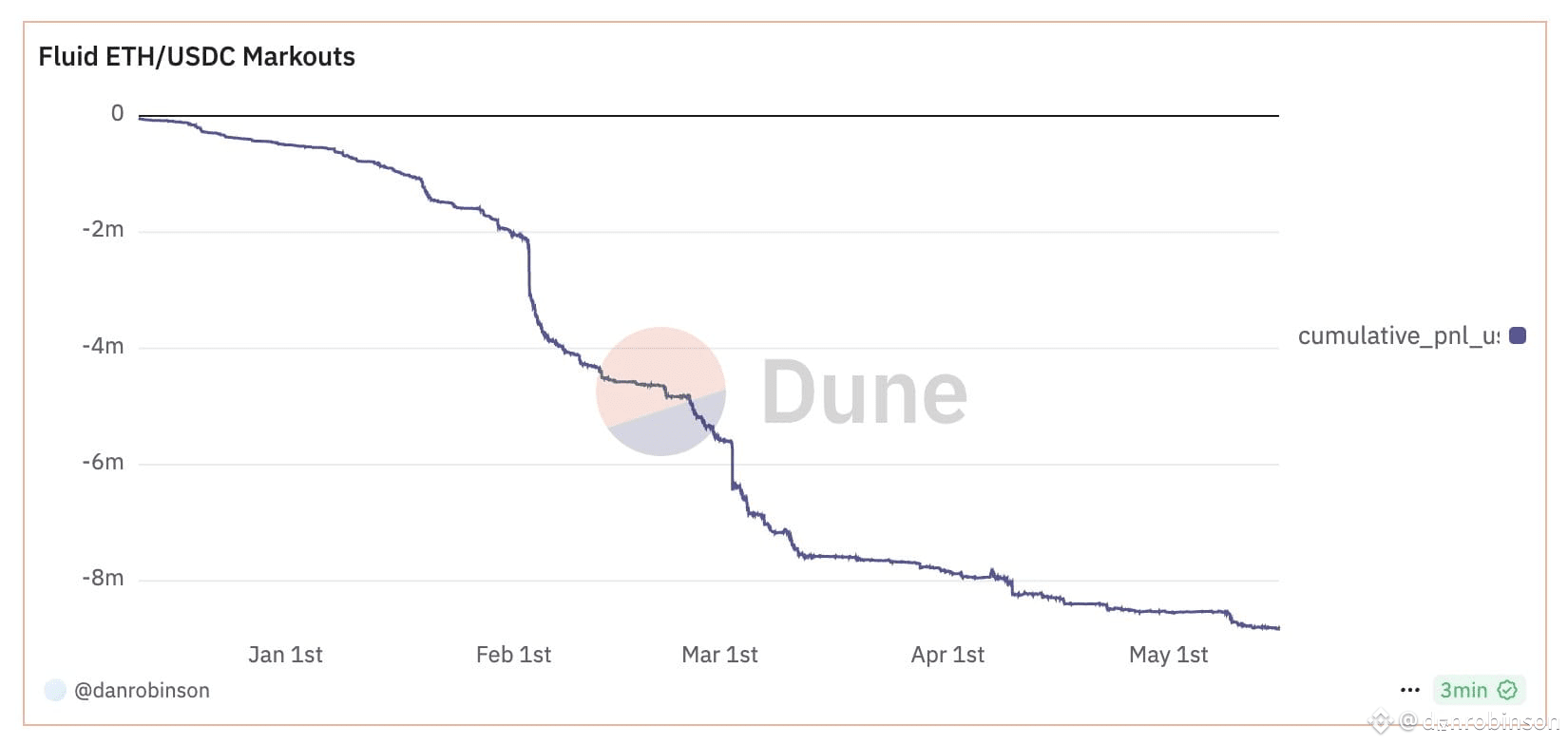
Estos son los marcadores acumulativos de 15m para el grupo Fluid ETH/USDC.
Ha perdido $8.5m en EV, y sus operaciones han sido no rentables todo el tiempo, no solo durante los reequilibrios.
No hay ganancias que compensen los costos del reequilibrio. El grupo nunca gana dinero en expectativa.
Estos son los marcadores acumulativos de 15m para el grupo Fluid ETH/USDC.
Ha perdido $8.5m en EV, y sus operaciones han sido no rentables todo el tiempo, no solo durante los reequilibrios.
No hay ganancias que compensen los costos del reequilibrio. El grupo nunca gana dinero en expectativa.
Ha perdido $8.5m en EV, y sus operaciones han sido no rentables todo el tiempo, no solo durante los reequilibrios.
No hay ganancias que compensen los costos del reequilibrio. El grupo nunca gana dinero en expectativa.
1
124
·
--
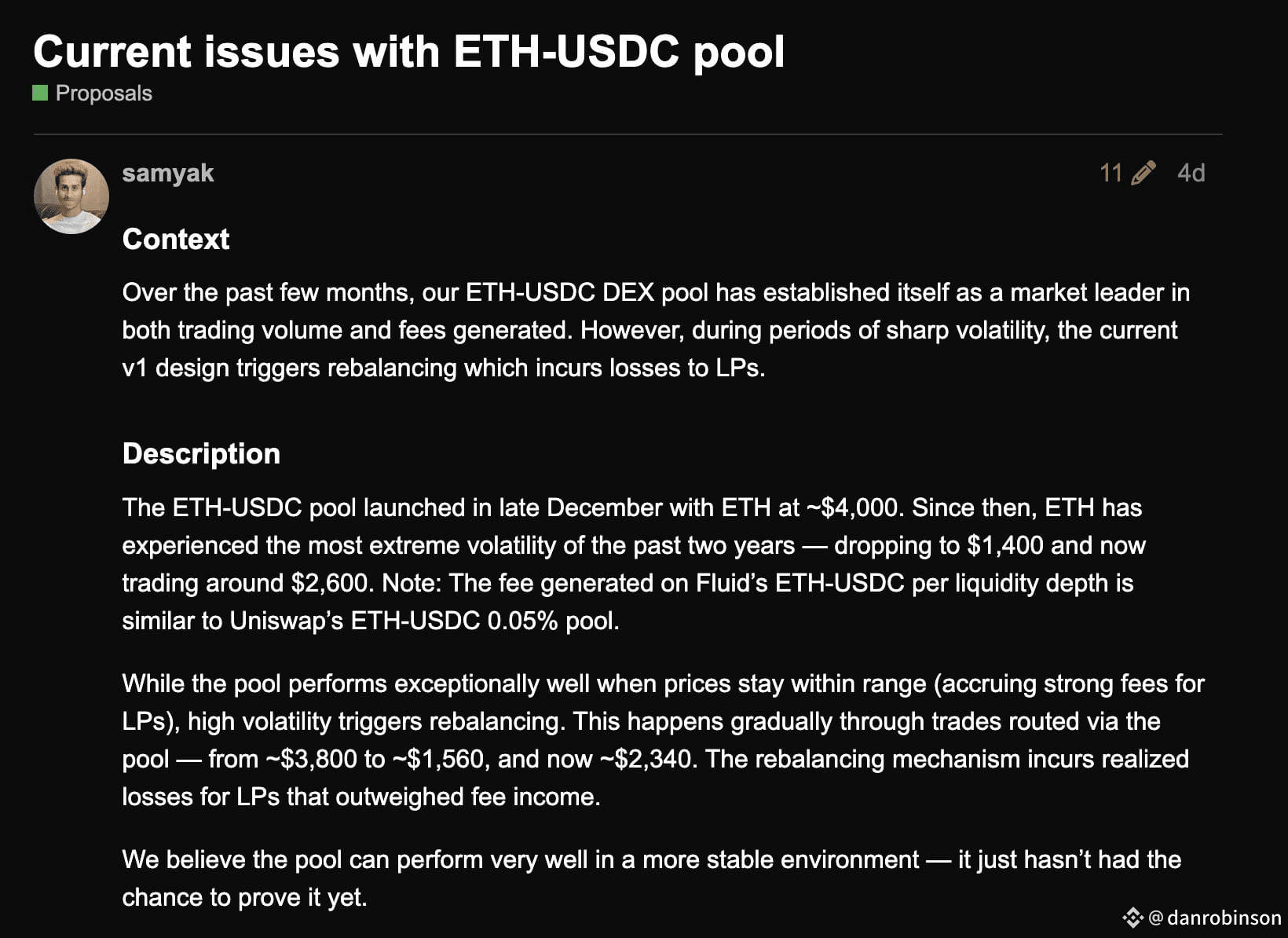
Respeto por @0xfluid al publicar este post-mortem
Pero su solución propuesta—hacer que la liquidez sea más concentrada—parece ser la elección equivocada
El pool no solo está perdiendo dinero durante los reequilibrios. Está perdiendo dinero constantemente—según lo que puedo ver, las tarifas no compensan las pérdidas de arbitraje
Así que concentrar más la liquidez sería un doble golpe—pérdida más rápida para los arbitrajistas entre reequilibrios, y reequilibrios más frecuentes
Respeto por @0xfluid al publicar este post-mortem
Pero su solución propuesta—hacer que la liquidez sea más concentrada—parece ser la elección equivocada
El pool no solo está perdiendo dinero durante los reequilibrios. Está perdiendo dinero constantemente—según lo que puedo ver, las tarifas no compensan las pérdidas de arbitraje
Así que concentrar más la liquidez sería un doble golpe—pérdida más rápida para los arbitrajistas entre reequilibrios, y reequilibrios más frecuentes
Pero su solución propuesta—hacer que la liquidez sea más concentrada—parece ser la elección equivocada
El pool no solo está perdiendo dinero durante los reequilibrios. Está perdiendo dinero constantemente—según lo que puedo ver, las tarifas no compensan las pérdidas de arbitraje
Así que concentrar más la liquidez sería un doble golpe—pérdida más rápida para los arbitrajistas entre reequilibrios, y reequilibrios más frecuentes

125
·
--
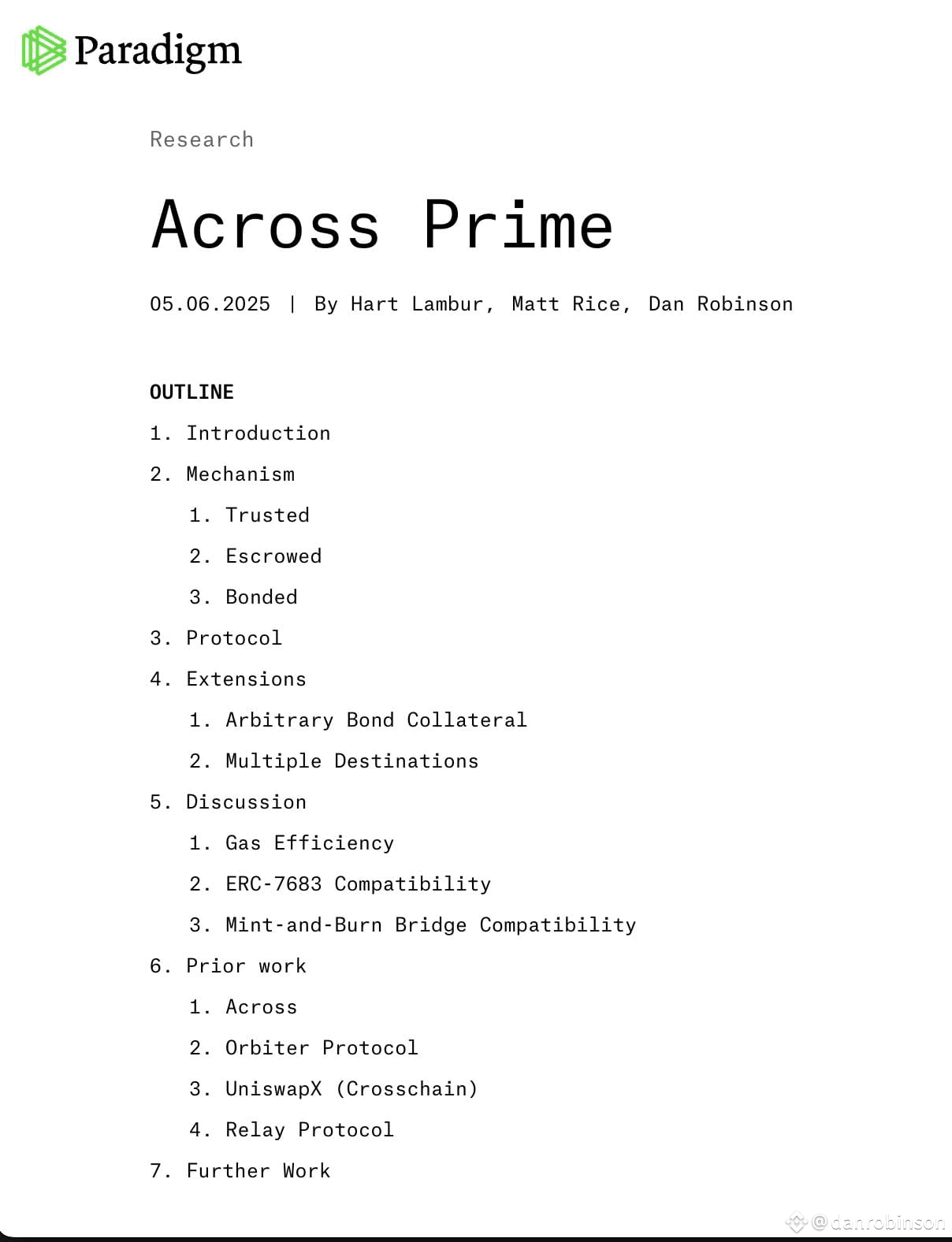
Puentes rápidos sin confianza generalmente requieren que los pagos sean bloqueados en custodia
¿Pero qué pasaría si los usuarios pudieran simplemente enviar al relayer—sin necesidad de confianza, y a una fracción del capital y el costo de gas del modelo de custodia?
Presentando Across Prime, un nuevo diseño de mí @hal2001 @mrice32
🧵
Puentes rápidos sin confianza generalmente requieren que los pagos sean bloqueados en custodia
¿Pero qué pasaría si los usuarios pudieran simplemente enviar al relayer—sin necesidad de confianza, y a una fracción del capital y el costo de gas del modelo de custodia?
Presentando Across Prime, un nuevo diseño de mí @hal2001 @mrice32
🧵
¿Pero qué pasaría si los usuarios pudieran simplemente enviar al relayer—sin necesidad de confianza, y a una fracción del capital y el costo de gas del modelo de custodia?
Presentando Across Prime, un nuevo diseño de mí @hal2001 @mrice32
🧵
6
·
--
Cada investigador de Ethereum se centra en MEV cuando su mayor problema es la escalabilidad
Cada investigador de Solana se centra en la escalabilidad cuando su mayor problema es MEV
Cada investigador de Ethereum se centra en MEV cuando su mayor problema es la escalabilidad
Cada investigador de Solana se centra en la escalabilidad cuando su mayor problema es MEV
Cada investigador de Solana se centra en la escalabilidad cuando su mayor problema es MEV
8
Inicia sesión para explorar más contenidos
Únete a usuarios globales de criptomonedas en Binance Square
⚡️ Obtén información útil y actualizada sobre criptos.
💬 Avalado por el mayor exchange de criptomonedas en el mundo.
👍 Descubre perspectivas reales de creadores verificados.
Email/número de teléfono
Temas populares
BinancePick
3M vistas
152,263 están debatiendo
¡Únete a #TemporadaDeResultados: predice resultados en Binance Pick y comparte tu opinión en Binance Square!
Binance Square Official
·409 me gusta
·342.7k vistas
EarningsSeason
5.3M vistas
25,868 están debatiendo
AnthropicTTMRevenueGrewAbout1200%
24,259 vistas
362 están debatiendo