

Max _ Hunter
14.7k Publicaciones

Max _ Hunter
 Verificado de Binance Square
Denunciar
Bloquear usuario
Bull Market Hunter | Technical Analysis | AI Enthusiast
Abrir trade
Trader frecuente
2 año(s)
320 Siguiendo
34.2K+ Seguidores
38.3K+ Me gusta
Publicaciones
Cartera
Todo
Citas
Videos
Live
·
--
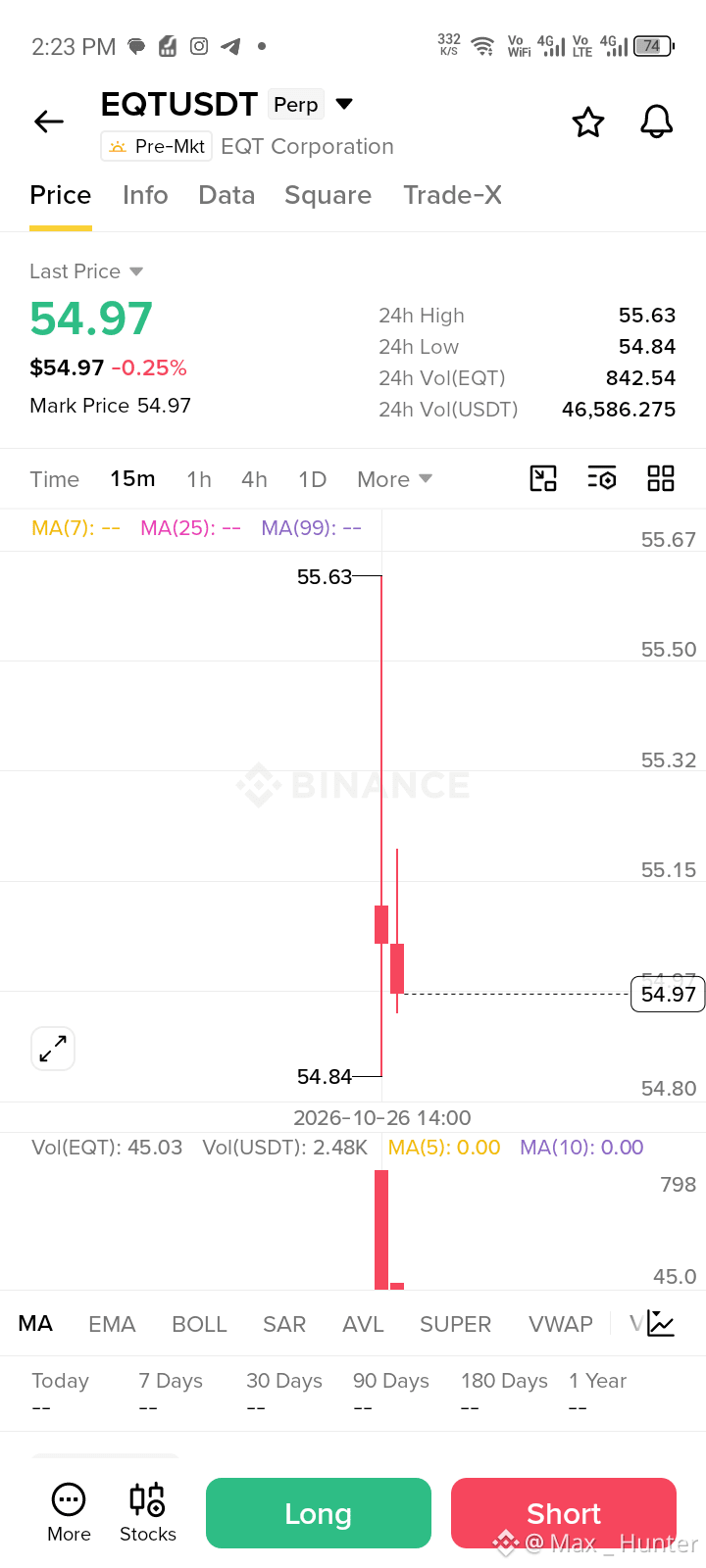
$EQT ha enfrentado una fuerte presión vendedora tras un rechazo brusco cerca de la zona de resistencia de $55.63. Las últimas velas bajistas han empujado el precio hasta $54.97, con un soporte cerca de $54.84. La presión vendedora persistente sugiere que el impulso bajista podría continuar, a menos que los compradores recuperen las zonas de resistencia cercanas.
Entrada: $54.95–55.05
TP1: $54.85
TP2: $54.70
TP3: $54.50
SL: $55.25
Un movimiento sostenido por debajo de $54.84 podría reforzar la continuación bajista hacia $54.50, mientras que una recuperación por encima de $55.15 podría debilitar la configuración bajista.
Compra y opera $EQT
$EQT ha enfrentado una fuerte presión vendedora tras un rechazo brusco cerca de la zona de resistencia de $55.63. Las últimas velas bajistas han empujado el precio hasta $54.97, con un soporte cerca de $54.84. La presión vendedora persistente sugiere que el impulso bajista podría continuar, a menos que los compradores recuperen las zonas de resistencia cercanas.
Entrada: $54.95–55.05
TP1: $54.85
TP2: $54.70
TP3: $54.50
SL: $55.25
Un movimiento sostenido por debajo de $54.84 podría reforzar la continuación bajista hacia $54.50, mientras que una recuperación por encima de $55.15 podría debilitar la configuración bajista.
Compra y opera $EQT
Entrada: $54.95–55.05
TP1: $54.85
TP2: $54.70
TP3: $54.50
SL: $55.25
Un movimiento sostenido por debajo de $54.84 podría reforzar la continuación bajista hacia $54.50, mientras que una recuperación por encima de $55.15 podría debilitar la configuración bajista.
Compra y opera $EQT
156
·
--
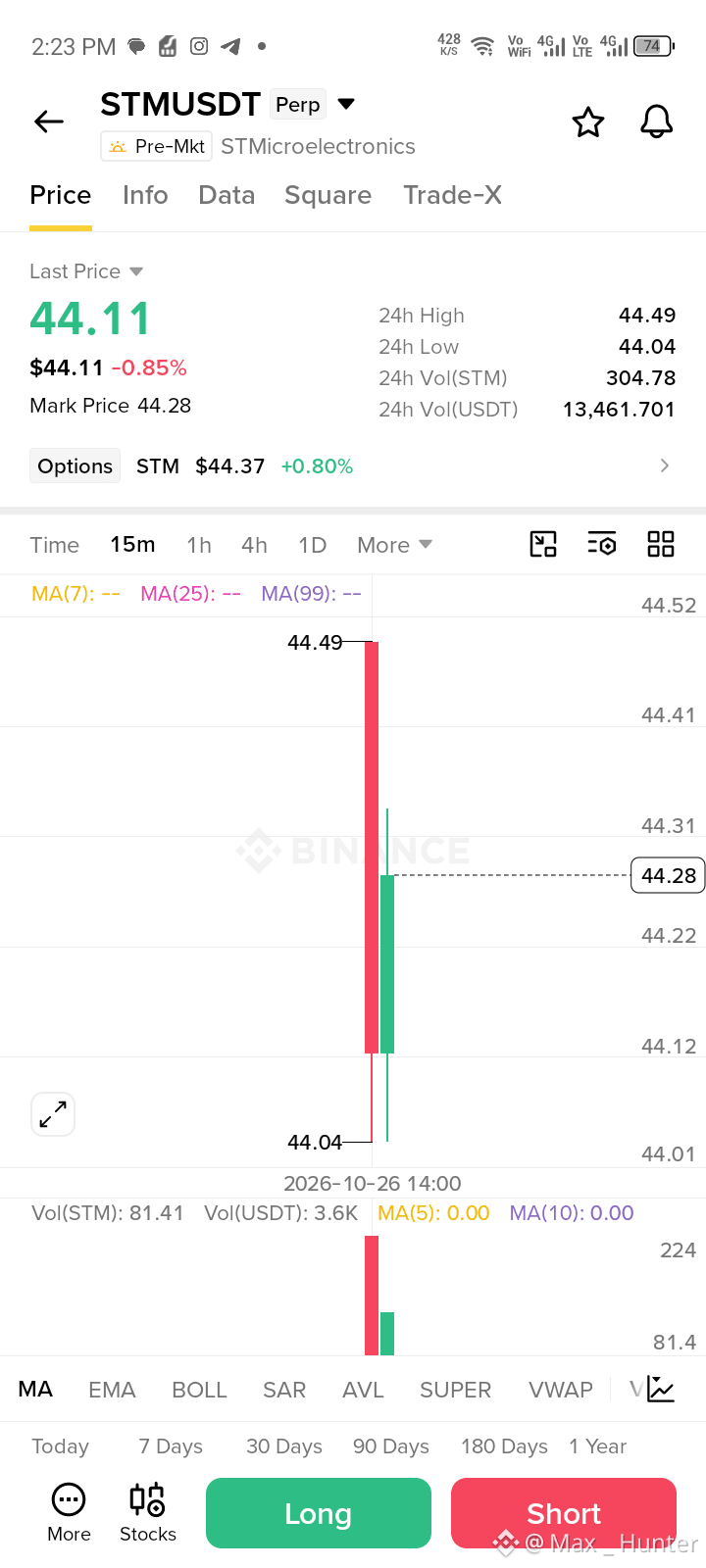
$STM ha sufrido una fuerte presión vendedora tras ser rechazado cerca de la zona de resistencia de $44.49, y cayó hacia el soporte de $44.04 antes de que los compradores intervinieran y provocaran un rebote a corto plazo. La última vela verde sugiere un intento de recuperación, pero el impulso bajista sigue siendo preocupante a menos que el precio recupere las zonas de resistencia cercanas.
Entrada: $44.20–44.30
TP1: $44.35
TP2: $44.41
TP3: $44.49
SL: $44.03
Un movimiento sostenido por encima de $44.35 podría reforzar la recuperación hacia $44.49, mientras que una caída por debajo de $44.04 podría señalar nuevas pérdidas.
Compra y opera $STMX
$STM ha sufrido una fuerte presión vendedora tras ser rechazado cerca de la zona de resistencia de $44.49, y cayó hacia el soporte de $44.04 antes de que los compradores intervinieran y provocaran un rebote a corto plazo. La última vela verde sugiere un intento de recuperación, pero el impulso bajista sigue siendo preocupante a menos que el precio recupere las zonas de resistencia cercanas.
Entrada: $44.20–44.30
TP1: $44.35
TP2: $44.41
TP3: $44.49
SL: $44.03
Un movimiento sostenido por encima de $44.35 podría reforzar la recuperación hacia $44.49, mientras que una caída por debajo de $44.04 podría señalar nuevas pérdidas.
Compra y opera $STMX
Entrada: $44.20–44.30
TP1: $44.35
TP2: $44.41
TP3: $44.49
SL: $44.03
Un movimiento sostenido por encima de $44.35 podría reforzar la recuperación hacia $44.49, mientras que una caída por debajo de $44.04 podría señalar nuevas pérdidas.
Compra y opera $STMX
151
·
--
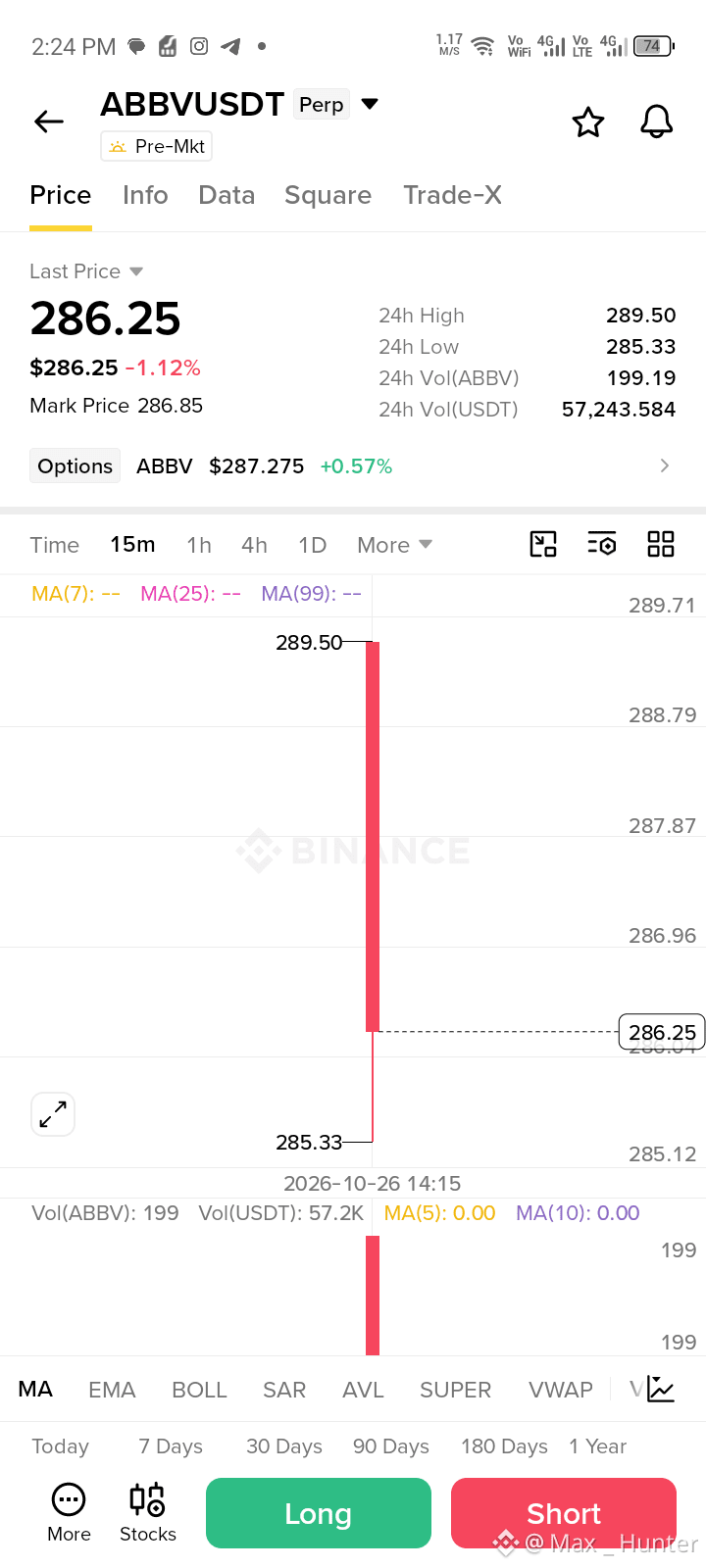
$ABBVUSDT ha afrontado una fuerte presión vendedora tras ser rechazado cerca de la zona de $289.50. La última vela bajista ha llevado el precio hasta $286.25, con soporte en torno a $285.33. Una ruptura por debajo de este nivel podría abrir la puerta a nuevas caídas hacia zonas de soporte inferiores.
Entrada: $285.20–285.50
TP1: $284.80
TP2: $284.30
TP3: $283.80
SL: $286.30
Un movimiento sostenido por debajo de $285.33 podría reforzar la continuación bajista hacia $283.80.
Compra y opera $ABBV USDT
$ABBVUSDT ha afrontado una fuerte presión vendedora tras ser rechazado cerca de la zona de $289.50. La última vela bajista ha llevado el precio hasta $286.25, con soporte en torno a $285.33. Una ruptura por debajo de este nivel podría abrir la puerta a nuevas caídas hacia zonas de soporte inferiores.
Entrada: $285.20–285.50
TP1: $284.80
TP2: $284.30
TP3: $283.80
SL: $286.30
Un movimiento sostenido por debajo de $285.33 podría reforzar la continuación bajista hacia $283.80.
Compra y opera $ABBV USDT
Entrada: $285.20–285.50
TP1: $284.80
TP2: $284.30
TP3: $283.80
SL: $286.30
Un movimiento sostenido por debajo de $285.33 podría reforzar la continuación bajista hacia $283.80.
Compra y opera $ABBV USDT
155
·
--
🚨 ¡ALERTA DE NUEVA LISTA! 🔥
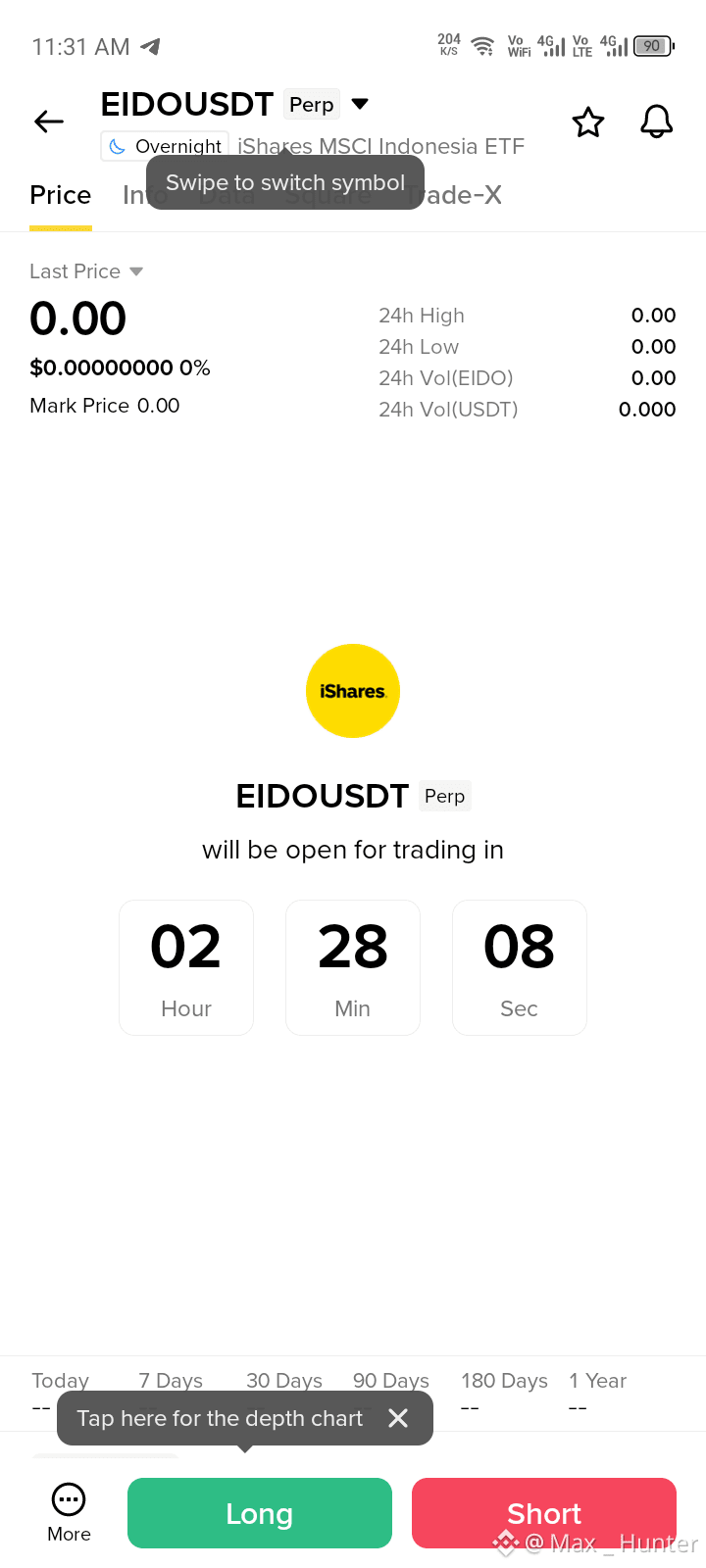
👀 ¡LLEGA EL CONTRATO PERPETUO EIDOUSDT!
⏳ ¡La cuenta regresiva ha comenzado! Según la captura de pantalla, EIDOUSDT Perp se prepara para abrir operaciones en Binance.
📊 Par de trading: $EIDO.ETF
⚡ Contrato: futuros perpetuos
🟢 Largo
🔴 Corto
💡 Mantente alerta, observa la evolución del precio tras el lanzamiento y gestiona el riesgo con cuidado. ¡Las nuevas listas pueden traer una gran volatilidad!
🔥 ¿Abrirás una posición LARGA o CORTA en EIDOUSDT? 👇
#EIDOUSDT #Binance #NuevaLista #CryptoTrading #FuturesTrading #Altcoins #CryptoCommunity #BİNANCESQUARE
{etf_us}(EIDO.ETF)
🚨 ¡ALERTA DE NUEVA LISTA! 🔥
👀 ¡LLEGA EL CONTRATO PERPETUO EIDOUSDT!
⏳ ¡La cuenta regresiva ha comenzado! Según la captura de pantalla, EIDOUSDT Perp se prepara para abrir operaciones en Binance.
📊 Par de trading: $EIDO.ETF
⚡ Contrato: futuros perpetuos
🟢 Largo
🔴 Corto
💡 Mantente alerta, observa la evolución del precio tras el lanzamiento y gestiona el riesgo con cuidado. ¡Las nuevas listas pueden traer una gran volatilidad!
🔥 ¿Abrirás una posición LARGA o CORTA en EIDOUSDT? 👇
#EIDOUSDT #Binance #NuevaLista #CryptoTrading #FuturesTrading #Altcoins #CryptoCommunity #BİNANCESQUARE
👀 ¡LLEGA EL CONTRATO PERPETUO EIDOUSDT!
⏳ ¡La cuenta regresiva ha comenzado! Según la captura de pantalla, EIDOUSDT Perp se prepara para abrir operaciones en Binance.
📊 Par de trading: $EIDO.ETF
⚡ Contrato: futuros perpetuos
🟢 Largo
🔴 Corto
💡 Mantente alerta, observa la evolución del precio tras el lanzamiento y gestiona el riesgo con cuidado. ¡Las nuevas listas pueden traer una gran volatilidad!
🔥 ¿Abrirás una posición LARGA o CORTA en EIDOUSDT? 👇
#EIDOUSDT #Binance #NuevaLista #CryptoTrading #FuturesTrading #Altcoins #CryptoCommunity #BİNANCESQUARE
225
·
--
⚡ ÚLTIMA HORA: ¡Elon Musk trae una nueva forma de dar propinas en X! 🚀💸
Pronto, los usuarios podrían enviar $1 directamente a alguien manteniendo pulsado el botón «Me gusta» a través de X Money. 👀
🔥 ¡Dale «Me gusta» a una publicación, muestra tu agradecimiento al creador y envíale una propina, todo con una sola acción sencilla!
💰 ¿Podría ser este el futuro de los pagos en las redes sociales?
¿Qué opinas? ¿Usarías esta función? 👇
$LAB
{future}(LABUSDT)
$BTC
{future}(BTCUSDT)
#ElonMusk #Fintech #DigitalPayments #Innovation #BinanceSquare $MSFTB
⚡ ÚLTIMA HORA: ¡Elon Musk trae una nueva forma de dar propinas en X! 🚀💸
Pronto, los usuarios podrían enviar $1 directamente a alguien manteniendo pulsado el botón «Me gusta» a través de X Money. 👀
🔥 ¡Dale «Me gusta» a una publicación, muestra tu agradecimiento al creador y envíale una propina, todo con una sola acción sencilla!
💰 ¿Podría ser este el futuro de los pagos en las redes sociales?
¿Qué opinas? ¿Usarías esta función? 👇
$LAB
$BTC
#ElonMusk #Fintech #DigitalPayments #Innovation #BinanceSquare $MSFTB
Pronto, los usuarios podrían enviar $1 directamente a alguien manteniendo pulsado el botón «Me gusta» a través de X Money. 👀
🔥 ¡Dale «Me gusta» a una publicación, muestra tu agradecimiento al creador y envíale una propina, todo con una sola acción sencilla!
💰 ¿Podría ser este el futuro de los pagos en las redes sociales?
¿Qué opinas? ¿Usarías esta función? 👇
$LAB
$BTC
#ElonMusk #Fintech #DigitalPayments #Innovation #BinanceSquare $MSFTB

490

·
--
Alcista
🎃👻 ¡Halloween ya está aquí y el mundo cripto está listo para un poco de emoción espeluznante con Binance! 🟡🖤
Imagina una noche de Halloween llena de calabazas brillantes, sombras misteriosas, fantasmas digitales y el emocionante mundo de las criptomonedas. Aunque la temporada espeluznante trae sorpresas a cada paso, hay algo que siempre debe quedar claro: DYOR (investiga por tu cuenta), protege tu cuenta y toma decisiones responsables en el mercado cripto.
Para mí, Halloween se trata de creatividad, comunidad y compartir energía positiva. Binance reúne a entusiastas de las criptomonedas de distintas partes del mundo, y esta temporada es una gran oportunidad para celebrar ese espíritu con una creación divertida inspirada en Halloween y con la marca Binance.
Ya sea que estés explorando el ecosistema cripto, aprendiendo algo nuevo o conectando con otros entusiastas, recuerda que el conocimiento y la seguridad importan en cualquier temporada. ¡Hagamos que este Halloween sea creativo, inolvidable y esté lleno de espíritu comunitario! 🎃✨
¡Feliz Halloween a la comunidad de Binance! 🟡
#SEAPumkinFrenzy #Binance #Halloween #CryptoCommunity #BinanceSquare 👻👻👻👻👻👻👻🎃🎃🎃
🎃👻 ¡Halloween ya está aquí y el mundo cripto está listo para un poco de emoción espeluznante con Binance! 🟡🖤
Imagina una noche de Halloween llena de calabazas brillantes, sombras misteriosas, fantasmas digitales y el emocionante mundo de las criptomonedas. Aunque la temporada espeluznante trae sorpresas a cada paso, hay algo que siempre debe quedar claro: DYOR (investiga por tu cuenta), protege tu cuenta y toma decisiones responsables en el mercado cripto.
Para mí, Halloween se trata de creatividad, comunidad y compartir energía positiva. Binance reúne a entusiastas de las criptomonedas de distintas partes del mundo, y esta temporada es una gran oportunidad para celebrar ese espíritu con una creación divertida inspirada en Halloween y con la marca Binance.
Ya sea que estés explorando el ecosistema cripto, aprendiendo algo nuevo o conectando con otros entusiastas, recuerda que el conocimiento y la seguridad importan en cualquier temporada. ¡Hagamos que este Halloween sea creativo, inolvidable y esté lleno de espíritu comunitario! 🎃✨
¡Feliz Halloween a la comunidad de Binance! 🟡
#SEAPumkinFrenzy #Binance #Halloween #CryptoCommunity #BinanceSquare 👻👻👻👻👻👻👻🎃🎃🎃
Imagina una noche de Halloween llena de calabazas brillantes, sombras misteriosas, fantasmas digitales y el emocionante mundo de las criptomonedas. Aunque la temporada espeluznante trae sorpresas a cada paso, hay algo que siempre debe quedar claro: DYOR (investiga por tu cuenta), protege tu cuenta y toma decisiones responsables en el mercado cripto.
Para mí, Halloween se trata de creatividad, comunidad y compartir energía positiva. Binance reúne a entusiastas de las criptomonedas de distintas partes del mundo, y esta temporada es una gran oportunidad para celebrar ese espíritu con una creación divertida inspirada en Halloween y con la marca Binance.
Ya sea que estés explorando el ecosistema cripto, aprendiendo algo nuevo o conectando con otros entusiastas, recuerda que el conocimiento y la seguridad importan en cualquier temporada. ¡Hagamos que este Halloween sea creativo, inolvidable y esté lleno de espíritu comunitario! 🎃✨
¡Feliz Halloween a la comunidad de Binance! 🟡
#SEAPumkinFrenzy #Binance #Halloween #CryptoCommunity #BinanceSquare 👻👻👻👻👻👻👻🎃🎃🎃

1
2
333
·
--
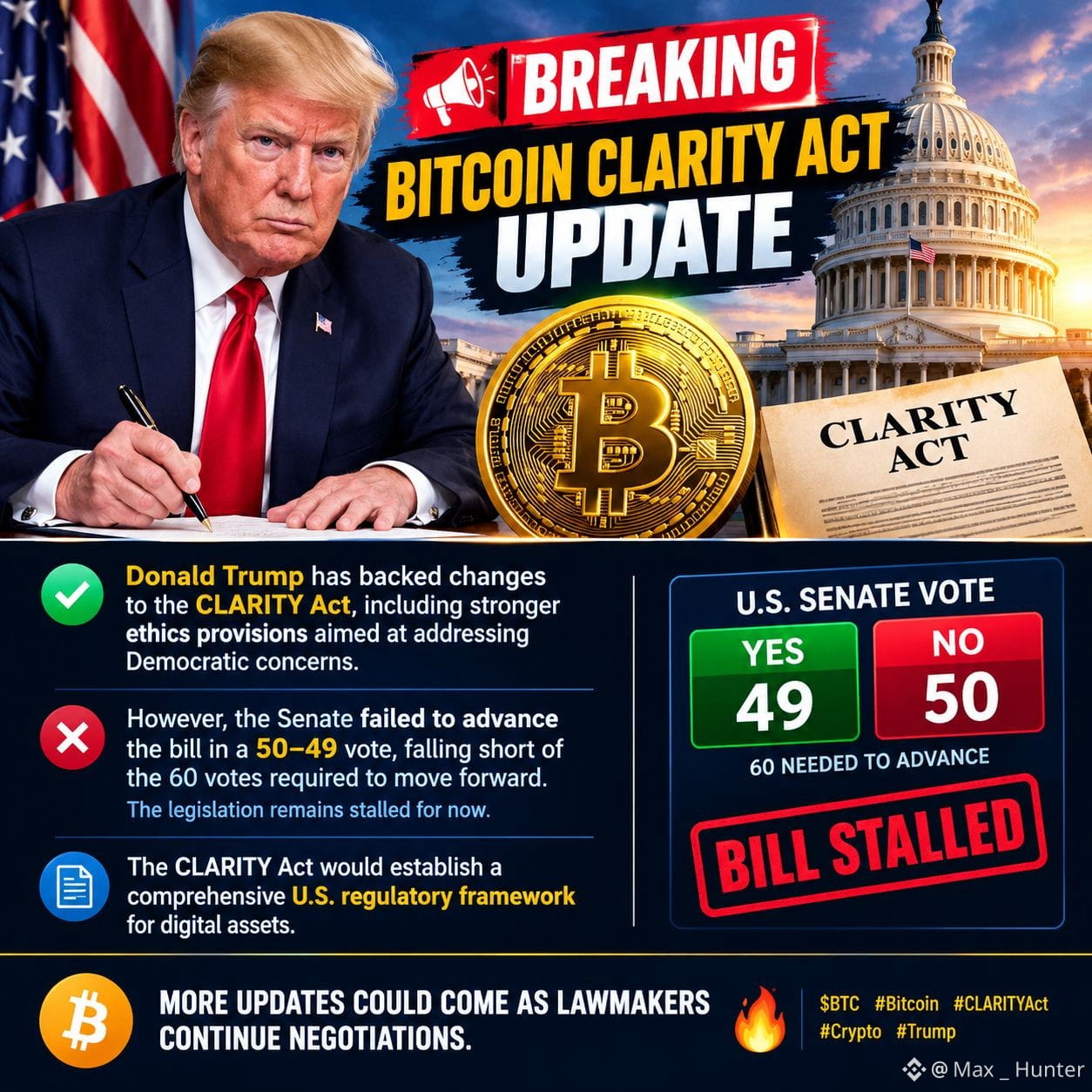
🚨 ACTUALIZACIÓN DE LA LEY CLARITY SOBRE BITCOIN 🇺🇸₿
El presidente Donald Trump ha respaldado cambios a la Ley CLARITY, incluidas disposiciones éticas más estrictas destinadas a abordar las preocupaciones de los demócratas. 🔥
⚠️ Sin embargo, el Senado no logró sacar adelante el proyecto de ley en una votación de 50–49, por debajo de los 60 votos necesarios para avanzar. Por ahora, la legislación sigue estancada.
👀 La Ley CLARITY establecería un marco regulatorio integral en EE. UU. para los activos digitales. Las negociaciones adicionales podrían determinar si el proyecto de ley vuelve a someterse a votación.
🔥 PODRÍA HABER MÁS ACTUALIZACIONES A MEDIDA QUE LOS LEGISLADORES CONTINÚAN LAS NEGOCIACIONES.
$BTC #Bitcoin #BTC #CLARITYAct #Crypto #TRUMP
🚨 ACTUALIZACIÓN DE LA LEY CLARITY SOBRE BITCOIN 🇺🇸₿
El presidente Donald Trump ha respaldado cambios a la Ley CLARITY, incluidas disposiciones éticas más estrictas destinadas a abordar las preocupaciones de los demócratas. 🔥
⚠️ Sin embargo, el Senado no logró sacar adelante el proyecto de ley en una votación de 50–49, por debajo de los 60 votos necesarios para avanzar. Por ahora, la legislación sigue estancada.
👀 La Ley CLARITY establecería un marco regulatorio integral en EE. UU. para los activos digitales. Las negociaciones adicionales podrían determinar si el proyecto de ley vuelve a someterse a votación.
🔥 PODRÍA HABER MÁS ACTUALIZACIONES A MEDIDA QUE LOS LEGISLADORES CONTINÚAN LAS NEGOCIACIONES.
$BTC #Bitcoin #BTC #CLARITYAct #Crypto #TRUMP
El presidente Donald Trump ha respaldado cambios a la Ley CLARITY, incluidas disposiciones éticas más estrictas destinadas a abordar las preocupaciones de los demócratas. 🔥
⚠️ Sin embargo, el Senado no logró sacar adelante el proyecto de ley en una votación de 50–49, por debajo de los 60 votos necesarios para avanzar. Por ahora, la legislación sigue estancada.
👀 La Ley CLARITY establecería un marco regulatorio integral en EE. UU. para los activos digitales. Las negociaciones adicionales podrían determinar si el proyecto de ley vuelve a someterse a votación.
🔥 PODRÍA HABER MÁS ACTUALIZACIONES A MEDIDA QUE LOS LEGISLADORES CONTINÚAN LAS NEGOCIACIONES.
$BTC #Bitcoin #BTC #CLARITYAct #Crypto #TRUMP
507
·
--
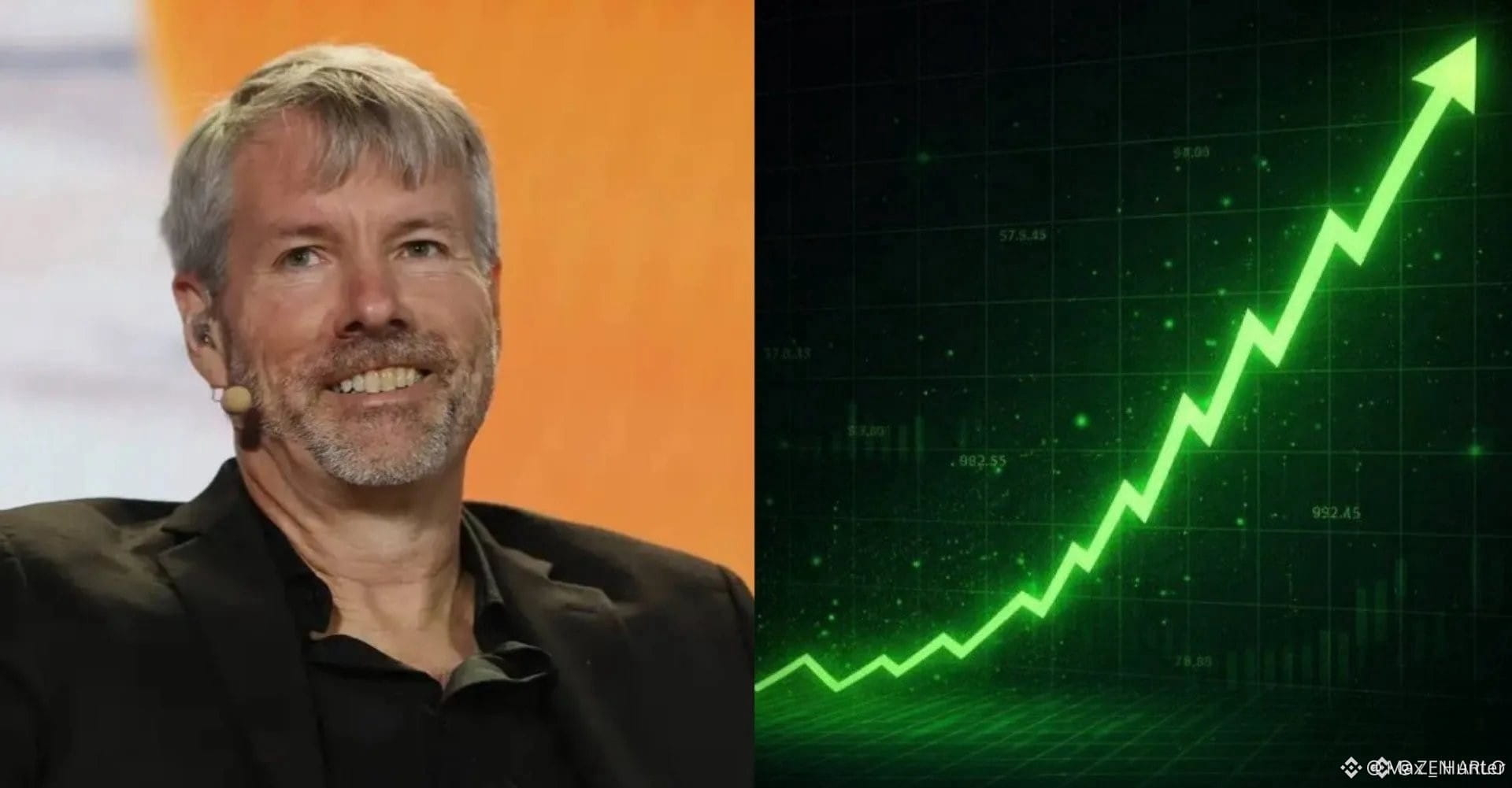
🚨 ÚLTIMA HORA: ¡MICHAEL SAYLOR VUELVE A COMPRAR! 🟠🔥
Strategy acaba de añadir 334 $BTC por aproximadamente 28,7 MILLONES de dólares, pagando un promedio de 85.838,80 dólares por Bitcoin. La compra eleva las tenencias totales de Strategy a la cifra récord de 848.000 BTC.
💰 A los precios actuales del mercado, las reservas de Bitcoin de Strategy tienen un valor aproximado de 73.000 MILLONES de dólares, con un costo de adquisición acumulado de unos 63.970 MILLONES de dólares y un costo promedio de 75.440,70 dólares por BTC.
🔥 La acumulación continúa. Strategy sigue siendo la mayor empresa tenedora de Bitcoin: sus 848.000 BTC representan más del 4 % del suministro máximo de 21 millones de Bitcoin.
🟠 SAYLOR SIGUE ACUMULANDO. LA MAYOR APUESTA CORPORATIVA POR BITCOIN ACABA DE HACERSE AÚN MÁS GRANDE.
$BTC #Bitcoin #BTC #MichaelSaylor #Strategy #MSTR
🚨 ÚLTIMA HORA: ¡MICHAEL SAYLOR VUELVE A COMPRAR! 🟠🔥
Strategy acaba de añadir 334 $BTC por aproximadamente 28,7 MILLONES de dólares, pagando un promedio de 85.838,80 dólares por Bitcoin. La compra eleva las tenencias totales de Strategy a la cifra récord de 848.000 BTC.
💰 A los precios actuales del mercado, las reservas de Bitcoin de Strategy tienen un valor aproximado de 73.000 MILLONES de dólares, con un costo de adquisición acumulado de unos 63.970 MILLONES de dólares y un costo promedio de 75.440,70 dólares por BTC.
🔥 La acumulación continúa. Strategy sigue siendo la mayor empresa tenedora de Bitcoin: sus 848.000 BTC representan más del 4 % del suministro máximo de 21 millones de Bitcoin.
🟠 SAYLOR SIGUE ACUMULANDO. LA MAYOR APUESTA CORPORATIVA POR BITCOIN ACABA DE HACERSE AÚN MÁS GRANDE.
$BTC #Bitcoin #BTC #MichaelSaylor #Strategy #MSTR
Strategy acaba de añadir 334 $BTC por aproximadamente 28,7 MILLONES de dólares, pagando un promedio de 85.838,80 dólares por Bitcoin. La compra eleva las tenencias totales de Strategy a la cifra récord de 848.000 BTC.
💰 A los precios actuales del mercado, las reservas de Bitcoin de Strategy tienen un valor aproximado de 73.000 MILLONES de dólares, con un costo de adquisición acumulado de unos 63.970 MILLONES de dólares y un costo promedio de 75.440,70 dólares por BTC.
🔥 La acumulación continúa. Strategy sigue siendo la mayor empresa tenedora de Bitcoin: sus 848.000 BTC representan más del 4 % del suministro máximo de 21 millones de Bitcoin.
🟠 SAYLOR SIGUE ACUMULANDO. LA MAYOR APUESTA CORPORATIVA POR BITCOIN ACABA DE HACERSE AÚN MÁS GRANDE.
$BTC #Bitcoin #BTC #MichaelSaylor #Strategy #MSTR
222
·
--
🚨 ¡BINANCE ACABA DE ENTRAR EN LA ERA DEL TRADING CON IA! 🤖🔥
Binance ha lanzado Binance Intelligence, que lleva la IA más profundamente al ecosistema cripto con Binance AI, Binance AI Pro y Agent OS, combinando inteligencia de mercado, automatización y flujos de trabajo de trading impulsados por IA. 🚀
📊 Binance AI se está lanzando como un asistente de mercado gratuito disponible las 24 horas, mientras que AI Pro puede convertir ideas expresadas en lenguaje sencillo en flujos de trabajo automatizados y supervisar los mercados en busca de eventos clave, incluidos los niveles de precio de $BTC.
⚡ Integrado directamente en todo el ecosistema de Binance, incluido $BNB, este lanzamiento señala una integración más profunda de la IA + el trading de criptomonedas + los datos de mercado + la automatización.
🤖 La IA ya no se limita a analizar criptomonedas: está avanzando hacia la asistencia activa a los traders en su interacción con los mercados.
#Binance #BNB #BTC #AI #Crypto #trading
🚨 ¡BINANCE ACABA DE ENTRAR EN LA ERA DEL TRADING CON IA! 🤖🔥
Binance ha lanzado Binance Intelligence, que lleva la IA más profundamente al ecosistema cripto con Binance AI, Binance AI Pro y Agent OS, combinando inteligencia de mercado, automatización y flujos de trabajo de trading impulsados por IA. 🚀
📊 Binance AI se está lanzando como un asistente de mercado gratuito disponible las 24 horas, mientras que AI Pro puede convertir ideas expresadas en lenguaje sencillo en flujos de trabajo automatizados y supervisar los mercados en busca de eventos clave, incluidos los niveles de precio de $BTC.
⚡ Integrado directamente en todo el ecosistema de Binance, incluido $BNB, este lanzamiento señala una integración más profunda de la IA + el trading de criptomonedas + los datos de mercado + la automatización.
🤖 La IA ya no se limita a analizar criptomonedas: está avanzando hacia la asistencia activa a los traders en su interacción con los mercados.
#Binance #BNB #BTC #AI #Crypto #trading
Binance ha lanzado Binance Intelligence, que lleva la IA más profundamente al ecosistema cripto con Binance AI, Binance AI Pro y Agent OS, combinando inteligencia de mercado, automatización y flujos de trabajo de trading impulsados por IA. 🚀
📊 Binance AI se está lanzando como un asistente de mercado gratuito disponible las 24 horas, mientras que AI Pro puede convertir ideas expresadas en lenguaje sencillo en flujos de trabajo automatizados y supervisar los mercados en busca de eventos clave, incluidos los niveles de precio de $BTC.
⚡ Integrado directamente en todo el ecosistema de Binance, incluido $BNB, este lanzamiento señala una integración más profunda de la IA + el trading de criptomonedas + los datos de mercado + la automatización.
🤖 La IA ya no se limita a analizar criptomonedas: está avanzando hacia la asistencia activa a los traders en su interacción con los mercados.
#Binance #BNB #BTC #AI #Crypto #trading

102
·
--
🚨 GRAN ACTUALIZACIÓN DE SPACEX 🚨 🚀
Elon Musk afirma que aproximadamente el 90 % de los ingresos de SpaceX ($SPCX) este año serán comerciales, mientras que se espera que los ingresos gubernamentales caigan por debajo del 5 % en el cuarto trimestre. 🇺🇸📊
🔥 Starlink está impulsando la transformación: los servicios de conectividad generaron 4,29 mil millones de dólares en el segundo trimestre, más de la mitad de los ingresos trimestrales totales de SpaceX, mientras que el número de suscriptores de Starlink llegó a 12 millones.
🌐 SpaceX se parece cada vez menos a una empresa de lanzamientos tradicional enfocada en el gobierno y cada vez más a una plataforma global de conectividad, impulsada por Starlink, los servicios empresariales y la expansión de sus alianzas con operadores móviles. 🚀📡
#BinanceLaunchesBinanceIntelligence
#EvernorthXRPTreasuryCompletesSPACMerger
#ETHUp70%InQ3ButLiquidityFalls
#EthStakingExitQueueHits2026High
🚨 GRAN ACTUALIZACIÓN DE SPACEX 🚨 🚀
Elon Musk afirma que aproximadamente el 90 % de los ingresos de SpaceX ($SPCX) este año serán comerciales, mientras que se espera que los ingresos gubernamentales caigan por debajo del 5 % en el cuarto trimestre. 🇺🇸📊
🔥 Starlink está impulsando la transformación: los servicios de conectividad generaron 4,29 mil millones de dólares en el segundo trimestre, más de la mitad de los ingresos trimestrales totales de SpaceX, mientras que el número de suscriptores de Starlink llegó a 12 millones.
🌐 SpaceX se parece cada vez menos a una empresa de lanzamientos tradicional enfocada en el gobierno y cada vez más a una plataforma global de conectividad, impulsada por Starlink, los servicios empresariales y la expansión de sus alianzas con operadores móviles. 🚀📡
#BinanceLaunchesBinanceIntelligence
#EvernorthXRPTreasuryCompletesSPACMerger
#ETHUp70%InQ3ButLiquidityFalls
#EthStakingExitQueueHits2026High
Elon Musk afirma que aproximadamente el 90 % de los ingresos de SpaceX ($SPCX) este año serán comerciales, mientras que se espera que los ingresos gubernamentales caigan por debajo del 5 % en el cuarto trimestre. 🇺🇸📊
🔥 Starlink está impulsando la transformación: los servicios de conectividad generaron 4,29 mil millones de dólares en el segundo trimestre, más de la mitad de los ingresos trimestrales totales de SpaceX, mientras que el número de suscriptores de Starlink llegó a 12 millones.
🌐 SpaceX se parece cada vez menos a una empresa de lanzamientos tradicional enfocada en el gobierno y cada vez más a una plataforma global de conectividad, impulsada por Starlink, los servicios empresariales y la expansión de sus alianzas con operadores móviles. 🚀📡
#BinanceLaunchesBinanceIntelligence
#EvernorthXRPTreasuryCompletesSPACMerger
#ETHUp70%InQ3ButLiquidityFalls
#EthStakingExitQueueHits2026High


313
·
--
🚨 ACTUALIZACIÓN DE LA ESTRUCTURA DEL MERCADO CRIPTO 🚨 🇺🇸
Trump sigue impulsando la Ley de CLARIDAD, pero el Senado no logró avanzar el importante proyecto de ley sobre la estructura del mercado cripto el 15 de septiembre de 2026.
🔥 La legislación está diseñada para establecer reglas más claras de EE. UU. para los activos digitales y definir responsabilidades regulatorias, y la Casa Blanca continúa apoyando un marco regulatorio favorable a las criptomonedas.
₿ Si el proyecto de ley avanza en el futuro, una regulación más clara podría tener implicaciones importantes para la participación institucional y para el mercado cripto en general, pero las afirmaciones sobre una entrada inmediata de “billones de dólares” o una histórica entrada de Bitcoin no están verificadas actualmente. 📊🚀
#US10YearYieldNears5.3%
#KoreaProposesTokenizingStocksAndBonds
#MetaMaskExitsLidoValidatorsAfterSecurityIncident
#MicronBeatsEarningsLiftsGuidance
#CFTCSubmitsTwoEventContractRulesToWhiteHouse
$BTC
{spot}(BTCUSDT)
$LAB
{future}(LABUSDT)
$TLM
{spot}(TLMUSDT)
🚨 ACTUALIZACIÓN DE LA ESTRUCTURA DEL MERCADO CRIPTO 🚨 🇺🇸
Trump sigue impulsando la Ley de CLARIDAD, pero el Senado no logró avanzar el importante proyecto de ley sobre la estructura del mercado cripto el 15 de septiembre de 2026.
🔥 La legislación está diseñada para establecer reglas más claras de EE. UU. para los activos digitales y definir responsabilidades regulatorias, y la Casa Blanca continúa apoyando un marco regulatorio favorable a las criptomonedas.
₿ Si el proyecto de ley avanza en el futuro, una regulación más clara podría tener implicaciones importantes para la participación institucional y para el mercado cripto en general, pero las afirmaciones sobre una entrada inmediata de “billones de dólares” o una histórica entrada de Bitcoin no están verificadas actualmente. 📊🚀
#US10YearYieldNears5.3%
#KoreaProposesTokenizingStocksAndBonds
#MetaMaskExitsLidoValidatorsAfterSecurityIncident
#MicronBeatsEarningsLiftsGuidance
#CFTCSubmitsTwoEventContractRulesToWhiteHouse
$BTC
$LAB
$TLM
Trump sigue impulsando la Ley de CLARIDAD, pero el Senado no logró avanzar el importante proyecto de ley sobre la estructura del mercado cripto el 15 de septiembre de 2026.
🔥 La legislación está diseñada para establecer reglas más claras de EE. UU. para los activos digitales y definir responsabilidades regulatorias, y la Casa Blanca continúa apoyando un marco regulatorio favorable a las criptomonedas.
₿ Si el proyecto de ley avanza en el futuro, una regulación más clara podría tener implicaciones importantes para la participación institucional y para el mercado cripto en general, pero las afirmaciones sobre una entrada inmediata de “billones de dólares” o una histórica entrada de Bitcoin no están verificadas actualmente. 📊🚀
#US10YearYieldNears5.3%
#KoreaProposesTokenizingStocksAndBonds
#MetaMaskExitsLidoValidatorsAfterSecurityIncident
#MicronBeatsEarningsLiftsGuidance
#CFTCSubmitsTwoEventContractRulesToWhiteHouse
$BTC
$LAB
$TLM

1
1.1k
·
--
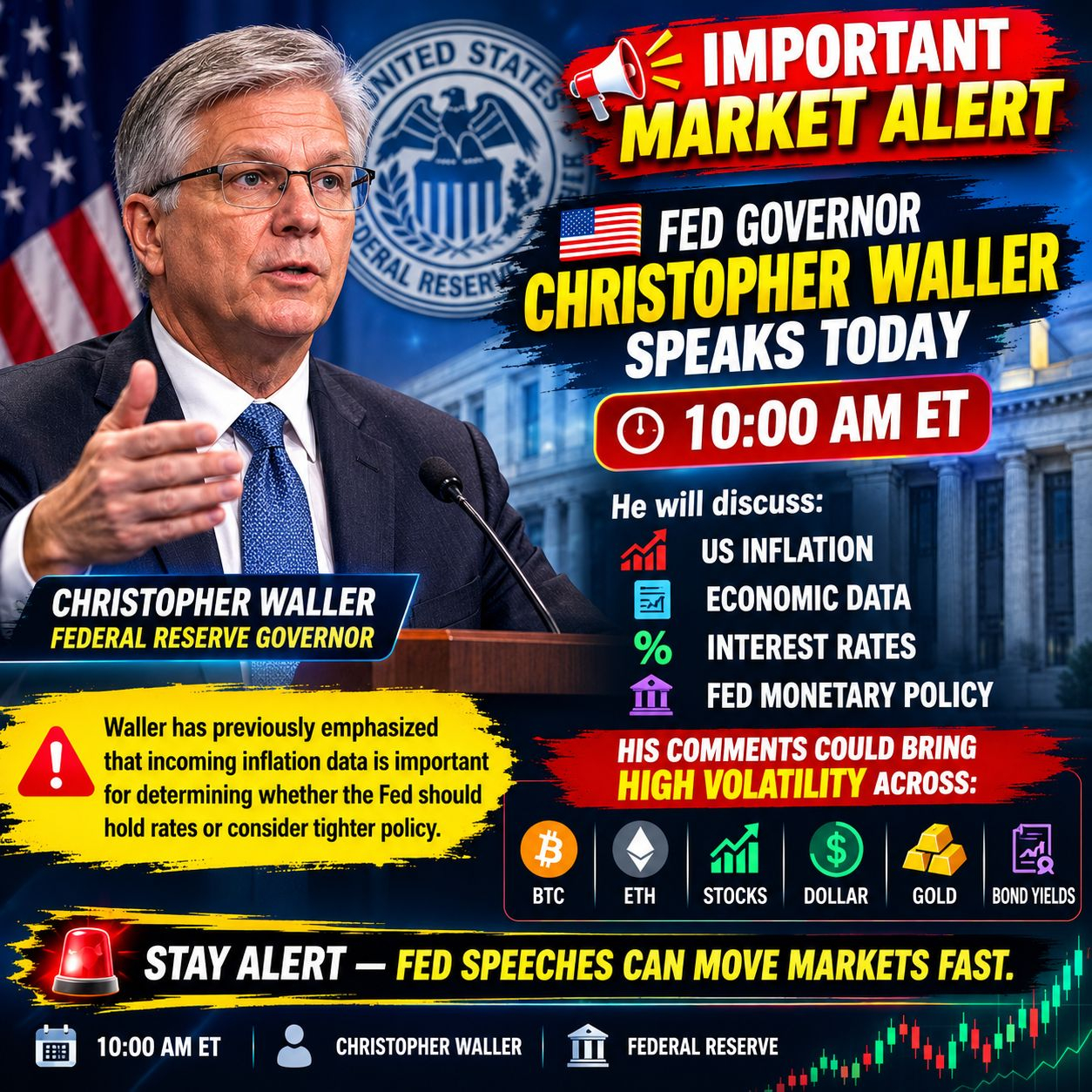
🚨 ALERTA IMPORTANTE DEL MERCADO 🚨
🇺🇸 EL GOBERNADOR DE LA FED CHRISTOPHER WALLER HABLA HOY
⏰ 10:00 AM ET
🎙️ Los mercados estarán atentos a sus comentarios sobre:
📊 INFLACIÓN DE EE. UU.
🇺🇸 DATOS ECONÓMICOS
💵 TASAS DE INTERÉS
🏦 POLÍTICA MONETARIA DE LA FED
⚠️ Waller ha recalcado previamente que los datos de inflación entrantes son importantes para determinar si la Fed debe mantener las tasas o considerar una política más restrictiva.
🔥 SUS COMENTARIOS PODRÍAN GENERAR ALTA VOLATILIDAD EN:
₿ BTC
♦️ ETH
📈 ACCIONES
💵 DÓLAR
🥇 ORO
📊 RENDIMIENTOS DE BONOS
🚨 MANTÉNGASE ALERTA — LOS DISCURSOS DE LA FED PUEDEN MOVER LOS MERCADOS RÁPIDO.
⏳ 10:00 AM ET
🇺🇸 CHRISTOPHER WALLER
🏦 FEDERAL RESERVE
#Bitcoin #BTC #US10YearYieldNears5.3%
#KoreaProposesTokenizingStocksAndBonds
#USADPAdds90000JobsInSeptember
🚨 ALERTA IMPORTANTE DEL MERCADO 🚨
🇺🇸 EL GOBERNADOR DE LA FED CHRISTOPHER WALLER HABLA HOY
⏰ 10:00 AM ET
🎙️ Los mercados estarán atentos a sus comentarios sobre:
📊 INFLACIÓN DE EE. UU.
🇺🇸 DATOS ECONÓMICOS
💵 TASAS DE INTERÉS
🏦 POLÍTICA MONETARIA DE LA FED
⚠️ Waller ha recalcado previamente que los datos de inflación entrantes son importantes para determinar si la Fed debe mantener las tasas o considerar una política más restrictiva.
🔥 SUS COMENTARIOS PODRÍAN GENERAR ALTA VOLATILIDAD EN:
₿ BTC
♦️ ETH
📈 ACCIONES
💵 DÓLAR
🥇 ORO
📊 RENDIMIENTOS DE BONOS
🚨 MANTÉNGASE ALERTA — LOS DISCURSOS DE LA FED PUEDEN MOVER LOS MERCADOS RÁPIDO.
⏳ 10:00 AM ET
🇺🇸 CHRISTOPHER WALLER
🏦 FEDERAL RESERVE
#Bitcoin #BTC #US10YearYieldNears5.3%
#KoreaProposesTokenizingStocksAndBonds
#USADPAdds90000JobsInSeptember
🇺🇸 EL GOBERNADOR DE LA FED CHRISTOPHER WALLER HABLA HOY
⏰ 10:00 AM ET
🎙️ Los mercados estarán atentos a sus comentarios sobre:
📊 INFLACIÓN DE EE. UU.
🇺🇸 DATOS ECONÓMICOS
💵 TASAS DE INTERÉS
🏦 POLÍTICA MONETARIA DE LA FED
⚠️ Waller ha recalcado previamente que los datos de inflación entrantes son importantes para determinar si la Fed debe mantener las tasas o considerar una política más restrictiva.
🔥 SUS COMENTARIOS PODRÍAN GENERAR ALTA VOLATILIDAD EN:
₿ BTC
♦️ ETH
📈 ACCIONES
💵 DÓLAR
🥇 ORO
📊 RENDIMIENTOS DE BONOS
🚨 MANTÉNGASE ALERTA — LOS DISCURSOS DE LA FED PUEDEN MOVER LOS MERCADOS RÁPIDO.
⏳ 10:00 AM ET
🇺🇸 CHRISTOPHER WALLER
🏦 FEDERAL RESERVE
#Bitcoin #BTC #US10YearYieldNears5.3%
#KoreaProposesTokenizingStocksAndBonds
#USADPAdds90000JobsInSeptember
158
·
--
Alcista
🚨 TRUMP Es posible que quieras empezar a comprar ahora
💰 MILES DE MILLONES Y TRILLONES DE CAPITAL ESTÁN OBSERVANDO CRIPTO
🔥 La adopción institucional, una regulación más clara, la tokenización y la creciente infraestructura de cripto podrían aportar una liquidez masiva nueva a los activos digitales.
🐂 Si la rotación de capital se acelera, Bitcoin y las principales altcoins podrían entrar en una fase de mercado nueva y poderosa
📈 El próximo gran ciclo de cripto podría estar impulsado por
• 🏦 Capital institucional
• 💵 Crecimiento de stablecoins
• 🔗 Tokenización de activos del mundo real
• ⚖️ Claridad regulatoria
• 🌐 Adopción global de cripto
🚨 IMPORTANTE: La cifra ampliamente difundida de $30 BILLONES que fluye hacia el cripto debe tratarse como una proyección/afirmación, no como una entrada de capital garantizada
🔥 SÍGUEME — ESTAMOS LISTOS PARA SEGUIR JUNTOS LOS GRANDES MOVIMIENTOS
🚀 $BTC • $ETH • ALTCOINS
🐂 $NEXT.US BULL RUN WATCH
💎 MANTENTE ALERTA. MANTENTE LISTO.
#Bitcoin #BTC #Crypto #Ethereum #ETH #Altcoins #BullRun #CryptoMarket #Trump #InstitutionalAdoption #CryptoNews #Blockchain #Web3 #trading
{spot}(ETHUSDT)
🚨 TRUMP Es posible que quieras empezar a comprar ahora
💰 MILES DE MILLONES Y TRILLONES DE CAPITAL ESTÁN OBSERVANDO CRIPTO
🔥 La adopción institucional, una regulación más clara, la tokenización y la creciente infraestructura de cripto podrían aportar una liquidez masiva nueva a los activos digitales.
🐂 Si la rotación de capital se acelera, Bitcoin y las principales altcoins podrían entrar en una fase de mercado nueva y poderosa
📈 El próximo gran ciclo de cripto podría estar impulsado por
• 🏦 Capital institucional
• 💵 Crecimiento de stablecoins
• 🔗 Tokenización de activos del mundo real
• ⚖️ Claridad regulatoria
• 🌐 Adopción global de cripto
🚨 IMPORTANTE: La cifra ampliamente difundida de $30 BILLONES que fluye hacia el cripto debe tratarse como una proyección/afirmación, no como una entrada de capital garantizada
🔥 SÍGUEME — ESTAMOS LISTOS PARA SEGUIR JUNTOS LOS GRANDES MOVIMIENTOS
🚀 $BTC • $ETH • ALTCOINS
🐂 $NEXT.US BULL RUN WATCH
💎 MANTENTE ALERTA. MANTENTE LISTO.
#Bitcoin #BTC #Crypto #Ethereum #ETH #Altcoins #BullRun #CryptoMarket #Trump #InstitutionalAdoption #CryptoNews #Blockchain #Web3 #trading
💰 MILES DE MILLONES Y TRILLONES DE CAPITAL ESTÁN OBSERVANDO CRIPTO
🔥 La adopción institucional, una regulación más clara, la tokenización y la creciente infraestructura de cripto podrían aportar una liquidez masiva nueva a los activos digitales.
🐂 Si la rotación de capital se acelera, Bitcoin y las principales altcoins podrían entrar en una fase de mercado nueva y poderosa
📈 El próximo gran ciclo de cripto podría estar impulsado por
• 🏦 Capital institucional
• 💵 Crecimiento de stablecoins
• 🔗 Tokenización de activos del mundo real
• ⚖️ Claridad regulatoria
• 🌐 Adopción global de cripto
🚨 IMPORTANTE: La cifra ampliamente difundida de $30 BILLONES que fluye hacia el cripto debe tratarse como una proyección/afirmación, no como una entrada de capital garantizada
🔥 SÍGUEME — ESTAMOS LISTOS PARA SEGUIR JUNTOS LOS GRANDES MOVIMIENTOS
🚀 $BTC • $ETH • ALTCOINS
🐂 $NEXT.US BULL RUN WATCH
💎 MANTENTE ALERTA. MANTENTE LISTO.
#Bitcoin #BTC #Crypto #Ethereum #ETH #Altcoins #BullRun #CryptoMarket #Trump #InstitutionalAdoption #CryptoNews #Blockchain #Web3 #trading

214
·
--
Alcista
Verificado
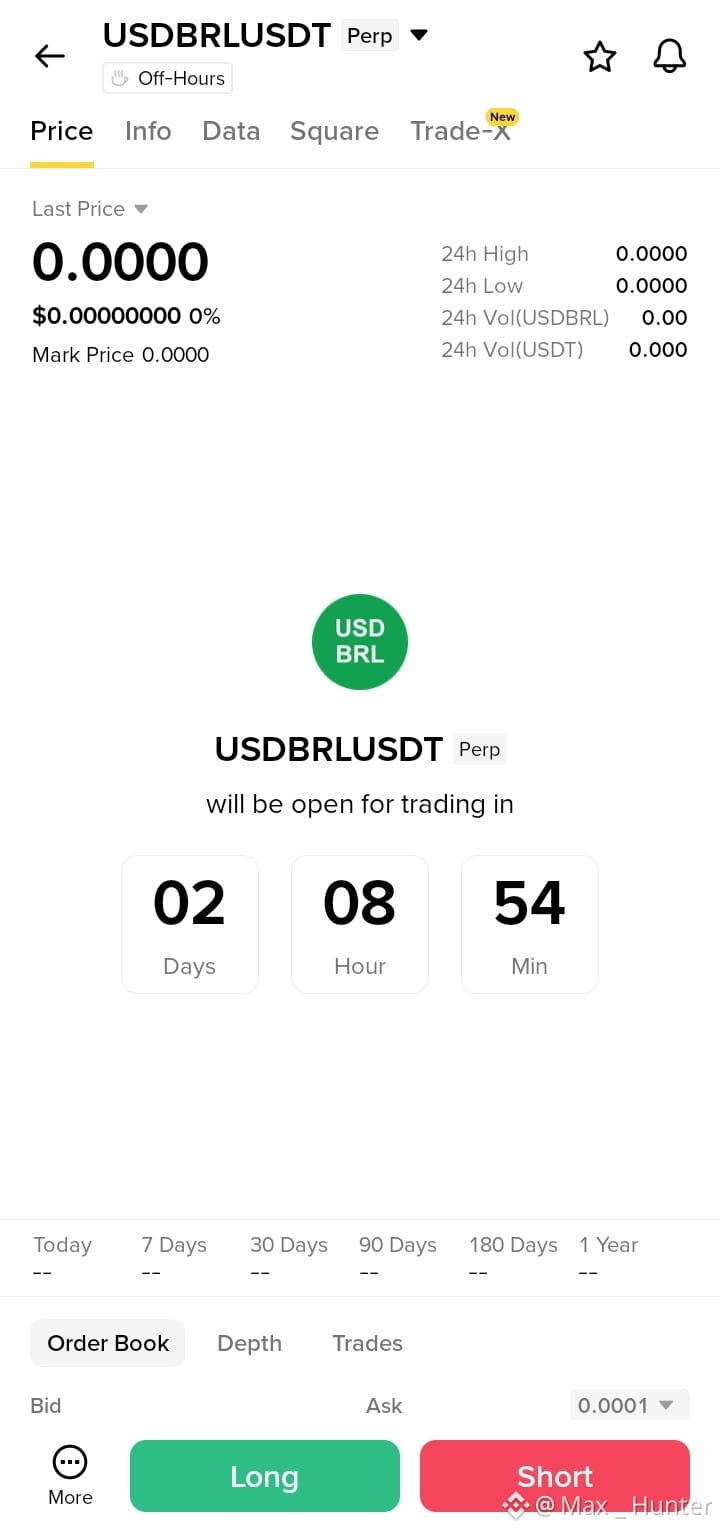
🚀 $USDBRL USDT /USDT Lanzamiento de Trading ⏳
📌 El Perpetual USDBRLUSDT estará abierto para trading pronto.
⏰ Cuenta atrás del Lanzamiento: 02 Días • 08 Horas • 54 Min
💰 Precio Actual: 0.0000
📊 Precio Marcado: 0.0000
📈 Máximo 24h: 0.0000
📉 Mínimo 24h: 0.0000
⚠️ Consejo de Trading: Espera a que el mercado abra y comience el descubrimiento de precios antes de tomar una posición. 📊
🚨 Riesgo: Dado que el contrato aún no ha comenzado a operar, no hay movimiento de precio en tiempo real ni una estructura de mercado establecida. Es esencial una gestión de riesgos estricta.
#BTCBreaks80K
#SOLJumpsAbout10%
#SECReceivesAmendedInjectiveETFFiling
#SanDiskToJoinSP100OnSep21
#TRMReportsYouTubeScamStole274.6ETH
🚀 $USDBRL USDT /USDT Lanzamiento de Trading ⏳
📌 El Perpetual USDBRLUSDT estará abierto para trading pronto.
⏰ Cuenta atrás del Lanzamiento: 02 Días • 08 Horas • 54 Min
💰 Precio Actual: 0.0000
📊 Precio Marcado: 0.0000
📈 Máximo 24h: 0.0000
📉 Mínimo 24h: 0.0000
⚠️ Consejo de Trading: Espera a que el mercado abra y comience el descubrimiento de precios antes de tomar una posición. 📊
🚨 Riesgo: Dado que el contrato aún no ha comenzado a operar, no hay movimiento de precio en tiempo real ni una estructura de mercado establecida. Es esencial una gestión de riesgos estricta.
#BTCBreaks80K
#SOLJumpsAbout10%
#SECReceivesAmendedInjectiveETFFiling
#SanDiskToJoinSP100OnSep21
#TRMReportsYouTubeScamStole274.6ETH
📌 El Perpetual USDBRLUSDT estará abierto para trading pronto.
⏰ Cuenta atrás del Lanzamiento: 02 Días • 08 Horas • 54 Min
💰 Precio Actual: 0.0000
📊 Precio Marcado: 0.0000
📈 Máximo 24h: 0.0000
📉 Mínimo 24h: 0.0000
⚠️ Consejo de Trading: Espera a que el mercado abra y comience el descubrimiento de precios antes de tomar una posición. 📊
🚨 Riesgo: Dado que el contrato aún no ha comenzado a operar, no hay movimiento de precio en tiempo real ni una estructura de mercado establecida. Es esencial una gestión de riesgos estricta.
#BTCBreaks80K
#SOLJumpsAbout10%
#SECReceivesAmendedInjectiveETFFiling
#SanDiskToJoinSP100OnSep21
#TRMReportsYouTubeScamStole274.6ETH
1.1k
·
--
🔥 #FedRateWatch | FOMC de septiembre: ¿Qué podría ser el próximo movimiento de la Fed?
La reunión del FOMC de septiembre se está convirtiendo en el foco principal de los mercados globales. Con el IPC subyacente de agosto aumentando 0.3% mes a mes y las expectativas de una subida de 25 pb en el tipo de interés reportadamente cerca del 90%, la próxima decisión de la Fed podría provocar una fuerte reacción en cripto, acciones y oro.
En mi opinión, la pregunta clave no es solo si la Fed sube las tasas, sino cómo el mercado interpreta su orientación después. Una subida de tasas combinada con un mensaje más restrictivo (“hawkish”) podría fortalecer el dólar y presionar los activos de riesgo. El BTC y las acciones tecnológicas podrían enfrentar presión vendedora a corto plazo, mientras que el oro también podría sufrir si los rendimientos suben.
Sin embargo, los mercados a menudo se mueven por expectativas antes de la decisión real. Si la subida ya está completamente descontada, el BTC y las acciones tecnológicas podrían potencialmente recuperarse si la Fed suena menos agresiva de lo esperado. El oro también podría encontrar soporte si los inversores comienzan a descontar futuros recortes de tasas.
Para el BTC, yo vigilaría la reacción después del anuncio en lugar de perseguir el primer movimiento. La oportunidad real podría surgir de la respuesta del mercado a la orientación de la Fed.
Hay algo seguro: la volatilidad podría mantenerse elevada y la gestión del riesgo será más importante que nunca.
¿Cuál es tu punto de vista: alcista o bajista para $BTC , las acciones tecnológicas y el oro?
{future}(LABUSDT)
#FOMC #Bitcoin #Crypto #Stocks
🔥 #FedRateWatch | FOMC de septiembre: ¿Qué podría ser el próximo movimiento de la Fed?
La reunión del FOMC de septiembre se está convirtiendo en el foco principal de los mercados globales. Con el IPC subyacente de agosto aumentando 0.3% mes a mes y las expectativas de una subida de 25 pb en el tipo de interés reportadamente cerca del 90%, la próxima decisión de la Fed podría provocar una fuerte reacción en cripto, acciones y oro.
En mi opinión, la pregunta clave no es solo si la Fed sube las tasas, sino cómo el mercado interpreta su orientación después. Una subida de tasas combinada con un mensaje más restrictivo (“hawkish”) podría fortalecer el dólar y presionar los activos de riesgo. El BTC y las acciones tecnológicas podrían enfrentar presión vendedora a corto plazo, mientras que el oro también podría sufrir si los rendimientos suben.
Sin embargo, los mercados a menudo se mueven por expectativas antes de la decisión real. Si la subida ya está completamente descontada, el BTC y las acciones tecnológicas podrían potencialmente recuperarse si la Fed suena menos agresiva de lo esperado. El oro también podría encontrar soporte si los inversores comienzan a descontar futuros recortes de tasas.
Para el BTC, yo vigilaría la reacción después del anuncio en lugar de perseguir el primer movimiento. La oportunidad real podría surgir de la respuesta del mercado a la orientación de la Fed.
Hay algo seguro: la volatilidad podría mantenerse elevada y la gestión del riesgo será más importante que nunca.
¿Cuál es tu punto de vista: alcista o bajista para $BTC , las acciones tecnológicas y el oro?
#FOMC #Bitcoin #Crypto #Stocks
La reunión del FOMC de septiembre se está convirtiendo en el foco principal de los mercados globales. Con el IPC subyacente de agosto aumentando 0.3% mes a mes y las expectativas de una subida de 25 pb en el tipo de interés reportadamente cerca del 90%, la próxima decisión de la Fed podría provocar una fuerte reacción en cripto, acciones y oro.
En mi opinión, la pregunta clave no es solo si la Fed sube las tasas, sino cómo el mercado interpreta su orientación después. Una subida de tasas combinada con un mensaje más restrictivo (“hawkish”) podría fortalecer el dólar y presionar los activos de riesgo. El BTC y las acciones tecnológicas podrían enfrentar presión vendedora a corto plazo, mientras que el oro también podría sufrir si los rendimientos suben.
Sin embargo, los mercados a menudo se mueven por expectativas antes de la decisión real. Si la subida ya está completamente descontada, el BTC y las acciones tecnológicas podrían potencialmente recuperarse si la Fed suena menos agresiva de lo esperado. El oro también podría encontrar soporte si los inversores comienzan a descontar futuros recortes de tasas.
Para el BTC, yo vigilaría la reacción después del anuncio en lugar de perseguir el primer movimiento. La oportunidad real podría surgir de la respuesta del mercado a la orientación de la Fed.
Hay algo seguro: la volatilidad podría mantenerse elevada y la gestión del riesgo será más importante que nunca.
¿Cuál es tu punto de vista: alcista o bajista para $BTC , las acciones tecnológicas y el oro?
#FOMC #Bitcoin #Crypto #Stocks

290
·
--
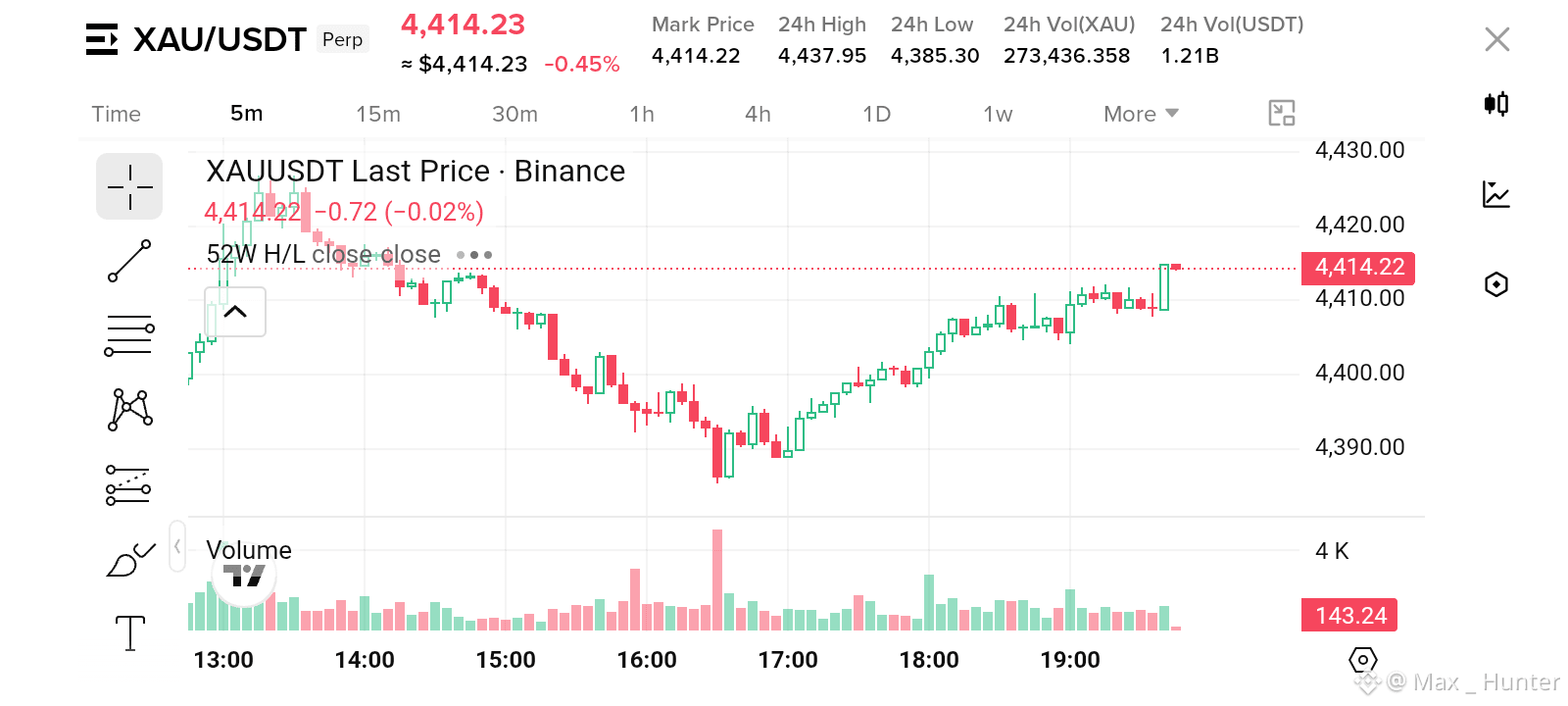
El rebote en forma de V de Gold desde el impulso de 4390 parece que los compradores de caídas se llevaron esta ronda.
$XAUT USDT — LARGO
Entrada: 4405.00 – 4414.00
SL: 4385.00
TP1: 4420.00
TP2: 4430.00
TP3: 4437.95
⚠️ Análisis de mercado personal únicamente. NFA — gestiona el riesgo y haz tu propia investigación (DYOR). Contenido educativo, no asesoramiento de inversión ni una recomendación para comprar, vender, depositar o retirar cualquier activo. Sin promoción pagada ni enlaces de referido/afiliados.
Estoy mirando el oro aquí porque después de tocar el mínimo de 24h cerca de 4385, el precio montó una recuperación en V rápida y casi ininterrumpida hasta 4414; ese tipo de recuperación rápida suele señalar compras agresivas de caídas más que un rebote de “gata muerta”. En el gráfico de 5m, el movimiento tras el “flush” de las 16:00 estuvo acompañado por un aumento de volumen, y desde entonces el precio ha venido subiendo en pequeñas velas controladas, en lugar de disparar y luego desvanecerse. El precio actual de 4414 está justo en la parte superior de este rango de recuperación, apenas por debajo de los niveles anteriores de la sesión. No estoy llamando a una ruptura limpia hacia nuevos máximos de inmediato; solo marco que la relación riesgo/recompensa aquí —con el SL por debajo del mínimo de 4385 y el TP2 cerca de 4430— favorece mantenerse en largo mientras el precio se mantenga por encima de la zona media de la recuperación, en vez de vender el rebote.
¿Crees que el oro puede superar 4420+ y recuperar los máximos, o necesita primero volver a testear la zona de 4400 antes del siguiente movimiento?
El rebote en forma de V de Gold desde el impulso de 4390 parece que los compradores de caídas se llevaron esta ronda.
$XAUT USDT — LARGO
Entrada: 4405.00 – 4414.00
SL: 4385.00
TP1: 4420.00
TP2: 4430.00
TP3: 4437.95
⚠️ Análisis de mercado personal únicamente. NFA — gestiona el riesgo y haz tu propia investigación (DYOR). Contenido educativo, no asesoramiento de inversión ni una recomendación para comprar, vender, depositar o retirar cualquier activo. Sin promoción pagada ni enlaces de referido/afiliados.
Estoy mirando el oro aquí porque después de tocar el mínimo de 24h cerca de 4385, el precio montó una recuperación en V rápida y casi ininterrumpida hasta 4414; ese tipo de recuperación rápida suele señalar compras agresivas de caídas más que un rebote de “gata muerta”. En el gráfico de 5m, el movimiento tras el “flush” de las 16:00 estuvo acompañado por un aumento de volumen, y desde entonces el precio ha venido subiendo en pequeñas velas controladas, en lugar de disparar y luego desvanecerse. El precio actual de 4414 está justo en la parte superior de este rango de recuperación, apenas por debajo de los niveles anteriores de la sesión. No estoy llamando a una ruptura limpia hacia nuevos máximos de inmediato; solo marco que la relación riesgo/recompensa aquí —con el SL por debajo del mínimo de 4385 y el TP2 cerca de 4430— favorece mantenerse en largo mientras el precio se mantenga por encima de la zona media de la recuperación, en vez de vender el rebote.
¿Crees que el oro puede superar 4420+ y recuperar los máximos, o necesita primero volver a testear la zona de 4400 antes del siguiente movimiento?
$XAUT USDT — LARGO
Entrada: 4405.00 – 4414.00
SL: 4385.00
TP1: 4420.00
TP2: 4430.00
TP3: 4437.95
⚠️ Análisis de mercado personal únicamente. NFA — gestiona el riesgo y haz tu propia investigación (DYOR). Contenido educativo, no asesoramiento de inversión ni una recomendación para comprar, vender, depositar o retirar cualquier activo. Sin promoción pagada ni enlaces de referido/afiliados.
Estoy mirando el oro aquí porque después de tocar el mínimo de 24h cerca de 4385, el precio montó una recuperación en V rápida y casi ininterrumpida hasta 4414; ese tipo de recuperación rápida suele señalar compras agresivas de caídas más que un rebote de “gata muerta”. En el gráfico de 5m, el movimiento tras el “flush” de las 16:00 estuvo acompañado por un aumento de volumen, y desde entonces el precio ha venido subiendo en pequeñas velas controladas, en lugar de disparar y luego desvanecerse. El precio actual de 4414 está justo en la parte superior de este rango de recuperación, apenas por debajo de los niveles anteriores de la sesión. No estoy llamando a una ruptura limpia hacia nuevos máximos de inmediato; solo marco que la relación riesgo/recompensa aquí —con el SL por debajo del mínimo de 4385 y el TP2 cerca de 4430— favorece mantenerse en largo mientras el precio se mantenga por encima de la zona media de la recuperación, en vez de vender el rebote.
¿Crees que el oro puede superar 4420+ y recuperar los máximos, o necesita primero volver a testear la zona de 4400 antes del siguiente movimiento?
1
387
·
--
$ZEC está mostrando un impulso alcista después de una liquidación corta de $1.7469K alrededor de $1069.07.
Los compradores siguen activos mientras los vendedores intentan estabilizar la zona de reacción actual.
EP
$1062–$1076
TP
TP1 $1090
TP2 $1115
TP3 $1145
SL
$1042
La liquidez sigue expuesta por encima de la estructura actual mientras los vendedores permanecen bajo presión.
A menos que el precio pierda la zona de reacción inferior, se mantiene favorable la continuación alcista hacia una liquidez más alta.
¡Vamos $ZEC 🟢
$ZEC está mostrando un impulso alcista después de una liquidación corta de $1.7469K alrededor de $1069.07.
Los compradores siguen activos mientras los vendedores intentan estabilizar la zona de reacción actual.
EP
$1062–$1076
TP
TP1 $1090
TP2 $1115
TP3 $1145
SL
$1042
La liquidez sigue expuesta por encima de la estructura actual mientras los vendedores permanecen bajo presión.
A menos que el precio pierda la zona de reacción inferior, se mantiene favorable la continuación alcista hacia una liquidez más alta.
¡Vamos $ZEC 🟢
Los compradores siguen activos mientras los vendedores intentan estabilizar la zona de reacción actual.
EP
$1062–$1076
TP
TP1 $1090
TP2 $1115
TP3 $1145
SL
$1042
La liquidez sigue expuesta por encima de la estructura actual mientras los vendedores permanecen bajo presión.
A menos que el precio pierda la zona de reacción inferior, se mantiene favorable la continuación alcista hacia una liquidez más alta.
¡Vamos $ZEC 🟢
257
·
--
$DEXE muestra un impulso bajista después de una liquidación larga de $4.9973K alrededor de $1.97222.
Los vendedores siguen activos mientras los compradores intentan estabilizar la zona de reacción actual.
EP
$1.955–$1.985
TP
TP1 $1.930
TP2 $1.890
TP3 $1.840
SL
$2.025
La liquidez sigue expuesta por debajo de la estructura actual mientras los compradores permanecen bajo presión.
A menos que el precio recupere la zona de reacción superior, se favorece la continuación bajista hacia una liquidez inferior.
Vamos $DEXE 🔻
$DEXE muestra un impulso bajista después de una liquidación larga de $4.9973K alrededor de $1.97222.
Los vendedores siguen activos mientras los compradores intentan estabilizar la zona de reacción actual.
EP
$1.955–$1.985
TP
TP1 $1.930
TP2 $1.890
TP3 $1.840
SL
$2.025
La liquidez sigue expuesta por debajo de la estructura actual mientras los compradores permanecen bajo presión.
A menos que el precio recupere la zona de reacción superior, se favorece la continuación bajista hacia una liquidez inferior.
Vamos $DEXE 🔻
Los vendedores siguen activos mientras los compradores intentan estabilizar la zona de reacción actual.
EP
$1.955–$1.985
TP
TP1 $1.930
TP2 $1.890
TP3 $1.840
SL
$2.025
La liquidez sigue expuesta por debajo de la estructura actual mientras los compradores permanecen bajo presión.
A menos que el precio recupere la zona de reacción superior, se favorece la continuación bajista hacia una liquidez inferior.
Vamos $DEXE 🔻
55
·
--
$NEAR muestra un impulso bajista tras una liquidación larga de $4.9662K alrededor de $2.182.
Los vendedores siguen activos mientras los compradores intentan estabilizar la zona de reacción actual.
EP
$2.165–$2.195
TP
TP1 $2.140
TP2 $2.100
TP3 $2.050
SL
$2.230
La liquidez sigue expuesta por debajo de la estructura actual mientras los compradores permanecen bajo presión.
A menos que el precio recupere la zona de reacción superior, se favorece una continuación bajista hacia una liquidez inferior.
Vamos $NEAR 🔻
$NEAR muestra un impulso bajista tras una liquidación larga de $4.9662K alrededor de $2.182.
Los vendedores siguen activos mientras los compradores intentan estabilizar la zona de reacción actual.
EP
$2.165–$2.195
TP
TP1 $2.140
TP2 $2.100
TP3 $2.050
SL
$2.230
La liquidez sigue expuesta por debajo de la estructura actual mientras los compradores permanecen bajo presión.
A menos que el precio recupere la zona de reacción superior, se favorece una continuación bajista hacia una liquidez inferior.
Vamos $NEAR 🔻
Los vendedores siguen activos mientras los compradores intentan estabilizar la zona de reacción actual.
EP
$2.165–$2.195
TP
TP1 $2.140
TP2 $2.100
TP3 $2.050
SL
$2.230
La liquidez sigue expuesta por debajo de la estructura actual mientras los compradores permanecen bajo presión.
A menos que el precio recupere la zona de reacción superior, se favorece una continuación bajista hacia una liquidez inferior.
Vamos $NEAR 🔻
53
Inicia sesión para explorar más contenidos
Únete a usuarios globales de criptomonedas en Binance Square
⚡️ Obtén información útil y actualizada sobre criptos.
💬 Avalado por el mayor exchange de criptomonedas en el mundo.
👍 Descubre perspectivas reales de creadores verificados.
Email/número de teléfono
Temas populares
BinancePick
3M vistas
152,117 están debatiendo
¡Únete a #TemporadaDeResultados: predice resultados en Binance Pick y comparte tu opinión en Binance Square!
Binance Square Official
·409 me gusta
·342.6k vistas
EarningsSeason
5.2M vistas
25,849 están debatiendo
AnthropicTTMRevenueGrewAbout1200%
23,009 vistas
356 están debatiendo