
CryptoFrontNews
17.5k Publicaciones

CryptoFrontNews
 Verificado Plus de Binance Square
Denunciar
Bloquear usuario
CryptoFrontNews (CFN) delivers the latest in cryptocurrency with real-time updates, expert analyses, and in-depth articles on digital currencies and blockchain.
4 Siguiendo
12.5K+ Seguidores
19.0K+ Me gusta
Publicaciones

Artículo
La perspectiva de Bitcoin apunta a una nueva fase de altseasonLa trayectoria proyectada de Bitcoin apunta a 200.000 dólares, mientras que el posicionamiento en derivados se mantiene elevado tras el reinicio de apalancamiento de julio.
Los ciclos históricos muestran que las ganancias de la altseason se amplían, y el tercer ciclo se proyecta en un 10.200% tras otra corrección.
El aumento del interés abierto y el volumen mantiene a los traders enfocados en el apalancamiento, la estructura del precio y la próxima posible rotación del mercado.
La perspectiva de Bitcoin se centra en una actividad más fuerte en derivados, una corrección proyectada y otra posible altseason a medida que el ciclo actual se desarrolla.
La perspectiva de Bitcoin apunta a una nueva fase de altseason
La trayectoria proyectada de Bitcoin apunta a 200.000 dólares, mientras que el posicionamiento en derivados se mantiene elevado tras el reinicio de apalancamiento de julio.
Los ciclos históricos muestran que las ganancias de la altseason se amplían, y el tercer ciclo se proyecta en un 10.200% tras otra corrección.
El aumento del interés abierto y el volumen mantiene a los traders enfocados en el apalancamiento, la estructura del precio y la próxima posible rotación del mercado.
La perspectiva de Bitcoin se centra en una actividad más fuerte en derivados, una corrección proyectada y otra posible altseason a medida que el ciclo actual se desarrolla.
Los ciclos históricos muestran que las ganancias de la altseason se amplían, y el tercer ciclo se proyecta en un 10.200% tras otra corrección.
El aumento del interés abierto y el volumen mantiene a los traders enfocados en el apalancamiento, la estructura del precio y la próxima posible rotación del mercado.
La perspectiva de Bitcoin se centra en una actividad más fuerte en derivados, una corrección proyectada y otra posible altseason a medida que el ciclo actual se desarrolla.
256

Artículo
Vitalik Buterin Vincula la Seguridad de la IA con Límites a la ColusiónVitalik Buterin vincula el diseño de gobernanza adversarial con la seguridad de la IA y con límites sobre la coordinación entre agentes de IA más fuertes.
Buterin dice que la descentralización, las votaciones secretas y las herramientas de privacidad pueden crear barreras contra la colusión dañina.
Cita el “forking” en blockchain, la participación en el juego y los incentivos para denuncian a quienes alertan como defensas contra ataques coordinados.
Vitalik Buterin afirma que el diseño de gobernanza adversarial podría ayudar a abordar la seguridad de la IA limitando la colusión entre agentes avanzados. En una publicación reciente, el cofundador de Ethereum comparó los sistemas de gobernanza con entornos de IA que involucran a agentes principales menos sofisticados y agentes más fuertes. Dijo que los límites a la coordinación de los agentes podrían mejorar los resultados en ambos contextos.
Vitalik Buterin Vincula la Seguridad de la IA con Límites a la Colusión
Vitalik Buterin vincula el diseño de gobernanza adversarial con la seguridad de la IA y con límites sobre la coordinación entre agentes de IA más fuertes.
Buterin dice que la descentralización, las votaciones secretas y las herramientas de privacidad pueden crear barreras contra la colusión dañina.
Cita el “forking” en blockchain, la participación en el juego y los incentivos para denuncian a quienes alertan como defensas contra ataques coordinados.
Vitalik Buterin afirma que el diseño de gobernanza adversarial podría ayudar a abordar la seguridad de la IA limitando la colusión entre agentes avanzados. En una publicación reciente, el cofundador de Ethereum comparó los sistemas de gobernanza con entornos de IA que involucran a agentes principales menos sofisticados y agentes más fuertes. Dijo que los límites a la coordinación de los agentes podrían mejorar los resultados en ambos contextos.
Buterin dice que la descentralización, las votaciones secretas y las herramientas de privacidad pueden crear barreras contra la colusión dañina.
Cita el “forking” en blockchain, la participación en el juego y los incentivos para denuncian a quienes alertan como defensas contra ataques coordinados.
Vitalik Buterin afirma que el diseño de gobernanza adversarial podría ayudar a abordar la seguridad de la IA limitando la colusión entre agentes avanzados. En una publicación reciente, el cofundador de Ethereum comparó los sistemas de gobernanza con entornos de IA que involucran a agentes principales menos sofisticados y agentes más fuertes. Dijo que los límites a la coordinación de los agentes podrían mejorar los resultados en ambos contextos.
33

Artículo
Los republicanos del Senado publican el borrador final de la Ley CLARITY antes de la votación del 15 de septiembreEl borrador final incluye 126 cambios sustantivos solicitados por los demócratas, incluidas nuevas exigencias de ética en materia de cripto para los funcionarios cubiertos.
Las recompensas en stablecoins podrían enfrentar restricciones temporales si los bancos comunitarios experimentan pérdidas sustanciales de depósitos bajo el proyecto de ley revisado.
Los republicanos tienen 53 escaños en el Senado, lo que exige el apoyo de al menos siete demócratas o independientes para invocar la clausura si todos los republicanos votan a favor.
Los republicanos del Senado publicaron el texto revisado de la Ley CLARITY el domingo 13 de septiembre, de cara a la votación de clausura del martes. La propuesta de 635 páginas incluye cambios a las normas de ética, las recompensas en stablecoins, las protecciones para desarrolladores y el comercio de commodities digitales. Los senadores Cynthia Lummis, John Boozman y Tim Scott describieron el borrador como su última oferta a los demócratas.
Los republicanos del Senado publican el borrador final de la Ley CLARITY antes de la votación del 15 de septiembre
El borrador final incluye 126 cambios sustantivos solicitados por los demócratas, incluidas nuevas exigencias de ética en materia de cripto para los funcionarios cubiertos.
Las recompensas en stablecoins podrían enfrentar restricciones temporales si los bancos comunitarios experimentan pérdidas sustanciales de depósitos bajo el proyecto de ley revisado.
Los republicanos tienen 53 escaños en el Senado, lo que exige el apoyo de al menos siete demócratas o independientes para invocar la clausura si todos los republicanos votan a favor.
Los republicanos del Senado publicaron el texto revisado de la Ley CLARITY el domingo 13 de septiembre, de cara a la votación de clausura del martes. La propuesta de 635 páginas incluye cambios a las normas de ética, las recompensas en stablecoins, las protecciones para desarrolladores y el comercio de commodities digitales. Los senadores Cynthia Lummis, John Boozman y Tim Scott describieron el borrador como su última oferta a los demócratas.
Las recompensas en stablecoins podrían enfrentar restricciones temporales si los bancos comunitarios experimentan pérdidas sustanciales de depósitos bajo el proyecto de ley revisado.
Los republicanos tienen 53 escaños en el Senado, lo que exige el apoyo de al menos siete demócratas o independientes para invocar la clausura si todos los republicanos votan a favor.
Los republicanos del Senado publicaron el texto revisado de la Ley CLARITY el domingo 13 de septiembre, de cara a la votación de clausura del martes. La propuesta de 635 páginas incluye cambios a las normas de ética, las recompensas en stablecoins, las protecciones para desarrolladores y el comercio de commodities digitales. Los senadores Cynthia Lummis, John Boozman y Tim Scott describieron el borrador como su última oferta a los demócratas.
152
Artículo
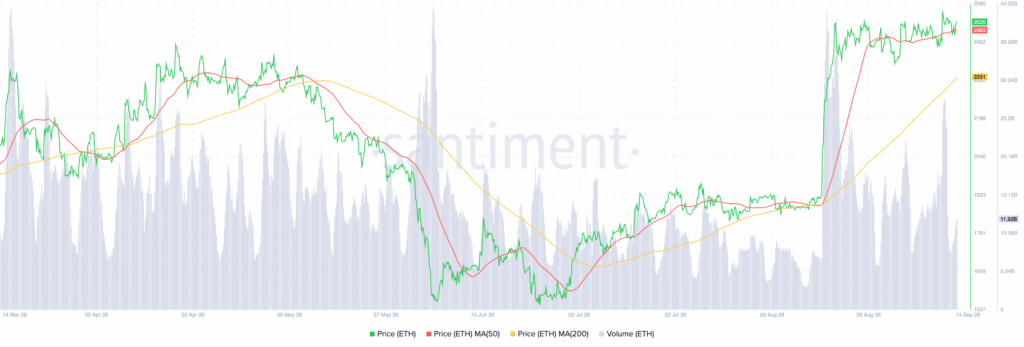
Analistas Apuntan a un Objetivo de $3.000 para Ethereum mientras ETH Gana 60% en el Q3Ethereum ganó 60,62% en el Q3, recuperándose de $1.530-$1.550 hasta alrededor de $2.520 después de una fuerte subida a finales de agosto.
Ali Charts ve un posible objetivo de $3.000 si ETH rompe su triángulo en desarrollo, en consonancia con una ruptura previa del 31%.
ETH se mantiene por encima de sus promedios de 50 y 200 días, mientras que el soporte de $2.460-$2.493 y la resistencia de $2.585 marcan la perspectiva.
Ethereum ha ganado 60,62% en el Q3 de 2026, recuperándose de pérdidas anteriores y cotizando cerca de $2.500. Los analistas Ali Charts, Crypto Patel y Michael van de Poppe han destacado una nueva fortaleza en ETH. Su análisis apunta a un posible movimiento hacia $3.000, con niveles de soporte y un triángulo en desarrollo que están dando forma a su perspectiva.
Analistas Apuntan a un Objetivo de $3.000 para Ethereum mientras ETH Gana 60% en el Q3
Ethereum ganó 60,62% en el Q3, recuperándose de $1.530-$1.550 hasta alrededor de $2.520 después de una fuerte subida a finales de agosto.
Ali Charts ve un posible objetivo de $3.000 si ETH rompe su triángulo en desarrollo, en consonancia con una ruptura previa del 31%.
ETH se mantiene por encima de sus promedios de 50 y 200 días, mientras que el soporte de $2.460-$2.493 y la resistencia de $2.585 marcan la perspectiva.
Ethereum ha ganado 60,62% en el Q3 de 2026, recuperándose de pérdidas anteriores y cotizando cerca de $2.500. Los analistas Ali Charts, Crypto Patel y Michael van de Poppe han destacado una nueva fortaleza en ETH. Su análisis apunta a un posible movimiento hacia $3.000, con niveles de soporte y un triángulo en desarrollo que están dando forma a su perspectiva.
Ali Charts ve un posible objetivo de $3.000 si ETH rompe su triángulo en desarrollo, en consonancia con una ruptura previa del 31%.
ETH se mantiene por encima de sus promedios de 50 y 200 días, mientras que el soporte de $2.460-$2.493 y la resistencia de $2.585 marcan la perspectiva.
Ethereum ha ganado 60,62% en el Q3 de 2026, recuperándose de pérdidas anteriores y cotizando cerca de $2.500. Los analistas Ali Charts, Crypto Patel y Michael van de Poppe han destacado una nueva fortaleza en ETH. Su análisis apunta a un posible movimiento hacia $3.000, con niveles de soporte y un triángulo en desarrollo que están dando forma a su perspectiva.
62

Artículo
El apalancamiento en altcoins aumenta mientras las entradas a exchanges alcanzan nuevos máximosEl interés abierto en altcoins, excluyendo Ethereum, sigue por encima del de Bitcoin, y Ted advierte que un apalancamiento elevado podría provocar liquidaciones generalizadas.
Las transacciones acumuladas de entrada de altcoins a siete días han alcanzado uno de sus niveles más altos en meses, señalando un aumento de la actividad en los exchanges.
El mercado de mediana y pequeña capitalización se mantiene cerca de los 203 mil millones de dólares, con una resistencia de 205 mil millones de dólares y un soporte de 200 mil millones de dólares que marcan el siguiente movimiento.
Los mercados de altcoins enfrentan una presión renovada de venta, ya que el apalancamiento sigue elevado y más tokens se trasladan a los exchanges. El analista Ted dijo que el interés abierto de altcoins, excluyendo Ethereum, aún supera el interés abierto de Bitcoin. Mientras tanto, el analista Maartunn informó que las transacciones acumuladas de entradas a siete días alcanzaron uno de sus niveles más altos en meses.
El apalancamiento en altcoins aumenta mientras las entradas a exchanges alcanzan nuevos máximos
El interés abierto en altcoins, excluyendo Ethereum, sigue por encima del de Bitcoin, y Ted advierte que un apalancamiento elevado podría provocar liquidaciones generalizadas.
Las transacciones acumuladas de entrada de altcoins a siete días han alcanzado uno de sus niveles más altos en meses, señalando un aumento de la actividad en los exchanges.
El mercado de mediana y pequeña capitalización se mantiene cerca de los 203 mil millones de dólares, con una resistencia de 205 mil millones de dólares y un soporte de 200 mil millones de dólares que marcan el siguiente movimiento.
Los mercados de altcoins enfrentan una presión renovada de venta, ya que el apalancamiento sigue elevado y más tokens se trasladan a los exchanges. El analista Ted dijo que el interés abierto de altcoins, excluyendo Ethereum, aún supera el interés abierto de Bitcoin. Mientras tanto, el analista Maartunn informó que las transacciones acumuladas de entradas a siete días alcanzaron uno de sus niveles más altos en meses.
Las transacciones acumuladas de entrada de altcoins a siete días han alcanzado uno de sus niveles más altos en meses, señalando un aumento de la actividad en los exchanges.
El mercado de mediana y pequeña capitalización se mantiene cerca de los 203 mil millones de dólares, con una resistencia de 205 mil millones de dólares y un soporte de 200 mil millones de dólares que marcan el siguiente movimiento.
Los mercados de altcoins enfrentan una presión renovada de venta, ya que el apalancamiento sigue elevado y más tokens se trasladan a los exchanges. El analista Ted dijo que el interés abierto de altcoins, excluyendo Ethereum, aún supera el interés abierto de Bitcoin. Mientras tanto, el analista Maartunn informó que las transacciones acumuladas de entradas a siete días alcanzaron uno de sus niveles más altos en meses.
46

Artículo
Analista Fija Objetivo de $88K para Bitcoin Tras Ruptura de la MA50 SemanalEl doctor Profit dice que Bitcoin debe recuperar la MA50 semanal y romper $82,500-$83,000 para abrir el camino hacia $88,000.
El analista mantiene $71,000 como su referencia de soporte más fuerte, mientras que $78,500 sigue sin confirmarse como soporte.
La decisión del 16 de septiembre de la Fed y la votación de la Ley CLARITY del 15 de septiembre aportan catalizadores clave a medida que Bitcoin cotiza por debajo de $80,000.
La perspectiva de recuperación de Bitcoin sigue ligada a una resistencia cercana al promedio móvil semanal de 50 días, según el doctor Profit. El analista espera que Bitcoin apunte a $88,000 después de recuperar ese indicador y romper la región de $82,500–$83,000. Sin embargo, también mantiene $71,000 como un posible nivel de soporte antes de la decisión del 16 de septiembre de la Reserva Federal.
Analista Fija Objetivo de $88K para Bitcoin Tras Ruptura de la MA50 Semanal
El doctor Profit dice que Bitcoin debe recuperar la MA50 semanal y romper $82,500-$83,000 para abrir el camino hacia $88,000.
El analista mantiene $71,000 como su referencia de soporte más fuerte, mientras que $78,500 sigue sin confirmarse como soporte.
La decisión del 16 de septiembre de la Fed y la votación de la Ley CLARITY del 15 de septiembre aportan catalizadores clave a medida que Bitcoin cotiza por debajo de $80,000.
La perspectiva de recuperación de Bitcoin sigue ligada a una resistencia cercana al promedio móvil semanal de 50 días, según el doctor Profit. El analista espera que Bitcoin apunte a $88,000 después de recuperar ese indicador y romper la región de $82,500–$83,000. Sin embargo, también mantiene $71,000 como un posible nivel de soporte antes de la decisión del 16 de septiembre de la Reserva Federal.
El analista mantiene $71,000 como su referencia de soporte más fuerte, mientras que $78,500 sigue sin confirmarse como soporte.
La decisión del 16 de septiembre de la Fed y la votación de la Ley CLARITY del 15 de septiembre aportan catalizadores clave a medida que Bitcoin cotiza por debajo de $80,000.
La perspectiva de recuperación de Bitcoin sigue ligada a una resistencia cercana al promedio móvil semanal de 50 días, según el doctor Profit. El analista espera que Bitcoin apunte a $88,000 después de recuperar ese indicador y romper la región de $82,500–$83,000. Sin embargo, también mantiene $71,000 como un posible nivel de soporte antes de la decisión del 16 de septiembre de la Reserva Federal.
122
Artículo
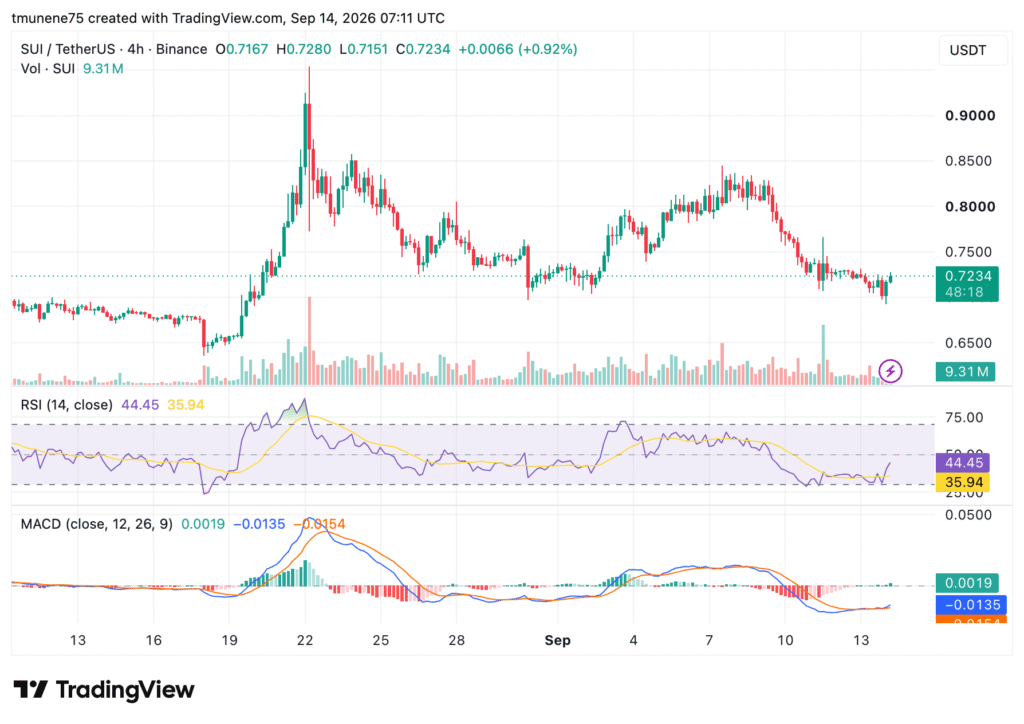
Analistas observan el objetivo de $1 para SUI mientras el precio prueba el soporte clave de $0.70Analista dice que el TD Sequential de 12 horas de SUI ha mostrado una señal de compra nueva mientras el precio prueba la zona de soporte de $0.70-$0.72.
SUI debe recuperar $0.75 y luego $0.78-$0.85, mientras Michael van de Poppe ve un regreso a $0.85 como clave para $1.
El RSI y el MACD muestran una mejora inicial, pero perder $0.70 podría exponer a SUI a $0.64 y $0.60.
SUI cotiza cerca de $0.72 después de retroceder desde $0.85, mientras los analistas vigilan el soporte alrededor de $0.70. Ali Charts informó una señal de compra nueva del indicador TD Sequential. Mientras tanto, Michael van de Poppe e Investor Jordan identificaron niveles de precio diferentes que podrían marcar el siguiente movimiento de SUI.
Analistas observan el objetivo de $1 para SUI mientras el precio prueba el soporte clave de $0.70
Analista dice que el TD Sequential de 12 horas de SUI ha mostrado una señal de compra nueva mientras el precio prueba la zona de soporte de $0.70-$0.72.
SUI debe recuperar $0.75 y luego $0.78-$0.85, mientras Michael van de Poppe ve un regreso a $0.85 como clave para $1.
El RSI y el MACD muestran una mejora inicial, pero perder $0.70 podría exponer a SUI a $0.64 y $0.60.
SUI cotiza cerca de $0.72 después de retroceder desde $0.85, mientras los analistas vigilan el soporte alrededor de $0.70. Ali Charts informó una señal de compra nueva del indicador TD Sequential. Mientras tanto, Michael van de Poppe e Investor Jordan identificaron niveles de precio diferentes que podrían marcar el siguiente movimiento de SUI.
SUI debe recuperar $0.75 y luego $0.78-$0.85, mientras Michael van de Poppe ve un regreso a $0.85 como clave para $1.
El RSI y el MACD muestran una mejora inicial, pero perder $0.70 podría exponer a SUI a $0.64 y $0.60.
SUI cotiza cerca de $0.72 después de retroceder desde $0.85, mientras los analistas vigilan el soporte alrededor de $0.70. Ali Charts informó una señal de compra nueva del indicador TD Sequential. Mientras tanto, Michael van de Poppe e Investor Jordan identificaron niveles de precio diferentes que podrían marcar el siguiente movimiento de SUI.
240
Artículo
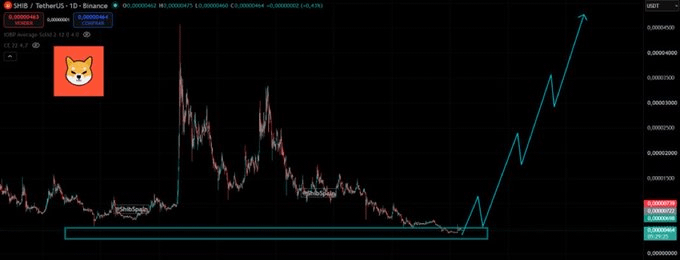
El precio de SHIB rebota mientras los compradores defienden un soporte claveEl precio de SHIB se recupera tras una debilidad inicial, con compradores defendiendo niveles más altos durante la sesión más reciente y restaurando el impulso alcista.
El aumento del volumen de operaciones acompaña el rebote, mientras que el soporte cerca de $0.0000052 sigue siendo central para la estructura de la recuperación de precios más reciente.
El gráfico muestra una posible base en formación, mientras que la fortaleza sostenida requiere continuar defendiendo ahora la zona de soporte resaltada.
El precio de SHIB se está recuperando después de una debilidad prolongada, y el último gráfico muestra una demanda más fuerte, aumento de la actividad y una base en desarrollo cerca de un soporte clave, mientras los compradores defienden estos niveles elevados.
El precio de SHIB rebota mientras los compradores defienden un soporte clave
El precio de SHIB se recupera tras una debilidad inicial, con compradores defendiendo niveles más altos durante la sesión más reciente y restaurando el impulso alcista.
El aumento del volumen de operaciones acompaña el rebote, mientras que el soporte cerca de $0.0000052 sigue siendo central para la estructura de la recuperación de precios más reciente.
El gráfico muestra una posible base en formación, mientras que la fortaleza sostenida requiere continuar defendiendo ahora la zona de soporte resaltada.
El precio de SHIB se está recuperando después de una debilidad prolongada, y el último gráfico muestra una demanda más fuerte, aumento de la actividad y una base en desarrollo cerca de un soporte clave, mientras los compradores defienden estos niveles elevados.
El aumento del volumen de operaciones acompaña el rebote, mientras que el soporte cerca de $0.0000052 sigue siendo central para la estructura de la recuperación de precios más reciente.
El gráfico muestra una posible base en formación, mientras que la fortaleza sostenida requiere continuar defendiendo ahora la zona de soporte resaltada.
El precio de SHIB se está recuperando después de una debilidad prolongada, y el último gráfico muestra una demanda más fuerte, aumento de la actividad y una base en desarrollo cerca de un soporte clave, mientras los compradores defienden estos niveles elevados.
192

Artículo
La SEC de Tailandia propone un límite diario de $151K para transferencias de stablecoinsLa SEC de Tailandia propone un límite de transferencia diario de 5 millones de baht en stablecoins por cliente y por operador regulado, con comprobaciones de propiedad de la billetera.
Los depósitos y retiros de stablecoins tendrían que realizarse mediante cuentas o billeteras de propiedad del cliente que cumplan con los requisitos de la Regla de Viaje.
La SEC también propone normas más estrictas para operaciones fuera de la plataforma, proveedores de liquidez, bolsas de origen y divulgaciones de corredores.
La SEC de Tailandia ha propuesto normas sobre transferencias de stablecoins en Tailandia, incluido un límite diario de 5 millones de baht. Las normas exigirían a los operadores regulados enviar depósitos y retiros a través de cuentas o billeteras de propiedad del cliente. La SEC abrió un período de comentarios públicos en septiembre de 2026 para abordar incumplimientos de reglas contra el lavado de dinero, ciberdelincuencia y transferencias transfronterizas.
La SEC de Tailandia propone un límite diario de $151K para transferencias de stablecoins
La SEC de Tailandia propone un límite de transferencia diario de 5 millones de baht en stablecoins por cliente y por operador regulado, con comprobaciones de propiedad de la billetera.
Los depósitos y retiros de stablecoins tendrían que realizarse mediante cuentas o billeteras de propiedad del cliente que cumplan con los requisitos de la Regla de Viaje.
La SEC también propone normas más estrictas para operaciones fuera de la plataforma, proveedores de liquidez, bolsas de origen y divulgaciones de corredores.
La SEC de Tailandia ha propuesto normas sobre transferencias de stablecoins en Tailandia, incluido un límite diario de 5 millones de baht. Las normas exigirían a los operadores regulados enviar depósitos y retiros a través de cuentas o billeteras de propiedad del cliente. La SEC abrió un período de comentarios públicos en septiembre de 2026 para abordar incumplimientos de reglas contra el lavado de dinero, ciberdelincuencia y transferencias transfronterizas.
Los depósitos y retiros de stablecoins tendrían que realizarse mediante cuentas o billeteras de propiedad del cliente que cumplan con los requisitos de la Regla de Viaje.
La SEC también propone normas más estrictas para operaciones fuera de la plataforma, proveedores de liquidez, bolsas de origen y divulgaciones de corredores.
La SEC de Tailandia ha propuesto normas sobre transferencias de stablecoins en Tailandia, incluido un límite diario de 5 millones de baht. Las normas exigirían a los operadores regulados enviar depósitos y retiros a través de cuentas o billeteras de propiedad del cliente. La SEC abrió un período de comentarios públicos en septiembre de 2026 para abordar incumplimientos de reglas contra el lavado de dinero, ciberdelincuencia y transferencias transfronterizas.
40
Artículo
Analistas Siguen un Breakout de XRP en $1.55 ya que la Venta de Ballenas Impulsa una Caída del 20%Las ballenas vendieron o redistribuyeron alrededor de 90M de XRP, mientras que las direcciones activas diarias cayeron con fuerza durante la corrección reciente.
XRP se mantiene cerca de $1.35, con $1.30-$1.39 como soporte clave y se necesita $1.38-$1.39 para fortalecer una recuperación.
Un cierre semanal por encima de $1.55 podría apuntar a $2 y $3.66, mientras que si no logra recuperarlo podría exponer $0.70-$0.95.
XRP ha caído 20% en tres semanas, pasando de $1.70 a $1.35, ya que la distribución de ballenas y una actividad de red más débil pesan sobre el token. Los analistas Ali Charts y Crypto Patel identificaron niveles de precio importantes para el siguiente movimiento de XRP. Mientras tanto, los datos técnicos muestran soporte entre $1.30 y $1.39.
Analistas Siguen un Breakout de XRP en $1.55 ya que la Venta de Ballenas Impulsa una Caída del 20%
Las ballenas vendieron o redistribuyeron alrededor de 90M de XRP, mientras que las direcciones activas diarias cayeron con fuerza durante la corrección reciente.
XRP se mantiene cerca de $1.35, con $1.30-$1.39 como soporte clave y se necesita $1.38-$1.39 para fortalecer una recuperación.
Un cierre semanal por encima de $1.55 podría apuntar a $2 y $3.66, mientras que si no logra recuperarlo podría exponer $0.70-$0.95.
XRP ha caído 20% en tres semanas, pasando de $1.70 a $1.35, ya que la distribución de ballenas y una actividad de red más débil pesan sobre el token. Los analistas Ali Charts y Crypto Patel identificaron niveles de precio importantes para el siguiente movimiento de XRP. Mientras tanto, los datos técnicos muestran soporte entre $1.30 y $1.39.
XRP se mantiene cerca de $1.35, con $1.30-$1.39 como soporte clave y se necesita $1.38-$1.39 para fortalecer una recuperación.
Un cierre semanal por encima de $1.55 podría apuntar a $2 y $3.66, mientras que si no logra recuperarlo podría exponer $0.70-$0.95.
XRP ha caído 20% en tres semanas, pasando de $1.70 a $1.35, ya que la distribución de ballenas y una actividad de red más débil pesan sobre el token. Los analistas Ali Charts y Crypto Patel identificaron niveles de precio importantes para el siguiente movimiento de XRP. Mientras tanto, los datos técnicos muestran soporte entre $1.30 y $1.39.
1
171
Artículo
Analistas Vigilan la Resistencia de $110 mientras Solana se Desliza Hacia el Soporte Clave de $99Crypto Patel ve $110-$115 como una resistencia clave, con un rompimiento confirmado que podría apuntar a $140, $200 y un nuevo ATH.
Ella identifica $98.5-$100 como soporte, mientras que la aceptación por encima de $106 podría abrir $109-$110.5.
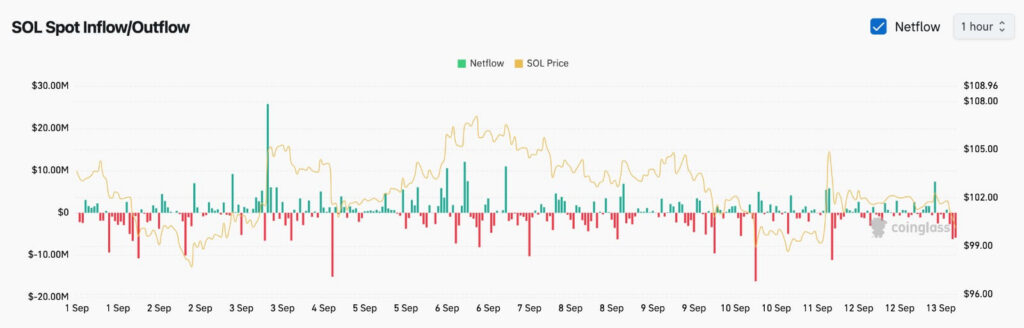
Los flujos mixtos en el spot mantienen incierta la dirección de SOL; una ruptura por debajo de $99 podría exponer $96 y niveles inferiores.
Solana enfrenta resistencia cerca de $110 después de no lograr mantener su último movimiento hacia $105–$106. Los analistas Crypto Patel y Ella, socia de LBank, indicaron niveles clave para ambos escenarios. Mientras tanto, los datos de flujos en spot del 1 al 13 de septiembre mostraron una actividad mixta, ya que SOL cayó hacia $99–$100.
Analistas Vigilan la Resistencia de $110 mientras Solana se Desliza Hacia el Soporte Clave de $99
Crypto Patel ve $110-$115 como una resistencia clave, con un rompimiento confirmado que podría apuntar a $140, $200 y un nuevo ATH.
Ella identifica $98.5-$100 como soporte, mientras que la aceptación por encima de $106 podría abrir $109-$110.5.
Los flujos mixtos en el spot mantienen incierta la dirección de SOL; una ruptura por debajo de $99 podría exponer $96 y niveles inferiores.
Solana enfrenta resistencia cerca de $110 después de no lograr mantener su último movimiento hacia $105–$106. Los analistas Crypto Patel y Ella, socia de LBank, indicaron niveles clave para ambos escenarios. Mientras tanto, los datos de flujos en spot del 1 al 13 de septiembre mostraron una actividad mixta, ya que SOL cayó hacia $99–$100.
Ella identifica $98.5-$100 como soporte, mientras que la aceptación por encima de $106 podría abrir $109-$110.5.
Los flujos mixtos en el spot mantienen incierta la dirección de SOL; una ruptura por debajo de $99 podría exponer $96 y niveles inferiores.
Solana enfrenta resistencia cerca de $110 después de no lograr mantener su último movimiento hacia $105–$106. Los analistas Crypto Patel y Ella, socia de LBank, indicaron niveles clave para ambos escenarios. Mientras tanto, los datos de flujos en spot del 1 al 13 de septiembre mostraron una actividad mixta, ya que SOL cayó hacia $99–$100.
128

Artículo
El analista señala los 71.200 dólares de Bitcoin como la próxima gran zona de compraAli Charts identifica los 71.200 dólares como una posible zona de acumulación en función de la base de costo de los tenedores de Bitcoin a corto plazo.
BTC se mantiene alrededor de los 77.000 dólares, con soporte en 76.500–77.000 y resistencia en 77.500–78.000 que definen el rango de corto plazo.
El RSI y el MACD se mantienen en territorio bajista, mientras que una ruptura por debajo de 76.500 podría exponer 76.000 y niveles de soporte inferiores.
La próxima zona de compra de Bitcoin podría situarse cerca de los 71.200 dólares, según el analista Ali Charts, quien identificó ese nivel como un posible área de acumulación. Su visión llega después del retroceso de Bitcoin desde casi 80.000 dólares hacia 77.000 dólares, mientras que los datos del mercado muestran un impulso bajista a corto plazo y un soporte alrededor de 76.500–77.000 dólares.
El analista señala los 71.200 dólares de Bitcoin como la próxima gran zona de compra
Ali Charts identifica los 71.200 dólares como una posible zona de acumulación en función de la base de costo de los tenedores de Bitcoin a corto plazo.
BTC se mantiene alrededor de los 77.000 dólares, con soporte en 76.500–77.000 y resistencia en 77.500–78.000 que definen el rango de corto plazo.
El RSI y el MACD se mantienen en territorio bajista, mientras que una ruptura por debajo de 76.500 podría exponer 76.000 y niveles de soporte inferiores.
La próxima zona de compra de Bitcoin podría situarse cerca de los 71.200 dólares, según el analista Ali Charts, quien identificó ese nivel como un posible área de acumulación. Su visión llega después del retroceso de Bitcoin desde casi 80.000 dólares hacia 77.000 dólares, mientras que los datos del mercado muestran un impulso bajista a corto plazo y un soporte alrededor de 76.500–77.000 dólares.
BTC se mantiene alrededor de los 77.000 dólares, con soporte en 76.500–77.000 y resistencia en 77.500–78.000 que definen el rango de corto plazo.
El RSI y el MACD se mantienen en territorio bajista, mientras que una ruptura por debajo de 76.500 podría exponer 76.000 y niveles de soporte inferiores.
La próxima zona de compra de Bitcoin podría situarse cerca de los 71.200 dólares, según el analista Ali Charts, quien identificó ese nivel como un posible área de acumulación. Su visión llega después del retroceso de Bitcoin desde casi 80.000 dólares hacia 77.000 dólares, mientras que los datos del mercado muestran un impulso bajista a corto plazo y un soporte alrededor de 76.500–77.000 dólares.
154

Artículo
La Ley CLARITY se somete a una votación el 15 de septiembre mientras persiste el apoyo bipartidista difícil de lograrEl proyecto de ley necesita 60 votos para avanzar, pero ningún senador demócrata lo ha respaldado públicamente antes de la votación del 15 de septiembre.
El proyecto de ley revisado, de 630 páginas, incluye 114 disposiciones solicitadas por los demócratas, pero las normas de ética en disputa siguen en gran medida sin cambios.
Polymarket y Kalshi sitúan las probabilidades de aprobación del proyecto de ley a finales de año cerca del 20%, dejando incierto su futuro legislativo.
El Senado de Estados Unidos realizará una votación procedimental sobre la Ley CLARITY el 15 de septiembre, mientras el asesor de la Casa Blanca, Patrick Witt, y el secretario del Tesoro, Scott Bessent, instan al apoyo bipartidista. El proyecto de ley necesita 60 votos para avanzar, pero ningún senador demócrata lo ha respaldado públicamente. Su versión más reciente incluye 114 enmiendas solicitadas por los demócratas, mientras que las normas de ética siguen en disputa.
La Ley CLARITY se somete a una votación el 15 de septiembre mientras persiste el apoyo bipartidista difícil de lograr
El proyecto de ley necesita 60 votos para avanzar, pero ningún senador demócrata lo ha respaldado públicamente antes de la votación del 15 de septiembre.
El proyecto de ley revisado, de 630 páginas, incluye 114 disposiciones solicitadas por los demócratas, pero las normas de ética en disputa siguen en gran medida sin cambios.
Polymarket y Kalshi sitúan las probabilidades de aprobación del proyecto de ley a finales de año cerca del 20%, dejando incierto su futuro legislativo.
El Senado de Estados Unidos realizará una votación procedimental sobre la Ley CLARITY el 15 de septiembre, mientras el asesor de la Casa Blanca, Patrick Witt, y el secretario del Tesoro, Scott Bessent, instan al apoyo bipartidista. El proyecto de ley necesita 60 votos para avanzar, pero ningún senador demócrata lo ha respaldado públicamente. Su versión más reciente incluye 114 enmiendas solicitadas por los demócratas, mientras que las normas de ética siguen en disputa.
El proyecto de ley revisado, de 630 páginas, incluye 114 disposiciones solicitadas por los demócratas, pero las normas de ética en disputa siguen en gran medida sin cambios.
Polymarket y Kalshi sitúan las probabilidades de aprobación del proyecto de ley a finales de año cerca del 20%, dejando incierto su futuro legislativo.
El Senado de Estados Unidos realizará una votación procedimental sobre la Ley CLARITY el 15 de septiembre, mientras el asesor de la Casa Blanca, Patrick Witt, y el secretario del Tesoro, Scott Bessent, instan al apoyo bipartidista. El proyecto de ley necesita 60 votos para avanzar, pero ningún senador demócrata lo ha respaldado públicamente. Su versión más reciente incluye 114 enmiendas solicitadas por los demócratas, mientras que las normas de ética siguen en disputa.
179
Artículo
Las ballenas de Chainlink acumulan 120M de dólares mientras LINK prueba el soporteLas ballenas acumularon 10.36M de LINK por un valor de alrededor de 120M de dólares después de una corrección del 17% de 13.68 a 11.29.
LINK se mantiene cerca de 11.50, con 11.40-11.50 como soporte inmediato y un RSI y un impulso del MACD bajistas.
Michael van de Poppe ve 10 como una zona potencial de compra, mientras que un movimiento por encima de 11.80 podría apuntar a 15.
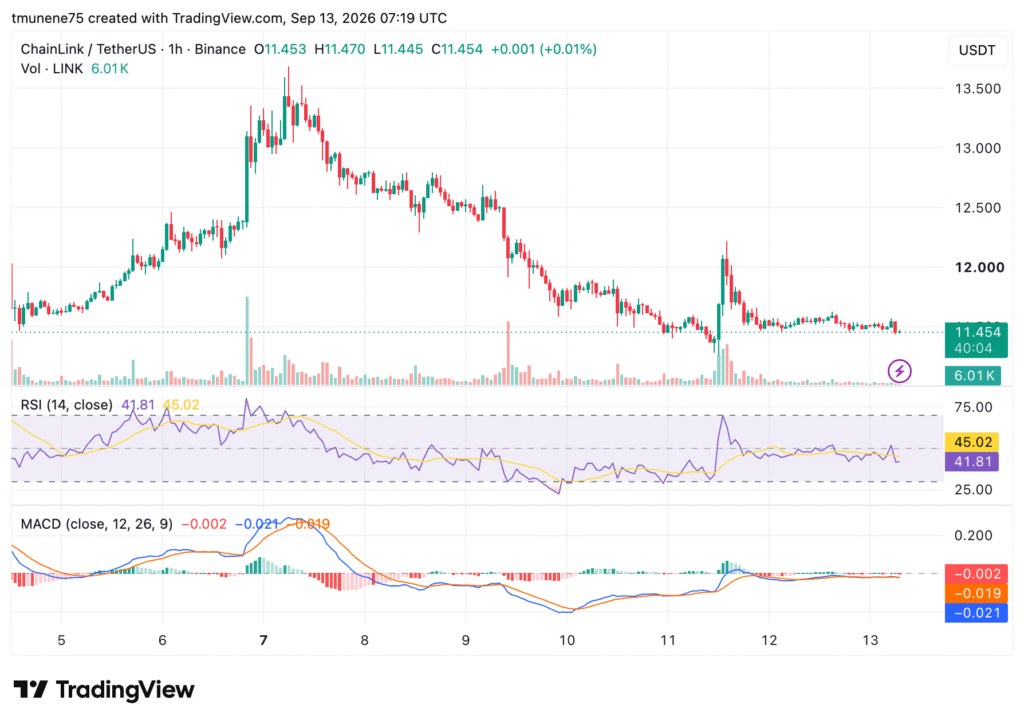
Las ballenas de Chainlink acumularon aproximadamente 10.36 millones de LINK con un valor de alrededor de 120 millones de dólares después de que el token cayera un 17% de 13.68 a 11.29. El analista Ali Charts reportó la compra durante 96 horas, mientras que Michael van de Poppe señaló posibles niveles de entrada cerca de 10 y por encima de 11.80. LINK se mantiene en un rango de consolidación estrecho.
Las ballenas de Chainlink acumulan 120M de dólares mientras LINK prueba el soporte
Las ballenas acumularon 10.36M de LINK por un valor de alrededor de 120M de dólares después de una corrección del 17% de 13.68 a 11.29.
LINK se mantiene cerca de 11.50, con 11.40-11.50 como soporte inmediato y un RSI y un impulso del MACD bajistas.
Michael van de Poppe ve 10 como una zona potencial de compra, mientras que un movimiento por encima de 11.80 podría apuntar a 15.
Las ballenas de Chainlink acumularon aproximadamente 10.36 millones de LINK con un valor de alrededor de 120 millones de dólares después de que el token cayera un 17% de 13.68 a 11.29. El analista Ali Charts reportó la compra durante 96 horas, mientras que Michael van de Poppe señaló posibles niveles de entrada cerca de 10 y por encima de 11.80. LINK se mantiene en un rango de consolidación estrecho.
LINK se mantiene cerca de 11.50, con 11.40-11.50 como soporte inmediato y un RSI y un impulso del MACD bajistas.
Michael van de Poppe ve 10 como una zona potencial de compra, mientras que un movimiento por encima de 11.80 podría apuntar a 15.
Las ballenas de Chainlink acumularon aproximadamente 10.36 millones de LINK con un valor de alrededor de 120 millones de dólares después de que el token cayera un 17% de 13.68 a 11.29. El analista Ali Charts reportó la compra durante 96 horas, mientras que Michael van de Poppe señaló posibles niveles de entrada cerca de 10 y por encima de 11.80. LINK se mantiene en un rango de consolidación estrecho.
290
Artículo
La actividad del mercado de XRP enfrenta nueva presión vendedoraXRP se dispara hasta $1.32 antes de reanudar la tendencia bajista, mientras que los rebotes no son lo suficientemente fuertes como para impulsar el precio más alto en la sesión reciente.
El volumen de operaciones se mantiene por debajo de los picos anteriores, lo que indica una participación más tranquila tras varias grandes expansiones del precio de XRP durante el año.
Las conversaciones sobre pagos institucionales continúan alrededor de XRP, mientras que los gráficos actuales muestran un debilitamiento del impulso y una mayor presión vendedora a corto plazo.
La actividad del mercado de XRP enfrenta una nueva presión a medida que los recientes rebotes pierden fuerza, mientras que las conversaciones sobre infraestructura de pagos mantienen la atención enfocada en desarrollos más amplios de liquidación digital.
La actividad del mercado de XRP enfrenta nueva presión vendedora
XRP se dispara hasta $1.32 antes de reanudar la tendencia bajista, mientras que los rebotes no son lo suficientemente fuertes como para impulsar el precio más alto en la sesión reciente.
El volumen de operaciones se mantiene por debajo de los picos anteriores, lo que indica una participación más tranquila tras varias grandes expansiones del precio de XRP durante el año.
Las conversaciones sobre pagos institucionales continúan alrededor de XRP, mientras que los gráficos actuales muestran un debilitamiento del impulso y una mayor presión vendedora a corto plazo.
La actividad del mercado de XRP enfrenta una nueva presión a medida que los recientes rebotes pierden fuerza, mientras que las conversaciones sobre infraestructura de pagos mantienen la atención enfocada en desarrollos más amplios de liquidación digital.
El volumen de operaciones se mantiene por debajo de los picos anteriores, lo que indica una participación más tranquila tras varias grandes expansiones del precio de XRP durante el año.
Las conversaciones sobre pagos institucionales continúan alrededor de XRP, mientras que los gráficos actuales muestran un debilitamiento del impulso y una mayor presión vendedora a corto plazo.
La actividad del mercado de XRP enfrenta una nueva presión a medida que los recientes rebotes pierden fuerza, mientras que las conversaciones sobre infraestructura de pagos mantienen la atención enfocada en desarrollos más amplios de liquidación digital.
176

Artículo
Memecoins Que Explotarán: ¿Podría el Precio de la Etapa 3 de $0.0004 de Apeing ser la Próxima Gran Oportunidad Al...La búsqueda de memecoins que explotarán se está intensificando, ya que Shiba Inu mantiene a los traders enfocados con una actividad de quema nueva, mientras que Baby Doge Coin sigue atrayendo la atención de la comunidad de memecoins. Los nombres ya establecidos siguen dominando la conversación, pero la próxima oportunidad podría estar formándose antes en el ciclo, donde un proyecto puede construir impulso antes de llegar al mercado general.
Ahí es donde Apeing ($APEING) entra en escena. Su preventa está ACTIVA en la Etapa 3, con el precio actual en $0.0004 y el 59,66% de la asignación de 300 millones de tokens de esa etapa ya vendido. Con la siguiente etapa pasando a $0.0005, la ventana actual le da a Apeing una narrativa clara de fase temprana mientras su preventa avanza hacia el precio de cotización anunciado de $0.01.
Memecoins Que Explotarán: ¿Podría el Precio de la Etapa 3 de $0.0004 de Apeing ser la Próxima Gran Oportunidad Al...
La búsqueda de memecoins que explotarán se está intensificando, ya que Shiba Inu mantiene a los traders enfocados con una actividad de quema nueva, mientras que Baby Doge Coin sigue atrayendo la atención de la comunidad de memecoins. Los nombres ya establecidos siguen dominando la conversación, pero la próxima oportunidad podría estar formándose antes en el ciclo, donde un proyecto puede construir impulso antes de llegar al mercado general.
Ahí es donde Apeing ($APEING) entra en escena. Su preventa está ACTIVA en la Etapa 3, con el precio actual en $0.0004 y el 59,66% de la asignación de 300 millones de tokens de esa etapa ya vendido. Con la siguiente etapa pasando a $0.0005, la ventana actual le da a Apeing una narrativa clara de fase temprana mientras su preventa avanza hacia el precio de cotización anunciado de $0.01.
Ahí es donde Apeing ($APEING) entra en escena. Su preventa está ACTIVA en la Etapa 3, con el precio actual en $0.0004 y el 59,66% de la asignación de 300 millones de tokens de esa etapa ya vendido. Con la siguiente etapa pasando a $0.0005, la ventana actual le da a Apeing una narrativa clara de fase temprana mientras su preventa avanza hacia el precio de cotización anunciado de $0.01.
327

Artículo
El precio de SHIB se mantiene dentro de una estructura diaria ajustadaSHIB sigue dentro de una formación que se ajusta, con el soporte en alza encontrándose con la resistencia descendente cerca del rango de negociación actual hoy.
La acción del precio se ha desacelerado cerca de 0.00000506 dólares, mientras que las Bandas de Bollinger que se estrechan muestran una volatilidad menor en general a lo largo de las sesiones de negociación recientes.
El impulso del MACD se ha debilitado, dejando la próxima ruptura por encima de la resistencia o por debajo del soporte como el principal desarrollo del gráfico que ahora queda por delante para SHIB.
El precio de SHIB se está consolidando dentro de una estructura diaria que se estrecha, ya que el soporte en aumento y la resistencia en caída mantienen la dirección sin definirse.
El precio de SHIB se mantiene dentro de una estructura diaria ajustada
SHIB sigue dentro de una formación que se ajusta, con el soporte en alza encontrándose con la resistencia descendente cerca del rango de negociación actual hoy.
La acción del precio se ha desacelerado cerca de 0.00000506 dólares, mientras que las Bandas de Bollinger que se estrechan muestran una volatilidad menor en general a lo largo de las sesiones de negociación recientes.
El impulso del MACD se ha debilitado, dejando la próxima ruptura por encima de la resistencia o por debajo del soporte como el principal desarrollo del gráfico que ahora queda por delante para SHIB.
El precio de SHIB se está consolidando dentro de una estructura diaria que se estrecha, ya que el soporte en aumento y la resistencia en caída mantienen la dirección sin definirse.
La acción del precio se ha desacelerado cerca de 0.00000506 dólares, mientras que las Bandas de Bollinger que se estrechan muestran una volatilidad menor en general a lo largo de las sesiones de negociación recientes.
El impulso del MACD se ha debilitado, dejando la próxima ruptura por encima de la resistencia o por debajo del soporte como el principal desarrollo del gráfico que ahora queda por delante para SHIB.
El precio de SHIB se está consolidando dentro de una estructura diaria que se estrecha, ya que el soporte en aumento y la resistencia en caída mantienen la dirección sin definirse.
1
237
Artículo
El segundo banco más grande de Italia, UniCredit, considera la custodia de cripto mientras los bancos amplían sus serviciosUniCredit está evaluando la infraestructura de activos digitales para custodia, trading, inversiones tokenizadas, renta fija y servicios de stablecoin.
Los bancos europeos, incluidos BBVA, Santander, Cecabank y Deutsche Bank, están ampliando sus ofertas de custodia y trading de criptomonedas.
El Banco de Italia prueba transferencias de stablecoins que son rápidas y económicas, pero la conversión a fiat y los costos de pagos locales siguen siendo limitaciones clave.
El segundo banco más grande de Italia, UniCredit SpA, está considerando servicios de custodia de criptomonedas y corretaje, según Bloomberg. El prestamista con sede en Milán está seleccionando un proveedor de tecnología para la infraestructura de activos digitales, aunque las conversaciones siguen siendo preliminares. Las posibles ofertas incluyen inversiones tokenizadas, valores de renta fija, servicios de stablecoin y acceso de los clientes a los mercados de criptomonedas.
El segundo banco más grande de Italia, UniCredit, considera la custodia de cripto mientras los bancos amplían sus servicios
UniCredit está evaluando la infraestructura de activos digitales para custodia, trading, inversiones tokenizadas, renta fija y servicios de stablecoin.
Los bancos europeos, incluidos BBVA, Santander, Cecabank y Deutsche Bank, están ampliando sus ofertas de custodia y trading de criptomonedas.
El Banco de Italia prueba transferencias de stablecoins que son rápidas y económicas, pero la conversión a fiat y los costos de pagos locales siguen siendo limitaciones clave.
El segundo banco más grande de Italia, UniCredit SpA, está considerando servicios de custodia de criptomonedas y corretaje, según Bloomberg. El prestamista con sede en Milán está seleccionando un proveedor de tecnología para la infraestructura de activos digitales, aunque las conversaciones siguen siendo preliminares. Las posibles ofertas incluyen inversiones tokenizadas, valores de renta fija, servicios de stablecoin y acceso de los clientes a los mercados de criptomonedas.
Los bancos europeos, incluidos BBVA, Santander, Cecabank y Deutsche Bank, están ampliando sus ofertas de custodia y trading de criptomonedas.
El Banco de Italia prueba transferencias de stablecoins que son rápidas y económicas, pero la conversión a fiat y los costos de pagos locales siguen siendo limitaciones clave.
El segundo banco más grande de Italia, UniCredit SpA, está considerando servicios de custodia de criptomonedas y corretaje, según Bloomberg. El prestamista con sede en Milán está seleccionando un proveedor de tecnología para la infraestructura de activos digitales, aunque las conversaciones siguen siendo preliminares. Las posibles ofertas incluyen inversiones tokenizadas, valores de renta fija, servicios de stablecoin y acceso de los clientes a los mercados de criptomonedas.
30

Artículo
El CEO de Coinbase y el director de investigación de Grayscale ven normas cripto más allá de la Ley CLARITYLa Ley CLARITY se enfrenta a una votación de cloture en el Senado el 15 de septiembre y necesita 60 votos, lo que requiere apoyo demócrata para avanzar.
Grayscale señala la Ley GENIUS, propuestas de la SEC e iniciativas de la CFTC como señales de progreso regulatorio más allá de la CLARITY.
Los ingresos por operaciones al contado de Coinbase se han debilitado, lo que impulsa la expansión hacia acciones, materias primas, FX y mercados internacionales.
El director ejecutivo de Coinbase, Brian Armstrong, y la directora de investigación de Grayscale, Zach Pandl, dijeron que la regulación de las criptomonedas en EE. UU. podría avanzar sin la Ley CLARITY. El proyecto se enfrenta a una votación de cloture en el Senado el 15 de septiembre y necesita 60 votos para avanzar. Armstrong espera claridad a través de la legislación o reglas de la agencia, mientras que Pandl citó avances en varios mercados cripto.
El CEO de Coinbase y el director de investigación de Grayscale ven normas cripto más allá de la Ley CLARITY
La Ley CLARITY se enfrenta a una votación de cloture en el Senado el 15 de septiembre y necesita 60 votos, lo que requiere apoyo demócrata para avanzar.
Grayscale señala la Ley GENIUS, propuestas de la SEC e iniciativas de la CFTC como señales de progreso regulatorio más allá de la CLARITY.
Los ingresos por operaciones al contado de Coinbase se han debilitado, lo que impulsa la expansión hacia acciones, materias primas, FX y mercados internacionales.
El director ejecutivo de Coinbase, Brian Armstrong, y la directora de investigación de Grayscale, Zach Pandl, dijeron que la regulación de las criptomonedas en EE. UU. podría avanzar sin la Ley CLARITY. El proyecto se enfrenta a una votación de cloture en el Senado el 15 de septiembre y necesita 60 votos para avanzar. Armstrong espera claridad a través de la legislación o reglas de la agencia, mientras que Pandl citó avances en varios mercados cripto.
Grayscale señala la Ley GENIUS, propuestas de la SEC e iniciativas de la CFTC como señales de progreso regulatorio más allá de la CLARITY.
Los ingresos por operaciones al contado de Coinbase se han debilitado, lo que impulsa la expansión hacia acciones, materias primas, FX y mercados internacionales.
El director ejecutivo de Coinbase, Brian Armstrong, y la directora de investigación de Grayscale, Zach Pandl, dijeron que la regulación de las criptomonedas en EE. UU. podría avanzar sin la Ley CLARITY. El proyecto se enfrenta a una votación de cloture en el Senado el 15 de septiembre y necesita 60 votos para avanzar. Armstrong espera claridad a través de la legislación o reglas de la agencia, mientras que Pandl citó avances en varios mercados cripto.
140
Artículo
La brecha del precio de SUI se amplía mientras los analistas siguen el objetivo de $1Van de Poppe destaca el creciente ecosistema de SUI, las transferencias de stablecoins sin comisiones y 600K SUI en recompras para la fundación.
Las divergencias alcistas de RSI y MACD aparecen en SUI/USD y SUI/BTC en marcos semanales y de tres días.
SUI mantiene el soporte de $0.71-$0.73, mientras que una ruptura por encima de $0.84-$0.85 podría abrir un camino hacia el objetivo de $1.
SUI sigue un 85% por debajo de su máximo anterior, mientras que el analista Michael van de Poppe afirma que su ecosistema en expansión ha ampliado la brecha entre el precio y los fundamentos. Citó transacciones de stablecoins con cero comisiones, aplicaciones en aumento, recompras en alza y divergencias técnicas alcistas. Mientras tanto, Ali Charts y Crypto With Gopal identificaron niveles de soporte entre $0.71 y $0.73.
La brecha del precio de SUI se amplía mientras los analistas siguen el objetivo de $1
Van de Poppe destaca el creciente ecosistema de SUI, las transferencias de stablecoins sin comisiones y 600K SUI en recompras para la fundación.
Las divergencias alcistas de RSI y MACD aparecen en SUI/USD y SUI/BTC en marcos semanales y de tres días.
SUI mantiene el soporte de $0.71-$0.73, mientras que una ruptura por encima de $0.84-$0.85 podría abrir un camino hacia el objetivo de $1.
SUI sigue un 85% por debajo de su máximo anterior, mientras que el analista Michael van de Poppe afirma que su ecosistema en expansión ha ampliado la brecha entre el precio y los fundamentos. Citó transacciones de stablecoins con cero comisiones, aplicaciones en aumento, recompras en alza y divergencias técnicas alcistas. Mientras tanto, Ali Charts y Crypto With Gopal identificaron niveles de soporte entre $0.71 y $0.73.
Las divergencias alcistas de RSI y MACD aparecen en SUI/USD y SUI/BTC en marcos semanales y de tres días.
SUI mantiene el soporte de $0.71-$0.73, mientras que una ruptura por encima de $0.84-$0.85 podría abrir un camino hacia el objetivo de $1.
SUI sigue un 85% por debajo de su máximo anterior, mientras que el analista Michael van de Poppe afirma que su ecosistema en expansión ha ampliado la brecha entre el precio y los fundamentos. Citó transacciones de stablecoins con cero comisiones, aplicaciones en aumento, recompras en alza y divergencias técnicas alcistas. Mientras tanto, Ali Charts y Crypto With Gopal identificaron niveles de soporte entre $0.71 y $0.73.
315
Inicia sesión para explorar más contenidos
Únete a usuarios globales de criptomonedas en Binance Square
⚡️ Obtén información útil y actualizada sobre criptos.
💬 Avalado por el mayor exchange de criptomonedas en el mundo.
👍 Descubre perspectivas reales de creadores verificados.
Email/número de teléfono
Temas populares
BitcoinReboundsTo$79K
19,832 vistas
168 están debatiendo
Hoy importantes definiciones para BTC, la tensión aumenta porque hoy coinciden importantes catalizadores para el mercado cripto: la votación del CLARITY Act en EE. UU. y las expectativas sobre la próxima decisión de la Reserva Federal.
En otras palabras: BTC está en una zona de decisión. Si pierde soporte de 77.000$ short para nueva corrección y si sube a 79.000$ posible subida hasta $82.000
#BitcoinReboundsTo$79K #SECChairUrgesCongressToAdvanceClarityAct #Bitcoin
Rina Boudreau piyL
·0 me gusta
·97 vistas
BitcoinSpotETFsNetInflow$160M
83 vistas
23 están debatiendo
SouthKoreaCryptoTaxDelayPetitionTops50000
8,424 vistas
227 están debatiendo