

Draven Kai
17.9k Publicaciones

Draven Kai
 Verificado Plus de Binance Square
Denunciar
Bloquear usuario
Crypto enthusit | Crypto Lover | Binnace $BTC $ETH $BNB
Abrir trade
Trader ocasional
1.8 año(s)
690 Siguiendo
34.9K+ Seguidores
26.6K+ Me gusta
Publicaciones
Cartera
Todo
Live
·
--
Alcista
$SOL
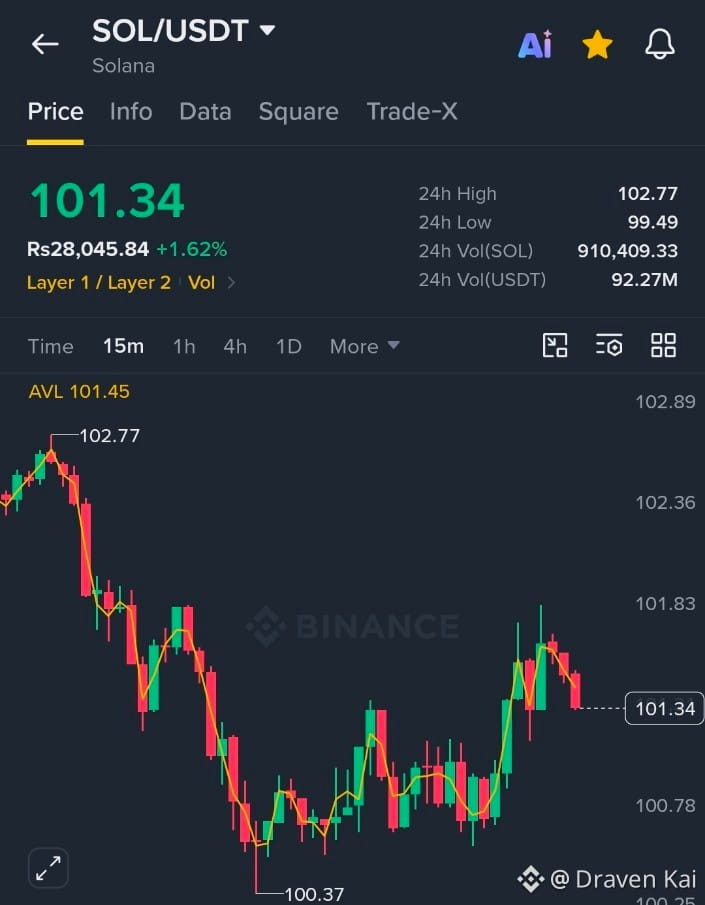
$SOL /USDT — CONFIGURACIÓN DE VENTA EN CORTO
El precio está siendo rechazado cerca de la zona de resistencia de 101.70–101.85 tras un fuerte rebote. El impulso a corto plazo está volviéndose bajista, mientras los vendedores recuperan el control cerca de 101.34. Una ruptura por debajo de 101.30 podría abrir el camino hacia niveles de soporte más bajos.
EP: 101.30–101.40
TP1: 101.00
TP2: 100.78
TP3: 100.40
SL: 101.90
Ejecución: Entrar solo con confirmación bajista. Mantener una gestión estricta del riesgo y evitar perseguir el movimiento.
$SOL
{spot}(SOLUSDT)
$SOL
$SOL /USDT — CONFIGURACIÓN DE VENTA EN CORTO
El precio está siendo rechazado cerca de la zona de resistencia de 101.70–101.85 tras un fuerte rebote. El impulso a corto plazo está volviéndose bajista, mientras los vendedores recuperan el control cerca de 101.34. Una ruptura por debajo de 101.30 podría abrir el camino hacia niveles de soporte más bajos.
EP: 101.30–101.40
TP1: 101.00
TP2: 100.78
TP3: 100.40
SL: 101.90
Ejecución: Entrar solo con confirmación bajista. Mantener una gestión estricta del riesgo y evitar perseguir el movimiento.
$SOL
$SOL /USDT — CONFIGURACIÓN DE VENTA EN CORTO
El precio está siendo rechazado cerca de la zona de resistencia de 101.70–101.85 tras un fuerte rebote. El impulso a corto plazo está volviéndose bajista, mientras los vendedores recuperan el control cerca de 101.34. Una ruptura por debajo de 101.30 podría abrir el camino hacia niveles de soporte más bajos.
EP: 101.30–101.40
TP1: 101.00
TP2: 100.78
TP3: 100.40
SL: 101.90
Ejecución: Entrar solo con confirmación bajista. Mantener una gestión estricta del riesgo y evitar perseguir el movimiento.
$SOL
154
·
--
Alcista
$ETH
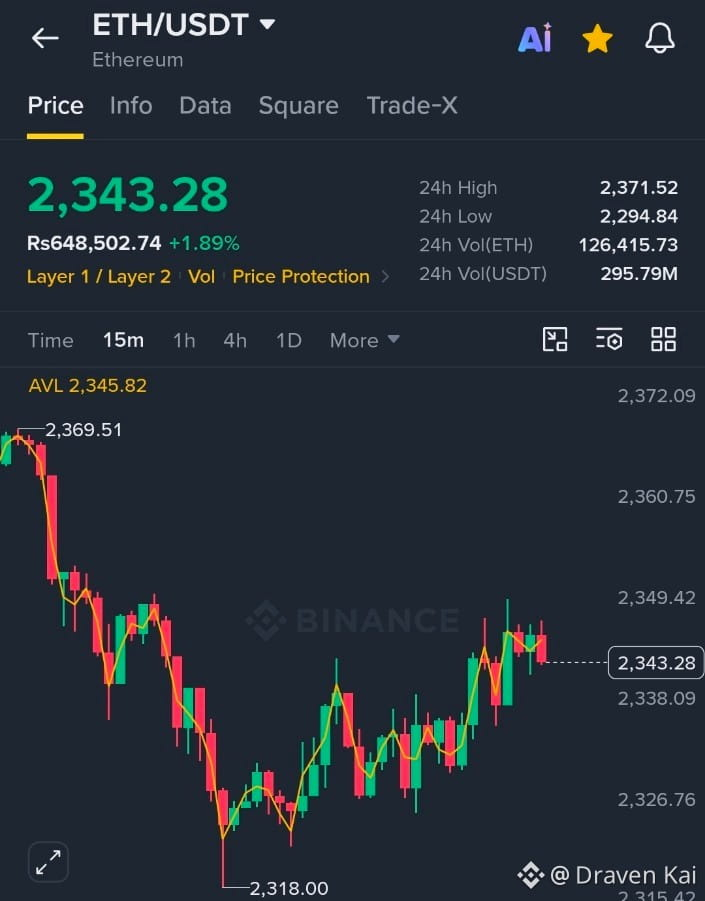
SEÑAL VIP | LARGO
Entrada: 2340–2344
TP1: 2350
TP2: 2360
TP3: 2369
SL: 2334
Análisis técnico:
ETH se está recuperando de la zona de soporte de 2318, formando mínimos más altos y mostrando un renovado impulso alcista en el gráfico de 15 min. El precio se está consolidando cerca de 2343, con una resistencia en 2349 que constituye el nivel clave de ruptura. Una ruptura confirmada por encima de la resistencia podría impulsar nuevas subidas hacia 2360–2369. Mantén una gestión de riesgo disciplinada y evita perseguir la ruptura.
$ETH
{spot}(ETHUSDT)
$ETH
SEÑAL VIP | LARGO
Entrada: 2340–2344
TP1: 2350
TP2: 2360
TP3: 2369
SL: 2334
Análisis técnico:
ETH se está recuperando de la zona de soporte de 2318, formando mínimos más altos y mostrando un renovado impulso alcista en el gráfico de 15 min. El precio se está consolidando cerca de 2343, con una resistencia en 2349 que constituye el nivel clave de ruptura. Una ruptura confirmada por encima de la resistencia podría impulsar nuevas subidas hacia 2360–2369. Mantén una gestión de riesgo disciplinada y evita perseguir la ruptura.
$ETH
SEÑAL VIP | LARGO
Entrada: 2340–2344
TP1: 2350
TP2: 2360
TP3: 2369
SL: 2334
Análisis técnico:
ETH se está recuperando de la zona de soporte de 2318, formando mínimos más altos y mostrando un renovado impulso alcista en el gráfico de 15 min. El precio se está consolidando cerca de 2343, con una resistencia en 2349 que constituye el nivel clave de ruptura. Una ruptura confirmada por encima de la resistencia podría impulsar nuevas subidas hacia 2360–2369. Mantén una gestión de riesgo disciplinada y evita perseguir la ruptura.
$ETH
116
·
--
Alcista
$BTC
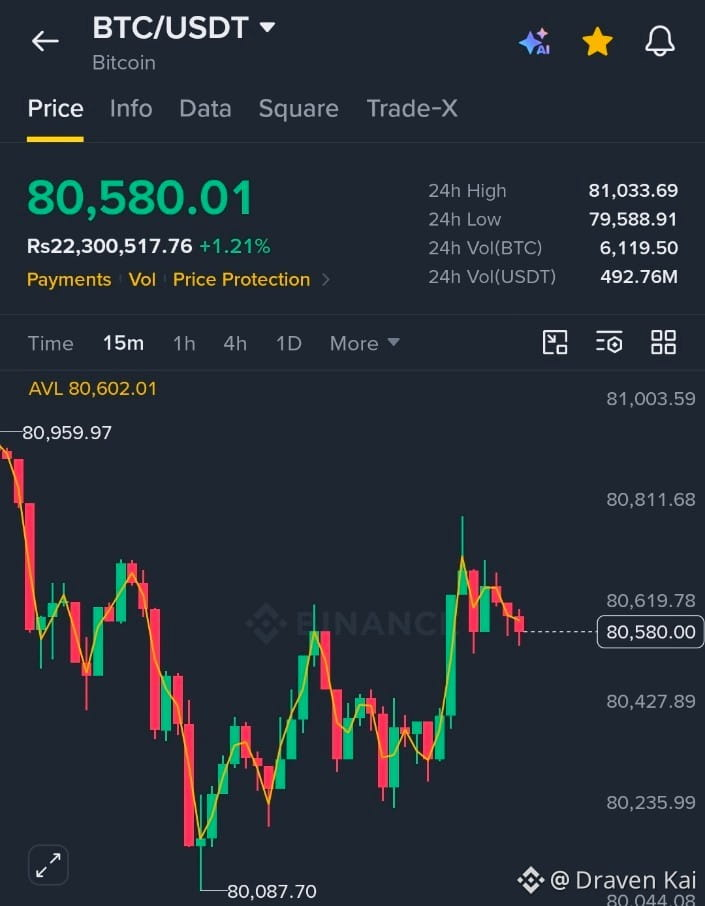
SEÑAL VIP | BTC/USDT
Sesgo: LARGO — Entrada en retroceso
BTC ha rebotado con fuerza desde la zona de soporte de $80,087 y ha avanzado hacia la resistencia de $80,800. El precio se está consolidando ahora cerca de $80,580, mientras el impulso a corto plazo se enfría. Mantenerse por encima de $80,450 podría impulsar otro movimiento al alza.
EP: $80,500 – $80,580
TP1: $80,620
TP2: $80,800
TP3: $81,000
SL: $80,380
Ejecución: Mantén una gestión del riesgo disciplinada. Una ruptura por debajo del soporte invalida la configuración alcista.
$BTC
{spot}(BTCUSDT)
$BTC
SEÑAL VIP | BTC/USDT
Sesgo: LARGO — Entrada en retroceso
BTC ha rebotado con fuerza desde la zona de soporte de $80,087 y ha avanzado hacia la resistencia de $80,800. El precio se está consolidando ahora cerca de $80,580, mientras el impulso a corto plazo se enfría. Mantenerse por encima de $80,450 podría impulsar otro movimiento al alza.
EP: $80,500 – $80,580
TP1: $80,620
TP2: $80,800
TP3: $81,000
SL: $80,380
Ejecución: Mantén una gestión del riesgo disciplinada. Una ruptura por debajo del soporte invalida la configuración alcista.
$BTC
SEÑAL VIP | BTC/USDT
Sesgo: LARGO — Entrada en retroceso
BTC ha rebotado con fuerza desde la zona de soporte de $80,087 y ha avanzado hacia la resistencia de $80,800. El precio se está consolidando ahora cerca de $80,580, mientras el impulso a corto plazo se enfría. Mantenerse por encima de $80,450 podría impulsar otro movimiento al alza.
EP: $80,500 – $80,580
TP1: $80,620
TP2: $80,800
TP3: $81,000
SL: $80,380
Ejecución: Mantén una gestión del riesgo disciplinada. Una ruptura por debajo del soporte invalida la configuración alcista.
$BTC
254
·
--
Alcista
$BNB
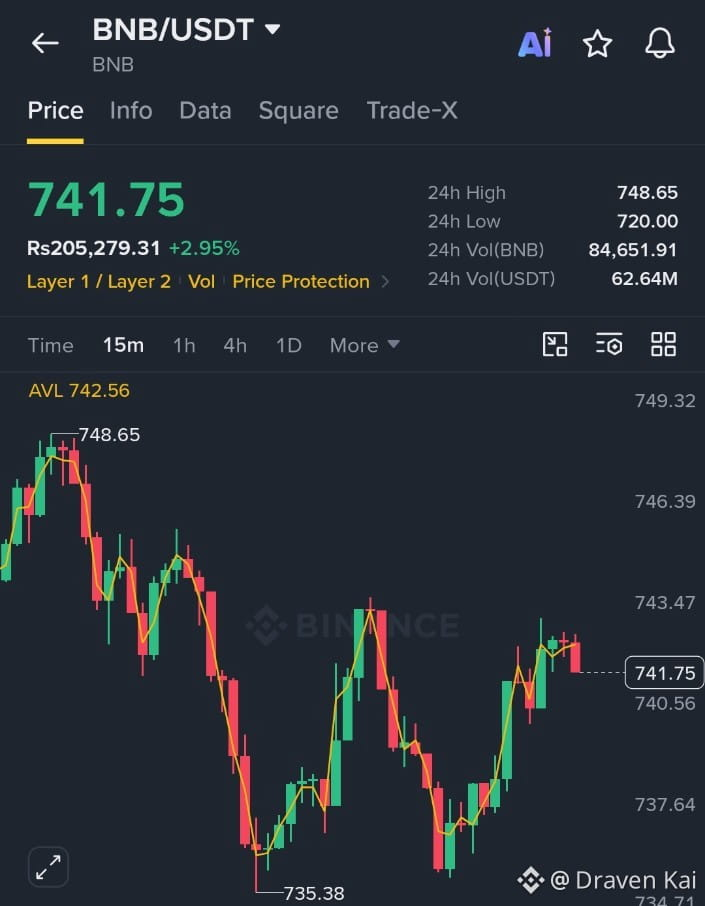
SEÑAL VIP | BNB/USDT
EP: 741.00–742.00
TP1: 743.50
TP2: 746.00
TP3: 748.50
SL: 738.80
Análisis técnico: BNB se está recuperando del mínimo de oscilación de 735.38 y muestra un impulso alcista a corto plazo. El precio se está consolidando cerca de la resistencia de 742 tras un fuerte rebote. Una ruptura confirmada por encima de 743.50 podría impulsar la continuación hacia 746.00 y 748.50. No lograr mantenerse en la zona de 740 debilitaría la configuración.
Ejecución: Solo abrir posiciones largas con confirmación y una gestión estricta del riesgo.
$BNB
{spot}(BNBUSDT)
$BNB
SEÑAL VIP | BNB/USDT
EP: 741.00–742.00
TP1: 743.50
TP2: 746.00
TP3: 748.50
SL: 738.80
Análisis técnico: BNB se está recuperando del mínimo de oscilación de 735.38 y muestra un impulso alcista a corto plazo. El precio se está consolidando cerca de la resistencia de 742 tras un fuerte rebote. Una ruptura confirmada por encima de 743.50 podría impulsar la continuación hacia 746.00 y 748.50. No lograr mantenerse en la zona de 740 debilitaría la configuración.
Ejecución: Solo abrir posiciones largas con confirmación y una gestión estricta del riesgo.
$BNB
SEÑAL VIP | BNB/USDT
EP: 741.00–742.00
TP1: 743.50
TP2: 746.00
TP3: 748.50
SL: 738.80
Análisis técnico: BNB se está recuperando del mínimo de oscilación de 735.38 y muestra un impulso alcista a corto plazo. El precio se está consolidando cerca de la resistencia de 742 tras un fuerte rebote. Una ruptura confirmada por encima de 743.50 podría impulsar la continuación hacia 746.00 y 748.50. No lograr mantenerse en la zona de 740 debilitaría la configuración.
Ejecución: Solo abrir posiciones largas con confirmación y una gestión estricta del riesgo.
$BNB
130
·
--
Alcista
$LIGHT
SEÑAL VIP DE FUTUROS | LARGO
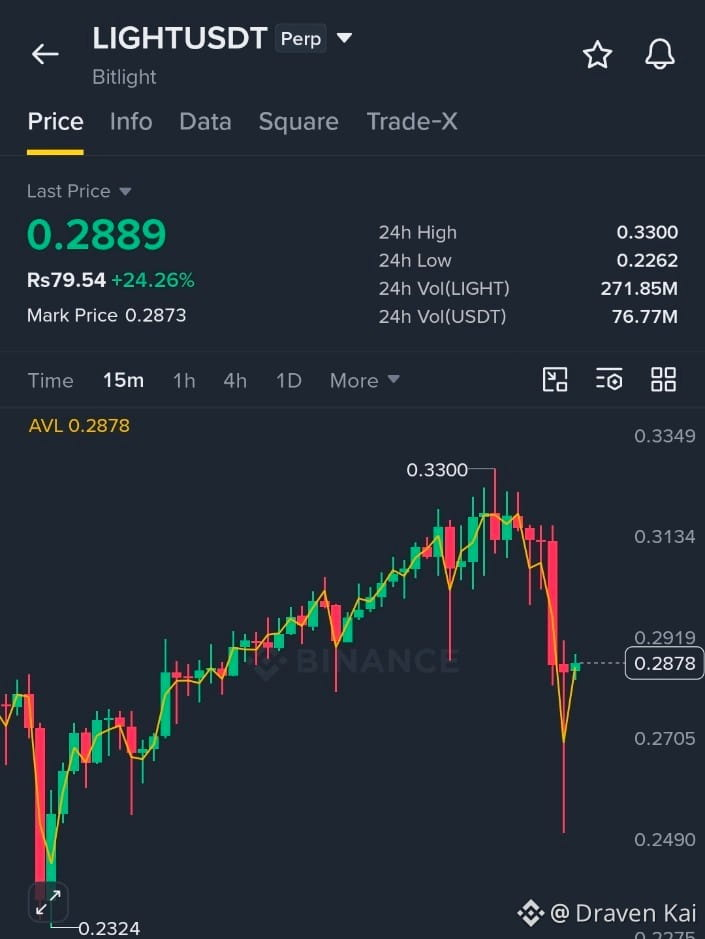
Análisis técnico: LIGHT ha rebotado con fuerza desde la zona de soporte de 0.2490 tras una fuerte ola de ventas. Los compradores están intentando impulsar una recuperación, pero 0.2920 sigue siendo la resistencia inmediata. Un movimiento sostenido por encima de este nivel podría impulsar la continuación alcista hacia zonas de resistencia más altas.
PE: 0.2850–0.2890
TP1: 0.3000
TP2: 0.3130
TP3: 0.3290
SL: 0.2690
Gestión del riesgo: Confirme el impulso alcista antes de entrar. Asegure ganancias parciales en cada objetivo y evite apalancarse en exceso.
$LIGHT
{future}(LIGHTUSDT)
$LIGHT
SEÑAL VIP DE FUTUROS | LARGO
Análisis técnico: LIGHT ha rebotado con fuerza desde la zona de soporte de 0.2490 tras una fuerte ola de ventas. Los compradores están intentando impulsar una recuperación, pero 0.2920 sigue siendo la resistencia inmediata. Un movimiento sostenido por encima de este nivel podría impulsar la continuación alcista hacia zonas de resistencia más altas.
PE: 0.2850–0.2890
TP1: 0.3000
TP2: 0.3130
TP3: 0.3290
SL: 0.2690
Gestión del riesgo: Confirme el impulso alcista antes de entrar. Asegure ganancias parciales en cada objetivo y evite apalancarse en exceso.
$LIGHT
SEÑAL VIP DE FUTUROS | LARGO
Análisis técnico: LIGHT ha rebotado con fuerza desde la zona de soporte de 0.2490 tras una fuerte ola de ventas. Los compradores están intentando impulsar una recuperación, pero 0.2920 sigue siendo la resistencia inmediata. Un movimiento sostenido por encima de este nivel podría impulsar la continuación alcista hacia zonas de resistencia más altas.
PE: 0.2850–0.2890
TP1: 0.3000
TP2: 0.3130
TP3: 0.3290
SL: 0.2690
Gestión del riesgo: Confirme el impulso alcista antes de entrar. Asegure ganancias parciales en cada objetivo y evite apalancarse en exceso.
$LIGHT
1
601
·
--
Bajista
$MDT
SEÑAL VIP DE FUTUROS | CORTO
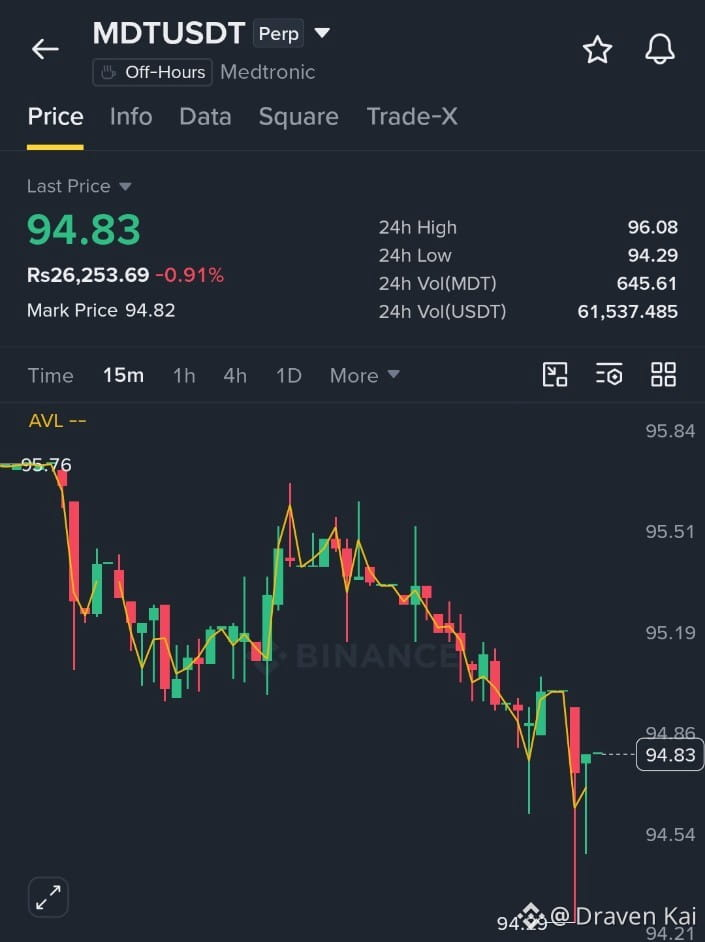
EP (Precio de entrada): 94.85–95.00
TP1: 94.60
TP2: 94.40
TP3: 94.30
SL (Stop Loss): 95.25
Análisis técnico:
MDTUSDT sigue bajo presión bajista en el marco temporal de 15M, con máximos más bajos y un impulso vendedor persistente. El rebote reciente desde 94.29 parece correctivo, mientras que la resistencia cerca de 95.00–95.20 sigue siendo una zona clave de oferta.
Configuración de la operación: Vende si el precio es rechazado cerca de la zona de entrada. Apunta a una continuación hacia 94.60, 94.40 y 94.30. Mantén una gestión estricta del riesgo y evita perseguir el precio después de una caída pronunciada.
$MDT
{future}(MDTUSDT)
$MDT
SEÑAL VIP DE FUTUROS | CORTO
EP (Precio de entrada): 94.85–95.00
TP1: 94.60
TP2: 94.40
TP3: 94.30
SL (Stop Loss): 95.25
Análisis técnico:
MDTUSDT sigue bajo presión bajista en el marco temporal de 15M, con máximos más bajos y un impulso vendedor persistente. El rebote reciente desde 94.29 parece correctivo, mientras que la resistencia cerca de 95.00–95.20 sigue siendo una zona clave de oferta.
Configuración de la operación: Vende si el precio es rechazado cerca de la zona de entrada. Apunta a una continuación hacia 94.60, 94.40 y 94.30. Mantén una gestión estricta del riesgo y evita perseguir el precio después de una caída pronunciada.
$MDT
SEÑAL VIP DE FUTUROS | CORTO
EP (Precio de entrada): 94.85–95.00
TP1: 94.60
TP2: 94.40
TP3: 94.30
SL (Stop Loss): 95.25
Análisis técnico:
MDTUSDT sigue bajo presión bajista en el marco temporal de 15M, con máximos más bajos y un impulso vendedor persistente. El rebote reciente desde 94.29 parece correctivo, mientras que la resistencia cerca de 95.00–95.20 sigue siendo una zona clave de oferta.
Configuración de la operación: Vende si el precio es rechazado cerca de la zona de entrada. Apunta a una continuación hacia 94.60, 94.40 y 94.30. Mantén una gestión estricta del riesgo y evita perseguir el precio después de una caída pronunciada.
$MDT
290
·
--
Bajista
👀 En el mundo cripto, la verdadera ventaja nace de la curiosidad, ¡no solo de la emoción! 🚀🔥
Cada nueva oportunidad es una ocasión para descubrir algo valioso, afinar tu estrategia y ampliar tus conocimientos. 💡
Con Binance Picks, mantén la curiosidad, sigue explorando y prioriza el progreso por encima del ruido. El mercado no deja de cambiar, y quienes siguen aprendiendo están preparados para lo que viene. 💛📈
Explora con inteligencia. Aprende cada día. Construye con constancia. 🌟
#BinancePick
$STEEM
{future}(STEEMUSDT)
$ZEC
{future}(ZECUSDT)
👀 En el mundo cripto, la verdadera ventaja nace de la curiosidad, ¡no solo de la emoción! 🚀🔥
Cada nueva oportunidad es una ocasión para descubrir algo valioso, afinar tu estrategia y ampliar tus conocimientos. 💡
Con Binance Picks, mantén la curiosidad, sigue explorando y prioriza el progreso por encima del ruido. El mercado no deja de cambiar, y quienes siguen aprendiendo están preparados para lo que viene. 💛📈
Explora con inteligencia. Aprende cada día. Construye con constancia. 🌟
#BinancePick
$STEEM
$ZEC
Cada nueva oportunidad es una ocasión para descubrir algo valioso, afinar tu estrategia y ampliar tus conocimientos. 💡
Con Binance Picks, mantén la curiosidad, sigue explorando y prioriza el progreso por encima del ruido. El mercado no deja de cambiar, y quienes siguen aprendiendo están preparados para lo que viene. 💛📈
Explora con inteligencia. Aprende cada día. Construye con constancia. 🌟
#BinancePick
$STEEM
$ZEC

1
4
569
·
--
Bajista
$SOL
SEÑAL VIP | SOL/USDT PERP
Dirección: CORTO
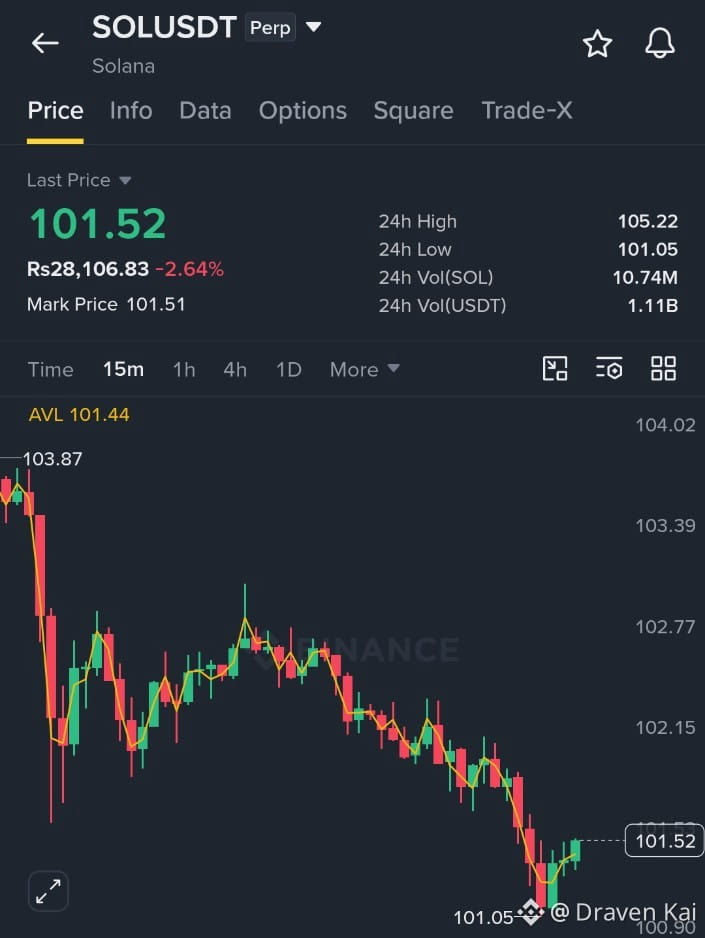
Entrada: 101.50–101.70
TP1: 101.20 TP2: 101.05 TP3: 100.70
SL: 102.05
Análisis técnico: SOL sigue bajo una fuerte presión bajista en el marco temporal de 15 minutos, con máximos y mínimos cada vez más bajos. El reciente rebote desde 101.05 parece correctivo, y es probable que los vendedores defiendan la resistencia cercana. Un rechazo en torno a la zona de entrada podría desencadenar otro movimiento hacia el mínimo reciente y un nivel de soporte inferior.
Gestión del riesgo: Mantén un tamaño de posición disciplinado. Invalida la configuración si el precio supera el nivel de stop-loss.
$SOL
{future}(SOLUSDT)
$SOL
SEÑAL VIP | SOL/USDT PERP
Dirección: CORTO
Entrada: 101.50–101.70
TP1: 101.20 TP2: 101.05 TP3: 100.70
SL: 102.05
Análisis técnico: SOL sigue bajo una fuerte presión bajista en el marco temporal de 15 minutos, con máximos y mínimos cada vez más bajos. El reciente rebote desde 101.05 parece correctivo, y es probable que los vendedores defiendan la resistencia cercana. Un rechazo en torno a la zona de entrada podría desencadenar otro movimiento hacia el mínimo reciente y un nivel de soporte inferior.
Gestión del riesgo: Mantén un tamaño de posición disciplinado. Invalida la configuración si el precio supera el nivel de stop-loss.
$SOL
SEÑAL VIP | SOL/USDT PERP
Dirección: CORTO
Entrada: 101.50–101.70
TP1: 101.20 TP2: 101.05 TP3: 100.70
SL: 102.05
Análisis técnico: SOL sigue bajo una fuerte presión bajista en el marco temporal de 15 minutos, con máximos y mínimos cada vez más bajos. El reciente rebote desde 101.05 parece correctivo, y es probable que los vendedores defiendan la resistencia cercana. Un rechazo en torno a la zona de entrada podría desencadenar otro movimiento hacia el mínimo reciente y un nivel de soporte inferior.
Gestión del riesgo: Mantén un tamaño de posición disciplinado. Invalida la configuración si el precio supera el nivel de stop-loss.
$SOL
2
129
·
--
$BTC
{future}(BTCUSDT)
SEÑAL VIP | BTCUSDT PERP
Dirección: CORTO
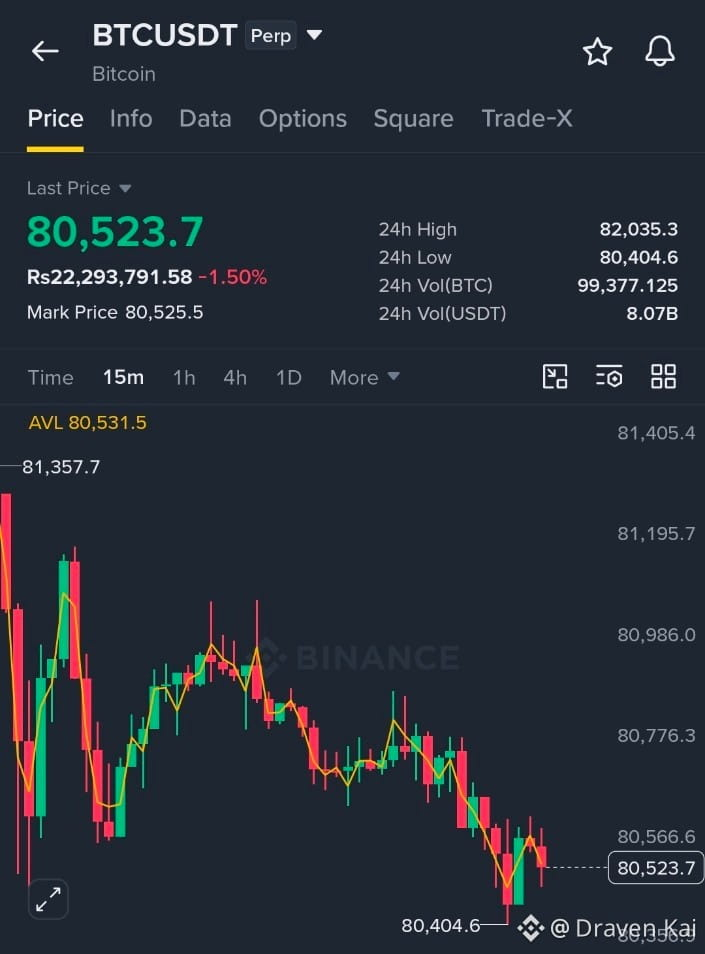
BTC muestra un claro impulso bajista en el gráfico de 15 minutos, con máximos y mínimos cada vez más bajos. El precio tiene dificultades para mantener los rebotes tras poner a prueba el soporte de 80,404, por lo que persiona la presión bajista.
EP: 80,520–80,580
TP1: 80,405
TP2: 80,350
TP3: 80,250
SL: 80,720
Ejecución: Entra tras una confirmación del rechazo en la zona de entrada. Mantén una gestión estricta del riesgo y evita perseguir el precio.
$BTC
$BTC
SEÑAL VIP | BTCUSDT PERP
Dirección: CORTO
BTC muestra un claro impulso bajista en el gráfico de 15 minutos, con máximos y mínimos cada vez más bajos. El precio tiene dificultades para mantener los rebotes tras poner a prueba el soporte de 80,404, por lo que persiona la presión bajista.
EP: 80,520–80,580
TP1: 80,405
TP2: 80,350
TP3: 80,250
SL: 80,720
Ejecución: Entra tras una confirmación del rechazo en la zona de entrada. Mantén una gestión estricta del riesgo y evita perseguir el precio.
$BTC
SEÑAL VIP | BTCUSDT PERP
Dirección: CORTO
BTC muestra un claro impulso bajista en el gráfico de 15 minutos, con máximos y mínimos cada vez más bajos. El precio tiene dificultades para mantener los rebotes tras poner a prueba el soporte de 80,404, por lo que persiona la presión bajista.
EP: 80,520–80,580
TP1: 80,405
TP2: 80,350
TP3: 80,250
SL: 80,720
Ejecución: Entra tras una confirmación del rechazo en la zona de entrada. Mantén una gestión estricta del riesgo y evita perseguir el precio.
$BTC
3
128
·
--
$SNDK
{future}(SNDKUSDT)
SEÑAL VIP DE FUTUROS | SNDKUSDT PERP
Sesgo: CORTO
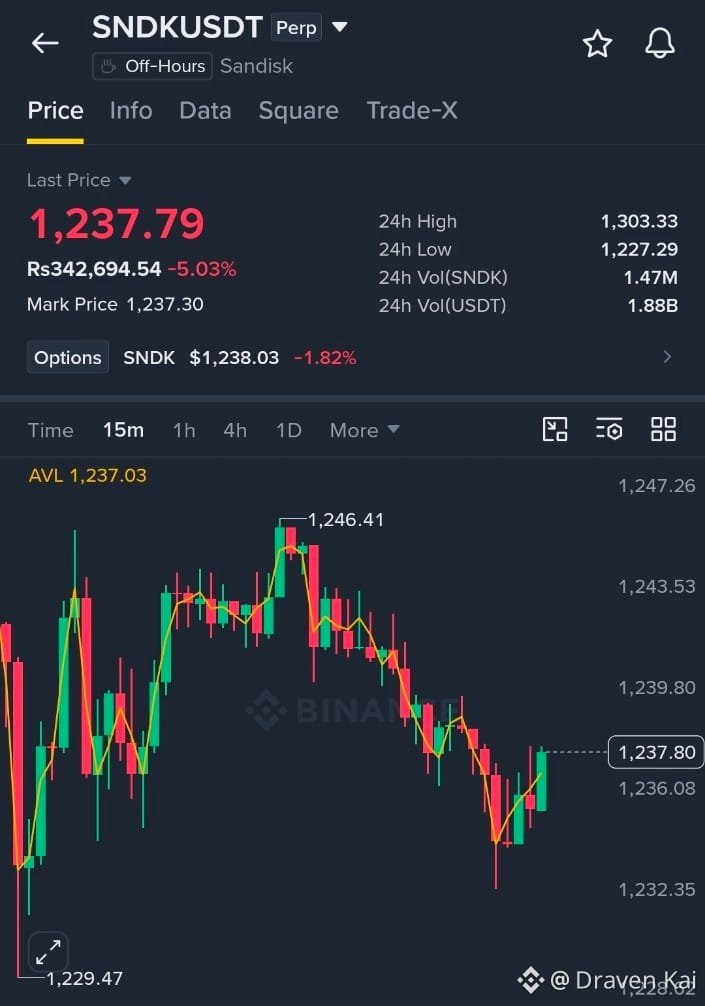
EP (Precio de entrada): 1,237–1,239
TP1: 1,235
TP2: 1,232
TP3: 1,229.50
SL: 1,243
Análisis técnico:
SNDK muestra un claro impulso bajista tras ser rechazada cerca de 1,246.41, con máximos más bajos y una presión vendedora persistente. El rebote actual parece correctivo, por lo que la continuación a la baja sigue siendo el escenario principal. Un rechazo en la zona de 1,238–1,239 podría provocar otro movimiento hacia niveles clave de soporte.
Gestión del riesgo: Mantén un tamaño de posición disciplinado. Evita perseguir entradas y asegura ganancias parciales en cada objetivo.
$SNDK
$SNDK
SEÑAL VIP DE FUTUROS | SNDKUSDT PERP
Sesgo: CORTO
EP (Precio de entrada): 1,237–1,239
TP1: 1,235
TP2: 1,232
TP3: 1,229.50
SL: 1,243
Análisis técnico:
SNDK muestra un claro impulso bajista tras ser rechazada cerca de 1,246.41, con máximos más bajos y una presión vendedora persistente. El rebote actual parece correctivo, por lo que la continuación a la baja sigue siendo el escenario principal. Un rechazo en la zona de 1,238–1,239 podría provocar otro movimiento hacia niveles clave de soporte.
Gestión del riesgo: Mantén un tamaño de posición disciplinado. Evita perseguir entradas y asegura ganancias parciales en cada objetivo.
$SNDK
SEÑAL VIP DE FUTUROS | SNDKUSDT PERP
Sesgo: CORTO
EP (Precio de entrada): 1,237–1,239
TP1: 1,235
TP2: 1,232
TP3: 1,229.50
SL: 1,243
Análisis técnico:
SNDK muestra un claro impulso bajista tras ser rechazada cerca de 1,246.41, con máximos más bajos y una presión vendedora persistente. El rebote actual parece correctivo, por lo que la continuación a la baja sigue siendo el escenario principal. Un rechazo en la zona de 1,238–1,239 podría provocar otro movimiento hacia niveles clave de soporte.
Gestión del riesgo: Mantén un tamaño de posición disciplinado. Evita perseguir entradas y asegura ganancias parciales en cada objetivo.
$SNDK
2
551
·
--
Bajista
$ETH
SEÑAL VIP | ETH/USDT
Dirección: LARGO
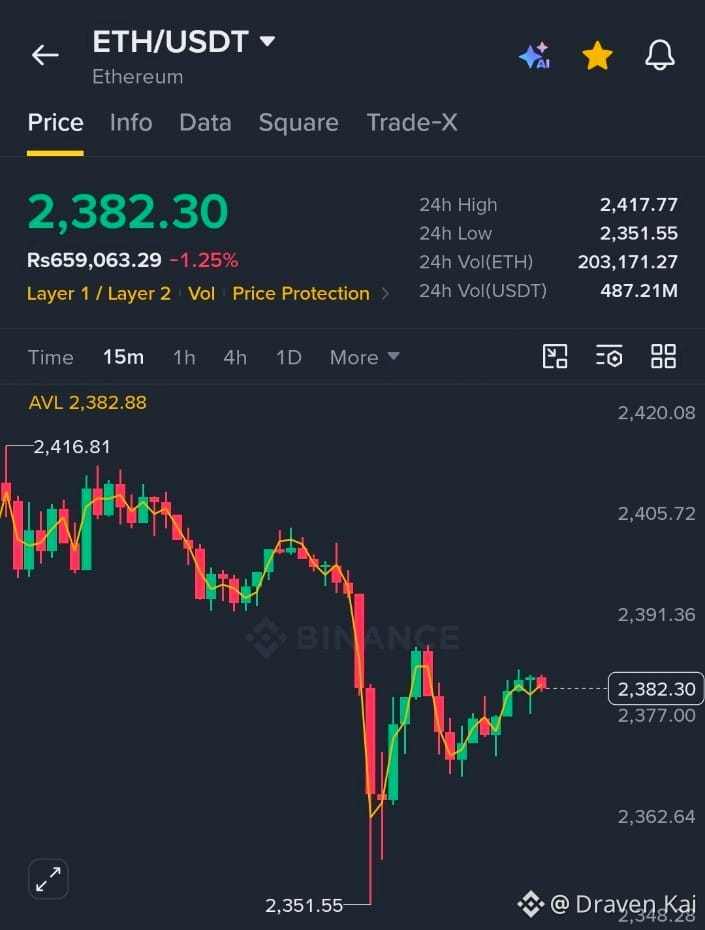
ETH se está recuperando tras una fuerte barrida de liquidez en $2,351.55, mientras los compradores impulsan el precio de nuevo hacia la resistencia de $2,382. El impulso a corto plazo está mejorando, pero es clave confirmar por encima de la resistencia local.
EP: $2,379–$2,383
TP1: $2,391
TP2: $2,405
TP3: $2,416
SL: $2,369
Plan de operación: Entra con confirmación y mantén una gestión estricta del riesgo. Una ruptura por debajo del soporte invalida la configuración alcista.
$ETH
{spot}(ETHUSDT)
$ETH
SEÑAL VIP | ETH/USDT
Dirección: LARGO
ETH se está recuperando tras una fuerte barrida de liquidez en $2,351.55, mientras los compradores impulsan el precio de nuevo hacia la resistencia de $2,382. El impulso a corto plazo está mejorando, pero es clave confirmar por encima de la resistencia local.
EP: $2,379–$2,383
TP1: $2,391
TP2: $2,405
TP3: $2,416
SL: $2,369
Plan de operación: Entra con confirmación y mantén una gestión estricta del riesgo. Una ruptura por debajo del soporte invalida la configuración alcista.
$ETH
SEÑAL VIP | ETH/USDT
Dirección: LARGO
ETH se está recuperando tras una fuerte barrida de liquidez en $2,351.55, mientras los compradores impulsan el precio de nuevo hacia la resistencia de $2,382. El impulso a corto plazo está mejorando, pero es clave confirmar por encima de la resistencia local.
EP: $2,379–$2,383
TP1: $2,391
TP2: $2,405
TP3: $2,416
SL: $2,369
Plan de operación: Entra con confirmación y mantén una gestión estricta del riesgo. Una ruptura por debajo del soporte invalida la configuración alcista.
$ETH
1
203
·
--
Bajista
$BTC
$BTC /USDT — SEÑAL VIP
Dirección: CORTO
EP: 80,930–81,000
TP1: 80,740
TP2: 80,600
TP3: 80,515
SL: 81,150
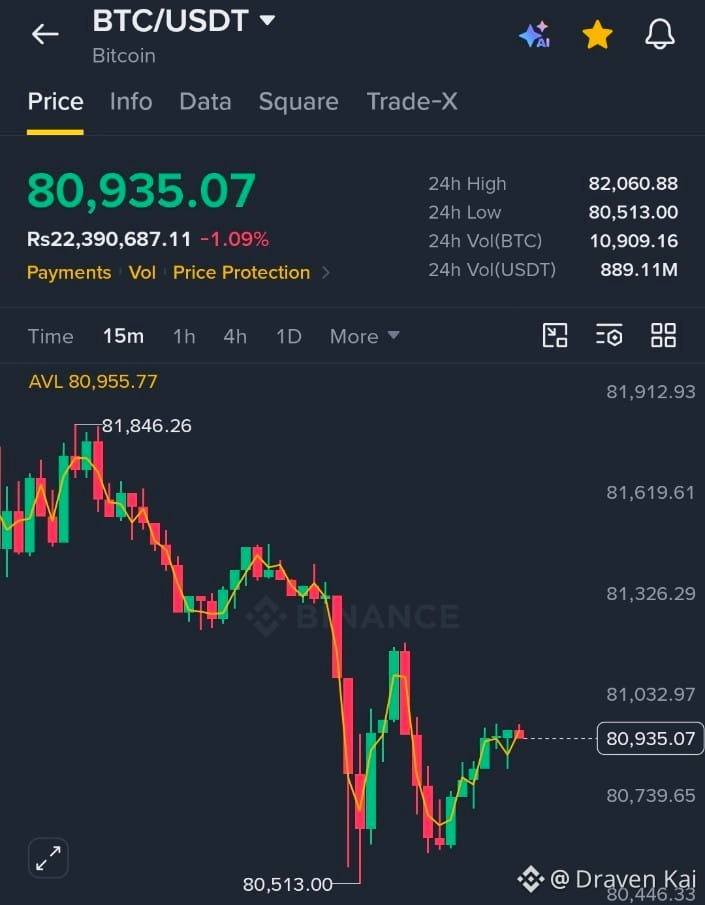
Análisis técnico: BTC sigue bajo presión bajista en el marco temporal de 15 minutos, con máximos más bajos y una fuerte ruptura que confirma el predominio de los vendedores. La recuperación actual se acerca a la resistencia, donde un rechazo podría desencadenar otro movimiento hacia la zona de soporte de 80,515.
Gestión del riesgo: Espera una confirmación bajista antes de entrar. Protege tu capital y evita apalancarte en exceso.
$BTC
{spot}(BTCUSDT)
$BTC
$BTC /USDT — SEÑAL VIP
Dirección: CORTO
EP: 80,930–81,000
TP1: 80,740
TP2: 80,600
TP3: 80,515
SL: 81,150
Análisis técnico: BTC sigue bajo presión bajista en el marco temporal de 15 minutos, con máximos más bajos y una fuerte ruptura que confirma el predominio de los vendedores. La recuperación actual se acerca a la resistencia, donde un rechazo podría desencadenar otro movimiento hacia la zona de soporte de 80,515.
Gestión del riesgo: Espera una confirmación bajista antes de entrar. Protege tu capital y evita apalancarte en exceso.
$BTC
$BTC /USDT — SEÑAL VIP
Dirección: CORTO
EP: 80,930–81,000
TP1: 80,740
TP2: 80,600
TP3: 80,515
SL: 81,150
Análisis técnico: BTC sigue bajo presión bajista en el marco temporal de 15 minutos, con máximos más bajos y una fuerte ruptura que confirma el predominio de los vendedores. La recuperación actual se acerca a la resistencia, donde un rechazo podría desencadenar otro movimiento hacia la zona de soporte de 80,515.
Gestión del riesgo: Espera una confirmación bajista antes de entrar. Protege tu capital y evita apalancarte en exceso.
$BTC
142
·
--
Alcista
$BNB
SEÑAL VIP | BNB/USDT
Sesgo: RECUPERACIÓN ALCISTA A CORTO PLAZO
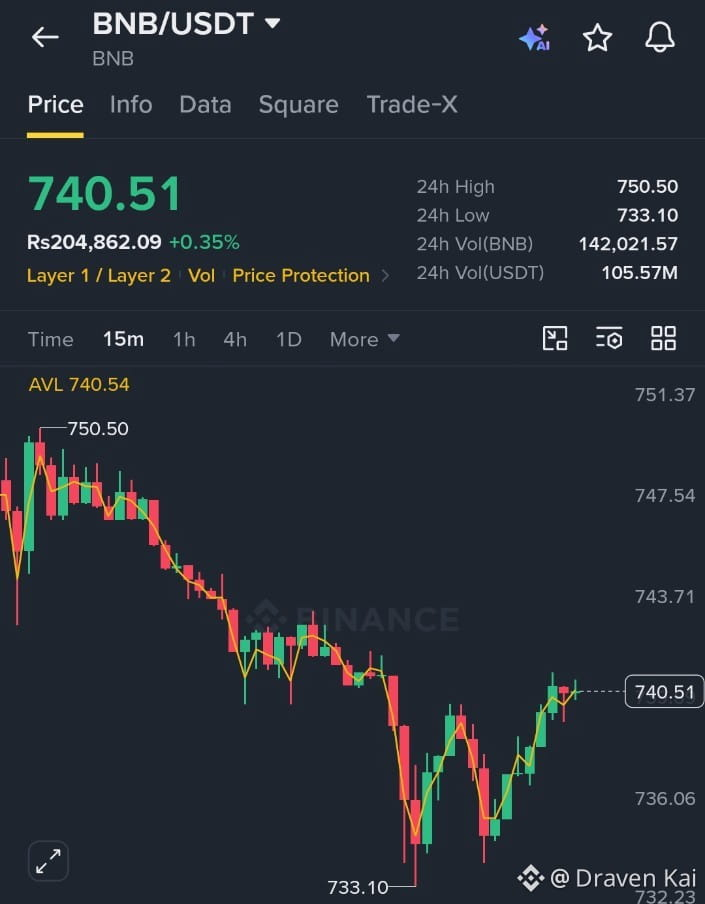
BNB está rebotando desde la zona de soporte de 733.10 tras una fuerte caída. Los compradores están recuperando impulso y el precio ha vuelto a superar los 740.00. Mantenerse por encima de este nivel podría impulsar una subida hacia la resistencia cercana.
EP: 739.80–740.60
TP1: 742.00
TP2: 744.00
TP3: 747.00
SL: 737.80
Configuración de la operación: Entra solo si se confirma que el soporte se mantiene. Asegura ganancias parciales en TP1 y protege tu capital con una gestión disciplinada del riesgo.
$BNB
{spot}(BNBUSDT)
$BNB
SEÑAL VIP | BNB/USDT
Sesgo: RECUPERACIÓN ALCISTA A CORTO PLAZO
BNB está rebotando desde la zona de soporte de 733.10 tras una fuerte caída. Los compradores están recuperando impulso y el precio ha vuelto a superar los 740.00. Mantenerse por encima de este nivel podría impulsar una subida hacia la resistencia cercana.
EP: 739.80–740.60
TP1: 742.00
TP2: 744.00
TP3: 747.00
SL: 737.80
Configuración de la operación: Entra solo si se confirma que el soporte se mantiene. Asegura ganancias parciales en TP1 y protege tu capital con una gestión disciplinada del riesgo.
$BNB
SEÑAL VIP | BNB/USDT
Sesgo: RECUPERACIÓN ALCISTA A CORTO PLAZO
BNB está rebotando desde la zona de soporte de 733.10 tras una fuerte caída. Los compradores están recuperando impulso y el precio ha vuelto a superar los 740.00. Mantenerse por encima de este nivel podría impulsar una subida hacia la resistencia cercana.
EP: 739.80–740.60
TP1: 742.00
TP2: 744.00
TP3: 747.00
SL: 737.80
Configuración de la operación: Entra solo si se confirma que el soporte se mantiene. Asegura ganancias parciales en TP1 y protege tu capital con una gestión disciplinada del riesgo.
$BNB
150
·
--

Artículo
🎃 Una noche de magia, misterio y sueños cripto en Halloween con Binance 👻Halloween siempre ha sido una de las épocas más emocionantes del año para quienes aman la creatividad, la imaginación, el misterio y un poquito de diversión escalofriante. 🎃👻 Para mí, Halloween es mucho más que disfraces aterradores, calabazas y decoraciones. Es una celebración de la imaginación, la alegría, las historias inolvidables y esa maravillosa sensación de compartir algo especial con una comunidad. Este año, quiero celebrar el espíritu de Halloween uniendo creatividad, un ambiente escalofriante y mi entusiasmo por Binance.
🎃 Una noche de magia, misterio y sueños cripto en Halloween con Binance 👻
Halloween siempre ha sido una de las épocas más emocionantes del año para quienes aman la creatividad, la imaginación, el misterio y un poquito de diversión escalofriante. 🎃👻 Para mí, Halloween es mucho más que disfraces aterradores, calabazas y decoraciones. Es una celebración de la imaginación, la alegría, las historias inolvidables y esa maravillosa sensación de compartir algo especial con una comunidad. Este año, quiero celebrar el espíritu de Halloween uniendo creatividad, un ambiente escalofriante y mi entusiasmo por Binance.
17
14
300
·
--
Alcista
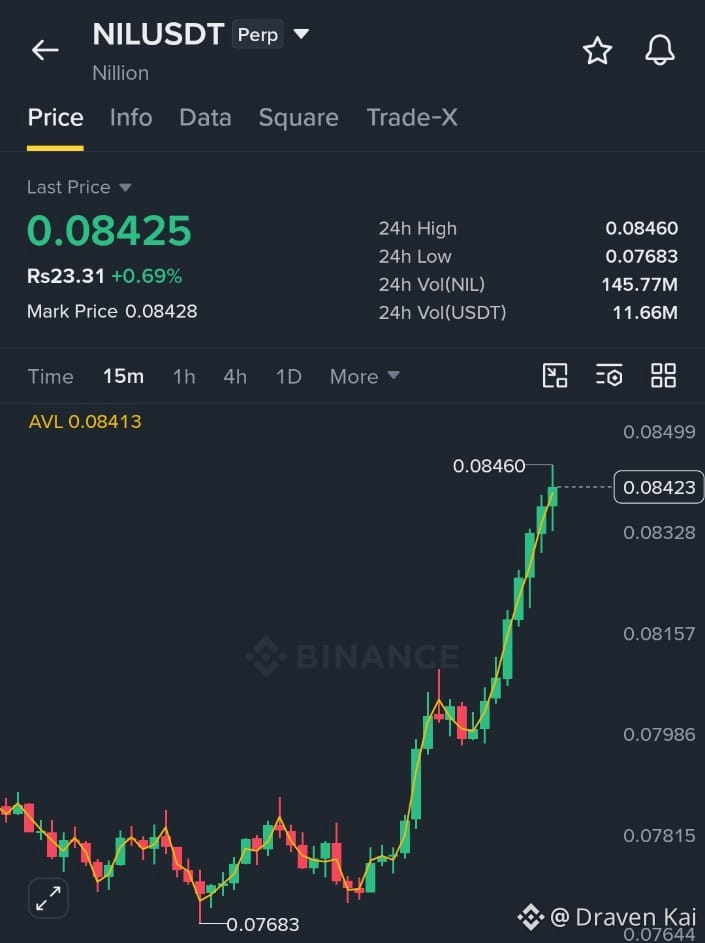
$NIL
SEÑAL VIP | CONFIGURACIÓN LARGA
Fuerte impulso alcista en el marco temporal de 15 min. NIL ha salido del período de consolidación con varias velas alcistas consecutivas y está poniendo a prueba el máximo de 24 h en 0.08460. Una ruptura clara podría impulsar nuevas subidas.
EP: 0.08380 – 0.08420
TP1: 0.08500
TP2: 0.08580
TP3: 0.08660
SL: 0.08290
Sesgo: ALCISTA
Espera la confirmación por encima de la resistencia. Gestiona el riesgo rigurosamente y evita perseguir velas demasiado extendidas.
$NIL
{future}(NILUSDT)
$NIL
SEÑAL VIP | CONFIGURACIÓN LARGA
Fuerte impulso alcista en el marco temporal de 15 min. NIL ha salido del período de consolidación con varias velas alcistas consecutivas y está poniendo a prueba el máximo de 24 h en 0.08460. Una ruptura clara podría impulsar nuevas subidas.
EP: 0.08380 – 0.08420
TP1: 0.08500
TP2: 0.08580
TP3: 0.08660
SL: 0.08290
Sesgo: ALCISTA
Espera la confirmación por encima de la resistencia. Gestiona el riesgo rigurosamente y evita perseguir velas demasiado extendidas.
$NIL
SEÑAL VIP | CONFIGURACIÓN LARGA
Fuerte impulso alcista en el marco temporal de 15 min. NIL ha salido del período de consolidación con varias velas alcistas consecutivas y está poniendo a prueba el máximo de 24 h en 0.08460. Una ruptura clara podría impulsar nuevas subidas.
EP: 0.08380 – 0.08420
TP1: 0.08500
TP2: 0.08580
TP3: 0.08660
SL: 0.08290
Sesgo: ALCISTA
Espera la confirmación por encima de la resistencia. Gestiona el riesgo rigurosamente y evita perseguir velas demasiado extendidas.
$NIL
114
·
--
Alcista
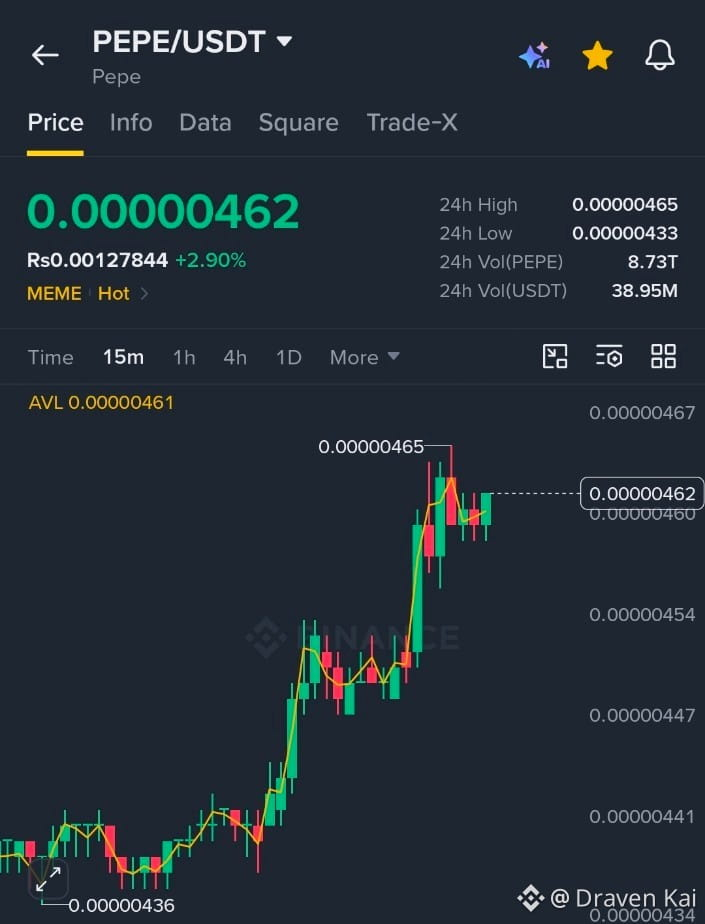
$PEPE
SEÑAL VIP | PEPE/USDT
Marco temporal: 15M
Sesgo: CONTINUACIÓN ALCISTA
PEPE ha protagonizado una fuerte ruptura desde la zona de consolidación de 0.00000447 y se mantiene cerca de 0.00000462. El impulso a corto plazo sigue siendo positivo, mientras el precio se consolida por debajo de la resistencia de 0.00000465. Una ruptura clara podría desencadenar el siguiente tramo alcista.
PE (Precio de entrada): 0.00000460–0.00000462
TP1: 0.00000465
TP2: 0.00000470
TP3: 0.00000475
SL (Stop loss): 0.00000455
Ejecución: Entra cuando se confirme que el precio se mantiene por encima del soporte. Asegura ganancias parciales en TP1 y ajusta el stop a medida que avance el impulso. Evita perseguir una ruptura sin confirmación.
Gestión del riesgo: Mantén un tamaño de posición disciplinado. Ninguna operación está garantizada.
$PEPE
{spot}(PEPEUSDT)
$PEPE
SEÑAL VIP | PEPE/USDT
Marco temporal: 15M
Sesgo: CONTINUACIÓN ALCISTA
PEPE ha protagonizado una fuerte ruptura desde la zona de consolidación de 0.00000447 y se mantiene cerca de 0.00000462. El impulso a corto plazo sigue siendo positivo, mientras el precio se consolida por debajo de la resistencia de 0.00000465. Una ruptura clara podría desencadenar el siguiente tramo alcista.
PE (Precio de entrada): 0.00000460–0.00000462
TP1: 0.00000465
TP2: 0.00000470
TP3: 0.00000475
SL (Stop loss): 0.00000455
Ejecución: Entra cuando se confirme que el precio se mantiene por encima del soporte. Asegura ganancias parciales en TP1 y ajusta el stop a medida que avance el impulso. Evita perseguir una ruptura sin confirmación.
Gestión del riesgo: Mantén un tamaño de posición disciplinado. Ninguna operación está garantizada.
$PEPE
SEÑAL VIP | PEPE/USDT
Marco temporal: 15M
Sesgo: CONTINUACIÓN ALCISTA
PEPE ha protagonizado una fuerte ruptura desde la zona de consolidación de 0.00000447 y se mantiene cerca de 0.00000462. El impulso a corto plazo sigue siendo positivo, mientras el precio se consolida por debajo de la resistencia de 0.00000465. Una ruptura clara podría desencadenar el siguiente tramo alcista.
PE (Precio de entrada): 0.00000460–0.00000462
TP1: 0.00000465
TP2: 0.00000470
TP3: 0.00000475
SL (Stop loss): 0.00000455
Ejecución: Entra cuando se confirme que el precio se mantiene por encima del soporte. Asegura ganancias parciales en TP1 y ajusta el stop a medida que avance el impulso. Evita perseguir una ruptura sin confirmación.
Gestión del riesgo: Mantén un tamaño de posición disciplinado. Ninguna operación está garantizada.
$PEPE
1
180
·
--
Bajista
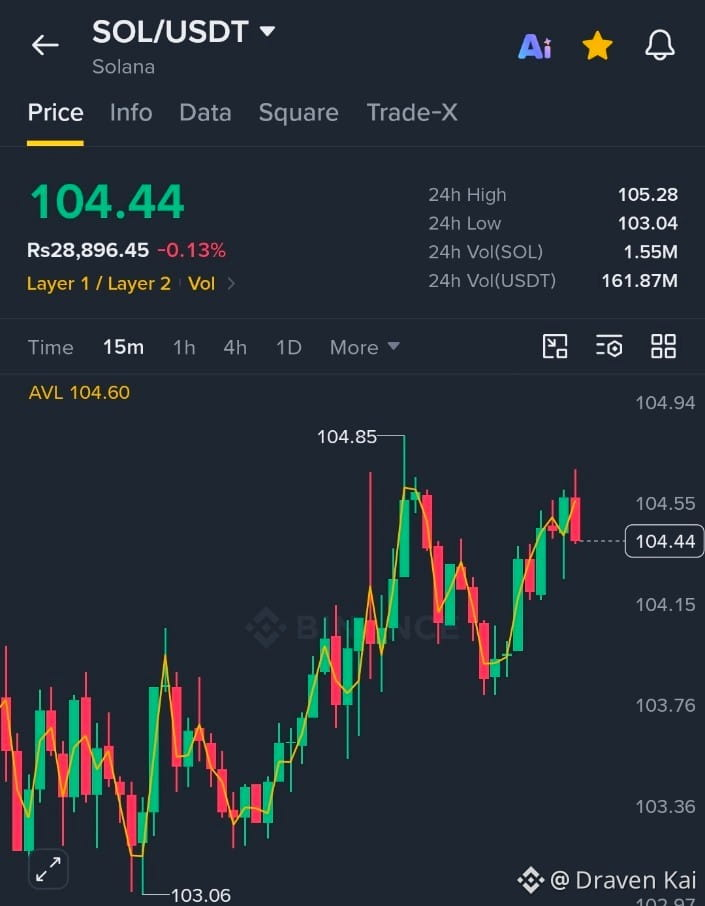
$SOL
SOL/USDT — SEÑAL VIP | LARGO
Análisis técnico: SOL muestra un impulso de recuperación alcista, con mínimos más altos y una renovada presión compradora. El precio se está consolidando cerca de 104.44, con una resistencia en 104.55–104.85. Una ruptura por encima de esta zona podría desencadenar el siguiente movimiento alcista.
EP: 104.35–104.45
TP1: 104.60
TP2: 104.85
TP3: 105.20
SL: 104.05
Gestión del riesgo: Mantén un tamaño de posición disciplinado. Asegura ganancias parciales en cada objetivo y espera una ruptura confirmada.
$SOL
{spot}(SOLUSDT)
$SOL
SOL/USDT — SEÑAL VIP | LARGO
Análisis técnico: SOL muestra un impulso de recuperación alcista, con mínimos más altos y una renovada presión compradora. El precio se está consolidando cerca de 104.44, con una resistencia en 104.55–104.85. Una ruptura por encima de esta zona podría desencadenar el siguiente movimiento alcista.
EP: 104.35–104.45
TP1: 104.60
TP2: 104.85
TP3: 105.20
SL: 104.05
Gestión del riesgo: Mantén un tamaño de posición disciplinado. Asegura ganancias parciales en cada objetivo y espera una ruptura confirmada.
$SOL
SOL/USDT — SEÑAL VIP | LARGO
Análisis técnico: SOL muestra un impulso de recuperación alcista, con mínimos más altos y una renovada presión compradora. El precio se está consolidando cerca de 104.44, con una resistencia en 104.55–104.85. Una ruptura por encima de esta zona podría desencadenar el siguiente movimiento alcista.
EP: 104.35–104.45
TP1: 104.60
TP2: 104.85
TP3: 105.20
SL: 104.05
Gestión del riesgo: Mantén un tamaño de posición disciplinado. Asegura ganancias parciales en cada objetivo y espera una ruptura confirmada.
$SOL
2
169
·
--
Bajista
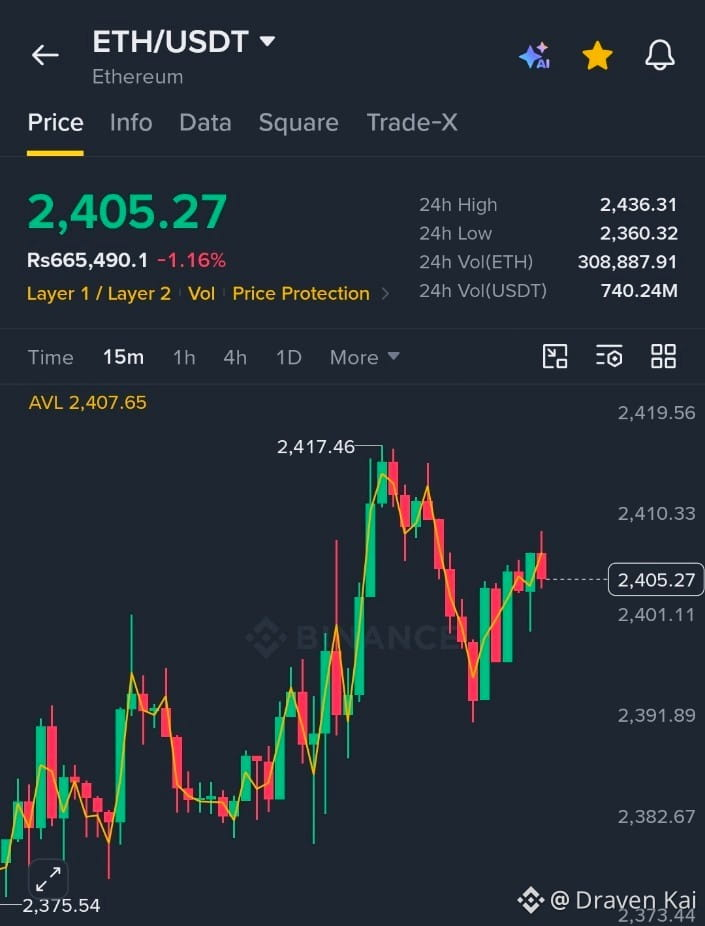
$ETH
SEÑAL VIP | CONFIGURACIÓN ALCISTA
EP: 2,402 – 2,406
TP1: 2,410
TP2: 2,417
TP3: 2,425
SL: 2,391
Análisis técnico: ETH se está consolidando después de un fuerte movimiento alcista desde la zona de soporte de 2,392. El impulso de recuperación a corto plazo se mantiene intacto, pero es necesario superar la resistencia cercana a 2,410–2,417 para continuar al alza. Mantenerse por encima de 2,401 favorece la continuación hacia los siguientes niveles de resistencia.
Gestión del riesgo: Respeta estrictamente el stop loss. Evita perseguir el precio; confirma el impulso antes de entrar.
$ETH
{spot}(ETHUSDT)
$ETH
SEÑAL VIP | CONFIGURACIÓN ALCISTA
EP: 2,402 – 2,406
TP1: 2,410
TP2: 2,417
TP3: 2,425
SL: 2,391
Análisis técnico: ETH se está consolidando después de un fuerte movimiento alcista desde la zona de soporte de 2,392. El impulso de recuperación a corto plazo se mantiene intacto, pero es necesario superar la resistencia cercana a 2,410–2,417 para continuar al alza. Mantenerse por encima de 2,401 favorece la continuación hacia los siguientes niveles de resistencia.
Gestión del riesgo: Respeta estrictamente el stop loss. Evita perseguir el precio; confirma el impulso antes de entrar.
$ETH
SEÑAL VIP | CONFIGURACIÓN ALCISTA
EP: 2,402 – 2,406
TP1: 2,410
TP2: 2,417
TP3: 2,425
SL: 2,391
Análisis técnico: ETH se está consolidando después de un fuerte movimiento alcista desde la zona de soporte de 2,392. El impulso de recuperación a corto plazo se mantiene intacto, pero es necesario superar la resistencia cercana a 2,410–2,417 para continuar al alza. Mantenerse por encima de 2,401 favorece la continuación hacia los siguientes niveles de resistencia.
Gestión del riesgo: Respeta estrictamente el stop loss. Evita perseguir el precio; confirma el impulso antes de entrar.
$ETH
3
3
723
·
--
Bajista
$BTC
SEÑAL VIP | LARGO
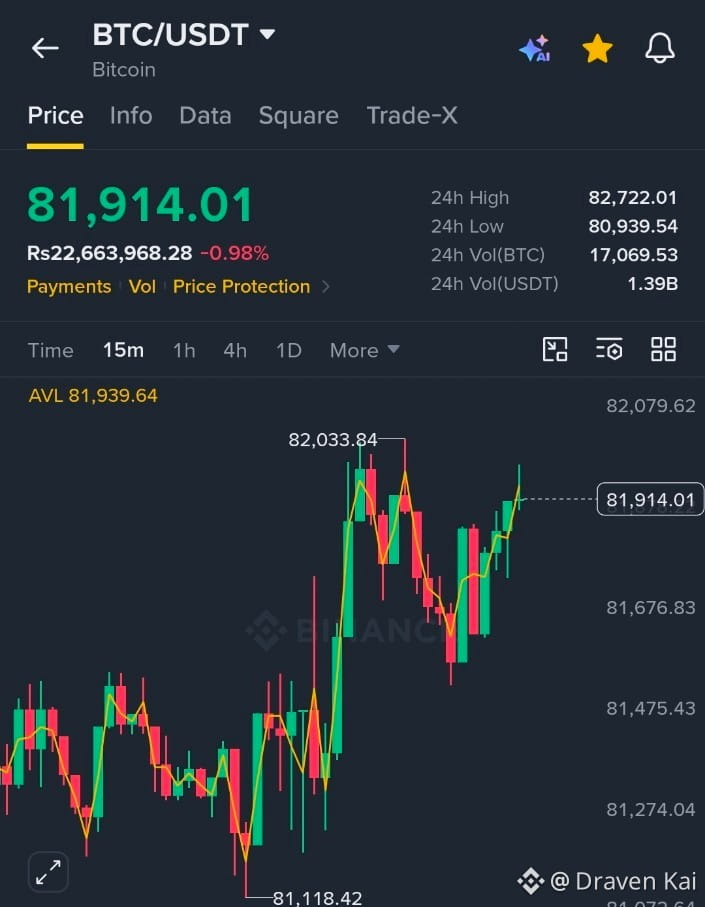
Análisis técnico: BTC muestra una fuerte recuperación alcista en el gráfico de 15 minutos, con mínimos cada vez más altos tras rebotar desde 81,118. El precio se acerca a la zona de resistencia de 82,033, y el impulso favorece otra prueba al alza si los compradores mantienen el control.
EP: 81,850–81,950
TP1: 82,050
TP2: 82,250
TP3: 82,500
SL: 81,600
Ejecución: Mantén una gestión disciplinada del riesgo. Una ruptura confirmada por encima de 82,033 refuerza la configuración de continuación alcista; un rechazo en la resistencia podría provocar un retroceso.
$BTC
{spot}(BTCUSDT)
$BTC
SEÑAL VIP | LARGO
Análisis técnico: BTC muestra una fuerte recuperación alcista en el gráfico de 15 minutos, con mínimos cada vez más altos tras rebotar desde 81,118. El precio se acerca a la zona de resistencia de 82,033, y el impulso favorece otra prueba al alza si los compradores mantienen el control.
EP: 81,850–81,950
TP1: 82,050
TP2: 82,250
TP3: 82,500
SL: 81,600
Ejecución: Mantén una gestión disciplinada del riesgo. Una ruptura confirmada por encima de 82,033 refuerza la configuración de continuación alcista; un rechazo en la resistencia podría provocar un retroceso.
$BTC
SEÑAL VIP | LARGO
Análisis técnico: BTC muestra una fuerte recuperación alcista en el gráfico de 15 minutos, con mínimos cada vez más altos tras rebotar desde 81,118. El precio se acerca a la zona de resistencia de 82,033, y el impulso favorece otra prueba al alza si los compradores mantienen el control.
EP: 81,850–81,950
TP1: 82,050
TP2: 82,250
TP3: 82,500
SL: 81,600
Ejecución: Mantén una gestión disciplinada del riesgo. Una ruptura confirmada por encima de 82,033 refuerza la configuración de continuación alcista; un rechazo en la resistencia podría provocar un retroceso.
$BTC
364
·
--
Alcista
$KERNEL
SEÑAL VIP | LARGO
EP: 0.0500–0.0503
TP1: 0.0508
TP2: 0.0515
TP3: 0.0525
SL: 0.0495
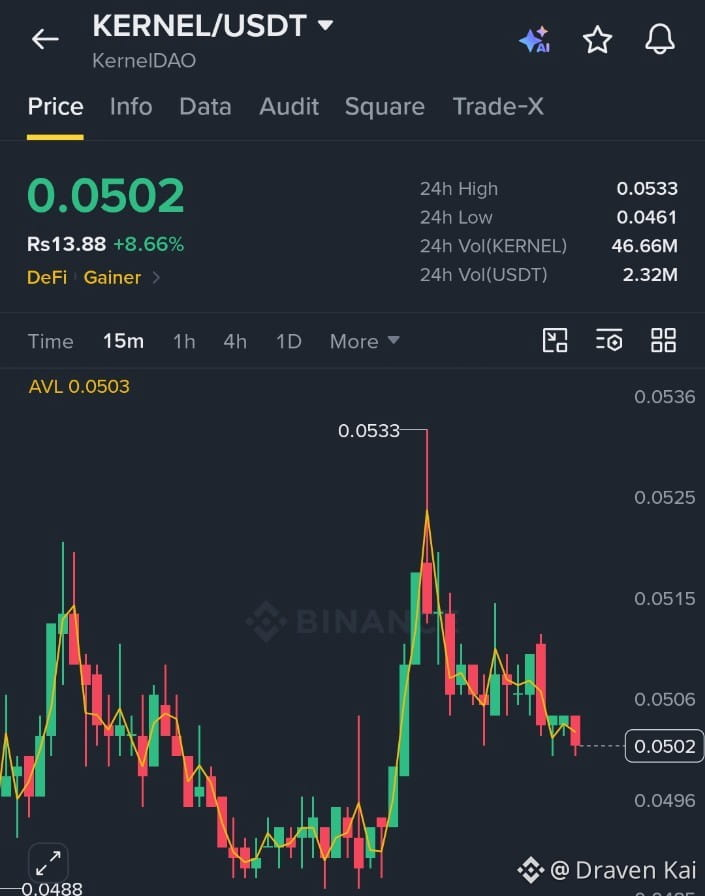
Análisis técnico: KERNEL está consolidándose tras un fuerte impulso alcista hacia 0.0533. El impulso a corto plazo se ha enfriado, y el precio se mantiene cerca de la zona de soporte de 0.0500. Una recuperación sólida del nivel de 0.0506 podría desencadenar nuevas compras y llevar el precio hacia niveles de resistencia más altos.
Gestión del riesgo: Entra con confirmación, protege el capital con un stop-loss estricto y asegura ganancias parciales en cada objetivo.
$KERNEL
{future}(KERNELUSDT)
$KERNEL
SEÑAL VIP | LARGO
EP: 0.0500–0.0503
TP1: 0.0508
TP2: 0.0515
TP3: 0.0525
SL: 0.0495
Análisis técnico: KERNEL está consolidándose tras un fuerte impulso alcista hacia 0.0533. El impulso a corto plazo se ha enfriado, y el precio se mantiene cerca de la zona de soporte de 0.0500. Una recuperación sólida del nivel de 0.0506 podría desencadenar nuevas compras y llevar el precio hacia niveles de resistencia más altos.
Gestión del riesgo: Entra con confirmación, protege el capital con un stop-loss estricto y asegura ganancias parciales en cada objetivo.
$KERNEL
SEÑAL VIP | LARGO
EP: 0.0500–0.0503
TP1: 0.0508
TP2: 0.0515
TP3: 0.0525
SL: 0.0495
Análisis técnico: KERNEL está consolidándose tras un fuerte impulso alcista hacia 0.0533. El impulso a corto plazo se ha enfriado, y el precio se mantiene cerca de la zona de soporte de 0.0500. Una recuperación sólida del nivel de 0.0506 podría desencadenar nuevas compras y llevar el precio hacia niveles de resistencia más altos.
Gestión del riesgo: Entra con confirmación, protege el capital con un stop-loss estricto y asegura ganancias parciales en cada objetivo.
$KERNEL
215
Inicia sesión para explorar más contenidos
Únete a usuarios globales de criptomonedas en Binance Square
⚡️ Obtén información útil y actualizada sobre criptos.
💬 Avalado por el mayor exchange de criptomonedas en el mundo.
👍 Descubre perspectivas reales de creadores verificados.
Email/número de teléfono
Temas populares
BinancePick
2.8M vistas
147,266 están debatiendo
¡Únete a #TemporadaDeResultados: predice resultados en Binance Pick y comparte tu opinión en Binance Square!
Binance Square Official
·403 me gusta
·340.6k vistas
EarningsSeason
5.1M vistas
25,139 están debatiendo
AnthropicTTMRevenueGrewAbout1200%
582 vistas
75 están debatiendo