

Cointelegraph
37.4k Publicaciones

Cointelegraph
 Verificado Plus de Binance Square
Denunciar
Bloquear usuario
Cointelegraph covers fintech, blockchain and Bitcoin, bringing you the latest news and analyses on the future of money.
2 Siguiendo
186.4K+ Seguidores
567.2K+ Me gusta
1 Insignias
Publicaciones
Legisladores surcoreanos barajan aplazar hasta 2029 la aplicación del impuesto a las criptomonedasSegún informes, funcionarios del Gobierno de Corea del Sur están considerando aplazar la política fiscal del país sobre las criptomonedas, cuya implementación está prevista actualmente para enero de 2027.
Según un informe publicado el lunes por el medio surcoreano Newsis, el impuesto sobre los ingresos provenientes de criptomonedas podría aplazarse hasta 2029, en parte porque esa es la fecha más temprana en que los funcionarios podrán compartir con Estados Unidos información sobre los impuestos relacionados con los exchanges de activos digitales.
La política, que impondría un impuesto del 22 % sobre las ganancias obtenidas con criptomonedas —un 20 % sobre los ingresos y un 2 % correspondiente a un impuesto local— a los inversores que ganen más de 2,5 millones de wones surcoreanos (1.883 dólares) al año, ya ha sufrido varios aplazamientos desde que se propuso por primera vez en 2020.
Legisladores surcoreanos barajan aplazar hasta 2029 la aplicación del impuesto a las criptomonedas
Según informes, funcionarios del Gobierno de Corea del Sur están considerando aplazar la política fiscal del país sobre las criptomonedas, cuya implementación está prevista actualmente para enero de 2027.
Según un informe publicado el lunes por el medio surcoreano Newsis, el impuesto sobre los ingresos provenientes de criptomonedas podría aplazarse hasta 2029, en parte porque esa es la fecha más temprana en que los funcionarios podrán compartir con Estados Unidos información sobre los impuestos relacionados con los exchanges de activos digitales.
La política, que impondría un impuesto del 22 % sobre las ganancias obtenidas con criptomonedas —un 20 % sobre los ingresos y un 2 % correspondiente a un impuesto local— a los inversores que ganen más de 2,5 millones de wones surcoreanos (1.883 dólares) al año, ya ha sufrido varios aplazamientos desde que se propuso por primera vez en 2020.
Según un informe publicado el lunes por el medio surcoreano Newsis, el impuesto sobre los ingresos provenientes de criptomonedas podría aplazarse hasta 2029, en parte porque esa es la fecha más temprana en que los funcionarios podrán compartir con Estados Unidos información sobre los impuestos relacionados con los exchanges de activos digitales.
La política, que impondría un impuesto del 22 % sobre las ganancias obtenidas con criptomonedas —un 20 % sobre los ingresos y un 2 % correspondiente a un impuesto local— a los inversores que ganen más de 2,5 millones de wones surcoreanos (1.883 dólares) al año, ya ha sufrido varios aplazamientos desde que se propuso por primera vez en 2020.
1
43
Kalshi llega a un acuerdo con S&P Dow Jones Indices para ampliar los contratos financieros sobre eventosS&P Dow Jones Indices se ha asociado con la plataforma de mercados de predicción Kalshi en un acuerdo que permitirá a la plataforma ofrecer contratos sobre eventos vinculados a los índices de referencia del proveedor de índices financieros.
Según el anuncio del lunes, Kalshi se convertirá en una plataforma preferente para los contratos vinculados a los índices de S&P DJI, cuya liquidación se basará en los valores oficiales de los índices publicados por la empresa.
S&P DJI también estudiará la posibilidad de desarrollar índices utilizando los datos de los mercados de predicción de Kalshi, que podrían seguir las expectativas en torno a acontecimientos económicos, resultados políticos y eventos deportivos. Estos indicadores utilizarían los precios de los contratos sobre eventos de Kalshi para medir las expectativas del mercado sobre resultados futuros, en lugar de seguir el rendimiento de los activos financieros tradicionales.
Kalshi llega a un acuerdo con S&P Dow Jones Indices para ampliar los contratos financieros sobre eventos
S&P Dow Jones Indices se ha asociado con la plataforma de mercados de predicción Kalshi en un acuerdo que permitirá a la plataforma ofrecer contratos sobre eventos vinculados a los índices de referencia del proveedor de índices financieros.
Según el anuncio del lunes, Kalshi se convertirá en una plataforma preferente para los contratos vinculados a los índices de S&P DJI, cuya liquidación se basará en los valores oficiales de los índices publicados por la empresa.
S&P DJI también estudiará la posibilidad de desarrollar índices utilizando los datos de los mercados de predicción de Kalshi, que podrían seguir las expectativas en torno a acontecimientos económicos, resultados políticos y eventos deportivos. Estos indicadores utilizarían los precios de los contratos sobre eventos de Kalshi para medir las expectativas del mercado sobre resultados futuros, en lugar de seguir el rendimiento de los activos financieros tradicionales.
Según el anuncio del lunes, Kalshi se convertirá en una plataforma preferente para los contratos vinculados a los índices de S&P DJI, cuya liquidación se basará en los valores oficiales de los índices publicados por la empresa.
S&P DJI también estudiará la posibilidad de desarrollar índices utilizando los datos de los mercados de predicción de Kalshi, que podrían seguir las expectativas en torno a acontecimientos económicos, resultados políticos y eventos deportivos. Estos indicadores utilizarían los precios de los contratos sobre eventos de Kalshi para medir las expectativas del mercado sobre resultados futuros, en lugar de seguir el rendimiento de los activos financieros tradicionales.
41
Artículo
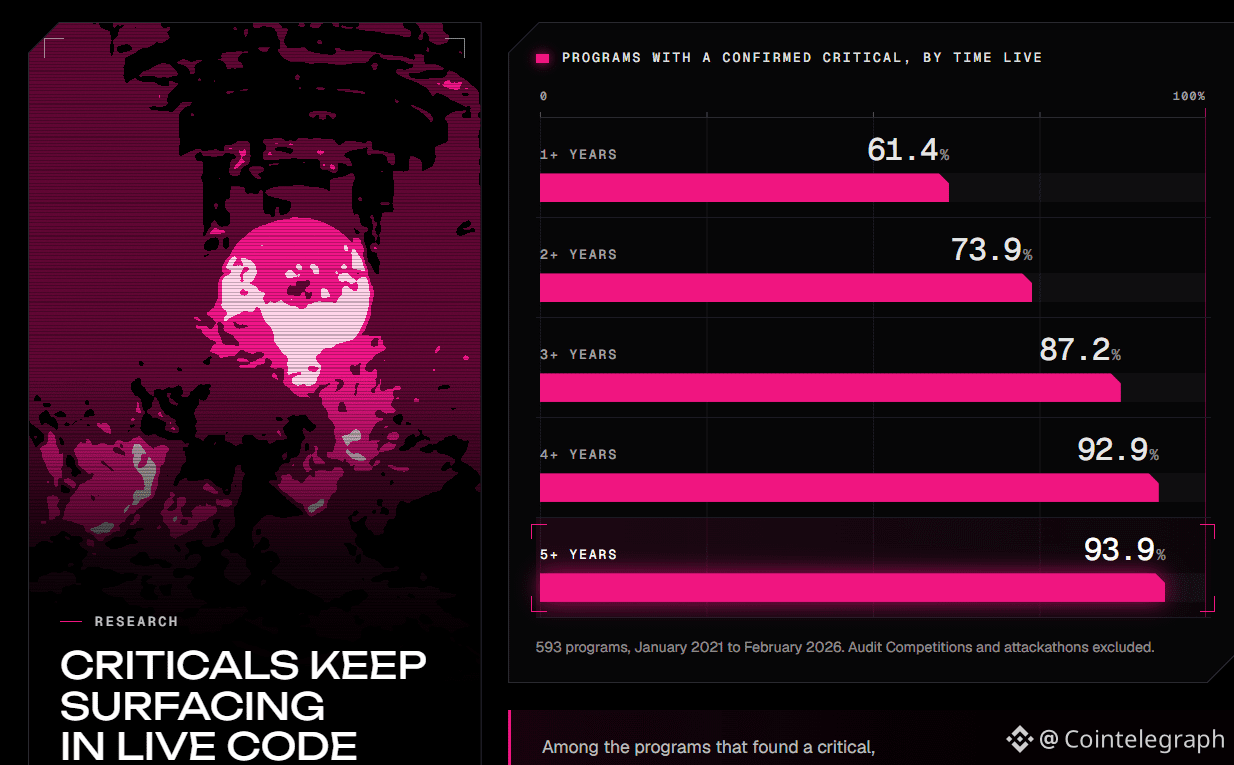
La falla de PHP demuestra que el «apocalipsis de las vulnerabilidades» de la IA avanza según lo previsto: director ejecutivo de ImmunefiLos usuarios de internet siguen siendo vulnerables a los ciberataques derivados de la vulnerabilidad de PHP, en particular a través de sitios web más pequeños que podrían tardar semanas en implementar la actualización publicada el miércoles pasado, según Mitchell Amador, director ejecutivo de la plataforma de recompensas por errores Immunefi.
«Este es el apocalipsis de las vulnerabilidades» que avanza según lo previsto: encontrar vulnerabilidades se ha vuelto barato, pero corregirlas sigue siendo caro, le dijo Amador a Cointelegraph.
«Durante las próximas semanas, trata cualquier sitio en el que inicies sesión como si ya pudiera estar comprometido», dijo Amador, quien advirtió a los usuarios que no reutilicen contraseñas y que tengan cuidado al conectar sus billeteras de criptomonedas a sitios web. También instó a los usuarios a revocar las aprobaciones de tokens que no reconozcan.
La falla de PHP demuestra que el «apocalipsis de las vulnerabilidades» de la IA avanza según lo previsto: director ejecutivo de Immunefi
Los usuarios de internet siguen siendo vulnerables a los ciberataques derivados de la vulnerabilidad de PHP, en particular a través de sitios web más pequeños que podrían tardar semanas en implementar la actualización publicada el miércoles pasado, según Mitchell Amador, director ejecutivo de la plataforma de recompensas por errores Immunefi.
«Este es el apocalipsis de las vulnerabilidades» que avanza según lo previsto: encontrar vulnerabilidades se ha vuelto barato, pero corregirlas sigue siendo caro, le dijo Amador a Cointelegraph.
«Durante las próximas semanas, trata cualquier sitio en el que inicies sesión como si ya pudiera estar comprometido», dijo Amador, quien advirtió a los usuarios que no reutilicen contraseñas y que tengan cuidado al conectar sus billeteras de criptomonedas a sitios web. También instó a los usuarios a revocar las aprobaciones de tokens que no reconozcan.
«Este es el apocalipsis de las vulnerabilidades» que avanza según lo previsto: encontrar vulnerabilidades se ha vuelto barato, pero corregirlas sigue siendo caro, le dijo Amador a Cointelegraph.
«Durante las próximas semanas, trata cualquier sitio en el que inicies sesión como si ya pudiera estar comprometido», dijo Amador, quien advirtió a los usuarios que no reutilicen contraseñas y que tengan cuidado al conectar sus billeteras de criptomonedas a sitios web. También instó a los usuarios a revocar las aprobaciones de tokens que no reconozcan.
145
Strategy no compra Bitcoin y gasta 205 millones de dólares en recompras de STRCStrategy, de Michael Saylor, se abstuvo de comprar o vender Bitcoin la semana pasada y optó, en cambio, por gastar 204,9 millones de dólares en recompras de acciones preferentes STRC.
Strategy recompró 2,07 millones de acciones entre el lunes y el viernes, y no informó de transacciones de Bitcoin (BTC) ni de ventas de acciones a través de su programa de oferta «at-the-market», según un documento presentado el lunes ante la Comisión de Bolsa y Valores de Estados Unidos.
La empresa afirmó que sus tenencias de Bitcoin se mantuvieron en 848.517 BTC, adquiridos por 64.020 millones de dólares a un precio promedio de 75.446 dólares por moneda. Al inicio de la sesión bursátil del lunes en Estados Unidos, la mayor criptomoneda cotizaba a unos 79.992 dólares por unidad.
Strategy no compra Bitcoin y gasta 205 millones de dólares en recompras de STRC
Strategy, de Michael Saylor, se abstuvo de comprar o vender Bitcoin la semana pasada y optó, en cambio, por gastar 204,9 millones de dólares en recompras de acciones preferentes STRC.
Strategy recompró 2,07 millones de acciones entre el lunes y el viernes, y no informó de transacciones de Bitcoin (BTC) ni de ventas de acciones a través de su programa de oferta «at-the-market», según un documento presentado el lunes ante la Comisión de Bolsa y Valores de Estados Unidos.
La empresa afirmó que sus tenencias de Bitcoin se mantuvieron en 848.517 BTC, adquiridos por 64.020 millones de dólares a un precio promedio de 75.446 dólares por moneda. Al inicio de la sesión bursátil del lunes en Estados Unidos, la mayor criptomoneda cotizaba a unos 79.992 dólares por unidad.
Strategy recompró 2,07 millones de acciones entre el lunes y el viernes, y no informó de transacciones de Bitcoin (BTC) ni de ventas de acciones a través de su programa de oferta «at-the-market», según un documento presentado el lunes ante la Comisión de Bolsa y Valores de Estados Unidos.
La empresa afirmó que sus tenencias de Bitcoin se mantuvieron en 848.517 BTC, adquiridos por 64.020 millones de dólares a un precio promedio de 75.446 dólares por moneda. Al inicio de la sesión bursátil del lunes en Estados Unidos, la mayor criptomoneda cotizaba a unos 79.992 dólares por unidad.
90
Los mercados de predicción de HOOD sumarán 1.700 millones de dólares a los ingresos y superarán a las criptomonedas en 2028: BernsteinLos analistas de Bernstein esperan que los mercados de predicción se conviertan en uno de los factores que impulsen el crecimiento incremental de los ingresos de la plataforma de trading Robinhood Markets (HOOD), y que potencialmente superen los ingresos derivados de las criptomonedas.
Según un pronóstico de analistas de Bernstein compartido el lunes con Cointelegraph, los mercados de predicción podrían generar hasta 1.700 millones de dólares en ingresos para Robinhood en 2028, superando los 1.600 millones de dólares previstos para ese año en ingresos basados en criptomonedas.
Los analistas esperan que los ingresos de Robinhood por los mercados de predicción aumenten de unos 650 millones de dólares este año a 1.700 millones en 2028, lo que representaría aproximadamente el 18% de los 9.400 millones de dólares previstos en ingresos totales para Robinhood en 2028.
Los mercados de predicción de HOOD sumarán 1.700 millones de dólares a los ingresos y superarán a las criptomonedas en 2028: Bernstein
Los analistas de Bernstein esperan que los mercados de predicción se conviertan en uno de los factores que impulsen el crecimiento incremental de los ingresos de la plataforma de trading Robinhood Markets (HOOD), y que potencialmente superen los ingresos derivados de las criptomonedas.
Según un pronóstico de analistas de Bernstein compartido el lunes con Cointelegraph, los mercados de predicción podrían generar hasta 1.700 millones de dólares en ingresos para Robinhood en 2028, superando los 1.600 millones de dólares previstos para ese año en ingresos basados en criptomonedas.
Los analistas esperan que los ingresos de Robinhood por los mercados de predicción aumenten de unos 650 millones de dólares este año a 1.700 millones en 2028, lo que representaría aproximadamente el 18% de los 9.400 millones de dólares previstos en ingresos totales para Robinhood en 2028.
Según un pronóstico de analistas de Bernstein compartido el lunes con Cointelegraph, los mercados de predicción podrían generar hasta 1.700 millones de dólares en ingresos para Robinhood en 2028, superando los 1.600 millones de dólares previstos para ese año en ingresos basados en criptomonedas.
Los analistas esperan que los ingresos de Robinhood por los mercados de predicción aumenten de unos 650 millones de dólares este año a 1.700 millones en 2028, lo que representaría aproximadamente el 18% de los 9.400 millones de dólares previstos en ingresos totales para Robinhood en 2028.
93
Verificado
Aviva Investors lanza una clase de acciones tokenizada de su fondo en libras esterlinas de 29.000 millones de dólares en XRP LedgerAviva Investors, la división de gestión de activos de la aseguradora británica Aviva, lanzó una clase de acciones tokenizada de su fondo de liquidez en libras esterlinas (GBP) en XRP Ledger (XRPL).
Este lanzamiento incorpora a XRPL una clase de acciones tokenizada del mayor fondo de la compañía, que gestiona activos por valor de aproximadamente 22.000 millones de libras esterlinas (29.400 millones de dólares), y permite invertir en el fondo en formato tokenizado, según anunciaron conjuntamente Ripple y Aviva el lunes.
Es el segundo fondo tokenizado de la gestora de activos, después de que Aviva ampliara su fondo de liquidez en dólares estadounidenses a la red XRPL a principios de julio.
Aviva Investors lanza una clase de acciones tokenizada de su fondo en libras esterlinas de 29.000 millones de dólares en XRP Ledger
Aviva Investors, la división de gestión de activos de la aseguradora británica Aviva, lanzó una clase de acciones tokenizada de su fondo de liquidez en libras esterlinas (GBP) en XRP Ledger (XRPL).
Este lanzamiento incorpora a XRPL una clase de acciones tokenizada del mayor fondo de la compañía, que gestiona activos por valor de aproximadamente 22.000 millones de libras esterlinas (29.400 millones de dólares), y permite invertir en el fondo en formato tokenizado, según anunciaron conjuntamente Ripple y Aviva el lunes.
Es el segundo fondo tokenizado de la gestora de activos, después de que Aviva ampliara su fondo de liquidez en dólares estadounidenses a la red XRPL a principios de julio.
Este lanzamiento incorpora a XRPL una clase de acciones tokenizada del mayor fondo de la compañía, que gestiona activos por valor de aproximadamente 22.000 millones de libras esterlinas (29.400 millones de dólares), y permite invertir en el fondo en formato tokenizado, según anunciaron conjuntamente Ripple y Aviva el lunes.
Es el segundo fondo tokenizado de la gestora de activos, después de que Aviva ampliara su fondo de liquidez en dólares estadounidenses a la red XRPL a principios de julio.
2
1
2
208
Artículo
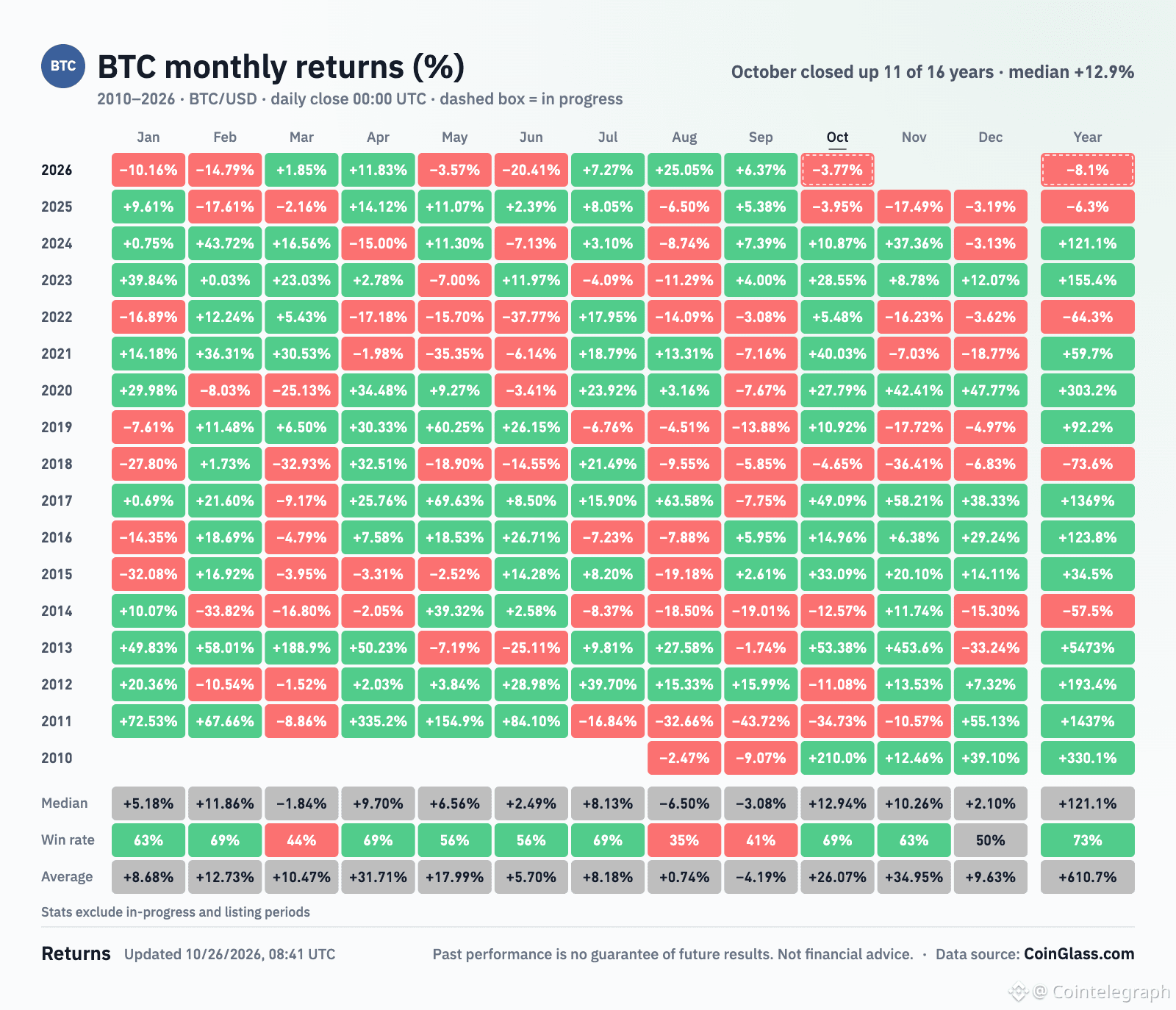
El precio de BTC se arriesga a perder los 80.000 dólares antes de la reunión del FOMC y de los resultados empresariales: tres cosas que debes saber sobre Bitcoin esta semanaBitcoin (BTC) empieza la última semana de octubre luchando por mantener el soporte de los 80.000 dólares, antes de una semana intensa de datos macroeconómicos y resultados empresariales de EE. UU.
Puntos clave:
Los mercados prevén que la Fed mantenga los tipos de interés en su rango actual del 3,75-4 % en su reunión del miércoles, mientras el crudo Brent baja hasta los 110 dólares por barril.
El índice compuesto KOSPI de Corea del Sur reanuda su tendencia bajista antes de una importante ronda de resultados empresariales en EE. UU.
Bitcoin va camino de cerrar octubre con una caída del 4 %, replicando el desempeño de 2025, mientras el soporte de los 80.000 dólares parece débil.
El precio de BTC se arriesga a perder los 80.000 dólares antes de la reunión del FOMC y de los resultados empresariales: tres cosas que debes saber sobre Bitcoin esta semana
Bitcoin (BTC) empieza la última semana de octubre luchando por mantener el soporte de los 80.000 dólares, antes de una semana intensa de datos macroeconómicos y resultados empresariales de EE. UU.
Puntos clave:
Los mercados prevén que la Fed mantenga los tipos de interés en su rango actual del 3,75-4 % en su reunión del miércoles, mientras el crudo Brent baja hasta los 110 dólares por barril.
El índice compuesto KOSPI de Corea del Sur reanuda su tendencia bajista antes de una importante ronda de resultados empresariales en EE. UU.
Bitcoin va camino de cerrar octubre con una caída del 4 %, replicando el desempeño de 2025, mientras el soporte de los 80.000 dólares parece débil.
Puntos clave:
Los mercados prevén que la Fed mantenga los tipos de interés en su rango actual del 3,75-4 % en su reunión del miércoles, mientras el crudo Brent baja hasta los 110 dólares por barril.
El índice compuesto KOSPI de Corea del Sur reanuda su tendencia bajista antes de una importante ronda de resultados empresariales en EE. UU.
Bitcoin va camino de cerrar octubre con una caída del 4 %, replicando el desempeño de 2025, mientras el soporte de los 80.000 dólares parece débil.
218
El valor de las acciones tokenizadas de Securitize se reduce a la mitad mientras Circle amplía su ventajaEl valor de las acciones tokenizadas de Securitize (SECZ) ha perdido más de la mitad en menos de un mes, mientras se amplía la brecha con Circle (CRCL), líder del mercado.
La capitalización de mercado de los tokens SECZ cayó desde un máximo de 430,4 millones de dólares el 28 de septiembre hasta 208,6 millones el domingo, según Token Terminal. Las acciones que cotizan en la NYSE cerraron el viernes con una caída del 2,1%, a 7,80 dólares por acción, y una capitalización de mercado de 1.270 millones de dólares.
Los tokens que siguen el precio de las acciones de Circle han ganado cerca de un 20% de valor de mercado desde el 28 de septiembre, hasta alcanzar los 383,6 millones de dólares y recuperar el primer puesto en el mercado de acciones tokenizadas, valorado en 3.300 millones de dólares.
El valor de las acciones tokenizadas de Securitize se reduce a la mitad mientras Circle amplía su ventaja
El valor de las acciones tokenizadas de Securitize (SECZ) ha perdido más de la mitad en menos de un mes, mientras se amplía la brecha con Circle (CRCL), líder del mercado.
La capitalización de mercado de los tokens SECZ cayó desde un máximo de 430,4 millones de dólares el 28 de septiembre hasta 208,6 millones el domingo, según Token Terminal. Las acciones que cotizan en la NYSE cerraron el viernes con una caída del 2,1%, a 7,80 dólares por acción, y una capitalización de mercado de 1.270 millones de dólares.
Los tokens que siguen el precio de las acciones de Circle han ganado cerca de un 20% de valor de mercado desde el 28 de septiembre, hasta alcanzar los 383,6 millones de dólares y recuperar el primer puesto en el mercado de acciones tokenizadas, valorado en 3.300 millones de dólares.
La capitalización de mercado de los tokens SECZ cayó desde un máximo de 430,4 millones de dólares el 28 de septiembre hasta 208,6 millones el domingo, según Token Terminal. Las acciones que cotizan en la NYSE cerraron el viernes con una caída del 2,1%, a 7,80 dólares por acción, y una capitalización de mercado de 1.270 millones de dólares.
Los tokens que siguen el precio de las acciones de Circle han ganado cerca de un 20% de valor de mercado desde el 28 de septiembre, hasta alcanzar los 383,6 millones de dólares y recuperar el primer puesto en el mercado de acciones tokenizadas, valorado en 3.300 millones de dólares.
91
Los ETF de Bitcoin ponen fin a una racha de dos semanas de salidas con un repunte de 301 millones de dólaresLos fondos cotizados en bolsa (ETF) de Bitcoin al contado que cotizan en EE. UU. atrajeron alrededor de 301 millones de dólares en entradas netas la semana pasada, poniendo fin a una racha de dos semanas de salidas pese a los fuertes retiros registrados al final de la semana.
Los fondos perdieron unos 228 millones de dólares la semana anterior y 680 millones la semana previa. Las salidas netas de octubre ascendieron a unos 314 millones de dólares, según datos de Farside Investors.
Los ETF de Bitcoin recibieron 1.080 millones de dólares entre el lunes y el miércoles, mientras que Bitcoin (BTC) alcanzó un máximo semanal de 84.777 dólares el miércoles, según CoinGecko. Luego, los inversores retiraron unos 774 millones de dólares el jueves y el viernes, mientras BTC retrocedía hacia los 80.000 dólares.
Los ETF de Bitcoin ponen fin a una racha de dos semanas de salidas con un repunte de 301 millones de dólares
Los fondos cotizados en bolsa (ETF) de Bitcoin al contado que cotizan en EE. UU. atrajeron alrededor de 301 millones de dólares en entradas netas la semana pasada, poniendo fin a una racha de dos semanas de salidas pese a los fuertes retiros registrados al final de la semana.
Los fondos perdieron unos 228 millones de dólares la semana anterior y 680 millones la semana previa. Las salidas netas de octubre ascendieron a unos 314 millones de dólares, según datos de Farside Investors.
Los ETF de Bitcoin recibieron 1.080 millones de dólares entre el lunes y el miércoles, mientras que Bitcoin (BTC) alcanzó un máximo semanal de 84.777 dólares el miércoles, según CoinGecko. Luego, los inversores retiraron unos 774 millones de dólares el jueves y el viernes, mientras BTC retrocedía hacia los 80.000 dólares.
Los fondos perdieron unos 228 millones de dólares la semana anterior y 680 millones la semana previa. Las salidas netas de octubre ascendieron a unos 314 millones de dólares, según datos de Farside Investors.
Los ETF de Bitcoin recibieron 1.080 millones de dólares entre el lunes y el miércoles, mientras que Bitcoin (BTC) alcanzó un máximo semanal de 84.777 dólares el miércoles, según CoinGecko. Luego, los inversores retiraron unos 774 millones de dólares el jueves y el viernes, mientras BTC retrocedía hacia los 80.000 dólares.
181
Musk advierte que más de 200 neoclouds de IA se enfrentan a una «muerte de pececillos»Elon Musk advierte que más de 200 proveedores especializados de nube para IA podrían quebrar o consolidarse a medida que los prestamistas cierran el grifo de la financiación.
Musk dijo el domingo en X que los prestamistas habían dejado prácticamente de financiar a empresas sin fuentes de ingresos sustanciales ajenas a los centros de datos de IA. Dijo que SpaceX había conseguido 40.000 millones de dólares en financiación mediante deuda para adquirir GPU gracias a su calificación de grado de inversión y a los ingresos de sus negocios de internet satelital Starlink y de cohetes.
«Eso significa que las más de 200 neoclouds van a sufrir una oleada de quiebras y consolidaciones, como pececillos. Algunas lograrán salir adelante, pero no muchas», dijo.
Musk advierte que más de 200 neoclouds de IA se enfrentan a una «muerte de pececillos»
Elon Musk advierte que más de 200 proveedores especializados de nube para IA podrían quebrar o consolidarse a medida que los prestamistas cierran el grifo de la financiación.
Musk dijo el domingo en X que los prestamistas habían dejado prácticamente de financiar a empresas sin fuentes de ingresos sustanciales ajenas a los centros de datos de IA. Dijo que SpaceX había conseguido 40.000 millones de dólares en financiación mediante deuda para adquirir GPU gracias a su calificación de grado de inversión y a los ingresos de sus negocios de internet satelital Starlink y de cohetes.
«Eso significa que las más de 200 neoclouds van a sufrir una oleada de quiebras y consolidaciones, como pececillos. Algunas lograrán salir adelante, pero no muchas», dijo.
Musk dijo el domingo en X que los prestamistas habían dejado prácticamente de financiar a empresas sin fuentes de ingresos sustanciales ajenas a los centros de datos de IA. Dijo que SpaceX había conseguido 40.000 millones de dólares en financiación mediante deuda para adquirir GPU gracias a su calificación de grado de inversión y a los ingresos de sus negocios de internet satelital Starlink y de cohetes.
«Eso significa que las más de 200 neoclouds van a sufrir una oleada de quiebras y consolidaciones, como pececillos. Algunas lograrán salir adelante, pero no muchas», dijo.
170
Hong Kong designa a Solana Company, cotizada en el Nasdaq, como empresa estratégicaHong Kong ha designado a Solana Company (HSDT), cotizada en el Nasdaq, como empresa estratégica dentro de un programa gubernamental destinado a atraer negocios que contribuyan al desarrollo económico de la ciudad.
Solana Company dijo el jueves que formaba parte de la séptima tanda de empresas seleccionadas por la Oficina para la Captación de Empresas Estratégicas de Hong Kong (OASES) y que era la única empresa de infraestructura blockchain incorporada por la oficina en 2026.
El gobierno de Hong Kong confirmó la semana pasada la incorporación de 18 empresas al programa, con lo que el total asciende a 142.
Hong Kong designa a Solana Company, cotizada en el Nasdaq, como empresa estratégica
Hong Kong ha designado a Solana Company (HSDT), cotizada en el Nasdaq, como empresa estratégica dentro de un programa gubernamental destinado a atraer negocios que contribuyan al desarrollo económico de la ciudad.
Solana Company dijo el jueves que formaba parte de la séptima tanda de empresas seleccionadas por la Oficina para la Captación de Empresas Estratégicas de Hong Kong (OASES) y que era la única empresa de infraestructura blockchain incorporada por la oficina en 2026.
El gobierno de Hong Kong confirmó la semana pasada la incorporación de 18 empresas al programa, con lo que el total asciende a 142.
Solana Company dijo el jueves que formaba parte de la séptima tanda de empresas seleccionadas por la Oficina para la Captación de Empresas Estratégicas de Hong Kong (OASES) y que era la única empresa de infraestructura blockchain incorporada por la oficina en 2026.
El gobierno de Hong Kong confirmó la semana pasada la incorporación de 18 empresas al programa, con lo que el total asciende a 142.
374
Keystone afirma que una brecha en su sitio web expuso las direcciones de compradores de billeteras de hardwareKeystone, fabricante de billeteras de hardware para criptomonedas, ha revelado una brecha de seguridad en su sitio web que expuso información de clientes a atacantes, lo que ha suscitado preocupación por posibles estafas dirigidas y ataques físicos.
Keystone informó el sábado que había detectado actividad sospechosa a principios de semana y confirmó el viernes, tras revisar la actividad de la API con Shopify, que un tercero no autorizado había accedido a la información de envío de los clientes. Esta incluía nombres, datos de contacto, direcciones de envío y otros detalles de los pedidos, como los artículos comprados.
Keystone afirma que una brecha en su sitio web expuso las direcciones de compradores de billeteras de hardware
Keystone, fabricante de billeteras de hardware para criptomonedas, ha revelado una brecha de seguridad en su sitio web que expuso información de clientes a atacantes, lo que ha suscitado preocupación por posibles estafas dirigidas y ataques físicos.
Keystone informó el sábado que había detectado actividad sospechosa a principios de semana y confirmó el viernes, tras revisar la actividad de la API con Shopify, que un tercero no autorizado había accedido a la información de envío de los clientes. Esta incluía nombres, datos de contacto, direcciones de envío y otros detalles de los pedidos, como los artículos comprados.
Keystone informó el sábado que había detectado actividad sospechosa a principios de semana y confirmó el viernes, tras revisar la actividad de la API con Shopify, que un tercero no autorizado había accedido a la información de envío de los clientes. Esta incluía nombres, datos de contacto, direcciones de envío y otros detalles de los pedidos, como los artículos comprados.
343
Anchorpoint, liderada por Standard Chartered, afirma que no se apresurará a ofrecer su moneda estable a usuarios minoristasAnchorpoint, la iniciativa de monedas estables respaldada por Standard Chartered, afirma que adoptará un enfoque cauteloso al abrir a los usuarios minoristas su moneda estable respaldada por el dólar de Hong Kong y se niega a confirmar una fecha de lanzamiento, después de que su competidor HSBC lanzara RedCoin, según el South China Morning Post.
La iniciativa lanzó su producto de moneda estable institucional en agosto y anteriormente señaló que la oferta para usuarios minoristas podría llegar tan pronto como a finales de 2026.
Dominic Maffei, director ejecutivo de Anchorpoint, se negó a confirmar ese calendario en una rueda de prensa el viernes y afirmó que la empresa adoptaría un enfoque prudente.
Anchorpoint, liderada por Standard Chartered, afirma que no se apresurará a ofrecer su moneda estable a usuarios minoristas
Anchorpoint, la iniciativa de monedas estables respaldada por Standard Chartered, afirma que adoptará un enfoque cauteloso al abrir a los usuarios minoristas su moneda estable respaldada por el dólar de Hong Kong y se niega a confirmar una fecha de lanzamiento, después de que su competidor HSBC lanzara RedCoin, según el South China Morning Post.
La iniciativa lanzó su producto de moneda estable institucional en agosto y anteriormente señaló que la oferta para usuarios minoristas podría llegar tan pronto como a finales de 2026.
Dominic Maffei, director ejecutivo de Anchorpoint, se negó a confirmar ese calendario en una rueda de prensa el viernes y afirmó que la empresa adoptaría un enfoque prudente.
La iniciativa lanzó su producto de moneda estable institucional en agosto y anteriormente señaló que la oferta para usuarios minoristas podría llegar tan pronto como a finales de 2026.
Dominic Maffei, director ejecutivo de Anchorpoint, se negó a confirmar ese calendario en una rueda de prensa el viernes y afirmó que la empresa adoptaría un enfoque prudente.
1
414
Un funcionario del BCE considera que el euro digital es clave para proteger la «soberanía» de la UEPiero Cipollone, miembro del Comité Ejecutivo del Banco Central Europeo, afirmó que el euro digital, cuyo proyecto piloto está previsto para el próximo año, tiene el potencial de otorgar al bloque «soberanía» sobre una infraestructura de pagos que actualmente depende de terceros externos no europeos.
Cipollone afirmó en una entrevista con Milano Finance, de Italia, publicada el sábado por el banco central, que, dado que el bloque depende críticamente de terceros, no es fácil garantizar que el sistema funcione sin problemas. No mencionó a ningún tercero en concreto.
Un funcionario del BCE considera que el euro digital es clave para proteger la «soberanía» de la UE
Piero Cipollone, miembro del Comité Ejecutivo del Banco Central Europeo, afirmó que el euro digital, cuyo proyecto piloto está previsto para el próximo año, tiene el potencial de otorgar al bloque «soberanía» sobre una infraestructura de pagos que actualmente depende de terceros externos no europeos.
Cipollone afirmó en una entrevista con Milano Finance, de Italia, publicada el sábado por el banco central, que, dado que el bloque depende críticamente de terceros, no es fácil garantizar que el sistema funcione sin problemas. No mencionó a ningún tercero en concreto.
Cipollone afirmó en una entrevista con Milano Finance, de Italia, publicada el sábado por el banco central, que, dado que el bloque depende críticamente de terceros, no es fácil garantizar que el sistema funcione sin problemas. No mencionó a ningún tercero en concreto.
418
Netanyahu plantea recurrir a la cadena de bloques como solución ante posibles sanciones financierasLa cadena de bloques se ha convertido en un tema de las elecciones israelíes de esta semana, después de que el primer ministro Benjamin Netanyahu dijera el viernes que el país podría recurrir a las criptomonedas para evitar las presiones sobre la economía que podrían causar posibles sanciones financieras internacionales.
Dijo a un entrevistador de una cadena de televisión local que Israel está estudiando el uso de la tecnología de cadena de bloques y las criptomonedas como medio para eludir posibles sanciones bancarias.
«La cadena de bloques es una alternativa a las sanciones», dijo el primer ministro en una entrevista el viernes con la cadena económica Channel 10 de Israel.
Netanyahu plantea recurrir a la cadena de bloques como solución ante posibles sanciones financieras
La cadena de bloques se ha convertido en un tema de las elecciones israelíes de esta semana, después de que el primer ministro Benjamin Netanyahu dijera el viernes que el país podría recurrir a las criptomonedas para evitar las presiones sobre la economía que podrían causar posibles sanciones financieras internacionales.
Dijo a un entrevistador de una cadena de televisión local que Israel está estudiando el uso de la tecnología de cadena de bloques y las criptomonedas como medio para eludir posibles sanciones bancarias.
«La cadena de bloques es una alternativa a las sanciones», dijo el primer ministro en una entrevista el viernes con la cadena económica Channel 10 de Israel.
Dijo a un entrevistador de una cadena de televisión local que Israel está estudiando el uso de la tecnología de cadena de bloques y las criptomonedas como medio para eludir posibles sanciones bancarias.
«La cadena de bloques es una alternativa a las sanciones», dijo el primer ministro en una entrevista el viernes con la cadena económica Channel 10 de Israel.
1
596
Verificado
Wells Fargo y otras cinco empresas se oponen a la cotización de acciones tokenizadas en OKX-ICE: informeSegún se informa, seis empresas más han presentado objeciones a que sus acciones coticen en forma tokenizada en la plataforma propuesta, como parte de una empresa conjunta entre el exchange de criptomonedas OKX y la empresa matriz de la Bolsa de Nueva York, Intercontinental Exchange (ICE).
Según un informe de Reuters del viernes, un total de 22 empresas se habían opuesto a que sus acciones cotizadas en Estados Unidos se tokenizaran en la plataforma bursátil propuesta, llamada OKXICE. Entre las objeciones más recientes se encontraban, según se informa, las de Wells Fargo, Arm Holdings e Intuit, que se sumaron a Microsoft y Alphabet, la empresa matriz de Google, durante la última semana.
Wells Fargo y otras cinco empresas se oponen a la cotización de acciones tokenizadas en OKX-ICE: informe
Según se informa, seis empresas más han presentado objeciones a que sus acciones coticen en forma tokenizada en la plataforma propuesta, como parte de una empresa conjunta entre el exchange de criptomonedas OKX y la empresa matriz de la Bolsa de Nueva York, Intercontinental Exchange (ICE).
Según un informe de Reuters del viernes, un total de 22 empresas se habían opuesto a que sus acciones cotizadas en Estados Unidos se tokenizaran en la plataforma bursátil propuesta, llamada OKXICE. Entre las objeciones más recientes se encontraban, según se informa, las de Wells Fargo, Arm Holdings e Intuit, que se sumaron a Microsoft y Alphabet, la empresa matriz de Google, durante la última semana.
Según un informe de Reuters del viernes, un total de 22 empresas se habían opuesto a que sus acciones cotizadas en Estados Unidos se tokenizaran en la plataforma bursátil propuesta, llamada OKXICE. Entre las objeciones más recientes se encontraban, según se informa, las de Wells Fargo, Arm Holdings e Intuit, que se sumaron a Microsoft y Alphabet, la empresa matriz de Google, durante la última semana.
580
El IRS planea reducir las sanciones por divulgación fiscal, incluso para las criptomonedas: ForbesEl Servicio de Impuestos Internos de EE. UU. (IRS) se prepara para reformar su programa de divulgación voluntaria, con planes para reducir las sanciones y agilizar la resolución de infracciones fiscales, incluidas las relacionadas con criptomonedas, según un informe publicado el viernes por Forbes.
Jarod Koopman, jefe de Investigación Criminal del IRS, dijo que la agencia pretende implementar el programa revisado antes de diciembre, con el objetivo de resolver los casos en un plazo de 120 días desde que los contribuyentes completen el proceso de presentación requerido.
Según se informa, la reforma no establecería un proceso de divulgación independiente para los activos digitales. Koopman dijo a los asistentes a la Conferencia sobre Controversias Fiscales de UCLA Extension que el IRS gestionaría los activos digitales mediante los mismos procedimientos de divulgación voluntaria que se utilizan para otras formas de incumplimiento tributario.
El IRS planea reducir las sanciones por divulgación fiscal, incluso para las criptomonedas: Forbes
El Servicio de Impuestos Internos de EE. UU. (IRS) se prepara para reformar su programa de divulgación voluntaria, con planes para reducir las sanciones y agilizar la resolución de infracciones fiscales, incluidas las relacionadas con criptomonedas, según un informe publicado el viernes por Forbes.
Jarod Koopman, jefe de Investigación Criminal del IRS, dijo que la agencia pretende implementar el programa revisado antes de diciembre, con el objetivo de resolver los casos en un plazo de 120 días desde que los contribuyentes completen el proceso de presentación requerido.
Según se informa, la reforma no establecería un proceso de divulgación independiente para los activos digitales. Koopman dijo a los asistentes a la Conferencia sobre Controversias Fiscales de UCLA Extension que el IRS gestionaría los activos digitales mediante los mismos procedimientos de divulgación voluntaria que se utilizan para otras formas de incumplimiento tributario.
Jarod Koopman, jefe de Investigación Criminal del IRS, dijo que la agencia pretende implementar el programa revisado antes de diciembre, con el objetivo de resolver los casos en un plazo de 120 días desde que los contribuyentes completen el proceso de presentación requerido.
Según se informa, la reforma no establecería un proceso de divulgación independiente para los activos digitales. Koopman dijo a los asistentes a la Conferencia sobre Controversias Fiscales de UCLA Extension que el IRS gestionaría los activos digitales mediante los mismos procedimientos de divulgación voluntaria que se utilizan para otras formas de incumplimiento tributario.
285
Artículo
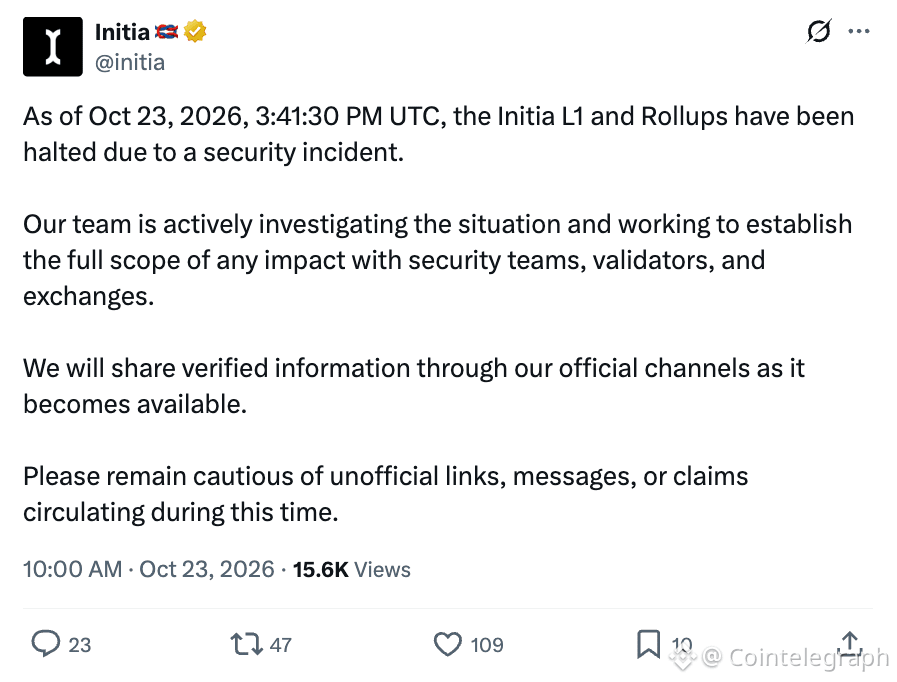
Initia detiene su blockchain tras un exploit que, según informes, sustrajo más de 2,6 millones de dólaresInitia detuvo su cadena de bloques de capa 1 y sus rollups después de que investigadores de blockchain informaran de un exploit que permitió a un atacante acuñar tokens sin autorización y sustraer más de 2,6 millones de dólares en criptoactivos.
La red se detuvo el viernes a las 3:41 p. m. UTC tras un incidente de seguridad, según informó Initia en una publicación en X. El equipo dijo que estaba trabajando con investigadores de seguridad, validadores y exchanges para determinar el alcance total del impacto.
El investigador de seguridad de blockchain Spreek fue el primero en alertar sobre el exploit el viernes. Informó que un atacante había acuñado tokens sin autorización y convertido aproximadamente 2,6 millones de dólares en otros activos, mientras aún se transferían fondos adicionales.
Initia detiene su blockchain tras un exploit que, según informes, sustrajo más de 2,6 millones de dólares
Initia detuvo su cadena de bloques de capa 1 y sus rollups después de que investigadores de blockchain informaran de un exploit que permitió a un atacante acuñar tokens sin autorización y sustraer más de 2,6 millones de dólares en criptoactivos.
La red se detuvo el viernes a las 3:41 p. m. UTC tras un incidente de seguridad, según informó Initia en una publicación en X. El equipo dijo que estaba trabajando con investigadores de seguridad, validadores y exchanges para determinar el alcance total del impacto.
El investigador de seguridad de blockchain Spreek fue el primero en alertar sobre el exploit el viernes. Informó que un atacante había acuñado tokens sin autorización y convertido aproximadamente 2,6 millones de dólares en otros activos, mientras aún se transferían fondos adicionales.
La red se detuvo el viernes a las 3:41 p. m. UTC tras un incidente de seguridad, según informó Initia en una publicación en X. El equipo dijo que estaba trabajando con investigadores de seguridad, validadores y exchanges para determinar el alcance total del impacto.
El investigador de seguridad de blockchain Spreek fue el primero en alertar sobre el exploit el viernes. Informó que un atacante había acuñado tokens sin autorización y convertido aproximadamente 2,6 millones de dólares en otros activos, mientras aún se transferían fondos adicionales.
760
Un senador de EE. UU. investiga a Tether tras un presunto acuerdo con un exasesor de criptomonedas de TrumpEl senador Richard Blumenthal ha solicitado información al director ejecutivo de Tether, Paolo Ardoino, después de que un artículo de The Wall Street Journal afirmara que el emisor de la stablecoin había cerrado un acuerdo de 6,3 millones de dólares con una empresa de marketing cofundada por Bo Hines, exasesor de criptomonedas de la Casa Blanca.
En una carta enviada el jueves a Ardoino, el legislador de Connecticut afirmó que la Subcomisión Permanente de Investigaciones del Senado exigía «registros e información relacionados con contratos, pagos, comunicaciones y actividades de cabildeo» entre Tether y Nxum, la empresa de Hines. Según Blumental, la investigación sobre Nxum, Tether y Hines formaba parte de lo que el senador calificó como «el enriquecimiento personal y las operaciones interesadas con empresas de criptomonedas» del Gobierno de Trump.
Un senador de EE. UU. investiga a Tether tras un presunto acuerdo con un exasesor de criptomonedas de Trump
El senador Richard Blumenthal ha solicitado información al director ejecutivo de Tether, Paolo Ardoino, después de que un artículo de The Wall Street Journal afirmara que el emisor de la stablecoin había cerrado un acuerdo de 6,3 millones de dólares con una empresa de marketing cofundada por Bo Hines, exasesor de criptomonedas de la Casa Blanca.
En una carta enviada el jueves a Ardoino, el legislador de Connecticut afirmó que la Subcomisión Permanente de Investigaciones del Senado exigía «registros e información relacionados con contratos, pagos, comunicaciones y actividades de cabildeo» entre Tether y Nxum, la empresa de Hines. Según Blumental, la investigación sobre Nxum, Tether y Hines formaba parte de lo que el senador calificó como «el enriquecimiento personal y las operaciones interesadas con empresas de criptomonedas» del Gobierno de Trump.
En una carta enviada el jueves a Ardoino, el legislador de Connecticut afirmó que la Subcomisión Permanente de Investigaciones del Senado exigía «registros e información relacionados con contratos, pagos, comunicaciones y actividades de cabildeo» entre Tether y Nxum, la empresa de Hines. Según Blumental, la investigación sobre Nxum, Tether y Hines formaba parte de lo que el senador calificó como «el enriquecimiento personal y las operaciones interesadas con empresas de criptomonedas» del Gobierno de Trump.
324
La SEC señala la tokenización como un área de alto riesgo en los exámenes del mercado de 2027La Comisión de Bolsa y Valores de Estados Unidos (SEC) ha añadido la tokenización a sus prioridades de examen para el año fiscal 2027, situando los valores tokenizados junto con la computación cuántica y la ampliación del horario de negociación entre las tendencias emergentes que prevé examinar.
En sus prioridades de examen para 2027, publicadas el viernes, la SEC identificó la tokenización como un área de interés en los exámenes de las infraestructuras críticas del mercado. La tokenización no se mencionó explícitamente en las prioridades de la agencia para 2026.
El informe abordó la seguridad y la fiabilidad de las infraestructuras críticas del mercado y señaló:
La SEC señala la tokenización como un área de alto riesgo en los exámenes del mercado de 2027
La Comisión de Bolsa y Valores de Estados Unidos (SEC) ha añadido la tokenización a sus prioridades de examen para el año fiscal 2027, situando los valores tokenizados junto con la computación cuántica y la ampliación del horario de negociación entre las tendencias emergentes que prevé examinar.
En sus prioridades de examen para 2027, publicadas el viernes, la SEC identificó la tokenización como un área de interés en los exámenes de las infraestructuras críticas del mercado. La tokenización no se mencionó explícitamente en las prioridades de la agencia para 2026.
El informe abordó la seguridad y la fiabilidad de las infraestructuras críticas del mercado y señaló:
En sus prioridades de examen para 2027, publicadas el viernes, la SEC identificó la tokenización como un área de interés en los exámenes de las infraestructuras críticas del mercado. La tokenización no se mencionó explícitamente en las prioridades de la agencia para 2026.
El informe abordó la seguridad y la fiabilidad de las infraestructuras críticas del mercado y señaló:
188
Inicia sesión para explorar más contenidos
Únete a usuarios globales de criptomonedas en Binance Square
⚡️ Obtén información útil y actualizada sobre criptos.
💬 Avalado por el mayor exchange de criptomonedas en el mundo.
👍 Descubre perspectivas reales de creadores verificados.
Email/número de teléfono
Temas populares
BinancePick
2.9M vistas
148,830 están debatiendo
¡Únete a #TemporadaDeResultados: predice resultados en Binance Pick y comparte tu opinión en Binance Square!
Binance Square Official
·405 me gusta
·341.3k vistas
EarningsSeason
5.1M vistas
25,429 están debatiendo
AnthropicTTMRevenueGrewAbout1200%
6,276 vistas
196 están debatiendo