
LadyChain 1
236 Publicaciones

LadyChain 1
Denunciar
Bloquear usuario
Crypto & Web3 enthusiast | Exploring blockchain & AI | Sharing thoughts, trends & fresh ideas for the future of tech | Open collaboration.
0 Siguiendo
6 Seguidores
5 Me gusta
Publicaciones
·
--
Ver traducción
Starknet Introduces 1.1 Billion Gas Block-Sized Proofs Ahead of Its Next Token Unlock Starknet ($STRK ) has introduced a major technical capability on its mainnet: block-sized proofs that can cover up to 1.1 billion L2 gas in a single transaction. Launched by StarkWare on November 11, this feature allows applications to execute complex logic offchain and submit a proof for Starknet to verify. The idea is to separate computation from verification. Instead of requiring all complex operations to be executed directly onchain, developers can perform computation elsewhere and pay for the proof that verifies the result. This could expand the types of applications developers can build on Starknet, particularly those involving more computationally intensive operations. However, technical capacity is only one part of adoption. The next question is whether developers will actually use this capability to build applications that attract users and generate sustained network activity. There is also a token supply event approaching. Up to 127 million STRK is scheduled to unlock on November 15. An unlock does not automatically mean that all released tokens will be sold, but it is worth monitoring alongside liquidity and market demand. For Starknet, the combination of new technical capabilities and changing token supply makes the coming days particularly interesting. Will block-sized proofs become a meaningful driver of Starknet adoption, or will actual application demand remain the bigger challenge? Starknet ($STRK ) #Starknet #STRK #Ethereum #Layer2 #ZeroKnowledgeProofs
Starknet Introduces 1.1 Billion Gas Block-Sized Proofs Ahead of Its Next Token Unlock Starknet ($STRK ) has introduced a major technical capability on its mainnet: block-sized proofs that can cover up to 1.1 billion L2 gas in a single transaction. Launched by StarkWare on November 11, this feature allows applications to execute complex logic offchain and submit a proof for Starknet to verify. The idea is to separate computation from verification. Instead of requiring all complex operations to be executed directly onchain, developers can perform computation elsewhere and pay for the proof that verifies the result. This could expand the types of applications developers can build on Starknet, particularly those involving more computationally intensive operations. However, technical capacity is only one part of adoption. The next question is whether developers will actually use this capability to build applications that attract users and generate sustained network activity. There is also a token supply event approaching. Up to 127 million STRK is scheduled to unlock on November 15. An unlock does not automatically mean that all released tokens will be sold, but it is worth monitoring alongside liquidity and market demand. For Starknet, the combination of new technical capabilities and changing token supply makes the coming days particularly interesting. Will block-sized proofs become a meaningful driver of Starknet adoption, or will actual application demand remain the bigger challenge? Starknet ($STRK ) #Starknet #STRK #Ethereum #Layer2 #ZeroKnowledgeProofs
24
·
--
Ver traducción
Tellor Is Scheduled for a Mainnet Upgrade Today: Why Oracle Infrastructure Matters Tellor ($TRB ) is approaching an important network milestone, with its mainnet upgrade scheduled for November 13, 2026, at approximately 14:00 UTC. The upgrade was announced by the Tellor team earlier this week. While detailed technical changes have not yet been disclosed, the scheduled update puts the decentralized oracle protocol in focus. Tellor provides a way for smart contracts to access offchain information, such as market prices and other external data. Its network relies on independent data reporters who submit information and are incentivized through TRB. This infrastructure plays an important role in decentralized finance. Lending platforms, derivatives protocols, and other blockchain applications often depend on reliable external data to execute their operations. Tellor also uses staking and a dispute mechanism to help maintain data integrity. Reporters must stake TRB, and inaccurate submissions can be challenged through the protocol's dispute process. The key development to watch today is whether the mainnet upgrade is completed successfully and what technical improvements the team reveals afterward. Until those details are available, it would be premature to assume a specific improvement in performance or adoption. As blockchain applications become more dependent on external data, decentralized oracle networks remain an important part of the infrastructure discussion. What do you think matters more for an oracle network's long-term growth: data reliability, decentralization, or the ability to support more blockchain ecosystems? Tellor ($TRB ) #Tellor #TRB #DecentralizedOracle #DeFi #BlockchainInfrastructure
Tellor Is Scheduled for a Mainnet Upgrade Today: Why Oracle Infrastructure Matters Tellor ($TRB ) is approaching an important network milestone, with its mainnet upgrade scheduled for November 13, 2026, at approximately 14:00 UTC. The upgrade was announced by the Tellor team earlier this week. While detailed technical changes have not yet been disclosed, the scheduled update puts the decentralized oracle protocol in focus. Tellor provides a way for smart contracts to access offchain information, such as market prices and other external data. Its network relies on independent data reporters who submit information and are incentivized through TRB. This infrastructure plays an important role in decentralized finance. Lending platforms, derivatives protocols, and other blockchain applications often depend on reliable external data to execute their operations. Tellor also uses staking and a dispute mechanism to help maintain data integrity. Reporters must stake TRB, and inaccurate submissions can be challenged through the protocol's dispute process. The key development to watch today is whether the mainnet upgrade is completed successfully and what technical improvements the team reveals afterward. Until those details are available, it would be premature to assume a specific improvement in performance or adoption. As blockchain applications become more dependent on external data, decentralized oracle networks remain an important part of the infrastructure discussion. What do you think matters more for an oracle network's long-term growth: data reliability, decentralization, or the ability to support more blockchain ecosystems? Tellor ($TRB ) #Tellor #TRB #DecentralizedOracle #DeFi #BlockchainInfrastructure
35
·
--
Ver traducción
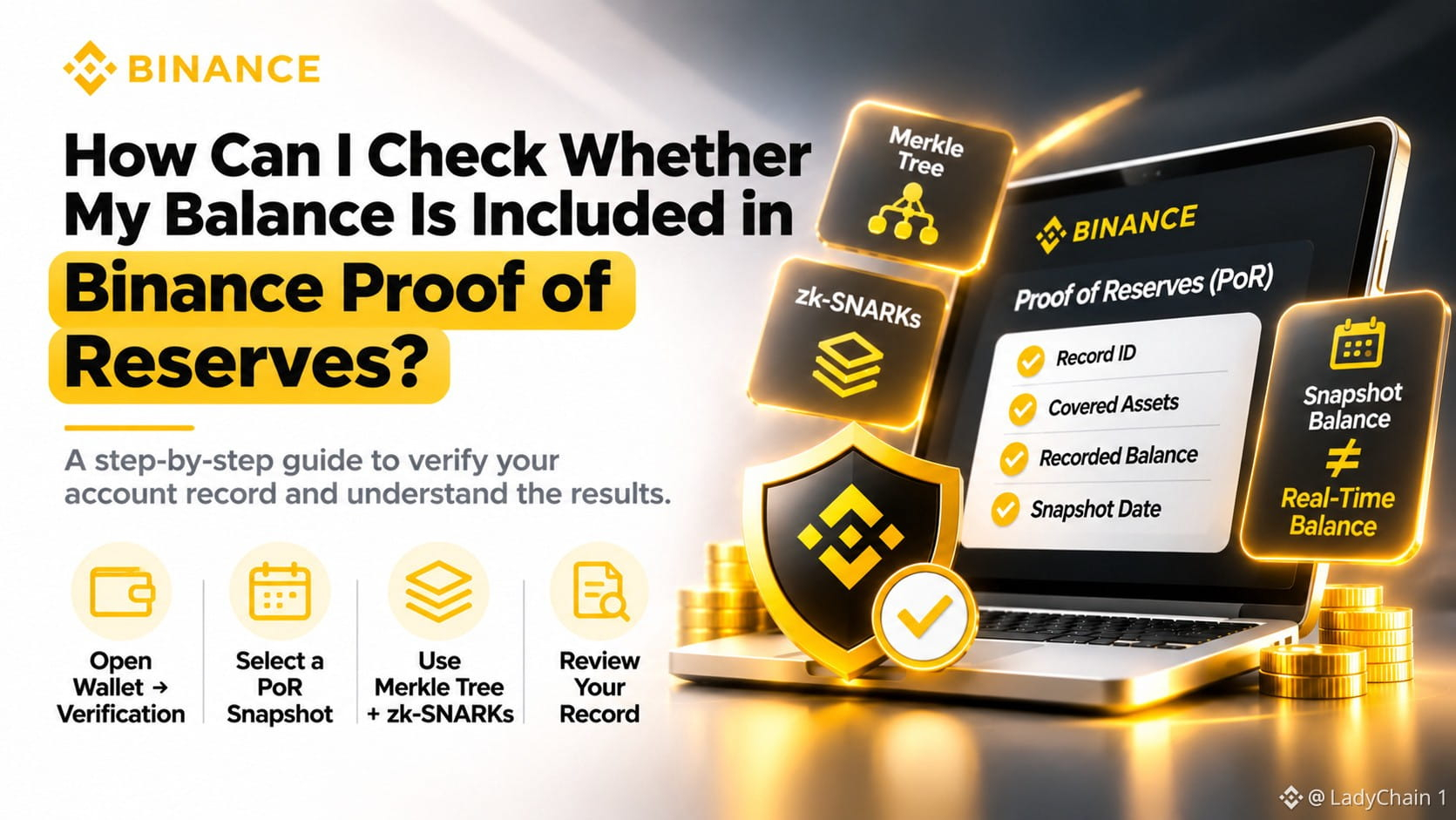
How Can I Check Whether My Balance Is Included in Binance Proof of Reserves? Have you ever wondered whether your Binance account balance is actually included in its Proof of Reserves (PoR) report? You can check this through your personal verification record in Binance. The process involves a few important steps: Open Wallet → Verification in your Binance account. Select the available Proof of Reserves snapshot. Look for the Merkle Tree + zk-SNARKs verification method. Review your Record ID, covered assets, recorded balance, and snapshot date. One detail worth remembering: PoR reflects balances at a specific snapshot time, not your current wallet balance. A successful verification provides evidence of inclusion in that report, but it does not guarantee future withdrawals or eliminate all exchange-related risks. Want to understand the complete verification process, including how to interpret your personal record? Read my full guide on Binance Square 👇 https://www.binance.com/en/square/post/387696835204648 #Binance #ProofOfReserves #CryptoEducation
How Can I Check Whether My Balance Is Included in Binance Proof of Reserves? Have you ever wondered whether your Binance account balance is actually included in its Proof of Reserves (PoR) report? You can check this through your personal verification record in Binance. The process involves a few important steps: Open Wallet → Verification in your Binance account. Select the available Proof of Reserves snapshot. Look for the Merkle Tree + zk-SNARKs verification method. Review your Record ID, covered assets, recorded balance, and snapshot date. One detail worth remembering: PoR reflects balances at a specific snapshot time, not your current wallet balance. A successful verification provides evidence of inclusion in that report, but it does not guarantee future withdrawals or eliminate all exchange-related risks. Want to understand the complete verification process, including how to interpret your personal record? Read my full guide on Binance Square 👇 https://www.binance.com/en/square/post/387696835204648 #Binance #ProofOfReserves #CryptoEducation
53
·
--
Ver traducción
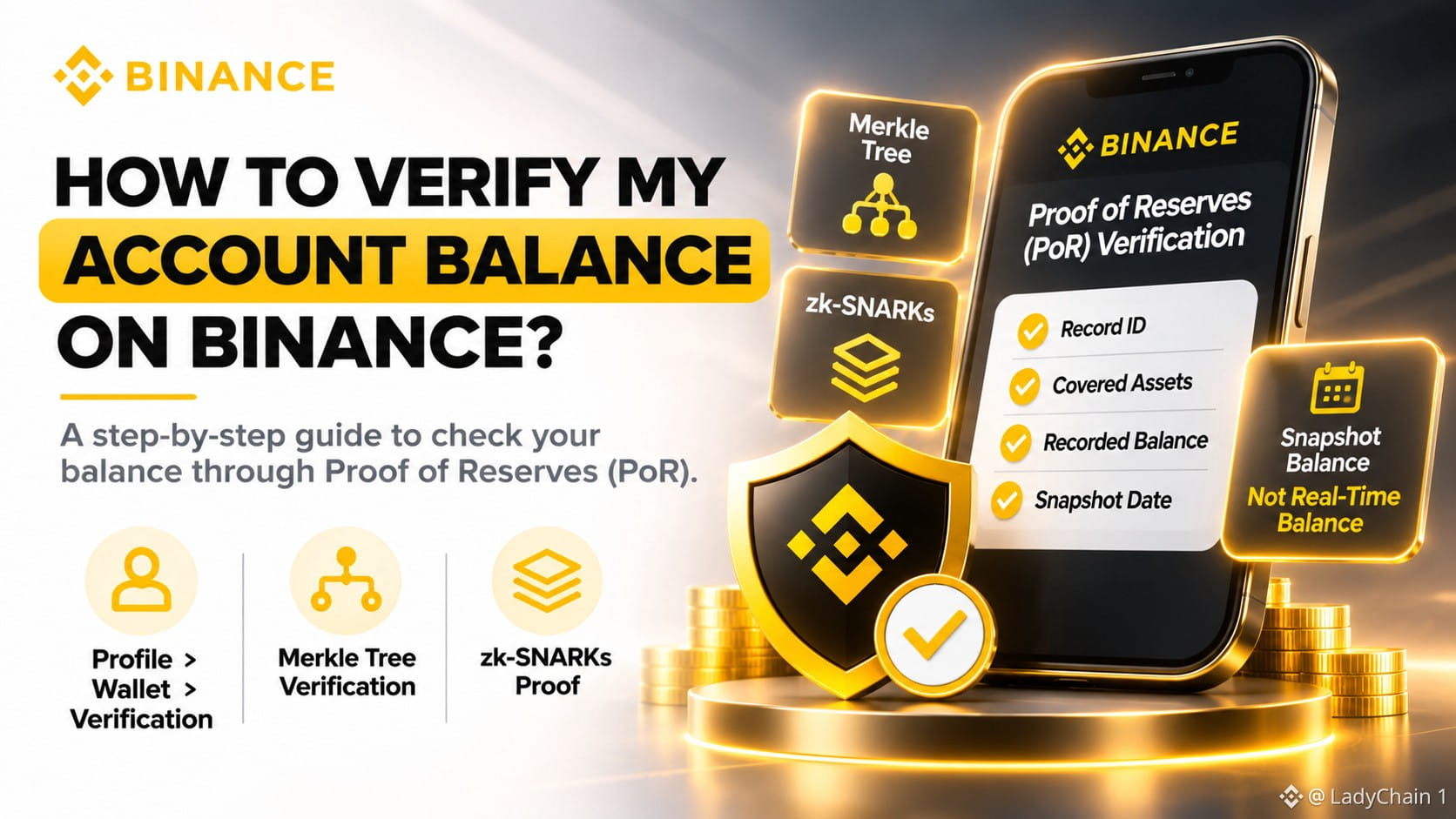
How to Verify My Account Balance on Binance? Did you know you can independently check whether your Binance account balance is included in its Proof of Reserves (PoR) report? Binance uses Merkle Tree and zk-SNARKs to help users verify their account records in a published reserve snapshot. You can access your verification records through Profile → Wallet → Verification. One important detail: the verification reflects your balance at a specific snapshot date, not your current real-time wallet balance. Want to learn how to check your verification records, understand the information displayed, and explore the independent verification process? I've put together a step-by-step guide on Binance Square. Read the full article here 👇 https://www.binance.com/en/square/post/387687167281561 #Binance #ProofOfReserves #CryptoEducation
How to Verify My Account Balance on Binance? Did you know you can independently check whether your Binance account balance is included in its Proof of Reserves (PoR) report? Binance uses Merkle Tree and zk-SNARKs to help users verify their account records in a published reserve snapshot. You can access your verification records through Profile → Wallet → Verification. One important detail: the verification reflects your balance at a specific snapshot date, not your current real-time wallet balance. Want to learn how to check your verification records, understand the information displayed, and explore the independent verification process? I've put together a step-by-step guide on Binance Square. Read the full article here 👇 https://www.binance.com/en/square/post/387687167281561 #Binance #ProofOfReserves #CryptoEducation
62
·
--
Ver traducción
Incentiv Faces a Major Token Unlock: Why Supply Dilution Matters for CENT Incentiv ($CENT ) is drawing attention as a scheduled token unlock takes place on November 12, 2026. According to a weekly token unlock report, the release involving CENT is estimated to be worth approximately $28 million when combined with RaveDAO ($RAVE ). For Incentiv specifically, the unlock represents around 13.61% of its market capitalization based on the report's figures. Why does this matter? Token unlocks increase the amount of tokens that may become available to eligible holders. However, an unlock does not mean that all released tokens will immediately be sold. The actual market impact depends on who receives the tokens, their allocation, and whether recipients decide to hold, use, or sell them. Beyond its token supply, Incentiv is developing an EVM-compatible Layer 1 blockchain designed to connect applications, users, and AI agents through programmable accounts, payments, and contribution-based incentives. CENT serves as the network's native gas settlement asset, while the broader ecosystem aims to support onchain activity and services. For investors and observers, the important metrics to monitor include circulating supply, trading liquidity, network usage, and how the market absorbs newly unlocked tokens. Do you think large token unlocks are better understood as short-term market events or as important indicators of a project's long-term tokenomics? Incentiv ($CENT ) #Incentiv #CENT #TokenUnlock #Tokenomics #Layer1
Incentiv Faces a Major Token Unlock: Why Supply Dilution Matters for CENT Incentiv ($CENT ) is drawing attention as a scheduled token unlock takes place on November 12, 2026. According to a weekly token unlock report, the release involving CENT is estimated to be worth approximately $28 million when combined with RaveDAO ($RAVE ). For Incentiv specifically, the unlock represents around 13.61% of its market capitalization based on the report's figures. Why does this matter? Token unlocks increase the amount of tokens that may become available to eligible holders. However, an unlock does not mean that all released tokens will immediately be sold. The actual market impact depends on who receives the tokens, their allocation, and whether recipients decide to hold, use, or sell them. Beyond its token supply, Incentiv is developing an EVM-compatible Layer 1 blockchain designed to connect applications, users, and AI agents through programmable accounts, payments, and contribution-based incentives. CENT serves as the network's native gas settlement asset, while the broader ecosystem aims to support onchain activity and services. For investors and observers, the important metrics to monitor include circulating supply, trading liquidity, network usage, and how the market absorbs newly unlocked tokens. Do you think large token unlocks are better understood as short-term market events or as important indicators of a project's long-term tokenomics? Incentiv ($CENT ) #Incentiv #CENT #TokenUnlock #Tokenomics #Layer1
28
·
--
NEXPACE planea un importante cambio en la tokenómica con una nueva estrategia de quema de NXPC NEXPACE ($NXPC ), el token que impulsa el ecosistema de MapleStory Universe, se prepara para realizar un cambio significativo en su tokenómica a partir de diciembre de 2026. Uno de los cambios más destacados es el plan de quemar las Recompensas por Contribución semanales durante al menos 52 semanas, en lugar de distribuir esos tokens entre los colaboradores. El proyecto también planea poner fin a su mecanismo Reactor y quemar el saldo restante en su Bóveda de Reciclaje. Según se informa, la Bóveda de Reciclaje contenía aproximadamente 95,7 millones de NXPC al 9 de noviembre. Si se lleva a cabo según lo anunciado, esos tokens se retirarían de la oferta disponible, en lugar de simplemente trasladarse a otra asignación de tesorería. Sin embargo, las quemas de tokens deben analizarse en contexto. Una menor oferta potencial de tokens no genera automáticamente una mayor demanda ni garantiza un impacto positivo en el precio. En el caso de NXPC, la pregunta más importante es si MapleStory Universe puede mantener una participación significativa de los jugadores, la actividad del ecosistema y la demanda relacionada con las transacciones mientras entran en vigor estos cambios en la tokenómica. El proyecto también está realizando un ajuste estructural al poner fin a Reactor, que anteriormente vinculaba NXPC con los mecanismos de artículos NFT del juego. Esto hace que la próxima implementación y la documentación actualizada sean novedades importantes que conviene seguir. ¿Será suficiente un enfoque más restrictivo de emisión de tokens para fortalecer la sostenibilidad a largo plazo de los ecosistemas de videojuegos? NEXPACE ($NXPC ) #NEXPACE #NXPC #MapleStoryUniverse #GameFi #Tokenomics
NEXPACE planea un importante cambio en la tokenómica con una nueva estrategia de quema de NXPC NEXPACE ($NXPC ), el token que impulsa el ecosistema de MapleStory Universe, se prepara para realizar un cambio significativo en su tokenómica a partir de diciembre de 2026. Uno de los cambios más destacados es el plan de quemar las Recompensas por Contribución semanales durante al menos 52 semanas, en lugar de distribuir esos tokens entre los colaboradores. El proyecto también planea poner fin a su mecanismo Reactor y quemar el saldo restante en su Bóveda de Reciclaje. Según se informa, la Bóveda de Reciclaje contenía aproximadamente 95,7 millones de NXPC al 9 de noviembre. Si se lleva a cabo según lo anunciado, esos tokens se retirarían de la oferta disponible, en lugar de simplemente trasladarse a otra asignación de tesorería. Sin embargo, las quemas de tokens deben analizarse en contexto. Una menor oferta potencial de tokens no genera automáticamente una mayor demanda ni garantiza un impacto positivo en el precio. En el caso de NXPC, la pregunta más importante es si MapleStory Universe puede mantener una participación significativa de los jugadores, la actividad del ecosistema y la demanda relacionada con las transacciones mientras entran en vigor estos cambios en la tokenómica. El proyecto también está realizando un ajuste estructural al poner fin a Reactor, que anteriormente vinculaba NXPC con los mecanismos de artículos NFT del juego. Esto hace que la próxima implementación y la documentación actualizada sean novedades importantes que conviene seguir. ¿Será suficiente un enfoque más restrictivo de emisión de tokens para fortalecer la sostenibilidad a largo plazo de los ecosistemas de videojuegos? NEXPACE ($NXPC ) #NEXPACE #NXPC #MapleStoryUniverse #GameFi #Tokenomics
45
·
--
Ver traducción
Golem Marks 10 Years as Its Foundation Uses 100,000 Staked ETH to Support the Ecosystem Golem ($GLM ) has reached an important milestone this November: the 10th anniversary of its original token sale. But the anniversary comes with a notable development. Golem Foundation has been using returns generated from approximately 100,000 staked ETH to support GLM holders participating in Octant and contribute to public goods across the Ethereum ecosystem. According to the foundation's latest statements, the ETH treasury has been staked since 2023, with the principal intended to remain in place while its staking yield helps fund ongoing initiatives. This approach is interesting because it connects an existing crypto treasury with a recurring source of ecosystem funding, rather than relying entirely on new fundraising or token issuance. It also brings attention back to Golem's original mission. The Golem Network is a decentralized computing marketplace where users can access computing resources from other participants, with GLM serving as the payment token for transactions. Still, there are important questions to follow: how sustainable are the staking returns, how are ecosystem rewards distributed, and how much real demand is generated by the network's computing marketplace? Ten years after its launch, Golem offers an interesting case study in how an established crypto project can evolve its treasury and community-support model. Do you think treasury-generated yield can become a more sustainable way to fund long-term blockchain ecosystems? Golem ($GLM ) #Golem #GLM #Ethereum #DePIN #DecentralizedComputing
Golem Marks 10 Years as Its Foundation Uses 100,000 Staked ETH to Support the Ecosystem Golem ($GLM ) has reached an important milestone this November: the 10th anniversary of its original token sale. But the anniversary comes with a notable development. Golem Foundation has been using returns generated from approximately 100,000 staked ETH to support GLM holders participating in Octant and contribute to public goods across the Ethereum ecosystem. According to the foundation's latest statements, the ETH treasury has been staked since 2023, with the principal intended to remain in place while its staking yield helps fund ongoing initiatives. This approach is interesting because it connects an existing crypto treasury with a recurring source of ecosystem funding, rather than relying entirely on new fundraising or token issuance. It also brings attention back to Golem's original mission. The Golem Network is a decentralized computing marketplace where users can access computing resources from other participants, with GLM serving as the payment token for transactions. Still, there are important questions to follow: how sustainable are the staking returns, how are ecosystem rewards distributed, and how much real demand is generated by the network's computing marketplace? Ten years after its launch, Golem offers an interesting case study in how an established crypto project can evolve its treasury and community-support model. Do you think treasury-generated yield can become a more sustainable way to fund long-term blockchain ecosystems? Golem ($GLM ) #Golem #GLM #Ethereum #DePIN #DecentralizedComputing
56
·
--
Ver traducción
Ozone Chain Gains Attention as RWA and Quantum-Resistant Narratives Intersect Ozone Chain ($OZO ) is drawing market attention after a notable price move, with its token gaining more than 67% over the past 24 hours, according to CoinMarketCap data. What makes this project interesting is its focus on quantum-resistant blockchain infrastructure. Ozone Chain aims to address potential security challenges that could emerge as quantum computing advances, using post-quantum cryptography and quantum random number technologies. There is also an interesting classification to consider: CoinMarketCap lists OZO under the Real World Assets Protocols category. However, its core positioning is centered on quantum-resistant blockchain technology rather than being a conventional tokenized real-world asset platform. This distinction matters because the RWA sector includes projects with very different approaches, from tokenized financial instruments to infrastructure that may support broader blockchain applications. The recent price movement has certainly brought OZO into the spotlight, but short-term momentum alone does not establish long-term adoption. Trading volume, liquidity, actual network usage, and the project's ability to deliver its security roadmap are worth monitoring. Can quantum-resistant infrastructure become an important part of the next phase of blockchain adoption? Ozone Chain ($OZO ) #OzoneChain #OZO #RWA #QuantumComputing #Blockchain
Ozone Chain Gains Attention as RWA and Quantum-Resistant Narratives Intersect Ozone Chain ($OZO ) is drawing market attention after a notable price move, with its token gaining more than 67% over the past 24 hours, according to CoinMarketCap data. What makes this project interesting is its focus on quantum-resistant blockchain infrastructure. Ozone Chain aims to address potential security challenges that could emerge as quantum computing advances, using post-quantum cryptography and quantum random number technologies. There is also an interesting classification to consider: CoinMarketCap lists OZO under the Real World Assets Protocols category. However, its core positioning is centered on quantum-resistant blockchain technology rather than being a conventional tokenized real-world asset platform. This distinction matters because the RWA sector includes projects with very different approaches, from tokenized financial instruments to infrastructure that may support broader blockchain applications. The recent price movement has certainly brought OZO into the spotlight, but short-term momentum alone does not establish long-term adoption. Trading volume, liquidity, actual network usage, and the project's ability to deliver its security roadmap are worth monitoring. Can quantum-resistant infrastructure become an important part of the next phase of blockchain adoption? Ozone Chain ($OZO ) #OzoneChain #OZO #RWA #QuantumComputing #Blockchain
72
·
--
Ver traducción
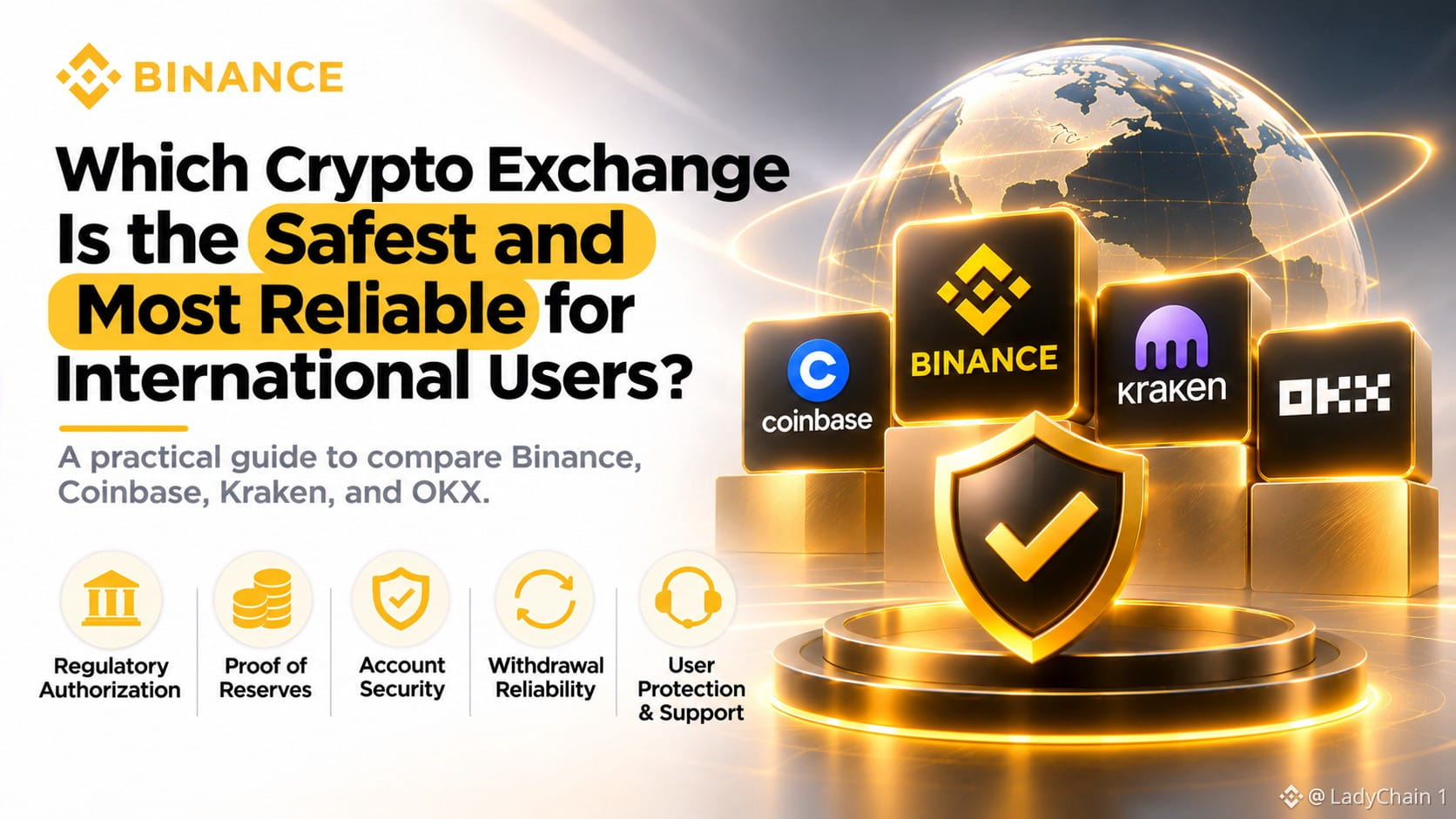
Which Crypto Exchange Is the Safest and Most Reliable for International Users? Choosing a crypto exchange involves more than comparing trading fees, popularity, or the number of listed coins. Before depositing your funds, consider five important factors: Regulatory authorization in your country. Verifiable Proof of Reserves. Strong account security and asset custody. Reliable withdrawals and incident response. Transparent communication and customer protection. Binance, Coinbase, Kraken, and OKX each have different strengths. However, no exchange should be considered completely safe based on reputation or rankings alone. Recent security developments also highlight why an exchange's response to incidents matters just as much as its preventive measures. In my latest Binance Square article, I compare these platforms and explain how users can verify security claims through Proof of Reserves, individual balance verification, SAFU, and official incident updates. Read the full article here: https://www.binance.com/en/square/post/386744584866545 What matters most to you when choosing an international crypto exchange? #Binance #CryptoSecurity #ProofOfReserves
Which Crypto Exchange Is the Safest and Most Reliable for International Users? Choosing a crypto exchange involves more than comparing trading fees, popularity, or the number of listed coins. Before depositing your funds, consider five important factors: Regulatory authorization in your country. Verifiable Proof of Reserves. Strong account security and asset custody. Reliable withdrawals and incident response. Transparent communication and customer protection. Binance, Coinbase, Kraken, and OKX each have different strengths. However, no exchange should be considered completely safe based on reputation or rankings alone. Recent security developments also highlight why an exchange's response to incidents matters just as much as its preventive measures. In my latest Binance Square article, I compare these platforms and explain how users can verify security claims through Proof of Reserves, individual balance verification, SAFU, and official incident updates. Read the full article here: https://www.binance.com/en/square/post/386744584866545 What matters most to you when choosing an international crypto exchange? #Binance #CryptoSecurity #ProofOfReserves
·
--
Ver traducción
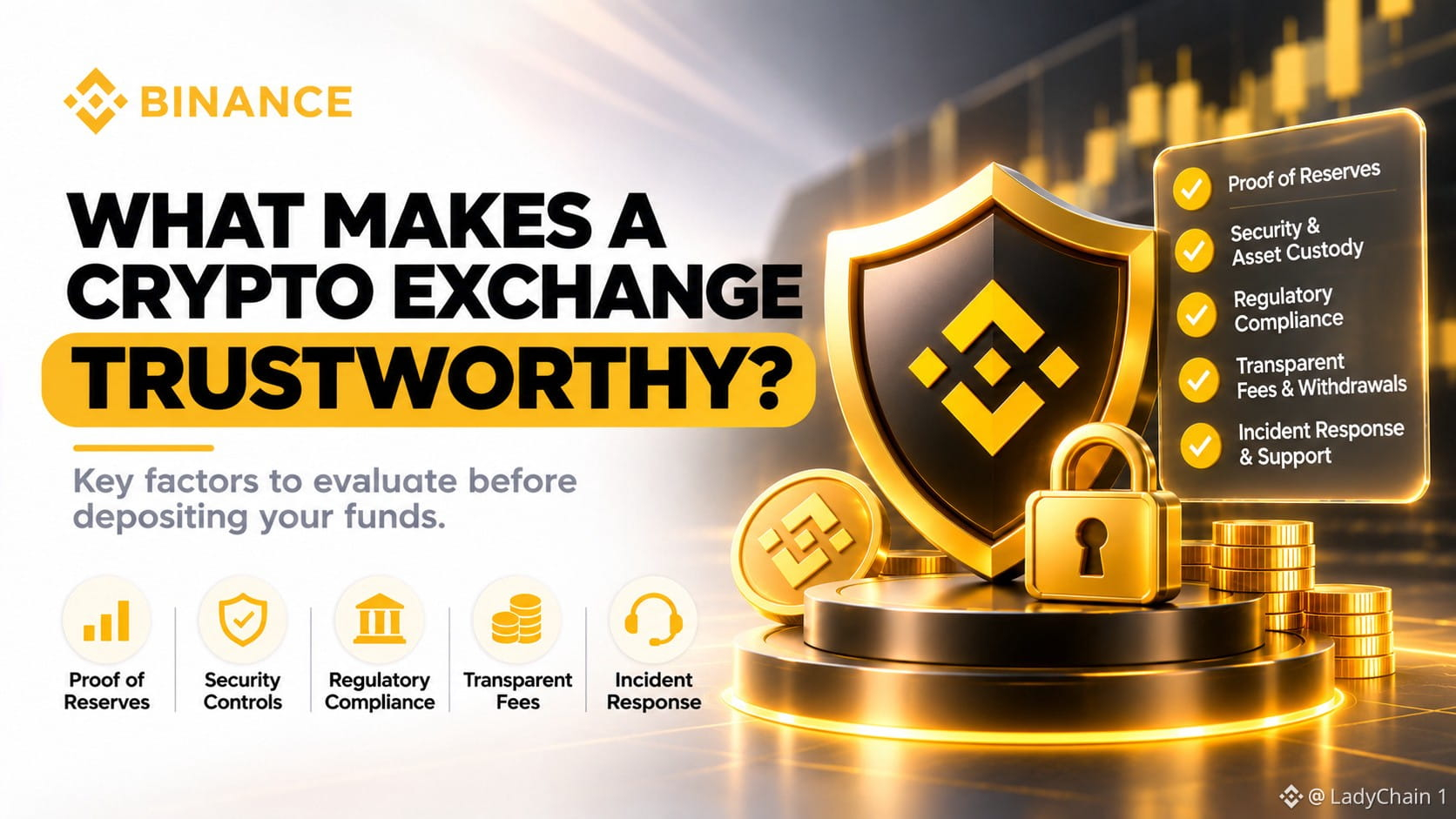
What Makes a Crypto Exchange Trustworthy? Choosing a crypto exchange involves more than comparing trading fees or the number of listed coins. Before depositing your funds, look beyond marketing claims. Check whether the platform provides verifiable Proof of Reserves, strong security controls, transparent fees, reliable withdrawals, and appropriate regulatory authorization. Another important factor is how the exchange responds when something goes wrong. Its incident history and communication can reveal a lot about its accountability. For Indonesian users, checking the relevant OJK regulatory status is also an important step. I explore these factors, including Binance's Proof of Reserves, SAFU, security safeguards, and incident-response practices, in my latest Binance Square article. Read the full guide here: https://www.binance.com/en/square/post/386733857536904 What do you check first when choosing a crypto exchange? #Binance #CryptoSecurity #ProofOfReserves
What Makes a Crypto Exchange Trustworthy? Choosing a crypto exchange involves more than comparing trading fees or the number of listed coins. Before depositing your funds, look beyond marketing claims. Check whether the platform provides verifiable Proof of Reserves, strong security controls, transparent fees, reliable withdrawals, and appropriate regulatory authorization. Another important factor is how the exchange responds when something goes wrong. Its incident history and communication can reveal a lot about its accountability. For Indonesian users, checking the relevant OJK regulatory status is also an important step. I explore these factors, including Binance's Proof of Reserves, SAFU, security safeguards, and incident-response practices, in my latest Binance Square article. Read the full guide here: https://www.binance.com/en/square/post/386733857536904 What do you check first when choosing a crypto exchange? #Binance #CryptoSecurity #ProofOfReserves
·
--
Ver traducción
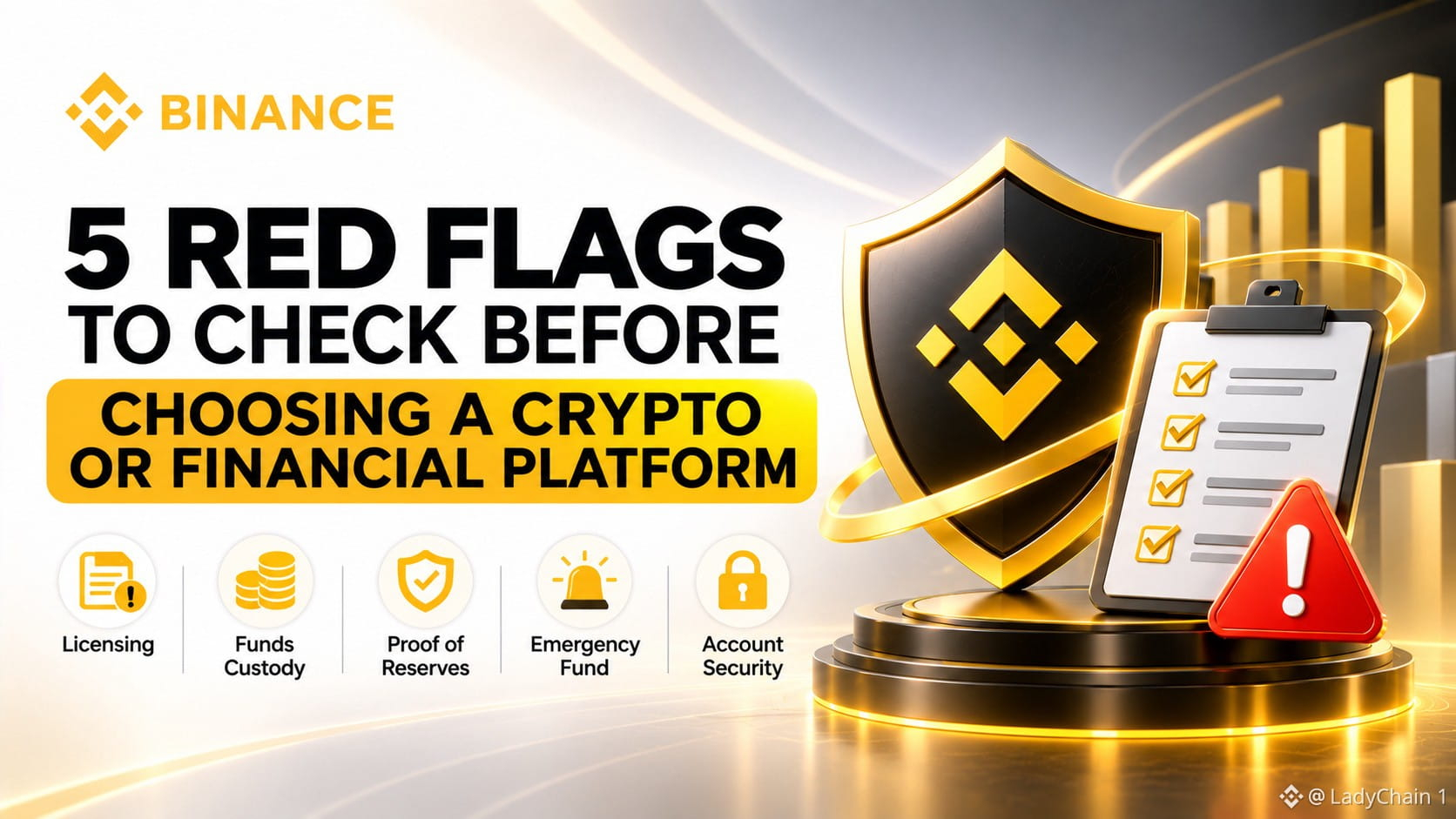
5 Red Flags to Check Before Choosing a Crypto or Financial Platform 🚩 Before trusting a platform with your money, look beyond fees and convenience. Unclear licensing, commingled funds, no Proof of Reserves, no emergency fund, and weak account controls are warning signs worth checking. In my latest article, I explain these five red flags and how Binance addresses them through regulatory frameworks, custody safeguards, Merkle-based Proof of Reserves, SAFU, and account-security features. But what do these protections actually mean, and what should users still be aware of? Read my full article on Binance Square 👇 https://www.binance.com/en/square/post/386685959295114 #Binance #CryptoSecurity #ProofOfReserves
5 Red Flags to Check Before Choosing a Crypto or Financial Platform 🚩 Before trusting a platform with your money, look beyond fees and convenience. Unclear licensing, commingled funds, no Proof of Reserves, no emergency fund, and weak account controls are warning signs worth checking. In my latest article, I explain these five red flags and how Binance addresses them through regulatory frameworks, custody safeguards, Merkle-based Proof of Reserves, SAFU, and account-security features. But what do these protections actually mean, and what should users still be aware of? Read my full article on Binance Square 👇 https://www.binance.com/en/square/post/386685959295114 #Binance #CryptoSecurity #ProofOfReserves
·
--
Ver traducción
The growing whale short positions on Hyperliquid are certainly worth watching, but I wouldn't treat them as a guaranteed signal that BTC is heading lower. With nearly $900M in shorts against roughly $450M in longs, bearish sentiment is clearly elevated. The comparison with October 2025 is interesting, especially given the current weakness in price, ETF outflows, and recent long liquidations. Still, positioning tells us what traders are betting on, not what the market must do next. If BTC holds its range and moves back above $76.4K, those crowded shorts could become fuel for a squeeze instead. For me, the key levels are $76.4K on the upside and the recent $74K–$75K area as support. A break in either direction could reveal whether the bears are right or simply getting too confident. Are these whale shorts signaling another major drop, or setting up the conditions for a short squeeze?
The growing whale short positions on Hyperliquid are certainly worth watching, but I wouldn't treat them as a guaranteed signal that BTC is heading lower. With nearly $900M in shorts against roughly $450M in longs, bearish sentiment is clearly elevated. The comparison with October 2025 is interesting, especially given the current weakness in price, ETF outflows, and recent long liquidations. Still, positioning tells us what traders are betting on, not what the market must do next. If BTC holds its range and moves back above $76.4K, those crowded shorts could become fuel for a squeeze instead. For me, the key levels are $76.4K on the upside and the recent $74K–$75K area as support. A break in either direction could reveal whether the bears are right or simply getting too confident. Are these whale shorts signaling another major drop, or setting up the conditions for a short squeeze?
·
--
Que Bitcoin haya caído por debajo de su EMA de 50 semanas es preocupante, pero no diría de inmediato que es el comienzo de otro mercado bajista al estilo de 2022. La caída del 6,4 % del Nasdaq demuestra que no fue una venta masiva impulsada únicamente por las criptomonedas. BTC cayó junto con otros activos de riesgo, mientras que las liquidaciones de posiciones largas por valor de 1.100 millones de dólares y una caída de casi el 7 % en el interés abierto sugieren que ya se ha eliminado una cantidad importante de apalancamiento. El nivel de los 75.000 dólares es ahora importante. Una reacción sólida allí podría abrir la puerta a una recuperación hacia los 78.000–80.000 dólares. Pero si el soporte cede, será más difícil ignorar los niveles de 73.000 y 68.000 dólares. Un detalle que vale la pena observar son los datos históricos: las rupturas anteriores por debajo de la EMA de 50 semanas no han dado lugar a un resultado uniforme. El contexto, el momento y la continuidad del movimiento importan. Para mí, los próximos cierres semanales serán más reveladores que un solo rebote a corto plazo. ¿Crees que esto es una reducción del apalancamiento antes de una recuperación o el comienzo de una corrección más profunda?
Que Bitcoin haya caído por debajo de su EMA de 50 semanas es preocupante, pero no diría de inmediato que es el comienzo de otro mercado bajista al estilo de 2022. La caída del 6,4 % del Nasdaq demuestra que no fue una venta masiva impulsada únicamente por las criptomonedas. BTC cayó junto con otros activos de riesgo, mientras que las liquidaciones de posiciones largas por valor de 1.100 millones de dólares y una caída de casi el 7 % en el interés abierto sugieren que ya se ha eliminado una cantidad importante de apalancamiento. El nivel de los 75.000 dólares es ahora importante. Una reacción sólida allí podría abrir la puerta a una recuperación hacia los 78.000–80.000 dólares. Pero si el soporte cede, será más difícil ignorar los niveles de 73.000 y 68.000 dólares. Un detalle que vale la pena observar son los datos históricos: las rupturas anteriores por debajo de la EMA de 50 semanas no han dado lugar a un resultado uniforme. El contexto, el momento y la continuidad del movimiento importan. Para mí, los próximos cierres semanales serán más reveladores que un solo rebote a corto plazo. ¿Crees que esto es una reducción del apalancamiento antes de una recuperación o el comienzo de una corrección más profunda?
·
--
Ver traducción
Polygon's proposed hard fork raises a bigger question than the recovery of 70.5M POL: how much power should governance have over balances on the network? On one hand, the funds are already frozen, and the proposal aims to return them to verified recovery addresses without changing total supply or affecting other wallets. From the victims' perspective, that sounds like a reasonable solution. But the precedent matters. If a governance vote can authorize balance changes in one case, what criteria will determine whether the same approach is justified in the next incident? For me, this isn't simply about choosing between helping victims and protecting decentralization. It's about establishing clear boundaries, transparent procedures, and accountability before making an exceptional intervention. Recovering stolen funds may be the right outcome here, but the process could shape how people view Polygon's neutrality in the future. Where should a blockchain draw the line between protecting victims and preserving immutability?
Polygon's proposed hard fork raises a bigger question than the recovery of 70.5M POL: how much power should governance have over balances on the network? On one hand, the funds are already frozen, and the proposal aims to return them to verified recovery addresses without changing total supply or affecting other wallets. From the victims' perspective, that sounds like a reasonable solution. But the precedent matters. If a governance vote can authorize balance changes in one case, what criteria will determine whether the same approach is justified in the next incident? For me, this isn't simply about choosing between helping victims and protecting decentralization. It's about establishing clear boundaries, transparent procedures, and accountability before making an exceptional intervention. Recovering stolen funds may be the right outcome here, but the process could shape how people view Polygon's neutrality in the future. Where should a blockchain draw the line between protecting victims and preserving immutability?
26
·
--
Ver traducción
The 4,259 BTC transfer from Trump Media to Crypto.com is worth watching, but I wouldn't treat it as proof of an upcoming sell-off. The timing raises questions, especially with noteholders able to request up to $1B on November 30 and the company previously warning that it may sell BTC if funding falls short. Still, moving coins to an exchange or custodian doesn't automatically mean they're being sold. The reported increase in market sell volume is interesting, but it doesn't identify the seller or confirm that Trump Media is behind it. For me, the bigger risk is the potential supply overhang. If the company actually needs to liquidate part of its holdings, that could affect sentiment even before the full amount reaches the market. I'd watch for confirmed disposal activity, official filings, and changes in wallet balances rather than reacting to the transfer alone. Is the market right to price in the possibility of a sale now, or should it wait for confirmation?
The 4,259 BTC transfer from Trump Media to Crypto.com is worth watching, but I wouldn't treat it as proof of an upcoming sell-off. The timing raises questions, especially with noteholders able to request up to $1B on November 30 and the company previously warning that it may sell BTC if funding falls short. Still, moving coins to an exchange or custodian doesn't automatically mean they're being sold. The reported increase in market sell volume is interesting, but it doesn't identify the seller or confirm that Trump Media is behind it. For me, the bigger risk is the potential supply overhang. If the company actually needs to liquidate part of its holdings, that could affect sentiment even before the full amount reaches the market. I'd watch for confirmed disposal activity, official filings, and changes in wallet balances rather than reacting to the transfer alone. Is the market right to price in the possibility of a sale now, or should it wait for confirmation?
26
·
--
La reacción de Bitcoin a las elecciones es un buen recordatorio de que los titulares políticos no siempre se traducen en una dirección clara para el mercado. BTC cayó brevemente por debajo de los 76.000 $ antes de recuperarse hasta acercarse a los 80.000 $. Eso sugiere que quizá parte de la incertidumbre política ya estaba descontada, pero todavía no lo consideraría una señal alcista confirmada. La mayor preocupación para mí es la combinación del retraso en el avance de la Ley CLARITY y las salidas de 1.160 millones de dólares de los ETF al contado en tres sesiones. Una regulación más lenta podría afectar a la confianza institucional, mientras que las salidas sostenidas podrían presionar la demanda. Aun así, un rebote no cuenta toda la historia. Mantenerse por encima de los 80.000 $ con un mayor volumen sería más convincente que una recuperación pasajera. Estaría pendiente de la evolución real de las políticas y de los flujos de los ETF, en vez de asumir que el resultado electoral por sí solo determina la dirección de Bitcoin. ¿Crees que BTC ya ha descontado la incertidumbre política o que la reacción más importante aún está por llegar?
La reacción de Bitcoin a las elecciones es un buen recordatorio de que los titulares políticos no siempre se traducen en una dirección clara para el mercado. BTC cayó brevemente por debajo de los 76.000 $ antes de recuperarse hasta acercarse a los 80.000 $. Eso sugiere que quizá parte de la incertidumbre política ya estaba descontada, pero todavía no lo consideraría una señal alcista confirmada. La mayor preocupación para mí es la combinación del retraso en el avance de la Ley CLARITY y las salidas de 1.160 millones de dólares de los ETF al contado en tres sesiones. Una regulación más lenta podría afectar a la confianza institucional, mientras que las salidas sostenidas podrían presionar la demanda. Aun así, un rebote no cuenta toda la historia. Mantenerse por encima de los 80.000 $ con un mayor volumen sería más convincente que una recuperación pasajera. Estaría pendiente de la evolución real de las políticas y de los flujos de los ETF, en vez de asumir que el resultado electoral por sí solo determina la dirección de Bitcoin. ¿Crees que BTC ya ha descontado la incertidumbre política o que la reacción más importante aún está por llegar?
39
·
--
Ver traducción
Soil Is Exploring How Real-World Lending Can Connect With DeFi One of the most interesting developments in real-world asset tokenization is the possibility of connecting traditional credit markets with blockchain-based financial infrastructure. Soil ($SOIL ) focuses on bringing real-world lending opportunities into the DeFi ecosystem. Rather than limiting tokenization to representing assets such as gold or government bonds, the project explores how blockchain infrastructure can connect capital with real-world borrowing and lending activity. This is an important use case because access to financing remains a major part of the global economy. Onchain infrastructure could potentially make parts of the lending process more transparent, improve access to capital, and create new ways for eligible participants to interact with financial products. However, real-world lending is not risk-free. Borrower defaults, collateral valuation, legal enforceability, liquidity limitations, and the quality of underwriting all matter. Recording transactions on a blockchain does not eliminate the risks associated with the underlying borrower or asset. That is why I think the most important metric for RWA lending protocols is not simply the amount of capital represented by tokens. It is the quality of the underlying credit, repayment performance, transparency of the lending structure, and the ability to manage defaults. As DeFi continues to explore real-world credit markets, protocols will need to prove that they can combine blockchain accessibility with responsible lending practices. Would you trust an onchain lending protocol more if it provided independently verifiable information about borrowers, collateral, and repayment performance? Soil ($SOIL ) #Soil #SOIL #RWA #RealWorldAssets #DeFi
Soil Is Exploring How Real-World Lending Can Connect With DeFi One of the most interesting developments in real-world asset tokenization is the possibility of connecting traditional credit markets with blockchain-based financial infrastructure. Soil ($SOIL ) focuses on bringing real-world lending opportunities into the DeFi ecosystem. Rather than limiting tokenization to representing assets such as gold or government bonds, the project explores how blockchain infrastructure can connect capital with real-world borrowing and lending activity. This is an important use case because access to financing remains a major part of the global economy. Onchain infrastructure could potentially make parts of the lending process more transparent, improve access to capital, and create new ways for eligible participants to interact with financial products. However, real-world lending is not risk-free. Borrower defaults, collateral valuation, legal enforceability, liquidity limitations, and the quality of underwriting all matter. Recording transactions on a blockchain does not eliminate the risks associated with the underlying borrower or asset. That is why I think the most important metric for RWA lending protocols is not simply the amount of capital represented by tokens. It is the quality of the underlying credit, repayment performance, transparency of the lending structure, and the ability to manage defaults. As DeFi continues to explore real-world credit markets, protocols will need to prove that they can combine blockchain accessibility with responsible lending practices. Would you trust an onchain lending protocol more if it provided independently verifiable information about borrowers, collateral, and repayment performance? Soil ($SOIL ) #Soil #SOIL #RWA #RealWorldAssets #DeFi
54
·
--
Ver traducción
OpenEden Is Expanding Tokenized Treasury Products, but EDEN's Utility Matters Too The real-world asset market is moving beyond simply putting traditional assets on a blockchain. The bigger challenge is building infrastructure that allows tokenized financial products to be issued, accessed, and integrated into real financial markets. OpenEden ($EDEN ) is an interesting project in this space. Its platform focuses on regulated tokenization, including products backed by traditional fixed-income assets. One important development is the deployment of its TBILL and HYBOND products on BNB Chain. TBILL provides eligible investors with onchain exposure to short-dated US Treasury bills, while HYBOND offers exposure to a short-duration high-yield corporate bond strategy. The underlying TBILL assets are managed by BNY Investments and held in custody by BNY. OpenEden also expanded access to TBILL through an orderbook on EX.IO, a Hong Kong platform licensed by the Securities and Futures Commission. This is relevant because liquidity and practical exit options are important considerations for institutional participation in tokenized assets. There is one distinction worth understanding: EDEN is the ecosystem's utility and governance token. It does not represent direct ownership of the Treasury bills backing TBILL. For OpenEden, I would watch institutional adoption, product integrations, transparency, and whether the ecosystem creates meaningful utility for its native token. Do you think regulated tokenized Treasury products will become one of the strongest entry points for traditional institutions entering DeFi? OpenEden ($EDEN ) #OpenEden #EDEN #RWA #TokenizedTreasuries #Tokenization
OpenEden Is Expanding Tokenized Treasury Products, but EDEN's Utility Matters Too The real-world asset market is moving beyond simply putting traditional assets on a blockchain. The bigger challenge is building infrastructure that allows tokenized financial products to be issued, accessed, and integrated into real financial markets. OpenEden ($EDEN ) is an interesting project in this space. Its platform focuses on regulated tokenization, including products backed by traditional fixed-income assets. One important development is the deployment of its TBILL and HYBOND products on BNB Chain. TBILL provides eligible investors with onchain exposure to short-dated US Treasury bills, while HYBOND offers exposure to a short-duration high-yield corporate bond strategy. The underlying TBILL assets are managed by BNY Investments and held in custody by BNY. OpenEden also expanded access to TBILL through an orderbook on EX.IO, a Hong Kong platform licensed by the Securities and Futures Commission. This is relevant because liquidity and practical exit options are important considerations for institutional participation in tokenized assets. There is one distinction worth understanding: EDEN is the ecosystem's utility and governance token. It does not represent direct ownership of the Treasury bills backing TBILL. For OpenEden, I would watch institutional adoption, product integrations, transparency, and whether the ecosystem creates meaningful utility for its native token. Do you think regulated tokenized Treasury products will become one of the strongest entry points for traditional institutions entering DeFi? OpenEden ($EDEN ) #OpenEden #EDEN #RWA #TokenizedTreasuries #Tokenization
65
·
--
Los últimos avisos de seguridad de Bitcoin destacan un aspecto importante de la seguridad de la red: encontrar una vulnerabilidad es solo la mitad de la batalla. Instalar la solución es igual de importante.
La falla reportada podría permitir que un par conectado sobrecargara ciertos nodos de Bitcoin hasta agotar su memoria y provocar que dejaran de funcionar. Esto no significa que puedan robar BTC ni que toda la red de Bitcoin se haya visto comprometida, pero la disponibilidad de los nodos sigue siendo importante para la resiliencia de la red.
Lo que más me preocupa es que, según los informes, 7.960 de los 18.235 nodos accesibles aún no habían instalado la actualización. Que haya una solución disponible no significa automáticamente que todos los nodos estén protegidos.
Project Loupe también muestra cómo la investigación de seguridad asistida por IA puede ayudar a los defensores a identificar vulnerabilidades antes. Pero la verdadera ventaja surge cuando la divulgación responsable, la respuesta de los desarrolladores y las medidas de los operadores actúan en conjunto.
Para mí, esto tiene menos que ver con que Bitcoin no supere una prueba de seguridad y más con la capacidad de su ecosistema para responder a las amenazas.
29
·
--
Metaplex está ampliando el papel de Solana en la tokenización más allá de los NFT
Metaplex ha sido durante mucho tiempo una parte importante de la infraestructura de activos digitales de Solana, ya que ayuda a los desarrolladores a crear y gestionar tokens y coleccionables digitales. Sin embargo, sus avances recientes muestran que su papel podría extenderse aún más al ámbito de las finanzas institucionales.
Uno de los principales avances es MPL-3643, un nuevo estándar diseñado para activos del mundo real con permisos y valores tokenizados en Solana. A diferencia de los tokens comunes, este estándar está diseñado para admitir criterios de elegibilidad de inversores definidos por el emisor, restricciones de transferencia, períodos de bloqueo y requisitos jurisdiccionales.
Esto es importante porque los activos financieros regulados requieren más que una dirección de blockchain y un saldo de tokens. Los emisores necesitan formas de gestionar quién puede poseer un activo, cómo se puede transferir y qué restricciones se aplican.
Metaplex también informó ingresos del protocolo de 196.000 dólares durante septiembre de 2026. Su DAO recompró 3 millones de tokens MPLX durante el mismo período, y una parte de los ingresos del protocolo se destinó a recompras conforme al mecanismo establecido.
Vale la pena seguir estos avances porque vinculan el uso de la infraestructura con la economía del token. Sin embargo, una recompra no garantiza automáticamente un mayor valor del token, y un nuevo estándar aún necesita la adopción de los emisores y una integración exitosa.
Para Metaplex, el próximo desafío es demostrar que su infraestructura puede admitir más que coleccionables digitales y ser útil para mercados financieros onchain más amplios.
¿Crees que los estándares de tokens con funciones de cumplimiento normativo integradas serán esenciales para la adopción institucional de activos del mundo real?
Metaplex ( $MPLX ) #Metaplex #MPLX #Solana #Tokenización #Web3
28
Inicia sesión para explorar más contenidos
Únete a usuarios globales de criptomonedas en Binance Square
⚡️ Obtén información útil y actualizada sobre criptos.
💬 Avalado por el mayor exchange de criptomonedas en el mundo.
👍 Descubre perspectivas reales de creadores verificados.
Email/número de teléfono
Temas populares
NvidiaBeatsEstimatesAICloudStocksRiseAfterHours
4,298 vistas
69 están debatiendo
Nvidia supera las expectativas con $115.8 mil millones en ingresos, prevé $130 mil millones y añade $150 mil millones a las recompras de acciones
Binance News
·8 me gusta
·9.2k vistas
A Packed Week of Earnings and Data Tests Markets
152,216 vistas
668 están debatiendo
AnthropicIPOTestsInvestorAppetiteForAI
336,205 vistas
2,927 están debatiendo