

Shehab Goma
15.9k Publicaciones

Shehab Goma
 Verificado de Binance Square
Denunciar
Bloquear usuario
Crypto enthusiast exploring the world of blockchain, DeFi, and NFTs. Always learning and connecting with others in the space. Let’s build the future of finance
Abrir trade
Traders de alta frecuencia
4.7 año(s)
644 Siguiendo
37.7K+ Seguidores
38.1K+ Me gusta
Publicaciones
Cartera
Todo
Citas
Live
PINNED
·
--
¿Y si tu agente de IA pudiera gastar tu dinero mientras duermes?
Suena útil… hasta que te haces una pregunta importante:
¿Cuánto control debería tener realmente un agente de IA?
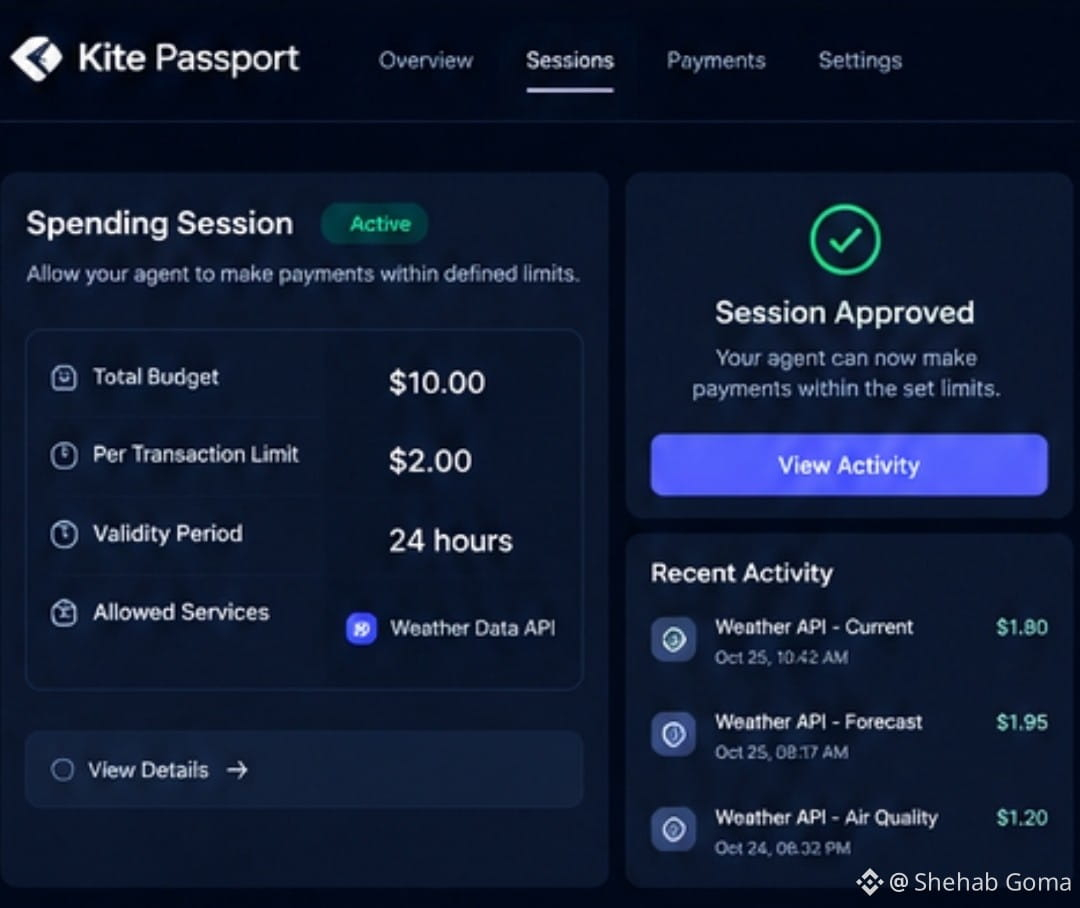
Mientras exploraba @GoKiteAI , un concepto me llamó la atención: Kite Passport y su enfoque basado en sesiones de gasto.
Imagina pedirle a un agente de IA que obtenga datos de una API meteorológica de pago.
En lugar de darle acceso ilimitado a tu dinero, autorizas una sesión de gasto con:
💰 Presupuesto total de 10 $
🔒 Máximo de 2 $ por transacción
⏱️ Vigencia de 24 horas
El agente puede realizar pagos permitidos dentro de esos límites, sin que tengas que aprobar cada transacción.
Es un ejemplo sencillo, pero plantea una pregunta mucho más importante.
La economía de los agentes no consiste solo en crear IA más inteligente. Se basa en tres cosas:
Capacidad: ¿Puede el agente completar la tarea?
Permiso: ¿Está autorizado a realizar la acción?
Responsabilidad: ¿Podemos verificar qué ocurrió después?
Porque la autonomía sin límites genera nuevos riesgos.
Un agente podría elegir el servicio equivocado. Una tarea podría fallar. Y ni siquiera un límite estricto de gasto resolverá todas las disputas.
Por eso, los permisos controlados son una parte importante de generar confianza en los pagos impulsados por IA.
¿Con qué me quedo?
El futuro no consiste solo en una IA que pueda actuar en nuestro nombre.
Consiste en una IA que pueda actuar en nuestro nombre dentro de los límites que elijamos.
Y ahora, una pregunta que vale la pena debatir:
Si tu agente de IA le paga a otro agente para completar una tarea, pero el resultado es incorrecto, ¿quién es responsable?
¿El usuario que autorizó el pago, el desarrollador que creó el agente o el proveedor del servicio que entregó el resultado?
¿Y confiarías en un agente con un límite estricto de gasto o preferirías no darle ningún acceso financiero?
#KiteBBW $KITE
¿Y si tu agente de IA pudiera gastar tu dinero mientras duermes?
Suena útil… hasta que te haces una pregunta importante:
¿Cuánto control debería tener realmente un agente de IA?
Mientras exploraba @KITE AI 中文 , un concepto me llamó la atención: Kite Passport y su enfoque basado en sesiones de gasto.
Imagina pedirle a un agente de IA que obtenga datos de una API meteorológica de pago.
En lugar de darle acceso ilimitado a tu dinero, autorizas una sesión de gasto con:
💰 Presupuesto total de 10 $
🔒 Máximo de 2 $ por transacción
⏱️ Vigencia de 24 horas
El agente puede realizar pagos permitidos dentro de esos límites, sin que tengas que aprobar cada transacción.
Es un ejemplo sencillo, pero plantea una pregunta mucho más importante.
La economía de los agentes no consiste solo en crear IA más inteligente. Se basa en tres cosas:
Capacidad: ¿Puede el agente completar la tarea?
Permiso: ¿Está autorizado a realizar la acción?
Responsabilidad: ¿Podemos verificar qué ocurrió después?
Porque la autonomía sin límites genera nuevos riesgos.
Un agente podría elegir el servicio equivocado. Una tarea podría fallar. Y ni siquiera un límite estricto de gasto resolverá todas las disputas.
Por eso, los permisos controlados son una parte importante de generar confianza en los pagos impulsados por IA.
¿Con qué me quedo?
El futuro no consiste solo en una IA que pueda actuar en nuestro nombre.
Consiste en una IA que pueda actuar en nuestro nombre dentro de los límites que elijamos.
Y ahora, una pregunta que vale la pena debatir:
Si tu agente de IA le paga a otro agente para completar una tarea, pero el resultado es incorrecto, ¿quién es responsable?
¿El usuario que autorizó el pago, el desarrollador que creó el agente o el proveedor del servicio que entregó el resultado?
¿Y confiarías en un agente con un límite estricto de gasto o preferirías no darle ningún acceso financiero?
#KiteBBW $KITE
Suena útil… hasta que te haces una pregunta importante:
¿Cuánto control debería tener realmente un agente de IA?
Mientras exploraba @KITE AI 中文 , un concepto me llamó la atención: Kite Passport y su enfoque basado en sesiones de gasto.
Imagina pedirle a un agente de IA que obtenga datos de una API meteorológica de pago.
En lugar de darle acceso ilimitado a tu dinero, autorizas una sesión de gasto con:
💰 Presupuesto total de 10 $
🔒 Máximo de 2 $ por transacción
⏱️ Vigencia de 24 horas
El agente puede realizar pagos permitidos dentro de esos límites, sin que tengas que aprobar cada transacción.
Es un ejemplo sencillo, pero plantea una pregunta mucho más importante.
La economía de los agentes no consiste solo en crear IA más inteligente. Se basa en tres cosas:
Capacidad: ¿Puede el agente completar la tarea?
Permiso: ¿Está autorizado a realizar la acción?
Responsabilidad: ¿Podemos verificar qué ocurrió después?
Porque la autonomía sin límites genera nuevos riesgos.
Un agente podría elegir el servicio equivocado. Una tarea podría fallar. Y ni siquiera un límite estricto de gasto resolverá todas las disputas.
Por eso, los permisos controlados son una parte importante de generar confianza en los pagos impulsados por IA.
¿Con qué me quedo?
El futuro no consiste solo en una IA que pueda actuar en nuestro nombre.
Consiste en una IA que pueda actuar en nuestro nombre dentro de los límites que elijamos.
Y ahora, una pregunta que vale la pena debatir:
Si tu agente de IA le paga a otro agente para completar una tarea, pero el resultado es incorrecto, ¿quién es responsable?
¿El usuario que autorizó el pago, el desarrollador que creó el agente o el proveedor del servicio que entregó el resultado?
¿Y confiarías en un agente con un límite estricto de gasto o preferirías no darle ningún acceso financiero?
#KiteBBW $KITE
12
1
21
3.4k
PINNED
·
--
Bajista
Verificado
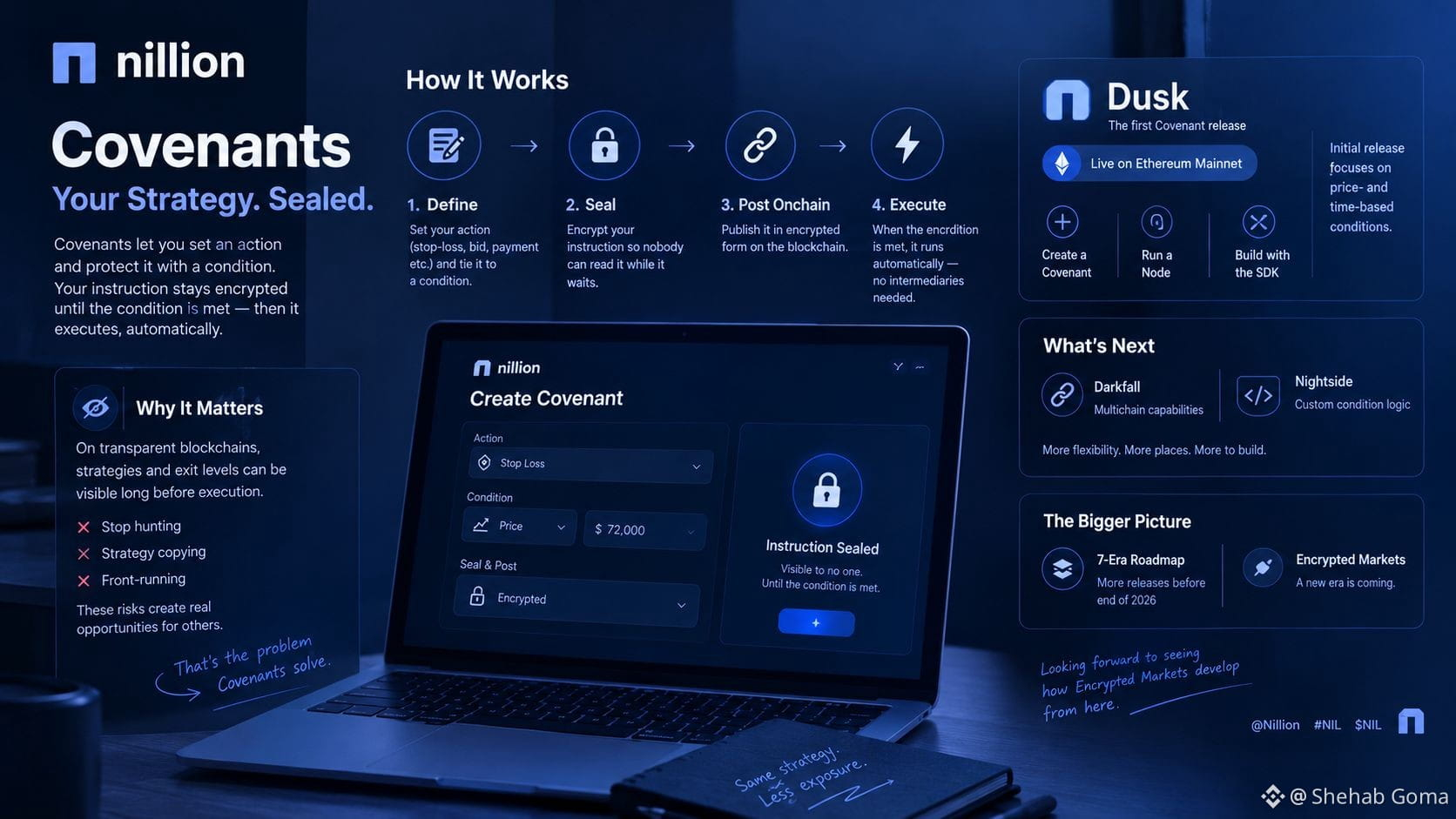
#nil $NIL @nillionnetwork He estado leyendo sobre Nillion y sus Covenants, y algo que me gusta es la idea de mantener en privado los planes de trading hasta que realmente se necesiten.
En las cadenas de bloques públicas, a veces es posible detectar las estrategias de trading y los niveles de salida antes de que se realice una operación. Eso puede facilitar que otros copien una estrategia o intenten adelantarse a una orden grande.
Los Covenants están diseñados para abordar este problema. Se configura una instrucción, como una orden stop-loss o una oferta en una subasta, se cifra y se vincula a una condición. Permanece ilegible mientras espera, sin necesidad de que un keeper independiente la active.
Dusk ya está disponible en la red principal de Ethereum, con un primer lanzamiento centrado en condiciones basadas en el precio y el tiempo. Esto les da a los desarrolladores algo concreto que empezar a explorar.
También me interesa lo que viene después. Está previsto que Darkfall incorpore compatibilidad con múltiples cadenas, mientras que se espera que Nightside introduzca condiciones personalizadas. Si estas funciones se implementan según lo previsto, podrían abrir más posibilidades para usar Covenants.
Aún queda mucho por llegar en la hoja de ruta de Nillion, que abarca siete eras, y me interesará ver cómo evoluciona.
Para mí, el principal beneficio es sencillo: mantener tus intenciones en privado en lugar de mostrarle a todo el mundo tu plan antes de que se ejecute.
$NIL
#nil $NIL @Nillion He estado leyendo sobre Nillion y sus Covenants, y algo que me gusta es la idea de mantener en privado los planes de trading hasta que realmente se necesiten.
En las cadenas de bloques públicas, a veces es posible detectar las estrategias de trading y los niveles de salida antes de que se realice una operación. Eso puede facilitar que otros copien una estrategia o intenten adelantarse a una orden grande.
Los Covenants están diseñados para abordar este problema. Se configura una instrucción, como una orden stop-loss o una oferta en una subasta, se cifra y se vincula a una condición. Permanece ilegible mientras espera, sin necesidad de que un keeper independiente la active.
Dusk ya está disponible en la red principal de Ethereum, con un primer lanzamiento centrado en condiciones basadas en el precio y el tiempo. Esto les da a los desarrolladores algo concreto que empezar a explorar.
También me interesa lo que viene después. Está previsto que Darkfall incorpore compatibilidad con múltiples cadenas, mientras que se espera que Nightside introduzca condiciones personalizadas. Si estas funciones se implementan según lo previsto, podrían abrir más posibilidades para usar Covenants.
Aún queda mucho por llegar en la hoja de ruta de Nillion, que abarca siete eras, y me interesará ver cómo evoluciona.
Para mí, el principal beneficio es sencillo: mantener tus intenciones en privado en lugar de mostrarle a todo el mundo tu plan antes de que se ejecute.
$NIL
En las cadenas de bloques públicas, a veces es posible detectar las estrategias de trading y los niveles de salida antes de que se realice una operación. Eso puede facilitar que otros copien una estrategia o intenten adelantarse a una orden grande.
Los Covenants están diseñados para abordar este problema. Se configura una instrucción, como una orden stop-loss o una oferta en una subasta, se cifra y se vincula a una condición. Permanece ilegible mientras espera, sin necesidad de que un keeper independiente la active.
Dusk ya está disponible en la red principal de Ethereum, con un primer lanzamiento centrado en condiciones basadas en el precio y el tiempo. Esto les da a los desarrolladores algo concreto que empezar a explorar.
También me interesa lo que viene después. Está previsto que Darkfall incorpore compatibilidad con múltiples cadenas, mientras que se espera que Nightside introduzca condiciones personalizadas. Si estas funciones se implementan según lo previsto, podrían abrir más posibilidades para usar Covenants.
Aún queda mucho por llegar en la hoja de ruta de Nillion, que abarca siete eras, y me interesará ver cómo evoluciona.
Para mí, el principal beneficio es sencillo: mantener tus intenciones en privado en lugar de mostrarle a todo el mundo tu plan antes de que se ejecute.
$NIL
18
1
15
223
·
--
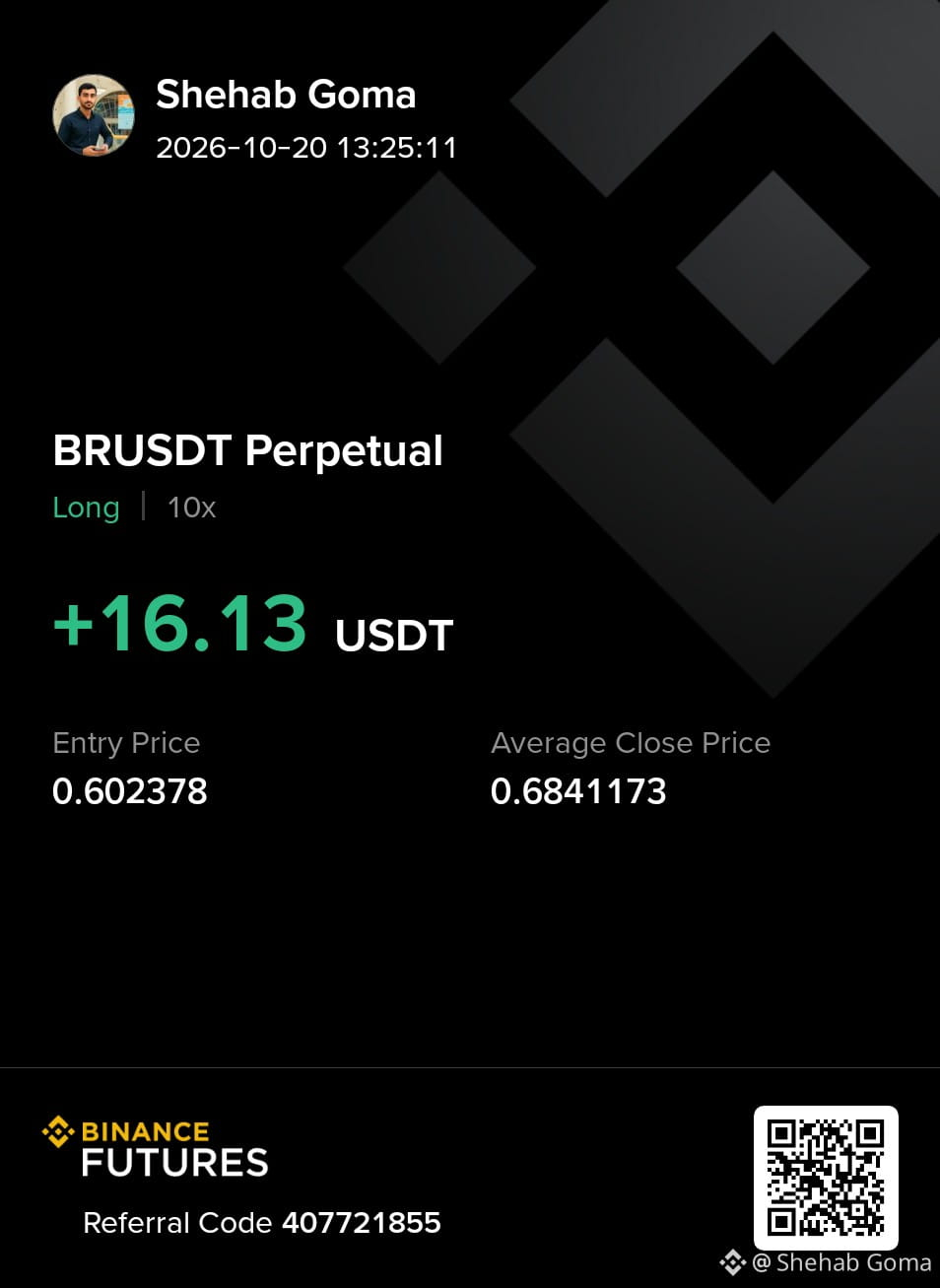
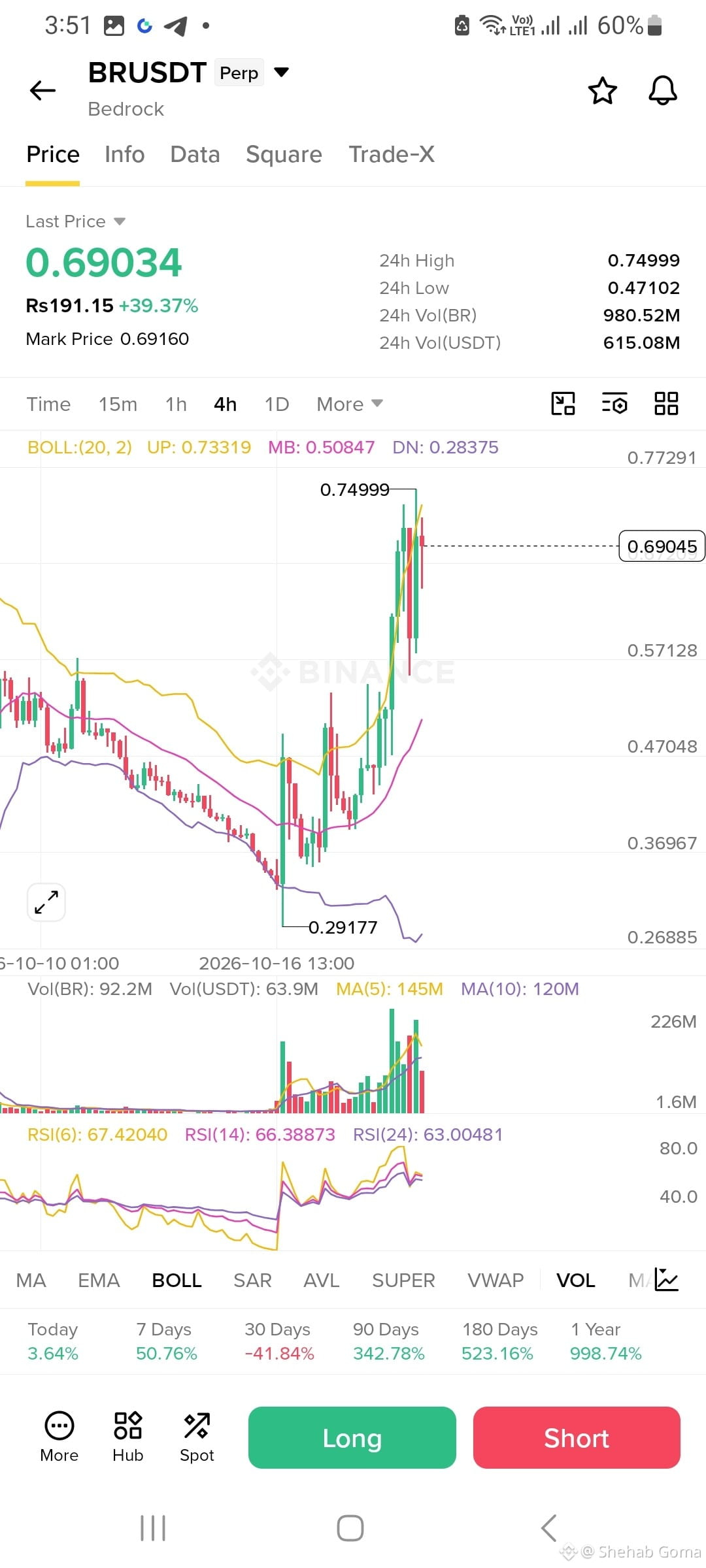
$BRU está absolutamente parabólico ahora mismo (+39% hoy), pero NO compres a mercado. 🛑
Si miras el gráfico de 4H, acabamos de marcar una enorme mecha hasta los $0.75 y el precio fue rechazado de inmediato. El RSI se está enfriando y está claro que los que entraron temprano están tomando ganancias.
Pero sigo siendo muy optimista respecto a la tendencia general (¡subió un 342% en 90 días!). Hay volumen y el impulso es increíble.
Así que, en lugar de dejarme llevar por el FOMO y comprar en máximos, estoy buscando una compra agresiva en la caída (en largo), cerca del precio actual, para aprovechar el siguiente tramo alcista.
Este es mi plan personal para esta operación rápida:
🟢 Mi zona de entrada: $0.665 - $0.685
(Voy a colocar órdenes limitadas aquí. Quiero aprovechar una rápida mecha bajista de 15 minutos para captar liquidez antes del rebote. No compres una vela verde; espera a que aparezca un poco de rojo).
🎯 Primer objetivo de toma de ganancias: $0.715 (Venderé aquí el 50% de mi posición para asegurar ganancias).
🎯 Segundo objetivo de toma de ganancias: $0.749 (Dejaré correr el resto para que vuelva a probar el máximo de las últimas 24 horas).
🔴 Stop loss: $0.645
(Stop loss estricto. Si perdemos este nivel en el gráfico de 4H, el impulso a corto plazo habrá muerto y espero una caída más profunda hasta la zona de $0.57).
$BR
$BRU está absolutamente parabólico ahora mismo (+39% hoy), pero NO compres a mercado. 🛑
Si miras el gráfico de 4H, acabamos de marcar una enorme mecha hasta los $0.75 y el precio fue rechazado de inmediato. El RSI se está enfriando y está claro que los que entraron temprano están tomando ganancias.
Pero sigo siendo muy optimista respecto a la tendencia general (¡subió un 342% en 90 días!). Hay volumen y el impulso es increíble.
Así que, en lugar de dejarme llevar por el FOMO y comprar en máximos, estoy buscando una compra agresiva en la caída (en largo), cerca del precio actual, para aprovechar el siguiente tramo alcista.
Este es mi plan personal para esta operación rápida:
🟢 Mi zona de entrada: $0.665 - $0.685
(Voy a colocar órdenes limitadas aquí. Quiero aprovechar una rápida mecha bajista de 15 minutos para captar liquidez antes del rebote. No compres una vela verde; espera a que aparezca un poco de rojo).
🎯 Primer objetivo de toma de ganancias: $0.715 (Venderé aquí el 50% de mi posición para asegurar ganancias).
🎯 Segundo objetivo de toma de ganancias: $0.749 (Dejaré correr el resto para que vuelva a probar el máximo de las últimas 24 horas).
🔴 Stop loss: $0.645
(Stop loss estricto. Si perdemos este nivel en el gráfico de 4H, el impulso a corto plazo habrá muerto y espero una caída más profunda hasta la zona de $0.57).
$BR
Si miras el gráfico de 4H, acabamos de marcar una enorme mecha hasta los $0.75 y el precio fue rechazado de inmediato. El RSI se está enfriando y está claro que los que entraron temprano están tomando ganancias.
Pero sigo siendo muy optimista respecto a la tendencia general (¡subió un 342% en 90 días!). Hay volumen y el impulso es increíble.
Así que, en lugar de dejarme llevar por el FOMO y comprar en máximos, estoy buscando una compra agresiva en la caída (en largo), cerca del precio actual, para aprovechar el siguiente tramo alcista.
Este es mi plan personal para esta operación rápida:
🟢 Mi zona de entrada: $0.665 - $0.685
(Voy a colocar órdenes limitadas aquí. Quiero aprovechar una rápida mecha bajista de 15 minutos para captar liquidez antes del rebote. No compres una vela verde; espera a que aparezca un poco de rojo).
🎯 Primer objetivo de toma de ganancias: $0.715 (Venderé aquí el 50% de mi posición para asegurar ganancias).
🎯 Segundo objetivo de toma de ganancias: $0.749 (Dejaré correr el resto para que vuelva a probar el máximo de las últimas 24 horas).
🔴 Stop loss: $0.645
(Stop loss estricto. Si perdemos este nivel en el gráfico de 4H, el impulso a corto plazo habrá muerto y espero una caída más profunda hasta la zona de $0.57).
$BR
2
369
·
--
Alcista
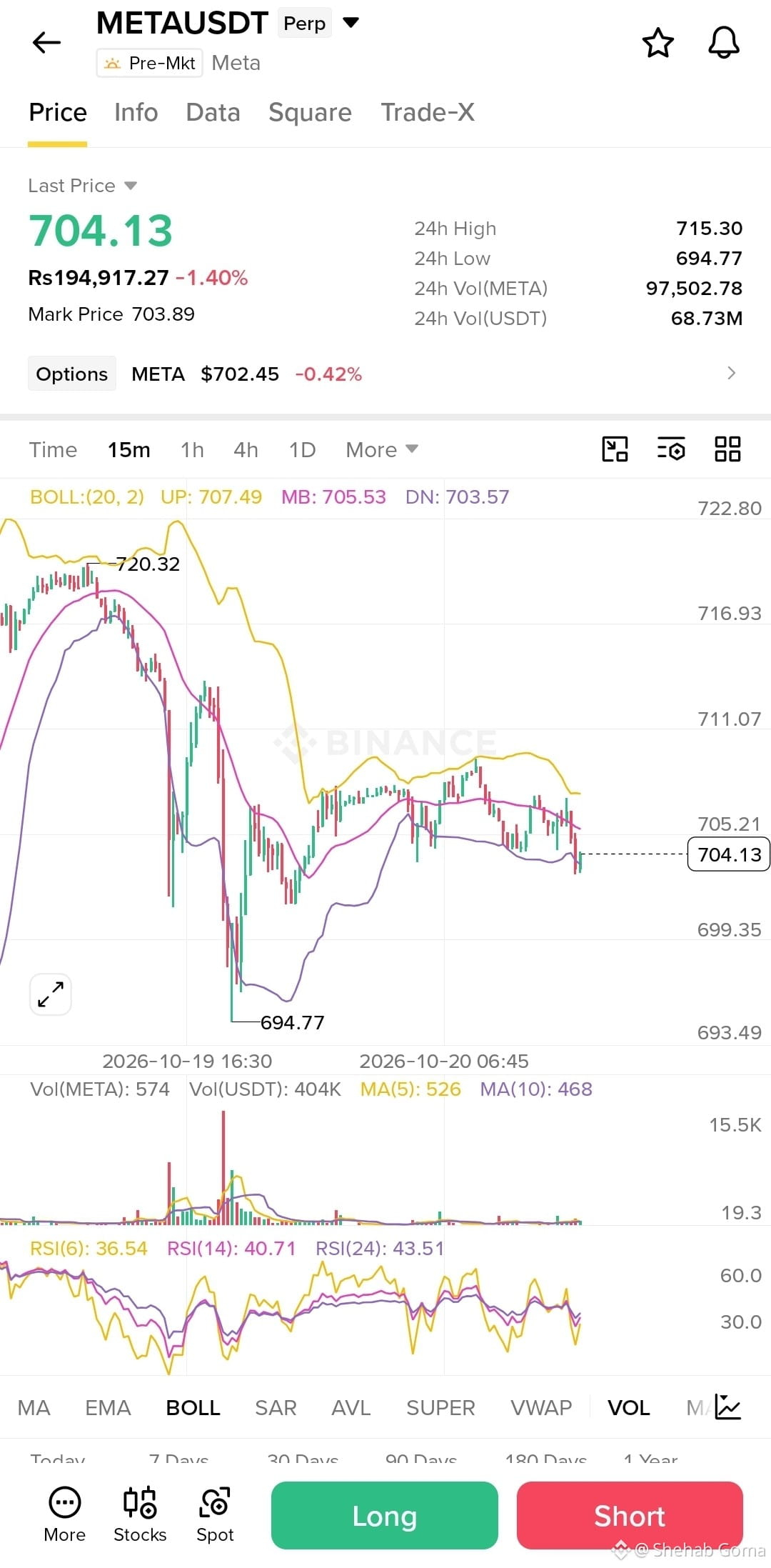
Temporada de resultados, sesión 2: $META vs. $TSLA: ¡mi apuesta alcista!
Con el inicio de la temporada de resultados de las Magníficas 7, tengo una visión más alcista sobre $META que sobre $TSLA.
🤖 ¿Por qué Meta? Meta tiene una vía directa para monetizar la IA mediante la publicidad. Una mejor segmentación de anuncios, recomendaciones personalizadas y su agente de IA Muse podrían aumentar la interacción y crear nuevas oportunidades de ingresos.
📈 ¿Dará frutos la inversión en IA? Soy optimista, pero este informe de resultados debe mostrar que el gasto en IA se está traduciendo en mayores ingresos y beneficios sostenibles. El aumento de los costos de infraestructura sigue siendo un riesgo importante.
🚗 ¿Y qué pasa con Tesla? El Roadster de próxima generación es emocionante, pero considero incierta su contribución a los resultados a corto plazo. En el caso de Tesla, estaré pendiente de los márgenes de los vehículos eléctricos, las entregas, los avances en conducción autónoma y el flujo de caja.
🎯 Mi estrategia de trading: Tengo una perspectiva alcista sobre $META y un presupuesto de trading de $500. Observaré la tendencia diaria, los niveles de soporte y resistencia, y el volumen para confirmar una ruptura alcista. Gestionaré el riesgo con cuidado y reevaluaré la situación después de los resultados, en vez de mantener la posición a ciegas durante la volatilidad.
Mi veredicto: En mi opinión, $META tiene una oportunidad más clara de monetizar la IA a corto plazo, pero las previsiones de la dirección y la reacción del mercado determinarán si la tesis alcista se mantiene.
¿Cuál es tu apuesta para esta temporada de resultados: $META o $TSLA?
#EarningsSeason #meta #TSLA #Mag7 #stockmarket
Temporada de resultados, sesión 2: $META vs. $TSLA: ¡mi apuesta alcista!
Con el inicio de la temporada de resultados de las Magníficas 7, tengo una visión más alcista sobre $META que sobre $TSLA.
🤖 ¿Por qué Meta? Meta tiene una vía directa para monetizar la IA mediante la publicidad. Una mejor segmentación de anuncios, recomendaciones personalizadas y su agente de IA Muse podrían aumentar la interacción y crear nuevas oportunidades de ingresos.
📈 ¿Dará frutos la inversión en IA? Soy optimista, pero este informe de resultados debe mostrar que el gasto en IA se está traduciendo en mayores ingresos y beneficios sostenibles. El aumento de los costos de infraestructura sigue siendo un riesgo importante.
🚗 ¿Y qué pasa con Tesla? El Roadster de próxima generación es emocionante, pero considero incierta su contribución a los resultados a corto plazo. En el caso de Tesla, estaré pendiente de los márgenes de los vehículos eléctricos, las entregas, los avances en conducción autónoma y el flujo de caja.
🎯 Mi estrategia de trading: Tengo una perspectiva alcista sobre $META y un presupuesto de trading de $500. Observaré la tendencia diaria, los niveles de soporte y resistencia, y el volumen para confirmar una ruptura alcista. Gestionaré el riesgo con cuidado y reevaluaré la situación después de los resultados, en vez de mantener la posición a ciegas durante la volatilidad.
Mi veredicto: En mi opinión, $META tiene una oportunidad más clara de monetizar la IA a corto plazo, pero las previsiones de la dirección y la reacción del mercado determinarán si la tesis alcista se mantiene.
¿Cuál es tu apuesta para esta temporada de resultados: $META o $TSLA?
#EarningsSeason #meta #TSLA #Mag7 #stockmarket
Con el inicio de la temporada de resultados de las Magníficas 7, tengo una visión más alcista sobre $META que sobre $TSLA.
🤖 ¿Por qué Meta? Meta tiene una vía directa para monetizar la IA mediante la publicidad. Una mejor segmentación de anuncios, recomendaciones personalizadas y su agente de IA Muse podrían aumentar la interacción y crear nuevas oportunidades de ingresos.
📈 ¿Dará frutos la inversión en IA? Soy optimista, pero este informe de resultados debe mostrar que el gasto en IA se está traduciendo en mayores ingresos y beneficios sostenibles. El aumento de los costos de infraestructura sigue siendo un riesgo importante.
🚗 ¿Y qué pasa con Tesla? El Roadster de próxima generación es emocionante, pero considero incierta su contribución a los resultados a corto plazo. En el caso de Tesla, estaré pendiente de los márgenes de los vehículos eléctricos, las entregas, los avances en conducción autónoma y el flujo de caja.
🎯 Mi estrategia de trading: Tengo una perspectiva alcista sobre $META y un presupuesto de trading de $500. Observaré la tendencia diaria, los niveles de soporte y resistencia, y el volumen para confirmar una ruptura alcista. Gestionaré el riesgo con cuidado y reevaluaré la situación después de los resultados, en vez de mantener la posición a ciegas durante la volatilidad.
Mi veredicto: En mi opinión, $META tiene una oportunidad más clara de monetizar la IA a corto plazo, pero las previsiones de la dirección y la reacción del mercado determinarán si la tesis alcista se mantiene.
¿Cuál es tu apuesta para esta temporada de resultados: $META o $TSLA?
#EarningsSeason #meta #TSLA #Mag7 #stockmarket
3
233
·
--
Verificado
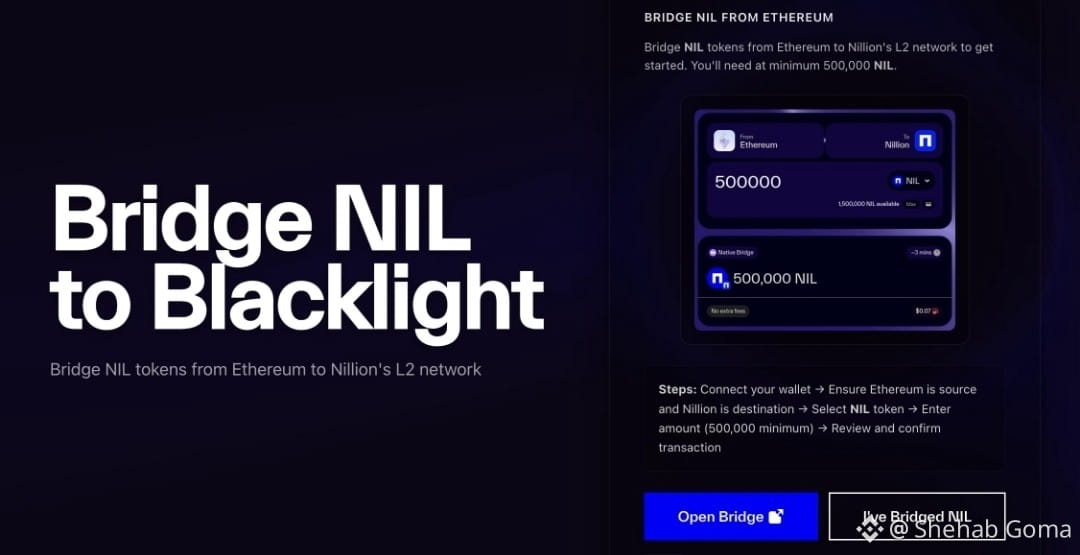
Después de investigar Nillion, lo que más me llama la atención de los Covenants es que pueden proteger las estrategias de trading antes de su ejecución.
Un Covenant es una instrucción que nadie puede leer mientras espera a que se cumplan sus condiciones. Defines una acción —un stop loss, una puja en una subasta sellada o un pago programado—, la vinculas a una condición y la publicas en la cadena de bloques en forma cifrada. Cuando se cumple la condición, puede ejecutarse sin depender de un bot, un keeper... ni de un tercero que custodie tu instrucción.
Esto aborda un problema real de las cadenas de bloques transparentes: las estrategias y los niveles de salida pueden quedar visibles mucho antes de ejecutarse, lo que crea oportunidades para cazar stops, copiar estrategias y adelantarse a órdenes grandes.
Dusk, el primer lanzamiento de Covenants, ya está disponible en la red principal de Ethereum, no solo en una red de prueba. Cualquiera puede crear un Covenant, ejecutar un nodo o desarrollar con el SDK. El lanzamiento inicial se centra en condiciones basadas en el precio y el tiempo.
Lo que más me entusiasma de lo que viene es la compatibilidad multichain prevista para Darkfall y la lógica de condiciones personalizadas prevista para Nightside. Si se implementan según lo previsto, podrían ampliar las redes en las que funcionan los Covenants y lo que los desarrolladores pueden crear con ellos.
Dusk es apenas la primera de las siete etapas de la hoja de ruta de Nillion, y hay más lanzamientos previstos antes de que termine 2026. Me entusiasma ver cómo evolucionan los mercados cifrados a partir de aquí.
@nillionnetwork #NIL $NIL
Después de investigar Nillion, lo que más me llama la atención de los Covenants es que pueden proteger las estrategias de trading antes de su ejecución.
Un Covenant es una instrucción que nadie puede leer mientras espera a que se cumplan sus condiciones. Defines una acción —un stop loss, una puja en una subasta sellada o un pago programado—, la vinculas a una condición y la publicas en la cadena de bloques en forma cifrada. Cuando se cumple la condición, puede ejecutarse sin depender de un bot, un keeper... ni de un tercero que custodie tu instrucción.
Esto aborda un problema real de las cadenas de bloques transparentes: las estrategias y los niveles de salida pueden quedar visibles mucho antes de ejecutarse, lo que crea oportunidades para cazar stops, copiar estrategias y adelantarse a órdenes grandes.
Dusk, el primer lanzamiento de Covenants, ya está disponible en la red principal de Ethereum, no solo en una red de prueba. Cualquiera puede crear un Covenant, ejecutar un nodo o desarrollar con el SDK. El lanzamiento inicial se centra en condiciones basadas en el precio y el tiempo.
Lo que más me entusiasma de lo que viene es la compatibilidad multichain prevista para Darkfall y la lógica de condiciones personalizadas prevista para Nightside. Si se implementan según lo previsto, podrían ampliar las redes en las que funcionan los Covenants y lo que los desarrolladores pueden crear con ellos.
Dusk es apenas la primera de las siete etapas de la hoja de ruta de Nillion, y hay más lanzamientos previstos antes de que termine 2026. Me entusiasma ver cómo evolucionan los mercados cifrados a partir de aquí.
@Nillion #NIL $NIL
Un Covenant es una instrucción que nadie puede leer mientras espera a que se cumplan sus condiciones. Defines una acción —un stop loss, una puja en una subasta sellada o un pago programado—, la vinculas a una condición y la publicas en la cadena de bloques en forma cifrada. Cuando se cumple la condición, puede ejecutarse sin depender de un bot, un keeper... ni de un tercero que custodie tu instrucción.
Esto aborda un problema real de las cadenas de bloques transparentes: las estrategias y los niveles de salida pueden quedar visibles mucho antes de ejecutarse, lo que crea oportunidades para cazar stops, copiar estrategias y adelantarse a órdenes grandes.
Dusk, el primer lanzamiento de Covenants, ya está disponible en la red principal de Ethereum, no solo en una red de prueba. Cualquiera puede crear un Covenant, ejecutar un nodo o desarrollar con el SDK. El lanzamiento inicial se centra en condiciones basadas en el precio y el tiempo.
Lo que más me entusiasma de lo que viene es la compatibilidad multichain prevista para Darkfall y la lógica de condiciones personalizadas prevista para Nightside. Si se implementan según lo previsto, podrían ampliar las redes en las que funcionan los Covenants y lo que los desarrolladores pueden crear con ellos.
Dusk es apenas la primera de las siete etapas de la hoja de ruta de Nillion, y hay más lanzamientos previstos antes de que termine 2026. Me entusiasma ver cómo evolucionan los mercados cifrados a partir de aquí.
@Nillion #NIL $NIL
19
21
531
·
--
🎓📚 ¡Me alegra compartir que completé con éxito el curso «Entender los bonos» de Binance Academy! 💛
En este curso, adquirí conocimientos valiosos sobre cómo funcionan los bonos, los distintos tipos de bonos, las calificaciones crediticias y la relación entre las tasas de interés y los precios de los bonos. También aprendí sobre los riesgos asociados a los bonos y cómo pueden complementar otros activos para crear una cartera de inversión más equilibrada y diversificada.
Una de las principales conclusiones que me llevo es que entender los bonos es esencial para comprender los mercados financieros, gestionar los riesgos de inversión y tomar decisiones financieras más informadas.
Ahora, me entusiasma compartir estos conocimientos con todos ustedes.
Un dato que vale la pena conocer: cuando suben las tasas de interés, los precios de los bonos existentes suelen bajar. Entender por qué ocurre esto puede ayudarnos a interpretar mejor las noticias financieras y los movimientos del mercado.
¡Sigan aprendiendo, compartiendo y ampliando sus conocimientos financieros!
Muchas gracias a Binance Academy por hacer que la educación financiera esté al alcance de todos.
#BinanceAcademyCourse
🎓📚 ¡Me alegra compartir que completé con éxito el curso «Entender los bonos» de Binance Academy! 💛
En este curso, adquirí conocimientos valiosos sobre cómo funcionan los bonos, los distintos tipos de bonos, las calificaciones crediticias y la relación entre las tasas de interés y los precios de los bonos. También aprendí sobre los riesgos asociados a los bonos y cómo pueden complementar otros activos para crear una cartera de inversión más equilibrada y diversificada.
Una de las principales conclusiones que me llevo es que entender los bonos es esencial para comprender los mercados financieros, gestionar los riesgos de inversión y tomar decisiones financieras más informadas.
Ahora, me entusiasma compartir estos conocimientos con todos ustedes.
Un dato que vale la pena conocer: cuando suben las tasas de interés, los precios de los bonos existentes suelen bajar. Entender por qué ocurre esto puede ayudarnos a interpretar mejor las noticias financieras y los movimientos del mercado.
¡Sigan aprendiendo, compartiendo y ampliando sus conocimientos financieros!
Muchas gracias a Binance Academy por hacer que la educación financiera esté al alcance de todos.
#BinanceAcademyCourse
En este curso, adquirí conocimientos valiosos sobre cómo funcionan los bonos, los distintos tipos de bonos, las calificaciones crediticias y la relación entre las tasas de interés y los precios de los bonos. También aprendí sobre los riesgos asociados a los bonos y cómo pueden complementar otros activos para crear una cartera de inversión más equilibrada y diversificada.
Una de las principales conclusiones que me llevo es que entender los bonos es esencial para comprender los mercados financieros, gestionar los riesgos de inversión y tomar decisiones financieras más informadas.
Ahora, me entusiasma compartir estos conocimientos con todos ustedes.
Un dato que vale la pena conocer: cuando suben las tasas de interés, los precios de los bonos existentes suelen bajar. Entender por qué ocurre esto puede ayudarnos a interpretar mejor las noticias financieras y los movimientos del mercado.
¡Sigan aprendiendo, compartiendo y ampliando sus conocimientos financieros!
Muchas gracias a Binance Academy por hacer que la educación financiera esté al alcance de todos.
#BinanceAcademyCourse

3
184
·
--
¿Sacudirá el IPC de septiembre al petróleo y los bonos del Tesoro? 🛢️📉
¡Los mercados se enfrentan a una prueba de inflación decisiva! Con el aumento de las tensiones en Oriente Medio, los precios de la energía vuelven a presionar las perspectivas de inflación de EE. UU.
📌 Datos clave a seguir:
• 🇺🇸 Previsión del IPC general de septiembre: +0,6 % mensual, +3,6 % interanual
• Previsión del IPC subyacente: +0,2 % mensual
• 🛢️ El crudo Brent cotizó recientemente en torno a los 105–106 $ por barril, ante el aumento de los riesgos de interrupciones del suministro.
Fuentes: Reuters, 14 de octubre de 2026. Las previsiones son estimaciones, no resultados reales del IPC.
🔥 Mi perspectiva del mercado:
Petróleo (BZUSDT): Si el IPC sorprende al alza y persisten los riesgos para el suministro desde Oriente Medio, el crudo podría mantenerse respaldado. Sin embargo, una distensión de las tensiones o una demanda más débil podrían provocar una fuerte caída. Observaré la evolución de los precios antes de aumentar mi exposición.
Bonos del Tesoro (TMFUSDT / TBT): Un dato de IPC más alto de lo previsto podría reavivar las expectativas de una política más restrictiva de la Fed, impulsando al alza los rendimientos de los bonos del Tesoro y a la baja sus precios. A corto plazo, eso podría favorecer a TBT frente a TMF. Pero una inflación subyacente más moderada podría revertir este movimiento.
RWUSD: Seguiré de cerca la liquidez, la estabilidad y su exposición específica al mercado antes de considerar cualquier posición.
Mi plan de trading: Evitar reaccionar impulsivamente al dato general. Comparar el IPC real con las previsiones de consenso, vigilar la inflación subyacente y los rendimientos de los bonos del Tesoro, y gestionar el tamaño de las posiciones con niveles de stop-loss claros.
La pregunta clave: ¿Se trata de un repunte inflacionario impulsado por la energía o del comienzo de una presión más generalizada sobre los precios?
👇 ¿Cuál es tu apuesta?
🛢️ ¿Alcista en petróleo?
📉 ¿Bajista en bonos del Tesoro?
📊 ¿O sorprenderá al mercado un IPC subyacente más moderado?
#CPIWatch
$BZ $TMF $TBT
¿Sacudirá el IPC de septiembre al petróleo y los bonos del Tesoro? 🛢️📉
¡Los mercados se enfrentan a una prueba de inflación decisiva! Con el aumento de las tensiones en Oriente Medio, los precios de la energía vuelven a presionar las perspectivas de inflación de EE. UU.
📌 Datos clave a seguir:
• 🇺🇸 Previsión del IPC general de septiembre: +0,6 % mensual, +3,6 % interanual
• Previsión del IPC subyacente: +0,2 % mensual
• 🛢️ El crudo Brent cotizó recientemente en torno a los 105–106 $ por barril, ante el aumento de los riesgos de interrupciones del suministro.
Fuentes: Reuters, 14 de octubre de 2026. Las previsiones son estimaciones, no resultados reales del IPC.
🔥 Mi perspectiva del mercado:
Petróleo (BZUSDT): Si el IPC sorprende al alza y persisten los riesgos para el suministro desde Oriente Medio, el crudo podría mantenerse respaldado. Sin embargo, una distensión de las tensiones o una demanda más débil podrían provocar una fuerte caída. Observaré la evolución de los precios antes de aumentar mi exposición.
Bonos del Tesoro (TMFUSDT / TBT): Un dato de IPC más alto de lo previsto podría reavivar las expectativas de una política más restrictiva de la Fed, impulsando al alza los rendimientos de los bonos del Tesoro y a la baja sus precios. A corto plazo, eso podría favorecer a TBT frente a TMF. Pero una inflación subyacente más moderada podría revertir este movimiento.
RWUSD: Seguiré de cerca la liquidez, la estabilidad y su exposición específica al mercado antes de considerar cualquier posición.
Mi plan de trading: Evitar reaccionar impulsivamente al dato general. Comparar el IPC real con las previsiones de consenso, vigilar la inflación subyacente y los rendimientos de los bonos del Tesoro, y gestionar el tamaño de las posiciones con niveles de stop-loss claros.
La pregunta clave: ¿Se trata de un repunte inflacionario impulsado por la energía o del comienzo de una presión más generalizada sobre los precios?
👇 ¿Cuál es tu apuesta?
🛢️ ¿Alcista en petróleo?
📉 ¿Bajista en bonos del Tesoro?
📊 ¿O sorprenderá al mercado un IPC subyacente más moderado?
#CPIWatch
$BZ $TMF $TBT
¡Los mercados se enfrentan a una prueba de inflación decisiva! Con el aumento de las tensiones en Oriente Medio, los precios de la energía vuelven a presionar las perspectivas de inflación de EE. UU.
📌 Datos clave a seguir:
• 🇺🇸 Previsión del IPC general de septiembre: +0,6 % mensual, +3,6 % interanual
• Previsión del IPC subyacente: +0,2 % mensual
• 🛢️ El crudo Brent cotizó recientemente en torno a los 105–106 $ por barril, ante el aumento de los riesgos de interrupciones del suministro.
Fuentes: Reuters, 14 de octubre de 2026. Las previsiones son estimaciones, no resultados reales del IPC.
🔥 Mi perspectiva del mercado:
Petróleo (BZUSDT): Si el IPC sorprende al alza y persisten los riesgos para el suministro desde Oriente Medio, el crudo podría mantenerse respaldado. Sin embargo, una distensión de las tensiones o una demanda más débil podrían provocar una fuerte caída. Observaré la evolución de los precios antes de aumentar mi exposición.
Bonos del Tesoro (TMFUSDT / TBT): Un dato de IPC más alto de lo previsto podría reavivar las expectativas de una política más restrictiva de la Fed, impulsando al alza los rendimientos de los bonos del Tesoro y a la baja sus precios. A corto plazo, eso podría favorecer a TBT frente a TMF. Pero una inflación subyacente más moderada podría revertir este movimiento.
RWUSD: Seguiré de cerca la liquidez, la estabilidad y su exposición específica al mercado antes de considerar cualquier posición.
Mi plan de trading: Evitar reaccionar impulsivamente al dato general. Comparar el IPC real con las previsiones de consenso, vigilar la inflación subyacente y los rendimientos de los bonos del Tesoro, y gestionar el tamaño de las posiciones con niveles de stop-loss claros.
La pregunta clave: ¿Se trata de un repunte inflacionario impulsado por la energía o del comienzo de una presión más generalizada sobre los precios?
👇 ¿Cuál es tu apuesta?
🛢️ ¿Alcista en petróleo?
📉 ¿Bajista en bonos del Tesoro?
📊 ¿O sorprenderá al mercado un IPC subyacente más moderado?
#CPIWatch
$BZ $TMF $TBT
1
3
316
·
--
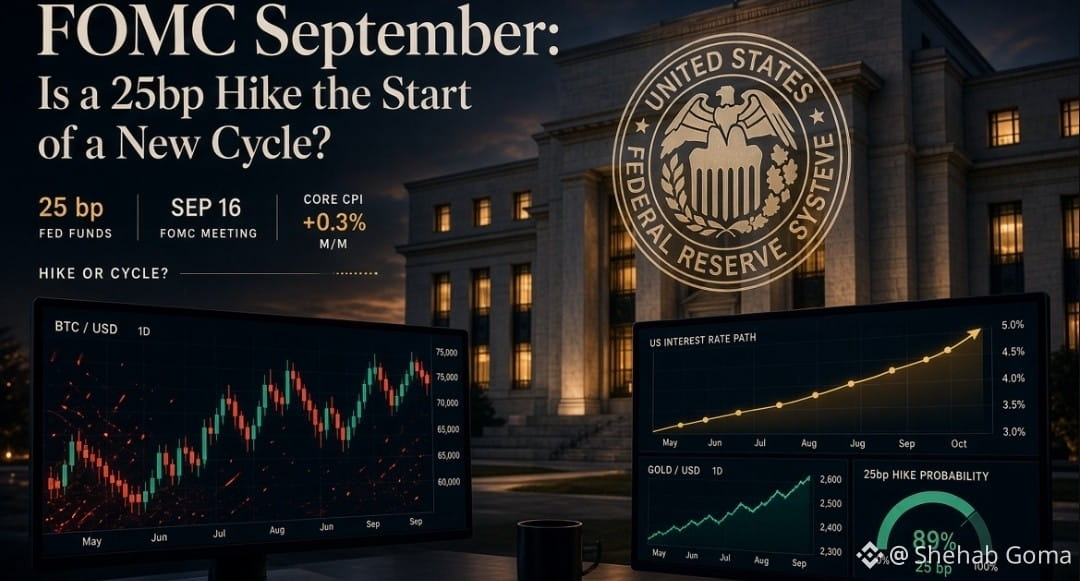
FOMC septiembre: ¿Un aumento de 25 pb es el inicio de un nuevo ciclo?
¡Los mercados de cripto y tradicionales están conteniendo la respiración mientras se acerca el FOMC de septiembre! Con el IPC subyacente de agosto subiendo 0,3% mes a mes, las probabilidades de un aumento de 25 pb esta semana se han disparado hasta casi el 90%. La pregunta que todos se hacen: ¿Se trata de un ajuste puntual o del inicio de un ciclo de alzas más prolongado?
Si la subida se concreta, ¿cómo se desarrollará en los mercados? Para BTC, espero volatilidad en el corto plazo. Si la subida ya está totalmente descontada, podríamos ver un rebote de alivio tipo “vender la noticia”. Las acciones tecnológicas probablemente sigan bajo presión por los mayores costos de financiación. Mientras tanto, el oro podría caer inicialmente, pero podría brillar rápidamente como activo refugio si se intensifican los temores de recesión.
Personalmente, mi postura se inclina con cautela hacia el pesimismo en el corto plazo, pero con una visión alcista a largo plazo para el cripto.
Mi próximo movimiento: no voy all-in. Mantengo mis posiciones principales en BTC spot, pero con pólvora seca lista para comprar la caída si el anuncio de la Fed provoca un desplome. Usaré el Trade Sharing Widget para registrar mis entradas exactas y mantenerme totalmente transparente.
¿Estás anticipando una subida y cómo la estás operando?
¿Eres alcista o bajista? ¡Comparte tus gráficos y setups de trading en los comentarios! 👇
#FedRateWatch
FOMC septiembre: ¿Un aumento de 25 pb es el inicio de un nuevo ciclo?
¡Los mercados de cripto y tradicionales están conteniendo la respiración mientras se acerca el FOMC de septiembre! Con el IPC subyacente de agosto subiendo 0,3% mes a mes, las probabilidades de un aumento de 25 pb esta semana se han disparado hasta casi el 90%. La pregunta que todos se hacen: ¿Se trata de un ajuste puntual o del inicio de un ciclo de alzas más prolongado?
Si la subida se concreta, ¿cómo se desarrollará en los mercados? Para BTC, espero volatilidad en el corto plazo. Si la subida ya está totalmente descontada, podríamos ver un rebote de alivio tipo “vender la noticia”. Las acciones tecnológicas probablemente sigan bajo presión por los mayores costos de financiación. Mientras tanto, el oro podría caer inicialmente, pero podría brillar rápidamente como activo refugio si se intensifican los temores de recesión.
Personalmente, mi postura se inclina con cautela hacia el pesimismo en el corto plazo, pero con una visión alcista a largo plazo para el cripto.
Mi próximo movimiento: no voy all-in. Mantengo mis posiciones principales en BTC spot, pero con pólvora seca lista para comprar la caída si el anuncio de la Fed provoca un desplome. Usaré el Trade Sharing Widget para registrar mis entradas exactas y mantenerme totalmente transparente.
¿Estás anticipando una subida y cómo la estás operando?
¿Eres alcista o bajista? ¡Comparte tus gráficos y setups de trading en los comentarios! 👇
#FedRateWatch
¡Los mercados de cripto y tradicionales están conteniendo la respiración mientras se acerca el FOMC de septiembre! Con el IPC subyacente de agosto subiendo 0,3% mes a mes, las probabilidades de un aumento de 25 pb esta semana se han disparado hasta casi el 90%. La pregunta que todos se hacen: ¿Se trata de un ajuste puntual o del inicio de un ciclo de alzas más prolongado?
Si la subida se concreta, ¿cómo se desarrollará en los mercados? Para BTC, espero volatilidad en el corto plazo. Si la subida ya está totalmente descontada, podríamos ver un rebote de alivio tipo “vender la noticia”. Las acciones tecnológicas probablemente sigan bajo presión por los mayores costos de financiación. Mientras tanto, el oro podría caer inicialmente, pero podría brillar rápidamente como activo refugio si se intensifican los temores de recesión.
Personalmente, mi postura se inclina con cautela hacia el pesimismo en el corto plazo, pero con una visión alcista a largo plazo para el cripto.
Mi próximo movimiento: no voy all-in. Mantengo mis posiciones principales en BTC spot, pero con pólvora seca lista para comprar la caída si el anuncio de la Fed provoca un desplome. Usaré el Trade Sharing Widget para registrar mis entradas exactas y mantenerme totalmente transparente.
¿Estás anticipando una subida y cómo la estás operando?
¿Eres alcista o bajista? ¡Comparte tus gráficos y setups de trading en los comentarios! 👇
#FedRateWatch
3
272
·
--
Verificado
NFP ya ganó y ahora sale el IPC. El núcleo entró en 0,3% en lugar de 0,2%. Ese es el dato que realmente mira la Fed.
Los empleos fueron sólidos (162k vs. los 50k bajos que esperaban) y también revisaron al alza los meses anteriores. El mercado laboral no se está rompiendo. La inflación tampoco está cayendo de forma limpia. Después de estar en 3,50–3,75% todo el año, una pausa la próxima semana se ve débil. Creo que suben 25 pb el 15–16.
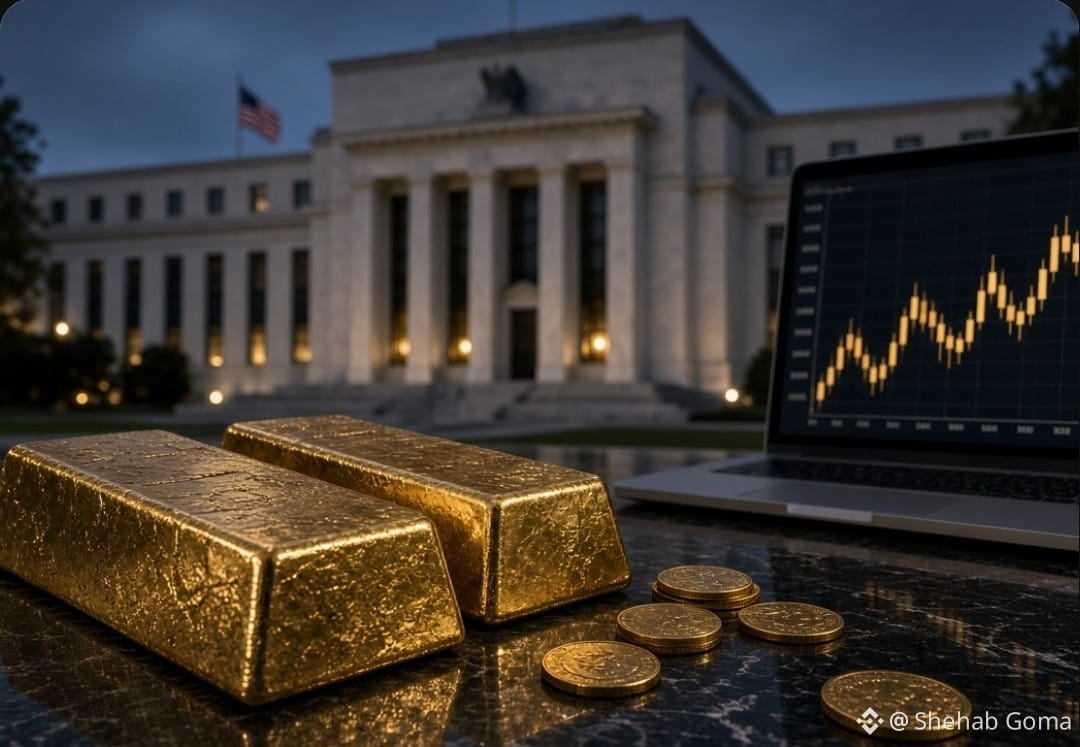
No persigo el riesgo en la reunión. Estoy largo de oro en futuros en su lugar.
Por qué:
La energía sigue alta y eso mantiene la inflación pegajosa
La geopolítica está enredada, así que el oro sigue con demanda
Si suben pero no aplastan la inflación, el oro aguanta mejor que los valores de crecimiento
Operación en vivo abajo. Si suben y el comunicado no es aún más agresivo, añadiré riesgo más tarde.
Hasta entonces me mantengo a la defensiva con las acciones y mantengo este oro largo. Si esta lógica tiene sentido, deja un seguimiento. ¿Cuál es tu opinión: suben o mantienen?
#CPIWatch
NFP ya ganó y ahora sale el IPC. El núcleo entró en 0,3% en lugar de 0,2%. Ese es el dato que realmente mira la Fed.
Los empleos fueron sólidos (162k vs. los 50k bajos que esperaban) y también revisaron al alza los meses anteriores. El mercado laboral no se está rompiendo. La inflación tampoco está cayendo de forma limpia. Después de estar en 3,50–3,75% todo el año, una pausa la próxima semana se ve débil. Creo que suben 25 pb el 15–16.
No persigo el riesgo en la reunión. Estoy largo de oro en futuros en su lugar.
Por qué:
La energía sigue alta y eso mantiene la inflación pegajosa
La geopolítica está enredada, así que el oro sigue con demanda
Si suben pero no aplastan la inflación, el oro aguanta mejor que los valores de crecimiento
Operación en vivo abajo. Si suben y el comunicado no es aún más agresivo, añadiré riesgo más tarde.
Hasta entonces me mantengo a la defensiva con las acciones y mantengo este oro largo. Si esta lógica tiene sentido, deja un seguimiento. ¿Cuál es tu opinión: suben o mantienen?
#CPIWatch
Los empleos fueron sólidos (162k vs. los 50k bajos que esperaban) y también revisaron al alza los meses anteriores. El mercado laboral no se está rompiendo. La inflación tampoco está cayendo de forma limpia. Después de estar en 3,50–3,75% todo el año, una pausa la próxima semana se ve débil. Creo que suben 25 pb el 15–16.
No persigo el riesgo en la reunión. Estoy largo de oro en futuros en su lugar.
Por qué:
La energía sigue alta y eso mantiene la inflación pegajosa
La geopolítica está enredada, así que el oro sigue con demanda
Si suben pero no aplastan la inflación, el oro aguanta mejor que los valores de crecimiento
Operación en vivo abajo. Si suben y el comunicado no es aún más agresivo, añadiré riesgo más tarde.
Hasta entonces me mantengo a la defensiva con las acciones y mantengo este oro largo. Si esta lógica tiene sentido, deja un seguimiento. ¿Cuál es tu opinión: suben o mantienen?
#CPIWatch
2
6
960
·
--
El atardecer quizá haya resuelto uno de los mayores problemas a los que se enfrentan las L1 especializadas: lograr que los desarrolladores se preocupen.
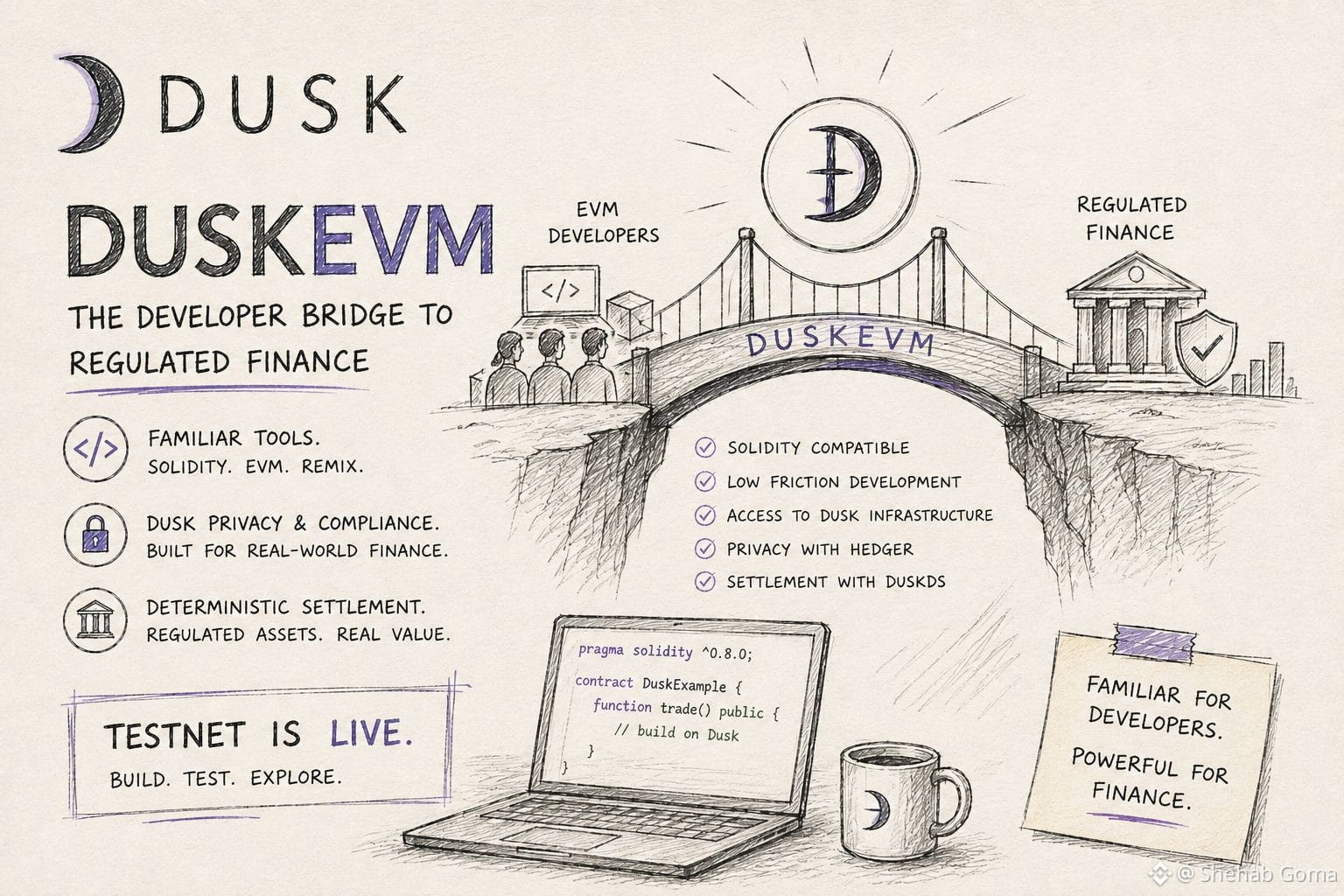
DuskEVM ya está en funcionamiento en la red de pruebas (testnet).
A primera vista, la “compatibilidad con EVM” suena como otra característica más de blockchain.
Creo que la historia más importante es lo que Dusk está haciendo con ello.
Los desarrolladores pueden usar herramientas familiares de Solidity y EVM, mientras que Dusk mantiene su enfoque en algo para lo que la mayoría de las cadenas de propósito general no están diseñadas específicamente:
los mercados financieros regulados.
Eso crea una combinación interesante.
Por un lado, tienes el ecosistema existente de desarrolladores de EVM.
Por el otro, tienes la infraestructura de Dusk para la privacidad, el cumplimiento, la liquidación determinista y los activos regulados.
Y DuskEVM está en medio de ambos.
Lo importante es que esto no se trata solo de atraer más contratos inteligentes.
Si los desarrolladores pueden crear activos tokenizados, aplicaciones de trading e infraestructura financiera usando herramientas familiares —mientras acceden a las capacidades de privacidad y liquidación de Dusk—, el mercado objetivo de creadores se vuelve mucho más grande.
Pero aquí está la parte que sigo de cerca:
La actividad en la red de pruebas (testnet) no es adopción.
El hito real no será cuántos contratos se despliegan.
Será si los desarrolladores convierten esos contratos en aplicaciones que atraen a usuarios reales, activos reales y actividad financiera real.
Si eso ocurre, DuskEVM podría convertirse en algo más que una capa de EVM.
Podría convertirse en la puerta de entrada para desarrolladores al ecosistema de finanzas reguladas de Dusk.
¿Crees que la compatibilidad con EVM puede ser el catalizador que, por fin, atraiga a creadores serios hacia Dusk?
@Dusk_Foundation #dusk $DUSK
{future}(DUSKUSDT)
El atardecer quizá haya resuelto uno de los mayores problemas a los que se enfrentan las L1 especializadas: lograr que los desarrolladores se preocupen.
DuskEVM ya está en funcionamiento en la red de pruebas (testnet).
A primera vista, la “compatibilidad con EVM” suena como otra característica más de blockchain.
Creo que la historia más importante es lo que Dusk está haciendo con ello.
Los desarrolladores pueden usar herramientas familiares de Solidity y EVM, mientras que Dusk mantiene su enfoque en algo para lo que la mayoría de las cadenas de propósito general no están diseñadas específicamente:
los mercados financieros regulados.
Eso crea una combinación interesante.
Por un lado, tienes el ecosistema existente de desarrolladores de EVM.
Por el otro, tienes la infraestructura de Dusk para la privacidad, el cumplimiento, la liquidación determinista y los activos regulados.
Y DuskEVM está en medio de ambos.
Lo importante es que esto no se trata solo de atraer más contratos inteligentes.
Si los desarrolladores pueden crear activos tokenizados, aplicaciones de trading e infraestructura financiera usando herramientas familiares —mientras acceden a las capacidades de privacidad y liquidación de Dusk—, el mercado objetivo de creadores se vuelve mucho más grande.
Pero aquí está la parte que sigo de cerca:
La actividad en la red de pruebas (testnet) no es adopción.
El hito real no será cuántos contratos se despliegan.
Será si los desarrolladores convierten esos contratos en aplicaciones que atraen a usuarios reales, activos reales y actividad financiera real.
Si eso ocurre, DuskEVM podría convertirse en algo más que una capa de EVM.
Podría convertirse en la puerta de entrada para desarrolladores al ecosistema de finanzas reguladas de Dusk.
¿Crees que la compatibilidad con EVM puede ser el catalizador que, por fin, atraiga a creadores serios hacia Dusk?
@Dusk #dusk $DUSK
DuskEVM ya está en funcionamiento en la red de pruebas (testnet).
A primera vista, la “compatibilidad con EVM” suena como otra característica más de blockchain.
Creo que la historia más importante es lo que Dusk está haciendo con ello.
Los desarrolladores pueden usar herramientas familiares de Solidity y EVM, mientras que Dusk mantiene su enfoque en algo para lo que la mayoría de las cadenas de propósito general no están diseñadas específicamente:
los mercados financieros regulados.
Eso crea una combinación interesante.
Por un lado, tienes el ecosistema existente de desarrolladores de EVM.
Por el otro, tienes la infraestructura de Dusk para la privacidad, el cumplimiento, la liquidación determinista y los activos regulados.
Y DuskEVM está en medio de ambos.
Lo importante es que esto no se trata solo de atraer más contratos inteligentes.
Si los desarrolladores pueden crear activos tokenizados, aplicaciones de trading e infraestructura financiera usando herramientas familiares —mientras acceden a las capacidades de privacidad y liquidación de Dusk—, el mercado objetivo de creadores se vuelve mucho más grande.
Pero aquí está la parte que sigo de cerca:
La actividad en la red de pruebas (testnet) no es adopción.
El hito real no será cuántos contratos se despliegan.
Será si los desarrolladores convierten esos contratos en aplicaciones que atraen a usuarios reales, activos reales y actividad financiera real.
Si eso ocurre, DuskEVM podría convertirse en algo más que una capa de EVM.
Podría convertirse en la puerta de entrada para desarrolladores al ecosistema de finanzas reguladas de Dusk.
¿Crees que la compatibilidad con EVM puede ser el catalizador que, por fin, atraiga a creadores serios hacia Dusk?
@Dusk #dusk $DUSK
2
215
·
--
Algo sobre Dusk llamó mi atención hoy:
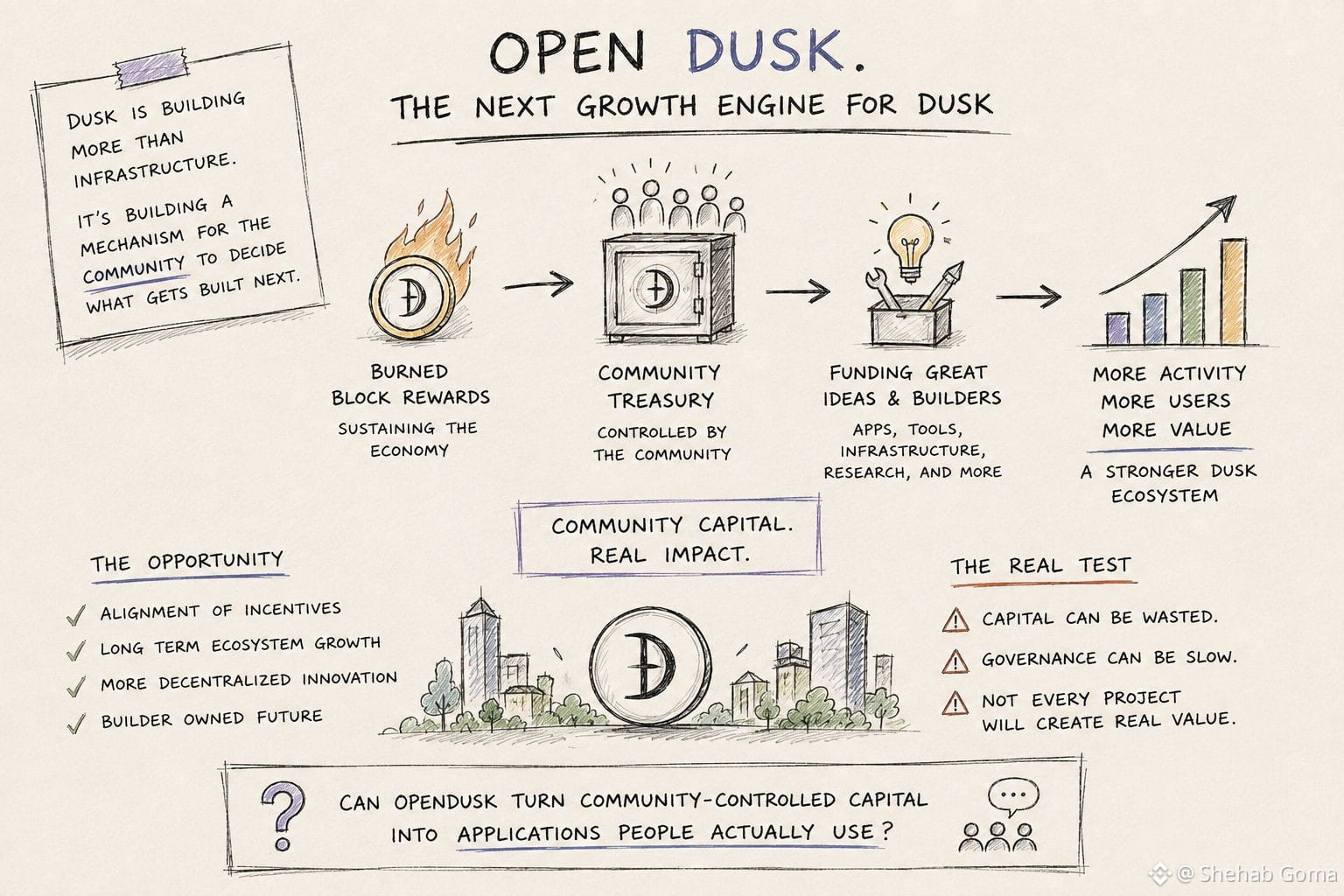
La próxima fase de crecimiento puede depender menos de lo que Dusk construya por sí mismo y más de lo que la comunidad sea capaz de construir a su alrededor.
Por eso estoy siguiendo OpenDusk de cerca.
Imagina un ejemplo sencillo:
Si, con el tiempo, una tesorería comunitaria llegara a tener recursos suficientes para financiar 10 equipos serios: desarrolladores, herramientas, investigación, aplicaciones financieras, infraestructura…
El valor no es solo el dinero que se distribuye.
Es la cantidad de razones nuevas que tienen las personas para usar Dusk.
Más constructores → más aplicaciones → más actividad → más demanda para la red subyacente.
Y eso crea algo que creo que es más importante que otro relato de corto plazo:
un ecosistema que pueda crecer y multiplicarse desde dentro.
Pero aquí hay una tensión real.
Una tesorería sola no crea crecimiento.
El capital puede desperdiciarse.
La gobernanza puede volverse lenta.
La financiación puede ir a proyectos que se ven impresionantes pero no generan usuarios.
Así que para mí, la prueba real de OpenDusk no es:
“¿Aprobó la comunidad una tesorería?”
Es:
¿Puede el capital controlado por la comunidad convertirse en aplicaciones que la gente realmente use?
Si Dusk acierta esa parte, ¿podría la financiación de ecosistemas descentralizados convertirse en uno de sus mayores catalizadores de crecimiento?
@Dusk_Foundation #dusk
$DUSK
{future}(DUSKUSDT)
$TAC
{future}(TACUSDT)
$MAGMA
{future}(MAGMAUSDT)
Algo sobre Dusk llamó mi atención hoy:
La próxima fase de crecimiento puede depender menos de lo que Dusk construya por sí mismo y más de lo que la comunidad sea capaz de construir a su alrededor.
Por eso estoy siguiendo OpenDusk de cerca.
Imagina un ejemplo sencillo:
Si, con el tiempo, una tesorería comunitaria llegara a tener recursos suficientes para financiar 10 equipos serios: desarrolladores, herramientas, investigación, aplicaciones financieras, infraestructura…
El valor no es solo el dinero que se distribuye.
Es la cantidad de razones nuevas que tienen las personas para usar Dusk.
Más constructores → más aplicaciones → más actividad → más demanda para la red subyacente.
Y eso crea algo que creo que es más importante que otro relato de corto plazo:
un ecosistema que pueda crecer y multiplicarse desde dentro.
Pero aquí hay una tensión real.
Una tesorería sola no crea crecimiento.
El capital puede desperdiciarse.
La gobernanza puede volverse lenta.
La financiación puede ir a proyectos que se ven impresionantes pero no generan usuarios.
Así que para mí, la prueba real de OpenDusk no es:
“¿Aprobó la comunidad una tesorería?”
Es:
¿Puede el capital controlado por la comunidad convertirse en aplicaciones que la gente realmente use?
Si Dusk acierta esa parte, ¿podría la financiación de ecosistemas descentralizados convertirse en uno de sus mayores catalizadores de crecimiento?
@Dusk #dusk
$DUSK
$TAC
$MAGMA
La próxima fase de crecimiento puede depender menos de lo que Dusk construya por sí mismo y más de lo que la comunidad sea capaz de construir a su alrededor.
Por eso estoy siguiendo OpenDusk de cerca.
Imagina un ejemplo sencillo:
Si, con el tiempo, una tesorería comunitaria llegara a tener recursos suficientes para financiar 10 equipos serios: desarrolladores, herramientas, investigación, aplicaciones financieras, infraestructura…
El valor no es solo el dinero que se distribuye.
Es la cantidad de razones nuevas que tienen las personas para usar Dusk.
Más constructores → más aplicaciones → más actividad → más demanda para la red subyacente.
Y eso crea algo que creo que es más importante que otro relato de corto plazo:
un ecosistema que pueda crecer y multiplicarse desde dentro.
Pero aquí hay una tensión real.
Una tesorería sola no crea crecimiento.
El capital puede desperdiciarse.
La gobernanza puede volverse lenta.
La financiación puede ir a proyectos que se ven impresionantes pero no generan usuarios.
Así que para mí, la prueba real de OpenDusk no es:
“¿Aprobó la comunidad una tesorería?”
Es:
¿Puede el capital controlado por la comunidad convertirse en aplicaciones que la gente realmente use?
Si Dusk acierta esa parte, ¿podría la financiación de ecosistemas descentralizados convertirse en uno de sus mayores catalizadores de crecimiento?
@Dusk #dusk
$DUSK
$TAC
$MAGMA
2
4
515
·
--
Verificado
Antes revisaba las tasas tres o cuatro veces al día. No porque quisiera. Porque tenía que.
Con un solo pico, el bucle que había construido con cuidado empezaría a sangrar. Me sentaba a calcular si desenrollarlo antes o apostar a que la tasa volvería a bajar. Nunca se sintió como invertir. Se sentía como vigilar una posición que podía volverse en tu contra en cualquier momento. Esa ansiedad constante a bajo nivel es en lo que todavía funciona la mayor parte de DeFi. @termmax es el primer protocolo que me hizo dejar de hacerlo.
Eliges la tasa y el plazo al inicio. Luego cierras la pestaña. El número que bloqueaste es el número que obtienes. Sin sorpresas a mitad de plazo. Sin saltos repentinos que te obliguen a reaccionar.
Lo que me parece más interesante que el marketing es cómo esto cambia el comportamiento. Cuando el costo del capital se conoce de antemano, la gente dimensiona las posiciones de manera diferente.
Se quedan más tiempo. Dejan de tratar cada mercado como una granja a corto plazo que hay que monitorear como si fuera un niño inquieto. El protocolo no solo añadió tasas fijas encima del sistema anterior. Reconstruyó la posición de crédito en sí misma para que ambos lados queden claros y sean negociables desde el día uno. Esa única decisión de diseño es la razón por la que el capital puede permanecer con más confianza en lugar de estar buscando constantemente la salida.
Faltan cuatro días para el TMX TGE.
Me da curiosidad cuánta gente seguirá refrescando tasas por costumbre… y cuántos por fin empezarán a tratar el crédito on-chain como algo que realmente pueden planificar.
¿Qué cambiaría en tu tamaño y tu período de tenencia si nunca tuvieras que preocuparte de que la tasa se mueva en tu contra otra vez?
#TermMax
$BLESS
{alpha}(560x7c8217517ed4711fe2deccdfeffe8d906b9ae11f)
$BTW
{alpha}(560x444045b0ee1ee319a660a5e3d604ca0ffa35acaa)
$APR
{alpha}(560x299ad4299da5b2b93fba4c96967b040c7f611099)
¿Qué te molesta más en el lending de DeFi?
Antes revisaba las tasas tres o cuatro veces al día. No porque quisiera. Porque tenía que.
Con un solo pico, el bucle que había construido con cuidado empezaría a sangrar. Me sentaba a calcular si desenrollarlo antes o apostar a que la tasa volvería a bajar. Nunca se sintió como invertir. Se sentía como vigilar una posición que podía volverse en tu contra en cualquier momento. Esa ansiedad constante a bajo nivel es en lo que todavía funciona la mayor parte de DeFi. @TermMax es el primer protocolo que me hizo dejar de hacerlo.
Eliges la tasa y el plazo al inicio. Luego cierras la pestaña. El número que bloqueaste es el número que obtienes. Sin sorpresas a mitad de plazo. Sin saltos repentinos que te obliguen a reaccionar.
Lo que me parece más interesante que el marketing es cómo esto cambia el comportamiento. Cuando el costo del capital se conoce de antemano, la gente dimensiona las posiciones de manera diferente.
Se quedan más tiempo. Dejan de tratar cada mercado como una granja a corto plazo que hay que monitorear como si fuera un niño inquieto. El protocolo no solo añadió tasas fijas encima del sistema anterior. Reconstruyó la posición de crédito en sí misma para que ambos lados queden claros y sean negociables desde el día uno. Esa única decisión de diseño es la razón por la que el capital puede permanecer con más confianza en lugar de estar buscando constantemente la salida.
Faltan cuatro días para el TMX TGE.
Me da curiosidad cuánta gente seguirá refrescando tasas por costumbre… y cuántos por fin empezarán a tratar el crédito on-chain como algo que realmente pueden planificar.
¿Qué cambiaría en tu tamaño y tu período de tenencia si nunca tuvieras que preocuparte de que la tasa se mueva en tu contra otra vez?
#TermMax
$BLESS
$BTW
$APR
¿Qué te molesta más en el lending de DeFi?
Con un solo pico, el bucle que había construido con cuidado empezaría a sangrar. Me sentaba a calcular si desenrollarlo antes o apostar a que la tasa volvería a bajar. Nunca se sintió como invertir. Se sentía como vigilar una posición que podía volverse en tu contra en cualquier momento. Esa ansiedad constante a bajo nivel es en lo que todavía funciona la mayor parte de DeFi. @TermMax es el primer protocolo que me hizo dejar de hacerlo.
Eliges la tasa y el plazo al inicio. Luego cierras la pestaña. El número que bloqueaste es el número que obtienes. Sin sorpresas a mitad de plazo. Sin saltos repentinos que te obliguen a reaccionar.
Lo que me parece más interesante que el marketing es cómo esto cambia el comportamiento. Cuando el costo del capital se conoce de antemano, la gente dimensiona las posiciones de manera diferente.
Se quedan más tiempo. Dejan de tratar cada mercado como una granja a corto plazo que hay que monitorear como si fuera un niño inquieto. El protocolo no solo añadió tasas fijas encima del sistema anterior. Reconstruyó la posición de crédito en sí misma para que ambos lados queden claros y sean negociables desde el día uno. Esa única decisión de diseño es la razón por la que el capital puede permanecer con más confianza en lugar de estar buscando constantemente la salida.
Faltan cuatro días para el TMX TGE.
Me da curiosidad cuánta gente seguirá refrescando tasas por costumbre… y cuántos por fin empezarán a tratar el crédito on-chain como algo que realmente pueden planificar.
¿Qué cambiaría en tu tamaño y tu período de tenencia si nunca tuvieras que preocuparte de que la tasa se mueva en tu contra otra vez?
#TermMax
$BLESS
$BTW
$APR
¿Qué te molesta más en el lending de DeFi?
🔵 Rate suddenly spiking
40%
🟢 Constantly checking rates
20%
🟡 Liquidation risk
40%
⚪️ Nothing I just farm
0%
5 Voto(s) • Votación cerrada
3
6
1.4k
·
--
Durante mucho tiempo traté la tokenización como el destino.
Obtén el activo onchain y se hace el trabajo duro. Estaba equivocado. El verdadero cuello de botella es todo lo que viene después. Registros de propiedad, verificaciones de elegibilidad, restricciones de transferencia, coincidencia del pago con la entrega y, luego, el trabajo continuo de dividendos, votaciones y acciones corporativas. La mayoría de los activos tokenizados siguen dejando todo eso disperso en sistemas separados que constantemente necesitan conciliación.
@Dusk_Foundation lo aborda de manera diferente. El objetivo no es solo representar el activo: es ejecutar todo el ciclo de vida de la propiedad en un único registro compartido. La emisión, la elegibilidad, el liquidado y la gestión permanecen conectados. La información sensible se mantiene bajo control. Las transferencias que generan costo y retraso simplemente desaparecen.
Esta es la diferencia silenciosa entre un envoltorio digital y una infraestructura real de mercado. Cuando todo el recorrido desde la emisión hasta la gestión ya no necesita cinco libros contables diferentes hablando entre sí, ¿qué porcentaje de los mercados privados y regulados crees que finalmente se vuelve práctico para moverlo onchain?
#dusk
$DUSK
{future}(DUSKUSDT)
$AVAAI
{future}(AVAAIUSDT)
$BLESS
{future}(BLESSUSDT)
¿Cuál es el mayor desafío para los activos regulados onchain?
Durante mucho tiempo traté la tokenización como el destino.
Obtén el activo onchain y se hace el trabajo duro. Estaba equivocado. El verdadero cuello de botella es todo lo que viene después. Registros de propiedad, verificaciones de elegibilidad, restricciones de transferencia, coincidencia del pago con la entrega y, luego, el trabajo continuo de dividendos, votaciones y acciones corporativas. La mayoría de los activos tokenizados siguen dejando todo eso disperso en sistemas separados que constantemente necesitan conciliación.
@Dusk lo aborda de manera diferente. El objetivo no es solo representar el activo: es ejecutar todo el ciclo de vida de la propiedad en un único registro compartido. La emisión, la elegibilidad, el liquidado y la gestión permanecen conectados. La información sensible se mantiene bajo control. Las transferencias que generan costo y retraso simplemente desaparecen.
Esta es la diferencia silenciosa entre un envoltorio digital y una infraestructura real de mercado. Cuando todo el recorrido desde la emisión hasta la gestión ya no necesita cinco libros contables diferentes hablando entre sí, ¿qué porcentaje de los mercados privados y regulados crees que finalmente se vuelve práctico para moverlo onchain?
#dusk
$DUSK
$AVAAI
$BLESS
¿Cuál es el mayor desafío para los activos regulados onchain?
Obtén el activo onchain y se hace el trabajo duro. Estaba equivocado. El verdadero cuello de botella es todo lo que viene después. Registros de propiedad, verificaciones de elegibilidad, restricciones de transferencia, coincidencia del pago con la entrega y, luego, el trabajo continuo de dividendos, votaciones y acciones corporativas. La mayoría de los activos tokenizados siguen dejando todo eso disperso en sistemas separados que constantemente necesitan conciliación.
@Dusk lo aborda de manera diferente. El objetivo no es solo representar el activo: es ejecutar todo el ciclo de vida de la propiedad en un único registro compartido. La emisión, la elegibilidad, el liquidado y la gestión permanecen conectados. La información sensible se mantiene bajo control. Las transferencias que generan costo y retraso simplemente desaparecen.
Esta es la diferencia silenciosa entre un envoltorio digital y una infraestructura real de mercado. Cuando todo el recorrido desde la emisión hasta la gestión ya no necesita cinco libros contables diferentes hablando entre sí, ¿qué porcentaje de los mercados privados y regulados crees que finalmente se vuelve práctico para moverlo onchain?
#dusk
$DUSK
$AVAAI
$BLESS
¿Cuál es el mayor desafío para los activos regulados onchain?
🔵 Tokenizing the asset
25%
🟢 Full lifecycle
50%
🟡 Privacy & compliance
0%
⚪️ Liquidity
25%
4 Voto(s) • Votación cerrada
4
4
1.3k
·
--
Verificado
TermMax en realidad no está resolviendo un problema de préstamos. Está resolviendo un problema de certidumbre de tasas.
Revisé el libro blanco de TMX de marzo de 2026 y un detalle se destacó: TermMax se está construyendo en torno a DeFi de tasa fija y plazo fijo, en lugar de aceptar tasas variables como opción predeterminada.
FT = exposición a tasa fija.
Los prestamistas compran FT por debajo del valor nominal y lo canjean al vencimiento, fijando el rendimiento cuando entran.
XT = el otro lado de la deuda.
Los prestatarios reciben XT y pueden venderlo para obtener liquidez, fijando la economía de su préstamo.
Luego está GT, un NFT que empaqueta colateral y deuda en una posición apalancada. En lugar de hacer bucles manuales de préstamo → colateral → préstamo, la posición se puede crear mediante una sola transacción.
@termmax usa un AMM de Órdenes en Rango personalizado donde los curadores trabajan con rangos objetivo de APR en lugar de rangos de precio convencionales.
El libro blanco dice que los fondos no utilizados pueden desplegarse en protocolos de tasa variable como Aave, Morpho y Venus mientras se espera la demanda de tasa fija.
Eso genera un intercambio interesante:
Los mercados de tasa fija necesitan liquidez.
Pero los proveedores de liquidez también necesitan eficiencia de capital.
TermMax intenta abordar ambos aspectos mediante órdenes atómicas + despliegue de fondos ociosos.
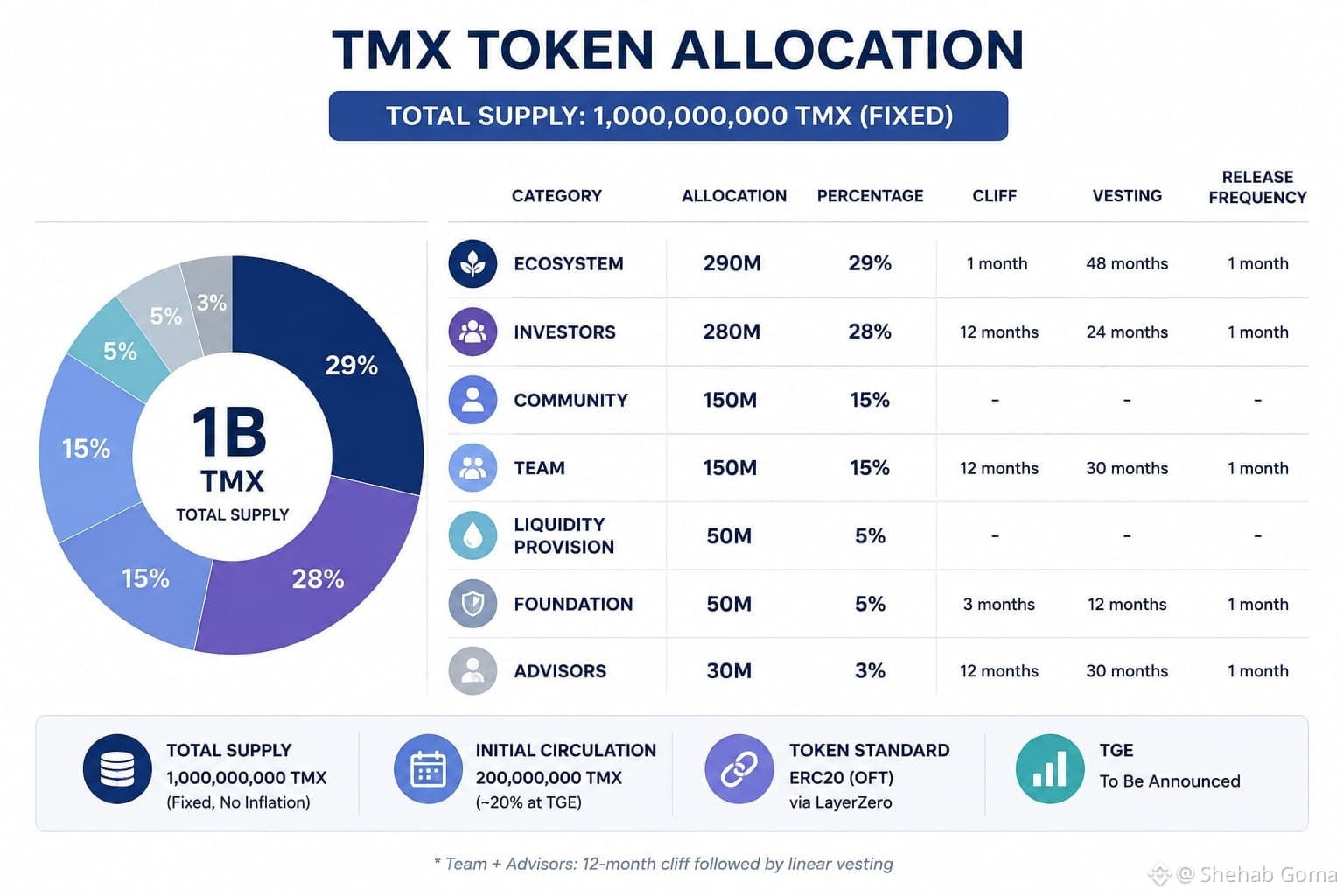
La tokenómica también merece una mirada más de cerca.
Suministro máximo de 1B TMX
Circulación inicial de 200M
Asignación al ecosistema 29%
28% inversores
15% equipo
15% comunidad
La asignación al ecosistema se adquiere (vest) durante 48 meses, mientras que las asignaciones del equipo y los inversores tienen periodos de bloqueo de 12 meses seguidos de adquisición.
TMX en sí está diseñado en torno a la gobernanza y el staking, con ingresos del tesoro que potencialmente provienen de comisiones por trading, préstamos y liquidación.
La pregunta más grande no es si las tasas fijas suenan útiles.
Es si #TermMax puede generar suficiente demanda real de tasa fija para que esta estructura de mercado sea económicamente significativa.
El libro blanco informa $64M+ de TVL, 837K+ carteras registradas y 170K+ usuarios activos diarios máximos.
¿Esa actividad puede traducirse en una demanda duradera para préstamos a tasa fija y productos estructurados?
{alpha}(560xbeea1d618e533a387d941f58a7d4c9b7bd377777)
$ONG
{future}(ONGUSDT)
{future}(BTWUSDT)
TermMax en realidad no está resolviendo un problema de préstamos. Está resolviendo un problema de certidumbre de tasas.
Revisé el libro blanco de TMX de marzo de 2026 y un detalle se destacó: TermMax se está construyendo en torno a DeFi de tasa fija y plazo fijo, en lugar de aceptar tasas variables como opción predeterminada.
FT = exposición a tasa fija.
Los prestamistas compran FT por debajo del valor nominal y lo canjean al vencimiento, fijando el rendimiento cuando entran.
XT = el otro lado de la deuda.
Los prestatarios reciben XT y pueden venderlo para obtener liquidez, fijando la economía de su préstamo.
Luego está GT, un NFT que empaqueta colateral y deuda en una posición apalancada. En lugar de hacer bucles manuales de préstamo → colateral → préstamo, la posición se puede crear mediante una sola transacción.
@TermMax usa un AMM de Órdenes en Rango personalizado donde los curadores trabajan con rangos objetivo de APR en lugar de rangos de precio convencionales.
El libro blanco dice que los fondos no utilizados pueden desplegarse en protocolos de tasa variable como Aave, Morpho y Venus mientras se espera la demanda de tasa fija.
Eso genera un intercambio interesante:
Los mercados de tasa fija necesitan liquidez.
Pero los proveedores de liquidez también necesitan eficiencia de capital.
TermMax intenta abordar ambos aspectos mediante órdenes atómicas + despliegue de fondos ociosos.
La tokenómica también merece una mirada más de cerca.
Suministro máximo de 1B TMX
Circulación inicial de 200M
Asignación al ecosistema 29%
28% inversores
15% equipo
15% comunidad
La asignación al ecosistema se adquiere (vest) durante 48 meses, mientras que las asignaciones del equipo y los inversores tienen periodos de bloqueo de 12 meses seguidos de adquisición.
TMX en sí está diseñado en torno a la gobernanza y el staking, con ingresos del tesoro que potencialmente provienen de comisiones por trading, préstamos y liquidación.
La pregunta más grande no es si las tasas fijas suenan útiles.
Es si #TermMax puede generar suficiente demanda real de tasa fija para que esta estructura de mercado sea económicamente significativa.
El libro blanco informa $64M+ de TVL, 837K+ carteras registradas y 170K+ usuarios activos diarios máximos.
¿Esa actividad puede traducirse en una demanda duradera para préstamos a tasa fija y productos estructurados?
$ONG
Revisé el libro blanco de TMX de marzo de 2026 y un detalle se destacó: TermMax se está construyendo en torno a DeFi de tasa fija y plazo fijo, en lugar de aceptar tasas variables como opción predeterminada.
FT = exposición a tasa fija.
Los prestamistas compran FT por debajo del valor nominal y lo canjean al vencimiento, fijando el rendimiento cuando entran.
XT = el otro lado de la deuda.
Los prestatarios reciben XT y pueden venderlo para obtener liquidez, fijando la economía de su préstamo.
Luego está GT, un NFT que empaqueta colateral y deuda en una posición apalancada. En lugar de hacer bucles manuales de préstamo → colateral → préstamo, la posición se puede crear mediante una sola transacción.
@TermMax usa un AMM de Órdenes en Rango personalizado donde los curadores trabajan con rangos objetivo de APR en lugar de rangos de precio convencionales.
El libro blanco dice que los fondos no utilizados pueden desplegarse en protocolos de tasa variable como Aave, Morpho y Venus mientras se espera la demanda de tasa fija.
Eso genera un intercambio interesante:
Los mercados de tasa fija necesitan liquidez.
Pero los proveedores de liquidez también necesitan eficiencia de capital.
TermMax intenta abordar ambos aspectos mediante órdenes atómicas + despliegue de fondos ociosos.
La tokenómica también merece una mirada más de cerca.
Suministro máximo de 1B TMX
Circulación inicial de 200M
Asignación al ecosistema 29%
28% inversores
15% equipo
15% comunidad
La asignación al ecosistema se adquiere (vest) durante 48 meses, mientras que las asignaciones del equipo y los inversores tienen periodos de bloqueo de 12 meses seguidos de adquisición.
TMX en sí está diseñado en torno a la gobernanza y el staking, con ingresos del tesoro que potencialmente provienen de comisiones por trading, préstamos y liquidación.
La pregunta más grande no es si las tasas fijas suenan útiles.
Es si #TermMax puede generar suficiente demanda real de tasa fija para que esta estructura de mercado sea económicamente significativa.
El libro blanco informa $64M+ de TVL, 837K+ carteras registradas y 170K+ usuarios activos diarios máximos.
¿Esa actividad puede traducirse en una demanda duradera para préstamos a tasa fija y productos estructurados?
$ONG
1
7
1k
·
--
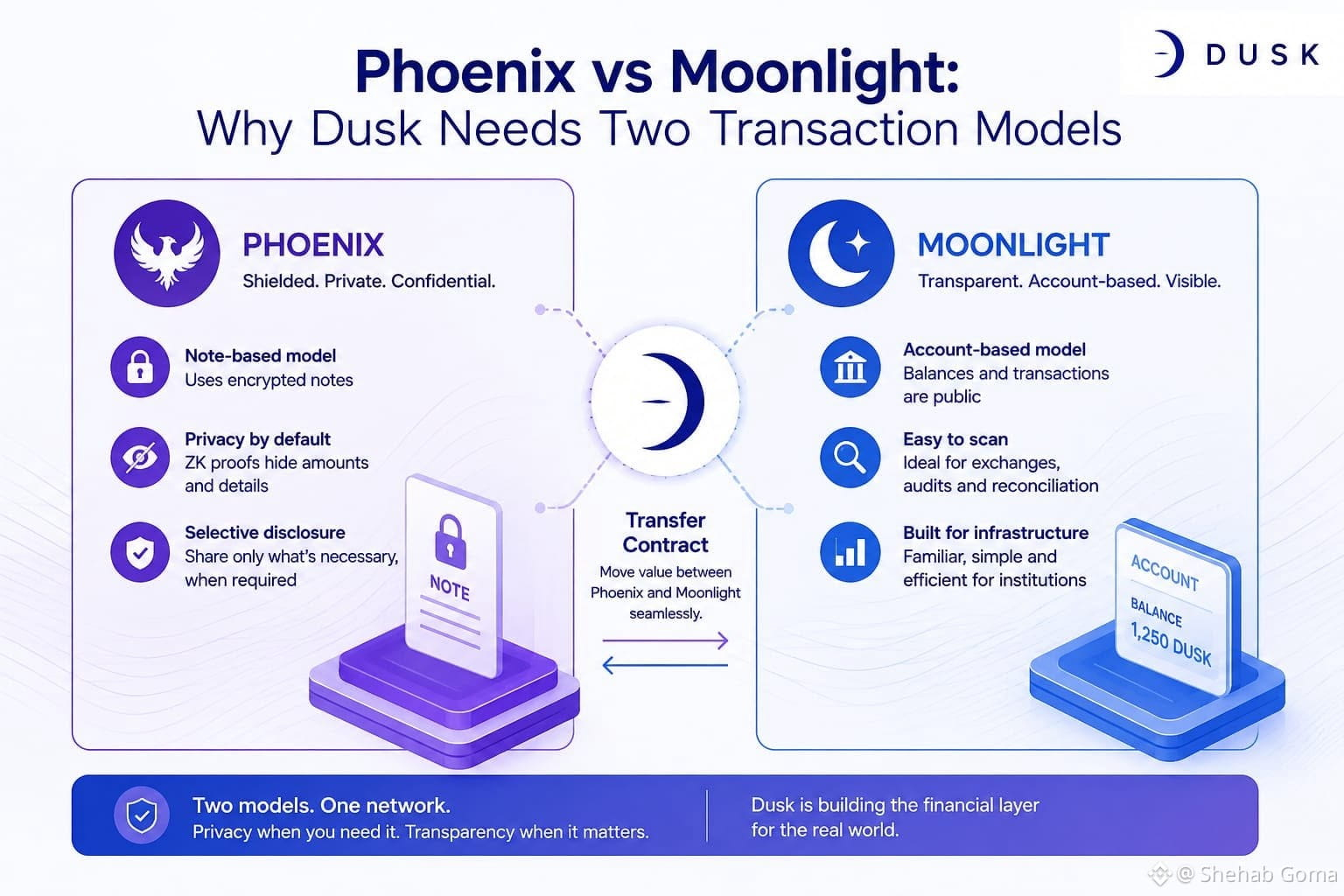
Fénix vs Luz de Luna: Por qué Dusk necesitaba dos modelos de transacción
Creo que la parte más malinterpretada de @Dusk_Foundation no es su capa de privacidad.
Es por qué Dusk construyó un modelo de transacciones transparente al lado de Fénix en primer lugar.
La respuesta es simple: los mercados financieros no operan con un solo requisito de privacidad.
El whitepaper de Dusk de 2024 describe a Luz de Luna como la capa pública de transacciones añadida junto a Fénix. Luz de Luna utiliza un modelo basado en cuentas, donde las direcciones y los saldos son visibles. Fénix toma la ruta opuesta: transacciones blindadas basadas en notas, usando pruebas de conocimiento cero.
Con Luz de Luna, un exchange puede escanear cuentas, conciliar saldos y procesar depósitos usando un modelo de libro mayor público familiar. La documentación actual de integración de Dusk, de hecho, recomienda Luz de Luna para depósitos y retiros en exchanges porque Fénix requiere una arquitectura distinta de custodia y escaneo.
Sus notas están cifradas, mientras que las pruebas ZK permiten que la red verifique cosas como la validez y la protección contra doble gasto sin revelar el monto de la transacción ni las notas específicas que se están gastando. Dusk también diseñó la divulgación selectiva para que la privacidad no signifique automáticamente “sin rendición de cuentas”.
Así que la elección de diseño original no fue:
Fénix vs Luz de Luna.
Fue:
privacidad cuando se necesita + transparencia cuando se requiere.
Y aquí hay una actualización importante de 2026.
El hard fork AEGIS de Dusk abordó 39 hallazgos, incluidos 7 problemas críticos, con una causa raíz crítica que involucraba el vínculo entre la tarifa y el reembolso de Fénix.
Más importante aún, la documentación más reciente de la red indica que la actualización Boreas retira las transacciones de Fénix en la red, mientras que el manejo canónico de transacciones ha avanzado.
Fénix no era simplemente una función de privacidad. Fue un experimento para lograr liquidación confidencial funcionando junto con un carril financiero público.
Son requisitos de liquidación diferentes.
La evolución de Dusk es interesante precisamente porque el protocolo ahora refina qué partes de esa arquitectura dual original todavía pertenecen a la pila de producción.
#dusk
$DUSK
Fénix vs Luz de Luna: Por qué Dusk necesitaba dos modelos de transacción
Creo que la parte más malinterpretada de @Dusk no es su capa de privacidad.
Es por qué Dusk construyó un modelo de transacciones transparente al lado de Fénix en primer lugar.
La respuesta es simple: los mercados financieros no operan con un solo requisito de privacidad.
El whitepaper de Dusk de 2024 describe a Luz de Luna como la capa pública de transacciones añadida junto a Fénix. Luz de Luna utiliza un modelo basado en cuentas, donde las direcciones y los saldos son visibles. Fénix toma la ruta opuesta: transacciones blindadas basadas en notas, usando pruebas de conocimiento cero.
Con Luz de Luna, un exchange puede escanear cuentas, conciliar saldos y procesar depósitos usando un modelo de libro mayor público familiar. La documentación actual de integración de Dusk, de hecho, recomienda Luz de Luna para depósitos y retiros en exchanges porque Fénix requiere una arquitectura distinta de custodia y escaneo.
Sus notas están cifradas, mientras que las pruebas ZK permiten que la red verifique cosas como la validez y la protección contra doble gasto sin revelar el monto de la transacción ni las notas específicas que se están gastando. Dusk también diseñó la divulgación selectiva para que la privacidad no signifique automáticamente “sin rendición de cuentas”.
Así que la elección de diseño original no fue:
Fénix vs Luz de Luna.
Fue:
privacidad cuando se necesita + transparencia cuando se requiere.
Y aquí hay una actualización importante de 2026.
El hard fork AEGIS de Dusk abordó 39 hallazgos, incluidos 7 problemas críticos, con una causa raíz crítica que involucraba el vínculo entre la tarifa y el reembolso de Fénix.
Más importante aún, la documentación más reciente de la red indica que la actualización Boreas retira las transacciones de Fénix en la red, mientras que el manejo canónico de transacciones ha avanzado.
Fénix no era simplemente una función de privacidad. Fue un experimento para lograr liquidación confidencial funcionando junto con un carril financiero público.
Son requisitos de liquidación diferentes.
La evolución de Dusk es interesante precisamente porque el protocolo ahora refina qué partes de esa arquitectura dual original todavía pertenecen a la pila de producción.
#dusk
$DUSK
Creo que la parte más malinterpretada de @Dusk no es su capa de privacidad.
Es por qué Dusk construyó un modelo de transacciones transparente al lado de Fénix en primer lugar.
La respuesta es simple: los mercados financieros no operan con un solo requisito de privacidad.
El whitepaper de Dusk de 2024 describe a Luz de Luna como la capa pública de transacciones añadida junto a Fénix. Luz de Luna utiliza un modelo basado en cuentas, donde las direcciones y los saldos son visibles. Fénix toma la ruta opuesta: transacciones blindadas basadas en notas, usando pruebas de conocimiento cero.
Con Luz de Luna, un exchange puede escanear cuentas, conciliar saldos y procesar depósitos usando un modelo de libro mayor público familiar. La documentación actual de integración de Dusk, de hecho, recomienda Luz de Luna para depósitos y retiros en exchanges porque Fénix requiere una arquitectura distinta de custodia y escaneo.
Sus notas están cifradas, mientras que las pruebas ZK permiten que la red verifique cosas como la validez y la protección contra doble gasto sin revelar el monto de la transacción ni las notas específicas que se están gastando. Dusk también diseñó la divulgación selectiva para que la privacidad no signifique automáticamente “sin rendición de cuentas”.
Así que la elección de diseño original no fue:
Fénix vs Luz de Luna.
Fue:
privacidad cuando se necesita + transparencia cuando se requiere.
Y aquí hay una actualización importante de 2026.
El hard fork AEGIS de Dusk abordó 39 hallazgos, incluidos 7 problemas críticos, con una causa raíz crítica que involucraba el vínculo entre la tarifa y el reembolso de Fénix.
Más importante aún, la documentación más reciente de la red indica que la actualización Boreas retira las transacciones de Fénix en la red, mientras que el manejo canónico de transacciones ha avanzado.
Fénix no era simplemente una función de privacidad. Fue un experimento para lograr liquidación confidencial funcionando junto con un carril financiero público.
Son requisitos de liquidación diferentes.
La evolución de Dusk es interesante precisamente porque el protocolo ahora refina qué partes de esa arquitectura dual original todavía pertenecen a la pila de producción.
#dusk
$DUSK
1
3
150
·
--
Verificado
TermMax funciona con 3 tokens — Esto es lo que hace cada uno realmente.
Tuve que leer esto tres veces antes de que encajara:
FT = Un bono con descuento. Se compra por debajo del valor nominal y se canjea 1:1 al vencimiento.
GT = Un NFT para tu posición de deuda.
XT = La obligación de intereses que se empareja con FT.
¿Mi primera reacción? Sobrecarga de jerga.
Pero entonces lo entendí.
La mayoría de los protocolos de préstamo en DeFi tratan todo como una gran piscina. Una tasa. Un perfil de riesgo. Una talla para todos.
TermMax lo cambia. Divide el préstamo en tres partes separadas:
FT – Lo compras por menos de $1. Al vencimiento, canjea 1:1. ¿La diferencia? Ese es tu rendimiento fijo. Sin sorpresas.
XT – Se empareja con FT. 1 FT + 1 XT = 1 token de deuda. Cuando vence el préstamo, FT se canjea y XT deja de valer. Esto separa el principal de los intereses.
GT – Un NFT para tu posición apalancada. Cero ansiedad por liquidaciones. Sin que un oráculo esté vigilando constantemente.
Esto fue lo que más me llamó la atención:
la mayoría de los proyectos solo agregan funciones. @termmax en realidad replantea cómo funciona el préstamo por dentro.
De una sola piscina a tres mercados. Cada uno con su propio precio. Cada uno con su propio riesgo.
¿Y el momento? El TGE está en 6 días.
Así que esto es lo que sigo teniendo en mente:
Si #TermMax puede dividir el préstamo en tres piezas negociables — ¿qué más en DeFi está actualmente empaquetado junto y probablemente no debería estarlo?
¿Cuál de estas separaciones importa más?
TermMax funciona con 3 tokens — Esto es lo que hace cada uno realmente.
Tuve que leer esto tres veces antes de que encajara:
FT = Un bono con descuento. Se compra por debajo del valor nominal y se canjea 1:1 al vencimiento.
GT = Un NFT para tu posición de deuda.
XT = La obligación de intereses que se empareja con FT.
¿Mi primera reacción? Sobrecarga de jerga.
Pero entonces lo entendí.
La mayoría de los protocolos de préstamo en DeFi tratan todo como una gran piscina. Una tasa. Un perfil de riesgo. Una talla para todos.
TermMax lo cambia. Divide el préstamo en tres partes separadas:
FT – Lo compras por menos de $1. Al vencimiento, canjea 1:1. ¿La diferencia? Ese es tu rendimiento fijo. Sin sorpresas.
XT – Se empareja con FT. 1 FT + 1 XT = 1 token de deuda. Cuando vence el préstamo, FT se canjea y XT deja de valer. Esto separa el principal de los intereses.
GT – Un NFT para tu posición apalancada. Cero ansiedad por liquidaciones. Sin que un oráculo esté vigilando constantemente.
Esto fue lo que más me llamó la atención:
la mayoría de los proyectos solo agregan funciones. @TermMax en realidad replantea cómo funciona el préstamo por dentro.
De una sola piscina a tres mercados. Cada uno con su propio precio. Cada uno con su propio riesgo.
¿Y el momento? El TGE está en 6 días.
Así que esto es lo que sigo teniendo en mente:
Si #TermMax puede dividir el préstamo en tres piezas negociables — ¿qué más en DeFi está actualmente empaquetado junto y probablemente no debería estarlo?
¿Cuál de estas separaciones importa más?
Tuve que leer esto tres veces antes de que encajara:
FT = Un bono con descuento. Se compra por debajo del valor nominal y se canjea 1:1 al vencimiento.
GT = Un NFT para tu posición de deuda.
XT = La obligación de intereses que se empareja con FT.
¿Mi primera reacción? Sobrecarga de jerga.
Pero entonces lo entendí.
La mayoría de los protocolos de préstamo en DeFi tratan todo como una gran piscina. Una tasa. Un perfil de riesgo. Una talla para todos.
TermMax lo cambia. Divide el préstamo en tres partes separadas:
FT – Lo compras por menos de $1. Al vencimiento, canjea 1:1. ¿La diferencia? Ese es tu rendimiento fijo. Sin sorpresas.
XT – Se empareja con FT. 1 FT + 1 XT = 1 token de deuda. Cuando vence el préstamo, FT se canjea y XT deja de valer. Esto separa el principal de los intereses.
GT – Un NFT para tu posición apalancada. Cero ansiedad por liquidaciones. Sin que un oráculo esté vigilando constantemente.
Esto fue lo que más me llamó la atención:
la mayoría de los proyectos solo agregan funciones. @TermMax en realidad replantea cómo funciona el préstamo por dentro.
De una sola piscina a tres mercados. Cada uno con su propio precio. Cada uno con su propio riesgo.
¿Y el momento? El TGE está en 6 días.
Así que esto es lo que sigo teniendo en mente:
Si #TermMax puede dividir el préstamo en tres piezas negociables — ¿qué más en DeFi está actualmente empaquetado junto y probablemente no debería estarlo?
¿Cuál de estas separaciones importa más?
Principal (FT)
0%
Interest (XT)
100%
Leverage (GT)
0%
1 Voto(s) • Votación cerrada
1
3
139
·
--
Verificado
Recuerdo quedarme mirando la documentación de Dusk, intentando entender qué la hacía diferente.
Todo el mundo habla de la tokenización. La rapidez de liquidación. El cumplimiento. Pero @Dusk_Foundation está poniendo a prueba algo totalmente distinto: una privacidad legible para el regulador.
Las blockchains tradicionales te ofrecen una elección binaria. Todo público. O todo oculto. Ninguna de las dos funciona para las finanzas reguladas.
La solución de Dusk es la divulgación selectiva. Las transacciones permanecen privadas por defecto. Pero los reguladores pueden verificar el cumplimiento cuando sea necesario—revelando solo lo que se requiere, nada más.
Las pruebas de conocimiento cero permiten demostrar que una transacción es válida sin exponer quién, cómo o cuánto, ni a quién. La privacidad está diseñada para generar confianza, no para la opacidad.
La tracción ya es visible. Sozu mantiene 26M de USD en activos en staking. NPEX está incorporando 300M de euros en valores tokenizados a través de #dusk . Y 21X, el primer titular de la licencia EU DLT-TSS, ha integrado Dusk como socio activo.
Esto es lo que no dejo de pensar: si la tecnología para unas finanzas privadas y con cumplimiento ha existido durante años, ¿por qué ha tardado tanto en llegar aquí?
Quizá porque nos enfocamos en construir cadenas más rápidas en lugar de construir cadenas en las que los reguladores puedan confiar. Dusk no solo lanzó otro L1. Construyó uno donde la privacidad y el cumplimiento no son sacrificios—son funciones.
¿Qué está frenando a tu industria—la tecnología o la confianza?
$DUSK
{future}(DUSKUSDT)
Recuerdo quedarme mirando la documentación de Dusk, intentando entender qué la hacía diferente.
Todo el mundo habla de la tokenización. La rapidez de liquidación. El cumplimiento. Pero @Dusk está poniendo a prueba algo totalmente distinto: una privacidad legible para el regulador.
Las blockchains tradicionales te ofrecen una elección binaria. Todo público. O todo oculto. Ninguna de las dos funciona para las finanzas reguladas.
La solución de Dusk es la divulgación selectiva. Las transacciones permanecen privadas por defecto. Pero los reguladores pueden verificar el cumplimiento cuando sea necesario—revelando solo lo que se requiere, nada más.
Las pruebas de conocimiento cero permiten demostrar que una transacción es válida sin exponer quién, cómo o cuánto, ni a quién. La privacidad está diseñada para generar confianza, no para la opacidad.
La tracción ya es visible. Sozu mantiene 26M de USD en activos en staking. NPEX está incorporando 300M de euros en valores tokenizados a través de #dusk . Y 21X, el primer titular de la licencia EU DLT-TSS, ha integrado Dusk como socio activo.
Esto es lo que no dejo de pensar: si la tecnología para unas finanzas privadas y con cumplimiento ha existido durante años, ¿por qué ha tardado tanto en llegar aquí?
Quizá porque nos enfocamos en construir cadenas más rápidas en lugar de construir cadenas en las que los reguladores puedan confiar. Dusk no solo lanzó otro L1. Construyó uno donde la privacidad y el cumplimiento no son sacrificios—son funciones.
¿Qué está frenando a tu industria—la tecnología o la confianza?
$DUSK
Todo el mundo habla de la tokenización. La rapidez de liquidación. El cumplimiento. Pero @Dusk está poniendo a prueba algo totalmente distinto: una privacidad legible para el regulador.
Las blockchains tradicionales te ofrecen una elección binaria. Todo público. O todo oculto. Ninguna de las dos funciona para las finanzas reguladas.
La solución de Dusk es la divulgación selectiva. Las transacciones permanecen privadas por defecto. Pero los reguladores pueden verificar el cumplimiento cuando sea necesario—revelando solo lo que se requiere, nada más.
Las pruebas de conocimiento cero permiten demostrar que una transacción es válida sin exponer quién, cómo o cuánto, ni a quién. La privacidad está diseñada para generar confianza, no para la opacidad.
La tracción ya es visible. Sozu mantiene 26M de USD en activos en staking. NPEX está incorporando 300M de euros en valores tokenizados a través de #dusk . Y 21X, el primer titular de la licencia EU DLT-TSS, ha integrado Dusk como socio activo.
Esto es lo que no dejo de pensar: si la tecnología para unas finanzas privadas y con cumplimiento ha existido durante años, ¿por qué ha tardado tanto en llegar aquí?
Quizá porque nos enfocamos en construir cadenas más rápidas en lugar de construir cadenas en las que los reguladores puedan confiar. Dusk no solo lanzó otro L1. Construyó uno donde la privacidad y el cumplimiento no son sacrificios—son funciones.
¿Qué está frenando a tu industria—la tecnología o la confianza?
$DUSK

15
8
187
·
--
Alcista
¡Después de tanta espera, BTC finalmente decidió despertarse! Ver algo de verde otra vez se siente tan bien. Esperemos que esto sea solo el comienzo. 💚
#CryptoRally
#FOMCWatch
#btc70k
$BTC
{future}(BTCUSDT)
$ETH
{future}(ETHUSDT)
$BNB
{future}(BNBUSDT)
¡Después de tanta espera, BTC finalmente decidió despertarse! Ver algo de verde otra vez se siente tan bien. Esperemos que esto sea solo el comienzo. 💚
#CryptoRally
#FOMCWatch
#btc70k
$BTC
$ETH
$BNB
#CryptoRally
#FOMCWatch
#btc70k
$BTC
$ETH
$BNB
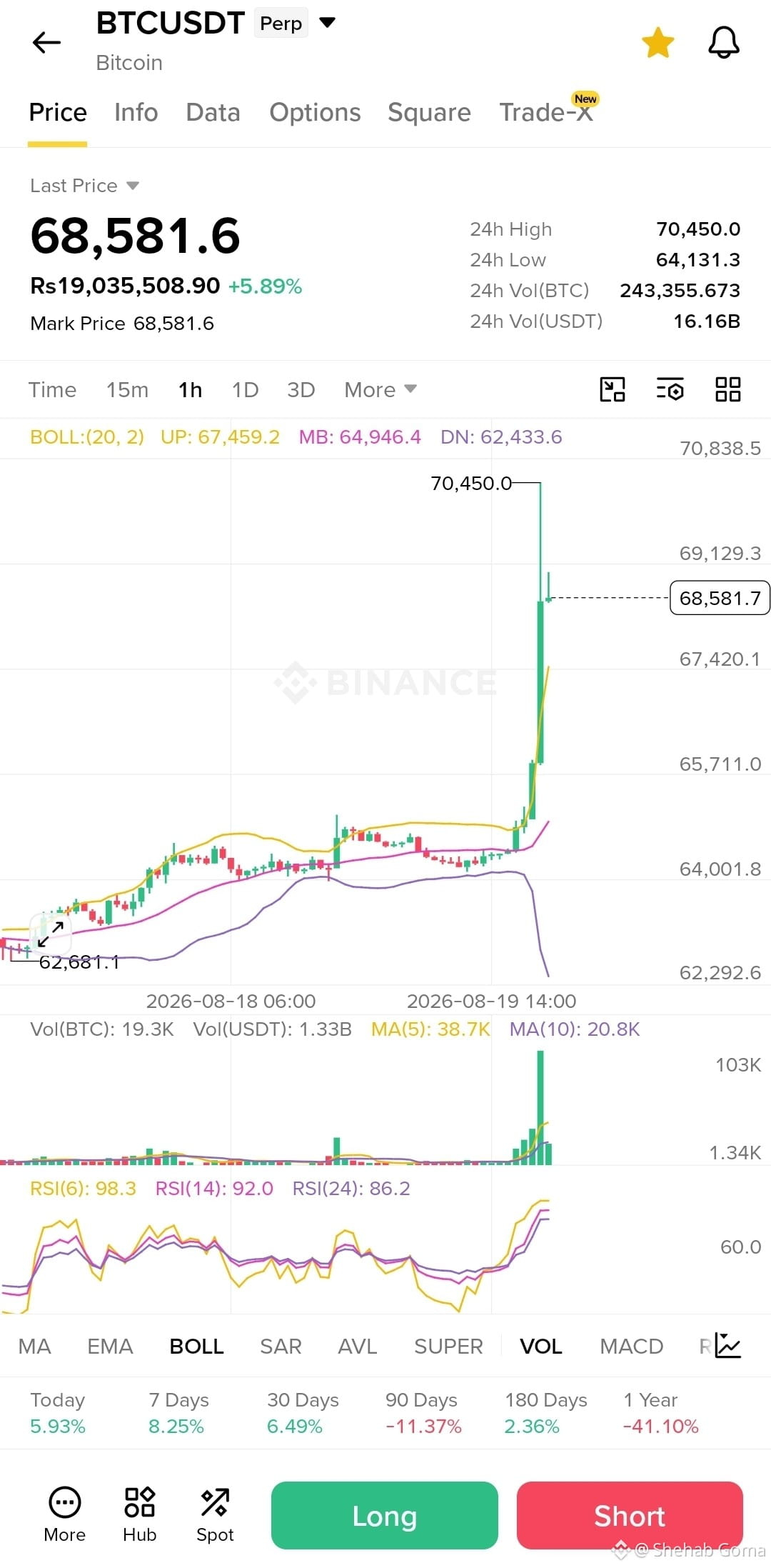
1
202
·
--
Parcialmente cierto
Lo aprendí de la forma difícil.
El año pasado, me metí en un fondo variable al 18% APY. ¿Tres semanas después? 4%. Sin aviso. Solo menos.
Eso no es planificación. Es adivinar con un signo de porcentaje.
Lo que en realidad necesitaba era simple: saber cuánto ganaría el próximo mes, no perseguir lo que podría ganar hoy.
Ahí fue donde @termmax hizo clic conmigo.
Un ejemplo en vivo tocó de lleno:
Aave recientemente publicó un pico del costo de préstamo a 24 horas de más del 40% en ciertos mercados. Imagina intentar gestionar una tesorería con eso. No puedes.
#TermMax se lanzó en HyperEVM hace solo 2 días — su 9.ª cadena. Los usuarios pueden pedir prestado USDC contra HyperUSD con la tasa bloqueada al ingresar. Esa es la diferencia: las condiciones se conocen desde el principio.
La conclusión general es aún más interesante.
TermPrime — su plataforma institucional de tasa fija — se puso en marcha en Canton Network. No es solo que los nativos de DeFi estén experimentando. Es infraestructura para participantes que se preocupan por el plazo, el costo y la previsibilidad.
Este podría ser el cambio más grande: DeFi convirtiéndose en algo que los usuarios pueden estructurar de verdad, no solo especular dentro.
Así que la pregunta es: si mañana existieran tasas fijas para cada activo — ¿seguirías persiguiendo rendimientos variables?
Lo aprendí de la forma difícil.
El año pasado, me metí en un fondo variable al 18% APY. ¿Tres semanas después? 4%. Sin aviso. Solo menos.
Eso no es planificación. Es adivinar con un signo de porcentaje.
Lo que en realidad necesitaba era simple: saber cuánto ganaría el próximo mes, no perseguir lo que podría ganar hoy.
Ahí fue donde @TermMax hizo clic conmigo.
Un ejemplo en vivo tocó de lleno:
Aave recientemente publicó un pico del costo de préstamo a 24 horas de más del 40% en ciertos mercados. Imagina intentar gestionar una tesorería con eso. No puedes.
#TermMax se lanzó en HyperEVM hace solo 2 días — su 9.ª cadena. Los usuarios pueden pedir prestado USDC contra HyperUSD con la tasa bloqueada al ingresar. Esa es la diferencia: las condiciones se conocen desde el principio.
La conclusión general es aún más interesante.
TermPrime — su plataforma institucional de tasa fija — se puso en marcha en Canton Network. No es solo que los nativos de DeFi estén experimentando. Es infraestructura para participantes que se preocupan por el plazo, el costo y la previsibilidad.
Este podría ser el cambio más grande: DeFi convirtiéndose en algo que los usuarios pueden estructurar de verdad, no solo especular dentro.
Así que la pregunta es: si mañana existieran tasas fijas para cada activo — ¿seguirías persiguiendo rendimientos variables?
El año pasado, me metí en un fondo variable al 18% APY. ¿Tres semanas después? 4%. Sin aviso. Solo menos.
Eso no es planificación. Es adivinar con un signo de porcentaje.
Lo que en realidad necesitaba era simple: saber cuánto ganaría el próximo mes, no perseguir lo que podría ganar hoy.
Ahí fue donde @TermMax hizo clic conmigo.
Un ejemplo en vivo tocó de lleno:
Aave recientemente publicó un pico del costo de préstamo a 24 horas de más del 40% en ciertos mercados. Imagina intentar gestionar una tesorería con eso. No puedes.
#TermMax se lanzó en HyperEVM hace solo 2 días — su 9.ª cadena. Los usuarios pueden pedir prestado USDC contra HyperUSD con la tasa bloqueada al ingresar. Esa es la diferencia: las condiciones se conocen desde el principio.
La conclusión general es aún más interesante.
TermPrime — su plataforma institucional de tasa fija — se puso en marcha en Canton Network. No es solo que los nativos de DeFi estén experimentando. Es infraestructura para participantes que se preocupan por el plazo, el costo y la previsibilidad.
Este podría ser el cambio más grande: DeFi convirtiéndose en algo que los usuarios pueden estructurar de verdad, no solo especular dentro.
Así que la pregunta es: si mañana existieran tasas fijas para cada activo — ¿seguirías persiguiendo rendimientos variables?
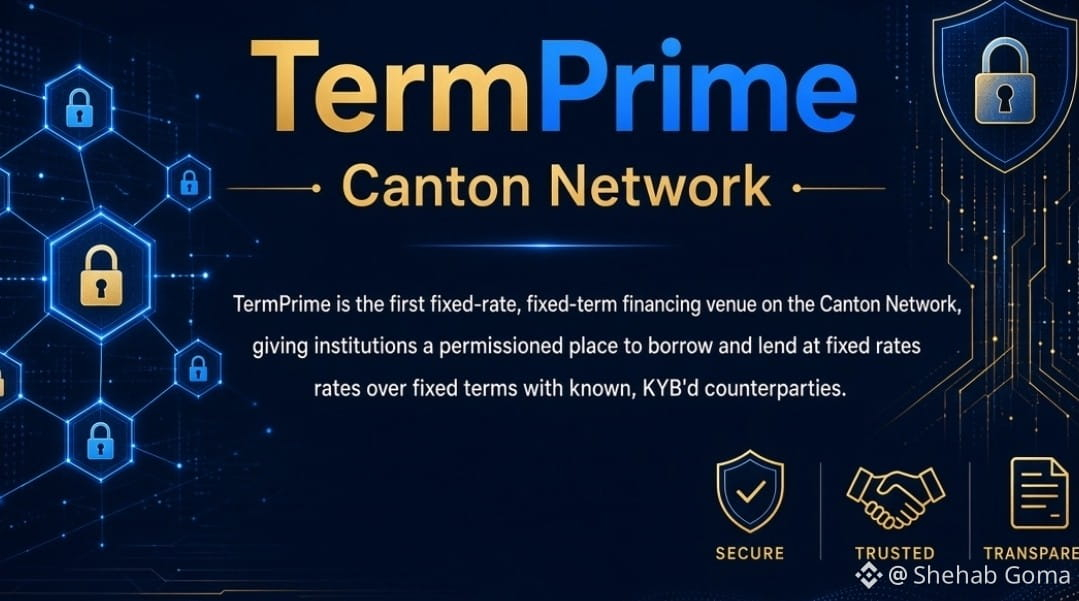
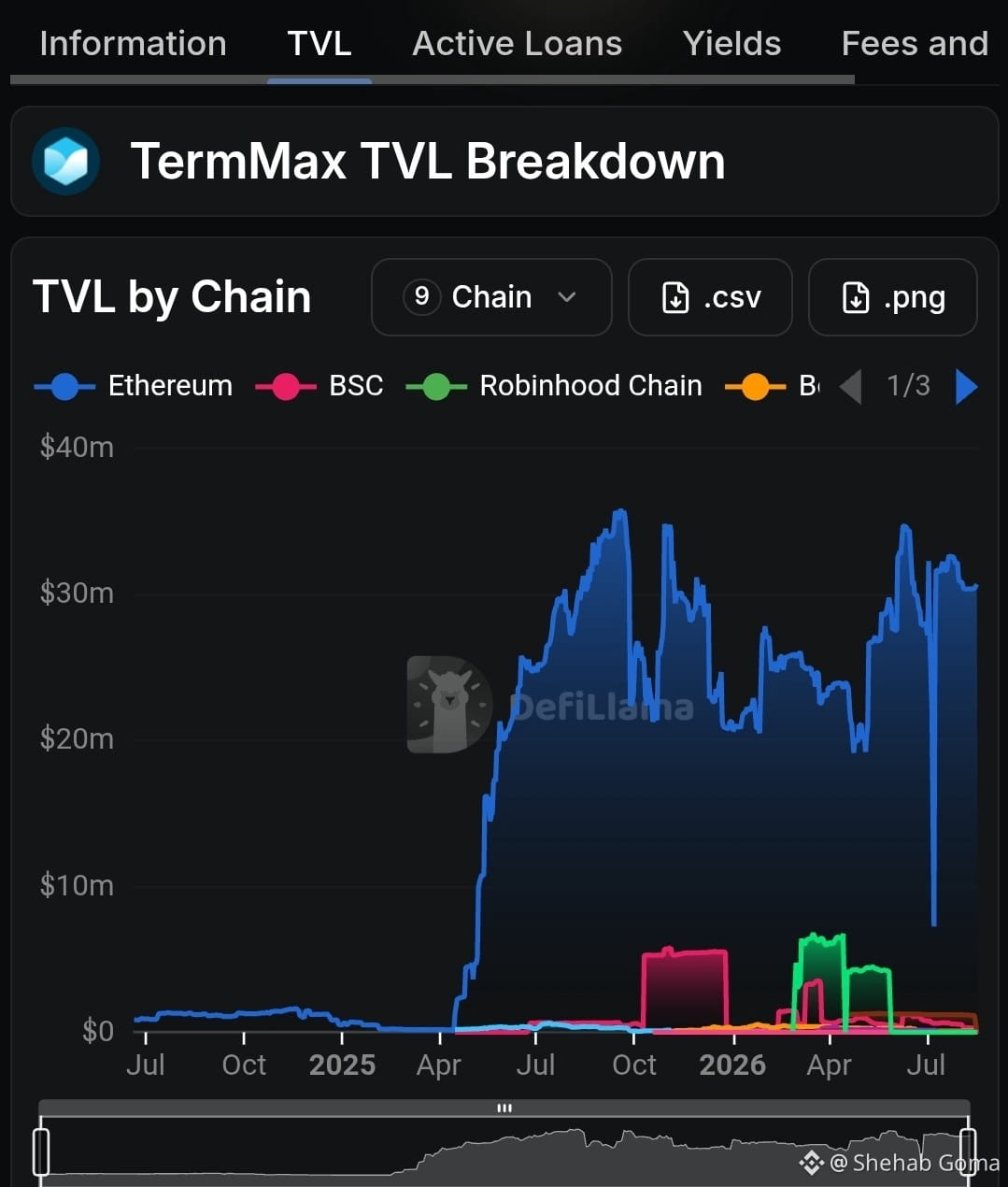
13
9
300
·
--
Antes pensaba que la tokenización era la respuesta. Pones cada activo del mundo real en la cadena y, de repente, todo se vuelve líquido y accesible.
Luego miré las cifras.
Por cada dólar de valor tokenizado con el que realmente puedes operar, hay aproximadamente 10 dólares que solo se quedan ahí, como un recibo digital. Según los datos de RWA.xyz, más de 900 de 1.300 activos pasaron una semana entera sin una sola operación. Eso son 33.000 millones de dólares inmovilizados.
La tokenización no solucionó la liquidez. Solo creó envoltorios digitales alrededor de activos ilíquidos.
El problema real nunca fue poner activos en la cadena. Fue hacer que realmente se pudieran negociar—con finalidad legal, cumplimiento incorporado y liquidación que sí cuenta.
@Dusk_Foundation toma un enfoque diferente. A través de NPEX, un exchange regulado por la AFM neerlandesa, están llevando más de 300 millones de euros en valores tokenizados a la cadena. Acciones y bonos reales, con liquidación en segundos en lugar de días. Mediante 21X, la negociación y la liquidación se fusionan en una sola acción atómica—reconocida por el derecho de la UE.
Quantoz aporta el activo de liquidación: EURQ, un euro digital compatible con MiCA. Fiat regulado, onchain.
La infraestructura ya está. Y la actividad sugiere que está resonando—Sozu, el protocolo de staking líquido de Dusk, ya tiene más de 26 millones de dólares en activos en staking. Esa es participación real, no especulación.
Así que si la tokenización estaba destinada a desbloquear liquidez, ¿por qué la mayoría de los activos tokenizados apenas se negocian?
Quizá porque nos enfocamos en envolver activos en lugar de reconstruir la infraestructura de liquidación. #dusk está construyendo algo con lo que los reguladores puedan trabajar de verdad.
¿Cuál es la única cosa que mantiene a tu industria atascada para avanzar hacia lo onchain?
$DUSK
{future}(DUSKUSDT)
Antes pensaba que la tokenización era la respuesta. Pones cada activo del mundo real en la cadena y, de repente, todo se vuelve líquido y accesible.
Luego miré las cifras.
Por cada dólar de valor tokenizado con el que realmente puedes operar, hay aproximadamente 10 dólares que solo se quedan ahí, como un recibo digital. Según los datos de RWA.xyz, más de 900 de 1.300 activos pasaron una semana entera sin una sola operación. Eso son 33.000 millones de dólares inmovilizados.
La tokenización no solucionó la liquidez. Solo creó envoltorios digitales alrededor de activos ilíquidos.
El problema real nunca fue poner activos en la cadena. Fue hacer que realmente se pudieran negociar—con finalidad legal, cumplimiento incorporado y liquidación que sí cuenta.
@Dusk toma un enfoque diferente. A través de NPEX, un exchange regulado por la AFM neerlandesa, están llevando más de 300 millones de euros en valores tokenizados a la cadena. Acciones y bonos reales, con liquidación en segundos en lugar de días. Mediante 21X, la negociación y la liquidación se fusionan en una sola acción atómica—reconocida por el derecho de la UE.
Quantoz aporta el activo de liquidación: EURQ, un euro digital compatible con MiCA. Fiat regulado, onchain.
La infraestructura ya está. Y la actividad sugiere que está resonando—Sozu, el protocolo de staking líquido de Dusk, ya tiene más de 26 millones de dólares en activos en staking. Esa es participación real, no especulación.
Así que si la tokenización estaba destinada a desbloquear liquidez, ¿por qué la mayoría de los activos tokenizados apenas se negocian?
Quizá porque nos enfocamos en envolver activos en lugar de reconstruir la infraestructura de liquidación. #dusk está construyendo algo con lo que los reguladores puedan trabajar de verdad.
¿Cuál es la única cosa que mantiene a tu industria atascada para avanzar hacia lo onchain?
$DUSK
Luego miré las cifras.
Por cada dólar de valor tokenizado con el que realmente puedes operar, hay aproximadamente 10 dólares que solo se quedan ahí, como un recibo digital. Según los datos de RWA.xyz, más de 900 de 1.300 activos pasaron una semana entera sin una sola operación. Eso son 33.000 millones de dólares inmovilizados.
La tokenización no solucionó la liquidez. Solo creó envoltorios digitales alrededor de activos ilíquidos.
El problema real nunca fue poner activos en la cadena. Fue hacer que realmente se pudieran negociar—con finalidad legal, cumplimiento incorporado y liquidación que sí cuenta.
@Dusk toma un enfoque diferente. A través de NPEX, un exchange regulado por la AFM neerlandesa, están llevando más de 300 millones de euros en valores tokenizados a la cadena. Acciones y bonos reales, con liquidación en segundos en lugar de días. Mediante 21X, la negociación y la liquidación se fusionan en una sola acción atómica—reconocida por el derecho de la UE.
Quantoz aporta el activo de liquidación: EURQ, un euro digital compatible con MiCA. Fiat regulado, onchain.
La infraestructura ya está. Y la actividad sugiere que está resonando—Sozu, el protocolo de staking líquido de Dusk, ya tiene más de 26 millones de dólares en activos en staking. Esa es participación real, no especulación.
Así que si la tokenización estaba destinada a desbloquear liquidez, ¿por qué la mayoría de los activos tokenizados apenas se negocian?
Quizá porque nos enfocamos en envolver activos en lugar de reconstruir la infraestructura de liquidación. #dusk está construyendo algo con lo que los reguladores puedan trabajar de verdad.
¿Cuál es la única cosa que mantiene a tu industria atascada para avanzar hacia lo onchain?
$DUSK
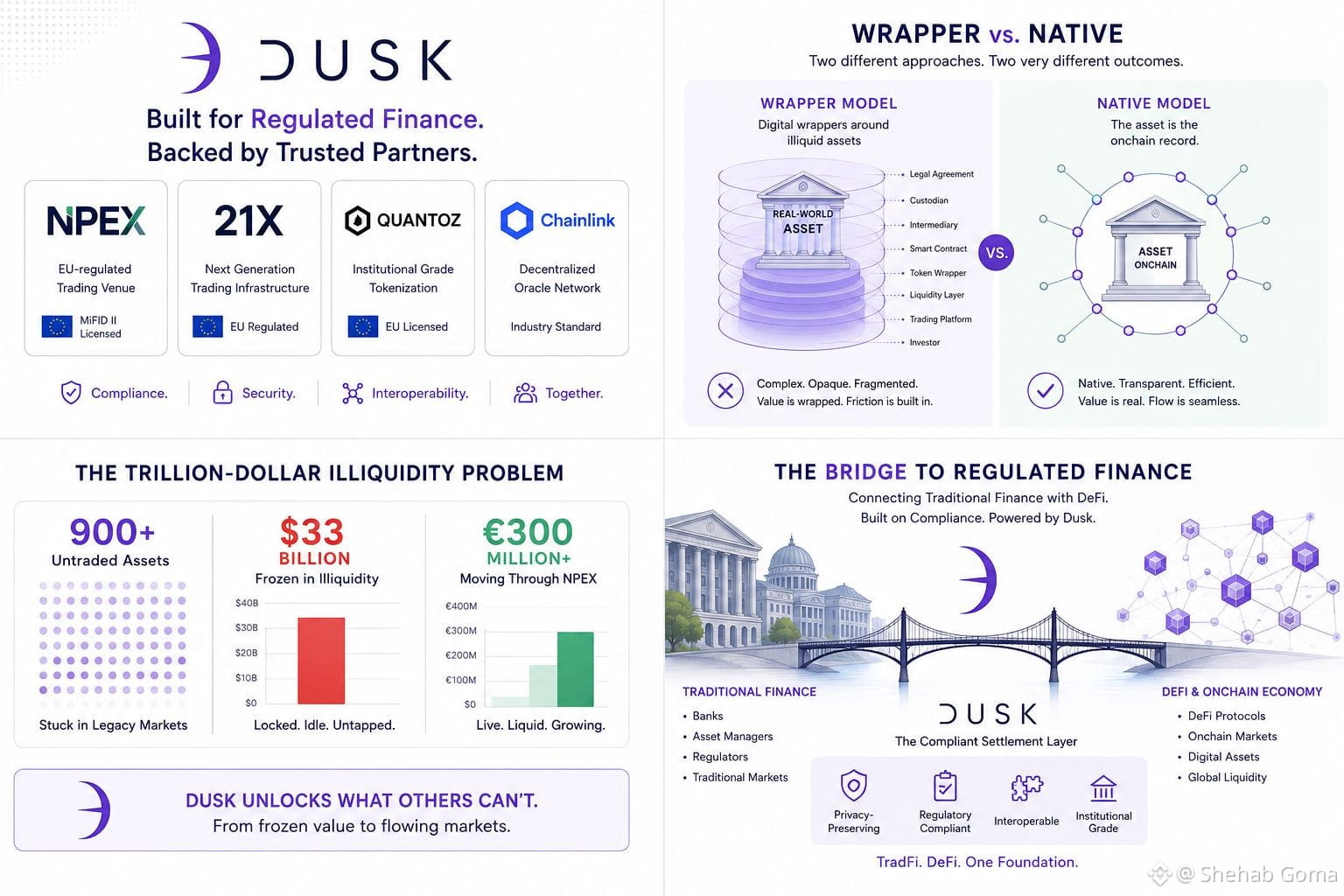
3
4
213
Inicia sesión para explorar más contenidos
Únete a usuarios globales de criptomonedas en Binance Square
⚡️ Obtén información útil y actualizada sobre criptos.
💬 Avalado por el mayor exchange de criptomonedas en el mundo.
👍 Descubre perspectivas reales de creadores verificados.
Email/número de teléfono
Temas populares
BinancePick
3.1M vistas
153,091 están debatiendo
¡Únete a #TemporadaDeResultados: predice resultados en Binance Pick y comparte tu opinión en Binance Square!
Binance Square Official
·412 me gusta
·343.3k vistas
EarningsSeason
5.3M vistas
26,032 están debatiendo
AnthropicTTMRevenueGrewAbout1200%
32,993 vistas
436 están debatiendo