

Amina Chattha
29k Publicaciones

Amina Chattha
 Verificado Plus de Binance Square
Denunciar
Bloquear usuario
55 Siguiendo
42.9K+ Seguidores
99.8K+ Me gusta
Publicaciones
Todo
Citas
Videos
Live
PINNED
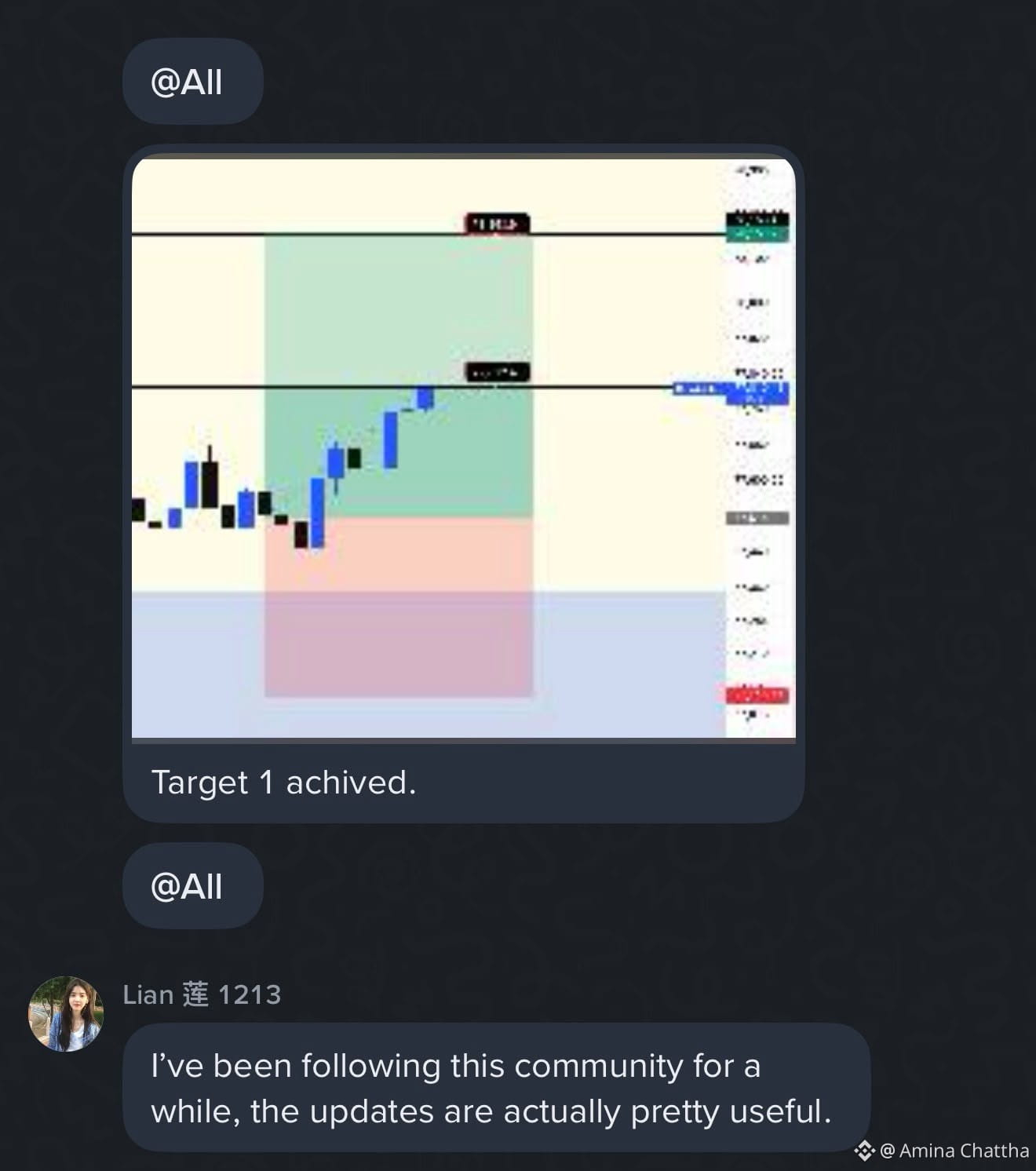
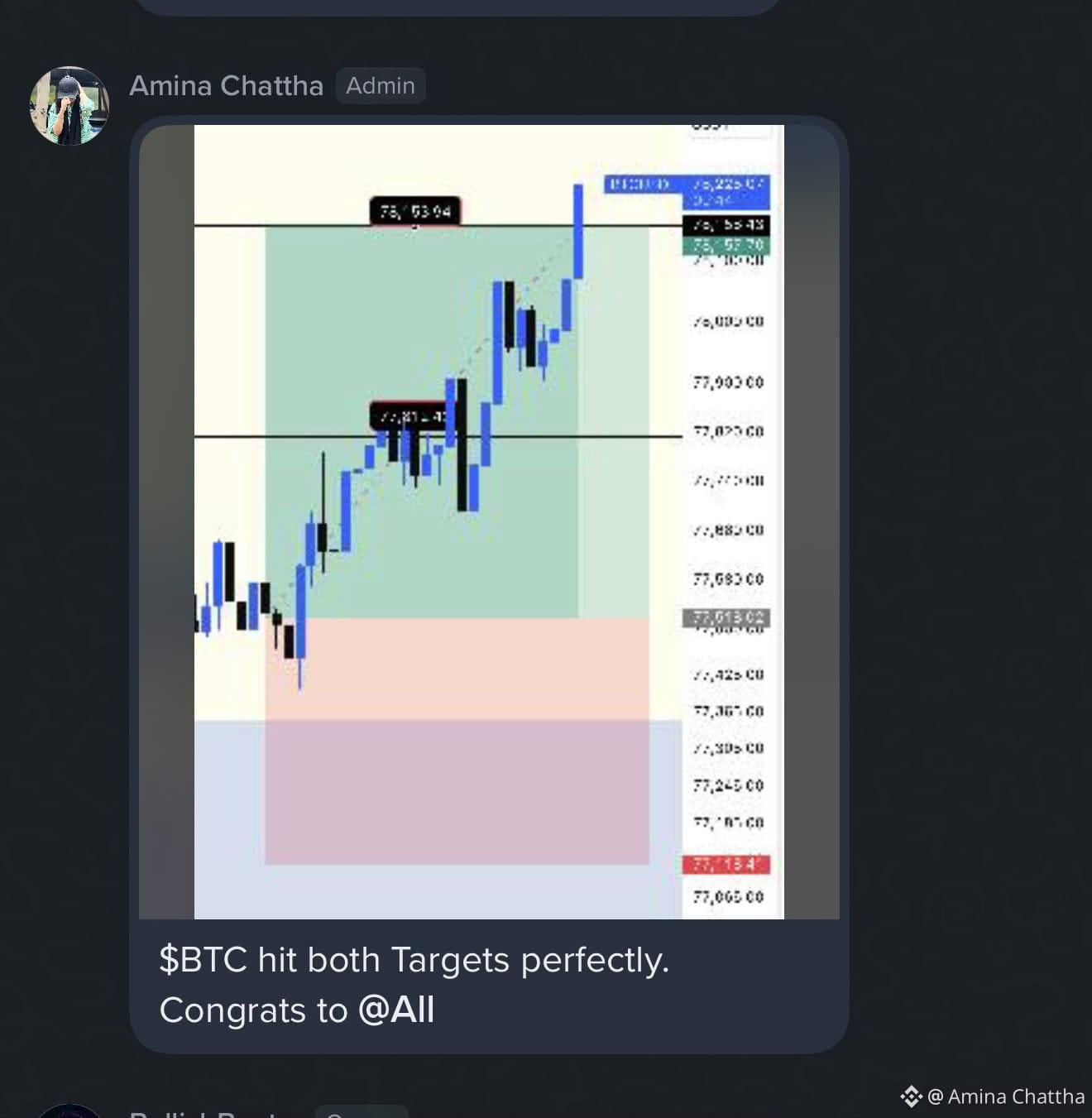
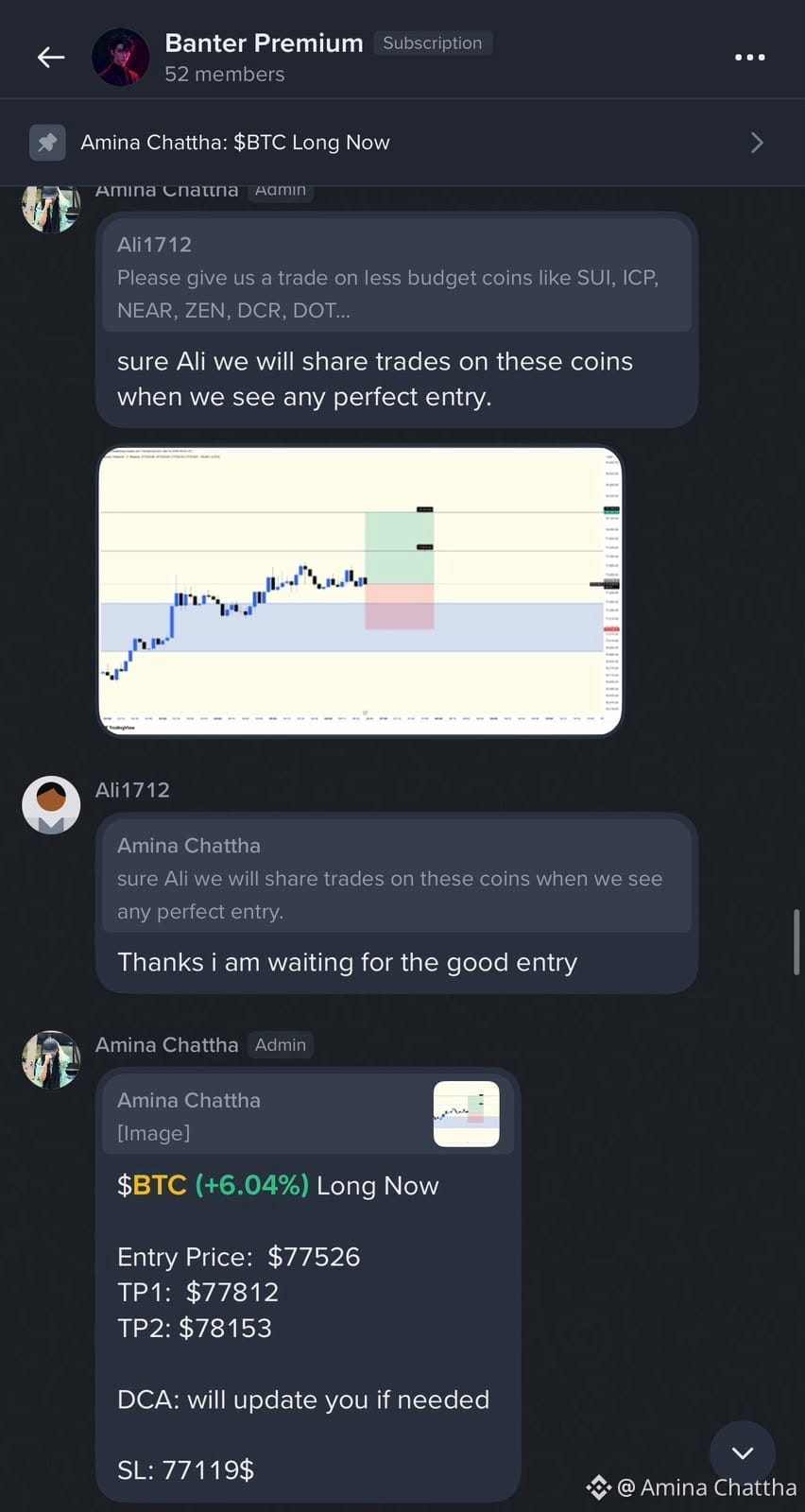
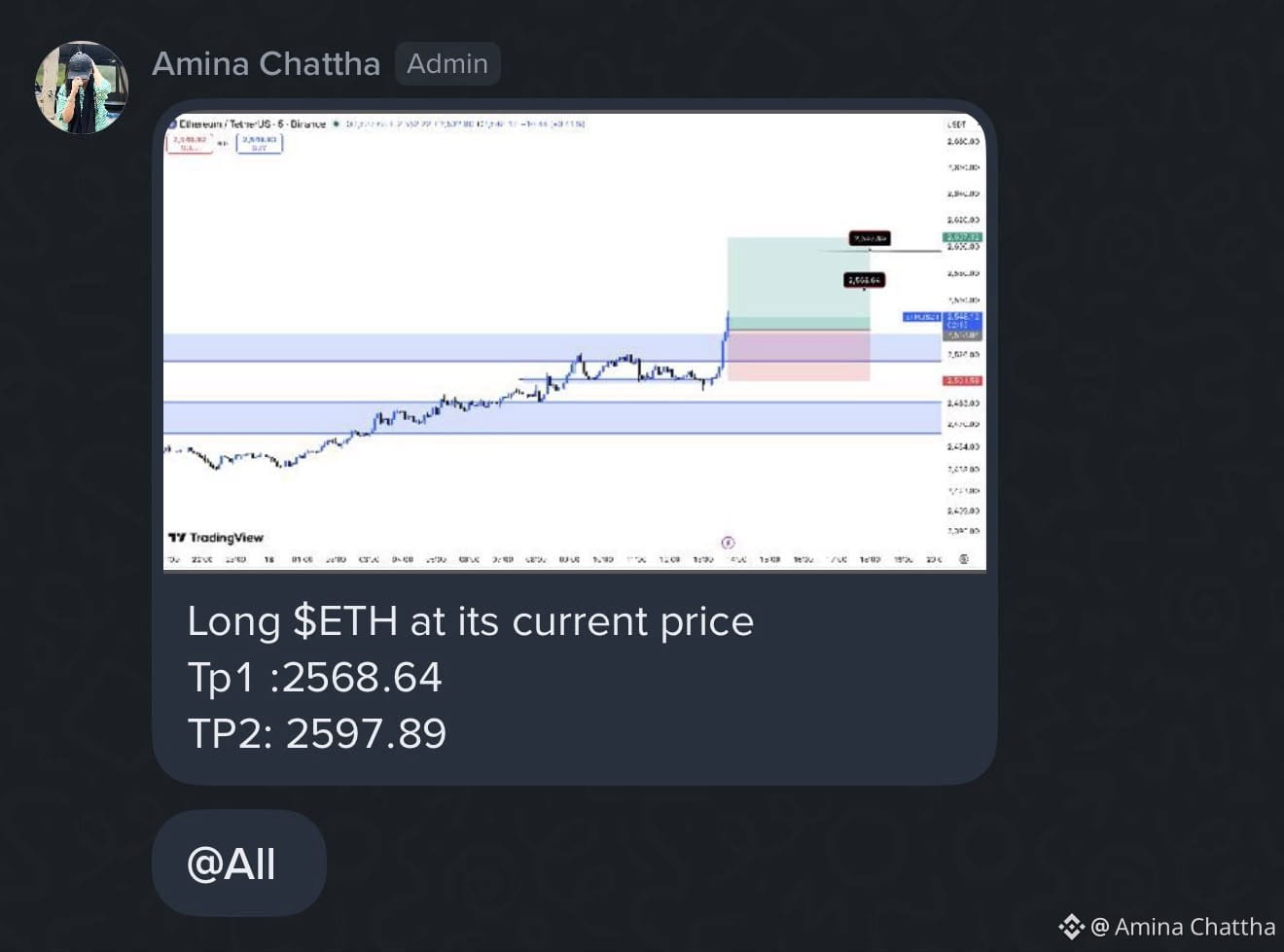
Esto es lo que estamos cocinando en este mercado volátil cuando todos no están seguros de la tendencia del mercado; estoy ayudando a mi comunidad a aprovechar pequeños movimientos para generar ganancias.
Quizá ahora estés pensando: ¿dónde estoy dando estas señales, si no aparecen en mi perfil? Así que esta receta secreta se está cocinando dentro de la [Banter Premium](https://app.binance.com/uni-qr/SuZUGbDz), donde seis mentes están dando su análisis para reducir la probabilidad de operaciones arriesgadas.
Solo estoy compartiendo la mía, ya que hay otras 5 personas dando señales en el grupo, así que únete ahora y disfruta las ganancias.
#BTCBreaks80K
Esto es lo que estamos cocinando en este mercado volátil cuando todos no están seguros de la tendencia del mercado; estoy ayudando a mi comunidad a aprovechar pequeños movimientos para generar ganancias.
Quizá ahora estés pensando: ¿dónde estoy dando estas señales, si no aparecen en mi perfil? Así que esta receta secreta se está cocinando dentro de la Banter Premium, donde seis mentes están dando su análisis para reducir la probabilidad de operaciones arriesgadas.
Solo estoy compartiendo la mía, ya que hay otras 5 personas dando señales en el grupo, así que únete ahora y disfruta las ganancias.
#BTCBreaks80K
Quizá ahora estés pensando: ¿dónde estoy dando estas señales, si no aparecen en mi perfil? Así que esta receta secreta se está cocinando dentro de la Banter Premium, donde seis mentes están dando su análisis para reducir la probabilidad de operaciones arriesgadas.
Solo estoy compartiendo la mía, ya que hay otras 5 personas dando señales en el grupo, así que únete ahora y disfruta las ganancias.
#BTCBreaks80K
7
7
175
PINNED
Estimados binancians, ya seas principiante o ya un trader con experiencia, si alguna vez te sientes confundido/a sobre comprar, vender, entradas, salidas o cualquier patrón de trading, este grupo es para ti.
Puedes unirte completamente gratis y preguntar cualquier cosa sobre trading de criptomonedas. Intentaré explicar las cosas con palabras sencillas y hacer que tu camino como trader sea más fácil, claro y menos confuso.
Sin comisiones. Sin cosas complicadas. Solo aprender, debatir y operar mejor juntos.
¿Entonces a qué estás esperando??
[Click here to join the group.](https://app.binance.com/uni-qr/WKThC9kW)
Estimados binancians, ya seas principiante o ya un trader con experiencia, si alguna vez te sientes confundido/a sobre comprar, vender, entradas, salidas o cualquier patrón de trading, este grupo es para ti.
Puedes unirte completamente gratis y preguntar cualquier cosa sobre trading de criptomonedas. Intentaré explicar las cosas con palabras sencillas y hacer que tu camino como trader sea más fácil, claro y menos confuso.
Sin comisiones. Sin cosas complicadas. Solo aprender, debatir y operar mejor juntos.
¿Entonces a qué estás esperando??
Click here to join the group.
Puedes unirte completamente gratis y preguntar cualquier cosa sobre trading de criptomonedas. Intentaré explicar las cosas con palabras sencillas y hacer que tu camino como trader sea más fácil, claro y menos confuso.
Sin comisiones. Sin cosas complicadas. Solo aprender, debatir y operar mejor juntos.
¿Entonces a qué estás esperando??
Click here to join the group.
1
9
138
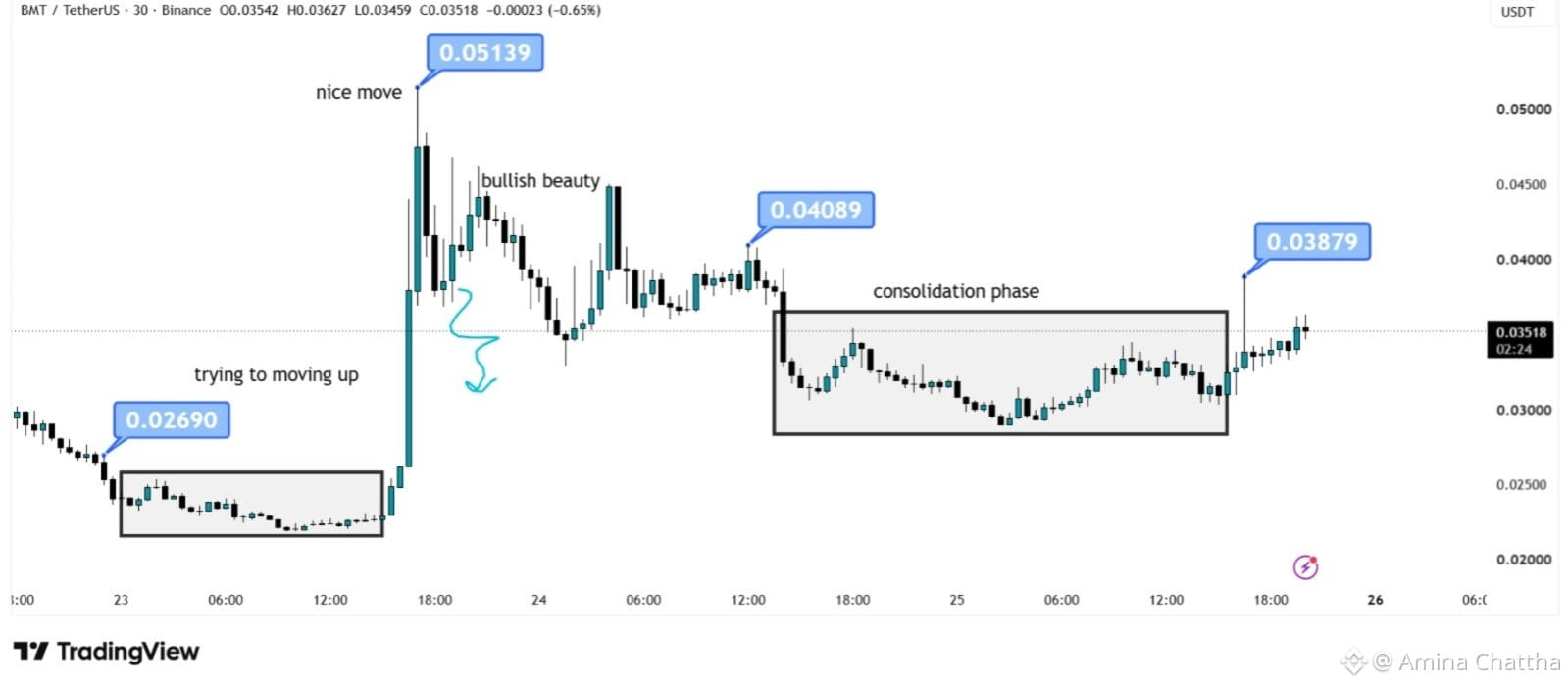
$BMT SIGUE SUBIENDO POCO A POCO. ¿SE AVECINA OTRO GRAN MOVIMIENTO?
Estoy siguiendo de cerca $BMT tras su enorme subida hasta los $0.05139 y su fuerte corrección. El precio se está recuperando cerca de $0.03518, y $0.03879 es la siguiente resistencia clave. Si los alcistas superan ese nivel, los $0.04089 podrían volver a estar al alcance. ¡La próxima ruptura será interesante!
{spot}(BMTUSDT)
$BMT SIGUE SUBIENDO POCO A POCO. ¿SE AVECINA OTRO GRAN MOVIMIENTO?
Estoy siguiendo de cerca $BMT tras su enorme subida hasta los $0.05139 y su fuerte corrección. El precio se está recuperando cerca de $0.03518, y $0.03879 es la siguiente resistencia clave. Si los alcistas superan ese nivel, los $0.04089 podrían volver a estar al alcance. ¡La próxima ruptura será interesante!
Estoy siguiendo de cerca $BMT tras su enorme subida hasta los $0.05139 y su fuerte corrección. El precio se está recuperando cerca de $0.03518, y $0.03879 es la siguiente resistencia clave. Si los alcistas superan ese nivel, los $0.04089 podrían volver a estar al alcance. ¡La próxima ruptura será interesante!
1
35
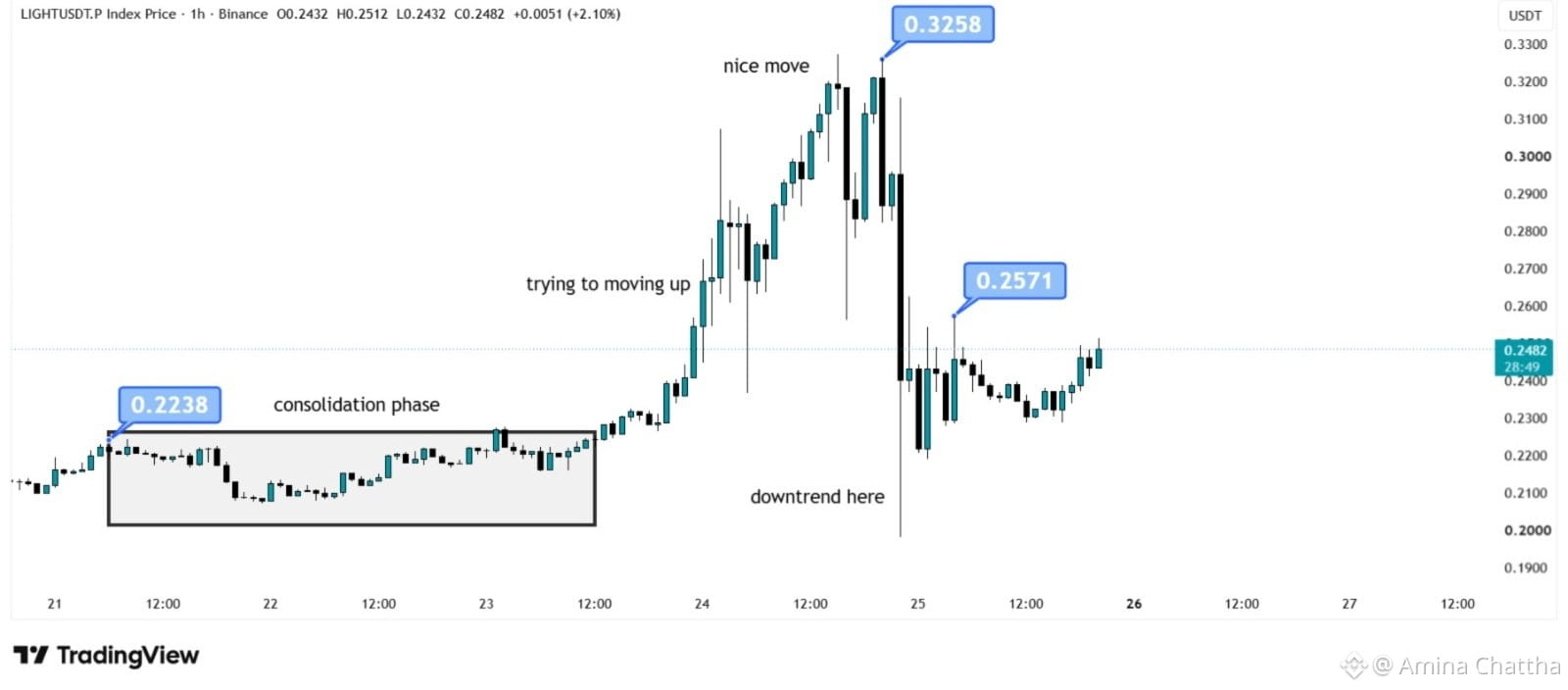
$LIGHT TUVO SU MOMENTO EN $0.3258. ¿PUEDE VOLVER A BRILLAR?
Tras una enorme subida, $LIGHT cayó bruscamente, pero ahora se está recuperando cerca de $0.2482. Estoy siguiendo de cerca la resistencia de $0.2571. Si los alcistas recuperan ese nivel, el precio podría apuntar a $0.28. De lo contrario, sigue siendo posible otro retroceso hacia $0.23.
{future}(LIGHTUSDT)
$LIGHT TUVO SU MOMENTO EN $0.3258. ¿PUEDE VOLVER A BRILLAR?
Tras una enorme subida, $LIGHT cayó bruscamente, pero ahora se está recuperando cerca de $0.2482. Estoy siguiendo de cerca la resistencia de $0.2571. Si los alcistas recuperan ese nivel, el precio podría apuntar a $0.28. De lo contrario, sigue siendo posible otro retroceso hacia $0.23.
Tras una enorme subida, $LIGHT cayó bruscamente, pero ahora se está recuperando cerca de $0.2482. Estoy siguiendo de cerca la resistencia de $0.2571. Si los alcistas recuperan ese nivel, el precio podría apuntar a $0.28. De lo contrario, sigue siendo posible otro retroceso hacia $0.23.
1
86
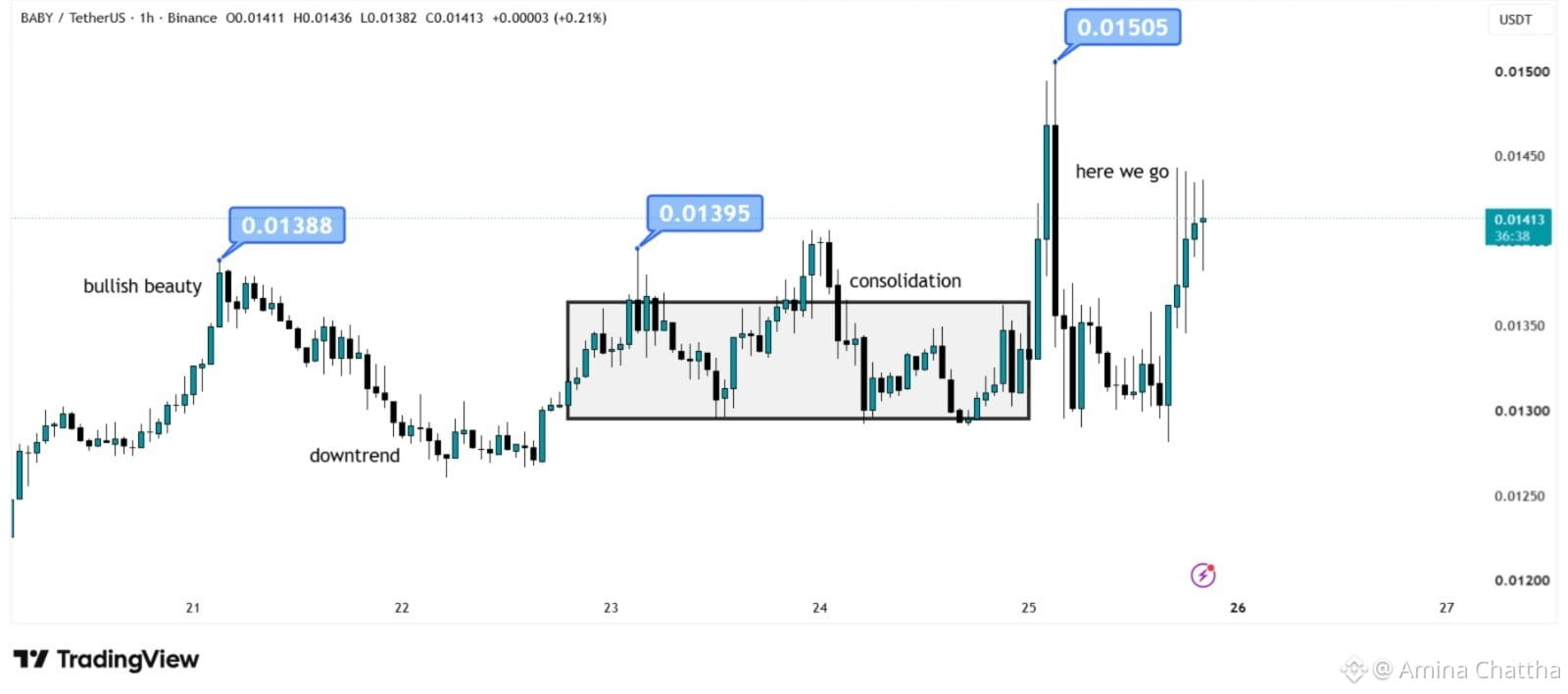
$BABY ESTÁ HACIENDO RUIDO OTRA VEZ. ¿LO PRÓXIMO: $0.015?
¡Estoy viendo cómo vuelven los compradores tras la fuerte caída! $BABY ha recuperado los $0.01413 después de rebotar desde los $0.013. Si supera los $0.0145, podría seguir otro impulso hacia los $0.01505. ¡Los alcistas están contraatacando!
{spot}(BABYUSDT)
$BABY ESTÁ HACIENDO RUIDO OTRA VEZ. ¿LO PRÓXIMO: $0.015?
¡Estoy viendo cómo vuelven los compradores tras la fuerte caída! $BABY ha recuperado los $0.01413 después de rebotar desde los $0.013. Si supera los $0.0145, podría seguir otro impulso hacia los $0.01505. ¡Los alcistas están contraatacando!
¡Estoy viendo cómo vuelven los compradores tras la fuerte caída! $BABY ha recuperado los $0.01413 después de rebotar desde los $0.013. Si supera los $0.0145, podría seguir otro impulso hacia los $0.01505. ¡Los alcistas están contraatacando!
1
108
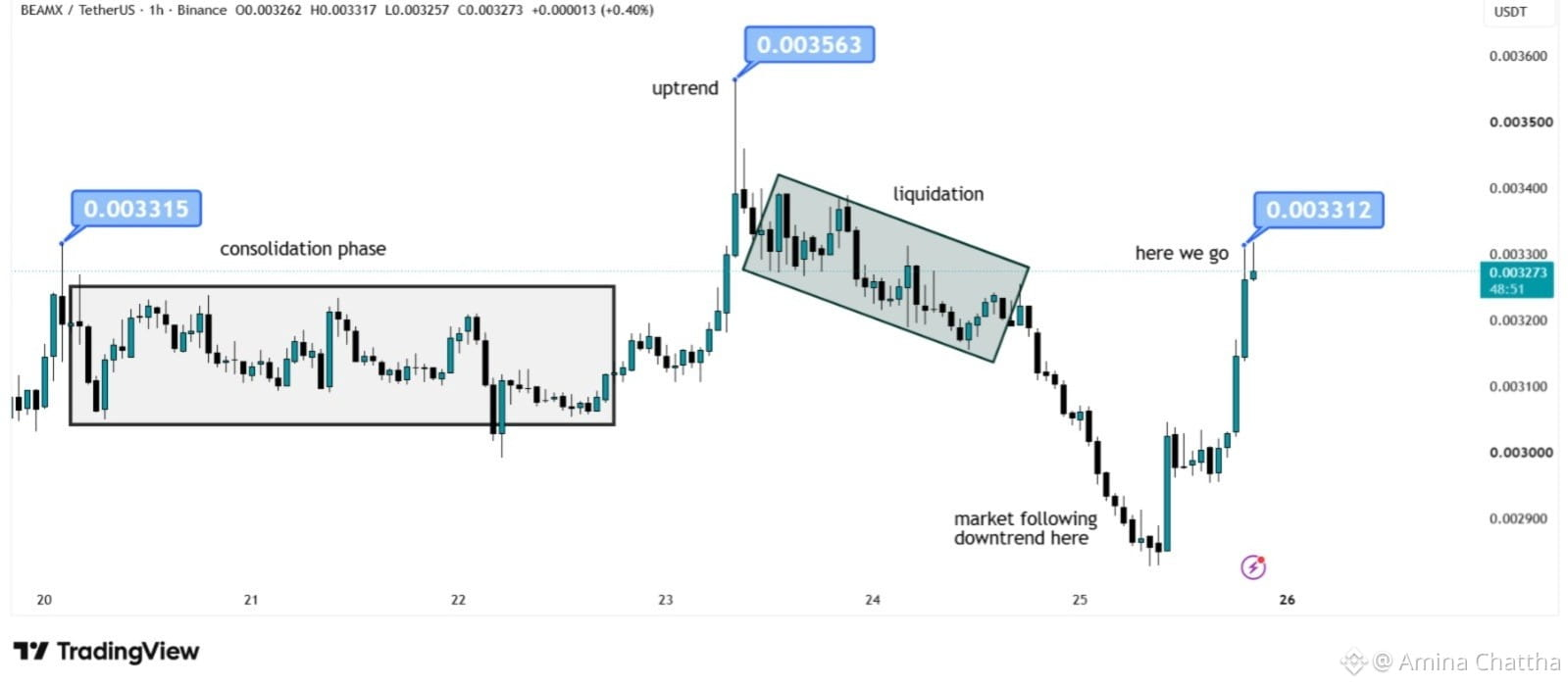
$BEAMX ESTÁ CONTRAATACANDO ¿PODRÁN LOS ALCISTAS SUPERAR LOS $0.00331?
¡Mira esta recuperación! $BEAMX rebotó desde los $0.00285 y volvió a subir hasta cerca de los $0.00327. Estoy siguiendo de cerca la resistencia de $0.00331. Si los compradores la superan, los $0.00340–$0.00356 podrían ser el próximo objetivo. La recuperación parece prometedora, ¡pero la confirmación es importante!
{spot}(BEAMXUSDT)
$BEAMX ESTÁ CONTRAATACANDO ¿PODRÁN LOS ALCISTAS SUPERAR LOS $0.00331?
¡Mira esta recuperación! $BEAMX rebotó desde los $0.00285 y volvió a subir hasta cerca de los $0.00327. Estoy siguiendo de cerca la resistencia de $0.00331. Si los compradores la superan, los $0.00340–$0.00356 podrían ser el próximo objetivo. La recuperación parece prometedora, ¡pero la confirmación es importante!
¡Mira esta recuperación! $BEAMX rebotó desde los $0.00285 y volvió a subir hasta cerca de los $0.00327. Estoy siguiendo de cerca la resistencia de $0.00331. Si los compradores la superan, los $0.00340–$0.00356 podrían ser el próximo objetivo. La recuperación parece prometedora, ¡pero la confirmación es importante!
1
124
$ERA SE ACERCA A LOS $0.10 ¡MIREN ESTA RECUPERACIÓN!
¡Qué remontada! $ERA rebotó desde $0.073 y subió hasta $0.0987. Estoy siguiendo de cerca la ruptura de los $0.10. Si los compradores logran superarlos, $0.1033 podría ser el próximo objetivo. ¡Los alcistas vuelven a mostrar fortaleza!
{spot}(ERAUSDT)
$ERA SE ACERCA A LOS $0.10 ¡MIREN ESTA RECUPERACIÓN!
¡Qué remontada! $ERA rebotó desde $0.073 y subió hasta $0.0987. Estoy siguiendo de cerca la ruptura de los $0.10. Si los compradores logran superarlos, $0.1033 podría ser el próximo objetivo. ¡Los alcistas vuelven a mostrar fortaleza!
¡Qué remontada! $ERA rebotó desde $0.073 y subió hasta $0.0987. Estoy siguiendo de cerca la ruptura de los $0.10. Si los compradores logran superarlos, $0.1033 podría ser el próximo objetivo. ¡Los alcistas vuelven a mostrar fortaleza!
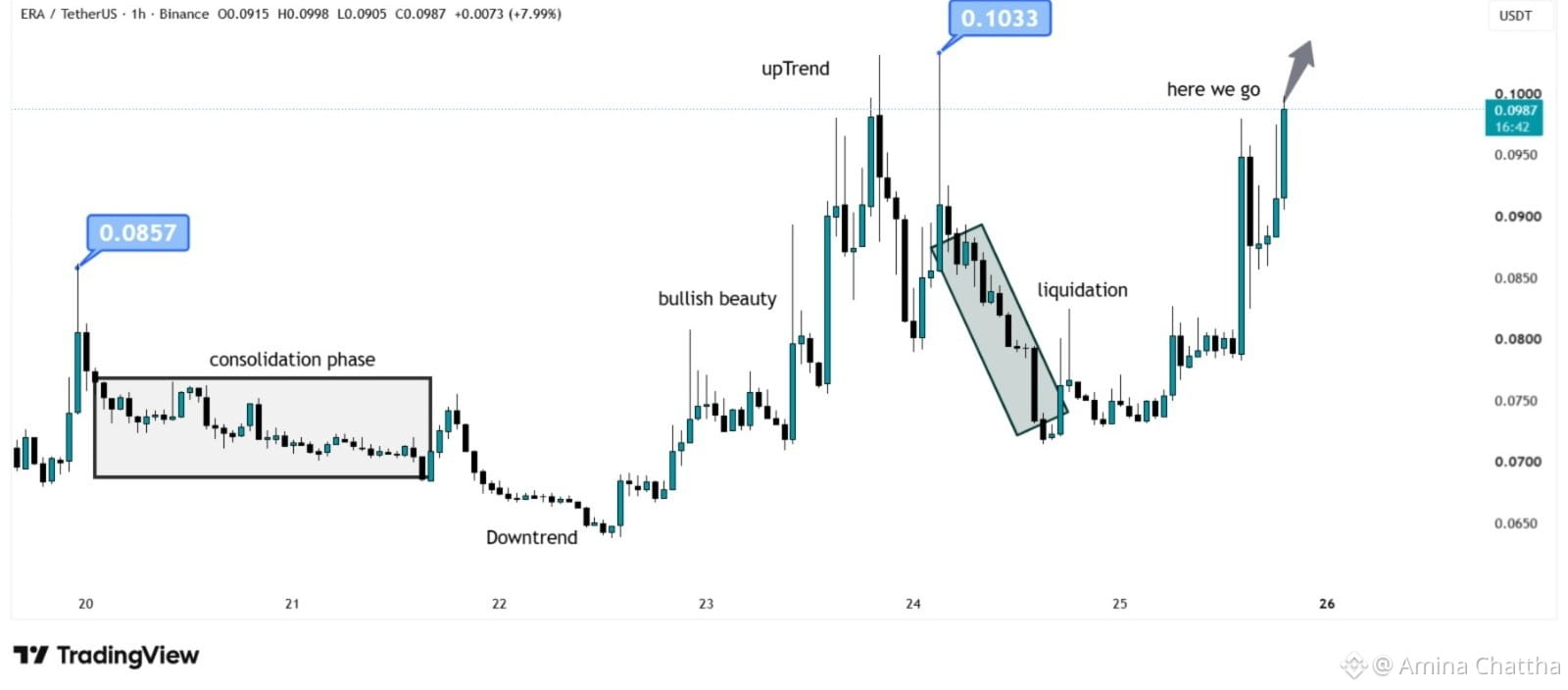
1
152
$USDBRL ¡ACABA DE EXPLOTAR! ¿VISTE ESA VELA?
¡Mira este movimiento repentino! $USDBRL saltó de alrededor de 4.96 a 5.3658, superando el máximo anterior de 5.2532. Estoy observando si el precio puede mantenerse por encima de 5.25. Si el impulso continúa, ¡5.40 podría ser el próximo nivel a tener en cuenta!
{future}(USDBRLUSDT)
$USDBRL ¡ACABA DE EXPLOTAR! ¿VISTE ESA VELA?
¡Mira este movimiento repentino! $USDBRL saltó de alrededor de 4.96 a 5.3658, superando el máximo anterior de 5.2532. Estoy observando si el precio puede mantenerse por encima de 5.25. Si el impulso continúa, ¡5.40 podría ser el próximo nivel a tener en cuenta!
¡Mira este movimiento repentino! $USDBRL saltó de alrededor de 4.96 a 5.3658, superando el máximo anterior de 5.2532. Estoy observando si el precio puede mantenerse por encima de 5.25. Si el impulso continúa, ¡5.40 podría ser el próximo nivel a tener en cuenta!
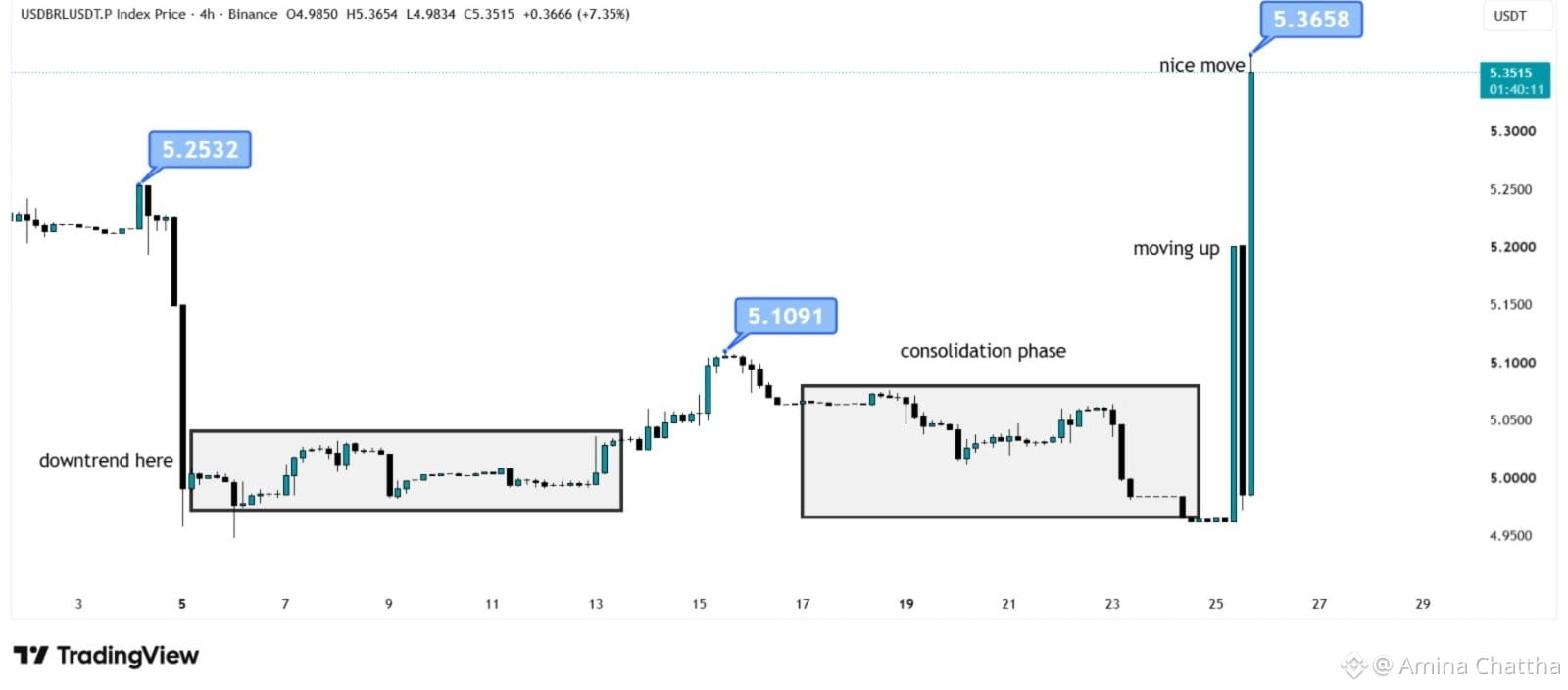
1
25
$BREV ¡ESTÁ DE VUELTA EN ACCIÓN! ¿PRÓXIMO OBJETIVO: $0.10?
¡Miren esta remontada! $BREV salió de su rango lateral y subió hasta $0.0892. Estoy atento a los $0.092, el próximo obstáculo. Si los alcistas lo superan, podría volver a probar los $0.10. El impulso parece fuerte, ¡pero la ruptura debe mantenerse!
{spot}(BREVUSDT)
$BREV ¡ESTÁ DE VUELTA EN ACCIÓN! ¿PRÓXIMO OBJETIVO: $0.10?
¡Miren esta remontada! $BREV salió de su rango lateral y subió hasta $0.0892. Estoy atento a los $0.092, el próximo obstáculo. Si los alcistas lo superan, podría volver a probar los $0.10. El impulso parece fuerte, ¡pero la ruptura debe mantenerse!
¡Miren esta remontada! $BREV salió de su rango lateral y subió hasta $0.0892. Estoy atento a los $0.092, el próximo obstáculo. Si los alcistas lo superan, podría volver a probar los $0.10. El impulso parece fuerte, ¡pero la ruptura debe mantenerse!
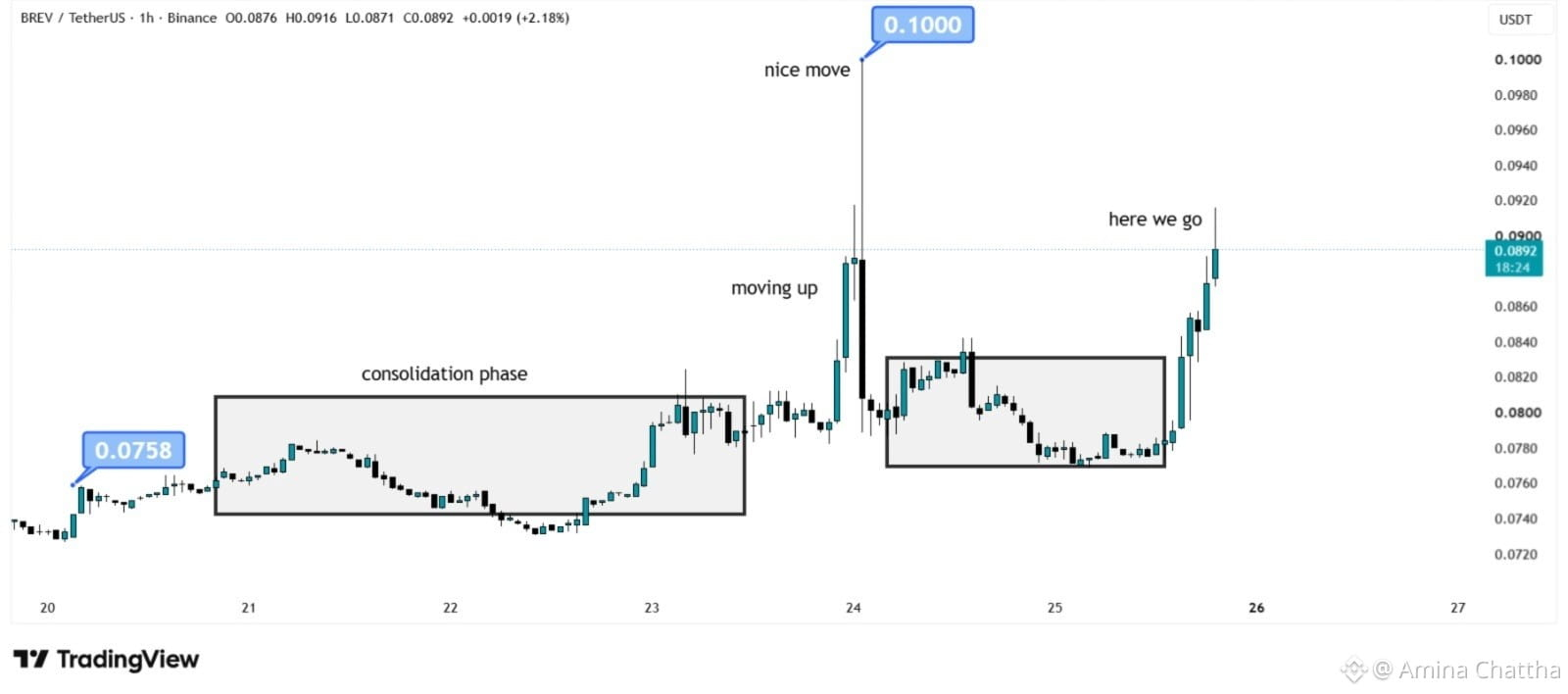
1
183
$ERA ¡Toma la delantera! ¡Las altcoins están al rojo vivo!
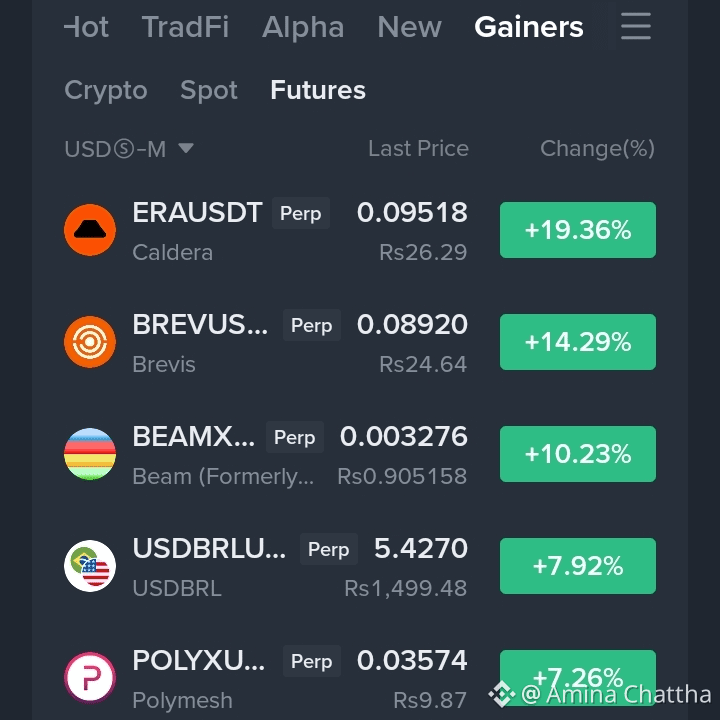
¡Mira las mayores subidas de Binance! ERA lidera con ganancias de más del 21%, seguida de $BREV con un 14% y $BEAMX con más del 10%. Estoy siguiendo de cerca estas monedas mientras los compradores muestran un renovado interés. ¡Veamos si este impulso continúa!
{spot}(BEAMXUSDT)
{spot}(BREVUSDT)
{spot}(ERAUSDT)
$ERA ¡Toma la delantera! ¡Las altcoins están al rojo vivo!
¡Mira las mayores subidas de Binance! ERA lidera con ganancias de más del 21%, seguida de $BREV con un 14% y $BEAMX con más del 10%. Estoy siguiendo de cerca estas monedas mientras los compradores muestran un renovado interés. ¡Veamos si este impulso continúa!
¡Mira las mayores subidas de Binance! ERA lidera con ganancias de más del 21%, seguida de $BREV con un 14% y $BEAMX con más del 10%. Estoy siguiendo de cerca estas monedas mientras los compradores muestran un renovado interés. ¡Veamos si este impulso continúa!
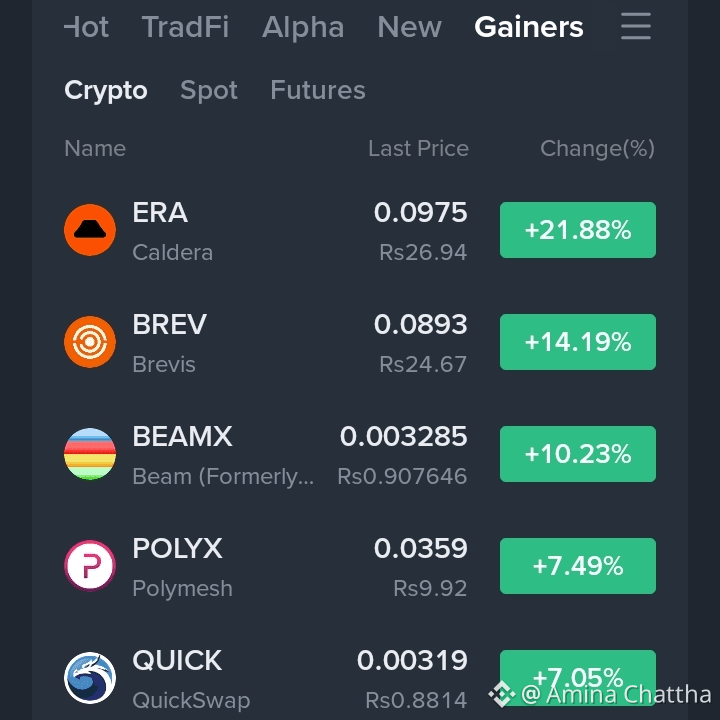
1
186
TENEDORES DE $SUI , ¡ESTE SOPORTE PODRÍA DECIDIRLO TODO!
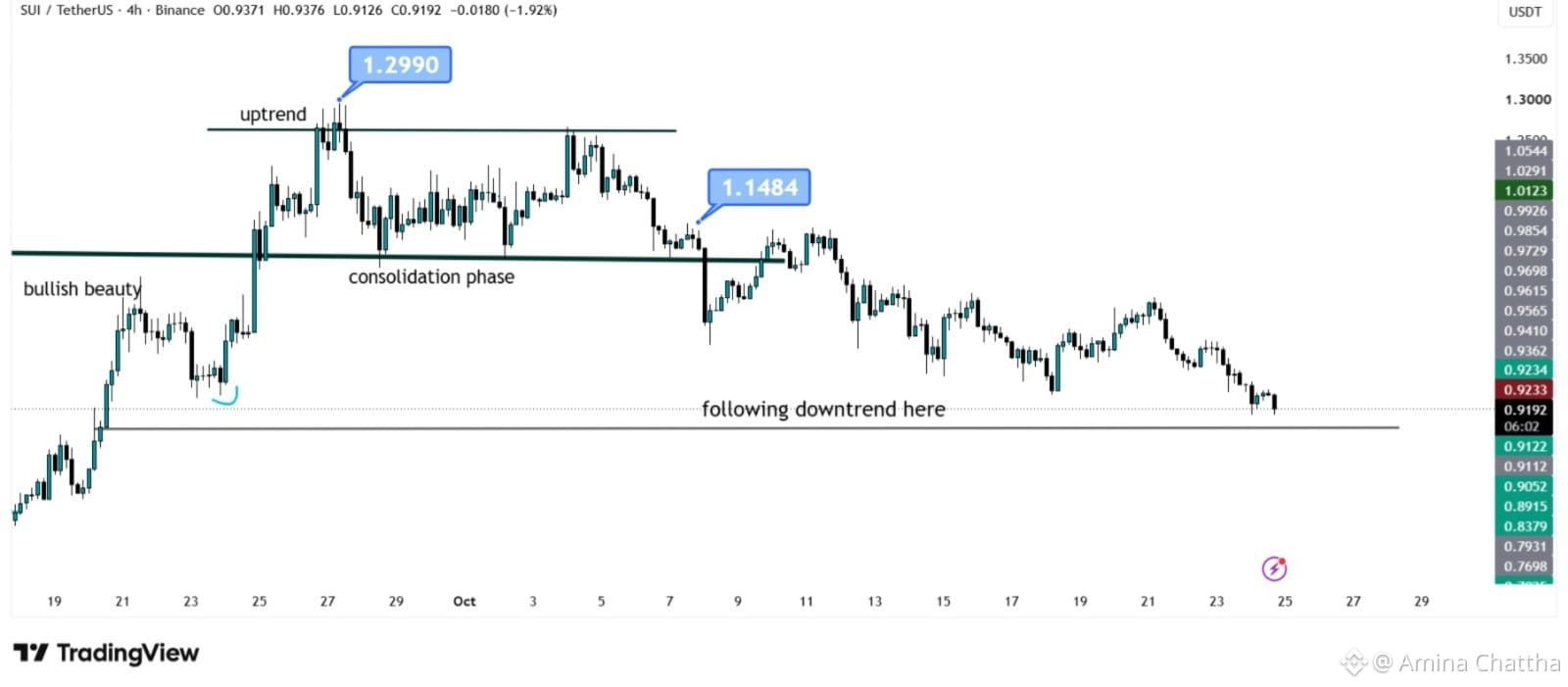
$SUI ha estado cayendo desde su máximo de $1.299 y ahora está poniendo a prueba la zona de soporte de $0.91. Los alcistas tienen dificultades para recuperarse, y perder los $0.91 podría abrir el camino hacia $0.89–$0.84. Un rebote por encima de $0.94 sería la primera señal de alivio. ¡Vigila de cerca este nivel!
{spot}(SUIUSDT)
TENEDORES DE $SUI , ¡ESTE SOPORTE PODRÍA DECIDIRLO TODO!
$SUI ha estado cayendo desde su máximo de $1.299 y ahora está poniendo a prueba la zona de soporte de $0.91. Los alcistas tienen dificultades para recuperarse, y perder los $0.91 podría abrir el camino hacia $0.89–$0.84. Un rebote por encima de $0.94 sería la primera señal de alivio. ¡Vigila de cerca este nivel!
$SUI ha estado cayendo desde su máximo de $1.299 y ahora está poniendo a prueba la zona de soporte de $0.91. Los alcistas tienen dificultades para recuperarse, y perder los $0.91 podría abrir el camino hacia $0.89–$0.84. Un rebote por encima de $0.94 sería la primera señal de alivio. ¡Vigila de cerca este nivel!
1
176
$ZEC POSEEDORES, ¡NO IGNOREN ESTA ADVERTENCIA BAJISTA!
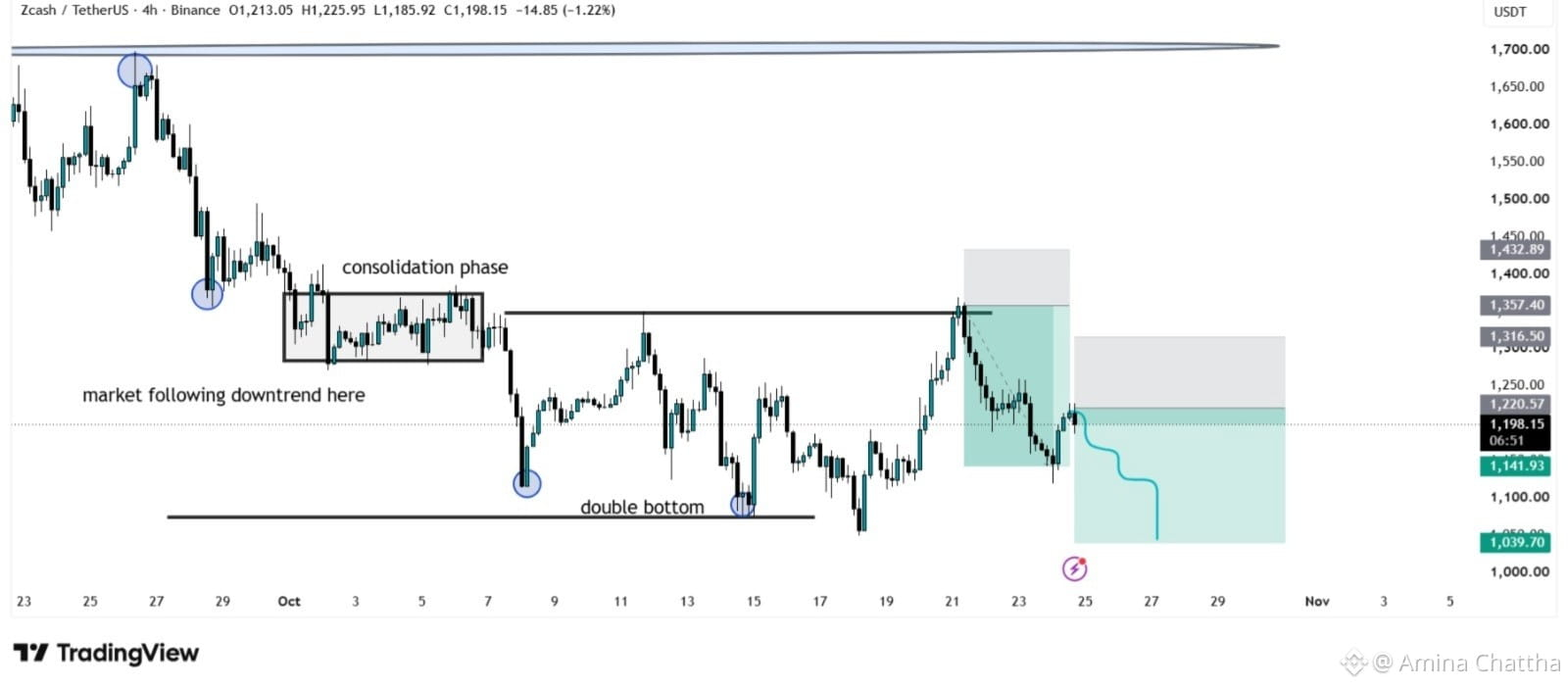
$ZEC está luchando cerca de los 1.198 $ tras ser rechazado en torno a los 1.357 $. Los vendedores siguen teniendo la ventaja, y una caída por debajo de los 1.142 $ podría arrastrar el precio hasta los 1.040 $. Los alcistas deben recuperar los 1.220 $ para aliviar la presión. ¡No pierdan de vista estos niveles!
{spot}(ZECUSDT)
$ZEC POSEEDORES, ¡NO IGNOREN ESTA ADVERTENCIA BAJISTA!
$ZEC está luchando cerca de los 1.198 $ tras ser rechazado en torno a los 1.357 $. Los vendedores siguen teniendo la ventaja, y una caída por debajo de los 1.142 $ podría arrastrar el precio hasta los 1.040 $. Los alcistas deben recuperar los 1.220 $ para aliviar la presión. ¡No pierdan de vista estos niveles!
$ZEC está luchando cerca de los 1.198 $ tras ser rechazado en torno a los 1.357 $. Los vendedores siguen teniendo la ventaja, y una caída por debajo de los 1.142 $ podría arrastrar el precio hasta los 1.040 $. Los alcistas deben recuperar los 1.220 $ para aliviar la presión. ¡No pierdan de vista estos niveles!
1
134
$BULLA ¡ROMPE AL ALZA! ¿ESTÁS VIENDO ESTE MOVIMIENTO?
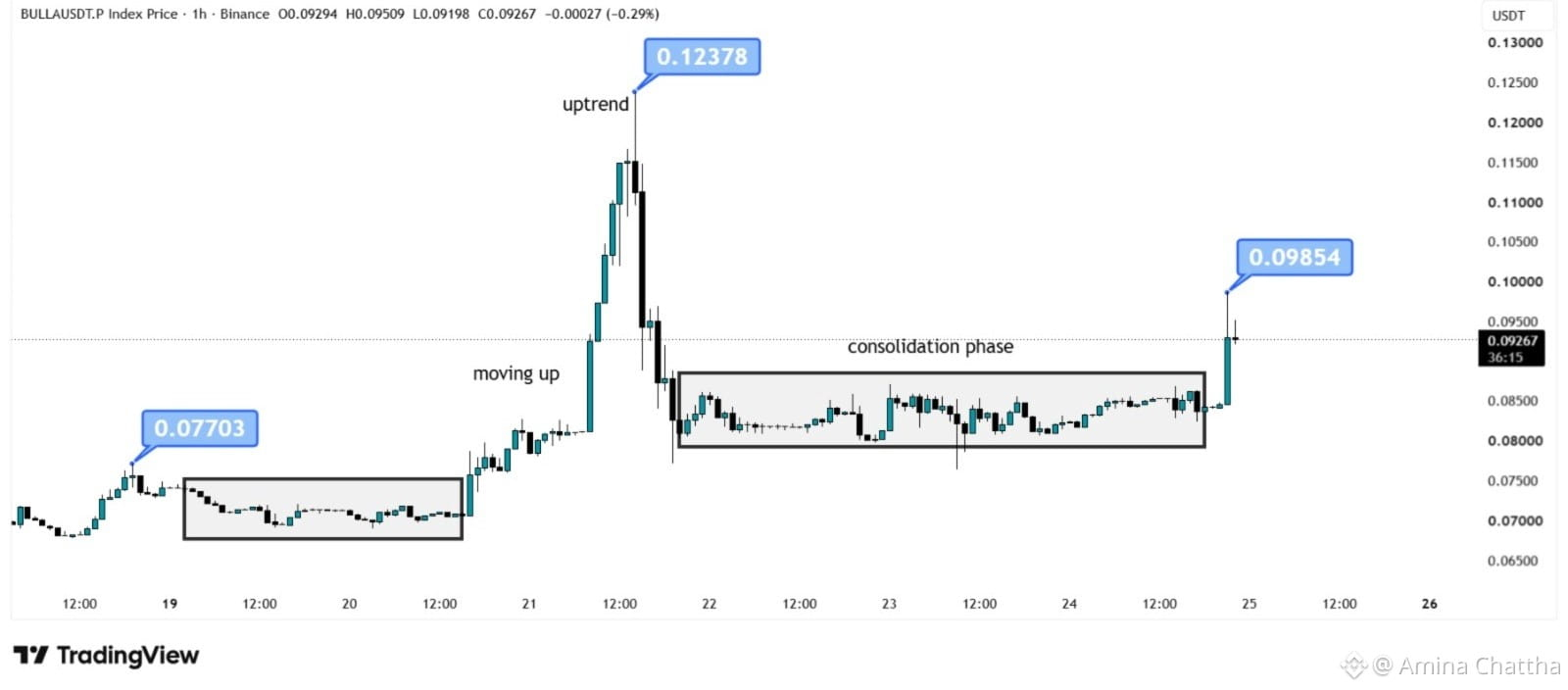
Después de varios días moviéndose lateralmente en torno a $0.080–$0.088, $BULLA por fin subió y alcanzó los $0.09854. Ahora el precio ronda los $0.09267, y los $0.10 son el próximo nivel importante a tener en cuenta. Si los compradores mantienen el control, podría producirse otro repunte. ¡No te pierdas la próxima actualización!
{future}(BULLAUSDT)
$BULLA ¡ROMPE AL ALZA! ¿ESTÁS VIENDO ESTE MOVIMIENTO?
Después de varios días moviéndose lateralmente en torno a $0.080–$0.088, $BULLA por fin subió y alcanzó los $0.09854. Ahora el precio ronda los $0.09267, y los $0.10 son el próximo nivel importante a tener en cuenta. Si los compradores mantienen el control, podría producirse otro repunte. ¡No te pierdas la próxima actualización!
Después de varios días moviéndose lateralmente en torno a $0.080–$0.088, $BULLA por fin subió y alcanzó los $0.09854. Ahora el precio ronda los $0.09267, y los $0.10 son el próximo nivel importante a tener en cuenta. Si los compradores mantienen el control, podría producirse otro repunte. ¡No te pierdas la próxima actualización!
1
193
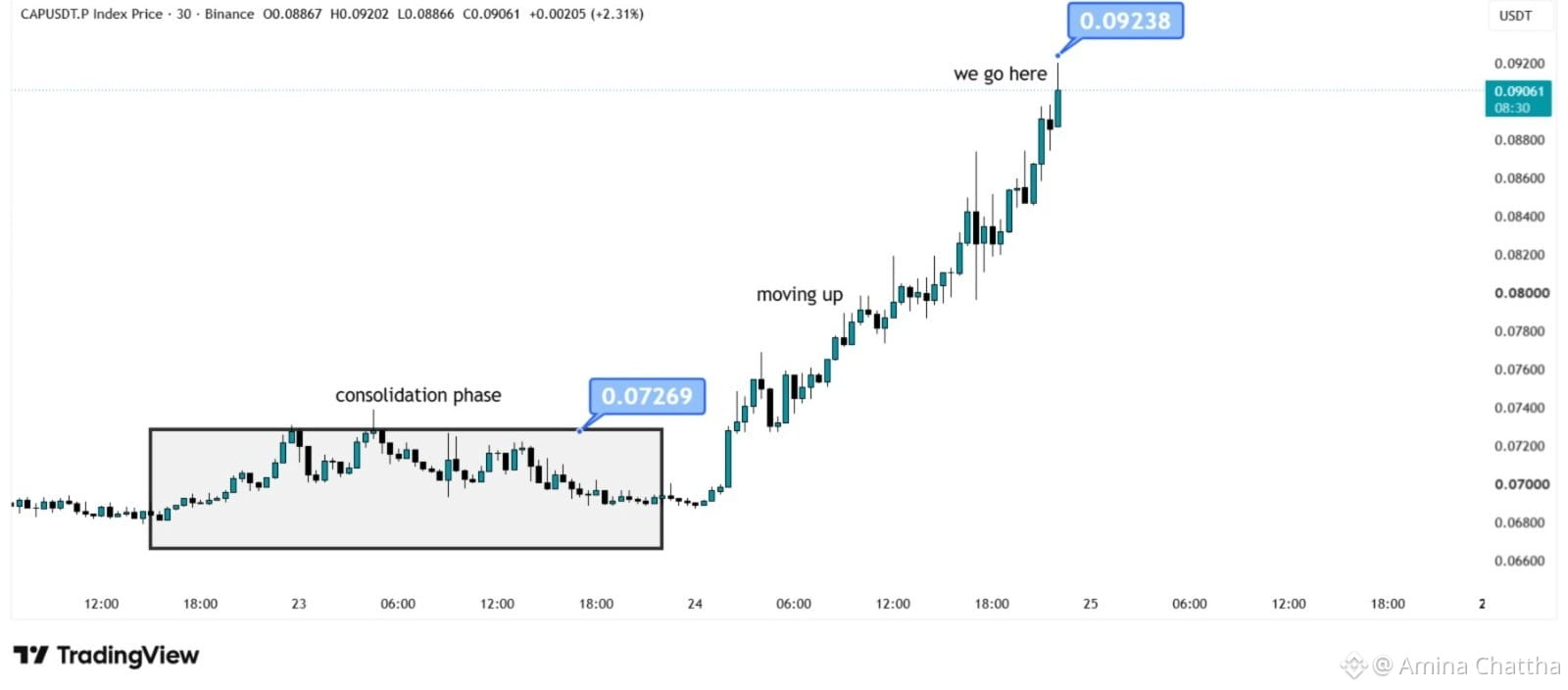
$CAP ¡ACABO DE DESPERTAR! ¿QUIÉN VIO ESTA RUPTURA?
¡Chicos, miren este movimiento! $CAP salió de su consolidación alrededor de los $0.07269 y subió hasta los $0.09061. Ahora los alcistas tienen la mira puesta en los $0.09238, y una ruptura podría abrir el camino hacia los $0.095. ¡No le pierdan la pista y síganme para recibir más actualizaciones de los gráficos!
{future}(CAPUSDT)
$CAP ¡ACABO DE DESPERTAR! ¿QUIÉN VIO ESTA RUPTURA?
¡Chicos, miren este movimiento! $CAP salió de su consolidación alrededor de los $0.07269 y subió hasta los $0.09061. Ahora los alcistas tienen la mira puesta en los $0.09238, y una ruptura podría abrir el camino hacia los $0.095. ¡No le pierdan la pista y síganme para recibir más actualizaciones de los gráficos!
¡Chicos, miren este movimiento! $CAP salió de su consolidación alrededor de los $0.07269 y subió hasta los $0.09061. Ahora los alcistas tienen la mira puesta en los $0.09238, y una ruptura podría abrir el camino hacia los $0.095. ¡No le pierdan la pista y síganme para recibir más actualizaciones de los gráficos!
1
144
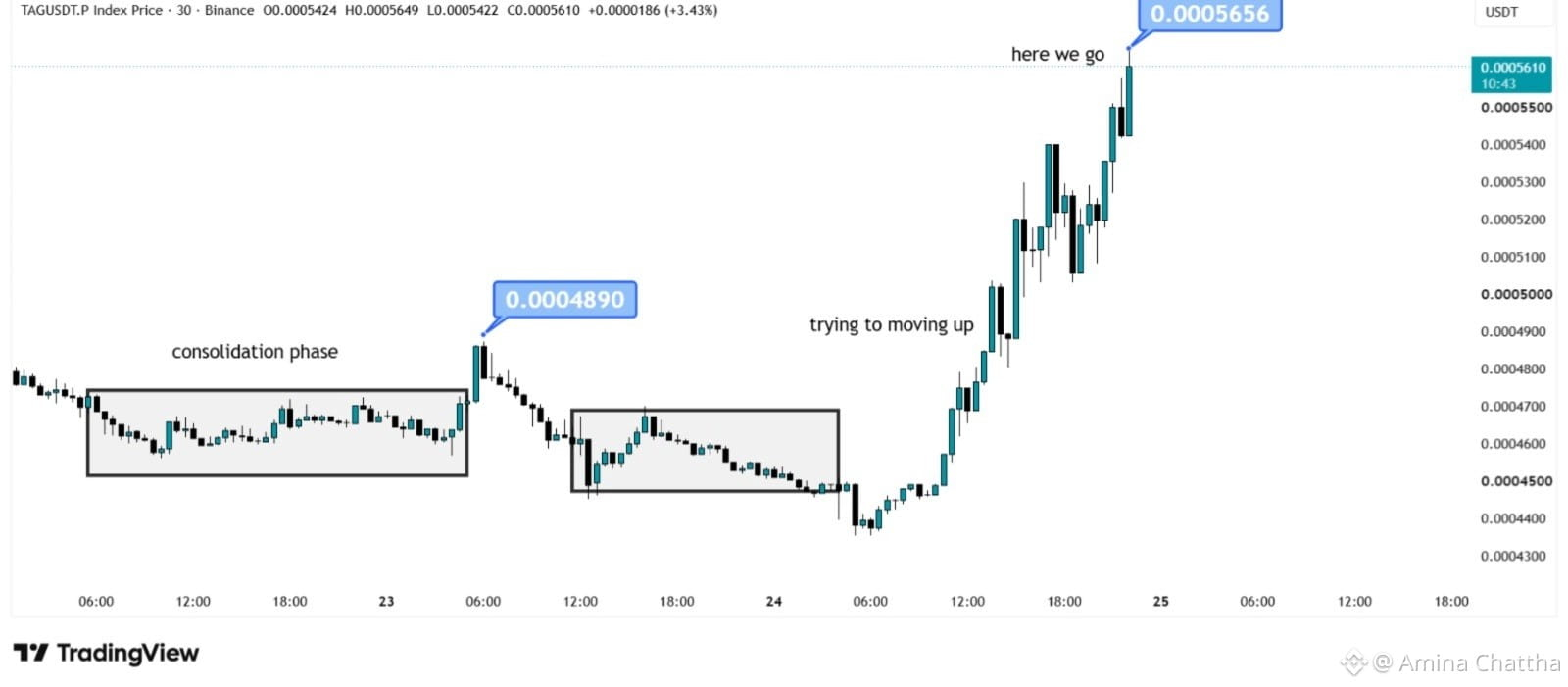
$TAG ¡ESTÁ QUE ARDE! ¡ESE GRÁFICO SILENCIOSO ACABA DE VOLVERSE LOCO!
De $0.00044 a $0.000561, $TAG ha protagonizado un poderoso repunte tras la consolidación. Los compradores apuntan a los $0.0005656, y una ruptura clara podría poner los $0.00058 en el punto de mira. ¡Sigue de cerca estos movimientos ocultos del mercado antes de que capten la atención de todos!
{future}(TAGUSDT)
$TAG ¡ESTÁ QUE ARDE! ¡ESE GRÁFICO SILENCIOSO ACABA DE VOLVERSE LOCO!
De $0.00044 a $0.000561, $TAG ha protagonizado un poderoso repunte tras la consolidación. Los compradores apuntan a los $0.0005656, y una ruptura clara podría poner los $0.00058 en el punto de mira. ¡Sigue de cerca estos movimientos ocultos del mercado antes de que capten la atención de todos!
De $0.00044 a $0.000561, $TAG ha protagonizado un poderoso repunte tras la consolidación. Los compradores apuntan a los $0.0005656, y una ruptura clara podría poner los $0.00058 en el punto de mira. ¡Sigue de cerca estos movimientos ocultos del mercado antes de que capten la atención de todos!
1
127
·
--
Alcista
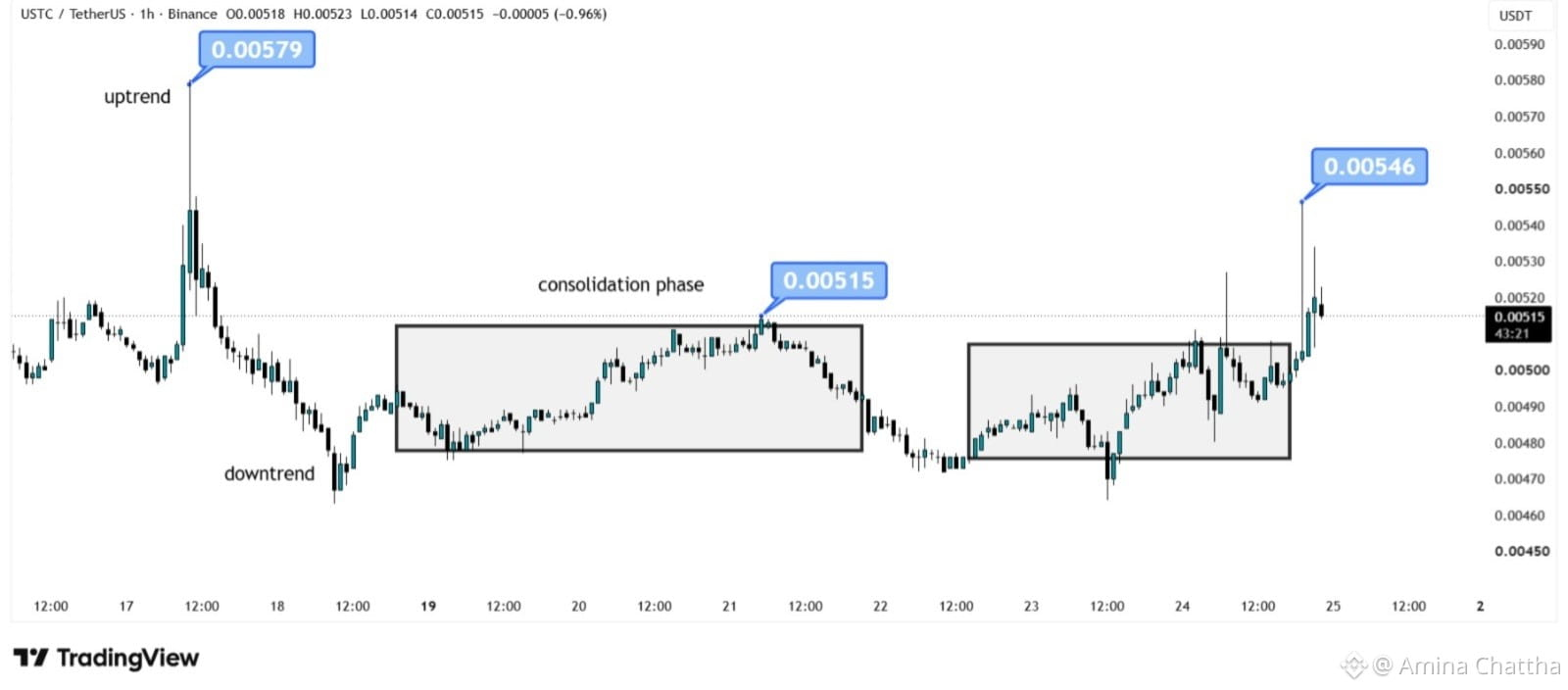
$USTC ACABA DE DESPERTAR, ¿LO PRÓXIMO ES $0.00579?
Después de varios días moviéndose lateralmente, $USTC finalmente subió y tocó los $0.00546. El precio ahora ronda los $0.00515, y los $0.0050 actúan como un nivel clave. Si los alcistas se mantienen firmes, podría producirse otro movimiento hacia los $0.00546–$0.00579. ¡Sigue atento a los próximos grandes movimientos del gráfico!
{spot}(USTCUSDT)
$USTC ACABA DE DESPERTAR, ¿LO PRÓXIMO ES $0.00579?
Después de varios días moviéndose lateralmente, $USTC finalmente subió y tocó los $0.00546. El precio ahora ronda los $0.00515, y los $0.0050 actúan como un nivel clave. Si los alcistas se mantienen firmes, podría producirse otro movimiento hacia los $0.00546–$0.00579. ¡Sigue atento a los próximos grandes movimientos del gráfico!
Después de varios días moviéndose lateralmente, $USTC finalmente subió y tocó los $0.00546. El precio ahora ronda los $0.00515, y los $0.0050 actúan como un nivel clave. Si los alcistas se mantienen firmes, podría producirse otro movimiento hacia los $0.00546–$0.00579. ¡Sigue atento a los próximos grandes movimientos del gráfico!
1
137
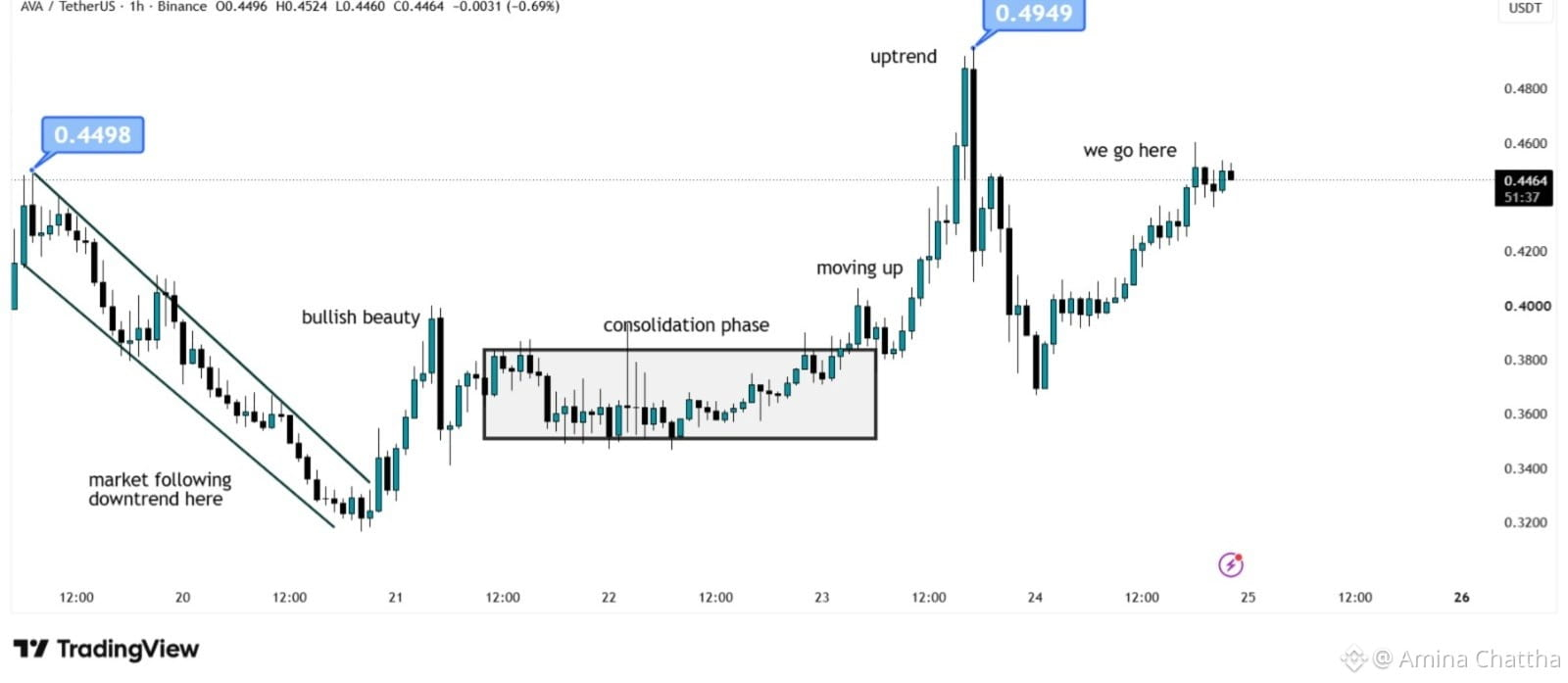
$AVA , ¿VOLVEMOS A $0.50?
$AVA está protagonizando una sólida recuperación tras rebotar desde $0.37. Ahora cotiza cerca de $0.4464 y los alcistas están poniendo a prueba la zona de resistencia de $0.45–$0.46. Una ruptura clara podría volver a poner $0.4949 en el punto de mira. ¿Qué opinas: ruptura o rechazo?
{spot}(AVAUSDT)
$AVA , ¿VOLVEMOS A $0.50?
$AVA está protagonizando una sólida recuperación tras rebotar desde $0.37. Ahora cotiza cerca de $0.4464 y los alcistas están poniendo a prueba la zona de resistencia de $0.45–$0.46. Una ruptura clara podría volver a poner $0.4949 en el punto de mira. ¿Qué opinas: ruptura o rechazo?
$AVA está protagonizando una sólida recuperación tras rebotar desde $0.37. Ahora cotiza cerca de $0.4464 y los alcistas están poniendo a prueba la zona de resistencia de $0.45–$0.46. Una ruptura clara podría volver a poner $0.4949 en el punto de mira. ¿Qué opinas: ruptura o rechazo?
2
155
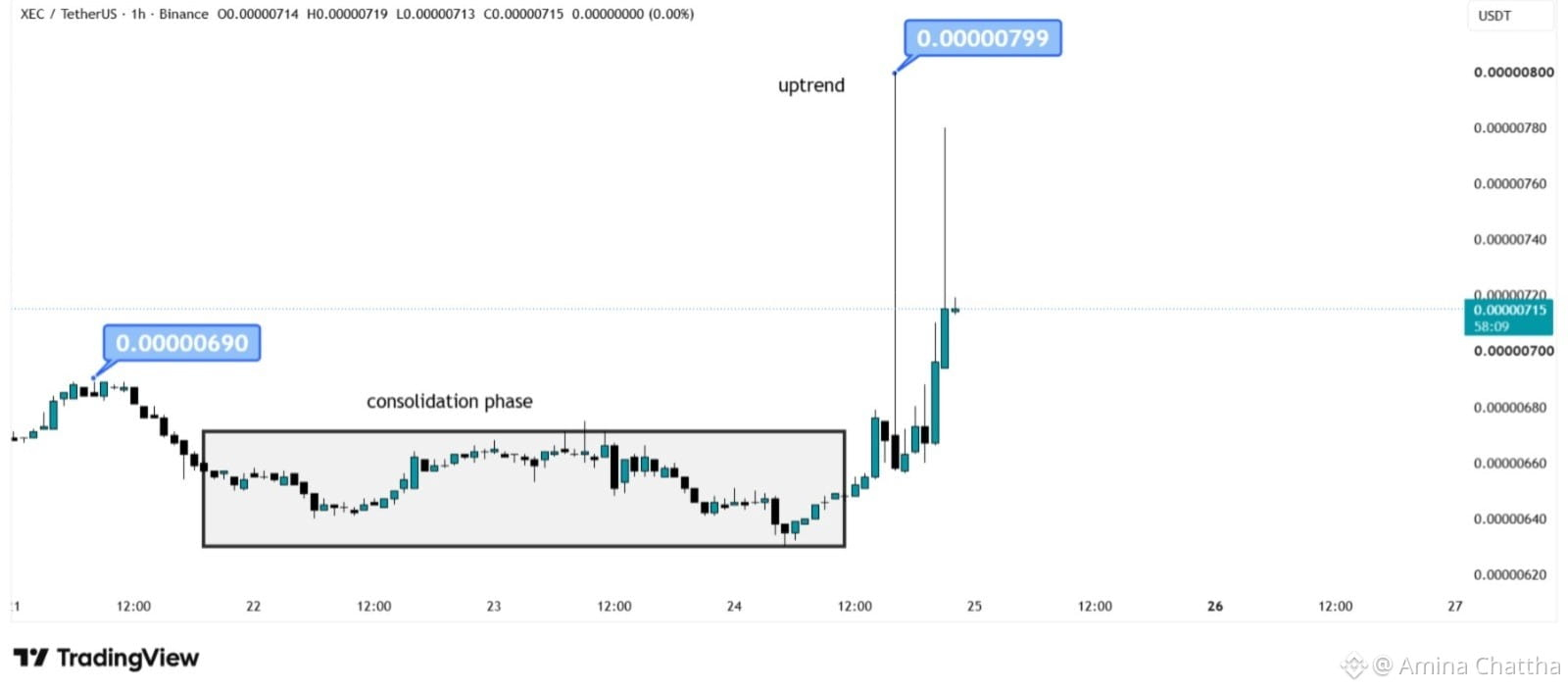
$XEC POSEEDORES, ¿VISTE ESA RUPTURA?
$XEC acaba de salir de la consolidación y superó los $0.00000690. Ahora cotiza cerca de $0.00000715 y los alcistas muestran fortaleza. Si el impulso continúa, $0.00000799 podría ser la próxima gran prueba. ¿Podrán los compradores mantener vivo este repunte?
{spot}(XECUSDT)
$XEC POSEEDORES, ¿VISTE ESA RUPTURA?
$XEC acaba de salir de la consolidación y superó los $0.00000690. Ahora cotiza cerca de $0.00000715 y los alcistas muestran fortaleza. Si el impulso continúa, $0.00000799 podría ser la próxima gran prueba. ¿Podrán los compradores mantener vivo este repunte?
$XEC acaba de salir de la consolidación y superó los $0.00000690. Ahora cotiza cerca de $0.00000715 y los alcistas muestran fortaleza. Si el impulso continúa, $0.00000799 podría ser la próxima gran prueba. ¿Podrán los compradores mantener vivo este repunte?
1
151
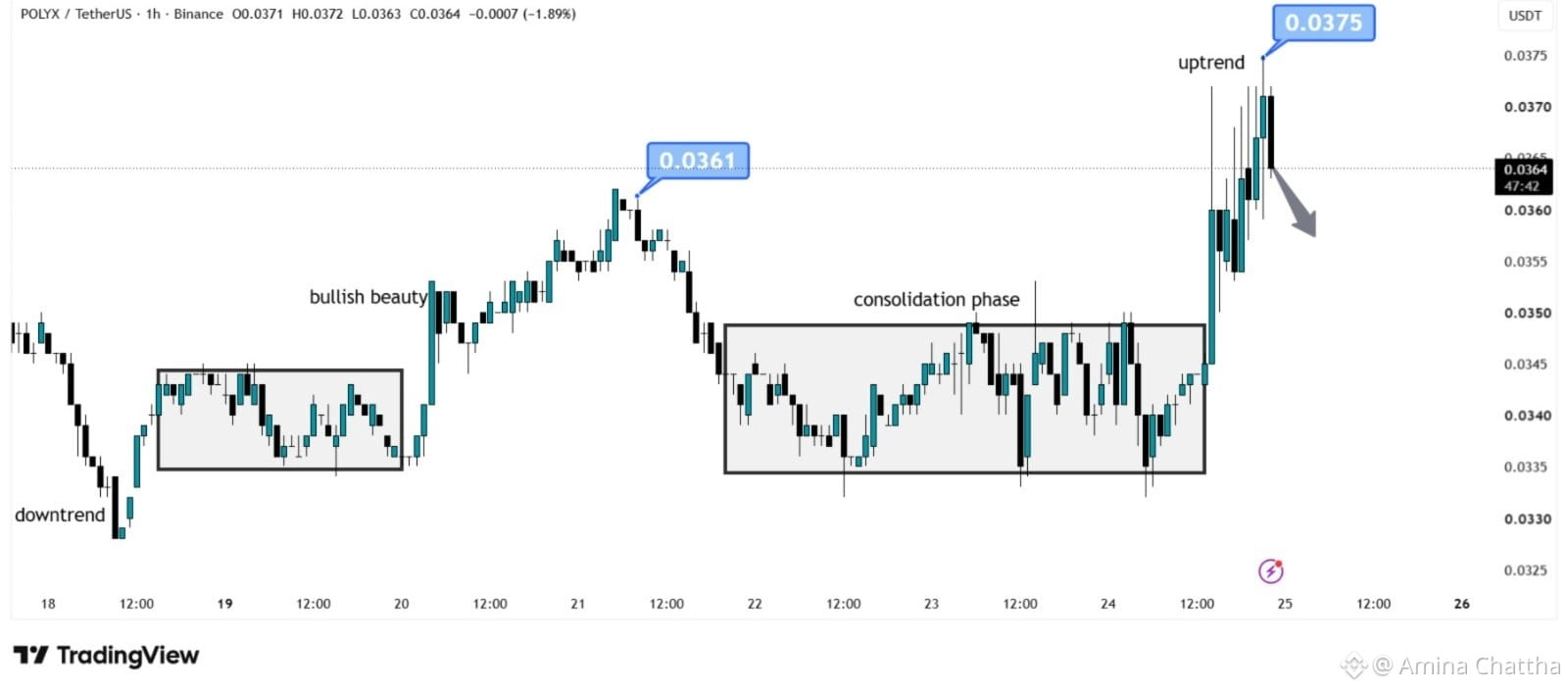
$POLYX ¡NO IGNORES ESTA ADVERTENCIA!
$POLYX rompió la consolidación y subió hasta los 0,0375 $, ¡pero los vendedores están contraatacando! Ahora cotiza cerca de los 0,0364 $, y una caída por debajo de los 0,036 $ podría llevarlo hasta los 0,0355 $. Los alcistas deben recuperar los 0,0375 $ para volver a ganar impulso. ¡Sígueme para conocer más niveles clave de criptomonedas!
{spot}(POLYXUSDT)
$POLYX ¡NO IGNORES ESTA ADVERTENCIA!
$POLYX rompió la consolidación y subió hasta los 0,0375 $, ¡pero los vendedores están contraatacando! Ahora cotiza cerca de los 0,0364 $, y una caída por debajo de los 0,036 $ podría llevarlo hasta los 0,0355 $. Los alcistas deben recuperar los 0,0375 $ para volver a ganar impulso. ¡Sígueme para conocer más niveles clave de criptomonedas!
$POLYX rompió la consolidación y subió hasta los 0,0375 $, ¡pero los vendedores están contraatacando! Ahora cotiza cerca de los 0,0364 $, y una caída por debajo de los 0,036 $ podría llevarlo hasta los 0,0355 $. Los alcistas deben recuperar los 0,0375 $ para volver a ganar impulso. ¡Sígueme para conocer más niveles clave de criptomonedas!
1
120
Inicia sesión para explorar más contenidos
Únete a usuarios globales de criptomonedas en Binance Square
⚡️ Obtén información útil y actualizada sobre criptos.
💬 Avalado por el mayor exchange de criptomonedas en el mundo.
👍 Descubre perspectivas reales de creadores verificados.
Email/número de teléfono
Temas populares
BinancePick
2.7M vistas
145,857 están debatiendo
¡Únete a #TemporadaDeResultados: predice resultados en Binance Pick y comparte tu opinión en Binance Square!
Binance Square Official
·403 me gusta
·340.1k vistas
EarningsSeason
5.1M vistas
24,937 están debatiendo
AnthropicTTMRevenueGrewAbout1200%
0 vistas
3 están debatiendo