

Cryptowhaleexpert
165 Publicaciones
Cryptowhaleexpert
Denunciar
Bloquear usuario
-
415 Siguiendo
519 Seguidores
429 Me gusta
Publicaciones
Todo
Citas
#ICP
Cuatro cerca de 5 aplicaciones en cafeína ai ayer y solo 35 créditos.
El mes pasado usé 1400 créditos en el mismo lugar sin llegar a ninguna parte.
Última aplicación 25 Herramientas SEO lanzando más tarde hoy cuando se restablezcan los créditos gratis.
$ICP
#ICP
Cuatro cerca de 5 aplicaciones en cafeína ai ayer y solo 35 créditos.
El mes pasado usé 1400 créditos en el mismo lugar sin llegar a ninguna parte.
Última aplicación 25 Herramientas SEO lanzando más tarde hoy cuando se restablezcan los créditos gratis.
$ICP
Cuatro cerca de 5 aplicaciones en cafeína ai ayer y solo 35 créditos.
El mes pasado usé 1400 créditos en el mismo lugar sin llegar a ninguna parte.
Última aplicación 25 Herramientas SEO lanzando más tarde hoy cuando se restablezcan los créditos gratis.
$ICP
1
2
205
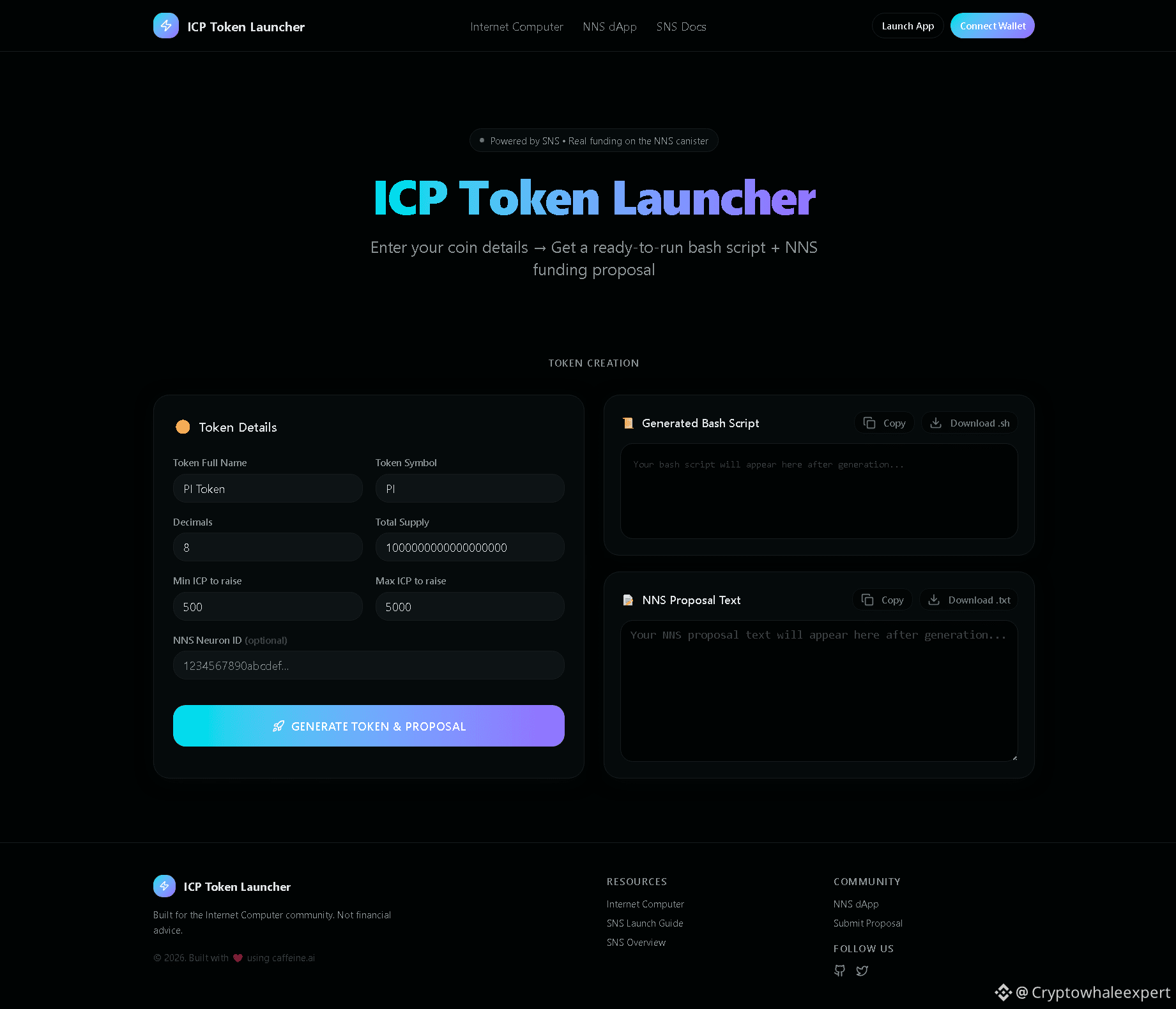
El lanzamiento de un token en Internet Computer ahora está disponible para todos, no solo para los programadores internos. https://icp-token-launcher-fnb.caffeine.xyz
El lanzamiento de un token en Internet Computer ahora está disponible para todos, no solo para los programadores internos. https://icp-token-launcher-fnb.caffeine.xyz
24
#XRP
El BCE Abre la Puerta a Colateral Tokenizado a Medida que la Tecnología del Libro Mayor de $XRP Aparece en la Infraestructura de Liquidación Europea
El sistema financiero de Europa se está moviendo de manera decisiva hacia la integración de la blockchain. Según la analista de mercado Diana, el Banco Central Europeo (BCE) comenzará a aceptar valores emitidos por tecnología de libro mayor distribuido (DLT) seleccionados como colateral a partir del 30 de marzo, marcando un hito clave en la adopción institucional de activos tokenizados y la modernización de la infraestructura del mercado financiero.
Bajo el nuevo marco, los bancos del Eurosistema ahora pueden usar valores tokenizados aprobados como colateral al pedir prestado del banco central, integrando activos basados en blockchain en el sistema monetario central de Europa y marcando un cambio clave tanto para los mercados financieros como para la infraestructura digital.
Un detalle clave del informe del BCE destaca el papel de la tecnología conectada al Libro Mayor de $XRP. Específicamente, la plataforma de negociación y liquidación desarrollada por Axiology opera utilizando código de código abierto derivado del Libro Mayor de $XRP.
Esto significa que elementos de la arquitectura de XRPL están siendo utilizados para apoyar la emergente infraestructura financiera tokenizada dentro de Europa.
Ya, el Libro Mayor de $XRP alberga más del 15% de todas las mercancías tokenizadas a nivel mundial, consolidando su estatus como la segunda plataforma más grande del mundo.
El BCE Listo para Unir las Finanzas Tradicionales y Blockchain con Colateral Tokenizado Basado en XRPL
Para ser claros, el BCE no está adoptando el Libro Mayor público de $XRP ni utilizando $XRP como colateral. En cambio, un sistema privado para mercados regulados aprovecha la tecnología de código abierto de XRPL para impulsar su plataforma de negociación y liquidación.
Mientras tanto, Dubái ha tokenizado más de $5M en bienes raíces en el Libro Mayor de $XRP, creando 7.8 millones de tokens de propiedad negociables al instante, un movimiento histórico para los mercados de propiedad basados en blockchain.
Fuente: Cryptonews
#XRP
El BCE Abre la Puerta a Colateral Tokenizado a Medida que la Tecnología del Libro Mayor de $XRP Aparece en la Infraestructura de Liquidación Europea
El sistema financiero de Europa se está moviendo de manera decisiva hacia la integración de la blockchain. Según la analista de mercado Diana, el Banco Central Europeo (BCE) comenzará a aceptar valores emitidos por tecnología de libro mayor distribuido (DLT) seleccionados como colateral a partir del 30 de marzo, marcando un hito clave en la adopción institucional de activos tokenizados y la modernización de la infraestructura del mercado financiero.
Bajo el nuevo marco, los bancos del Eurosistema ahora pueden usar valores tokenizados aprobados como colateral al pedir prestado del banco central, integrando activos basados en blockchain en el sistema monetario central de Europa y marcando un cambio clave tanto para los mercados financieros como para la infraestructura digital.
Un detalle clave del informe del BCE destaca el papel de la tecnología conectada al Libro Mayor de $XRP. Específicamente, la plataforma de negociación y liquidación desarrollada por Axiology opera utilizando código de código abierto derivado del Libro Mayor de $XRP.
Esto significa que elementos de la arquitectura de XRPL están siendo utilizados para apoyar la emergente infraestructura financiera tokenizada dentro de Europa.
Ya, el Libro Mayor de $XRP alberga más del 15% de todas las mercancías tokenizadas a nivel mundial, consolidando su estatus como la segunda plataforma más grande del mundo.
El BCE Listo para Unir las Finanzas Tradicionales y Blockchain con Colateral Tokenizado Basado en XRPL
Para ser claros, el BCE no está adoptando el Libro Mayor público de $XRP ni utilizando $XRP como colateral. En cambio, un sistema privado para mercados regulados aprovecha la tecnología de código abierto de XRPL para impulsar su plataforma de negociación y liquidación.
Mientras tanto, Dubái ha tokenizado más de $5M en bienes raíces en el Libro Mayor de $XRP, creando 7.8 millones de tokens de propiedad negociables al instante, un movimiento histórico para los mercados de propiedad basados en blockchain.
Fuente: Cryptonews
El BCE Abre la Puerta a Colateral Tokenizado a Medida que la Tecnología del Libro Mayor de $XRP Aparece en la Infraestructura de Liquidación Europea
El sistema financiero de Europa se está moviendo de manera decisiva hacia la integración de la blockchain. Según la analista de mercado Diana, el Banco Central Europeo (BCE) comenzará a aceptar valores emitidos por tecnología de libro mayor distribuido (DLT) seleccionados como colateral a partir del 30 de marzo, marcando un hito clave en la adopción institucional de activos tokenizados y la modernización de la infraestructura del mercado financiero.
Bajo el nuevo marco, los bancos del Eurosistema ahora pueden usar valores tokenizados aprobados como colateral al pedir prestado del banco central, integrando activos basados en blockchain en el sistema monetario central de Europa y marcando un cambio clave tanto para los mercados financieros como para la infraestructura digital.
Un detalle clave del informe del BCE destaca el papel de la tecnología conectada al Libro Mayor de $XRP. Específicamente, la plataforma de negociación y liquidación desarrollada por Axiology opera utilizando código de código abierto derivado del Libro Mayor de $XRP.
Esto significa que elementos de la arquitectura de XRPL están siendo utilizados para apoyar la emergente infraestructura financiera tokenizada dentro de Europa.
Ya, el Libro Mayor de $XRP alberga más del 15% de todas las mercancías tokenizadas a nivel mundial, consolidando su estatus como la segunda plataforma más grande del mundo.
El BCE Listo para Unir las Finanzas Tradicionales y Blockchain con Colateral Tokenizado Basado en XRPL
Para ser claros, el BCE no está adoptando el Libro Mayor público de $XRP ni utilizando $XRP como colateral. En cambio, un sistema privado para mercados regulados aprovecha la tecnología de código abierto de XRPL para impulsar su plataforma de negociación y liquidación.
Mientras tanto, Dubái ha tokenizado más de $5M en bienes raíces en el Libro Mayor de $XRP, creando 7.8 millones de tokens de propiedad negociables al instante, un movimiento histórico para los mercados de propiedad basados en blockchain.
Fuente: Cryptonews
740
·
--
Alcista
Will XRP hit $1.5650 by 22.02
56%
Will it go above $5 this year?
44%
25 Voto(s) • Votación cerrada
1
278
Comenzó hace casi 18 años.
Comenzó hace casi 18 años.


Crypto_Alchemy
·
--
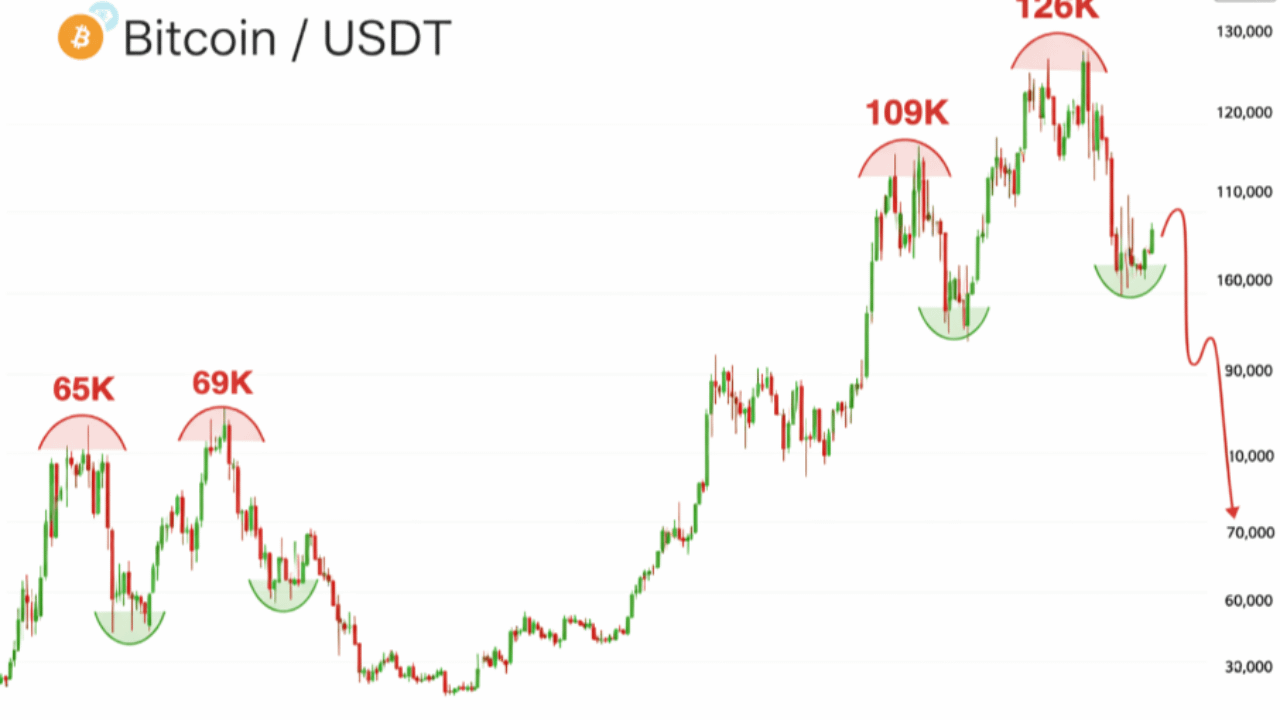
El Largo Camino de Bitcoin Desde Cero a un Activo Global (2009 a principios de 2026)
$BTC no comenzó como una inversión. En 2009 estaba más cerca de una idea que de una moneda. Cuando se minó el primer bloque, Bitcoin no tenía precio de mercado en absoluto. No había intercambios, ni gráficos, ni compradores ni vendedores. El único costo era la electricidad y la curiosidad.
2009 a 2010: Sin Precio, Luego Monedas
A lo largo de 2009, Bitcoin se comerció a cero porque no había dónde intercambiarlo. En 2010, comenzaron las transacciones informales. La famosa compra de pizza en mayo valoró Bitcoin en aproximadamente $0.004. A mediados de 2010, pequeños mercados en línea empujaron a Bitcoin a alrededor de $0.08. Para finales de año, tocó brevemente $0.30. Incluso entonces, se trataba como un experimento técnico, no como dinero.
2009 a 2010: Sin Precio, Luego Monedas
A lo largo de 2009, Bitcoin se comerció a cero porque no había dónde intercambiarlo. En 2010, comenzaron las transacciones informales. La famosa compra de pizza en mayo valoró Bitcoin en aproximadamente $0.004. A mediados de 2010, pequeños mercados en línea empujaron a Bitcoin a alrededor de $0.08. Para finales de año, tocó brevemente $0.30. Incluso entonces, se trataba como un experimento técnico, no como dinero.
1
#ICP #CaffeineAI
El token del Internet Computer (ICP), lanzado por la Fundación DFINITY, ha enfrentado desafíos y controversias significativas desde su creación en mayo de 2021, lo que ha llevado a una reputación altamente polarizada en la comunidad cripto.
Aquí están los principales problemas y desafíos asociados con el token ICP:
1. Caída Dramática del Precio y Pérdida de Inversores
Colapso Inicial: Tras un lanzamiento masivo lleno de expectativas, los tokens ICP cayeron más del 90% en valor durante su primer mes, pasando de un máximo histórico de más de $700 a alrededor de $31.
Persistencia de la Bearishness: El token no logró recuperar su valoración inicial en los años posteriores, cayendo a un mínimo histórico de aproximadamente $2.87 en septiembre de 2023.
Sentimiento de los Inversores: Los primeros inversores minoristas se sintieron quemados por la rápida caída, con el token a menudo citado en discusiones sobre proyectos sobrevalorados.
En los últimos 14 días intenté crear un sitio web decente en caffeine.ai, utilicé aproximadamente 1000 puntos sin llegar a ningún lado; no puede corregir errores cuando ocurren por primera vez. Tan pronto como se complica un poco, debe obtener datos de la API, usar datos para cálculos e incluir datos históricos de la base de datos, lo que hace que falle una y otra vez. Las habilidades de diseño web son patéticas; incluso si se acerca, puede de repente cometer errores o cambiar el diseño de malo a peor al intentar cambiar algo simple. Así que caffeine.ai o Motoko no serán lo que lleve a ICP de vuelta a la senda correcta, al menos no en un futuro cercano.
$ICP
#ICP #CaffeineAI
El token del Internet Computer (ICP), lanzado por la Fundación DFINITY, ha enfrentado desafíos y controversias significativas desde su creación en mayo de 2021, lo que ha llevado a una reputación altamente polarizada en la comunidad cripto.
Aquí están los principales problemas y desafíos asociados con el token ICP:
1. Caída Dramática del Precio y Pérdida de Inversores
Colapso Inicial: Tras un lanzamiento masivo lleno de expectativas, los tokens ICP cayeron más del 90% en valor durante su primer mes, pasando de un máximo histórico de más de $700 a alrededor de $31.
Persistencia de la Bearishness: El token no logró recuperar su valoración inicial en los años posteriores, cayendo a un mínimo histórico de aproximadamente $2.87 en septiembre de 2023.
Sentimiento de los Inversores: Los primeros inversores minoristas se sintieron quemados por la rápida caída, con el token a menudo citado en discusiones sobre proyectos sobrevalorados.
En los últimos 14 días intenté crear un sitio web decente en caffeine.ai, utilicé aproximadamente 1000 puntos sin llegar a ningún lado; no puede corregir errores cuando ocurren por primera vez. Tan pronto como se complica un poco, debe obtener datos de la API, usar datos para cálculos e incluir datos históricos de la base de datos, lo que hace que falle una y otra vez. Las habilidades de diseño web son patéticas; incluso si se acerca, puede de repente cometer errores o cambiar el diseño de malo a peor al intentar cambiar algo simple. Así que caffeine.ai o Motoko no serán lo que lleve a ICP de vuelta a la senda correcta, al menos no en un futuro cercano.
$ICP
El token del Internet Computer (ICP), lanzado por la Fundación DFINITY, ha enfrentado desafíos y controversias significativas desde su creación en mayo de 2021, lo que ha llevado a una reputación altamente polarizada en la comunidad cripto.
Aquí están los principales problemas y desafíos asociados con el token ICP:
1. Caída Dramática del Precio y Pérdida de Inversores
Colapso Inicial: Tras un lanzamiento masivo lleno de expectativas, los tokens ICP cayeron más del 90% en valor durante su primer mes, pasando de un máximo histórico de más de $700 a alrededor de $31.
Persistencia de la Bearishness: El token no logró recuperar su valoración inicial en los años posteriores, cayendo a un mínimo histórico de aproximadamente $2.87 en septiembre de 2023.
Sentimiento de los Inversores: Los primeros inversores minoristas se sintieron quemados por la rápida caída, con el token a menudo citado en discusiones sobre proyectos sobrevalorados.
En los últimos 14 días intenté crear un sitio web decente en caffeine.ai, utilicé aproximadamente 1000 puntos sin llegar a ningún lado; no puede corregir errores cuando ocurren por primera vez. Tan pronto como se complica un poco, debe obtener datos de la API, usar datos para cálculos e incluir datos históricos de la base de datos, lo que hace que falle una y otra vez. Las habilidades de diseño web son patéticas; incluso si se acerca, puede de repente cometer errores o cambiar el diseño de malo a peor al intentar cambiar algo simple. Así que caffeine.ai o Motoko no serán lo que lleve a ICP de vuelta a la senda correcta, al menos no en un futuro cercano.
$ICP
121
A 0.282 tal vez si se apueste y sepas cómo evitar impuestos
A 0.282 tal vez si se apueste y sepas cómo evitar impuestos
Syedcrypto86
·
--
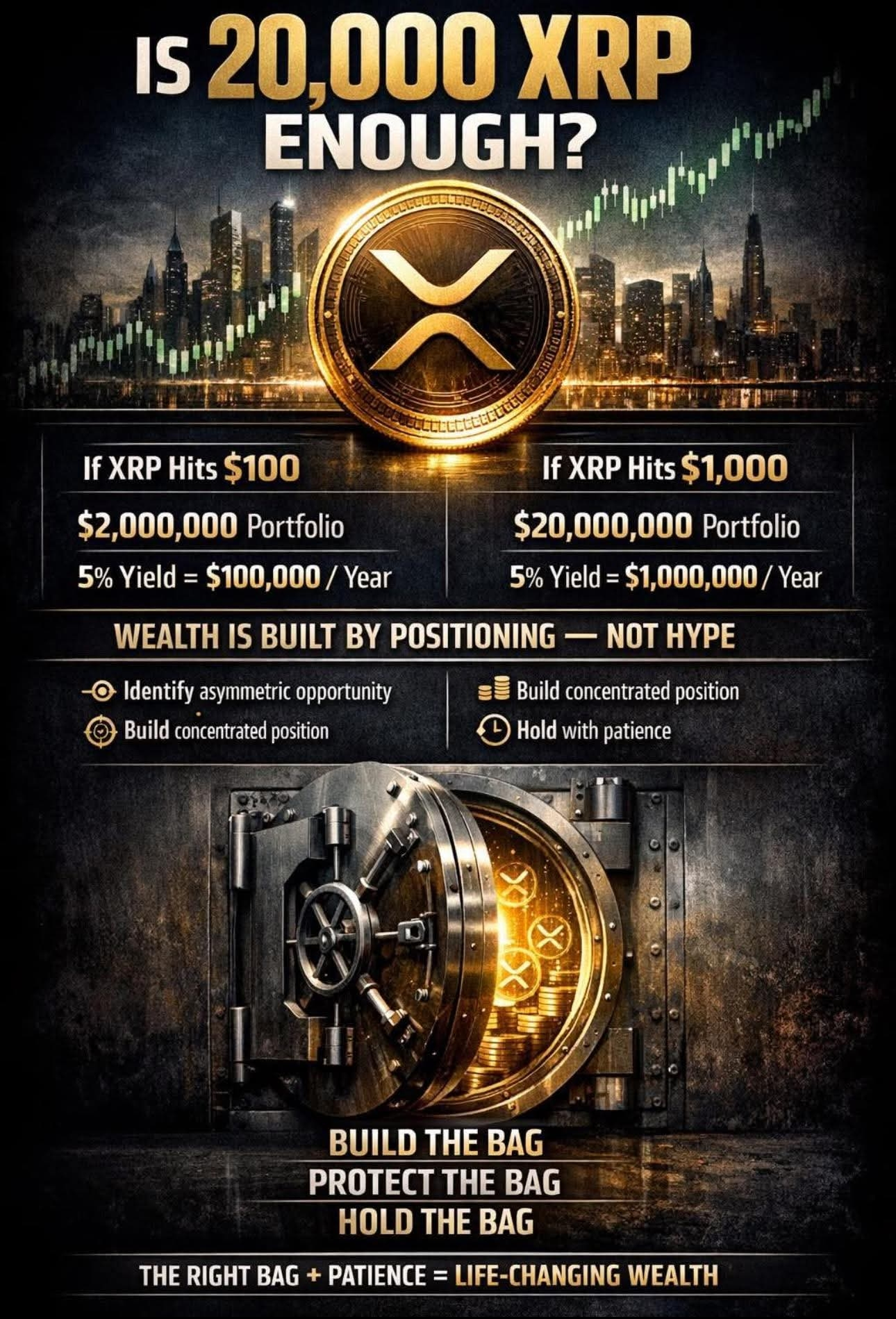
¿SON 20,000 #XRP SUFICIENTES?
Desglosemos esto lógicamente.
Si XRP alcanza $100...
Eso son $2,000,000.
¿Un rendimiento anual conservador del 5%?
$100,000 por año.
Eso es un ingreso de seis cifras...
Sin vender tu capital.
Ahora amplía la vista.
Si XRP alcanza $1,000...
Eso son $20,000,000.
¿El mismo rendimiento conservador del 5%?
$1,000,000 por año.
Ingreso de siete cifras.
De UN activo correctamente posicionado.
AQUÍ ESTÁ LA PARTE QUE LA MAYORÍA DE LAS PERSONAS NO ENTIENDE
La riqueza no se construye persiguiendo 500 monedas.
La riqueza se construye identificando oportunidades asimétricas temprano... Luego teniendo la disciplina para MANTENER.
No necesitas poseer todo.
No necesitas cronometrar cada subida.
Necesitas una posición concentrada en el activo correcto.
La bolsa correcta...
Sostenida el tiempo suficiente...
Estructurada correctamente...
Puede cambiar toda tu línea de sangre.
Esto no se trata de exageración.
Esto se trata de matemáticas.
Esto se trata de paciencia.
Esto se trata de posicionamiento.
La mayoría de las personas venderán temprano.
La mayoría de las personas se agotarán comerciando.
La mayoría de las personas nunca mantendrán el tiempo suficiente para ver una verdadera riqueza.
No seas la mayoría de las personas.
Construye la bolsa.
Protege la bolsa.
Mantén la bolsa.
Porque la bolsa correcta...
Con suficiente paciencia...
Va un muy largo camino 🚀🤯
Desglosemos esto lógicamente.
Si XRP alcanza $100...
Eso son $2,000,000.
¿Un rendimiento anual conservador del 5%?
$100,000 por año.
Eso es un ingreso de seis cifras...
Sin vender tu capital.
Ahora amplía la vista.
Si XRP alcanza $1,000...
Eso son $20,000,000.
¿El mismo rendimiento conservador del 5%?
$1,000,000 por año.
Ingreso de siete cifras.
De UN activo correctamente posicionado.
AQUÍ ESTÁ LA PARTE QUE LA MAYORÍA DE LAS PERSONAS NO ENTIENDE
La riqueza no se construye persiguiendo 500 monedas.
La riqueza se construye identificando oportunidades asimétricas temprano... Luego teniendo la disciplina para MANTENER.
No necesitas poseer todo.
No necesitas cronometrar cada subida.
Necesitas una posición concentrada en el activo correcto.
La bolsa correcta...
Sostenida el tiempo suficiente...
Estructurada correctamente...
Puede cambiar toda tu línea de sangre.
Esto no se trata de exageración.
Esto se trata de matemáticas.
Esto se trata de paciencia.
Esto se trata de posicionamiento.
La mayoría de las personas venderán temprano.
La mayoría de las personas se agotarán comerciando.
La mayoría de las personas nunca mantendrán el tiempo suficiente para ver una verdadera riqueza.
No seas la mayoría de las personas.
Construye la bolsa.
Protege la bolsa.
Mantén la bolsa.
Porque la bolsa correcta...
Con suficiente paciencia...
Va un muy largo camino 🚀🤯
4
·
--
Bajista
#BTC
¡No es un consejo financiero, comercia de manera responsable!
Dirección: CORTO
Entrada: $83127.20
Stop Loss: $84789.74
Toma de ganancias: $79802.11
Riesgo/Recompensa: 1:2.00
¡GENIAL! Nuevamente estamos en ganancias
$BTC
#BTC
¡No es un consejo financiero, comercia de manera responsable!
Dirección: CORTO
Entrada: $83127.20
Stop Loss: $84789.74
Toma de ganancias: $79802.11
Riesgo/Recompensa: 1:2.00
¡GENIAL! Nuevamente estamos en ganancias
$BTC
¡No es un consejo financiero, comercia de manera responsable!
Dirección: CORTO
Entrada: $83127.20
Stop Loss: $84789.74
Toma de ganancias: $79802.11
Riesgo/Recompensa: 1:2.00
¡GENIAL! Nuevamente estamos en ganancias
$BTC
1
82
#BTC
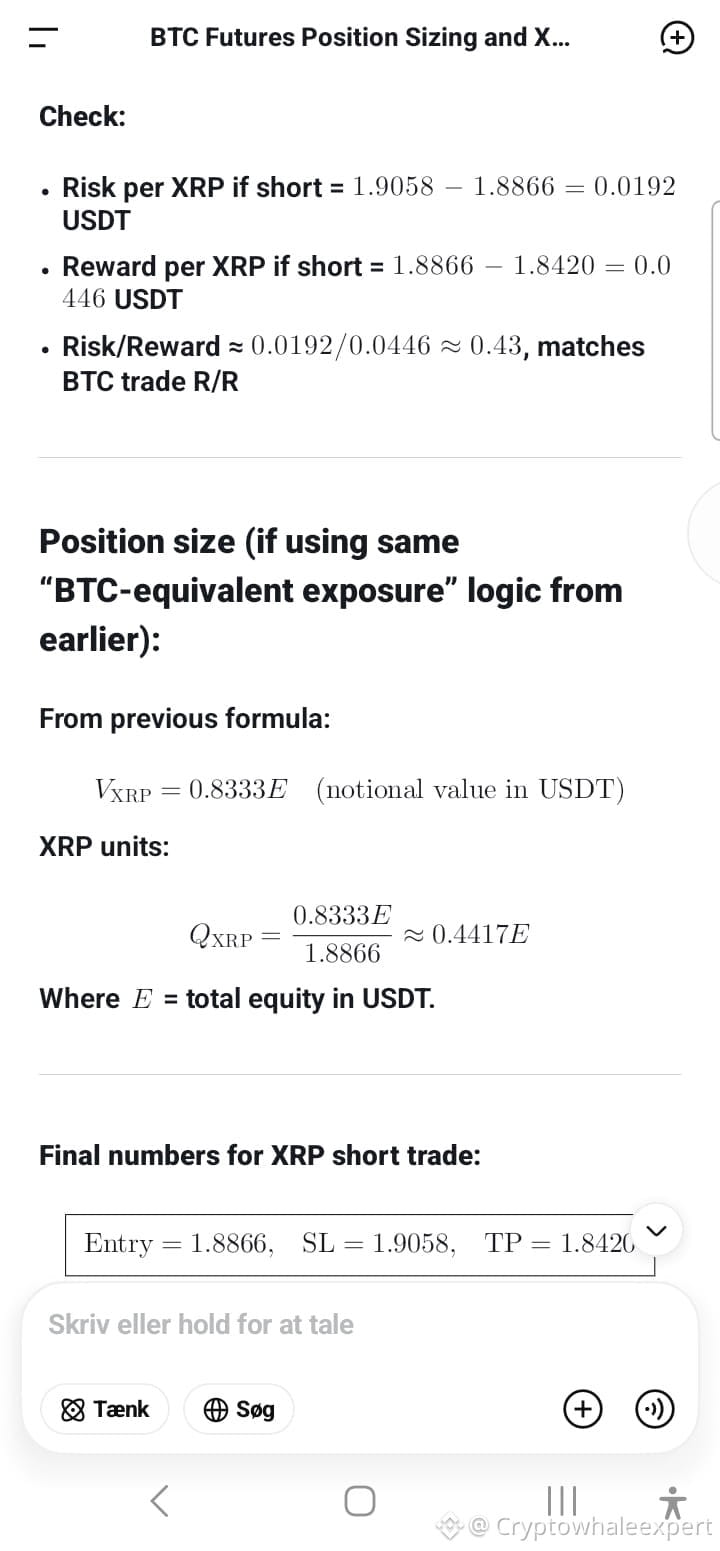
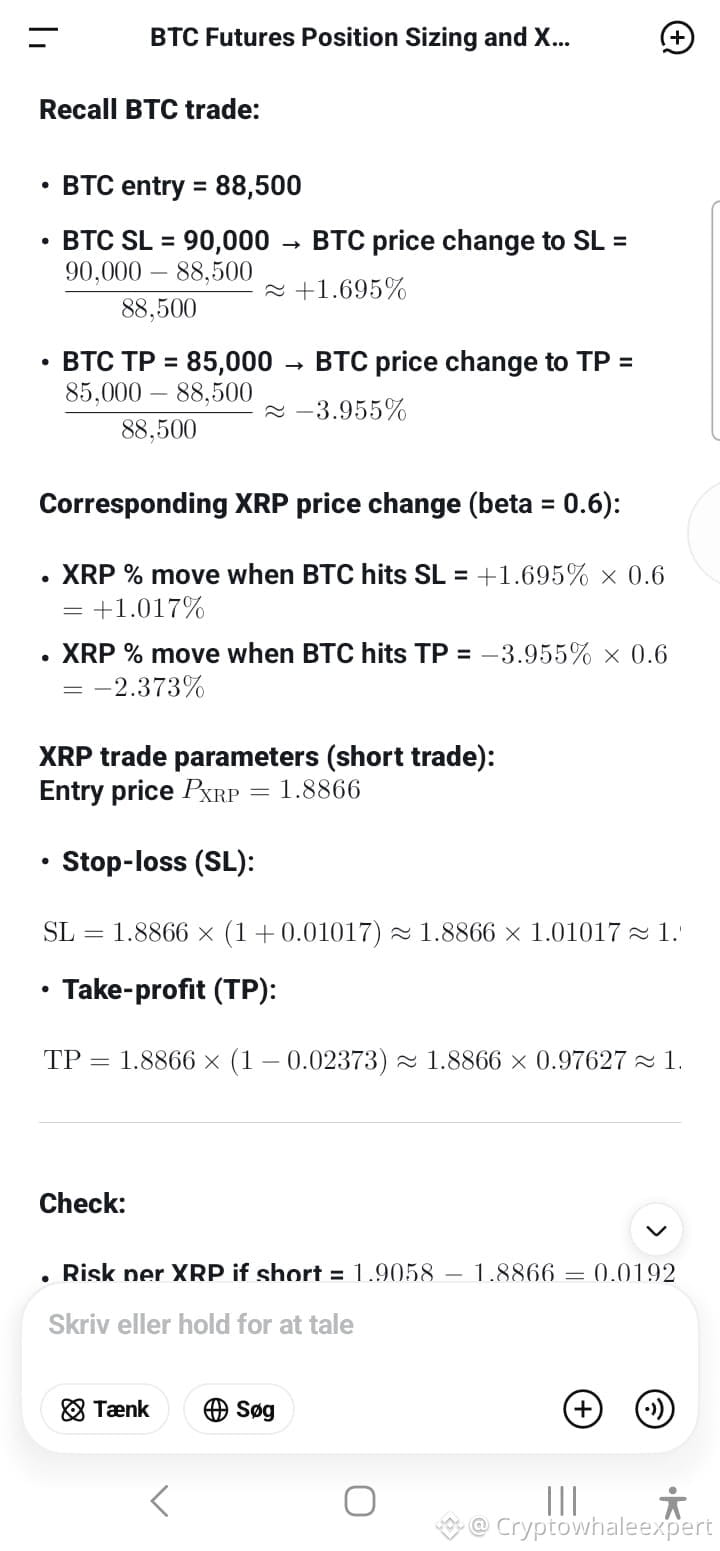
Basado en la diferencia de BTC en relación a XRP durante los últimos 24 meses, hice que Deepseek creara el cálculo para el comercio corto cuando la IA del intercambio recomienda vender tanto BTC como XRP.
El cálculo y resultado en las imágenes a continuación final, le pedí que creara un script que se actualice automáticamente a través de la API y realice el cálculo basado en: Entrada TP y SL.
Lo cual, obviamente, es un script de Python que cualquiera puede ejecutar.
========================================================================
SEÑALES DE COMERCIO DE PAREJAS CRIPTO - 2024-01-27 14:30:00
========================================================================
📊 COMERCIO DE BTC (CORTO)
----------------------------------------
Precio de Entrada: $88,500.00
Stop Loss: $90,000.00 (+1.69%)
Take Profit: $85,000.00 (-3.96%)
Riesgo/Recompensa: 1:2.33
Tamaño de Posición: 0.056497 BTC ($5,000.00)
📊 COMERCIO DE XRP (CORTO) - Beta Ajustado
----------------------------------------
Beta (XRP/BTC): 0.6
Precio de Entrada: $1.8866
Stop Loss: $1.9058 (+1.02%)
Take Profit: $1.8420 (-2.37%)
Riesgo/Recompensa: 1:2.33
Tamaño de Posición: 4416.67 XRP ($8,333.33)
📈 MÉTRICAS DE DIFUSIÓN Y CORRELACIÓN
----------------------------------------
Retorno de BTC desde Base: 0.00%
Precio Esperado de XRP: $1.8866
Precio Actual de XRP: $1.8866
Desviación de Precio: $0.0000 (0.00%)
Ratio XRP/BTC: 0.00002132
Calidad de Correlación: ALTA
⚖️ RATIOS DE COBERTURA
----------------------------------------
Notional de BTC: $5,000.00
Notional de XRP: $8,333.33
Ratio de Cobertura: 1.67x
$XRP $BTC
#BTC
Basado en la diferencia de BTC en relación a XRP durante los últimos 24 meses, hice que Deepseek creara el cálculo para el comercio corto cuando la IA del intercambio recomienda vender tanto BTC como XRP.
El cálculo y resultado en las imágenes a continuación final, le pedí que creara un script que se actualice automáticamente a través de la API y realice el cálculo basado en: Entrada TP y SL.
Lo cual, obviamente, es un script de Python que cualquiera puede ejecutar.
========================================================================
SEÑALES DE COMERCIO DE PAREJAS CRIPTO - 2024-01-27 14:30:00
========================================================================
📊 COMERCIO DE BTC (CORTO)
----------------------------------------
Precio de Entrada: $88,500.00
Stop Loss: $90,000.00 (+1.69%)
Take Profit: $85,000.00 (-3.96%)
Riesgo/Recompensa: 1:2.33
Tamaño de Posición: 0.056497 BTC ($5,000.00)
📊 COMERCIO DE XRP (CORTO) - Beta Ajustado
----------------------------------------
Beta (XRP/BTC): 0.6
Precio de Entrada: $1.8866
Stop Loss: $1.9058 (+1.02%)
Take Profit: $1.8420 (-2.37%)
Riesgo/Recompensa: 1:2.33
Tamaño de Posición: 4416.67 XRP ($8,333.33)
📈 MÉTRICAS DE DIFUSIÓN Y CORRELACIÓN
----------------------------------------
Retorno de BTC desde Base: 0.00%
Precio Esperado de XRP: $1.8866
Precio Actual de XRP: $1.8866
Desviación de Precio: $0.0000 (0.00%)
Ratio XRP/BTC: 0.00002132
Calidad de Correlación: ALTA
⚖️ RATIOS DE COBERTURA
----------------------------------------
Notional de BTC: $5,000.00
Notional de XRP: $8,333.33
Ratio de Cobertura: 1.67x
$XRP $BTC
Basado en la diferencia de BTC en relación a XRP durante los últimos 24 meses, hice que Deepseek creara el cálculo para el comercio corto cuando la IA del intercambio recomienda vender tanto BTC como XRP.
El cálculo y resultado en las imágenes a continuación final, le pedí que creara un script que se actualice automáticamente a través de la API y realice el cálculo basado en: Entrada TP y SL.
Lo cual, obviamente, es un script de Python que cualquiera puede ejecutar.
========================================================================
SEÑALES DE COMERCIO DE PAREJAS CRIPTO - 2024-01-27 14:30:00
========================================================================
📊 COMERCIO DE BTC (CORTO)
----------------------------------------
Precio de Entrada: $88,500.00
Stop Loss: $90,000.00 (+1.69%)
Take Profit: $85,000.00 (-3.96%)
Riesgo/Recompensa: 1:2.33
Tamaño de Posición: 0.056497 BTC ($5,000.00)
📊 COMERCIO DE XRP (CORTO) - Beta Ajustado
----------------------------------------
Beta (XRP/BTC): 0.6
Precio de Entrada: $1.8866
Stop Loss: $1.9058 (+1.02%)
Take Profit: $1.8420 (-2.37%)
Riesgo/Recompensa: 1:2.33
Tamaño de Posición: 4416.67 XRP ($8,333.33)
📈 MÉTRICAS DE DIFUSIÓN Y CORRELACIÓN
----------------------------------------
Retorno de BTC desde Base: 0.00%
Precio Esperado de XRP: $1.8866
Precio Actual de XRP: $1.8866
Desviación de Precio: $0.0000 (0.00%)
Ratio XRP/BTC: 0.00002132
Calidad de Correlación: ALTA
⚖️ RATIOS DE COBERTURA
----------------------------------------
Notional de BTC: $5,000.00
Notional de XRP: $8,333.33
Ratio de Cobertura: 1.67x
$XRP $BTC
27

#XRP
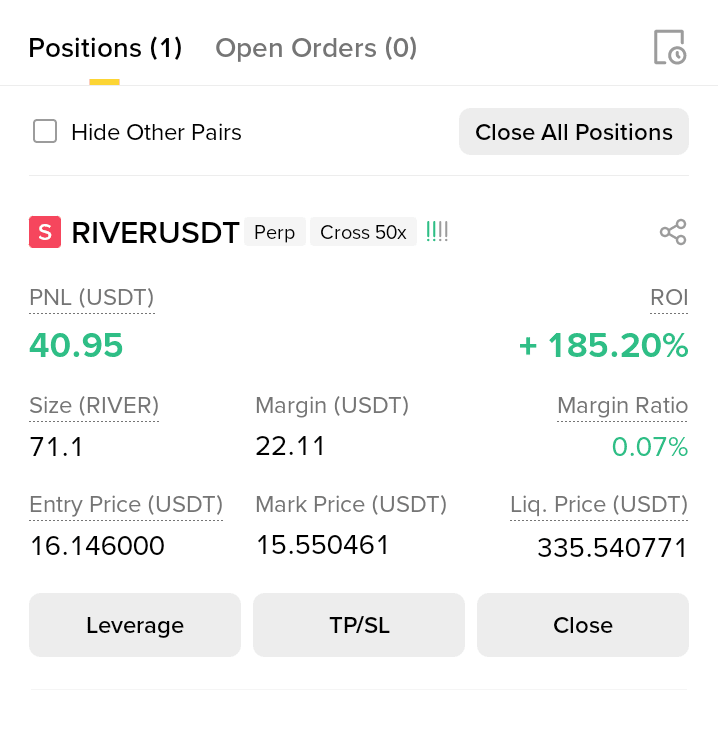
Hoy es el día de Martin Luther King, los bancos están cerrados y mañana entra en vigor una nueva ley para sus impuestos, tarjetas de crédito y cuentas bancarias.
Ayer un tipo nos advirtió que los tiburones estaban vendiendo en corto y en la información a continuación la moneda podría ser verificada. No escuché, pero me asusté tanto que cerré mi posición larga, gracias a Dios por eso.
¿No piensas que es cosa del pasado? ¿Qué piensas? ¿Las criptomonedas y las acciones están cayendo aún más debido a esta ley que comenzará a remodelar el sector financiero?
#XRP
Hoy es el día de Martin Luther King, los bancos están cerrados y mañana entra en vigor una nueva ley para sus impuestos, tarjetas de crédito y cuentas bancarias.
Ayer un tipo nos advirtió que los tiburones estaban vendiendo en corto y en la información a continuación la moneda podría ser verificada. No escuché, pero me asusté tanto que cerré mi posición larga, gracias a Dios por eso.
¿No piensas que es cosa del pasado? ¿Qué piensas? ¿Las criptomonedas y las acciones están cayendo aún más debido a esta ley que comenzará a remodelar el sector financiero?
Hoy es el día de Martin Luther King, los bancos están cerrados y mañana entra en vigor una nueva ley para sus impuestos, tarjetas de crédito y cuentas bancarias.
Ayer un tipo nos advirtió que los tiburones estaban vendiendo en corto y en la información a continuación la moneda podría ser verificada. No escuché, pero me asusté tanto que cerré mi posición larga, gracias a Dios por eso.
¿No piensas que es cosa del pasado? ¿Qué piensas? ¿Las criptomonedas y las acciones están cayendo aún más debido a esta ley que comenzará a remodelar el sector financiero?
2
72
#XRP
Ripple obtiene aprobación inicial para licencia de dinero electrónico en Luxemburgo para expansión en Europa
La empresa de pagos afirma que el CSSF ha emitido una aprobación preliminar para una licencia de EMI, un paso hacia la oferta de servicios de pago regulados de criptomonedas y stablecoins en toda la UE.
Ripple ha recibido autorización preliminar para una licencia de dinero electrónico en Luxemburgo, lo que podría ayudarle a expandir sus servicios de pago de activos digitales en toda la UE.
La licencia de EMI de Luxemburgo permitiría a Ripple ofrecer servicios de pago regulados que involucran stablecoins y otros activos digitales en toda la UE.
Ripple también está solicitando una licencia CASP bajo el régimen MiCA de la UE para alinear sus operaciones con los nuevos estándares regulatorios.
fuente: coindesk
$XRP
#XRP
Ripple obtiene aprobación inicial para licencia de dinero electrónico en Luxemburgo para expansión en Europa
La empresa de pagos afirma que el CSSF ha emitido una aprobación preliminar para una licencia de EMI, un paso hacia la oferta de servicios de pago regulados de criptomonedas y stablecoins en toda la UE.
Ripple ha recibido autorización preliminar para una licencia de dinero electrónico en Luxemburgo, lo que podría ayudarle a expandir sus servicios de pago de activos digitales en toda la UE.
La licencia de EMI de Luxemburgo permitiría a Ripple ofrecer servicios de pago regulados que involucran stablecoins y otros activos digitales en toda la UE.
Ripple también está solicitando una licencia CASP bajo el régimen MiCA de la UE para alinear sus operaciones con los nuevos estándares regulatorios.
fuente: coindesk
$XRP
Ripple obtiene aprobación inicial para licencia de dinero electrónico en Luxemburgo para expansión en Europa
La empresa de pagos afirma que el CSSF ha emitido una aprobación preliminar para una licencia de EMI, un paso hacia la oferta de servicios de pago regulados de criptomonedas y stablecoins en toda la UE.
Ripple ha recibido autorización preliminar para una licencia de dinero electrónico en Luxemburgo, lo que podría ayudarle a expandir sus servicios de pago de activos digitales en toda la UE.
La licencia de EMI de Luxemburgo permitiría a Ripple ofrecer servicios de pago regulados que involucran stablecoins y otros activos digitales en toda la UE.
Ripple también está solicitando una licencia CASP bajo el régimen MiCA de la UE para alinear sus operaciones con los nuevos estándares regulatorios.
fuente: coindesk
$XRP
1
34
#XRP BTC ballena abre una posición larga de $30M en XRP ayer tras el anuncio del servicio de depósito tokenizado de BNY para clientes institucionales.
Siga observando y monitoree el BTC de cerca durante los próximos 2-3 meses para ver cuándo rompe los niveles en los que actualmente está retenido.
Buen día
#XRP BTC ballena abre una posición larga de $30M en XRP ayer tras el anuncio del servicio de depósito tokenizado de BNY para clientes institucionales.
Siga observando y monitoree el BTC de cerca durante los próximos 2-3 meses para ver cuándo rompe los niveles en los que actualmente está retenido.
Buen día
Siga observando y monitoree el BTC de cerca durante los próximos 2-3 meses para ver cuándo rompe los niveles en los que actualmente está retenido.
Buen día
28
#INJ
OpenLedger está integrándose con @injective para llevar la ejecución autónoma de IA a entornos DeFi de alta capacidad y ultra-baja latencia.
Al combinar la ejecución en cadena de alto rendimiento de Injective con la infraestructura de IA centrada en la atribución de OpenLedger, las acciones de IA pueden pasar de… pic.twitter.com/xwxrCliKFf
— OpenLedger (@OpenledgerHQ) 5 de enero de 2026
#INJ
OpenLedger está integrándose con @injective para llevar la ejecución autónoma de IA a entornos DeFi de alta capacidad y ultra-baja latencia.
Al combinar la ejecución en cadena de alto rendimiento de Injective con la infraestructura de IA centrada en la atribución de OpenLedger, las acciones de IA pueden pasar de… pic.twitter.com/xwxrCliKFf
— OpenLedger (@OpenledgerHQ) 5 de enero de 2026
OpenLedger está integrándose con @injective para llevar la ejecución autónoma de IA a entornos DeFi de alta capacidad y ultra-baja latencia.
Al combinar la ejecución en cadena de alto rendimiento de Injective con la infraestructura de IA centrada en la atribución de OpenLedger, las acciones de IA pueden pasar de… pic.twitter.com/xwxrCliKFf
— OpenLedger (@OpenledgerHQ) 5 de enero de 2026
2
#XRP
Charting Guy sugiere que XRP podría alcanzar el nivel de $8 para mediados de 2026, lo que representa casi un aumento de 4x desde los precios actuales. Este objetivo de $8 ha sido parte de su perspectiva desde al menos 2024. Aunque ha tomado tiempo materializarse, continúa manteniendo la proyección.
$XRP
#XRP
Charting Guy sugiere que XRP podría alcanzar el nivel de $8 para mediados de 2026, lo que representa casi un aumento de 4x desde los precios actuales. Este objetivo de $8 ha sido parte de su perspectiva desde al menos 2024. Aunque ha tomado tiempo materializarse, continúa manteniendo la proyección.
$XRP
Charting Guy sugiere que XRP podría alcanzar el nivel de $8 para mediados de 2026, lo que representa casi un aumento de 4x desde los precios actuales. Este objetivo de $8 ha sido parte de su perspectiva desde al menos 2024. Aunque ha tomado tiempo materializarse, continúa manteniendo la proyección.
$XRP
4
424
La presión sobre el mercado laboral está disminuyendo, al igual que la inflación, por lo que las expectativas de un recorte de tasas de interés de la Reserva Federal también están cayendo. A cambio, tanto los gobiernos estadounidense como danés han enviado dinero a la sociedad de otras maneras. Se espera ver una presión inicial sobre las acciones de IA y criptomonedas y tecnología relacionada en 2026. Un aumento esperado a principios de mes aquí en enero puede ser reemplazado por una corrección hacia el final del mes.
$SKYAI
La presión sobre el mercado laboral está disminuyendo, al igual que la inflación, por lo que las expectativas de un recorte de tasas de interés de la Reserva Federal también están cayendo. A cambio, tanto los gobiernos estadounidense como danés han enviado dinero a la sociedad de otras maneras. Se espera ver una presión inicial sobre las acciones de IA y criptomonedas y tecnología relacionada en 2026. Un aumento esperado a principios de mes aquí en enero puede ser reemplazado por una corrección hacia el final del mes.
$SKYAI
$SKYAI
495
#XRP
¡Ahora el resto de nosotros deberíamos ser desalojados por miedo a que se vea!
#XRP
¡Ahora el resto de nosotros deberíamos ser desalojados por miedo a que se vea!
¡Ahora el resto de nosotros deberíamos ser desalojados por miedo a que se vea!

U.today
·
--
¿Perdió XRP Ledger el 90%? Ya ha sucedido
Aunque suena dramático discutir un colapso del 90% en XRP Ledger, los datos indican que esta no es una catástrofe inminente. Silenciosamente, con el tiempo, ya ha ocurrido, y el mercado lo ha absorbido en gran medida. Las métricas en cadena indican que la actividad del libro mayor ha disminuido drásticamente. Tanto el número como el volumen de pagos han disminuido en alrededor del 90% desde sus puntos más altos.
Las transacciones están cayendo en picado
Hay un declive estructural en la cantidad y el valor de las transacciones que realmente están fluyendo a través de la red. Pretender lo contrario es un mecanismo de afrontamiento. Lo que las personas a menudo pasan por alto es que, particularmente en los mercados de criptomonedas en ciclos avanzados, el precio y la actividad del libro mayor no siempre se mueven en unísono.
Las transacciones están cayendo en picado
Hay un declive estructural en la cantidad y el valor de las transacciones que realmente están fluyendo a través de la red. Pretender lo contrario es un mecanismo de afrontamiento. Lo que las personas a menudo pasan por alto es que, particularmente en los mercados de criptomonedas en ciclos avanzados, el precio y la actividad del libro mayor no siempre se mueven en unísono.
28
#XRP
Compra en las caídas, toma ganancias en los picos: XRP está mostrando una recuperación fundamental, pero los técnicos sugieren una consolidación a corto plazo. Una estrategia es acumular cerca de 1.85USDT y tomar ganancias en 2.20USDT. Si el precio supera 2.25USDT con volumen, el escenario alcista a largo plazo podría confirmarse.
No es asesoramiento financiero
$XRP
#XRP
Compra en las caídas, toma ganancias en los picos: XRP está mostrando una recuperación fundamental, pero los técnicos sugieren una consolidación a corto plazo. Una estrategia es acumular cerca de 1.85USDT y tomar ganancias en 2.20USDT. Si el precio supera 2.25USDT con volumen, el escenario alcista a largo plazo podría confirmarse.
No es asesoramiento financiero
$XRP
Compra en las caídas, toma ganancias en los picos: XRP está mostrando una recuperación fundamental, pero los técnicos sugieren una consolidación a corto plazo. Una estrategia es acumular cerca de 1.85USDT y tomar ganancias en 2.20USDT. Si el precio supera 2.25USDT con volumen, el escenario alcista a largo plazo podría confirmarse.
No es asesoramiento financiero
$XRP
2
185

Whale_watch
·
--
💥 BOOM!!!
¡El nuevo sistema financiero se lanza en enero de 2026!
🚀$XRP será la columna vertebral de todo!
¡El nuevo sistema financiero se lanza en enero de 2026!
🚀$XRP será la columna vertebral de todo!
19
Inicia sesión para explorar más contenidos
Únete a usuarios globales de criptomonedas en Binance Square
⚡️ Obtén información útil y actualizada sobre criptos.
💬 Avalado por el mayor exchange de criptomonedas en el mundo.
👍 Descubre perspectivas reales de creadores verificados.
Email/número de teléfono
Temas populares
StrategyStriveAdd2305BitcoinThisWeek
14,221 vistas
498 están debatiendo
#strategystriveadd2305bitcointhisweek 🚨 2,305 BTC acaban de entrar en tesorerías
Mientras la mayoría de los traders se enfocaban en el rebote del precio de Bitcoin, dos empresas públicas hicieron movimientos importantes en silencio. 👀
Strategy and Strive juntos compraron 2,305 BTC por 182.7 millones de dólares.
🔹 Strategy compró 950 BTC por 75.7 millones de dólares
🔹 Strive compró 1,355 BTC por alrededor de 107.7 millones de dólares
Esto eleva sus tenencias totales a:
📊 Strategy. 846,000 BTC
📊 Strive. 26,355 BTC
Pero la historia real no es la cantidad de Bitcoin que compraron.
Sino cómo lo pagaron.
Strategy usó el efectivo que ya tenía.
Strive utilizó su modelo de financiamiento con acciones para financiar la compra. Es decir, está haciendo crecer su tesorería de Bitcoin sin depender únicamente del flujo de caja.
Esta diferencia importa.
Para traders e inversores agrega una capa de análisis: cuánto Bitcoin se está incorporando, cómo se está financiando y qué significa para el valor a largo plazo, por acción.
El costo de capital, la acumulación de BTC y el valor de la acción. Estos factores están empezando a moldear el mercado de maneras.
La demanda corporativa de tesorería ya no es una nota al margen.
Se está convirtiendo en parte del ecosistema de Bitcoin.
💬 ¿Qué piensas?
¿Empiezan más empresas a comprar Bitcoin de esta manera?
¿Crecerá esta tendencia?
#bitcoin #Khan62 #BTC #trading
$MSTR
$MARA $BMNR
Khan 62
·4 me gusta
·2.7k vistas
TrumpRejectsIranHormuzReopening
17,067 vistas
472 están debatiendo
CircleTetherFreezeBitgetHackerWallet
38,392 vistas
603 están debatiendo