
AHMAÐ
4.5k Publicaciones

AHMAÐ
 Verificado de Binance Square
Denunciar
Bloquear usuario
DCA: Don't Care Anymore

Holder de DEXE
Trader frecuente
2 año(s)
275 Siguiendo
32.0K+ Seguidores
11.0K+ Me gusta
Publicaciones
Todo
Citas
·
--
Alcista
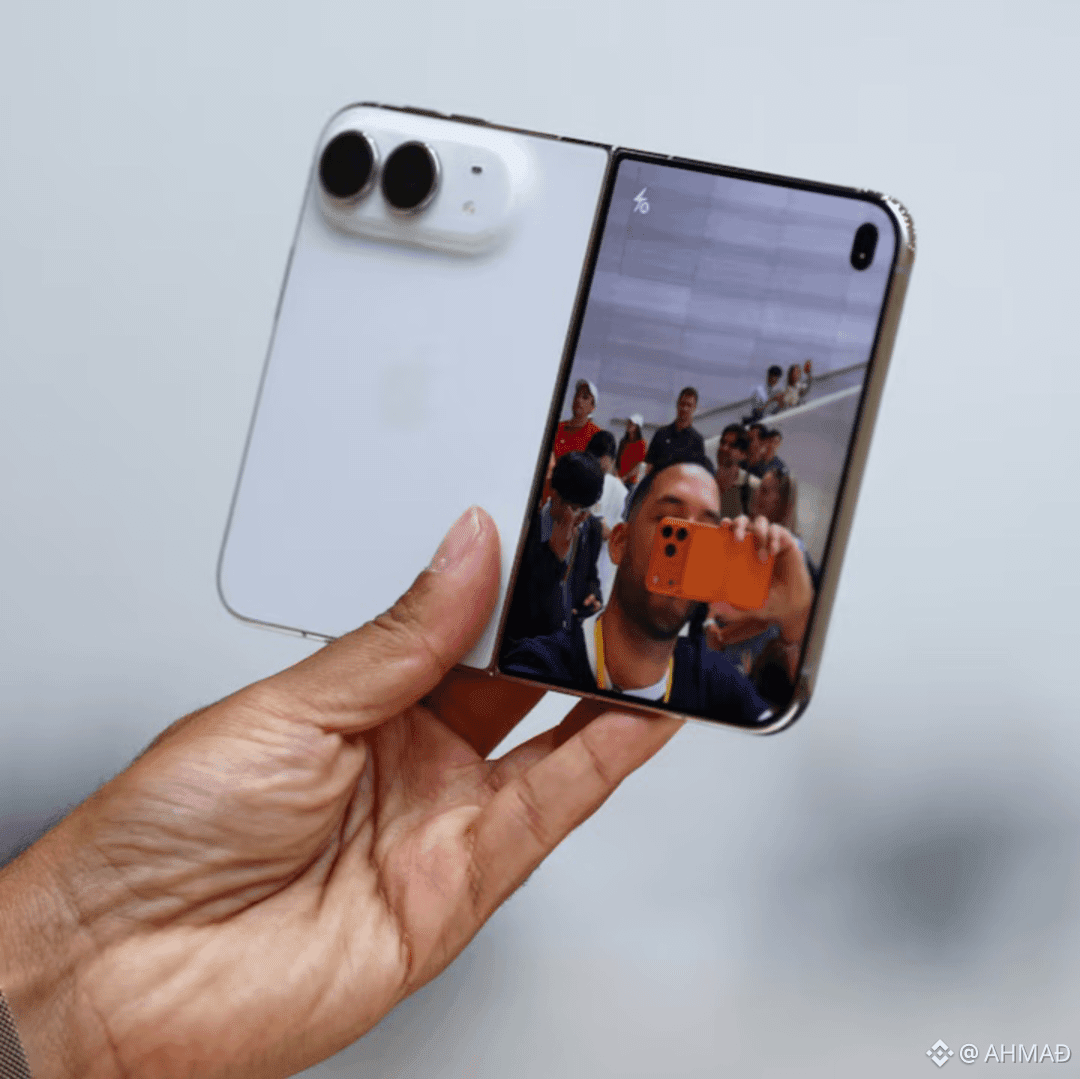
🍎 $AAPL Apple acaba de entrar en la era de los plegables.
Se informa que el primer iPhone plegable llegará con un precio inicial de 1.999 dólares.
¿Por qué esto es importante para las criptomonedas?
El enorme ecosistema de Apple podría acelerar la adopción de pagos digitales, activos tokenizados y experiencias de Web3 en dispositivos móviles.
Un dispositivo premium, una base de usuarios masiva y, potencialmente, una nueva puerta de entrada a la economía digital. 👀
#Apple
🍎 $AAPL Apple acaba de entrar en la era de los plegables.
Se informa que el primer iPhone plegable llegará con un precio inicial de 1.999 dólares.
¿Por qué esto es importante para las criptomonedas?
El enorme ecosistema de Apple podría acelerar la adopción de pagos digitales, activos tokenizados y experiencias de Web3 en dispositivos móviles.
Un dispositivo premium, una base de usuarios masiva y, potencialmente, una nueva puerta de entrada a la economía digital. 👀
#Apple
Se informa que el primer iPhone plegable llegará con un precio inicial de 1.999 dólares.
¿Por qué esto es importante para las criptomonedas?
El enorme ecosistema de Apple podría acelerar la adopción de pagos digitales, activos tokenizados y experiencias de Web3 en dispositivos móviles.
Un dispositivo premium, una base de usuarios masiva y, potencialmente, una nueva puerta de entrada a la economía digital. 👀
#Apple
323
·
--
¿El mercado se mantendrá normal o habrá una corrección?
¿El mercado se mantendrá normal o habrá una corrección?
2
193
·
--
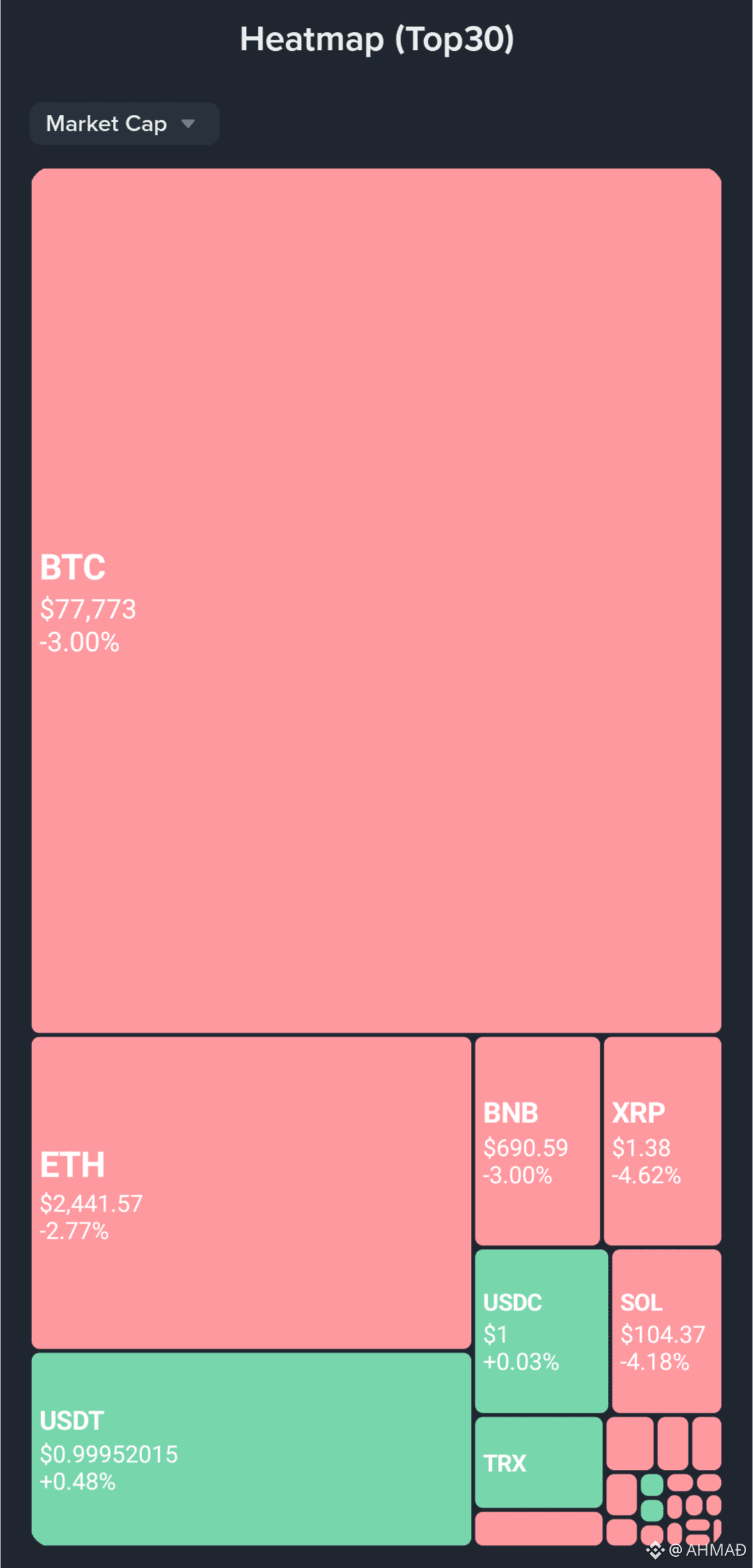
Mapa de calor (capitalización bursátil de las 30 principales)
$DEBIT $DEXE
Mapa de calor (capitalización bursátil de las 30 principales)
$DEBIT $DEXE
$DEBIT $DEXE
2
268
·
--
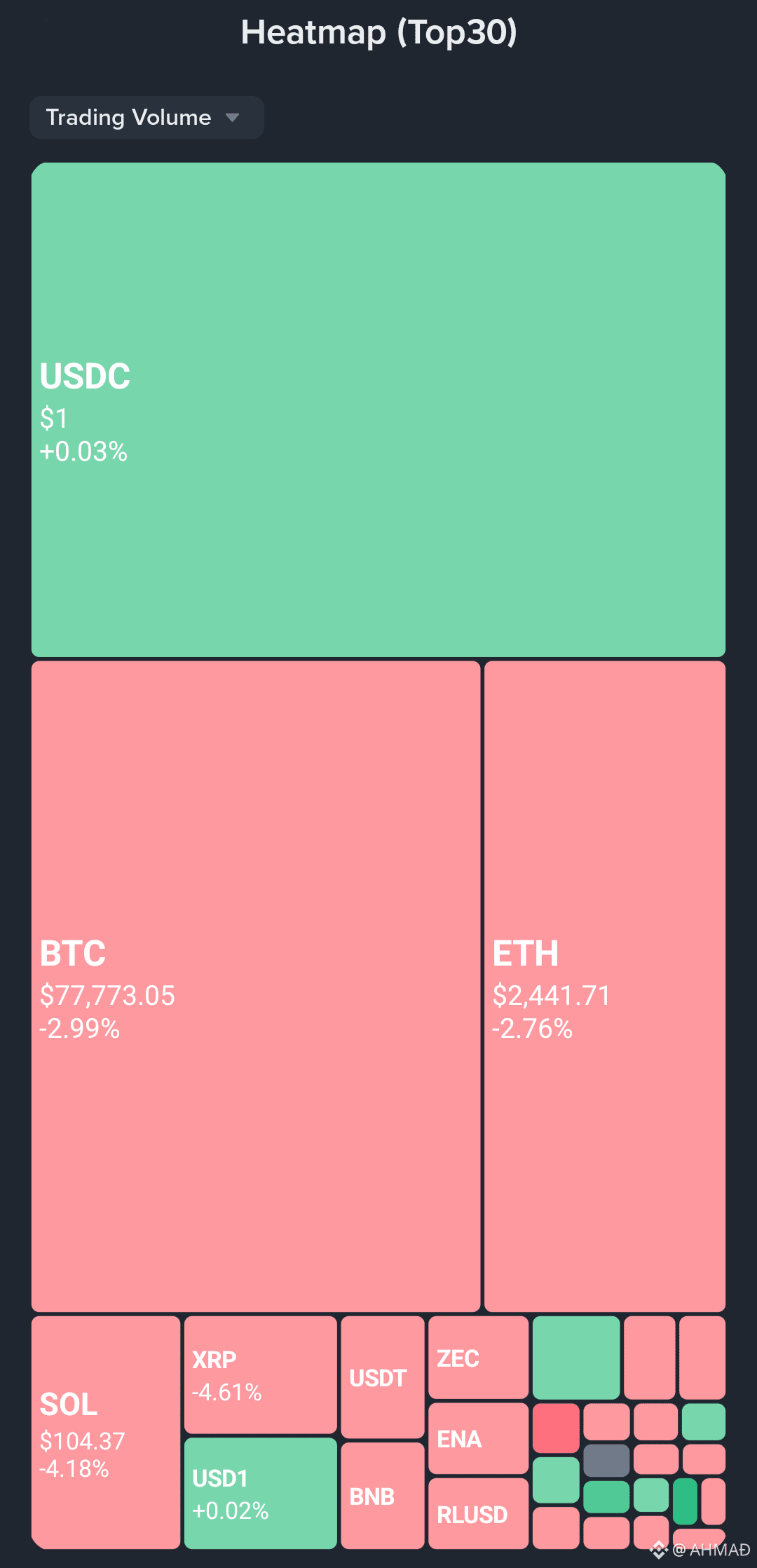
Mapa de calor (Volumen de negociación de los 30 principales)
$DEXE $AAPL.US
Mapa de calor (Volumen de negociación de los 30 principales)
$DEXE $AAPL.US
$DEXE $AAPL.US
1
332
·
--
EL DETALLE DE DUSK QUE PODRÍA IMPORTAR MÁS A MEDIDA QUE CRECEN LAS CARGAS DE PRIVACIDAD
Volví a revisar la arquitectura de ejecución de Dusk y una elección de diseño destacó: Dusk no obliga a que cada operación criptográfica costosa ocurra completamente dentro de la VM.
Piecrust proporciona el entorno de ejecución WASM, pero Dusk usa funciones del host para manejar operaciones como el hasheado, la verificación de pruebas y la validación de firmas. El documento técnico dice que esto permite ejecutar tareas criptográficas complejas de manera más eficiente que si se hicieran solo dentro de la VM.
Una red financiera centrada en la privacidad no se limita a procesar transferencias ordinarias. Su arquitectura depende en gran medida de la verificación criptográfica, y esas operaciones pueden convertirse en una carga computacional significativa a medida que aumenta el uso.
Mover primitivas costosas a funciones del host crea una separación:
la VM se encarga de la ejecución del contrato, mientras que la infraestructura especializada gestiona las operaciones criptográficas pesadas.
El documento técnico también señala que los resultados se replican entre nodos, así que la optimización no pretende eliminar el requisito descentralizado de verificación.
Pero hay un equilibrio que considero importante vigilar.
Cuanta más funcionalidad se traslade a capacidades especializadas del host, más relevante se vuelve la interfaz entre la VM y esas capacidades. Ganas rendimiento y eficiencia, pero el entorno de ejecución también pasa a depender más de infraestructura específica del protocolo.
Para Dusk, ese podría ser un intercambio razonable.
Si la red quiere aplicaciones que preserven la privacidad con cargas ZK significativas, tratar el cómputo criptográfico como una preocupación de infraestructura de primera clase tiene más sentido que fingir que cada operación es solo otra instrucción WASM.
La prueba real es si esa arquitectura sigue aportando eficiencia a medida que escalan las cargas de privacidad.
¿La ejecución criptográfica especializada es la forma correcta de hacer que la privacidad sea práctica a escala de red?
@Dusk_Foundation $DUSK #dusk
EL DETALLE DE DUSK QUE PODRÍA IMPORTAR MÁS A MEDIDA QUE CRECEN LAS CARGAS DE PRIVACIDAD
Volví a revisar la arquitectura de ejecución de Dusk y una elección de diseño destacó: Dusk no obliga a que cada operación criptográfica costosa ocurra completamente dentro de la VM.
Piecrust proporciona el entorno de ejecución WASM, pero Dusk usa funciones del host para manejar operaciones como el hasheado, la verificación de pruebas y la validación de firmas. El documento técnico dice que esto permite ejecutar tareas criptográficas complejas de manera más eficiente que si se hicieran solo dentro de la VM.
Una red financiera centrada en la privacidad no se limita a procesar transferencias ordinarias. Su arquitectura depende en gran medida de la verificación criptográfica, y esas operaciones pueden convertirse en una carga computacional significativa a medida que aumenta el uso.
Mover primitivas costosas a funciones del host crea una separación:
la VM se encarga de la ejecución del contrato, mientras que la infraestructura especializada gestiona las operaciones criptográficas pesadas.
El documento técnico también señala que los resultados se replican entre nodos, así que la optimización no pretende eliminar el requisito descentralizado de verificación.
Pero hay un equilibrio que considero importante vigilar.
Cuanta más funcionalidad se traslade a capacidades especializadas del host, más relevante se vuelve la interfaz entre la VM y esas capacidades. Ganas rendimiento y eficiencia, pero el entorno de ejecución también pasa a depender más de infraestructura específica del protocolo.
Para Dusk, ese podría ser un intercambio razonable.
Si la red quiere aplicaciones que preserven la privacidad con cargas ZK significativas, tratar el cómputo criptográfico como una preocupación de infraestructura de primera clase tiene más sentido que fingir que cada operación es solo otra instrucción WASM.
La prueba real es si esa arquitectura sigue aportando eficiencia a medida que escalan las cargas de privacidad.
¿La ejecución criptográfica especializada es la forma correcta de hacer que la privacidad sea práctica a escala de red?
@Dusk $DUSK #dusk
Volví a revisar la arquitectura de ejecución de Dusk y una elección de diseño destacó: Dusk no obliga a que cada operación criptográfica costosa ocurra completamente dentro de la VM.
Piecrust proporciona el entorno de ejecución WASM, pero Dusk usa funciones del host para manejar operaciones como el hasheado, la verificación de pruebas y la validación de firmas. El documento técnico dice que esto permite ejecutar tareas criptográficas complejas de manera más eficiente que si se hicieran solo dentro de la VM.
Una red financiera centrada en la privacidad no se limita a procesar transferencias ordinarias. Su arquitectura depende en gran medida de la verificación criptográfica, y esas operaciones pueden convertirse en una carga computacional significativa a medida que aumenta el uso.
Mover primitivas costosas a funciones del host crea una separación:
la VM se encarga de la ejecución del contrato, mientras que la infraestructura especializada gestiona las operaciones criptográficas pesadas.
El documento técnico también señala que los resultados se replican entre nodos, así que la optimización no pretende eliminar el requisito descentralizado de verificación.
Pero hay un equilibrio que considero importante vigilar.
Cuanta más funcionalidad se traslade a capacidades especializadas del host, más relevante se vuelve la interfaz entre la VM y esas capacidades. Ganas rendimiento y eficiencia, pero el entorno de ejecución también pasa a depender más de infraestructura específica del protocolo.
Para Dusk, ese podría ser un intercambio razonable.
Si la red quiere aplicaciones que preserven la privacidad con cargas ZK significativas, tratar el cómputo criptográfico como una preocupación de infraestructura de primera clase tiene más sentido que fingir que cada operación es solo otra instrucción WASM.
La prueba real es si esa arquitectura sigue aportando eficiencia a medida que escalan las cargas de privacidad.
¿La ejecución criptográfica especializada es la forma correcta de hacer que la privacidad sea práctica a escala de red?
@Dusk $DUSK #dusk
221
·
--
Estaba mirando el modelo de transacciones transparente de Dusk y, al principio, pasé por alto algo que sonaba casi demasiado básico: el nonce.
Moonlight es el modelo de transacciones basado en cuentas de Dusk. Cada cuenta tiene una clave pública, un saldo y un nonce, y el nonce actúa como un contador para las transacciones enviadas desde esa cuenta.
Ese minúsculo contador tiene un trabajo más grande de lo que parece.
El whitepaper conecta explícitamente el nonce con la protección contra replays. Una transacción no queda autorizada simplemente porque la firma sea válida; la secuencia de transacciones de la cuenta también tiene que tener sentido.
Esta es una de esas piezas de infraestructura de blockchain que los usuarios casi nunca notan cuando funciona correctamente.
Firmas una transacción, la red la procesa, tu saldo cambia y sigues adelante.
Pero si no existieran mecanismos que eviten que una transacción válida antigua sea aceptada de nuevo, la misma autorización podría potencialmente convertirse en un problema de seguridad completamente distinto.
Lo que me resulta interesante de Dusk es que Moonlight y Phoenix resuelven los mismos requisitos fundamentales de transacciones a través de modelos muy diferentes.
Moonlight expone públicamente el estado de la cuenta, los saldos y la metadata de la transacción. Phoenix traslada la verificación del saldo y la protección contra doble gasto a pruebas ZK y nulificadores. Aun así, ambos tienen que establecer la propiedad, prevenir la maleabilidad y detener el doble gasto.
Así que la decisión de diseño real no es simplemente pública vs. privada.
Es cuánto de la transición del estado puede verificar la red directamente frente a cuánto debe demostrarse criptográficamente.
Eso hace que el humilde nonce sea más interesante de lo que suena.
La transacción visible es solo la superficie. Debajo hay un conjunto de reglas que se aseguran de que la misma autorización no pueda simplemente repetirse.
¿Cuántas “características” de blockchain son en realidad suposiciones de seguridad invisibles que los usuarios solo notan cuando fallan?
@Dusk_Foundation $DUSK #dusk
Estaba mirando el modelo de transacciones transparente de Dusk y, al principio, pasé por alto algo que sonaba casi demasiado básico: el nonce.
Moonlight es el modelo de transacciones basado en cuentas de Dusk. Cada cuenta tiene una clave pública, un saldo y un nonce, y el nonce actúa como un contador para las transacciones enviadas desde esa cuenta.
Ese minúsculo contador tiene un trabajo más grande de lo que parece.
El whitepaper conecta explícitamente el nonce con la protección contra replays. Una transacción no queda autorizada simplemente porque la firma sea válida; la secuencia de transacciones de la cuenta también tiene que tener sentido.
Esta es una de esas piezas de infraestructura de blockchain que los usuarios casi nunca notan cuando funciona correctamente.
Firmas una transacción, la red la procesa, tu saldo cambia y sigues adelante.
Pero si no existieran mecanismos que eviten que una transacción válida antigua sea aceptada de nuevo, la misma autorización podría potencialmente convertirse en un problema de seguridad completamente distinto.
Lo que me resulta interesante de Dusk es que Moonlight y Phoenix resuelven los mismos requisitos fundamentales de transacciones a través de modelos muy diferentes.
Moonlight expone públicamente el estado de la cuenta, los saldos y la metadata de la transacción. Phoenix traslada la verificación del saldo y la protección contra doble gasto a pruebas ZK y nulificadores. Aun así, ambos tienen que establecer la propiedad, prevenir la maleabilidad y detener el doble gasto.
Así que la decisión de diseño real no es simplemente pública vs. privada.
Es cuánto de la transición del estado puede verificar la red directamente frente a cuánto debe demostrarse criptográficamente.
Eso hace que el humilde nonce sea más interesante de lo que suena.
La transacción visible es solo la superficie. Debajo hay un conjunto de reglas que se aseguran de que la misma autorización no pueda simplemente repetirse.
¿Cuántas “características” de blockchain son en realidad suposiciones de seguridad invisibles que los usuarios solo notan cuando fallan?
@Dusk $DUSK #dusk
Moonlight es el modelo de transacciones basado en cuentas de Dusk. Cada cuenta tiene una clave pública, un saldo y un nonce, y el nonce actúa como un contador para las transacciones enviadas desde esa cuenta.
Ese minúsculo contador tiene un trabajo más grande de lo que parece.
El whitepaper conecta explícitamente el nonce con la protección contra replays. Una transacción no queda autorizada simplemente porque la firma sea válida; la secuencia de transacciones de la cuenta también tiene que tener sentido.
Esta es una de esas piezas de infraestructura de blockchain que los usuarios casi nunca notan cuando funciona correctamente.
Firmas una transacción, la red la procesa, tu saldo cambia y sigues adelante.
Pero si no existieran mecanismos que eviten que una transacción válida antigua sea aceptada de nuevo, la misma autorización podría potencialmente convertirse en un problema de seguridad completamente distinto.
Lo que me resulta interesante de Dusk es que Moonlight y Phoenix resuelven los mismos requisitos fundamentales de transacciones a través de modelos muy diferentes.
Moonlight expone públicamente el estado de la cuenta, los saldos y la metadata de la transacción. Phoenix traslada la verificación del saldo y la protección contra doble gasto a pruebas ZK y nulificadores. Aun así, ambos tienen que establecer la propiedad, prevenir la maleabilidad y detener el doble gasto.
Así que la decisión de diseño real no es simplemente pública vs. privada.
Es cuánto de la transición del estado puede verificar la red directamente frente a cuánto debe demostrarse criptográficamente.
Eso hace que el humilde nonce sea más interesante de lo que suena.
La transacción visible es solo la superficie. Debajo hay un conjunto de reglas que se aseguran de que la misma autorización no pueda simplemente repetirse.
¿Cuántas “características” de blockchain son en realidad suposiciones de seguridad invisibles que los usuarios solo notan cuando fallan?
@Dusk $DUSK #dusk
1
142
·
--
LA PARTE MÁS INTERESANTE DEL MODELO DE PRIVACIDAD DE DUSK PUEDE SER LO QUE NO PONE EN LA CADENA
Me quedé pensando en la arquitectura de privacidad de Dusk desde la dirección opuesta: no en lo que oculta, sino en lo que la red todavía necesita saber.
Phoenix utiliza UTXOs protegidas donde las notas se registran en un árbol de Merkle y se gastan usando nulificadores. La transacción subyacente puede permanecer confidencial mientras la red verifica las reglas necesarias para transiciones de estado válidas.
Eso crea una división de la información muy específica.
El whitepaper describe la estructura de la transacción como que contiene la raíz de Merkle, nulificadores, notas nuevas, depósitos/datos opcionales, parámetros de gas y una prueba ZK. La red verifica la prueba frente a entradas públicas en lugar de comprobar directamente los detalles ocultos de la transacción.
Pero aquí está el detalle que considero más importante.
Dusk no intenta hacer que todo sea invisible de forma permanente.
La arquitectura también incluye Citadel 2, donde los usuarios pueden divulgar credenciales de forma selectiva cuando una aplicación necesita una prueba de elegibilidad. El Resumen Ejecutivo lo describe como permitir que un usuario demuestre la posesión de una licencia registrada sin revelar el contenido de la licencia.
Así que el diseño no es realmente:
privado vs público.
Está más cerca de:
privado por defecto + demostrar solo lo que la aplicación requiere.
Ese es un modelo mucho más útil para las finanzas reguladas.
Pero todavía hay una pregunta operativa no resuelta. La investigación señala específicamente la posibilidad de que la integración con sistemas de KYC e información de sesión pueda crear vinculabilidad incluso cuando los datos personales subyacentes no se almacenan en la cadena.
La criptografía puede proteger la transacción.
No puede garantizar automáticamente que cada aplicación construida alrededor de la transacción preserve las mismas propiedades de privacidad.
Esa es la parte a la que yo vigilaría.
¿Puede Dusk mantener la divulgación selectiva sin permitir que la infraestructura de cumplimiento que la rodea recree en silencio la vigilancia que estaba diseñada para evitar?
@Dusk_Foundation $DUSK #dusk
LA PARTE MÁS INTERESANTE DEL MODELO DE PRIVACIDAD DE DUSK PUEDE SER LO QUE NO PONE EN LA CADENA
Me quedé pensando en la arquitectura de privacidad de Dusk desde la dirección opuesta: no en lo que oculta, sino en lo que la red todavía necesita saber.
Phoenix utiliza UTXOs protegidas donde las notas se registran en un árbol de Merkle y se gastan usando nulificadores. La transacción subyacente puede permanecer confidencial mientras la red verifica las reglas necesarias para transiciones de estado válidas.
Eso crea una división de la información muy específica.
El whitepaper describe la estructura de la transacción como que contiene la raíz de Merkle, nulificadores, notas nuevas, depósitos/datos opcionales, parámetros de gas y una prueba ZK. La red verifica la prueba frente a entradas públicas en lugar de comprobar directamente los detalles ocultos de la transacción.
Pero aquí está el detalle que considero más importante.
Dusk no intenta hacer que todo sea invisible de forma permanente.
La arquitectura también incluye Citadel 2, donde los usuarios pueden divulgar credenciales de forma selectiva cuando una aplicación necesita una prueba de elegibilidad. El Resumen Ejecutivo lo describe como permitir que un usuario demuestre la posesión de una licencia registrada sin revelar el contenido de la licencia.
Así que el diseño no es realmente:
privado vs público.
Está más cerca de:
privado por defecto + demostrar solo lo que la aplicación requiere.
Ese es un modelo mucho más útil para las finanzas reguladas.
Pero todavía hay una pregunta operativa no resuelta. La investigación señala específicamente la posibilidad de que la integración con sistemas de KYC e información de sesión pueda crear vinculabilidad incluso cuando los datos personales subyacentes no se almacenan en la cadena.
La criptografía puede proteger la transacción.
No puede garantizar automáticamente que cada aplicación construida alrededor de la transacción preserve las mismas propiedades de privacidad.
Esa es la parte a la que yo vigilaría.
¿Puede Dusk mantener la divulgación selectiva sin permitir que la infraestructura de cumplimiento que la rodea recree en silencio la vigilancia que estaba diseñada para evitar?
@Dusk $DUSK #dusk
Me quedé pensando en la arquitectura de privacidad de Dusk desde la dirección opuesta: no en lo que oculta, sino en lo que la red todavía necesita saber.
Phoenix utiliza UTXOs protegidas donde las notas se registran en un árbol de Merkle y se gastan usando nulificadores. La transacción subyacente puede permanecer confidencial mientras la red verifica las reglas necesarias para transiciones de estado válidas.
Eso crea una división de la información muy específica.
El whitepaper describe la estructura de la transacción como que contiene la raíz de Merkle, nulificadores, notas nuevas, depósitos/datos opcionales, parámetros de gas y una prueba ZK. La red verifica la prueba frente a entradas públicas en lugar de comprobar directamente los detalles ocultos de la transacción.
Pero aquí está el detalle que considero más importante.
Dusk no intenta hacer que todo sea invisible de forma permanente.
La arquitectura también incluye Citadel 2, donde los usuarios pueden divulgar credenciales de forma selectiva cuando una aplicación necesita una prueba de elegibilidad. El Resumen Ejecutivo lo describe como permitir que un usuario demuestre la posesión de una licencia registrada sin revelar el contenido de la licencia.
Así que el diseño no es realmente:
privado vs público.
Está más cerca de:
privado por defecto + demostrar solo lo que la aplicación requiere.
Ese es un modelo mucho más útil para las finanzas reguladas.
Pero todavía hay una pregunta operativa no resuelta. La investigación señala específicamente la posibilidad de que la integración con sistemas de KYC e información de sesión pueda crear vinculabilidad incluso cuando los datos personales subyacentes no se almacenan en la cadena.
La criptografía puede proteger la transacción.
No puede garantizar automáticamente que cada aplicación construida alrededor de la transacción preserve las mismas propiedades de privacidad.
Esa es la parte a la que yo vigilaría.
¿Puede Dusk mantener la divulgación selectiva sin permitir que la infraestructura de cumplimiento que la rodea recree en silencio la vigilancia que estaba diseñada para evitar?
@Dusk $DUSK #dusk
1
155
·
--
$DUSK
$DUSK

Noor221
·
--
Alcista¿Qué moneda es la mejor para mantener... qué moneda da grandes ganancias...$BTC
$BNB
$ETH
$BNB
$ETH
1
63
·
--
POR QUÉ EL CERTIFICADO DE BLOQUE DE DUSK ES MÁS INTERESANTE QUE “FAST FINALITY”
He seguido viendo que el consenso de Dusk se describe mediante una finalización determinista, pero el mecanismo subyacente tiene un detalle que creo merece más atención: la red necesita saber exactamente qué votantes fueron responsables de un bloque finalizado.
La Admisión (Attestation) Concisa de Dusk usa comités de votación para la validación y la ratificación. Cada comité tiene actualmente un parámetro global de 64 créditos, y los votos se ponderan según los créditos asignados a cada provisioner.
La parte interesante llega cuando hay más votos que el umbral de quórum disponible.
El whitepaper explica que, de lo contrario, podrían existir múltiples admisiones válidas para la misma iteración. Por eso, Dusk incluye una admisión del bloque anterior dentro de cada bloque, creando un certificado de bloque que determina un conjunto único de votantes. Ese conjunto único de votantes se usa luego para el cálculo de recompensas y sanciones.
Eso suena a un detalle pequeño de implementación hasta que piensas en el sistema de incentivos.
El consenso no solo está decidiendo:
“¿Este bloque era válido?”
También está estableciendo:
“¿Qué participantes exactos deben recibir crédito o sanciones por este resultado?”
Entonces Dusk usa firmas BLS para que los votos de un paso en particular se puedan agregar en una sola firma, mientras que un bitset identifica qué miembros del comité participaron realmente.
Me parece importante esa separación porque normalmente se habla de la economía del validador y de la corrección del consenso como si fueran independientes.
Aquí se conectan a través de la estructura de la admisión.
La pregunta restante es qué ocurre operativamente cuando los comités no logran alcanzar el quórum repetidamente. El whitepaper dice que una ronda puede iterar de nuevo, con un máximo actualmente establecido en 50 iteraciones, pero la prueba real interesante es con qué frecuencia la red realmente se acerca a esos casos límite bajo condiciones adversas.
Fast finality se lleva el titular.
El cálculo de quién realmente aseguró esa finalización es lo que encuentro más revelador.
@Dusk_Foundation $DUSK #dusk
POR QUÉ EL CERTIFICADO DE BLOQUE DE DUSK ES MÁS INTERESANTE QUE “FAST FINALITY”
He seguido viendo que el consenso de Dusk se describe mediante una finalización determinista, pero el mecanismo subyacente tiene un detalle que creo merece más atención: la red necesita saber exactamente qué votantes fueron responsables de un bloque finalizado.
La Admisión (Attestation) Concisa de Dusk usa comités de votación para la validación y la ratificación. Cada comité tiene actualmente un parámetro global de 64 créditos, y los votos se ponderan según los créditos asignados a cada provisioner.
La parte interesante llega cuando hay más votos que el umbral de quórum disponible.
El whitepaper explica que, de lo contrario, podrían existir múltiples admisiones válidas para la misma iteración. Por eso, Dusk incluye una admisión del bloque anterior dentro de cada bloque, creando un certificado de bloque que determina un conjunto único de votantes. Ese conjunto único de votantes se usa luego para el cálculo de recompensas y sanciones.
Eso suena a un detalle pequeño de implementación hasta que piensas en el sistema de incentivos.
El consenso no solo está decidiendo:
“¿Este bloque era válido?”
También está estableciendo:
“¿Qué participantes exactos deben recibir crédito o sanciones por este resultado?”
Entonces Dusk usa firmas BLS para que los votos de un paso en particular se puedan agregar en una sola firma, mientras que un bitset identifica qué miembros del comité participaron realmente.
Me parece importante esa separación porque normalmente se habla de la economía del validador y de la corrección del consenso como si fueran independientes.
Aquí se conectan a través de la estructura de la admisión.
La pregunta restante es qué ocurre operativamente cuando los comités no logran alcanzar el quórum repetidamente. El whitepaper dice que una ronda puede iterar de nuevo, con un máximo actualmente establecido en 50 iteraciones, pero la prueba real interesante es con qué frecuencia la red realmente se acerca a esos casos límite bajo condiciones adversas.
Fast finality se lleva el titular.
El cálculo de quién realmente aseguró esa finalización es lo que encuentro más revelador.
@Dusk $DUSK #dusk
He seguido viendo que el consenso de Dusk se describe mediante una finalización determinista, pero el mecanismo subyacente tiene un detalle que creo merece más atención: la red necesita saber exactamente qué votantes fueron responsables de un bloque finalizado.
La Admisión (Attestation) Concisa de Dusk usa comités de votación para la validación y la ratificación. Cada comité tiene actualmente un parámetro global de 64 créditos, y los votos se ponderan según los créditos asignados a cada provisioner.
La parte interesante llega cuando hay más votos que el umbral de quórum disponible.
El whitepaper explica que, de lo contrario, podrían existir múltiples admisiones válidas para la misma iteración. Por eso, Dusk incluye una admisión del bloque anterior dentro de cada bloque, creando un certificado de bloque que determina un conjunto único de votantes. Ese conjunto único de votantes se usa luego para el cálculo de recompensas y sanciones.
Eso suena a un detalle pequeño de implementación hasta que piensas en el sistema de incentivos.
El consenso no solo está decidiendo:
“¿Este bloque era válido?”
También está estableciendo:
“¿Qué participantes exactos deben recibir crédito o sanciones por este resultado?”
Entonces Dusk usa firmas BLS para que los votos de un paso en particular se puedan agregar en una sola firma, mientras que un bitset identifica qué miembros del comité participaron realmente.
Me parece importante esa separación porque normalmente se habla de la economía del validador y de la corrección del consenso como si fueran independientes.
Aquí se conectan a través de la estructura de la admisión.
La pregunta restante es qué ocurre operativamente cuando los comités no logran alcanzar el quórum repetidamente. El whitepaper dice que una ronda puede iterar de nuevo, con un máximo actualmente establecido en 50 iteraciones, pero la prueba real interesante es con qué frecuencia la red realmente se acerca a esos casos límite bajo condiciones adversas.
Fast finality se lleva el titular.
El cálculo de quién realmente aseguró esa finalización es lo que encuentro más revelador.
@Dusk $DUSK #dusk
2
352
·
--
HODL HODL HODL HODL HODL HODL HODL HODL HODL HODL HODL HODL HODL HODL HODL HODL HODL HODL HODL HODL HODL HODL HODL HODL HODL HODL HODL HODL HODL HODL HODL HODL HODL HODL HODL HODL HODL HODL HODL HODL HODL HODL HODL HODL HODL HODL HODL HODL HODL HODL HODL HODL HODL HODL HODL HODL HODL HODL HODL HODL HODL HODL HODL HODL HODL HODL HODL HODL HODL HODL HODL HODL HODL HODL HODL HODL HODL HODL HODL HODL HODL HODL HODL HODL HODL HODL HODL HODL HODL HODL HODL HODL HODL
HODL HODL HODL HODL HODL HODL HODL HODL HODL HODL HODL HODL HODL HODL HODL HODL HODL HODL HODL HODL HODL HODL HODL HODL HODL HODL HODL HODL HODL HODL HODL HODL HODL HODL HODL HODL HODL HODL HODL HODL HODL HODL HODL HODL HODL HODL HODL HODL HODL HODL HODL HODL HODL HODL HODL HODL HODL HODL HODL HODL HODL HODL HODL HODL HODL HODL HODL HODL HODL HODL HODL HODL HODL HODL HODL HODL HODL HODL HODL HODL HODL HODL HODL HODL HODL HODL HODL HODL HODL HODL HODL HODL HODL
1
48
·
--
EL MODELO DE IDENTIDAD AL CREPÚSCULO ME PARECE MÁS INTERESANTE QUE KYC
No dejaba de pensar en el incómodo problema que la regulación financiera impone en las blockchains públicas: las instituciones necesitan saber que un usuario es elegible, pero publicar la identidad del usuario y sus credenciales financieras destruye gran parte del argumento de privacidad.
El Citadel 2 de Dusk aborda esto de una forma distinta.
Primero, un usuario obtiene una licencia de un Proveedor de Licencias de confianza tras un KYC fuera de la cadena. La credencial se registra en la cadena, pero cuando el usuario más adelante interactúa con un servicio, puede demostrar que posee la credencial requerida mediante pruebas de conocimiento cero sin exponer el contenido de la licencia.
El detalle que captó mi atención es lo que realmente se coloca en la cadena.
Según la investigación, la cadena no necesita los datos personales del usuario, la clave específica del Proveedor de Licencias ni los detalles de la licencia. En su lugar, Citadel verifica una prueba genérica y crea una sesión efímera que el Proveedor del Servicio puede usar para hacer cumplir su propia política.
Así que una aplicación podría preguntar, en teoría:
“¿Eres un participante acreditado/elegible?”
sin requerir:
“Muéstrame todo tu registro de identidad.”
Eso crea una relación mucho más interesante entre cumplimiento y privacidad.
Pero hay un intercambio que no ignoraría.
La garantía de privacidad depende de cómo los proveedores de servicios integren la capa de identidad. Si las aplicaciones empiezan a añadir metadatos enlazables alrededor de esas sesiones, la privacidad criptográfica de la credencial no garantiza automáticamente privacidad en toda la experiencia del usuario.
Por eso me interesa más la capa de aplicación que la afirmación en sí de conocimiento cero.
Parece que Dusk está intentando separar demostrar la elegibilidad de revelar la identidad.
¿Puede la divulgación selectiva convertirse en el punto intermedio que falta entre un DeFi completamente público y sistemas financieros solo para instituciones?
@Dusk_Foundation $DUSK #dusk
EL MODELO DE IDENTIDAD AL CREPÚSCULO ME PARECE MÁS INTERESANTE QUE KYC
No dejaba de pensar en el incómodo problema que la regulación financiera impone en las blockchains públicas: las instituciones necesitan saber que un usuario es elegible, pero publicar la identidad del usuario y sus credenciales financieras destruye gran parte del argumento de privacidad.
El Citadel 2 de Dusk aborda esto de una forma distinta.
Primero, un usuario obtiene una licencia de un Proveedor de Licencias de confianza tras un KYC fuera de la cadena. La credencial se registra en la cadena, pero cuando el usuario más adelante interactúa con un servicio, puede demostrar que posee la credencial requerida mediante pruebas de conocimiento cero sin exponer el contenido de la licencia.
El detalle que captó mi atención es lo que realmente se coloca en la cadena.
Según la investigación, la cadena no necesita los datos personales del usuario, la clave específica del Proveedor de Licencias ni los detalles de la licencia. En su lugar, Citadel verifica una prueba genérica y crea una sesión efímera que el Proveedor del Servicio puede usar para hacer cumplir su propia política.
Así que una aplicación podría preguntar, en teoría:
“¿Eres un participante acreditado/elegible?”
sin requerir:
“Muéstrame todo tu registro de identidad.”
Eso crea una relación mucho más interesante entre cumplimiento y privacidad.
Pero hay un intercambio que no ignoraría.
La garantía de privacidad depende de cómo los proveedores de servicios integren la capa de identidad. Si las aplicaciones empiezan a añadir metadatos enlazables alrededor de esas sesiones, la privacidad criptográfica de la credencial no garantiza automáticamente privacidad en toda la experiencia del usuario.
Por eso me interesa más la capa de aplicación que la afirmación en sí de conocimiento cero.
Parece que Dusk está intentando separar demostrar la elegibilidad de revelar la identidad.
¿Puede la divulgación selectiva convertirse en el punto intermedio que falta entre un DeFi completamente público y sistemas financieros solo para instituciones?
@Dusk $DUSK #dusk
No dejaba de pensar en el incómodo problema que la regulación financiera impone en las blockchains públicas: las instituciones necesitan saber que un usuario es elegible, pero publicar la identidad del usuario y sus credenciales financieras destruye gran parte del argumento de privacidad.
El Citadel 2 de Dusk aborda esto de una forma distinta.
Primero, un usuario obtiene una licencia de un Proveedor de Licencias de confianza tras un KYC fuera de la cadena. La credencial se registra en la cadena, pero cuando el usuario más adelante interactúa con un servicio, puede demostrar que posee la credencial requerida mediante pruebas de conocimiento cero sin exponer el contenido de la licencia.
El detalle que captó mi atención es lo que realmente se coloca en la cadena.
Según la investigación, la cadena no necesita los datos personales del usuario, la clave específica del Proveedor de Licencias ni los detalles de la licencia. En su lugar, Citadel verifica una prueba genérica y crea una sesión efímera que el Proveedor del Servicio puede usar para hacer cumplir su propia política.
Así que una aplicación podría preguntar, en teoría:
“¿Eres un participante acreditado/elegible?”
sin requerir:
“Muéstrame todo tu registro de identidad.”
Eso crea una relación mucho más interesante entre cumplimiento y privacidad.
Pero hay un intercambio que no ignoraría.
La garantía de privacidad depende de cómo los proveedores de servicios integren la capa de identidad. Si las aplicaciones empiezan a añadir metadatos enlazables alrededor de esas sesiones, la privacidad criptográfica de la credencial no garantiza automáticamente privacidad en toda la experiencia del usuario.
Por eso me interesa más la capa de aplicación que la afirmación en sí de conocimiento cero.
Parece que Dusk está intentando separar demostrar la elegibilidad de revelar la identidad.
¿Puede la divulgación selectiva convertirse en el punto intermedio que falta entre un DeFi completamente público y sistemas financieros solo para instituciones?
@Dusk $DUSK #dusk
1
250
·
--
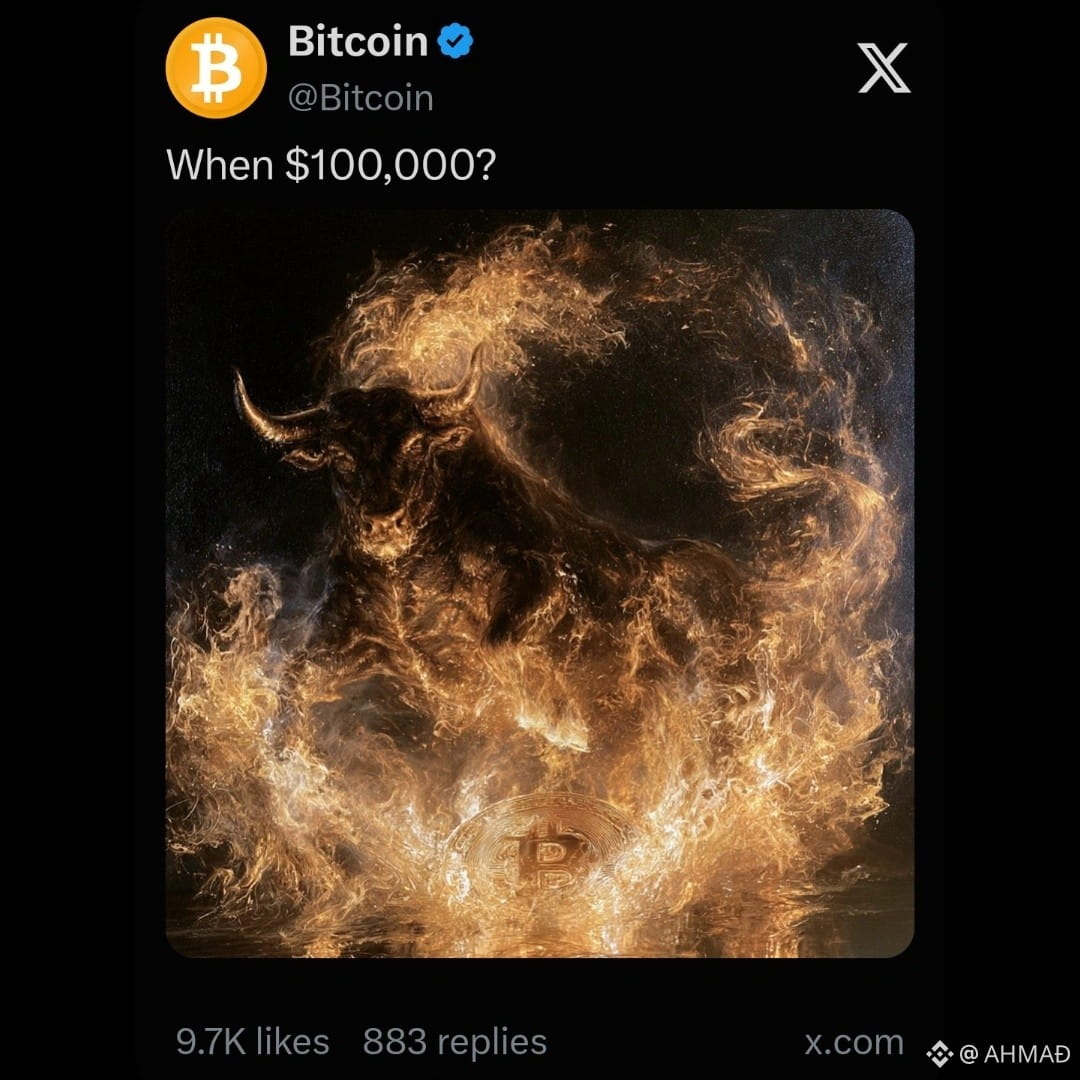
¿Es esta una gran pista de que $BTC va a llegar a $100K pronto!?
¡Todos mirando al toro!👀🐂
¿Es esta una gran pista de que $BTC va a llegar a $100K pronto!?
¡Todos mirando al toro!👀🐂
¡Todos mirando al toro!👀🐂
1
122
·
--
Suele hablarse de los valores tokenizados como si lo difícil fuera únicamente poner la titularidad en la cadena.
Al ver el diseño de Zedger de Dusk, me hizo centrarme en lo que ocurre cuando el emisor aún conserva responsabilidades después de que un activo ya ha sido emitido.
Zedger está diseñado para valores y activos del mundo real que pueden estar tokenizados o emitirse nativamente en Dusk. Su modelo de contrato incluye acuñación y quema, acciones corporativas como dividendos, auditoría de transacciones e incluso transferencias forzadas iniciadas por el emisor.
Esa última capacidad es la parte a la que seguí volviendo.
Una narrativa cripto típica tiende a equiparar la titularidad del token con una transferencia irreversible de cartera a cartera. Los valores regulados no siempre funcionan así. Las órdenes legales, las acciones corporativas, los procedimientos de recuperación o requisitos específicos de cada jurisdicción pueden crear situaciones en las que un emisor necesita una intervención controlada.
Por lo tanto, Zedger no intenta simplemente reproducir un modelo de transferencia de criptomonedas para valores. Está diseñado partiendo de la incómoda realidad de que los activos regulados pueden tener reglas sobre quién puede tenerlos y cómo puede cambiar la titularidad.
Pero existe un intercambio evidente.
Un mecanismo de transferencia controlado por el emisor puede hacer que los valores regulados sean más compatibles con los marcos legales existentes, al mismo tiempo que introduce un nivel de autoridad que los usuarios de cripto sin permisos podrían no apreciar.
Eso no necesariamente es un defecto. Es una decisión de diseño.
La pregunta real es si Dusk puede hacer que estos controles sean lo bastante transparentes y acotados como para que las instituciones confíen en ellos sin hacer que los usuarios sientan que los valores tokenizados son solo bases de datos con carteras conectadas.
Quizá el futuro de la infraestructura RWA no es eliminar la autoridad humana.
Quizá sea programar esa autoridad, hacerla auditable y explícita.
¿Cuánto control del emisor debería tener de verdad una seguridad onchain?
@Dusk_Foundation $DUSK #dusk
Suele hablarse de los valores tokenizados como si lo difícil fuera únicamente poner la titularidad en la cadena.
Al ver el diseño de Zedger de Dusk, me hizo centrarme en lo que ocurre cuando el emisor aún conserva responsabilidades después de que un activo ya ha sido emitido.
Zedger está diseñado para valores y activos del mundo real que pueden estar tokenizados o emitirse nativamente en Dusk. Su modelo de contrato incluye acuñación y quema, acciones corporativas como dividendos, auditoría de transacciones e incluso transferencias forzadas iniciadas por el emisor.
Esa última capacidad es la parte a la que seguí volviendo.
Una narrativa cripto típica tiende a equiparar la titularidad del token con una transferencia irreversible de cartera a cartera. Los valores regulados no siempre funcionan así. Las órdenes legales, las acciones corporativas, los procedimientos de recuperación o requisitos específicos de cada jurisdicción pueden crear situaciones en las que un emisor necesita una intervención controlada.
Por lo tanto, Zedger no intenta simplemente reproducir un modelo de transferencia de criptomonedas para valores. Está diseñado partiendo de la incómoda realidad de que los activos regulados pueden tener reglas sobre quién puede tenerlos y cómo puede cambiar la titularidad.
Pero existe un intercambio evidente.
Un mecanismo de transferencia controlado por el emisor puede hacer que los valores regulados sean más compatibles con los marcos legales existentes, al mismo tiempo que introduce un nivel de autoridad que los usuarios de cripto sin permisos podrían no apreciar.
Eso no necesariamente es un defecto. Es una decisión de diseño.
La pregunta real es si Dusk puede hacer que estos controles sean lo bastante transparentes y acotados como para que las instituciones confíen en ellos sin hacer que los usuarios sientan que los valores tokenizados son solo bases de datos con carteras conectadas.
Quizá el futuro de la infraestructura RWA no es eliminar la autoridad humana.
Quizá sea programar esa autoridad, hacerla auditable y explícita.
¿Cuánto control del emisor debería tener de verdad una seguridad onchain?
@Dusk $DUSK #dusk
Al ver el diseño de Zedger de Dusk, me hizo centrarme en lo que ocurre cuando el emisor aún conserva responsabilidades después de que un activo ya ha sido emitido.
Zedger está diseñado para valores y activos del mundo real que pueden estar tokenizados o emitirse nativamente en Dusk. Su modelo de contrato incluye acuñación y quema, acciones corporativas como dividendos, auditoría de transacciones e incluso transferencias forzadas iniciadas por el emisor.
Esa última capacidad es la parte a la que seguí volviendo.
Una narrativa cripto típica tiende a equiparar la titularidad del token con una transferencia irreversible de cartera a cartera. Los valores regulados no siempre funcionan así. Las órdenes legales, las acciones corporativas, los procedimientos de recuperación o requisitos específicos de cada jurisdicción pueden crear situaciones en las que un emisor necesita una intervención controlada.
Por lo tanto, Zedger no intenta simplemente reproducir un modelo de transferencia de criptomonedas para valores. Está diseñado partiendo de la incómoda realidad de que los activos regulados pueden tener reglas sobre quién puede tenerlos y cómo puede cambiar la titularidad.
Pero existe un intercambio evidente.
Un mecanismo de transferencia controlado por el emisor puede hacer que los valores regulados sean más compatibles con los marcos legales existentes, al mismo tiempo que introduce un nivel de autoridad que los usuarios de cripto sin permisos podrían no apreciar.
Eso no necesariamente es un defecto. Es una decisión de diseño.
La pregunta real es si Dusk puede hacer que estos controles sean lo bastante transparentes y acotados como para que las instituciones confíen en ellos sin hacer que los usuarios sientan que los valores tokenizados son solo bases de datos con carteras conectadas.
Quizá el futuro de la infraestructura RWA no es eliminar la autoridad humana.
Quizá sea programar esa autoridad, hacerla auditable y explícita.
¿Cuánto control del emisor debería tener de verdad una seguridad onchain?
@Dusk $DUSK #dusk
3
5
176
·
--
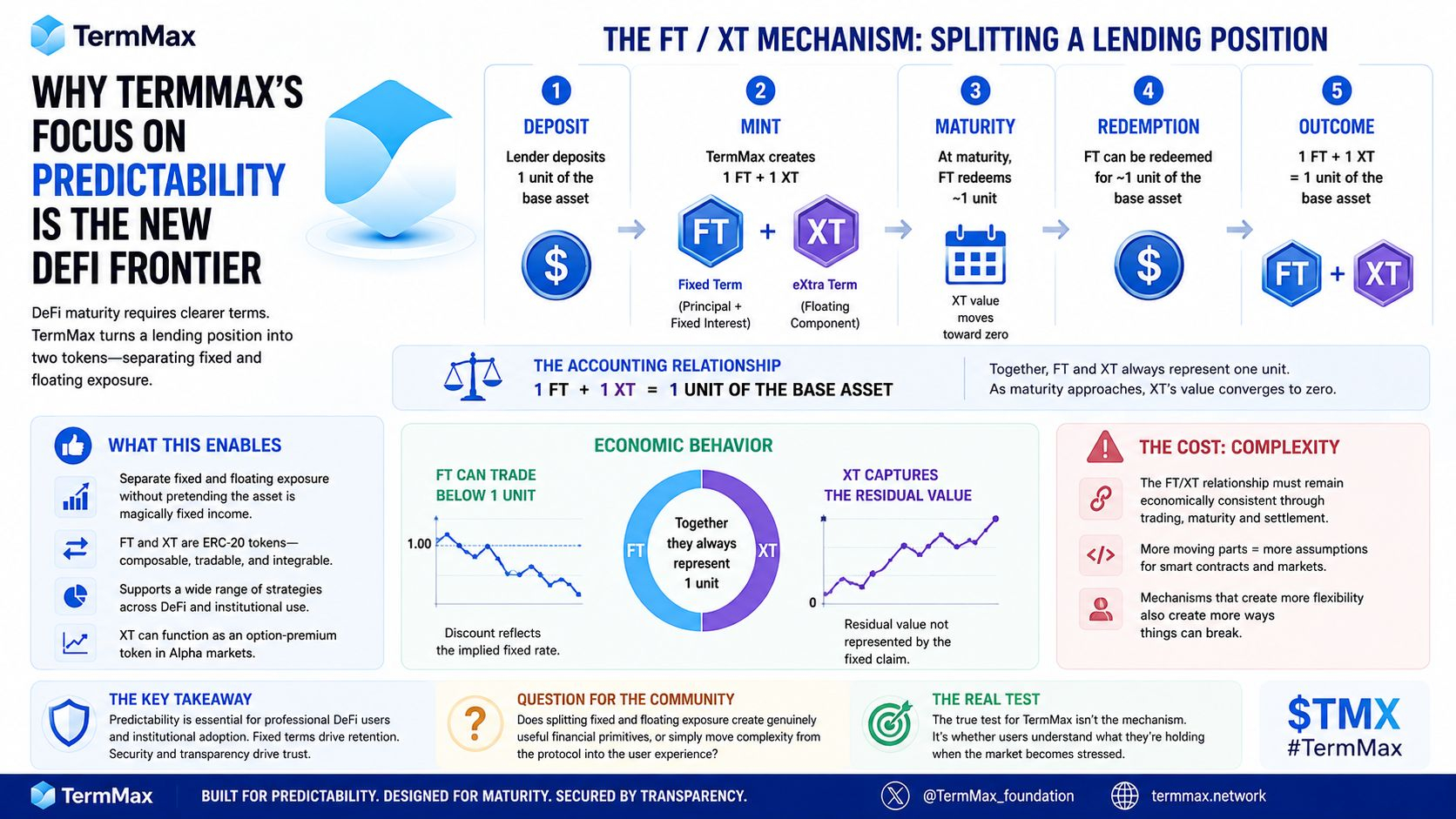
Al principio miré los tokens FT y XT de TermMax como otra forma de dividir una posición de préstamo. Cuanto más profundicé en el mecanismo, más importante se volvió la relación contable.
Cuando un prestamista deposita una unidad del activo base, TermMax crea una FT y una XT. La FT representa el principal más el derecho a un interés fijo, mientras que la XT representa la parte flotante restante. En conjunto, 1 FT + 1 XT = 1 unidad del activo base, y el valor de la XT se va acercando a cero a medida que se aproxima el vencimiento.
Eso crea una manera poco común de separar la exposición fija y la variable sin fingir que el activo subyacente se ha convertido mágicamente en renta fija.
La FT puede negociarse por debajo de su valor de redención de una unidad antes del vencimiento, y ese descuento expresa de forma efectiva la tasa fija. La XT captura el valor residual que no está representado por el derecho fijo.
Lo que me resulta interesante es lo que esto habilita.
En lugar de tratar una posición de préstamo como un objeto indivisible, TermMax convierte sus componentes económicos en representaciones separadas tipo ERC-20. Esos componentes pueden entonces participar en diferentes estrategias de mercado. La investigación también señala que la XT puede funcionar como un token de prima de opción en mercados Alpha.
Pero esta flexibilidad tiene un costo: la complejidad.
El sistema tiene que mantener la relación FT/XT consistentemente desde el punto de vista económico durante la negociación, el vencimiento y la liquidación. Un mecanismo que ofrece a los usuarios más formas de expresar la exposición a tasas de interés también crea más supuestos que los contratos inteligentes y los mercados tienen que mantener correctamente.
Por eso me interesa menos llamar “innovador” al modelo FT/XT.
La verdadera prueba es si los usuarios entienden qué están manteniendo cuando el mercado se tensiona.
¿La separación de la exposición fija y flotante crea primitivas financieras realmente útiles, o simplemente traslada la complejidad del protocolo a la experiencia del usuario?
@termmax #TermMax
Al principio miré los tokens FT y XT de TermMax como otra forma de dividir una posición de préstamo. Cuanto más profundicé en el mecanismo, más importante se volvió la relación contable.
Cuando un prestamista deposita una unidad del activo base, TermMax crea una FT y una XT. La FT representa el principal más el derecho a un interés fijo, mientras que la XT representa la parte flotante restante. En conjunto, 1 FT + 1 XT = 1 unidad del activo base, y el valor de la XT se va acercando a cero a medida que se aproxima el vencimiento.
Eso crea una manera poco común de separar la exposición fija y la variable sin fingir que el activo subyacente se ha convertido mágicamente en renta fija.
La FT puede negociarse por debajo de su valor de redención de una unidad antes del vencimiento, y ese descuento expresa de forma efectiva la tasa fija. La XT captura el valor residual que no está representado por el derecho fijo.
Lo que me resulta interesante es lo que esto habilita.
En lugar de tratar una posición de préstamo como un objeto indivisible, TermMax convierte sus componentes económicos en representaciones separadas tipo ERC-20. Esos componentes pueden entonces participar en diferentes estrategias de mercado. La investigación también señala que la XT puede funcionar como un token de prima de opción en mercados Alpha.
Pero esta flexibilidad tiene un costo: la complejidad.
El sistema tiene que mantener la relación FT/XT consistentemente desde el punto de vista económico durante la negociación, el vencimiento y la liquidación. Un mecanismo que ofrece a los usuarios más formas de expresar la exposición a tasas de interés también crea más supuestos que los contratos inteligentes y los mercados tienen que mantener correctamente.
Por eso me interesa menos llamar “innovador” al modelo FT/XT.
La verdadera prueba es si los usuarios entienden qué están manteniendo cuando el mercado se tensiona.
¿La separación de la exposición fija y flotante crea primitivas financieras realmente útiles, o simplemente traslada la complejidad del protocolo a la experiencia del usuario?
@TermMax #TermMax
Cuando un prestamista deposita una unidad del activo base, TermMax crea una FT y una XT. La FT representa el principal más el derecho a un interés fijo, mientras que la XT representa la parte flotante restante. En conjunto, 1 FT + 1 XT = 1 unidad del activo base, y el valor de la XT se va acercando a cero a medida que se aproxima el vencimiento.
Eso crea una manera poco común de separar la exposición fija y la variable sin fingir que el activo subyacente se ha convertido mágicamente en renta fija.
La FT puede negociarse por debajo de su valor de redención de una unidad antes del vencimiento, y ese descuento expresa de forma efectiva la tasa fija. La XT captura el valor residual que no está representado por el derecho fijo.
Lo que me resulta interesante es lo que esto habilita.
En lugar de tratar una posición de préstamo como un objeto indivisible, TermMax convierte sus componentes económicos en representaciones separadas tipo ERC-20. Esos componentes pueden entonces participar en diferentes estrategias de mercado. La investigación también señala que la XT puede funcionar como un token de prima de opción en mercados Alpha.
Pero esta flexibilidad tiene un costo: la complejidad.
El sistema tiene que mantener la relación FT/XT consistentemente desde el punto de vista económico durante la negociación, el vencimiento y la liquidación. Un mecanismo que ofrece a los usuarios más formas de expresar la exposición a tasas de interés también crea más supuestos que los contratos inteligentes y los mercados tienen que mantener correctamente.
Por eso me interesa menos llamar “innovador” al modelo FT/XT.
La verdadera prueba es si los usuarios entienden qué están manteniendo cuando el mercado se tensiona.
¿La separación de la exposición fija y flotante crea primitivas financieras realmente útiles, o simplemente traslada la complejidad del protocolo a la experiencia del usuario?
@TermMax #TermMax
1
2
86
·
--
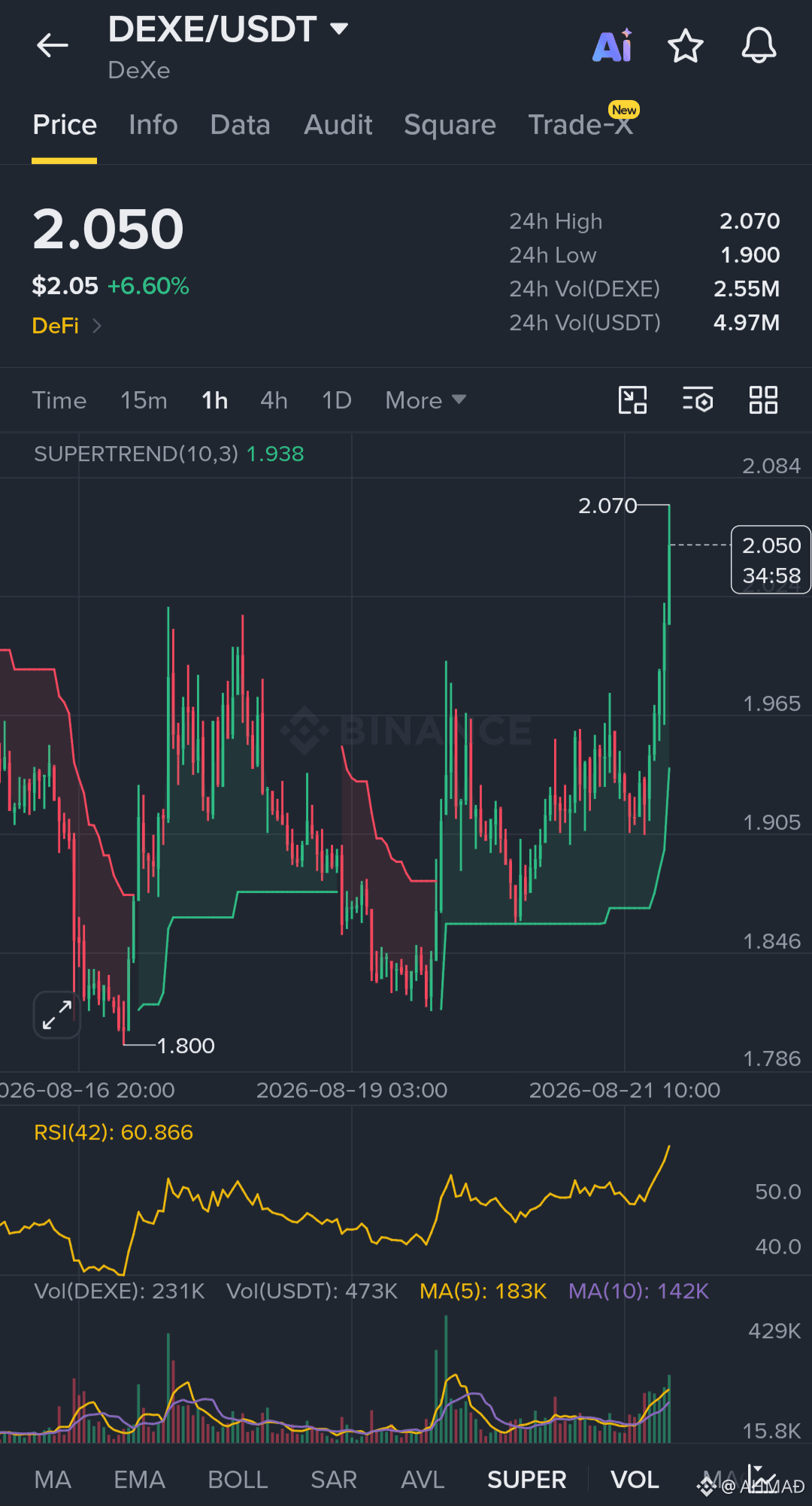
$DEXE breaks its major resistance and buyers are stepping in🚀
Es hora de comprar más stack.
Haz clic abajo para comprar👇🏻
{spot}(DEXEUSDT)
$DEXE breaks its major resistance and buyers are stepping in🚀
Es hora de comprar más stack.
Haz clic abajo para comprar👇🏻
Es hora de comprar más stack.
Haz clic abajo para comprar👇🏻
3
483
·
--
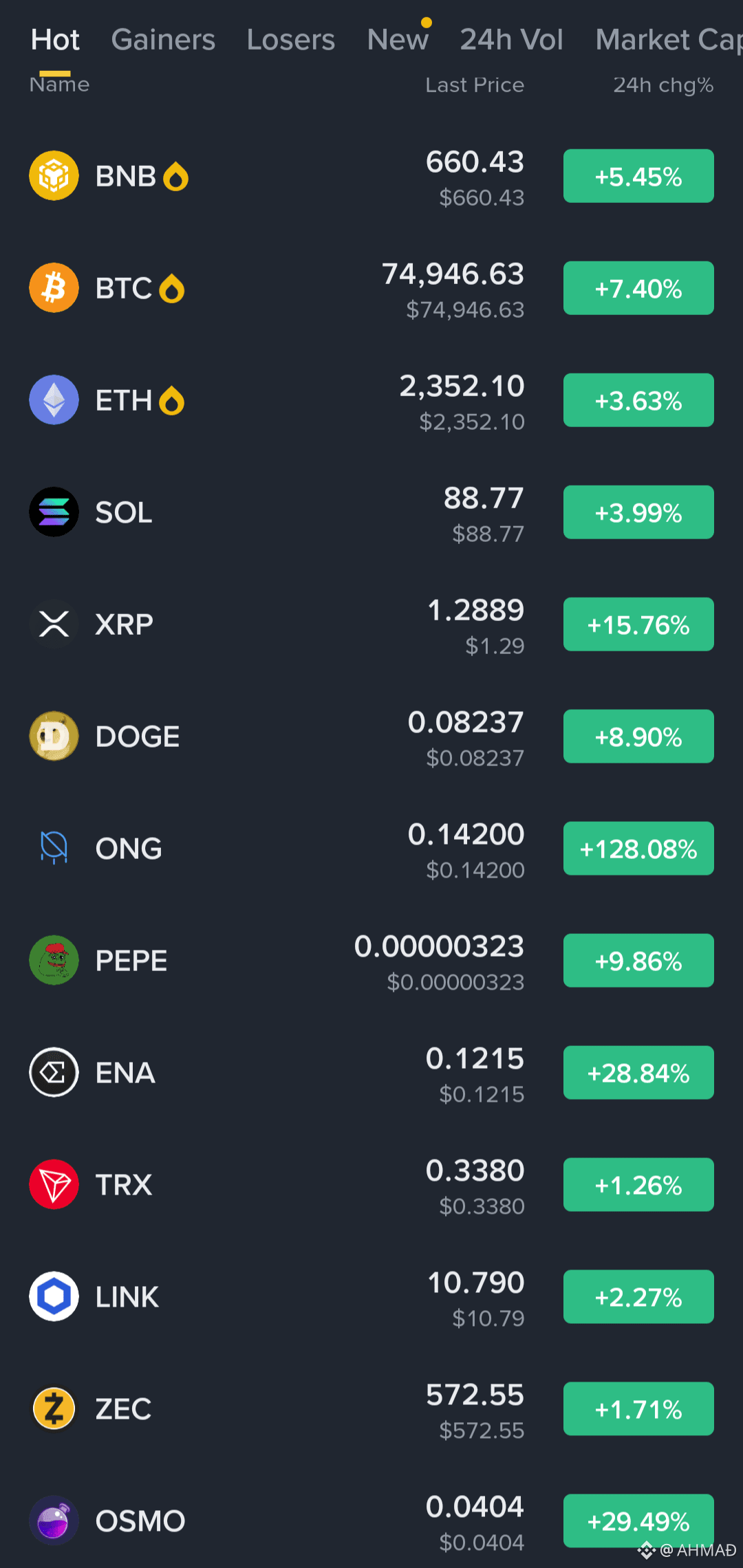
🚀 ¡Bitcoin rompe los 75K!
$BTC acaba de superar el hito de 75.000 USDT; actualmente cotiza en 75.523 USDT.📈 ¡Sube un 8,23% en las últimas 24 horas!¿Será este el inicio de la próxima gran racha?
#btc70k #strategy #Write2Earn
🚀 ¡Bitcoin rompe los 75K!
$BTC acaba de superar el hito de 75.000 USDT; actualmente cotiza en 75.523 USDT.📈 ¡Sube un 8,23% en las últimas 24 horas!¿Será este el inicio de la próxima gran racha?
#btc70k #strategy #Write2Earn
$BTC acaba de superar el hito de 75.000 USDT; actualmente cotiza en 75.523 USDT.📈 ¡Sube un 8,23% en las últimas 24 horas!¿Será este el inicio de la próxima gran racha?
#btc70k #strategy #Write2Earn
1
103
·
--
Después de un larguísimo larguísimo tiempo,
me encuentro viendo verde por todas partes 💚🍏🥹
$ETH
$ADA
$XRP
Después de un larguísimo larguísimo tiempo,
me encuentro viendo verde por todas partes 💚🍏🥹
$ETH
$ADA
$XRP
me encuentro viendo verde por todas partes 💚🍏🥹
$ETH
$ADA
$XRP
175
Inicia sesión para explorar más contenidos
Únete a usuarios globales de criptomonedas en Binance Square
⚡️ Obtén información útil y actualizada sobre criptos.
💬 Avalado por el mayor exchange de criptomonedas en el mundo.
👍 Descubre perspectivas reales de creadores verificados.
Email/número de teléfono
Temas populares
USAugustPPIRisesLessThanExpected
15,377 vistas
402 están debatiendo
🚨 EE. UU. AUG PPI: ¡Sube menos de lo esperado! ¿Alcista para las criptos? 🚀
PPI +0.4% MoM según lo esperado, pero CORE PPI solo +0.2% vs +0.3% esperado: ¡enfriándose!
Qué significa:
• La inflación mayorista es más suave de lo temido
• La probabilidad de una subida de tipos de la Fed ahora está en 62% — pero llegan señales más dovish
• Se esperan revisiones a la baja del Core PCE — alcista
• El BTC normalmente sube con un PPI más suave
Reunión de la Fed 15-16 de septiembre: ¿el mercado ahora espera una pausa, no una subida?
¿Es esta la luz verde para el rally de Q4?
#Bitcoin #PPI #Fed #CryptoNews #BTC#usaugustppiriseslessthanexpected
True News
·1 me gusta
·1.2k vistas
SECApprovesNasdaqTexasCommodityTrustRule
11,666 vistas
363 están debatiendo
ECBRaisesRatesSecondTimeTo2.5%
8,097 vistas
260 están debatiendo