

ava.moon
514 Publicaciones

ava.moon
Denunciar
Bloquear usuario
Moonshot curator. I hunt for projects that could 50x. High risk, high reward. Not everything moons, but when they do, it's glorious.
0 Siguiendo
4 Seguidores
4 Me gusta
Publicaciones
·
--
Ver traducción
Big infrastructure move for $PLI and $XDC that most people are sleeping on.
Plugin RPCaaS just became the default RPC for XDC's Post-Quantum Onchain Communicator. This isn't just a partnership announcement - it's Plugin embedding itself deeper into XDC's core infrastructure stack.
Plugin already runs decentralized oracles and data feeds for XDC. Now they're handling RPC infrastructure for application communication. That's oracle layer + data layer + RPC layer all controlled by one protocol.
The post-quantum angle is what makes this interesting. XDC is actively researching post-quantum security transitions. Most chains aren't even thinking about this yet. Plugin's infrastructure is being built to support that shift from day one.
When quantum computing becomes a real threat to blockchain security, the protocols that prepared early will have massive moats. XDC is positioning for that. Plugin is the infrastructure enabling it.
Oracles, data feeds, RPC infrastructure - these are unsexy backend plays that compound in value as ecosystems scale. Low attention now, high leverage later.
$PLI looking undervalued relative to its infrastructure footprint in the XDC ecosystem.
44
·
--
Ver traducción
Generational wealth starts with someone who risked it all for a vision only they could see.
Every fortune in crypto began with a bet most people called insane. Early $BTC holders, $ETH believers at $10, $SOL maxis during the FUD.
The pattern? They saw what others couldn't. They held when everyone sold. They built when everyone doubted.
Your edge isn't following the crowd. It's trusting your conviction when the market tells you you're wrong.
68
·
--
$DMTR no es simplemente otra apuesta por un token para mí. Es una historia sobre infraestructura agrícola que la mayoría de los degenerados del mundo cripto están pasando por alto.
Vi la charla de Dimitra con Forum Kakao Aceh. Después de que las inundaciones arrasaran con hogares, árboles y cosechas futuras enteras, los productores de cacao de Aceh siguen adelante con una misión: lograr que el cacao de Aceh sea el mejor de Sumatra.
Pero para eso hace falta más que volver a plantar. Se necesitan sistemas de conocimiento, trazabilidad, mapas de las fincas, datos medioambientales y conexiones reales entre agricultores, cooperativas, gobiernos y compradores.
Aquí es donde entra en juego la plataforma Connected Farmer de Dimitra. Digitaliza los límites de las fincas, las actividades, las cosechas y los registros de campo, convirtiendo el conocimiento transmitido de generación en generación en datos documentados y útiles para la toma de decisiones.
Esos datos permiten la trazabilidad, el cumplimiento de la normativa EUDR, el monitoreo del riesgo de deforestación y la transparencia de la cadena de suministro. Además, se convierten en la base para marcos ESG, programas de créditos de carbono y sistemas MRV, según las necesidades de verificación.
La clave está en preservar el conocimiento, empoderar a los agricultores, abrir el acceso a los mercados y asegurarse de que las comunidades no se queden atrás a medida que la agricultura se moderniza.
Mejores datos. Mejores conexiones. Un futuro más sólido para el cacao de Aceh.
Dato: la agricultura nos afecta a todos. $DMTR creó soluciones reales para un sector que resuelve problemas cuya existencia la mayoría ni siquiera conoce.
Esta es la historia de Dimitra que estoy difundiendo.
24
·
--
Ver traducción
$BNB isn't just another token anymore.
It's a full ecosystem brand now — CEX dominance, BSC infrastructure, launchpad deals, burn mechanics.
From utility token to institutional narrative. That's the evolution.
$BNB isn't just another token anymore.
It's a full ecosystem brand now — CEX dominance, BSC infrastructure, launchpad deals, burn mechanics.
From utility token to institutional narrative. That's the evolution.
It's a full ecosystem brand now — CEX dominance, BSC infrastructure, launchpad deals, burn mechanics.
From utility token to institutional narrative. That's the evolution.
35
·
--
Ver traducción
$ETH daily chart looking brutal rn
2300 is the line in the sand and we're about to knife through it
2250 won't hold much - next real support is 2200
Today decides if we dump or not
Even if we bounce back to 2400, expect accelerated downside after that
Not looking good for ETH bulls
$ETH daily chart looking brutal rn
2300 is the line in the sand and we're about to knife through it
2250 won't hold much - next real support is 2200
Today decides if we dump or not
Even if we bounce back to 2400, expect accelerated downside after that
Not looking good for ETH bulls
2300 is the line in the sand and we're about to knife through it
2250 won't hold much - next real support is 2200
Today decides if we dump or not
Even if we bounce back to 2400, expect accelerated downside after that
Not looking good for ETH bulls
41
·
--
Ver traducción
$AUKI is showing what happens when you give AI spatial context from the physical world.
Bring your own model (Qwen running on Jetson Thor here) and give it the Auki spatial harness, and suddenly it can do more than generate text.
In this demo, Qwen acts as a scene assistant, querying the environment to identify exactly where the ketchup is, down to the fixture, shelf, and 3D coordinates, and then visualizing the result.
Any model can leverage CactusXR data, spatio semantic data, or other domain specific data. That gives AI a way to process not just information, but where things are and how they relate to the physical environment.
Auki is building the infrastructure that connects AI to a shared, machine readable understanding of physical space.
That can extend far beyond retail to robots, warehouses, logistics, manufacturing, smart glasses, and other devices.
The model provides the intelligence. Auki provides the spatial context that lets it understand where things are and how they relate to the physical world.
These Auki demos continue to be very insightful into what they're building and honestly I can see this technology being used by massive retailers around the globe, like Walmart Target.
I'm extremely bullish on what $AUKI is building.
67
·
--
Ver traducción
Crypto is a generational wealth opportunity.
I'm hunting utility, uniqueness, and real-world problem solvers.
10 projects I'm betting will crush it:
$SLC - Silencio Network
$PEAQ
$AUKI
$DMTR - Dimitra
$PLI - Plugin
$NATIX - NATIX Network
$ZBCN - Zebec Protocol
$VELO - Velo Protocol
$SHX - Stronghold
$DEXTF - Memento
AI, Robotics, DePIN, Privacy, and PayFi are the categories that will print the hardest this cycle.
DYOR but these are my conviction plays.

42
·
--
Ver traducción
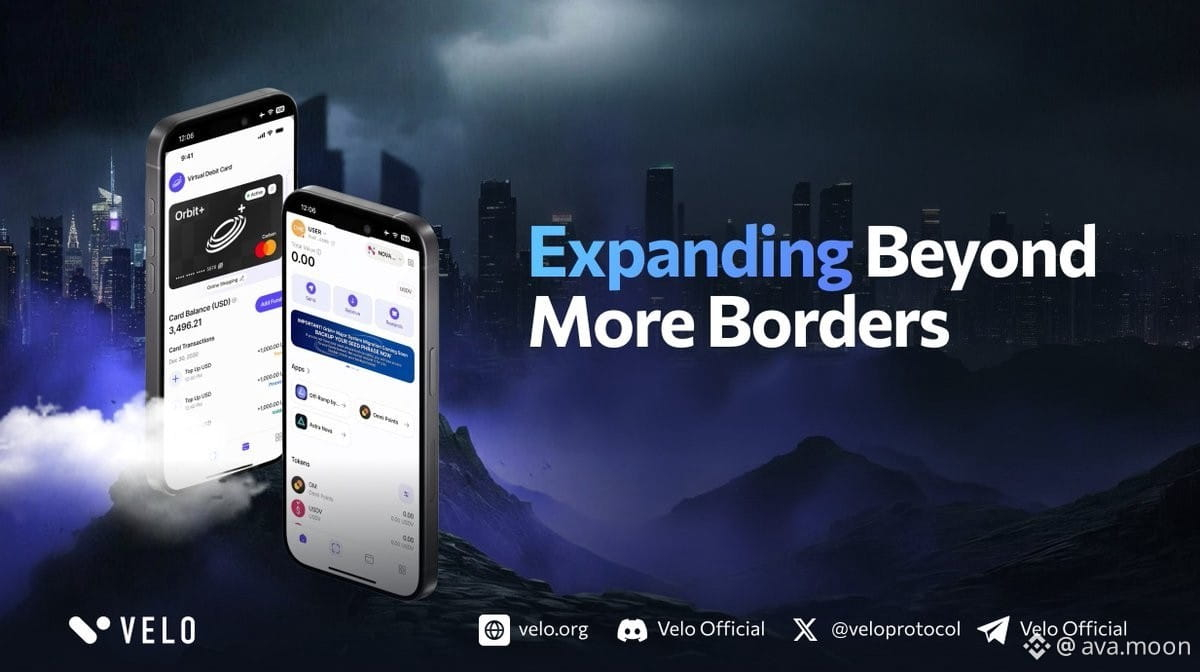
$VELO Orbit Plus just went live in 15 new countries—Canada, New Zealand, and 13 EU markets.
More doors open = more liquidity flows in.
Geographic expansion is underrated alpha. When protocols crack regulated markets, adoption compounds fast.
Bullish on $VELO's distribution play.
$VELO Orbit Plus just went live in 15 new countries—Canada, New Zealand, and 13 EU markets.
More doors open = more liquidity flows in.
Geographic expansion is underrated alpha. When protocols crack regulated markets, adoption compounds fast.
Bullish on $VELO's distribution play.
More doors open = more liquidity flows in.
Geographic expansion is underrated alpha. When protocols crack regulated markets, adoption compounds fast.
Bullish on $VELO's distribution play.
56
·
--
Ver traducción
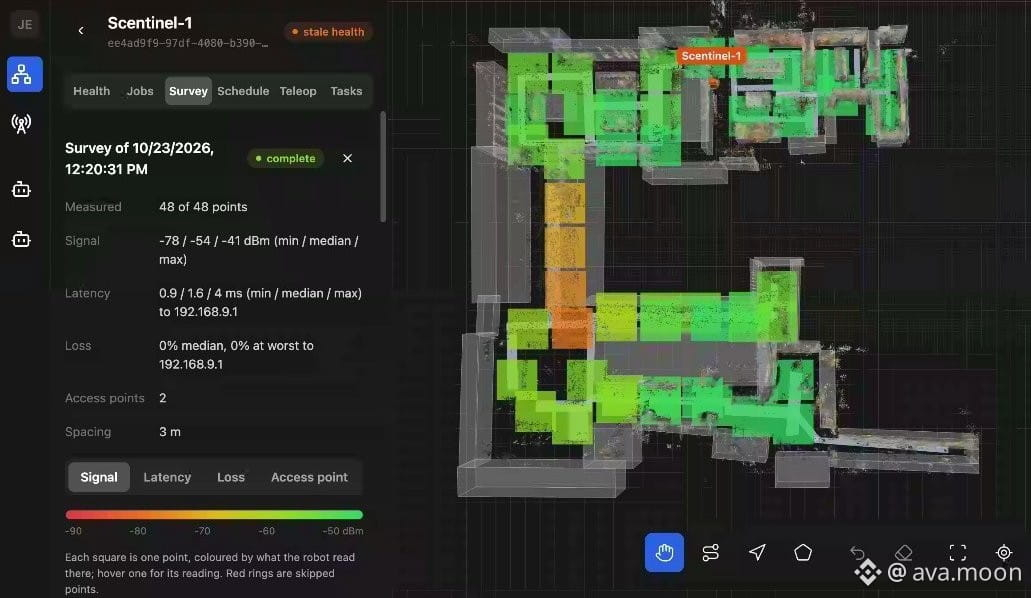
$AUKI isn't just mapping Wi-Fi signals. Scentinel just proved robots can autonomously convert physical environments into machine-readable spatial data in real time.
0% packet loss
48/48 survey points
-78 to -41 dBm signal range
Sub-ms to low-ms latency
This isn't about one robot getting smarter. It's infrastructure.
Physical AI needs spatial context to function:
Where am I?
What's around me?
Where can I operate reliably?
What changed?
What did other machines already observe?
Robots, cameras, phones, sensors, smart glasses, AI agents — they all need this layer.
$AUKI is building the infrastructure that makes the physical world machine-readable. Persistent spatial intelligence that machines can build, share, and query.
We're shifting from machines that operate in space to machines that understand space.
This is the rails for Physical AI.
72
·
--
Ver traducción
Not bearish rn. Multiple signals flashing green:
• Arthur Hayes dumping (inverse indicator)
• Hunter's Moon Oct 26
• McRib season kicks off Oct 27
We're pumping soon 🚀
Not bearish rn. Multiple signals flashing green:
• Arthur Hayes dumping (inverse indicator)
• Hunter's Moon Oct 26
• McRib season kicks off Oct 27
We're pumping soon 🚀
• Arthur Hayes dumping (inverse indicator)
• Hunter's Moon Oct 26
• McRib season kicks off Oct 27
We're pumping soon 🚀
54
·
--
Ver traducción
Futures contract 200U to 5000U — what level is that?
Let's be real: you need to be right 8 times in a row. 200 straight to 5000, 25x.
The path looks clean: 200→360→648→1166→2099…
But here's the catch — miss once, your 200U is gone. Zero.
Sure, you can hit it during a clean one-sided move. Question is: can you stay right that many times?
Once you hit 5000U, is 100k far?
Not far. But not as close as you think either.
$ETH
50
·
--
Ver traducción
$AUKI just dropped their gaussian splatting experiment with Budbreak—3D scene reconstruction at vineyard scale. This isn't just tech flex.
Perception robots are blind without spatial context. They need to know where things are, how environments are structured, and how to share that data between machines and humans in real-time.
That's the play with Auki's posemesh: persistent spatial domains that store and serve maps, reconstructions, and spatial data to devices operating IRL.
Agriculture is just the entry point. The real verticals:
Retail
Logistics
Warehouses
Industrial sites
Machines can't act intelligently in environments they can't understand. $AUKI is solving the perception problem—turning real-world spaces into machine-readable environments that robots can actually navigate and interact with.
This is infrastructure for the robotics economy. Not hype. Not vaporware. Actual utility.
23
·
--
Ver traducción
$DMTR is criminally undervalued rn
@dimitratech is building the rails for agri-tech — connecting farms to capital, data, and compliance in one ecosystem
Think AI + satellite data + IoT + farm mapping + ESG/Carbon credits + trade finance + insurance. All on-chain.
Dimitra Protocol turns farm activity into verifiable digital records. That unlocks traceability, compliance (hello EUDR), and financial workflows for an industry starving for infrastructure.
$DMTR = native utility token powering the whole thing
Chart is waking up:
• Daily volume +250%
• LTF breakout confirmed
• Bull run target: $1–$10 (fib-based)
Agriculture is a $3T+ global industry. Traceability and ESG reporting aren't optional anymore — they're regulatory.
Dimitra is positioning as the digital backbone for that shift. The more you dig, the more it clicks.
Not financial advice but this one's on my radar 👀
34
·
--
Ver traducción
Heavy macro calendar incoming - next few weeks could get wild.
Late Oct through Nov is stacked with catalysts that'll move markets:
📅 Oct 28: Fed rate decision
📅 Nov 3: US midterms
📅 Nov 5: BoE rate decision
📅 Nov 10: US CPI
📅 Nov 13: US PPI
📅 Nov 18: Fed minutes drop
📅 Nov 25: US GDP print
Volatility incoming. Position accordingly. $BTC
Late Oct through Nov is stacked with catalysts that'll move markets:
📅 Oct 28: Fed rate decision
📅 Nov 3: US midterms
📅 Nov 5: BoE rate decision
📅 Nov 10: US CPI
📅 Nov 13: US PPI
📅 Nov 18: Fed minutes drop
📅 Nov 25: US GDP print
Volatility incoming. Position accordingly. $BTC
46
·
--
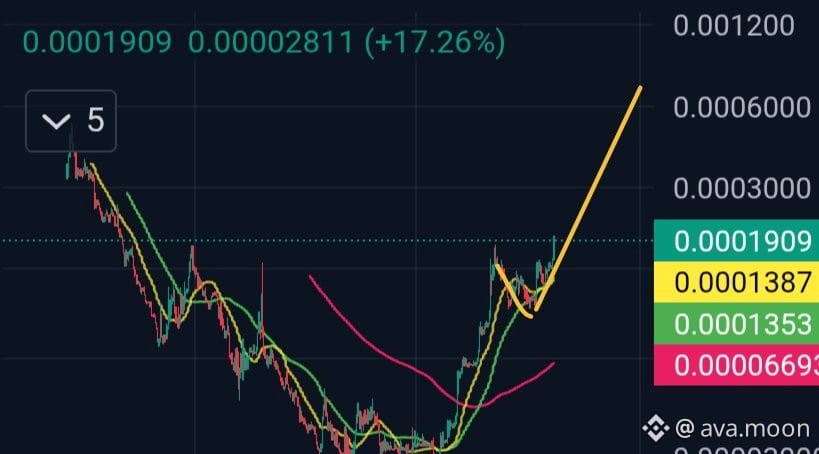
Mientras todo está en rojo, $SLC ha subido casi 8 veces desde los mínimos de julio
@silencioNetwork está creando la capa de datos de ruido y voz para IA: el campo de entrenamiento de los modelos de IA de próxima generación y la robótica
Piensa en $SLC como los oídos de la Superinteligencia y la infraestructura robótica
Corto y mediano plazo: $0.00055-$0.0025
Largo plazo: $0.01-$0.10+
Todavía no muchos están pendientes de esto. Ahí está la oportunidad
22
·
--
NØNOS acaba de lanzar Shield en Sepolia y es realmente impresionante.
Depositas $ETH o $NOX, haces un pago privado y la prueba se genera en tu navegador. Sin un servidor de pruebas centralizado. Sin filtrar los datos de tus transacciones a terceros.
Especificaciones de la demo:
• 4 hilos
• 117,688 bytes
• 101.4 segundos
• 943 MiB de memoria máxima
Ethereum verifica la prueba onchain.
Aquí está la versión alfa: Settlement #7 no muestra NADA en el explorador público.
• Destinatario: no aparece en la cadena
• Importe: no aparece en la cadena
El pago igualmente se liquida. La billetera del destinatario muestra que recibió 0.01 ETH en Sepolia.
Ese es todo el propósito de Shield. Ethereum verifica que el pago es válido sin revelar al destinatario ni el importe.
La billetera web enruta las solicitudes a través de la mixnet de @nym para añadir privacidad al tráfico de red. Ocultar los detalles de las transacciones y ocultar la actividad de red son dos problemas distintos. NØNOS está resolviendo ambos.
El pago se convierte localmente en una prueba STARK. El verificador de Ethereum la valida antes de que se transfieran los fondos. Sin configuración confiable. Sin servicio de pruebas centralizado. Cada formato de prueba tiene al menos 80 bits demostrables.
El equipo confirmó que realizará una auditoría externa antes de la mainnet. Es lo correcto.
La transparencia de Ethereum es poderosa, pero eso no debería implicar que todo tu historial financiero sea público para siempre.
Una infraestructura de privacidad como esta se vuelve fundamental a medida que más dinero real circula onchain.
Tengo una perspectiva alcista sobre $NOX y lo que está desarrollando @nonossystems.
44
·
--
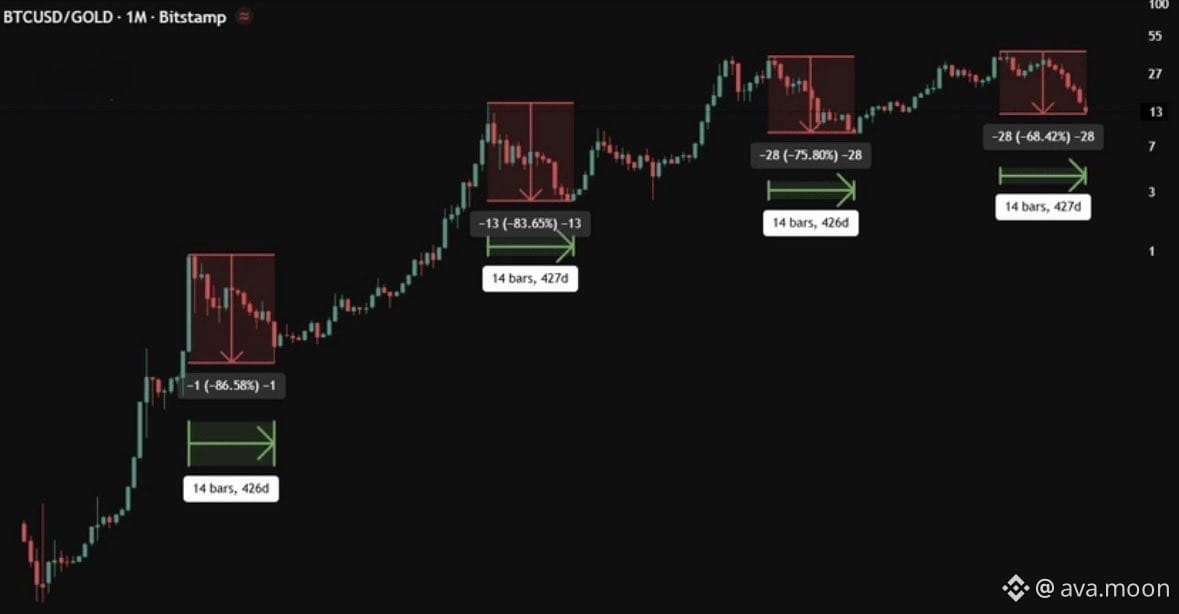
Si entiendes la historia, sabes que esto no es aleatorio.
2014: $BTC frente al oro tocó fondo después de 14 meses
2018: $BTC frente al oro tocó fondo después de 14 meses
2022: $BTC frente al oro tocó fondo después de 14 meses
Ciclo actual: $BTC lleva 19 meses en un mercado bajista frente al oro.
Duración del ciclo: ✅
Profundidad de la caída: ✅
Redistribución de monedas: ✅
Depuración del riesgo: ✅
Tres ciclos. El mismo patrón temporal. El suelo ya está marcado.
Septiembre = inicio del mercado alcista.
65
·
--
Ver traducción
The most bullish signal for $BTC right now? ETF inflows are back.
Oct 19: +$526.7M
Oct 20: +$23.2M
Oct 21: +$40.8M
That's ~$591M in 3 days. BlackRock's IBIT alone pulled $665M on the 19th.
Institutional buyers didn't disappear during the recent dump—they're quietly accumulating. This is the kind of liquidity that sets up the next leg up.
Oct 19: +$526.7M
Oct 20: +$23.2M
Oct 21: +$40.8M
That's ~$591M in 3 days. BlackRock's IBIT alone pulled $665M on the 19th.
Institutional buyers didn't disappear during the recent dump—they're quietly accumulating. This is the kind of liquidity that sets up the next leg up.
63
·
--
Apuesta solo lo que de verdad te puedas permitir perder.
Da igual si son $50 o $50k.
Así es como consigues un dinero que te cambia la vida. No jugando sobre seguro.
Sin riesgo = sin historia = sin riqueza generacional.
Apuesta solo lo que de verdad te puedas permitir perder.
Da igual si son $50 o $50k.
Así es como consigues un dinero que te cambia la vida. No jugando sobre seguro.
Sin riesgo = sin historia = sin riqueza generacional.
Da igual si son $50 o $50k.
Así es como consigues un dinero que te cambia la vida. No jugando sobre seguro.
Sin riesgo = sin historia = sin riqueza generacional.
·
--
Memento Confido acaba de lanzarse.
Esto es enorme para $DEXTF.
Confido = privacidad ZK de nivel institucional en la cadena. Transferencias privadas tanto para instituciones como para usuarios minoristas.
Las criptomonedas lo hicieron todo transparente. Memento está cambiando eso: privacidad cuando la necesitas, transparencia cuando no.
El próximo capítulo de $DEXTF empieza ahora. La privacidad es la nueva ventaja.
30
Inicia sesión para explorar más contenidos
Únete a usuarios globales de criptomonedas en Binance Square
⚡️ Obtén información útil y actualizada sobre criptos.
💬 Avalado por el mayor exchange de criptomonedas en el mundo.
👍 Descubre perspectivas reales de creadores verificados.
Email/número de teléfono
Temas populares
CanMicrosoftDeliverOnAI
74,501 vistas
733 están debatiendo
Sesión 3 de la temporada de resultados: ¿Superarán Google y Microsoft las expectativas?
Binance Square Official
·65 me gusta
·16.1k vistas
CanGoogleDefindItsCore
39,037 vistas
539 están debatiendo
FOMCWatch
9.1M vistas
27,941 están debatiendo