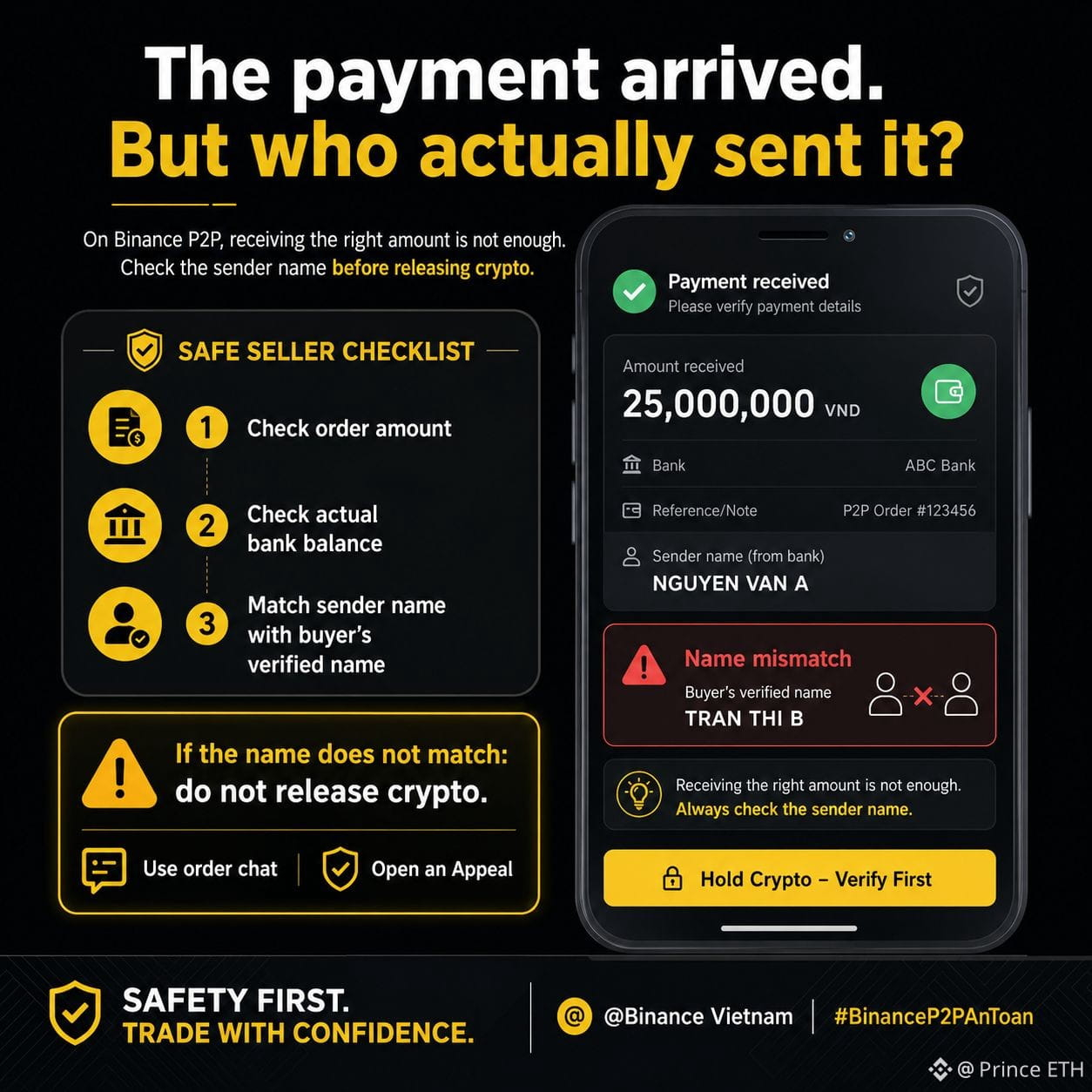
Una regla de Binance P2P merece más atención porque separa dos comprobaciones que los vendedores a menudo tratan como si fueran lo mismo: “¿Llegó el dinero?” y “¿Provino de un comprador verificado?”
Para las operaciones P2P que no son en CNY, las reglas de apelación de Binance indican que si el nombre de la cuenta de pago del comprador no coincide con el nombre verificado en Binance P2P, el cripto no debe liberarse. Al vendedor se le solicita reembolsar el importe completo y, después de que se presente la evidencia del reembolso y el comprador confirme la recepción, la orden se cancela.
Ese detalle importa porque recibir la cantidad correcta es solo una prueba de pago. No es una prueba de que la identidad del pagador coincida con la persona de la orden.
Una discrepancia de nombre no prueba automáticamente fraude. Puede haber explicaciones inocentes: el comprador puede usar la cuenta bancaria de otro familiar, una cuenta de empresa o simplemente ignorar el requisito del nombre en el pago. Pero, desde el lado del vendedor, la decisión práctica es la misma: no “resolver” la discrepancia liberando primero y haciendo preguntas después.
Antes de Confirmar la liberación, compara tres cosas:
el importe de la orden,
el saldo bancario real,
y el nombre del remitente con el nombre verificado del comprador que se muestra en la orden.
Si el importe es correcto pero el nombre no, mantén el cripto bloqueado, usa el chat de la orden y abre una Apelación en esa orden en lugar de gestionarlo fuera de la plataforma.
La distinción útil es sencilla: la verificación del pago responde “¿se recibió dinero?” La verificación de identidad responde “¿quién pagó?” En Binance P2P, una liberación segura requiere que ambas preguntas tengan sentido juntas.
@Binance Vietnam #BinanceP2PAnToan $BTC $ETH $SOL
Para las operaciones P2P que no son en CNY, las reglas de apelación de Binance indican que si el nombre de la cuenta de pago del comprador no coincide con el nombre verificado en Binance P2P, el cripto no debe liberarse. Al vendedor se le solicita reembolsar el importe completo y, después de que se presente la evidencia del reembolso y el comprador confirme la recepción, la orden se cancela.
Ese detalle importa porque recibir la cantidad correcta es solo una prueba de pago. No es una prueba de que la identidad del pagador coincida con la persona de la orden.
Una discrepancia de nombre no prueba automáticamente fraude. Puede haber explicaciones inocentes: el comprador puede usar la cuenta bancaria de otro familiar, una cuenta de empresa o simplemente ignorar el requisito del nombre en el pago. Pero, desde el lado del vendedor, la decisión práctica es la misma: no “resolver” la discrepancia liberando primero y haciendo preguntas después.
Antes de Confirmar la liberación, compara tres cosas:
el importe de la orden,
el saldo bancario real,
y el nombre del remitente con el nombre verificado del comprador que se muestra en la orden.
Si el importe es correcto pero el nombre no, mantén el cripto bloqueado, usa el chat de la orden y abre una Apelación en esa orden en lugar de gestionarlo fuera de la plataforma.
La distinción útil es sencilla: la verificación del pago responde “¿se recibió dinero?” La verificación de identidad responde “¿quién pagó?” En Binance P2P, una liberación segura requiere que ambas preguntas tengan sentido juntas.
@Binance Vietnam #BinanceP2PAnToan $BTC $ETH $SOL