

逐梦同行
483 Posts

逐梦同行
Report
Block User
与 BSC 世界同行,为社区 DAO 发声,做币安广场户外直播的坚定支持者!
Open Trade

BTC Holder
Occasional Trader
5.9 Years
42 Following
7.8K+ Followers
678 Liked
Posts
Portfolio
All
Quotes
Videos
Live
PINNED
·
--
Bullish
Contract Addr:
0xd46e9f4c9d0411993cb812bc0fa56901f5e529c7
Official Dapp website participation prediction platform
https://94976734.delos.life/94976734/#/
TokenPocket wallet Bsc network registration
Minimum entry 560U,
including 60U monthly Agent membership fee
Minimum daily profit 4.2U,
with a principal insurance mechanism in place, principal can be withdrawn at any time.
$BNB $BTC $ZEC
#比特币突破8万美元大关

70
1
6
236
PINNED
·
--
What is an era dividend❓
Free your hands | Automated trading | Major cryptocurrencies
#AI-Agnet✨ Simple and easy to use, suitable for everyone
Stable principal|No losses|No worries|No limits
P.S.: Recruiting teams, studios, business owners, and team leaders to connect💬
$BTC $BNB $ETH
What is an era dividend❓
Free your hands | Automated trading | Major cryptocurrencies
#AI-Agnet✨ Simple and easy to use, suitable for everyone
Stable principal|No losses|No worries|No limits
P.S.: Recruiting teams, studios, business owners, and team leaders to connect💬
$BTC $BNB $ETH
Free your hands | Automated trading | Major cryptocurrencies
#AI-Agnet✨ Simple and easy to use, suitable for everyone
Stable principal|No losses|No worries|No limits
P.S.: Recruiting teams, studios, business owners, and team leaders to connect💬
$BTC $BNB $ETH
2
113
·
--
Bullish
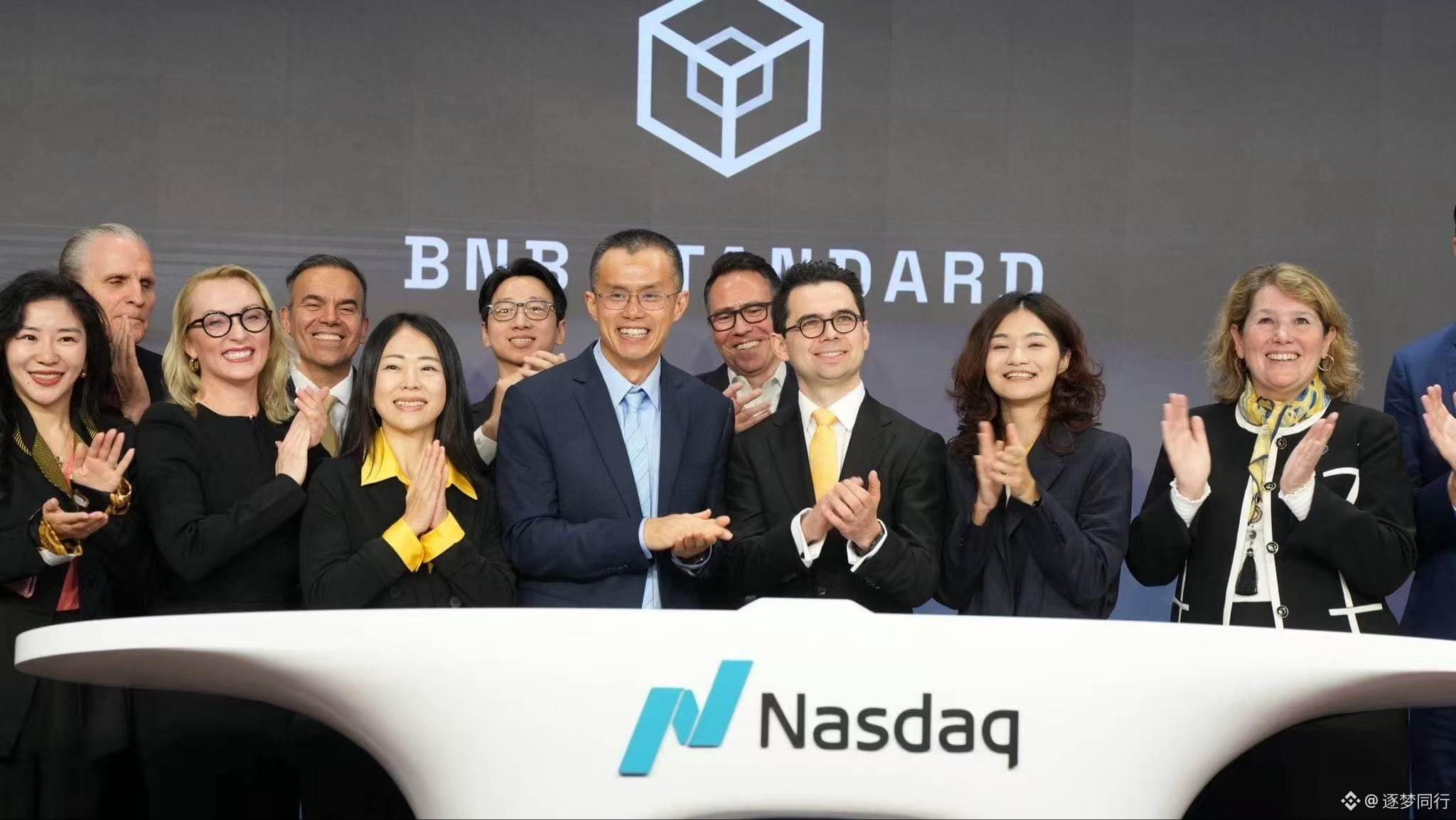
$BNB Standard ($BNC, formerly CEA Industries) rang the Nasdaq opening bell on October 26, officially bringing its BNB treasury strategy to the U.S. stock market. For funds that cannot hold the tokens directly, this offers a compliant equity route. But between “being able to buy” and “actually buying” lies a discount that the market is already pricing in.
The discount is the central fact, not a footnote
As of late October, BNC’s adjusted NAV was about $7.10 per share, while its share price ranged from $4.70 to $5.40. Its mNAV was about 0.66–0.67, implying a 33%–34% discount. In other words, the market is applying a clear discount to the idea of “holding BNB through a company.” The reasons are concrete: financing relies on issuing shares, making dilution the engine of growth; governance disputes eased with the arrival of a new CEO, but litigation over 10X Capital’s asset management agreement has not been fully resolved; and BNB accounts for more than 90% of assets, so that concentration alone represents a risk exposure.
Institutional exposure ≠ spot buying
In Q2 2026, 40 institutions reported BNC holdings in their 13F filings, with a total value of about $21.7 million. But during the same period, 12 institutions exited their positions and 10 reduced their holdings, with buyers and sellers largely offsetting one another. Buying BNC shares does not automatically translate into an equivalent amount of spot demand for BNB—it is first a judgment about the “wrapper’s valuation,” and only then a judgment about BNB.
CZ’s AI payments narrative: right direction, distant timeline
CZ has positioned BNB Chain as a payment network for AI agents. Its next-generation L1 targets 100,000+ TPS and sub-second finality, with a testnet planned for late 2026 and mainnet for early 2027. BNB Chain already hosts many ERC-8004 agents, but a genuine payment channel between agents (x402) is still on the roadmap. What is visible today is the “number of deployments,” not a “transaction-fee stream.” This is an option, not realized cash flow.
Takeaway
BNC offers regulated equity exposure, not a substitute for spot ownership. For the discount to narrow, governance must improve, dilution must slow, and BNB itself must recover from its weakness—all three are necessary. CZ’s AI narrative is a long-term variable; before the 2027 mainnet launch, it makes more sense to track agent transaction volume than agent registrations.
The bell-ringing marks a milestone in access; the discount reflects the market’s pricing. The full story is that both are true at once.
#BNB #BNC #MacroInsights #风险提示
1
257
·
--
🎙️ Building Binance Square, holding BNB | Tuesday, is it time to buy the dip? Let’s chat~

End
04 h 40 m 27 s
14.7k
32
36
·
--
Bearish
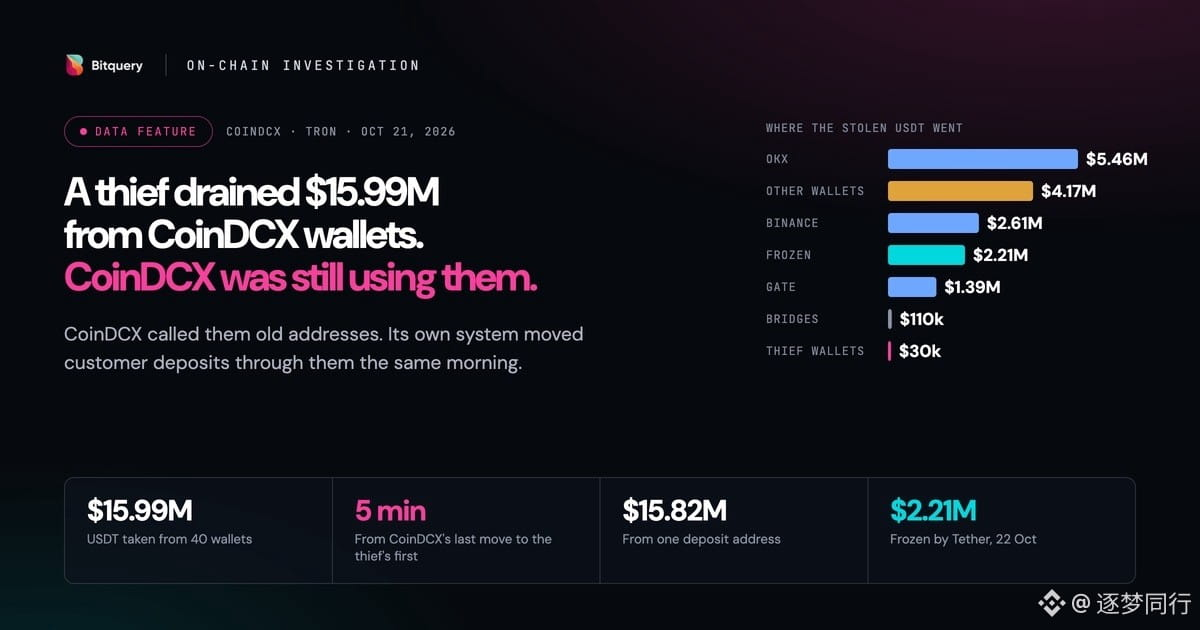
CoinDCX’s $15.99 Million: The Biggest Danger Wasn’t Hackers, but “Deactivated” Old Addresses
CoinDCX’s CEO initially called it a “false alarm.” On October 25, the exchange acknowledged a loss of 15.99 million USDT, said it would cover the loss and that customer funds were unaffected, and admitted it could have disclosed the incident sooner. On-chain investigators had already spotted unusual outflows from the Tron address in question.
The problem wasn’t a second hack—it was a silent process failure
After CoinDCX suffered a $44 million hack in July 2025, its old deposit wallets were retired. But some users continued sending funds to those old addresses. The exchange should have used an automated sweeper to move deposits to secure wallets and credit them to users’ accounts. Instead, the sweeper stopped working, and funds kept accumulating in compromised addresses. The losses from the two incidents total nearly $60 million.
This is more alarming than “an exchange got hacked”: customers might follow the instructions exactly, receive a deposit confirmation, and see the correct balance in their account—all without knowing that the back-end custody process has failed. Cold storage, strong encryption, and proof of reserves cannot make up for an operational process that fails silently.
Is $BTC safe to keep on an exchange?
In this case, funds were “safe” because the company chose to reimburse customers. But exchange deposits don’t have FDIC- or SIPC-style protection. Reimbursement is a matter of business credit and company choice, not an institutional guarantee. More accurately: an exchange balance is a credit exposure, not a safe deposit box.
Three practical rules
1. Keep only your trading balance on an exchange; hold long-term assets in self-custody.
2. Use a new address for every deposit, and don’t keep sending funds out of habit to “deactivated” addresses.
3. Treat “slow disclosure” and “deny first, admit later” as risk-management warning signs, not just PR problems.
Conclusion
When assessing an exchange’s security, don’t just ask whether it “has cold wallets.” Also ask whether failed operations are detected, blocked, and disclosed promptly as funds move through the system. A hack is an incident; a process failure is a systemic risk.
#BTC #交易所安全 #CoinDCx #MacroInsights #风险提示
174

·
--
Bearish
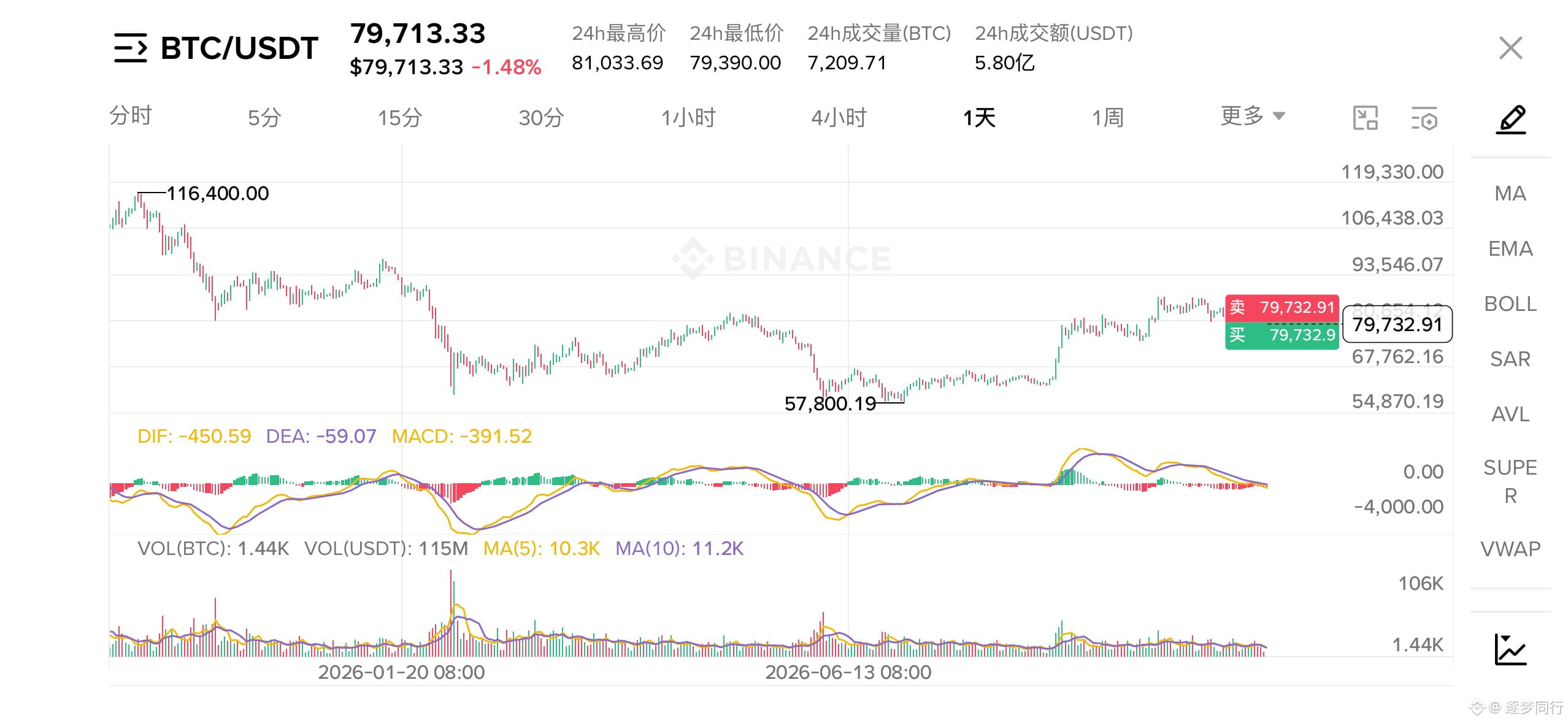
$BTC is currently trading at $79,966.10, up +0.92% from the October 24 low of $79,240.90. A $100,000 long position opened at the low with 10x leverage would show a static unrealized profit of about $9,152—an arithmetic illustration that excludes funding rates, slippage, and liquidation risk, and is not a recommendation to trade.
What happened over the weekend
An AI-driven stock selloff dragged BTC down to around $79,280, liquidating $404.2 million in long positions. Peter Schiff said Bitcoin had “finally started to fall,” with $75,000 as the next target. Farside data showed net outflows of $773.5 million from spot ETFs from Thursday to Friday. The Fear & Greed Index stood at 40, in neutral-to-fear territory. But the October 24 low remained unbroken.
Structural outlook
Above: 81,021 (24-hour high) → 84,897 (October 21 high)
Below: 79,880 → 79,240 (previous low)
Whether the price can reclaim 81,000 before Wednesday is key to determining whether the market structure repairs this week or continues to trade sideways.
Macroeconomic factor
The Fed will announce its decision at 2:00 p.m. ET on Wednesday, with futures pricing in roughly a 90% chance of no change. At current pricing, holding steady is no longer a surprise; the real variables are the wording of the statement and the tone of the press conference.
Takeaway
When bearish voices are loudest but the price refuses to make a new low, it may indicate that selling momentum is fading—but this is only a hypothesis, not a reason to enter a trade. ETF outflows and liquidation pressure are facts, and so is the fact that the low has held. Until 81,000 is reclaimed, “repair” is a more reasonable description than “reversal.”
Staying on the sidelines isn’t wrong; watching without clear conditions is. Watch 81,000 and 79,240 first, then consider the direction.
#BTC #MacroInsights #风险提示
2
436
·
--
🎙️ Build Binance Square, Hold BNB | It’s a new Monday—are the bulls back? Let’s chat~

End
04 h 54 m 45 s
14.3k
55
47

·
--
Bullish
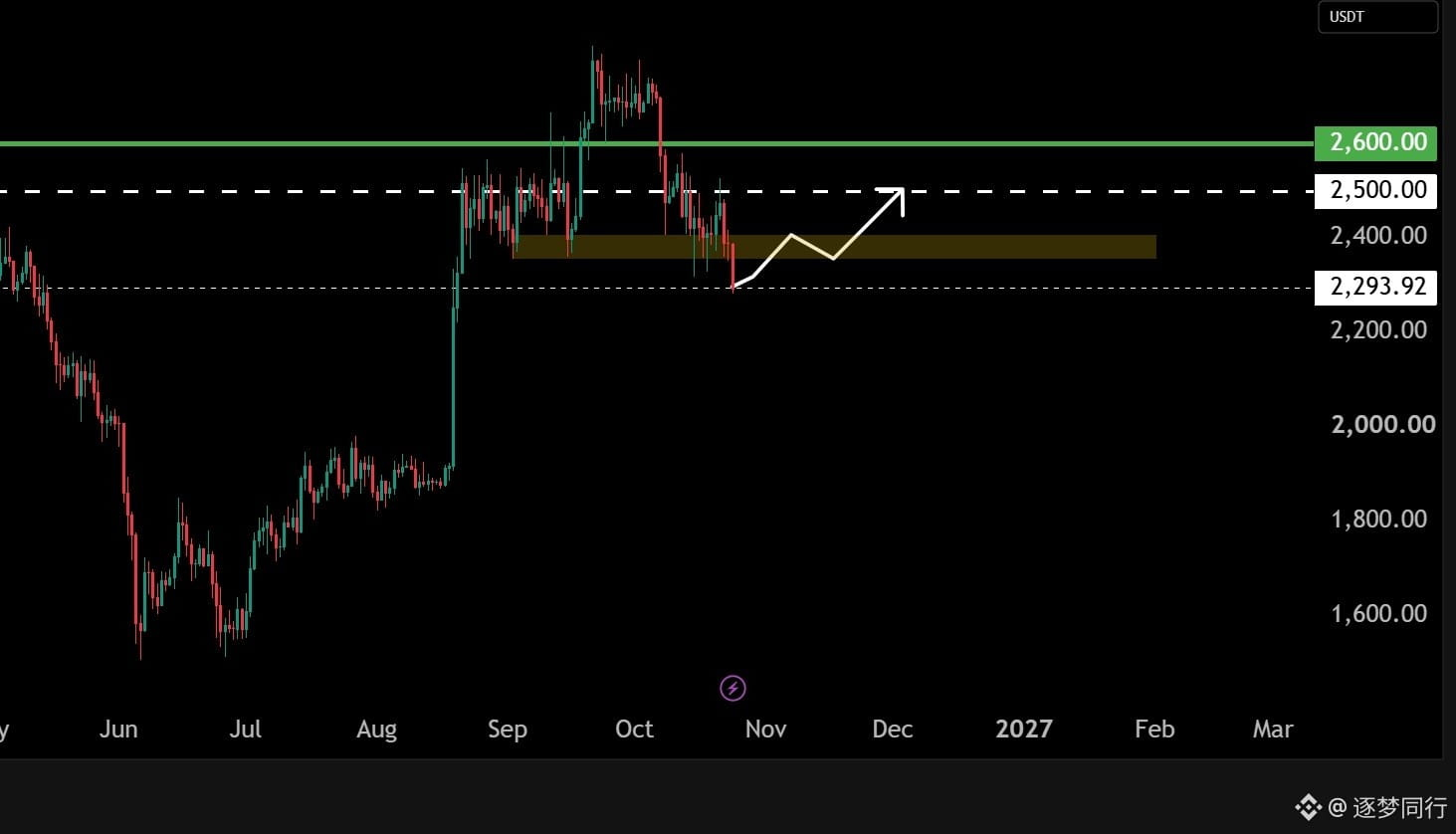
At the time of writing, $ETH is trading at $2,357.43, up +3.40% from the October 24 low of $2,279.97. A $100,000 long position opened at the low with 10x leverage would show a static unrealized profit of about $33,974—but this is a mathematical illustration that excludes funding rates, slippage, and liquidation risk, and is not investment advice.
Capital flows: Exchange net outflows are a more useful variable to track
Santiment data shows that on October 23, net ETH outflows from exchanges totaled 169,770 ETH, worth about $407 million—the largest single-day outflow in four months. The previous larger outflow occurred on June 5, and was later viewed as a local buying opportunity. Net outflows do not mean prices will necessarily rise, but they do at least reflect a marginal easing of short-term selling pressure.
Institutions: ETF flows and large-holder accumulation both cool
As of October 22, ETH ETFs had seen cumulative outflows of $1.2 billion, making this the worst month of 2026 so far. Bitmine has slowed its accumulation to about 12,500 ETH per week and currently holds 6.04 million ETH, close to 5% of ETH's total supply. Marginal buying from large institutions is weakening.
Price structure: ETH's rebound is stronger than BTC's
ETH has rebounded more than 3% from its low, compared with about 2% for BTC over the same period. This gap suggests spot buyers are taking the baton themselves, rather than simply following institutional flows.
Technical levels
Above: 2,390 (24-hour high) → 2,470 → 2,548 (20-day/50-day moving averages)
Below: Around 2,357 (100-day moving average) → 2,330 → 2,279 low
Macro factor: The Federal Reserve's October 28 rate decision.
#ETH #MacroInsights #风险提示
2
118


·
--
“Delos Q&A · Messenger's Answer——The third phase”
Welcome to the collaborative city of Delos.
Your concern is answered by the messenger pigeons.
Today's question is —— what makes Delos different from other agent arbitrage projects?
—— How many Agents Delos have?
—— can users use multiple Agents at the same time?
If you are also looking for the entry point to the Agent era,
The next reply will continue to await you in Delos.
$BTC $ETH $BNB
1
74
·
--
“Delos Q&A · Messenger's Answer——The third phase”
Welcome to the collaborative city of Delos.
Your concern is answered by the messenger pigeons.
Today's question is —— what makes Delos different from other agent arbitrage projects?
—— How many Agents Delos have?
—— can users use multiple Agents at the same time?
If you are also looking for the entry point to the Agent era,
The next reply will continue to await you in Delos.
$BTC $ETH $BNB
“Delos Q&A · Messenger's Answer——The third phase”
Welcome to the collaborative city of Delos.
Your concern is answered by the messenger pigeons.
Today's question is —— what makes Delos different from other agent arbitrage projects?
—— How many Agents Delos have?
—— can users use multiple Agents at the same time?
If you are also looking for the entry point to the Agent era,
The next reply will continue to await you in Delos.
$BTC $ETH $BNB
Welcome to the collaborative city of Delos.
Your concern is answered by the messenger pigeons.
Today's question is —— what makes Delos different from other agent arbitrage projects?
—— How many Agents Delos have?
—— can users use multiple Agents at the same time?
If you are also looking for the entry point to the Agent era,
The next reply will continue to await you in Delos.
$BTC $ETH $BNB
2
102

·
--
Bearish
The biggest takeaway today: Ethereum has hit pause on the Glamsterdam hard fork, which was scheduled to activate on the Hoodi testnet on October 26. $ETH
The problem isn’t a coding error; it’s a blind spot in the rules. EIP-8037 and EIP-8038 aim to optimize Gas pricing, but they could change how Gas is refunded after failed external calls. In an extreme scenario, a malicious caller could use just-not-enough Gas to trick a contract into permanently recording a failed operation—potentially locking users out of retrying a transaction or claiming what they’re owed.
ChainSecurity has already found 13 real-world cases in existing contracts and is working with the project teams on responsible disclosure. The names have not been made public yet. The Ethereum Foundation has also confirmed that replaying transactions on mainnet showed that a small number of contracts could be affected. Most can be fixed by raising the Gas limit, but contracts with hard-coded Gas assumptions won’t be so easy to fix.
The upgrade was originally planned for mainnet in early December; now the timeline is up in the air again. The plan to raise Hoodi’s Gas limit to 200 million has also been delayed. Nodes and validators should follow the update announcements; ordinary mainnet users and ETH holders don’t need to do anything for now.
My take: upgrades need to move faster, but not at the cost of the security of existing applications. Catching this kind of “rule-level side effect” during the testnet phase is far cheaper than dealing with a permanent failure after mainnet launch. Trading short-term uncertainty for fewer problems down the road is worth it.
#以太坊 #Glamsterdam #EIP8037 #安全前置 #MacroInsights
7
2
25
6.1k

·
--
Bullish
Verified
61,800 BTC linked to a $5.7 billion fraud case: confiscation does not mean compensation
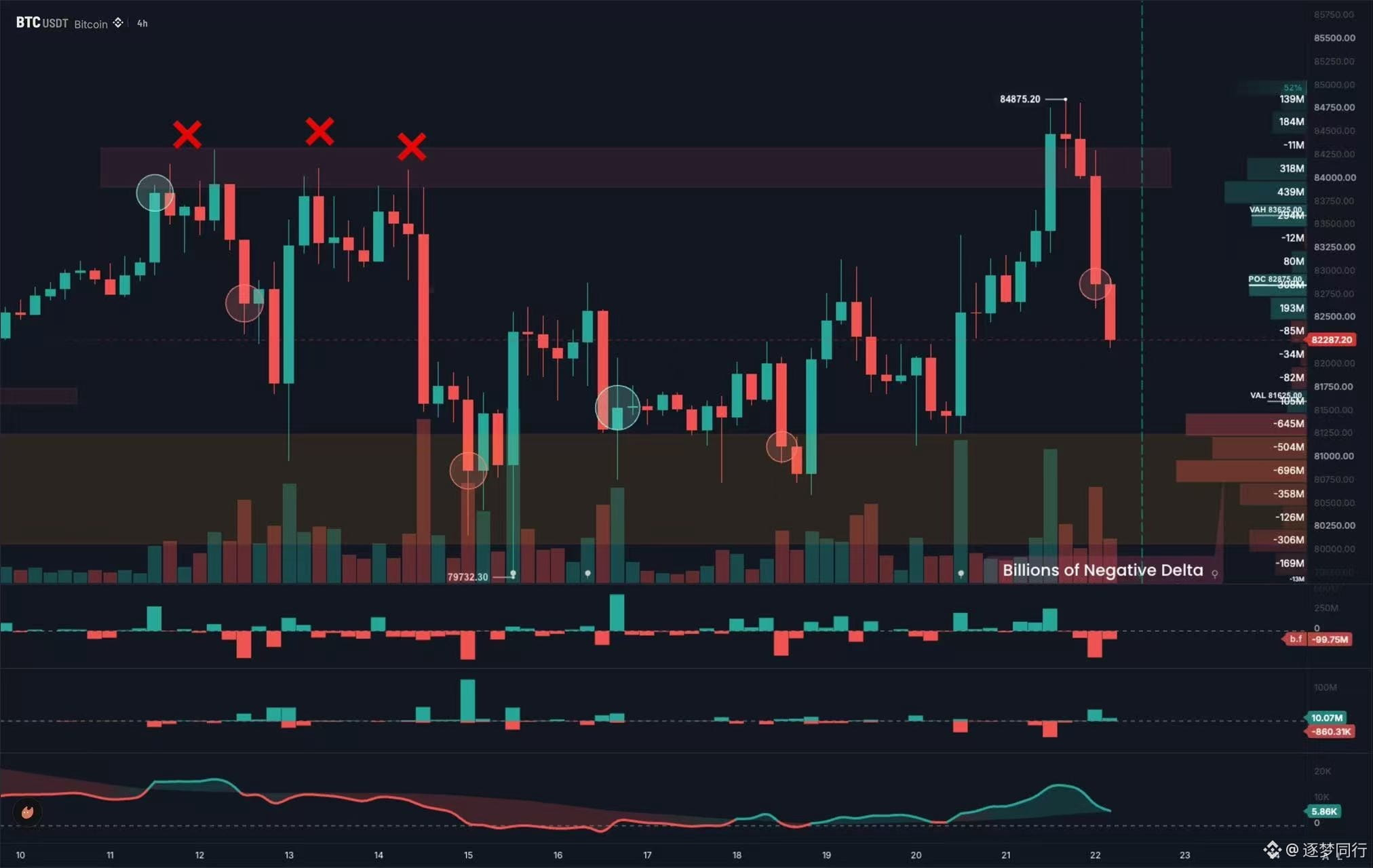
Chinese prosecutors have applied to confiscate more than 61,800 units of $BTC , an asset linked to an alleged investment fraud case. The case involved more than 102,000 investors between 2014 and 2017, with over RMB 40.378 billion raised and investor losses of nearly RMB 20 billion. The funds were reportedly used to purchase assets including Bitcoin, real estate, and luxury goods.
Case developments:
• The alleged mastermind, Qian Zhimin, reportedly fled to the UK, where the relevant BTC was later seized by British authorities.
• A Chinese court has accepted prosecutors’ confiscation application and opened a six-month proceeding for victims and other interested parties to participate.
• Previously, the UK High Court ruled that Chinese law should apply to victims’ claims to the BTC in question.
Key reminder:
The start of confiscation proceedings ≠ automatic compensation for victims. Victims’ legal claims and entitlement to recover assets still need to be assessed and determined separately.
The central dispute in this case is no longer just the recovery of assets from fraud, but also the ownership of cross-border crypto assets, mechanisms for their return, and their legal classification. The ownership of 61,800 BTC will be an important case to watch in the judicial handling of cross-border crypto assets.
#BTC #加密资产 #跨境司法 #宏观
2
180
·
--
“Delos Q&A · Messenger’s Answer—Phase Three”
Welcome to the collaborative city of Delos.
Your questions are answered by messenger pigeons.
Today’s question is: What are Delos’s core features?
What are Delos’s highlights?
If you’re also looking for an entry point to the Agent era,
Delos will be waiting for you in the next reply.
$BTC $NIL $QQQB
2
167

Log in to explore more content
Join global crypto users on Binance Square
⚡️ Get latest and useful information about crypto.
💬 Trusted by the world’s largest crypto exchange.
👍 Discover real insights from verified creators.
Email / Phone number
Trending Topics
FOMCWatch
8.9M views
26,717 Discussing
TradFi News | Warsh Must Explain Why the Fed Is Holding This Week While Keeping a December Hike Alive
Binance News
·2 Likes
·384 views
EthereumDropsBelow$2300
2,772 views
92 Discussing
KoreaRulingPartyToGatherViewsOnVirtualAssetTaxDelay
0 views
0 Discussing