
周期教授
748 Posts

周期教授
 Square Verified+
Report
Block User
推特X:zhouqi2013 稳健风格|分享投资心得|投资策略。
Occasional Trader
8.9 Years
380 Following
33.7K+ Followers
10.8K+ Liked
Posts
All
Quotes
Videos
Live
·
--
Bullish
Why did it keep rising even after the rate hike? $BTC
On September 16, the U.S. Federal Reserve raised rates by 25 basis points, bringing the interest rate to 3.75%–4.00%—the first rate hike since 2023. The dot plot also suggests that another increase may be possible later this year.
This time, it didn’t immediately trigger a sell-off mainly because several things piled up together:
Rising expectations for further hikes, the <Clear Act> failing to pass in the Senate, and prices having already dropped from over 80,000 to 75,000 before the “shoe dropped.” When the decision finally came, the people who were going to sell already sold.
Around 75,000, there were many short positions stacked up. After the bad news was priced in, those shorts were closed. The resulting forced buying pushed the price upward.
On Friday, ETF inflows suddenly returned. On September 18, U.S. spot Bitcoin ETFs saw net inflows of about $433 million, pulling the week from a major outflow back to nearly flat.
Some of the funds interpret “high interest rates + high U.S. Treasury yields” as dollar-credit pressure. Bitcoin is being treated more like an asset that hedges—similar to gold—rather than simply a technology-growth stock.
So it’s not that “rate hikes are bullish for Bitcoin.” Instead, it’s: the news has already been priced in, and then you add short-covering plus an institutional rebound over the day.
This rally has been dubbed the “FOMO breakout”—a bull run you miss if you hesitated!
Why did it keep rising even after the rate hike? $BTC
On September 16, the U.S. Federal Reserve raised rates by 25 basis points, bringing the interest rate to 3.75%–4.00%—the first rate hike since 2023. The dot plot also suggests that another increase may be possible later this year.
This time, it didn’t immediately trigger a sell-off mainly because several things piled up together:
Rising expectations for further hikes, the <Clear Act> failing to pass in the Senate, and prices having already dropped from over 80,000 to 75,000 before the “shoe dropped.” When the decision finally came, the people who were going to sell already sold.
Around 75,000, there were many short positions stacked up. After the bad news was priced in, those shorts were closed. The resulting forced buying pushed the price upward.
On Friday, ETF inflows suddenly returned. On September 18, U.S. spot Bitcoin ETFs saw net inflows of about $433 million, pulling the week from a major outflow back to nearly flat.
Some of the funds interpret “high interest rates + high U.S. Treasury yields” as dollar-credit pressure. Bitcoin is being treated more like an asset that hedges—similar to gold—rather than simply a technology-growth stock.
So it’s not that “rate hikes are bullish for Bitcoin.” Instead, it’s: the news has already been priced in, and then you add short-covering plus an institutional rebound over the day.
This rally has been dubbed the “FOMO breakout”—a bull run you miss if you hesitated!
On September 16, the U.S. Federal Reserve raised rates by 25 basis points, bringing the interest rate to 3.75%–4.00%—the first rate hike since 2023. The dot plot also suggests that another increase may be possible later this year.
This time, it didn’t immediately trigger a sell-off mainly because several things piled up together:
Rising expectations for further hikes, the <Clear Act> failing to pass in the Senate, and prices having already dropped from over 80,000 to 75,000 before the “shoe dropped.” When the decision finally came, the people who were going to sell already sold.
Around 75,000, there were many short positions stacked up. After the bad news was priced in, those shorts were closed. The resulting forced buying pushed the price upward.
On Friday, ETF inflows suddenly returned. On September 18, U.S. spot Bitcoin ETFs saw net inflows of about $433 million, pulling the week from a major outflow back to nearly flat.
Some of the funds interpret “high interest rates + high U.S. Treasury yields” as dollar-credit pressure. Bitcoin is being treated more like an asset that hedges—similar to gold—rather than simply a technology-growth stock.
So it’s not that “rate hikes are bullish for Bitcoin.” Instead, it’s: the news has already been priced in, and then you add short-covering plus an institutional rebound over the day.
This rally has been dubbed the “FOMO breakout”—a bull run you miss if you hesitated!

2
9
17.4k
·
--
ZEC surged sharply—has it been overvalued? What potential does this coin have in the future? What funds are pushing it higher?
$ZEC The rise is mainly driven by ETFs + short-squeeze + a privacy narrative layered on top; in the short term it’s overheated, and long term depends on whether real privacy needs can truly be fulfilled.
From the 2024 low of about $16, it has increased more than 60x; over the past year, about 20x or more; over the last 30 days, roughly about doubled.
Its all-time high was around $3,192 in October 2016.
Short term: relatively high
Total supply is capped at 21 million; circulating supply is about 16.92 million (around 80%).
If ZEC’s market cap reached 2% of BTC’s, that would be $1,622. This is an assumption, not a prediction.
The shielded pool holds about 4.88 million coins—much higher than the 8% in August 2024—which suggests people are truly using the privacy function, not just trading/speculating.
Wang Chun, co-founder of F2Pool, publicly said it’s a narrative-driven market: a market cap nearing Sol doesn’t mean the same level of real usage; in the first four years there were reward-allocation issues, and privacy was optional rather than the default.
There’s a lot of leverage in the rally: futures open interest at one point exceeded $2 billion, and daily short liquidations reached tens of millions of dollars.
ZEC can get a U.S. listed ETF because it’s more auditable than XMR—more optionally transparent.
Conclusion: it’s undervalued compared to a few months ago; compared with the pace and leverage of the past two weeks, it’s likely to pull back in the short term.
There are only three core variables: regulation, whether institutions keep buying, and whether users truly put money into shielded addresses.
Favorable factors:
The U.S. has seen the first spot privacy-coin ETF; Monero is unlikely to replicate that path.
When AI and capital controls intensify, privacy as a theme will be priced repeatedly.
After wallets default to shielded addresses and standardized addresses reduce the usage barrier, the share of shielded transactions once reached a very high level.
Public company Cypherpunk has treated ZEC as a reserve asset, aiming to obtain about 5% of the supply.
Main risks
Policy shift: ETFs restricted, and privacy transactions treated as money laundering.
Technical governance: if another issue arises around supply integrity, the market will reprice.
Optional privacy vs default privacy: people who truly want strong privacy may still go to Monero.
Pre-shredded into the halving: the 2028 halving is still far away, and there will be big volatility in between.
{future}(ZECUSDT)
ZEC surged sharply—has it been overvalued? What potential does this coin have in the future? What funds are pushing it higher?
$ZEC The rise is mainly driven by ETFs + short-squeeze + a privacy narrative layered on top; in the short term it’s overheated, and long term depends on whether real privacy needs can truly be fulfilled.
From the 2024 low of about $16, it has increased more than 60x; over the past year, about 20x or more; over the last 30 days, roughly about doubled.
Its all-time high was around $3,192 in October 2016.
Short term: relatively high
Total supply is capped at 21 million; circulating supply is about 16.92 million (around 80%).
If ZEC’s market cap reached 2% of BTC’s, that would be $1,622. This is an assumption, not a prediction.
The shielded pool holds about 4.88 million coins—much higher than the 8% in August 2024—which suggests people are truly using the privacy function, not just trading/speculating.
Wang Chun, co-founder of F2Pool, publicly said it’s a narrative-driven market: a market cap nearing Sol doesn’t mean the same level of real usage; in the first four years there were reward-allocation issues, and privacy was optional rather than the default.
There’s a lot of leverage in the rally: futures open interest at one point exceeded $2 billion, and daily short liquidations reached tens of millions of dollars.
ZEC can get a U.S. listed ETF because it’s more auditable than XMR—more optionally transparent.
Conclusion: it’s undervalued compared to a few months ago; compared with the pace and leverage of the past two weeks, it’s likely to pull back in the short term.
There are only three core variables: regulation, whether institutions keep buying, and whether users truly put money into shielded addresses.
Favorable factors:
The U.S. has seen the first spot privacy-coin ETF; Monero is unlikely to replicate that path.
When AI and capital controls intensify, privacy as a theme will be priced repeatedly.
After wallets default to shielded addresses and standardized addresses reduce the usage barrier, the share of shielded transactions once reached a very high level.
Public company Cypherpunk has treated ZEC as a reserve asset, aiming to obtain about 5% of the supply.
Main risks
Policy shift: ETFs restricted, and privacy transactions treated as money laundering.
Technical governance: if another issue arises around supply integrity, the market will reprice.
Optional privacy vs default privacy: people who truly want strong privacy may still go to Monero.
Pre-shredded into the halving: the 2028 halving is still far away, and there will be big volatility in between.
$ZEC The rise is mainly driven by ETFs + short-squeeze + a privacy narrative layered on top; in the short term it’s overheated, and long term depends on whether real privacy needs can truly be fulfilled.
From the 2024 low of about $16, it has increased more than 60x; over the past year, about 20x or more; over the last 30 days, roughly about doubled.
Its all-time high was around $3,192 in October 2016.
Short term: relatively high
Total supply is capped at 21 million; circulating supply is about 16.92 million (around 80%).
If ZEC’s market cap reached 2% of BTC’s, that would be $1,622. This is an assumption, not a prediction.
The shielded pool holds about 4.88 million coins—much higher than the 8% in August 2024—which suggests people are truly using the privacy function, not just trading/speculating.
Wang Chun, co-founder of F2Pool, publicly said it’s a narrative-driven market: a market cap nearing Sol doesn’t mean the same level of real usage; in the first four years there were reward-allocation issues, and privacy was optional rather than the default.
There’s a lot of leverage in the rally: futures open interest at one point exceeded $2 billion, and daily short liquidations reached tens of millions of dollars.
ZEC can get a U.S. listed ETF because it’s more auditable than XMR—more optionally transparent.
Conclusion: it’s undervalued compared to a few months ago; compared with the pace and leverage of the past two weeks, it’s likely to pull back in the short term.
There are only three core variables: regulation, whether institutions keep buying, and whether users truly put money into shielded addresses.
Favorable factors:
The U.S. has seen the first spot privacy-coin ETF; Monero is unlikely to replicate that path.
When AI and capital controls intensify, privacy as a theme will be priced repeatedly.
After wallets default to shielded addresses and standardized addresses reduce the usage barrier, the share of shielded transactions once reached a very high level.
Public company Cypherpunk has treated ZEC as a reserve asset, aiming to obtain about 5% of the supply.
Main risks
Policy shift: ETFs restricted, and privacy transactions treated as money laundering.
Technical governance: if another issue arises around supply integrity, the market will reprice.
Optional privacy vs default privacy: people who truly want strong privacy may still go to Monero.
Pre-shredded into the halving: the 2028 halving is still far away, and there will be big volatility in between.
5
4
36
16.5k
·
--
Bullish
I found an underrated meme
This meme coin hasn’t hit alpha yet, but it has a very high chance to
It’s also strongly connected to this coin’s stock event. If it gets listed, it could be a 10x gain. If it doesn’t get listed, it’s already dropped enough and is basically at the bottom.
This coin is the one: $币有
It’s like kindling stacked by the door—just need a spark. We should lay low and wait at the low end.
I found an underrated meme
This meme coin hasn’t hit alpha yet, but it has a very high chance to
It’s also strongly connected to this coin’s stock event. If it gets listed, it could be a 10x gain. If it doesn’t get listed, it’s already dropped enough and is basically at the bottom.
This coin is the one: $币有
It’s like kindling stacked by the door—just need a spark. We should lay low and wait at the low end.
This meme coin hasn’t hit alpha yet, but it has a very high chance to
It’s also strongly connected to this coin’s stock event. If it gets listed, it could be a 10x gain. If it doesn’t get listed, it’s already dropped enough and is basically at the bottom.
This coin is the one: $币有
It’s like kindling stacked by the door—just need a spark. We should lay low and wait at the low end.
1
1
3k
·
--
If you see this message at the end of August, seriously pay attention to on-chain meme coins, and you can at least make 3-5x.
The next market trend mainly depends on the movement of $BTC . If Bitcoin strengthens, coins related to the trading sector and new meme coins will have opportunities. If Bitcoin fluctuates, old mainstream coins will rise strongly. There is also another signal: go long those coins that have fallen sharply. The pump in ZEC follows this logic. Will the upcoming $SUI replicate the rally?
I think there is a high probability that it will. Buying cryptocurrency must meet one of two conditions: it must be related to an American institution, or it must be related to Binance.
The market has long since become divided.
If you see this message at the end of August, seriously pay attention to on-chain meme coins, and you can at least make 3-5x.
The next market trend mainly depends on the movement of $BTC . If Bitcoin strengthens, coins related to the trading sector and new meme coins will have opportunities. If Bitcoin fluctuates, old mainstream coins will rise strongly. There is also another signal: go long those coins that have fallen sharply. The pump in ZEC follows this logic. Will the upcoming $SUI replicate the rally?
I think there is a high probability that it will. Buying cryptocurrency must meet one of two conditions: it must be related to an American institution, or it must be related to Binance.
The market has long since become divided.
The next market trend mainly depends on the movement of $BTC . If Bitcoin strengthens, coins related to the trading sector and new meme coins will have opportunities. If Bitcoin fluctuates, old mainstream coins will rise strongly. There is also another signal: go long those coins that have fallen sharply. The pump in ZEC follows this logic. Will the upcoming $SUI replicate the rally?
I think there is a high probability that it will. Buying cryptocurrency must meet one of two conditions: it must be related to an American institution, or it must be related to Binance.
The market has long since become divided.
周期教授
·
--
BullishAttention⚠️⚠️⚠️
In the crypto/stock sector, a standout meme coin will definitely emerge
And this meme coin will certainly be listed on the spot market, creating a world-shaking phenomenon
$牛来 was originally when the bull market came in crypto.
I will also put some of my efforts into uncovering new assets with phenomenon-level hype
In the crypto/stock sector, a standout meme coin will definitely emerge
And this meme coin will certainly be listed on the spot market, creating a world-shaking phenomenon
$牛来 was originally when the bull market came in crypto.
I will also put some of my efforts into uncovering new assets with phenomenon-level hype

1.5k
·
--
Bullish
As a response to the explosive power of $pons on Robinhood
$MARSCOIN $牛来 will serve as the barometer of the BSC ecosystem
At the same time, the old coin $GIGGLE will also surge
In a bull market, it really is the bold who prosper and the timid who miss out
Seize this brief, golden time to make money!!!
As a response to the explosive power of $pons on Robinhood
$MARSCOIN $牛来 will serve as the barometer of the BSC ecosystem
At the same time, the old coin $GIGGLE will also surge
In a bull market, it really is the bold who prosper and the timid who miss out
Seize this brief, golden time to make money!!!
$MARSCOIN $牛来 will serve as the barometer of the BSC ecosystem
At the same time, the old coin $GIGGLE will also surge
In a bull market, it really is the bold who prosper and the timid who miss out
Seize this brief, golden time to make money!!!
4
8
20.5k
·
--
Bullish
The crypto bull market has arrived. Here are the assets I consider good; feel free to add more.
$BTC irreplaceable as the highest allocation
Outperform BTC: eth sol bnb hype zec
The four major US stocks: crcl hood coin mstr
Strong explosive potential: xrp doge sui okb uni aave
Early-stage watchlist: pump pons aster
Personally, if building a portfolio, Bitcoin allocation should reach 70% or more, and half of the remaining 30% should be allocated to assets that outperform Bitcoin or to the four major US stocks.
Also keep 5% to participate in new opportunities in the industry. The opportunity in the crypto industry lies in rapid circulation: those who believe first sell to those who believe later. After a bear market lasts long enough, it will be ignited by technology and capital, and its explosive power in an instant is greater than its long-term sustainability, but you must learn how to judge.
The best entry point is definitely the early controversial zone, while the selling point is when the whole internet is discussing it. The more it is discussed, the more concentrated retail investors are; areas where retail investors cluster are danger zones. Meme coins born from the attention economy will quickly validate this range.
Don’t get overexcited in your head. When you see others making money, don’t rush in blindly or buy randomly. There are many ways for people to make money; finding what suits you is the most important thing. Meme coins are suitable for high-energy people, while contracts/futures suit those with the right mindset, discipline, and alignment between words and actions.
Following the major cycle and continuously accumulating spot positions is the right path for ordinary people. Continue to be bullish on Bitcoin’s rise and on the crypto industry. This path may seem slower, but over time, compounding emerges and your wealth can also reach a new level,
The crypto bull market has arrived. Here are the assets I consider good; feel free to add more.
$BTC irreplaceable as the highest allocation
Outperform BTC: eth sol bnb hype zec
The four major US stocks: crcl hood coin mstr
Strong explosive potential: xrp doge sui okb uni aave
Early-stage watchlist: pump pons aster
Personally, if building a portfolio, Bitcoin allocation should reach 70% or more, and half of the remaining 30% should be allocated to assets that outperform Bitcoin or to the four major US stocks.
Also keep 5% to participate in new opportunities in the industry. The opportunity in the crypto industry lies in rapid circulation: those who believe first sell to those who believe later. After a bear market lasts long enough, it will be ignited by technology and capital, and its explosive power in an instant is greater than its long-term sustainability, but you must learn how to judge.
The best entry point is definitely the early controversial zone, while the selling point is when the whole internet is discussing it. The more it is discussed, the more concentrated retail investors are; areas where retail investors cluster are danger zones. Meme coins born from the attention economy will quickly validate this range.
Don’t get overexcited in your head. When you see others making money, don’t rush in blindly or buy randomly. There are many ways for people to make money; finding what suits you is the most important thing. Meme coins are suitable for high-energy people, while contracts/futures suit those with the right mindset, discipline, and alignment between words and actions.
Following the major cycle and continuously accumulating spot positions is the right path for ordinary people. Continue to be bullish on Bitcoin’s rise and on the crypto industry. This path may seem slower, but over time, compounding emerges and your wealth can also reach a new level,
$BTC irreplaceable as the highest allocation
Outperform BTC: eth sol bnb hype zec
The four major US stocks: crcl hood coin mstr
Strong explosive potential: xrp doge sui okb uni aave
Early-stage watchlist: pump pons aster
Personally, if building a portfolio, Bitcoin allocation should reach 70% or more, and half of the remaining 30% should be allocated to assets that outperform Bitcoin or to the four major US stocks.
Also keep 5% to participate in new opportunities in the industry. The opportunity in the crypto industry lies in rapid circulation: those who believe first sell to those who believe later. After a bear market lasts long enough, it will be ignited by technology and capital, and its explosive power in an instant is greater than its long-term sustainability, but you must learn how to judge.
The best entry point is definitely the early controversial zone, while the selling point is when the whole internet is discussing it. The more it is discussed, the more concentrated retail investors are; areas where retail investors cluster are danger zones. Meme coins born from the attention economy will quickly validate this range.
Don’t get overexcited in your head. When you see others making money, don’t rush in blindly or buy randomly. There are many ways for people to make money; finding what suits you is the most important thing. Meme coins are suitable for high-energy people, while contracts/futures suit those with the right mindset, discipline, and alignment between words and actions.
Following the major cycle and continuously accumulating spot positions is the right path for ordinary people. Continue to be bullish on Bitcoin’s rise and on the crypto industry. This path may seem slower, but over time, compounding emerges and your wealth can also reach a new level,
24
47
11.7k
·
--
Verified
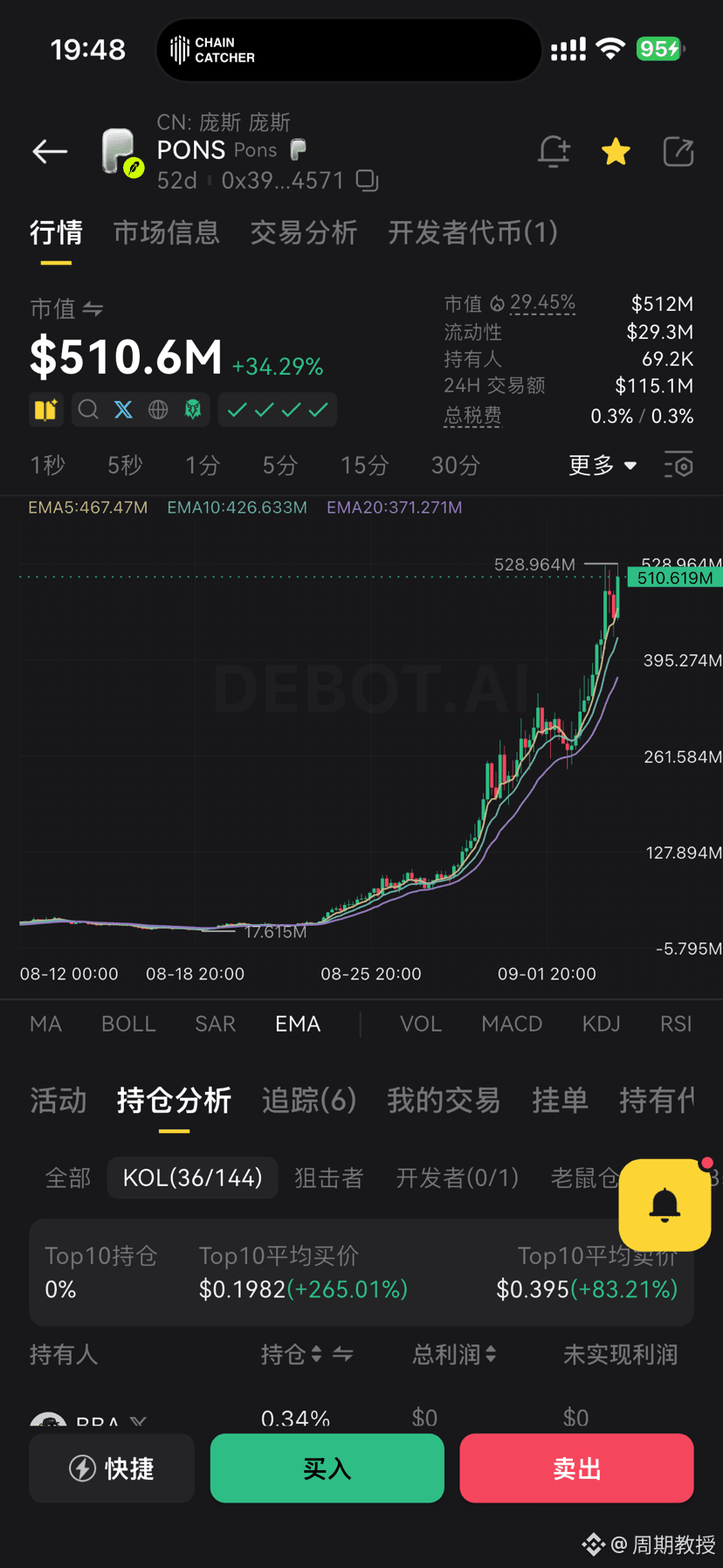
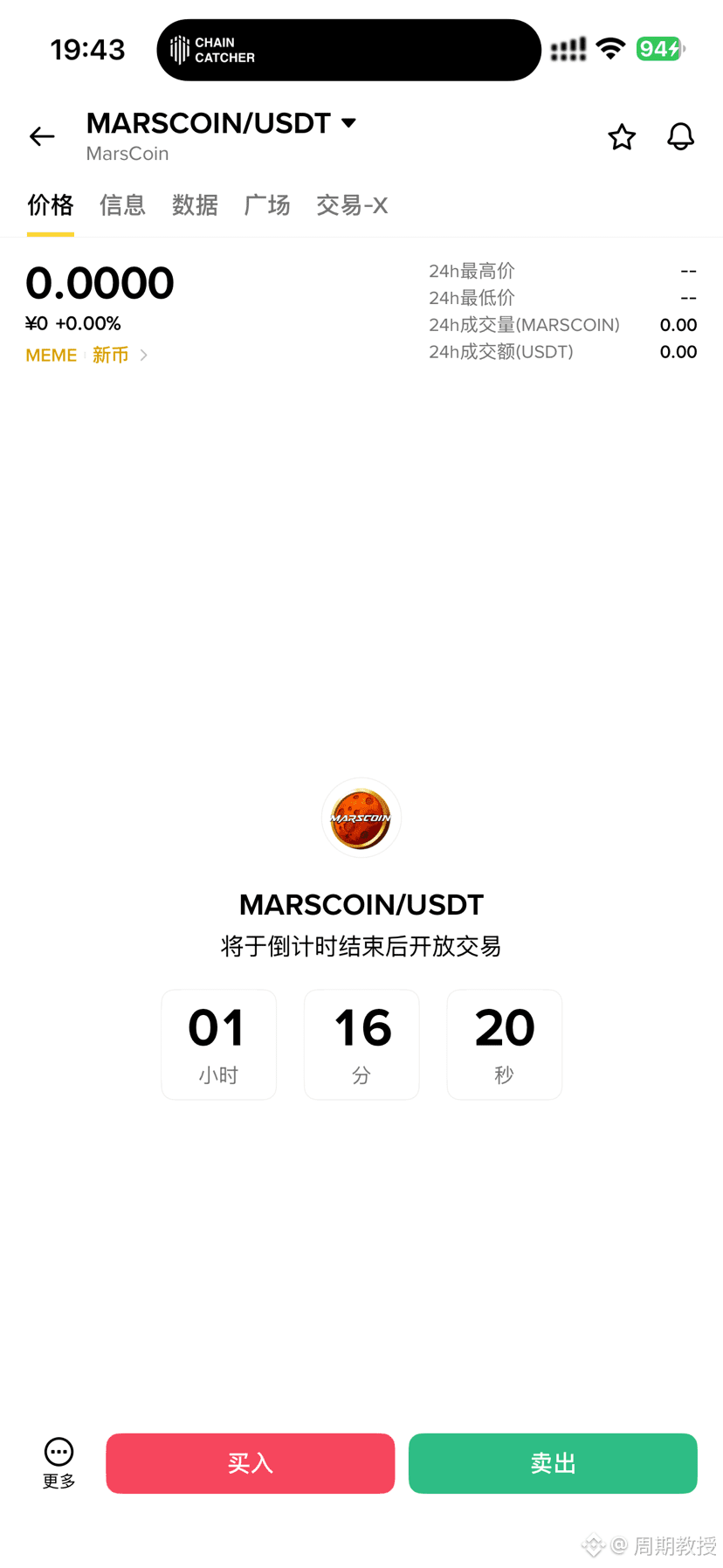
$MarsCoin is available now on spot — truly incredible
Never short this kind of strong coin
Many people think the launch of marsCoin is because of spacex, because of Musk — but that's actually wrong.
What really got this coin listed is the hype around Robinhood. $pons, as a launch platform, has already been making a fortune, so BSC definitely needs to have wealth effects!
$MarsCoin is available now on spot — truly incredible
Never short this kind of strong coin
Many people think the launch of marsCoin is because of spacex, because of Musk — but that's actually wrong.
What really got this coin listed is the hype around Robinhood. $pons, as a launch platform, has already been making a fortune, so BSC definitely needs to have wealth effects!
Never short this kind of strong coin
Many people think the launch of marsCoin is because of spacex, because of Musk — but that's actually wrong.
What really got this coin listed is the hype around Robinhood. $pons, as a launch platform, has already been making a fortune, so BSC definitely needs to have wealth effects!
1
7
6.1k
·
--
At 4 a.m. I saw $AKE suddenly move up, opened a futures contract long position, then went back to sleep. It was just a little bit away from the take-profit line. When I woke up, I found my position was gone—it had been liquidated downward with a big wick 😐
You can’t play memecoins; we still need to go back to mainstream coins.
{future}(AKEUSDT)
At 4 a.m. I saw $AKE suddenly move up, opened a futures contract long position, then went back to sleep. It was just a little bit away from the take-profit line. When I woke up, I found my position was gone—it had been liquidated downward with a big wick 😐
You can’t play memecoins; we still need to go back to mainstream coins.
You can’t play memecoins; we still need to go back to mainstream coins.
2
3.3k
·
--
AI infrastructure will definitely become a bubble like real estate, but right now I think we’re still very, very far from the bubble—it's like when Da Sha Chun bought a house and made a killing.
Most people still don’t know what agents are, and most people haven’t started consuming tokens yet—this is rising exponentially.
AI infrastructure will definitely become a bubble like real estate, but right now I think we’re still very, very far from the bubble—it's like when Da Sha Chun bought a house and made a killing.
Most people still don’t know what agents are, and most people haven’t started consuming tokens yet—this is rising exponentially.
Most people still don’t know what agents are, and most people haven’t started consuming tokens yet—this is rising exponentially.

1
1
2.7k
·
--
Earn tens of thousands of dollars per day—how does this DeFi portfolio with an annualized yield of up to 100000%% operate?
This is a recently popular Uniswap v4 high-fee LP strategy on the Robinhood Chain. The core idea is to market-make for Meme stock liquidity pools.
The basic logic behind this 100,000%+ APY every day is:
New retail traders enter these Memes with ETH—their path goes through these high-fee pools, and the trading fees all go to the LP.
How can it produce such an outrageous APY?
Pools like this can achieve extremely high annualization rates, usually because they simultaneously have:
1. Trading volume far greater than the pool size
During the FOMO stage right after new tokens are launched, pools with TVL of tens of thousands can see daily volume of several million or even tens of millions. Even if the fee is only 0.3%~1%, the fees collected on that day’s principal can reach extremely high levels; the annualized number then becomes 100,000%+
2. v4 allows setting very high fee / hooks
With v4, you can customize fees using hooks. Some pools have fixed high fees (0.9%, 1%, 2%); others use dynamic fees. Every time a retail trader buys, the LP takes a much larger cut than ordinary 0.05% / 0.3% pools.
3. Paths often go through ETH
Many people already have ETH in their wallets; they won’t switch to NVDA/HIMS first and then buy the Meme. The route will go from ETH → intermediate assets → Meme, or it will send directly into the high-fee pool pairings of MEME/ETH or MEME/STOCK.
4. The stock liquidity pools add an extra “spot market” effect
Buying stock Memes often requires converting into the corresponding Stock Token first, which means it also indirectly boosts volume in pools for tokens like NVDA and HIMS. This is a chain-specific玩法 (play).
Earn tens of thousands of dollars per day—how does this DeFi portfolio with an annualized yield of up to 100000%% operate?
This is a recently popular Uniswap v4 high-fee LP strategy on the Robinhood Chain. The core idea is to market-make for Meme stock liquidity pools.
The basic logic behind this 100,000%+ APY every day is:
New retail traders enter these Memes with ETH—their path goes through these high-fee pools, and the trading fees all go to the LP.
How can it produce such an outrageous APY?
Pools like this can achieve extremely high annualization rates, usually because they simultaneously have:
1. Trading volume far greater than the pool size During the FOMO stage right after new tokens are launched, pools with TVL of tens of thousands can see daily volume of several million or even tens of millions. Even if the fee is only 0.3%~1%, the fees collected on that day’s principal can reach extremely high levels; the annualized number then becomes 100,000%+
2. v4 allows setting very high fee / hooks With v4, you can customize fees using hooks. Some pools have fixed high fees (0.9%, 1%, 2%); others use dynamic fees. Every time a retail trader buys, the LP takes a much larger cut than ordinary 0.05% / 0.3% pools.
3. Paths often go through ETH Many people already have ETH in their wallets; they won’t switch to NVDA/HIMS first and then buy the Meme. The route will go from ETH → intermediate assets → Meme, or it will send directly into the high-fee pool pairings of MEME/ETH or MEME/STOCK.
4. The stock liquidity pools add an extra “spot market” effect
Buying stock Memes often requires converting into the corresponding Stock Token first, which means it also indirectly boosts volume in pools for tokens like NVDA and HIMS. This is a chain-specific玩法 (play).
This is a recently popular Uniswap v4 high-fee LP strategy on the Robinhood Chain. The core idea is to market-make for Meme stock liquidity pools.
The basic logic behind this 100,000%+ APY every day is:
New retail traders enter these Memes with ETH—their path goes through these high-fee pools, and the trading fees all go to the LP.
How can it produce such an outrageous APY?
Pools like this can achieve extremely high annualization rates, usually because they simultaneously have:
1. Trading volume far greater than the pool size During the FOMO stage right after new tokens are launched, pools with TVL of tens of thousands can see daily volume of several million or even tens of millions. Even if the fee is only 0.3%~1%, the fees collected on that day’s principal can reach extremely high levels; the annualized number then becomes 100,000%+
2. v4 allows setting very high fee / hooks With v4, you can customize fees using hooks. Some pools have fixed high fees (0.9%, 1%, 2%); others use dynamic fees. Every time a retail trader buys, the LP takes a much larger cut than ordinary 0.05% / 0.3% pools.
3. Paths often go through ETH Many people already have ETH in their wallets; they won’t switch to NVDA/HIMS first and then buy the Meme. The route will go from ETH → intermediate assets → Meme, or it will send directly into the high-fee pool pairings of MEME/ETH or MEME/STOCK.
4. The stock liquidity pools add an extra “spot market” effect
Buying stock Memes often requires converting into the corresponding Stock Token first, which means it also indirectly boosts volume in pools for tokens like NVDA and HIMS. This is a chain-specific玩法 (play).
1
5
24
7.3k
·
--
Bullish
$BTC ’s full set of game-like characteristics is especially suitable for a right-side breakout trade, and it’s also capable of “eating through” the entire segment of the market move. Similar cases are only the US stock “Seven Sisters” and the US ETF $QQQB $SPYB
Most assets can’t do this. Even if there is an independent market move, they still must have catalysts from the aforementioned assets. This is a phenomenon I noticed recently: Bitcoin’s pump pulled up ETH, UNI, and PONs, and it also pulled up the semiconductors along with the Nasdaq.
$BTC ’s full set of game-like characteristics is especially suitable for a right-side breakout trade, and it’s also capable of “eating through” the entire segment of the market move. Similar cases are only the US stock “Seven Sisters” and the US ETF $QQQB $SPYB
Most assets can’t do this. Even if there is an independent market move, they still must have catalysts from the aforementioned assets. This is a phenomenon I noticed recently: Bitcoin’s pump pulled up ETH, UNI, and PONs, and it also pulled up the semiconductors along with the Nasdaq.
Most assets can’t do this. Even if there is an independent market move, they still must have catalysts from the aforementioned assets. This is a phenomenon I noticed recently: Bitcoin’s pump pulled up ETH, UNI, and PONs, and it also pulled up the semiconductors along with the Nasdaq.
2
867
·
--
Bullish
$TMX has dropped to the position. There are now signs of a launch. If this is a pump, it could yield several times the return; there may also be expectations of an upcoming contract!!!
$TMX has dropped to the position. There are now signs of a launch. If this is a pump, it could yield several times the return; there may also be expectations of an upcoming contract!!!
4
1
2.1k
·
--
Verified
$MARSCOIN 上线合约,这是bsc的大利好,这个也是bsc币股meme币的龙头,因为pons作为Robinhood链上的高速增长,我认为bsc还是会有更大的动作出现,
我觉得这是普通用户的短期机会,大家要把握。
{future}(MARSCOINUSDT)
$MARSCOIN 上线合约,这是bsc的大利好,这个也是bsc币股meme币的龙头,因为pons作为Robinhood链上的高速增长,我认为bsc还是会有更大的动作出现,
我觉得这是普通用户的短期机会,大家要把握。
我觉得这是普通用户的短期机会,大家要把握。

1
3
3.4k
·
--
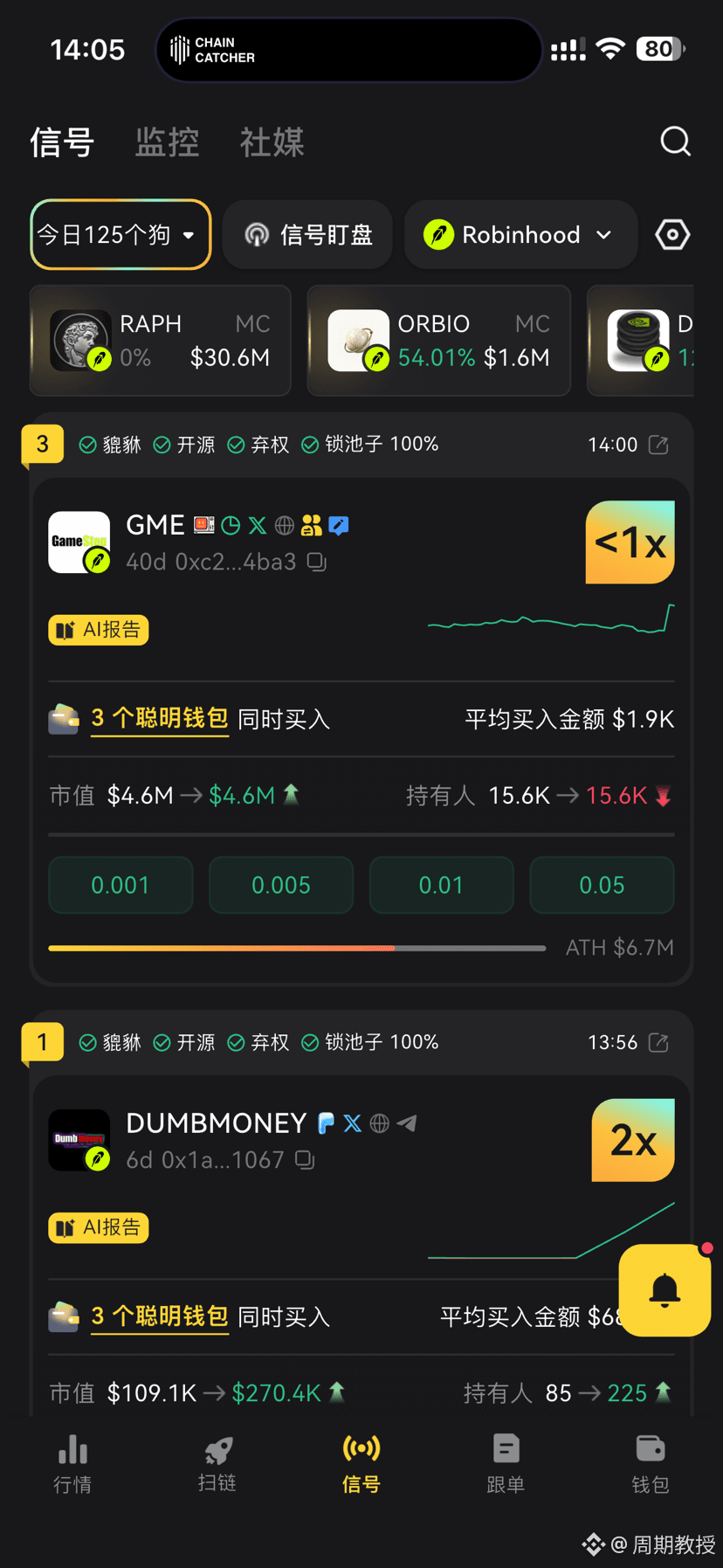
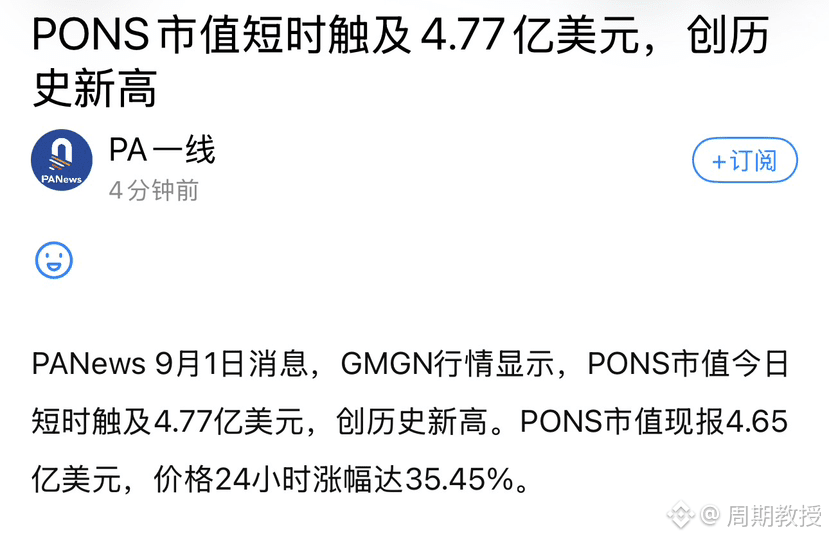
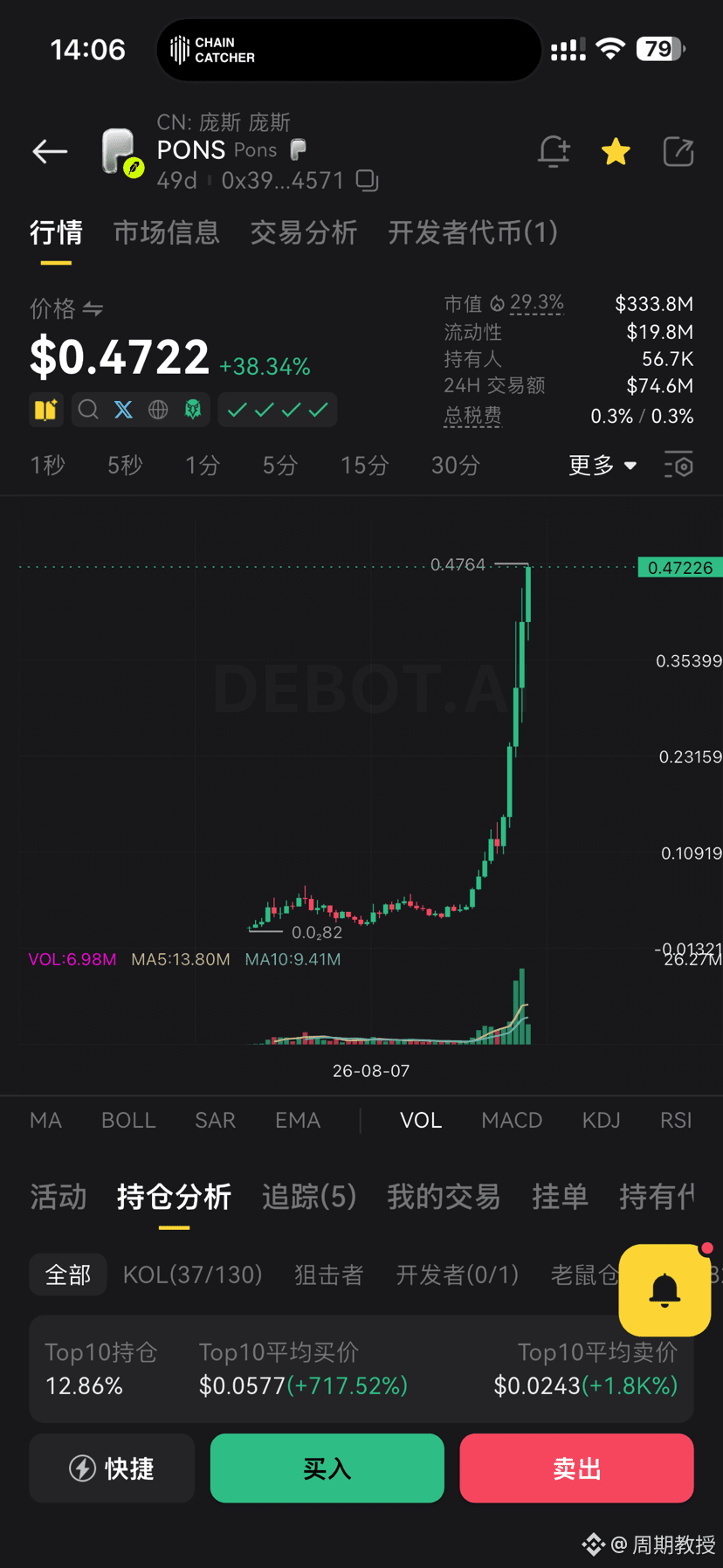
The on-chain bull market is here. Robinhood's on-chain launch platform coin $pons
It’s already close to $500 million, with hundreds of meme “gold dogs” every day.
To put it without exaggeration: this is already a major on-chain bull market.
The on-chain bull market is here. Robinhood's on-chain launch platform coin $pons
It’s already close to $500 million, with hundreds of meme “gold dogs” every day.
To put it without exaggeration: this is already a major on-chain bull market.
It’s already close to $500 million, with hundreds of meme “gold dogs” every day.
To put it without exaggeration: this is already a major on-chain bull market.
2
4
5k
·
--
Verified
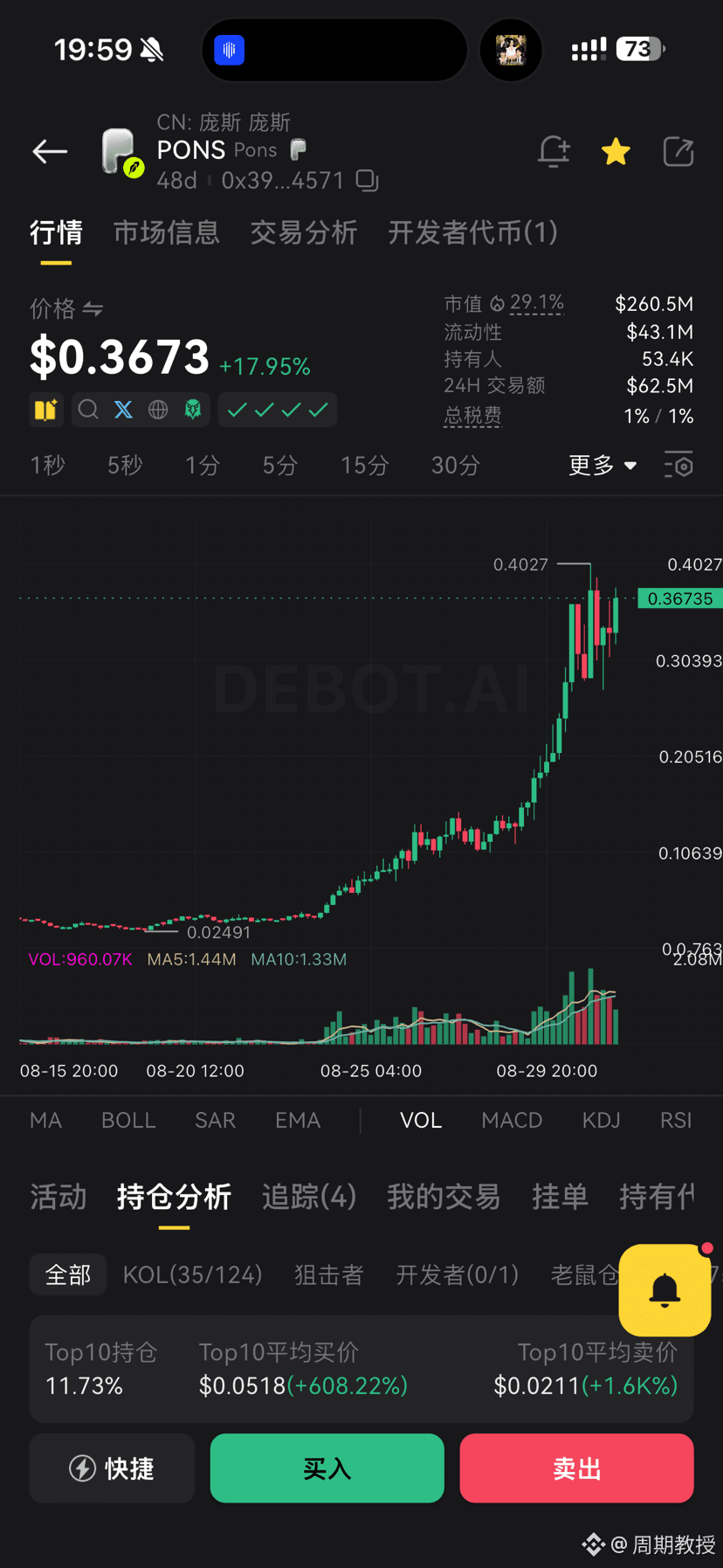
Robinhood Chain’s bond token issuance platform $PONS has an absolutely amazing line drawing—everyone, make sure to put it on your watchlist. This chain is also where many large funds are positioning themselves.
PONS is the platform token of Pons, the native token issuance platform for the Robinhood Chain. The platform supports the creation and issuance of fixed-supply tokens, and will use the collected WETH fees to buy back PONS. The collected PONS fees are directly burned, and some in the community view it as the Pump.fun on the Robinhood Chain.
Robinhood Chain’s bond token issuance platform $PONS has an absolutely amazing line drawing—everyone, make sure to put it on your watchlist. This chain is also where many large funds are positioning themselves.
PONS is the platform token of Pons, the native token issuance platform for the Robinhood Chain. The platform supports the creation and issuance of fixed-supply tokens, and will use the collected WETH fees to buy back PONS. The collected PONS fees are directly burned, and some in the community view it as the Pump.fun on the Robinhood Chain.
PONS is the platform token of Pons, the native token issuance platform for the Robinhood Chain. The platform supports the creation and issuance of fixed-supply tokens, and will use the collected WETH fees to buy back PONS. The collected PONS fees are directly burned, and some in the community view it as the Pump.fun on the Robinhood Chain.
2
1
1.4k
·
--
These economists are really evil!!!
They take a policy adjustment that eases market liquidity pressure and reduces the risk of bad loans at financial institutions, and unilaterally interpret it as selfless care for young people.
Extending the loan term from 30 years to 40 years may reduce the monthly payment, but according to basic mortgage loan compound-interest financial knowledge, the total interest cost that borrowers ultimately have to pay to the bank will increase significantly. This makes young people trade long-term debt for short-term survival.
The article mentions “keeping the monthly payment to less than half” and “talking to the bank about postponing payments if you run into trouble” as being full of warmth, but in reality, banks have extremely strict approval standards for loan deferment and a high cost to one’s credit record. They disguise the risk-avoidance mechanisms of commercial banks, while ignoring the vulnerability of ordinary people in the face of default risk.
If the total home price is still far beyond people’s income, and people can only afford it by extending the repayment period, then in effect it is encouraging young people to keep leveraging up—completely contradicting the original intention of easing young people’s living burden.
When will these economists offer some fundamental guarantees: solving housing issues and boosting the willingness to have children depends on lowering baseline living costs, providing high-quality public housing, balancing the home price-to-rent ratio, and improving public services.
Focusing on “how to make it easier for young people to get loans” shifts responsibilities that should be borne by social security to individuals and families as long-term debt. Moreover, this kind of long-term debt transfer will greatly suppress social and economic development.
Once I thought about it, I realized—doesn’t this guy know? He definitely knows, and he knows particularly well. Calling it heartwarming and sincere is truly disgusting.
The real evil lies in the penetration of this kind of thinking.
These economists are really evil!!!
They take a policy adjustment that eases market liquidity pressure and reduces the risk of bad loans at financial institutions, and unilaterally interpret it as selfless care for young people.
Extending the loan term from 30 years to 40 years may reduce the monthly payment, but according to basic mortgage loan compound-interest financial knowledge, the total interest cost that borrowers ultimately have to pay to the bank will increase significantly. This makes young people trade long-term debt for short-term survival.
The article mentions “keeping the monthly payment to less than half” and “talking to the bank about postponing payments if you run into trouble” as being full of warmth, but in reality, banks have extremely strict approval standards for loan deferment and a high cost to one’s credit record. They disguise the risk-avoidance mechanisms of commercial banks, while ignoring the vulnerability of ordinary people in the face of default risk.
If the total home price is still far beyond people’s income, and people can only afford it by extending the repayment period, then in effect it is encouraging young people to keep leveraging up—completely contradicting the original intention of easing young people’s living burden.
When will these economists offer some fundamental guarantees: solving housing issues and boosting the willingness to have children depends on lowering baseline living costs, providing high-quality public housing, balancing the home price-to-rent ratio, and improving public services.
Focusing on “how to make it easier for young people to get loans” shifts responsibilities that should be borne by social security to individuals and families as long-term debt. Moreover, this kind of long-term debt transfer will greatly suppress social and economic development.
Once I thought about it, I realized—doesn’t this guy know? He definitely knows, and he knows particularly well. Calling it heartwarming and sincere is truly disgusting.
The real evil lies in the penetration of this kind of thinking.
They take a policy adjustment that eases market liquidity pressure and reduces the risk of bad loans at financial institutions, and unilaterally interpret it as selfless care for young people.
Extending the loan term from 30 years to 40 years may reduce the monthly payment, but according to basic mortgage loan compound-interest financial knowledge, the total interest cost that borrowers ultimately have to pay to the bank will increase significantly. This makes young people trade long-term debt for short-term survival.
The article mentions “keeping the monthly payment to less than half” and “talking to the bank about postponing payments if you run into trouble” as being full of warmth, but in reality, banks have extremely strict approval standards for loan deferment and a high cost to one’s credit record. They disguise the risk-avoidance mechanisms of commercial banks, while ignoring the vulnerability of ordinary people in the face of default risk.
If the total home price is still far beyond people’s income, and people can only afford it by extending the repayment period, then in effect it is encouraging young people to keep leveraging up—completely contradicting the original intention of easing young people’s living burden.
When will these economists offer some fundamental guarantees: solving housing issues and boosting the willingness to have children depends on lowering baseline living costs, providing high-quality public housing, balancing the home price-to-rent ratio, and improving public services.
Focusing on “how to make it easier for young people to get loans” shifts responsibilities that should be borne by social security to individuals and families as long-term debt. Moreover, this kind of long-term debt transfer will greatly suppress social and economic development.
Once I thought about it, I realized—doesn’t this guy know? He definitely knows, and he knows particularly well. Calling it heartwarming and sincere is truly disgusting.
The real evil lies in the penetration of this kind of thinking.

15
28
16.8k
·
--
Only 5% of the market’s rise time is enough, while 95% of the time is spent in choppy trading and declines.
So it’s completely normal that most people can’t make money.
Only 5% of the market’s rise time is enough, while 95% of the time is spent in choppy trading and declines.
So it’s completely normal that most people can’t make money.
So it’s completely normal that most people can’t make money.
3
1.4k
·
--
Bullish
Verified
After Waller spoke, how will the market move? What opportunities do we have?
As soon as he opened his mouth, it wiped out many people’s rate-cut expectations. That whole “Powell-era dream” of rate cuts—put simply—turned into nothing but a fleeting illusion.
This guy’s tone is pretty tough. The gist is that inflation hasn’t fallen fast enough, and the Fed could hike at any time. And the market is being realistic too: the probability of a September rate hike jumped to above half in response, and sentiment instantly flipped to a tight-liquidity mode.
Actually, if you look closely at the U.S. stock market tape, you’ll find the crisis was already written on the wall.
The S&P 500 just broke to a new all-time high, but buy pressure is becoming increasingly concentrated. The divergence between price action and market breadth has hit a record level unseen in nearly 30 years.
What’s funnier is the crowd that has been chasing AI. Earlier, even pigs could fly, figuratively speaking. But once things cooled down a bit, many people hopped straight onto an extremely thrilling roller coaster in the hardware stocks—unrealized gains hadn’t even been cashed out before they were given back, only to return the profits.
Everyone’s asking: the one-way move is over—so what exactly will we make money from next?
You know, in this kind of high-level consolidation, the biggest taboo is putting all your chips in one direction. I’ve been chatting with a few traders recently, and everyone has brought up that old, tired “permanent portfolio” by Browne again.
The logic is actually extremely simple: split stocks, long-term bonds, Bitcoin, and cash into four equal parts, then rebalance on schedule.
The best part of this mechanism is that it uses rules to force you into high-sell, low-buy behavior: when assets run wild on the upside, you sell a bit; when they crash hard, you step in to buy and top up.
After Waller spoke, how will the market move? What opportunities do we have?
As soon as he opened his mouth, it wiped out many people’s rate-cut expectations. That whole “Powell-era dream” of rate cuts—put simply—turned into nothing but a fleeting illusion.
This guy’s tone is pretty tough. The gist is that inflation hasn’t fallen fast enough, and the Fed could hike at any time. And the market is being realistic too: the probability of a September rate hike jumped to above half in response, and sentiment instantly flipped to a tight-liquidity mode.
Actually, if you look closely at the U.S. stock market tape, you’ll find the crisis was already written on the wall.
The S&P 500 just broke to a new all-time high, but buy pressure is becoming increasingly concentrated. The divergence between price action and market breadth has hit a record level unseen in nearly 30 years.
What’s funnier is the crowd that has been chasing AI. Earlier, even pigs could fly, figuratively speaking. But once things cooled down a bit, many people hopped straight onto an extremely thrilling roller coaster in the hardware stocks—unrealized gains hadn’t even been cashed out before they were given back, only to return the profits.
Everyone’s asking: the one-way move is over—so what exactly will we make money from next?
You know, in this kind of high-level consolidation, the biggest taboo is putting all your chips in one direction. I’ve been chatting with a few traders recently, and everyone has brought up that old, tired “permanent portfolio” by Browne again.
The logic is actually extremely simple: split stocks, long-term bonds, Bitcoin, and cash into four equal parts, then rebalance on schedule.
The best part of this mechanism is that it uses rules to force you into high-sell, low-buy behavior: when assets run wild on the upside, you sell a bit; when they crash hard, you step in to buy and top up.
As soon as he opened his mouth, it wiped out many people’s rate-cut expectations. That whole “Powell-era dream” of rate cuts—put simply—turned into nothing but a fleeting illusion.
This guy’s tone is pretty tough. The gist is that inflation hasn’t fallen fast enough, and the Fed could hike at any time. And the market is being realistic too: the probability of a September rate hike jumped to above half in response, and sentiment instantly flipped to a tight-liquidity mode.
Actually, if you look closely at the U.S. stock market tape, you’ll find the crisis was already written on the wall.
The S&P 500 just broke to a new all-time high, but buy pressure is becoming increasingly concentrated. The divergence between price action and market breadth has hit a record level unseen in nearly 30 years.
What’s funnier is the crowd that has been chasing AI. Earlier, even pigs could fly, figuratively speaking. But once things cooled down a bit, many people hopped straight onto an extremely thrilling roller coaster in the hardware stocks—unrealized gains hadn’t even been cashed out before they were given back, only to return the profits.
Everyone’s asking: the one-way move is over—so what exactly will we make money from next?
You know, in this kind of high-level consolidation, the biggest taboo is putting all your chips in one direction. I’ve been chatting with a few traders recently, and everyone has brought up that old, tired “permanent portfolio” by Browne again.
The logic is actually extremely simple: split stocks, long-term bonds, Bitcoin, and cash into four equal parts, then rebalance on schedule.
The best part of this mechanism is that it uses rules to force you into high-sell, low-buy behavior: when assets run wild on the upside, you sell a bit; when they crash hard, you step in to buy and top up.
2
1.6k
·
--
Today and the “older brother” Turing-minded investors who invested early in Changxin Technology had a meal together
It reminded me of the bustling days in the crypto circles back in 2017. Everyone was full of enthusiasm. Now it feels like the gears of the era are rolling forward relentlessly. These big brothers are just like the Tier 1 people in the crypto circle back then—over drinks, laughing and chatting, they talked about investments worth tens of millions.
Everyone’s expectations are also for 10x and 100x. Today’s hard-tech AI is still the main line. The Tier 1 tech in both domestic and international markets—the “big tech bulls”—is still continuing. Someday, this hot money will converge at a certain node at the intersection of the road. For AI to truly matter, there must be circulation of assets—that’s crypto.
Today and the “older brother” Turing-minded investors who invested early in Changxin Technology had a meal together
It reminded me of the bustling days in the crypto circles back in 2017. Everyone was full of enthusiasm. Now it feels like the gears of the era are rolling forward relentlessly. These big brothers are just like the Tier 1 people in the crypto circle back then—over drinks, laughing and chatting, they talked about investments worth tens of millions.
Everyone’s expectations are also for 10x and 100x. Today’s hard-tech AI is still the main line. The Tier 1 tech in both domestic and international markets—the “big tech bulls”—is still continuing. Someday, this hot money will converge at a certain node at the intersection of the road. For AI to truly matter, there must be circulation of assets—that’s crypto.
It reminded me of the bustling days in the crypto circles back in 2017. Everyone was full of enthusiasm. Now it feels like the gears of the era are rolling forward relentlessly. These big brothers are just like the Tier 1 people in the crypto circle back then—over drinks, laughing and chatting, they talked about investments worth tens of millions.
Everyone’s expectations are also for 10x and 100x. Today’s hard-tech AI is still the main line. The Tier 1 tech in both domestic and international markets—the “big tech bulls”—is still continuing. Someday, this hot money will converge at a certain node at the intersection of the road. For AI to truly matter, there must be circulation of assets—that’s crypto.


1
11
27.3k
·
--
Bearish
Verified
#沃什称通胀是美联储首要关注
It feels like this guy is too hawkish. The current United States can’t handle rate hikes, but the economic data still shows inflation. Sigh……
We’re back to expectations of rate hikes. Be careful with leverage—watch for pullback risks $BTC
Waller said that although this summer’s inflation data was better than expected, “it hasn’t told me that there’s been any meaningful improvement in the underlying trend.”
{future}(BTCUSDT)
#沃什称通胀是美联储首要关注
It feels like this guy is too hawkish. The current United States can’t handle rate hikes, but the economic data still shows inflation. Sigh……
We’re back to expectations of rate hikes. Be careful with leverage—watch for pullback risks $BTC
Waller said that although this summer’s inflation data was better than expected, “it hasn’t told me that there’s been any meaningful improvement in the underlying trend.”
It feels like this guy is too hawkish. The current United States can’t handle rate hikes, but the economic data still shows inflation. Sigh……
We’re back to expectations of rate hikes. Be careful with leverage—watch for pullback risks $BTC
Waller said that although this summer’s inflation data was better than expected, “it hasn’t told me that there’s been any meaningful improvement in the underlying trend.”
1
1
5.5k
Log in to explore more content
Join global crypto users on Binance Square
⚡️ Get latest and useful information about crypto.
💬 Trusted by the world’s largest crypto exchange.
👍 Discover real insights from verified creators.
Email / Phone number
Trending Topics
USWeighsPromotingDollarStablecoinsAbroad
2,835 views
276 Discussing
#usweighspromotingdollarstablecoinsabroad
🚨 THE DOLLAR IS COMING TO CRYPTO — GLOBALLY. 🇺🇸💵
The U.S. is reportedly weighing a new initiative to promote dollar-backed stablecoins overseas.
If this moves forward, it could be much bigger than just another crypto headline.
🌎 More countries using dollar stablecoins
💵 More digital dollars circulating globally
🏦 More demand for U.S. Treasury-backed assets
⚡ Faster adoption of blockchain-based payments
📈 Potentially more liquidity flowing through crypto markets
Stablecoins are already becoming a major bridge between traditional finance and crypto. A coordinated U.S. push could accelerate that trend and strengthen the dollar’s role in the digital economy.
The key question: Are we watching the early stages of a global digital-dollar expansion? 👀
If stablecoins become the default way to move dollars across borders, the crypto market could look very different.
#Stablecoins #crypto #usd
Faizan Crypto Learner
·0 Likes
·1 views
US10YTreasuryYieldHits19YearHigh
2,837 views
227 Discussing
SpotBitcoinETFsInflow$2.31BInFourDays
394 views
25 Discussing