

郑哥讲趋势
5.9k Posts

郑哥讲趋势
Report
Block User
Open Trade
Frequent Trader
1 Years
0 Following
2.6K+ Followers
5.8K+ Liked
Posts
Portfolio
All
Quotes
PINNED
·
--
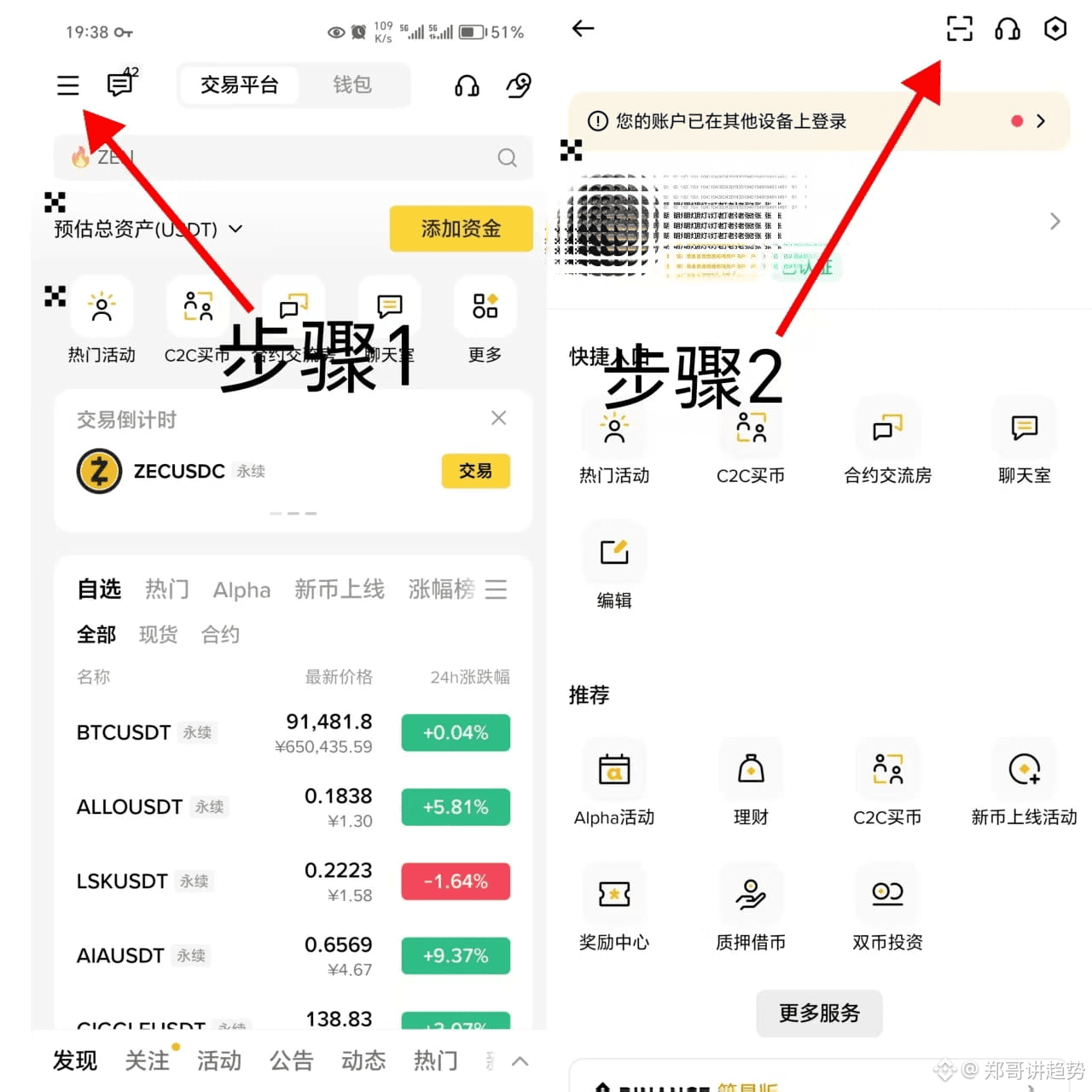
1. First save the QR code below
2. Open the Binance homepage and search for the chat room
3. Tap the “+” in the top-right corner
4. Click Scan QR Code and scan the QR code
You can then add me as a friend
If you have any questions, feel free to speak up!
1. First save the QR code below
2. Open the Binance homepage and search for the chat room
3. Tap the “+” in the top-right corner
4. Click Scan QR Code and scan the QR code
You can then add me as a friend
If you have any questions, feel free to speak up!
2. Open the Binance homepage and search for the chat room
3. Tap the “+” in the top-right corner
4. Click Scan QR Code and scan the QR code
You can then add me as a friend
If you have any questions, feel free to speak up!

7
9
1.3k
·
--
The Compounding Formula: From 30,000 to 300,000
After ten years in crypto—three years of losses followed by seven steady years—the key to compounding and making big money is following trends, not trading constantly. Most people lack a system, not technical skills.
1. Choosing coins matters more than trading. Stick to strong, popular coins with clear trends. Avoid weak bounces; don’t buy into a downtrend.
2. Add to winners and cut losers. Start with a reasonable position, add when you’re right, and exit when you’re wrong. Never add to a losing position.
3. Let profits run. Accept small losses and hold on to big winners. One trend can make up for multiple failed attempts.
4. Risk management determines survival. Control position sizes, keep cash on hand, and always use strict stop-losses. Opportunities keep coming; your capital doesn’t.
5. Waiting is the greatest skill. Big opportunities don’t come often. Spend most of your time waiting, and commit heavily only on rare occasions.
Start small, then size up when the trend confirms. Accept small losses and hold on to big winners. Compounding doesn’t come from trading every day, but from catching a few key trends.

629
·
--
The contract’s biggest enemy is not the market, but yourself
I thought losses came from insufficient skill, but only after a few bull and bear cycles did I understand: skill determines how much you can make, risk control determines how long you survive.
1. Leverage amplifies everything. It’s not about making money faster, but losing money faster. A 10x leverage, a 10% move, can cause severe damage; with 50x leverage, one normal move can wipe you out. Many people are right about direction, but are eliminated first.
2. Frequent trading is the biggest drain. Opportunities seem plentiful, but most losses come not from missing out, but from overtrading. Chasing rallies and selling into drops, emotional entries and exits—what’s left of the profit is only the fees.
3. Human nature is harder to beat than the market. Make a little profit and you want to stop a loss; hesitate to cut when it’s a small loss; take small gains and big losses, and a few rounds will erase your profits. Experts are not those who predict accurately, but those who execute strictly.
4. Risk control comes first. Position size, leverage, and stop-loss matter more than indicators or trading methods. Without good risk control, even good technique can’t withstand one heavy position. With risk control, even a low win rate can still keep you in the game.
5. Staying alive is more important than making money. Opportunities are always there, but those who go to zero no longer have any chance. Trading is about lasting longer, not making money faster.
Hard rule: low leverage, small positions, stop-loss on every trade, no borrowing, no all-in bets, no gambling with principal. Contracts are amplifiers: they amplify both returns and weaknesses. Protecting your capital and controlling risk matter more than windfall profits.

1
63
·
--
At work, you wait six months; in crypto, everything happens by the second. Why is it so addictive?
1. The get-rich-quick fantasy. Stories of doubling your money in ten minutes flood your feed. Those who lose quietly leave, while the legends keep circulating, making you think, “What if I’m the chosen one?”
2. The heartbeat game. Watching the market 24/7, your heart races at 3 a.m. as you ride the candlesticks like a roller coaster. Whether prices rise or fall, you just want to make more. The dopamine hit is more addictive than milk tea.
3. Sunk costs. After losing money, you can’t bear to walk away. “I’ll leave once I break even” is a lie. Lose 100,000 and you want to win it back; make 100,000 and you want even more. Gambling, loss aversion, and being trapped drain your wallet and cloud your judgment.
4. The illusion of freedom. Tired of the 996 work schedule and low interest rates, people are drawn to crypto’s banner of decentralization, thinking they’re in control of their destiny. Without understanding the risks, they’ve only changed where they get fleeced.
5. Instant feedback. Half a year of work can’t match one day of trading. Prices change by the second, like a game you can’t stop playing, even when the feedback is negative.
Crypto is neither hell nor heaven.

1
58
·
--
With a small account, you must keep a trading journal.
Forget your losses, get carried away by your wins—progress only comes from reviewing your trades.
Why did you enter? Why couldn’t you hold? Why did you chase the highs? Why did you lose control? If you don’t figure it out, you’ll make the same mistakes again. The market’s biggest danger isn’t losing money—it’s repeating the same mistakes without knowing why.
A thorough review is how you get started. Every trade you record builds experience: losses teach you what went wrong, and wins show you what you got right. Gradually, you’ll develop a method instead of relying on gut feelings.

1
38
·
--
How to make your first million in crypto
Don’t think about ten million yet—focus on your first million. Once you have it, a 20% gain on spot trades can beat an average person’s yearly earnings.
Use a compounding position-building strategy: practice with small positions and real signals, then hit hard. Only build long positions—never short.
Signals: After a sharp drop and sideways trading, volume surges on a breakout and the trend holds steady; the daily chart moves above key moving averages, price and volume rise together, and sentiment improves; there’s no buzz in the trending topics, retail traders are complaining, and big players are quietly accumulating.
Execution: Start with 50,000. Use earlier profits to set stop-losses, recover your capital, then build the position again. Control your total isolated-margin position and keep leverage below 10x; use 1x effective leverage and set your stop-loss.
Add to the position on the initial breakout. Once it’s up 10%, use the profit to open another position. Don’t move the stop-loss, go all-in, average down, or hold through the stop-loss—shut it down and protect your capital. Two rounds of compounding during a major uptrend can get you to a million. Do that a few times in your life, then stop.
Risk management: Don’t build positions in choppy markets, during a slow decline, or in coins driven by news. If you lose, lose only the isolated-margin collateral; keep the rest locked away. Withdraw profits along the way to avoid greed turning against you.
Building a position isn’t a gamble with your life. Wait for the opportunity: build when it comes, sit tight when it doesn’t. Better to miss out than act recklessly.

1
55
·
--
Bulls and bears clash in crypto as prices rise and fall day and night.
The opportunity you see may be someone else handing you the knife.
1. A drop all day isn’t necessarily bad. Sentiment may be clearing out, creating opportunities—but check the trend and price levels; don’t buy blindly.
2. Don’t chase a sudden surge out of FOMO. Buying into a spike means buying at elevated prices; wait for confirmation.
3. A sharp wick is a signal. The more extreme the price spike and sentiment, the more closely you should watch for a reversal.
4. Good news doesn’t always mean prices will rise. The market may have priced it in early, then reverse when it happens. Markets trade expectations.
5. The noisier things get, the calmer you should be. Be wary of coins being hyped in group chats. Real opportunities don’t wait for everyone to catch on.
6. Heavy positions can lead to liquidation. Oversizing positions can be the start of emotional trading. Trading is about staying in the game, not being bold.
7. Don’t let the market drag you around. A price rise after your stop-loss doesn’t mean you were wrong; a further rise after you take profit doesn’t mean you failed. Make money within the bounds of what you understand.
There will always be winners and losers in the market. What determines the outcome isn’t guessing what the big players will do—it’s managing your position and patiently waiting for your own opportunity.

1
32
·
--
Don’t be fooled by leverage—focus on how much you could lose
Retail traders throw around 20x or 50x leverage as if bigger is cooler. But leverage is just a number; what really determines your fate is how much money you lose.
With 10,000 units at 100x leverage, you only put up 100 as margin, so a 10% loss costs you 100—no big deal. With 10,000 units at 10x leverage, you put up 5,000 in margin, so a 5% loss costs you 2,500—that hurts. It’s not the leverage that makes you lose; it’s the real money you’ve put on the line.
I used to be obsessed with high leverage. It took getting liquidated twice to realize that the number of times doesn’t matter—what matters is how much you can afford to lose, and stopping in time. Set your stop-loss based on what you can afford to lose, not a fixed percentage. For example, if you can lose at most 200U, work backward to determine your position size. No matter the leverage, your final loss is 200.
The people who survive long term aren’t the ones using the least leverage—they’re the ones who calculate how much they can lose on every trade. Before opening a position, ask yourself how much you can afford to lose, then act.

1
91
·
--
A simple four-step method for steady profits
A friend used this method to build an eight-figure portfolio. Here’s the full breakdown of how to choose coins, buy, hold, and sell.
1. Choose coins: Look at the daily chart. A MACD golden cross is ideal, preferably above the zero line.
2. Watch the chart: Focus only on the daily moving average. Hold above it; sell below it.
3. Buy when the price breaks above the daily moving average, with volume confirming the move—you can go all in. Sell in three stages: sell one-third after a 40% rise, another third after an 80% rise, and sell everything if the price falls below the moving average.
4. Most importantly, use the daily moving average as your guide. If the price unexpectedly falls below it the next day, exit completely—don’t take chances. Although a breakdown is unlikely, manage your risk. After selling, wait for the price to reclaim the moving average before buying back in.

1
55
·
--
Ironclad Rules for Avoiding Liquidation with 1,000U in Futures
Beginners fear liquidation, going all-in risks losses, and a small position feels too slow. Follow these survival rules to avoid wiping out your account.
Never go all-in with 1,000U. Split it into five parts of 200U each and use 5x to 10x leverage. Stay away from 50x: a 2% move can make you panic, and a 10% drop at 10x can liquidate you. High leverage is just giving your money away.
Put the remaining 800U into an interest-earning account and use only 200U to test the waters. If you lose it, don't top up. Adding money to average down can leave you deeper and deeper in the hole. Stop for two days, think it through, and protect your principal.
When you make 500U, withdraw 300U to lock in profits and leave 200U to trade. Having real money at stake is what keeps your mindset steady.
Three rules: Be alert when your daily loss reaches 2%; close all positions at 6% and take a few days off. Add to winning positions gradually, don't chase rallies; once gains exceed 200%, take half the profits and protect the principal on the rest. Start positions with 300–500U, set stop-loss and take-profit levels, and use a profit-based trailing stop.
Futures trading is about discipline, not courage. You can grow 1,000U into tens of thousands—but only if you take it slow and stick to the rules.

1
325
·
--
Others make money going long, but you lose doing the same.
You see people posting their wins and get itchy to trade. You check your account—still stuck in place—and panic. You chase the rally and go all-in with high leverage, hoping to make back in one trade what they earned in a year. Meanwhile, they’re still posting wins as your account gets wiped out.
It’s not that there are no opportunities. You’re just always following someone else’s timing. They profit going long, so you jump in; they’ve already exited. They profit going short, so you follow—and they’ve already exited again. You’re always chasing, always left holding the bag.
A friend used to watch the group chat every day, jumping in whenever someone posted a win. In three months, he blew up his account twice. Then he left the group and stopped watching everyone else, focusing only on his own rules. Two months later, his account was in the green. He said that once he stopped watching others, he finally found some peace.
Stop staring at what’s on someone else’s plate. Get your own pot warmed up. Making money isn’t about being exceptionally smart; it’s about sticking to your own pace—staying calm, not rushing, and not following the crowd. Take your eyes off others and keep your hands in check. Wait when it’s time to wait; act when it’s time to act. Then you can seize the opportunities you used to envy, too.

1
65
·
--
How I bounced back with 5,000U after losing 3 million
In 2020, I bought the dip during the March 12 crash, turning 2,000 into 2 million. I got carried away, forgot about risk management, and went all-in with leverage. A few months later, I’d lost 3 million. Credit card and online loan debt collectors were driving me crazy.
I didn’t give up. I scraped together 3,000 and started over, working out a compounding strategy built around managing my position size and timing.
Keep positions small; don’t stubbornly hold unrealized losses. Use flexible stop-losses to protect your capital. Build up your funds in stages and let them compound. Watch the market and follow the big players and longer-term trends—don’t get led astray by short-term moves. Stay level-headed: protect your capital first, then focus on making gains.
I watched the market, kept records, and reviewed my trades every day. In six months, 5,000 became 20,000, then 50,000—nearly a tenfold increase. The key was compounding while managing risk; it’s more reliable than chasing rallies and panic-selling.
If you’ve taken a bad beating, don’t fixate on getting rich overnight. Focus on rebuilding one step at a time.

1
75
·
--
How to survive 90 days of futures trading and grow 1,000 USDT to 100,000 USDT
1. Start with 300 USDT and risk 10 USDT per trade. At 100x leverage, getting the direction right and catching a 1% move can double your margin.
2. Before every trade, repeat this iron rule: if you’re wrong, cut your losses—don’t hold on. I’ve blown up my account twice by hoping things would turn around. Now I set a stop-loss and stick to it. Even if it hurts, I get out. Staying in the game matters a hundred times more than proving I was right.
3. Stop trading for the day after three consecutive losses. Don’t touch the market when it’s acting irrationally; the more you trade, the more mistakes you’ll make. Set a circuit breaker: once you hit your loss limit, close the app and sleep on it to avoid taking even bigger risks.
4. Always withdraw your profits—at least half. Greed when you’re winning is more dangerous than fear when you’re losing. Withdraw most of your gains; then even if the market pulls back, you’ll have locked in profits instead of riding the roller coaster back to where you started.
5. Trade only in clear, one-way trends. Sit out choppy markets. With high leverage, trading sideways is asking to get wiped out.
6. Never risk more than a set proportion of your capital on a single position. Don’t go all in. Keep your position size small enough that even large swings won’t wipe you out, so you can wait for the trend. Going all in is useless even if it works many times—one mistake can wipe you out.

3
5
4k
·
--
Five steps to grow a small account from 2,000U to 100,000U
The key is to stay in the game first. What sets you apart as you scale up is execution and risk management.
1. Split your capital to stay alive. Divide the 2,000 into several portions and use small positions to test the waters. Lock in profits and use them as your capital. Survive first, earn later.
2. Trade trends only; avoid choppy markets. Look for a short-term moving-average golden cross, wait for longer-term confirmation, then increase your position. If the signals don’t line up, stay flat. Better to miss a trade.
3. Risk management comes first. Set your stop-loss and don’t move it. Take profits in stages. Don’t stubbornly hold or delay. Trading is about controlling risk.
4. Compound steadily. Roll profits forward first, then reduce your position size. After making money, lower your risk—the opposite of what most people do.
5. Avoid emotionally charged periods: around data releases, Friday night sessions, and chaotic early sessions. Trade when the trend is clear.
It’s not about making money fast; it’s about avoiding fatal mistakes. Only those who stick to the rules deserve to benefit from compounding.

1
47
·
--
Growing from 3,000 to 300,000 isn’t hard if you use the right methods. Borrow 3,000, turn it into 500U, and grow it by following rules—not by gambling.
1. From 500 to 10,000: the survival stage. Start small, learn through trial and error, and manage risk strictly. Keep each trade under 100U; never go all in. Trade only when there’s a clear opportunity with volatility. If you’re wrong, cut your losses—don’t hold on. Take small profits and compound them. Don’t get greedy; survive first, then grow.
2. From 10,000 to 100,000: capitalize on trends. Trade less and aim to capture big moves. Reduce short-term trading and follow mid-term trends. Once a trend is confirmed, have the conviction to hold. Success comes not from constant activity, but from patience.
3. From 100,000 to a million: profit through structure. Prioritize position size over trading frequency. Keep half your position aligned with the overall trend, and use the other half flexibly. Combine disciplined execution with patience. One major rally in a bull market can be enough to transform your equity curve.
It comes down to three things: don’t trade recklessly, don’t go all in, and have the patience to hold. The market never lacks opportunities—it lacks people who follow through.

1
126
·
--
Turned 2,000U into 800,000 in March without getting liquidated
This follower had no special talent or luck—he won through execution. I gave him three rules that go against human nature.
1. Position-sizing rule: start with at least 2,000 and split it into three parts. For short-term trades, make no more than one trade a day. If there’s no trend, do nothing. Never touch your core holdings. Survive first.
2. Take the middle of the fish; don’t try to eat the whole thing. Most markets are choppy, and trading recklessly is just paying tuition. Stay on the sidelines when there’s no trend, and only trade when one appears. Take profits in stages—don’t gamble on emotions.
3. Trade mechanically, without emotion. Cut your losses when they hit your limit; don’t hold on. When you reach your target, reduce your position and lock in profits. Follow the rules, not your gut.
It felt uncomfortable at first, but after weathering some big swings, he became steadier. He said he used to gamble, but now the system helps him make money. The market doesn’t reward the clever—it filters for those who stick to the rules.
If you’re still chasing rallies and selling the dips, placing emotional trades, it’s not the market that’s beating you—you’re wearing yourself down. Turning things around starts with stopping the reckless trading.

1
63
·
--
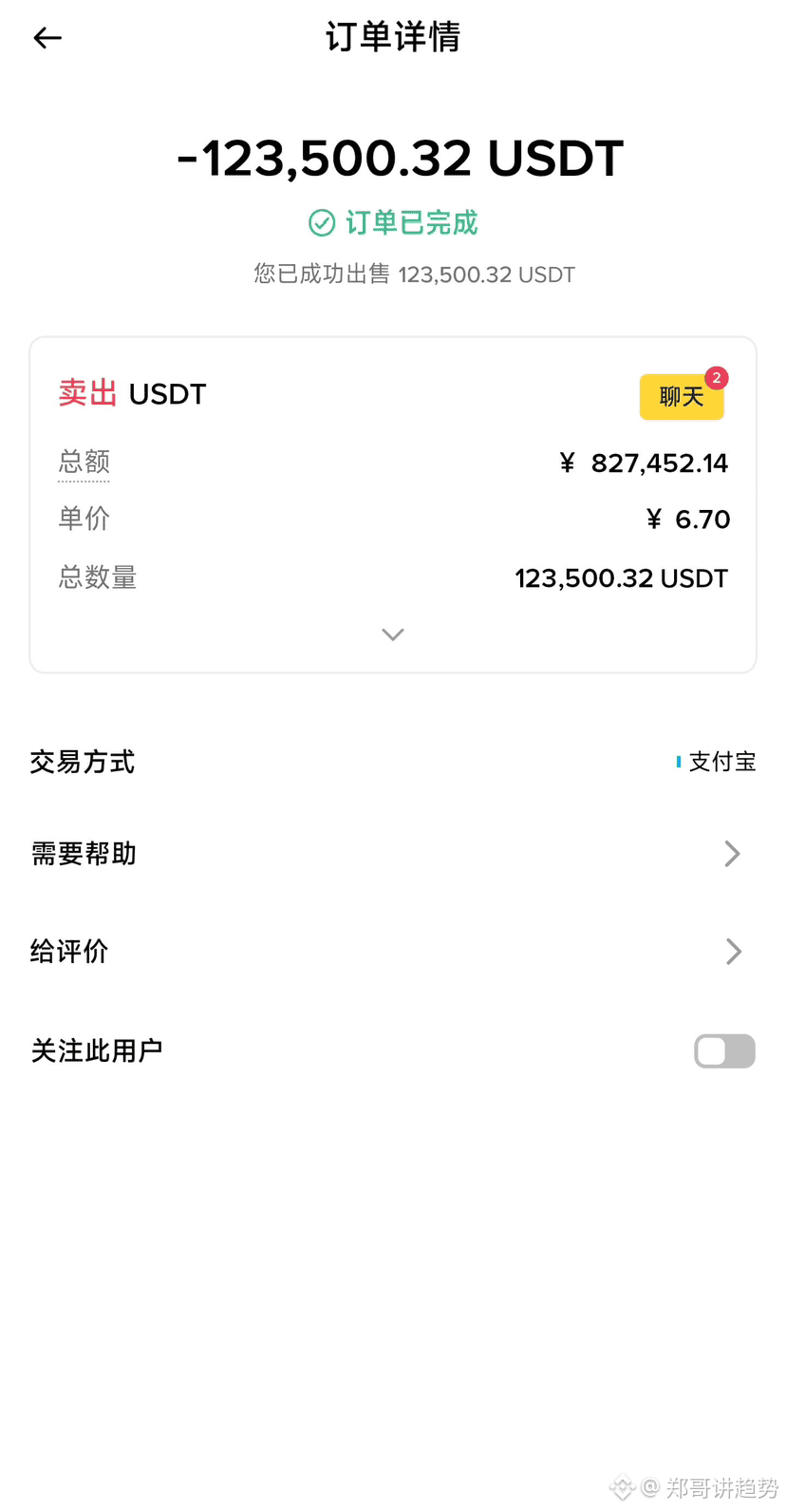
Will Banks Ask Questions When You Withdraw Crypto Profits? A Practical Guide to Small Withdrawals
When you’ve made money, the biggest worry isn’t the market—it’s problems when cashing out. Follow these tips for small withdrawals and you should generally be fine.
Choosing the right channel is the first step.
Prioritize deposits and withdrawals through major exchanges, and stay away from small platforms. Don’t receive funds through WeChat Pay or Alipay, and don’t use cards from the Big Four banks. Instead, get a card from a small local bank and use it exclusively for this purpose. Keep each transaction to a few thousand RMB, and don’t get greedy by withdrawing a large amount all at once.
When choosing a merchant, look for the “Verified Merchants” section or the Shield badge. Merchants offering compensation for frozen funds are the safest bet. Check that the merchant has been registered for over a year and has stable monthly trading volume, and don’t switch merchants casually. Next time, tap the filter icon to choose a familiar merchant you’ve worked with before. Keep your pool of trading partners small—the more consistent they are, the safer it is.
Don’t let USDT merchants scare you. Many deliberately stoke fear to get you to sell at a low price, but there’s really no need to panic. Cryptocurrency has been largely legalized in Hong Kong, and if the source of your funds is clear, you can handle the transaction there. There are exchange shops nearby; you can transfer USDT, receive cash, then open an account with Bank of China (Hong Kong) and deposit it. The process is straightforward and generally doesn’t involve illicit funds. Travel to and from Hong Kong is convenient, and the costs are manageable.
One final reminder: Whatever method you use, be able to explain where your funds came from, keep your transaction records, and avoid frequent, large deposits and withdrawals. You’re unlikely to face questions if you do. Compliant withdrawals aren’t about having something to hide—they’re about protecting yourself.
9
5
9k
·
--
From losing everything and selling my house to nearly a million: 10 hard-earned crypto lessons
Everyone wants to get rich quick. But early on, I lost so badly I had to sell my house. My account looked so grim I didn’t dare open the app. I waited to break even, only to end up wiped out. Later, I borrowed tens of thousands and slowly worked my way back to nearly a million.
10 lessons, in a nutshell:
1. When the market plunges, watch which strong coins hold up. Focus on the leaders, and get out when panic sets in;
2. Don’t overcomplicate trading. Trends are more useful than indicators;
3. If a short-term trade goes wrong, admit it and take the loss. A 5% loss and a 50% loss are worlds apart;
4. Don’t try to catch a falling knife. Wait for the price to find a bottom;
5. Money flows to the strongest. Leaders are stronger than you think;
6. Don’t assume a coin is a bargain just because it’s cheap. Down 90%? It can still fall further;
7. A winning streak is the most dangerous time. You lose because you get overconfident, not because it’s a bear market;
8. If you’re unsure, stay in cash. A wrong oversized bet can be fatal;
9. With new coins, watch the hype but don’t get carried away. Hype comes and goes fast;
10. Respect the market. It has a way of humbling those who don’t.
My biggest takeaway: Plenty of people make big money, but few manage to keep it. Bull markets make geniuses; bear markets reveal who’s been swimming naked. Staying alive matters more than anything.

1
155
·
--
Chasing a breakout only to get trapped at the top? Learn to tell real breakouts from fake ones.
A classic scenario: A big bullish candle sends everyone shouting “To the moon!” You chase it and the price drops. Then a real breakout comes along, and you’re afraid to buy. After enough losses, you finally notice that fake breakouts have telltale signs.
Check the volume. A real breakout comes with rising price and volume. Without volume to back it up, it’s less trustworthy.
Check the close. A rally during the session doesn’t count. The price needs to hold above resistance at the close to matter. Big players love to lure buyers in during the session.
Wait for a pullback. After a genuine breakout, a healthy move pulls back without breaking a key level.
For now, check the volume first, then the close, and wait for a pullback. I’d rather make a little less than buy a fake breakout.
Over the years, I’ve come to believe one thing: There’s no harm in being slow; there are plenty of opportunities. The real danger is being afraid of missing out.

1
50
·
--
Getting liquidated isn’t bad luck—it’s your own doing
You can get the direction right and still not make much. When people get liquidated, they blame the market maker, say they were targeted, or call it bad luck. But they brought it on themselves.
Go all in with a position that’s too big, and you’ll make money fast when you’re right—or lose it even faster when you’re wrong. It’s not poor trading skill; it’s failing to leave yourself a way out. Keep each trade small enough that a loss doesn’t hurt. Add to it when you’re right.
Skip the stop-loss and you lose 3, then wait for it to hit 10, pray, and stubbornly hold on until it’s 20. The market punishes wishful thinking. Set a stop when you enter—losing 5 is better than losing 50.
Trade against the trend: when prices rise, they seem too expensive; when they fall, you rush to buy the dip. The more you buy, the further they fall. You think you’re catching the bottom, but you’re really halfway down. The market is toughest on the overconfident.
The secret to futures trading: survive first, profit second. If your account is still alive, there will be opportunities. Staying in the game is worth more than being right a certain number of times.

1
100
Log in to explore more content
Join global crypto users on Binance Square
⚡️ Get latest and useful information about crypto.
💬 Trusted by the world’s largest crypto exchange.
👍 Discover real insights from verified creators.
Email / Phone number
Trending Topics
EarningsSeason
6.6M views
32,803 Discussing
Earnings Season Session 3: Will Google & Microsoft Beat Earnings Expectations?
Binance Square Official
·184 Likes
·109.2k views
USMidtermElections
75,802 views
950 Discussing
StrategySTRCReaches$99.95ForFirstTimeIn165Days
229 views
14 Discussing