

ERIKA JE PORTAL LATINO
16.5k Posts

ERIKA JE PORTAL LATINO
Aprendiendo más cada día #PortalLatino 💙🔥
4.8K+ Following
8.1K+ Followers
5.9K+ Liked
Posts
All
Quotes
Live
PINNED


PINNED


Quoted content has been removed
Quoted content has been removed
Quoted content has been removed

TAREK AZ
·
--
🚨 BITCOIN IS BELOW $80K AGAIN — BUT LOOK AT WHY
Bitcoin just dropped back below the $80,000 level after briefly trading above $82K.
The trigger? 📉
🇺🇸 The U.S. August jobs report showed 162,000 new jobs, far above expectations of around 56–65K.
That stronger labor market increased concerns that the Federal Reserve could keep rates higher for longer — and crypto reacted immediately.
BTC traded as low as roughly $78,700 today.
But here’s the lesson 👇
A red candle doesn’t automatically mean the story is over.
Yesterday, the market was celebrating BTC above $82K.
Today, people are suddenly asking:
“Is the bull market finished?”
Same asset.
Different emotion.
This is exactly why you need to separate market data from market emotion.
🧠 Don’t let a green candle make you euphoric.
🧠 Don’t let a red candle make you panic.
🧠 Understand what actually moved the market.
Bitcoin doesn’t care about your emotions.
The market will test your conviction long before it rewards it.
Stay curious.
Stay disciplined.
And most importantly:
Never let one day’s price action decide your entire strategy. 📊
#BTC #Crypto #Trading #Investing #BitcoinNews
Bitcoin just dropped back below the $80,000 level after briefly trading above $82K.
The trigger? 📉
🇺🇸 The U.S. August jobs report showed 162,000 new jobs, far above expectations of around 56–65K.
That stronger labor market increased concerns that the Federal Reserve could keep rates higher for longer — and crypto reacted immediately.
BTC traded as low as roughly $78,700 today.
But here’s the lesson 👇
A red candle doesn’t automatically mean the story is over.
Yesterday, the market was celebrating BTC above $82K.
Today, people are suddenly asking:
“Is the bull market finished?”
Same asset.
Different emotion.
This is exactly why you need to separate market data from market emotion.
🧠 Don’t let a green candle make you euphoric.
🧠 Don’t let a red candle make you panic.
🧠 Understand what actually moved the market.
Bitcoin doesn’t care about your emotions.
The market will test your conviction long before it rewards it.
Stay curious.
Stay disciplined.
And most importantly:
Never let one day’s price action decide your entire strategy. 📊
#BTC #Crypto #Trading #Investing #BitcoinNews


周周1688
·
--
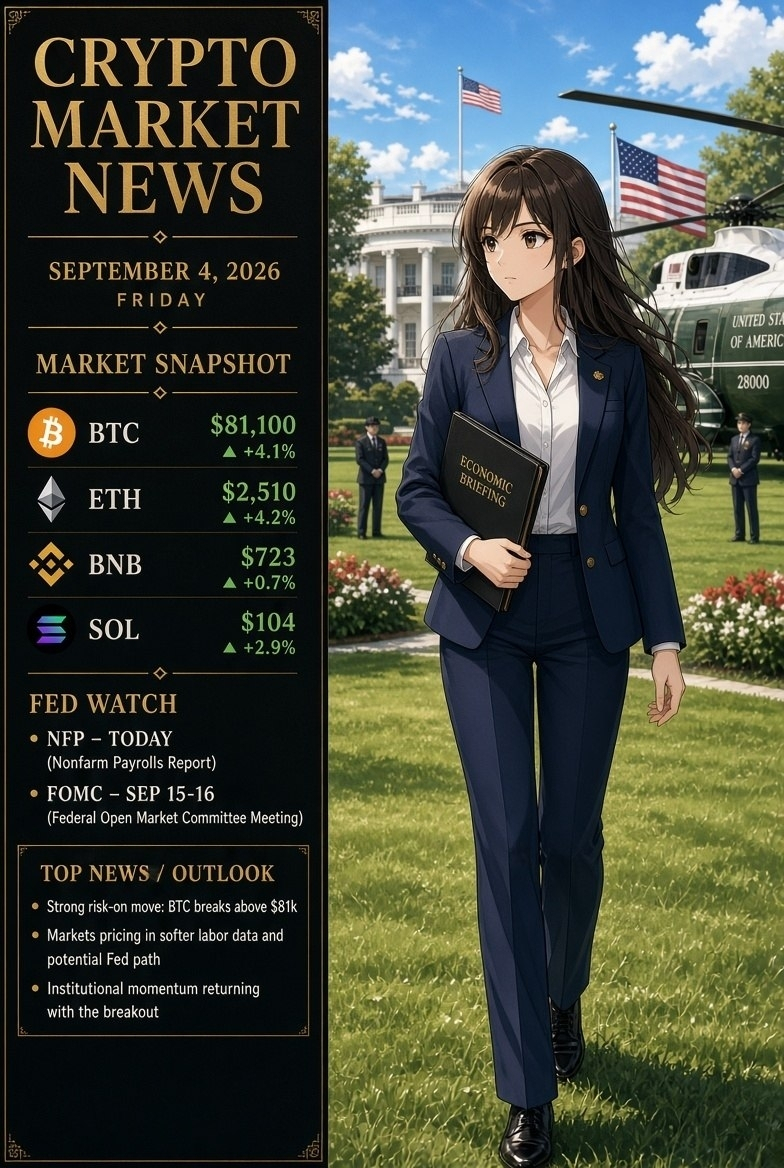
🚀 September 4|Crypto Market Snapshot
$BNB 🧧🧧
📰 Today’s Highlights
₿ BTC reclaims $81,000
Bitcoin is up about 4% over the past 24 hours, with a peak near $82,200, hitting a new high since May. ETH also breaks above $2,500, and market risk appetite has clearly rebounded.
🏦 BTC spot ETF sees over $730.9 million net inflow in a single day
On September 3, U.S. spot BTC ETFs recorded approximately +$730.9M net inflows, including IBIT at about +$454M. On the same day, ETH ETFs saw inflows of roughly +$141.4M. Institutional capital has once again become an important support for this upswing.
🇺🇸 Fed rate-cut expectations heat up again
Fed Governor Christopher Waller said that if future data continues to show inflation cooling, he is inclined to keep interest rates unchanged at the September meeting. Today, the market continues to await the U.S. NFP employment data; macro data may be the key factor behind BTC’s next breakout or pullback.
📈 Major Assets|Last 24 Hours
BTC: +3.8%~4.3%|≈ $81,100
ETH: +4.0%~4.4%|≈ $2,510
SOL: +2.6%~3.2%|≈ $104
BNB: ≈ $718–727
Global crypto market cap is around $2.8T. Fear & Greed Index rises to 73|Greed.
🚀 What’s happening in the market?
Yesterday, BTC was testing the $76,350 support level; today, it has already reclaimed above $81K.
This rebound isn’t driven only by short-term trading:
ETF fund inflows back in + softer policy expectations from the Fed + short-seller liquidations—all three forces appeared at the same time.
Meanwhile, RWA and stablecoin infrastructure continue to expand. Dubai VARA and Securitize are advancing a regulated asset tokenization partnership, and traditional finance is continuously moving more real-world assets onto the blockchain.
⚡ Key Levels for Today
BTC $80,000
Turned back from resistance into an important short-term support.
BTC $82,000+
If it can hold steadily above this level, the market may continue to look for new upside room.
But there’s another variable today:
🇺🇸 U.S. NFP employment data.
If the data is too strong → rate-cut expectations may cool → risk assets may face pressure.
If the data is weaker → rate-cut expectations may heat up → BTC could keep challenging the highs.
🎯 One thing to remember today
Held $76K yesterday; regained $81K today.
ETF funds are flowing back, and institutional demand is recovering;
but before NFP is released, whether $81K is a real breakout or a false one still depends on what the market tells us.
The short-term market has returned to the Greed zone. The real test is whether BTC can turn $80K into a new support.
#1688家族family
$BNB 🧧🧧
📰 Today’s Highlights
₿ BTC reclaims $81,000
Bitcoin is up about 4% over the past 24 hours, with a peak near $82,200, hitting a new high since May. ETH also breaks above $2,500, and market risk appetite has clearly rebounded.
🏦 BTC spot ETF sees over $730.9 million net inflow in a single day
On September 3, U.S. spot BTC ETFs recorded approximately +$730.9M net inflows, including IBIT at about +$454M. On the same day, ETH ETFs saw inflows of roughly +$141.4M. Institutional capital has once again become an important support for this upswing.
🇺🇸 Fed rate-cut expectations heat up again
Fed Governor Christopher Waller said that if future data continues to show inflation cooling, he is inclined to keep interest rates unchanged at the September meeting. Today, the market continues to await the U.S. NFP employment data; macro data may be the key factor behind BTC’s next breakout or pullback.
📈 Major Assets|Last 24 Hours
BTC: +3.8%~4.3%|≈ $81,100
ETH: +4.0%~4.4%|≈ $2,510
SOL: +2.6%~3.2%|≈ $104
BNB: ≈ $718–727
Global crypto market cap is around $2.8T. Fear & Greed Index rises to 73|Greed.
🚀 What’s happening in the market?
Yesterday, BTC was testing the $76,350 support level; today, it has already reclaimed above $81K.
This rebound isn’t driven only by short-term trading:
ETF fund inflows back in + softer policy expectations from the Fed + short-seller liquidations—all three forces appeared at the same time.
Meanwhile, RWA and stablecoin infrastructure continue to expand. Dubai VARA and Securitize are advancing a regulated asset tokenization partnership, and traditional finance is continuously moving more real-world assets onto the blockchain.
⚡ Key Levels for Today
BTC $80,000
Turned back from resistance into an important short-term support.
BTC $82,000+
If it can hold steadily above this level, the market may continue to look for new upside room.
But there’s another variable today:
🇺🇸 U.S. NFP employment data.
If the data is too strong → rate-cut expectations may cool → risk assets may face pressure.
If the data is weaker → rate-cut expectations may heat up → BTC could keep challenging the highs.
🎯 One thing to remember today
Held $76K yesterday; regained $81K today.
ETF funds are flowing back, and institutional demand is recovering;
but before NFP is released, whether $81K is a real breakout or a false one still depends on what the market tells us.
The short-term market has returned to the Greed zone. The real test is whether BTC can turn $80K into a new support.
#1688家族family

晚风Vesper_1688
·
--
☀️Good morning in September, rushing to a brand-new autumn chapter🍂
I send the first wish of September to every fellow traveler.
May we stay healthy, hold good luck in our hands, always be filled with joy, and be treated gently by the world✨.
The market rises and falls, cycles come and go📊,
Don’t worry about short-term fluctuations—hold on to inner steadiness and your rhythm.
Give patience to time, and quietly wait for the surprises and preferences that belong to us.
In the new month, let it all settle and gather strength—set off calmly toward the road ahead💫.
#交易心理
#MichaelSaylor暗示增持BTC
#1688家族family
I send the first wish of September to every fellow traveler.
May we stay healthy, hold good luck in our hands, always be filled with joy, and be treated gently by the world✨.
The market rises and falls, cycles come and go📊,
Don’t worry about short-term fluctuations—hold on to inner steadiness and your rhythm.
Give patience to time, and quietly wait for the surprises and preferences that belong to us.
In the new month, let it all settle and gather strength—set off calmly toward the road ahead💫.
#交易心理
#MichaelSaylor暗示增持BTC
#1688家族family



顾俊eth
·
--
BearishNext week’s market: it’s time to start using data again
Just wrapped up the Jackson Hole, and the message from the Fed/“Powell/Waller” side was clearly more hawkish. Market expectations for a September rate hike have already risen from a bit over 30% previously to nearly 60%. The dollar and U.S. Treasury yields moved first, while gold, the Nasdaq index, and BTC instead came under pressure. In fact, this signal has been pretty clear
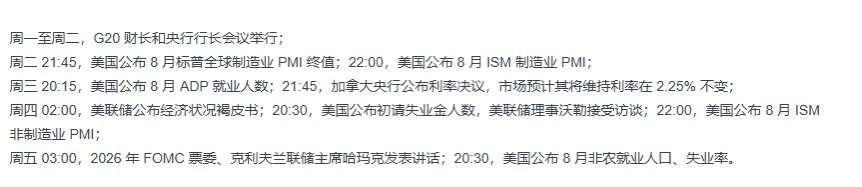
What’s really worth watching now isn’t whether there will be a rate hike in September—it’s whether next Friday’s Non-Farm Payrolls can confirm that expectation.
At the moment, the market expects August Non-Farm Payrolls to increase by about 58,000, with the unemployment rate at 4.1%. This number in itself isn’t particularly strong. If employment continues to weaken, the market may once again bet on “no rate hike.” But if both Non-Farm and wage data come in harder than expected, September rate-hike odds could keep moving upward
Plus, this Non-Farm is a bit special: it’s the final Non-Farm report before the September FOMC meeting—basically the Fed’s last card in hand
Besides Non-Farm, next week also has ISM Manufacturing, ADP, initial jobless claims, ISM Services, the Beige Book, as well as the G20 finance ministers and central bank governors meeting. The macro information density is extremely high
Another thread is AI
Dell and Broadcom will release earnings after the close on Tuesday and Wednesday, respectively—especially Broadcom. The market expects revenue close to $29.4 billion. Now the AI rally has moved from “telling a story” to validating real demand. Whether servers, custom ASICs, and AI networking equipment can keep delivering high growth—these two earnings reports should provide some answers
From the perspective of the crypto market, I actually think we should be a bit more cautious next week
If Non-Farm comes in weak → rate-hike expectations fall → liquidity expectations improve → BTC and risk assets could see a rebound
If Non-Farm beats expectations → the odds of a September rate hike keep rising → Treasury yields and the dollar strengthen → short-term BTC pressure could be amplified further
So over the next few days, don’t just watch the K-line
What may truly determine the direction of the September setup could be in that 20:30 set of numbers on Friday
The macro theme for next week can be summed up in one line:
Employment determines the Fed, AI determines risk appetite, and liquidity determines the outcome
Just wrapped up the Jackson Hole, and the message from the Fed/“Powell/Waller” side was clearly more hawkish. Market expectations for a September rate hike have already risen from a bit over 30% previously to nearly 60%. The dollar and U.S. Treasury yields moved first, while gold, the Nasdaq index, and BTC instead came under pressure. In fact, this signal has been pretty clear
What’s really worth watching now isn’t whether there will be a rate hike in September—it’s whether next Friday’s Non-Farm Payrolls can confirm that expectation.
At the moment, the market expects August Non-Farm Payrolls to increase by about 58,000, with the unemployment rate at 4.1%. This number in itself isn’t particularly strong. If employment continues to weaken, the market may once again bet on “no rate hike.” But if both Non-Farm and wage data come in harder than expected, September rate-hike odds could keep moving upward
Plus, this Non-Farm is a bit special: it’s the final Non-Farm report before the September FOMC meeting—basically the Fed’s last card in hand
Besides Non-Farm, next week also has ISM Manufacturing, ADP, initial jobless claims, ISM Services, the Beige Book, as well as the G20 finance ministers and central bank governors meeting. The macro information density is extremely high
Another thread is AI
Dell and Broadcom will release earnings after the close on Tuesday and Wednesday, respectively—especially Broadcom. The market expects revenue close to $29.4 billion. Now the AI rally has moved from “telling a story” to validating real demand. Whether servers, custom ASICs, and AI networking equipment can keep delivering high growth—these two earnings reports should provide some answers
From the perspective of the crypto market, I actually think we should be a bit more cautious next week
If Non-Farm comes in weak → rate-hike expectations fall → liquidity expectations improve → BTC and risk assets could see a rebound
If Non-Farm beats expectations → the odds of a September rate hike keep rising → Treasury yields and the dollar strengthen → short-term BTC pressure could be amplified further
So over the next few days, don’t just watch the K-line
What may truly determine the direction of the September setup could be in that 20:30 set of numbers on Friday
The macro theme for next week can be summed up in one line:
Employment determines the Fed, AI determines risk appetite, and liquidity determines the outcome

Fatima 5
·
--
$BTC $BNB
🎁 Big gifts are not always wrapped in a box — sometimes they’re hidden in opportunities.
The crypto market keeps moving, and the real game is staying ready when momentum appears. From BTC and BNB to SOL and ETH, every asset brings a different story, use case, and risk profile.
What matters most isn’t chasing every move — it’s having a plan, managing risk, and knowing why you’re entering.
A gift can look exciting from the outside but in crypto the smartest reward is often discipline + patience + timing.
🎯 If you could unwrap one crypto gift today, which one would you choose BTC BNB SOL or ETH?
#ETH🔥🔥🔥🔥🔥🔥
🎁 Big gifts are not always wrapped in a box — sometimes they’re hidden in opportunities.
The crypto market keeps moving, and the real game is staying ready when momentum appears. From BTC and BNB to SOL and ETH, every asset brings a different story, use case, and risk profile.
What matters most isn’t chasing every move — it’s having a plan, managing risk, and knowing why you’re entering.
A gift can look exciting from the outside but in crypto the smartest reward is often discipline + patience + timing.
🎯 If you could unwrap one crypto gift today, which one would you choose BTC BNB SOL or ETH?
#ETH🔥🔥🔥🔥🔥🔥

晚风Vesper_1688
·
--
🌙 On Monday night, gently set the day’s market fluctuations aside 🌌.
No need to dwell on today’s profit or loss results 📊—the market is full of uncertainty by nature.
The real practice of trading is learning to coexist with volatility, and to accept the market’s imperfections 🕯️.
Let go of restless obsession, review the day’s gains and losses, and deepen your own trading mindset ✨.
Don’t let the night’s candlesticks sway your emotions—stick to your set plan, and leave your expectations to the cycle 💫.
Recharge your inner strength, patiently wait for future opportunities, and wish everyone on the same path a peaceful night 💎.
#交易心理
#布伦特原油涨破90美元
#1688家族family
No need to dwell on today’s profit or loss results 📊—the market is full of uncertainty by nature.
The real practice of trading is learning to coexist with volatility, and to accept the market’s imperfections 🕯️.
Let go of restless obsession, review the day’s gains and losses, and deepen your own trading mindset ✨.
Don’t let the night’s candlesticks sway your emotions—stick to your set plan, and leave your expectations to the cycle 💫.
Recharge your inner strength, patiently wait for future opportunities, and wish everyone on the same path a peaceful night 💎.
#交易心理
#布伦特原油涨破90美元
#1688家族family



奋斗Hustle1688
·
--
$BTC Honestly, deep down, I actually expect more than anyone else that BTC will pull back to around 40,000.
If we really get to this level, my take can be discussed and held for years.
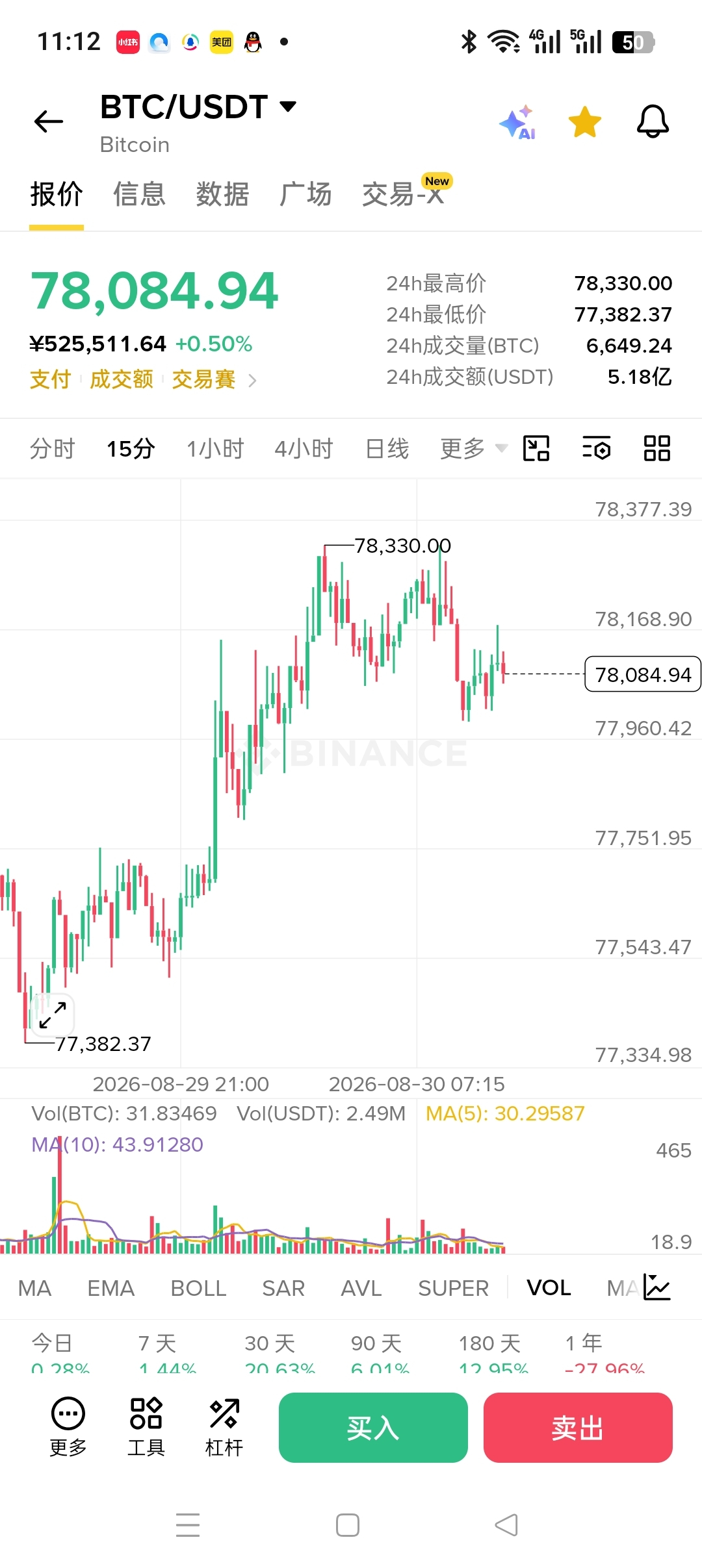
But reality is right in front of us: that big bullish candle for BTC has pierced through three moving averages in one move, and the overall market structure has completely changed.
I can’t stick to old habits and stubbornly insist that BTC will definitely return to 40,000.
Some people will question: I was looking at 50,000 the other day—so why did my view change so quickly?
To be honest, I’m also afraid—afraid of missing out on this bull market cycle.
Thinking must evolve with the market.
Right now is the early stage of a transition from bear to bull, just like what people in my hometown say: when a young person is just beginning to show their talent, the market is only just starting to wake up.
There’s still a chance to get in, but for BTC in the 50-thousand handle, we probably won’t be waiting for that again.
Opportunities for positioning still exist around 65,000 and 68,000; in the worst case, around 70,000. The probability of this opportunity is at least 50%.
A single misstep can become a lifelong regret—by the time you turn around, the bull market has already gone far.
Every time a bull market starts, the path is never a simple copy of the previous one. Trying to “cut a boat by the sword,” blindly replicating past patterns, will only mislead yourself—and mislead the people around you.
Humble yourself to the trend—there’s nothing shameful about it.
Of course, chasing long positions right now isn’t rational either. If this round can’t break through 8.3W, the market will likely come into a pullback, and most likely trade sideways in the 65,000–72,000 range for 3–5 months.
Then, once one day sees a breakout with strong volume, the bull market’s main surge toward 100,000 will officially begin—this is the scenario I think is most likely to play out next.
Why does the bodhisattva sit upside down? It’s a sigh for all sentient beings who refuse to turn back.
ETH will move in sync with BTC, oscillating as it pulls back to the 1,800–2,000 range—good for staged spot entries.
SOL dropping to 80–90 can be accumulated in batches.
PAXG pulling back to around 4,200–4,300 is worth watching; with multiple central banks continuously increasing large holdings, it’s something to pay attention to.
There are quite a few U.S. stock benchmarks. I’ll break them down one by one later. SPX won’t keep making lower lows; the rebound trend should continue. Previously, I planned long-term positions around 110, and that approach still holds.
Let me be candid here: I’m sorry—I was previously leaning too bearish. The market has already transitioned from bear to bull, and the bull market has only just started to show its head.
I hope the broader market will later offer a pullback. For family members who haven’t set up spot positions yet, you can use the pullback to enter in batches.
That’s all the thinking I can share. I hope everyone can抓紧 the cycle and time it well.
If we really get to this level, my take can be discussed and held for years.
But reality is right in front of us: that big bullish candle for BTC has pierced through three moving averages in one move, and the overall market structure has completely changed.
I can’t stick to old habits and stubbornly insist that BTC will definitely return to 40,000.
Some people will question: I was looking at 50,000 the other day—so why did my view change so quickly?
To be honest, I’m also afraid—afraid of missing out on this bull market cycle.
Thinking must evolve with the market.
Right now is the early stage of a transition from bear to bull, just like what people in my hometown say: when a young person is just beginning to show their talent, the market is only just starting to wake up.
There’s still a chance to get in, but for BTC in the 50-thousand handle, we probably won’t be waiting for that again.
Opportunities for positioning still exist around 65,000 and 68,000; in the worst case, around 70,000. The probability of this opportunity is at least 50%.
A single misstep can become a lifelong regret—by the time you turn around, the bull market has already gone far.
Every time a bull market starts, the path is never a simple copy of the previous one. Trying to “cut a boat by the sword,” blindly replicating past patterns, will only mislead yourself—and mislead the people around you.
Humble yourself to the trend—there’s nothing shameful about it.
Of course, chasing long positions right now isn’t rational either. If this round can’t break through 8.3W, the market will likely come into a pullback, and most likely trade sideways in the 65,000–72,000 range for 3–5 months.
Then, once one day sees a breakout with strong volume, the bull market’s main surge toward 100,000 will officially begin—this is the scenario I think is most likely to play out next.
Why does the bodhisattva sit upside down? It’s a sigh for all sentient beings who refuse to turn back.
ETH will move in sync with BTC, oscillating as it pulls back to the 1,800–2,000 range—good for staged spot entries.
SOL dropping to 80–90 can be accumulated in batches.
PAXG pulling back to around 4,200–4,300 is worth watching; with multiple central banks continuously increasing large holdings, it’s something to pay attention to.
There are quite a few U.S. stock benchmarks. I’ll break them down one by one later. SPX won’t keep making lower lows; the rebound trend should continue. Previously, I planned long-term positions around 110, and that approach still holds.
Let me be candid here: I’m sorry—I was previously leaning too bearish. The market has already transitioned from bear to bull, and the bull market has only just started to show its head.
I hope the broader market will later offer a pullback. For family members who haven’t set up spot positions yet, you can use the pullback to enter in batches.
That’s all the thinking I can share. I hope everyone can抓紧 the cycle and time it well.
Quoted content has been removed

alkinani Mohammed
·
--
Hello everyone, good evening! ☀️🎁🧧🎁🧧🎁💰💵🧧🎁💰💵🧧🎁💰💵🧧🎁💰💵
A new day, new opportunities! I prepared for you today a free gift: “Red Envelope.” Redeem your reward using the code below, and make sure your transactions are safe—let’s make today profitable!
Rules:
* Repost and share
* Like and comment
* Follow and claim the reward
Claim code: Follow done
#RedpecketReward
$BNB
A new day, new opportunities! I prepared for you today a free gift: “Red Envelope.” Redeem your reward using the code below, and make sure your transactions are safe—let’s make today profitable!
Rules:
* Repost and share
* Like and comment
* Follow and claim the reward
Claim code: Follow done
#RedpecketReward
$BNB


大丽7613
·
--
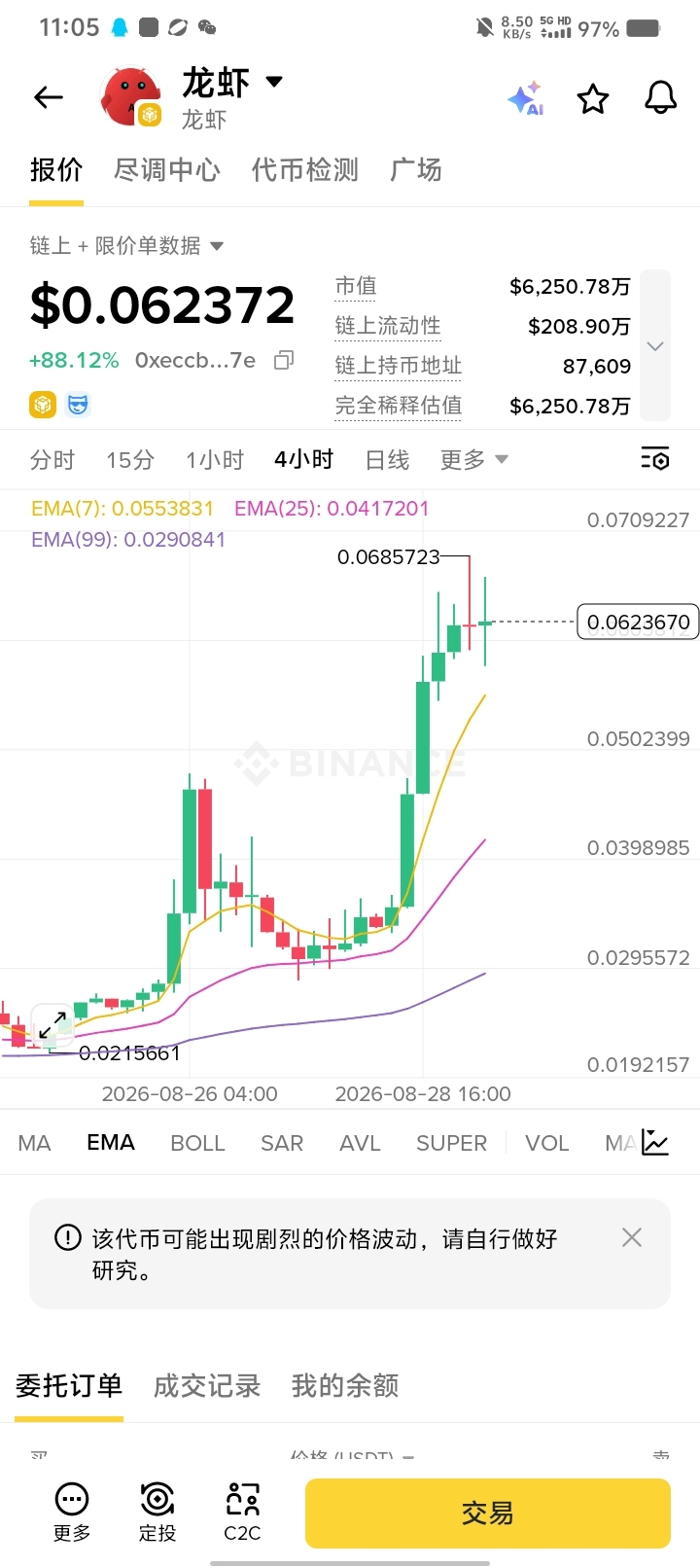
$龙虾 Will lobsters be the next futures contract and spot market agreement?

Virus钻石
·
--
🧧🧧🧧🧧🧧🧧🧧

晚风Vesper_1688
·
--
🌤️On Friday afternoon, let go of the tense emotions of the week 🍃.
After trading all week, there’s no need to obsess over this week’s wins and losses 📊.
Market upswings and downswings are never defined by the outcome of a single week 🌊.
Don’t dwell on opportunities you weren’t sure about, and don’t let short-term unrealized gains go to your head ⚖️.
Keep to your own investment rhythm—no anxiety, no blind following—and look further ahead ✨.
True discipline means that as the weekend approaches, you can still calmly and rationally read the market 🧘.
Set your mindset in place, close out the week with composure, and quietly wait for the next cycle’s gifts 💎.
Wishing everyone to put down the tension, welcome the weekend lightly, and encourage one another with fellow travelers 🕊️
#交易心态
#比特币守于7.94万美元
#1688家族family
After trading all week, there’s no need to obsess over this week’s wins and losses 📊.
Market upswings and downswings are never defined by the outcome of a single week 🌊.
Don’t dwell on opportunities you weren’t sure about, and don’t let short-term unrealized gains go to your head ⚖️.
Keep to your own investment rhythm—no anxiety, no blind following—and look further ahead ✨.
True discipline means that as the weekend approaches, you can still calmly and rationally read the market 🧘.
Set your mindset in place, close out the week with composure, and quietly wait for the next cycle’s gifts 💎.
Wishing everyone to put down the tension, welcome the weekend lightly, and encourage one another with fellow travelers 🕊️
#交易心态
#比特币守于7.94万美元
#1688家族family



Log in to explore more content