
橘东看盘
1.7k Posts

橘东看盘
Report
Block User
十年加密市场实战老兵,完整穿越数轮牛熊,专注合约与波段交易,拒绝造神画饼,只讲实战结果。带领学员从几千美金起步,严控风险稳扎稳打,轻松实现稳健翻仓。
12 Following
1.9K+ Followers
1.6K+ Liked
Posts
All
Videos
PINNED
·
--
Bearish
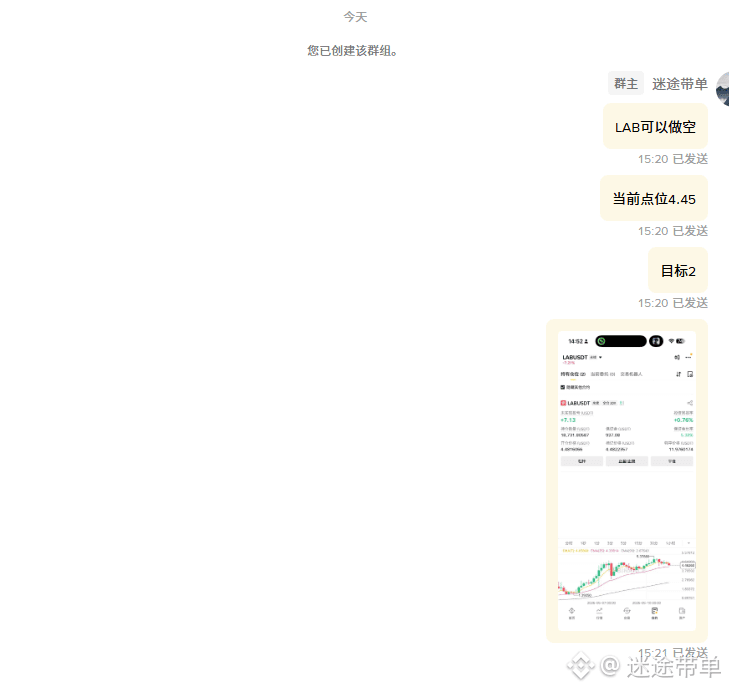
Starting today, $LAB , Mitu is launching a brand new real-time strategy group. The only requirement is active participants. I'll be dropping some hot tips on crypto gems in the group from time to time, so if you're interested, hit me up at [迷途实时喊单群](https://app.binance.com/uni-qr/group-chat-landing?channelToken=U8tXpgNKT-KSL8X69foysQ&type=1&entrySource=sharing_link).
To survive in the crypto space, you need to follow the right people and take the right paths. It’s all about the market; you either watch others rake in profits or decisively ride the wave with Mitu. I’ll help you get to the shore.
Stay tuned: US JELLYJELLY SUI
#伊朗拒绝美国和平方案 #特朗普5月13日至15日访华 #Strategy恢复购买BTC
Starting today, $LAB , Mitu is launching a brand new real-time strategy group. The only requirement is active participants. I'll be dropping some hot tips on crypto gems in the group from time to time, so if you're interested, hit me up at 迷途实时喊单群.
To survive in the crypto space, you need to follow the right people and take the right paths. It’s all about the market; you either watch others rake in profits or decisively ride the wave with Mitu. I’ll help you get to the shore.
Stay tuned: US JELLYJELLY SUI
#伊朗拒绝美国和平方案 #特朗普5月13日至15日访华 #Strategy恢复购买BTC
To survive in the crypto space, you need to follow the right people and take the right paths. It’s all about the market; you either watch others rake in profits or decisively ride the wave with Mitu. I’ll help you get to the shore.
Stay tuned: US JELLYJELLY SUI
#伊朗拒绝美国和平方案 #特朗普5月13日至15日访华 #Strategy恢复购买BTC

跟
100%
不跟
0%
1 votes • Voting closed
4
49
·
--
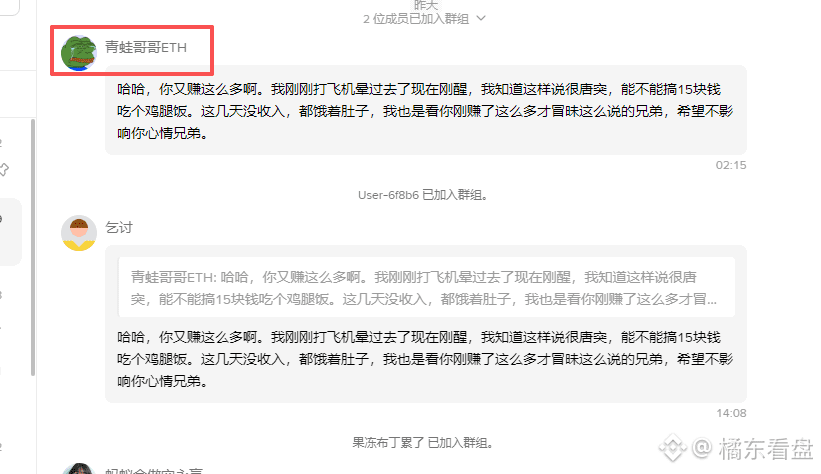
$ETH Last year the frog brother was still so popular—why isn’t there any news this year?
Now he’s started begging in the福利基 group—sigh, the crypto world is getting harder and harder
$ETH Last year the frog brother was still so popular—why isn’t there any news this year?
Now he’s started begging in the福利基 group—sigh, the crypto world is getting harder and harder
Now he’s started begging in the福利基 group—sigh, the crypto world is getting harder and harder
2
3.1k
·
--
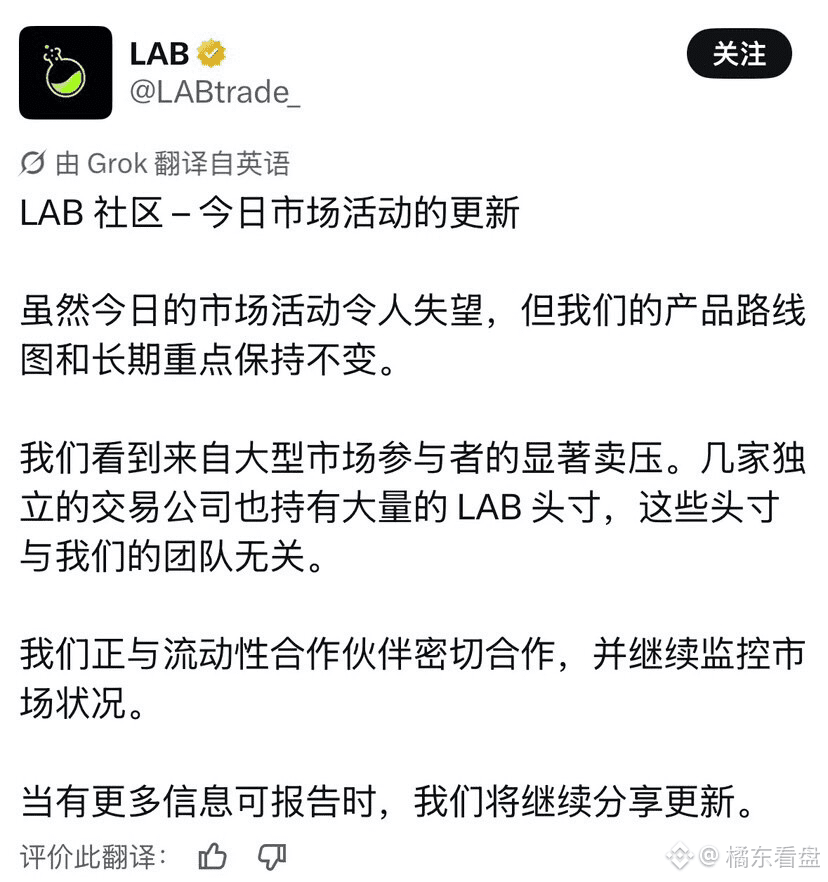
$LAB dog outfit is really hilarious—bold enough to smash, but not bold enough to admit it. Blaming heaven, blaming earth, blaming the air...
He even dared to shift the blame to the exchange, thinking you’re number two to the sky?
We retail investors can’t get to you, and the exchange can’t either, right?
My suggestion: have the exchange freeze his funds so he can’t withdraw them, and then he’ll finally behave. Even better, use it to compensate all the users who lost money 😵
More importantly, providing liquidity is the fuel—winning won’t be the only thing; not only profits will become a live target for this $LAB dog outfit. In the end, everything will be paid back with both principal and interest.
$LAB dog outfit is really hilarious—bold enough to smash, but not bold enough to admit it. Blaming heaven, blaming earth, blaming the air...
He even dared to shift the blame to the exchange, thinking you’re number two to the sky?
We retail investors can’t get to you, and the exchange can’t either, right?
My suggestion: have the exchange freeze his funds so he can’t withdraw them, and then he’ll finally behave. Even better, use it to compensate all the users who lost money 😵
More importantly, providing liquidity is the fuel—winning won’t be the only thing; not only profits will become a live target for this $LAB dog outfit. In the end, everything will be paid back with both principal and interest.
He even dared to shift the blame to the exchange, thinking you’re number two to the sky?
We retail investors can’t get to you, and the exchange can’t either, right?
My suggestion: have the exchange freeze his funds so he can’t withdraw them, and then he’ll finally behave. Even better, use it to compensate all the users who lost money 😵
More importantly, providing liquidity is the fuel—winning won’t be the only thing; not only profits will become a live target for this $LAB dog outfit. In the end, everything will be paid back with both principal and interest.
232
·
--
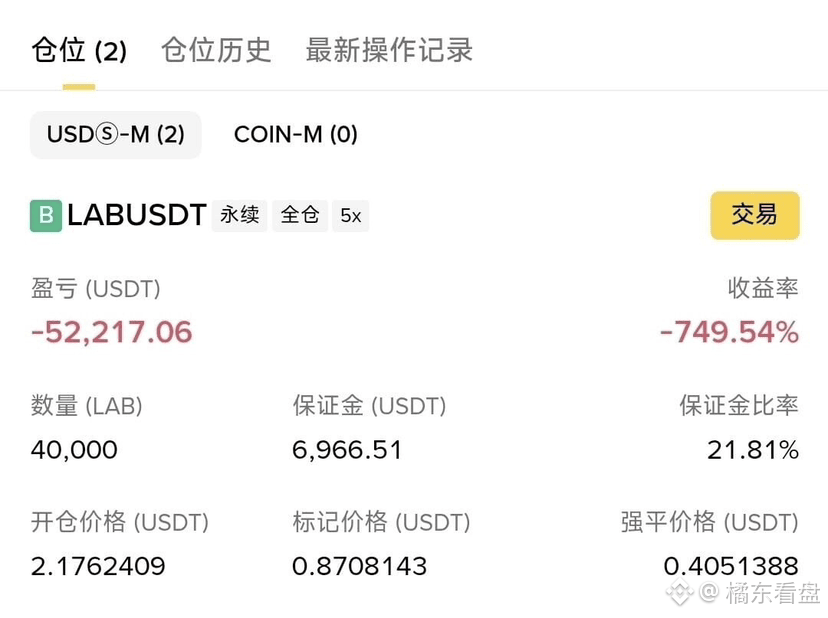
$LAB
Just take a few pictures
Below are all people who hold big positions and keep buying the dip
Most ridiculous of all is
When the market rallies
a bunch of people desperately short
When the market drops
they all rush in again to buy the dip
As the market moves up
shorts get liquidated
As the market moves down
longs get buried
Up means losing money
Down also means losing money
So tell me—are you actually trading?
Or are you just going specifically against the trend?
To be blunt
many people basically have no real judgment of their own
When it goes up, they think it’s too high
When it drops, they think it’s cheap
They always want to top-tick and bottom-tick
They just refuse to follow the market
In the end, the market takes both ends’ money
The shady operator kills shorts on one side
And harvests the dip-buying crowd on the other
Same group of people
When prices rise, they’re the fuel
When prices fall, they become the bag holders
They didn’t make any money
Instead, they experienced losses on both long and short sides
$LAB
Just take a few pictures
Below are all people who hold big positions and keep buying the dip
Most ridiculous of all is
When the market rallies
a bunch of people desperately short
When the market drops
they all rush in again to buy the dip
As the market moves up
shorts get liquidated
As the market moves down
longs get buried
Up means losing money
Down also means losing money
So tell me—are you actually trading?
Or are you just going specifically against the trend?
To be blunt
many people basically have no real judgment of their own
When it goes up, they think it’s too high
When it drops, they think it’s cheap
They always want to top-tick and bottom-tick
They just refuse to follow the market
In the end, the market takes both ends’ money
The shady operator kills shorts on one side
And harvests the dip-buying crowd on the other
Same group of people
When prices rise, they’re the fuel
When prices fall, they become the bag holders
They didn’t make any money
Instead, they experienced losses on both long and short sides
Just take a few pictures
Below are all people who hold big positions and keep buying the dip
Most ridiculous of all is
When the market rallies
a bunch of people desperately short
When the market drops
they all rush in again to buy the dip
As the market moves up
shorts get liquidated
As the market moves down
longs get buried
Up means losing money
Down also means losing money
So tell me—are you actually trading?
Or are you just going specifically against the trend?
To be blunt
many people basically have no real judgment of their own
When it goes up, they think it’s too high
When it drops, they think it’s cheap
They always want to top-tick and bottom-tick
They just refuse to follow the market
In the end, the market takes both ends’ money
The shady operator kills shorts on one side
And harvests the dip-buying crowd on the other
Same group of people
When prices rise, they’re the fuel
When prices fall, they become the bag holders
They didn’t make any money
Instead, they experienced losses on both long and short sides
1
520
·
--
Fell into a high at midnight
Pulled the average price of the $LAB at $6 to 1.745
Once it goes up further, I’ll get out of the bag immediately
Or liquidate with a full 0.7 stop-loss 😭😭
Although when trading it, I also placed reverse orders
and got hit many times on downtrend swing trades,
but this losing order is right here
and it feels really uncomfortable to look at!!
Does anyone else have the same kind of OCD as me?
Lower the average to get out of the bag—then after opening it, you think it was a blunder
When I wake up tomorrow morning!!
either have me take the loss!!
or get me out of the bag and I’ll run
Fell into a high at midnight
Pulled the average price of the $LAB at $6 to 1.745
Once it goes up further, I’ll get out of the bag immediately
Or liquidate with a full 0.7 stop-loss 😭😭
Although when trading it, I also placed reverse orders
and got hit many times on downtrend swing trades,
but this losing order is right here
and it feels really uncomfortable to look at!!
Does anyone else have the same kind of OCD as me?
Lower the average to get out of the bag—then after opening it, you think it was a blunder
When I wake up tomorrow morning!!
either have me take the loss!!
or get me out of the bag and I’ll run
Pulled the average price of the $LAB at $6 to 1.745
Once it goes up further, I’ll get out of the bag immediately
Or liquidate with a full 0.7 stop-loss 😭😭
Although when trading it, I also placed reverse orders
and got hit many times on downtrend swing trades,
but this losing order is right here
and it feels really uncomfortable to look at!!
Does anyone else have the same kind of OCD as me?
Lower the average to get out of the bag—then after opening it, you think it was a blunder
When I wake up tomorrow morning!!
either have me take the loss!!
or get me out of the bag and I’ll run
477
·
--
A chilling patternIf you’re still纠结 about whether to enter the market, perhaps you should first listen to a chilling signal I’ve recently observed—a classic “double top” pattern is quietly repeating itself. And this scene is eerily similar to the trajectory of Bitcoin back then, when it crashed from $19,000 all the way down to $3,000. Let me explain it in simpler terms: a double top is like the price hitting a ceiling twice at the peak—after the first attempt to push higher, it pulls back; the second time it tests the high again but fails to break through, and then it turns downward. In technical analysis, this pattern often suggests a trend reversal, and the market’s current movement is almost a textbook replica.
A chilling pattern
If you’re still纠结 about whether to enter the market, perhaps you should first listen to a chilling signal I’ve recently observed—a classic “double top” pattern is quietly repeating itself. And this scene is eerily similar to the trajectory of Bitcoin back then, when it crashed from $19,000 all the way down to $3,000. Let me explain it in simpler terms: a double top is like the price hitting a ceiling twice at the peak—after the first attempt to push higher, it pulls back; the second time it tests the high again but fails to break through, and then it turns downward. In technical analysis, this pattern often suggests a trend reversal, and the market’s current movement is almost a textbook replica.
193
·
--
Standard Chartered or staying confident that by the end of 2026 Bitcoin can reach $100,000 🤣
Their digital asset research head Geoffrey Kendrick recently released a report saying that Strategy has been getting criticized by the market lately, but not mainly because there’s something wrong with the company.
It’s a communication issue.
Strategy used to say it would never sell Bitcoin. Now suddenly it wants to use BTC as collateral to issue credit products, and the market hasn’t caught up—thinking the company is about to run into trouble.
Kendrick believes that once everyone understands their new capital structure, the STRC preferred shares should rebound back toward around $100, and then Strategy wouldn’t need to rush to sell its coins.
Standard Chartered still insists that by the end of 2026 Bitcoin can reach $100,000.
Standard Chartered or staying confident that by the end of 2026 Bitcoin can reach $100,000 🤣
Their digital asset research head Geoffrey Kendrick recently released a report saying that Strategy has been getting criticized by the market lately, but not mainly because there’s something wrong with the company.
It’s a communication issue.
Strategy used to say it would never sell Bitcoin. Now suddenly it wants to use BTC as collateral to issue credit products, and the market hasn’t caught up—thinking the company is about to run into trouble.
Kendrick believes that once everyone understands their new capital structure, the STRC preferred shares should rebound back toward around $100, and then Strategy wouldn’t need to rush to sell its coins.
Standard Chartered still insists that by the end of 2026 Bitcoin can reach $100,000.
Their digital asset research head Geoffrey Kendrick recently released a report saying that Strategy has been getting criticized by the market lately, but not mainly because there’s something wrong with the company.
It’s a communication issue.
Strategy used to say it would never sell Bitcoin. Now suddenly it wants to use BTC as collateral to issue credit products, and the market hasn’t caught up—thinking the company is about to run into trouble.
Kendrick believes that once everyone understands their new capital structure, the STRC preferred shares should rebound back toward around $100, and then Strategy wouldn’t need to rush to sell its coins.
Standard Chartered still insists that by the end of 2026 Bitcoin can reach $100,000.
127
·
--
HynixUS stocks open: the Dow and S&P rise slightly, but semiconductors broadly weaken—Micron falls 3%, Qualcomm drops 2%, SanDisk declines 4%, and Western Digital drops 1.9%. SK Hynix’s latest price (SKHYNIX) is 1,488.64, down about 5% from the intraday high of 1,566.06; the 24-hour drop is 2.85%, and the 7-day cumulative decline is 6.33%.
There’s nothing to be proud of in having been right. What I want to say is the logic behind this judgment, and why this kind of price action is actually not surprising.
🌝 The key isn’t Hynix itself—it’s the structure of the 7x subscription in the primary market.
A 7x subscription implies that a lot of the money didn’t come in because they "long-term are optimistic about SK Hynix," but because they came for "IPO subscription arbitrage." The first job of these funds after the listing isn’t to hold, but to lock in profits. When both momentum-chasing funds and profit-locking funds are present in the market, selling pressure usually outweighs buy pressure—especially when the opening gain doesn’t provide enough room for arbitrage, the selloff tends to get sharper.
Hynix
US stocks open: the Dow and S&P rise slightly, but semiconductors broadly weaken—Micron falls 3%, Qualcomm drops 2%, SanDisk declines 4%, and Western Digital drops 1.9%. SK Hynix’s latest price (SKHYNIX) is 1,488.64, down about 5% from the intraday high of 1,566.06; the 24-hour drop is 2.85%, and the 7-day cumulative decline is 6.33%.
There’s nothing to be proud of in having been right. What I want to say is the logic behind this judgment, and why this kind of price action is actually not surprising.
🌝 The key isn’t Hynix itself—it’s the structure of the 7x subscription in the primary market.
A 7x subscription implies that a lot of the money didn’t come in because they "long-term are optimistic about SK Hynix," but because they came for "IPO subscription arbitrage." The first job of these funds after the listing isn’t to hold, but to lock in profits. When both momentum-chasing funds and profit-locking funds are present in the market, selling pressure usually outweighs buy pressure—especially when the opening gain doesn’t provide enough room for arbitrage, the selloff tends to get sharper.
There’s nothing to be proud of in having been right. What I want to say is the logic behind this judgment, and why this kind of price action is actually not surprising.
🌝 The key isn’t Hynix itself—it’s the structure of the 7x subscription in the primary market.
A 7x subscription implies that a lot of the money didn’t come in because they "long-term are optimistic about SK Hynix," but because they came for "IPO subscription arbitrage." The first job of these funds after the listing isn’t to hold, but to lock in profits. When both momentum-chasing funds and profit-locking funds are present in the market, selling pressure usually outweighs buy pressure—especially when the opening gain doesn’t provide enough room for arbitrage, the selloff tends to get sharper.
509
·
--
Just now: Tom Lee just said on a CNBC live broadcast that the Fed cutting interest rates is only a matter of time
The new chairman, Kevin Walsh, will be forced to take “dovish” measures
President Trump wants to lower interest rates to strengthen the United States
He’s hinting at something we all already know
A BTC boom is coming soon
Just now: Tom Lee just said on a CNBC live broadcast that the Fed cutting interest rates is only a matter of time
The new chairman, Kevin Walsh, will be forced to take “dovish” measures
President Trump wants to lower interest rates to strengthen the United States
He’s hinting at something we all already know
A BTC boom is coming soon
The new chairman, Kevin Walsh, will be forced to take “dovish” measures
President Trump wants to lower interest rates to strengthen the United States
He’s hinting at something we all already know
A BTC boom is coming soon
65
·
--
$LAB 🚀$LAB Dog dealer is up to something again
302 traders are going long
261 traders are going short
It’s obvious they’re trying to pump the market
Hop on this tailwind and reap big gains
It dropped for two days the day before yesterday and yesterday
Today it straight-up surged 20%
Today $BTC and $ETH are slightly up
This morning, the dog dealer released a good-news announcement
They permanently burned 1%
Then they just kept pushing
Looking at on-chain data, the dog dealer is adding to long positions
Ready to surge at any moment
My brother and I opened a long
Stop-loss: $1
Waiting to make money
$LAB 🚀$LAB Dog dealer is up to something again
302 traders are going long
261 traders are going short
It’s obvious they’re trying to pump the market
Hop on this tailwind and reap big gains
It dropped for two days the day before yesterday and yesterday
Today it straight-up surged 20%
Today $BTC and $ETH are slightly up
This morning, the dog dealer released a good-news announcement
They permanently burned 1%
Then they just kept pushing
Looking at on-chain data, the dog dealer is adding to long positions
Ready to surge at any moment
My brother and I opened a long
Stop-loss: $1
Waiting to make money
302 traders are going long
261 traders are going short
It’s obvious they’re trying to pump the market
Hop on this tailwind and reap big gains
It dropped for two days the day before yesterday and yesterday
Today it straight-up surged 20%
Today $BTC and $ETH are slightly up
This morning, the dog dealer released a good-news announcement
They permanently burned 1%
Then they just kept pushing
Looking at on-chain data, the dog dealer is adding to long positions
Ready to surge at any moment
My brother and I opened a long
Stop-loss: $1
Waiting to make money
429
·
--
Ethereum’s next decade is secureEthereum faces four major turning points— the next decade is secure!
The first turning point: the Ethereum Foundation begins “doing subtraction”
Recently, the Ethereum Foundation has emphasized “doing subtraction.”
What does it mean?
It’s not about ignoring the ecosystem; it’s about no longer trying to be the center of the ecosystem.
Because if Ethereum wants to become the future financial infrastructure, it must maintain one key characteristic:
Trusted neutrality.
In the future, if:
Government bonds put on the blockchain
Tokenization of stocks
Funds enter the blockchain
RWA sees large-scale development
What institutions care about most is not who operates Ethereum, but:
Is this network impossible for anyone to control.
Ethereum’s next decade is secure
Ethereum faces four major turning points— the next decade is secure!
The first turning point: the Ethereum Foundation begins “doing subtraction”
Recently, the Ethereum Foundation has emphasized “doing subtraction.”
What does it mean?
It’s not about ignoring the ecosystem; it’s about no longer trying to be the center of the ecosystem.
Because if Ethereum wants to become the future financial infrastructure, it must maintain one key characteristic:
Trusted neutrality.
In the future, if:
Government bonds put on the blockchain
Tokenization of stocks
Funds enter the blockchain
RWA sees large-scale development
What institutions care about most is not who operates Ethereum, but:
Is this network impossible for anyone to control.
The first turning point: the Ethereum Foundation begins “doing subtraction”
Recently, the Ethereum Foundation has emphasized “doing subtraction.”
What does it mean?
It’s not about ignoring the ecosystem; it’s about no longer trying to be the center of the ecosystem.
Because if Ethereum wants to become the future financial infrastructure, it must maintain one key characteristic:
Trusted neutrality.
In the future, if:
Government bonds put on the blockchain
Tokenization of stocks
Funds enter the blockchain
RWA sees large-scale development
What institutions care about most is not who operates Ethereum, but:
Is this network impossible for anyone to control.
74
·
--
That “Trump insider” with a 100% win rate is back at it.
This time, it’s not just small-time messing around.
$30.6 million BTC short.
$29.5 million ETH short.
That’s basically directly pinning the entire crypto market to the ground and shorting it.
Most outrageous of all: his previous record was 100% hits.
So the question is:
Is this a warning before a crash—or is it his first time getting burned?
That “Trump insider” with a 100% win rate is back at it.
This time, it’s not just small-time messing around.
$30.6 million BTC short.
$29.5 million ETH short.
That’s basically directly pinning the entire crypto market to the ground and shorting it.
Most outrageous of all: his previous record was 100% hits.
So the question is:
Is this a warning before a crash—or is it his first time getting burned?
This time, it’s not just small-time messing around.
$30.6 million BTC short.
$29.5 million ETH short.
That’s basically directly pinning the entire crypto market to the ground and shorting it.
Most outrageous of all: his previous record was 100% hits.
So the question is:
Is this a warning before a crash—or is it his first time getting burned?
375
·
--
🚨 A Bitcoin whale, dormant for 15 years, has cashed out today.
5,300 BTC, $320 million.
He lived through Mt. Gox, COVID, Luna, FTX—every kind of extreme market—yet he never sold a single coin.
But today, he dumped it all.
A 15-year diamond hand has chosen to exit at this moment in 2026.
Either it’s purely about realizing profits, or he’s seen something most people haven’t yet.
🚨 A Bitcoin whale, dormant for 15 years, has cashed out today.
5,300 BTC, $320 million.
He lived through Mt. Gox, COVID, Luna, FTX—every kind of extreme market—yet he never sold a single coin.
But today, he dumped it all.
A 15-year diamond hand has chosen to exit at this moment in 2026.
Either it’s purely about realizing profits, or he’s seen something most people haven’t yet.
5,300 BTC, $320 million.
He lived through Mt. Gox, COVID, Luna, FTX—every kind of extreme market—yet he never sold a single coin.
But today, he dumped it all.
A 15-year diamond hand has chosen to exit at this moment in 2026.
Either it’s purely about realizing profits, or he’s seen something most people haven’t yet.
296
·
--
Bearish
$BTC This gray-market dealer with the paperwork handler—I'm really impressed. The opening price isn't very good either, and they've got so many chances to run; why not refresh the opening price so it’s better?
They clearly know it’s a volatile market but still don’t change their strategy? All I can say is they’re not as good as OJ’s one lone line.
$BTC This gray-market dealer with the paperwork handler—I'm really impressed. The opening price isn't very good either, and they've got so many chances to run; why not refresh the opening price so it’s better?
They clearly know it’s a volatile market but still don’t change their strategy? All I can say is they’re not as good as OJ’s one lone line.
They clearly know it’s a volatile market but still don’t change their strategy? All I can say is they’re not as good as OJ’s one lone line.
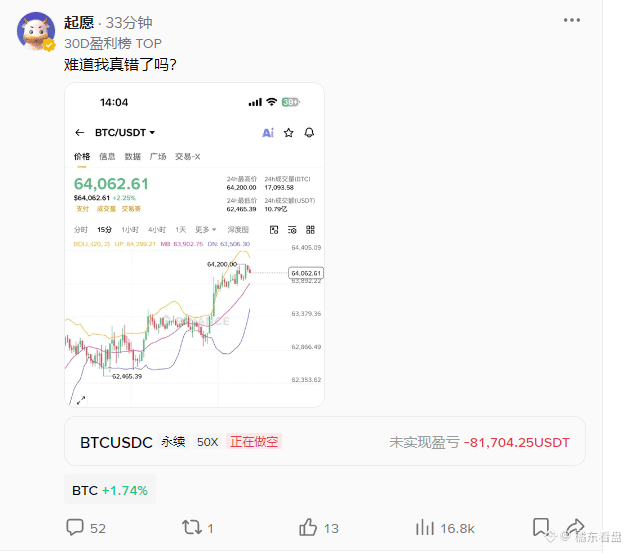
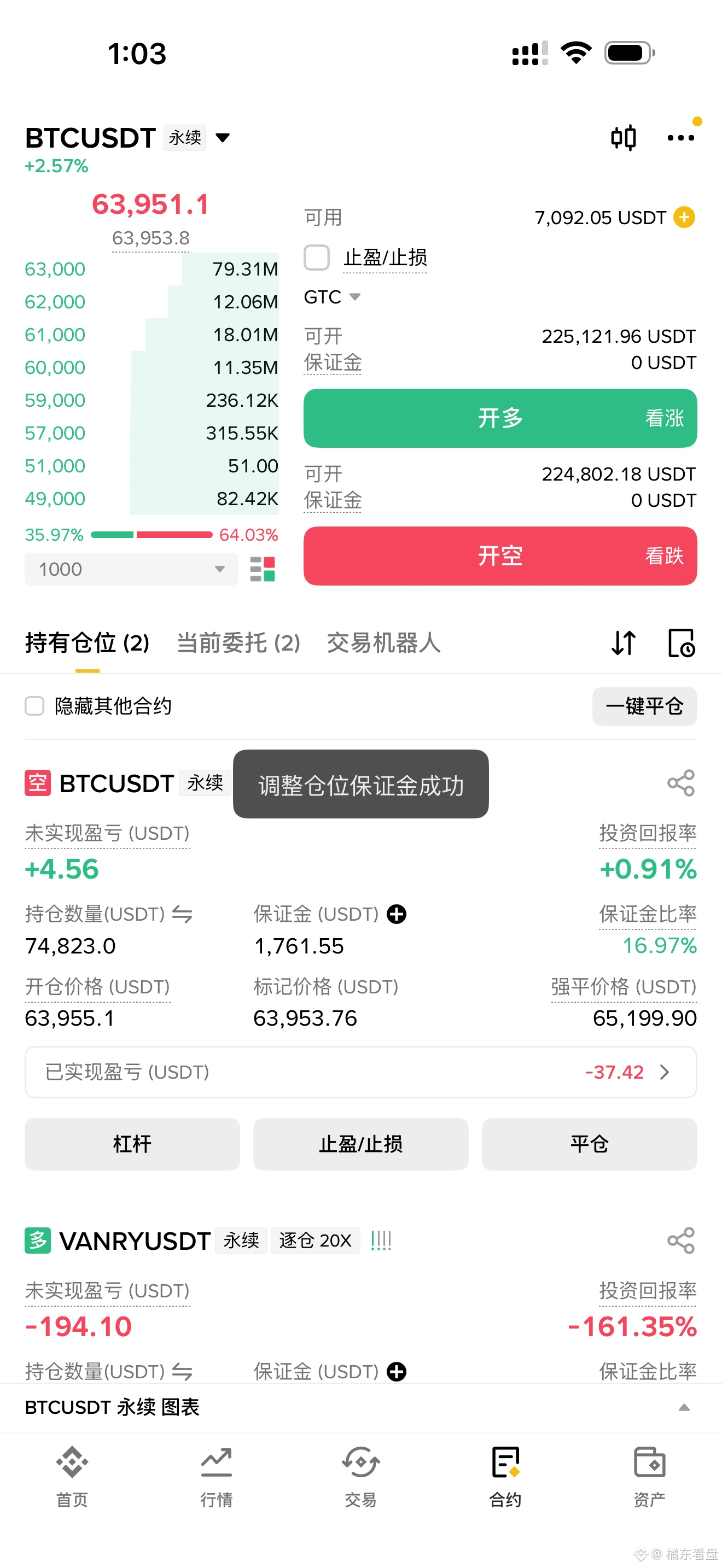
228
·
--
Bearish
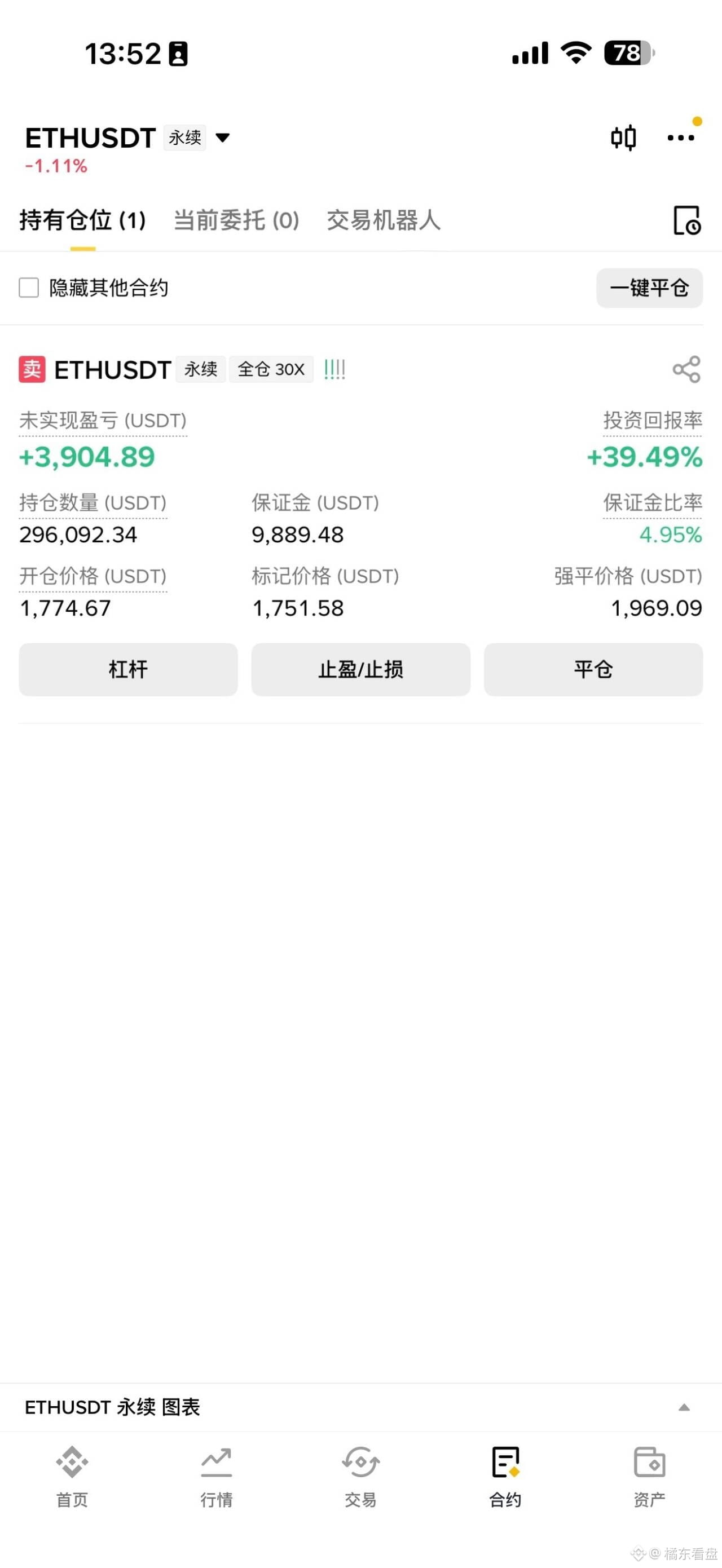
$ETH Recently, every time it climbs to the 1800 level, it can’t go any higher. It rises and then falls back; there is no sustained capital pushing the longs forward. It looks like a breakout, but in reality it’s a bull trap—luring retail traders into chasing longs.
From the order book/price action, the price has repeatedly tested 1800 and closed with long upper wicks under pressure. Trading volume has been steadily shrinking, which indicates heavy sell pressure overhead. As soon as it reaches this area, profit-takers will dump in clusters.
On the larger timeframe, the market is inherently weak. This rally is merely a rebound/repair within a downtrend, not a true reversal into a sustained bull run. The rebound reaching 1800 just happens to touch a strong resistance moving average; the long side’s strength has already been completely exhausted. The news flow doesn’t provide any positive catalysts capable of supporting a prolonged surge. Overall market capital is biased toward outflows, and the risk of chasing longs at high levels far outweighs the potential upside.
Follow the right people and take the right path—you’ll be able to survive in the crypto market long-term. That’s just how the market is: either watch others take the profits, or decisively jump on the move. I’ll help you get to safety: [迷途实时带单群](https://app.binance.com/uni-qr/group-chat-landing?channelToken=U8tXpgNKT-KSL8X69foysQ&type=1&entrySource=sharing_link)
Keep following: EVAA CLO EDGE
#美国对伊朗发动新一轮打击 #比特币走低 #日本国债收益率上升
$ETH Recently, every time it climbs to the 1800 level, it can’t go any higher. It rises and then falls back; there is no sustained capital pushing the longs forward. It looks like a breakout, but in reality it’s a bull trap—luring retail traders into chasing longs.
From the order book/price action, the price has repeatedly tested 1800 and closed with long upper wicks under pressure. Trading volume has been steadily shrinking, which indicates heavy sell pressure overhead. As soon as it reaches this area, profit-takers will dump in clusters.
On the larger timeframe, the market is inherently weak. This rally is merely a rebound/repair within a downtrend, not a true reversal into a sustained bull run. The rebound reaching 1800 just happens to touch a strong resistance moving average; the long side’s strength has already been completely exhausted. The news flow doesn’t provide any positive catalysts capable of supporting a prolonged surge. Overall market capital is biased toward outflows, and the risk of chasing longs at high levels far outweighs the potential upside.
Follow the right people and take the right path—you’ll be able to survive in the crypto market long-term. That’s just how the market is: either watch others take the profits, or decisively jump on the move. I’ll help you get to safety: 迷途实时带单群
Keep following: EVAA CLO EDGE
#美国对伊朗发动新一轮打击 #比特币走低 #日本国债收益率上升
From the order book/price action, the price has repeatedly tested 1800 and closed with long upper wicks under pressure. Trading volume has been steadily shrinking, which indicates heavy sell pressure overhead. As soon as it reaches this area, profit-takers will dump in clusters.
On the larger timeframe, the market is inherently weak. This rally is merely a rebound/repair within a downtrend, not a true reversal into a sustained bull run. The rebound reaching 1800 just happens to touch a strong resistance moving average; the long side’s strength has already been completely exhausted. The news flow doesn’t provide any positive catalysts capable of supporting a prolonged surge. Overall market capital is biased toward outflows, and the risk of chasing longs at high levels far outweighs the potential upside.
Follow the right people and take the right path—you’ll be able to survive in the crypto market long-term. That’s just how the market is: either watch others take the profits, or decisively jump on the move. I’ll help you get to safety: 迷途实时带单群
Keep following: EVAA CLO EDGE
#美国对伊朗发动新一轮打击 #比特币走低 #日本国债收益率上升
256
·
--
$OPG Do you dare to chase? 😁
Many traders see the price rise with a bullish candle and rush in, not realizing that this is one of the most common tricks used to harvest retail traders. A single price rebound cannot fully represent a real improvement in the market fundamentals. Those eye-catching bullish candles are often just a false image created by big players distributing their positions.
At the moment, market capital is extremely polarized. There is very little incremental funding; flows are crowded into a small number of coins, while the vast majority of altcoins receive little to no attention throughout. The currently “crowded” targets include more than a dozen tokens such as $LAB, JELLYJELLY, and OPG, while coins like METIS and EDEN have seen only a mild uptick in short-term heat.
Mainstream assets still firmly control most of the market’s capital: BTC absorbs the majority of available liquidity, ETH continues to attract long-term institutional allocations, SOL has the strongest volatility and elasticity, and TAO, WLD, and HYPE respectively align with the AI sector, long-term narratives, and market risk-sentiment barometers.
The real risk lies in the obscure coins that no one is watching, where overall market liquidity is severely lacking. Relying on a single bullish candle to judge the trend is an easy way to fall into a trap. When retail traders chase the price higher, they end up handing exit liquidity to the main players.
In crypto, the key to profitability isn’t frequent trading. The safer approach is to be patient—wait for capital to keep flowing in and for the trend to be confirmed before positioning. Capital is always the first line of defense. Opportunities are everywhere in the market. But if you blindly chase and end up losing, even the best setups won’t matter because your principal is gone.
$OPG Do you dare to chase? 😁
Many traders see the price rise with a bullish candle and rush in, not realizing that this is one of the most common tricks used to harvest retail traders. A single price rebound cannot fully represent a real improvement in the market fundamentals. Those eye-catching bullish candles are often just a false image created by big players distributing their positions.
At the moment, market capital is extremely polarized. There is very little incremental funding; flows are crowded into a small number of coins, while the vast majority of altcoins receive little to no attention throughout. The currently “crowded” targets include more than a dozen tokens such as $LAB, JELLYJELLY, and OPG, while coins like METIS and EDEN have seen only a mild uptick in short-term heat.
Mainstream assets still firmly control most of the market’s capital: BTC absorbs the majority of available liquidity, ETH continues to attract long-term institutional allocations, SOL has the strongest volatility and elasticity, and TAO, WLD, and HYPE respectively align with the AI sector, long-term narratives, and market risk-sentiment barometers.
The real risk lies in the obscure coins that no one is watching, where overall market liquidity is severely lacking. Relying on a single bullish candle to judge the trend is an easy way to fall into a trap. When retail traders chase the price higher, they end up handing exit liquidity to the main players.
In crypto, the key to profitability isn’t frequent trading. The safer approach is to be patient—wait for capital to keep flowing in and for the trend to be confirmed before positioning. Capital is always the first line of defense. Opportunities are everywhere in the market. But if you blindly chase and end up losing, even the best setups won’t matter because your principal is gone.
Many traders see the price rise with a bullish candle and rush in, not realizing that this is one of the most common tricks used to harvest retail traders. A single price rebound cannot fully represent a real improvement in the market fundamentals. Those eye-catching bullish candles are often just a false image created by big players distributing their positions.
At the moment, market capital is extremely polarized. There is very little incremental funding; flows are crowded into a small number of coins, while the vast majority of altcoins receive little to no attention throughout. The currently “crowded” targets include more than a dozen tokens such as $LAB, JELLYJELLY, and OPG, while coins like METIS and EDEN have seen only a mild uptick in short-term heat.
Mainstream assets still firmly control most of the market’s capital: BTC absorbs the majority of available liquidity, ETH continues to attract long-term institutional allocations, SOL has the strongest volatility and elasticity, and TAO, WLD, and HYPE respectively align with the AI sector, long-term narratives, and market risk-sentiment barometers.
The real risk lies in the obscure coins that no one is watching, where overall market liquidity is severely lacking. Relying on a single bullish candle to judge the trend is an easy way to fall into a trap. When retail traders chase the price higher, they end up handing exit liquidity to the main players.
In crypto, the key to profitability isn’t frequent trading. The safer approach is to be patient—wait for capital to keep flowing in and for the trend to be confirmed before positioning. Capital is always the first line of defense. Opportunities are everywhere in the market. But if you blindly chase and end up losing, even the best setups won’t matter because your principal is gone.
1
658
·
--
There are no geniuses in this market
Only those who come here by stepping along the path of thorns
I’m moved to write this over tea. Throughout this life of奔波(busying oneself), wandering, and being uprooted, only trading can calm me down. This is a game—winning and losing are the outcomes. I like the process more
From an “overseer’s-eye” perspective, watching my own path from the past, I can only marvel that all these experiences of failure and growth are still worth it
As long as you can make good flatbreads, you’ll be able to move forward steadily
There are no geniuses in this market
Only those who come here by stepping along the path of thorns
I’m moved to write this over tea. Throughout this life of奔波(busying oneself), wandering, and being uprooted, only trading can calm me down. This is a game—winning and losing are the outcomes. I like the process more
From an “overseer’s-eye” perspective, watching my own path from the past, I can only marvel that all these experiences of failure and growth are still worth it
As long as you can make good flatbreads, you’ll be able to move forward steadily
Only those who come here by stepping along the path of thorns
I’m moved to write this over tea. Throughout this life of奔波(busying oneself), wandering, and being uprooted, only trading can calm me down. This is a game—winning and losing are the outcomes. I like the process more
From an “overseer’s-eye” perspective, watching my own path from the past, I can only marvel that all these experiences of failure and growth are still worth it
As long as you can make good flatbreads, you’ll be able to move forward steadily

144
·
--
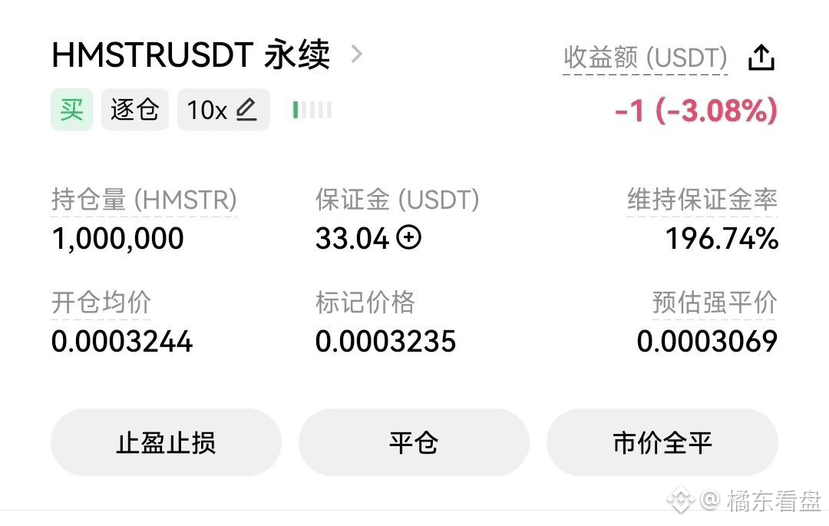
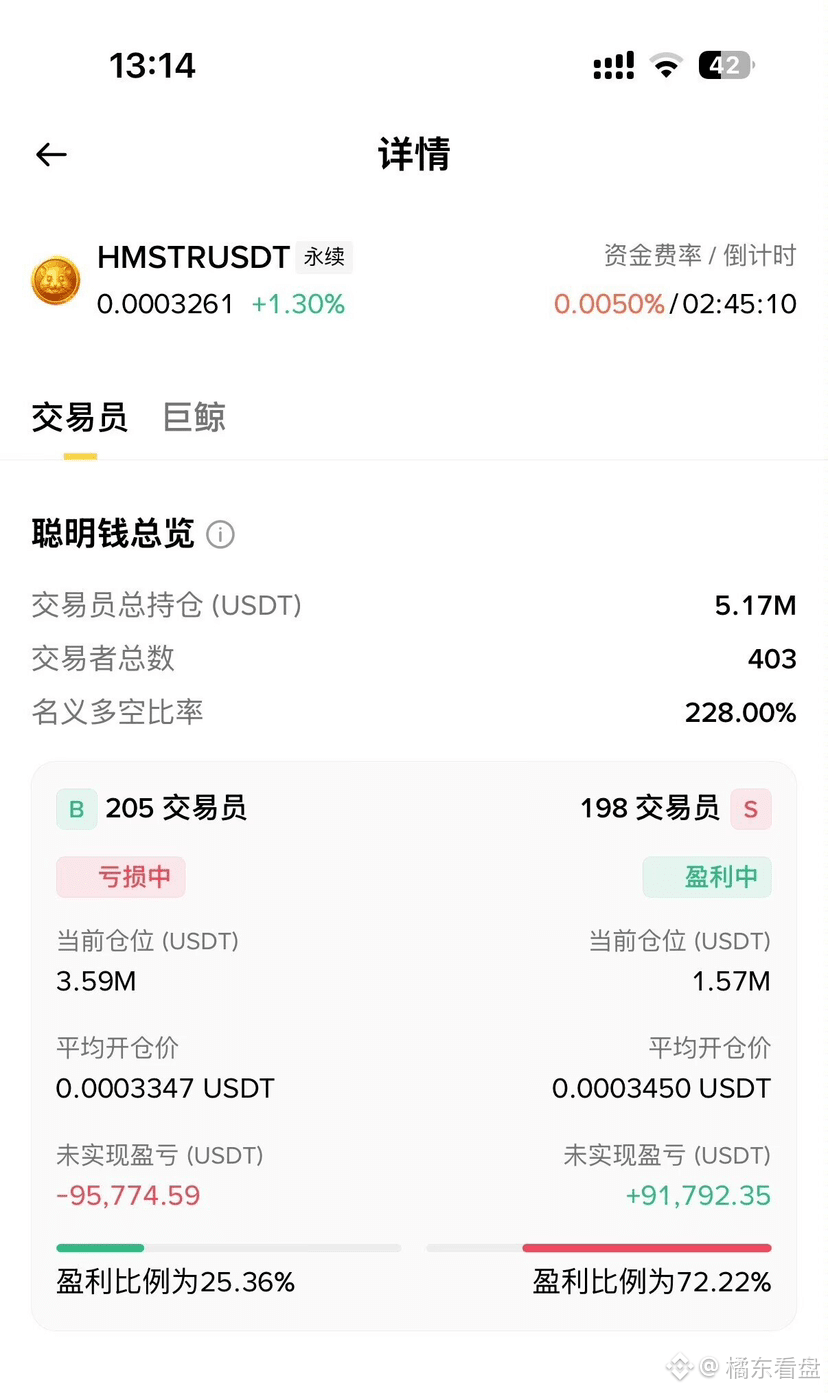
$HMSTR brothers, I’m back in again! 💪
Look at this $HMSTR —it’s fallen so badly.
Daily candles all bearish in a row.
Most of the panic selling has basically already been cut off.
I also see the volume has shrunk to the extreme.
When things reach their limit, they must turn.
Even if this isn’t the bottom,
you still have to yank up a bit and catch a slice of the bait, right?
I’m taking the plunge and catching the knife!
$HMSTR long positions.
Leverage 10x—go in directly.
This time, subjectively, I’m looking at 0.0004.
This is a previous low, high-density chip area.
As long as it hasn’t hit that number,
I won’t sell even if you squeeze—got it?
Hold tight! 🙅♂️
The logic is simple: when it drops too much, it must rise.
Those guys in the air-force—everyone’s probably sick of chewing on people’s flesh.
Don’t the profit-takers need to cash out?
At a time like this, going short is just handing the main force trading fees.
It’s our turn—longs, time to turn over and take off!
$HMSTR brothers, I’m back in again! 💪
Look at this $HMSTR —it’s fallen so badly.
Daily candles all bearish in a row.
Most of the panic selling has basically already been cut off.
I also see the volume has shrunk to the extreme.
When things reach their limit, they must turn.
Even if this isn’t the bottom,
you still have to yank up a bit and catch a slice of the bait, right?
I’m taking the plunge and catching the knife!
$HMSTR long positions.
Leverage 10x—go in directly.
This time, subjectively, I’m looking at 0.0004.
This is a previous low, high-density chip area.
As long as it hasn’t hit that number,
I won’t sell even if you squeeze—got it?
Hold tight! 🙅♂️
The logic is simple: when it drops too much, it must rise.
Those guys in the air-force—everyone’s probably sick of chewing on people’s flesh.
Don’t the profit-takers need to cash out?
At a time like this, going short is just handing the main force trading fees.
It’s our turn—longs, time to turn over and take off!
Look at this $HMSTR —it’s fallen so badly.
Daily candles all bearish in a row.
Most of the panic selling has basically already been cut off.
I also see the volume has shrunk to the extreme.
When things reach their limit, they must turn.
Even if this isn’t the bottom,
you still have to yank up a bit and catch a slice of the bait, right?
I’m taking the plunge and catching the knife!
$HMSTR long positions.
Leverage 10x—go in directly.
This time, subjectively, I’m looking at 0.0004.
This is a previous low, high-density chip area.
As long as it hasn’t hit that number,
I won’t sell even if you squeeze—got it?
Hold tight! 🙅♂️
The logic is simple: when it drops too much, it must rise.
Those guys in the air-force—everyone’s probably sick of chewing on people’s flesh.
Don’t the profit-takers need to cash out?
At a time like this, going short is just handing the main force trading fees.
It’s our turn—longs, time to turn over and take off!
1
305
·
--
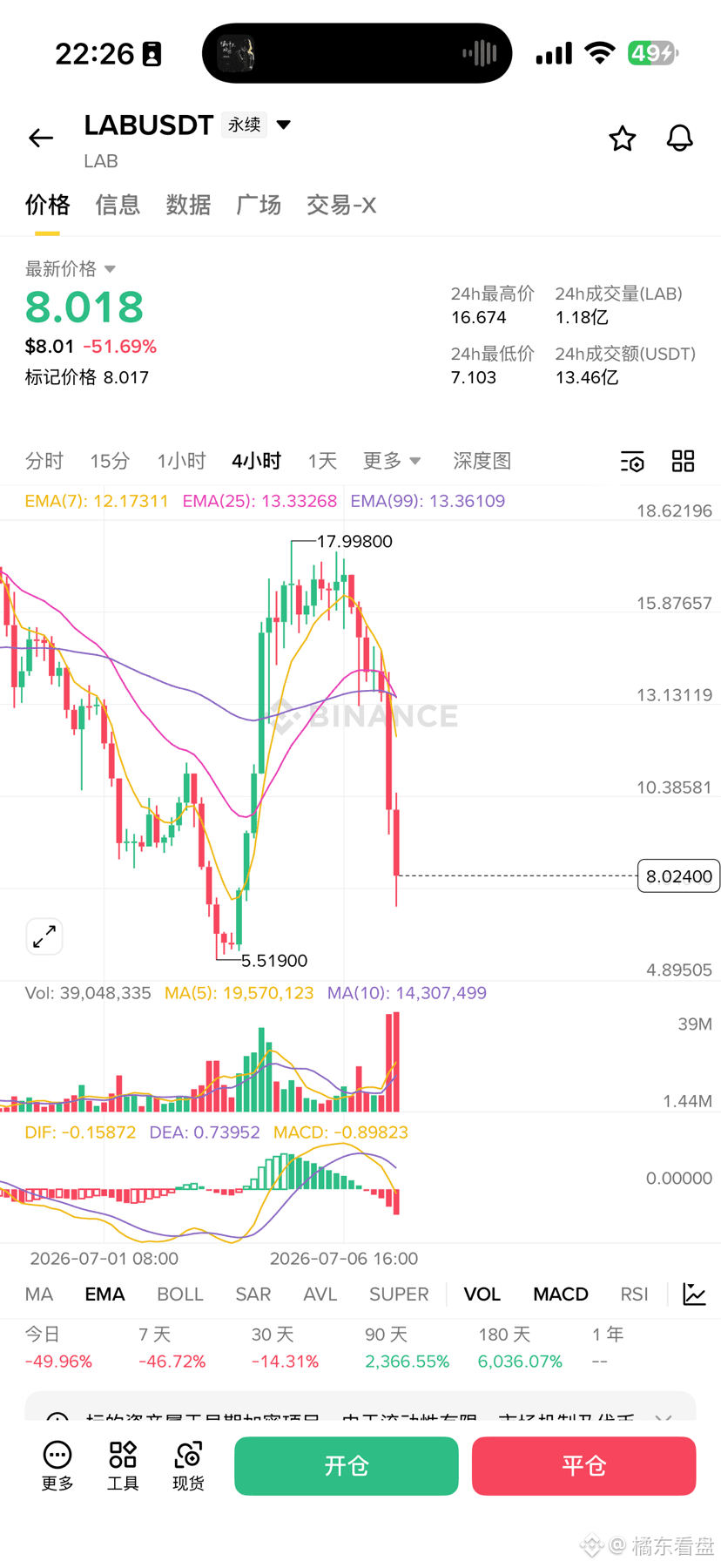
$LAB How many thigh shots that show “20” and get stabbed up are there?
$LAB How many thigh shots that show “20” and get stabbed up are there?
2
873
·
--
Recently, fresh unexpected developments have emerged in the Middle East. Iranian missiles reportedly struck two merchant ships in the Strait of Hormuz. Given that geopolitical tensions are already high, Bitcoin, as a supposed safe-haven asset, should have surged. Instead, this time it completely failed. After BTC spiked upward, it immediately plunged, shattering the usual market patterns.
At present, BTC is around $63,145. It’s down slightly on the day: the intraday high reached $64,706 during the daytime, but it couldn’t hold and quickly retreated. The only assets tracking the situation higher are oil and oil-and-gas related coins—Bitcoin simply isn’t reacting to the safe-haven upside.
The core reason is straightforward. While there is risk in the Middle East, Saudi Arabia is cutting prices to sell oil, and overall oil-producing countries are increasing production. The market expects inflation to cool afterward. That, in turn, pushes back the timing of potential Fed rate cuts. Since Bitcoin is a non-interest-bearing asset, delayed rate-cut expectations are a real negative for it—overwhelming the safe-haven benefit from geopolitical conflict.
From the chart perspective, the rebound strength that rose from the lows has already run out. Technically, the trend looks weak: there’s no momentum for further upside, trading volume keeps shrinking, and many funds are using sudden positive news to exit at higher levels. Even though some listed companies are buying BTC to support the market and slow the decline, they can’t reverse the near-term weakness.
In the short term, BTC may enter a range-bound consolidation. The upper high of $64,706 is strong resistance, while $61,318 is the key support. Over the next few days, uncertainty around US-Iran negotiations may add volatility, but what the market cares about most right now is the Fed’s liquidity timing. Late-day trading will likely grind back and forth, and the room for short-term rebounds is very limited. Do you want me to condense this into a 300-word simplified version—better suited for posting to a chat circle for quick views?
Recently, fresh unexpected developments have emerged in the Middle East. Iranian missiles reportedly struck two merchant ships in the Strait of Hormuz. Given that geopolitical tensions are already high, Bitcoin, as a supposed safe-haven asset, should have surged. Instead, this time it completely failed. After BTC spiked upward, it immediately plunged, shattering the usual market patterns.
At present, BTC is around $63,145. It’s down slightly on the day: the intraday high reached $64,706 during the daytime, but it couldn’t hold and quickly retreated. The only assets tracking the situation higher are oil and oil-and-gas related coins—Bitcoin simply isn’t reacting to the safe-haven upside.
The core reason is straightforward. While there is risk in the Middle East, Saudi Arabia is cutting prices to sell oil, and overall oil-producing countries are increasing production. The market expects inflation to cool afterward. That, in turn, pushes back the timing of potential Fed rate cuts. Since Bitcoin is a non-interest-bearing asset, delayed rate-cut expectations are a real negative for it—overwhelming the safe-haven benefit from geopolitical conflict.
From the chart perspective, the rebound strength that rose from the lows has already run out. Technically, the trend looks weak: there’s no momentum for further upside, trading volume keeps shrinking, and many funds are using sudden positive news to exit at higher levels. Even though some listed companies are buying BTC to support the market and slow the decline, they can’t reverse the near-term weakness.
In the short term, BTC may enter a range-bound consolidation. The upper high of $64,706 is strong resistance, while $61,318 is the key support. Over the next few days, uncertainty around US-Iran negotiations may add volatility, but what the market cares about most right now is the Fed’s liquidity timing. Late-day trading will likely grind back and forth, and the room for short-term rebounds is very limited. Do you want me to condense this into a 300-word simplified version—better suited for posting to a chat circle for quick views?
At present, BTC is around $63,145. It’s down slightly on the day: the intraday high reached $64,706 during the daytime, but it couldn’t hold and quickly retreated. The only assets tracking the situation higher are oil and oil-and-gas related coins—Bitcoin simply isn’t reacting to the safe-haven upside.
The core reason is straightforward. While there is risk in the Middle East, Saudi Arabia is cutting prices to sell oil, and overall oil-producing countries are increasing production. The market expects inflation to cool afterward. That, in turn, pushes back the timing of potential Fed rate cuts. Since Bitcoin is a non-interest-bearing asset, delayed rate-cut expectations are a real negative for it—overwhelming the safe-haven benefit from geopolitical conflict.
From the chart perspective, the rebound strength that rose from the lows has already run out. Technically, the trend looks weak: there’s no momentum for further upside, trading volume keeps shrinking, and many funds are using sudden positive news to exit at higher levels. Even though some listed companies are buying BTC to support the market and slow the decline, they can’t reverse the near-term weakness.
In the short term, BTC may enter a range-bound consolidation. The upper high of $64,706 is strong resistance, while $61,318 is the key support. Over the next few days, uncertainty around US-Iran negotiations may add volatility, but what the market cares about most right now is the Fed’s liquidity timing. Late-day trading will likely grind back and forth, and the room for short-term rebounds is very limited. Do you want me to condense this into a 300-word simplified version—better suited for posting to a chat circle for quick views?
225
Log in to explore more content
Join global crypto users on Binance Square
⚡️ Get latest and useful information about crypto.
💬 Trusted by the world’s largest crypto exchange.
👍 Discover real insights from verified creators.
Email / Phone number
Trending Topics
AppleDebutsFoldablePhone
8,518 views
211 Discussing
#appledebutsfoldablephone I Got My Hands on the iPhone Duo, Apple’s First Foldable Phone. Here’s What Stands Out
The palm-size phone is Apple's boldest handset in years, with a 5.4-inch cover screen and a 7.6-inch main display. I spent some time with the Duo before its October launch.It’s finally here: Apple on Wednesday unveiled its first foldable iPhone, called the iPhone Duo.
iPhone Duo design and build
The iPhone Duo is compact, with a passport-size design. It has a 7.6-inch display on the inside and a 5.4-inch outer display. It fits squarely in my palm, with dimensions similar to Samsung’s Galaxy Z Fold 8, which has a 7.6-inch inner display and a 5.5-inch cover display.
Apple says the Duo is the thinnest iPhone ever when open, measuring 5.2mm. It’s 11.3mm thick when closed. A titanium frame keeps it lightweight at 254 grams.
One of the key differences in feel between Apple’s and Samsung’s phones is that the iPhone Duo has a matte, nano-textured finish on the inner display, which reduces the phone’s crease while also curbing reflections. It has a satisfying feel and really makes the crease virtually disappear when the screen is on. I find it even harder to notice than the Z Fold 8’s, which also has an anti-reflective display.$ONG $IMX $TAC
Isabella-I
·4 Likes
·914 views
EUExtendsCentralContactPointToCASPs
0 views
1 Discussing
US10YTreasuryYieldHitsHighestSinceNov2023
12,536 views
243 Discussing