
活力寶_CN
80 Posts

活力寶_CN
Report
Block User
黃沙百戰穿金甲,不破樓蘭終不還

BNB Holder
High-Frequency Trader
2.2 Years
216 Following
913 Followers
257 Liked
Posts
·
--
Verified
Article
What makes Sui so fast? Its underlying architecture is built on some seriously solid principles1. Why can a new blockchain claim to be fast?
There are more public blockchains in the crypto world than anyone can count, but most people experience the same things: congestion, high fees, and slowness. Sui is a new blockchain that launched in 2023. Its founding team came from Meta’s Diem payments project, and it uses a language called Move.
The thing it’s most often praised for is speed. But that speed isn’t just hype—it comes from its architecture.
2. What makes Move’s object model so special?
Traditional public blockchains, such as Ethereum, store state as “accounts.” It’s often only during execution that you find out which accounts a transaction affects and which transactions conflict, forcing many transactions to queue up.
What makes Sui so fast? Its underlying architecture is built on some seriously solid principles
1. Why can a new blockchain claim to be fast?
There are more public blockchains in the crypto world than anyone can count, but most people experience the same things: congestion, high fees, and slowness. Sui is a new blockchain that launched in 2023. Its founding team came from Meta’s Diem payments project, and it uses a language called Move.
The thing it’s most often praised for is speed. But that speed isn’t just hype—it comes from its architecture.
2. What makes Move’s object model so special?
Traditional public blockchains, such as Ethereum, store state as “accounts.” It’s often only during execution that you find out which accounts a transaction affects and which transactions conflict, forcing many transactions to queue up.
1
1
2.1k
·
--
Article
Why Did Regulators “Single Out” Uniswap? The Truth Lies in v4 Permissioned Pools1. How did a DEX suddenly become a regulatory focus?
Uniswap has been in the spotlight again over the past couple of days. It started with a U.S. SEC document on tokenized stocks on-chain, which specifically mentioned Uniswap v4’s “Permissioned Pools,” describing them as compliant automated market-making facilities.
Still, many people get nervous as soon as they hear that a project has been “singled out by regulators,” assuming it’s bad news. But first, we need to distinguish which layer was mentioned and what the discussion was about.
2. First, let’s distinguish three things: the protocol, the company, and the token—they’re not the same.
Before discussing Uniswap, we need to break things down into three parts:
Why Did Regulators “Single Out” Uniswap? The Truth Lies in v4 Permissioned Pools
1. How did a DEX suddenly become a regulatory focus?
Uniswap has been in the spotlight again over the past couple of days. It started with a U.S. SEC document on tokenized stocks on-chain, which specifically mentioned Uniswap v4’s “Permissioned Pools,” describing them as compliant automated market-making facilities.
Still, many people get nervous as soon as they hear that a project has been “singled out by regulators,” assuming it’s bad news. But first, we need to distinguish which layer was mentioned and what the discussion was about.
2. First, let’s distinguish three things: the protocol, the company, and the token—they’re not the same.
Before discussing Uniswap, we need to break things down into three parts:
2
1.3k
·
--
Verified
Article
You may think Pyth’s data infrastructure is all hype—but its revenue actually doubled quarter over quarter1. A network that feeds price data—why did its revenue double quarter over quarter?
In the crypto world, oracles play an inconspicuous but crucial role. Their job is simple: feed real-world price data from off-chain sources to on-chain smart contracts. Without them, DeFi lending wouldn’t work, derivatives couldn’t be traded, and prediction markets couldn’t operate.
Pyth Network is a leading player in this field. According to Pyth’s official Q3 2026 financial report, Pyth generated $11.49 million in annualized recurring revenue (ARR) that quarter, up 86.5% quarter over quarter. It had 276 paying customers, and held a 94.1% share of the RWA perpetuals market.
You may think Pyth’s data infrastructure is all hype—but its revenue actually doubled quarter over quarter
1. A network that feeds price data—why did its revenue double quarter over quarter?
In the crypto world, oracles play an inconspicuous but crucial role. Their job is simple: feed real-world price data from off-chain sources to on-chain smart contracts. Without them, DeFi lending wouldn’t work, derivatives couldn’t be traded, and prediction markets couldn’t operate.
Pyth Network is a leading player in this field. According to Pyth’s official Q3 2026 financial report, Pyth generated $11.49 million in annualized recurring revenue (ARR) that quarter, up 86.5% quarter over quarter. It had 276 paying customers, and held a 94.1% share of the RWA perpetuals market.
728
·
--
Article
Think Shiba Inu (SHIB) Is Dead? On-Chain Data Says OtherwiseI. The founder has been silent for six months, the token price is down 10% this week, yet the number of holders is increasing
In the crypto market, MEME coins are among the most irrational—and most fascinating—assets. They have no underlying protocol or cash flow; their prices are driven purely by community sentiment and narratives. SHIB is one of them.
Public data as of November 2, 2026, shows that founder Shytoshi Kusama has had no public interactions on social media since May 13, 2026. Meanwhile, SHIB is trading at around $0.00000488, down approximately 2.98% in 24 hours and 10.13% over the week.
Think Shiba Inu (SHIB) Is Dead? On-Chain Data Says Otherwise
I. The founder has been silent for six months, the token price is down 10% this week, yet the number of holders is increasing
In the crypto market, MEME coins are among the most irrational—and most fascinating—assets. They have no underlying protocol or cash flow; their prices are driven purely by community sentiment and narratives. SHIB is one of them.
Public data as of November 2, 2026, shows that founder Shytoshi Kusama has had no public interactions on social media since May 13, 2026. Meanwhile, SHIB is trading at around $0.00000488, down approximately 2.98% in 24 hours and 10.13% over the week.
1
1
2.1k
·
--
Article
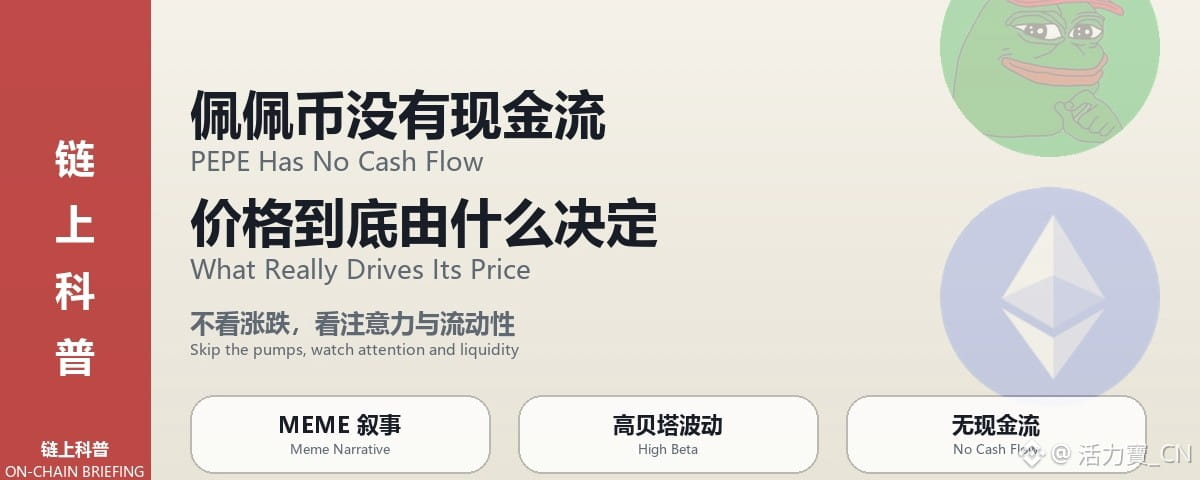
The PEPE narrative: These three factors determine whether its price rises or fallsOne thing has really stood out in the market over the past couple of days: meme coins like PEPE, which have no cash flow whatsoever, have ranked among the top tokens by trading volume and even briefly broke above Bitcoin’s two-year downtrend line. A lot of people are wondering what’s actually driving this thing.
First: The essence of meme coins is attention, sentiment, and liquidity
PEPE originated as an internet meme based on Sad Frog. It has no protocol revenue, no cash flow, and pays no dividends. That’s not the same as Bitcoin or Ethereum (ETH)—at least those two have uses on their networks, while PEPE has no business activity at all. So where does its price come from? Simply put, it’s the combined force of three things: attention, sentiment, and liquidity.
The PEPE narrative: These three factors determine whether its price rises or falls
One thing has really stood out in the market over the past couple of days: meme coins like PEPE, which have no cash flow whatsoever, have ranked among the top tokens by trading volume and even briefly broke above Bitcoin’s two-year downtrend line. A lot of people are wondering what’s actually driving this thing.
First: The essence of meme coins is attention, sentiment, and liquidity
PEPE originated as an internet meme based on Sad Frog. It has no protocol revenue, no cash flow, and pays no dividends. That’s not the same as Bitcoin or Ethereum (ETH)—at least those two have uses on their networks, while PEPE has no business activity at all. So where does its price come from? Simply put, it’s the combined force of three things: attention, sentiment, and liquidity.
1
2.4k
·
--
Article
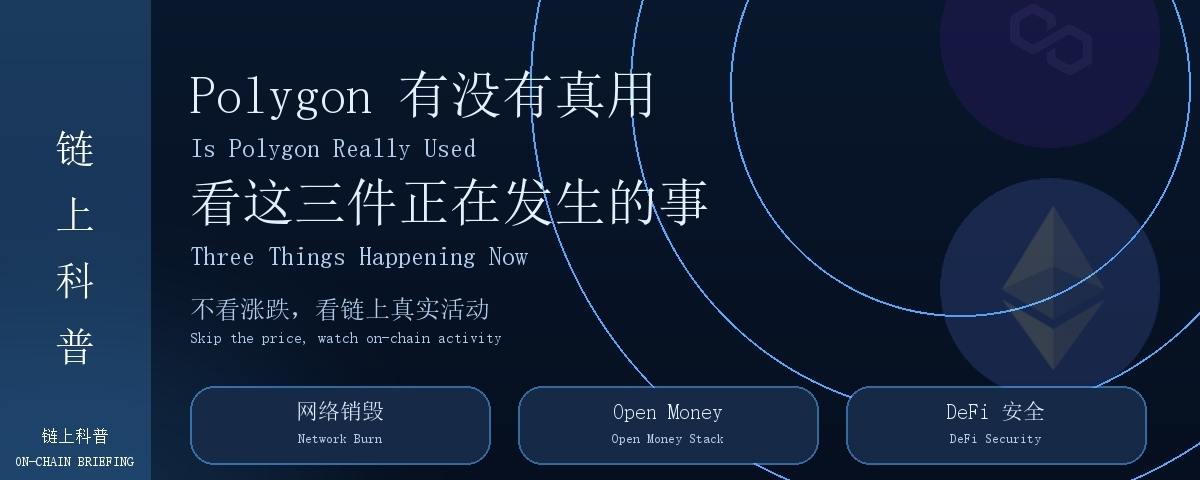
Polygon (POL): Don’t assume a price rise means real utility—here are three things to look atPOL has been showing some strength over the past couple of days, but there’s a more fundamental question: Is anyone actually using the chain?
First: Token burns are funded by network revenue, not subsidies
Polygon recently burned around 100 million POL using fees generated by the network itself, equivalent to about 1% of the supply. The key point is that this money came from actual network revenue, not from the team’s treasury to put on a show.
That’s interesting. If a chain can buy back and burn tokens using real transaction fees, it shows that genuine activity is happening on it, rather than the team spending money to keep up the buzz. This is one of the strongest signals for judging whether a chain has real utility. Conversely, if all the burns depend on treasury subsidies, you should be more cautious—it looks more like a performance than an ecosystem.
Polygon (POL): Don’t assume a price rise means real utility—here are three things to look at
POL has been showing some strength over the past couple of days, but there’s a more fundamental question: Is anyone actually using the chain?
First: Token burns are funded by network revenue, not subsidies
Polygon recently burned around 100 million POL using fees generated by the network itself, equivalent to about 1% of the supply. The key point is that this money came from actual network revenue, not from the team’s treasury to put on a show.
That’s interesting. If a chain can buy back and burn tokens using real transaction fees, it shows that genuine activity is happening on it, rather than the team spending money to keep up the buzz. This is one of the strongest signals for judging whether a chain has real utility. Conversely, if all the burns depend on treasury subsidies, you should be more cautious—it looks more like a performance than an ecosystem.
244
·
--
Verified

Article
What makes Optimism so appealing to developers?Now let’s look at another project: Optimism (OP). As in the previous article about NEAR coin (NEAR Protocol), the question is: what does a Layer 2 need to do to keep developers and applications around?
Daily price swings reflect sentiment; whether people actually use the ecosystem is what matters at its core.
First: it makes the idea of a “fast lane” easy to understand
First, what is Layer 2? Think of Ethereum’s mainnet as a major highway. When there are too many cars, traffic jams and tolls get expensive. Layer 2 is like building an express lane above it: a large number of transactions are bundled off-chain first, and only the final result is sent back to the mainnet for confirmation, making transactions faster and cheaper. Optimism (OP) is one of the most prominent projects taking this approach.
What makes Optimism so appealing to developers?
Now let’s look at another project: Optimism (OP). As in the previous article about NEAR coin (NEAR Protocol), the question is: what does a Layer 2 need to do to keep developers and applications around?
Daily price swings reflect sentiment; whether people actually use the ecosystem is what matters at its core.
First: it makes the idea of a “fast lane” easy to understand
First, what is Layer 2? Think of Ethereum’s mainnet as a major highway. When there are too many cars, traffic jams and tolls get expensive. Layer 2 is like building an express lane above it: a large number of transactions are bundled off-chain first, and only the final result is sent back to the mainnet for confirmation, making transactions faster and cheaper. Optimism (OP) is one of the most prominent projects taking this approach.
733
·
--
Verified

Article
What Makes NEAR Attractive to Developers?Today, let’s talk about a blockchain itself: NEAR (NEAR Protocol). It’s been coming up a lot in developer circles lately—not because of its price, but because of a bigger question: what actually makes people stick with a blockchain?
A token going up one day and down the next—that’s sentiment. Whether a blockchain is actually “good to use” comes down to whether developers want to build on it and users want to stay. That’s a much more solid measure than the daily candlestick chart.
First: sharding, which solves the problem of congestion.
The feature most often mentioned about NEAR (NEAR Protocol) is its sharding design, called Nightshade. Put simply: a typical public blockchain is like a single-lane road—when traffic builds up, it gets congested. Sharding is like splitting the road into several lanes, spreading out the traffic and speeding things up overall.
What Makes NEAR Attractive to Developers?
Today, let’s talk about a blockchain itself: NEAR (NEAR Protocol). It’s been coming up a lot in developer circles lately—not because of its price, but because of a bigger question: what actually makes people stick with a blockchain?
A token going up one day and down the next—that’s sentiment. Whether a blockchain is actually “good to use” comes down to whether developers want to build on it and users want to stay. That’s a much more solid measure than the daily candlestick chart.
First: sharding, which solves the problem of congestion.
The feature most often mentioned about NEAR (NEAR Protocol) is its sharding design, called Nightshade. Put simply: a typical public blockchain is like a single-lane road—when traffic builds up, it gets congested. Sharding is like splitting the road into several lanes, spreading out the traffic and speeding things up overall.
1
909
·
--
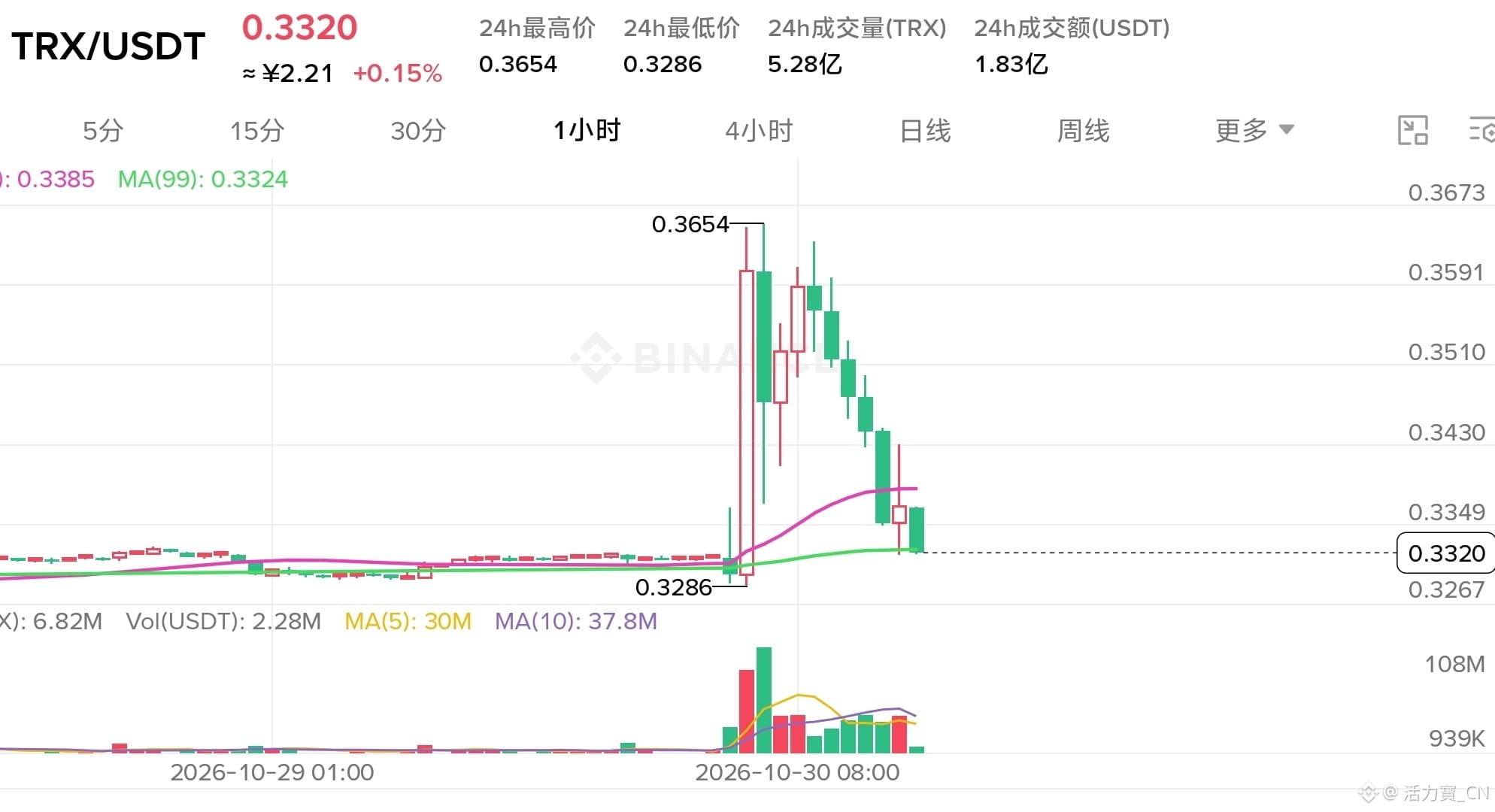
Guys, who can withstand a brutal crash like this from a major player like TRX? 🤒#美国中期选举倒计时,美股博弈窗口已开启?
Guys, who can withstand a brutal crash like this from a major player like TRX? 🤒#美国中期选举倒计时,美股博弈窗口已开启?
317
·
--
Article
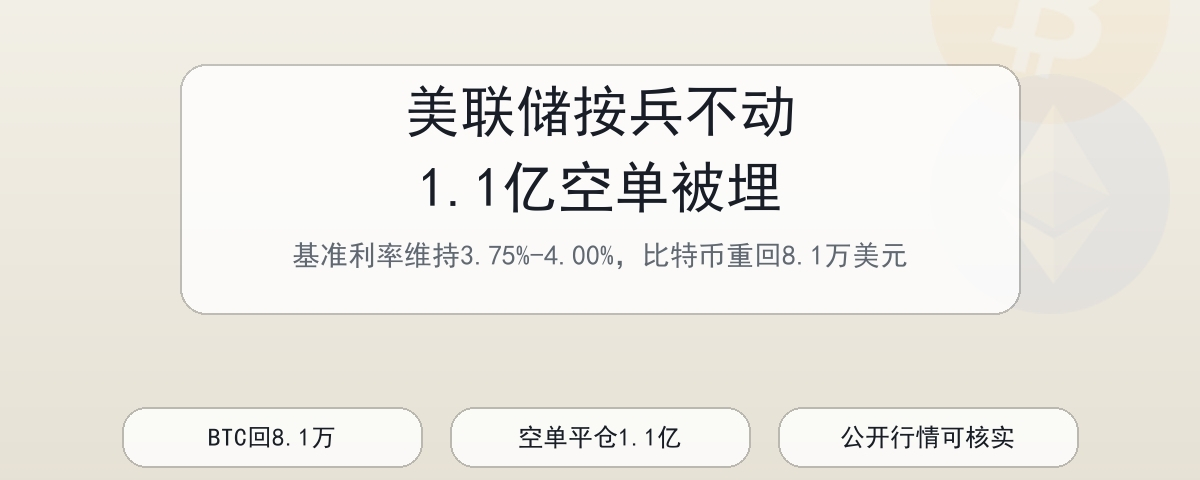
Fed stands pat as Bitcoin swings wildly—more thrilling to watch than a roller coaster rideIn the early hours of October 29, 2026, Beijing time, the U.S. Federal Reserve announced its interest rate decision: it would keep the benchmark rate unchanged in the 3.75%–4.00% range. The decision was in line with the expectations of roughly 90% of market participants.
With nothing more than this “no change” move, the digital asset market first jolted, then bounced back steadily, before plunging hard again.
The Fed’s decision was final, yet the market still got shaken up
Bitcoin prices swung wildly before and after the decision was announced, briefly falling below the $80,000 mark today.
Public data shows that liquidations across all digital assets that day totaled more than $167 million. Short positions accounted for about $110 million of that, or over 60%. Looking at Bitcoin alone, liquidations totaled about $58 million, of which more than $46 million came from short positions.
Fed stands pat as Bitcoin swings wildly—more thrilling to watch than a roller coaster ride
In the early hours of October 29, 2026, Beijing time, the U.S. Federal Reserve announced its interest rate decision: it would keep the benchmark rate unchanged in the 3.75%–4.00% range. The decision was in line with the expectations of roughly 90% of market participants.
With nothing more than this “no change” move, the digital asset market first jolted, then bounced back steadily, before plunging hard again.
The Fed’s decision was final, yet the market still got shaken up
Bitcoin prices swung wildly before and after the decision was announced, briefly falling below the $80,000 mark today.
Public data shows that liquidations across all digital assets that day totaled more than $167 million. Short positions accounted for about $110 million of that, or over 60%. Looking at Bitcoin alone, liquidations totaled about $58 million, of which more than $46 million came from short positions.
65
·
--
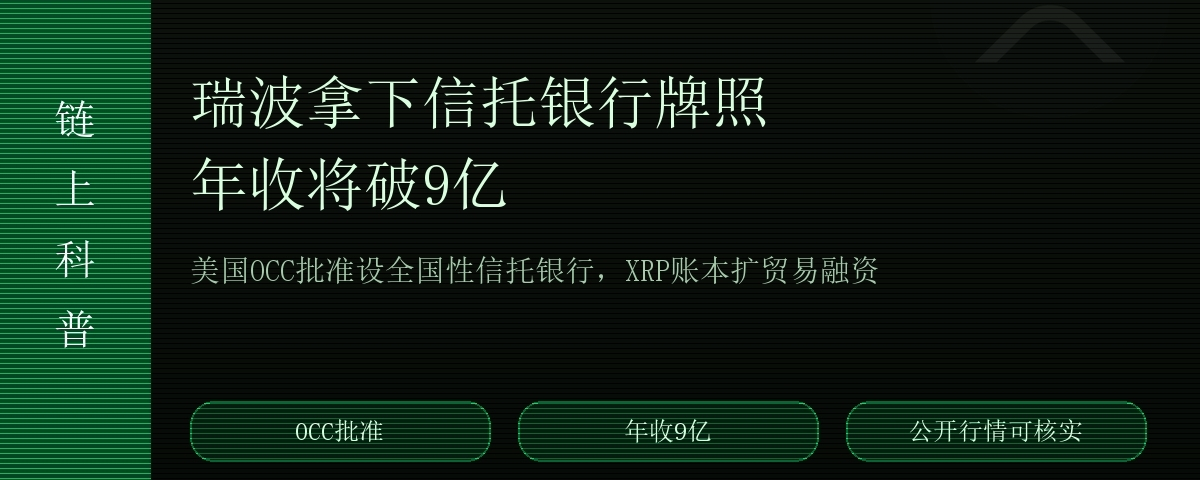
Article
XRP Secures a U.S. Trust Bank Charter, Revenue Set to Top $900 Million—How?
?When many people hear XRP, they still think of “just another crypto to trade.” But something that happened in late October 2026 is worth taking a closer look at.
How big is the revenue base?
According to public information (2026-10-29), Ripple expects its annualized product revenue to reach $900 million by the end of 2026. Growth is being driven by several business lines working in tandem, including payments, custody, stablecoins, prime brokerage, and treasury management.
A company that got its start by issuing a token is on track to bring in $900 million a year. That figure alone is already larger than the revenue of many small and midsize banks. It’s no longer making money from crypto price swings, but from transaction and service fees.
XRP Secures a U.S. Trust Bank Charter, Revenue Set to Top $900 Million—How? ?
When many people hear XRP, they still think of “just another crypto to trade.” But something that happened in late October 2026 is worth taking a closer look at.
How big is the revenue base?
According to public information (2026-10-29), Ripple expects its annualized product revenue to reach $900 million by the end of 2026. Growth is being driven by several business lines working in tandem, including payments, custody, stablecoins, prime brokerage, and treasury management.
A company that got its start by issuing a token is on track to bring in $900 million a year. That figure alone is already larger than the revenue of many small and midsize banks. It’s no longer making money from crypto price swings, but from transaction and service fees.
3
536
·
--
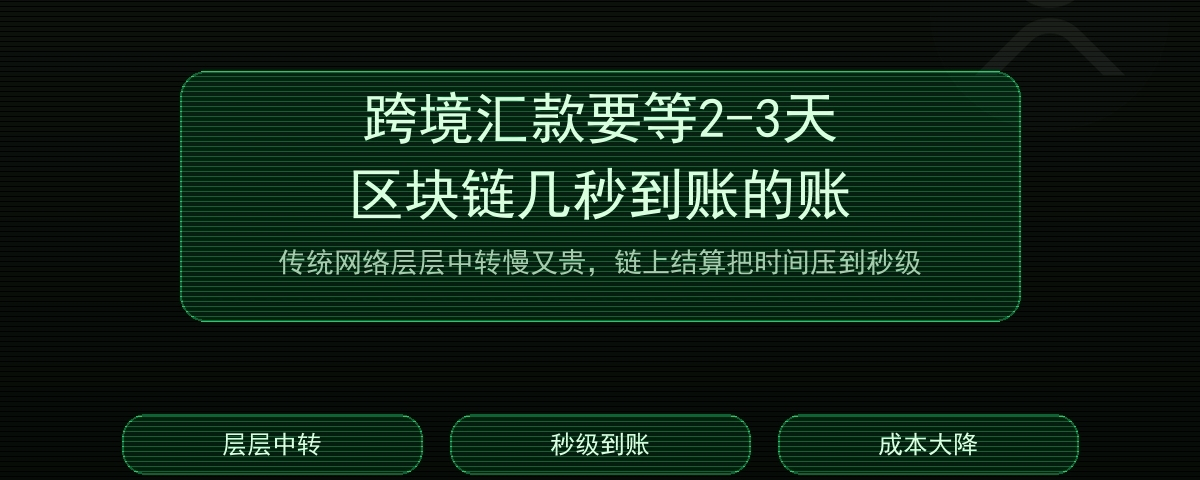
Article
Why do cross-border remittances take 2–3 days, while blockchain transfers arrive in seconds? How do the numbers add up?On October 28, 2026, Ripple’s XRP made a small move on the market movers list, rising about 1.2% in a single day. The number isn’t huge, but the question behind it is worth discussing: why does it often take two or three days for money sent from home to reach a relative’s account abroad, while some people say blockchain can get it there in seconds?
So what exactly is the difference in how the money is settled?
Why does money sent abroad have to pass through so many hands?
Traditional cross-border remittances use an old network. When you initiate a transfer from a bank in Country A, the money doesn’t actually “fly” there. Instead, it passes through a chain of intermediary banks, each one handing it off to the next for settlement.
Why do cross-border remittances take 2–3 days, while blockchain transfers arrive in seconds? How do the numbers add up?
On October 28, 2026, Ripple’s XRP made a small move on the market movers list, rising about 1.2% in a single day. The number isn’t huge, but the question behind it is worth discussing: why does it often take two or three days for money sent from home to reach a relative’s account abroad, while some people say blockchain can get it there in seconds?
So what exactly is the difference in how the money is settled?
Why does money sent abroad have to pass through so many hands?
Traditional cross-border remittances use an old network. When you initiate a transfer from a bank in Country A, the money doesn’t actually “fly” there. Instead, it passes through a chain of intermediary banks, each one handing it off to the next for settlement.
160
·
--

Article
No company, no financial statements—so why are people still willing to buy meme coins?There’s a strange phenomenon you see all the time: whenever yet another meme coin pops up, it’s enough to get the whole internet buzzing for days. But if you actually dig into its background, you’ll find something pretty absurd: there’s no company behind it, no financial statements, no technical white paper, and not even a clear answer to “What are you planning to do next year?”
So here’s the question: when something has no real entity behind it, why would anyone be willing to put their hard-earned money into it?
A “company” with no boss, yet a market cap that can climb to the top
Most meme coins start as a joke. The earliest ones took internet memes and images as inspiration, and were made and released just for fun. They’re different from Bitcoin and Ethereum—the latter two at least each have their own technical goals: one aims to be peer-to-peer cash, and the other to run smart contracts. Meme coins were never designed to solve any technical problem.
No company, no financial statements—so why are people still willing to buy meme coins?
There’s a strange phenomenon you see all the time: whenever yet another meme coin pops up, it’s enough to get the whole internet buzzing for days. But if you actually dig into its background, you’ll find something pretty absurd: there’s no company behind it, no financial statements, no technical white paper, and not even a clear answer to “What are you planning to do next year?”
So here’s the question: when something has no real entity behind it, why would anyone be willing to put their hard-earned money into it?
A “company” with no boss, yet a market cap that can climb to the top
Most meme coins start as a joke. The earliest ones took internet memes and images as inspiration, and were made and released just for fun. They’re different from Bitcoin and Ethereum—the latter two at least each have their own technical goals: one aims to be peer-to-peer cash, and the other to run smart contracts. Meme coins were never designed to solve any technical problem.
241
·
--
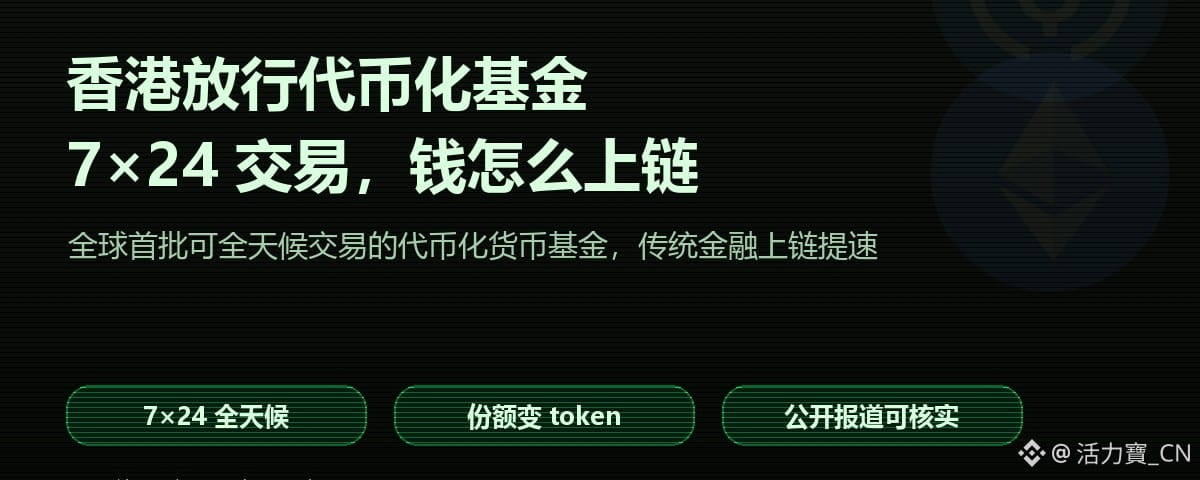
Article
Hong Kong Greenlights Tokenized Funds: The Truth About 24/7 TradingIn October 2026, Hong Kong’s Securities and Futures Commission approved a new type of product: tokenized money market funds that can be transferred on secondary markets through licensed platforms. Public reports say these are among the world’s first tokenized funds that can be traded 24/7.
When the news broke, many people took it to mean that funds could now be speculated on too. Let’s untangle that misconception first.$ETH
Let’s clarify three things today: what has been brought on-chain, why 24/7 trading marks a qualitative shift, and what boundaries ordinary investors should understand.
1. Tokenized funds: what goes on-chain is the fund units, not thin air
Hong Kong Greenlights Tokenized Funds: The Truth About 24/7 Trading
In October 2026, Hong Kong’s Securities and Futures Commission approved a new type of product: tokenized money market funds that can be transferred on secondary markets through licensed platforms. Public reports say these are among the world’s first tokenized funds that can be traded 24/7.
When the news broke, many people took it to mean that funds could now be speculated on too. Let’s untangle that misconception first.$ETH
Let’s clarify three things today: what has been brought on-chain, why 24/7 trading marks a qualitative shift, and what boundaries ordinary investors should understand.
1. Tokenized funds: what goes on-chain is the fund units, not thin air
2
303
·
--

Article
DeFi Lending Tops $100 Billion: 3 Hidden PitfallsIn the second half of 2026, public data showed that total deposits in decentralized lending vaults had surpassed $30 billion (up from about $10 billion in early 2025). Some strategies advertise annualized yields of 3% to 20%, with the highest topping 20%. When the news spread, people immediately started asking: Is this worth jumping into? Hold on—today, let’s lay out both where the yields come from and the risks.
1. Where the yield comes from: interest plus incentives, with no deposit insurance$SOL
Vault yields come from two sources. One is the interest paid by borrowers—the core source, and relatively stable. The other is incentive tokens issued by the protocol. Their prices move with the market, so they’re volatile: the yield might be 20% today and drop to 5% tomorrow.
DeFi Lending Tops $100 Billion: 3 Hidden Pitfalls
In the second half of 2026, public data showed that total deposits in decentralized lending vaults had surpassed $30 billion (up from about $10 billion in early 2025). Some strategies advertise annualized yields of 3% to 20%, with the highest topping 20%. When the news spread, people immediately started asking: Is this worth jumping into? Hold on—today, let’s lay out both where the yields come from and the risks.
1. Where the yield comes from: interest plus incentives, with no deposit insurance$SOL
Vault yields come from two sources. One is the interest paid by borrowers—the core source, and relatively stable. The other is incentive tokens issued by the protocol. Their prices move with the market, so they’re volatile: the yield might be 20% today and drop to 5% tomorrow.
2
345
·
--
Article
Ethereum falls 1.5% in a day: Don’t panic after four straight declines—first, learn these 3 facts about stakingOn October 26, Ethereum (ETH) posted its fourth consecutive daily decline, dropping about 1.5% in a single day and falling nearly 20% from its September high. People immediately started asking two questions: Have staking rewards shrunk, and is the money locked up in staking still safe? This short article explains how it works—no predictions, just education.
Fact 1: The price of the coin has fallen, but staking rewards measured in coins have not changed
First, let’s clarify how it works: staking rewards are calculated in coins, not in fiat value. If you stake a certain amount of ETH, the annual yield remains at the percentage set by the protocol. The amount of ETH you earn each day won’t decrease just because the price falls.
Ethereum falls 1.5% in a day: Don’t panic after four straight declines—first, learn these 3 facts about staking
On October 26, Ethereum (ETH) posted its fourth consecutive daily decline, dropping about 1.5% in a single day and falling nearly 20% from its September high. People immediately started asking two questions: Have staking rewards shrunk, and is the money locked up in staking still safe? This short article explains how it works—no predictions, just education.
Fact 1: The price of the coin has fallen, but staking rewards measured in coins have not changed
First, let’s clarify how it works: staking rewards are calculated in coins, not in fiat value. If you stake a certain amount of ETH, the annual yield remains at the percentage set by the protocol. The amount of ETH you earn each day won’t decrease just because the price falls.
2
285
·
--

Article
TRON (TRX) gains a modest 0.3% in a day, one of the few coins in the green amid a broad sell-off: key signals to watch for public blockchainsOn the morning of October 26, I checked the market as usual and noticed a contrast: nearly all major coins were in the red. Bitcoin was down about 1%, Ethereum fell even further, and Solana and XRP also failed to hold up. Amid the broad sell-off, TRON (TRX) was one of the few coins in the green, gaining 0.3% over 24 hours.
It wasn’t much of a gain, but it stood out against a sea of declines. Today, I’ll use this as a chance to talk about which signals matter when evaluating public blockchains.
A small gain doesn’t mean there’s nothing to watch
On its own, 0.3% is barely a blip in any market. But zoom out: most major coins closed lower that day, making this small gain stand out.
TRON (TRX) gains a modest 0.3% in a day, one of the few coins in the green amid a broad sell-off: key signals to watch for public blockchains
On the morning of October 26, I checked the market as usual and noticed a contrast: nearly all major coins were in the red. Bitcoin was down about 1%, Ethereum fell even further, and Solana and XRP also failed to hold up. Amid the broad sell-off, TRON (TRX) was one of the few coins in the green, gaining 0.3% over 24 hours.
It wasn’t much of a gain, but it stood out against a sea of declines. Today, I’ll use this as a chance to talk about which signals matter when evaluating public blockchains.
A small gain doesn’t mean there’s nothing to watch
On its own, 0.3% is barely a blip in any market. But zoom out: most major coins closed lower that day, making this small gain stand out.
1
430
·
--
Article
Dogecoin Drops 1% in a Day: The Meme-Coin Roller Coaster Is Volatile—Don’t Get Thrown OffIn today’s 10/25 discussion, Dogecoin (DOGE) got dragged out and roasted again 😂. DOGE is down about 1% over the past 24 hours, while Bitcoin (BTC) was nearly flat at around +0.08%. Most major coins also saw only small moves, while meme coins were more volatile.
Dogecoin got its start thanks to its community and meme culture. Its price is often driven by sentiment, a celebrity’s offhand remark, or a trending topic—not company earnings or cash flow. That’s why it’s far more volatile than coins like Bitcoin, Ethereum, and BNB, which are backed by underlying ecosystems.
A 1% drop today is actually mild for a meme coin. Historically, daily swings of over 10% in either direction are nothing unusual. For ordinary investors, there’s only one thing separating “mild” from “dangerous”: leverage.
Dogecoin Drops 1% in a Day: The Meme-Coin Roller Coaster Is Volatile—Don’t Get Thrown Off
In today’s 10/25 discussion, Dogecoin (DOGE) got dragged out and roasted again 😂. DOGE is down about 1% over the past 24 hours, while Bitcoin (BTC) was nearly flat at around +0.08%. Most major coins also saw only small moves, while meme coins were more volatile.
Dogecoin got its start thanks to its community and meme culture. Its price is often driven by sentiment, a celebrity’s offhand remark, or a trending topic—not company earnings or cash flow. That’s why it’s far more volatile than coins like Bitcoin, Ethereum, and BNB, which are backed by underlying ecosystems.
A 1% drop today is actually mild for a meme coin. Historically, daily swings of over 10% in either direction are nothing unusual. For ordinary investors, there’s only one thing separating “mild” from “dangerous”: leverage.
1
339
·
--

Article
Zcash gains 2.6% in a day: Privacy coins remain controversial—three things you need to understandZcash gains 2.6% in a day: Privacy coins remain controversial—3 things everyday people should understand
This morning, one name kept coming up in the discussion forum: Zcash (ZEC). Real-time data shows ZEC is up about 2.6% over the past 24 hours, putting it among the top gainers of major cryptocurrencies.
First, to be clear: everything below is for informational purposes only. It is not investment advice and does not encourage any trading activity. We won’t tell you to jump in when prices rise or urge you to cut your losses when they fall. If you don’t understand something or aren’t sure, the safest choice is not to participate.
First: What exactly are privacy coins?
Zcash gains 2.6% in a day: Privacy coins remain controversial—three things you need to understand
Zcash gains 2.6% in a day: Privacy coins remain controversial—3 things everyday people should understand
This morning, one name kept coming up in the discussion forum: Zcash (ZEC). Real-time data shows ZEC is up about 2.6% over the past 24 hours, putting it among the top gainers of major cryptocurrencies.
First, to be clear: everything below is for informational purposes only. It is not investment advice and does not encourage any trading activity. We won’t tell you to jump in when prices rise or urge you to cut your losses when they fall. If you don’t understand something or aren’t sure, the safest choice is not to participate.
First: What exactly are privacy coins?
1
153
·
--

Article
BNB up 1.5% in morning trading, turns negative in afternoonFirst, a note: what follows is my personal review and opinion, not investment advice or a recommendation to make any trades. It’s your money, so don’t blindly copy what I do.
Today (October 24), around 9 a.m., I was making tea and happened to glance at the market. I jotted down a quick note: it was up nearly 1.5% for the day. I remember thinking, Could this be the start of a day when it leads the charge?
Haha, in the end I got busy with other things around noon. When I checked again after 2 p.m., it had turned negative, down 0.47%. The broader market dragged a green candle down hard. That roller-coaster ride left me a little dazed. I stared at the chart for quite a while without making a move—and didn’t regret sitting tight either.
BNB up 1.5% in morning trading, turns negative in afternoon
First, a note: what follows is my personal review and opinion, not investment advice or a recommendation to make any trades. It’s your money, so don’t blindly copy what I do.
Today (October 24), around 9 a.m., I was making tea and happened to glance at the market. I jotted down a quick note: it was up nearly 1.5% for the day. I remember thinking, Could this be the start of a day when it leads the charge?
Haha, in the end I got busy with other things around noon. When I checked again after 2 p.m., it had turned negative, down 0.47%. The broader market dragged a green candle down hard. That roller-coaster ride left me a little dazed. I stared at the chart for quite a while without making a move—and didn’t regret sitting tight either.
3
777
Log in to explore more content
Join global crypto users on Binance Square
⚡️ Get latest and useful information about crypto.
💬 Trusted by the world’s largest crypto exchange.
👍 Discover real insights from verified creators.
Email / Phone number
Trending Topics
USMidterms-WhatAreMarketsExpecting?
0 views
22 Discussing
𝐒𝐓𝐎𝐏..... 𝐒𝐓𝐎𝐏..... 𝐒𝐓𝐎𝐏 🚨
$BTC 🇺🇸 THE US MIDTERMS COULD BE A BIG CATALYST FOR Bitcoin
History offers an interesting pattern.
Bitcoin recorded positive returns in the 12 months following the last three US midterm elections:
📊 2014 → BTC gained 24.5% in the following 12 months.
📊 2018 → BTC gained 44.9%.
📊 2022 → BTC gained 92.3%.
But this election carries another layer of uncertainty: crypto regulation.
The CLARITY Act remains stuck in the Senate, and a shift in political power could change the regulatory outlook for the entire industry.
Geopolitical tensions, oil prices, inflation, and monetary policy could also create short-term turbulence.
Here's what I'm watching:
The election may create volatility, but the bigger picture is liquidity.
If political uncertainty fades, macroeconomic conditions improve, and liquidity begins flowing back into risk assets, Bitcoin and the broader crypto market could have room for another major expansion.
Don't trade the headlines. Watch the liquidity.
History doesn't guarantee a repeat, but it's certainly a pattern worth watching.
#Bitcoin #BTC #Crypto #USMidterms #CryptoMarket #CLARITYAct #Liquidity
Jessica Elizabeth
·7 Likes
·18.8k views
USOctoberNFP-AreRateCutsStillPossible
191,521 views
1,411 Discussing
AMDBeatsExpectations-AINarrativeContinues
29 views
19 Discussing