

Xoxomarket
31 Posts

Xoxomarket
Report
Block User
Following capital, AI & Crypto & Stocks;Less hype, more signal观察市场,也观察资本如何流动,不追热点,只聊值得思考的事 #Ai #Crypto #Stocks
2 Following
42 Followers
93 Liked
Posts
PINNED
·
--
The market doesn’t reward everyone who gets the direction right. First, you have to experience losses, learn to wait, and ride out the volatility!
You think what you’re missing is a good opportunity. In reality, what you need more is the ability to seize it!
Those who truly understand risk and respect the rules have a chance to go further.
You think what you’re missing is a good opportunity. In reality, what you need more is the ability to seize it!
Those who truly understand risk and respect the rules have a chance to go further.
4
·
--
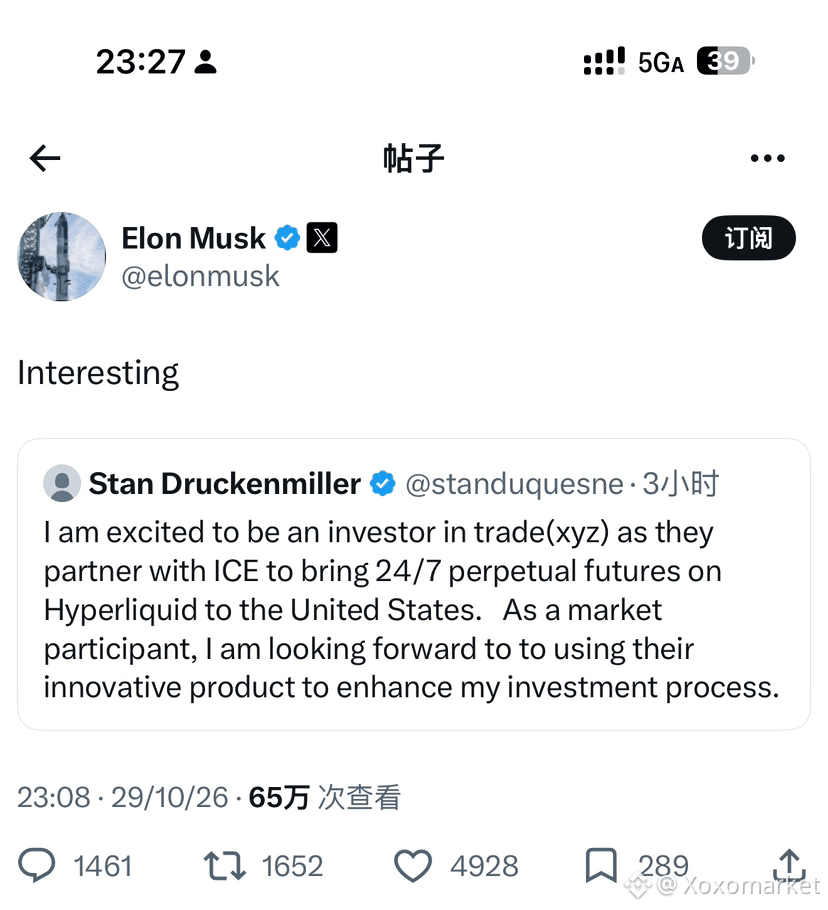
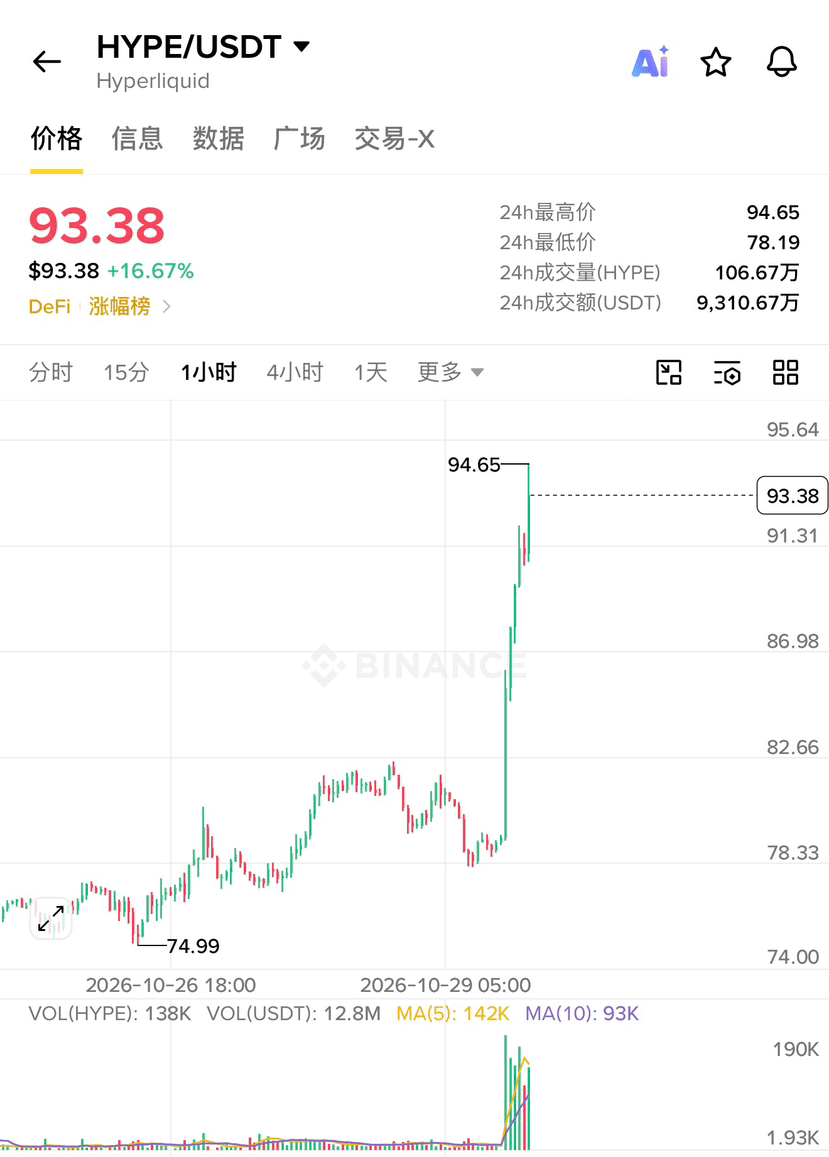
$HYPE Keep going! Musk has even mentioned it by name
$HYPE Keep going! Musk has even mentioned it by name
1
13
·
--
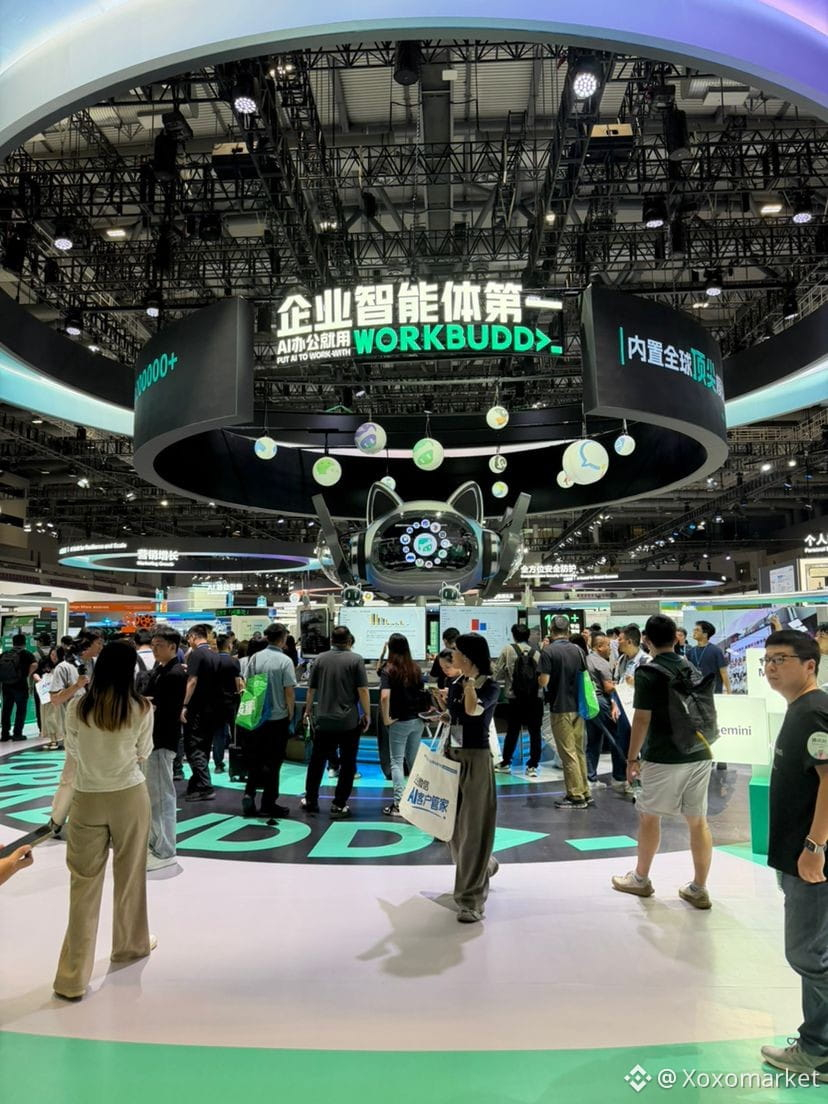
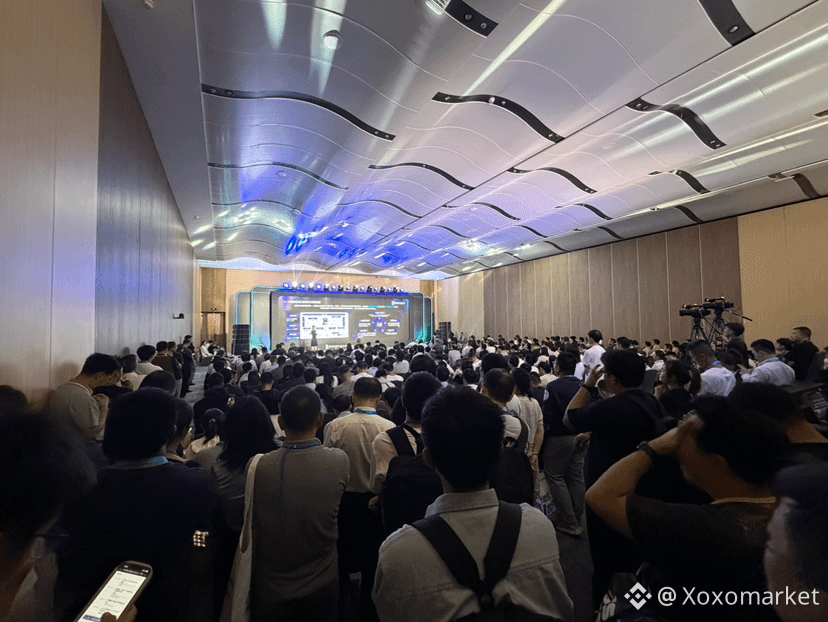
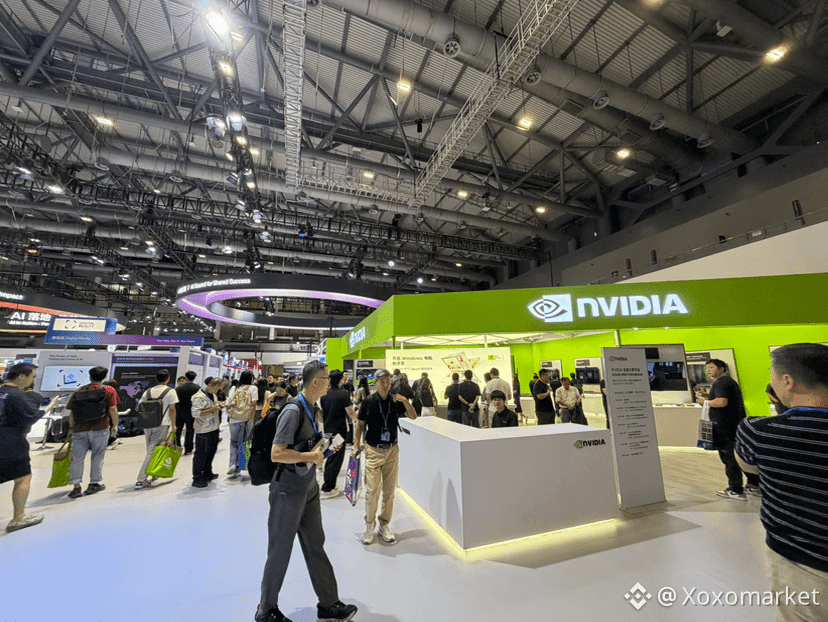
Today I attended the Tencent Global Digital Ecosystem Summit, and my biggest takeaway is: AI is moving from a technical concept into thousands of industries and sectors in a real way.
I’ve always believed that in the second half of AI competition, the key is not just how powerful the models are, but whether they can truly integrate into business, solve real problems, and create sustainable commercial value.
Tencent has a vast product matrix, a huge user base, and strong industry connectivity, so the future is worth looking forward to.
Technology creates value, and ecosystems amplify value.
Looking forward to Tencent’s continued innovation, and also to AI bringing real change to more industries! 🚀
#TencentGlobalDigitalEcosystemSummit #TencentAI #ArtificialIntelligence #TechInnovation #NVIDIA #AMD #Intel

95
·
--
South Korea’s former president Yoon Suk Yeol: prosecutors again seek the death penalty at his second trial!
Yoon Suk Yeol was accused of insurrection after declaring martial law on December 3, 2024, and was sentenced to life imprisonment at his first trial.
The special counsel’s team considers the sentence too lenient and is seeking to have it replaced with the death penalty.
Presidential power is not personal power, and the constitutional order must not be trampled on.
The final verdict will affect not only Yoon Suk Yeol’s personal fate, but also test the limits of South Korea’s democratic system and rule of law.
#SouthKorea #YoonSukYeol #SouthKoreanPresident
296
·
--
Whether the market's good or not, let's set that aside! Eat well, drink well—life's got to be enjoyed! 😂
Buy seafood yourself and find somewhere to have it cooked: it's fresh, affordable, and you can enjoy it in comfort.
Whether the market's good or not, let's set that aside! Eat well, drink well—life's got to be enjoyed! 😂
Buy seafood yourself and find somewhere to have it cooked: it's fresh, affordable, and you can enjoy it in comfort.
Buy seafood yourself and find somewhere to have it cooked: it's fresh, affordable, and you can enjoy it in comfort.




1
158
·
--
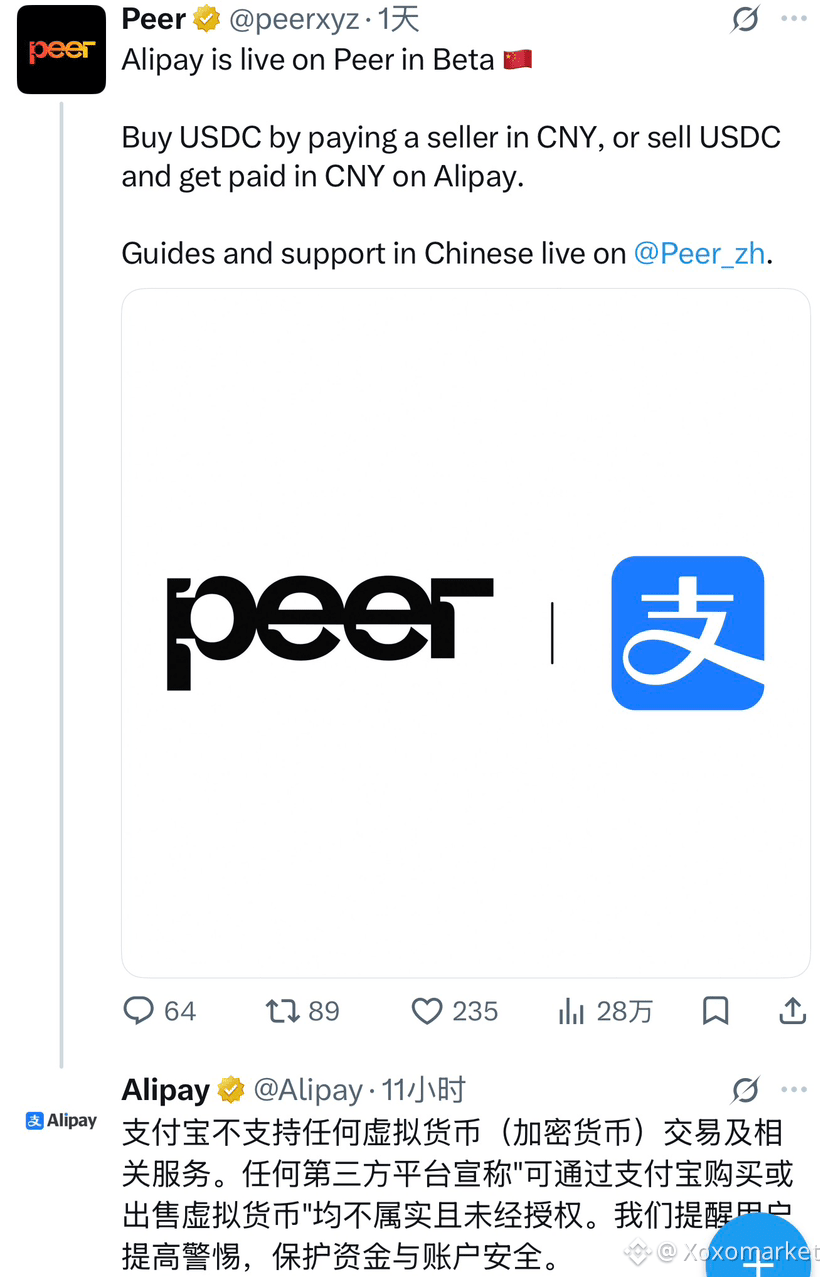
Official response from Alipay: Peer is not authorized to trade USDC through the platform
Alipay does not support any virtual currency (cryptocurrency) trading or related services. Claims by any third-party platform that users "can buy or sell virtual currencies through Alipay" are false and unauthorized. We remind users to stay vigilant and protect the security of their funds and accounts.
#Peer #Alipay
327
·
--
Verified
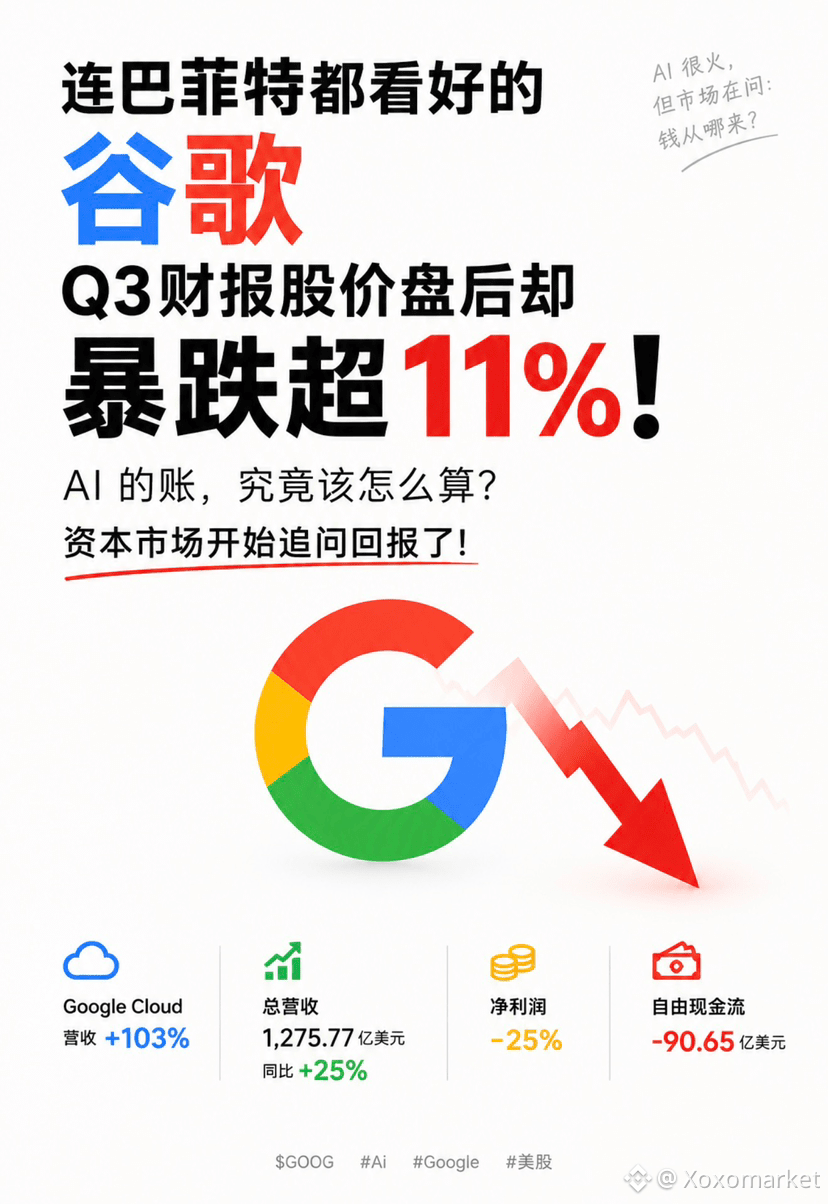
Even Google, a company Buffett is bullish on, saw its stock plunge more than 11% after hours following its Q3 earnings report! How should we calculate the cost of AI? The market is starting to demand returns!
Alphabet delivered an earnings report full of contradictions:
Revenue of $127.577 billion, up 25% year over year
Google Cloud revenue up 103% year over year, with operating margin rising to 36.2%
Net income down 25% year over year, with EPS falling from $2.87 to $2.12
Quarterly capital expenditures of $51.355 billion, sending free cash flow into negative territory at -$9.065 billion
The market is buying the future, not just growth.
The surge in cloud business proves that demand for enterprise AI infrastructure is strong. But revenue growth doesn’t necessarily mean cash flow growth. As capital expenditures continue to climb, the market naturally wants to know: When will these investments translate into returns that shareholders can actually receive?
AI can’t just be a story; the cash cow has to keep delivering, too.
Search revenue grew 12%, and YouTube ad revenue grew 9%, but both fell short of market expectations.
Google’s core strength isn’t just Gemini—it’s the complete ecosystem spanning search, advertising, cloud, chips, and models.
If AI brings more queries but can’t consistently improve ad monetization, or if massive investments eat into cloud growth, it will be hard to support the valuation with a story alone.
What will truly determine the next market rally isn’t how much Google spends on AI, but how much profit and cash flow those investments ultimately generate!
$GOOG
#AI #Google #USStocks
GOOGUS-13.99%
33
·
--
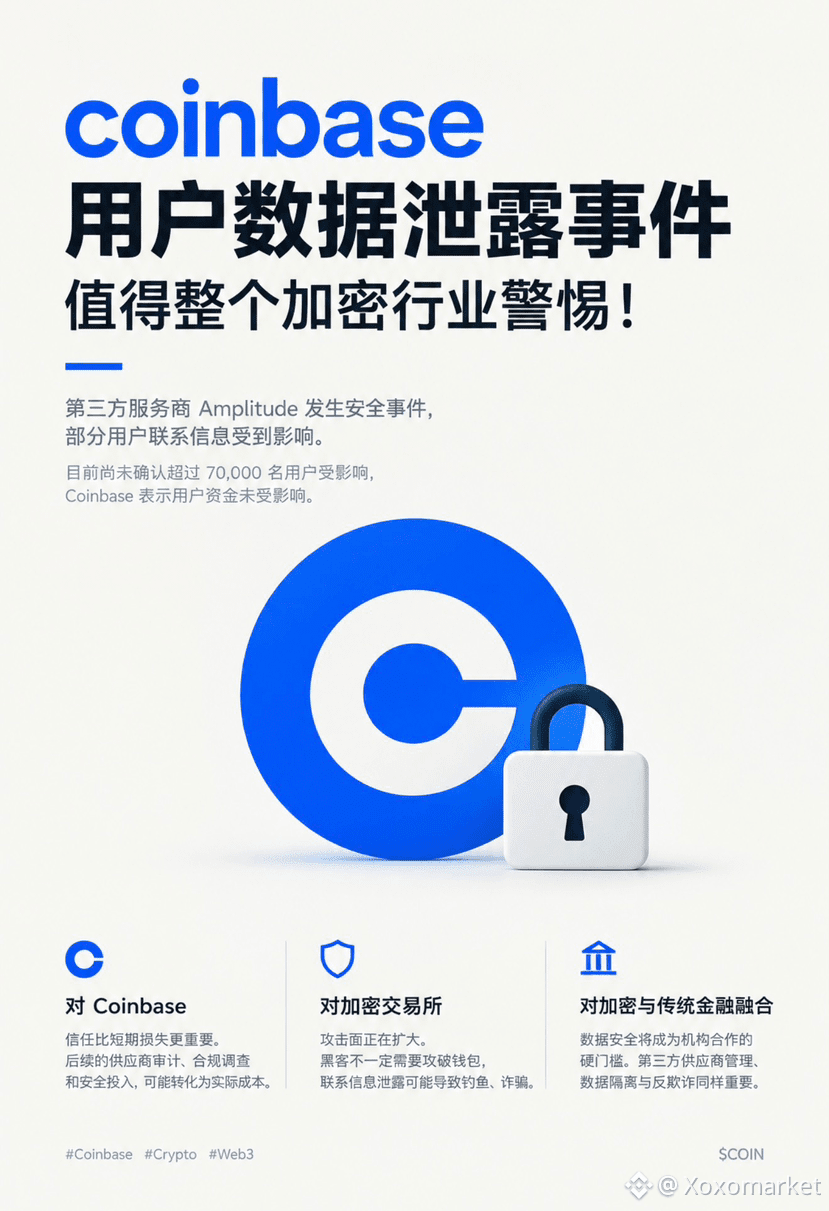
The Coinbase user data breach is a wake-up call for the entire crypto industry!
On October 28, Coinbase confirmed a security incident at Amplitude, a third-party data analytics provider, that affected some users’ contact information.
But one point must be made clear: reports that more than 70,000 users were affected have not yet been officially confirmed by Coinbase. Coinbase said it has found no evidence of unauthorized access to its own systems, and no user funds were affected.
For Coinbase: Trust matters more than short-term losses
Users can accept market volatility, but it’s much harder to accept having their personal information exposed. Follow-up vendor audits, compliance investigations, and security investments could all translate into real costs.
For crypto exchanges: The attack surface is expanding. Hackers don’t necessarily need to breach wallets. Once contact information is exposed, it can be used for targeted phishing, fake customer support scams, and account recovery attacks. The fact that no assets were directly stolen doesn’t mean the risk is over.
For the convergence of crypto and traditional finance: Data security will become a hard requirement for institutional partnerships. As exchanges, banks, brokerages, custodians, and asset management platforms become increasingly connected, security responsibilities can’t stop at core trading systems.
Licensing, custody, and compliance are important, but third-party vendor management, data segregation, and anti-fraud measures are just as crucial to earning users’ trust.
$COIN
#Coinbase #Crypto #Web3
165
·
--
Verified
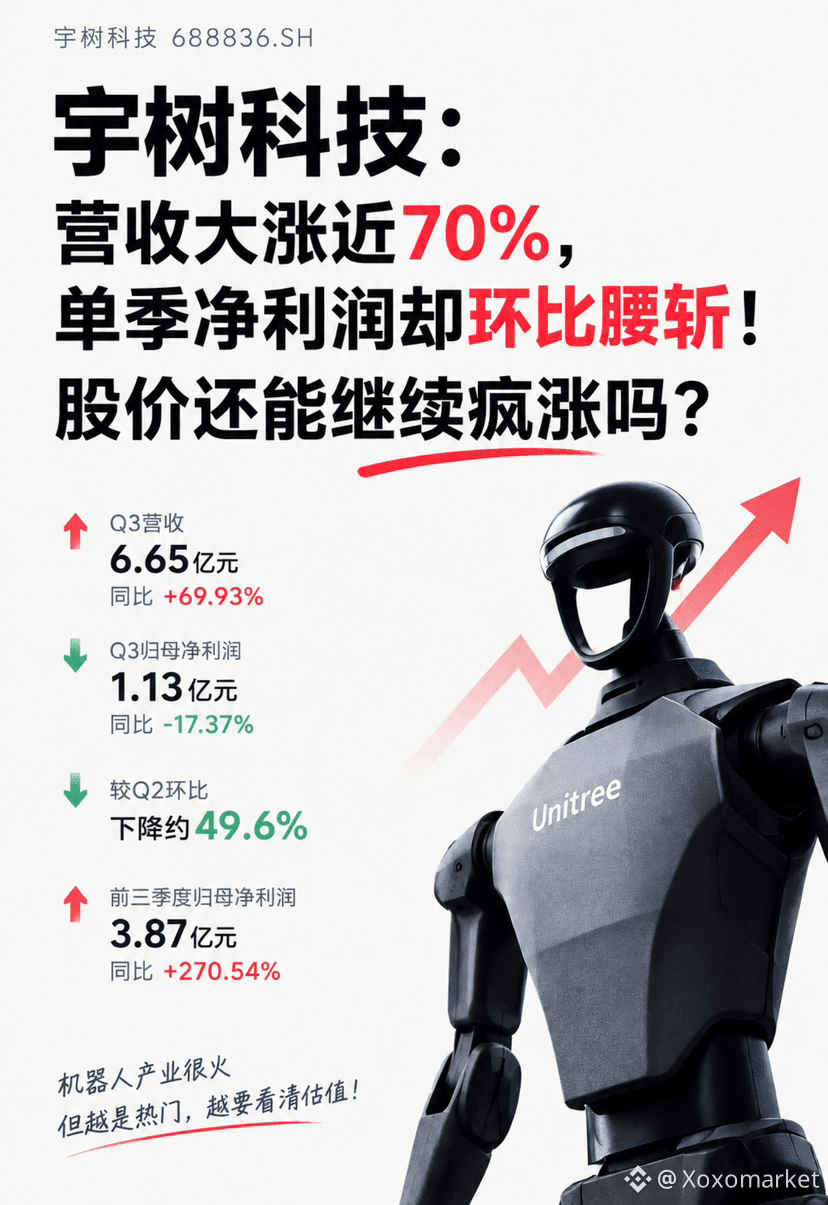
Unitree Robotics: Revenue surges nearly 70%, but quarterly net profit is halved sequentially! Can the stock keep soaring?
Revenue growth shows that the business is still expanding, but the decline in quarterly profit means the quality of that growth still needs further validation.
Q3 revenue: RMB 665 million, up 69.93% year over year
Q3 net profit attributable to shareholders: RMB 113 million, down 17.37% year over year
Down approximately 49.6% sequentially from RMB 224 million in Q2
Net profit attributable to shareholders for the first three quarters: RMB 387 million, up 270.54% year over year
Can the stock continue to rise?
The market is pricing in more than just how much the company earned today. It is also weighing whether humanoid robots can achieve large-scale commercial deployment in the future.
But there is a key contradiction here:
A bigger industry outlook does not mean the current stock price is cheaper!
If the market has already priced in rapid growth over the next few years, then even if results continue to grow, the stock could still come under pressure if that growth falls short of expectations.
I am bullish on the long-term development of the robotics industry, but I do not equate being bullish on the industry with being bullish on a stock at any price.
In the short term, Unitree Robotics must prove its results can live up to high expectations.
In the long term, what will truly determine its value is whether its technological edge can translate into sustainable commercial profits.
$UNITREE
2
2.3k
·
--
Verified
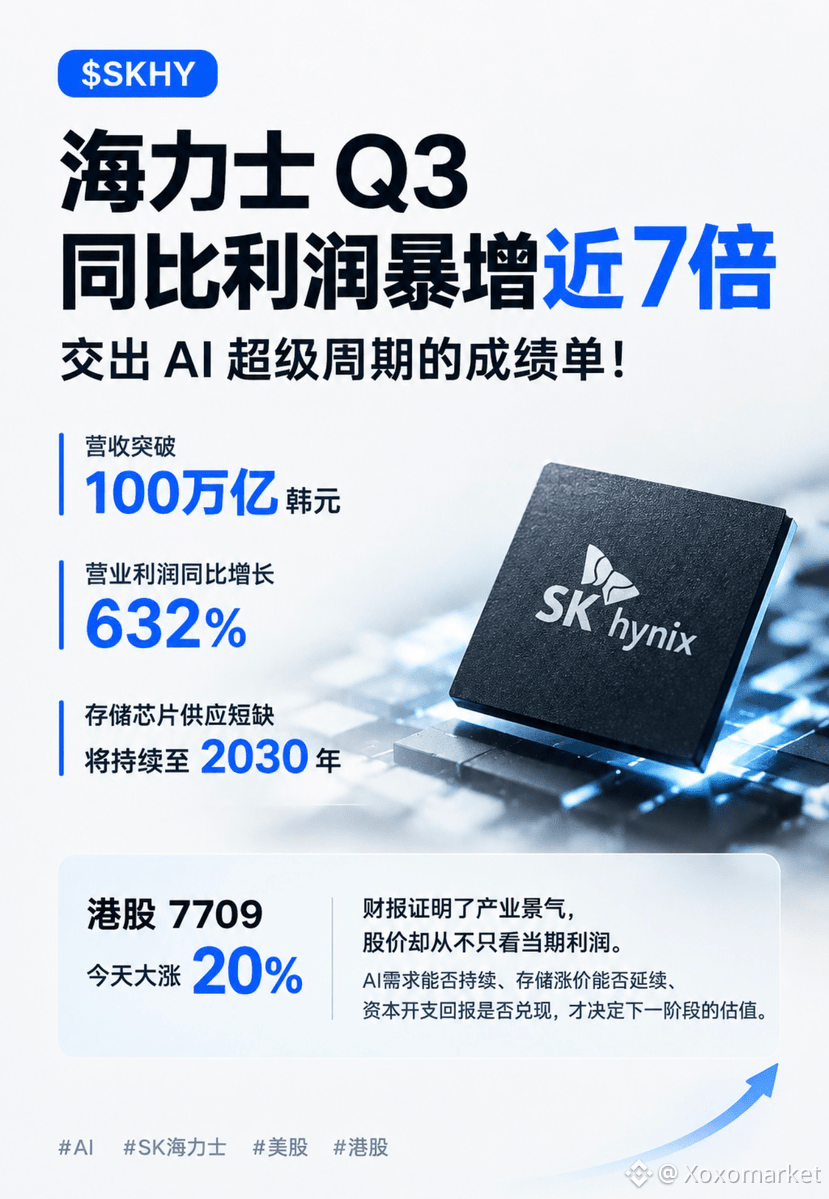
$SKHY SK Hynix’s Q3 profit surged nearly sevenfold year over year, delivering a report card for the AI supercycle!
Revenue topped 100 trillion won, and the memory chip shortage is expected to last until 2030
Hong Kong stock 7709: up 20% today
The earnings report confirms the industry’s strength, but stock prices are never driven solely by current profits. Whether AI demand can be sustained, memory price increases can continue, and returns on capital spending can materialize will determine valuations in the next phase.
#AI #SKHynix #USStocks #HongKongStocks
650
·
--
Heading to Dubai 🇦🇪 tomorrow ✈️
Any experienced folks have tips on what I should keep in mind when visiting these days?
Heading to Dubai 🇦🇪 tomorrow ✈️
Any experienced folks have tips on what I should keep in mind when visiting these days?
Any experienced folks have tips on what I should keep in mind when visiting these days?
79
·
--
Can you now buy and sell USDC directly through Alipay? 🔥
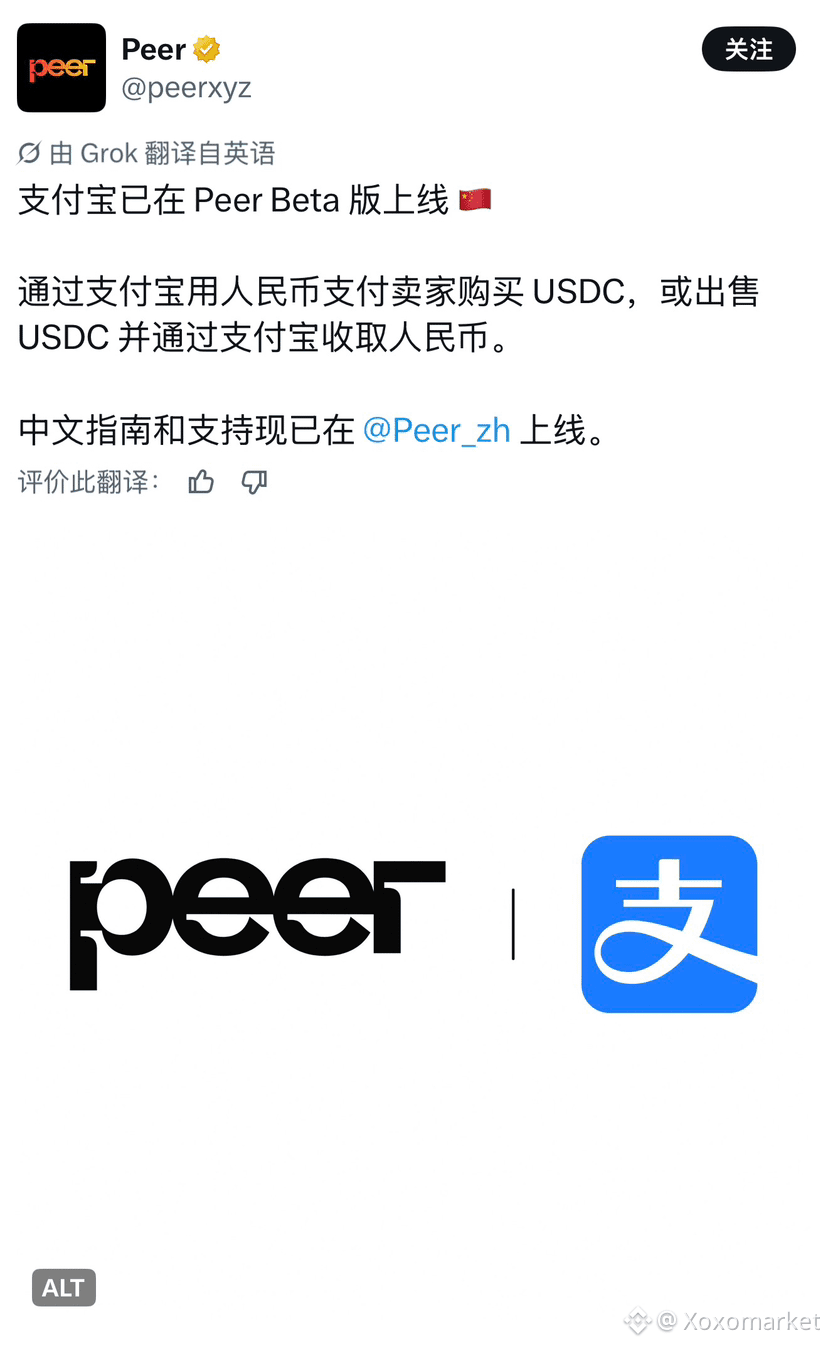
Peer has integrated Alipay into its Beta version. Users can pay in RMB via Alipay to trade USDC peer-to-peer with counterparties.
This means Peer has added Alipay as a payment method. It does not mean Alipay has officially announced a partnership with a crypto project, nor does it mean the related transactions have received regulatory approval.
But the industry implications behind this development are worth discussing.
1. Competition among stablecoins is shifting from issuance to payment access. What will truly matter in the future is not just how much USDC has been issued, but how easily users can obtain, transfer, and use stablecoins.
2. P2P on- and off-ramps could complement centralized exchanges. If payment verification, transaction security, and liquidity continue to improve, users may have more ways to access on-chain assets.
3. The next phase of on-chain finance will depend on infrastructure.
Payment channels, stablecoins, wallets, and on-chain trading protocols need to become increasingly interconnected to form a more complete financial network.
But it is too early to be overly optimistic: Alipay access is still in Beta, and RMB-side liquidity, actual trading volume, and transaction security all need further validation.
More importantly, China still has clear prohibitions and regulatory rules covering virtual currency-related business. A product launch should not be interpreted as a relaxation of regulation.
#USDC #Stablecoin #Crypto #DeFi #Alipay #OTC #Peer
23
1
78
90.4k
·
--
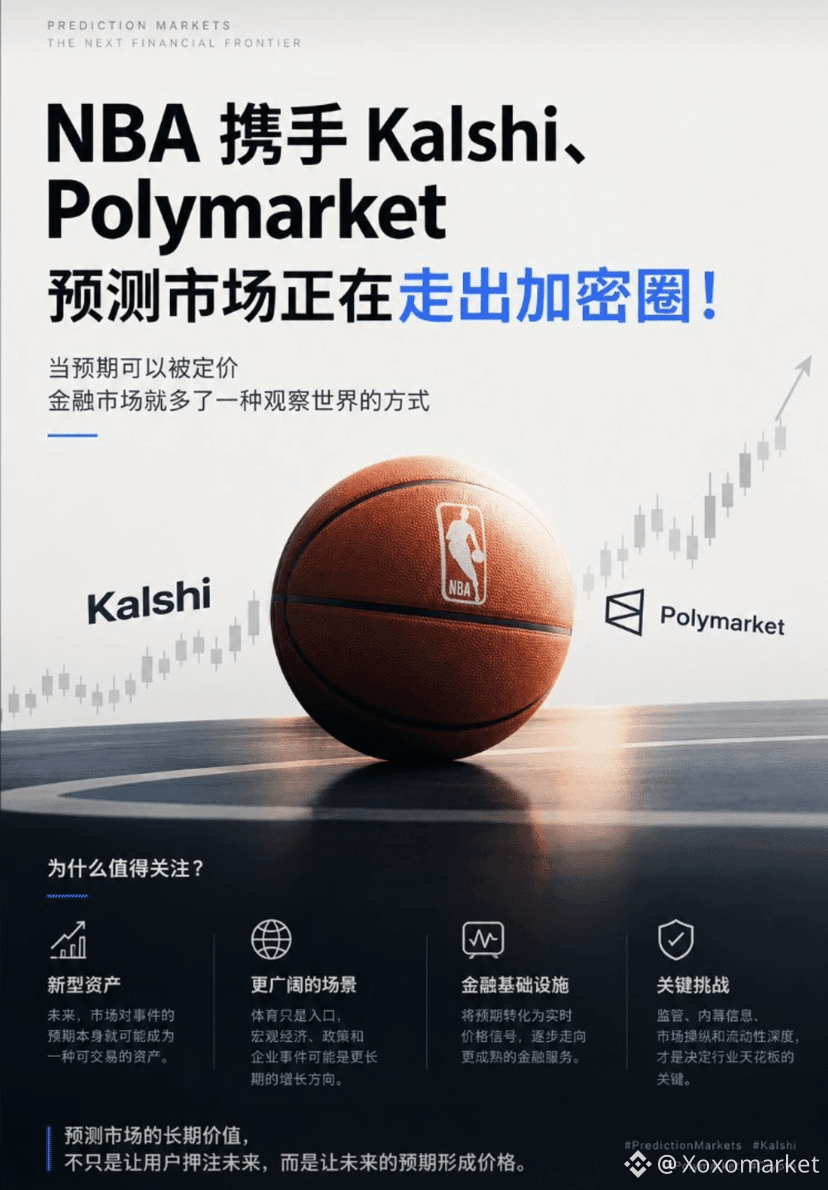
The NBA teams up with Kalshi and Polymarket—prediction markets are moving beyond crypto! When expectations can be priced, financial markets gain a new way to observe the world.
This is more than a sports business partnership; it’s a financial trend worth watching. In the future, market expectations about events could themselves become tradable assets.
Sports are just the entry point. Macroeconomics, policy, and corporate events could drive longer-term growth.
Turn market expectations about interest rates, inflation, elections, and business events into real-time price signals.
As official data, liquidity, trading platforms, and risk monitoring come together, the industry could evolve from a traffic-driven business into a more mature financial service.
But regulation, insider information, market manipulation, and market depth will determine the industry’s ceiling! The long-term value of prediction markets isn’t just letting users bet on the future—it’s turning expectations about the future into prices.
#PredictionMarkets #Kalshi #Polymarket #Crypto #NBA
101
·
--
Verified
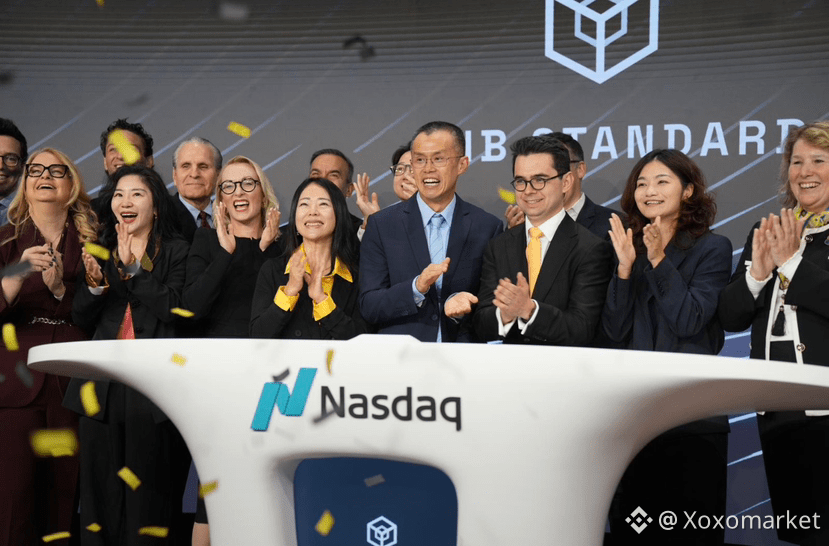
Congratulations to BNB Standard on ringing the Nasdaq Opening Bell! 🔔
This is a major milestone for the $BNB ecosystem.
Traditional capital markets and crypto assets are becoming more closely connected.
BNB Standard ($BNC) is a Nasdaq-listed company centered on corporate BNB reserves.
For traditional investors who are unable to hold crypto assets directly, publicly listed companies offer another way to participate in the BNB ecosystem.
BNB is moving beyond the story of a single token toward a richer financial ecosystem.
The company holds BNB, plans to operate BNB Chain validator nodes, and provides institutional investors with information about its asset reserves and related data.
If this can lead to a sustainable business and revenue model, the value proposition for BNB will extend beyond market trading and ecosystem applications.
This is a long-term positive for BNB.
The next real phase of the crypto industry is not just about getting traditional capital to buy crypto. It’s about integrating crypto assets into more mature systems for capital allocation, asset management, and corporate operations.
Congratulations to BNB Standard. We look forward to further progress in the institutionalization and regulatory compliance of the BNB ecosystem.
#BNB #BNBChain #Crypto #CZ #YZiLabs #Odagius #BNC
1
610
·
--
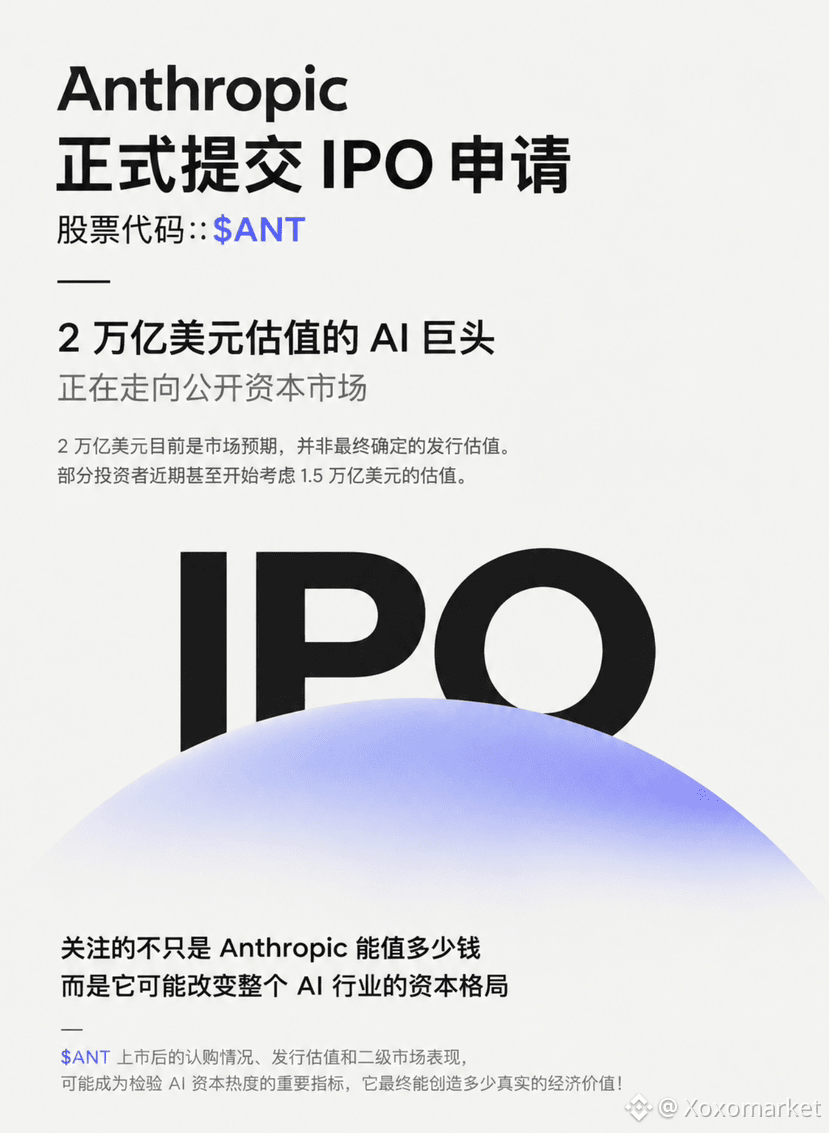
Anthropic officially files for an IPO. Ticker: $ANT
The AI giant, valued at $2 trillion, is heading for the public capital markets.
The $2 trillion figure is currently a market expectation, not a finalized IPO valuation. Some investors have recently begun considering a valuation of $1.5 trillion.
The question isn’t just how much Anthropic is worth, but how it could reshape the capital landscape of the entire AI industry.
Subscription demand for $ANT after its listing, its IPO valuation, and its performance on the secondary market could become important indicators of AI investment enthusiasm—and of how much real economic value it ultimately creates!
#Anthropic #AI #USStocks
28
·
--
Verified
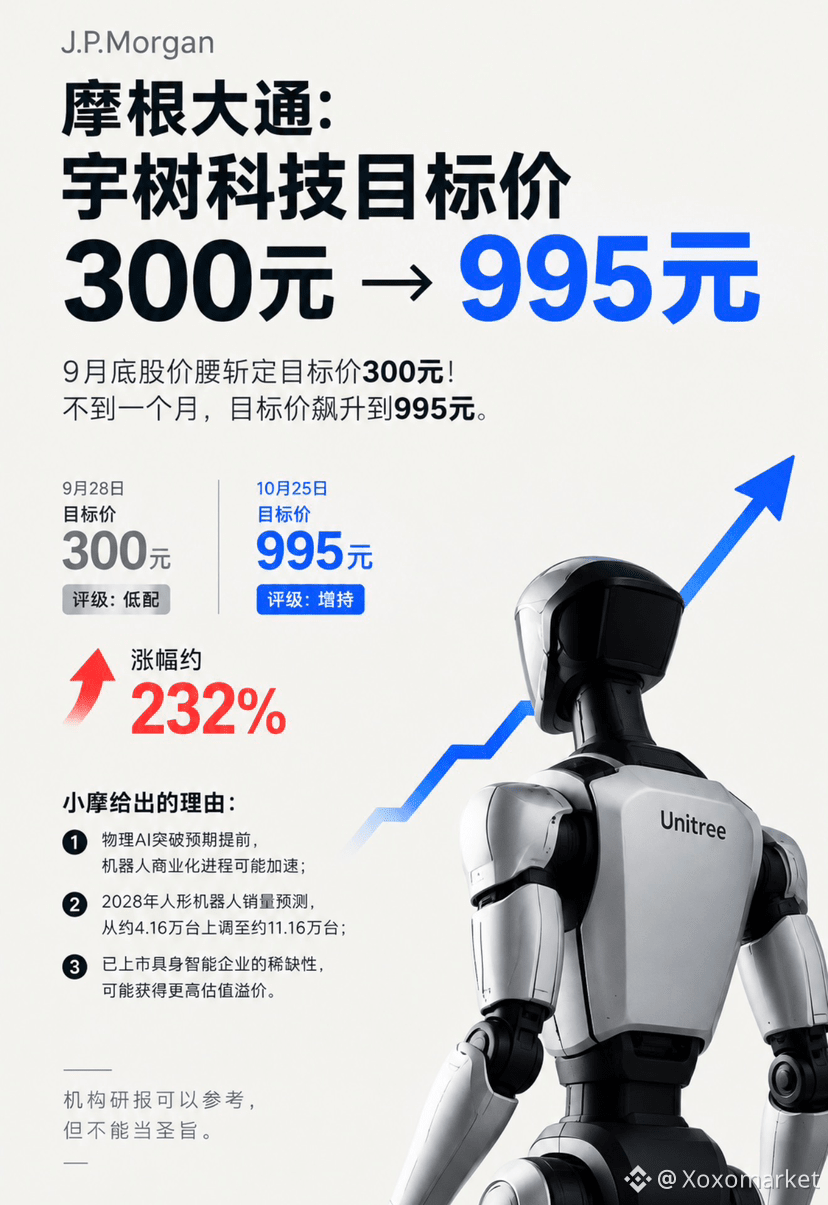
JPMorgan: Unitree Robotics’ target price was slashed to 300 yuan in late September after its share price halved! Less than a month later, the target price soared to 995 yuan
Isn’t this a bit ridiculous!!!
On October 25, the tune changed completely: the rating was upgraded straight to “Overweight,” and the target price was raised to 995 yuan—an increase of about 232%.
JPMorgan’s reasoning:
1. Breakthroughs in physical AI are expected to come sooner, potentially accelerating the commercialization of robots;
2. Its forecast for humanoid robot sales in 2028 was raised from about 41,600 units to about 111,600 units;
3. The scarcity of publicly listed embodied AI companies could command a higher valuation premium.
But…
A technological breakthrough doesn’t mean commercial success is guaranteed.
Higher sales don’t necessarily mean higher profits.
A promising sector doesn’t mean every valuation is reasonable.
If commercialization risks were enough to justify an “Underweight” rating at 300 yuan, what evidence now justifies such a dramatic reassessment of those risks at 995 yuan?
Analyst reports can be useful references, but they aren’t gospel. A target price is not a fact, let alone a guarantee against losses.
Ultimately, investing comes down to orders, profits, cash flow, and valuation.
A promising industry is worth watching, but even the best story needs real commercial results to deliver.
#JPMorgan #UnitreeRobotics #Robotics #AI
2
3
3.4k
·
--
A landmark moment for digital finance in Hong Kong!
China Asset Management (Hong Kong) and Leopard Trading, a licensed platform under Futu, have launched 24/7 secondary-market trading for compliant public-offering digital funds.
The first tokenized units of HKD- and USD-denominated digital money market funds are now available for trading 365 days a year, including weekends and public holidays, subject to the platform’s rules.
What really matters here is more than just “24-hour trading.”
1. Traditional finance and Web3 are converging at an accelerating pace
In the past, round-the-clock trading was more closely associated with crypto assets. Now, units of regulated public funds are also entering digital asset trading infrastructure.
2. The boundaries between asset managers, brokerages and trading platforms are being reshaped
In the future, competition will not just be about who manages more assets, but also about who can connect products, trading, distribution and settlement more efficiently.
3. Hong Kong is exploring the next generation of financial infrastructure
If tokenized funds, licensed trading platforms, compliant stablecoins and digital settlement systems become increasingly interconnected, Hong Kong’s competitive edge could extend beyond virtual asset trading to a more complete digital finance ecosystem.
Of course, 24/7 trading does not mean 24/7 liquidity, nor does it mean every trade can be executed at net asset value. Pricing mechanisms, market depth and investor protection will be key to whether this innovation can thrive over the long term.
The real value of tokenization is not simply putting assets on a blockchain, but redesigning how they are issued, circulated and settled.
What’s worth watching today is not just one fund, but the next step in the digital transformation of traditional finance!
#HongKongFinance #RWA #Tokenization #Web3 #Futu #ChinaAMC

53
·
--
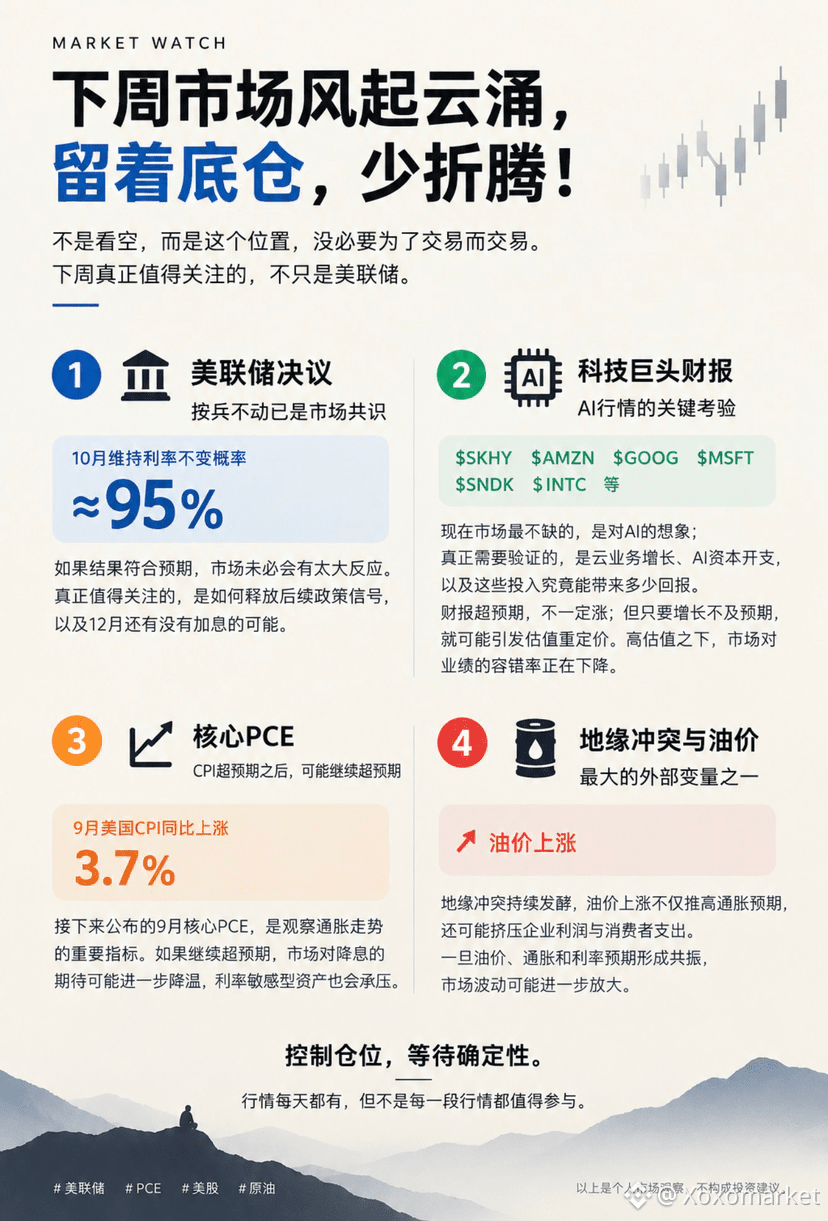
Next week, markets could be turbulent. Hold on to your core positions and avoid unnecessary trading!
This isn’t a bearish view. It’s just that at these levels, there’s no need to trade for the sake of trading.
The things really worth watching next week go beyond the Fed.
1. Fed decision: Holding steady is already the market consensus
Current market pricing puts the odds of rates remaining unchanged in October at nearly 95%! If the outcome matches expectations, the market may not react much. What really matters is how the Fed signals its next policy moves, and whether another rate hike in December is still possible.
2. Tech giants’ earnings: A crucial test for the AI rally
Major companies including $SKHY, $AMZN, $GOOG, $MSFT, $SNDK, and $INTC are about to report earnings.
What the market has in abundance right now is imagination about AI. What still needs to be verified is cloud business growth, AI capital spending, and how much return that investment will actually generate. An earnings beat doesn’t necessarily mean the stock will rise; but even a slight growth miss could trigger a valuation reset. With valuations high, the market is becoming less forgiving of disappointing results.
3. Core PCE: After a hotter-than-expected CPI, it could also surprise to the upside
U.S. CPI rose 3.7% year over year in September, and inflationary pressures remain. The September core PCE report due next is an important gauge of the inflation trend. If it also comes in above expectations, hopes for rate cuts could fade further, putting interest-rate-sensitive assets under pressure.
4. Geopolitical conflicts and oil prices: One of the biggest external wildcards
Geopolitical tensions continue to escalate. Rising oil prices not only push up inflation expectations, but may also squeeze corporate profits and consumer spending.
If oil prices, inflation, and interest-rate expectations start reinforcing one another, market volatility could intensify further.
So next week, don’t blindly chase rallies, and don’t panic-sell just because of a short-term pullback.
Manage your position size and wait for greater certainty. There are opportunities in the market every day, but not every move is worth participating in.
These are my personal market observations and do not constitute investment advice.
#FederalReserve #PCE #USStocks #CrudeOil
90
·
--
Verified
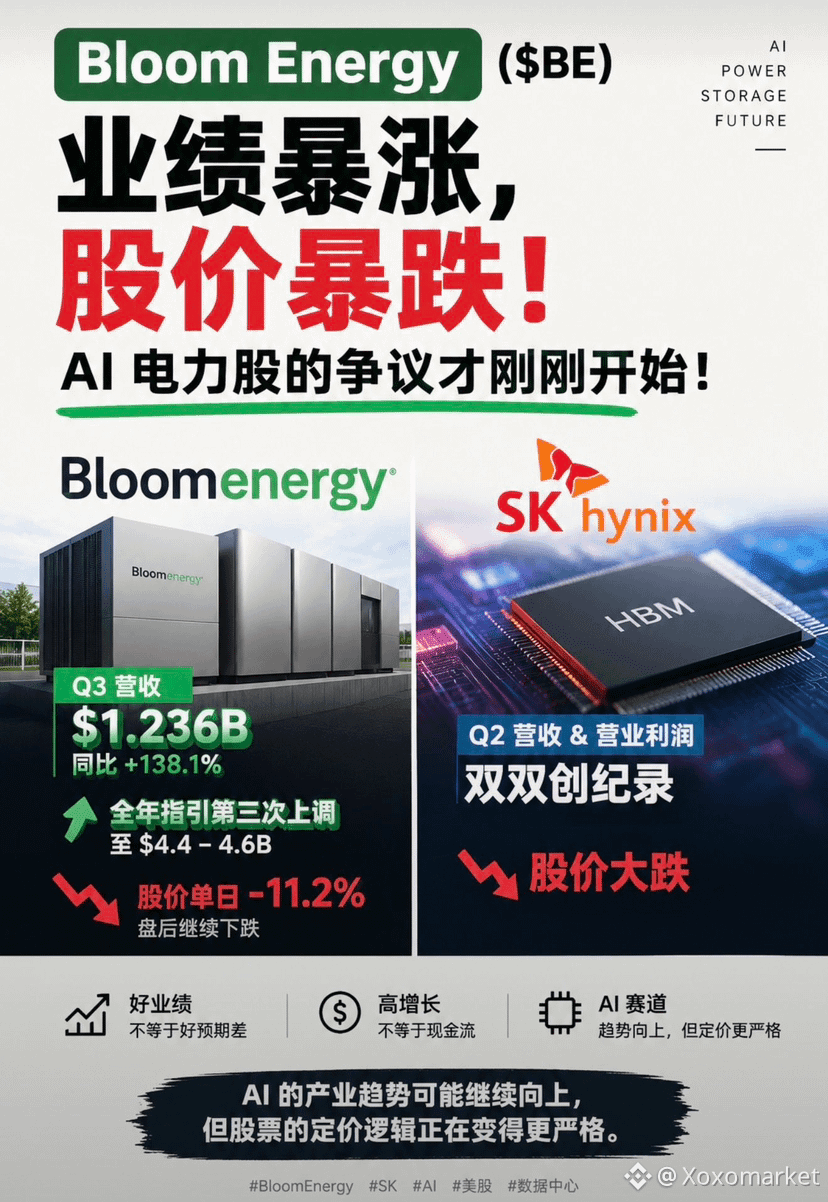
Bloom Energy ($BE): Soaring results, plunging stock! The debate over AI power stocks is just getting started!
After the market closed on October 22, Bloom Energy released its Q3 results, and the numbers were impressive:
📈 Revenue of $1.236 billion, up 138.1% year over year
📈 Non-GAAP EPS of $0.94, significantly above expectations
📈 Full-year revenue guidance raised for the third time, to $4.4–$4.6 billion
But the market wasn’t buying it! The stock fell 11.2% in a single day and continued to slide after hours 📉.
Why?
The good news had already been priced in.
Power shortages at AI data centers are a long-term trend, but BE has already surged significantly this year. The market isn’t just trading on growth—it’s asking how much more growth can exceed expectations. Even good news, once delivered, can become a reason to take profits.
Profits look great, but cash flow is flashing a yellow light!
Q3 free cash flow was about -$181 million. Capacity expansion, inventory, accounts receivable, and contract assets are all tying up cash.
Revenue recognition doesn’t mean the cash has arrived. The question now is whether growth can truly translate into cash.
$SKHY: SK hynix previously reported record Q2 revenue and operating profit, with AI memory demand still strong.
But what about the stock?
One company beat earnings expectations and was still sold off; another posted a record quarter but still couldn’t prevent a sharp drop in its share price.
BE needs to prove that orders can turn into cash flow, and that it can keep up with capacity expansion and deliveries.
SK hynix needs to prove how long strong HBM demand and high margins can last—and whether intensifying competition and shifts in the memory cycle will affect future earnings.
One is about cash flow and project execution; the other, about technological advantages, supply and demand, and the cycle.
The AI industry trend may continue upward, but the rules for valuing stocks are getting stricter.
#BloomEnergy #AI #USStocks #DataCenters #SK
843
·
--
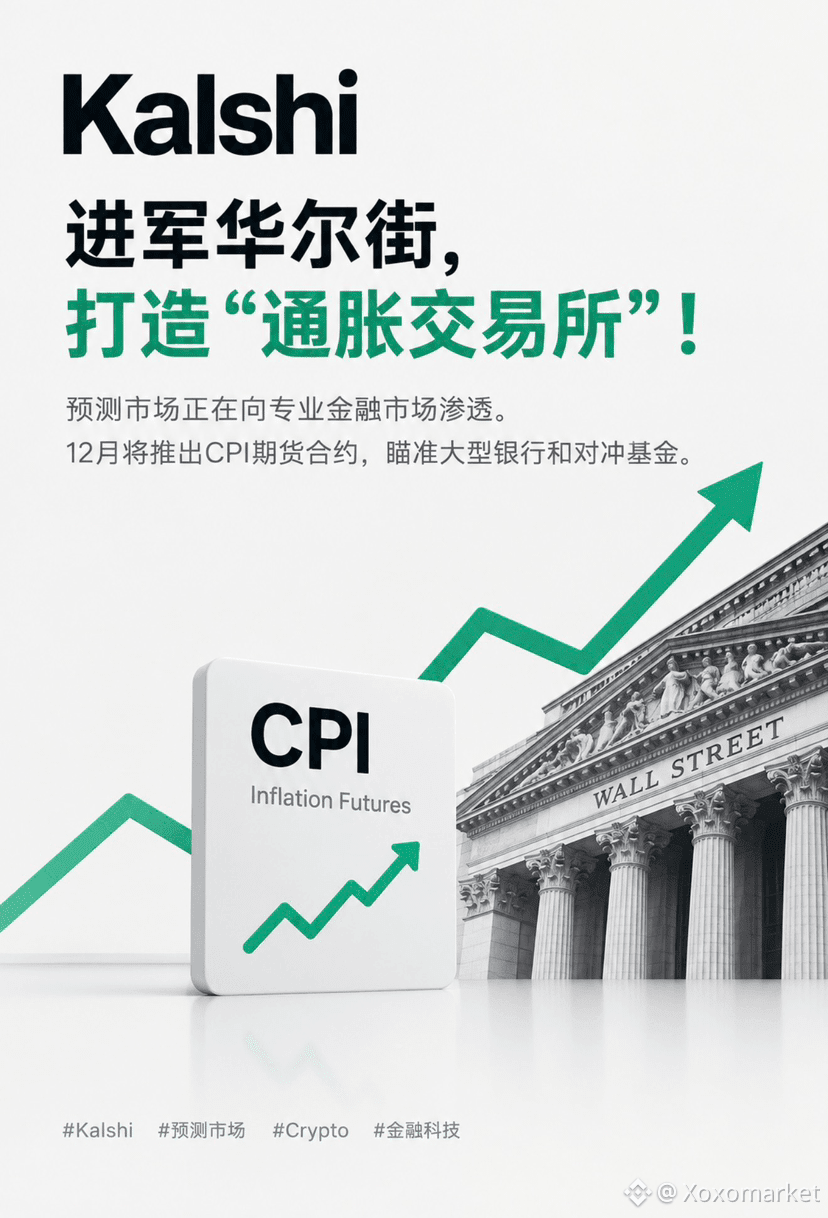
Prediction markets are making inroads into professional financial markets! Kalshi takes on Wall Street with an “inflation exchange”
Kalshi plans to launch exchange-traded futures contracts in December that track the U.S. CPI and core inflation measures, targeting major banks and hedge funds.
Prediction markets are a sector with enormous potential
Turn macroeconomic expectations into tradable markets! In the past, institutions have primarily expressed their views on inflation indirectly through tools such as Treasury bonds, interest-rate futures, and options. Contracts directly linked to CPI could offer a more precise tool for managing inflation risk.
This reflects a broader shift: markets are no longer content with trading stocks, bonds, and crypto assets—they’re also starting to trade views on future events directly. From election outcomes to economic data, if more events can be standardized, brought into compliance, and supported by liquidity, the boundaries of prediction markets could continue to expand.
Wall Street’s entry raises the competitive stakes
What’s truly worth watching isn’t just trading volume, but whether institutional capital, market makers, and professional investors are willing to participate.
Once sufficient liquidity is established, prediction markets could evolve from products aimed at retail traders into infrastructure for macro trading and risk management.
Of course, opportunity doesn’t guarantee success. Contract design, regulatory approval, liquidity, settlement mechanisms, and actual institutional demand will remain key factors in determining the outcome.
Prediction markets could be one of the crypto industry’s infrastructure sectors worth watching over the long term, alongside DeFi and stablecoins.
#Kalshi #PredictionMarkets #Crypto #FinTech
76
Log in to explore more content
Join global crypto users on Binance Square
⚡️ Get latest and useful information about crypto.
💬 Trusted by the world’s largest crypto exchange.
👍 Discover real insights from verified creators.
Email / Phone number
Trending Topics
FedWatch
16.3M views
39,460 Discussing
🚨 🇺🇸 PETER SCHIFF JUST THREW A BIG WARNING AT THE FED!
Peter Schiff is calling Kevin Warsh’s tough talk on inflation a “bluff,” and his prediction could have major implications for the markets.
Schiff believes the Fed could eventually return to money printing through quantitative easing (QE) and even cut interest rates next year, despite inflation continuing to rise.
Think about that for a moment.
🔥 Inflation could remain a problem. 🔥 The Fed could still move toward easier monetary policy. 🔥 More liquidity could flow into financial markets.
If this scenario plays out, it could create a very different market environment for stocks, gold, Bitcoin, and the wider crypto market.
But there’s a catch: if inflation stays high, the Fed could face a difficult choice between fighting rising prices and supporting the economy.
Will Warsh stick to a tough inflation policy, or will the Fed eventually change direction?
The next move could matter a lot for investors.
#FedWatch #EarningsSeason #USMidtermElections #BrazilCryptoExchangesMustApplyForLicensesByFriday #StanDruckenmillerBecomesInvestorInTradeXYZ
Jackson Liam
·4 Likes
·8.6k views
EarningsSeason
6.5M views
32,167 Discussing
USMidtermElections
48,771 views
654 Discussing