

小智_
111 Posts

小智_
Report
Block User
155 Following
7.2K+ Followers
1.1K+ Liked
Posts
All
Quotes
Videos
·
--
Today, I had my AI Agent mint a Proof of Agent for me, Agent #2273 🪪
I barely had to lift a finger: it first verified the official website and contract, confirmed that the mint was free and required no token approvals, and only asked whether I wanted to sign after the transaction simulation passed. Once I confirmed, it put it on-chain with one click—for less than a cent in gas.
This is what I think AI Agents should do in Web3:
✅ Help me spot risks and check the contract before I sign
✅ Turn complex on-chain operations into a simple sentence
✅ Keep an eye on the market and do research for me while I sleep
From seashells to wallets, every era has its own tools. This time, the tool is giving people their time back.
What would you most like an AI Agent to help you with in Web3? Let’s talk in the comments 👇
#ProofOfAgent Agent #2273 $PTAH
477
·
--
Verified
When evaluating DePIN projects, there’s one question I always pay close attention to:
Once the network is up and running, can developers and hardware providers actually get value from it?
One thing worth noting about @Acurast’s approach is how it connects these two sides.
1. Developers don’t need to build their own computing infrastructure
With Acurast, developers can use decentralized computing resources without having to purchase and maintain physical hardware from scratch.
This reduces not only hardware costs, but also the barriers to deploying and scaling computing resources.
2. Everyday devices can also become part of the network
Compatible smartphones can connect to the network and contribute their processing power.
For device owners, a phone can be more than just a consumer device. It can also become a node providing computing resources, with the opportunity to earn $ACU rewards for participating in the network, subject to eligibility.
This is one of the core ideas behind DePIN:
Organize hardware resources distributed across different locations so they can serve real-world needs.
3. But I think one data point needs to be viewed separately
Acurast’s on-chain transaction count has surpassed 1 billion.
That’s a milestone worth paying attention to, but the number of transactions alone doesn’t directly prove the strength of commercial demand for the computing network.
Going forward, I’ll be watching three metrics more closely:
- Real demand: How many developers use the network consistently?
- Actual deployment: How many applications and computing tasks are running reliably?
- Resource utilization: How much of the computing capacity of connected devices is actually being used?
Because the value of DePIN isn’t just about connecting more devices to the network.
It’s about whether those devices can consistently meet demand, whether developers are willing to keep paying, and whether hardware providers can earn a reasonable return.
If this supply-and-demand relationship works, the network’s scale could translate into more lasting value.
That’s what I’ll be paying closest attention to as I continue to follow @Acurast and the $ACU ecosystem.
5
·
--
XHunt In this episode, they recruited a new partner again—.@Acurast.
The prize pool is 200,000 ACU. At the time, that was roughly 24,000 U. One month later, it will be distributed via Impact Share to the top 150.
First, let’s say this project is a bit against common sense. It doesn’t set up data centers. Instead, it uses old Android phones that are collecting dust in people’s drawers as computing power. Plug the phone into power, connect it to the internet, install a Processor, and developers can run tasks. The tasks run inside the phone’s built-in Trusted Execution Environment (TEE). After completion, they can be verified—while even the phone owner can’t see the data. The official docs list supported workloads including APIs, scheduled tasks, webhooks, LLM inference, and confidential computing. Android, iOS, and Solana Mobile can all be connected.
The scale is already not small. Mainnet launched together with ACU. In the launch announcement, at the time it said the phones were over 169,000 units, with 360,000+ deployments, and 589 million+ on-chain transactions. Their official account numbers have grown since then: 308,000+ phones, 1 billion+ on-chain transactions, and 646,000+ deployments.
ACU tokens are used to pay for compute, distribute rewards, and do governance. The model supplies an initial 1 billion tokens, with about 5% inflation each year. Of that, about 70% goes into the Staked Compute pool.
Back to this event. The threshold is XHunt’s top 200,000 by global influence, or having a verified creator badge.
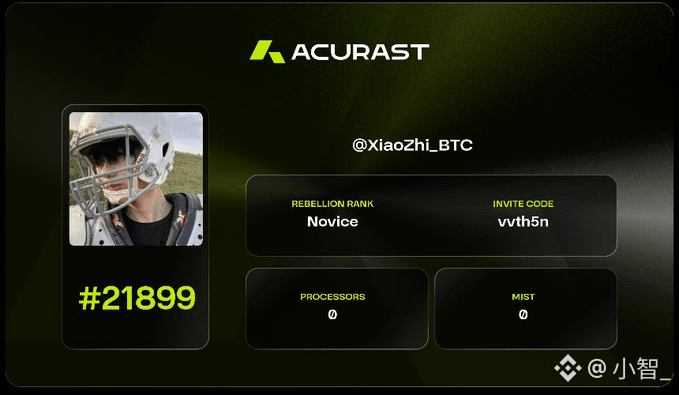
Two of the easiest pitfalls to step into—let’s call them out separately: you need to generate your own Acurast invitation code first. Posts without a generated code won’t be counted toward the leaderboard. Also, the X account linked to your identity card and your EchoHunt registration handle must be the same—otherwise the invitation won’t be credited to you.
On scoring: each week, only your earliest 2 posts are counted. Content accounts for 60%, and valid invitations account for 40%. If you also sync the posts to Binance Square that’s already linked in the same week, you’ll get a bonus, and it won’t take up additional slots beyond those 2 counted posts. Reposts, AI spam content, fake experiences, volume boosting, fake invitations—none of these count.
Interested teachers, study it yourselves.
Portal: https://rebellion-backend.acurast.com/id-card/share/vvth5n
189
·
--
So many bulls at RIVER Plaza—who gave you the confidence to assert that it’s about to surge a whole wave? Next week, just keep 1 intact would be decent—wanting another big surge? You can already see 0.8 now.
$CASH
SR-1B4ED58B952A787C6C507629
So many bulls at RIVER Plaza—who gave you the confidence to assert that it’s about to surge a whole wave? Next week, just keep 1 intact would be decent—wanting another big surge? You can already see 0.8 now.
$CASH
SR-1B4ED58B952A787C6C507629
$CASH
SR-1B4ED58B952A787C6C507629
785
·
--
Nikita has just stepped down as X Product lead, which is perfect—now it’s my turn to submit my application.
My three onboarding tasks:
- Boost Twitter engagement in crypto by 300%
- Force everyone to post “gm” every day
- Permanently ban Kaito
Who’s voting for me?
Nikita has just stepped down as X Product lead, which is perfect—now it’s my turn to submit my application.
My three onboarding tasks:
- Boost Twitter engagement in crypto by 300%
- Force everyone to post “gm” every day
- Permanently ban Kaito
Who’s voting for me?
My three onboarding tasks:
- Boost Twitter engagement in crypto by 300%
- Force everyone to post “gm” every day
- Permanently ban Kaito
Who’s voting for me?

1
179
·
--
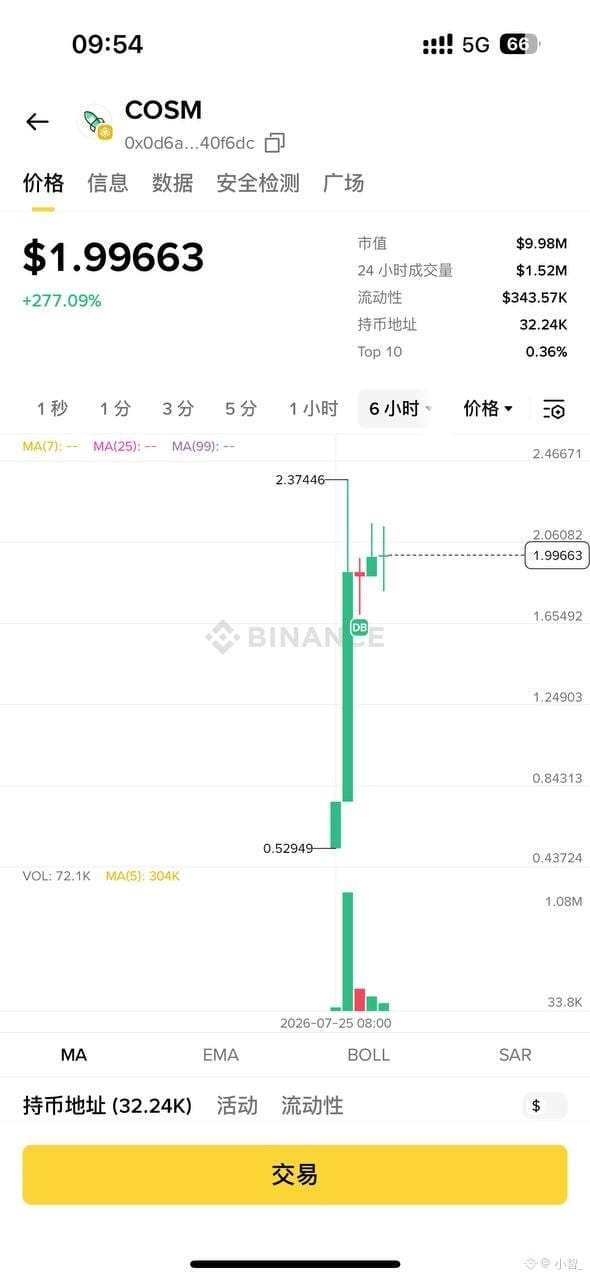
🔍 Have you noticed that lately, suddenly, a group of people around you have been talking about the same word?
They don’t say what it is specifically. Instead, they give you three clues:
🔸 Clue 1: Three organizations that never show up together this time have, unusually, stood side by side
🔸 Clue 2: On-the-ground promotions appear in dozens of cities at the same time—like it was planned
🔸 Clue 3: The revenue-sharing rule is so simple it can be summed up in one sentence—how much the platform earns, users get the bulk
The riddle has already been laid out, and the answer points to the same name.
Some people are still guessing; others have already started taking it apart.
We suggest you personally uncover the answer instead of hearing it secondhand.
#COSM #BNB
1
159
·
--
Partly True
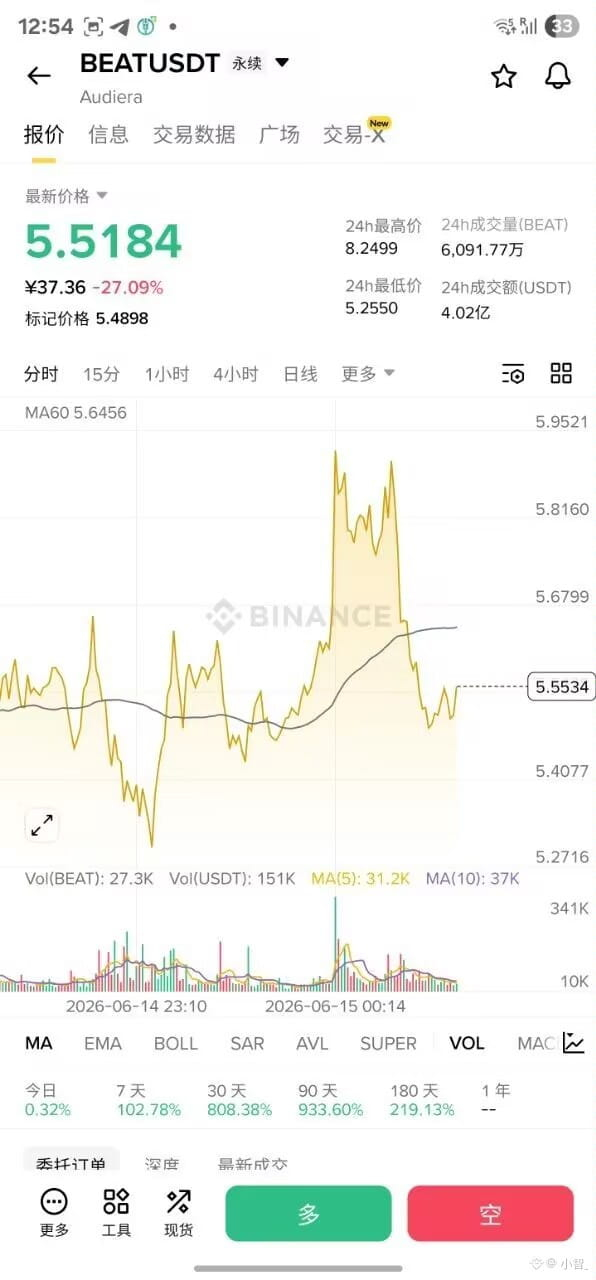
As Web3 gaming transitions from speculation-driven to value-driven, Audiera has announced the launch of a brand new game rewards system set for July 1st.\nThe major change in this significant upgrade is the severing of the link between game rewards and token prices, replacing the previous $BEAT token output with a more predictable stablecoin reward. A fixed monthly reward pool of 50,000 USDT in stablecoins will become a permanent fixture in the ecosystem, fairly distributed according to player shares.\nThis move not only alleviates players' concerns about future price fluctuations at the current price of $5.5, but the promise of automatic migration of historical rewards also demonstrates the project's commitment to community engagement.\n$BEAT
As Web3 gaming transitions from speculation-driven to value-driven, Audiera has announced the launch of a brand new game rewards system set for July 1st.\nThe major change in this significant upgrade is the severing of the link between game rewards and token prices, replacing the previous $BEAT token output with a more predictable stablecoin reward. A fixed monthly reward pool of 50,000 USDT in stablecoins will become a permanent fixture in the ecosystem, fairly distributed according to player shares.\nThis move not only alleviates players' concerns about future price fluctuations at the current price of $5.5, but the promise of automatic migration of historical rewards also demonstrates the project's commitment to community engagement.\n$BEAT
1
391
·
--
Partly True
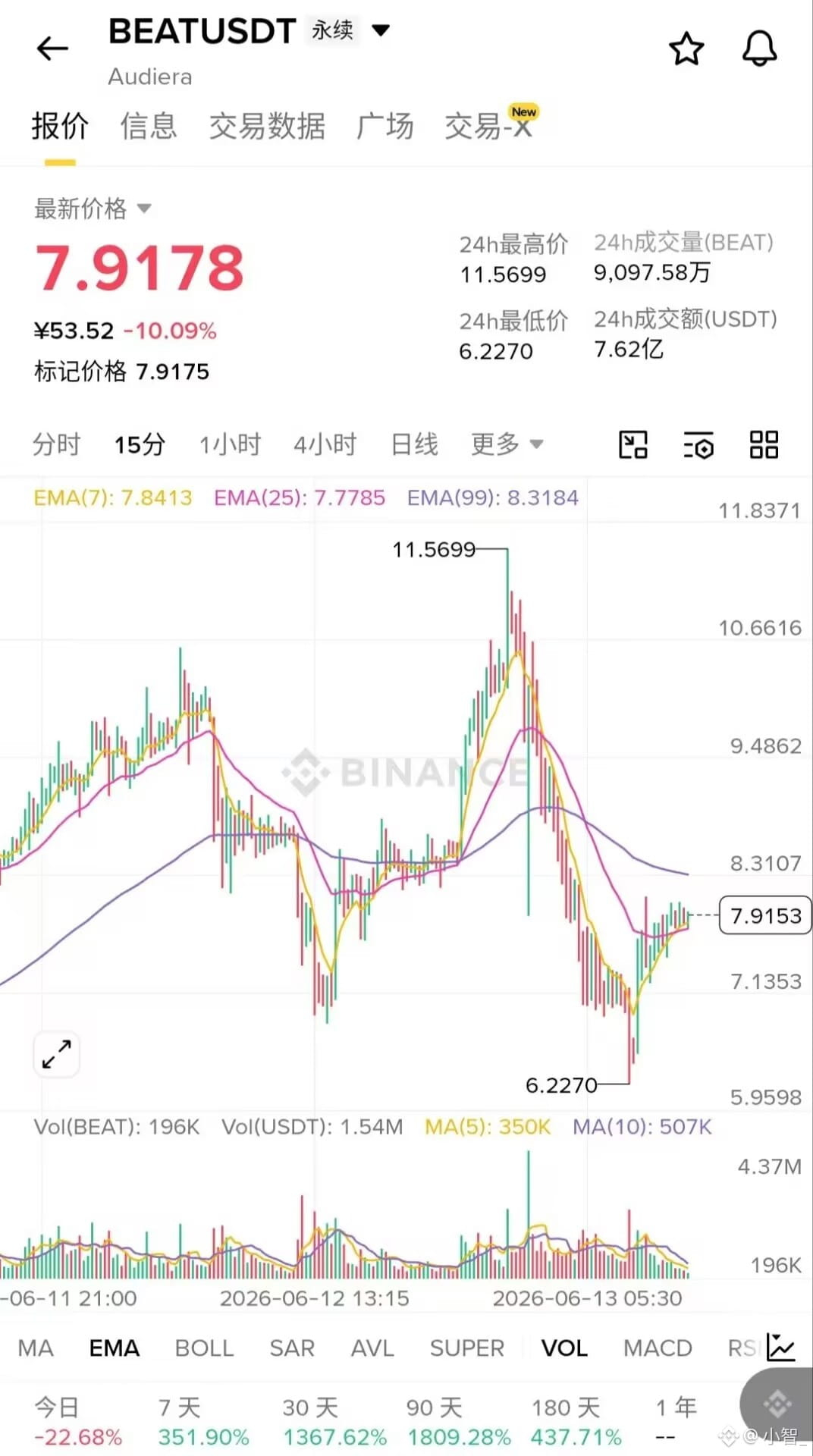
From the historical low to the new high,
$BEAT has achieved a 5488% increase.
Many folks think this is a miracle.
But I see it more like a long-overdue value discovery.
The market always rewards those who keep building.
What’s really worth analyzing isn’t how much it’s pumped, but why it keeps hitting new highs.
$BNB #Binance $BEAT
$BEAT has achieved a 5488% increase.
Many folks think this is a miracle.
But I see it more like a long-overdue value discovery.
The market always rewards those who keep building.
What’s really worth analyzing isn’t how much it’s pumped, but why it keeps hitting new highs.
$BNB #Binance $BEAT
664
·
--
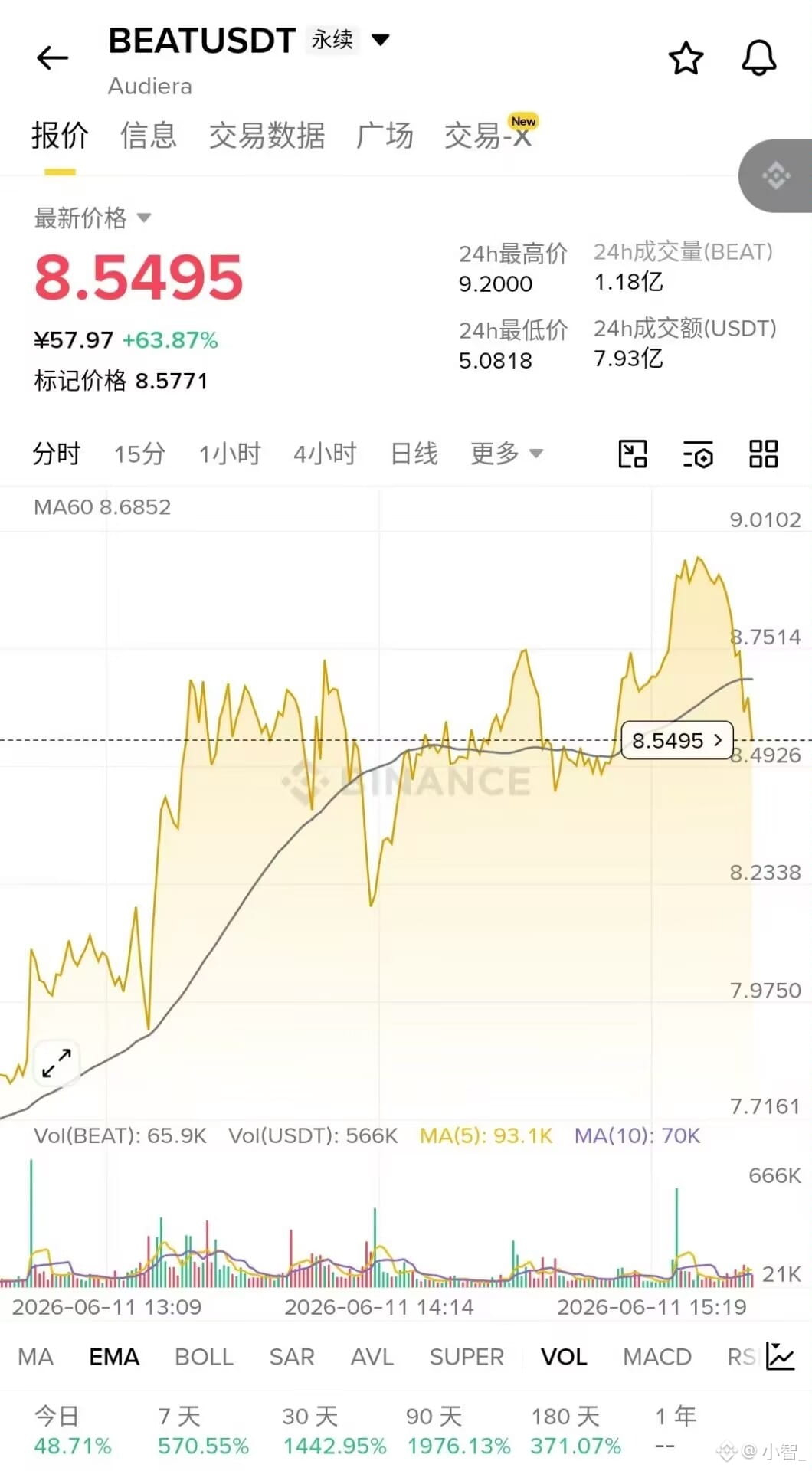
All-time highs don't just pop up out of nowhere.
They usually come after countless consolidations and shakeouts.
A lot of folks only see today's price.
But they don't notice those who endured the dips.
So when I see $BEAT $8, I feel more admiration.
$BNB #Binance $BEAT
All-time highs don't just pop up out of nowhere.
They usually come after countless consolidations and shakeouts.
A lot of folks only see today's price.
But they don't notice those who endured the dips.
So when I see $BEAT $8, I feel more admiration.
$BNB #Binance $BEAT
They usually come after countless consolidations and shakeouts.
A lot of folks only see today's price.
But they don't notice those who endured the dips.
So when I see $BEAT $8, I feel more admiration.
$BNB #Binance $BEAT
800
·
--
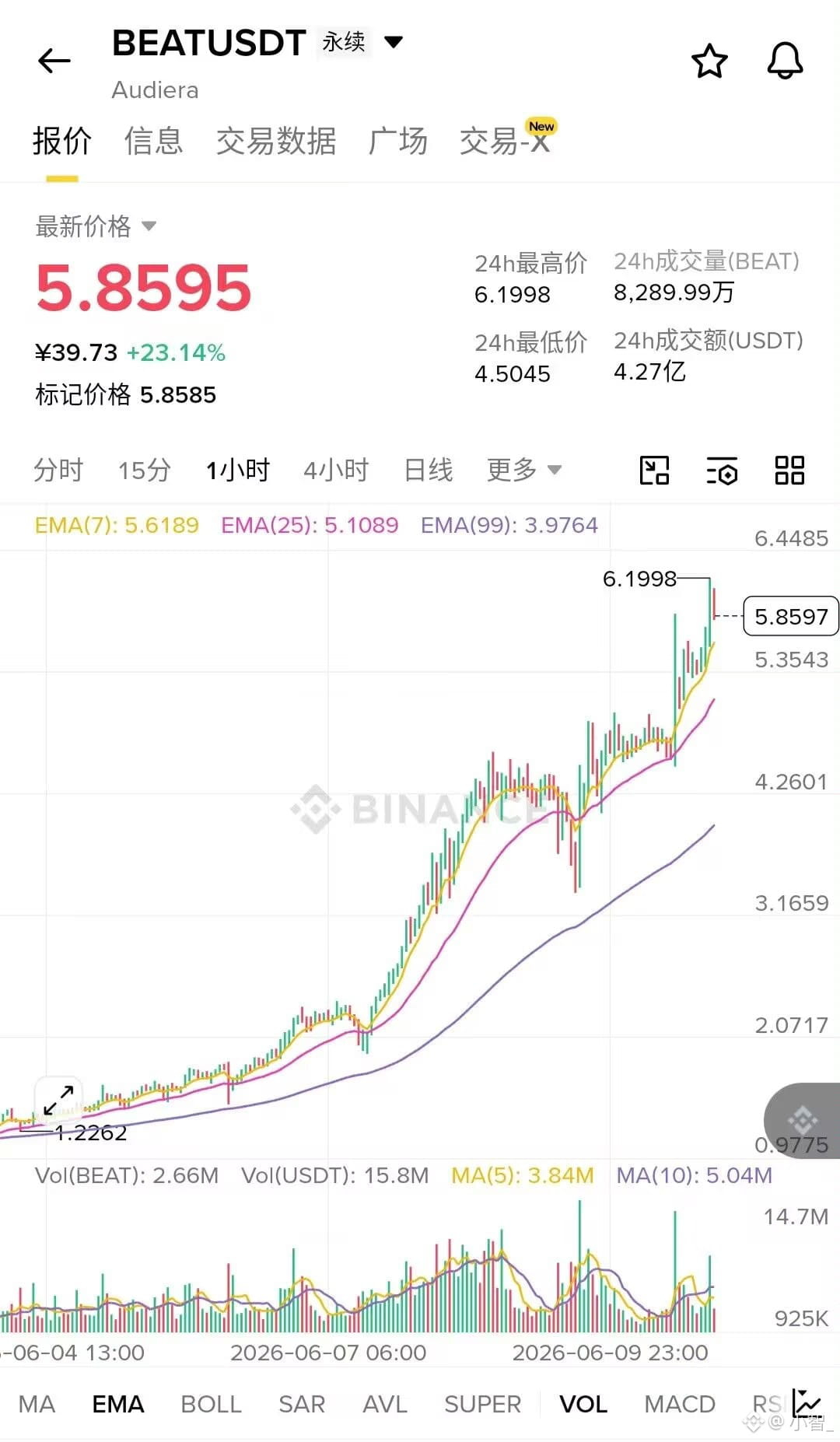
Breaking new highs isn't just about the numbers.
It's about the market's willingness to keep buying at higher prices.
$BEAT $5.4.
Funds, hype, and attention are all on the rise together.
$BNB #Binance $BEAT
Breaking new highs isn't just about the numbers.
It's about the market's willingness to keep buying at higher prices.
$BEAT $5.4.
Funds, hype, and attention are all on the rise together.
$BNB #Binance $BEAT
It's about the market's willingness to keep buying at higher prices.
$BEAT $5.4.
Funds, hype, and attention are all on the rise together.
$BNB #Binance $BEAT
322
·
--
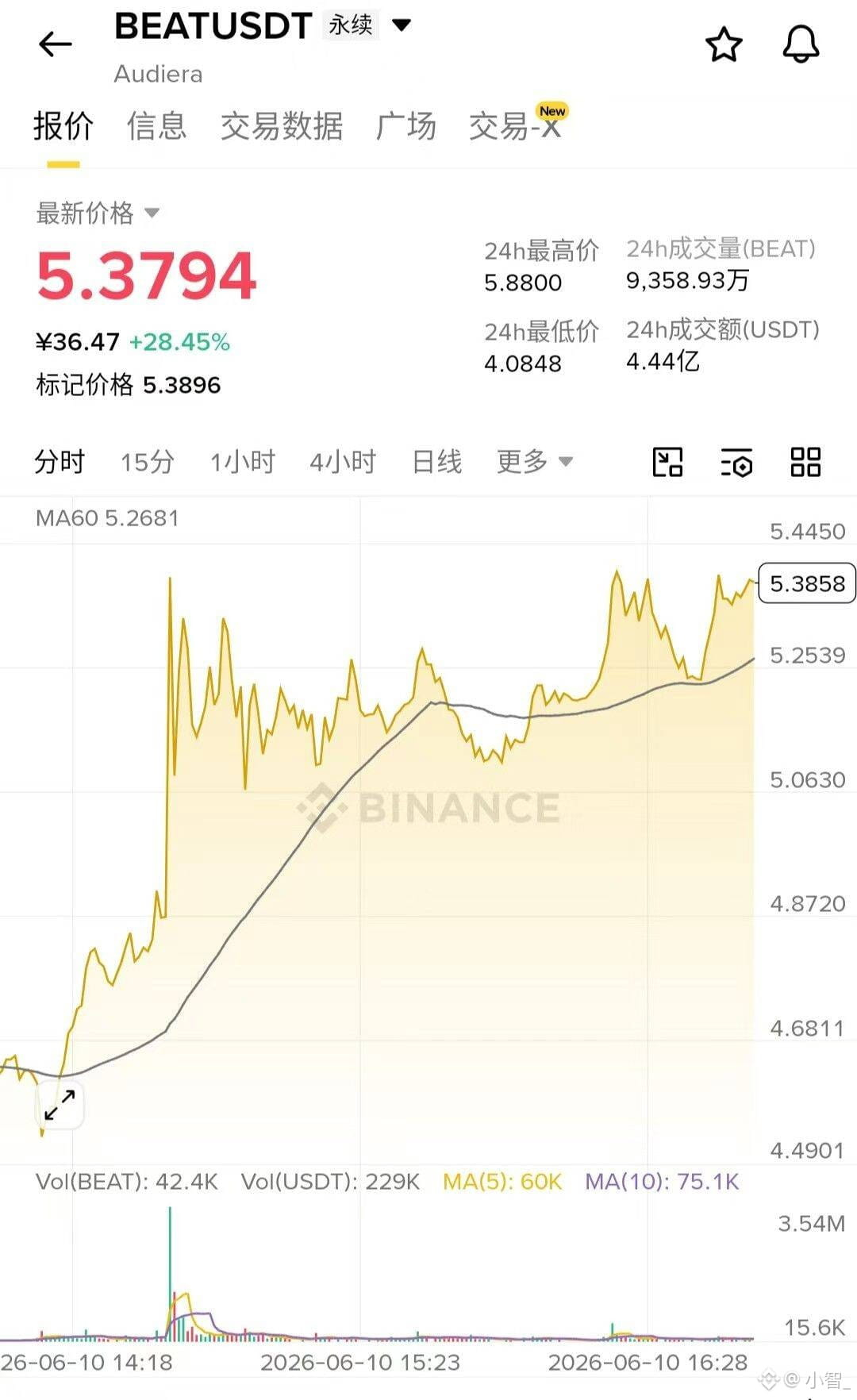
Still waiting for a dip?
A lot of folks have been waiting since the start of the year.
And what did they get? $4.80.
The market never waits for everyone to be ready.
$BNB #Binance $BEAT
Still waiting for a dip?
A lot of folks have been waiting since the start of the year.
And what did they get? $4.80.
The market never waits for everyone to be ready.
$BNB #Binance $BEAT
A lot of folks have been waiting since the start of the year.
And what did they get? $4.80.
The market never waits for everyone to be ready.
$BNB #Binance $BEAT
375
·
--
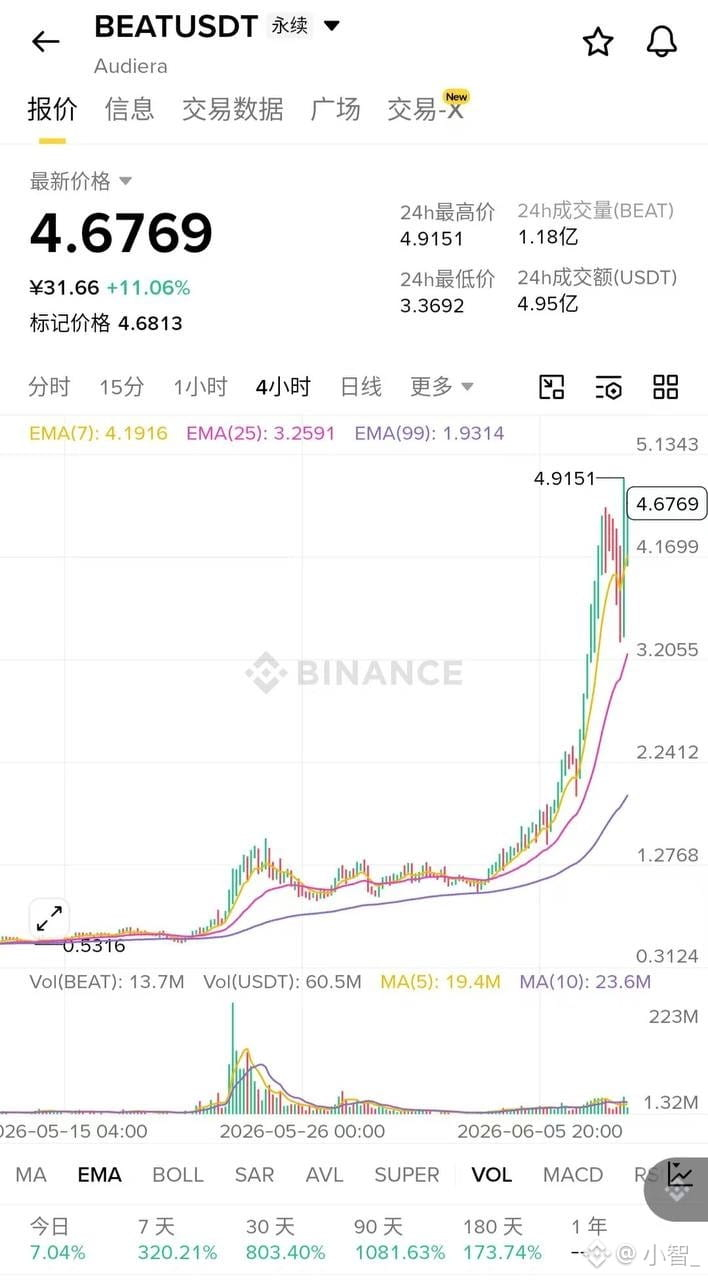
Today, the data for $BEAT is pretty straightforward:
CoinMarketCap $4.70
24H +9.53%
Market Cap 1.35 billion
Volume $83.17 million
This momentum is definitely worth mentioning on its own.
$BNB #binance $BEAT
Today, the data for $BEAT is pretty straightforward:
CoinMarketCap $4.70
24H +9.53%
Market Cap 1.35 billion
Volume $83.17 million
This momentum is definitely worth mentioning on its own.
$BNB #binance $BEAT
CoinMarketCap $4.70
24H +9.53%
Market Cap 1.35 billion
Volume $83.17 million
This momentum is definitely worth mentioning on its own.
$BNB #binance $BEAT
162
·
--
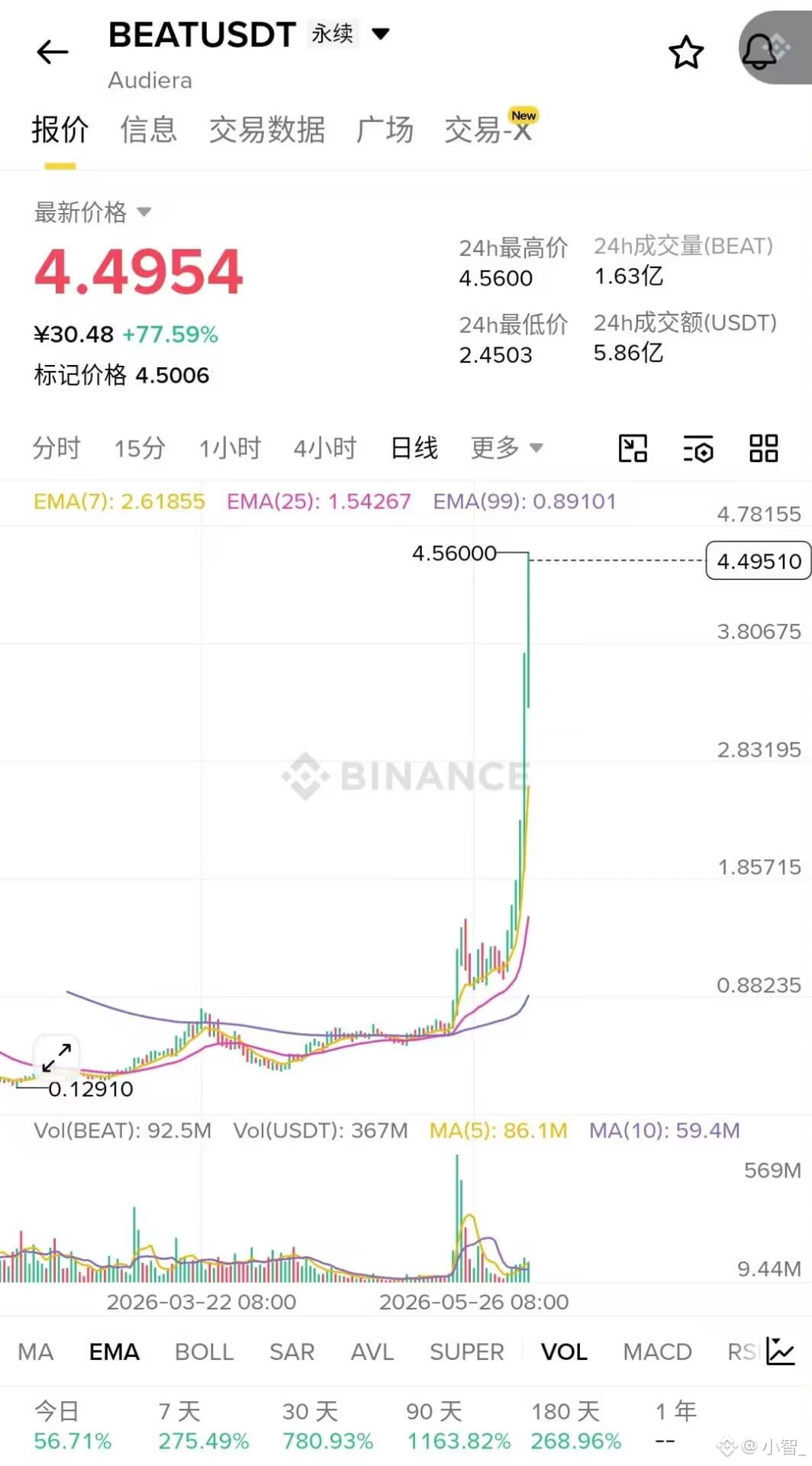
Previously, everyone asked:
Is anyone still trading $BEAT ?
Now everyone is asking:
Why is $BEAT pumping so fast?
Audiera saw a weekly gain of +46.24%, ranking 7th on CMC.
The weekly report also shows: 2.86 million USDT income with a cumulative burn of over 12.35 million.
The market sentiment has shifted, which is often more crucial than price movements.
$BNB #binance $BEAT
324
·
--
Most folks getting into re-staking are actually making decisions with the wrong framework.
I've seen way too many people open up the protocol page, take a glance at the APY, and decide whether to dive in or not. This method isn't a total bust, but it overlooks a more crucial question:
APY is just the outcome; the quality of that outcome depends on where it comes from.
I've been digging into Bedrock for a while now, and its yields mainly come from three layers:
First layer is the ETH native PoS staking rewards, which are available no matter which protocol you use;
Second layer is the profit-sharing generated from real service demand for AVS, which is genuinely driven by market needs;
Third layer is the $BR token incentives, initially high but will get diluted as TVL grows.
The real question to ask is: how much of the current APY comes from genuine second-layer demand?
If AVS's actual service demand makes up a significant chunk, then this yield has a solid foundation for sustainability; if it mainly relies on token subsidies, once the incentives shrink, the numbers will clearly take a hit.
Right now, Bedrock is in a transitional phase — the AVS ecosystem is rapidly expanding, real demand is on the rise, but token incentives still make up a decent portion. This isn't a bad thing; it’s just the normal state for early protocols.
But if you're looking to hold long-term, the trend in this yield structure is way more important than that string of numbers right now.
@Bedrock
#bedrock $BR

431
·
--
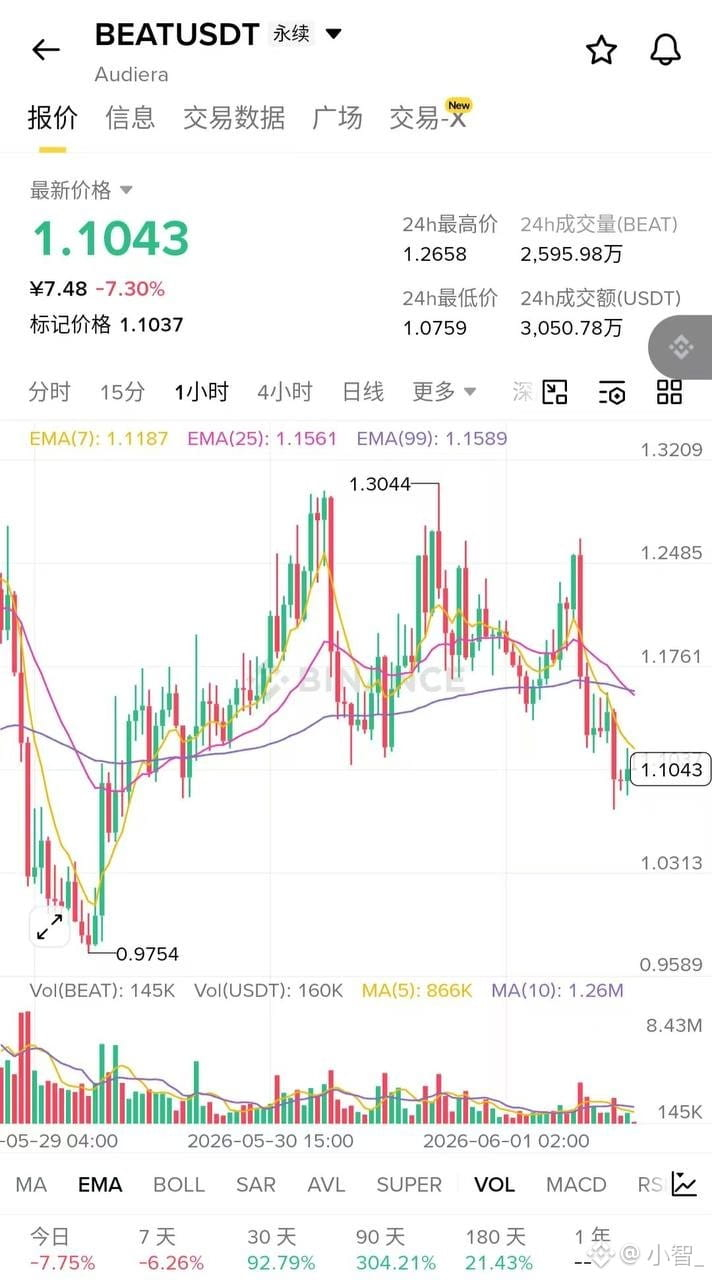
Just followed up on the black hole address mentioned by @audiera_web3, and the burn data for $BEAT is indeed pretty hardcore.
Last week, a whopping 715,500 tokens were burned, bringing the total historical burn to over 10.86 million tokens.
More importantly, all the funds for this burn come from the real revenue of the Kira & Ray rhythm entertainment platform, not some fluff or marketing gimmicks.
Currently, the CMC price is $1.12, with a FDV of 1.18 billion. Driven by a high retail retention rate of over 74%, the platform's "consume-burn" engine is running efficiently.
My personal advice: keep an eye on the real on-chain flow data; it's often more reliable than just staring at the candlestick charts.
$BEAT
408
·
--
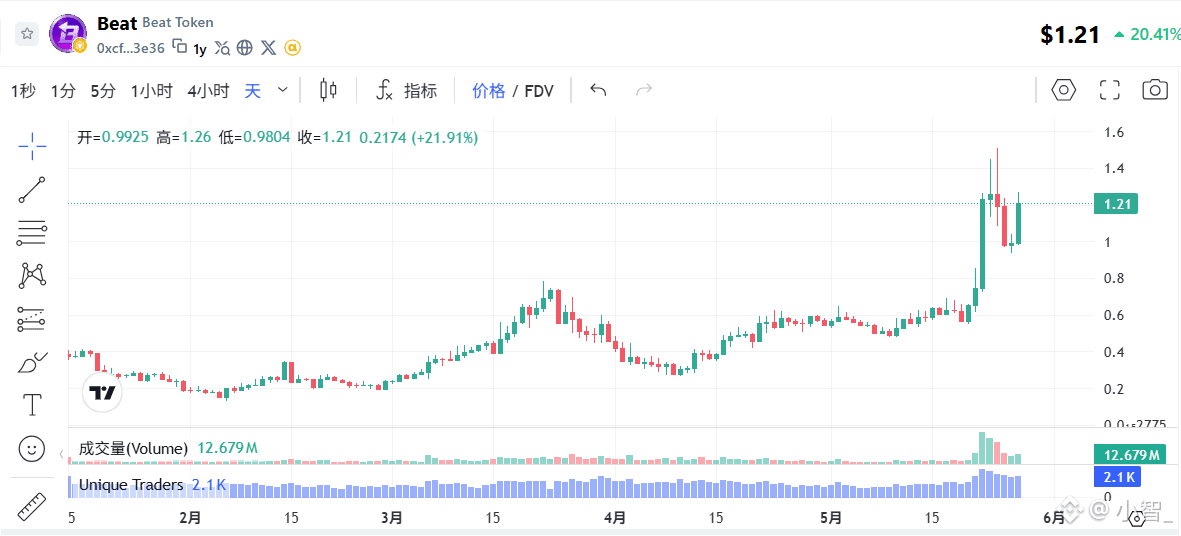
If you were just watching in March $BEAT , now seeing this data, you should have a good idea by now.
- 24h Perp total market volume: $4-5 billion
- FDV has surpassed $1.5 billion and is still climbing
- Started at $0.26, hit a high of $1.44, a recovery trend of 450%+
- On-chain Buyer Retention over the past 30 days: 74.39%
What’s driving all this isn’t just short-term hype, but solid on-chain activity, ecosystem expansion, income burn, and ongoing retail buying.
Real demand drives real growth, and the community's conviction is crystal clear.
$BEAT
951
·
--
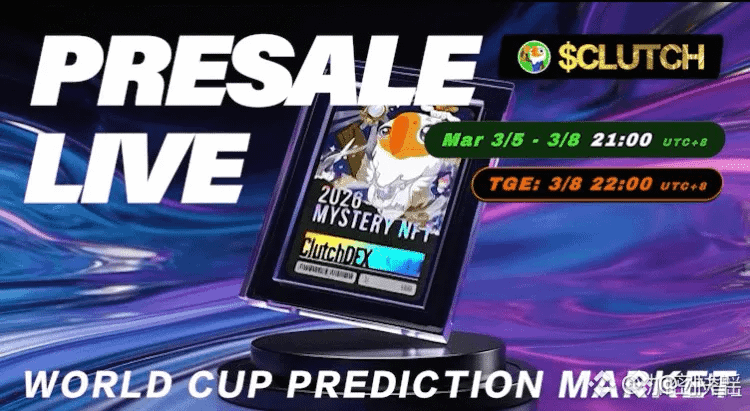
Clutch DEX public pre-sale is coming soon! As the core pillar of the GO FIFA ecosystem, this time we adopt a 100% fair issuance mechanism, sincerely inviting all community partners to participate together and write a new chapter! ⚽️🚀
Token Basic Information
Token Name: Clutch DEX COIN ($CLUTCH)
Contract Address: Officially announced 30 minutes before TGE after the pre-sale ends, beware of phishing risks!
Fundraising Goal: Soft cap 1,500 BNB | Hard cap 5,000 BNB
Pre-sale Format: Public pre-sale (Pre-Liquid), 5% of the total supply is used for this sale.
Valuation and Allocation
Fully Diluted Valuation (FDV): $20 million ~ $80 million range (depending on the final fundraising amount)
This pre-sale takes out 5% of the total supply, fairly distributed according to participation ratio, no pre-mining, no team shares, no VC lock-up, truly achieving equal starting for everyone!
Unlocking and Listing Mechanism
Zero lock-up! 100% fully unlocked on TGE day
Listing Price = Pre-sale Price, no internal discounts or privileged chips
Liquidity Plan: A stablecoin of $1 will be one of the base assets of the pool (final subject to official announcement), ensuring depth upon launch.
Funding Usage Plan
90% for ecosystem development: marketing promotion, buyback support, liquidity pool construction, CEX/DEX listing, etc.
10% injected into the insurance pool to provide additional security for all ecosystem participants
Important Time Nodes (Beijing Time UTC+8)
Pre-sale Starts: March 5, 2026 21:00
Pre-sale Ends: March 8, 2026 21:00
Direct TGE on the evening of the pre-sale end, listed for circulation!
Participation Entry
Pre-sale Page: web3.clutchdex.com
Project Official Website: gofifa.io
Exclusive Invitation Link: https://web3.clutchdex.com?invite_code=4A423A
Clutch DEX is themed around the World Cup, starting from the meme community, and has successfully transformed into a sports prediction market + Meme DEX ecosystem. Currently, the GO FIFA public beta has exceeded 50,000+ active addresses, gaining strong momentum. This pre-sale is a key node for the ecosystem to officially take off—zero lock-up, fair issuance, immediate buy and unlock, let's practice long-termism together and create value!
The opportunity is right in front of you, don’t miss it! Come and join us, let's sprint together! 🌟⚽️
34
·
--
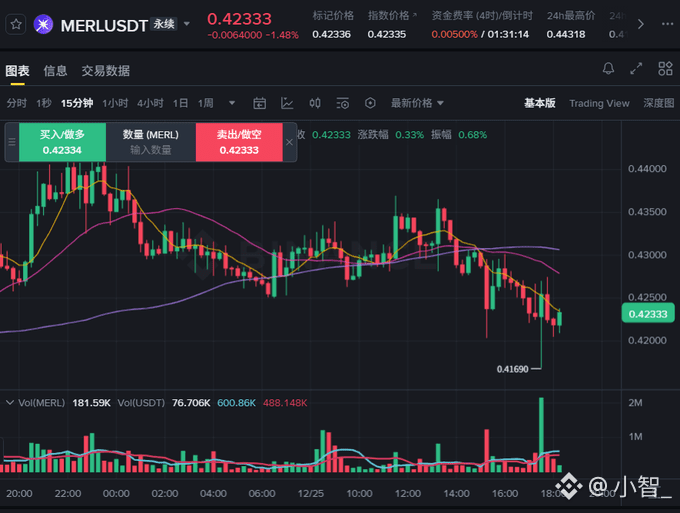
$MERL This so-called 'Christmas market' seems to have the flavor of 'cutting韭菜' (a slang for exploiting investors). Now, the $MERL has fallen from a high of 0.44 to around 0.422. If you didn’t build a position near 0.44 before, the current price actually provides a more relaxed entry point.
Currently, the market has shifted from 'inducing buying' to the 'declining distribution' phase:
The 0.43 level has become a resistance: after the price broke below 0.43, multiple attempts to rebound have failed to stabilize. The 0.422 position is quite delicate, as it is just at the turning point after the MA5/MA10 moving averages have flattened. If it continues to move sideways here without quickly recovering 0.43, the next stop will be a downward break.
Bearish momentum is accelerating: the 4H MACD negative bars are lengthening, and the RSI has fallen back to around 48 from the overbought area, with no signs of stopping the decline. Compared to the aggressive stance at 0.44, the price at 0.422 seems more like confirming a downward trend.
The truth of liquidity exhaustion: As the price slowly declines, the support from buy orders appears very thin. Under the shadow of heavy selling pressure from the massive unlock on December 19, the current 0.422 is still not the bottom, but more like a continuation of the decline.
Practical trading suggestions:
1️⃣ Short at current price: Directly build short positions in batches in the range of 0.422 - 0.428 (utilizing rebounds for additional positions).
2️⃣ Defensive stop loss: Slightly adjust to above 0.442 (as long as it doesn’t recover the strong resistance at 0.435, the bearish structure remains intact).
3️⃣ Profit target: The first target remains at 0.405 - 0.41; if it breaks below 0.40 with volume, directly look at the support at 0.385.
0.422 hasn’t fully dropped yet. Don’t fantasize about a 'Christmas miracle' bottoming at this position. If it can’t stabilize at 0.43, all sideways movements and slight rebounds are just to fall deeper. Strictly take losses, discipline first.
2
236
·
--
True love of life, stay away from zjp
True love of life, stay away from zjp

清风BNB
·
--
My grudges with USDD (Sun Ge) that are pressing (concerning one person's life)
The story dates back to 2017, when I met a sister (Hu) from Beijing in a WeChat group, and we have met in person a few times. In May 2018, Sister Hu flew from Beijing to Kunming, and we had dinner together, chatting for a few hours. Then she told me, "Brother, I have a very reliable friend who is preparing to invest in a project that will go live around the end of the year, that is, at the end of 2018."
You should have guessed it: TRX's super community is this project that pushed my sister Hu into the abyss of death. There is a saying that goes well, "The crypto world = the abyss. When you gaze into the abyss, the abyss gazes back at you."
You should have guessed it: TRX's super community is this project that pushed my sister Hu into the abyss of death. There is a saying that goes well, "The crypto world = the abyss. When you gaze into the abyss, the abyss gazes back at you."

21
Log in to explore more content
Join global crypto users on Binance Square
⚡️ Get latest and useful information about crypto.
💬 Trusted by the world’s largest crypto exchange.
👍 Discover real insights from verified creators.
Email / Phone number
Trending Topics
BinancePick
2.6M views
140,373 Discussing
Join #EarningsSeason: Predict Earnings on Binance Pick, Share Your Take on Binance Square!
Binance Square Official
·400 Likes
·338k views
EarningsSeason
5M views
24,233 Discussing
FranklinTempletonFilesForTwoDividendToBitcoinETFs
24 views
31 Discussing