
0x小师妹
3.6k Posts

0x小师妹
 Square Verified
Report
Block User
币圈女投研 | Alpha空投研究员 | 现货合约实战派 |绑定我的邀请码:2026Y88自动返还20%现货手续费。

BNB Holder
Frequent Trader
2.1 Years
362 Following
32.1K+ Followers
23.2K+ Liked
Posts
All
Quotes
Videos
Live
PINNED
·
--
Everyone’s curious about how to use it, so here’s a quick explanation:
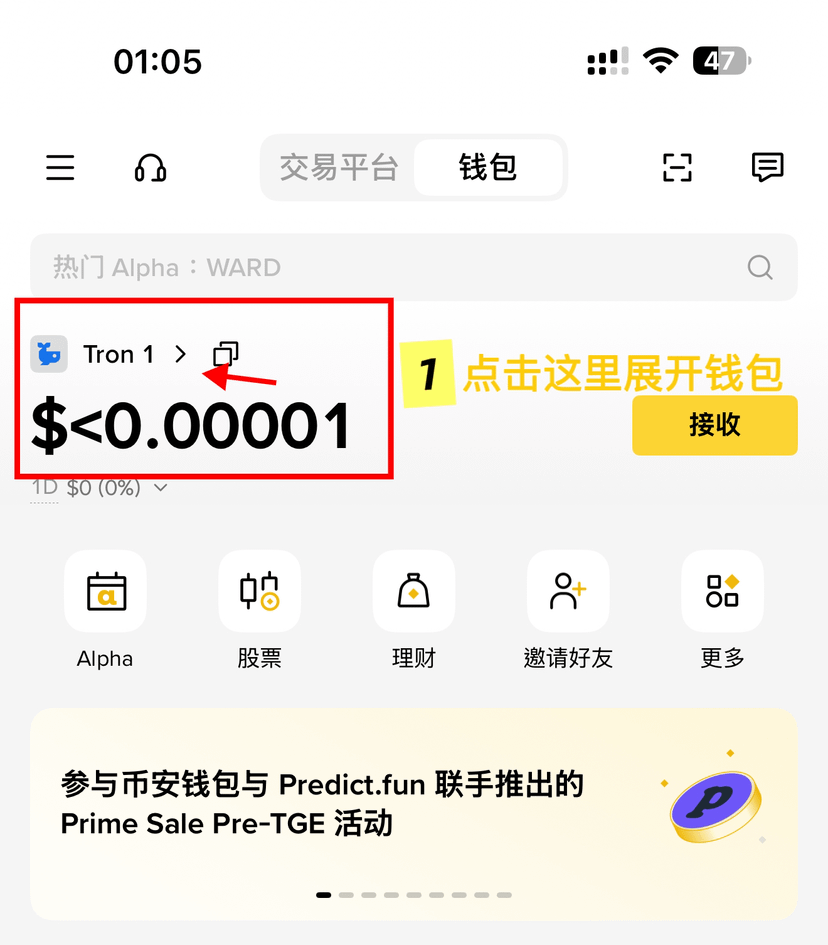
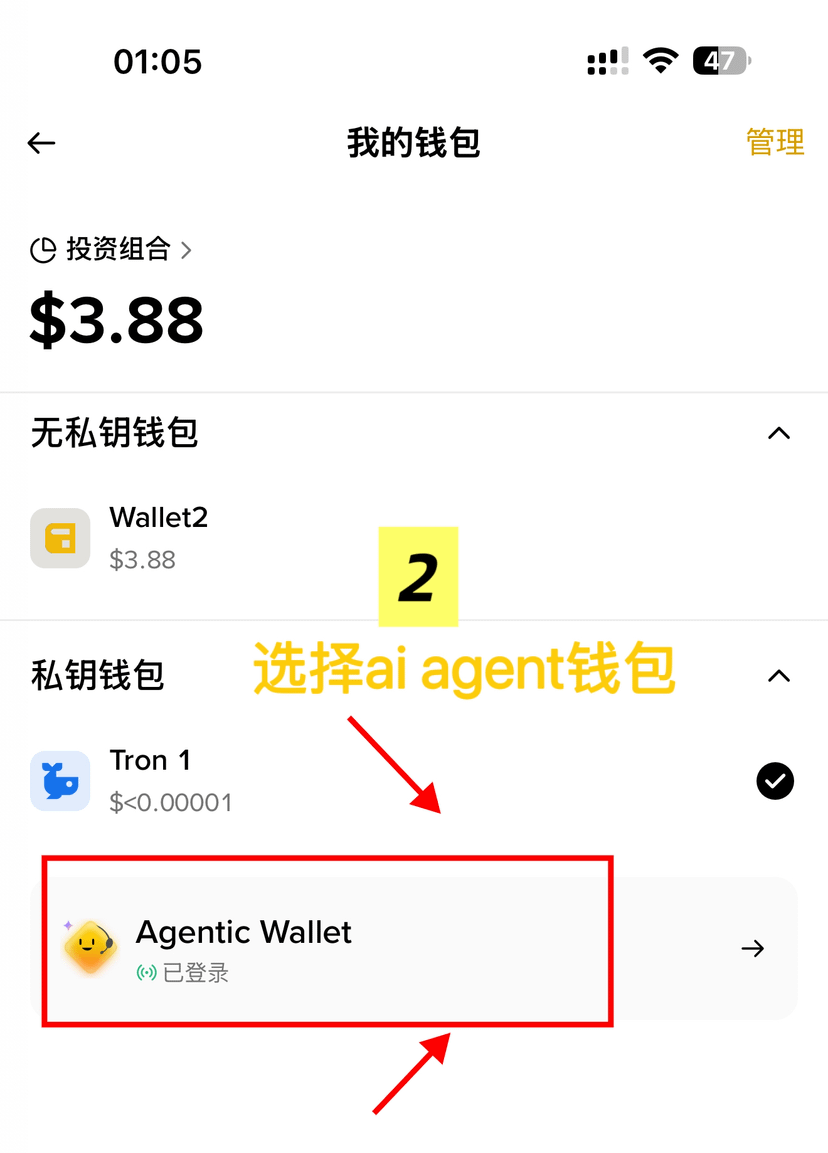
1. Tap Wallet to open the page showing your AI Agent wallet. If you don’t have one, you’ll need to create one.
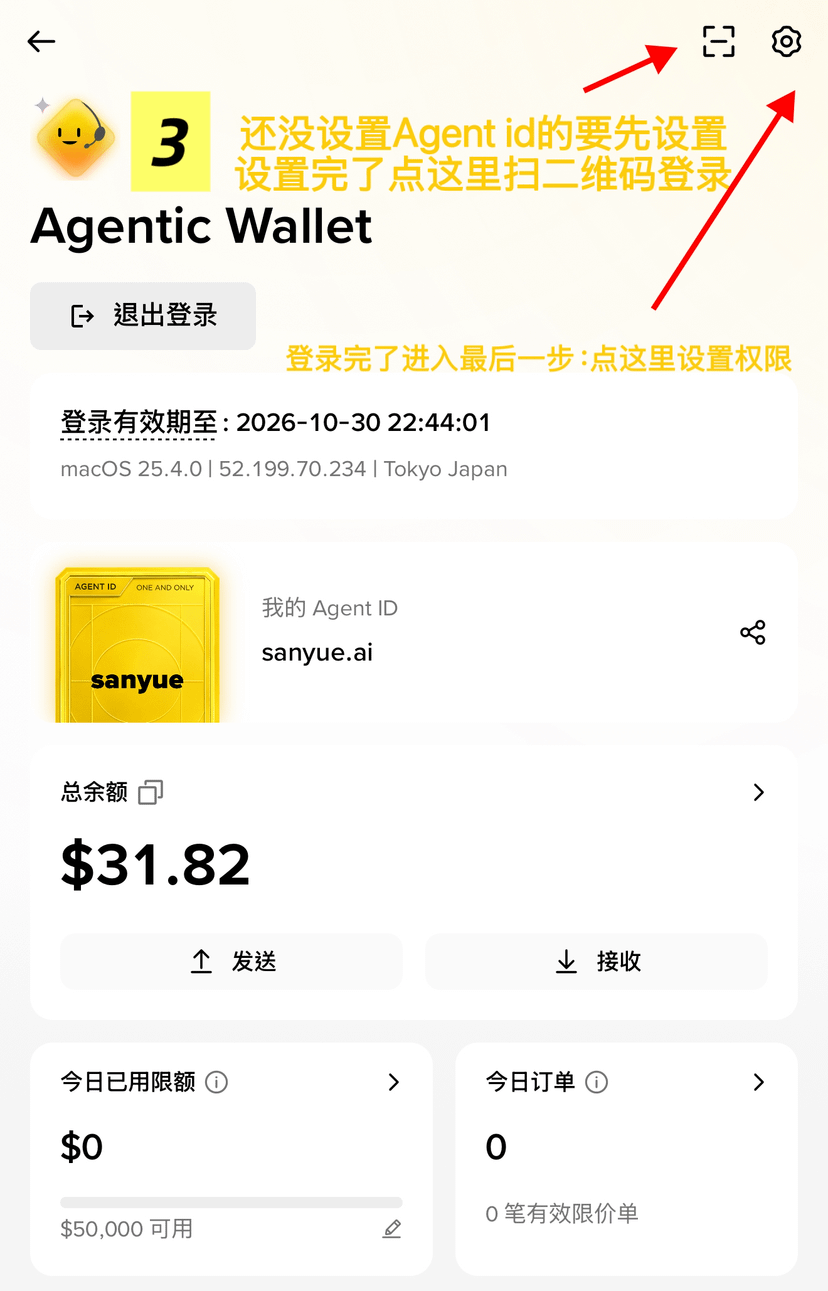
2. Once it’s created, tap the scan icon in the upper-right corner. Who should you scan? It could be Grok Bot, Codex, or Binance’s own AI. Tell it: “I want to link my Binance AI Agent wallet. Give me a QR code so I can scan it to log in.”
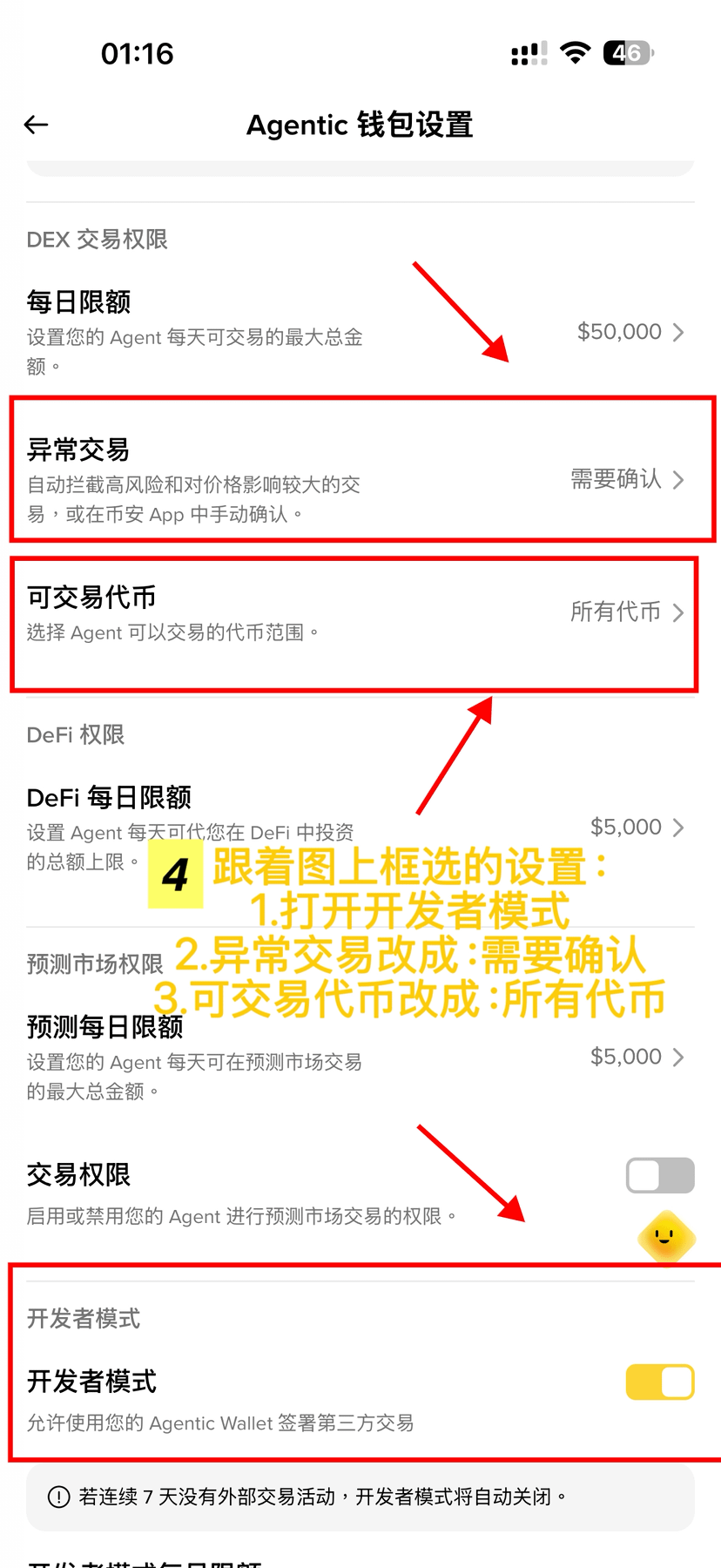
3. After logging in, go to the Binance AI Agent wallet page and tap Settings in the upper-right corner. Set these three options:
1. Turn on Developer Mode.
2. Set suspicious transactions to “Require confirmation.”
3. Set tradable tokens to “All tokens.”
4. After changing the permissions, send some BNB to your Agent wallet. I recommend around 20–30 U. Don’t put in more than that—I’m worried beginners might not know what they’re doing and accidentally approve something that makes them lose their funds. Start with this amount and try it out for a few days.
5. Tell your AI: “Help me automatically mint all free NFTs that require a Binance Agent ID, and filter out projects that are dangerous or have vulnerabilities.”
The five steps above are the simplest way to get started. But if you actually want to make money, you’ll need to refine your strategy: How do you screen projects? How do you set up automatic selling? At what price should you sell? How do you automatically get updates on the latest project developments? There’s a lot to figure out. I stayed up all night for several nights working on it before I managed to build a semi-finished bot. It can now start generating profits automatically.
If you’d like to chat, join my chat room:
[师妹Alpha × 发财聊天室](https://app.binance.com/uni-qr/E7ugrpHf) The 1 U subscription fee is to keep bots from joining and disrupting the conversation.
Everyone’s curious about how to use it, so here’s a quick explanation:
1. Tap Wallet to open the page showing your AI Agent wallet. If you don’t have one, you’ll need to create one.
2. Once it’s created, tap the scan icon in the upper-right corner. Who should you scan? It could be Grok Bot, Codex, or Binance’s own AI. Tell it: “I want to link my Binance AI Agent wallet. Give me a QR code so I can scan it to log in.”
3. After logging in, go to the Binance AI Agent wallet page and tap Settings in the upper-right corner. Set these three options:
1. Turn on Developer Mode.
2. Set suspicious transactions to “Require confirmation.”
3. Set tradable tokens to “All tokens.”
4. After changing the permissions, send some BNB to your Agent wallet. I recommend around 20–30 U. Don’t put in more than that—I’m worried beginners might not know what they’re doing and accidentally approve something that makes them lose their funds. Start with this amount and try it out for a few days.
5. Tell your AI: “Help me automatically mint all free NFTs that require a Binance Agent ID, and filter out projects that are dangerous or have vulnerabilities.”
The five steps above are the simplest way to get started. But if you actually want to make money, you’ll need to refine your strategy: How do you screen projects? How do you set up automatic selling? At what price should you sell? How do you automatically get updates on the latest project developments? There’s a lot to figure out. I stayed up all night for several nights working on it before I managed to build a semi-finished bot. It can now start generating profits automatically.
If you’d like to chat, join my chat room:
师妹Alpha × 发财聊天室 The 1 U subscription fee is to keep bots from joining and disrupting the conversation.
0x小师妹
·
--
Binance AI agent wallets have been all the rage lately 🔥
The profit potential is incredible:
🤖 Use bots to scan for free NFTs and mint them automatically
🤖 Use bots to snipe insider launches (lots of people have made 10x or more)
🤖 Use bots to participate in agent wallet mining projects
You need to do all of this through a Binance agent wallet. So here's the question: participating in these projects requires $BNB ✅
I think it feels a bit like when Alpha took off last year—the wealth-making effect of the BSC ecosystem is here. Now all we need is for the broader market to rally once more, and $BNB will absolutely take off. If you don't buy the dip at this price, you'll regret it.
Hold it and you can earn from gas fees while also making a profit on your position.
1
908
·
--
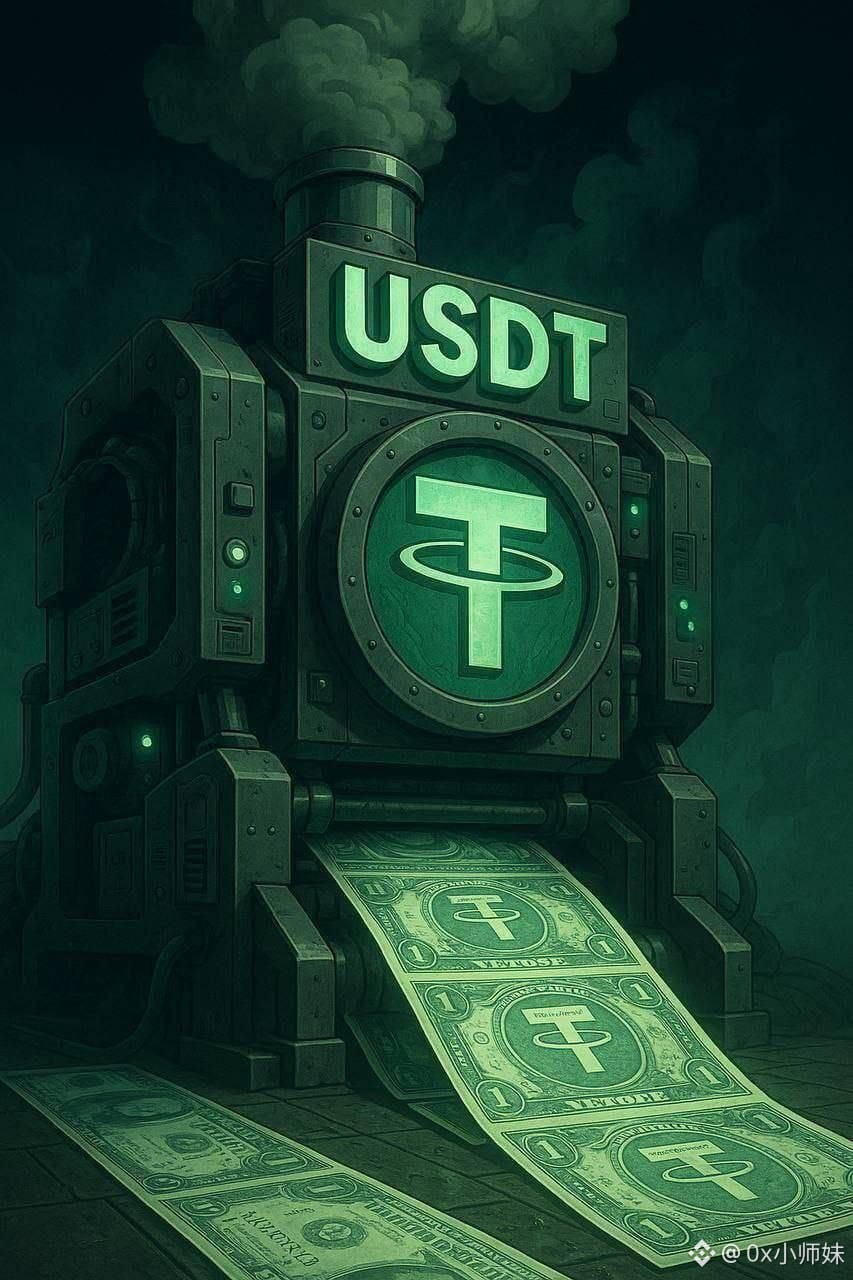
Brazilian exchange Mercado Bitcoin was hacked, and the hacker’s $5.55 million in assets has been frozen across all chains.
The exchange has published the hacker’s receiving address and suspended deposits and withdrawals, stating that customers suffered no losses and no data was leaked. Assets worth approximately $5.55 million in total have been frozen across the three addresses involved, including USDT, USDC, and tokenized gold. Tether confirmed that it froze more than 4.5 million USDT.
Tether’s Treasury later burned another 2 billion USDT. Binance’s transfer of 200 million USDT to Tether’s Treasury was part of routine reserve settlement and consolidation.
The hacker’s efforts were all for nothing. You can look up the three addresses involved on-chain and see how the $5.55 million was pinned to the blacklist.
440
·
--
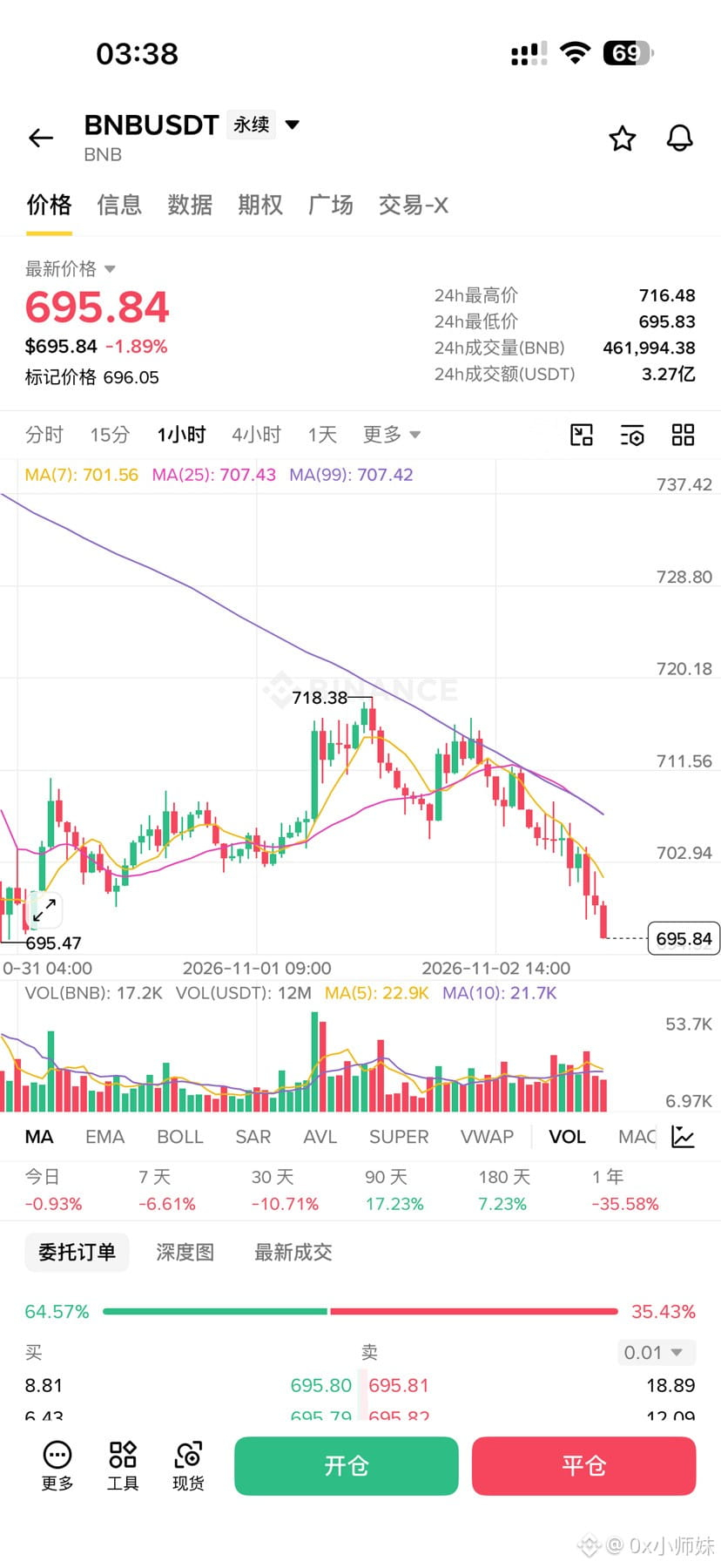
BNB has fallen below $700, and I think it may be time to start buying the dip in stages.
The reasons are simple:
1. Although Binance’s security incident was serious, it handled the situation quickly. Covering the losses itself, replenishing reserves, and restoring withdrawals at least show that it can weather a crisis.
2. BNB’s drop below $700 has already reflected short-term panic and outflows in its price. As long as confidence gradually returns, there’s room for its valuation to recover.
3. The U.S. midterm elections are about to wrap up, easing political uncertainty. Historically, U.S. stocks have generally performed well after elections. If risk capital starts flowing back in, crypto could also have a chance to rebound.
I’m inclined to think that this BNB decline is mainly due to a short-term shock to confidence and liquidity pressures. For now, there isn’t enough evidence to suggest that its long-term fundamentals have deteriorated.
Its ability to handle a crisis has been demonstrated. Now it’s a matter of when the market starts pricing it in again.
Below $700, I’d consider buying spot in stages, without using leverage.
140
·
--
Stop waiting for social media to repost secondhand, processed reports. The last mix-up, when a cross-chain vault was mistaken for a hacker deposit, proved once again: install these 5 on-chain verification tools, and you can spend two minutes checking for yourself whose pocket the money actually ended up in.
It’s true that there have recently been several major thefts from exchanges and institutions, and that hackers have laundered money through Monero and mixers.
But often, analytics platforms simply mislabel addresses, and unverified secondhand alerts about unusual activity can spread across social media and trigger a sell-off.
Don’t want to be misled by secondhand alerts? Follow my tutorial:
1. Arkham Intelligence
Check entity labels: When you see unusual activity involving an address belonging to a victimized institution, enter the reported address and use the label filters to rule out liquidation addresses that have already been taken over by an exchange.
2. DeBank
Investigate the DeFi activity of the address in question: Check the specified address’s staked positions in DeFi protocols and its recent interaction history to verify whether any assets remain there.
3. MistTrack anti-money-laundering tracking tool
Trace the money-laundering route: Enter the wallet address involved and see whether you can trace its fund flows to Monero exchange platforms or nodes in mixer contract graphs.
4. Etherscan
A microscope for the on-chain fundamentals: Use the advanced filters to check the specific function name used in a transaction call, and see whether it was a regular Transfer, a Swap, or a Bridge.
Next time you see a secondhand alert about a large movement of funds, run the address in question through these steps in order.
First rule out mislabeled tags, then follow the node graph to see the actual function calls and fund flows. Save this for later—you too can be an on-chain sleuth when it matters.
160
·
--
Like others waiting for a chance to buy the dip after Bitcoin fell below $80,000, some people leave stablecoins sitting in spot buy orders for days without getting filled, while others switch to Binance Dual Investment and earn double-digit annualized interest even if their orders aren't filled.
On-chain data provider Glassnode has observed sustained net realized loss selling below $80,000, as the market undergoes intense turnover and attempts to form a bottom. For many seasoned traders holding stablecoins and planning to buy BTC in batches below $80,000, the most frustrating part is waiting through volatile price action: their funds sit in spot buy orders for days earning nothing. The price never dips far enough to fill the order, and their capital simply goes unused.
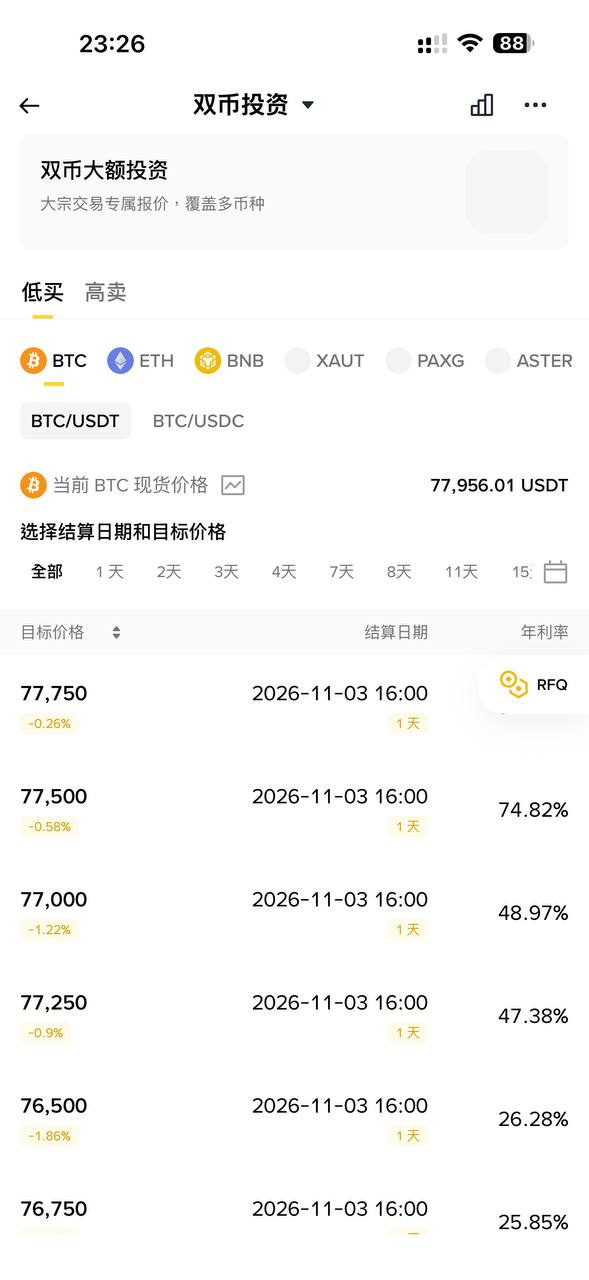
Switching your spot buy order to Binance Dual Investment lets you earn a return on idle funds while waiting to buy the dip. If the price doesn't fall below the target price, your principal is returned with interest; if it does, your funds are converted into a BTC purchase. In effect, you can turn waiting into an opportunity to earn a high annualized yield.
1. Go to Dual Investment
Open the Binance app, search for “Dual Investment” on the home page, and select the “Buy Low BTC” section.
2. Choose a target price and term
Compare your target price with Bitcoin's current spot price, and choose a price around 3%–5% below spot (for example, in the 76,000–78,000 USDT range) and a term of 1–3 days for a dip-buying strategy. Check the estimated annualized yield shown on the screen.
3. Place a live order
Subscribe with 50 USDT and check whether interest accrues on your principal during the subscription period.
4. Check settlement at maturity
There are two possible outcomes at maturity, and you don't need to monitor the market manually.
If the price at maturity has not fallen below the target price, Binance will return your full USDT principal and pay the interest.
If the price at maturity has fallen below the target price, the system will automatically use your funds to buy BTC at the target price.
While Bitcoin continues to trade back and forth below $80,000, I plan to keep using stablecoins for these short 1–3-day strategies. Whether I earn interest or buy BTC on a dip, I won't let my funds sit idle for even a day.
325
·
--
Trump said he would work toward an agreement with Democrats, and made clear that he would use his presidential veto if the opposition won a majority of seats.
With the key cards in the White House–Congress standoff now on the table, systemic risks from policy divisions have been offset. Easing risk aversion is helping $BTC trade more steadily.
With the key cards in the White House–Congress standoff now on the table, systemic risks from policy divisions have been offset. Easing risk aversion is helping $BTC trade more steadily.
257
·
--
On November 1, Strive CEO Matt Cole posted an image showing the company’s Bitcoin holdings, along with the words “New engine activated.”
When institutions show their hand, they lead the buying. $BTC Someone is entering the spot market, and prices are still being pushed higher in the short term.
On November 1, Strive CEO Matt Cole posted an image showing the company’s Bitcoin holdings, along with the words “New engine activated.”
When institutions show their hand, they lead the buying. $BTC Someone is entering the spot market, and prices are still being pushed higher in the short term.
When institutions show their hand, they lead the buying. $BTC Someone is entering the spot market, and prices are still being pushed higher in the short term.
126
·
--
Changpeng Zhao posted that the FBI, Secret Service, and IRS stepped in to help track the funds and successfully froze the stolen assets, so Bitcoin didn’t keep falling.
The coins in the hackers’ hands were legally frozen on-chain, sparing the spot market a massive sell-off. $BTC held up here because liquidity hadn’t been completely drained.
The coins in the hackers’ hands were legally frozen on-chain, sparing the spot market a massive sell-off. $BTC held up here because liquidity hadn’t been completely drained.
146
·
--
The attackers began liquidating their stolen funds, gradually converting 970,000 stolen $SOL into $BTC, for a total of $95.9 million.
With nearly $100 million worth of spot assets being sold off in a concentrated wave, the sheer scale of the sell pressure could completely disrupt the spot market’s momentum.
The attackers began liquidating their stolen funds, gradually converting 970,000 stolen $SOL into $BTC , for a total of $95.9 million.
With nearly $100 million worth of spot assets being sold off in a concentrated wave, the sheer scale of the sell pressure could completely disrupt the spot market’s momentum.
With nearly $100 million worth of spot assets being sold off in a concentrated wave, the sheer scale of the sell pressure could completely disrupt the spot market’s momentum.
125
·
--
CZ posted on X that Bitcoin did not fall further largely thanks to law enforcement agencies such as the FBI, U.S. Secret Service, and IRS, which helped track and freeze the stolen funds.
The large sum of stolen money did not flow into the market to be sold off, so $BTC temporarily avoided a wave of spot selling, and the market stopped falling and stabilized at this level.
The large sum of stolen money did not flow into the market to be sold off, so $BTC temporarily avoided a wave of spot selling, and the market stopped falling and stabilized at this level.
1
141
·
--
Less than 30 points from the spot price, the perpetual order book suddenly stacked nearly $20 million in buy orders.
$BTC had 254.213 coins posted at $77,862, just 0.03% away from the mid-price of $77,886 at the time.
With large orders right up against the price providing support, room for a short-term pullback below has been shut off. The market could bounce higher off this support at any moment.
$BTC had 254.213 coins posted at $77,862, just 0.03% away from the mid-price of $77,886 at the time.
With large orders right up against the price providing support, room for a short-term pullback below has been shut off. The market could bounce higher off this support at any moment.
132
·
--
The Bitcoin dual-staking protocol b14g was hacked, and around 97 million staked CORE tokens were transferred out.
Nearly 100 million tokens are now in the hackers’ hands, leaving a huge hole in the pool. People will surely rush to withdraw their funds, and $CORE will likely get dumped on the secondary market.
Nearly 100 million tokens are now in the hackers’ hands, leaving a huge hole in the pool. People will surely rush to withdraw their funds, and $CORE will likely get dumped on the secondary market.
271
·
--
Crypto Basics for Beginners, Part 5 | How to Read Candlestick Charts
Candlestick charts record past market price movements. They can help us analyze market sentiment, price changes, and historical patterns, but they cannot accurately predict the future.
History doesn’t simply repeat itself, but it often bears a striking resemblance to the past.
Learning to read candlestick charts helps us make more informed decisions when trading and act less blindly.
📌 This series is for educational and learning purposes only and does not constitute investment advice.
If you found this helpful, feel free to share it with friends who are new to crypto and want to learn more. Let’s start learning together from the basics.
124
·
--
Verified
After the incident, the authorities began allowing withdrawals in stages, starting with the Bitcoin network.
Large investors could get out first, and the money in $BTC was returned the fastest, easing market panic.
After the incident, the authorities began allowing withdrawals in stages, starting with the Bitcoin network.
Large investors could get out first, and the money in $BTC was returned the fastest, easing market panic.
Large investors could get out first, and the money in $BTC was returned the fastest, easing market panic.
1
502
·
--
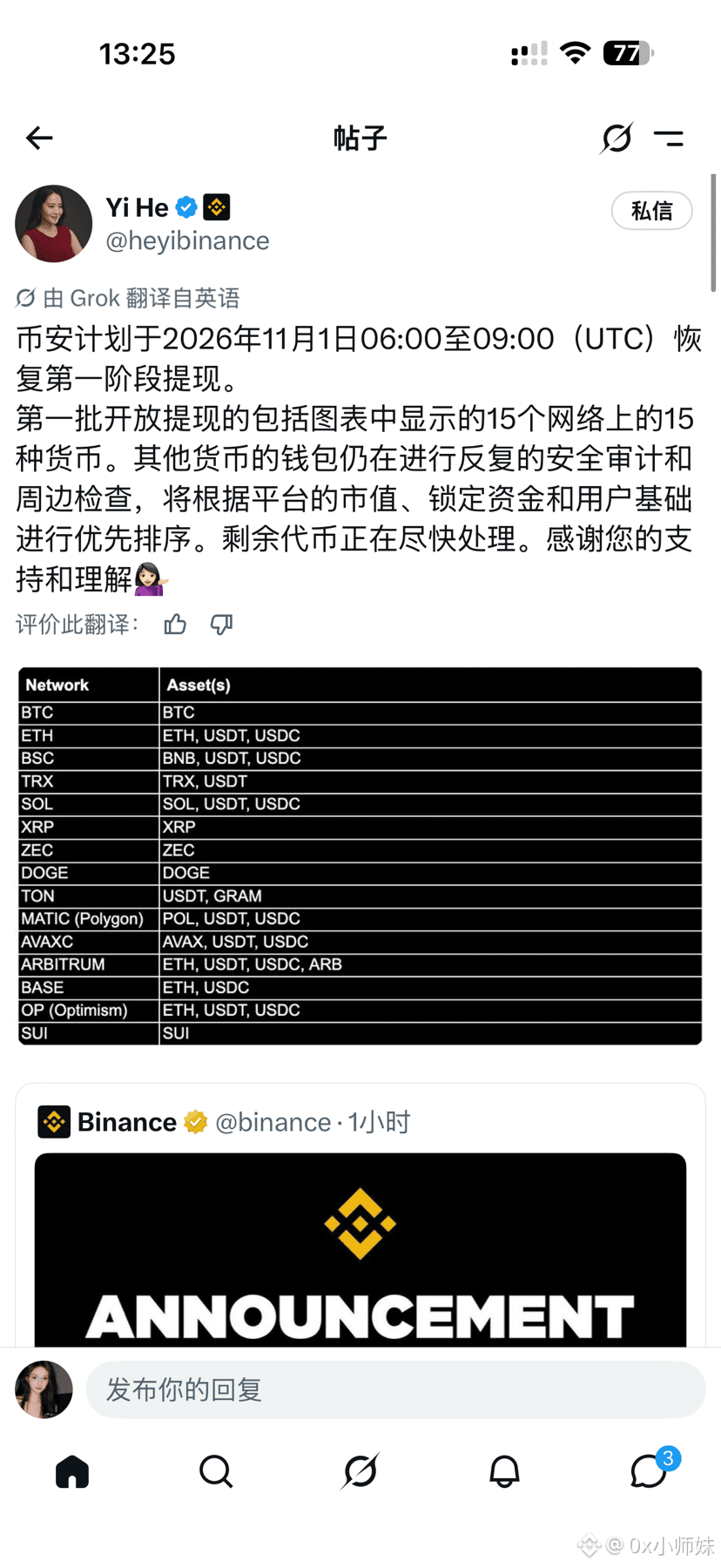
Binance officially announced: The first batch of withdrawals will resume in phases on November 1, from 14:00 to 17:00 Beijing time!
The first phase will open 15 networks, covering BTC, ETH, BNB, SOL, DOGE, XRP, TRX, ZEC, SUI, AVAX, TON, Polygon, Arbitrum, Base, and Optimism, along with USDT, USDC, and other assets on those networks.
The remaining assets are still undergoing security audits and will resume gradually.
Honestly, the speed of the response has exceeded expectations.
For a security incident involving billions of dollars, the first batch of withdrawals is already set to resume after just over two days, and the platform has also promised to cover users’ losses.
Its crisis-management capabilities are now on full display. Next, we’ll see how funds move once withdrawals resume.
If Binance can weather this smoothly, market confidence in the exchange may actually rise to a new level.
569
·
--
The Bitcoin dual-staking protocol b14g was hacked, and nearly 97 million CORE were transferred. So far, only 9 million have been successfully frozen.
The remaining 88 million are still in the attacker’s hands and could be sold on the secondary market at any time. The short-term selling pressure is immense, and $CORE’s price is likely to take a heavy hit.
The remaining 88 million are still in the attacker’s hands and could be sold on the secondary market at any time. The short-term selling pressure is immense, and $CORE’s price is likely to take a heavy hit.
601
·
--
Machi Big Brother was liquidated 8 times in a row on a certain platform, leaving just $1.5 in his account. He later sold two BAYC NFTs over the counter to add funds. His $ETH long position is now showing an unrealized profit of over $70,000.
Selling NFTs to top up his margin helped his long position recover a little, but compared with the string of liquidations he suffered earlier, this amount is barely worth mentioning.
Selling NFTs to top up his margin helped his long position recover a little, but compared with the string of liquidations he suffered earlier, this amount is barely worth mentioning.
399
·
--
11.1 Morning Brief:
1. $BTC is currently at 77,710.6, up 0.37% over the past 24 hours. It’s moving sideways with a slight uptick, and neither bulls nor bears are making a move at this level.
2. $ETH is currently at 2,269.25, up 1.08% over the past 24 hours. It’s perked up a little, and its price action is slightly more decisive than Bitcoin’s.
3. Ethereum staking has hit a record 43.8 million ETH, while the annualized yield has slipped to 2.63%. More ETH is locked up, but the returns are getting thinner.
4. 800 $BTC were transferred from an unknown wallet to an exchange, worth about $62.13 million. A whale has moved the coins onto the exchange, possibly to cash out.
286
·
--
On October 31, Bitcoin dual-staking protocol b14g was hacked, and roughly 97 million staked CORE were transferred to the attacker's wallet.
There was so much stolen spot inventory that the hacker would surely sell it all for cash. The $CORE spot market simply couldn't withstand that kind of selling pressure.
There was so much stolen spot inventory that the hacker would surely sell it all for cash. The $CORE spot market simply couldn't withstand that kind of selling pressure.
2
1
2.5k
·
--
Verified
I actually think the Binance hack could become a turning point for the next bull market.
Binance is covering the losses out of its own pocket, the U.S. is stepping in to investigate, Trump is publicly paying attention, and the U.S. midterm elections are just around the corner.
Put these things together, and it gets interesting.
Binance needs to recover the assets and rebuild trust. The U.S. wants to promote the growth of the crypto industry, and the Trump family also has business interests in crypto.
Could both sides use this crisis to deepen their cooperation? Could an industry disaster even become a catalyst for money to flow back in?
Of course, this is just my theory.
But I’ve always believed that an exchange capable of weathering such a major crisis and covering its users’ losses out of its own pocket will have an even stronger moat once it wins back their trust.
The moment of greatest fear in the market is often when the landscape is reshaped.
What doesn’t kill you makes you stronger.
$BNB
9
19
16k
Log in to explore more content
Join global crypto users on Binance Square
⚡️ Get latest and useful information about crypto.
💬 Trusted by the world’s largest crypto exchange.
👍 Discover real insights from verified creators.
Email / Phone number
Trending Topics
BinanceWithdrawalScamWarning
45,324 views
675 Discussing
Binance Warns Users of Withdrawal Scams as Services Resume: It Will Never Charge Fees, Sell Queue Spots or Ask You to Move Funds to a “Vault”
Binance News
·15 Likes
·8.2k views
USMidtermElections
611,340 views
3,249 Discussing
USOctoberNFP-AreRateCutsStillPossible
50,736 views
548 Discussing