
bc1qDave
47 Posts

bc1qDave
Report
Block User
30 Following
796 Followers
541 Liked
Posts
All
Quotes
Live
·
--
Continue to clearly define the trading direction, and with opportunities available:
1: Go all-in and buy the Nasdaq Index
2: Shift funds around to trade for gold
3: With utmost caution, bet on storage/warehousing
Also, a small portion of effort goes into a few individual stocks:
The ones your uncles and aunts love most: goog, msft, $TSLA , aapl
The ones the younger brothers and sisters love most: $CRCL , $SPCX , cbrs
Among thousands of streams, take just one—within the foreseeable future, that’s what we’ll do. Oh right, BTC and crypto—just go with the flow on that.
bc1qDave
·
--
15 fell on Micron 877, 16 fell 840. That’s when I started thinking about a re-entry plan. I wracked my brains but couldn’t figure it out.
A complete trading plan isn’t just about buying a certain stock at a certain price. Depending on different development scenarios, different levels of conviction call for different position management. Different companies and different industry tracks all require an integrated, comprehensive plan. But when you try to plan it, you realize you end up taking one aspect and neglecting another.
Next, I’ll narrow my focus to these directions:
1: Technicals lead the way. Take the “four storage kings” as an example—when the cycle is nearing its end, the leading stocks will be driven mainly by short-term capital. Fundamental participation weakens; after watching a few key fundamentals (mainly orders and profitability), you mostly follow the money. Industrial capital will gradually increase its efforts to exit at the tail end.
2: Crypto. Due to its own liquidity and policy support, crypto can temporarily generate an independent trend—especially smaller coins. BTC crcl can be watched.
3: Rotate into the industrial expansion-and-capacity chain. The expansion order flow moves forward—these companies in testing and packaging, etc., have business support. But the risk is that if storage sentiment/valuation breaks across the entire valuation range, it could kill the trade.
I also include gold in the rotation—hot money rotates into it.
The certainty of these three directions goes from highest to lowest, but the driven factor from the technical side is the most skill-intensive. You must strictly execute your position allocation and add-on system.
$MU $SKHYNIX
2
1
4.8k
·
--
15 fell on Micron 877, 16 fell 840. That’s when I started thinking about a re-entry plan. I wracked my brains but couldn’t figure it out.
A complete trading plan isn’t just about buying a certain stock at a certain price. Depending on different development scenarios, different levels of conviction call for different position management. Different companies and different industry tracks all require an integrated, comprehensive plan. But when you try to plan it, you realize you end up taking one aspect and neglecting another.
Next, I’ll narrow my focus to these directions:
1: Technicals lead the way. Take the “four storage kings” as an example—when the cycle is nearing its end, the leading stocks will be driven mainly by short-term capital. Fundamental participation weakens; after watching a few key fundamentals (mainly orders and profitability), you mostly follow the money. Industrial capital will gradually increase its efforts to exit at the tail end.
2: Crypto. Due to its own liquidity and policy support, crypto can temporarily generate an independent trend—especially smaller coins. BTC crcl can be watched.
3: Rotate into the industrial expansion-and-capacity chain. The expansion order flow moves forward—these companies in testing and packaging, etc., have business support. But the risk is that if storage sentiment/valuation breaks across the entire valuation range, it could kill the trade.
I also include gold in the rotation—hot money rotates into it.
The certainty of these three directions goes from highest to lowest, but the driven factor from the technical side is the most skill-intensive. You must strictly execute your position allocation and add-on system.
$MU $SKHYNIX
1
4
4.7k
·
--
Storage Market Logic: DeleveragingThe recent trend in the memory chip sector is all about the deleveraging logic. Simply put: the more wildly it rises, the more aggressively leverage is added; once it reverses, the speed and the damage of deleveraging are far beyond what people imagine.
First, let’s look at how leverage was inflated: In October 2025, Southern Eastspring introduced 7709.HK (2x SK Hynix leveraged ETF) on Hong Kong stocks. On its first trading day, its scale was only 0.024 billion Hong Kong dollars.
By June 22, 2026, the size had once surged to 130 billion Hong Kong dollars. In just 8 months, it grew more than 50-fold, becoming Hong Kong’s largest ETP at the time. In the same period, the South Korean market was even more extreme. After South Korea lifted individual-stock leveraged ETF leverage in late January, within just two months, leveraged products linked to Samsung and SK Hynix quickly saw massive volume. By the end of June, the total size of 16 single-stock leveraged ETFs in South Korea’s domestic market reached 17.6 trillion won (about US$46.9 billion). Among them, the two-times long exposure was 206 times the two-times short exposure, an extremely unbalanced structure.
Storage Market Logic: Deleveraging
The recent trend in the memory chip sector is all about the deleveraging logic. Simply put: the more wildly it rises, the more aggressively leverage is added; once it reverses, the speed and the damage of deleveraging are far beyond what people imagine.
First, let’s look at how leverage was inflated: In October 2025, Southern Eastspring introduced 7709.HK (2x SK Hynix leveraged ETF) on Hong Kong stocks. On its first trading day, its scale was only 0.024 billion Hong Kong dollars.
By June 22, 2026, the size had once surged to 130 billion Hong Kong dollars. In just 8 months, it grew more than 50-fold, becoming Hong Kong’s largest ETP at the time. In the same period, the South Korean market was even more extreme. After South Korea lifted individual-stock leveraged ETF leverage in late January, within just two months, leveraged products linked to Samsung and SK Hynix quickly saw massive volume. By the end of June, the total size of 16 single-stock leveraged ETFs in South Korea’s domestic market reached 17.6 trillion won (about US$46.9 billion). Among them, the two-times long exposure was 206 times the two-times short exposure, an extremely unbalanced structure.
1
9
3.8k
·
--
🎙️ US Stock Index Futures Contracts — Deleveraging Market
End
01 h 13 m 24 s
52
2
0
·
--
Currently, there are three main logics for storing the “Four Heavenly Kings”:
1. Valuation: PE (Forward PE); in fact, it’s the weakest logic
2. Order stability and growth: this leads to a key consideration—technological monopoly power
3. Cash flow
Samsung: best valuation and financials
SK hynix: monopoly position
Micron: strong cash flow
SanDisk: I honestly feel it’s a highly controlled, pump-and-raise
$MU $SNDK $SKHYNIX
1
15
8.1k
·
--
If you've been drowning in a tidal wave of high-quality posts from US, Japanese, and Korean stock traders, clicking countless saves and follows but still can't shake the anxiety, what you really need to do now is mute all KOLs, including myself, and those 'what to buy next' types. Then, turn back and check your own trading system.
The right direction often doesn't require a hundred different techniques; it can be something as simple as the big picture. Many friends incur losses because their trading logic isn't closed-loop and they get distracted by noise. In the drama 'Tian Dao', Ding Yuanying says a classic line: the biggest problem for Chinese people is believing in a 'depend' mentality. I completely resonate with this; at the end of the day, it's all about relying on yourself.
Regarding doing KOLs and tweeting, my thought is to make money first, then make noise. I’ll be updating some posts periodically, and I’ll make sure to focus on profit generation; it will definitely lead to direct insights. As for recommending US stocks, that rich flow of traffic is for my peers; if you want to check out a US stock KOL, you can look at @Square-Creator-7c1e4123c9d8 , the content is excellent, and the follower growth is impressive—definitely worth learning from.
If you've been drowning in a tidal wave of high-quality posts from US, Japanese, and Korean stock traders, clicking countless saves and follows but still can't shake the anxiety, what you really need to do now is mute all KOLs, including myself, and those 'what to buy next' types. Then, turn back and check your own trading system.
The right direction often doesn't require a hundred different techniques; it can be something as simple as the big picture. Many friends incur losses because their trading logic isn't closed-loop and they get distracted by noise. In the drama 'Tian Dao', Ding Yuanying says a classic line: the biggest problem for Chinese people is believing in a 'depend' mentality. I completely resonate with this; at the end of the day, it's all about relying on yourself.
Regarding doing KOLs and tweeting, my thought is to make money first, then make noise. I’ll be updating some posts periodically, and I’ll make sure to focus on profit generation; it will definitely lead to direct insights. As for recommending US stocks, that rich flow of traffic is for my peers; if you want to check out a US stock KOL, you can look at @MMMusol , the content is excellent, and the follower growth is impressive—definitely worth learning from.
5
4.1k
·
--
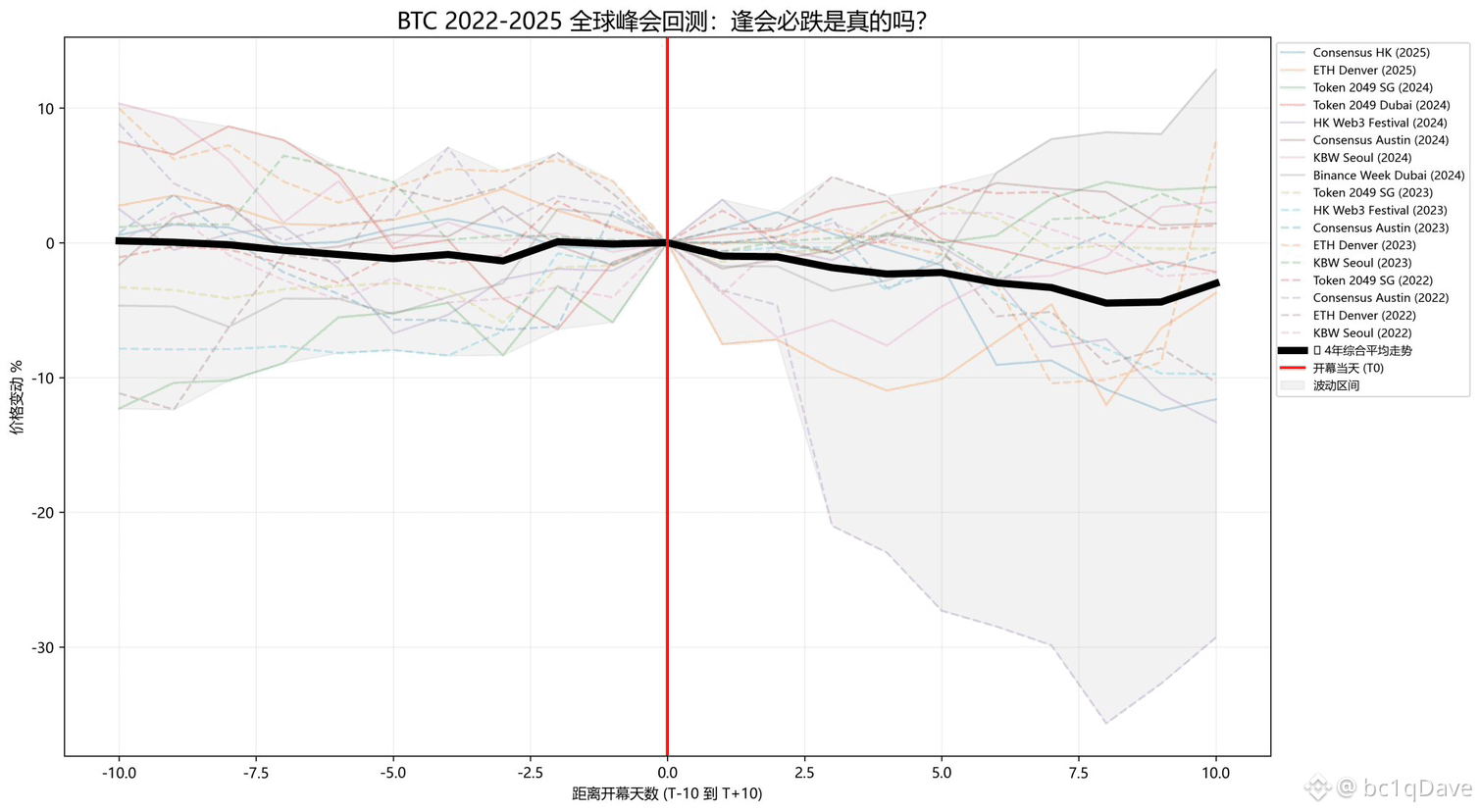
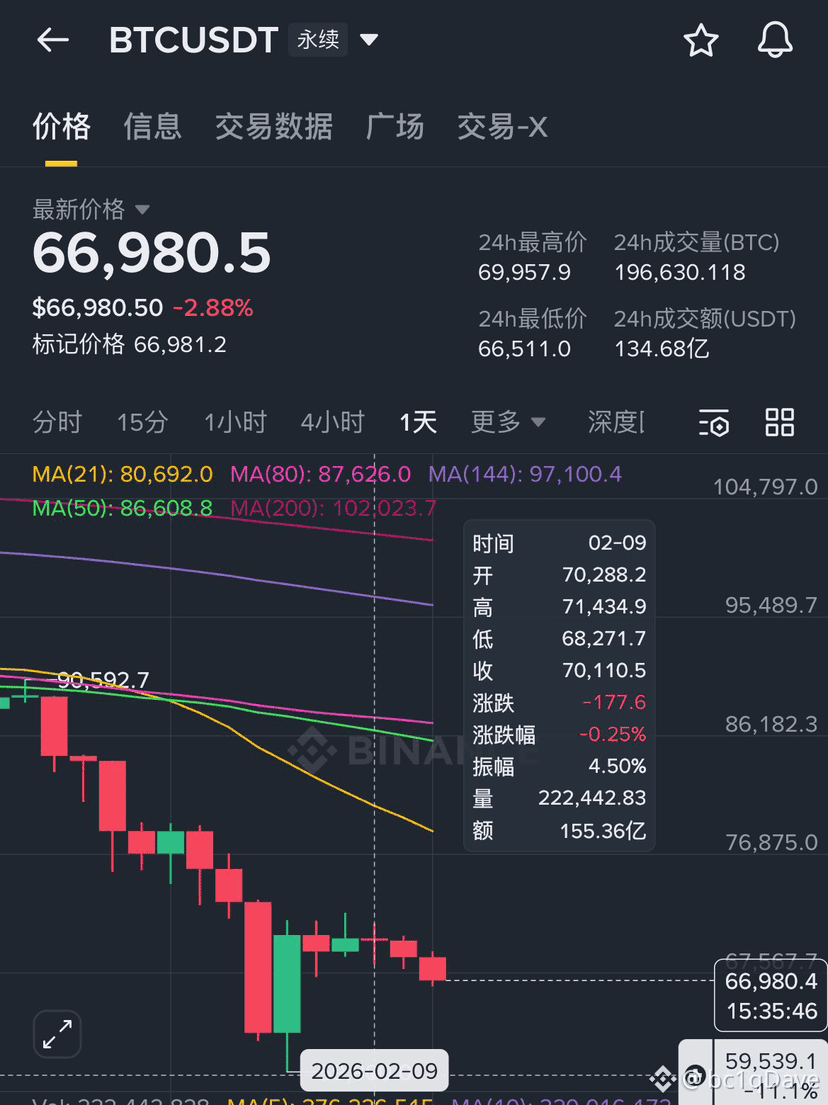
Explosive backtesting, Consensus HK has arrived. A few days ago, I did a backtest of the 'always drops during meetings' curse with my little assistant. The amazing thing is, this curse is real...
After the opening, a clear downward trend was presented, and a week later, the drop reached its maximum value. We even excluded the horrifying 1011 (around a week after 2025 #Token2049). The results are still clear, and a strategy can be made...
NFA, DYOR, the backtesting target is $btc
After the opening, a clear downward trend was presented, and a week later, the drop reached its maximum value. We even excluded the horrifying 1011 (around a week after 2025 #Token2049). The results are still clear, and a strategy can be made...
NFA, DYOR, the backtesting target is $btc
1
1
10
8.5k
·
--
Consensus Review Simplified
1: Buzzwords - AI, Payment, Stablecoin, RWA. Compared to last year's hot terms: PayFi, Quantitative, KOL, meme
2: Institutional concentration has significantly increased, KOL concentration has significantly decreased, college student concentration has moderately increased, project parties' activity has moderately decreased
3: Grey area businesses, borderline projects, moving from the stage to the table
4: It's easier to meet the 'big shots', the spicy crab at the bottom of the bridge is still a hotspot
5: Common formula for event organizers - have a robot or robotic dog dance
#ConsensusHK2026
1
1
12
6.4k
·
--
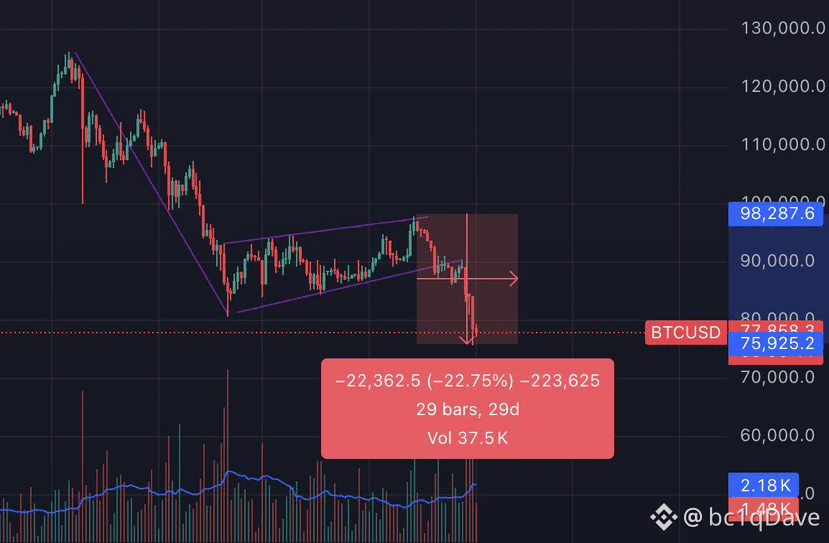
Why are we temporarily optimistic about BTC now?
1. From a graphical perspective, this high point rebound has already reached a 23% decline, and the market is waiting for short-term recovery.
2. From an indicator perspective, there is an oversold condition. The price has deviated from the downward midline, and since it is still within the structure, the current rate is unsustainable.
3. From a funding perspective, a large number of investors, including retail and some institutional players, have entered the playing field. Waiting for the first wave of bottom-fishing funds to enter after the opening.
The sentiment is quite panicked, derivatives have been scanned briefly, and there are no anomalies. The odds are no longer advantageous; observing.
bc1qDave
·
--
I made another failed trade, closing my Bitcoin short position at 89,000, along with a basket of small cryptocurrency short positions. To be honest, I feel ashamed as a trader. The reasons for my failure are:
1. Too superstitious about off-market information
2. I have indeed been too busy with some recent matters
Bitcoin formed a super standard flag pattern and pulled back, which I couldn't see. I could really change my career, but due to my superstition about off-market information, I didn't follow the market's guidance. I will never do that again.
1
1
2
7.7k
·
--
I made another failed trade, closing my Bitcoin short position at 89,000, along with a basket of small cryptocurrency short positions. To be honest, I feel ashamed as a trader. The reasons for my failure are:
1. Too superstitious about off-market information
2. I have indeed been too busy with some recent matters
Bitcoin formed a super standard flag pattern and pulled back, which I couldn't see. I could really change my career, but due to my superstition about off-market information, I didn't follow the market's guidance. I will never do that again.
3
5
1
9.2k
·
--
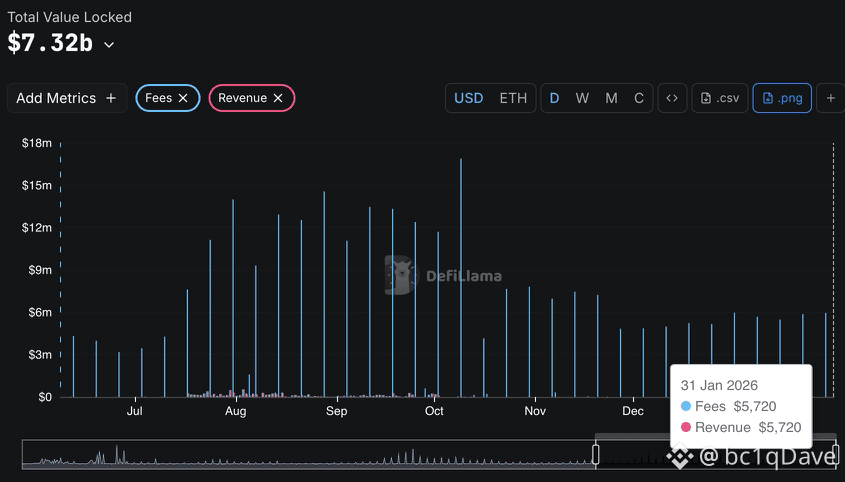
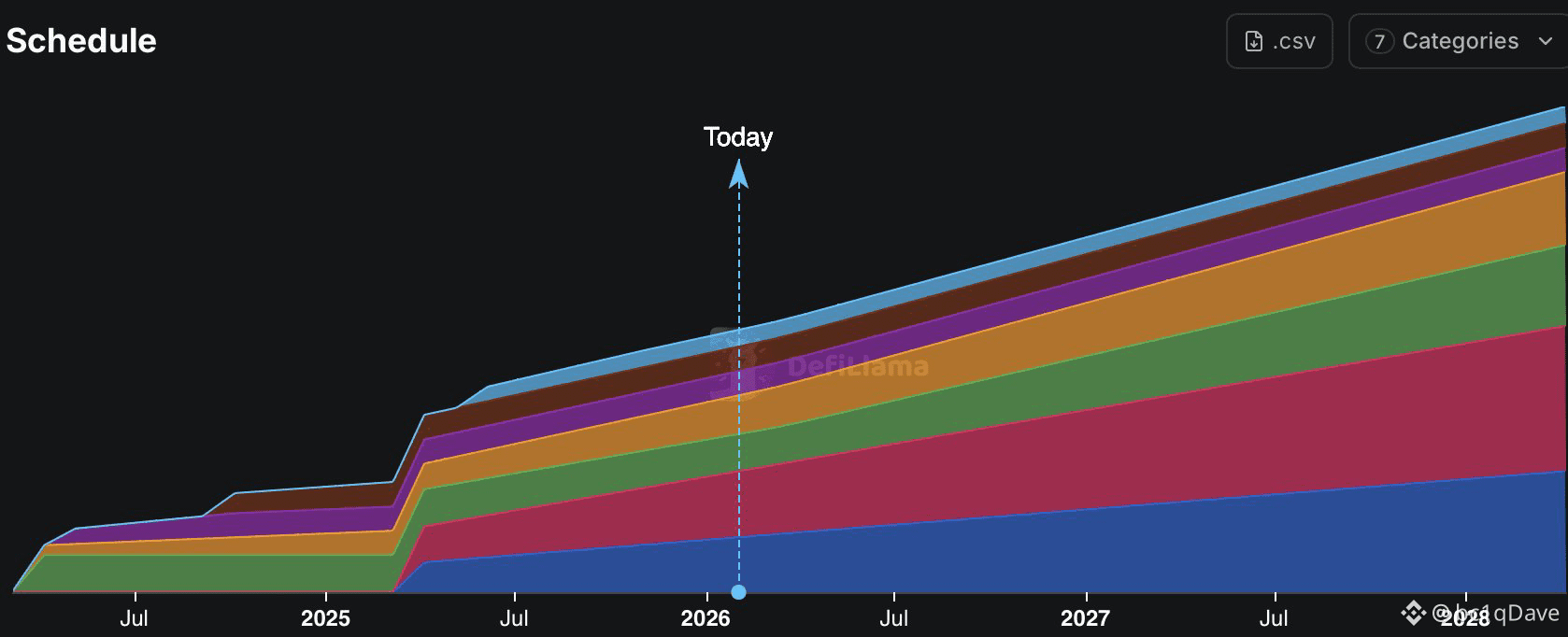
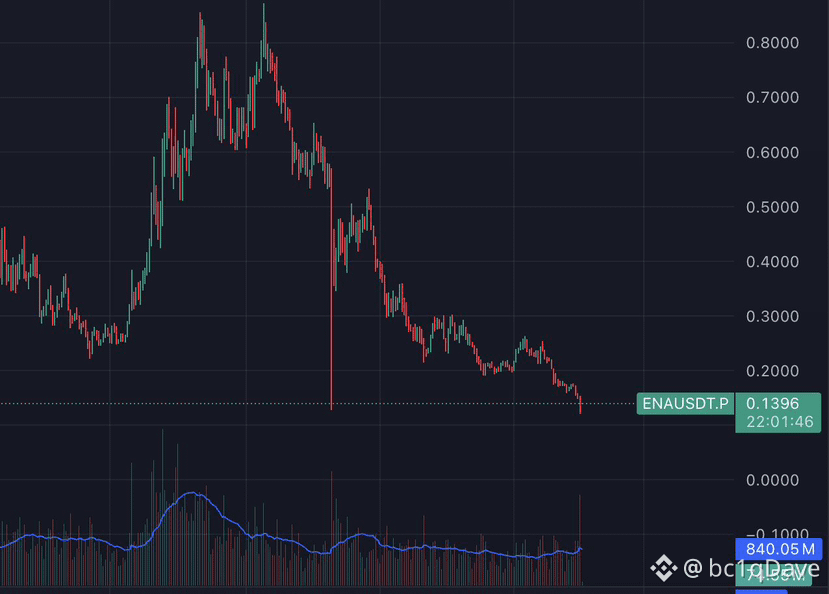
ENA is a recent high-quality short asset that combines both alpha and beta
1: Thin profit
Average daily income is between 30,000 and 50,000 USD, with a median of a few thousand dollars, not to mention the achievement of 90,665 USD daily income on January 10th and 11th. Yes, double digits, no less than the unit.
TTM annualized income is 4.7 million. Current market capitalization is 1.1 billion, FDV 2 billion. (TVL 7 billion
USDe yields APY 4.5%, not high or low
2: Stable supply
Continuous buying pressure, mainly for foundations and investors. Creates a natural advantage in a bear market where 'if no one buys, it will fall', without gap unlock also reduces the risk of sudden price spikes for selling
3: Stablecoin explosion Alpha
Stablecoins all have the risk of explosion, but if the collateralized stablecoin company is responsible, the risk is almost zero. However, ENA's delta neutral algorithm has structural risks.
Before a specific explosion occurs, no one can predict the cause of death, but a neutral position itself is quite fragile. One possible scenario is that if a 1011 occurs on-chain, ADL may again cause the neutral position to fail, and ENA may face significant losses.
This probability is relatively small, but it is a potential alpha amid many unexpected events in a bear market
4: Technical aspect
There isn't much to say about the technical aspect, just the trend of breaking new lows, and the decline is relatively persistent. Projects that hit new lows are actually quite good in a bear market because no one knows where the bottom is. At this time, there is no valuation consensus. Based on PE, 150 million is considered too much...
In this case, the imagination space is quite large. Just like gold breaking 2000 and then uncontrollably rising to 5500
Risk warning!
Never forget the risk. ENA's short-term contract positions surged, with a single-day increase of 15%. Yesterday's decline actually showed no significant weakness, so be aware of short-term risks
NFA, DYOR
1
12
8.6k
·
--
Making quick money is destroying everything you have.I would like to call this article @Square-Creator-60a467146 the ultimate guide to the cryptocurrency world. Having witnessed two complete cycles in the cryptocurrency world, it resonates deeply.
My writing is not as good as that cat, so I won't force it, just sharing a few simple rules.
1: The cryptocurrency industry is a cyclical industry
The cryptocurrency world is actually a very gentle place, everything follows a pattern.
The internal economic laws are cyclical (for example, the mining cycle of BTC) and the nature of the market is also cyclical (for instance, every cycle there are people saying 'the four-year cycle has been broken', from the entry of Grayscale institutions in 2017, to the entry of Meta institutions in 2021, and then to the entry of MSTR and CZ institutions in 2026...)
Making quick money is destroying everything you have.
I would like to call this article @0xPickleCati the ultimate guide to the cryptocurrency world. Having witnessed two complete cycles in the cryptocurrency world, it resonates deeply.
My writing is not as good as that cat, so I won't force it, just sharing a few simple rules.
1: The cryptocurrency industry is a cyclical industry
The cryptocurrency world is actually a very gentle place, everything follows a pattern.
The internal economic laws are cyclical (for example, the mining cycle of BTC) and the nature of the market is also cyclical (for instance, every cycle there are people saying 'the four-year cycle has been broken', from the entry of Grayscale institutions in 2017, to the entry of Meta institutions in 2021, and then to the entry of MSTR and CZ institutions in 2026...)
7
5
17
10k
·
--
Btc I am currently preparing like this
First, what story did the market tell starting from October? 1011 marks the beginning of a major cycle rhythm shift, which is a transformation process, so it's a step back and forth during the decline. The drop from 107 to 80 confirmed the trend, hence it strongly broke through several support levels.
Then there was a continuous consolidation, which seemed uninteresting but actually had two phases. The first phase was from the low point on November 21 to December 12, forming a wedge consolidation. A structure must be formed, there must be a trend to account for, but from December 13 to now, it has been sideways waiting to drop, without going down. So now at the 88,000 position, we need to answer what to do?
Now if someone tells you whether to long or short, I suggest you add them to your fortune teller list. There’s nothing wrong with fortune telling, and being accurate is even better. But I will prepare to “hunt for false signals.”
Looking back at 2020 when I entered the circle, every time there was a daily adjustment in the middle of a trend, 80% of the sideways adjustments had a common detail: before the next trend starts, it would first touch in the opposite direction, like a “false signal.”
For example, at the beginning of December 2020, before continuing to rise, there was a period of decline. In July 2021, before resuming the rise, it almost touched a new low. At the end of December 2021, there was a rebound before continuing to drop. At the end of February 2024, at the end of October 2024, at the beginning of April 2025, and at the beginning of November. All had this kind of “false signal.”
False signals are usually very short, just a day, or even changes within a day, but the price range is enough to trap people. Speaking of now, I feel that this time the main force should be accumulating a lot, but I don’t know how they will unload. So the operation is:
If the price drops to start with 84 within a single day, and the next day shows a stop and starts to rebound, go long. The stop loss is at the low point of the drop day, the first target is at least 95, and we’ll talk when it gets there.
If the price rises to start with 92 within a single day, and the next day shows a stop and starts to drop, go short. The stop loss is at the high point of the breakout day, the first target is at least 84, and we’ll talk when it gets there.
Above is the draft strategy for hunting false signals, it looks like a counter consensus trade, but the logic is different.
NFA, DYOR
$BTC #2026Predictions
3
1
7
10k
·
--
The Christmas rally that everyone looks forward to in the cryptocurrency market may not arrive as expected.
1. There is no institutional buying. If you are an institution, you would prefer to trade U.S. stocks, where liquidity and momentum potential are more abundant, or directly flock to precious metals. The cost-performance ratio in the cryptocurrency market is currently very low.
2. Retail sentiment trading? Logical conflict. Some traders may believe in the story of the Christmas rally; if the whales stop selling, the market could indeed be driven by retail frenzy. But the contradiction lies in the fact that if retail drives the market up, they will have significant selling pressure. So how do we determine the direction driven by retail?
3. Lack of narrative. No sector can attract hot money anymore. Before structural improvement, the internal struggles in the medium to long term are all futile. The outcome of entropy increase is heat death.
However, we need not be pessimistic about the cryptocurrency market. People often feel that the new era is coming when prices rise, and then think the industry is doomed when prices fall. It's just a cycle, just a cycle.
Today, there is a popular chart showing the asset return comparison over the past decade, where BTC has dominated the gains in most years, but once it drops, it also has the largest decline. That's the characteristic of the industry.
Now it should drop, the more it aligns with past patterns, the happier we should feel, because if past patterns are broken, it means the game rules are no longer in the hands of cryptocurrency participants. The current practitioners will lose most of their advantages, and anyone who picks up a training course for two months can stand on the same knowledge starting line as us.
Respect the market; even in a bear market, we must keep pushing.
$BTC
3
17
6.8k
·
--
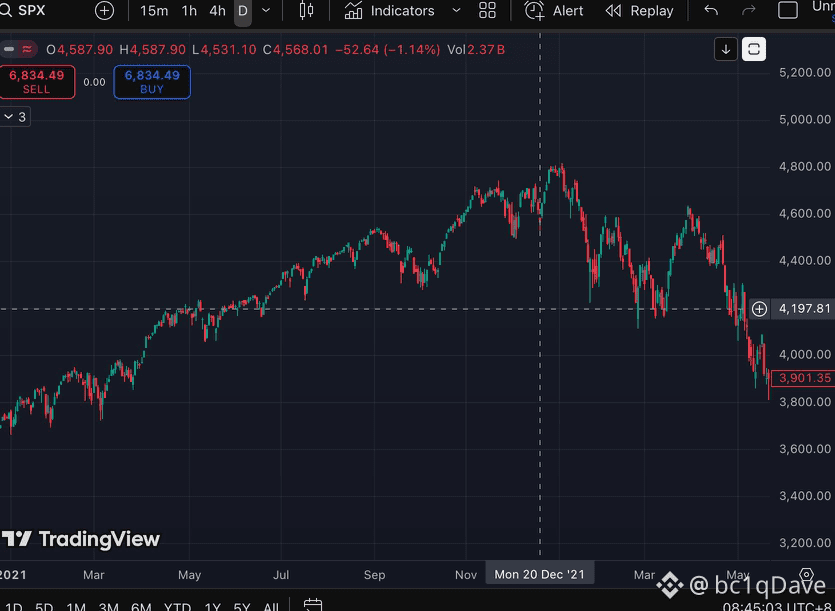
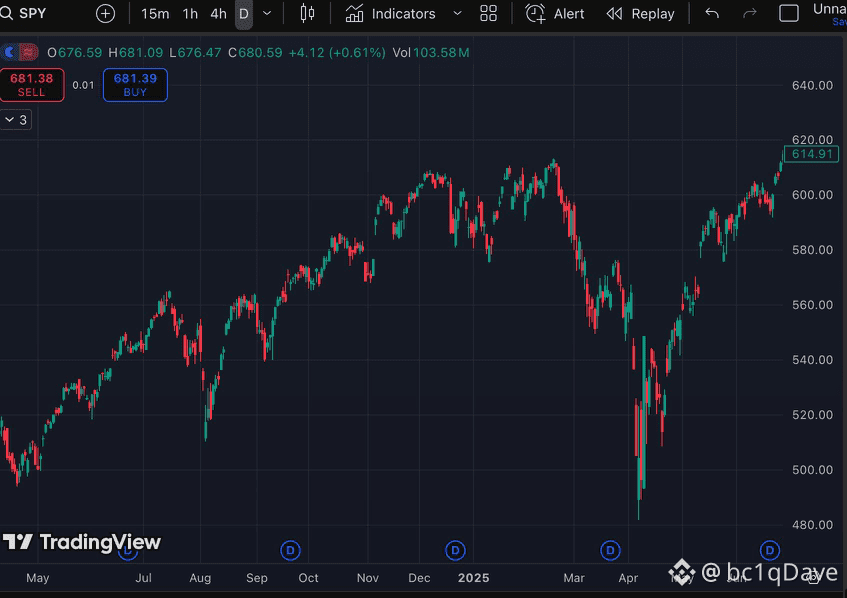
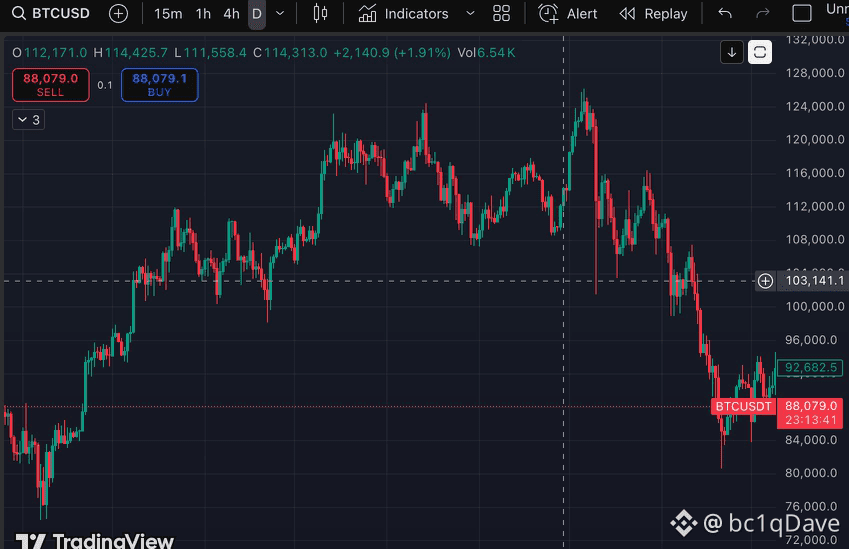
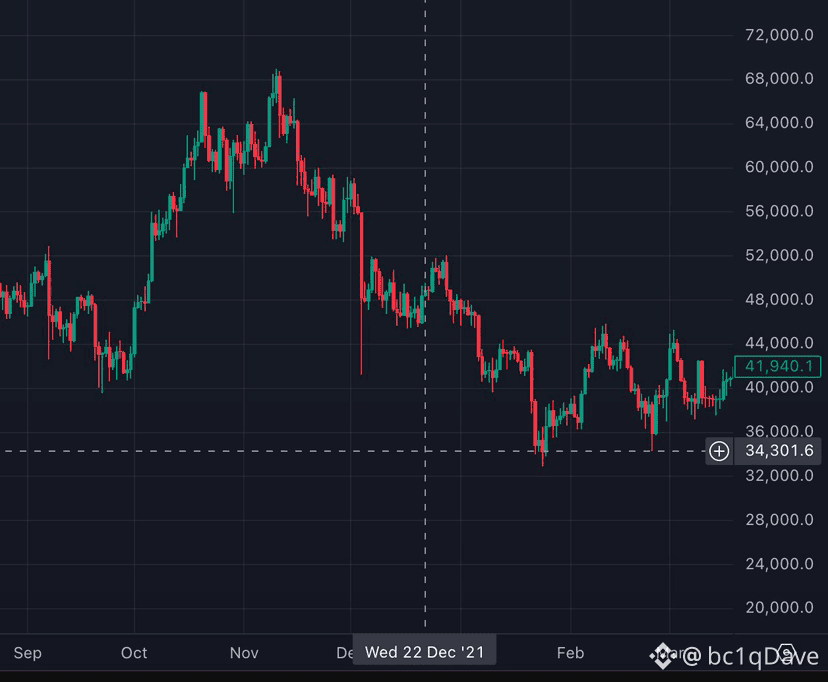
The dog farm is still a bit bad; every time Bitcoin reaches a major peak, it's a higher high. The S&P also follows this pattern closely. The underlying principle may be that only an ATH can stimulate the market, with enough people ready to take the plunge. (The image below shows the peaks of the 21-25 year cycle + Christmas rally)
It seems that the Xmas rally should not be avoided; the market sentiment is too reflexive. The S&P may need to touch a previous high, even pushing towards 7000.
I will focus on lly, rr., rklb, mu, pltr. Mega seven, on the other hand, raises some doubts. It feels like we're entering a small-cap rotation period, somewhat like the altcoins in the crypto world, where the essence is a rotation between NVDA and its upstream and downstream (both strongly and weakly correlated will flow in), with the big shaking and the little brother charging forward.
Local leaders may have their last dance; what happens after that is hard to say. Just be careful not to get trapped. $BTC
12
3.4k
·
--
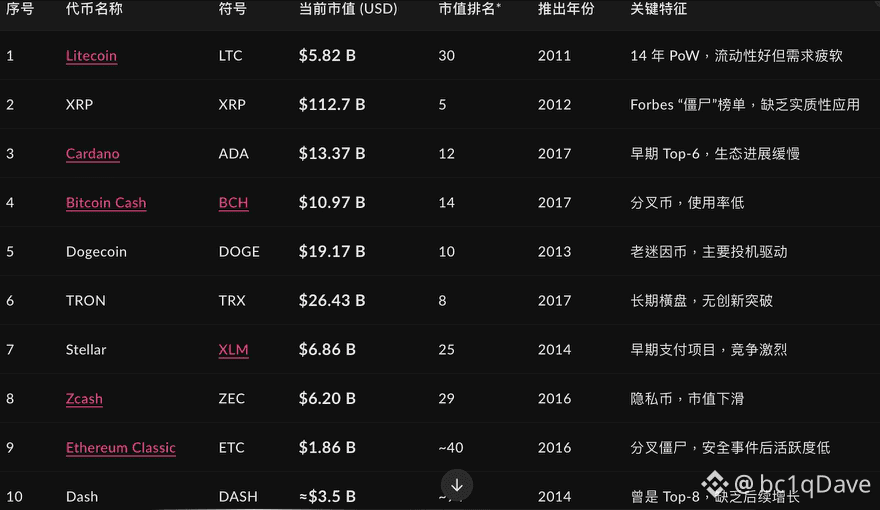
After "VC Coin", "Conspiracy Disk", and "Big Truck", the last phased strategy in 2025 is: shorting "Old Zombie"
"Old Zombie" refers to tokens that were launched earlier, currently have a large market value, lack new catalysts, and are continuously being sold off by the main forces.
The logic for shorting such coins is:
1. The main force has cleanly offloaded in large waves, with no sudden pump risk
2. There are many retail investors trapped above, with significant selling pressure, providing ample cushion for shorting
3. There is enough market value space, and there is no "wholesaler's cost" issue, so the downside will not encounter resistance
If beat, coai, and mon are "little monsters", then apt, avax, uni, and fil are more suitable to short as "Old Zombies"
The table below provides 10 references for Old Zombies; of course, tokens like trx, which are pure anomalies, should be avoided; feel free to add in the comments.
3
3
4
7.4k
·
--
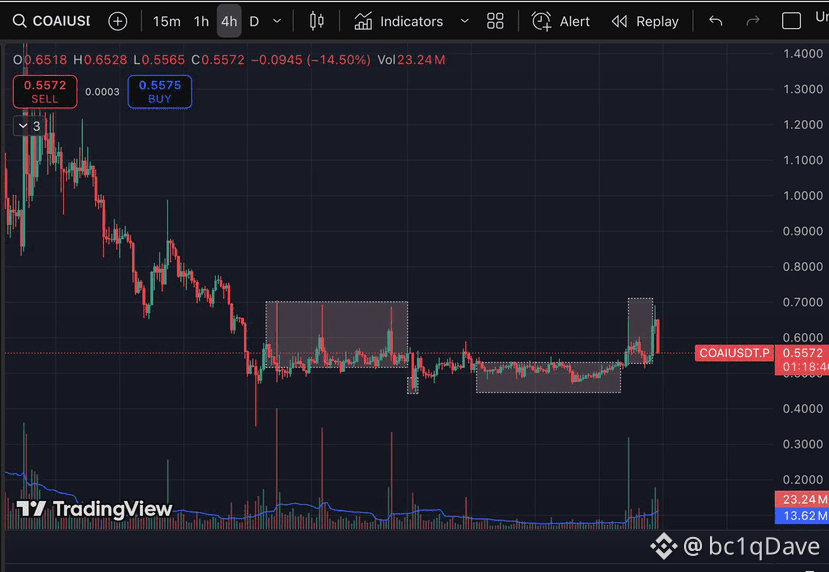
$COAI is a rare independent cryptocurrency in the bear market, and the only ones of the same level are $ZEC $BEAT. This article discusses two aspects: market language and institutional actions.
1. Market Language
Since November 22, COAI has been making its market moves in an extremely unusual way. Nearly a month later, Bitcoin has fluctuated many times, but COAI has not followed at all.
The market language conveyed in several stages within the frame is very clear: washing the market, shaking positions, accumulating funds, and testing the market. Currently, the bottom is increasing with volume, but the results of the two tests are not optimistic, and the market maker is still trying.
2. Institutional Actions
There are currently two updates from institutional players: one is the launch of the foundation's website, and the other is the addition of a certain agent foundation mentioned below. @ChainOpera
It is already an open secret in the circle that COAI is being operated by strong market makers, and unlike other dog coins, COAI has very strong endurance and has been repeatedly operated. At this time point, the market has entered a foggy stage. Whenever the market enters an unclear stage, the altcoins get the best opportunities for operation because there are capital rotation and blood-sucking windows. The foundation is suddenly creating momentum now, and there is a very high probability of operations following this.
Recently, I have communicated with many friends, and at this price level, the long-short game is very, very intense, which has led to a decrease in our trading win rate and certainty. We can only keep an eye on independent cryptocurrencies; hopefully, this independent opportunity can emerge.
NFA, DYOR
2
1
32
14.6k
·
--
“One Night Bull Return” Episode 2: New Fair Range & Anti-Consensus Trading
Holding an optimistic view on the market, BTC broke through a key position yesterday and arrived at a new fair range, but in the medium term, it may be suitable to adopt an anti-consensus trading model.
Bitcoin is currently hovering around 935, seemingly unable to push upward smoothly, with a risk of a pullback at any time. However, it has actually moved out of the previous resistance range: 915-925. This can be seen as a consolidation after the JOC breakout.
This kind of consolidation in the new range actually builds support rather than meets resistance. The upcoming pullback can be considered an opportunity to enter.
At the same time, given the vigorous Dubai conference market, it is suitable to adopt an anti-consensus trading model. Reviewing Consensus, BTC Asia, Token2049, conferences do attract a wave of market attention, especially in the current situation where players are exhausted. The attention of those attending and focusing on the Dubai conference is an important market player.
Market reactions are usually lagging. When everyone realizes “Bull Return” or “Bear Arrival,” the market often has already developed to the tail end.
Therefore, it is now suitable to time a right-side follow-up, looking up to 99, with about 5% space.
When the attendees return to their accommodations after the conference, and the Twitter information flow returns to clarity, everyone suddenly realizes and shouts about the bull return, engaging in anti-consensus trading, at least selling part of their holdings and observing the changes.
However, there is currently another point to observe: the strong rotation of Bitcoin and Ethereum as the dual kings has already been completed. The old hands have become accustomed to being cut by this posture. Next, we need to see if Bitcoin will take over and start the second phase of blood-sucking rise. If so, decisively enter. The right-side winning rate has significantly increased, so one can be a bit more patient.
NFA, DYOR $BTC
{spot}(BTCUSDT)
“One Night Bull Return” Episode 2: New Fair Range & Anti-Consensus Trading
Holding an optimistic view on the market, BTC broke through a key position yesterday and arrived at a new fair range, but in the medium term, it may be suitable to adopt an anti-consensus trading model.
Bitcoin is currently hovering around 935, seemingly unable to push upward smoothly, with a risk of a pullback at any time. However, it has actually moved out of the previous resistance range: 915-925. This can be seen as a consolidation after the JOC breakout.
This kind of consolidation in the new range actually builds support rather than meets resistance. The upcoming pullback can be considered an opportunity to enter.
At the same time, given the vigorous Dubai conference market, it is suitable to adopt an anti-consensus trading model. Reviewing Consensus, BTC Asia, Token2049, conferences do attract a wave of market attention, especially in the current situation where players are exhausted. The attention of those attending and focusing on the Dubai conference is an important market player.
Market reactions are usually lagging. When everyone realizes “Bull Return” or “Bear Arrival,” the market often has already developed to the tail end.
Therefore, it is now suitable to time a right-side follow-up, looking up to 99, with about 5% space.
When the attendees return to their accommodations after the conference, and the Twitter information flow returns to clarity, everyone suddenly realizes and shouts about the bull return, engaging in anti-consensus trading, at least selling part of their holdings and observing the changes.
However, there is currently another point to observe: the strong rotation of Bitcoin and Ethereum as the dual kings has already been completed. The old hands have become accustomed to being cut by this posture. Next, we need to see if Bitcoin will take over and start the second phase of blood-sucking rise. If so, decisively enter. The right-side winning rate has significantly increased, so one can be a bit more patient.
NFA, DYOR $BTC
3
35
8.2k
·
--
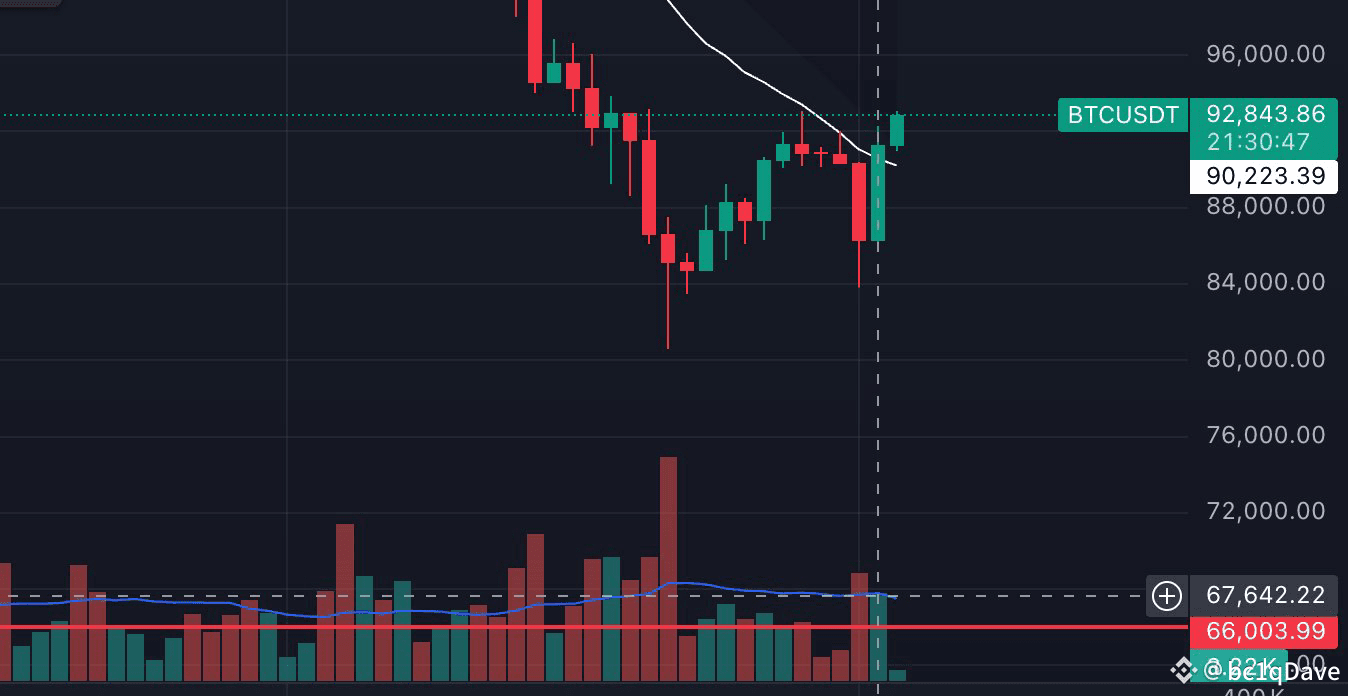
Btc once again "bulls back overnight", but don't let the jumping K-line lead you by the nose. Careful traders will notice that yesterday's big rise was not accompanied by trading volume.
There are two reasons for this phenomenon:
1. Leverage liquidation has led to a chain reaction of rising prices, driven by the contract side.
2. The drop on Monday was too severe, and the past few weeks have seen significant declines, creating a vacuum of sell orders above. The temporary supply exhaustion means that even a little buying volume can push the price up.
So what now? Should we go long or short?
Hold back those eager hands wanting to FOMO; it’s better not to be too aggressive at this stage.
1) If Bitcoin breaks 93880, and even pushes up to 94, it can be seen as a confirmation of a rebound. Because after reaching this price range, even if it drops by 2%, it still stands at the previous high of around 92. If Bitcoin continues to rise in a bloodsucking manner, meaning Bitcoin leads the altcoins, then it can be seen as a medium-sized rebound on the daily level. Targeting 99-100.
2) If it fails to break through the key fair value range here, I tend to expect consolidation. As everyone adjusts to the weekly charts, Bitcoin has experienced more than a month of decline. Historically, after such a prolonged one-sided trend in Bitcoin, it often gives a period of consolidation to determine the direction. At this time, it may be necessary to pay attention to some small coins that are making moves, whether they go up or down.
The market has been bad lately, and those so-called traders on Twitter haven't been making much noise, which has made my information flow very quiet, clearly feeling the market trend.
For example, today’s rise, on December 2nd, dropped to 84000, quickly recovered, forming a very obvious head and shoulders bottom. So as soon as it recovered, I closed my short position and waited to see. Including the short around 91, it also had a very clear sense of rhythm.
Do not be influenced by public opinion; everything should start from the facts on the chart, have your own book $BTC #BTC走势分析
11
7
84
30.7k
·
--
Bearish
Let's review the first half of mon
If I could go back to that night, I would still choose to sell at the right moment; it was the best solution at that time.
1. Unable to determine the selling pressure. 2. The overall trend is downward. 3. The strength of the capital side is unclear & there are rumors about the project party. 4. Entering the pre-sale with costs, there is pressure.
However, it indeed didn't go well for a while. After the rebound at 0.23 stabilized, the huge selling pressure at the opening did not continue to push the price down but instead lifted it, indicating that there must be something unusual. At this time, one should not continue to use the valuation mindset with a bearish perspective; rather, the focus should shift to a strong player's bullish perspective.
At the 0.3 position, I hesitated, and when 39 broke through, I went long, but 40 is a psychological price and a dense resistance. The pullback was too aggressive, and I got washed out. After stabilizing, I was still thinking in terms of valuation, which was using a mindset that has already been disproven.
I've mentioned both gains and losses, and there's another question.
I've been calling out oi fluctuations since November 21, and it has been a net long surge. But at that time, I really didn't know how to interpret it. I seek help from teachers who have been traders to explain how to look at oi; this is the only clue I can capture in many cases of missing information. @ZTZZBTC
@Michael_Liu93
Why did I say at the beginning that mon is the first half? Because I still don't believe that this thing can maintain such a high valuation @thecryptoskanda , the strategy is correct. I plan to wait for oi to start declining and then withdraw with the main force.
$MON
Let's review the first half of mon
If I could go back to that night, I would still choose to sell at the right moment; it was the best solution at that time.
1. Unable to determine the selling pressure. 2. The overall trend is downward. 3. The strength of the capital side is unclear & there are rumors about the project party. 4. Entering the pre-sale with costs, there is pressure.
However, it indeed didn't go well for a while. After the rebound at 0.23 stabilized, the huge selling pressure at the opening did not continue to push the price down but instead lifted it, indicating that there must be something unusual. At this time, one should not continue to use the valuation mindset with a bearish perspective; rather, the focus should shift to a strong player's bullish perspective.
At the 0.3 position, I hesitated, and when 39 broke through, I went long, but 40 is a psychological price and a dense resistance. The pullback was too aggressive, and I got washed out. After stabilizing, I was still thinking in terms of valuation, which was using a mindset that has already been disproven.
I've mentioned both gains and losses, and there's another question.
I've been calling out oi fluctuations since November 21, and it has been a net long surge. But at that time, I really didn't know how to interpret it. I seek help from teachers who have been traders to explain how to look at oi; this is the only clue I can capture in many cases of missing information. @ZTZZBTC
@Michael_Liu93
Why did I say at the beginning that mon is the first half? Because I still don't believe that this thing can maintain such a high valuation @CryptoSkanda , the strategy is correct. I plan to wait for oi to start declining and then withdraw with the main force.
$MON
2
1
14
11.8k
Log in to explore more content
Join global crypto users on Binance Square
⚡️ Get latest and useful information about crypto.
💬 Trusted by the world’s largest crypto exchange.
👍 Discover real insights from verified creators.
Email / Phone number
Trending Topics
Bitcoin'sReboundFadesBelow$60K
3,091 views
84 Discussing
#Bitcoin'sReboundFadesBelow$60K
$60K Is Not a Floor. Bitcoin Traders, Don't Get Trapped.
$BTC bounced to $64K, then the air came out. $60K is a coin flip, not a floor.
$BTC wicked down to ~$55.3K over the weekend, ripped back toward $64.5K, then sold off again. Now it's chopping around $60K, with a daily close near $60.6K and an intraday low at $59.4K.
That's not a reversal. It's a market catching its breath.
What I'm watching:
Sentiment: Split between fear and dip-buyers. Green candles are short, and nobody is defending them.
Exchange flows: Large $BTC withdrawals from exchanges below $60K point to long-term accumulation or custody. Useful context, but it's slow money. It doesn't stop short-term sellers from hitting every pop.
Resistance: Overhead supply is real. Price keeps stalling near ~$61.5K on the daily, while the $64.5K wick was rejected hard.
Higher targets: Above that, equilibrium sits around $70–72K, with the weekly trend line near ~$79.8K.
Support: $55–59K (weekly demand plus the $55.3K sweep low). A weekly close below this zone makes the structure uglier.
Relief bounce vs. confirmed reversal:
Bounce: Price rises into resistance while volume fades.
Reversal: A strong daily/weekly close above the $64.5K rejection high, expanding volume, and a clean hold on the retest.
We have none of that yet.
Until then, $60K is a magnet, and magnets whipsaw leveraged traders in both directions. Catching the bottom with high leverage here just pays the market to stop you out.
💡 Square Insight: No confirmation, no Futures FOMO. Use limit orders at levels you planned in advance, and split Spot buys (DCA) across the range so one wick doesn't decide your whole position.
❓ Are you accumulating Spot in the $55–60K zone, or waiting for a weekly close above $64.5K first?
NFA / DYOR.
#bitcoin $BTC
TuilaNamKy
·0 Likes
·88 views
NVIDIAReinstatesJensenHuangasCEO
215,269 views
1,455 Discussing
WillMarketsStageAThanksgivingReliefRally?
302,932 views
2,275 Discussing