

撸毛研究院
1.6k Posts

撸毛研究院
Report
Block User

BNB Holder
High-Frequency Trader
5.4 Years
63 Following
2.4K+ Followers
6.6K+ Liked
Posts
All
Quotes
Videos
Live
·
--
#dusk $DUSK @Dusk_Foundation I stared at the Dusk documentation for nearly forty minutes, constantly circling one question: how exactly is it supposed to be resolved between Moonlight and Phoenix?
Moonlight follows a public-account route. The balance, the sender and recipient of a transfer, and the amount are all written on-chain, so everyone can see them. This kind of setup is suitable for scenarios that require transparency—like exchange top-ups and institutional reconciliation.
Phoenix, on the other hand, is a completely different logic. Assets are turned into encrypted notes, hidden inside a Merkle tree. When you spend some money, you don’t expose which exact note you used. Instead, you submit a nullifier plus a ZKP proof. The network can verify that you have the funds and you haven’t double-spent, but it cannot see the amount or the sender. When auditing is needed, a viewing key can be used for selective disclosure.
Earlier this month, when I wrote notes about SEPA transfers, I ran into a similar issue: reconciling states between two bank systems. When the statuses don’t match, it’s a real headache—I ended up getting dragged around until 2 a.m.
If a blockchain also used two isolated ledgers, then honestly, it might as well be traditional finance.
At the time, I was a bit annoyed, feeling like the documentation didn’t explain this problem clearly enough. I flipped to the part in the Rusk module about the contract architecture. After reading the first two paragraphs, I didn’t really feel anything—just descriptions of Moonlight’s and Phoenix’s respective data structures. It wasn’t until I reached the fourth paragraph, where I saw that the Transfer Contract interface definition used an enum for the payload, that I finally understood the design intent.
The Transfer Contract is essentially a coordination entry point. It accepts payloads in different formats—some in the Moonlight format, others in the Phoenix format. The contract doesn’t care where you’re coming from; it only cares what fields are carried in the payload, and then routes the payload to the corresponding verification logic. Moonlight’s verification directly reads the public account state. Phoenix’s verification runs a ZK proof. Once both verifications succeed, the result is written into the same global state tree.
I pondered it for a while before I finally got the key point: if you merge the state trees of the two systems into a single tree, then transferring funds from a public account to a private note is, in essence, just a payload conversion. There’s no need for a cross-chain bridge, and no need for complex synchronization protocols. The state update is atomic: either everything succeeds, or everything rolls back.
#dusk $DUSK @Dusk I stared at the Dusk documentation for nearly forty minutes, constantly circling one question: how exactly is it supposed to be resolved between Moonlight and Phoenix?
Moonlight follows a public-account route. The balance, the sender and recipient of a transfer, and the amount are all written on-chain, so everyone can see them. This kind of setup is suitable for scenarios that require transparency—like exchange top-ups and institutional reconciliation.
Phoenix, on the other hand, is a completely different logic. Assets are turned into encrypted notes, hidden inside a Merkle tree. When you spend some money, you don’t expose which exact note you used. Instead, you submit a nullifier plus a ZKP proof. The network can verify that you have the funds and you haven’t double-spent, but it cannot see the amount or the sender. When auditing is needed, a viewing key can be used for selective disclosure.
Earlier this month, when I wrote notes about SEPA transfers, I ran into a similar issue: reconciling states between two bank systems. When the statuses don’t match, it’s a real headache—I ended up getting dragged around until 2 a.m.
If a blockchain also used two isolated ledgers, then honestly, it might as well be traditional finance.
At the time, I was a bit annoyed, feeling like the documentation didn’t explain this problem clearly enough. I flipped to the part in the Rusk module about the contract architecture. After reading the first two paragraphs, I didn’t really feel anything—just descriptions of Moonlight’s and Phoenix’s respective data structures. It wasn’t until I reached the fourth paragraph, where I saw that the Transfer Contract interface definition used an enum for the payload, that I finally understood the design intent.
The Transfer Contract is essentially a coordination entry point. It accepts payloads in different formats—some in the Moonlight format, others in the Phoenix format. The contract doesn’t care where you’re coming from; it only cares what fields are carried in the payload, and then routes the payload to the corresponding verification logic. Moonlight’s verification directly reads the public account state. Phoenix’s verification runs a ZK proof. Once both verifications succeed, the result is written into the same global state tree.
I pondered it for a while before I finally got the key point: if you merge the state trees of the two systems into a single tree, then transferring funds from a public account to a private note is, in essence, just a payload conversion. There’s no need for a cross-chain bridge, and no need for complex synchronization protocols. The state update is atomic: either everything succeeds, or everything rolls back.
Moonlight follows a public-account route. The balance, the sender and recipient of a transfer, and the amount are all written on-chain, so everyone can see them. This kind of setup is suitable for scenarios that require transparency—like exchange top-ups and institutional reconciliation.
Phoenix, on the other hand, is a completely different logic. Assets are turned into encrypted notes, hidden inside a Merkle tree. When you spend some money, you don’t expose which exact note you used. Instead, you submit a nullifier plus a ZKP proof. The network can verify that you have the funds and you haven’t double-spent, but it cannot see the amount or the sender. When auditing is needed, a viewing key can be used for selective disclosure.
Earlier this month, when I wrote notes about SEPA transfers, I ran into a similar issue: reconciling states between two bank systems. When the statuses don’t match, it’s a real headache—I ended up getting dragged around until 2 a.m.
If a blockchain also used two isolated ledgers, then honestly, it might as well be traditional finance.
At the time, I was a bit annoyed, feeling like the documentation didn’t explain this problem clearly enough. I flipped to the part in the Rusk module about the contract architecture. After reading the first two paragraphs, I didn’t really feel anything—just descriptions of Moonlight’s and Phoenix’s respective data structures. It wasn’t until I reached the fourth paragraph, where I saw that the Transfer Contract interface definition used an enum for the payload, that I finally understood the design intent.
The Transfer Contract is essentially a coordination entry point. It accepts payloads in different formats—some in the Moonlight format, others in the Phoenix format. The contract doesn’t care where you’re coming from; it only cares what fields are carried in the payload, and then routes the payload to the corresponding verification logic. Moonlight’s verification directly reads the public account state. Phoenix’s verification runs a ZK proof. Once both verifications succeed, the result is written into the same global state tree.
I pondered it for a while before I finally got the key point: if you merge the state trees of the two systems into a single tree, then transferring funds from a public account to a private note is, in essence, just a payload conversion. There’s no need for a cross-chain bridge, and no need for complex synchronization protocols. The state update is atomic: either everything succeeds, or everything rolls back.
270
·
--
January 7, #dusk $DUSK @Dusk_Foundation 2026, Dusk mainnet went live. It took six years to build a dedicated Layer 1 for privacy in regulated finance, backed by PLONK zero-knowledge proofs. I saw the push notification at the time, glanced at it, and just swiped past.
What really made me unable to sit still was in late April. That day, I was browsing around in Dusk’s Discord. Someone dropped a link to an OtterSec report. I clicked it, and—wow—my back went cold.
The report said there was a major pitfall in the d u s k - p l o n k verifier: in the final verification equation, the verifier directly used the four selector polynomial evaluations provided by the prover, but it never opened and verified those evaluations via KZG. What does that mean? The prover can set those four values to any numbers that make the equation pass, and the verifier just accepts them. An attacker could fabricate a zero-knowledge proof out of thin air, bypassing all constraints in the transaction circuit, and directly mint DUSK. At the time, the entire Dusk privacy layer was protecting about $60 million.
I was skeptical, so I went and read the PLONK paper myself, then dug through Dusk’s source code on GitHub. In plain terms, PLONK breaks a circuit into individual gates; each gate has a left input, a right input, and an output. Each gate applies a constraint, and PLONK uses selector values (for example, setting q_M=1 for a multiplication gate and q_L=1 for an addition term) to unify all gate types into a single expression. The verification equation must confirm that these selector values match the trusted commitments in the verifier’s keys. But dusk-plonk didn’t do this check at all. It’s like a bouncer who never checks your ID—if you say you are who you are, that’s all it takes.
Before, I always felt that zero-knowledge proofs, which academia has hammered on repeatedly, are mathematically sound and therefore secure in engineering. But now I get it: the entire privacy chain is a black box; logic bugs are impossible to detect from the outside. Mathematical proofs only address “can you prove it” and “was the proof verified correctly?”—and that middle gap is wide enough to drive a truck through.
I also looked up the Porter Adams audit report from before. It only flagged two low-severity issues—this kind of “miss a line of verification” vulnerability simply wasn’t covered.
Dusk’s response wasn’t slow; they submitted a fix on February 14. With hundreds of millions of euros in real assets running on NPEX, I’m fine with the overall direction. But going forward, if anyone brings up the privacy chain to me again, my first question will definitely be: Did your verification code actually verify it?
January 7, #dusk $DUSK @Dusk 2026, Dusk mainnet went live. It took six years to build a dedicated Layer 1 for privacy in regulated finance, backed by PLONK zero-knowledge proofs. I saw the push notification at the time, glanced at it, and just swiped past.
What really made me unable to sit still was in late April. That day, I was browsing around in Dusk’s Discord. Someone dropped a link to an OtterSec report. I clicked it, and—wow—my back went cold.
The report said there was a major pitfall in the d u s k - p l o n k verifier: in the final verification equation, the verifier directly used the four selector polynomial evaluations provided by the prover, but it never opened and verified those evaluations via KZG. What does that mean? The prover can set those four values to any numbers that make the equation pass, and the verifier just accepts them. An attacker could fabricate a zero-knowledge proof out of thin air, bypassing all constraints in the transaction circuit, and directly mint DUSK. At the time, the entire Dusk privacy layer was protecting about $60 million.
I was skeptical, so I went and read the PLONK paper myself, then dug through Dusk’s source code on GitHub. In plain terms, PLONK breaks a circuit into individual gates; each gate has a left input, a right input, and an output. Each gate applies a constraint, and PLONK uses selector values (for example, setting q_M=1 for a multiplication gate and q_L=1 for an addition term) to unify all gate types into a single expression. The verification equation must confirm that these selector values match the trusted commitments in the verifier’s keys. But dusk-plonk didn’t do this check at all. It’s like a bouncer who never checks your ID—if you say you are who you are, that’s all it takes.
Before, I always felt that zero-knowledge proofs, which academia has hammered on repeatedly, are mathematically sound and therefore secure in engineering. But now I get it: the entire privacy chain is a black box; logic bugs are impossible to detect from the outside. Mathematical proofs only address “can you prove it” and “was the proof verified correctly?”—and that middle gap is wide enough to drive a truck through.
I also looked up the Porter Adams audit report from before. It only flagged two low-severity issues—this kind of “miss a line of verification” vulnerability simply wasn’t covered.
Dusk’s response wasn’t slow; they submitted a fix on February 14. With hundreds of millions of euros in real assets running on NPEX, I’m fine with the overall direction. But going forward, if anyone brings up the privacy chain to me again, my first question will definitely be: Did your verification code actually verify it?
What really made me unable to sit still was in late April. That day, I was browsing around in Dusk’s Discord. Someone dropped a link to an OtterSec report. I clicked it, and—wow—my back went cold.
The report said there was a major pitfall in the d u s k - p l o n k verifier: in the final verification equation, the verifier directly used the four selector polynomial evaluations provided by the prover, but it never opened and verified those evaluations via KZG. What does that mean? The prover can set those four values to any numbers that make the equation pass, and the verifier just accepts them. An attacker could fabricate a zero-knowledge proof out of thin air, bypassing all constraints in the transaction circuit, and directly mint DUSK. At the time, the entire Dusk privacy layer was protecting about $60 million.
I was skeptical, so I went and read the PLONK paper myself, then dug through Dusk’s source code on GitHub. In plain terms, PLONK breaks a circuit into individual gates; each gate has a left input, a right input, and an output. Each gate applies a constraint, and PLONK uses selector values (for example, setting q_M=1 for a multiplication gate and q_L=1 for an addition term) to unify all gate types into a single expression. The verification equation must confirm that these selector values match the trusted commitments in the verifier’s keys. But dusk-plonk didn’t do this check at all. It’s like a bouncer who never checks your ID—if you say you are who you are, that’s all it takes.
Before, I always felt that zero-knowledge proofs, which academia has hammered on repeatedly, are mathematically sound and therefore secure in engineering. But now I get it: the entire privacy chain is a black box; logic bugs are impossible to detect from the outside. Mathematical proofs only address “can you prove it” and “was the proof verified correctly?”—and that middle gap is wide enough to drive a truck through.
I also looked up the Porter Adams audit report from before. It only flagged two low-severity issues—this kind of “miss a line of verification” vulnerability simply wasn’t covered.
Dusk’s response wasn’t slow; they submitted a fix on February 14. With hundreds of millions of euros in real assets running on NPEX, I’m fine with the overall direction. But going forward, if anyone brings up the privacy chain to me again, my first question will definitely be: Did your verification code actually verify it?
182
·
--
#dusk $DUSK @Dusk_Foundation The other day I tried running Dusk’s node. After installing the node-installer, when I pressed the start command, my hand hovered over the Enter key for a moment. It wasn’t because I was afraid of making a mistake—more because, just like the previous times, the logs would scroll a few lines and then freeze, and then I’d find out again that the documentation didn’t match the code.
After launching, rusk started streaming logs. The process alternated between two stages: Validation and Ratification. Validation came first—one group of committee members checked the validity of the candidate blocks. Then Ratification followed—another group of committee members confirmed the validation results and finally finalized the blocks. Each round was clearly labeled in the logs with Round and Iteration numbers, and the block production interval stayed stable. I stared at the screen for over ten minutes; the block height kept increasing without any interruption. The lingering shadow from earlier attempts on other testnets—“it freezes halfway through scrolling”—finally disappeared here.
Then I went digging through the rusk repository. There are 8,025 commits; the CI pipeline runs clippy plus nightly tests. The team also wrote their own cargo-dusk-analyzer for static analysis. In the deployment tool dsk-deploy-cli, I noticed a detail: Phoenix and Moonlight are separate command-line parameters. On the same chain, the two transaction paths are invoked independently. I found gas data posted in an issue: Moonlight transfers cost about 80,000 gas, but transferring from Moonlight to Phoenix costs 25.56 million gas—that’s a 300x difference. This is the real computational cost behind the ZK proof.
I also looked into the networking layer. Kadcast is the official Rust implementation, and all 107 repositories are in Rust. The plonk repository has 872 commits too—written by the team themselves, not something they tweaked from an existing library and shipped.
Next, I checked NPEX’s background. It’s a Dutch exchange under AFM oversight, holding MTF, Broker, and ECSP licenses, managing €300 million in assets. The Dusk Trade shortlist has already opened—so they’re truly building an RWA trading platform.
From 2018 to now: seven years, 8,025 commits, 107 repositories—all in Rust. This kind of engineering discipline? I genuinely admire it.
#dusk $DUSK @Dusk The other day I tried running Dusk’s node. After installing the node-installer, when I pressed the start command, my hand hovered over the Enter key for a moment. It wasn’t because I was afraid of making a mistake—more because, just like the previous times, the logs would scroll a few lines and then freeze, and then I’d find out again that the documentation didn’t match the code.
After launching, rusk started streaming logs. The process alternated between two stages: Validation and Ratification. Validation came first—one group of committee members checked the validity of the candidate blocks. Then Ratification followed—another group of committee members confirmed the validation results and finally finalized the blocks. Each round was clearly labeled in the logs with Round and Iteration numbers, and the block production interval stayed stable. I stared at the screen for over ten minutes; the block height kept increasing without any interruption. The lingering shadow from earlier attempts on other testnets—“it freezes halfway through scrolling”—finally disappeared here.
Then I went digging through the rusk repository. There are 8,025 commits; the CI pipeline runs clippy plus nightly tests. The team also wrote their own cargo-dusk-analyzer for static analysis. In the deployment tool dsk-deploy-cli, I noticed a detail: Phoenix and Moonlight are separate command-line parameters. On the same chain, the two transaction paths are invoked independently. I found gas data posted in an issue: Moonlight transfers cost about 80,000 gas, but transferring from Moonlight to Phoenix costs 25.56 million gas—that’s a 300x difference. This is the real computational cost behind the ZK proof.
I also looked into the networking layer. Kadcast is the official Rust implementation, and all 107 repositories are in Rust. The plonk repository has 872 commits too—written by the team themselves, not something they tweaked from an existing library and shipped.
Next, I checked NPEX’s background. It’s a Dutch exchange under AFM oversight, holding MTF, Broker, and ECSP licenses, managing €300 million in assets. The Dusk Trade shortlist has already opened—so they’re truly building an RWA trading platform.
From 2018 to now: seven years, 8,025 commits, 107 repositories—all in Rust. This kind of engineering discipline? I genuinely admire it.
After launching, rusk started streaming logs. The process alternated between two stages: Validation and Ratification. Validation came first—one group of committee members checked the validity of the candidate blocks. Then Ratification followed—another group of committee members confirmed the validation results and finally finalized the blocks. Each round was clearly labeled in the logs with Round and Iteration numbers, and the block production interval stayed stable. I stared at the screen for over ten minutes; the block height kept increasing without any interruption. The lingering shadow from earlier attempts on other testnets—“it freezes halfway through scrolling”—finally disappeared here.
Then I went digging through the rusk repository. There are 8,025 commits; the CI pipeline runs clippy plus nightly tests. The team also wrote their own cargo-dusk-analyzer for static analysis. In the deployment tool dsk-deploy-cli, I noticed a detail: Phoenix and Moonlight are separate command-line parameters. On the same chain, the two transaction paths are invoked independently. I found gas data posted in an issue: Moonlight transfers cost about 80,000 gas, but transferring from Moonlight to Phoenix costs 25.56 million gas—that’s a 300x difference. This is the real computational cost behind the ZK proof.
I also looked into the networking layer. Kadcast is the official Rust implementation, and all 107 repositories are in Rust. The plonk repository has 872 commits too—written by the team themselves, not something they tweaked from an existing library and shipped.
Next, I checked NPEX’s background. It’s a Dutch exchange under AFM oversight, holding MTF, Broker, and ECSP licenses, managing €300 million in assets. The Dusk Trade shortlist has already opened—so they’re truly building an RWA trading platform.
From 2018 to now: seven years, 8,025 commits, 107 repositories—all in Rust. This kind of engineering discipline? I genuinely admire it.
167
·
--
#dusk $DUSK @Dusk_Foundation
Stayed up until 3 a.m. last night digging through Dusk’s source code— the more I read, the colder it gets. Not from fear, but from being genuinely impressed by the technical depth. I used to treat $DUSK as a regular privacy chain; in reality, its architecture is completely different from Zcash.
The core is a dual-transaction model: Phoenix uses a note-based approach combined with ZK proofs, keeping both the amounts and counterparties fully hidden; Moonlight follows a transparent-account path for regulatory audit. The two lanes run in parallel—privacy and compliance don’t conflict. The PLONK proof system team wrote it from scratch in Rust; the GitHub has 633 stars. They added custom gates and optimized the Poseidon hashing. I reviewed the circuit constraints line by line—the design is real, not just a template wrapper.
The Citadel SDK provides ZKP-level KYC verification, and it also invested in Outdid, which uses NFC plus zero-knowledge proofs to verify passport identity. The consensus layer is their own SBA—an isolated Byzantine Fault Tolerance protocol. Blind-auction staking makes the block-producing nodes anonymous themselves. The Piecrust VM runs WASM contracts, and the 2.0 version improved speed by 500%. Kadcast handles the P2P propagation layer—107 repositories, all implemented in Rust, with very strong engineering discipline.
Partners have also validated it: NPEX is an MTF licensed by the Dutch AFM, and Quantoz issues MiCA-compliant EURQ. It’s truly integrated with compliance settlement under MiFID II—no promises, just execution.
#dusk $DUSK @Dusk
Stayed up until 3 a.m. last night digging through Dusk’s source code— the more I read, the colder it gets. Not from fear, but from being genuinely impressed by the technical depth. I used to treat $DUSK as a regular privacy chain; in reality, its architecture is completely different from Zcash.
The core is a dual-transaction model: Phoenix uses a note-based approach combined with ZK proofs, keeping both the amounts and counterparties fully hidden; Moonlight follows a transparent-account path for regulatory audit. The two lanes run in parallel—privacy and compliance don’t conflict. The PLONK proof system team wrote it from scratch in Rust; the GitHub has 633 stars. They added custom gates and optimized the Poseidon hashing. I reviewed the circuit constraints line by line—the design is real, not just a template wrapper.
The Citadel SDK provides ZKP-level KYC verification, and it also invested in Outdid, which uses NFC plus zero-knowledge proofs to verify passport identity. The consensus layer is their own SBA—an isolated Byzantine Fault Tolerance protocol. Blind-auction staking makes the block-producing nodes anonymous themselves. The Piecrust VM runs WASM contracts, and the 2.0 version improved speed by 500%. Kadcast handles the P2P propagation layer—107 repositories, all implemented in Rust, with very strong engineering discipline.
Partners have also validated it: NPEX is an MTF licensed by the Dutch AFM, and Quantoz issues MiCA-compliant EURQ. It’s truly integrated with compliance settlement under MiFID II—no promises, just execution.
Stayed up until 3 a.m. last night digging through Dusk’s source code— the more I read, the colder it gets. Not from fear, but from being genuinely impressed by the technical depth. I used to treat $DUSK as a regular privacy chain; in reality, its architecture is completely different from Zcash.
The core is a dual-transaction model: Phoenix uses a note-based approach combined with ZK proofs, keeping both the amounts and counterparties fully hidden; Moonlight follows a transparent-account path for regulatory audit. The two lanes run in parallel—privacy and compliance don’t conflict. The PLONK proof system team wrote it from scratch in Rust; the GitHub has 633 stars. They added custom gates and optimized the Poseidon hashing. I reviewed the circuit constraints line by line—the design is real, not just a template wrapper.
The Citadel SDK provides ZKP-level KYC verification, and it also invested in Outdid, which uses NFC plus zero-knowledge proofs to verify passport identity. The consensus layer is their own SBA—an isolated Byzantine Fault Tolerance protocol. Blind-auction staking makes the block-producing nodes anonymous themselves. The Piecrust VM runs WASM contracts, and the 2.0 version improved speed by 500%. Kadcast handles the P2P propagation layer—107 repositories, all implemented in Rust, with very strong engineering discipline.
Partners have also validated it: NPEX is an MTF licensed by the Dutch AFM, and Quantoz issues MiCA-compliant EURQ. It’s truly integrated with compliance settlement under MiFID II—no promises, just execution.
193
·
--
#dusk $DUSK @Dusk_Foundation Yesterday I saw a message: on the NPEX platform, a hosted solution based on Dusk has gone live. I kept scrolling, and the more I read, the more interesting it became. It’s different from every hosted solution on the market—assets are on-chain, the private key is still in your own hands, and regulators can even check compliance.
I hadn’t seen anything like this before.
If you’ve looked into custody, you know there are always only two paths. Either you hand your private key over to a third-party custodian to satisfy regulatory requirements, but in essence the assets are no longer truly yours. Or you manage the private key yourself—then security is there—but when regulators ask, you can’t prove you’re compliant. One way or the other, you have to choose; there’s no third option.
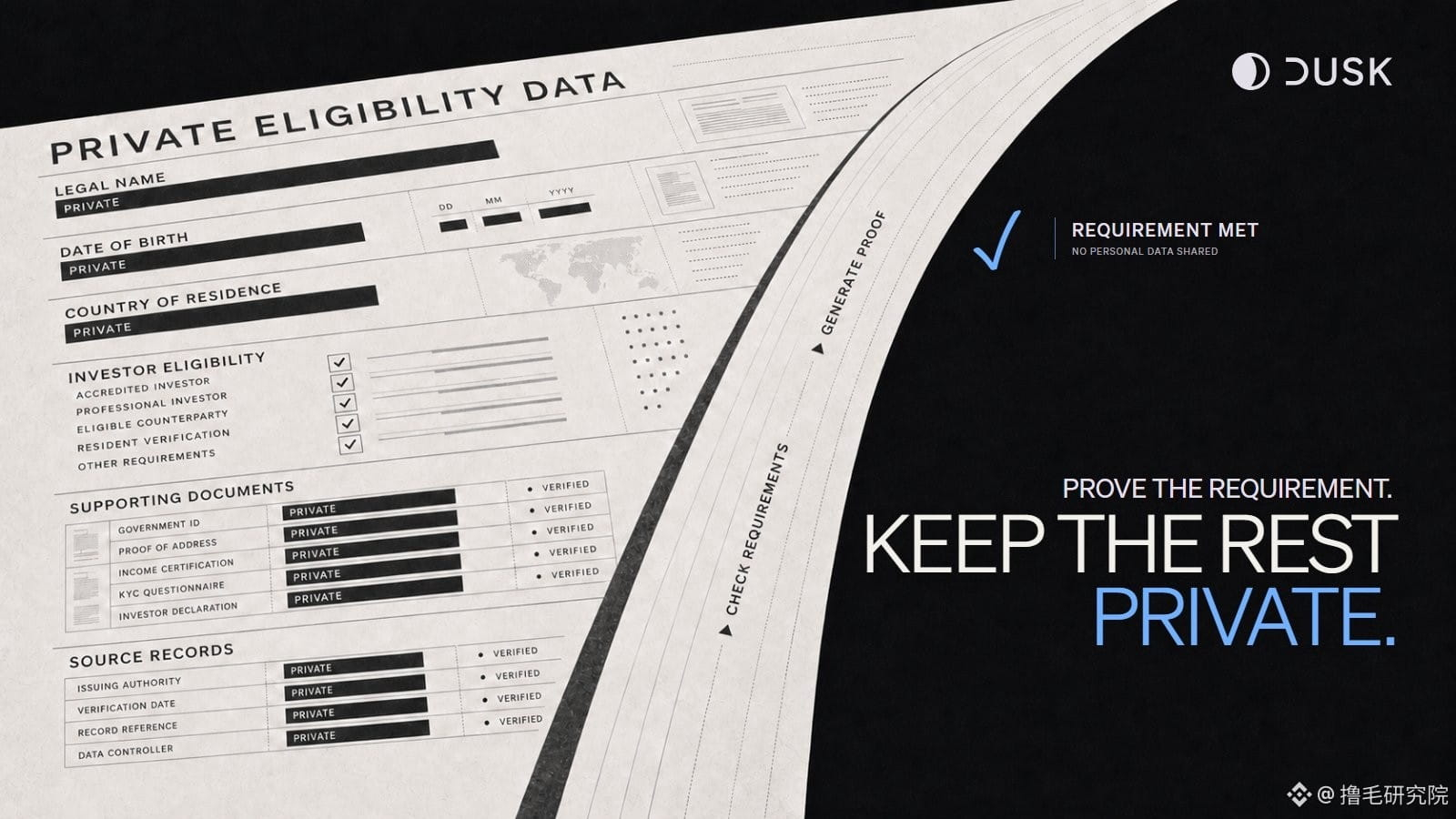
Dusk, together with the zero-trust custody approach Cordial is pushing, opens up that third path. It’s not third-party custody—it’s a self-custody wallet technology called Cordial Treasury. The institution deploys it itself and manages it itself; the private key always stays inside the institution’s own hardware wallet. When a licensed exchange like NPEX adopts this setup, regulators can use zero-knowledge proofs to verify whether the institution’s holdings are compliant. But once the verification is done, they walk away—they never touch the private key.
You don’t need to hand over the keys, and you don’t need to show your assets to everyone. You can prove you follow the rules without laying all your cards on the table. “Self-custody” and “compliance,” the two knots that have been tied together for ten years, are being untangled for the first time.
I used to think zero-knowledge proofs were still far from real-world applications—I always felt they were an academic thing. This time, Dusk has put it into a genuine custody scenario, running on a regulated platform. This isn’t a concept demo, and it’s not a testnet—this is something being used for real.
This changed my view of Dusk a bit. Previously, when I looked at its consensus, its architecture, and its economic model, I felt it was all technical. But this custody solution showed me how it’s addressing a specific, long-standing problem: how trust should be rebuilt on the blockchain in the first place.
Dusk’s answer is: trust isn’t something you achieve by giving up control—it’s something you establish through verifiability. You don’t need to hand over the keys for people to believe you.
#dusk $DUSK @Dusk Yesterday I saw a message: on the NPEX platform, a hosted solution based on Dusk has gone live. I kept scrolling, and the more I read, the more interesting it became. It’s different from every hosted solution on the market—assets are on-chain, the private key is still in your own hands, and regulators can even check compliance.
I hadn’t seen anything like this before.
If you’ve looked into custody, you know there are always only two paths. Either you hand your private key over to a third-party custodian to satisfy regulatory requirements, but in essence the assets are no longer truly yours. Or you manage the private key yourself—then security is there—but when regulators ask, you can’t prove you’re compliant. One way or the other, you have to choose; there’s no third option.
Dusk, together with the zero-trust custody approach Cordial is pushing, opens up that third path. It’s not third-party custody—it’s a self-custody wallet technology called Cordial Treasury. The institution deploys it itself and manages it itself; the private key always stays inside the institution’s own hardware wallet. When a licensed exchange like NPEX adopts this setup, regulators can use zero-knowledge proofs to verify whether the institution’s holdings are compliant. But once the verification is done, they walk away—they never touch the private key.
You don’t need to hand over the keys, and you don’t need to show your assets to everyone. You can prove you follow the rules without laying all your cards on the table. “Self-custody” and “compliance,” the two knots that have been tied together for ten years, are being untangled for the first time.
I used to think zero-knowledge proofs were still far from real-world applications—I always felt they were an academic thing. This time, Dusk has put it into a genuine custody scenario, running on a regulated platform. This isn’t a concept demo, and it’s not a testnet—this is something being used for real.
This changed my view of Dusk a bit. Previously, when I looked at its consensus, its architecture, and its economic model, I felt it was all technical. But this custody solution showed me how it’s addressing a specific, long-standing problem: how trust should be rebuilt on the blockchain in the first place.
Dusk’s answer is: trust isn’t something you achieve by giving up control—it’s something you establish through verifiability. You don’t need to hand over the keys for people to believe you.
I hadn’t seen anything like this before.
If you’ve looked into custody, you know there are always only two paths. Either you hand your private key over to a third-party custodian to satisfy regulatory requirements, but in essence the assets are no longer truly yours. Or you manage the private key yourself—then security is there—but when regulators ask, you can’t prove you’re compliant. One way or the other, you have to choose; there’s no third option.
Dusk, together with the zero-trust custody approach Cordial is pushing, opens up that third path. It’s not third-party custody—it’s a self-custody wallet technology called Cordial Treasury. The institution deploys it itself and manages it itself; the private key always stays inside the institution’s own hardware wallet. When a licensed exchange like NPEX adopts this setup, regulators can use zero-knowledge proofs to verify whether the institution’s holdings are compliant. But once the verification is done, they walk away—they never touch the private key.
You don’t need to hand over the keys, and you don’t need to show your assets to everyone. You can prove you follow the rules without laying all your cards on the table. “Self-custody” and “compliance,” the two knots that have been tied together for ten years, are being untangled for the first time.
I used to think zero-knowledge proofs were still far from real-world applications—I always felt they were an academic thing. This time, Dusk has put it into a genuine custody scenario, running on a regulated platform. This isn’t a concept demo, and it’s not a testnet—this is something being used for real.
This changed my view of Dusk a bit. Previously, when I looked at its consensus, its architecture, and its economic model, I felt it was all technical. But this custody solution showed me how it’s addressing a specific, long-standing problem: how trust should be rebuilt on the blockchain in the first place.
Dusk’s answer is: trust isn’t something you achieve by giving up control—it’s something you establish through verifiability. You don’t need to hand over the keys for people to believe you.
420
·
--
#termmax @termmax Last week, when I整理ed my positions, I happened to enable the TermMax markets on both BNB Chain and Arbitrum at the same time. For the same USDC asset, with the same 30-day term and the same protocol rules, the annualized interest rates differed by more than a whole percentage point. My first reaction was, “Am I seeing things?” I refreshed the trade panel three times, then pulled up the 127 trade records from the past 30 days and checked the slippage values one by one to confirm it wasn’t just cached data—the interest rates were genuinely different.
At the time, I thought, “That can’t be right. Same protocol, same product—how could the chain prices differ?” Then I started to suspect I might have missed something. I went through the official documentation and found that TermMax is currently live on eight chains—Ethereum, Arbitrum, BNB Chain, Base, Berachain, and others. Each chain has its own liquidity pool running independently, and the pricing module doesn’t sync data across chains. Market makers and lending/borrowing users on different chains form separate supply-and-demand dynamics, so naturally you end up with completely different interest-rate curves. Only then did I relax—this wasn’t a miscalculation on my part; the architecture itself is just like this.
But a new question came up: can you actually套利 this? I’ve been burned by “cross-chain protocol” pseudo-arbitrage before—the kind where it looks like there’s a favorable spread, but the moment you act, slippage eats it all. This time I deliberately verified the two chains’ liquidity pool contract addresses and confirmed they’re fully isolated pools, with no shared liquidity. So there’s no hidden mechanism where, “it’s one percentage point apart at first glance, but once you cross-chain, it gets ground down.”
On the same day, I moved 3,000 USDC over as a test. I didn’t go back and forth with a cross-chain bridge; I used LI.FI’s aggregator to send funds directly from BNB Chain to Arbitrum. After it arrived, I checked the balances: gas fees were deducted for only a few USDC, and the rest was deposited entirely into the higher-yield market. I didn’t use leverage, and I didn’t touch any contracts—just the most straightforward logic of “deposit on the lower-price chain, borrow on the higher-price chain.” After running one round and calculating the result, I ended up with an extra annualized return of nearly one percentage point. Not huge, but steady. There was no additional smart-contract risk—just profiting from a mismatch in supply and demand across the two chains.
Most people probably don’t notice this kind of pricing mismatch caused by independently running liquidity pools. It isn’t a loophole; it’s a direct reflection of the real supply-and-demand relationships on different chains.
#termmax @TermMax Last week, when I整理ed my positions, I happened to enable the TermMax markets on both BNB Chain and Arbitrum at the same time. For the same USDC asset, with the same 30-day term and the same protocol rules, the annualized interest rates differed by more than a whole percentage point. My first reaction was, “Am I seeing things?” I refreshed the trade panel three times, then pulled up the 127 trade records from the past 30 days and checked the slippage values one by one to confirm it wasn’t just cached data—the interest rates were genuinely different.
At the time, I thought, “That can’t be right. Same protocol, same product—how could the chain prices differ?” Then I started to suspect I might have missed something. I went through the official documentation and found that TermMax is currently live on eight chains—Ethereum, Arbitrum, BNB Chain, Base, Berachain, and others. Each chain has its own liquidity pool running independently, and the pricing module doesn’t sync data across chains. Market makers and lending/borrowing users on different chains form separate supply-and-demand dynamics, so naturally you end up with completely different interest-rate curves. Only then did I relax—this wasn’t a miscalculation on my part; the architecture itself is just like this.
But a new question came up: can you actually套利 this? I’ve been burned by “cross-chain protocol” pseudo-arbitrage before—the kind where it looks like there’s a favorable spread, but the moment you act, slippage eats it all. This time I deliberately verified the two chains’ liquidity pool contract addresses and confirmed they’re fully isolated pools, with no shared liquidity. So there’s no hidden mechanism where, “it’s one percentage point apart at first glance, but once you cross-chain, it gets ground down.”
On the same day, I moved 3,000 USDC over as a test. I didn’t go back and forth with a cross-chain bridge; I used LI.FI’s aggregator to send funds directly from BNB Chain to Arbitrum. After it arrived, I checked the balances: gas fees were deducted for only a few USDC, and the rest was deposited entirely into the higher-yield market. I didn’t use leverage, and I didn’t touch any contracts—just the most straightforward logic of “deposit on the lower-price chain, borrow on the higher-price chain.” After running one round and calculating the result, I ended up with an extra annualized return of nearly one percentage point. Not huge, but steady. There was no additional smart-contract risk—just profiting from a mismatch in supply and demand across the two chains.
Most people probably don’t notice this kind of pricing mismatch caused by independently running liquidity pools. It isn’t a loophole; it’s a direct reflection of the real supply-and-demand relationships on different chains.
At the time, I thought, “That can’t be right. Same protocol, same product—how could the chain prices differ?” Then I started to suspect I might have missed something. I went through the official documentation and found that TermMax is currently live on eight chains—Ethereum, Arbitrum, BNB Chain, Base, Berachain, and others. Each chain has its own liquidity pool running independently, and the pricing module doesn’t sync data across chains. Market makers and lending/borrowing users on different chains form separate supply-and-demand dynamics, so naturally you end up with completely different interest-rate curves. Only then did I relax—this wasn’t a miscalculation on my part; the architecture itself is just like this.
But a new question came up: can you actually套利 this? I’ve been burned by “cross-chain protocol” pseudo-arbitrage before—the kind where it looks like there’s a favorable spread, but the moment you act, slippage eats it all. This time I deliberately verified the two chains’ liquidity pool contract addresses and confirmed they’re fully isolated pools, with no shared liquidity. So there’s no hidden mechanism where, “it’s one percentage point apart at first glance, but once you cross-chain, it gets ground down.”
On the same day, I moved 3,000 USDC over as a test. I didn’t go back and forth with a cross-chain bridge; I used LI.FI’s aggregator to send funds directly from BNB Chain to Arbitrum. After it arrived, I checked the balances: gas fees were deducted for only a few USDC, and the rest was deposited entirely into the higher-yield market. I didn’t use leverage, and I didn’t touch any contracts—just the most straightforward logic of “deposit on the lower-price chain, borrow on the higher-price chain.” After running one round and calculating the result, I ended up with an extra annualized return of nearly one percentage point. Not huge, but steady. There was no additional smart-contract risk—just profiting from a mismatch in supply and demand across the two chains.
Most people probably don’t notice this kind of pricing mismatch caused by independently running liquidity pools. It isn’t a loophole; it’s a direct reflection of the real supply-and-demand relationships on different chains.
302
·
--
#dusk $DUSK @Dusk_Foundation I was up in the middle of the night unable to sleep, flipping through the whitepaper, and I ended up on the validator KYC page. I was dumbfounded. Not because the content was shocking, but because a question suddenly hit me—would I dare to put my money on a completely anonymous chain? After thinking for ten seconds, the answer was no. And then I realized that those institutions managing hundreds of billions probably feel the same way I do.
A scene flashed through my mind: if I really deposited some money on an anonymous chain and the pool got drained the next day, I’d be yelling at that wallet address, “Give me my money back.” If the other side could even reply, “I’m anonymous,” I’d count that as them being somewhat polite. And then what? Nothing. With a traditional bank, if your money goes missing, you can call, go to the counter and bang the table, or sue them. On-chain, all you can do is stare at the blockchain explorer and wait for that address to do something. Dusk requiring validators to register under their real names looks like a step backward from decentralization, but if you think from the perspective of an institution, what they really want isn’t anonymous freedom—it’s being able to find a real person when something goes wrong.
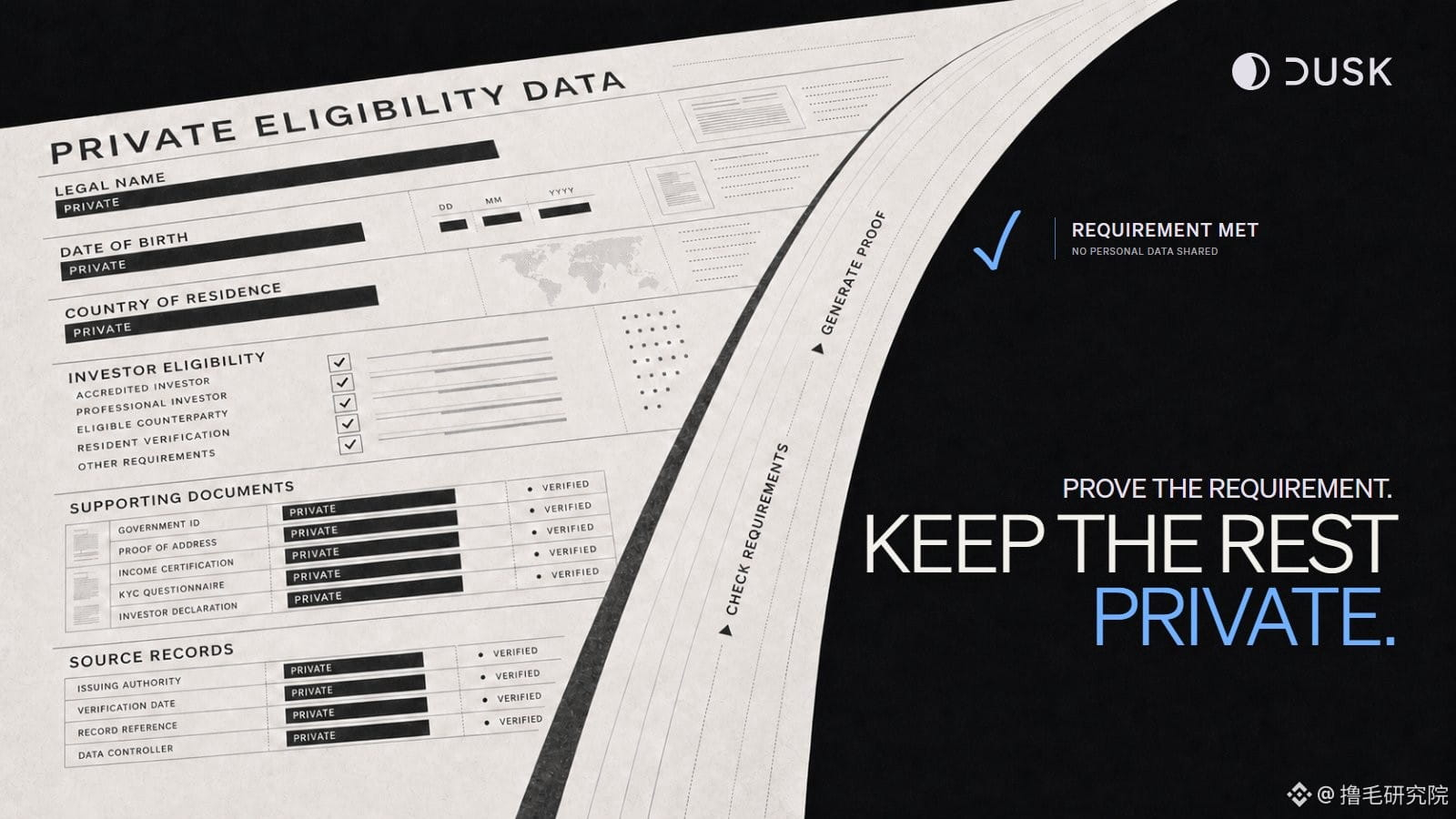
Later I figured it out: Dusk doesn’t want pure anonymity or full transparency; it wants something in between—you can prove who you are, but you don’t have to paste your ID on your face. The Citadel identity system, combined with zero-knowledge proofs, does exactly that. It’s a bit like entering an upscale private club: the security guard at the door knows who you are, but inside the guests don’t need to reveal their finances to one another. Paired with the regulatory framework of MiCA and MiFID II, this solution is a lot more complex than I first thought, and also a lot more practical.
The mainnet officially launched on January 7, 2026, and the six-year development cycle finally paid off. DuskEVM went live at the same time, Solidity developers can build on it directly, and core components like the DEX and cross-chain bridge were upgraded too. The network requires more than one-third of stakers to behave properly, and those who act maliciously or stay offline for too long get their stake slashed directly. Block time is 10 seconds, which is fast enough for tokenized assets.
When I used to read whitepapers, I would skim right past sections like validator mechanisms and think they had nothing to do with me. I read this Dusk page over and over not because it was brilliantly written, but because it made me understand one thing: judging whether a project is good isn’t about how loudly it shouts its slogans—it’s about whether it’s willing to solve the things users are afraid of, ahead of time.
#dusk $DUSK @Dusk I was up in the middle of the night unable to sleep, flipping through the whitepaper, and I ended up on the validator KYC page. I was dumbfounded. Not because the content was shocking, but because a question suddenly hit me—would I dare to put my money on a completely anonymous chain? After thinking for ten seconds, the answer was no. And then I realized that those institutions managing hundreds of billions probably feel the same way I do.
A scene flashed through my mind: if I really deposited some money on an anonymous chain and the pool got drained the next day, I’d be yelling at that wallet address, “Give me my money back.” If the other side could even reply, “I’m anonymous,” I’d count that as them being somewhat polite. And then what? Nothing. With a traditional bank, if your money goes missing, you can call, go to the counter and bang the table, or sue them. On-chain, all you can do is stare at the blockchain explorer and wait for that address to do something. Dusk requiring validators to register under their real names looks like a step backward from decentralization, but if you think from the perspective of an institution, what they really want isn’t anonymous freedom—it’s being able to find a real person when something goes wrong.
Later I figured it out: Dusk doesn’t want pure anonymity or full transparency; it wants something in between—you can prove who you are, but you don’t have to paste your ID on your face. The Citadel identity system, combined with zero-knowledge proofs, does exactly that. It’s a bit like entering an upscale private club: the security guard at the door knows who you are, but inside the guests don’t need to reveal their finances to one another. Paired with the regulatory framework of MiCA and MiFID II, this solution is a lot more complex than I first thought, and also a lot more practical.
The mainnet officially launched on January 7, 2026, and the six-year development cycle finally paid off. DuskEVM went live at the same time, Solidity developers can build on it directly, and core components like the DEX and cross-chain bridge were upgraded too. The network requires more than one-third of stakers to behave properly, and those who act maliciously or stay offline for too long get their stake slashed directly. Block time is 10 seconds, which is fast enough for tokenized assets.
When I used to read whitepapers, I would skim right past sections like validator mechanisms and think they had nothing to do with me. I read this Dusk page over and over not because it was brilliantly written, but because it made me understand one thing: judging whether a project is good isn’t about how loudly it shouts its slogans—it’s about whether it’s willing to solve the things users are afraid of, ahead of time.
A scene flashed through my mind: if I really deposited some money on an anonymous chain and the pool got drained the next day, I’d be yelling at that wallet address, “Give me my money back.” If the other side could even reply, “I’m anonymous,” I’d count that as them being somewhat polite. And then what? Nothing. With a traditional bank, if your money goes missing, you can call, go to the counter and bang the table, or sue them. On-chain, all you can do is stare at the blockchain explorer and wait for that address to do something. Dusk requiring validators to register under their real names looks like a step backward from decentralization, but if you think from the perspective of an institution, what they really want isn’t anonymous freedom—it’s being able to find a real person when something goes wrong.
Later I figured it out: Dusk doesn’t want pure anonymity or full transparency; it wants something in between—you can prove who you are, but you don’t have to paste your ID on your face. The Citadel identity system, combined with zero-knowledge proofs, does exactly that. It’s a bit like entering an upscale private club: the security guard at the door knows who you are, but inside the guests don’t need to reveal their finances to one another. Paired with the regulatory framework of MiCA and MiFID II, this solution is a lot more complex than I first thought, and also a lot more practical.
The mainnet officially launched on January 7, 2026, and the six-year development cycle finally paid off. DuskEVM went live at the same time, Solidity developers can build on it directly, and core components like the DEX and cross-chain bridge were upgraded too. The network requires more than one-third of stakers to behave properly, and those who act maliciously or stay offline for too long get their stake slashed directly. Block time is 10 seconds, which is fast enough for tokenized assets.
When I used to read whitepapers, I would skim right past sections like validator mechanisms and think they had nothing to do with me. I read this Dusk page over and over not because it was brilliantly written, but because it made me understand one thing: judging whether a project is good isn’t about how loudly it shouts its slogans—it’s about whether it’s willing to solve the things users are afraid of, ahead of time.
1
186
·
--
#termmax @termmax Whitepaper Section 6 has a detail: when comparing fixed-rate order matching versus floating-rate AMMs, it tries to prove it’s “more stable.” But a closer look shows that the safety of single-term pool settlement is tightly bound to liquidation efficiency.
We can see that the LTV reaching the threshold is automatically triggered by Chainlink, with a 2-hour open window. Any liquidator who participates can earn a 5% reward. After partial liquidation, any remaining collateral is returned to the borrower; only when the 2-hour window is not fully liquidated does it trigger physical settlement—FT holders receive collateral proportionally. The problem is the 2 hours: in extreme market conditions, the price could break through another layer. If liquidators stand by, bad debt will ultimately be paid for by all pool users. The whitepaper mentions “physical delivery” as a backstop, but in essence it uses lenders’ yield to obtain collateral—so it’s not lossless.
It’s like a discount window for near-expiry produce in a grocery store: it’s fine in normal times, but in a crash it’s either not enough or it wastes inventory. TermMax is exactly stepping into this dilemma: if the window is too short, liquidation isn’t sufficient; if it’s too long, bad debt accumulates. There’s no perfect solution.
The whitepaper says permissions are limited to parameters such as the interest rate curve and fee rate, while liquidation is determined by oracles and executors. But parameters are interests. Liquidation penalties are 10%—5% goes to liquidators and 5% to the protocol’s treasury vault. The vault’s use is decided by TMX governance, and that’s the real thing to watch. Fortunately, the protocol has checks and balances: changing key parameters requires a time-lock delay (at least 1 day, at most 30 days), during which guardians can review and revoke. However, when the power (stakes) is concentrated, the governance direction may still tilt toward large holders—checks and balances can only delay, not reverse.
If you ask me, my take is: don’t be fooled by the mathematical formula of “fixed interest rates.” Every parameter setting is a distribution of benefits. When stakes are dispersed, the mechanism can be close to risk-free; when stakes are concentrated, it’s a gilded, implicit pool of capital.
DYOR—watch who sets the parameters and how they’re adjusted. Is the liquidation window designed to give users more stability, or to leave room for big players? See you in the comments.
#termmax @TermMax Whitepaper Section 6 has a detail: when comparing fixed-rate order matching versus floating-rate AMMs, it tries to prove it’s “more stable.” But a closer look shows that the safety of single-term pool settlement is tightly bound to liquidation efficiency.
We can see that the LTV reaching the threshold is automatically triggered by Chainlink, with a 2-hour open window. Any liquidator who participates can earn a 5% reward. After partial liquidation, any remaining collateral is returned to the borrower; only when the 2-hour window is not fully liquidated does it trigger physical settlement—FT holders receive collateral proportionally. The problem is the 2 hours: in extreme market conditions, the price could break through another layer. If liquidators stand by, bad debt will ultimately be paid for by all pool users. The whitepaper mentions “physical delivery” as a backstop, but in essence it uses lenders’ yield to obtain collateral—so it’s not lossless.
It’s like a discount window for near-expiry produce in a grocery store: it’s fine in normal times, but in a crash it’s either not enough or it wastes inventory. TermMax is exactly stepping into this dilemma: if the window is too short, liquidation isn’t sufficient; if it’s too long, bad debt accumulates. There’s no perfect solution.
The whitepaper says permissions are limited to parameters such as the interest rate curve and fee rate, while liquidation is determined by oracles and executors. But parameters are interests. Liquidation penalties are 10%—5% goes to liquidators and 5% to the protocol’s treasury vault. The vault’s use is decided by TMX governance, and that’s the real thing to watch. Fortunately, the protocol has checks and balances: changing key parameters requires a time-lock delay (at least 1 day, at most 30 days), during which guardians can review and revoke. However, when the power (stakes) is concentrated, the governance direction may still tilt toward large holders—checks and balances can only delay, not reverse.
If you ask me, my take is: don’t be fooled by the mathematical formula of “fixed interest rates.” Every parameter setting is a distribution of benefits. When stakes are dispersed, the mechanism can be close to risk-free; when stakes are concentrated, it’s a gilded, implicit pool of capital.
DYOR—watch who sets the parameters and how they’re adjusted. Is the liquidation window designed to give users more stability, or to leave room for big players? See you in the comments.
We can see that the LTV reaching the threshold is automatically triggered by Chainlink, with a 2-hour open window. Any liquidator who participates can earn a 5% reward. After partial liquidation, any remaining collateral is returned to the borrower; only when the 2-hour window is not fully liquidated does it trigger physical settlement—FT holders receive collateral proportionally. The problem is the 2 hours: in extreme market conditions, the price could break through another layer. If liquidators stand by, bad debt will ultimately be paid for by all pool users. The whitepaper mentions “physical delivery” as a backstop, but in essence it uses lenders’ yield to obtain collateral—so it’s not lossless.
It’s like a discount window for near-expiry produce in a grocery store: it’s fine in normal times, but in a crash it’s either not enough or it wastes inventory. TermMax is exactly stepping into this dilemma: if the window is too short, liquidation isn’t sufficient; if it’s too long, bad debt accumulates. There’s no perfect solution.
The whitepaper says permissions are limited to parameters such as the interest rate curve and fee rate, while liquidation is determined by oracles and executors. But parameters are interests. Liquidation penalties are 10%—5% goes to liquidators and 5% to the protocol’s treasury vault. The vault’s use is decided by TMX governance, and that’s the real thing to watch. Fortunately, the protocol has checks and balances: changing key parameters requires a time-lock delay (at least 1 day, at most 30 days), during which guardians can review and revoke. However, when the power (stakes) is concentrated, the governance direction may still tilt toward large holders—checks and balances can only delay, not reverse.
If you ask me, my take is: don’t be fooled by the mathematical formula of “fixed interest rates.” Every parameter setting is a distribution of benefits. When stakes are dispersed, the mechanism can be close to risk-free; when stakes are concentrated, it’s a gilded, implicit pool of capital.
DYOR—watch who sets the parameters and how they’re adjusted. Is the liquidation window designed to give users more stability, or to leave room for big players? See you in the comments.
1.1k
·
--
#dusk $DUSK This week I re-read the materials for @Dusk_Foundation from scratch. I originally planned to first look at its privacy narrative, but the thing I ended up spending the most time on was actually the disclosure boundaries. In the past, I always thought the core of a privacy protocol is “to keep it hidden.” As long as the encryption, anonymity, proofs, and related pieces are strong enough, the system can work. But when you look into it more deeply, the more realistic issue isn’t whether you can hide information—it’s under what conditions you must have it seen.
Dusk puts privacy and compliance together, and at its core it’s aiming for controllable disclosure. The benefits are obvious: institutions don’t have to give up on on-chain efficiency just to meet compliance, and developers don’t have to cram all logic into some heavy, monolithic structure. But the trade-off is also starting to show: which information can be retained, which must be exposed, exposed to whom, and exposed at what granularity—these can’t be resolved by the phrase “privacy technology” alone. What’s truly hard isn’t encryption; it’s who holds the power over disclosure.
This “silent point” is actually very similar to the most common scripts in the crypto world. Many projects like to talk about “privacy protection,” but once it’s put into practice, the first problem that tends to appear is rarely technical. It’s a control problem. Whoever decides when to unlock information gains a new authority to interpret it; whoever controls the exceptions may end up becoming the new focal point. On the surface, it sounds compliance-friendly, but if you look deeper, it could pull “decentralized privacy” back into an approval-style structure.
I don’t deny that this design has value. In the cold-start phase, someone has to write the rule draft first—kind of like how when a house is newly delivered, you still need to set up the door access control and visitor permissions right away. But in the crypto space, too many projects sell “controllable disclosure” as the universal answer, and in the end they only add another layer of complex authorization. What’s most worth watching with Dusk now isn’t whether it can make privacy sound good; it’s whether it will turn the power of disclosure into a new center.
A technical architecture can be audited, but the power allocation behind the disclosure boundaries is harder to audit. DYOR: privacy can be encrypted, but boundaries won’t just disappear on their own. Do you think controllable disclosure will eventually become a new centralized entry point?
#dusk $DUSK This week I re-read the materials for @Dusk from scratch. I originally planned to first look at its privacy narrative, but the thing I ended up spending the most time on was actually the disclosure boundaries. In the past, I always thought the core of a privacy protocol is “to keep it hidden.” As long as the encryption, anonymity, proofs, and related pieces are strong enough, the system can work. But when you look into it more deeply, the more realistic issue isn’t whether you can hide information—it’s under what conditions you must have it seen.
Dusk puts privacy and compliance together, and at its core it’s aiming for controllable disclosure. The benefits are obvious: institutions don’t have to give up on on-chain efficiency just to meet compliance, and developers don’t have to cram all logic into some heavy, monolithic structure. But the trade-off is also starting to show: which information can be retained, which must be exposed, exposed to whom, and exposed at what granularity—these can’t be resolved by the phrase “privacy technology” alone. What’s truly hard isn’t encryption; it’s who holds the power over disclosure.
This “silent point” is actually very similar to the most common scripts in the crypto world. Many projects like to talk about “privacy protection,” but once it’s put into practice, the first problem that tends to appear is rarely technical. It’s a control problem. Whoever decides when to unlock information gains a new authority to interpret it; whoever controls the exceptions may end up becoming the new focal point. On the surface, it sounds compliance-friendly, but if you look deeper, it could pull “decentralized privacy” back into an approval-style structure.
I don’t deny that this design has value. In the cold-start phase, someone has to write the rule draft first—kind of like how when a house is newly delivered, you still need to set up the door access control and visitor permissions right away. But in the crypto space, too many projects sell “controllable disclosure” as the universal answer, and in the end they only add another layer of complex authorization. What’s most worth watching with Dusk now isn’t whether it can make privacy sound good; it’s whether it will turn the power of disclosure into a new center.
A technical architecture can be audited, but the power allocation behind the disclosure boundaries is harder to audit. DYOR: privacy can be encrypted, but boundaries won’t just disappear on their own. Do you think controllable disclosure will eventually become a new centralized entry point?
Dusk puts privacy and compliance together, and at its core it’s aiming for controllable disclosure. The benefits are obvious: institutions don’t have to give up on on-chain efficiency just to meet compliance, and developers don’t have to cram all logic into some heavy, monolithic structure. But the trade-off is also starting to show: which information can be retained, which must be exposed, exposed to whom, and exposed at what granularity—these can’t be resolved by the phrase “privacy technology” alone. What’s truly hard isn’t encryption; it’s who holds the power over disclosure.
This “silent point” is actually very similar to the most common scripts in the crypto world. Many projects like to talk about “privacy protection,” but once it’s put into practice, the first problem that tends to appear is rarely technical. It’s a control problem. Whoever decides when to unlock information gains a new authority to interpret it; whoever controls the exceptions may end up becoming the new focal point. On the surface, it sounds compliance-friendly, but if you look deeper, it could pull “decentralized privacy” back into an approval-style structure.
I don’t deny that this design has value. In the cold-start phase, someone has to write the rule draft first—kind of like how when a house is newly delivered, you still need to set up the door access control and visitor permissions right away. But in the crypto space, too many projects sell “controllable disclosure” as the universal answer, and in the end they only add another layer of complex authorization. What’s most worth watching with Dusk now isn’t whether it can make privacy sound good; it’s whether it will turn the power of disclosure into a new center.
A technical architecture can be audited, but the power allocation behind the disclosure boundaries is harder to audit. DYOR: privacy can be encrypted, but boundaries won’t just disappear on their own. Do you think controllable disclosure will eventually become a new centralized entry point?
1
1
147
·
--
#dusk $DUSK @Dusk_Foundation Over these years, whenever I’ve seen problems with on-chain protocols, I’ve developed a habit: I don’t first focus on whether hackers can brute-force their way in. Instead, I look at the core components that govern network consensus security—what exact mechanism keeps validators tightly constrained. I’ve seen too many nodes do evil. The root isn’t that the algorithm was broken; it’s that the consensus design, from the very beginning, implicitly assumes that “validators will behave.” If that assumption fails even once, the slashing/penalty mechanism becomes meaningless.
When I recently dissected Dusk’s SA consensus and slashing design, it’s this layer that made me stop and think. @Dusk
Dusk’s Succinct Attestation (SA) consensus uses a committee-based PoS model. Block proposers and voting committees are selected using a deterministic randomness/selection algorithm. It separates malicious behavior from negligent behavior, mapping them to two sets of mechanisms: Hard Slashing and Soft Slashing. Soft Slashing targets non-malicious oversights such as failing to produce blocks. On the first offense, there’s a warning; after that, each consecutive violation deducts N × 10% of staked value and removes N epochs from consensus participation. However, the slashed DUSK is not destroyed—it’s only removed from active stake, and the node can still withdraw it.
Hard Slashing, on the other hand, targets clearly malicious actions: generating invalid blocks results in a 10% stake slash and destruction; double voting or double block production results in a 20% slash and destruction. This design gives Dusk accountability—validators can be held responsible—but once a validator turns malicious, the cost is extremely high.
I also won’t put it on a pedestal. No matter how elegant the architecture is, if validators choose to centrally outsource node operations to reduce maintenance costs, or if the long-term online rate falls below 95% and triggers cumulative Soft Slashing deductions, the security boundary carefully constructed by the protocol will face a real test. And if, in the future, people consolidate validator nodes into only a few entities for convenience, then so-called “decentralization” is left only as psychological comfort.
In my view, the ultimate value of $DUSK depends on how many validators are actually willing to sacrifice convenience for security. As more compliant assets get put on-chain, what I care about won’t be how high the returns are—it will be who can prove that, even in the face of massive financial incentives, the mechanism that makes wrongdoing cost real money still can be enforced strictly.
#dusk $DUSK @Dusk Over these years, whenever I’ve seen problems with on-chain protocols, I’ve developed a habit: I don’t first focus on whether hackers can brute-force their way in. Instead, I look at the core components that govern network consensus security—what exact mechanism keeps validators tightly constrained. I’ve seen too many nodes do evil. The root isn’t that the algorithm was broken; it’s that the consensus design, from the very beginning, implicitly assumes that “validators will behave.” If that assumption fails even once, the slashing/penalty mechanism becomes meaningless.
When I recently dissected Dusk’s SA consensus and slashing design, it’s this layer that made me stop and think. @Dusk
Dusk’s Succinct Attestation (SA) consensus uses a committee-based PoS model. Block proposers and voting committees are selected using a deterministic randomness/selection algorithm. It separates malicious behavior from negligent behavior, mapping them to two sets of mechanisms: Hard Slashing and Soft Slashing. Soft Slashing targets non-malicious oversights such as failing to produce blocks. On the first offense, there’s a warning; after that, each consecutive violation deducts N × 10% of staked value and removes N epochs from consensus participation. However, the slashed DUSK is not destroyed—it’s only removed from active stake, and the node can still withdraw it.
Hard Slashing, on the other hand, targets clearly malicious actions: generating invalid blocks results in a 10% stake slash and destruction; double voting or double block production results in a 20% slash and destruction. This design gives Dusk accountability—validators can be held responsible—but once a validator turns malicious, the cost is extremely high.
I also won’t put it on a pedestal. No matter how elegant the architecture is, if validators choose to centrally outsource node operations to reduce maintenance costs, or if the long-term online rate falls below 95% and triggers cumulative Soft Slashing deductions, the security boundary carefully constructed by the protocol will face a real test. And if, in the future, people consolidate validator nodes into only a few entities for convenience, then so-called “decentralization” is left only as psychological comfort.
In my view, the ultimate value of $DUSK depends on how many validators are actually willing to sacrifice convenience for security. As more compliant assets get put on-chain, what I care about won’t be how high the returns are—it will be who can prove that, even in the face of massive financial incentives, the mechanism that makes wrongdoing cost real money still can be enforced strictly.
When I recently dissected Dusk’s SA consensus and slashing design, it’s this layer that made me stop and think. @Dusk
Dusk’s Succinct Attestation (SA) consensus uses a committee-based PoS model. Block proposers and voting committees are selected using a deterministic randomness/selection algorithm. It separates malicious behavior from negligent behavior, mapping them to two sets of mechanisms: Hard Slashing and Soft Slashing. Soft Slashing targets non-malicious oversights such as failing to produce blocks. On the first offense, there’s a warning; after that, each consecutive violation deducts N × 10% of staked value and removes N epochs from consensus participation. However, the slashed DUSK is not destroyed—it’s only removed from active stake, and the node can still withdraw it.
Hard Slashing, on the other hand, targets clearly malicious actions: generating invalid blocks results in a 10% stake slash and destruction; double voting or double block production results in a 20% slash and destruction. This design gives Dusk accountability—validators can be held responsible—but once a validator turns malicious, the cost is extremely high.
I also won’t put it on a pedestal. No matter how elegant the architecture is, if validators choose to centrally outsource node operations to reduce maintenance costs, or if the long-term online rate falls below 95% and triggers cumulative Soft Slashing deductions, the security boundary carefully constructed by the protocol will face a real test. And if, in the future, people consolidate validator nodes into only a few entities for convenience, then so-called “decentralization” is left only as psychological comfort.
In my view, the ultimate value of $DUSK depends on how many validators are actually willing to sacrifice convenience for security. As more compliant assets get put on-chain, what I care about won’t be how high the returns are—it will be who can prove that, even in the face of massive financial incentives, the mechanism that makes wrongdoing cost real money still can be enforced strictly.
133
·
--
#termmax @termmax Translate the on-chain interaction logs of TermMax Mainnet V2—what made me stop first wasn’t the TVL growth numbers crossing a billion, but the fact that it splits “fund aggregation” and “accruing interest upon maturity” into two completely separate permission domains.
Assets deposited in first land in a public Deposit Pool: a transit account that only supports deposits and withdrawals and cannot directly generate interest-accruing positions. If you want to participate in fixed-income strategies, you must manually transfer a specified amount into the Term Segment shard corresponding to a particular maturity date. This step automatically triggers on-chain timelock validation, with no backdoors to bypass it. The funds remain in an isolated static pool throughout, while interest-accrual permissions are opened via a separately isolated execution gate.
I’ve seen this permission logic in broker fixed-income custody systems quite often. When I previously helped friends with outsourcing a wealth-management system, we revised the “fund isolation” part three times just on that alone. For institutions managing large sums, fund transfers and product interest-settlement clearing have never shared the same key material. But in most on-chain lending protocols, the default wallet address is treated as having full operational permissions. Last month, in a group chat, a brother’s private key leaked and half his USDC position was transferred out into a short position—there wasn’t even a place to file an appeal. The TBAC time-based access control described in TermMax documentation follows exactly this isolation approach, and it’s completely different from Aave’s global unified permission model. Even governance multisigs haven’t been given the permission to modify Term Segment maturity parameters, so each step only has the minimum permissions it should have.
Following that thread into its fixed-maturity primitive architecture, the logic is entirely self-consistent. At the product-combination layer, the open interfaces expand integrations with various structured-yield tools for玩法 extensions. At the settlement layer, execution is fully anchored to the Term Auction Dutch-auction module. Professional capital shouldn’t have to sacrifice asset isolation for stable yield, and every maturity state can still be verified by all nodes.
I think what TermMax is truly solving for large funds is never “missing annualized yield,” but rather a set of time-bound boundary rules that can be trusted completely.
Of course, under extreme market conditions, when large positions mature in sync, whether the system can withstand the pressure of concentrated settlement still needs to be observed. But this design approach makes me feel that for on-chain fixed income to handle larger capital volumes, it’s never just about chasing yield rates.
#termmax @TermMax Translate the on-chain interaction logs of TermMax Mainnet V2—what made me stop first wasn’t the TVL growth numbers crossing a billion, but the fact that it splits “fund aggregation” and “accruing interest upon maturity” into two completely separate permission domains.
Assets deposited in first land in a public Deposit Pool: a transit account that only supports deposits and withdrawals and cannot directly generate interest-accruing positions. If you want to participate in fixed-income strategies, you must manually transfer a specified amount into the Term Segment shard corresponding to a particular maturity date. This step automatically triggers on-chain timelock validation, with no backdoors to bypass it. The funds remain in an isolated static pool throughout, while interest-accrual permissions are opened via a separately isolated execution gate.
I’ve seen this permission logic in broker fixed-income custody systems quite often. When I previously helped friends with outsourcing a wealth-management system, we revised the “fund isolation” part three times just on that alone. For institutions managing large sums, fund transfers and product interest-settlement clearing have never shared the same key material. But in most on-chain lending protocols, the default wallet address is treated as having full operational permissions. Last month, in a group chat, a brother’s private key leaked and half his USDC position was transferred out into a short position—there wasn’t even a place to file an appeal. The TBAC time-based access control described in TermMax documentation follows exactly this isolation approach, and it’s completely different from Aave’s global unified permission model. Even governance multisigs haven’t been given the permission to modify Term Segment maturity parameters, so each step only has the minimum permissions it should have.
Following that thread into its fixed-maturity primitive architecture, the logic is entirely self-consistent. At the product-combination layer, the open interfaces expand integrations with various structured-yield tools for玩法 extensions. At the settlement layer, execution is fully anchored to the Term Auction Dutch-auction module. Professional capital shouldn’t have to sacrifice asset isolation for stable yield, and every maturity state can still be verified by all nodes.
I think what TermMax is truly solving for large funds is never “missing annualized yield,” but rather a set of time-bound boundary rules that can be trusted completely.
Of course, under extreme market conditions, when large positions mature in sync, whether the system can withstand the pressure of concentrated settlement still needs to be observed. But this design approach makes me feel that for on-chain fixed income to handle larger capital volumes, it’s never just about chasing yield rates.
Assets deposited in first land in a public Deposit Pool: a transit account that only supports deposits and withdrawals and cannot directly generate interest-accruing positions. If you want to participate in fixed-income strategies, you must manually transfer a specified amount into the Term Segment shard corresponding to a particular maturity date. This step automatically triggers on-chain timelock validation, with no backdoors to bypass it. The funds remain in an isolated static pool throughout, while interest-accrual permissions are opened via a separately isolated execution gate.
I’ve seen this permission logic in broker fixed-income custody systems quite often. When I previously helped friends with outsourcing a wealth-management system, we revised the “fund isolation” part three times just on that alone. For institutions managing large sums, fund transfers and product interest-settlement clearing have never shared the same key material. But in most on-chain lending protocols, the default wallet address is treated as having full operational permissions. Last month, in a group chat, a brother’s private key leaked and half his USDC position was transferred out into a short position—there wasn’t even a place to file an appeal. The TBAC time-based access control described in TermMax documentation follows exactly this isolation approach, and it’s completely different from Aave’s global unified permission model. Even governance multisigs haven’t been given the permission to modify Term Segment maturity parameters, so each step only has the minimum permissions it should have.
Following that thread into its fixed-maturity primitive architecture, the logic is entirely self-consistent. At the product-combination layer, the open interfaces expand integrations with various structured-yield tools for玩法 extensions. At the settlement layer, execution is fully anchored to the Term Auction Dutch-auction module. Professional capital shouldn’t have to sacrifice asset isolation for stable yield, and every maturity state can still be verified by all nodes.
I think what TermMax is truly solving for large funds is never “missing annualized yield,” but rather a set of time-bound boundary rules that can be trusted completely.
Of course, under extreme market conditions, when large positions mature in sync, whether the system can withstand the pressure of concentrated settlement still needs to be observed. But this design approach makes me feel that for on-chain fixed income to handle larger capital volumes, it’s never just about chasing yield rates.
122
·
--
Partly True
#termmax @termmax 翻完TermMax V2的技术文档,最戳我的其实是昨晚蹲在沙发上啃文档,半杯冰可乐洒在键盘上,擦屏幕的时候才扫到的那句很容易被划走的说明:TermMax本身不是一个借贷产品,只是个固定到期资产原语,真正的收益产品、结构化工具是外面接的那些。
我当时擦着可乐印盯着屏幕愣了半分钟,顺着往下读才明白,一笔固定期限的借贷合约一创建,到期时间、清算阈值、结算币种三样就直接锁死在链上,不是先存进去再动态调参数。等于说这个合约从生下来就知道自己哪天到期、怎么清算、用什么结算,跟以前Aave、Compound这类永续借贷“先存进去再说,利率随时变、清算线随时调”的路数完全不一样,去年我在Aave上存ETH半夜被插针清算走半仓的阴影瞬间就上来了,用户根本不用担心中途突然被插针清算或者利率暴跌。
行业数据说现在DeFi里90%以上的借贷都是浮动利率的永续模式,固定收益类占比不到10%,看完这套设计我大概能懂为什么之前固定收益一直做不起来——不是用户不需要,是底层原语就没做对。
拿它最近上线的阶梯收益结构化产品顺一遍就更好懂:USDC存进TermMax这边的90天固定期合约,状态在外部结构化协议那头变成分层收益凭证,优先级拿固定利息,劣后吃超额收益。到期自动本息结算,不用用户手动赎回;要是底层抵押品跌破清算线,合约会自动触发荷兰拍卖清算,全程不用治理投票,也不用人工干预。这套清算能做到这么顺滑,底子是它原生的时间锁+链上拍卖模块,把清算逻辑直接写进合约底层,比传统借贷靠第三方清算人抢跑的模式稳太多,Gas成本低60%以上,跟活期借贷那套实时喂价、实时清算的逻辑完全是两条路,别搞混了。
产品交给别人接”这个设计思路,才是它能不停长出新玩法、不用每次都重新造轮子的根本原因。
#termmax @TermMax 翻完TermMax V2的技术文档,最戳我的其实是昨晚蹲在沙发上啃文档,半杯冰可乐洒在键盘上,擦屏幕的时候才扫到的那句很容易被划走的说明:TermMax本身不是一个借贷产品,只是个固定到期资产原语,真正的收益产品、结构化工具是外面接的那些。
我当时擦着可乐印盯着屏幕愣了半分钟,顺着往下读才明白,一笔固定期限的借贷合约一创建,到期时间、清算阈值、结算币种三样就直接锁死在链上,不是先存进去再动态调参数。等于说这个合约从生下来就知道自己哪天到期、怎么清算、用什么结算,跟以前Aave、Compound这类永续借贷“先存进去再说,利率随时变、清算线随时调”的路数完全不一样,去年我在Aave上存ETH半夜被插针清算走半仓的阴影瞬间就上来了,用户根本不用担心中途突然被插针清算或者利率暴跌。
行业数据说现在DeFi里90%以上的借贷都是浮动利率的永续模式,固定收益类占比不到10%,看完这套设计我大概能懂为什么之前固定收益一直做不起来——不是用户不需要,是底层原语就没做对。
拿它最近上线的阶梯收益结构化产品顺一遍就更好懂:USDC存进TermMax这边的90天固定期合约,状态在外部结构化协议那头变成分层收益凭证,优先级拿固定利息,劣后吃超额收益。到期自动本息结算,不用用户手动赎回;要是底层抵押品跌破清算线,合约会自动触发荷兰拍卖清算,全程不用治理投票,也不用人工干预。这套清算能做到这么顺滑,底子是它原生的时间锁+链上拍卖模块,把清算逻辑直接写进合约底层,比传统借贷靠第三方清算人抢跑的模式稳太多,Gas成本低60%以上,跟活期借贷那套实时喂价、实时清算的逻辑完全是两条路,别搞混了。
产品交给别人接”这个设计思路,才是它能不停长出新玩法、不用每次都重新造轮子的根本原因。
我当时擦着可乐印盯着屏幕愣了半分钟,顺着往下读才明白,一笔固定期限的借贷合约一创建,到期时间、清算阈值、结算币种三样就直接锁死在链上,不是先存进去再动态调参数。等于说这个合约从生下来就知道自己哪天到期、怎么清算、用什么结算,跟以前Aave、Compound这类永续借贷“先存进去再说,利率随时变、清算线随时调”的路数完全不一样,去年我在Aave上存ETH半夜被插针清算走半仓的阴影瞬间就上来了,用户根本不用担心中途突然被插针清算或者利率暴跌。
行业数据说现在DeFi里90%以上的借贷都是浮动利率的永续模式,固定收益类占比不到10%,看完这套设计我大概能懂为什么之前固定收益一直做不起来——不是用户不需要,是底层原语就没做对。
拿它最近上线的阶梯收益结构化产品顺一遍就更好懂:USDC存进TermMax这边的90天固定期合约,状态在外部结构化协议那头变成分层收益凭证,优先级拿固定利息,劣后吃超额收益。到期自动本息结算,不用用户手动赎回;要是底层抵押品跌破清算线,合约会自动触发荷兰拍卖清算,全程不用治理投票,也不用人工干预。这套清算能做到这么顺滑,底子是它原生的时间锁+链上拍卖模块,把清算逻辑直接写进合约底层,比传统借贷靠第三方清算人抢跑的模式稳太多,Gas成本低60%以上,跟活期借贷那套实时喂价、实时清算的逻辑完全是两条路,别搞混了。
产品交给别人接”这个设计思路,才是它能不停长出新玩法、不用每次都重新造轮子的根本原因。
202
·
--
Verified
#dusk $DUSK @Dusk_Foundation The first time I saw Dusk mention Selective Disclosure, I didn’t really pay much attention. At the time, my understanding was simple: isn’t a privacy agreement just about hiding transaction information? Protect the amount, addresses, and transaction relationships so others can’t see them—doesn’t that complete privacy protection?
It wasn’t until a few days ago when I was organizing my Dusk whitepaper notes that I put the Phoenix transaction model together with compliant asset scenarios and reconsidered everything. When I got to the Selective Disclosure section, I stopped. Because I noticed an issue I had previously overlooked: if Phoenix has already hidden the transaction status, how do institutions, auditors, and regulators actually confirm that the transaction complies with the rules?
This question made me rethink Dusk’s design. I originally thought the core of privacy was “not letting others see.” But after researching, I realized that what institutions truly need isn’t total concealment—it’s control over when, to whom, and in what way information is verified.
Phoenix solves transaction privacy itself. Through shielded notes and zero-knowledge proofs, the network can validate transaction validity without revealing complete balances, transaction relationships, and asset status. But for regulated assets such as securities and funds, hiding information alone isn’t enough. Financial markets require audits, need to confirm that rules are enforced, and must be able to provide proof in specific situations.
That’s why Selective Disclosure exists. It doesn’t break privacy—it builds a validation exit on top of privacy: by default it protects transaction data, and when an authorized party needs to check, it discloses only the necessary information rather than publishing the entire transaction history.
After reconnecting these two mechanisms, I finally understood that Phoenix and Selective Disclosure aren’t two independent modules. The former addresses “how to hide and prove a transaction is correct,” while the latter addresses “how to satisfy real-world financial rules after hiding.” The problem with earlier public blockchains was that they were transparent but lacked privacy. The problem with traditional finance is that information is controllable but depends on centralized verification.
What it changes isn’t just the way information is hidden, but the trust boundaries in on-chain finance. As RWA truly moves onto the chain in the future, the challenge won’t only be issuing tokens—it will be how to make assets simultaneously satisfy privacy, regulation, and automated execution.
#dusk $DUSK @Dusk The first time I saw Dusk mention Selective Disclosure, I didn’t really pay much attention. At the time, my understanding was simple: isn’t a privacy agreement just about hiding transaction information? Protect the amount, addresses, and transaction relationships so others can’t see them—doesn’t that complete privacy protection?
It wasn’t until a few days ago when I was organizing my Dusk whitepaper notes that I put the Phoenix transaction model together with compliant asset scenarios and reconsidered everything. When I got to the Selective Disclosure section, I stopped. Because I noticed an issue I had previously overlooked: if Phoenix has already hidden the transaction status, how do institutions, auditors, and regulators actually confirm that the transaction complies with the rules?
This question made me rethink Dusk’s design. I originally thought the core of privacy was “not letting others see.” But after researching, I realized that what institutions truly need isn’t total concealment—it’s control over when, to whom, and in what way information is verified.
Phoenix solves transaction privacy itself. Through shielded notes and zero-knowledge proofs, the network can validate transaction validity without revealing complete balances, transaction relationships, and asset status. But for regulated assets such as securities and funds, hiding information alone isn’t enough. Financial markets require audits, need to confirm that rules are enforced, and must be able to provide proof in specific situations.
That’s why Selective Disclosure exists. It doesn’t break privacy—it builds a validation exit on top of privacy: by default it protects transaction data, and when an authorized party needs to check, it discloses only the necessary information rather than publishing the entire transaction history.
After reconnecting these two mechanisms, I finally understood that Phoenix and Selective Disclosure aren’t two independent modules. The former addresses “how to hide and prove a transaction is correct,” while the latter addresses “how to satisfy real-world financial rules after hiding.” The problem with earlier public blockchains was that they were transparent but lacked privacy. The problem with traditional finance is that information is controllable but depends on centralized verification.
What it changes isn’t just the way information is hidden, but the trust boundaries in on-chain finance. As RWA truly moves onto the chain in the future, the challenge won’t only be issuing tokens—it will be how to make assets simultaneously satisfy privacy, regulation, and automated execution.
It wasn’t until a few days ago when I was organizing my Dusk whitepaper notes that I put the Phoenix transaction model together with compliant asset scenarios and reconsidered everything. When I got to the Selective Disclosure section, I stopped. Because I noticed an issue I had previously overlooked: if Phoenix has already hidden the transaction status, how do institutions, auditors, and regulators actually confirm that the transaction complies with the rules?
This question made me rethink Dusk’s design. I originally thought the core of privacy was “not letting others see.” But after researching, I realized that what institutions truly need isn’t total concealment—it’s control over when, to whom, and in what way information is verified.
Phoenix solves transaction privacy itself. Through shielded notes and zero-knowledge proofs, the network can validate transaction validity without revealing complete balances, transaction relationships, and asset status. But for regulated assets such as securities and funds, hiding information alone isn’t enough. Financial markets require audits, need to confirm that rules are enforced, and must be able to provide proof in specific situations.
That’s why Selective Disclosure exists. It doesn’t break privacy—it builds a validation exit on top of privacy: by default it protects transaction data, and when an authorized party needs to check, it discloses only the necessary information rather than publishing the entire transaction history.
After reconnecting these two mechanisms, I finally understood that Phoenix and Selective Disclosure aren’t two independent modules. The former addresses “how to hide and prove a transaction is correct,” while the latter addresses “how to satisfy real-world financial rules after hiding.” The problem with earlier public blockchains was that they were transparent but lacked privacy. The problem with traditional finance is that information is controllable but depends on centralized verification.
What it changes isn’t just the way information is hidden, but the trust boundaries in on-chain finance. As RWA truly moves onto the chain in the future, the challenge won’t only be issuing tokens—it will be how to make assets simultaneously satisfy privacy, regulation, and automated execution.
2
155
·
--
#termmax @termmax Last week, while browsing an on-chain earnings leaderboard, I happened to come across TermMax. At the time, its TVL had just barely touched 71 million. I spent ten minutes studying its lending interest rate curve. The product logic seemed quite solid, but since it was still new, I kept thinking, “Let’s observe for another two weeks and enter once the data stabilizes.” I casually saved the contract address into my watch wallet, then went on to take care of other things.
Last week, when I checked an on-chain dashboard and saw its TVL surge to 90 million, I stared at the empty address in my watch wallet and hesitated for five minutes. My finger was already hovering over the “confirm transfer” button, but in the end I backed out. I told myself, “It jumped this fast, so there’s likely room for a pullback. Wait a bit longer and you can get a more comfortable position.” I consoled myself that at least I hadn’t missed the trend—entering two days later wouldn’t cost me much.
Last night, I saw the official announcement: its TVL had officially broken 100 million. I sat up and went through its complete on-chain data. When I reached the page describing the product architecture, I finally really understood it—FT is bought at a discount price and redeemed at face value at maturity; GT packages the collateral and the debt into a separate position. In the past, what I feared most with fixed-rate protocols was capital being idle—once you place orders and the matching takes time, the funds just sit there and don’t move. TermMax routes the underlying to Morpho directly, so when you place an order, it automatically captures floating yield. When the match succeeds, everything connects seamlessly to fixed-rate terms. This logic is far more mature than I expected. But the more mature it is, the more regretful I become: why didn’t I act back then? After only one year since launch, it has already iterated to V2 on the mainnet. It’s deployed across 10 EVM chains, and its total users directly surpassed 1.1 million. This isn’t inflated “fake high numbers” propped up by short-term mining incentives—it’s truly that a large number of users are using its lending products at high frequency.
I’ve felt worse than this even when trading fake coins and being down by tens of thousands. Losing money was my own mistake—I stepped into a trap, accepted it, and cutting losses meant I could start again. But this kind of regret is completely different. You clearly saw it from the earliest stage, stood at the door twice but never stepped in, and you watched it grow from “a project with potential” into a top-tier player in the space—every step of its growth was right in front of you, yet you missed it entirely just because of your hesitation.
Now I’m still staring at the empty address in my watch wallet, wondering. Can any veteran players tell me the truth: is it still too late to get on board with $TMX? @termmax
#termmax @TermMax Last week, while browsing an on-chain earnings leaderboard, I happened to come across TermMax. At the time, its TVL had just barely touched 71 million. I spent ten minutes studying its lending interest rate curve. The product logic seemed quite solid, but since it was still new, I kept thinking, “Let’s observe for another two weeks and enter once the data stabilizes.” I casually saved the contract address into my watch wallet, then went on to take care of other things.
Last week, when I checked an on-chain dashboard and saw its TVL surge to 90 million, I stared at the empty address in my watch wallet and hesitated for five minutes. My finger was already hovering over the “confirm transfer” button, but in the end I backed out. I told myself, “It jumped this fast, so there’s likely room for a pullback. Wait a bit longer and you can get a more comfortable position.” I consoled myself that at least I hadn’t missed the trend—entering two days later wouldn’t cost me much.
Last night, I saw the official announcement: its TVL had officially broken 100 million. I sat up and went through its complete on-chain data. When I reached the page describing the product architecture, I finally really understood it—FT is bought at a discount price and redeemed at face value at maturity; GT packages the collateral and the debt into a separate position. In the past, what I feared most with fixed-rate protocols was capital being idle—once you place orders and the matching takes time, the funds just sit there and don’t move. TermMax routes the underlying to Morpho directly, so when you place an order, it automatically captures floating yield. When the match succeeds, everything connects seamlessly to fixed-rate terms. This logic is far more mature than I expected. But the more mature it is, the more regretful I become: why didn’t I act back then? After only one year since launch, it has already iterated to V2 on the mainnet. It’s deployed across 10 EVM chains, and its total users directly surpassed 1.1 million. This isn’t inflated “fake high numbers” propped up by short-term mining incentives—it’s truly that a large number of users are using its lending products at high frequency.
I’ve felt worse than this even when trading fake coins and being down by tens of thousands. Losing money was my own mistake—I stepped into a trap, accepted it, and cutting losses meant I could start again. But this kind of regret is completely different. You clearly saw it from the earliest stage, stood at the door twice but never stepped in, and you watched it grow from “a project with potential” into a top-tier player in the space—every step of its growth was right in front of you, yet you missed it entirely just because of your hesitation.
Now I’m still staring at the empty address in my watch wallet, wondering. Can any veteran players tell me the truth: is it still too late to get on board with $TMX? @TermMax
Last week, when I checked an on-chain dashboard and saw its TVL surge to 90 million, I stared at the empty address in my watch wallet and hesitated for five minutes. My finger was already hovering over the “confirm transfer” button, but in the end I backed out. I told myself, “It jumped this fast, so there’s likely room for a pullback. Wait a bit longer and you can get a more comfortable position.” I consoled myself that at least I hadn’t missed the trend—entering two days later wouldn’t cost me much.
Last night, I saw the official announcement: its TVL had officially broken 100 million. I sat up and went through its complete on-chain data. When I reached the page describing the product architecture, I finally really understood it—FT is bought at a discount price and redeemed at face value at maturity; GT packages the collateral and the debt into a separate position. In the past, what I feared most with fixed-rate protocols was capital being idle—once you place orders and the matching takes time, the funds just sit there and don’t move. TermMax routes the underlying to Morpho directly, so when you place an order, it automatically captures floating yield. When the match succeeds, everything connects seamlessly to fixed-rate terms. This logic is far more mature than I expected. But the more mature it is, the more regretful I become: why didn’t I act back then? After only one year since launch, it has already iterated to V2 on the mainnet. It’s deployed across 10 EVM chains, and its total users directly surpassed 1.1 million. This isn’t inflated “fake high numbers” propped up by short-term mining incentives—it’s truly that a large number of users are using its lending products at high frequency.
I’ve felt worse than this even when trading fake coins and being down by tens of thousands. Losing money was my own mistake—I stepped into a trap, accepted it, and cutting losses meant I could start again. But this kind of regret is completely different. You clearly saw it from the earliest stage, stood at the door twice but never stepped in, and you watched it grow from “a project with potential” into a top-tier player in the space—every step of its growth was right in front of you, yet you missed it entirely just because of your hesitation.
Now I’m still staring at the empty address in my watch wallet, wondering. Can any veteran players tell me the truth: is it still too late to get on board with $TMX? @TermMax
195
·
--
Partly True
#dusk $DUSK These years have seen privacy chains “blow up” one after another. I’ve slowly developed a habit: I’m less concerned about whether the cryptographic algorithms get cracked. Instead, I first look to see whether the person keeping the compliant backdoor is actually constrained. I’ve seen too many privacy projects go bust. The root cause isn’t that zero-knowledge proofs were broken—it’s the permission design from the very beginning, which assumes “the project team will not mess with users’ data.” As long as that assumption fails even once, it’s only a matter of time before users’ assets and transaction data are left exposed.
What stopped me was the ZkKYC execution flow in <dusk_foundation>’s mainnet RC version. It’s not just adding a compliance module to a privacy chain; it turns the question of “who can see my data” directly into a hard rule that can be verified by zero-knowledge circuits. Before a user enables audit permissions, the rules first pass a circuit judgment from the native Citadel module. Identity credentials stay on-device, transaction status is encrypted using Pedersen commitments, and the verification logic is fully公开 on-chain. Even the project team can’t bypass the circuit and directly fetch user data. Zero-knowledge proofs ensure the permission-checking process itself can’t be tampered with. If it’s outside the authorization range the user set, any audit request can’t retrieve plaintext data at all.
This idea—#dusk —feels a lot like getting asset proof from a bank: the clerk can’t directly flip through your entire account transaction history. They can only issue a proof for the amount and purpose you request; they can’t get any extra information.
On-chain, there has long been a missing “privacy property right” gate like this. What Dusk wants to add isn’t just how strong the anonymity is; it’s to draw a user-controlled boundary for privacy use.
I also won’t hype it to the sky. If users lose their local KYC credentials, they can’t open compliant audit proofs anymore. If the zero-knowledge circuit has a logic bug, permission verification will still have vulnerabilities. The real thing to verify isn’t whether the narrative sounds good—it’s whether, after real RWA assets run on top, this privacy constraint can hold up.
In the future, there will be more and more compliant assets on-chain. What I care about isn’t whether it can perform anonymous transactions, but who can prove that your privacy is only as far as you say it should be. @Dusk_Foundation
#dusk $DUSK These years have seen privacy chains “blow up” one after another. I’ve slowly developed a habit: I’m less concerned about whether the cryptographic algorithms get cracked. Instead, I first look to see whether the person keeping the compliant backdoor is actually constrained. I’ve seen too many privacy projects go bust. The root cause isn’t that zero-knowledge proofs were broken—it’s the permission design from the very beginning, which assumes “the project team will not mess with users’ data.” As long as that assumption fails even once, it’s only a matter of time before users’ assets and transaction data are left exposed.
What stopped me was the ZkKYC execution flow in <dusk_foundation>’s mainnet RC version. It’s not just adding a compliance module to a privacy chain; it turns the question of “who can see my data” directly into a hard rule that can be verified by zero-knowledge circuits. Before a user enables audit permissions, the rules first pass a circuit judgment from the native Citadel module. Identity credentials stay on-device, transaction status is encrypted using Pedersen commitments, and the verification logic is fully公开 on-chain. Even the project team can’t bypass the circuit and directly fetch user data. Zero-knowledge proofs ensure the permission-checking process itself can’t be tampered with. If it’s outside the authorization range the user set, any audit request can’t retrieve plaintext data at all.
This idea—#dusk —feels a lot like getting asset proof from a bank: the clerk can’t directly flip through your entire account transaction history. They can only issue a proof for the amount and purpose you request; they can’t get any extra information.
On-chain, there has long been a missing “privacy property right” gate like this. What Dusk wants to add isn’t just how strong the anonymity is; it’s to draw a user-controlled boundary for privacy use.
I also won’t hype it to the sky. If users lose their local KYC credentials, they can’t open compliant audit proofs anymore. If the zero-knowledge circuit has a logic bug, permission verification will still have vulnerabilities. The real thing to verify isn’t whether the narrative sounds good—it’s whether, after real RWA assets run on top, this privacy constraint can hold up.
In the future, there will be more and more compliant assets on-chain. What I care about isn’t whether it can perform anonymous transactions, but who can prove that your privacy is only as far as you say it should be. @Dusk
What stopped me was the ZkKYC execution flow in <dusk_foundation>’s mainnet RC version. It’s not just adding a compliance module to a privacy chain; it turns the question of “who can see my data” directly into a hard rule that can be verified by zero-knowledge circuits. Before a user enables audit permissions, the rules first pass a circuit judgment from the native Citadel module. Identity credentials stay on-device, transaction status is encrypted using Pedersen commitments, and the verification logic is fully公开 on-chain. Even the project team can’t bypass the circuit and directly fetch user data. Zero-knowledge proofs ensure the permission-checking process itself can’t be tampered with. If it’s outside the authorization range the user set, any audit request can’t retrieve plaintext data at all.
This idea—#dusk —feels a lot like getting asset proof from a bank: the clerk can’t directly flip through your entire account transaction history. They can only issue a proof for the amount and purpose you request; they can’t get any extra information.
On-chain, there has long been a missing “privacy property right” gate like this. What Dusk wants to add isn’t just how strong the anonymity is; it’s to draw a user-controlled boundary for privacy use.
I also won’t hype it to the sky. If users lose their local KYC credentials, they can’t open compliant audit proofs anymore. If the zero-knowledge circuit has a logic bug, permission verification will still have vulnerabilities. The real thing to verify isn’t whether the narrative sounds good—it’s whether, after real RWA assets run on top, this privacy constraint can hold up.
In the future, there will be more and more compliant assets on-chain. What I care about isn’t whether it can perform anonymous transactions, but who can prove that your privacy is only as far as you say it should be. @Dusk
172
·
--
#dusk $DUSK Last night, at two o’clock, I huddled in my rented room at the desk, flipping through the @Dusk_Foundation whitepaper. The table corner cracked open a half-hour’s worth of ice-cold cola—then the carbonated fizz was gone. Droplets of water that had condensed on the cup slid and dripped onto the mouse pad, spreading into a small dark stain.
Dusk markets its Privacy Layer1 specifically for financial scenarios. Its in-house Succinct Attestation consensus mechanism—plainly put, it’s meant to address all the old traps I’ve stepped in countless times with PoS chains: big holders dominating block production, random sources being easy to manipulate, slow block finality. It claims 3-second deterministic finality and resistance to 51% attacks—so it won’t let a few large coin whales hold the power to produce blocks and call the shots.
Sounds like there’s nothing wrong with it.
Decentralization, security, and high performance—three industry headaches people have argued about for years. It says it has all three covered. Then I flipped to the section about the generation of random seeds, where the whitepaper is especially vague. It just says, “Generated by aggregating the hashes of preceding blocks.” I pushed the mouse to the side, stared at the screen for two seconds, and didn’t move. If the randomness in the validator selection—i.e., the draw performance—can be figured out ahead of time by a small number of large nodes, or even coordinated to manipulate, then that so-called “fair random selection of validators” is just a sham. The most core aspect of a privacy chain—decentralization of its nodes—gets cut in half.
And that question—can the random seed be tampered with through collusion? Anyone working on distributed consensus understands that it’s far harder than merely improving block production speed. Once there are loopholes in the design of the randomness source, the messaging about high performance and attack resistance ends up contradicting itself, and it just can’t land in reality. @Dusk_Foundation
There’s a key conflict here: an agreement that claims it’s meant to serve institutional-grade asset settlement. If the verifiable logic behind the random selection isn’t explained completely, then the credibility of the SA consensus still ultimately relies on long-term data from mainnet operation—not on the whitepaper’s wording.
The long-term value of $DUSK , to some extent, is tied up in whether this consensus mechanism can truly run end-to-end.
When you research a project, which part of the whitepaper are you most afraid is vague? Let’s talk about it in the comments.
#dusk $DUSK Last night, at two o’clock, I huddled in my rented room at the desk, flipping through the @Dusk whitepaper. The table corner cracked open a half-hour’s worth of ice-cold cola—then the carbonated fizz was gone. Droplets of water that had condensed on the cup slid and dripped onto the mouse pad, spreading into a small dark stain.
Dusk markets its Privacy Layer1 specifically for financial scenarios. Its in-house Succinct Attestation consensus mechanism—plainly put, it’s meant to address all the old traps I’ve stepped in countless times with PoS chains: big holders dominating block production, random sources being easy to manipulate, slow block finality. It claims 3-second deterministic finality and resistance to 51% attacks—so it won’t let a few large coin whales hold the power to produce blocks and call the shots.
Sounds like there’s nothing wrong with it.
Decentralization, security, and high performance—three industry headaches people have argued about for years. It says it has all three covered. Then I flipped to the section about the generation of random seeds, where the whitepaper is especially vague. It just says, “Generated by aggregating the hashes of preceding blocks.” I pushed the mouse to the side, stared at the screen for two seconds, and didn’t move. If the randomness in the validator selection—i.e., the draw performance—can be figured out ahead of time by a small number of large nodes, or even coordinated to manipulate, then that so-called “fair random selection of validators” is just a sham. The most core aspect of a privacy chain—decentralization of its nodes—gets cut in half.
And that question—can the random seed be tampered with through collusion? Anyone working on distributed consensus understands that it’s far harder than merely improving block production speed. Once there are loopholes in the design of the randomness source, the messaging about high performance and attack resistance ends up contradicting itself, and it just can’t land in reality. @Dusk
There’s a key conflict here: an agreement that claims it’s meant to serve institutional-grade asset settlement. If the verifiable logic behind the random selection isn’t explained completely, then the credibility of the SA consensus still ultimately relies on long-term data from mainnet operation—not on the whitepaper’s wording.
The long-term value of $DUSK , to some extent, is tied up in whether this consensus mechanism can truly run end-to-end.
When you research a project, which part of the whitepaper are you most afraid is vague? Let’s talk about it in the comments.
Dusk markets its Privacy Layer1 specifically for financial scenarios. Its in-house Succinct Attestation consensus mechanism—plainly put, it’s meant to address all the old traps I’ve stepped in countless times with PoS chains: big holders dominating block production, random sources being easy to manipulate, slow block finality. It claims 3-second deterministic finality and resistance to 51% attacks—so it won’t let a few large coin whales hold the power to produce blocks and call the shots.
Sounds like there’s nothing wrong with it.
Decentralization, security, and high performance—three industry headaches people have argued about for years. It says it has all three covered. Then I flipped to the section about the generation of random seeds, where the whitepaper is especially vague. It just says, “Generated by aggregating the hashes of preceding blocks.” I pushed the mouse to the side, stared at the screen for two seconds, and didn’t move. If the randomness in the validator selection—i.e., the draw performance—can be figured out ahead of time by a small number of large nodes, or even coordinated to manipulate, then that so-called “fair random selection of validators” is just a sham. The most core aspect of a privacy chain—decentralization of its nodes—gets cut in half.
And that question—can the random seed be tampered with through collusion? Anyone working on distributed consensus understands that it’s far harder than merely improving block production speed. Once there are loopholes in the design of the randomness source, the messaging about high performance and attack resistance ends up contradicting itself, and it just can’t land in reality. @Dusk
There’s a key conflict here: an agreement that claims it’s meant to serve institutional-grade asset settlement. If the verifiable logic behind the random selection isn’t explained completely, then the credibility of the SA consensus still ultimately relies on long-term data from mainnet operation—not on the whitepaper’s wording.
The long-term value of $DUSK , to some extent, is tied up in whether this consensus mechanism can truly run end-to-end.
When you research a project, which part of the whitepaper are you most afraid is vague? Let’s talk about it in the comments.
179
·
--
#dusk $DUSK Last night, I refreshed the Dusk website and the entire navigation bar has been replaced.
The old entry I’d been using for almost a year is gone cleanly. I kept switching back and forth between the “Tech Stack” and “Developers” sections four or five times before I finally found the documentation node. Honestly, I was pretty annoyed—however, after tracing the new site from the ground up through the underlying protocols and reading the three core updates, I’m actually glad this evening wasn’t in vain.
First up: DuskEVM—this is the one I wanted to complain about the most, but also the one that surprised me the most.
I used to think Rusk’s virtual machine privacy was top-notch, but developing native Rust contracts is just too high a barrier. This time, DuskEVM directly shuts that complaint down for me—it’s not a cross-chain bridge. Instead, it comes with a built-in bytecode translator. What does that mean? I can drop my original Solidity contract in, and it automatically converts it into privacy-preserving execution code that fits PLONK circuit constraints. I don’t have to deal with the ZK layer at all.
In practice, it’s even more straightforward. Last night I connected to the testnet and ran a previous Swap contract. From compilation to deployment took 12 minutes. Compared to the old way of writing native contracts by wrestling with Rust, the efficiency difference is more than an order of magnitude. This translator is the biggest thing I want to recommend today.
Dusk Trade is the second one that caught me off guard.
It’s built on the Phoenix zkUTXO architecture. I spent a good while before I finally understood it: you can think of each transaction as an independent encrypted ticket—only the holder of the key can see the contents. There’s no public mempool, so “sniping” bots can’t抢先跑. At the same time, it’s built with a targeted view key interface. When institutions do market making and need to pass the EU MiCA audit, they can be granted permission to view transaction records in a targeted way. Compliance and privacy—this time it’s not an either/or.
The compliance market workflow compiles KYC and holding/lock-up periods directly into the ZK proofs. When you send a transaction on-chain, compliance is verified automatically, and manual review is cut out.
People always say privacy and compliance can only choose one. After Dusk’s whole setup, that dilemma no longer exists.
The only problem is—back then I gave up on building on-chain applications because the development barrier was too high. So… when are you planning to come back? @Dusk_Foundation
#dusk $DUSK Last night, I refreshed the Dusk website and the entire navigation bar has been replaced.
The old entry I’d been using for almost a year is gone cleanly. I kept switching back and forth between the “Tech Stack” and “Developers” sections four or five times before I finally found the documentation node. Honestly, I was pretty annoyed—however, after tracing the new site from the ground up through the underlying protocols and reading the three core updates, I’m actually glad this evening wasn’t in vain.
First up: DuskEVM—this is the one I wanted to complain about the most, but also the one that surprised me the most.
I used to think Rusk’s virtual machine privacy was top-notch, but developing native Rust contracts is just too high a barrier. This time, DuskEVM directly shuts that complaint down for me—it’s not a cross-chain bridge. Instead, it comes with a built-in bytecode translator. What does that mean? I can drop my original Solidity contract in, and it automatically converts it into privacy-preserving execution code that fits PLONK circuit constraints. I don’t have to deal with the ZK layer at all.
In practice, it’s even more straightforward. Last night I connected to the testnet and ran a previous Swap contract. From compilation to deployment took 12 minutes. Compared to the old way of writing native contracts by wrestling with Rust, the efficiency difference is more than an order of magnitude. This translator is the biggest thing I want to recommend today.
Dusk Trade is the second one that caught me off guard.
It’s built on the Phoenix zkUTXO architecture. I spent a good while before I finally understood it: you can think of each transaction as an independent encrypted ticket—only the holder of the key can see the contents. There’s no public mempool, so “sniping” bots can’t抢先跑. At the same time, it’s built with a targeted view key interface. When institutions do market making and need to pass the EU MiCA audit, they can be granted permission to view transaction records in a targeted way. Compliance and privacy—this time it’s not an either/or.
The compliance market workflow compiles KYC and holding/lock-up periods directly into the ZK proofs. When you send a transaction on-chain, compliance is verified automatically, and manual review is cut out.
People always say privacy and compliance can only choose one. After Dusk’s whole setup, that dilemma no longer exists.
The only problem is—back then I gave up on building on-chain applications because the development barrier was too high. So… when are you planning to come back? @Dusk
The old entry I’d been using for almost a year is gone cleanly. I kept switching back and forth between the “Tech Stack” and “Developers” sections four or five times before I finally found the documentation node. Honestly, I was pretty annoyed—however, after tracing the new site from the ground up through the underlying protocols and reading the three core updates, I’m actually glad this evening wasn’t in vain.
First up: DuskEVM—this is the one I wanted to complain about the most, but also the one that surprised me the most.
I used to think Rusk’s virtual machine privacy was top-notch, but developing native Rust contracts is just too high a barrier. This time, DuskEVM directly shuts that complaint down for me—it’s not a cross-chain bridge. Instead, it comes with a built-in bytecode translator. What does that mean? I can drop my original Solidity contract in, and it automatically converts it into privacy-preserving execution code that fits PLONK circuit constraints. I don’t have to deal with the ZK layer at all.
In practice, it’s even more straightforward. Last night I connected to the testnet and ran a previous Swap contract. From compilation to deployment took 12 minutes. Compared to the old way of writing native contracts by wrestling with Rust, the efficiency difference is more than an order of magnitude. This translator is the biggest thing I want to recommend today.
Dusk Trade is the second one that caught me off guard.
It’s built on the Phoenix zkUTXO architecture. I spent a good while before I finally understood it: you can think of each transaction as an independent encrypted ticket—only the holder of the key can see the contents. There’s no public mempool, so “sniping” bots can’t抢先跑. At the same time, it’s built with a targeted view key interface. When institutions do market making and need to pass the EU MiCA audit, they can be granted permission to view transaction records in a targeted way. Compliance and privacy—this time it’s not an either/or.
The compliance market workflow compiles KYC and holding/lock-up periods directly into the ZK proofs. When you send a transaction on-chain, compliance is verified automatically, and manual review is cut out.
People always say privacy and compliance can only choose one. After Dusk’s whole setup, that dilemma no longer exists.
The only problem is—back then I gave up on building on-chain applications because the development barrier was too high. So… when are you planning to come back? @Dusk
1
187
·
--
#dusk $DUSK A while back, Dusk’s testnet incentives got me through the funding flow, but I hit a “fund source verification” pop-up. At the time, I’d already prepared everything: I’d lined up my deposit address transaction records for half a year. Previously when I played with Zcash, I had to generate similar compliance proofs—just getting screenshots took me 20 minutes, burned nearly 0.1 of a coin in Gas, and exposed my entire address holdings to the verifier. Every time I run into requirements like this, I get a headache.
In the Dusk wallet, I clicked three times, and the verification passed in two minutes. The verifier didn’t even see how many test coins were left in my address.
My previous understanding of Dusk was basically limited to “a privacy blockchain.” I even assumed it worked like other anonymous chains—sacrificing auditability for privacy. I spent almost two hours digging through the Rust source code of the Phoenix transaction model and only after staring until my eyes hurt did I realize its design really targets the pain points.
It doesn’t have a black-and-white “fully public / fully anonymous” switch. Instead, in the zk-SNARKs proof layer, it uses a verifiable encrypted credential (VEP) design with a Plookup algorithm to compress the proof size to within 1KB. For other ZK privacy chains, generating a similar proof requires at least 10KB+, and verification can take over ten seconds. Dusk’s on-chain verification takes only 2 milliseconds. To prove that funds came from a legitimate exchange, you generate a proof specifically for that one deposit—without exposing your full address, total holdings, or other transaction history. You don’t even need to tell the other party what your receiving address is.
When I generated the proof, it cost only 0.0003 DUSK in Gas—cheaper than a normal transfer. The verifier can check authenticity directly by calling the smart contract on-chain, so I didn’t even need the step of uploading screenshots. When I checked a block explorer, this transaction contained only the proof hash—no half-readable plain data at all.
All other privacy chains used to get stuck in a dead end: “If you want privacy, you can’t be compliant; if you want compliance, you lose privacy.” Dusk’s design hands full control of privacy back to users: when you need to hide transactions, there’s no plaintext to be found on-chain; when you need to provide compliance proofs, you only show the verifier the minimum necessary information—there’s not even a single extra piece of privacy data you have to leak.
Have any of you ever had the awkward experience of being forced to expose all your holdings just to do on-chain authentication? @Dusk_Foundation
#dusk $DUSK A while back, Dusk’s testnet incentives got me through the funding flow, but I hit a “fund source verification” pop-up. At the time, I’d already prepared everything: I’d lined up my deposit address transaction records for half a year. Previously when I played with Zcash, I had to generate similar compliance proofs—just getting screenshots took me 20 minutes, burned nearly 0.1 of a coin in Gas, and exposed my entire address holdings to the verifier. Every time I run into requirements like this, I get a headache.
In the Dusk wallet, I clicked three times, and the verification passed in two minutes. The verifier didn’t even see how many test coins were left in my address.
My previous understanding of Dusk was basically limited to “a privacy blockchain.” I even assumed it worked like other anonymous chains—sacrificing auditability for privacy. I spent almost two hours digging through the Rust source code of the Phoenix transaction model and only after staring until my eyes hurt did I realize its design really targets the pain points.
It doesn’t have a black-and-white “fully public / fully anonymous” switch. Instead, in the zk-SNARKs proof layer, it uses a verifiable encrypted credential (VEP) design with a Plookup algorithm to compress the proof size to within 1KB. For other ZK privacy chains, generating a similar proof requires at least 10KB+, and verification can take over ten seconds. Dusk’s on-chain verification takes only 2 milliseconds. To prove that funds came from a legitimate exchange, you generate a proof specifically for that one deposit—without exposing your full address, total holdings, or other transaction history. You don’t even need to tell the other party what your receiving address is.
When I generated the proof, it cost only 0.0003 DUSK in Gas—cheaper than a normal transfer. The verifier can check authenticity directly by calling the smart contract on-chain, so I didn’t even need the step of uploading screenshots. When I checked a block explorer, this transaction contained only the proof hash—no half-readable plain data at all.
All other privacy chains used to get stuck in a dead end: “If you want privacy, you can’t be compliant; if you want compliance, you lose privacy.” Dusk’s design hands full control of privacy back to users: when you need to hide transactions, there’s no plaintext to be found on-chain; when you need to provide compliance proofs, you only show the verifier the minimum necessary information—there’s not even a single extra piece of privacy data you have to leak.
Have any of you ever had the awkward experience of being forced to expose all your holdings just to do on-chain authentication? @Dusk
In the Dusk wallet, I clicked three times, and the verification passed in two minutes. The verifier didn’t even see how many test coins were left in my address.
My previous understanding of Dusk was basically limited to “a privacy blockchain.” I even assumed it worked like other anonymous chains—sacrificing auditability for privacy. I spent almost two hours digging through the Rust source code of the Phoenix transaction model and only after staring until my eyes hurt did I realize its design really targets the pain points.
It doesn’t have a black-and-white “fully public / fully anonymous” switch. Instead, in the zk-SNARKs proof layer, it uses a verifiable encrypted credential (VEP) design with a Plookup algorithm to compress the proof size to within 1KB. For other ZK privacy chains, generating a similar proof requires at least 10KB+, and verification can take over ten seconds. Dusk’s on-chain verification takes only 2 milliseconds. To prove that funds came from a legitimate exchange, you generate a proof specifically for that one deposit—without exposing your full address, total holdings, or other transaction history. You don’t even need to tell the other party what your receiving address is.
When I generated the proof, it cost only 0.0003 DUSK in Gas—cheaper than a normal transfer. The verifier can check authenticity directly by calling the smart contract on-chain, so I didn’t even need the step of uploading screenshots. When I checked a block explorer, this transaction contained only the proof hash—no half-readable plain data at all.
All other privacy chains used to get stuck in a dead end: “If you want privacy, you can’t be compliant; if you want compliance, you lose privacy.” Dusk’s design hands full control of privacy back to users: when you need to hide transactions, there’s no plaintext to be found on-chain; when you need to provide compliance proofs, you only show the verifier the minimum necessary information—there’s not even a single extra piece of privacy data you have to leak.
Have any of you ever had the awkward experience of being forced to expose all your holdings just to do on-chain authentication? @Dusk
1
1
230
·
--
#dusk $DUSK an old buddy threw me two 60-second voice messages in the dead of night. His tone was as urgent as back when he used to yell at me to charge at the dirt dogs: As the Dusk mainnet launches, the staking nodes can finally run, and it’s the privacy track’s early-mover mining season.
I thought it would be pretty much the same as when I messed around with Sui and Aptos—just set up the binary and you’re good. Turns out it took me three nights of pulling all-nighters to finally figure it out.
The first day I hit a wall. I started up ./dusk-node. The ZK proof generation would always crash at 87%. The terminal spat out: "witness construction failed". My memory usage climbed from 4GB to 12GB, and the fans sounded like the oil-smoke extractor at the late-night street food stall downstairs. I reinstalled the program five times and re-downloaded three snapshots—none of it helped. In the end I went through the GitHub examples, and there was a tiny one-line comment I almost missed: "key expects BigInt, string will break witness construction." After I changed the way I passed parameters, restarted, and proof generation finished in 8 seconds.
When I finally calmed down and read the source, I understood. Dusk’s privacy design isn’t wrapping EVM in an extra shell. Instead, it uses Rusk—a native privacy virtual machine that directly builds cryptographic components like PLONK zero-knowledge proof circuits, the Poseidon hash, and BLS signatures in by default. When developers write contracts, they don’t have to manually handle encryption logic. After compilation, you get WASM bytecode that’s ZK-friendly. The contract code is automatically transformed into constraint circuits; multiple transactions can be recursively aggregated into a single batch proof. Nodes then only verify the proof hash. Addresses and amounts never go on-chain end to end, but the compliance of each transaction can still be mathematically verified.
The consensus layer is SBA (Secluded Byzantine Agreement). Validators need to lock at least 1000 $DUSK. In every block production round, they don’t just package transactions—they also attach a ZK proof proving the block-production action is valid. Dusk has two types of penalties: soft penalties for missing blocks. These aren’t aimed at malicious behavior; the validator is temporarily removed from consensus and its effective stake is reduced. Hard penalties are for wrongdoing: producing an invalid block costs 10%; double-signing or signing two blocks costs 20%. It’s direct destruction.
On the hardware side, the official recommendation is at least a 4-core CPU and 8GB of memory to start.
I ran it for three weeks—returns weren’t as wildly inflated as the marketing accounts claimed. But on the night it finally ran, the case fan became quiet again. Looking back, those three days were worth it. Not because I made how much money—I mean I chewed through the foundations of an entirely new chain from scratch. @Dusk_Foundation
#dusk $DUSK an old buddy threw me two 60-second voice messages in the dead of night. His tone was as urgent as back when he used to yell at me to charge at the dirt dogs: As the Dusk mainnet launches, the staking nodes can finally run, and it’s the privacy track’s early-mover mining season.
I thought it would be pretty much the same as when I messed around with Sui and Aptos—just set up the binary and you’re good. Turns out it took me three nights of pulling all-nighters to finally figure it out.
The first day I hit a wall. I started up ./dusk-node. The ZK proof generation would always crash at 87%. The terminal spat out: "witness construction failed". My memory usage climbed from 4GB to 12GB, and the fans sounded like the oil-smoke extractor at the late-night street food stall downstairs. I reinstalled the program five times and re-downloaded three snapshots—none of it helped. In the end I went through the GitHub examples, and there was a tiny one-line comment I almost missed: "key expects BigInt, string will break witness construction." After I changed the way I passed parameters, restarted, and proof generation finished in 8 seconds.
When I finally calmed down and read the source, I understood. Dusk’s privacy design isn’t wrapping EVM in an extra shell. Instead, it uses Rusk—a native privacy virtual machine that directly builds cryptographic components like PLONK zero-knowledge proof circuits, the Poseidon hash, and BLS signatures in by default. When developers write contracts, they don’t have to manually handle encryption logic. After compilation, you get WASM bytecode that’s ZK-friendly. The contract code is automatically transformed into constraint circuits; multiple transactions can be recursively aggregated into a single batch proof. Nodes then only verify the proof hash. Addresses and amounts never go on-chain end to end, but the compliance of each transaction can still be mathematically verified.
The consensus layer is SBA (Secluded Byzantine Agreement). Validators need to lock at least 1000 $DUSK . In every block production round, they don’t just package transactions—they also attach a ZK proof proving the block-production action is valid. Dusk has two types of penalties: soft penalties for missing blocks. These aren’t aimed at malicious behavior; the validator is temporarily removed from consensus and its effective stake is reduced. Hard penalties are for wrongdoing: producing an invalid block costs 10%; double-signing or signing two blocks costs 20%. It’s direct destruction.
On the hardware side, the official recommendation is at least a 4-core CPU and 8GB of memory to start.
I ran it for three weeks—returns weren’t as wildly inflated as the marketing accounts claimed. But on the night it finally ran, the case fan became quiet again. Looking back, those three days were worth it. Not because I made how much money—I mean I chewed through the foundations of an entirely new chain from scratch. @Dusk
I thought it would be pretty much the same as when I messed around with Sui and Aptos—just set up the binary and you’re good. Turns out it took me three nights of pulling all-nighters to finally figure it out.
The first day I hit a wall. I started up ./dusk-node. The ZK proof generation would always crash at 87%. The terminal spat out: "witness construction failed". My memory usage climbed from 4GB to 12GB, and the fans sounded like the oil-smoke extractor at the late-night street food stall downstairs. I reinstalled the program five times and re-downloaded three snapshots—none of it helped. In the end I went through the GitHub examples, and there was a tiny one-line comment I almost missed: "key expects BigInt, string will break witness construction." After I changed the way I passed parameters, restarted, and proof generation finished in 8 seconds.
When I finally calmed down and read the source, I understood. Dusk’s privacy design isn’t wrapping EVM in an extra shell. Instead, it uses Rusk—a native privacy virtual machine that directly builds cryptographic components like PLONK zero-knowledge proof circuits, the Poseidon hash, and BLS signatures in by default. When developers write contracts, they don’t have to manually handle encryption logic. After compilation, you get WASM bytecode that’s ZK-friendly. The contract code is automatically transformed into constraint circuits; multiple transactions can be recursively aggregated into a single batch proof. Nodes then only verify the proof hash. Addresses and amounts never go on-chain end to end, but the compliance of each transaction can still be mathematically verified.
The consensus layer is SBA (Secluded Byzantine Agreement). Validators need to lock at least 1000 $DUSK . In every block production round, they don’t just package transactions—they also attach a ZK proof proving the block-production action is valid. Dusk has two types of penalties: soft penalties for missing blocks. These aren’t aimed at malicious behavior; the validator is temporarily removed from consensus and its effective stake is reduced. Hard penalties are for wrongdoing: producing an invalid block costs 10%; double-signing or signing two blocks costs 20%. It’s direct destruction.
On the hardware side, the official recommendation is at least a 4-core CPU and 8GB of memory to start.
I ran it for three weeks—returns weren’t as wildly inflated as the marketing accounts claimed. But on the night it finally ran, the case fan became quiet again. Looking back, those three days were worth it. Not because I made how much money—I mean I chewed through the foundations of an entirely new chain from scratch. @Dusk
147
·
--
#baby $BABY The night before, I did something: I tested the Babylon staking script using the UTXO I had staked on my own testnet.
I wanted to see exactly how those three exit doors work.
First I tried the simplest one—after the staking period expires, use only my own signature to unlock that UTXO, and broadcast it to the Bitcoin testnet. The node accepted it, and the transaction was included. No need for a Finality Provider’s approval, and no need for Babylon to be online—my signature alone was enough. At the time, I thought this is the most basic kind of security: as long as the Bitcoin network is still running, stakers can get their funds back.
Then I tried the second one: simulating that I don’t want to wait for the full staking period and want to exit early. This time I needed my own signature plus signatures from the Covenant committee. My side’s signature was easy to produce, and for the committee’s side I simulated the signing process. After broadcasting, the node verified it successfully and the UTXO was unlocked. I understand now: the committee only confirms that the early-exit request complies with the rules; it does not take custody of the assets and has no control.
When I tried the third one, I got stuck. The slashing path requires three keys: my signature, the Finality Provider’s EOTS signature, and the Covenant committee’s signature. I remember thinking: why does slashing still require my own signature? Doesn’t that mean I’m being forced to participate in punishing myself?
Later, after reading the audit report, I found out why. The Covenant committee’s signature is an adapter signature—it gets encrypted in a way that points to the Finality Provider. I pre-signed the slashing path, but under normal circumstances this signature is “locked.” Only if the FP signs two different blocks at the same height with the same nonce (random value), thus exposing the private key, will the adapter signature be decrypted and take effect.
This means I don’t need to trust anyone not to do evil. FP misbehaves → mathematics exposes the private key → the adapter signature automatically decrypts → the slashing path gets unlocked. I don’t need an admin to decide whether “it should be slashed” or not, and I don’t need anyone’s approval.
I tested all three exit methods. Which path you can take isn’t determined by anyone telling you—it depends entirely on whether the conditions hard-coded in the script are satisfied.
@babylonlabs_io
#baby $BABY The night before, I did something: I tested the Babylon staking script using the UTXO I had staked on my own testnet.
I wanted to see exactly how those three exit doors work.
First I tried the simplest one—after the staking period expires, use only my own signature to unlock that UTXO, and broadcast it to the Bitcoin testnet. The node accepted it, and the transaction was included. No need for a Finality Provider’s approval, and no need for Babylon to be online—my signature alone was enough. At the time, I thought this is the most basic kind of security: as long as the Bitcoin network is still running, stakers can get their funds back.
Then I tried the second one: simulating that I don’t want to wait for the full staking period and want to exit early. This time I needed my own signature plus signatures from the Covenant committee. My side’s signature was easy to produce, and for the committee’s side I simulated the signing process. After broadcasting, the node verified it successfully and the UTXO was unlocked. I understand now: the committee only confirms that the early-exit request complies with the rules; it does not take custody of the assets and has no control.
When I tried the third one, I got stuck. The slashing path requires three keys: my signature, the Finality Provider’s EOTS signature, and the Covenant committee’s signature. I remember thinking: why does slashing still require my own signature? Doesn’t that mean I’m being forced to participate in punishing myself?
Later, after reading the audit report, I found out why. The Covenant committee’s signature is an adapter signature—it gets encrypted in a way that points to the Finality Provider. I pre-signed the slashing path, but under normal circumstances this signature is “locked.” Only if the FP signs two different blocks at the same height with the same nonce (random value), thus exposing the private key, will the adapter signature be decrypted and take effect.
This means I don’t need to trust anyone not to do evil. FP misbehaves → mathematics exposes the private key → the adapter signature automatically decrypts → the slashing path gets unlocked. I don’t need an admin to decide whether “it should be slashed” or not, and I don’t need anyone’s approval.
I tested all three exit methods. Which path you can take isn’t determined by anyone telling you—it depends entirely on whether the conditions hard-coded in the script are satisfied.
@BabylonLabs_io
I wanted to see exactly how those three exit doors work.
First I tried the simplest one—after the staking period expires, use only my own signature to unlock that UTXO, and broadcast it to the Bitcoin testnet. The node accepted it, and the transaction was included. No need for a Finality Provider’s approval, and no need for Babylon to be online—my signature alone was enough. At the time, I thought this is the most basic kind of security: as long as the Bitcoin network is still running, stakers can get their funds back.
Then I tried the second one: simulating that I don’t want to wait for the full staking period and want to exit early. This time I needed my own signature plus signatures from the Covenant committee. My side’s signature was easy to produce, and for the committee’s side I simulated the signing process. After broadcasting, the node verified it successfully and the UTXO was unlocked. I understand now: the committee only confirms that the early-exit request complies with the rules; it does not take custody of the assets and has no control.
When I tried the third one, I got stuck. The slashing path requires three keys: my signature, the Finality Provider’s EOTS signature, and the Covenant committee’s signature. I remember thinking: why does slashing still require my own signature? Doesn’t that mean I’m being forced to participate in punishing myself?
Later, after reading the audit report, I found out why. The Covenant committee’s signature is an adapter signature—it gets encrypted in a way that points to the Finality Provider. I pre-signed the slashing path, but under normal circumstances this signature is “locked.” Only if the FP signs two different blocks at the same height with the same nonce (random value), thus exposing the private key, will the adapter signature be decrypted and take effect.
This means I don’t need to trust anyone not to do evil. FP misbehaves → mathematics exposes the private key → the adapter signature automatically decrypts → the slashing path gets unlocked. I don’t need an admin to decide whether “it should be slashed” or not, and I don’t need anyone’s approval.
I tested all three exit methods. Which path you can take isn’t determined by anyone telling you—it depends entirely on whether the conditions hard-coded in the script are satisfied.
@BabylonLabs_io
143
Log in to explore more content
Join global crypto users on Binance Square
⚡️ Get latest and useful information about crypto.
💬 Trusted by the world’s largest crypto exchange.
👍 Discover real insights from verified creators.
Email / Phone number
Trending Topics
SECHaltsCryptoETFReviewsAmidFundingLapse
11,812 views
192 Discussing
🚨 CRYPTO ETF APPROVALS JUST HIT A ROADBLOCK!$AIN
The SEC has reportedly paused crypto ETF reviews amid a funding lapse a delay that could keep the market waiting for key decisions. 👀📉$STRK $PUMP
#etf #SECHaltsCryptoETFReviewsAmidFundingLapse #CryptoNews
Adeem Jutt
·2 Likes
·216 views
ZcashETFPostsFirstWeeklyOutflow$93.6M
57,190 views
174 Discussing
GreekPoliceBustCryptoScamRingArrest17
174,782 views
1,212 Discussing