
诸葛投研
3k Posts

诸葛投研
 Square Verified+
Report
Block User
2017年底进币圈的老韭菜,原股票持证投顾。只分享自己交易,不代表投资建议,跟着操作盈亏自负。视频号“诸葛web3投研”,已经20w粉,欢迎来找我。
Open Trade
Frequent Trader
8.7 Years
72 Following
31.1K+ Followers
29.4K+ Liked
Posts
Portfolio
All
Quotes
Videos
PINNED
·
--
Some fans asked me: if I don’t buy this, and I don’t touch that, is there actually any coin trading going on?
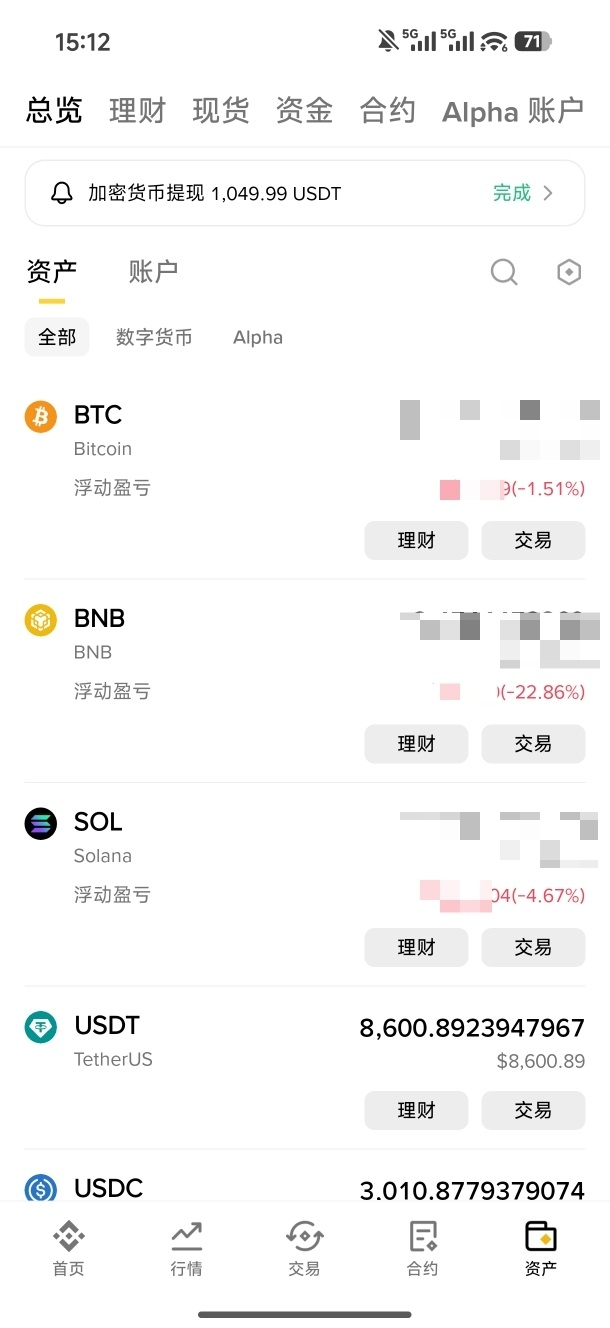
My answer is boring—so boring that this post probably won’t get much traffic: yes, I am trading crypto, but basically I’ve only bought $BTC , $BNB , and $SOL . The rest are just “lottery” positions, just messing around. (That’s also why my analysis tries to stay as objective as possible—I don’t need to shout calls to get people to bag-hold for me.)
1. The one I’m down on the most right now is BNB. Since I needed to participate in Alpha’s TGE, I habitually kept holding BNB, which affected my investment judgment—I didn’t manage to trim at the top. So strictly speaking, I don’t even know whether playing Alpha made me lose or profit.
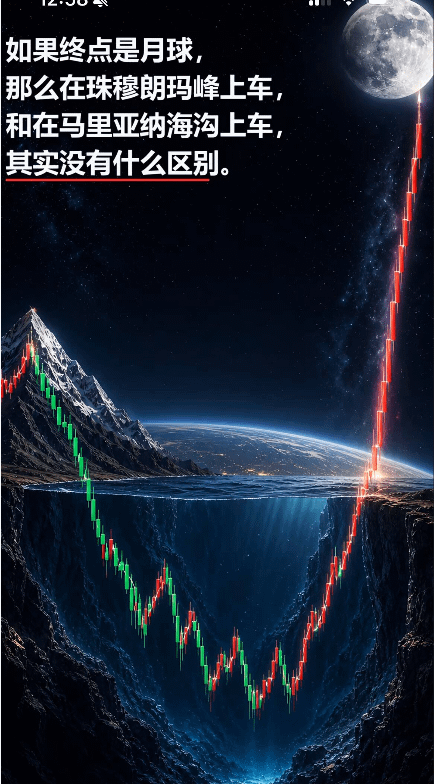
2. BTC and SOL were built up in batches during this round of decline. I think BTC may still drop, but I started averaging in when BTC was already above 70,000. In my view, if a token is destined to go to the moon, then boarding on the Qinghai-Tibet Plateau versus boarding in the Tarim Basin—there isn’t much difference. The key is to get on the train.
3. The point is: there are very, very few tokens that can go to the moon. But I believe BTC should be the least controversial one. So my solution is simple: go with assets led by BTC. Decentralized-wise, I look at BTC; centralized-wise, I look at BNB.
4. Of course, my approach is too ordinary. Most people have heard of it. And many people don’t agree with my method—after all, most people come to this space aiming for 100x coins, aiming to turn their lives around in half a year.
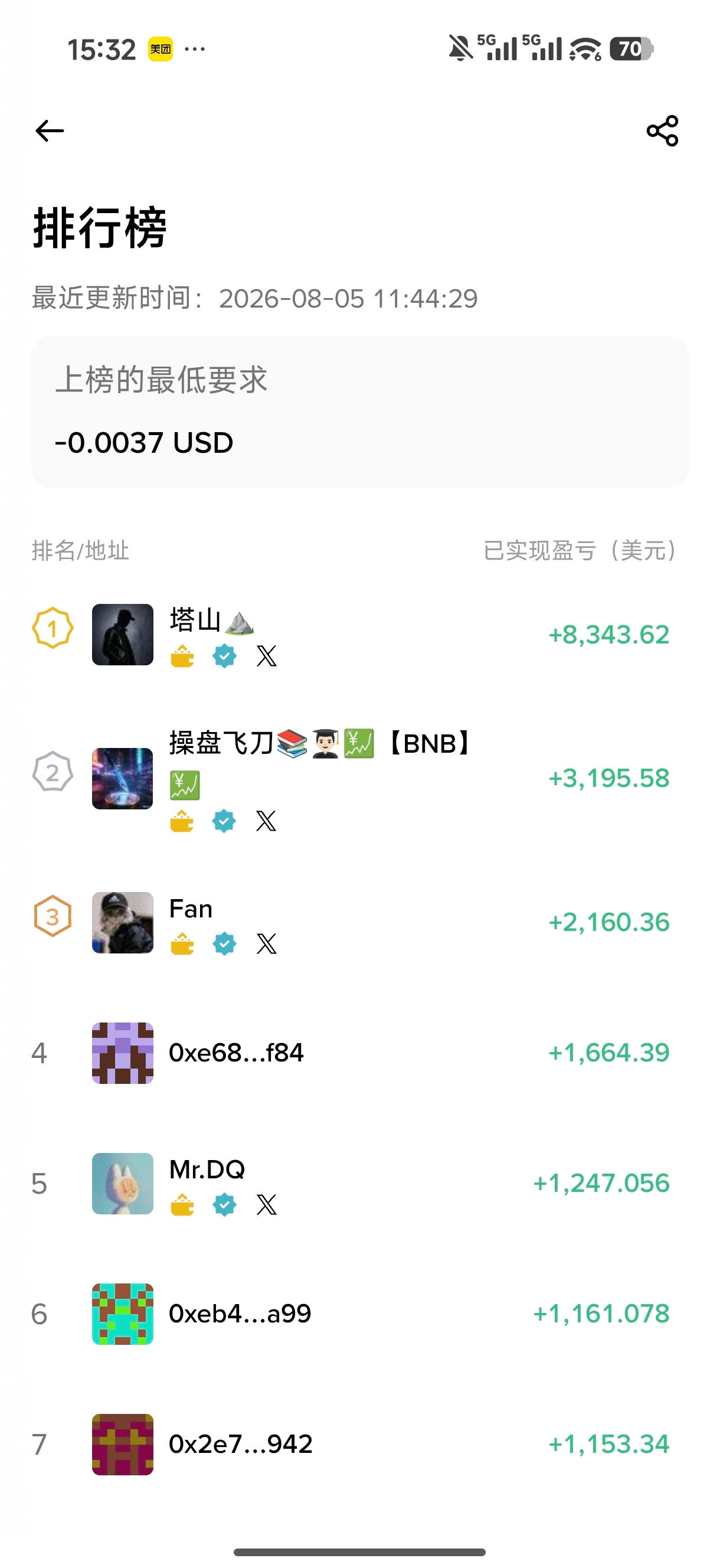
5. I just accepted it long ago—I’m not the kind of person who can change my life in half a year. For example, the “dog-chasing and profit contest” that Binance Wallet ends today: as long as you don’t lose money, you can get on the profit leaderboard! What difficulty level do you think “dog chasing” or playing copycats is?
Some fans asked me: if I don’t buy this, and I don’t touch that, is there actually any coin trading going on?
My answer is boring—so boring that this post probably won’t get much traffic: yes, I am trading crypto, but basically I’ve only bought $BTC , $BNB , and $SOL . The rest are just “lottery” positions, just messing around. (That’s also why my analysis tries to stay as objective as possible—I don’t need to shout calls to get people to bag-hold for me.)
1. The one I’m down on the most right now is BNB. Since I needed to participate in Alpha’s TGE, I habitually kept holding BNB, which affected my investment judgment—I didn’t manage to trim at the top. So strictly speaking, I don’t even know whether playing Alpha made me lose or profit.
2. BTC and SOL were built up in batches during this round of decline. I think BTC may still drop, but I started averaging in when BTC was already above 70,000. In my view, if a token is destined to go to the moon, then boarding on the Qinghai-Tibet Plateau versus boarding in the Tarim Basin—there isn’t much difference. The key is to get on the train.
3. The point is: there are very, very few tokens that can go to the moon. But I believe BTC should be the least controversial one. So my solution is simple: go with assets led by BTC. Decentralized-wise, I look at BTC; centralized-wise, I look at BNB.
4. Of course, my approach is too ordinary. Most people have heard of it. And many people don’t agree with my method—after all, most people come to this space aiming for 100x coins, aiming to turn their lives around in half a year.
5. I just accepted it long ago—I’m not the kind of person who can change my life in half a year. For example, the “dog-chasing and profit contest” that Binance Wallet ends today: as long as you don’t lose money, you can get on the profit leaderboard! What difficulty level do you think “dog chasing” or playing copycats is?
My answer is boring—so boring that this post probably won’t get much traffic: yes, I am trading crypto, but basically I’ve only bought $BTC , $BNB , and $SOL . The rest are just “lottery” positions, just messing around. (That’s also why my analysis tries to stay as objective as possible—I don’t need to shout calls to get people to bag-hold for me.)
1. The one I’m down on the most right now is BNB. Since I needed to participate in Alpha’s TGE, I habitually kept holding BNB, which affected my investment judgment—I didn’t manage to trim at the top. So strictly speaking, I don’t even know whether playing Alpha made me lose or profit.
2. BTC and SOL were built up in batches during this round of decline. I think BTC may still drop, but I started averaging in when BTC was already above 70,000. In my view, if a token is destined to go to the moon, then boarding on the Qinghai-Tibet Plateau versus boarding in the Tarim Basin—there isn’t much difference. The key is to get on the train.
3. The point is: there are very, very few tokens that can go to the moon. But I believe BTC should be the least controversial one. So my solution is simple: go with assets led by BTC. Decentralized-wise, I look at BTC; centralized-wise, I look at BNB.
4. Of course, my approach is too ordinary. Most people have heard of it. And many people don’t agree with my method—after all, most people come to this space aiming for 100x coins, aiming to turn their lives around in half a year.
5. I just accepted it long ago—I’m not the kind of person who can change my life in half a year. For example, the “dog-chasing and profit contest” that Binance Wallet ends today: as long as you don’t lose money, you can get on the profit leaderboard! What difficulty level do you think “dog chasing” or playing copycats is?
诸葛投研
·
--
The much-anticipated Grvt is indeed here, but it may not be as big as everyone imagined—at least not in terms of size:
1. The final threshold is 245 points, with only 30,000 allocations total, meaning 100 Grvt per person. At the pre-market price of 0.35u, each single allocation is 35u. 123 is just there to comfort everyone—it shows a pre-market value of 200u, but it actually uses a somewhat imprecise data scope.
2. This airdrop isn’t as large as people expected, because Alpha’s allocation share is only 0.3%, down from the expected 1%, which is a 70% direct reduction. Also, allocations must be spread as widely as possible; otherwise everyone would be furious at AnAn—so they could only make each individual “slice” smaller.
3. But honestly, Alpha’s resources really have been reduced. Everyone look at Binance’s official posts—lately they’ve been talking about bStocks. The direct impact is that Alpha only gets 0.3% of the allocation, far less than the 1% over on the other side.
4. So all we can say is: at least it wasn’t a TGE. Life is about digesting pain so you can have the strength to keep moving forward.
1. The final threshold is 245 points, with only 30,000 allocations total, meaning 100 Grvt per person. At the pre-market price of 0.35u, each single allocation is 35u. 123 is just there to comfort everyone—it shows a pre-market value of 200u, but it actually uses a somewhat imprecise data scope.
2. This airdrop isn’t as large as people expected, because Alpha’s allocation share is only 0.3%, down from the expected 1%, which is a 70% direct reduction. Also, allocations must be spread as widely as possible; otherwise everyone would be furious at AnAn—so they could only make each individual “slice” smaller.
3. But honestly, Alpha’s resources really have been reduced. Everyone look at Binance’s official posts—lately they’ve been talking about bStocks. The direct impact is that Alpha only gets 0.3% of the allocation, far less than the 1% over on the other side.
4. So all we can say is: at least it wasn’t a TGE. Life is about digesting pain so you can have the strength to keep moving forward.
13
21
3.2k
·
--
Verified
I honestly feel that this move is going backward to pick people up, not a reversal to drive losses down.
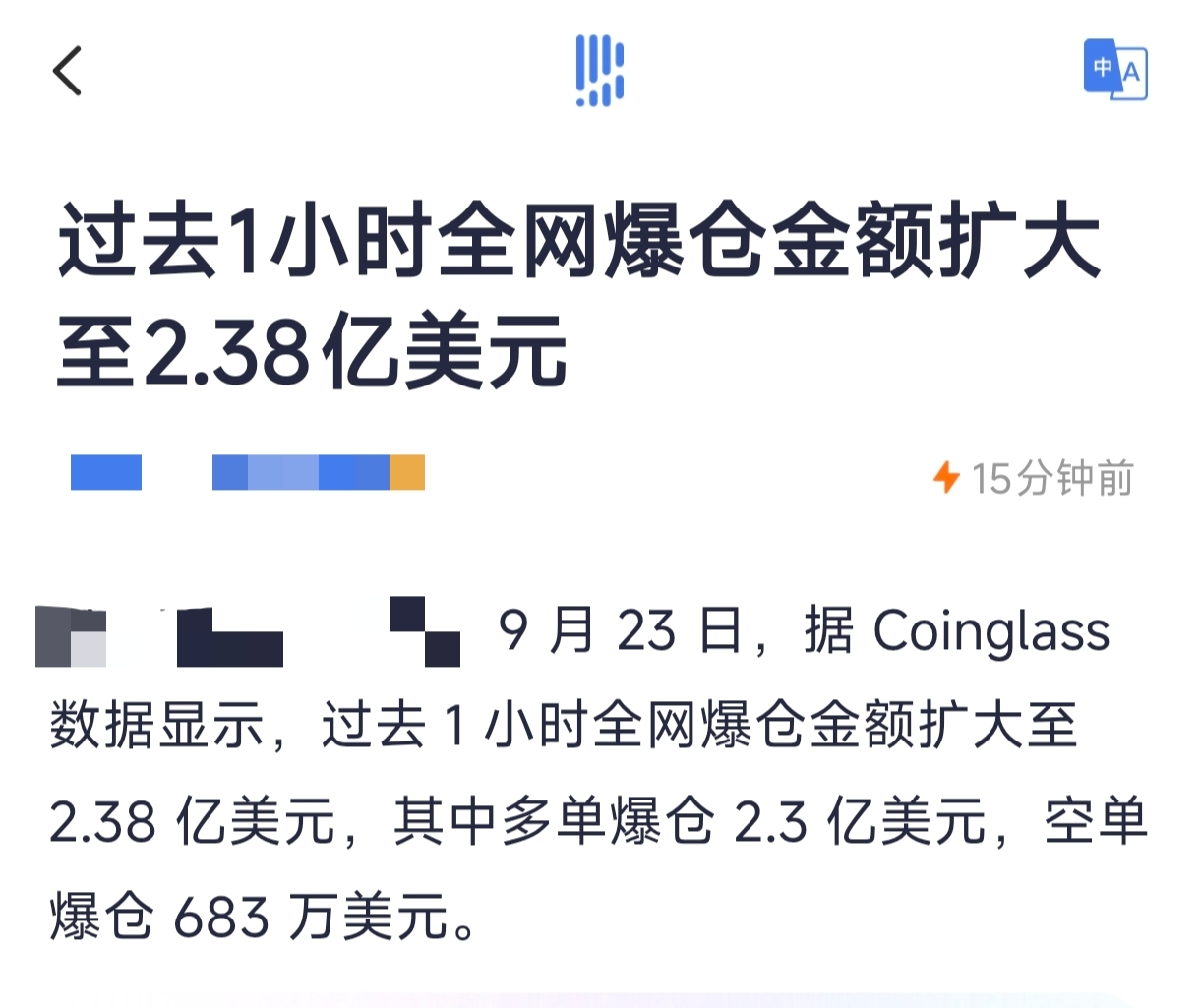
Because the three layers of negative factors—sentiment cooling, rate hikes, and the U.S.-Iran situation—stack together, $BTC only dropped 3%. I think that’s very strong!
First negative factor: sentiment cooled. After $BTC finished the short squeeze, the momentum brought by the ensuing short-covering push was already quite weak. The market’s real buy-side demand seems somewhat dried up, and the Fear & Greed Index eased from yesterday’s extreme greed of 78.
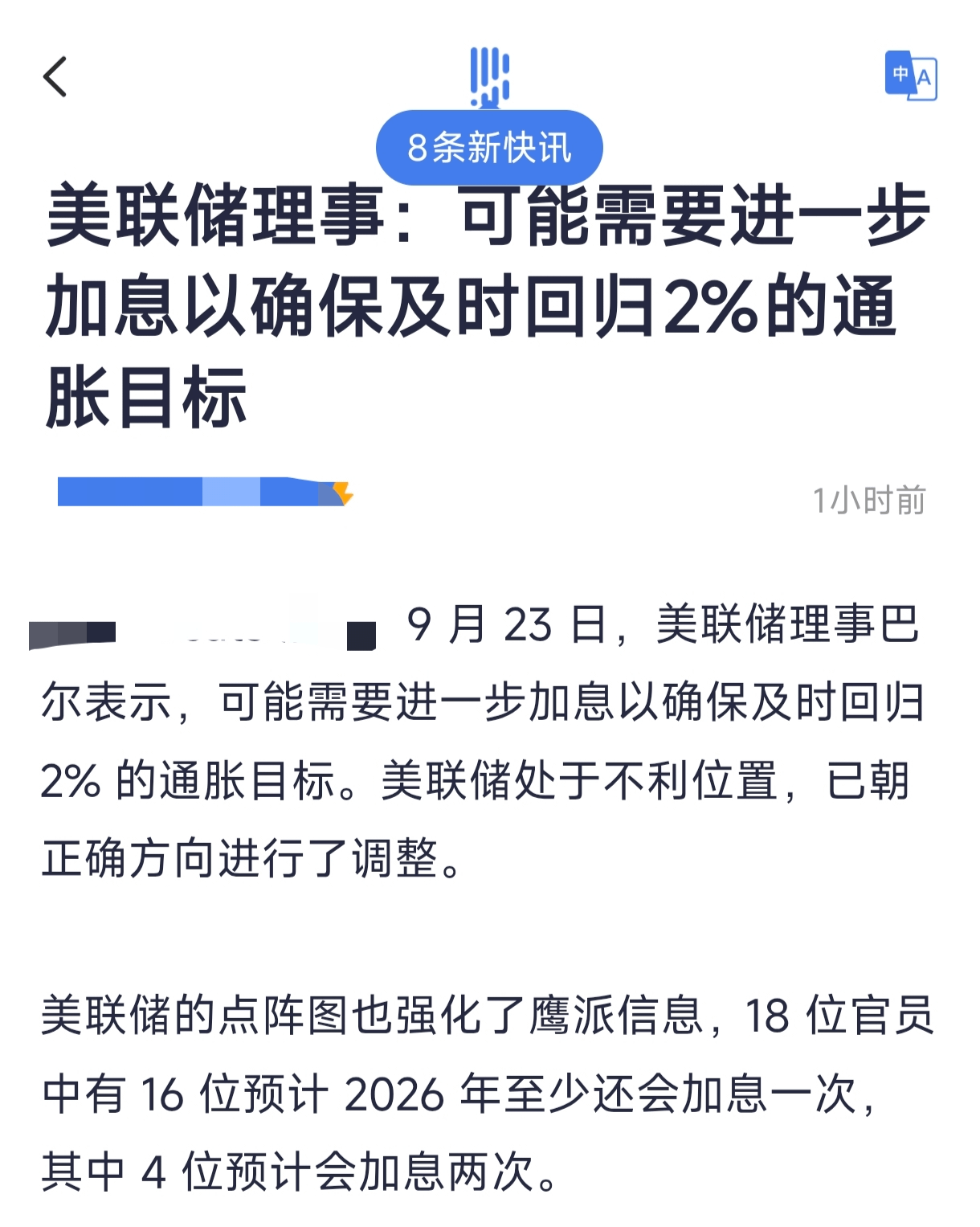
Second negative factor: the rate-hike issue has resurfaced. The Fed governor signaled that they may need to raise rates further to ensure a timely return to the 2% inflation target.
And other Fed chairpersons have also shown hawkish stances. The chairs of the Federal Reserve Bank of Boston, Chicago, and others said that bringing inflation down may require further increases in interest rates.
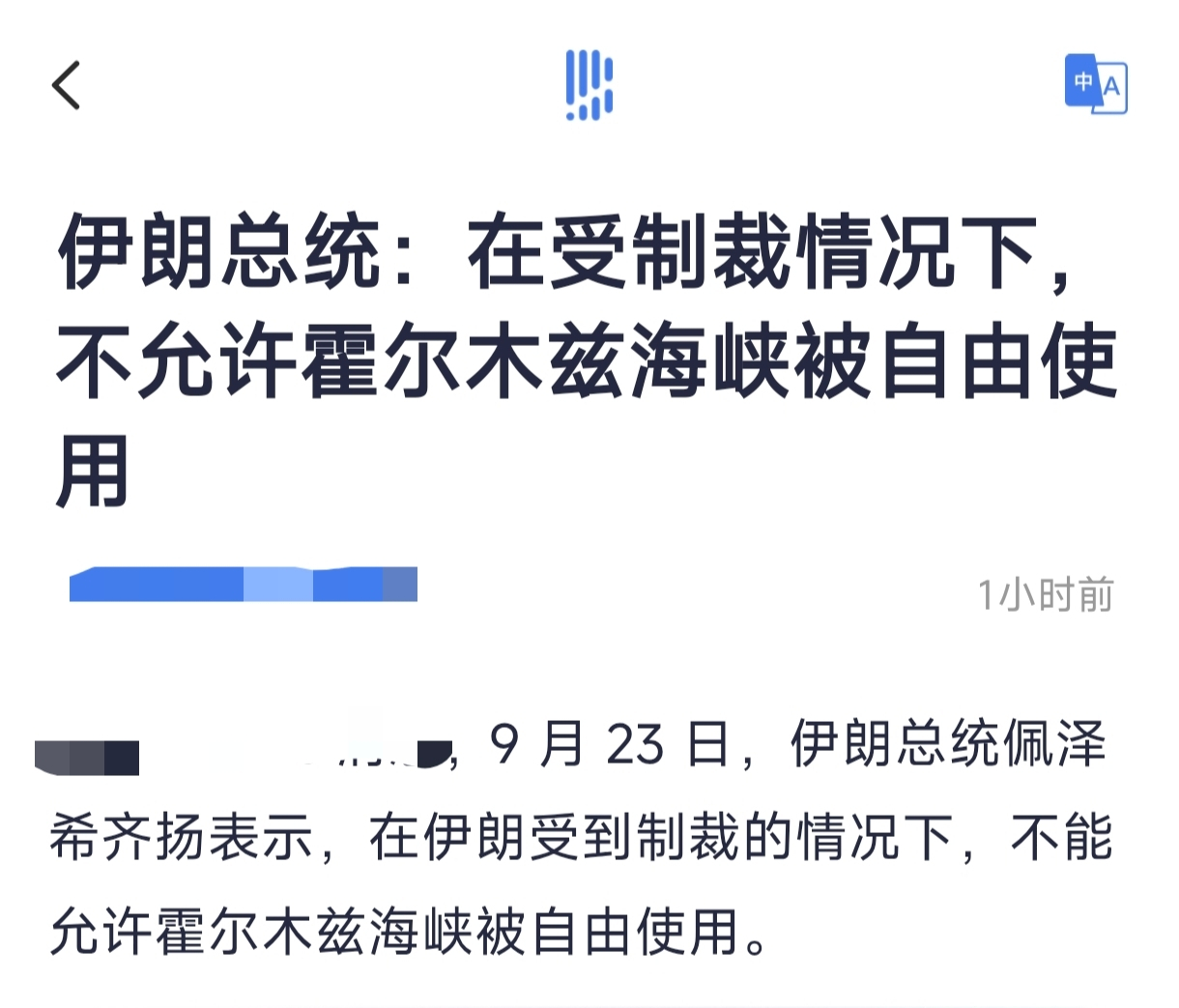
Third negative factor: new developments in the U.S.-Iran negotiations. Iran has just vowed that it will not allow the Strait of Hormuz to be used freely.
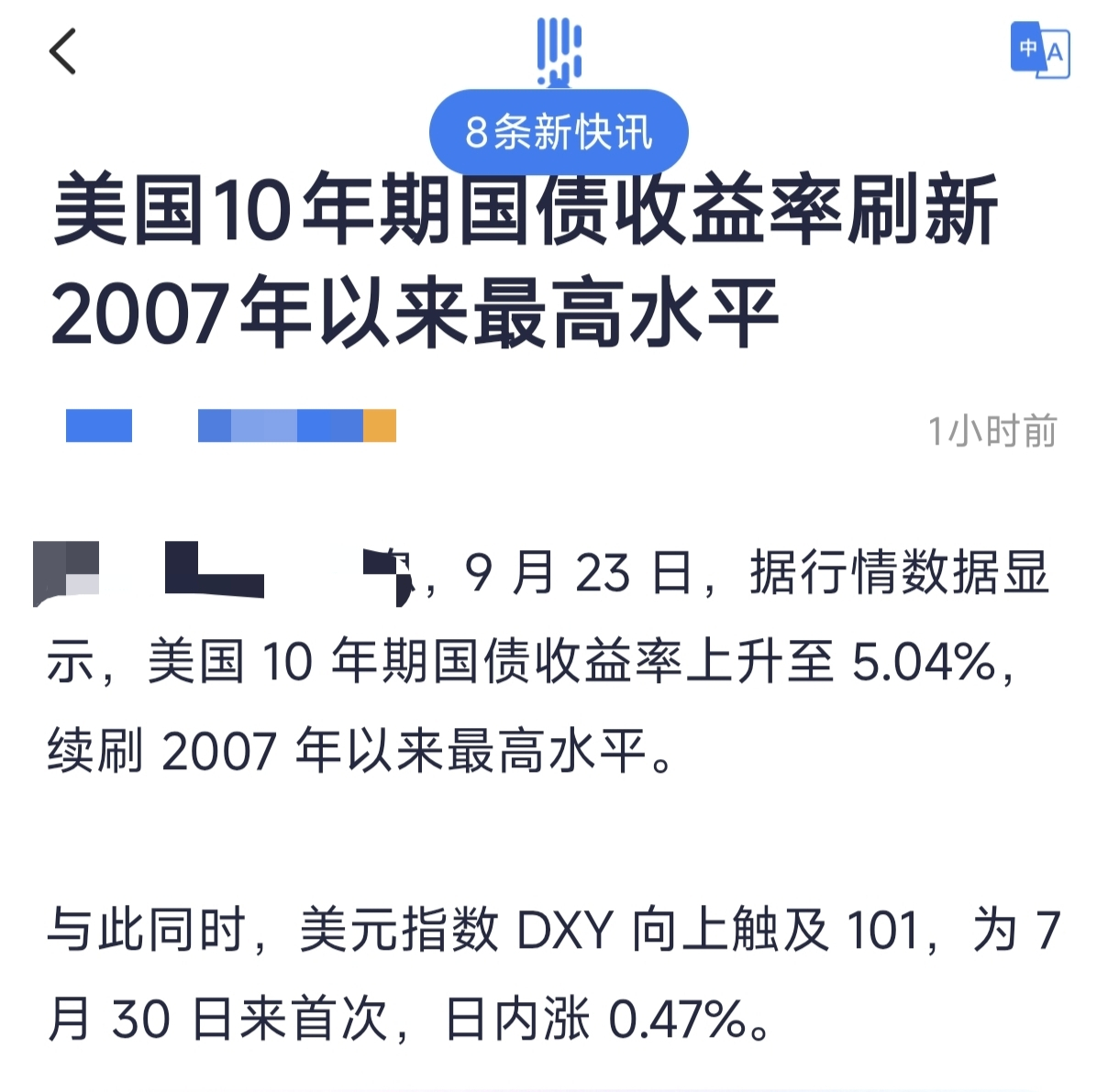
Since oil prices have remained elevated, U.S. 10-year Treasury yields rose to 5.04%, the highest level in 20 years.
With these three negative factors piling up, $BTC only fell 3%. Instead, I feel it’s strong. If you’ve missed out on the opportunity, you might consider starting to scale in and buy the dip from now onward.
I honestly feel that this move is going backward to pick people up, not a reversal to drive losses down.
Because the three layers of negative factors—sentiment cooling, rate hikes, and the U.S.-Iran situation—stack together, $BTC only dropped 3%. I think that’s very strong!
First negative factor: sentiment cooled. After $BTC finished the short squeeze, the momentum brought by the ensuing short-covering push was already quite weak. The market’s real buy-side demand seems somewhat dried up, and the Fear & Greed Index eased from yesterday’s extreme greed of 78.
Second negative factor: the rate-hike issue has resurfaced. The Fed governor signaled that they may need to raise rates further to ensure a timely return to the 2% inflation target.
And other Fed chairpersons have also shown hawkish stances. The chairs of the Federal Reserve Bank of Boston, Chicago, and others said that bringing inflation down may require further increases in interest rates.
Third negative factor: new developments in the U.S.-Iran negotiations. Iran has just vowed that it will not allow the Strait of Hormuz to be used freely.
Since oil prices have remained elevated, U.S. 10-year Treasury yields rose to 5.04%, the highest level in 20 years.
With these three negative factors piling up, $BTC only fell 3%. Instead, I feel it’s strong. If you’ve missed out on the opportunity, you might consider starting to scale in and buy the dip from now onward.
Because the three layers of negative factors—sentiment cooling, rate hikes, and the U.S.-Iran situation—stack together, $BTC only dropped 3%. I think that’s very strong!
First negative factor: sentiment cooled. After $BTC finished the short squeeze, the momentum brought by the ensuing short-covering push was already quite weak. The market’s real buy-side demand seems somewhat dried up, and the Fear & Greed Index eased from yesterday’s extreme greed of 78.
Second negative factor: the rate-hike issue has resurfaced. The Fed governor signaled that they may need to raise rates further to ensure a timely return to the 2% inflation target.
And other Fed chairpersons have also shown hawkish stances. The chairs of the Federal Reserve Bank of Boston, Chicago, and others said that bringing inflation down may require further increases in interest rates.
Third negative factor: new developments in the U.S.-Iran negotiations. Iran has just vowed that it will not allow the Strait of Hormuz to be used freely.
Since oil prices have remained elevated, U.S. 10-year Treasury yields rose to 5.04%, the highest level in 20 years.
With these three negative factors piling up, $BTC only fell 3%. Instead, I feel it’s strong. If you’ve missed out on the opportunity, you might consider starting to scale in and buy the dip from now onward.
2
2
1.6k
·
--
The market turned around to pick people up. Brothers who missed the move—are any of you getting on the train? $BTC $BNB $SOL
The market turned around to pick people up. Brothers who missed the move—are any of you getting on the train? $BTC $BNB $SOL

2
1.4k
·
--
$DOGE can’t be fixed a bit
Yesterday it pushed higher and liquidated a batch of short positions. After a single day saw $5.66 million in short positions wiped out, the institutional money has come back a little.
In the past two days, the DOGE ETF recorded net inflows of $909,700. Compared with last week’s zero inflow, things have improved a lot, so today’s increase looks healthier than yesterday’s.
But it’s still too weak. It only pushed up a little before dropping back to 0.1. Luckily it didn’t break below the 7-day moving average. Still, right now it’s moving with the big-cap market—when the market direction changes, it can’t get away.
So the Ants’ position took the opportunity to cut half, and admitted defeat 😂
$DOGE can’t be fixed a bit
Yesterday it pushed higher and liquidated a batch of short positions. After a single day saw $5.66 million in short positions wiped out, the institutional money has come back a little.
In the past two days, the DOGE ETF recorded net inflows of $909,700. Compared with last week’s zero inflow, things have improved a lot, so today’s increase looks healthier than yesterday’s.
But it’s still too weak. It only pushed up a little before dropping back to 0.1. Luckily it didn’t break below the 7-day moving average. Still, right now it’s moving with the big-cap market—when the market direction changes, it can’t get away.
So the Ants’ position took the opportunity to cut half, and admitted defeat 😂
Yesterday it pushed higher and liquidated a batch of short positions. After a single day saw $5.66 million in short positions wiped out, the institutional money has come back a little.
In the past two days, the DOGE ETF recorded net inflows of $909,700. Compared with last week’s zero inflow, things have improved a lot, so today’s increase looks healthier than yesterday’s.
But it’s still too weak. It only pushed up a little before dropping back to 0.1. Luckily it didn’t break below the 7-day moving average. Still, right now it’s moving with the big-cap market—when the market direction changes, it can’t get away.
So the Ants’ position took the opportunity to cut half, and admitted defeat 😂
3
1
966
·
--
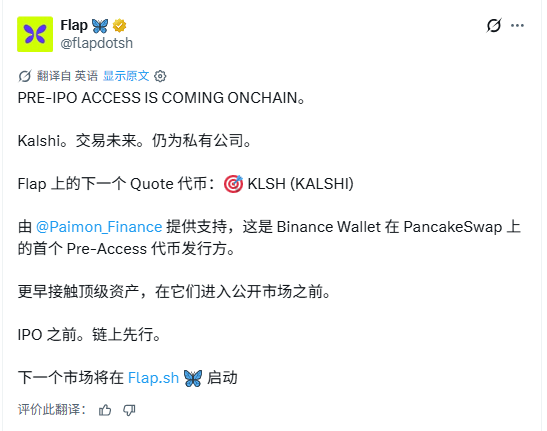
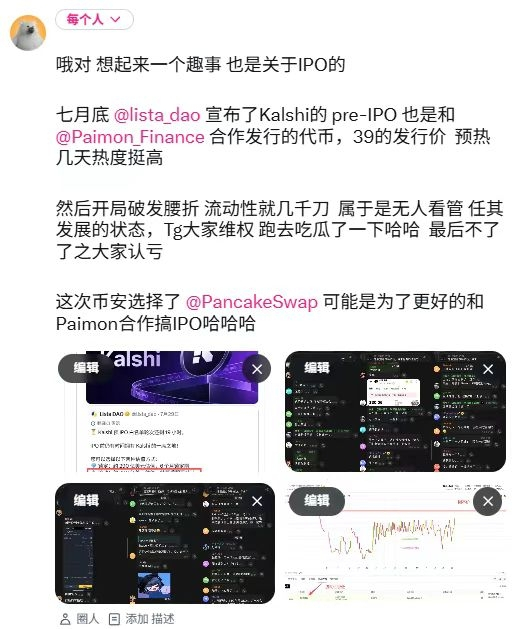
I see some people are still stirring up the KLSH thing. Everyone, pay attention: this event has nothing to do with Binance.
Look closely at Figure 1—the original text from Twitter: it’s Flap promoting its next token, KLSH, and then saying that KLSH is supported by the company Paimon.
At the same time, Flap, just to forcefully ride on Binance’s hype, added an extra line on purpose: saying that my partner Paimon is the company that did Binance’s Pre-Acess pPOLY a few days ago.
Got it? It’s purely riding the hype—purely waving the banner to make it look like it’s backed by something. The project itself has absolutely nothing to do with Binance.
So is KLSH a good project? In one word: it’s finished. Look at the cautionary tale in Figure 2.
I see some people are still stirring up the KLSH thing. Everyone, pay attention: this event has nothing to do with Binance.
Look closely at Figure 1—the original text from Twitter: it’s Flap promoting its next token, KLSH, and then saying that KLSH is supported by the company Paimon.
At the same time, Flap, just to forcefully ride on Binance’s hype, added an extra line on purpose: saying that my partner Paimon is the company that did Binance’s Pre-Acess pPOLY a few days ago.
Got it? It’s purely riding the hype—purely waving the banner to make it look like it’s backed by something. The project itself has absolutely nothing to do with Binance.
So is KLSH a good project? In one word: it’s finished. Look at the cautionary tale in Figure 2.
Look closely at Figure 1—the original text from Twitter: it’s Flap promoting its next token, KLSH, and then saying that KLSH is supported by the company Paimon.
At the same time, Flap, just to forcefully ride on Binance’s hype, added an extra line on purpose: saying that my partner Paimon is the company that did Binance’s Pre-Acess pPOLY a few days ago.
Got it? It’s purely riding the hype—purely waving the banner to make it look like it’s backed by something. The project itself has absolutely nothing to do with Binance.
So is KLSH a good project? In one word: it’s finished. Look at the cautionary tale in Figure 2.
3
2
2.3k
·
--
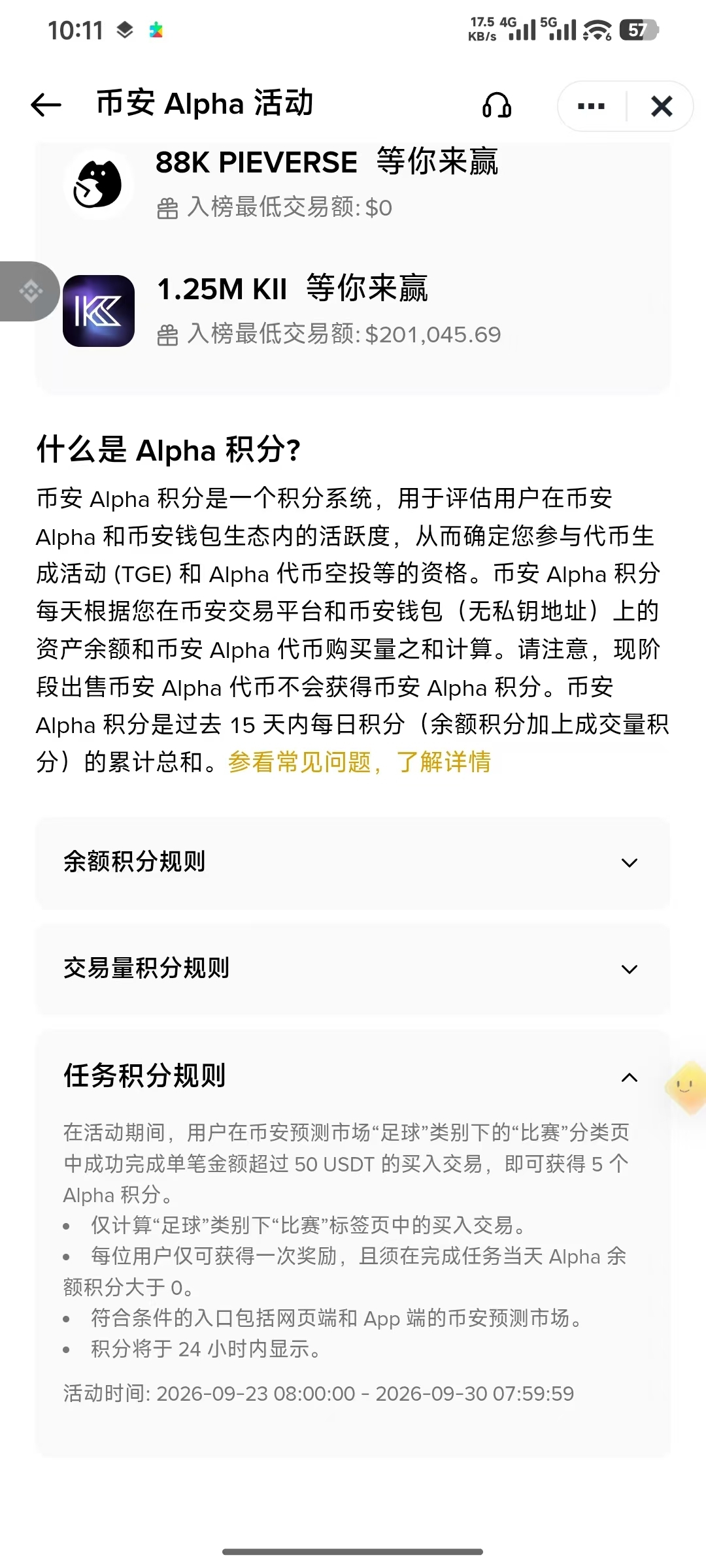
The last 5-minute bonus period hasn’t even expired yet, and Binance Alpha has come out with another “add 5 more minutes” Alpha points promotion. Just participate in the “football” prediction under the prediction market—total cost 2u (fee slippage wear of 1u + spread slippage wear of 1u):
1. The bonus activity is already live, so you can join now. This time the cost is 2u, where 1u is the trading fee and the other 1u is the spread slippage wear from trading.
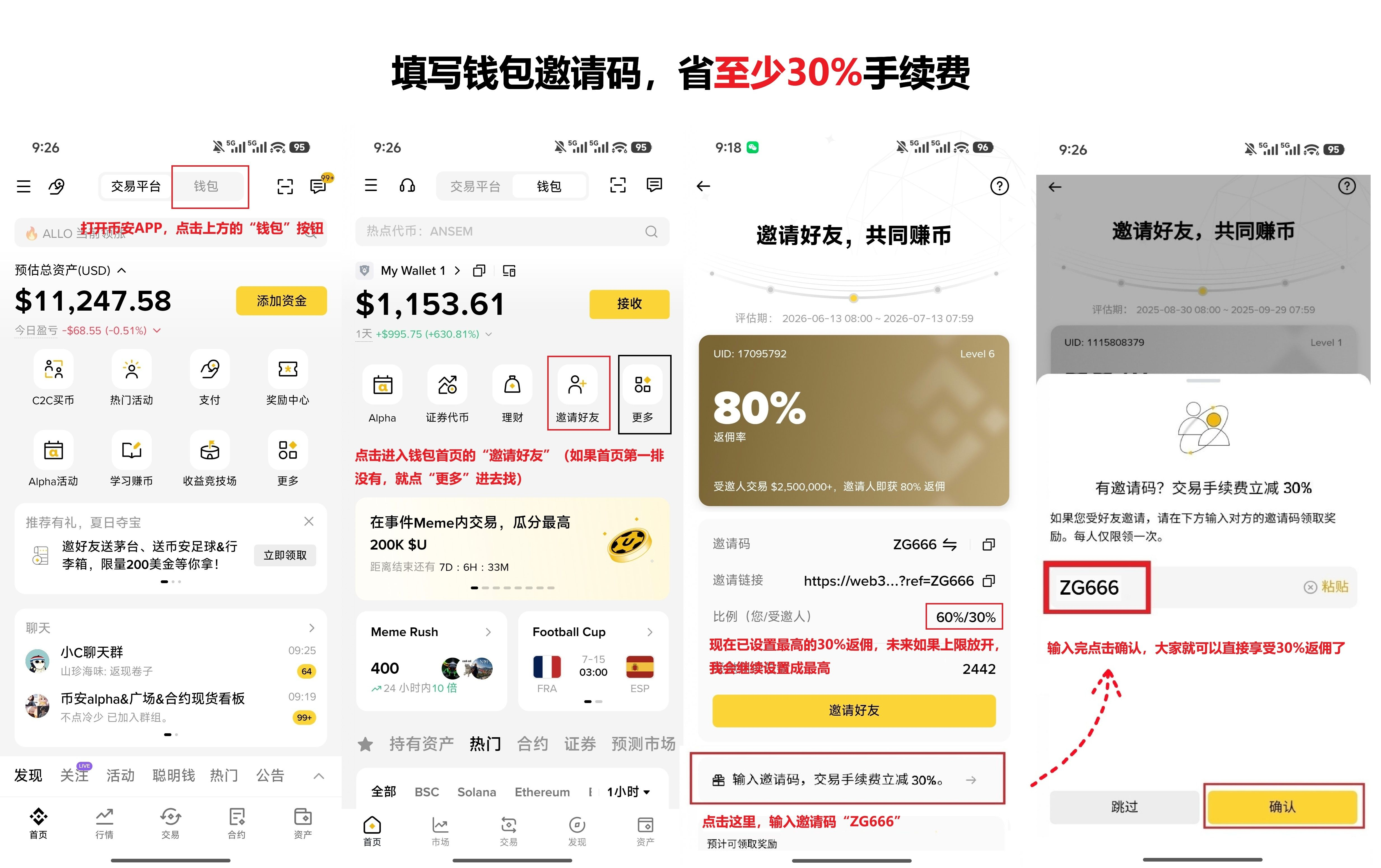
2. Bind your wallet referral code in advance to save 30% on fees and reduce slippage wear.
How to bind: Figure 2 is the detailed tutorial. On the Binance App wallet home page, tap "Invite" → tap "Enter referral code" → enter "ZG666" and confirm—done.
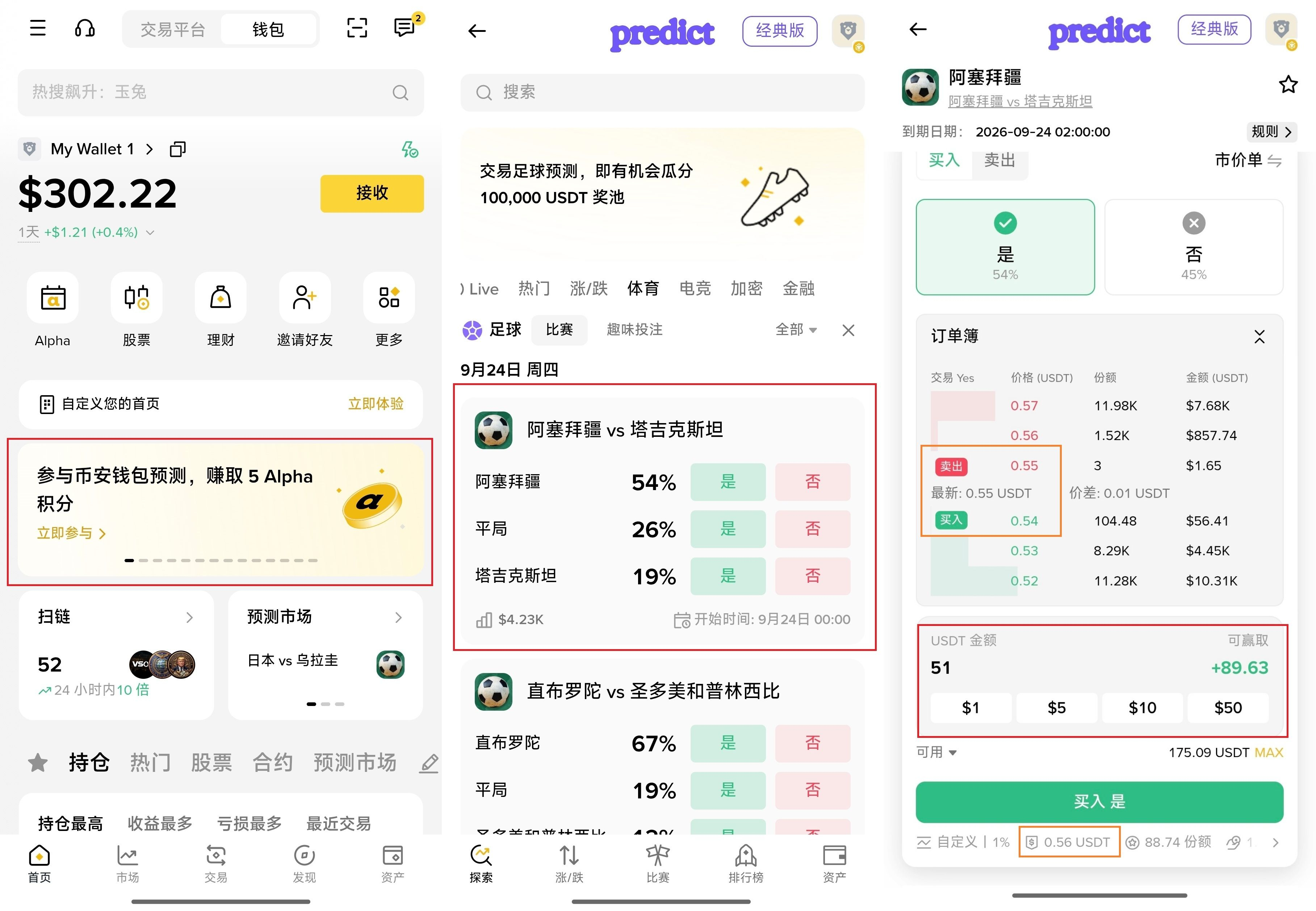
3. After binding the referral code, Figure 3 is the task guide: go into the wallet home page banner; it will jump directly to the prediction page. Choose the first topic, buy at the current price with 51u, then sell it right away.
Two cost-saving notes:
(1)The guide uses market-price trading, so there’s nearly 1u in fees. But if you use limit-price trading, the fee is 0. So you can place limit orders via the order book to save the remaining 1u in fees.
(2)Be sure to pick events in the order book where the spread is 0.01. If the order book spread is 0.02, that means your spread slippage wear will be 2u.
The last 5-minute bonus period hasn’t even expired yet, and Binance Alpha has come out with another “add 5 more minutes” Alpha points promotion. Just participate in the “football” prediction under the prediction market—total cost 2u (fee slippage wear of 1u + spread slippage wear of 1u):
1. The bonus activity is already live, so you can join now. This time the cost is 2u, where 1u is the trading fee and the other 1u is the spread slippage wear from trading.
2. Bind your wallet referral code in advance to save 30% on fees and reduce slippage wear.
How to bind: Figure 2 is the detailed tutorial. On the Binance App wallet home page, tap "Invite" → tap "Enter referral code" → enter "ZG666" and confirm—done.
3. After binding the referral code, Figure 3 is the task guide: go into the wallet home page banner; it will jump directly to the prediction page. Choose the first topic, buy at the current price with 51u, then sell it right away.
Two cost-saving notes:
(1)The guide uses market-price trading, so there’s nearly 1u in fees. But if you use limit-price trading, the fee is 0. So you can place limit orders via the order book to save the remaining 1u in fees.
(2)Be sure to pick events in the order book where the spread is 0.01. If the order book spread is 0.02, that means your spread slippage wear will be 2u.
1. The bonus activity is already live, so you can join now. This time the cost is 2u, where 1u is the trading fee and the other 1u is the spread slippage wear from trading.
2. Bind your wallet referral code in advance to save 30% on fees and reduce slippage wear.
How to bind: Figure 2 is the detailed tutorial. On the Binance App wallet home page, tap "Invite" → tap "Enter referral code" → enter "ZG666" and confirm—done.
3. After binding the referral code, Figure 3 is the task guide: go into the wallet home page banner; it will jump directly to the prediction page. Choose the first topic, buy at the current price with 51u, then sell it right away.
Two cost-saving notes:
(1)The guide uses market-price trading, so there’s nearly 1u in fees. But if you use limit-price trading, the fee is 0. So you can place limit orders via the order book to save the remaining 1u in fees.
(2)Be sure to pick events in the order book where the spread is 0.01. If the order book spread is 0.02, that means your spread slippage wear will be 2u.
45
12
105
12.6k
·
--
Bullish
The market is back to a long-lost rhythm: Bitcoin is moving sideways while mainstream altcoins catch up.
$UNI Uniswap became a beneficiary of this round of Robinhood stock token deposit, taking 99% of the share. The coin price kept hitting new highs, rising 5x in just three months.
During Bitcoin’s sideways consolidation, low-value mainstream altcoins have been playing catch-up. Prioritize those in the top 100 by market cap. Before the holiday, the market usually has a time lag of about 3–5 days; today counts as Day 1.
From the long/short liquidation map: $BTC The main pain points for short-term high-leverage long positions are at 84700 and 85320. After consolidating in a high range, short-term high-leverage shorts have clustered around the 87000 level. If price first moves down to liquidate the long side, and you can hold 83000 (there may be a wick/spike signal on the hourly chart), then there’s still a chance to test the 87000 area once more upward.
The market is back to a long-lost rhythm: Bitcoin is moving sideways while mainstream altcoins catch up.
$UNI Uniswap became a beneficiary of this round of Robinhood stock token deposit, taking 99% of the share. The coin price kept hitting new highs, rising 5x in just three months.
During Bitcoin’s sideways consolidation, low-value mainstream altcoins have been playing catch-up. Prioritize those in the top 100 by market cap. Before the holiday, the market usually has a time lag of about 3–5 days; today counts as Day 1.
From the long/short liquidation map: $BTC The main pain points for short-term high-leverage long positions are at 84700 and 85320. After consolidating in a high range, short-term high-leverage shorts have clustered around the 87000 level. If price first moves down to liquidate the long side, and you can hold 83000 (there may be a wick/spike signal on the hourly chart), then there’s still a chance to test the 87000 area once more upward.
$UNI Uniswap became a beneficiary of this round of Robinhood stock token deposit, taking 99% of the share. The coin price kept hitting new highs, rising 5x in just three months.
During Bitcoin’s sideways consolidation, low-value mainstream altcoins have been playing catch-up. Prioritize those in the top 100 by market cap. Before the holiday, the market usually has a time lag of about 3–5 days; today counts as Day 1.
From the long/short liquidation map: $BTC The main pain points for short-term high-leverage long positions are at 84700 and 85320. After consolidating in a high range, short-term high-leverage shorts have clustered around the 87000 level. If price first moves down to liquidate the long side, and you can hold 83000 (there may be a wick/spike signal on the hourly chart), then there’s still a chance to test the 87000 area once more upward.
1.7k
·
--
Partly True
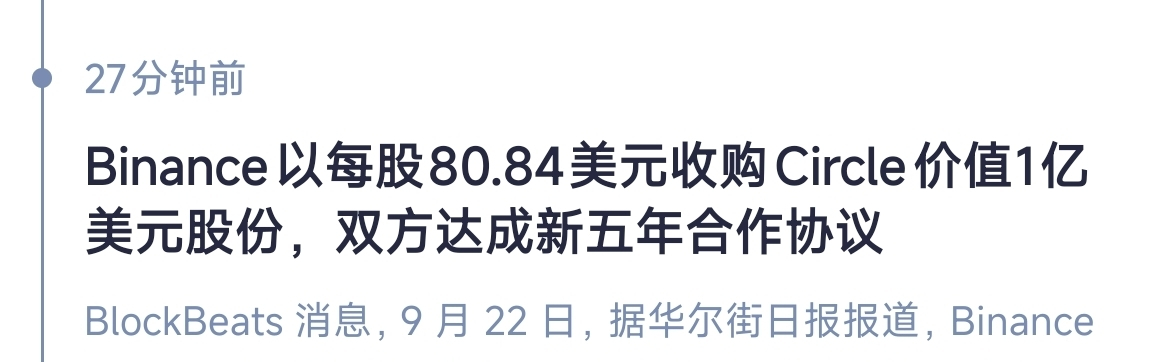
The stablecoin card table needs to be reshuffled! Binance has been “holding” $BNB for three years and still didn’t have its own stablecoin—this time, it directly invested in $CRCL !
Just now, a sudden piece of news: Binance spent $100 million to buy 1,237,000 shares of $CRCLB at $80.84 per share, promising to lock them up for 2 years without selling. This move is clearly aimed at Tether.
This year, Binance’s distribution of USD1 has already shown that it has the ability to smoothly absorb $6 billion in stablecoins. Now with the two working together—USDC’s market share at 26%—it’s poised to climb up by a big margin.
I originally planned to wait and copy the CRCL at 80, but once the news broke it jumped 5% immediately—this is a great long-to-mid-term positive signal.
The stablecoin card table needs to be reshuffled! Binance has been “holding” $BNB for three years and still didn’t have its own stablecoin—this time, it directly invested in $CRCL !
Just now, a sudden piece of news: Binance spent $100 million to buy 1,237,000 shares of $CRCLB at $80.84 per share, promising to lock them up for 2 years without selling. This move is clearly aimed at Tether.
This year, Binance’s distribution of USD1 has already shown that it has the ability to smoothly absorb $6 billion in stablecoins. Now with the two working together—USDC’s market share at 26%—it’s poised to climb up by a big margin.
I originally planned to wait and copy the CRCL at 80, but once the news broke it jumped 5% immediately—this is a great long-to-mid-term positive signal.
Just now, a sudden piece of news: Binance spent $100 million to buy 1,237,000 shares of $CRCLB at $80.84 per share, promising to lock them up for 2 years without selling. This move is clearly aimed at Tether.
This year, Binance’s distribution of USD1 has already shown that it has the ability to smoothly absorb $6 billion in stablecoins. Now with the two working together—USDC’s market share at 26%—it’s poised to climb up by a big margin.
I originally planned to wait and copy the CRCL at 80, but once the news broke it jumped 5% immediately—this is a great long-to-mid-term positive signal.
11
1
20
7k
·
--
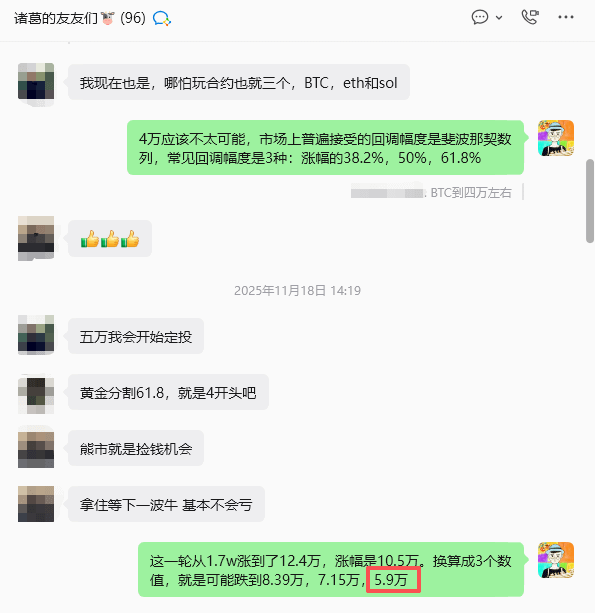
Has the bull market arrived or not? I’ve been fighting between my left and right brain:
1. Left brain: It’s here. You even guessed the $BTC bottom last year—have confidence. Welcome the bull market!
2. Right brain: It’s all noise, all just scams to lure people in. If the bear market wants to keep setting new lows, it has to trick the retail bulls into coming in—then deliver a brutal move to break to new lows. Now retail investors have already been fooled into it!
Brothers, what do you think? Help me weigh in and give me some advice
Has the bull market arrived or not? I’ve been fighting between my left and right brain:
1. Left brain: It’s here. You even guessed the $BTC bottom last year—have confidence. Welcome the bull market!
2. Right brain: It’s all noise, all just scams to lure people in. If the bear market wants to keep setting new lows, it has to trick the retail bulls into coming in—then deliver a brutal move to break to new lows. Now retail investors have already been fooled into it!
Brothers, what do you think? Help me weigh in and give me some advice
1. Left brain: It’s here. You even guessed the $BTC bottom last year—have confidence. Welcome the bull market!
2. Right brain: It’s all noise, all just scams to lure people in. If the bear market wants to keep setting new lows, it has to trick the retail bulls into coming in—then deliver a brutal move to break to new lows. Now retail investors have already been fooled into it!
Brothers, what do you think? Help me weigh in and give me some advice
牛来了
41%
骗炮的,还有一跌
59%
264 votes • Voting closed
7
4.3k
·
--
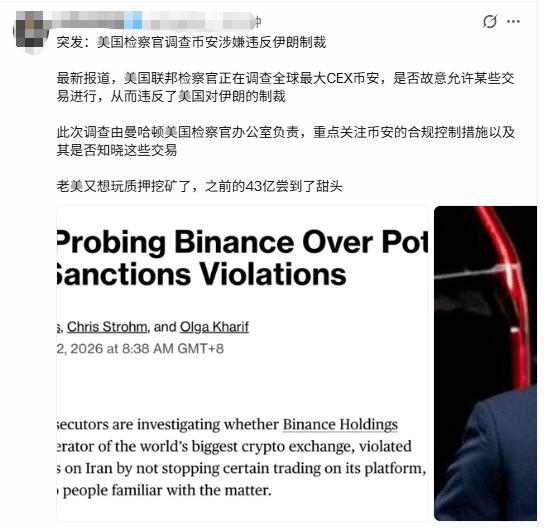
Damn, I said why did $BNB suddenly drop so much—turns out the U.S. is pulling another stunt again.
CEXs are the most afraid of this kind of thing: when the business gets too big, there will occasionally be some black swan events.
Damn, I said why did $BNB suddenly drop so much—turns out the U.S. is pulling another stunt again.
CEXs are the most afraid of this kind of thing: when the business gets too big, there will occasionally be some black swan events.
CEXs are the most afraid of this kind of thing: when the business gets too big, there will occasionally be some black swan events.
3
1.3k
·
--
Bearish
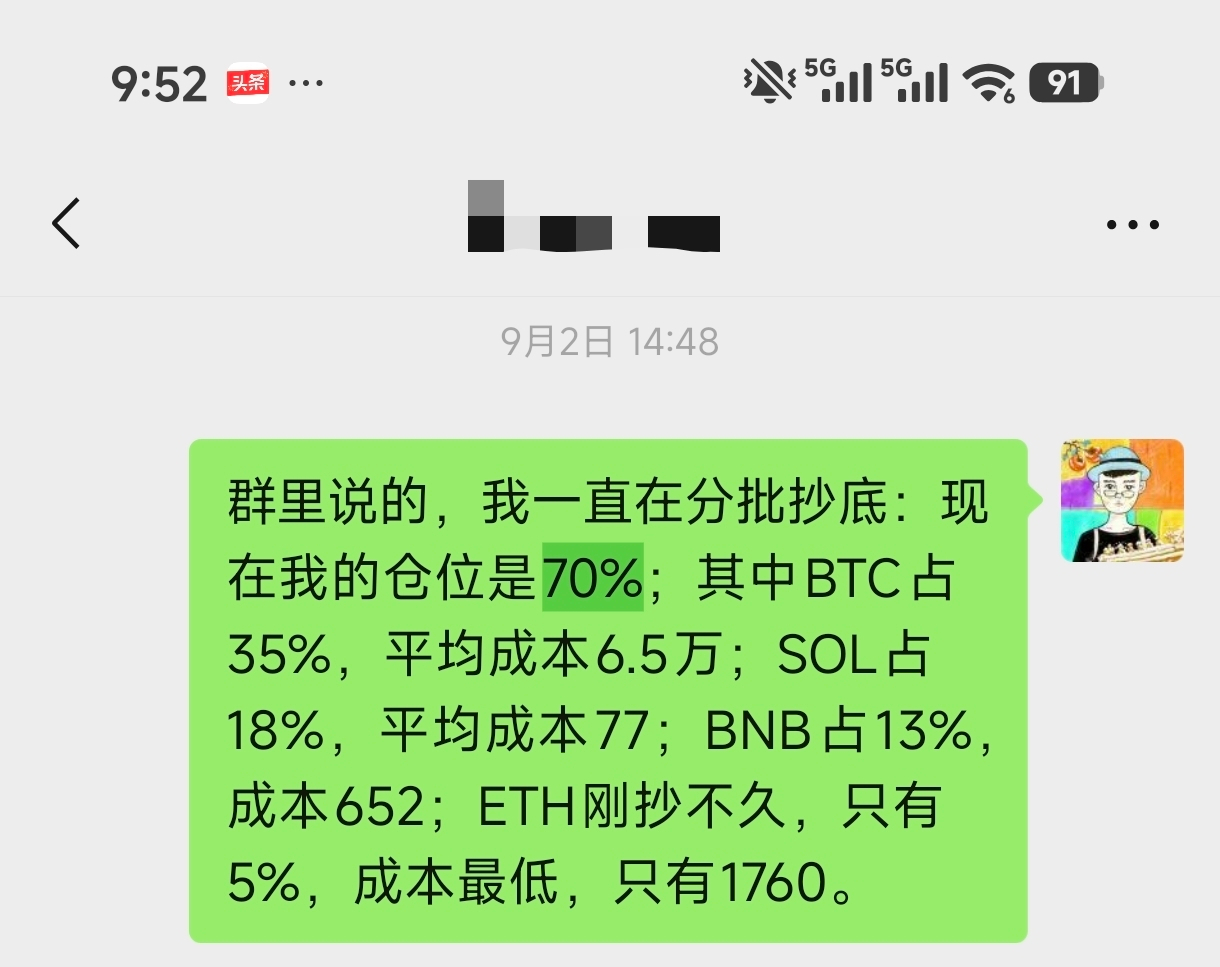
My current holdings are shown in the chart. From my profile you can also see my investment allocation, and my pinned post on my profile says the same thing.
1. Buying $BTC is always the reference answer—don’t think it’s slow, don’t think its price is high, and don’t think your own principal is small.
2. $BNB is CEX, HYPE is DEX (unfortunately Binance doesn’t have spot trading), and $SOL is an on-chain dog-pulling home base—these are all long-lasting businesses.
3. I didn’t copy ETH because, at the beginning of the bear market, it had a premium. Later, I thought it was extremely oversold and the premium disappeared, so I started copying. So you can always bottom-buy at a low price, but my position size is too small.
4. My lottery holdings really aren’t good. For example, this DOGE—I've been trapped badly. I’m still at a loss even now.
My current holdings are shown in the chart. From my profile you can also see my investment allocation, and my pinned post on my profile says the same thing.
1. Buying $BTC is always the reference answer—don’t think it’s slow, don’t think its price is high, and don’t think your own principal is small.
2. $BNB is CEX, HYPE is DEX (unfortunately Binance doesn’t have spot trading), and $SOL is an on-chain dog-pulling home base—these are all long-lasting businesses.
3. I didn’t copy ETH because, at the beginning of the bear market, it had a premium. Later, I thought it was extremely oversold and the premium disappeared, so I started copying. So you can always bottom-buy at a low price, but my position size is too small.
4. My lottery holdings really aren’t good. For example, this DOGE—I've been trapped badly. I’m still at a loss even now.
1. Buying $BTC is always the reference answer—don’t think it’s slow, don’t think its price is high, and don’t think your own principal is small.
2. $BNB is CEX, HYPE is DEX (unfortunately Binance doesn’t have spot trading), and $SOL is an on-chain dog-pulling home base—these are all long-lasting businesses.
3. I didn’t copy ETH because, at the beginning of the bear market, it had a premium. Later, I thought it was extremely oversold and the premium disappeared, so I started copying. So you can always bottom-buy at a low price, but my position size is too small.
4. My lottery holdings really aren’t good. For example, this DOGE—I've been trapped badly. I’m still at a loss even now.
6
7
2.7k
·
--
Damn, thank God I closed my short position of $HYPE , otherwise I would’ve been trapped to death.
Because the “99% of revenue is used to buy back tokens” model, HYPE has now been炒 up into a project people consider a conscientious one. Recently, when everyone mentions the buybacks of tokens like $UNI , they occasionally end up thanking HYPE for setting the example.
Especially now that the market is active, Hyperliquid’s trading fee revenue is even higher. A few days ago, the lending玩法 also exploded—on the first day after launch, 269 million was lent out.
The coin price keeps hitting new highs. Both MA7 and MA14 have been stepped over, showing strong momentum. Even Big Brother Maji couldn’t resist chasing after it at 92.5.
Luckily I closed my short position. I’ll wait to buy the dip at lower levels; right now I don’t dare short anymore.
Damn, thank God I closed my short position of $HYPE , otherwise I would’ve been trapped to death.
Because the “99% of revenue is used to buy back tokens” model, HYPE has now been炒 up into a project people consider a conscientious one. Recently, when everyone mentions the buybacks of tokens like $UNI , they occasionally end up thanking HYPE for setting the example.
Especially now that the market is active, Hyperliquid’s trading fee revenue is even higher. A few days ago, the lending玩法 also exploded—on the first day after launch, 269 million was lent out.
The coin price keeps hitting new highs. Both MA7 and MA14 have been stepped over, showing strong momentum. Even Big Brother Maji couldn’t resist chasing after it at 92.5.
Luckily I closed my short position. I’ll wait to buy the dip at lower levels; right now I don’t dare short anymore.
Because the “99% of revenue is used to buy back tokens” model, HYPE has now been炒 up into a project people consider a conscientious one. Recently, when everyone mentions the buybacks of tokens like $UNI , they occasionally end up thanking HYPE for setting the example.
Especially now that the market is active, Hyperliquid’s trading fee revenue is even higher. A few days ago, the lending玩法 also exploded—on the first day after launch, 269 million was lent out.
The coin price keeps hitting new highs. Both MA7 and MA14 have been stepped over, showing strong momentum. Even Big Brother Maji couldn’t resist chasing after it at 92.5.
Luckily I closed my short position. I’ll wait to buy the dip at lower levels; right now I don’t dare short anymore.
1
1
2.8k
·
--
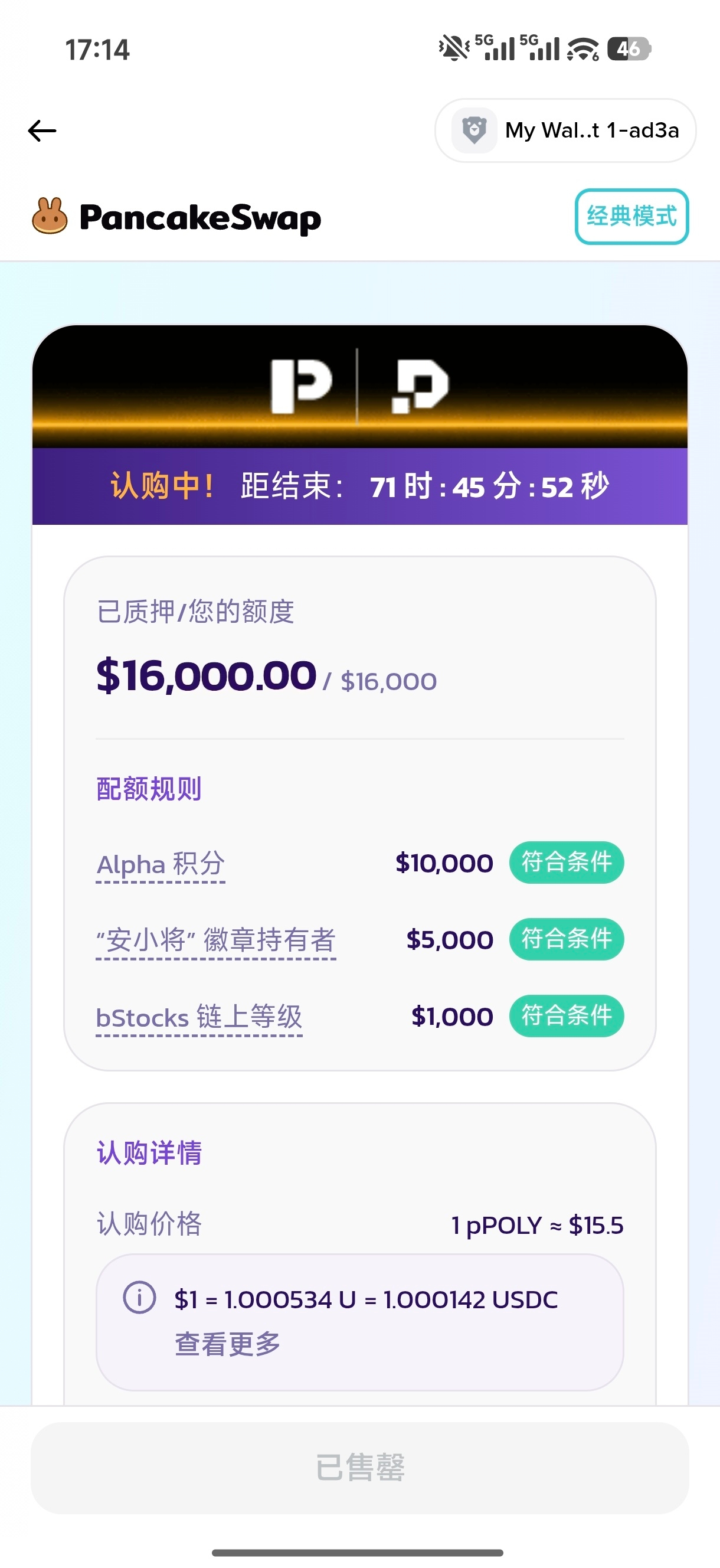
No need to ask—I definitely participated in pPOLY, and I entered fully. If everything goes smoothly, I guess the profit will be a few hundred u.
1. Events that I recommend for everyone to join—I basically attend them myself. After all, I’m not at the level of a KOL that gets paid advertising fees yet 😂
2. Getting in fast is normal. Capital is only tied up for 3 days, and the ROI can be 2%~6%. So of course you should grab it. Don’t you remember last year’s $XPL wealth-management event? A quota of 1 billion was filled in just 3 minutes. I’m honestly surprised we can even hold on for 1 minute today.
3. Friends who haven’t bound a Binance wallet invite code yet, remember to do it—it can save you 30% on fees. How to do it: On the Binance app, go to the Wallet home page, tap "Invite" → "Enter invite code" → enter "ZG666" → confirm, and you’re good to go.
No need to ask—I definitely participated in pPOLY, and I entered fully. If everything goes smoothly, I guess the profit will be a few hundred u.
1. Events that I recommend for everyone to join—I basically attend them myself. After all, I’m not at the level of a KOL that gets paid advertising fees yet 😂
2. Getting in fast is normal. Capital is only tied up for 3 days, and the ROI can be 2%~6%. So of course you should grab it. Don’t you remember last year’s $XPL wealth-management event? A quota of 1 billion was filled in just 3 minutes. I’m honestly surprised we can even hold on for 1 minute today.
3. Friends who haven’t bound a Binance wallet invite code yet, remember to do it—it can save you 30% on fees. How to do it: On the Binance app, go to the Wallet home page, tap "Invite" → "Enter invite code" → enter "ZG666" → confirm, and you’re good to go.
1. Events that I recommend for everyone to join—I basically attend them myself. After all, I’m not at the level of a KOL that gets paid advertising fees yet 😂
2. Getting in fast is normal. Capital is only tied up for 3 days, and the ROI can be 2%~6%. So of course you should grab it. Don’t you remember last year’s $XPL wealth-management event? A quota of 1 billion was filled in just 3 minutes. I’m honestly surprised we can even hold on for 1 minute today.
3. Friends who haven’t bound a Binance wallet invite code yet, remember to do it—it can save you 30% on fees. How to do it: On the Binance app, go to the Wallet home page, tap "Invite" → "Enter invite code" → enter "ZG666" → confirm, and you’re good to go.
29
32
19.9k
·
--
Partly True
The most complete Q&A about the pPOLY new token offering on Thursday:
Q1: Is it true? Is there an official announcement?
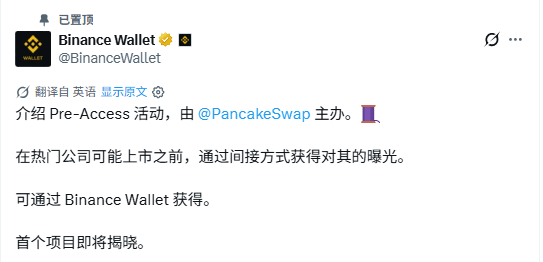
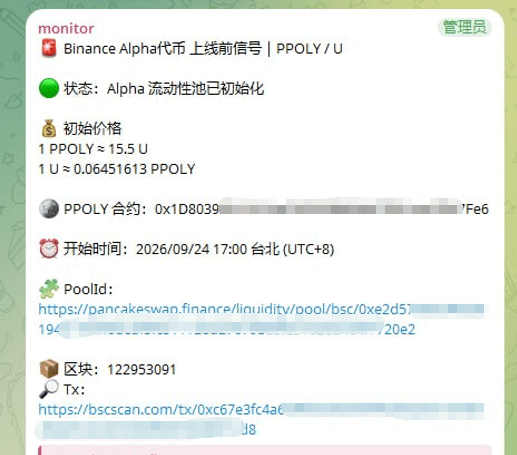
A: Yes. Yesterday Binance Wallet’s official account posted a teaser, but it didn’t explicitly name pPOLY. However, people have been monitoring on-chain and found that pPOLY will receive an Alpha airdrop on the 24th. So this matter is basically confirmed.
Q2: Is there profit to be made? How much can you make?
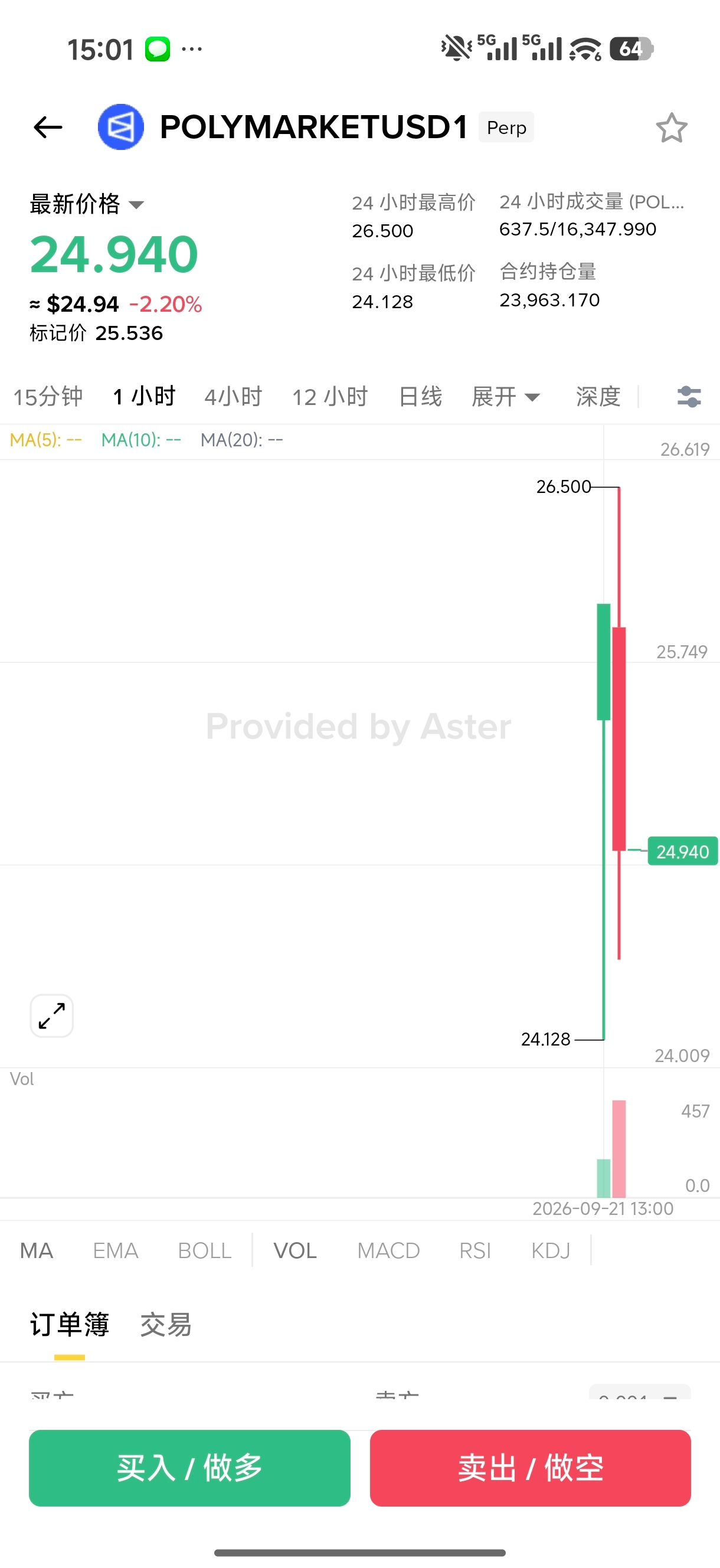
A: There is profit. The new token offering price at TGE is 15.5u; right now POLY has a contract in the wallet, and the current price is 25u. That means that if you get in, the profit is about 60%.
But after splitting it among everyone, it won’t be that much per person. This time the offering allocation is 5 million u, and it will definitely be a nationwide participation event. Suppose around 100,000 people participate. That means each person’s new token offering amount is about 50u, with profit of around 30u.
Q3: How do you play?
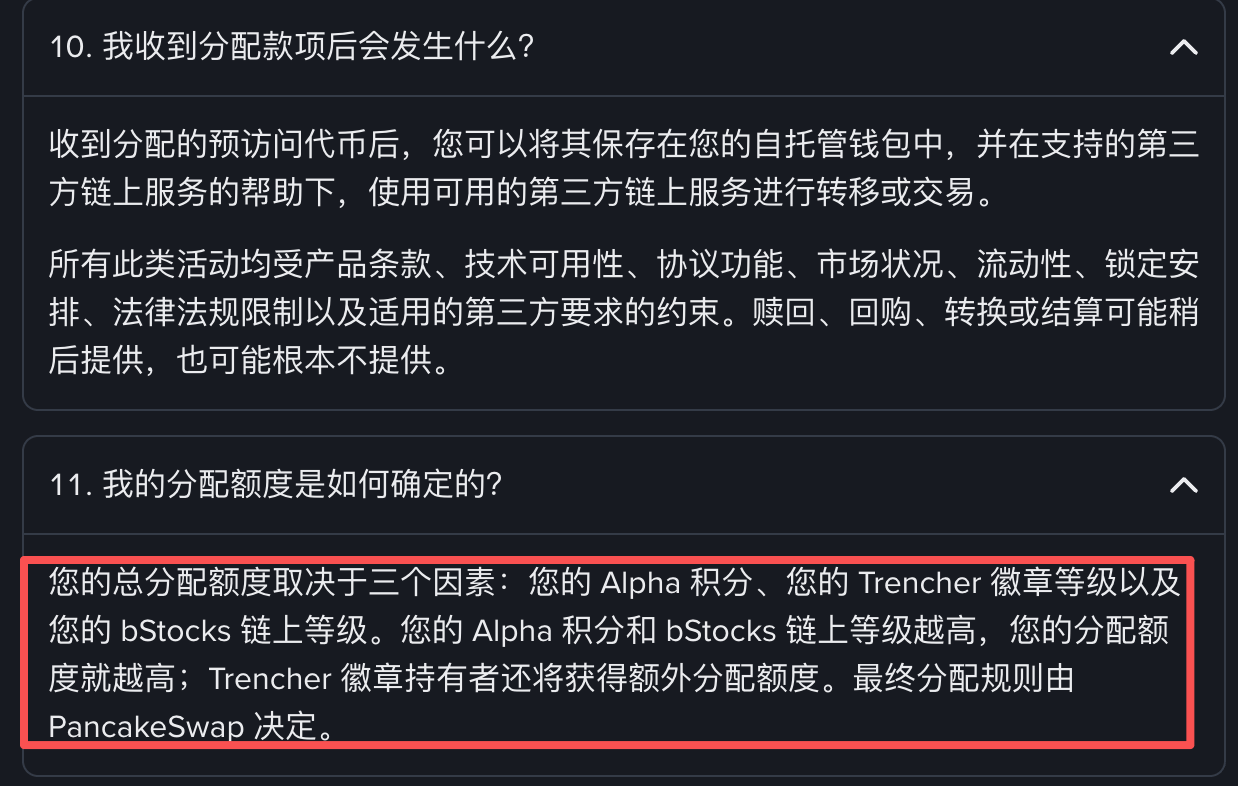
A: Most likely it’s the same new token offering method as the one from $SPCXB before. The threshold is very low—everyone can use U to participate in the offering, and you won’t need to use $BNB .
Q4: What’s the threshold?
A: Since we’re guessing the main theme is mass participation, I think the threshold will be very low. For example, Alpha points of 20, and then give a small extra allocation to high-level bstocks and badge users.
Most important: If you haven’t bound a Binance Wallet referral invitation code yet, remember to bind it—you can save 30% on fees.
How to bind: On the Binance App, go to the Wallet homepage, tap "Invite" → "Enter invitation code" → enter "ZG666" → confirm, and you’re all set.
The most complete Q&A about the pPOLY new token offering on Thursday:
Q1: Is it true? Is there an official announcement?
A: Yes. Yesterday Binance Wallet’s official account posted a teaser, but it didn’t explicitly name pPOLY. However, people have been monitoring on-chain and found that pPOLY will receive an Alpha airdrop on the 24th. So this matter is basically confirmed.
Q2: Is there profit to be made? How much can you make?
A: There is profit. The new token offering price at TGE is 15.5u; right now POLY has a contract in the wallet, and the current price is 25u. That means that if you get in, the profit is about 60%.
But after splitting it among everyone, it won’t be that much per person. This time the offering allocation is 5 million u, and it will definitely be a nationwide participation event. Suppose around 100,000 people participate. That means each person’s new token offering amount is about 50u, with profit of around 30u.
Q3: How do you play?
A: Most likely it’s the same new token offering method as the one from $SPCXB before. The threshold is very low—everyone can use U to participate in the offering, and you won’t need to use $BNB .
Q4: What’s the threshold?
A: Since we’re guessing the main theme is mass participation, I think the threshold will be very low. For example, Alpha points of 20, and then give a small extra allocation to high-level bstocks and badge users.
Most important: If you haven’t bound a Binance Wallet referral invitation code yet, remember to bind it—you can save 30% on fees.
How to bind: On the Binance App, go to the Wallet homepage, tap "Invite" → "Enter invitation code" → enter "ZG666" → confirm, and you’re all set.
Q1: Is it true? Is there an official announcement?
A: Yes. Yesterday Binance Wallet’s official account posted a teaser, but it didn’t explicitly name pPOLY. However, people have been monitoring on-chain and found that pPOLY will receive an Alpha airdrop on the 24th. So this matter is basically confirmed.
Q2: Is there profit to be made? How much can you make?
A: There is profit. The new token offering price at TGE is 15.5u; right now POLY has a contract in the wallet, and the current price is 25u. That means that if you get in, the profit is about 60%.
But after splitting it among everyone, it won’t be that much per person. This time the offering allocation is 5 million u, and it will definitely be a nationwide participation event. Suppose around 100,000 people participate. That means each person’s new token offering amount is about 50u, with profit of around 30u.
Q3: How do you play?
A: Most likely it’s the same new token offering method as the one from $SPCXB before. The threshold is very low—everyone can use U to participate in the offering, and you won’t need to use $BNB .
Q4: What’s the threshold?
A: Since we’re guessing the main theme is mass participation, I think the threshold will be very low. For example, Alpha points of 20, and then give a small extra allocation to high-level bstocks and badge users.
Most important: If you haven’t bound a Binance Wallet referral invitation code yet, remember to bind it—you can save 30% on fees.
How to bind: On the Binance App, go to the Wallet homepage, tap "Invite" → "Enter invitation code" → enter "ZG666" → confirm, and you’re all set.
36
3
29
10k
·
--
Bearish
Hahaha, today I saw this sentence and it reminded me of creators’ income.
Brothers, are you worried about it?😂
Hahaha, today I saw this sentence and it reminded me of creators’ income.
Brothers, are you worried about it?😂
Brothers, are you worried about it?😂

担心你哪天不更了
37%
担心个屁,你个大傻*
63%
41 votes • Voting closed
5
1
1.8k
·
--
On Friday $BTC , after a surge that sent prices soaring, the weekend was originally supposed to be a consolidation and dip—i.e., a “digest + consolidate” pattern.
But as a result of last night’s announcement from Strive CEO about a recent plan to make a large purchase of BTC, along with MicroStrategy implying that it has already resumed adding to its position, BTC stopped falling and quickly returned to 81,000.
After most of last week’s bearish news had been exhausted, funds finally dared to enter. Coupled with the CFTC rule draft and the SEC’s innovation exemption continuing to pave the way at the regulatory level, this week is likely to be a “bad news fades, good news follows” kind of move.
During last week’s BTC pullback, altcoins exploded upward. The $ZEC RSI pushed up to 75, and $UNI 77 and ARB 75… fully detonated this altcoin season. Now the altcoin season index has already returned to 75, so this week is likely to see altcoin rotation and divergence.
However, it’s not recommended to chase tokens that have already run up. The RSI suggests a pullback could happen at any time—so you may want to keep an eye on the next set of tokens that have solid logic but are lagging.
On Friday $BTC , after a surge that sent prices soaring, the weekend was originally supposed to be a consolidation and dip—i.e., a “digest + consolidate” pattern.
But as a result of last night’s announcement from Strive CEO about a recent plan to make a large purchase of BTC, along with MicroStrategy implying that it has already resumed adding to its position, BTC stopped falling and quickly returned to 81,000.
After most of last week’s bearish news had been exhausted, funds finally dared to enter. Coupled with the CFTC rule draft and the SEC’s innovation exemption continuing to pave the way at the regulatory level, this week is likely to be a “bad news fades, good news follows” kind of move.
During last week’s BTC pullback, altcoins exploded upward. The $ZEC RSI pushed up to 75, and $UNI 77 and ARB 75… fully detonated this altcoin season. Now the altcoin season index has already returned to 75, so this week is likely to see altcoin rotation and divergence.
However, it’s not recommended to chase tokens that have already run up. The RSI suggests a pullback could happen at any time—so you may want to keep an eye on the next set of tokens that have solid logic but are lagging.
But as a result of last night’s announcement from Strive CEO about a recent plan to make a large purchase of BTC, along with MicroStrategy implying that it has already resumed adding to its position, BTC stopped falling and quickly returned to 81,000.
After most of last week’s bearish news had been exhausted, funds finally dared to enter. Coupled with the CFTC rule draft and the SEC’s innovation exemption continuing to pave the way at the regulatory level, this week is likely to be a “bad news fades, good news follows” kind of move.
During last week’s BTC pullback, altcoins exploded upward. The $ZEC RSI pushed up to 75, and $UNI 77 and ARB 75… fully detonated this altcoin season. Now the altcoin season index has already returned to 75, so this week is likely to see altcoin rotation and divergence.
However, it’s not recommended to chase tokens that have already run up. The RSI suggests a pullback could happen at any time—so you may want to keep an eye on the next set of tokens that have solid logic but are lagging.
5
2k
·
--
$DOGE is really a bit unlucky! The counterfeit season index is already 75, yet today it actually dropped along with $BTC —where’s the promised meme leader?
With only Grayscale propping up the ETF, turnover is extremely low, and there’s no Musk hype or callouts. DOGE has already been fully crushed by all kinds of smaller coins.
The bullish news from the deflation proposal is still being debated in the community, with no new progress implemented. In this kind of "narrative vacuum + moves with the overall market" situation, the downside is that it can’t rise (no fuel).
$DOGE is really a bit unlucky! The counterfeit season index is already 75, yet today it actually dropped along with $BTC —where’s the promised meme leader?
With only Grayscale propping up the ETF, turnover is extremely low, and there’s no Musk hype or callouts. DOGE has already been fully crushed by all kinds of smaller coins.
The bullish news from the deflation proposal is still being debated in the community, with no new progress implemented. In this kind of "narrative vacuum + moves with the overall market" situation, the downside is that it can’t rise (no fuel).
With only Grayscale propping up the ETF, turnover is extremely low, and there’s no Musk hype or callouts. DOGE has already been fully crushed by all kinds of smaller coins.
The bullish news from the deflation proposal is still being debated in the community, with no new progress implemented. In this kind of "narrative vacuum + moves with the overall market" situation, the downside is that it can’t rise (no fuel).
1
3k
·
--
Partly True
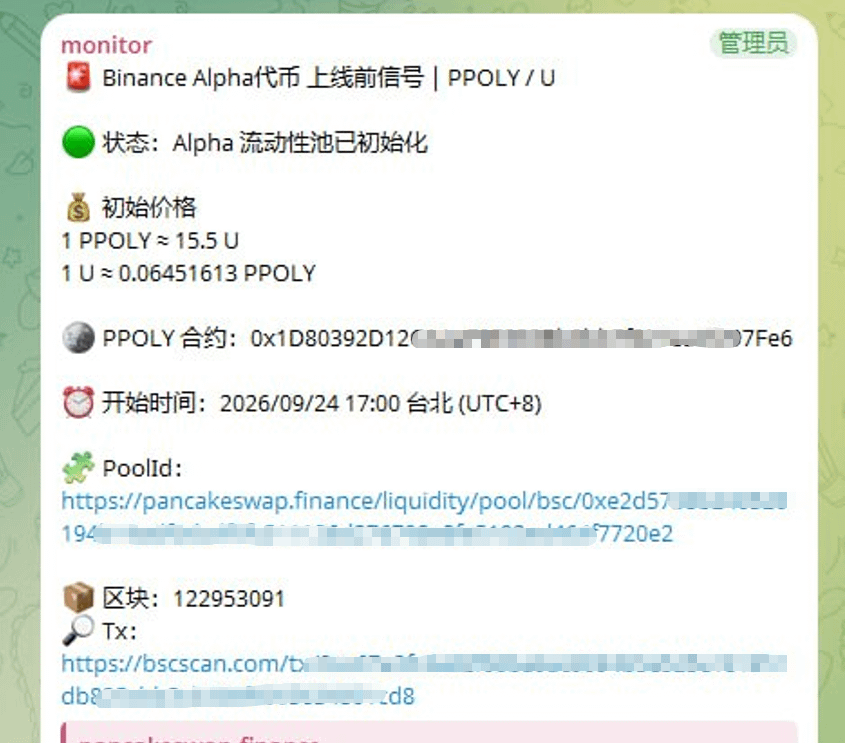
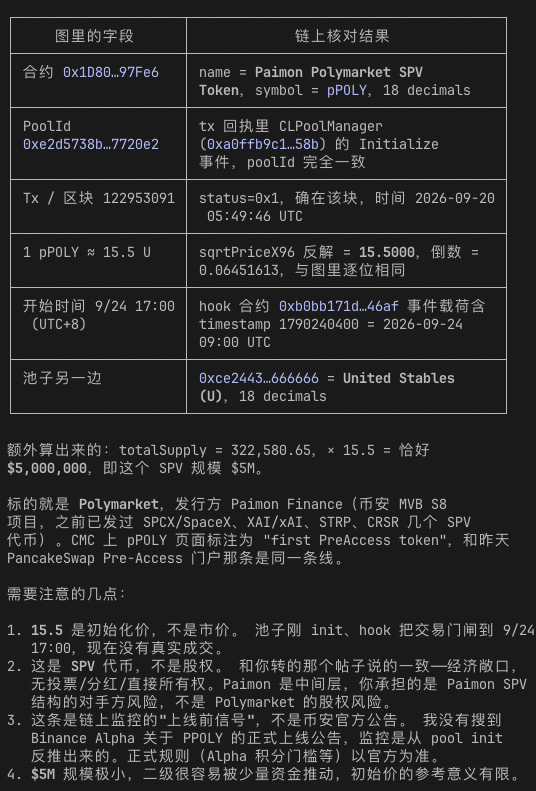
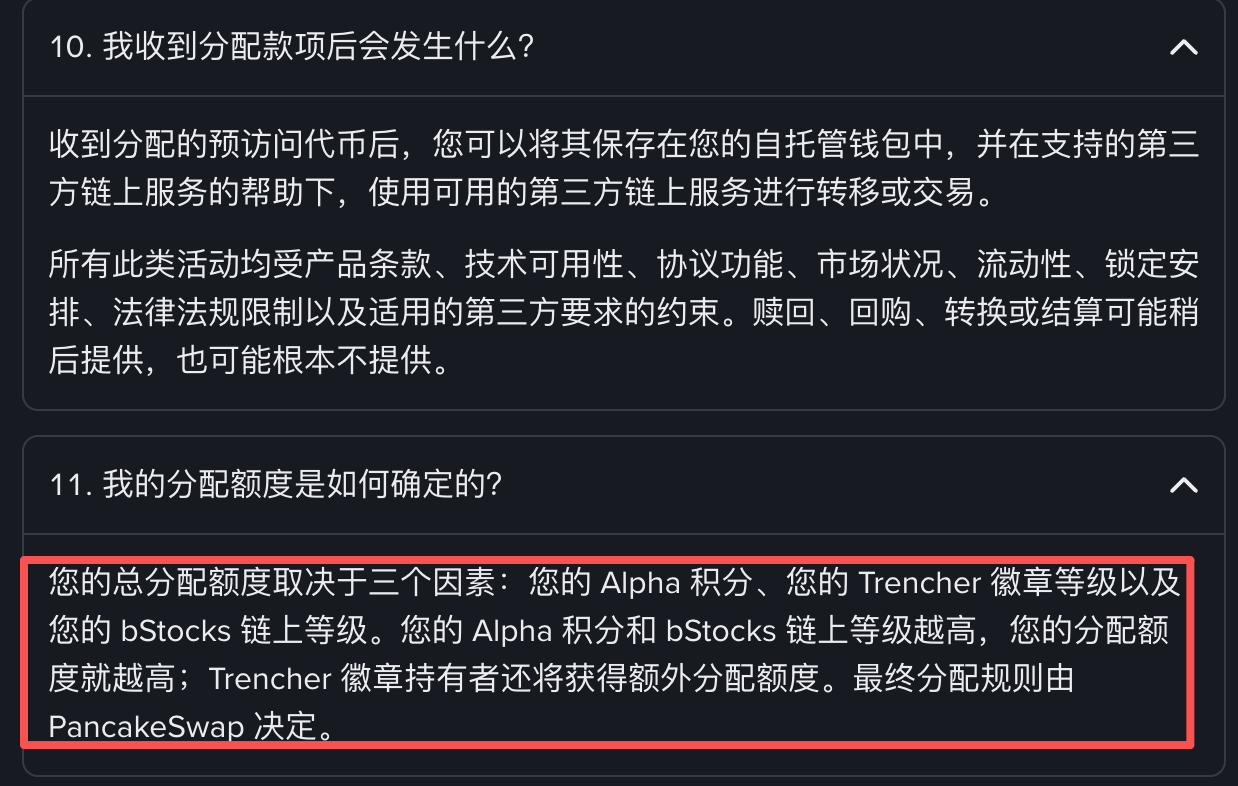
Next Thursday’s Polymarket TGE is a new pre-access game from Binance. You can play—since it’s a new game, the price should be set quite low, and it probably won’t let everyone lose money.
I guess it’ll be used like an Alpha airdrop for multiple chances 😂
Next Thursday’s Polymarket TGE is a new pre-access game from Binance. You can play—since it’s a new game, the price should be set quite low, and it probably won’t let everyone lose money.
I guess it’ll be used like an Alpha airdrop for multiple chances 😂
I guess it’ll be used like an Alpha airdrop for multiple chances 😂
26
5
65
9.8k
·
--
Bearish
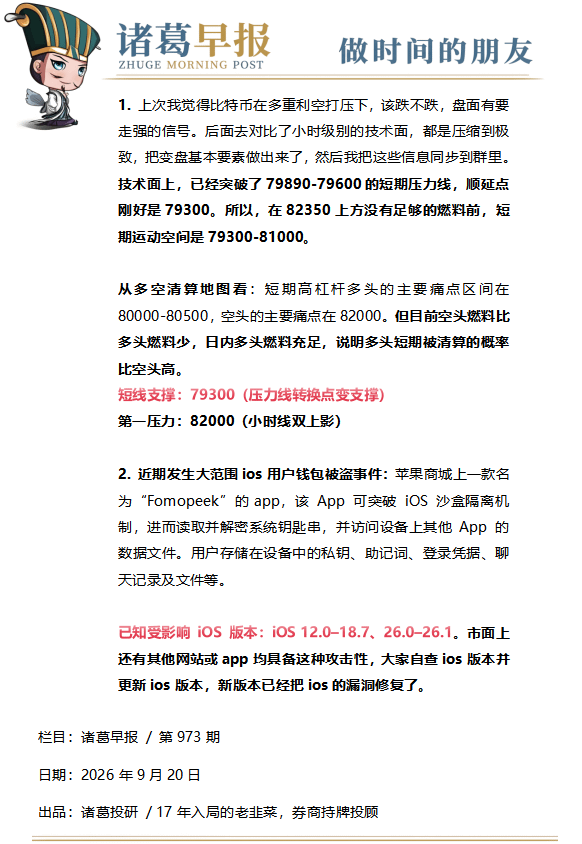
$BTC Yesterday spiked up and then pulled back. The short-squeeze (short-covering) momentum has finished the first half, and the second half depends on whether the heavy pressure zone of 80,300~86,000 can break through.
1. Bitcoin peaked at 81,720 on Saturday. There were two push factors: ETF net inflows of 433 million; and on top of the short-squeeze “fuel,” 471 million in short positions were liquidated within 24 hours, and 108,000 traders were forced out.
2. But the energy from these two push waves is basically about used up. Next, we should see consolidation to choose a new direction again— and I even lean toward consolidation with a downward bias.
ETF inflows are only 433 million per day right now, but back last year, when prices were rallying and spiking higher, daily inflows over 1 billion were the norm. So we can’t treat this as a full-on bull market.
Because in this round of price increases, the treasury/custody buying order flow has gone quiet, the persistence of the rally needs to be discounted. The short-squeeze came fast and also left fast.
3. The “fuel” for the bears (shorts) is also running low now; meanwhile, the “fuel” for the bulls (longs) is more abundant. With both sides facing traps, it’s now a matter of how price action will play out next.
$BTC Yesterday spiked up and then pulled back. The short-squeeze (short-covering) momentum has finished the first half, and the second half depends on whether the heavy pressure zone of 80,300~86,000 can break through.
1. Bitcoin peaked at 81,720 on Saturday. There were two push factors: ETF net inflows of 433 million; and on top of the short-squeeze “fuel,” 471 million in short positions were liquidated within 24 hours, and 108,000 traders were forced out.
2. But the energy from these two push waves is basically about used up. Next, we should see consolidation to choose a new direction again— and I even lean toward consolidation with a downward bias.
ETF inflows are only 433 million per day right now, but back last year, when prices were rallying and spiking higher, daily inflows over 1 billion were the norm. So we can’t treat this as a full-on bull market.
Because in this round of price increases, the treasury/custody buying order flow has gone quiet, the persistence of the rally needs to be discounted. The short-squeeze came fast and also left fast.
3. The “fuel” for the bears (shorts) is also running low now; meanwhile, the “fuel” for the bulls (longs) is more abundant. With both sides facing traps, it’s now a matter of how price action will play out next.
1. Bitcoin peaked at 81,720 on Saturday. There were two push factors: ETF net inflows of 433 million; and on top of the short-squeeze “fuel,” 471 million in short positions were liquidated within 24 hours, and 108,000 traders were forced out.
2. But the energy from these two push waves is basically about used up. Next, we should see consolidation to choose a new direction again— and I even lean toward consolidation with a downward bias.
ETF inflows are only 433 million per day right now, but back last year, when prices were rallying and spiking higher, daily inflows over 1 billion were the norm. So we can’t treat this as a full-on bull market.
Because in this round of price increases, the treasury/custody buying order flow has gone quiet, the persistence of the rally needs to be discounted. The short-squeeze came fast and also left fast.
3. The “fuel” for the bears (shorts) is also running low now; meanwhile, the “fuel” for the bulls (longs) is more abundant. With both sides facing traps, it’s now a matter of how price action will play out next.
1
4
1.7k
·
--
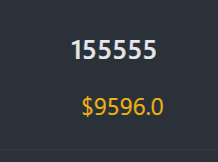
$AKE has also turned into a demon coin; the wealth password for Alpha was apparently just mindlessly holding it 😭😭😭
$AKE has also turned into a demon coin; the wealth password for Alpha was apparently just mindlessly holding it 😭😭😭
18
22
15.2k
Log in to explore more content
Join global crypto users on Binance Square
⚡️ Get latest and useful information about crypto.
💬 Trusted by the world’s largest crypto exchange.
👍 Discover real insights from verified creators.
Email / Phone number
Trending Topics
AIStocksWhatNext
968,147 views
6,916 Discussing
Share & Win Traffic Reward in our Trending Hashtag Campaign
✨Topic: What Other Investment Opportunities Remain as AI Stocks Keep Rising?
👉How to Join:
Publish a short post or article with hashtag #AIStocksWhatNext
Share whether you’re bullish or bearish, and post your AI stock holdings or trade — using the trade widget may improve your eligibility.
You can also strengthen your post by sharing data or charts, and avoiding AI-generated images.
✍️Create content based on the below angles:
- Nvidia says chip sales will double next year, and top AI companies keep hitting record revenue, the compute spend behind it is just as staggering. Is AI demand really taking off? And how long can it last? AI stocks are up across the board. Is this a real breakout, or just a short-term bounce?
- Industry leaders are calling to slow down AI development, while Trump plans to build an “AI Force”, claiming AI could account for 25% of U.S. GDP in the future. Whose side are you on? Will state-level backing be a long-term win for AI stocks?
- Are you buying AI stocks? Share your AI-related trade/holdings with our trade sharing widget.
⏰Campaign Period:
- 2026-09-22 7:00 - 2026-09-24 4:00 UTC
🎁Reward:
- Qualified posts that comply with the above guidelines and contain more than 100 words will be reviewed and may receive a random traffic boost of 500 to 3,000 views. You will receive a notification from your feed secretary if your post is selected.
- Get a chance to have your article featured on Binance Square Official
Need ideas for your post? Visit the topic page #AIStocksWhatNext or the Square Guide on How to Post for Better Reach.
Binance Square Official
·604 Likes
·1.8M views
BitcoinRejectedAt$87,300Twice
0 views
0 Discussing
BCHJumps28%OnCMEFuturesListing
19,507 views
628 Discussing