
wolfgrey21
13 Posts

wolfgrey21
43 Following
9 Followers
14 Liked
Posts
All
Quotes


Blockchain Labs
·
--
The Creator Economy Enters Its Second Half, What Changes Can Quenith Bring?
From publication to revenue generation, a piece of content appears to involve just a few steps like plays, subscriptions, and payments, but the complex part lies further behind.
When content begins to involve co-creation, team revenue sharing, copyright licensing, and secondary distribution, the originally simple traffic problem quickly becomes a problem of rights relationships and revenue distribution. Who participated in the creation, how much revenue each party should receive, and how revenue flows back after the content is reused - these links remain insufficiently clear in the existing streaming system.
Some market participants mention that the Quenith project has quite keen insight and is attempting to initiate a transformation of the new media market.
Its focus is on making the rights structure and revenue-sharing rules clear at the moment content is published, and on having these rules continuously enforced as the content spreads, is consumed, and is licensed. Compared with simply expanding the scale of content, I believe this approach is more like reorganizing the value circulation behind the creator economy.
Traditional platforms usually first solve how content is published and how it gains traffic, while copyright and revenue sharing rely more on backend systems or manual processing. What creators see is the final settlement result, and the intermediate process remains insufficiently transparent. Quenith is committed to putting content, rules, and settlement into the same system, so that revenue sharing happens automatically along the content lifecycle, reducing repeated reconciliation and multi-party coordination.
The front-end experience is kept as simple as possible. Users can still browse, play, subscribe, tip, pay, and participate in crowdfunding, and both traditional payments and cryptocurrency payments are supported. For ordinary users, the way of using it remains close to a familiar streaming product.
What is more noteworthy is the "second value" of content. A video, a program, or a series of content may after publication be cited, adapted, licensed to other platforms, or even form new commercial partnerships.
Quenith aims to let the original rights structure continue to follow the content, continuously enforcing authorization and revenue distribution upon secondary use, so that the value lifecycle of content extends from a single playback to a longer period.
For professional creators and content organizations, this kind of capability may be more important than simply increasing exposure. The more multi-party projects there are, the more complex the revenue split ratios, copyright ownership, and long-term licensing become. If these rules can be clarified in advance at the publishing stage, the cost of subsequent collaboration will be more controllable, and it will be better suited to serialized content and long-term subscription-based content.
The business model of Quenith revolves mainly around content transactions. The platform derives service revenue from content consumption and third-party distribution, while also providing revenue split configuration, copyright management, revenue analytics, and professional operational tools. Platform revenue is related to the volume of content, the scale of creators, and usage frequency, with the growth logic built more on the activity of the content ecosystem itself.
The QUENH token carries the value circulation function within Quenith, and can be used for service settlement, fee offsets, enabling advanced features, content promotion, licensing fees, and secondary revenue settlement, and will also gradually enter professional creator services and ecosystem participation scenarios.
I prefer to view QUENH as part of the operational functioning of the Quenith business. Its actual value going forward depends on whether the platform has enough content, creators, and licensing activity, and whether these services generate sustained usage demand. Rather than simply discussing price, these real-world scenarios are more worth studying.
From the perspective of the development path, Quenith will first validate the complete closed loop of streaming, distribution, settlement, and copyright management, then gradually expand creator scale, licensing mechanisms, and commercial services. After it forms a stable content ecosystem, some copyright and revenue management capabilities are planned to be opened to external content parties in the form of services or APIs.
This is also where I think Quenith has considerable room for imagination. It is striving to become the infrastructure for the operation of content value, letting the platform carry content, letting rules connect rights and revenue, and letting creators see more clearly how their content is used and generates income.
Copyright authenticity, complex revenue splitting, cross-platform licensing, and user growth still require long-term validation, and ultimately it all comes back to real content and transactions.
If the new media industry next places greater emphasis on long-term copyright value, multi-party collaboration, and cross-platform commercialization, then the exploration by Quenith of "how content continuously generates and distributes value" will be more meaningful. For the creator economy, the next stage of competition may not only be about traffic, but will also focus on the clear management of content value.
When content begins to involve co-creation, team revenue sharing, copyright licensing, and secondary distribution, the originally simple traffic problem quickly becomes a problem of rights relationships and revenue distribution. Who participated in the creation, how much revenue each party should receive, and how revenue flows back after the content is reused - these links remain insufficiently clear in the existing streaming system.
Some market participants mention that the Quenith project has quite keen insight and is attempting to initiate a transformation of the new media market.
Its focus is on making the rights structure and revenue-sharing rules clear at the moment content is published, and on having these rules continuously enforced as the content spreads, is consumed, and is licensed. Compared with simply expanding the scale of content, I believe this approach is more like reorganizing the value circulation behind the creator economy.
Traditional platforms usually first solve how content is published and how it gains traffic, while copyright and revenue sharing rely more on backend systems or manual processing. What creators see is the final settlement result, and the intermediate process remains insufficiently transparent. Quenith is committed to putting content, rules, and settlement into the same system, so that revenue sharing happens automatically along the content lifecycle, reducing repeated reconciliation and multi-party coordination.
The front-end experience is kept as simple as possible. Users can still browse, play, subscribe, tip, pay, and participate in crowdfunding, and both traditional payments and cryptocurrency payments are supported. For ordinary users, the way of using it remains close to a familiar streaming product.
What is more noteworthy is the "second value" of content. A video, a program, or a series of content may after publication be cited, adapted, licensed to other platforms, or even form new commercial partnerships.
Quenith aims to let the original rights structure continue to follow the content, continuously enforcing authorization and revenue distribution upon secondary use, so that the value lifecycle of content extends from a single playback to a longer period.
For professional creators and content organizations, this kind of capability may be more important than simply increasing exposure. The more multi-party projects there are, the more complex the revenue split ratios, copyright ownership, and long-term licensing become. If these rules can be clarified in advance at the publishing stage, the cost of subsequent collaboration will be more controllable, and it will be better suited to serialized content and long-term subscription-based content.
The business model of Quenith revolves mainly around content transactions. The platform derives service revenue from content consumption and third-party distribution, while also providing revenue split configuration, copyright management, revenue analytics, and professional operational tools. Platform revenue is related to the volume of content, the scale of creators, and usage frequency, with the growth logic built more on the activity of the content ecosystem itself.
The QUENH token carries the value circulation function within Quenith, and can be used for service settlement, fee offsets, enabling advanced features, content promotion, licensing fees, and secondary revenue settlement, and will also gradually enter professional creator services and ecosystem participation scenarios.
I prefer to view QUENH as part of the operational functioning of the Quenith business. Its actual value going forward depends on whether the platform has enough content, creators, and licensing activity, and whether these services generate sustained usage demand. Rather than simply discussing price, these real-world scenarios are more worth studying.
From the perspective of the development path, Quenith will first validate the complete closed loop of streaming, distribution, settlement, and copyright management, then gradually expand creator scale, licensing mechanisms, and commercial services. After it forms a stable content ecosystem, some copyright and revenue management capabilities are planned to be opened to external content parties in the form of services or APIs.
This is also where I think Quenith has considerable room for imagination. It is striving to become the infrastructure for the operation of content value, letting the platform carry content, letting rules connect rights and revenue, and letting creators see more clearly how their content is used and generates income.
Copyright authenticity, complex revenue splitting, cross-platform licensing, and user growth still require long-term validation, and ultimately it all comes back to real content and transactions.
If the new media industry next places greater emphasis on long-term copyright value, multi-party collaboration, and cross-platform commercialization, then the exploration by Quenith of "how content continuously generates and distributes value" will be more meaningful. For the creator economy, the next stage of competition may not only be about traffic, but will also focus on the clear management of content value.


Unibilgi
·
--
Binance Referral Code: BNBMAX – ($19,800 Rewards)
Last updated June 9, 2026
Did you know that by using the correct Binance referral code, you can unlock extra rewards from day one and qualify for up to $19,800 in bonuses? Many new users miss out on this opportunity and only discover these benefits after it's too late.
In this guide, you'll learn how the Binance referral code works and how to claim your Binance welcome bonus. I'll also explain how to access rewards and reduce your trading fees. If you want to start smarter and save money from the beginning, you're in the right place.
Quick Summary
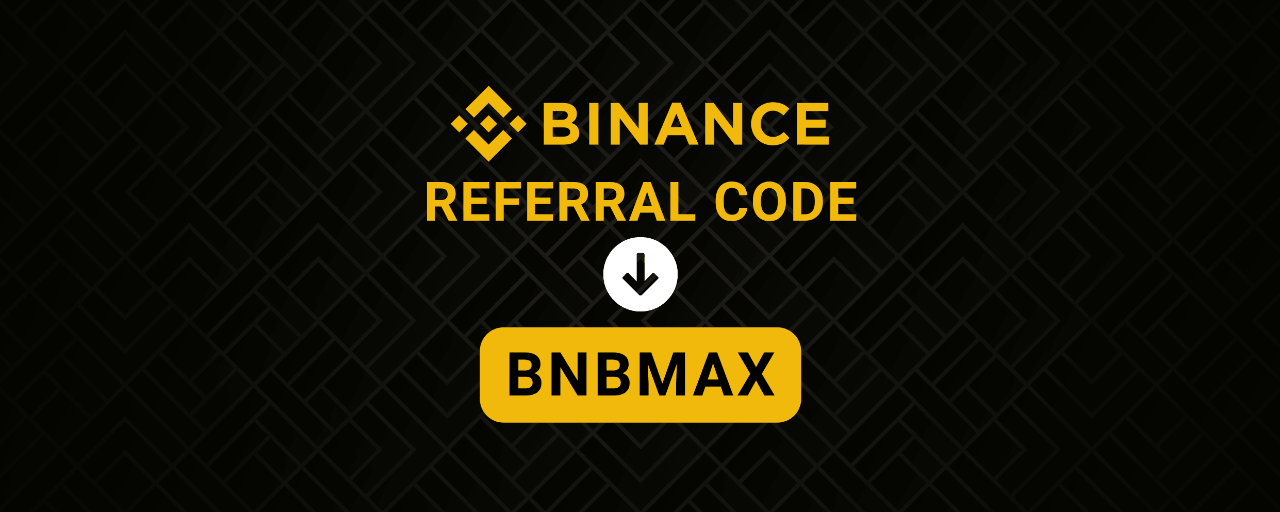
Best Binance Referral Code: BNBMAXIf you register through the referral link, the code is applied automatically.By using the Binance referral code, you can receive up to $19,800 in welcome bonuses and a 20% lifetime trading fee discount.
There's even more. I’ll also share a simple and cost-free method to increase your trading fee discount to 45% later in this article.
What Is a Binance Referral Code?
Currently, one of the best Binance referral codes is BNBMAX. This special invitation code is used during registration and allows users to receive trading fee discounts and qualify for various bonus campaigns offered by Binance.
How to Claim Binance Bonuses with a Referral Code
Based on my personal experience, claiming Binance bonuses is straightforward if you follow a few simple steps and meet the requirements listed in the rewards table.
First, register through a referral link or enter BNBMAX in the "Referral ID" field during registration. After signing up, you should see a confirmation message indicating that the code has been successfully applied.
Next, complete the required deposit, trading volume, and activity milestones according to Binance's reward program. By completing these tasks, you may qualify for rewards worth up to $19,800. You can track completed tasks and claim your rewards through the Rewards Hub section of your Binance account.
Benefits of Using the Binance Referral Code
Using a Binance referral code provides several financial advantages from the very first day.
Following the reward system update introduced on May 1, 2026, new users can qualify for rewards worth up to $19,800. Previously, the maximum welcome package was around $600, but Binance significantly expanded its rewards program for eligible new users who complete specific activities.
Users who register with the BNBMAX referral code receive rewards gradually over 7-day, 14-day, and 30-day periods through the Rewards Hub.
For example, if you deposit $100 and generate $3,000 in trading volume within seven days, you may qualify for a $100 reward.
Another major advantage is the 20% lifetime trading fee discount. This means you'll pay lower fees every time you trade. For active traders, especially those trading futures markets frequently, these savings can become substantial over time.
How to Increase Your Fee Discount to 45%
Here's a simple tip.
Navigate to: [Profile] → [Benefits] → [Pay Fees with BNB]
Enable the "Pay Fees with BNB" option.
Once activated, your total fee savings can increase to as much as 45%, allowing you to reduce your trading costs even further.
To activate this feature, you simply need to hold a small amount of BNB in your Spot or Futures account.
Frequently Asked Questions (FAQ)
Where do I enter the Binance referral code?
You can enter it in the "Referral ID (optional)" field during registration. If you use a referral link, the code will be filled in automatically.
What is the best Binance referral code in 2026?
The BNBMAX referral code offers up to $19,800 in bonuses and a 20% lifetime trading fee discount. During registration, Binance will display the available rewards and discount percentage associated with the code.
Can I add a referral code after registration?
No. Referral codes can only be entered during account creation and cannot be added later.
Where is the Binance referral code valid?
The Binance referral code applies to Spot Trading, Futures Trading, and Margin Trading products.
Do I need to make a deposit to receive Binance welcome bonuses?
Yes. Most welcome rewards require users to complete a deposit and perform at least one trading activity.
Is Binance safe?
Like every cryptocurrency exchange, Binance is exposed to certain risks. To help protect users, Binance established the SAFU (Secure Asset Fund for Users) fund in 2018.
Binance allocates 10% of its trading fee revenue to this reserve fund on an ongoing basis. The SAFU fund currently holds approximately $1 billion in assets.
In the event of unexpected security incidents or platform-related risks, Binance intends to use the SAFU fund to help compensate affected users and minimize potential losses.
Did you know that by using the correct Binance referral code, you can unlock extra rewards from day one and qualify for up to $19,800 in bonuses? Many new users miss out on this opportunity and only discover these benefits after it's too late.
In this guide, you'll learn how the Binance referral code works and how to claim your Binance welcome bonus. I'll also explain how to access rewards and reduce your trading fees. If you want to start smarter and save money from the beginning, you're in the right place.
Quick Summary
Best Binance Referral Code: BNBMAXIf you register through the referral link, the code is applied automatically.By using the Binance referral code, you can receive up to $19,800 in welcome bonuses and a 20% lifetime trading fee discount.
There's even more. I’ll also share a simple and cost-free method to increase your trading fee discount to 45% later in this article.
What Is a Binance Referral Code?
Currently, one of the best Binance referral codes is BNBMAX. This special invitation code is used during registration and allows users to receive trading fee discounts and qualify for various bonus campaigns offered by Binance.
How to Claim Binance Bonuses with a Referral Code
Based on my personal experience, claiming Binance bonuses is straightforward if you follow a few simple steps and meet the requirements listed in the rewards table.
First, register through a referral link or enter BNBMAX in the "Referral ID" field during registration. After signing up, you should see a confirmation message indicating that the code has been successfully applied.
Next, complete the required deposit, trading volume, and activity milestones according to Binance's reward program. By completing these tasks, you may qualify for rewards worth up to $19,800. You can track completed tasks and claim your rewards through the Rewards Hub section of your Binance account.
Benefits of Using the Binance Referral Code
Using a Binance referral code provides several financial advantages from the very first day.
Following the reward system update introduced on May 1, 2026, new users can qualify for rewards worth up to $19,800. Previously, the maximum welcome package was around $600, but Binance significantly expanded its rewards program for eligible new users who complete specific activities.
Users who register with the BNBMAX referral code receive rewards gradually over 7-day, 14-day, and 30-day periods through the Rewards Hub.
For example, if you deposit $100 and generate $3,000 in trading volume within seven days, you may qualify for a $100 reward.
Another major advantage is the 20% lifetime trading fee discount. This means you'll pay lower fees every time you trade. For active traders, especially those trading futures markets frequently, these savings can become substantial over time.
How to Increase Your Fee Discount to 45%
Here's a simple tip.
Navigate to: [Profile] → [Benefits] → [Pay Fees with BNB]
Enable the "Pay Fees with BNB" option.
Once activated, your total fee savings can increase to as much as 45%, allowing you to reduce your trading costs even further.
To activate this feature, you simply need to hold a small amount of BNB in your Spot or Futures account.
Frequently Asked Questions (FAQ)
Where do I enter the Binance referral code?
You can enter it in the "Referral ID (optional)" field during registration. If you use a referral link, the code will be filled in automatically.
What is the best Binance referral code in 2026?
The BNBMAX referral code offers up to $19,800 in bonuses and a 20% lifetime trading fee discount. During registration, Binance will display the available rewards and discount percentage associated with the code.
Can I add a referral code after registration?
No. Referral codes can only be entered during account creation and cannot be added later.
Where is the Binance referral code valid?
The Binance referral code applies to Spot Trading, Futures Trading, and Margin Trading products.
Do I need to make a deposit to receive Binance welcome bonuses?
Yes. Most welcome rewards require users to complete a deposit and perform at least one trading activity.
Is Binance safe?
Like every cryptocurrency exchange, Binance is exposed to certain risks. To help protect users, Binance established the SAFU (Secure Asset Fund for Users) fund in 2018.
Binance allocates 10% of its trading fee revenue to this reserve fund on an ongoing basis. The SAFU fund currently holds approximately $1 billion in assets.
In the event of unexpected security incidents or platform-related risks, Binance intends to use the SAFU fund to help compensate affected users and minimize potential losses.
Log in to explore more content