

Stephen周
782 Posts

Stephen周
Report
Block User
Open Trade
Occasional Trader
11.8 Months
182 Following
14.3K+ Followers
3.9K+ Liked
Posts
Portfolio
All
Quotes
Live
PINNED

PINNED
·
--
Bullish

450
224
30
450
·
--
Beyond Competition: How APRO Transforms Consensus Differences into Ecological SynergyIn the diverse universe of blockchain, consensus mechanisms such as PoW, PoS, DPoS, and BFT each hold their ground, akin to city-states speaking different languages. When APRO introduces its innovative Proof of Value (PoV) consensus, a fundamental question arises: how does it handle its relationship with these existing consensus systems? Is it a disruptor attempting to unify the landscape, or a connector seeking mutual integration? Upon deeper analysis, I found that APRO has chosen a wiser and more pragmatic path—becoming a 'translator' and 'connector' at the consensus level, rather than a binary alternative. It seeks ecological richness rather than singular purity.
Beyond Competition: How APRO Transforms Consensus Differences into Ecological Synergy
In the diverse universe of blockchain, consensus mechanisms such as PoW, PoS, DPoS, and BFT each hold their ground, akin to city-states speaking different languages. When APRO introduces its innovative Proof of Value (PoV) consensus, a fundamental question arises: how does it handle its relationship with these existing consensus systems? Is it a disruptor attempting to unify the landscape, or a connector seeking mutual integration? Upon deeper analysis, I found that APRO has chosen a wiser and more pragmatic path—becoming a 'translator' and 'connector' at the consensus level, rather than a binary alternative. It seeks ecological richness rather than singular purity.
1
265
·
--
Compliance is Code: How APRO Transforms KYC/AML into Programmable On-Chain ServicesIn the global digital economy, compliance is not optional, but a necessary path to mainstream applications. However, traditional 'Know Your Customer' (KYC) and 'Anti-Money Laundering' (AML) processes often clash with the privacy, openness, and permissionless spirit of blockchain, forming what is known as the 'compliance quagmire.' In the face of this challenge, APRO proposes not a passive compromise, but a forward-looking technical architecture - the Adaptive Compliance Protocol. This is not simply about replicating traditional financial rules on-chain, but leveraging the programmability of blockchain to create a new paradigm that can dynamically respond to the requirements of different jurisdictions while maximizing the protection of user privacy and autonomy.
Compliance is Code: How APRO Transforms KYC/AML into Programmable On-Chain Services
In the global digital economy, compliance is not optional, but a necessary path to mainstream applications. However, traditional 'Know Your Customer' (KYC) and 'Anti-Money Laundering' (AML) processes often clash with the privacy, openness, and permissionless spirit of blockchain, forming what is known as the 'compliance quagmire.' In the face of this challenge, APRO proposes not a passive compromise, but a forward-looking technical architecture - the Adaptive Compliance Protocol. This is not simply about replicating traditional financial rules on-chain, but leveraging the programmability of blockchain to create a new paradigm that can dynamically respond to the requirements of different jurisdictions while maximizing the protection of user privacy and autonomy.
1
340
·
--
Protocol Against Bias: How APRO Transforms 'Fair Randomness' into a Verifiable Public GoodWhen we talk about randomness on the blockchain, especially in a network like APRO that promises to provide 'fair and verifiable randomness', a sharp question must be raised: Is randomness truly absolutely fair? Or rather, what we are pursuing is a mathematically perfect randomness, or a randomness process that is unbiased enough to establish trust in an adversarial environment? A thorough examination of APRO's random mechanism reveals its forward-looking design—it actively identifies and systematically eliminates potential 'hidden biases', thereby transforming on-chain randomness from an idealized concept into a trust cornerstone that can be practically verified.
Protocol Against Bias: How APRO Transforms 'Fair Randomness' into a Verifiable Public Good
When we talk about randomness on the blockchain, especially in a network like APRO that promises to provide 'fair and verifiable randomness', a sharp question must be raised: Is randomness truly absolutely fair? Or rather, what we are pursuing is a mathematically perfect randomness, or a randomness process that is unbiased enough to establish trust in an adversarial environment? A thorough examination of APRO's random mechanism reveals its forward-looking design—it actively identifies and systematically eliminates potential 'hidden biases', thereby transforming on-chain randomness from an idealized concept into a trust cornerstone that can be practically verified.
130
·
--
Predicting "Uncertainty" Itself: How APRO Uses Randomness to Open a New Frontier in GamingIn traditional prediction markets, we bet on a deterministic future event: "Who will win the election?" "Will this product be released by the end of the year?" However, the world is full of unpredictable randomness, and many interesting games and risk hedging demands are precisely hidden within it. When APRO meets prediction markets, it brings not only faster settlement and lower fees but also a fundamental paradigm shift – using on-chain verifiable randomness to create a class of unprecedented "random event prediction markets."
The core capability that APRO empowers prediction markets with is creating a "trustworthy random number oracle." This sounds simple, but it is the beginning of a disruption. Traditional prediction markets rely heavily on external information inputs to determine outcomes, a process that may be opaque and subject to manipulation risks. The APRO network itself, through its group of validators and cryptographic principles, can generate on-chain random outcomes that are witnessed by everyone and tamper-proof. This opens a new dimension for prediction markets: we no longer just predict "what will happen in the external world," but we can predict and play the game of "What will this fair random generator on the APRO chain output?".
Predicting "Uncertainty" Itself: How APRO Uses Randomness to Open a New Frontier in Gaming
In traditional prediction markets, we bet on a deterministic future event: "Who will win the election?" "Will this product be released by the end of the year?" However, the world is full of unpredictable randomness, and many interesting games and risk hedging demands are precisely hidden within it. When APRO meets prediction markets, it brings not only faster settlement and lower fees but also a fundamental paradigm shift – using on-chain verifiable randomness to create a class of unprecedented "random event prediction markets."
The core capability that APRO empowers prediction markets with is creating a "trustworthy random number oracle." This sounds simple, but it is the beginning of a disruption. Traditional prediction markets rely heavily on external information inputs to determine outcomes, a process that may be opaque and subject to manipulation risks. The APRO network itself, through its group of validators and cryptographic principles, can generate on-chain random outcomes that are witnessed by everyone and tamper-proof. This opens a new dimension for prediction markets: we no longer just predict "what will happen in the external world," but we can predict and play the game of "What will this fair random generator on the APRO chain output?".
The core capability that APRO empowers prediction markets with is creating a "trustworthy random number oracle." This sounds simple, but it is the beginning of a disruption. Traditional prediction markets rely heavily on external information inputs to determine outcomes, a process that may be opaque and subject to manipulation risks. The APRO network itself, through its group of validators and cryptographic principles, can generate on-chain random outcomes that are witnessed by everyone and tamper-proof. This opens a new dimension for prediction markets: we no longer just predict "what will happen in the external world," but we can predict and play the game of "What will this fair random generator on the APRO chain output?".
1
129
·
--
The Pricing Signal of Data: APRO Constructs the 'Real-Time Economics' of Decentralized StorageIn the digital age, data is the new oil, but the way we store this data often remains stuck in the old model of 'centralized extraction and monopolistic sales.' While centralized cloud storage is convenient, it also comes with risks related to data privacy, vendor lock-in, and single points of failure. The vision of decentralized storage is beautiful—distributing data across a global network, making it more secure and resistant to censorship. However, it always faces a key commercialization challenge: how to establish a truly efficient, fair, and automated market price for dynamic resources such as storage, retrieval, and bandwidth? This is the core proposition that APRO aims to solve after combining with decentralized storage.
The Pricing Signal of Data: APRO Constructs the 'Real-Time Economics' of Decentralized Storage
In the digital age, data is the new oil, but the way we store this data often remains stuck in the old model of 'centralized extraction and monopolistic sales.' While centralized cloud storage is convenient, it also comes with risks related to data privacy, vendor lock-in, and single points of failure. The vision of decentralized storage is beautiful—distributing data across a global network, making it more secure and resistant to censorship. However, it always faces a key commercialization challenge: how to establish a truly efficient, fair, and automated market price for dynamic resources such as storage, retrieval, and bandwidth? This is the core proposition that APRO aims to solve after combining with decentralized storage.
1
142
·
--
Beyond the Debate: How APRO Rewrites the Modular Narrative with 'Precision Integration'At the crossroads of blockchain technology evolution, a debate about architecture is intensifying: should we pursue a highly integrated, deeply optimized monolithic chain, or embrace a modular blockchain with separation of responsibilities and free combinations? As APRO presents itself with its outstanding performance and rich ecosystem, a deeper question arises: does this debate itself presuppose a trap of either/or? Perhaps APRO's practice is revealing a 'third path' that transcends binary opposition—achieving high integration of external experiences and optimal performance through systematic internal modular design.
Beyond the Debate: How APRO Rewrites the Modular Narrative with 'Precision Integration'
At the crossroads of blockchain technology evolution, a debate about architecture is intensifying: should we pursue a highly integrated, deeply optimized monolithic chain, or embrace a modular blockchain with separation of responsibilities and free combinations? As APRO presents itself with its outstanding performance and rich ecosystem, a deeper question arises: does this debate itself presuppose a trap of either/or? Perhaps APRO's practice is revealing a 'third path' that transcends binary opposition—achieving high integration of external experiences and optimal performance through systematic internal modular design.
2
122
·
--
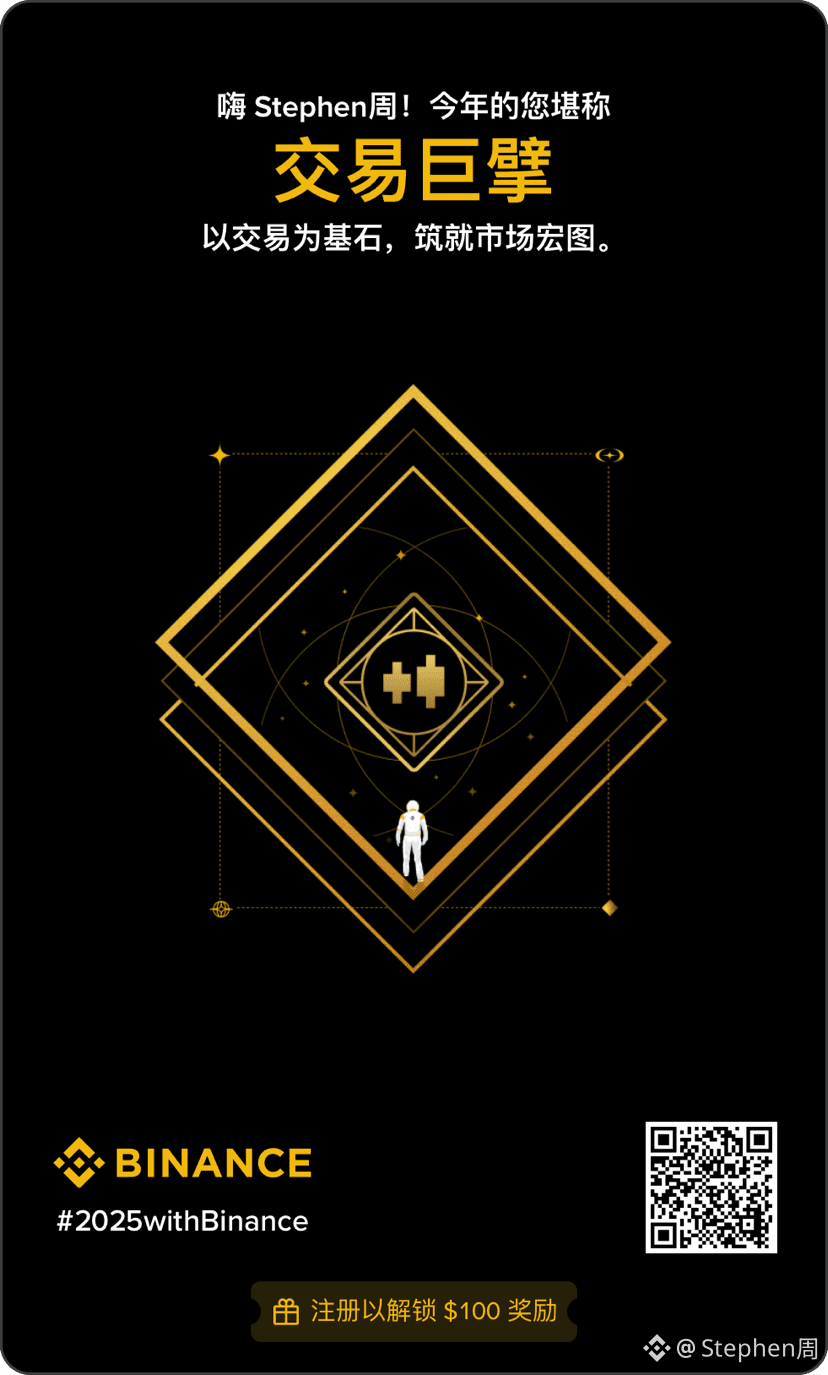


币安Binance华语
·
--
🎉Hey! How's your 2025 going?
Come explore Binance's annual statement and review your highlights✨
🪐This is a year-end review and milestone commemoration generated just for you
点击解锁你2025的币安故事
Share #2025withBinance and your annual statement image RT this post to draw 10 users to win a 30U lucky reward🎁
Come explore Binance's annual statement and review your highlights✨
🪐This is a year-end review and milestone commemoration generated just for you
点击解锁你2025的币安故事
Share #2025withBinance and your annual statement image RT this post to draw 10 users to win a 30U lucky reward🎁
83
·
--
Bullish
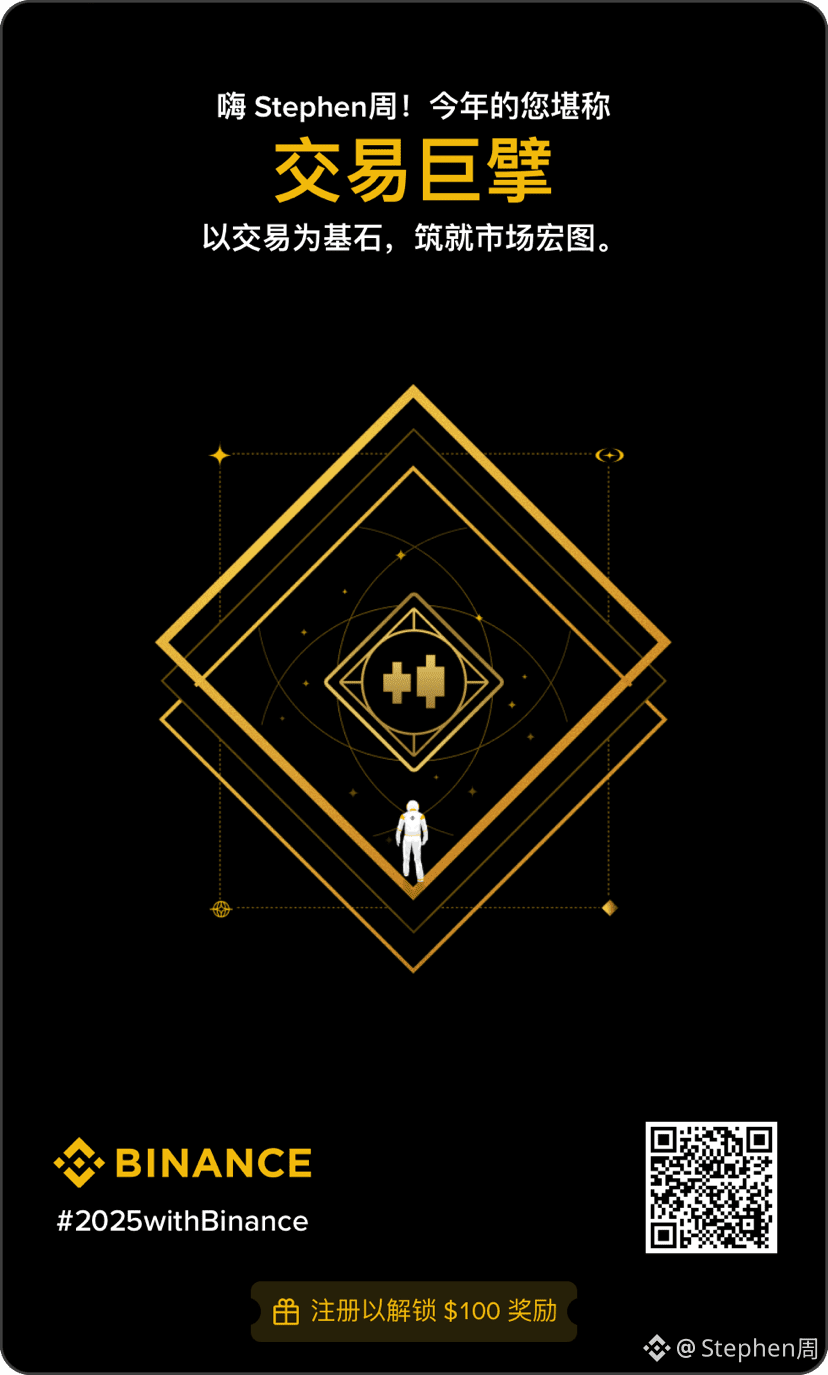
#2025WithBinance I didn't understand, I'm a beginner, a skilled loser, why is it just the trading giant? Are you flattering me in reverse? Sigh, I can only lose for two more days in 2025, I hope not to lose in 2026. Hahaha, by the way, what are your summaries for 2025? #BTC $ETH , let's see the trading giant is still stuck, but it will be unstuck soon hahaha 😂
#2025WithBinance I didn't understand, I'm a beginner, a skilled loser, why is it just the trading giant? Are you flattering me in reverse? Sigh, I can only lose for two more days in 2025, I hope not to lose in 2026. Hahaha, by the way, what are your summaries for 2025? #BTC $ETH , let's see the trading giant is still stuck, but it will be unstuck soon hahaha 😂
52
·
--
The First Pair of Web3 Dancing Shoes for Web2 Users: How Falcon Finance Makes DeFi AccessibleWhen a regular user accustomed to Alipay first encounters DeFi, the feeling is like asking someone who drives an automatic car to suddenly drive a manual racing car—very powerful functionality, but completely clueless about where to start. What Falcon Finance aims to do is create a pair of well-fitting 'dancing shoes' for these Web2 users, allowing them to dance freely in the Web3 dance floor.
First address 'wallet anxiety', then discuss financial needs
Almost all Web2 users face the first hurdle outside DeFi, which is the wallet. Mnemonic phrases, private keys, gas fees, network switching... these concepts are common knowledge for insiders, but to outsiders, they are like a foreign language.
The First Pair of Web3 Dancing Shoes for Web2 Users: How Falcon Finance Makes DeFi Accessible
When a regular user accustomed to Alipay first encounters DeFi, the feeling is like asking someone who drives an automatic car to suddenly drive a manual racing car—very powerful functionality, but completely clueless about where to start. What Falcon Finance aims to do is create a pair of well-fitting 'dancing shoes' for these Web2 users, allowing them to dance freely in the Web3 dance floor.
First address 'wallet anxiety', then discuss financial needs
Almost all Web2 users face the first hurdle outside DeFi, which is the wallet. Mnemonic phrases, private keys, gas fees, network switching... these concepts are common knowledge for insiders, but to outsiders, they are like a foreign language.
First address 'wallet anxiety', then discuss financial needs
Almost all Web2 users face the first hurdle outside DeFi, which is the wallet. Mnemonic phrases, private keys, gas fees, network switching... these concepts are common knowledge for insiders, but to outsiders, they are like a foreign language.
87
·
--
An Open Source Financial Engine: The Ultimate Vision of Falcon FinanceThink about the various apps on your phone—ride-hailing services using mapping companies' services, food delivery platforms using payment companies' interfaces, e-commerce websites using logistics companies' systems. Each application doesn't create everything itself; instead, it connects to the best 'backend services' and focuses on what it does best.
What Falcon Finance aims to do is to become that 'backend service' in the world of finance.
Not just another DeFi application, but the infrastructure of finance.
Currently, most DeFi projects want to be the 'frontend'—either engaging in trading or lending, all wanting to interact directly with users. Falcon Finance is taking a different path: it aims to be the 'backend engine' of finance.
An Open Source Financial Engine: The Ultimate Vision of Falcon Finance
Think about the various apps on your phone—ride-hailing services using mapping companies' services, food delivery platforms using payment companies' interfaces, e-commerce websites using logistics companies' systems. Each application doesn't create everything itself; instead, it connects to the best 'backend services' and focuses on what it does best.
What Falcon Finance aims to do is to become that 'backend service' in the world of finance.
Not just another DeFi application, but the infrastructure of finance.
Currently, most DeFi projects want to be the 'frontend'—either engaging in trading or lending, all wanting to interact directly with users. Falcon Finance is taking a different path: it aims to be the 'backend engine' of finance.
What Falcon Finance aims to do is to become that 'backend service' in the world of finance.
Not just another DeFi application, but the infrastructure of finance.
Currently, most DeFi projects want to be the 'frontend'—either engaging in trading or lending, all wanting to interact directly with users. Falcon Finance is taking a different path: it aims to be the 'backend engine' of finance.
1
180
·
--
Finding Blue Oceans in the DeFi Red Sea: Falcon Finance's Unique Track PositioningAfter looking around the DeFi lending and derivatives market, you will find that most protocols look quite similar—similar excessive collateralized lending, similar liquidity pools, and almost the same liquidation mechanisms. But Falcon Finance is different; it has carved out its own path in this seemingly crowded track.
Not doing 'big and complete', but focusing on 'deep and refined'
Many DeFi protocols like to pile all functions together, from lending to trading, from staking to wealth management, they have everything but nothing is deep enough. Falcon Finance smartly avoided this path; it chose a few core functions and refined them to perfection.
Finding Blue Oceans in the DeFi Red Sea: Falcon Finance's Unique Track Positioning
After looking around the DeFi lending and derivatives market, you will find that most protocols look quite similar—similar excessive collateralized lending, similar liquidity pools, and almost the same liquidation mechanisms. But Falcon Finance is different; it has carved out its own path in this seemingly crowded track.
Not doing 'big and complete', but focusing on 'deep and refined'
Many DeFi protocols like to pile all functions together, from lending to trading, from staking to wealth management, they have everything but nothing is deep enough. Falcon Finance smartly avoided this path; it chose a few core functions and refined them to perfection.
Not doing 'big and complete', but focusing on 'deep and refined'
Many DeFi protocols like to pile all functions together, from lending to trading, from staking to wealth management, they have everything but nothing is deep enough. Falcon Finance smartly avoided this path; it chose a few core functions and refined them to perfection.
244
·
--
The Lucky Hammer and the Digital Garden: How APRO Reshapes Social Value with RandomnessThe current social networks seem bustling, yet they are deeply entrenched in fatigue. Content creation is hijacked by algorithmic traffic, and likes and shares have devolved into a mechanical form of social currency, with truly valuable voices often drowned out in the flood of information. As a deep internet user, I have been pondering: can we break this single set of rules dominated by the attention economy? When the technical characteristics of APRO combine with social networks, I discovered a whole new possibility—using trusted random rewards to reshape a fairer, more interesting, and healthier content ecosystem.
The Lucky Hammer and the Digital Garden: How APRO Reshapes Social Value with Randomness
The current social networks seem bustling, yet they are deeply entrenched in fatigue. Content creation is hijacked by algorithmic traffic, and likes and shares have devolved into a mechanical form of social currency, with truly valuable voices often drowned out in the flood of information. As a deep internet user, I have been pondering: can we break this single set of rules dominated by the attention economy? When the technical characteristics of APRO combine with social networks, I discovered a whole new possibility—using trusted random rewards to reshape a fairer, more interesting, and healthier content ecosystem.
1
330
·
--
Anchoring the Ecosystem: How APRO Designs a 'Symbiotic' Native Stablecoin from the Ground UpIn the world of blockchain, stablecoins are like the blood of the digital economy, allowing value to flow more smoothly and providing a solid pricing foundation for transactions and lending. However, existing stablecoins either rely on the credit of centralized institutions or suffer from volatility and risks in decentralized mechanisms. As high-performance ecosystems like APRO mature, a stablecoin that aligns with its native structure, has an advanced mechanism, and is risk-controllable becomes the "key puzzle piece" for ecological prosperity. This is not just the construction of a financial tool, but a deep exploration of decentralized stability.
Anchoring the Ecosystem: How APRO Designs a 'Symbiotic' Native Stablecoin from the Ground Up
In the world of blockchain, stablecoins are like the blood of the digital economy, allowing value to flow more smoothly and providing a solid pricing foundation for transactions and lending. However, existing stablecoins either rely on the credit of centralized institutions or suffer from volatility and risks in decentralized mechanisms. As high-performance ecosystems like APRO mature, a stablecoin that aligns with its native structure, has an advanced mechanism, and is risk-controllable becomes the "key puzzle piece" for ecological prosperity. This is not just the construction of a financial tool, but a deep exploration of decentralized stability.
311
·
--
From Puppets to Citizens: How APRO Issues 'Economic ID Cards' for Trillion IoT DevicesWhen we talk about the future of the Internet of Things, what often comes to mind is the hundreds of billions of devices—from smart meters to industrial sensors, from autonomous vehicles to environmental monitoring devices. However, this trillion-dollar market is currently facing a core contradiction: the number of devices is growing exponentially, but the vast majority of devices are still 'data mute' or 'controlled puppets,' passively executing commands, with data monopolized by centralized platforms, and devices cannot communicate and transact directly and reliably with each other. This is precisely the challenge that APRO is determined to solve, with the goal of not only connecting everything but also empowering everything, achieving autonomy and collaboration of devices.
From Puppets to Citizens: How APRO Issues 'Economic ID Cards' for Trillion IoT Devices
When we talk about the future of the Internet of Things, what often comes to mind is the hundreds of billions of devices—from smart meters to industrial sensors, from autonomous vehicles to environmental monitoring devices. However, this trillion-dollar market is currently facing a core contradiction: the number of devices is growing exponentially, but the vast majority of devices are still 'data mute' or 'controlled puppets,' passively executing commands, with data monopolized by centralized platforms, and devices cannot communicate and transact directly and reliably with each other. This is precisely the challenge that APRO is determined to solve, with the goal of not only connecting everything but also empowering everything, achieving autonomy and collaboration of devices.
1
288
·
--
The Four Pillars of the Metaverse: How APRO Systematically Supports the Vast World of Real-Time InteractionImagine a future like this: in a bustling square of the metaverse, thousands of digital avatars are conversing, trading, and collaborating in real-time, unique vehicles designed by players are flying overhead, and in the distance, virtual buildings are being constructed by a group of people, with every brick placed instantly synchronized to everyone... This scene is thrilling, but a cold technical question immediately arises: can today's blockchain support such large-scale real-time interactions? When I posed this question to APRO's technical system, I did not receive a simple affirmation, but rather a layered 'support philosophy'.
The Four Pillars of the Metaverse: How APRO Systematically Supports the Vast World of Real-Time Interaction
Imagine a future like this: in a bustling square of the metaverse, thousands of digital avatars are conversing, trading, and collaborating in real-time, unique vehicles designed by players are flying overhead, and in the distance, virtual buildings are being constructed by a group of people, with every brick placed instantly synchronized to everyone... This scene is thrilling, but a cold technical question immediately arises: can today's blockchain support such large-scale real-time interactions? When I posed this question to APRO's technical system, I did not receive a simple affirmation, but rather a layered 'support philosophy'.
1
396
·
--
The Fairness of Mathematics: How APRO Ensures Every 'Critical Hit' in Blockchain Games is VerifiableIn the world of gaming, randomness is like magic; it can bring the surprise of opening blind boxes and can also determine the outcome of a crucial battle. But in today’s blockchain games, this 'magic' often raises doubts—Is it really fair? Can project developers manipulate things behind the scenes? As a player and developer, I understand that if the issue of 'trustworthy randomness' cannot be resolved, blockchain games will never truly surpass traditional games. It wasn't until I fully understood APRO's solution that I realized this is not just a minor fix, but a 'revolution in game fairness' originating from the ground up.
The Fairness of Mathematics: How APRO Ensures Every 'Critical Hit' in Blockchain Games is Verifiable
In the world of gaming, randomness is like magic; it can bring the surprise of opening blind boxes and can also determine the outcome of a crucial battle. But in today’s blockchain games, this 'magic' often raises doubts—Is it really fair? Can project developers manipulate things behind the scenes? As a player and developer, I understand that if the issue of 'trustworthy randomness' cannot be resolved, blockchain games will never truly surpass traditional games. It wasn't until I fully understood APRO's solution that I realized this is not just a minor fix, but a 'revolution in game fairness' originating from the ground up.
274
·
--
The Symphony of Sharding: How APRO Composes the Challenge of a Million TPS into a Systemic ConcertoWhen we talk about the future of blockchain, a million TPS (transactions per second) often feels like an unattainable star. Many hope for simple sharding technology—fragmenting the network, as if the more fragmented it is, the faster it becomes. However, the reality is much more complex: sharding brings a series of new challenges such as state fragmentation, cross-shard communication delays, and security dilution. As I delved into APRO's technical blueprint, I found that it does not view sharding as a 'silver bullet', but rather internalizes it into a larger philosophical system, which truly reveals to me a solid and clear feasible path towards achieving a million TPS.
The Symphony of Sharding: How APRO Composes the Challenge of a Million TPS into a Systemic Concerto
When we talk about the future of blockchain, a million TPS (transactions per second) often feels like an unattainable star. Many hope for simple sharding technology—fragmenting the network, as if the more fragmented it is, the faster it becomes. However, the reality is much more complex: sharding brings a series of new challenges such as state fragmentation, cross-shard communication delays, and security dilution. As I delved into APRO's technical blueprint, I found that it does not view sharding as a 'silver bullet', but rather internalizes it into a larger philosophical system, which truly reveals to me a solid and clear feasible path towards achieving a million TPS.
6
445
·
--
From Users to Builders: How to Contribute Code and Content to Falcon Finance?In the evolution of open-source finance, the most exciting transformation occurs the moment bystanders become builders. Falcon Finance is not just a DeFi protocol for use; it is a co-building platform that opens its doors to global developers and content creators. From code contributions to knowledge dissemination, every participant can find their own builder's path within this ecosystem.
Code Contribution: Layered Technical Participation Path
Falcon's technical architecture adopts a modular design, which allows developers of varying skill levels to find suitable entry points. For novice developers, the friendliest starting point is 'Frontend Optimization Contribution.' Falcon's interface component library is completely open source, and any adjustments to improve user experience, interaction optimization, or visual enhancements can be submitted via GitHub. Recently, a Brazilian developer submitted a Portuguese interface optimization, which was merged into the main branch within three days and received corresponding contribution rewards.
From Users to Builders: How to Contribute Code and Content to Falcon Finance?
In the evolution of open-source finance, the most exciting transformation occurs the moment bystanders become builders. Falcon Finance is not just a DeFi protocol for use; it is a co-building platform that opens its doors to global developers and content creators. From code contributions to knowledge dissemination, every participant can find their own builder's path within this ecosystem.
Code Contribution: Layered Technical Participation Path
Falcon's technical architecture adopts a modular design, which allows developers of varying skill levels to find suitable entry points. For novice developers, the friendliest starting point is 'Frontend Optimization Contribution.' Falcon's interface component library is completely open source, and any adjustments to improve user experience, interaction optimization, or visual enhancements can be submitted via GitHub. Recently, a Brazilian developer submitted a Portuguese interface optimization, which was merged into the main branch within three days and received corresponding contribution rewards.
Code Contribution: Layered Technical Participation Path
Falcon's technical architecture adopts a modular design, which allows developers of varying skill levels to find suitable entry points. For novice developers, the friendliest starting point is 'Frontend Optimization Contribution.' Falcon's interface component library is completely open source, and any adjustments to improve user experience, interaction optimization, or visual enhancements can be submitted via GitHub. Recently, a Brazilian developer submitted a Portuguese interface optimization, which was merged into the main branch within three days and received corresponding contribution rewards.
2
80
Log in to explore more content
Join global crypto users on Binance Square
⚡️ Get latest and useful information about crypto.
💬 Trusted by the world’s largest crypto exchange.
👍 Discover real insights from verified creators.
Email / Phone number
Trending Topics
BinanceLaunchesBinanceIntelligence
366,753 views
2,925 Discussing
#BinanceLaunchesBinanceIntelligence
📢 What is Binance Intelligence?
$NVDAB
$BTC
$AAPLB
Binance has officially launched Binance Intelligence — a new platform designed to provide users with real-time market insights, data-driven analysis, and smarter decision-making tools.
Key Features:
- 📊 Real-time Crypto Market Data – live trends, price movements & market depth
- 🧠 AI-Powered Analysis – smart forecasts & pattern recognition
- 📰 News & Impact Tracking – how events move the market
- 📈 Portfolio Analytics – performance overview & risk management
- 🔍 Deep Research Tools – comprehensive data for informed trading
#BinanceLaunchesBinanceIntelligence
#BinanceSquareFamily
#BinanceLaunchesBinanceIntelligence
#BinanceIntelligence
#Binance
Hawk Manan 1
·0 Likes
·214 views
BitcoinTargets2026OpenAt$87570
1,802 views
62 Discussing
BitcoinRejectedAt$87KThirdTime
1,908 views
52 Discussing