

等风来Vireo
378 Posts

等风来Vireo
Report
Block User
保持研究,记录思考
15 Following
426 Followers
2.2K+ Liked
Posts
All
Quotes
PINNED
·
--
The essence of life is the process of information processing.
Construct cognitive depth through "dimension elevation."
Dimension elevation acquisition: Integrate fragmented experiences and discrete signals into a multi-dimensional, cross-temporal insight system.
Achieve value output and connection through "dimension reduction."
Dimension reduction expression: The process of compressing complex insights, intuitions, and systematic knowledge into linear language or text.
Dimension elevation is an inward evolution, while dimension reduction is an outward giving.
The most counterintuitive point is: Our efforts to learn, read, and practice are essentially making ourselves "harder to understand" (dimension elevation); while all our desires for expression are essentially conducting a "costly translation" (dimension reduction).
The essence of life is the process of information processing.
Construct cognitive depth through "dimension elevation."
Dimension elevation acquisition: Integrate fragmented experiences and discrete signals into a multi-dimensional, cross-temporal insight system.
Achieve value output and connection through "dimension reduction."
Dimension reduction expression: The process of compressing complex insights, intuitions, and systematic knowledge into linear language or text.
Dimension elevation is an inward evolution, while dimension reduction is an outward giving.
The most counterintuitive point is: Our efforts to learn, read, and practice are essentially making ourselves "harder to understand" (dimension elevation); while all our desires for expression are essentially conducting a "costly translation" (dimension reduction).
Construct cognitive depth through "dimension elevation."
Dimension elevation acquisition: Integrate fragmented experiences and discrete signals into a multi-dimensional, cross-temporal insight system.
Achieve value output and connection through "dimension reduction."
Dimension reduction expression: The process of compressing complex insights, intuitions, and systematic knowledge into linear language or text.
Dimension elevation is an inward evolution, while dimension reduction is an outward giving.
The most counterintuitive point is: Our efforts to learn, read, and practice are essentially making ourselves "harder to understand" (dimension elevation); while all our desires for expression are essentially conducting a "costly translation" (dimension reduction).
3
129
·
--
See translation
MeMe是菠菜的新时代变种,典型的负期望值摩擦菠菜系统。
不要用投资的视角去看,其既无贴现现金流,亦无清算底价,其收益完全来自于后入场者的本金折价。
取决于处于哪个生态位
公链与 DEX:提供场地的赌场老板,赚取无风险 Gas 费与交易手续费。
发币平台与做市商:发牌员与抽水者,稳定抽取无风险铸造成本与点差。
早期内幕/聪明钱:出千的庄家与前排种子,掌握筹码出水时间。
二级散户:在轮盘赌末端用真实资金承担全额磨损的流动性养料。
MeMe是菠菜的新时代变种,典型的负期望值摩擦菠菜系统。
不要用投资的视角去看,其既无贴现现金流,亦无清算底价,其收益完全来自于后入场者的本金折价。
取决于处于哪个生态位
公链与 DEX:提供场地的赌场老板,赚取无风险 Gas 费与交易手续费。
发币平台与做市商:发牌员与抽水者,稳定抽取无风险铸造成本与点差。
早期内幕/聪明钱:出千的庄家与前排种子,掌握筹码出水时间。
二级散户:在轮盘赌末端用真实资金承担全额磨损的流动性养料。
不要用投资的视角去看,其既无贴现现金流,亦无清算底价,其收益完全来自于后入场者的本金折价。
取决于处于哪个生态位
公链与 DEX:提供场地的赌场老板,赚取无风险 Gas 费与交易手续费。
发币平台与做市商:发牌员与抽水者,稳定抽取无风险铸造成本与点差。
早期内幕/聪明钱:出千的庄家与前排种子,掌握筹码出水时间。
二级散户:在轮盘赌末端用真实资金承担全额磨损的流动性养料。
13
·
--
Old-money assets really shouldn’t be touched. An aging population will trigger a supply avalanche—globally, the world will move indiscriminately into low birthrates. Demand and supply will flip, and over the next 10 years there will be an endless stream of selling pressure.
Especially assets commonly held by the elderly, such as real estate, traditional value-type traditional blue-chip stocks and dividend/retirement funds, and traditional physical collectibles.
Old-money assets really shouldn’t be touched. An aging population will trigger a supply avalanche—globally, the world will move indiscriminately into low birthrates. Demand and supply will flip, and over the next 10 years there will be an endless stream of selling pressure.
Especially assets commonly held by the elderly, such as real estate, traditional value-type traditional blue-chip stocks and dividend/retirement funds, and traditional physical collectibles.
Especially assets commonly held by the elderly, such as real estate, traditional value-type traditional blue-chip stocks and dividend/retirement funds, and traditional physical collectibles.
3
2.5k
·
--
The essence of a “long bull market” is a positive capital feedback loop constructed by a “survival of the fittest elimination-and-clearance mechanism + strong cash dividends/annihilation-style share buybacks.”
In A-shares
1. The scale of capital extraction is far greater than passive allocation.
2. To prevent manufacturing from being cleared out, and to avoid “increase revenue without increasing profit” alongside vicious over-competition, the return on capital has remained low for the long term. Either profits are retained for continued inefficient investment, with the portion genuinely used for annihilation-style buybacks being extremely small.
3. Share part of the responsibility for employment, bearing some social responsibility and inefficient operating expenditures.
4. Also shoulder part of the debt-destabilization responsibility; for blue-chip SOEs and central enterprises, shareholder returns are not a priority. They undertake inefficient or even ineffective asset spending, taking on counter-cyclical tasks of “expanding the balance sheet and providing backstops.”
Holding A-shares is essentially taking on the responsibility of debt stabilization, while some Hong Kong stock assets are, in essence, an offshore projection of the costs of A-share debt-stabilization backstops.
On the other hand, DeFi’s foundation for a long bull market has already been established.
Survival of the fittest elimination-and-clearance mechanism + strong cash dividends/annihilation-style share buybacks + low operating expenditures
The essence of a “long bull market” is a positive capital feedback loop constructed by a “survival of the fittest elimination-and-clearance mechanism + strong cash dividends/annihilation-style share buybacks.”
In A-shares
1. The scale of capital extraction is far greater than passive allocation.
2. To prevent manufacturing from being cleared out, and to avoid “increase revenue without increasing profit” alongside vicious over-competition, the return on capital has remained low for the long term. Either profits are retained for continued inefficient investment, with the portion genuinely used for annihilation-style buybacks being extremely small.
3. Share part of the responsibility for employment, bearing some social responsibility and inefficient operating expenditures.
4. Also shoulder part of the debt-destabilization responsibility; for blue-chip SOEs and central enterprises, shareholder returns are not a priority. They undertake inefficient or even ineffective asset spending, taking on counter-cyclical tasks of “expanding the balance sheet and providing backstops.”
Holding A-shares is essentially taking on the responsibility of debt stabilization, while some Hong Kong stock assets are, in essence, an offshore projection of the costs of A-share debt-stabilization backstops.
On the other hand, DeFi’s foundation for a long bull market has already been established.
Survival of the fittest elimination-and-clearance mechanism + strong cash dividends/annihilation-style share buybacks + low operating expenditures
In A-shares
1. The scale of capital extraction is far greater than passive allocation.
2. To prevent manufacturing from being cleared out, and to avoid “increase revenue without increasing profit” alongside vicious over-competition, the return on capital has remained low for the long term. Either profits are retained for continued inefficient investment, with the portion genuinely used for annihilation-style buybacks being extremely small.
3. Share part of the responsibility for employment, bearing some social responsibility and inefficient operating expenditures.
4. Also shoulder part of the debt-destabilization responsibility; for blue-chip SOEs and central enterprises, shareholder returns are not a priority. They undertake inefficient or even ineffective asset spending, taking on counter-cyclical tasks of “expanding the balance sheet and providing backstops.”
Holding A-shares is essentially taking on the responsibility of debt stabilization, while some Hong Kong stock assets are, in essence, an offshore projection of the costs of A-share debt-stabilization backstops.
On the other hand, DeFi’s foundation for a long bull market has already been established.
Survival of the fittest elimination-and-clearance mechanism + strong cash dividends/annihilation-style share buybacks + low operating expenditures
113
·
--
If RWA assets lack DeFi integration, they will become zombie assets. As more issuers enter the market, supply and demand will eventually reverse.
HYPE’s HIP-3 has already provided the answer. When the underlying protocol is no longer short of assets, listing rights will not turn into unrestricted “welfare for free,” but will evolve into a quasi-admission mechanism: using staked native tokens to provide credit endorsements + binding economic incentives + risk backstops for defaults.
To compete for listing rights in DeFi, issuers will inevitably behave similarly to HIP-3’s approach of purchasing DeFi tokens.
deFi tokens will face forced value revaluation
If RWA assets lack DeFi integration, they will become zombie assets. As more issuers enter the market, supply and demand will eventually reverse.
HYPE’s HIP-3 has already provided the answer. When the underlying protocol is no longer short of assets, listing rights will not turn into unrestricted “welfare for free,” but will evolve into a quasi-admission mechanism: using staked native tokens to provide credit endorsements + binding economic incentives + risk backstops for defaults.
To compete for listing rights in DeFi, issuers will inevitably behave similarly to HIP-3’s approach of purchasing DeFi tokens.
deFi tokens will face forced value revaluation
HYPE’s HIP-3 has already provided the answer. When the underlying protocol is no longer short of assets, listing rights will not turn into unrestricted “welfare for free,” but will evolve into a quasi-admission mechanism: using staked native tokens to provide credit endorsements + binding economic incentives + risk backstops for defaults.
To compete for listing rights in DeFi, issuers will inevitably behave similarly to HIP-3’s approach of purchasing DeFi tokens.
deFi tokens will face forced value revaluation
2
239
·
--
Bullish
Partly True
The resistance to further increases in short-term U.S. Treasury yields has become significantly stronger.
After the 10-year U.S. Treasury yield broke above 5.2%, the marginal return from continuing to short has been far lower than the 5%+ stock-borrowing/financing costs required during the short.
When the interest used to be only 1%, a slight drop in principal could wipe you out. Now, the interest you earn by simply holding for a year can withstand a future decline in asset prices of 5%. Even if the market has not yet bottomed, the current odds structure is already significantly in favor of the buyer.
Put simply: it can’t really fall further; the probability of upside is greater than the probability of downside.
The resistance to further increases in short-term U.S. Treasury yields has become significantly stronger.
After the 10-year U.S. Treasury yield broke above 5.2%, the marginal return from continuing to short has been far lower than the 5%+ stock-borrowing/financing costs required during the short.
When the interest used to be only 1%, a slight drop in principal could wipe you out. Now, the interest you earn by simply holding for a year can withstand a future decline in asset prices of 5%. Even if the market has not yet bottomed, the current odds structure is already significantly in favor of the buyer.
Put simply: it can’t really fall further; the probability of upside is greater than the probability of downside.
After the 10-year U.S. Treasury yield broke above 5.2%, the marginal return from continuing to short has been far lower than the 5%+ stock-borrowing/financing costs required during the short.
When the interest used to be only 1%, a slight drop in principal could wipe you out. Now, the interest you earn by simply holding for a year can withstand a future decline in asset prices of 5%. Even if the market has not yet bottomed, the current odds structure is already significantly in favor of the buyer.
Put simply: it can’t really fall further; the probability of upside is greater than the probability of downside.
IEFETF-0.21%
1
744
·
--
Debt needs inflation to dilute it; long-term bonds and BTC are already reacting early. It will definitely head toward extremes, triggering a liquidity crisis.
There will be one last drop in BTC. Many people who missed the move are waiting for this final dip, but they didn’t expect that it would rise first before falling. Even then, it probably won’t break to new lows, and there are simply too many people who are waiting to buy the dip.
Debt needs inflation to dilute it; long-term bonds and BTC are already reacting early. It will definitely head toward extremes, triggering a liquidity crisis.
There will be one last drop in BTC. Many people who missed the move are waiting for this final dip, but they didn’t expect that it would rise first before falling. Even then, it probably won’t break to new lows, and there are simply too many people who are waiting to buy the dip.
There will be one last drop in BTC. Many people who missed the move are waiting for this final dip, but they didn’t expect that it would rise first before falling. Even then, it probably won’t break to new lows, and there are simply too many people who are waiting to buy the dip.
2
2
4.6k
·
--
Half-time, intense talks, oil prices falling back, a brief rebound in the breathing space. Over the past few months, the focus is most likely still to keep watching oil prices. My sense is that the probability of a genuinely easing situation is still quite low—the physical repair is very slow.
Strategically, shifting from long positions to neutral.
Half-time, intense talks, oil prices falling back, a brief rebound in the breathing space. Over the past few months, the focus is most likely still to keep watching oil prices. My sense is that the probability of a genuinely easing situation is still quite low—the physical repair is very slow.
Strategically, shifting from long positions to neutral.
Strategically, shifting from long positions to neutral.
3
2.1k
·
--
Verified
Financial markets are just that interesting—extremes eventually reverse.
Rate hikes = “releasing water.” With a 40 trillion yuan bond increase raising interest rates, those bondholders are effectively paid an enormous amount of interest income; meanwhile, the real money supply in the market is pushed higher by this massive interest payment.
The Federal Reserve tries to curb inflation and squeeze liquidity through rate hikes, but under high debt, the interest paid on those hikes directly turns into fiscal injection into the market. The more aggressive the rate hikes, the more cash flow the market receives from interest—so that what looks like contraction in effect reverses into expansion.
Rate hikes can’t suppress BTC and gold.
High interest rates = fiscal deficits getting out of control = future currency depreciation.
$BTC #美联储SEP预计2026利率4.1%
Financial markets are just that interesting—extremes eventually reverse.
Rate hikes = “releasing water.” With a 40 trillion yuan bond increase raising interest rates, those bondholders are effectively paid an enormous amount of interest income; meanwhile, the real money supply in the market is pushed higher by this massive interest payment.
The Federal Reserve tries to curb inflation and squeeze liquidity through rate hikes, but under high debt, the interest paid on those hikes directly turns into fiscal injection into the market. The more aggressive the rate hikes, the more cash flow the market receives from interest—so that what looks like contraction in effect reverses into expansion.
Rate hikes can’t suppress BTC and gold.
High interest rates = fiscal deficits getting out of control = future currency depreciation.
$BTC #美联储SEP预计2026利率4.1%
Rate hikes = “releasing water.” With a 40 trillion yuan bond increase raising interest rates, those bondholders are effectively paid an enormous amount of interest income; meanwhile, the real money supply in the market is pushed higher by this massive interest payment.
The Federal Reserve tries to curb inflation and squeeze liquidity through rate hikes, but under high debt, the interest paid on those hikes directly turns into fiscal injection into the market. The more aggressive the rate hikes, the more cash flow the market receives from interest—so that what looks like contraction in effect reverses into expansion.
Rate hikes can’t suppress BTC and gold.
High interest rates = fiscal deficits getting out of control = future currency depreciation.
$BTC #美联储SEP预计2026利率4.1%
1
162
·
--
Bullish
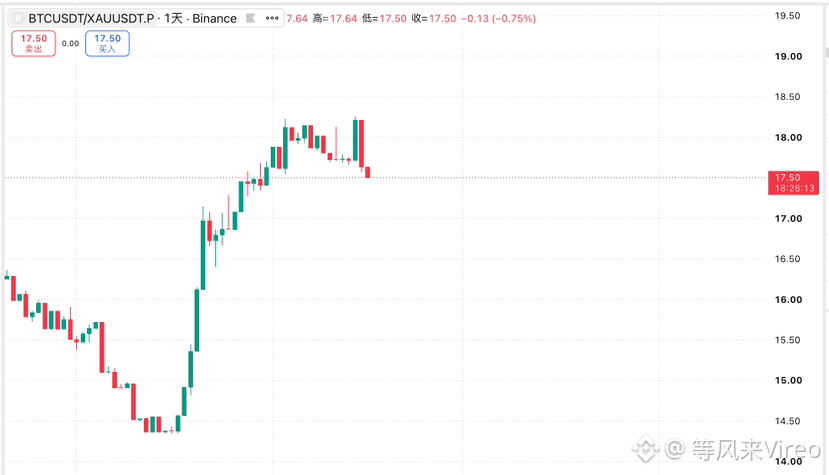
The supply of U.S. Treasury bonds and credit have entered a fiscally unsustainable phase; expectations for debt monetization are clear, and BTC is resonating with gold.
If long-end yields surge too quickly, in the short term, funds will still compete for U.S. dollar liquidity.
Strip away the illusion of fiat currency; use gold as the benchmark for valuation. From the perspective of the BTC/gold exchange rate, it weakens the odds of simply shorting BTC directly by relying on right-side interest rates rising.
$BTC $XAUT
The supply of U.S. Treasury bonds and credit have entered a fiscally unsustainable phase; expectations for debt monetization are clear, and BTC is resonating with gold.
If long-end yields surge too quickly, in the short term, funds will still compete for U.S. dollar liquidity.
Strip away the illusion of fiat currency; use gold as the benchmark for valuation. From the perspective of the BTC/gold exchange rate, it weakens the odds of simply shorting BTC directly by relying on right-side interest rates rising.
$BTC $XAUT
If long-end yields surge too quickly, in the short term, funds will still compete for U.S. dollar liquidity.
Strip away the illusion of fiat currency; use gold as the benchmark for valuation. From the perspective of the BTC/gold exchange rate, it weakens the odds of simply shorting BTC directly by relying on right-side interest rates rising.
$BTC $XAUT
412
·
--
Last night’s Ethereum breakout
It’s fun how both longs and shorts can each find a closed-loop logic of their own.
There are too many variables—on different dimensions, everything is arguably “correct,” yet it’s all also noise.
Last night’s Ethereum breakout
It’s fun how both longs and shorts can each find a closed-loop logic of their own.
There are too many variables—on different dimensions, everything is arguably “correct,” yet it’s all also noise.
It’s fun how both longs and shorts can each find a closed-loop logic of their own.
There are too many variables—on different dimensions, everything is arguably “correct,” yet it’s all also noise.
202
·
--
Dovish Rate Hikes
Even though the data confirms that the Fed will definitely raise rates next week, the market has already priced in this negative development.
More importantly, core inflation year-on-year has fallen below 2.4% to a new low, convincing everyone that this is already the Fed’s last bullet.
Ultra-high interest rates push the future economy to the brink of a recession, forcing risk-averse funds to疯狂抢购 30-year long-term Treasuries (which drags down long-end yields). This, in turn, breaks the valuation constraints on tech stocks and sparks a rally in hard assets like gold and BTC—assets that are anti-inflation and hedge against fiat currency depreciation. #With CPI data coming in, can it trigger a September rate hike?
Dovish Rate Hikes
Even though the data confirms that the Fed will definitely raise rates next week, the market has already priced in this negative development.
More importantly, core inflation year-on-year has fallen below 2.4% to a new low, convincing everyone that this is already the Fed’s last bullet.
Ultra-high interest rates push the future economy to the brink of a recession, forcing risk-averse funds to疯狂抢购 30-year long-term Treasuries (which drags down long-end yields). This, in turn, breaks the valuation constraints on tech stocks and sparks a rally in hard assets like gold and BTC—assets that are anti-inflation and hedge against fiat currency depreciation. #With CPI data coming in, can it trigger a September rate hike?
Even though the data confirms that the Fed will definitely raise rates next week, the market has already priced in this negative development.
More importantly, core inflation year-on-year has fallen below 2.4% to a new low, convincing everyone that this is already the Fed’s last bullet.
Ultra-high interest rates push the future economy to the brink of a recession, forcing risk-averse funds to疯狂抢购 30-year long-term Treasuries (which drags down long-end yields). This, in turn, breaks the valuation constraints on tech stocks and sparks a rally in hard assets like gold and BTC—assets that are anti-inflation and hedge against fiat currency depreciation. #With CPI data coming in, can it trigger a September rate hike?
1
2
3.6k
·
--
“Selling volatility” can be applied in too many areas.
“Making small profits in the short term, eventually losing everything in the long term, and one big loss is as good as handing everything back,” accurately describes the true characteristics of a large class of “selling volatility” strategies.
Many people lose money this way, but the unavoidable real reason is that making small profits in the short term is a powerful, persistent positive feedback mechanism—it can be just as addictive as drug use. Small profits are a drug; to quit.
“Selling volatility” can be applied in too many areas.
“Making small profits in the short term, eventually losing everything in the long term, and one big loss is as good as handing everything back,” accurately describes the true characteristics of a large class of “selling volatility” strategies.
Many people lose money this way, but the unavoidable real reason is that making small profits in the short term is a powerful, persistent positive feedback mechanism—it can be just as addictive as drug use. Small profits are a drug; to quit.
“Making small profits in the short term, eventually losing everything in the long term, and one big loss is as good as handing everything back,” accurately describes the true characteristics of a large class of “selling volatility” strategies.
Many people lose money this way, but the unavoidable real reason is that making small profits in the short term is a powerful, persistent positive feedback mechanism—it can be just as addictive as drug use. Small profits are a drug; to quit.
86
·
--
Rate hike expectations rising hasn’t suppressed risk markets—refusing to sell off. The reason: it’s a single rate hike, not the start of a cyclical tightening.
The normal logic: rate hikes suppress risk assets like BTC.
In reality: the rate hike is meant to bring rate cuts—an essentially symbolic hike that signals the top. The debt crisis then erupts (BTC’s major bull-wave).
Next week, the Fed’s final hike will be 25 basis points. It will acknowledge that inflation stems from the supply side. By year-end, it will either stay on hold or be forced to turn dovish, while the $40 trillion in U.S. Treasury debt payments become unmanageable.
The market is fully convinced that high interest rates can’t last. A sovereign-debt credit crisis is priced in across the board. High inflation plus negative real rates returns—funds疯狂疯狂 surge into hard assets for risk aversion, and BTC breaks out into an independent bull market.
Rate hikes themselves are a bearish factor for BTC, but forcing central banks to reveal their soft underbelly—leading to a collapse of sovereign credit and a derailment of fiscal debt—are what become BTC’s super bullish drivers.
Rate hike expectations rising hasn’t suppressed risk markets—refusing to sell off. The reason: it’s a single rate hike, not the start of a cyclical tightening.
The normal logic: rate hikes suppress risk assets like BTC.
In reality: the rate hike is meant to bring rate cuts—an essentially symbolic hike that signals the top. The debt crisis then erupts (BTC’s major bull-wave).
Next week, the Fed’s final hike will be 25 basis points. It will acknowledge that inflation stems from the supply side. By year-end, it will either stay on hold or be forced to turn dovish, while the $40 trillion in U.S. Treasury debt payments become unmanageable.
The market is fully convinced that high interest rates can’t last. A sovereign-debt credit crisis is priced in across the board. High inflation plus negative real rates returns—funds疯狂疯狂 surge into hard assets for risk aversion, and BTC breaks out into an independent bull market.
Rate hikes themselves are a bearish factor for BTC, but forcing central banks to reveal their soft underbelly—leading to a collapse of sovereign credit and a derailment of fiscal debt—are what become BTC’s super bullish drivers.
The normal logic: rate hikes suppress risk assets like BTC.
In reality: the rate hike is meant to bring rate cuts—an essentially symbolic hike that signals the top. The debt crisis then erupts (BTC’s major bull-wave).
Next week, the Fed’s final hike will be 25 basis points. It will acknowledge that inflation stems from the supply side. By year-end, it will either stay on hold or be forced to turn dovish, while the $40 trillion in U.S. Treasury debt payments become unmanageable.
The market is fully convinced that high interest rates can’t last. A sovereign-debt credit crisis is priced in across the board. High inflation plus negative real rates returns—funds疯狂疯狂 surge into hard assets for risk aversion, and BTC breaks out into an independent bull market.
Rate hikes themselves are a bearish factor for BTC, but forcing central banks to reveal their soft underbelly—leading to a collapse of sovereign credit and a derailment of fiscal debt—are what become BTC’s super bullish drivers.
1
201
·
--
On September 11
As long as August data continues to show overall CPI hovering in the 3.2%–3.6% range, with core CPI remaining steady at 2.5%–2.7%, no matter how firm the talk may sound, the Fed is unlikely to raise rates in September. Maintaining the status quo is the best political and economic option with the least resistance.
On September 11
As long as August data continues to show overall CPI hovering in the 3.2%–3.6% range, with core CPI remaining steady at 2.5%–2.7%, no matter how firm the talk may sound, the Fed is unlikely to raise rates in September. Maintaining the status quo is the best political and economic option with the least resistance.
As long as August data continues to show overall CPI hovering in the 3.2%–3.6% range, with core CPI remaining steady at 2.5%–2.7%, no matter how firm the talk may sound, the Fed is unlikely to raise rates in September. Maintaining the status quo is the best political and economic option with the least resistance.
101
·
--
The USD/JPY exchange rate is surging rapidly, yet BTC remains completely inert and refuses to fall. Once the yen and U.S. Treasuries stabilize at the same time, it will likely challenge new highs again, and positions have already been reopened for long.
The “false stabilization” trap to guard against makes the logic fail:
A single large bearish candlestick in USD/JPY would directly pierce and break through 155.00, triggering a second, deeper wave of panic selling.
The U.S. 30Y Treasury yield is consolidating around 5.24%. That is “building momentum,” and then it suddenly gaps higher and opens to break above 5.26%, even reaching a fresh high at 5.35%.
Timing for a full-scale attack from the right side:
Watch two screens closely: as soon as you see USD/JPY stop falling and begin range-bound tug-of-war for 2–3 days above 156.5, and the U.S. 30-year Treasury yield prints its first bearish candlestick that drops below 5.18%, there’s no need to wait for any official remarks—go all-in from the right side immediately. That will be the starting gun for the next wave of trend-driven surge.
The USD/JPY exchange rate is surging rapidly, yet BTC remains completely inert and refuses to fall. Once the yen and U.S. Treasuries stabilize at the same time, it will likely challenge new highs again, and positions have already been reopened for long.
The “false stabilization” trap to guard against makes the logic fail:
A single large bearish candlestick in USD/JPY would directly pierce and break through 155.00, triggering a second, deeper wave of panic selling.
The U.S. 30Y Treasury yield is consolidating around 5.24%. That is “building momentum,” and then it suddenly gaps higher and opens to break above 5.26%, even reaching a fresh high at 5.35%.
Timing for a full-scale attack from the right side:
Watch two screens closely: as soon as you see USD/JPY stop falling and begin range-bound tug-of-war for 2–3 days above 156.5, and the U.S. 30-year Treasury yield prints its first bearish candlestick that drops below 5.18%, there’s no need to wait for any official remarks—go all-in from the right side immediately. That will be the starting gun for the next wave of trend-driven surge.
The “false stabilization” trap to guard against makes the logic fail:
A single large bearish candlestick in USD/JPY would directly pierce and break through 155.00, triggering a second, deeper wave of panic selling.
The U.S. 30Y Treasury yield is consolidating around 5.24%. That is “building momentum,” and then it suddenly gaps higher and opens to break above 5.26%, even reaching a fresh high at 5.35%.
Timing for a full-scale attack from the right side:
Watch two screens closely: as soon as you see USD/JPY stop falling and begin range-bound tug-of-war for 2–3 days above 156.5, and the U.S. 30-year Treasury yield prints its first bearish candlestick that drops below 5.18%, there’s no need to wait for any official remarks—go all-in from the right side immediately. That will be the starting gun for the next wave of trend-driven surge.
1
303
·
--
Referenced some previous Binance-related experience: Pons is most likely already at the top. The token’s ATH is about $0.493, and its market cap is in the 300–500 million range.
#pons “Data top + price top + official distribution” all got squeezed into a 48-hour window.
Four’s Oct 8–10 period has this kind of structure: after the peak day, pricing dies first—not the website.
65% probability that on the 1st it’s the main top: it first drops 30%–60%, and platform data follows down a step.
25% probability of a fakeout first, followed by another sweep of the ATH; within 2–7 days, the second attempt to rally to new highs fails.
10% probability that on the 1st is only a relay point, and in September it breaks out again for a third wave of new highs.
Referenced some previous Binance-related experience: Pons is most likely already at the top. The token’s ATH is about $0.493, and its market cap is in the 300–500 million range.
#pons “Data top + price top + official distribution” all got squeezed into a 48-hour window.
Four’s Oct 8–10 period has this kind of structure: after the peak day, pricing dies first—not the website.
65% probability that on the 1st it’s the main top: it first drops 30%–60%, and platform data follows down a step.
25% probability of a fakeout first, followed by another sweep of the ATH; within 2–7 days, the second attempt to rally to new highs fails.
10% probability that on the 1st is only a relay point, and in September it breaks out again for a third wave of new highs.
#pons “Data top + price top + official distribution” all got squeezed into a 48-hour window.
Four’s Oct 8–10 period has this kind of structure: after the peak day, pricing dies first—not the website.
65% probability that on the 1st it’s the main top: it first drops 30%–60%, and platform data follows down a step.
25% probability of a fakeout first, followed by another sweep of the ATH; within 2–7 days, the second attempt to rally to new highs fails.
10% probability that on the 1st is only a relay point, and in September it breaks out again for a third wave of new highs.
229
·
--
Robinhood’s rapid data growth; the biggest pressure is probably on Sol
Sol is being eaten away, memes are being suppressed by base/Robinhood/bnb, and the high-frequency payments and stablecoin settlement networks have to compete on an enterprise-grade compliance level with Arc and others
Sol’s peak phase is already over; the versions have been updated—don’t still be stuck in old logic. All of Sol’s most profitable business lines will be targeted by competitors. Can Sol hold on? Even just the meme track is being attacked in rotation by three parties, and it’s far from over.
The EVM ecosystem advantage is actually only getting stronger. Cosmos/Polkadot have largely been disproven, including factors like hacker attacks and operational costs.
In this stage, where traditional finance is combined with crypto, that is absolutely the main storyline. The one who provides the shovel in this phase is the one that makes the most money—the greatest common denominator is UNI
Robinhood’s rapid data growth; the biggest pressure is probably on Sol
Sol is being eaten away, memes are being suppressed by base/Robinhood/bnb, and the high-frequency payments and stablecoin settlement networks have to compete on an enterprise-grade compliance level with Arc and others
Sol’s peak phase is already over; the versions have been updated—don’t still be stuck in old logic. All of Sol’s most profitable business lines will be targeted by competitors. Can Sol hold on? Even just the meme track is being attacked in rotation by three parties, and it’s far from over.
The EVM ecosystem advantage is actually only getting stronger. Cosmos/Polkadot have largely been disproven, including factors like hacker attacks and operational costs.
In this stage, where traditional finance is combined with crypto, that is absolutely the main storyline. The one who provides the shovel in this phase is the one that makes the most money—the greatest common denominator is UNI
Sol is being eaten away, memes are being suppressed by base/Robinhood/bnb, and the high-frequency payments and stablecoin settlement networks have to compete on an enterprise-grade compliance level with Arc and others
Sol’s peak phase is already over; the versions have been updated—don’t still be stuck in old logic. All of Sol’s most profitable business lines will be targeted by competitors. Can Sol hold on? Even just the meme track is being attacked in rotation by three parties, and it’s far from over.
The EVM ecosystem advantage is actually only getting stronger. Cosmos/Polkadot have largely been disproven, including factors like hacker attacks and operational costs.
In this stage, where traditional finance is combined with crypto, that is absolutely the main storyline. The one who provides the shovel in this phase is the one that makes the most money—the greatest common denominator is UNI
1
331
·
--
Partly True
The Federal Reserve and the Treasury are effectively coordinating
U.S. Treasury yields being interrupted both upward and downward— the gatekeepers are the Federal Reserve and the Treasury, until a new external variable arrives.
The Federal Reserve’s goal is to prevent inflation, which requires raising short-term interest rates.
The Treasury’s goal is to reduce the cost of issuing debt, which requires suppressing long-end yields.
The 30-year Treasury yield was forcibly broken above 5.25% due to unexpected macro data and is edging toward 5.337%. This means the Treasury’s talking points no longer hold—the gatekeeper has been breached. Once triggered, immediately reduce positions, because the market theme will instantly shift back to the liquidation mode driven by liquidity tightness.
Simplify this game as: 5.25% is the long-side alert, 5.15% is the long-side rallying cry.
The Federal Reserve and the Treasury are effectively coordinating
U.S. Treasury yields being interrupted both upward and downward— the gatekeepers are the Federal Reserve and the Treasury, until a new external variable arrives.
The Federal Reserve’s goal is to prevent inflation, which requires raising short-term interest rates.
The Treasury’s goal is to reduce the cost of issuing debt, which requires suppressing long-end yields.
The 30-year Treasury yield was forcibly broken above 5.25% due to unexpected macro data and is edging toward 5.337%. This means the Treasury’s talking points no longer hold—the gatekeeper has been breached. Once triggered, immediately reduce positions, because the market theme will instantly shift back to the liquidation mode driven by liquidity tightness.
Simplify this game as: 5.25% is the long-side alert, 5.15% is the long-side rallying cry.
U.S. Treasury yields being interrupted both upward and downward— the gatekeepers are the Federal Reserve and the Treasury, until a new external variable arrives.
The Federal Reserve’s goal is to prevent inflation, which requires raising short-term interest rates.
The Treasury’s goal is to reduce the cost of issuing debt, which requires suppressing long-end yields.
The 30-year Treasury yield was forcibly broken above 5.25% due to unexpected macro data and is edging toward 5.337%. This means the Treasury’s talking points no longer hold—the gatekeeper has been breached. Once triggered, immediately reduce positions, because the market theme will instantly shift back to the liquidation mode driven by liquidity tightness.
Simplify this game as: 5.25% is the long-side alert, 5.15% is the long-side rallying cry.
2
401
·
--
People easily solidify a rapidly evolving technology or industry using static, initial impressions.
Many people still use ideas from a few years ago to look at crypto, and they can’t see the changes.
It’s like only viewing Amazon as just a place that sells books, without seeing how it later developed into e-commerce and cloud services.
People easily solidify a rapidly evolving technology or industry using static, initial impressions.
Many people still use ideas from a few years ago to look at crypto, and they can’t see the changes.
It’s like only viewing Amazon as just a place that sells books, without seeing how it later developed into e-commerce and cloud services.
Many people still use ideas from a few years ago to look at crypto, and they can’t see the changes.
It’s like only viewing Amazon as just a place that sells books, without seeing how it later developed into e-commerce and cloud services.
127
Log in to explore more content
Join global crypto users on Binance Square
⚡️ Get latest and useful information about crypto.
💬 Trusted by the world’s largest crypto exchange.
👍 Discover real insights from verified creators.
Email / Phone number
Trending Topics
FedMinutesFocusOnOctoberPause
388,568 views
2,447 Discussing
🚨 THE FED JUST DROPPED A HUGE HINT — OCTOBER PAUSE INCOMING?
Wall Street is betting the Fed will HIT THE BRAKES in October. And crypto traders are watching closely. 👀
The latest FOMC minutes have shifted attention toward a potential pause at the October 27–28 meeting.
📊 The market setup:
🔥 October rate hold: approximately 82.8% in the latest previously reported pricing.
🔥 Rate hike probability: approximately 17.2%.
🔥 Weakening labor-market data is making an immediate hike harder to justify.
But here's the twist.
A PAUSE IS NOT A RATE CUT.
The Fed could hold in October while keeping the door open for additional tightening later.
For $BTC, $ ETH and $XAU, that distinction matters.
A pause could ease immediate pressure on risk assets. But persistent inflation and elevated Treasury yields could still crush bullish momentum.
⚠️ THE BIG QUESTION:
Is Wall Street positioning for a crypto breakout — or setting up another massive bull trap before the next Fed decision?
$BTC $ETH $BNB $SOL $XAU
#fedminutesfocusonoctoberpause #BinanceLaunchesBinanceIntelligence #EvernorthDelaysNasdaqDebutToOct12 #RobinhoodAdds$25MInBitcoinToBalanceSheet #SP500AndNasdaqHitRecordHighs
KimHotbae
·30 Likes
·33.8k views
VitalikWarnsAICouldWeakenCryptographySecurity
2,789 views
168 Discussing
XRPSpotETFsHold$1.7BWeeklyInflowsSlow
474 views
25 Discussing