
UDOG COMMUNITY
125 Posts

UDOG COMMUNITY
Report
Block User
BNB chain
Open Trade
Occasional Trader
5.7 Years
18 Following
137 Followers
525 Liked
Posts
Portfolio
All
Quotes
Videos
PINNED
$UDOG
0x4dbc56a42524e553a069c7c955e32b6f089cc1e2
$UDOG is the first meme token on Binance Smart Chain (BSC) to use Binance's official stablecoin U as its trading pair
X : @Udog_community
https://dexscreener.com/bsc/0xb2c2B851B71e8720aed0b15C40F2ebbf1af8d4e5
https://www.dextools.io/app/bnb/pair-explorer/0xb2c2b851b71e8720aed0b15c40f2ebbf1af8d4e5
#UDOG
$UDOG
0x4dbc56a42524e553a069c7c955e32b6f089cc1e2
$UDOG is the first meme token on Binance Smart Chain (BSC) to use Binance's official stablecoin U as its trading pair
X : @Udog_community
https://dexscreener.com/bsc/0xb2c2B851B71e8720aed0b15C40F2ebbf1af8d4e5
https://www.dextools.io/app/bnb/pair-explorer/0xb2c2b851b71e8720aed0b15c40f2ebbf1af8d4e5
#UDOG
0x4dbc56a42524e553a069c7c955e32b6f089cc1e2
$UDOG is the first meme token on Binance Smart Chain (BSC) to use Binance's official stablecoin U as its trading pair
X : @Udog_community
https://dexscreener.com/bsc/0xb2c2B851B71e8720aed0b15C40F2ebbf1af8d4e5
https://www.dextools.io/app/bnb/pair-explorer/0xb2c2b851b71e8720aed0b15c40f2ebbf1af8d4e5
#UDOG

1
2
9
843
PINNED
Article
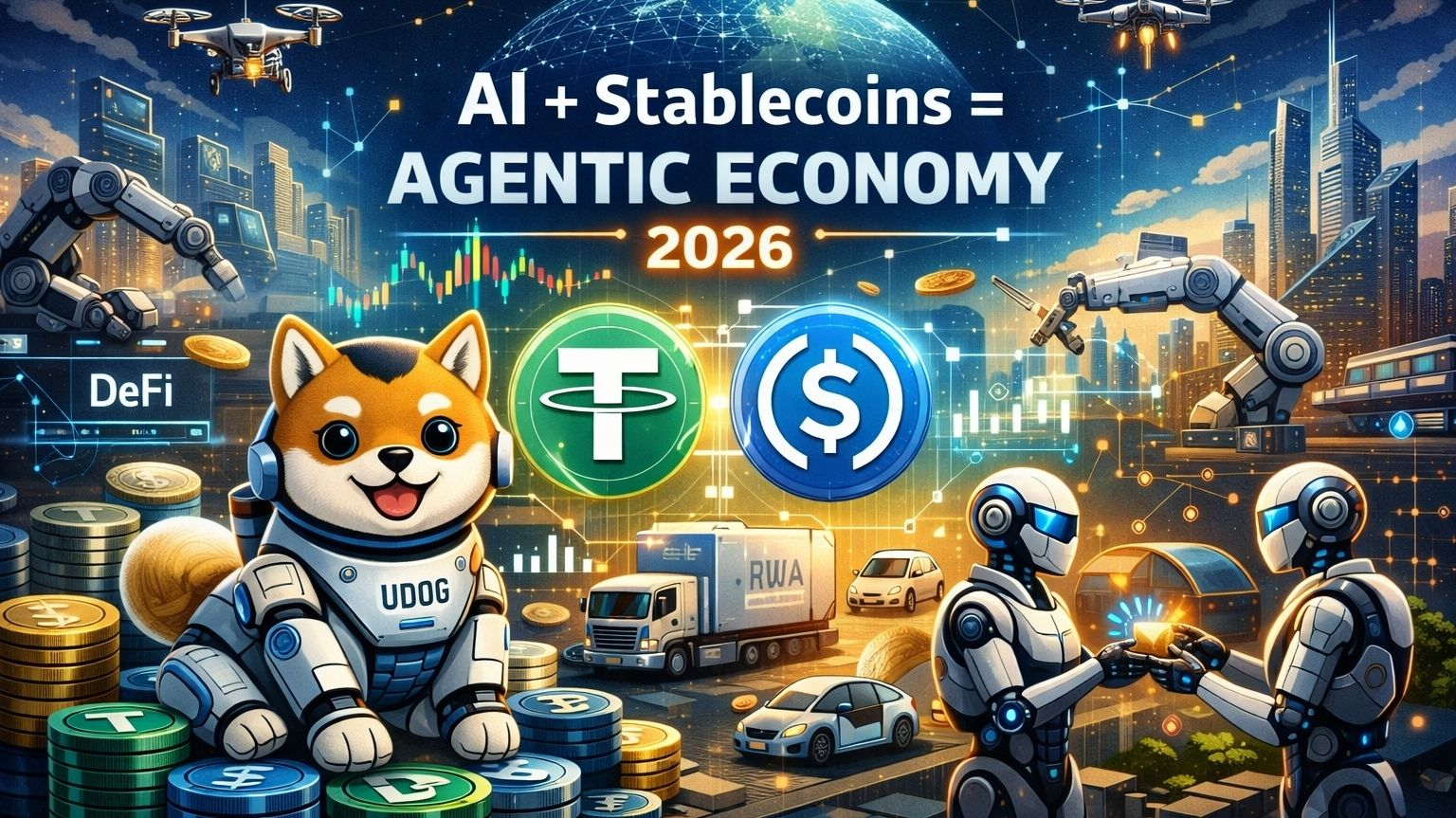
AI + Stablecoins: The Foundation of the Agentic Economy in 20262026 may prove to be a pivotal year — a structural inflection point rather than just another growth cycle.
If 2020–2023 defined DeFi, and 2024–2025 solidified stablecoins, then 2026 and beyond may define the era of Agentic Finance.
The Rise of the Agentic Economy
The convergence of AI and stablecoins is forming a new economic architecture — one where intelligent agents can:
Execute transactions
Allocate capital
Optimize liquidity
Interact with global markets autonomously
Stablecoins act as the settlement layer.
AI becomes the decision layer.
Together, they form the foundation of the Agentic Economy.
Major Opportunities
🌍 Global Financial Inclusion
Borderless digital dollars accessible via smartphones — reducing reliance on fragile banking systems.
🚑 Faster Humanitarian Aid Distribution
Programmable stablecoins + AI verification can enable transparent, instant cross-border relief.
🏢 SME Access to Global Liquidity
Small and medium enterprises gain direct access to global capital pools without traditional gatekeepers.
🏗 Tokenization of Real-World Assets (RWA)
AI-powered valuation + stablecoin settlement accelerates liquidity for real estate, commodities, and bonds.
🛒 Seamless AI-Driven Commerce
Autonomous agents transacting with other agents — subscription payments, supply chain settlements, and microservices handled natively on-chain.
Concentration Risks
While the opportunity is massive, risks remain:
Stablecoin issuer centralization
Dependence on a few dominant AI providers
Regulatory fragmentation
Liquidity concentration across limited blockchains
The infrastructure must mature alongside adoption.
AI + Stablecoins = The Default Digital Financial Infrastructure
The integration of AI and stablecoins is creating:
Self-operating financial systems
Frictionless global payments
Autonomous capital optimization
A programmable economic layer for machines
This is no longer experimental infrastructure.
It is becoming the backbone of a new economic model.
Conclusion
AI + Stablecoins is no longer just a narrative.
It is rapidly becoming the core infrastructure of the next global digital economy.
2026 may be remembered as the year finance evolved —from human-operated systems to autonomous economic networks.
$USDT $USDC $U
{spot}(USDCUSDT)
AI + Stablecoins: The Foundation of the Agentic Economy in 2026
2026 may prove to be a pivotal year — a structural inflection point rather than just another growth cycle.
If 2020–2023 defined DeFi, and 2024–2025 solidified stablecoins, then 2026 and beyond may define the era of Agentic Finance.
The Rise of the Agentic Economy
The convergence of AI and stablecoins is forming a new economic architecture — one where intelligent agents can:
Execute transactions
Allocate capital
Optimize liquidity
Interact with global markets autonomously
Stablecoins act as the settlement layer.
AI becomes the decision layer.
Together, they form the foundation of the Agentic Economy.
Major Opportunities
🌍 Global Financial Inclusion
Borderless digital dollars accessible via smartphones — reducing reliance on fragile banking systems.
🚑 Faster Humanitarian Aid Distribution
Programmable stablecoins + AI verification can enable transparent, instant cross-border relief.
🏢 SME Access to Global Liquidity
Small and medium enterprises gain direct access to global capital pools without traditional gatekeepers.
🏗 Tokenization of Real-World Assets (RWA)
AI-powered valuation + stablecoin settlement accelerates liquidity for real estate, commodities, and bonds.
🛒 Seamless AI-Driven Commerce
Autonomous agents transacting with other agents — subscription payments, supply chain settlements, and microservices handled natively on-chain.
Concentration Risks
While the opportunity is massive, risks remain:
Stablecoin issuer centralization
Dependence on a few dominant AI providers
Regulatory fragmentation
Liquidity concentration across limited blockchains
The infrastructure must mature alongside adoption.
AI + Stablecoins = The Default Digital Financial Infrastructure
The integration of AI and stablecoins is creating:
Self-operating financial systems
Frictionless global payments
Autonomous capital optimization
A programmable economic layer for machines
This is no longer experimental infrastructure.
It is becoming the backbone of a new economic model.
Conclusion
AI + Stablecoins is no longer just a narrative.
It is rapidly becoming the core infrastructure of the next global digital economy.
2026 may be remembered as the year finance evolved —from human-operated systems to autonomous economic networks.
$USDT $USDC $U
If 2020–2023 defined DeFi, and 2024–2025 solidified stablecoins, then 2026 and beyond may define the era of Agentic Finance.
The Rise of the Agentic Economy
The convergence of AI and stablecoins is forming a new economic architecture — one where intelligent agents can:
Execute transactions
Allocate capital
Optimize liquidity
Interact with global markets autonomously
Stablecoins act as the settlement layer.
AI becomes the decision layer.
Together, they form the foundation of the Agentic Economy.
Major Opportunities
🌍 Global Financial Inclusion
Borderless digital dollars accessible via smartphones — reducing reliance on fragile banking systems.
🚑 Faster Humanitarian Aid Distribution
Programmable stablecoins + AI verification can enable transparent, instant cross-border relief.
🏢 SME Access to Global Liquidity
Small and medium enterprises gain direct access to global capital pools without traditional gatekeepers.
🏗 Tokenization of Real-World Assets (RWA)
AI-powered valuation + stablecoin settlement accelerates liquidity for real estate, commodities, and bonds.
🛒 Seamless AI-Driven Commerce
Autonomous agents transacting with other agents — subscription payments, supply chain settlements, and microservices handled natively on-chain.
Concentration Risks
While the opportunity is massive, risks remain:
Stablecoin issuer centralization
Dependence on a few dominant AI providers
Regulatory fragmentation
Liquidity concentration across limited blockchains
The infrastructure must mature alongside adoption.
AI + Stablecoins = The Default Digital Financial Infrastructure
The integration of AI and stablecoins is creating:
Self-operating financial systems
Frictionless global payments
Autonomous capital optimization
A programmable economic layer for machines
This is no longer experimental infrastructure.
It is becoming the backbone of a new economic model.
Conclusion
AI + Stablecoins is no longer just a narrative.
It is rapidly becoming the core infrastructure of the next global digital economy.
2026 may be remembered as the year finance evolved —from human-operated systems to autonomous economic networks.
$USDT $USDC $U
2
63
49k
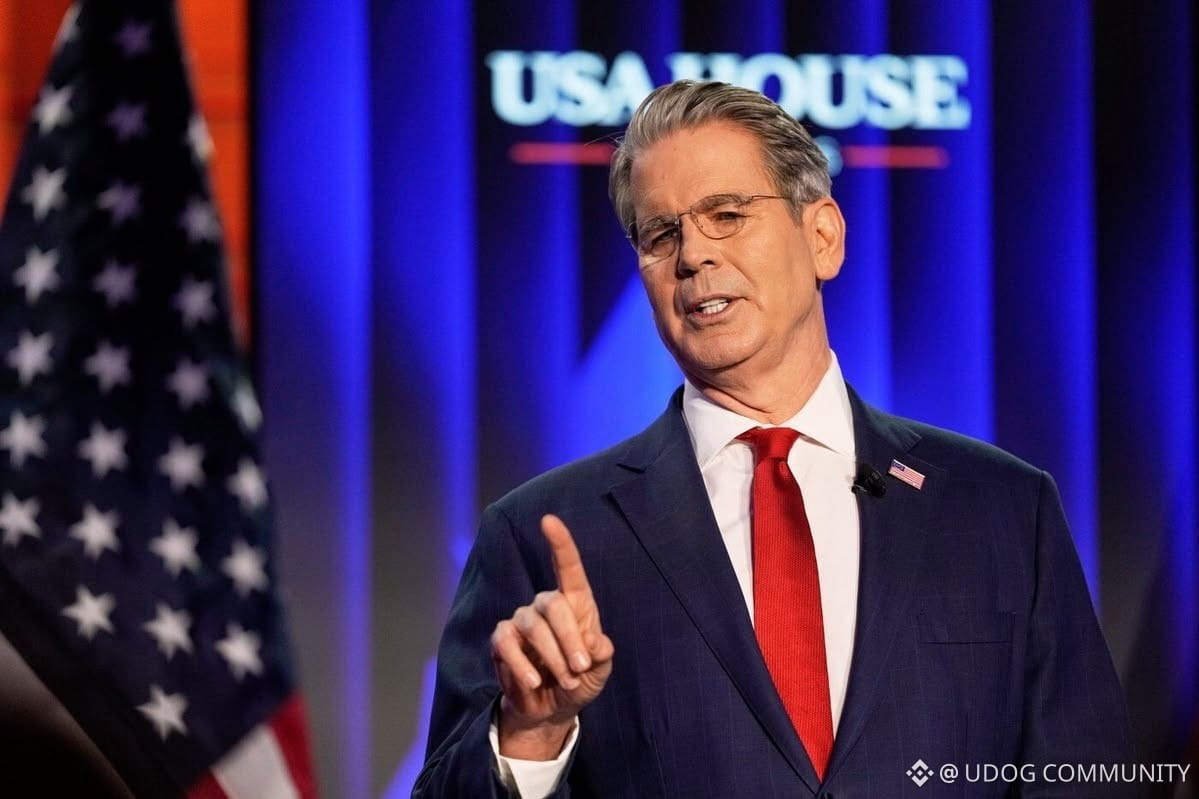
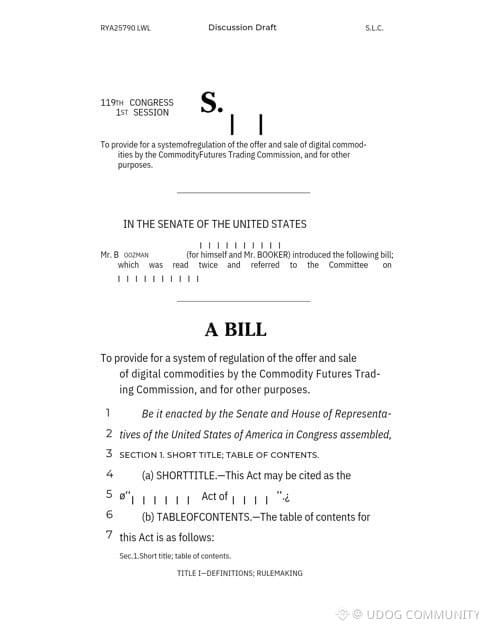
Scott Bessent urged Congress to pass a crypto market structure bill.
He emphasized that the CLARITY Act would help eliminate uncertainty and stabilize crypto markets amid volatility. He also called on Congress to act quickly this spring so the bill can be sent to Donald Trump.
The bill would place most digital assets under the supervision of the Commodity Futures Trading Commission (CFTC).
#UDOG
Scott Bessent urged Congress to pass a crypto market structure bill.
He emphasized that the CLARITY Act would help eliminate uncertainty and stabilize crypto markets amid volatility. He also called on Congress to act quickly this spring so the bill can be sent to Donald Trump.
The bill would place most digital assets under the supervision of the Commodity Futures Trading Commission (CFTC).
#UDOG
He emphasized that the CLARITY Act would help eliminate uncertainty and stabilize crypto markets amid volatility. He also called on Congress to act quickly this spring so the bill can be sent to Donald Trump.
The bill would place most digital assets under the supervision of the Commodity Futures Trading Commission (CFTC).
#UDOG
3

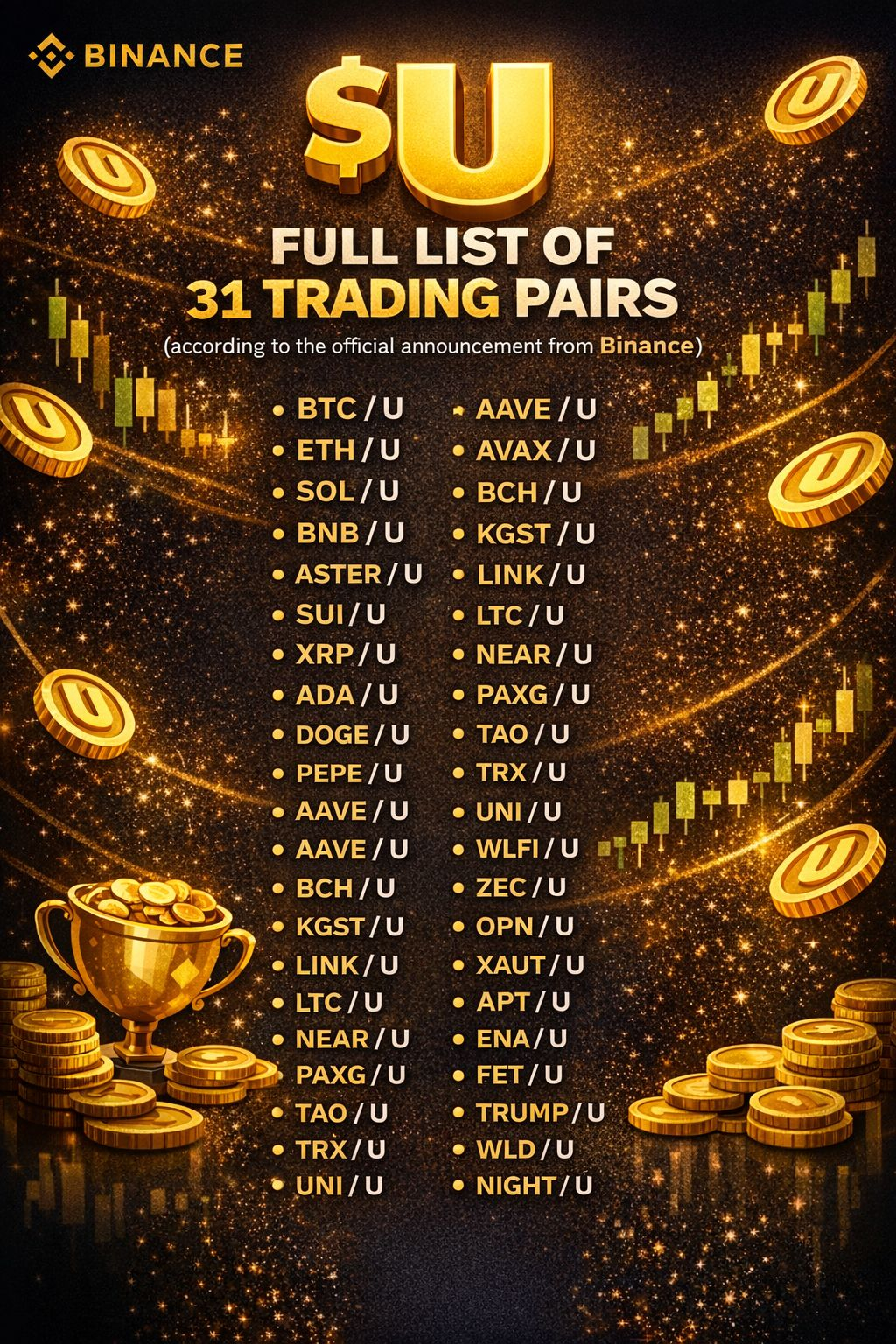
Full list of 31 trading pairs (according to the official announcement from Binance):
BTC/U
ETH/U
SOL/U
BNB/U
ASTER/U
SUI/U
XRP/U
ADA/U
DOGE/U
PEPE/U
AAVE/U
AVAX/U
BCH/U
KGST/U
LINK/U
LTC/U
NEAR/U
PAXG/U
TAO/U
TRX/U
UNI/U
WLFI/U
ZEC/U
OPN/U
XAUT/U
APT/U
ENA/U
FET/U
TRUMP/U
WLD/U
NIGHT/U
#UDOG
Full list of 31 trading pairs (according to the official announcement from Binance):
BTC/U
ETH/U
SOL/U
BNB/U
ASTER/U
SUI/U
XRP/U
ADA/U
DOGE/U
PEPE/U
AAVE/U
AVAX/U
BCH/U
KGST/U
LINK/U
LTC/U
NEAR/U
PAXG/U
TAO/U
TRX/U
UNI/U
WLFI/U
ZEC/U
OPN/U
XAUT/U
APT/U
ENA/U
FET/U
TRUMP/U
WLD/U
NIGHT/U
#UDOG
BTC/U
ETH/U
SOL/U
BNB/U
ASTER/U
SUI/U
XRP/U
ADA/U
DOGE/U
PEPE/U
AAVE/U
AVAX/U
BCH/U
KGST/U
LINK/U
LTC/U
NEAR/U
PAXG/U
TAO/U
TRX/U
UNI/U
WLFI/U
ZEC/U
OPN/U
XAUT/U
APT/U
ENA/U
FET/U
TRUMP/U
WLD/U
NIGHT/U
#UDOG
12
🔥 BREAKING NEWS: The CLARITY Act is close to resolving the stablecoin reward bottleneck
According to Coinbase, the debate around the reward mechanism for stablecoins could be settled within the next 48 hours.
This has been the biggest sticking point for the CLARITY Act before the broader crypto market structure bill can move forward.
If this issue is resolved, the U.S. regulatory framework for crypto could attract new capital inflows into the market.
#UDOG
🔥 BREAKING NEWS: The CLARITY Act is close to resolving the stablecoin reward bottleneck
According to Coinbase, the debate around the reward mechanism for stablecoins could be settled within the next 48 hours.
This has been the biggest sticking point for the CLARITY Act before the broader crypto market structure bill can move forward.
If this issue is resolved, the U.S. regulatory framework for crypto could attract new capital inflows into the market.
#UDOG
According to Coinbase, the debate around the reward mechanism for stablecoins could be settled within the next 48 hours.
This has been the biggest sticking point for the CLARITY Act before the broader crypto market structure bill can move forward.
If this issue is resolved, the U.S. regulatory framework for crypto could attract new capital inflows into the market.
#UDOG

1
3
Invisible Stablecoins Are Transforming Payments in Southeast Asia
Stablecoins are booming in Southeast Asia—but in a way most users don’t even notice.
Imagine a Thai tourist in Singapore: you scan a QR code with Q Wallet, pay in Baht, and the merchant instantly receives SGD. No high fees, no delays.
Behind the scenes, XSGD by StraitsX—licensed by MAS—acts as the “invisible rail” powering the transaction.
Crypto Hidden Behind Familiar UX
When you pay:
Your wallet sends a request
The system converts Baht → XSGD on-chain
XSGD transfers instantly
The merchant receives real SGD
To users, it’s just a normal QR payment—but in reality it’s real-time, low-cost cross-border settlement.
The “Invisible Stablecoin” Model
StraitsX doesn’t compete with wallets or banks—it powers them. Stablecoins act as a hidden bridge between systems like SGQR and PromptPay.
Real-World Adoption
Already live with Grab and Alipay+, enabling tourists to pay across Singapore using their home wallets.
Next is Project BLOOM:
Q2 2026: Thailand → Singapore
Later: Singapore → Thailand
All powered by stablecoins, but experienced like local payments.
Why It Matters
Invisible stablecoins deliver:
Speed: instant settlement
Cost: lower fees
Convenience: no FX hassle
Compatibility: no behavior change
Even small merchants benefit from faster, safer cash flow.
The Future
“The best stablecoin is the one you don’t see.”
Stablecoins are no longer just crypto investments—they’re becoming the invisible infrastructure of payments in Southeast Asia.
Have you tried cross-border QR payments? How do you think invisible stablecoins will reshape finance in the region?
@Athenaweb33
Invisible Stablecoins Are Transforming Payments in Southeast Asia
Stablecoins are booming in Southeast Asia—but in a way most users don’t even notice.
Imagine a Thai tourist in Singapore: you scan a QR code with Q Wallet, pay in Baht, and the merchant instantly receives SGD. No high fees, no delays.
Behind the scenes, XSGD by StraitsX—licensed by MAS—acts as the “invisible rail” powering the transaction.
Crypto Hidden Behind Familiar UX
When you pay:
Your wallet sends a request
The system converts Baht → XSGD on-chain
XSGD transfers instantly
The merchant receives real SGD
To users, it’s just a normal QR payment—but in reality it’s real-time, low-cost cross-border settlement.
The “Invisible Stablecoin” Model
StraitsX doesn’t compete with wallets or banks—it powers them. Stablecoins act as a hidden bridge between systems like SGQR and PromptPay.
Real-World Adoption
Already live with Grab and Alipay+, enabling tourists to pay across Singapore using their home wallets.
Next is Project BLOOM:
Q2 2026: Thailand → Singapore
Later: Singapore → Thailand
All powered by stablecoins, but experienced like local payments.
Why It Matters
Invisible stablecoins deliver:
Speed: instant settlement
Cost: lower fees
Convenience: no FX hassle
Compatibility: no behavior change
Even small merchants benefit from faster, safer cash flow.
The Future
“The best stablecoin is the one you don’t see.”
Stablecoins are no longer just crypto investments—they’re becoming the invisible infrastructure of payments in Southeast Asia.
Have you tried cross-border QR payments? How do you think invisible stablecoins will reshape finance in the region?
@Jens 1
Stablecoins are booming in Southeast Asia—but in a way most users don’t even notice.
Imagine a Thai tourist in Singapore: you scan a QR code with Q Wallet, pay in Baht, and the merchant instantly receives SGD. No high fees, no delays.
Behind the scenes, XSGD by StraitsX—licensed by MAS—acts as the “invisible rail” powering the transaction.
Crypto Hidden Behind Familiar UX
When you pay:
Your wallet sends a request
The system converts Baht → XSGD on-chain
XSGD transfers instantly
The merchant receives real SGD
To users, it’s just a normal QR payment—but in reality it’s real-time, low-cost cross-border settlement.
The “Invisible Stablecoin” Model
StraitsX doesn’t compete with wallets or banks—it powers them. Stablecoins act as a hidden bridge between systems like SGQR and PromptPay.
Real-World Adoption
Already live with Grab and Alipay+, enabling tourists to pay across Singapore using their home wallets.
Next is Project BLOOM:
Q2 2026: Thailand → Singapore
Later: Singapore → Thailand
All powered by stablecoins, but experienced like local payments.
Why It Matters
Invisible stablecoins deliver:
Speed: instant settlement
Cost: lower fees
Convenience: no FX hassle
Compatibility: no behavior change
Even small merchants benefit from faster, safer cash flow.
The Future
“The best stablecoin is the one you don’t see.”
Stablecoins are no longer just crypto investments—they’re becoming the invisible infrastructure of payments in Southeast Asia.
Have you tried cross-border QR payments? How do you think invisible stablecoins will reshape finance in the region?
@Jens 1

15
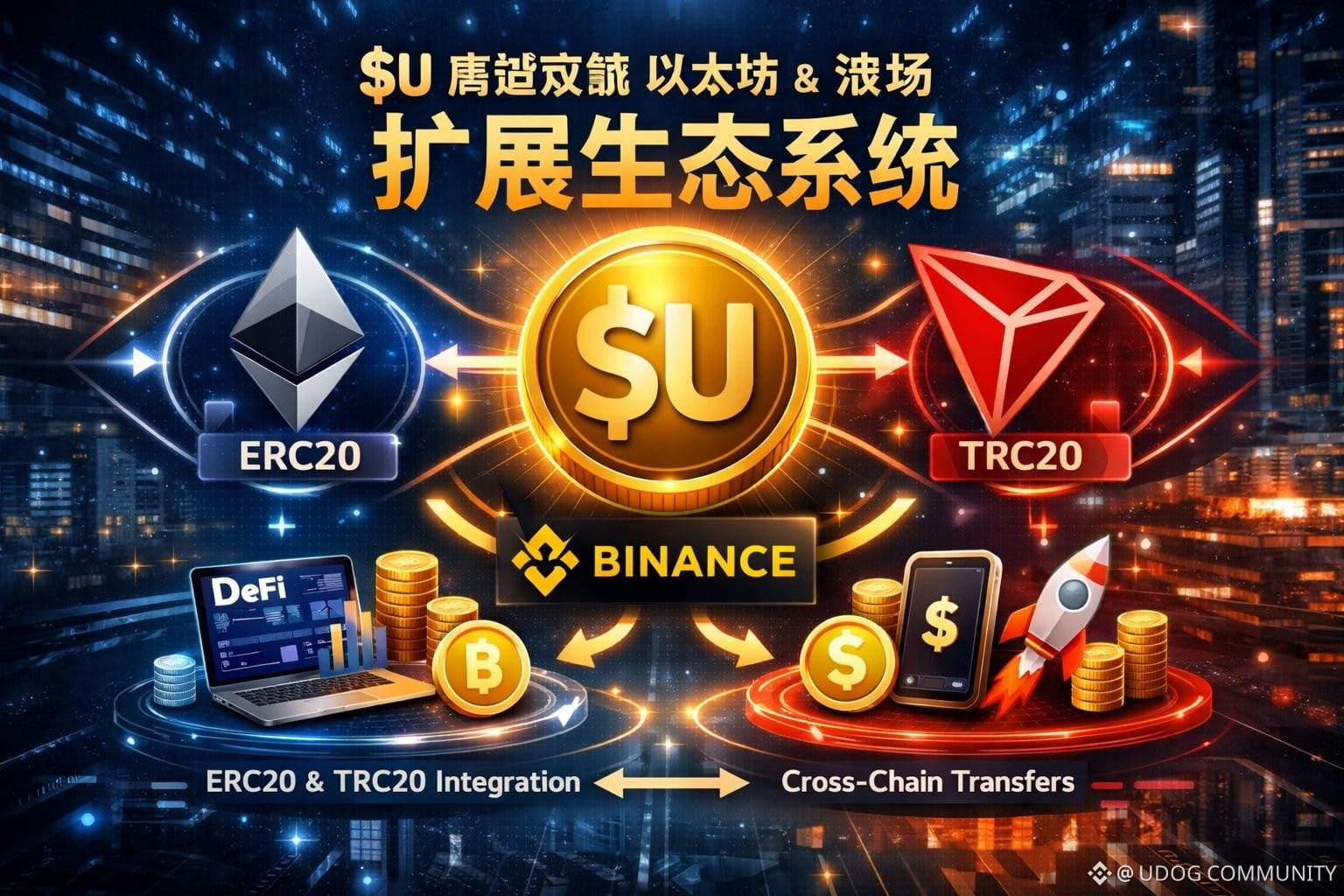
$U is expanding to more blockchain networks!
We are very pleased to announce that $U (United Stables) has officially launched on two major networks: Ethereum (ERC20) and Tron (TRC20)! From now on, you can use $U more flexibly across multiple ecosystems and enjoy a smooth and convenient experience through Binance.
Binance has completed the integration of $U
According to Binance's official announcement, the platform now fully supports deposits and withdrawals of $U on TRC20 and ERC20 networks. This brings several practical advantages:
On Tron (TRC20): transaction speed is extremely fast, with almost zero fees—making it very suitable for daily payments, transfers, and scenarios that require high efficiency.
On Ethereum (ERC20): you can engage more deeply with DeFi liquidity, complex financial applications, and a powerful ecosystem.
Through Binance: users can easily complete deposits/withdrawals, trades, and conveniently transfer $U between different chains, no longer being "locked" in a single ecosystem.
This is an important milestone that makes $U more user-friendly, enhances liquidity, and expands its application scenarios in trading, payments, asset management, and more.
Multi-chain is no longer just a future trend—it is happening now. $U is simultaneously launching on Ethereum and Tron, and with the support of Binance, it is a strong proof of this development trend.
#UDOG Community—together we are building a truly practical and flexible stablecoin!
$U is expanding to more blockchain networks!
We are very pleased to announce that $U (United Stables) has officially launched on two major networks: Ethereum (ERC20) and Tron (TRC20)! From now on, you can use $U more flexibly across multiple ecosystems and enjoy a smooth and convenient experience through Binance.
Binance has completed the integration of $U
According to Binance's official announcement, the platform now fully supports deposits and withdrawals of $U on TRC20 and ERC20 networks. This brings several practical advantages:
On Tron (TRC20): transaction speed is extremely fast, with almost zero fees—making it very suitable for daily payments, transfers, and scenarios that require high efficiency.
On Ethereum (ERC20): you can engage more deeply with DeFi liquidity, complex financial applications, and a powerful ecosystem.
Through Binance: users can easily complete deposits/withdrawals, trades, and conveniently transfer $U between different chains, no longer being "locked" in a single ecosystem.
This is an important milestone that makes $U more user-friendly, enhances liquidity, and expands its application scenarios in trading, payments, asset management, and more.
Multi-chain is no longer just a future trend—it is happening now. $U is simultaneously launching on Ethereum and Tron, and with the support of Binance, it is a strong proof of this development trend.
#UDOG Community—together we are building a truly practical and flexible stablecoin!
We are very pleased to announce that $U (United Stables) has officially launched on two major networks: Ethereum (ERC20) and Tron (TRC20)! From now on, you can use $U more flexibly across multiple ecosystems and enjoy a smooth and convenient experience through Binance.
Binance has completed the integration of $U
According to Binance's official announcement, the platform now fully supports deposits and withdrawals of $U on TRC20 and ERC20 networks. This brings several practical advantages:
On Tron (TRC20): transaction speed is extremely fast, with almost zero fees—making it very suitable for daily payments, transfers, and scenarios that require high efficiency.
On Ethereum (ERC20): you can engage more deeply with DeFi liquidity, complex financial applications, and a powerful ecosystem.
Through Binance: users can easily complete deposits/withdrawals, trades, and conveniently transfer $U between different chains, no longer being "locked" in a single ecosystem.
This is an important milestone that makes $U more user-friendly, enhances liquidity, and expands its application scenarios in trading, payments, asset management, and more.
Multi-chain is no longer just a future trend—it is happening now. $U is simultaneously launching on Ethereum and Tron, and with the support of Binance, it is a strong proof of this development trend.
#UDOG Community—together we are building a truly practical and flexible stablecoin!
1
1
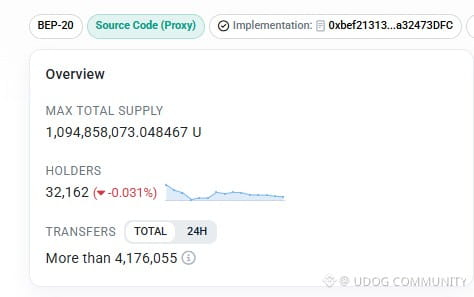
Congratulations! The market value of $U has reached an all-time high (ATH) today. Let's look forward to the season of U together! 🚀
#UDOG
Congratulations! The market value of $U has reached an all-time high (ATH) today. Let's look forward to the season of U together! 🚀
#UDOG
#UDOG
1
1
$U —— Unifying liquidity and providing proxy payment solutions for the BSC AI ecosystem.$U – A stablecoin providing proxy payment solutions for the BSC AI ecosystem, unifying liquidity. BNB Chain is leading the AI revolution on the blockchain, with tens of thousands of AI agents deployed within it, and the DeFi ecosystem is also very active. In this context, the native stablecoin $U issued by United Stables stands out as a powerful 'liquidity bridge', successfully unifying fragmented liquidity and ushering in a new era of agentic payments (AI agents' autonomous payments). $U will be officially launched on December 18, 2025, on BNB Chain and Ethereum, and it is not an ordinary stablecoin. Compared to competing with USDT or USDC, $U adopts a unique reserve model that incorporates mainstream stablecoins such as USDT, USDC, USD1, and audited fiat assets into its reserves, thereby creating a unified liquidity layer. The result is: liquidity is more concentrated, capital efficiency is significantly improved, providing users, developers, and AI agents with a smoother experience. Why can $U effectively 'Unify Liquidity' on BSC? Unique reserve model: when minting $U, assets such as USDT/USDC can be deposited, and the system pools them into a single token, reducing the issue of fragmented liquidity pools on DEXs like PancakeSwap.
$U —— Unifying liquidity and providing proxy payment solutions for the BSC AI ecosystem.
$U – A stablecoin providing proxy payment solutions for the BSC AI ecosystem, unifying liquidity. BNB Chain is leading the AI revolution on the blockchain, with tens of thousands of AI agents deployed within it, and the DeFi ecosystem is also very active. In this context, the native stablecoin $U issued by United Stables stands out as a powerful 'liquidity bridge', successfully unifying fragmented liquidity and ushering in a new era of agentic payments (AI agents' autonomous payments). $U will be officially launched on December 18, 2025, on BNB Chain and Ethereum, and it is not an ordinary stablecoin. Compared to competing with USDT or USDC, $U adopts a unique reserve model that incorporates mainstream stablecoins such as USDT, USDC, USD1, and audited fiat assets into its reserves, thereby creating a unified liquidity layer. The result is: liquidity is more concentrated, capital efficiency is significantly improved, providing users, developers, and AI agents with a smoother experience. Why can $U effectively 'Unify Liquidity' on BSC? Unique reserve model: when minting $U, assets such as USDT/USDC can be deposited, and the system pools them into a single token, reducing the issue of fragmented liquidity pools on DEXs like PancakeSwap.
1
281
🚨 Binance ecosystem heavy collaboration! UDOG is about to ignite the BSC AI track! 🚨
We are co-hosting an AMA with @BNBCHAIN to deeply discuss the agency payment revolution and liquidity unification plan!
This is a key step for UDOG towards Binance main station, and all community members must go all out!
📅 Time: March 26th 12:00 UTC / 20:00 SGT (Beijing Time 20:00)
📍 Location: X (Twitter) Space → Follow @UTechStables / @BNBCHAIN for timely entry
🎯 Core Topics:
- How UDOG empowers the BSC AI ecosystem
- Progress and future plans for agency payment implementation to push this update
#UDOG
🚨 Binance ecosystem heavy collaboration! UDOG is about to ignite the BSC AI track! 🚨
We are co-hosting an AMA with @BNBCHAIN to deeply discuss the agency payment revolution and liquidity unification plan!
This is a key step for UDOG towards Binance main station, and all community members must go all out!
📅 Time: March 26th 12:00 UTC / 20:00 SGT (Beijing Time 20:00)
📍 Location: X (Twitter) Space → Follow @UTechStables / @BNBCHAIN for timely entry
🎯 Core Topics:
- How UDOG empowers the BSC AI ecosystem
- Progress and future plans for agency payment implementation to push this update
#UDOG
We are co-hosting an AMA with @BNBCHAIN to deeply discuss the agency payment revolution and liquidity unification plan!
This is a key step for UDOG towards Binance main station, and all community members must go all out!
📅 Time: March 26th 12:00 UTC / 20:00 SGT (Beijing Time 20:00)
📍 Location: X (Twitter) Space → Follow @UTechStables / @BNBCHAIN for timely entry
🎯 Core Topics:
- How UDOG empowers the BSC AI ecosystem
- Progress and future plans for agency payment implementation to push this update
#UDOG

1
7
Article
Why $U Could Power the Next Era of Global PaymentsThe future of global payments powered by stablecoins is rapidly accelerating, and $U (United Stables) is well-positioned to capture this opportunity. Here’s a clear, structured analysis based on current trends and the core design of $U:
1. The Future of Global Payments with Stablecoins
Stablecoins are evolving from simple “crypto trading tools” into real financial infrastructure for global payments:
Speed & cost advantage: Cross-border transfers take minutes instead of 1–5 days, with fees dropping from 5–10% to below 1–2% (even as low as 0.1–0.25% in some cases). Payments run 24/7 without banking constraints.
Massive growth outlook: Bloomberg Intelligence estimates global stablecoin transaction volume could reach ~$56.6 trillion by 2030. By 2024–2025, volumes have already reached tens of trillions, surpassing some traditional payment networks.
Key use cases:
Remittances (especially in emerging markets like Vietnam, Argentina, Turkey)
B2B payments, trade finance, treasury operations
Integration with major fintech players like Visa, Stripe, PayPal (PYUSD), and Western Union
Future trends: Multi-chain infrastructure, institutional-grade compliance, and AI-native payments (machine-to-machine, autonomous agents)
👉 Stablecoins are becoming the “new SWIFT” for the digital era, especially in Asia where adoption is accelerating.
2. What is $U (United Stables) and What Makes It Different?
$U is a USD-pegged stablecoin (1:1), issued by United Stables Limited (BVI), launched in December 2025 on BNB Chain and Ethereum, with a market cap around $1B.
Key Differentiators (Not Just Another Stablecoin)
Unified liquidity model:
Users can mint/redeem $U using USDT, USDC, USD1, or fiat USD. Instead of competing, $U aggregates fragmented liquidity into one unified layer.
Hybrid backing + native yield:
Reserves include USD and high-quality stablecoins, deployed into low-risk strategies (e.g., T-bills, staking). A portion of yield is automatically distributed to holders (auto-compounding).
👉 $U becomes “productive money” — it earns while sitting idle.
AI-ready & programmable:
Supports EIP-3009 (gasless transfers) and delegated execution → ideal for AI agents, automated trading, and machine-to-machine payments.
High transparency:
Real-time Proof-of-Reserves, independent audits, and segregated custody (bankruptcy-remote).
Low cost on BNB Chain:
Near-zero fees and high throughput → ideal for large-scale payment use cases.
3. Concrete Opportunities for $U in Global Payments
Sector Opportunity for $U Competitive Edge
Cross-border & Remittances Instant transfers, <1.5% fees Unified liquidity + yield
B2B & Institutional OTC settlement, treasury management Transparency + hybrid reserves
DeFi & Trading Unified base currency, lower slippage Aggregated liquidity
AI Payments M2M payments, autonomous agents AI-native infrastructure
Emerging Markets (SEA) Remittance corridors, trade flows Low fees + BNB Chain dominance
Biggest Advantage:
While USDT and USDC fragment liquidity, $U unifies it →
More users → deeper liquidity → better execution → stronger network effects.
Yield as a Competitive Weapon:
Holding $U generates passive yield without locking funds, making it highly attractive for:
Treasury management
Payment balances
Long-term capital allocation
Current Momentum:
Reached ~$1B supply in under 3 months
Supported within the BNB Chain ecosystem
Expanding integrations with exchanges, market makers, and payment networks
4. Conclusion & Outlook
The future of global payments clearly belongs to stablecoins, and $U is designed to become a unified liquidity layer, not just another stablecoin.
With:
BNB Chain (fast + cheap)
AI-ready infrastructure
Native yield
Liquidity aggregation model
👉 $U has strong potential in:
Cross-border payments
Remittances
DeFi payments
Especially in Asia and emerging markets
Risks to Monitor
Intense competition (USDT, USDC, PYUSD, RLUSD, etc.)
Regulatory developments (e.g., MiCA in the EU, upcoming US legislation)
Need for real-world adoption (merchants, remittance partners, fintech integrations)
#UDOG
Why $U Could Power the Next Era of Global Payments
The future of global payments powered by stablecoins is rapidly accelerating, and $U (United Stables) is well-positioned to capture this opportunity. Here’s a clear, structured analysis based on current trends and the core design of $U:
1. The Future of Global Payments with Stablecoins
Stablecoins are evolving from simple “crypto trading tools” into real financial infrastructure for global payments:
Speed & cost advantage: Cross-border transfers take minutes instead of 1–5 days, with fees dropping from 5–10% to below 1–2% (even as low as 0.1–0.25% in some cases). Payments run 24/7 without banking constraints.
Massive growth outlook: Bloomberg Intelligence estimates global stablecoin transaction volume could reach ~$56.6 trillion by 2030. By 2024–2025, volumes have already reached tens of trillions, surpassing some traditional payment networks.
Key use cases:
Remittances (especially in emerging markets like Vietnam, Argentina, Turkey)
B2B payments, trade finance, treasury operations
Integration with major fintech players like Visa, Stripe, PayPal (PYUSD), and Western Union
Future trends: Multi-chain infrastructure, institutional-grade compliance, and AI-native payments (machine-to-machine, autonomous agents)
👉 Stablecoins are becoming the “new SWIFT” for the digital era, especially in Asia where adoption is accelerating.
2. What is $U (United Stables) and What Makes It Different?
$U is a USD-pegged stablecoin (1:1), issued by United Stables Limited (BVI), launched in December 2025 on BNB Chain and Ethereum, with a market cap around $1B.
Key Differentiators (Not Just Another Stablecoin)
Unified liquidity model:
Users can mint/redeem $U using USDT, USDC, USD1, or fiat USD. Instead of competing, $U aggregates fragmented liquidity into one unified layer.
Hybrid backing + native yield:
Reserves include USD and high-quality stablecoins, deployed into low-risk strategies (e.g., T-bills, staking). A portion of yield is automatically distributed to holders (auto-compounding).
👉 $U becomes “productive money” — it earns while sitting idle.
AI-ready & programmable:
Supports EIP-3009 (gasless transfers) and delegated execution → ideal for AI agents, automated trading, and machine-to-machine payments.
High transparency:
Real-time Proof-of-Reserves, independent audits, and segregated custody (bankruptcy-remote).
Low cost on BNB Chain:
Near-zero fees and high throughput → ideal for large-scale payment use cases.
3. Concrete Opportunities for $U in Global Payments
Sector Opportunity for $U Competitive Edge
Cross-border & Remittances Instant transfers, <1.5% fees Unified liquidity + yield
B2B & Institutional OTC settlement, treasury management Transparency + hybrid reserves
DeFi & Trading Unified base currency, lower slippage Aggregated liquidity
AI Payments M2M payments, autonomous agents AI-native infrastructure
Emerging Markets (SEA) Remittance corridors, trade flows Low fees + BNB Chain dominance
Biggest Advantage:
While USDT and USDC fragment liquidity, $U unifies it →
More users → deeper liquidity → better execution → stronger network effects.
Yield as a Competitive Weapon:
Holding $U generates passive yield without locking funds, making it highly attractive for:
Treasury management
Payment balances
Long-term capital allocation
Current Momentum:
Reached ~$1B supply in under 3 months
Supported within the BNB Chain ecosystem
Expanding integrations with exchanges, market makers, and payment networks
4. Conclusion & Outlook
The future of global payments clearly belongs to stablecoins, and $U is designed to become a unified liquidity layer, not just another stablecoin.
With:
BNB Chain (fast + cheap)
AI-ready infrastructure
Native yield
Liquidity aggregation model
👉 $U has strong potential in:
Cross-border payments
Remittances
DeFi payments
Especially in Asia and emerging markets
Risks to Monitor
Intense competition (USDT, USDC, PYUSD, RLUSD, etc.)
Regulatory developments (e.g., MiCA in the EU, upcoming US legislation)
Need for real-world adoption (merchants, remittance partners, fintech integrations)
#UDOG
1. The Future of Global Payments with Stablecoins
Stablecoins are evolving from simple “crypto trading tools” into real financial infrastructure for global payments:
Speed & cost advantage: Cross-border transfers take minutes instead of 1–5 days, with fees dropping from 5–10% to below 1–2% (even as low as 0.1–0.25% in some cases). Payments run 24/7 without banking constraints.
Massive growth outlook: Bloomberg Intelligence estimates global stablecoin transaction volume could reach ~$56.6 trillion by 2030. By 2024–2025, volumes have already reached tens of trillions, surpassing some traditional payment networks.
Key use cases:
Remittances (especially in emerging markets like Vietnam, Argentina, Turkey)
B2B payments, trade finance, treasury operations
Integration with major fintech players like Visa, Stripe, PayPal (PYUSD), and Western Union
Future trends: Multi-chain infrastructure, institutional-grade compliance, and AI-native payments (machine-to-machine, autonomous agents)
👉 Stablecoins are becoming the “new SWIFT” for the digital era, especially in Asia where adoption is accelerating.
2. What is $U (United Stables) and What Makes It Different?
$U is a USD-pegged stablecoin (1:1), issued by United Stables Limited (BVI), launched in December 2025 on BNB Chain and Ethereum, with a market cap around $1B.
Key Differentiators (Not Just Another Stablecoin)
Unified liquidity model:
Users can mint/redeem $U using USDT, USDC, USD1, or fiat USD. Instead of competing, $U aggregates fragmented liquidity into one unified layer.
Hybrid backing + native yield:
Reserves include USD and high-quality stablecoins, deployed into low-risk strategies (e.g., T-bills, staking). A portion of yield is automatically distributed to holders (auto-compounding).
👉 $U becomes “productive money” — it earns while sitting idle.
AI-ready & programmable:
Supports EIP-3009 (gasless transfers) and delegated execution → ideal for AI agents, automated trading, and machine-to-machine payments.
High transparency:
Real-time Proof-of-Reserves, independent audits, and segregated custody (bankruptcy-remote).
Low cost on BNB Chain:
Near-zero fees and high throughput → ideal for large-scale payment use cases.
3. Concrete Opportunities for $U in Global Payments
Sector Opportunity for $U Competitive Edge
Cross-border & Remittances Instant transfers, <1.5% fees Unified liquidity + yield
B2B & Institutional OTC settlement, treasury management Transparency + hybrid reserves
DeFi & Trading Unified base currency, lower slippage Aggregated liquidity
AI Payments M2M payments, autonomous agents AI-native infrastructure
Emerging Markets (SEA) Remittance corridors, trade flows Low fees + BNB Chain dominance
Biggest Advantage:
While USDT and USDC fragment liquidity, $U unifies it →
More users → deeper liquidity → better execution → stronger network effects.
Yield as a Competitive Weapon:
Holding $U generates passive yield without locking funds, making it highly attractive for:
Treasury management
Payment balances
Long-term capital allocation
Current Momentum:
Reached ~$1B supply in under 3 months
Supported within the BNB Chain ecosystem
Expanding integrations with exchanges, market makers, and payment networks
4. Conclusion & Outlook
The future of global payments clearly belongs to stablecoins, and $U is designed to become a unified liquidity layer, not just another stablecoin.
With:
BNB Chain (fast + cheap)
AI-ready infrastructure
Native yield
Liquidity aggregation model
👉 $U has strong potential in:
Cross-border payments
Remittances
DeFi payments
Especially in Asia and emerging markets
Risks to Monitor
Intense competition (USDT, USDC, PYUSD, RLUSD, etc.)
Regulatory developments (e.g., MiCA in the EU, upcoming US legislation)
Need for real-world adoption (merchants, remittance partners, fintech integrations)
#UDOG
1
15
🇺🇸 CLARITY Act Update (Digital Asset Market Clarity Act) – one of the hottest crypto regulation topics in late March 2026:
Mar 20: White House + Sen. Thom Tillis & Sen. Angela Alsobrooks reach agreement in principle to unblock the stalled bill since Jan 2026.
Goal: markup at Senate Banking Committee in late April, then move to full Senate vote.
💥 Key debate: Stablecoin yield
Banks worry passive yield will pull deposits away → hurt lending & financial stability.
Current deal: ban passive yield, but allow activity-based rewards (cashback, DeFi liquidity, transaction bonuses).
Alsobrooks: “Protects innovation while preventing widespread deposit flight.”
🔹 Deeper meaning: Battle between old system (banks) vs new system (crypto/DeFi)
Banks: stablecoins should only be a “payment tool.”
Crypto/DeFi: stablecoins = “global digital money” with yield.
✅ If CLARITY Act passes:
Clear jurisdiction: CFTC → digital commodities, SEC → security tokens
Framework for stablecoin custody & trading platforms
Less SEC “regulation by enforcement”
⏱ Near-term: Crypto + banks review details on Capitol Hill this week. If markup passes, next steps → full Senate vote → reconcile with House → Presidential signature.
📌 Bottom line: Long-term bullish for crypto & institutions, but short-term some DeFi/yield farms may need to adjust.
💬 Question: Should stablecoins compete freely with banks, or protect traditional banking for now?
#UDOG
🇺🇸 CLARITY Act Update (Digital Asset Market Clarity Act) – one of the hottest crypto regulation topics in late March 2026:
Mar 20: White House + Sen. Thom Tillis & Sen. Angela Alsobrooks reach agreement in principle to unblock the stalled bill since Jan 2026.
Goal: markup at Senate Banking Committee in late April, then move to full Senate vote.
💥 Key debate: Stablecoin yield
Banks worry passive yield will pull deposits away → hurt lending & financial stability.
Current deal: ban passive yield, but allow activity-based rewards (cashback, DeFi liquidity, transaction bonuses).
Alsobrooks: “Protects innovation while preventing widespread deposit flight.”
🔹 Deeper meaning: Battle between old system (banks) vs new system (crypto/DeFi)
Banks: stablecoins should only be a “payment tool.”
Crypto/DeFi: stablecoins = “global digital money” with yield.
✅ If CLARITY Act passes:
Clear jurisdiction: CFTC → digital commodities, SEC → security tokens
Framework for stablecoin custody & trading platforms
Less SEC “regulation by enforcement”
⏱ Near-term: Crypto + banks review details on Capitol Hill this week. If markup passes, next steps → full Senate vote → reconcile with House → Presidential signature.
📌 Bottom line: Long-term bullish for crypto & institutions, but short-term some DeFi/yield farms may need to adjust.
💬 Question: Should stablecoins compete freely with banks, or protect traditional banking for now?
#UDOG
Mar 20: White House + Sen. Thom Tillis & Sen. Angela Alsobrooks reach agreement in principle to unblock the stalled bill since Jan 2026.
Goal: markup at Senate Banking Committee in late April, then move to full Senate vote.
💥 Key debate: Stablecoin yield
Banks worry passive yield will pull deposits away → hurt lending & financial stability.
Current deal: ban passive yield, but allow activity-based rewards (cashback, DeFi liquidity, transaction bonuses).
Alsobrooks: “Protects innovation while preventing widespread deposit flight.”
🔹 Deeper meaning: Battle between old system (banks) vs new system (crypto/DeFi)
Banks: stablecoins should only be a “payment tool.”
Crypto/DeFi: stablecoins = “global digital money” with yield.
✅ If CLARITY Act passes:
Clear jurisdiction: CFTC → digital commodities, SEC → security tokens
Framework for stablecoin custody & trading platforms
Less SEC “regulation by enforcement”
⏱ Near-term: Crypto + banks review details on Capitol Hill this week. If markup passes, next steps → full Senate vote → reconcile with House → Presidential signature.
📌 Bottom line: Long-term bullish for crypto & institutions, but short-term some DeFi/yield farms may need to adjust.
💬 Question: Should stablecoins compete freely with banks, or protect traditional banking for now?
#UDOG
1
1

Article
Binance in the Tokenized Deposits Race: The Crypto-Native Challenger to Traditional Banks1️⃣ Binance cannot issue tokenized deposits
Tokenized deposits = bank deposits brought onto the blockchain.
Still a liability of the bank.
Insured and regulated under banking rules (FDIC, Basel, etc.).
Binance is not a commercial bank:
Does not accept traditional deposits → cannot issue this product.
As of the latest information (March 2026), Binance has not launched tokenized bank deposits.
✅ Conclusion: Binance does not directly participate in the “tokenized deposits race” with Citi, BNY Mellon, or Standard Chartered.
2️⃣ Binance focuses on stablecoins + RWA tokenization
Stablecoins:
USDT + FDUSD +U account for a massive share of trading on Binance.
Advantages: flexible, operates 24/7 on public chains, usable in DeFi & payments.
Traditional tokenized deposits struggle to compete in terms of interoperability & crypto-native features.
RWA & tokenized assets on BNB Chain:
RWA TVL is growing rapidly, reaching billions USD.
Includes tokenized money market funds, Treasuries.
Partnership with Franklin Templeton: tokenized shares of money market funds used directly as collateral on Binance.
BlackRock, Ondo Finance, China Merchants Bank also tokenized, integrated on Binance Alpha.
Long-term plans:
Binance is considering reviving tokenized stock trading (paused since 2021).
Expanding RWA infrastructure on public chains to serve hundreds of millions of users.
✅ Conclusion: Binance is leading the “crypto-native” side, not the “banking” side.
3️⃣ Strategic position
Does not compete directly with banks.
Creates attractiveness for stablecoins & RWA → forcing banks to tokenize deposits to retain capital.
Binance Square & Binance Research continuously analyze “Stablecoins vs Tokenized Deposits.”
Binance captures liquidity & utility on the crypto side, while banks retain traditional control.
🔑 Summary
Banks (Citi, BNY Mellon, Standard Chartered): racing to protect control.
Binance: the challenger, leading stablecoin + public-chain tokenization, partnering with major funds, building infrastructure for hundreds of millions of users.
Result: Both will coexist, but Binance is the reason banks must pursue tokenized deposits.
#UDOG
Binance in the Tokenized Deposits Race: The Crypto-Native Challenger to Traditional Banks
1️⃣ Binance cannot issue tokenized deposits
Tokenized deposits = bank deposits brought onto the blockchain.
Still a liability of the bank.
Insured and regulated under banking rules (FDIC, Basel, etc.).
Binance is not a commercial bank:
Does not accept traditional deposits → cannot issue this product.
As of the latest information (March 2026), Binance has not launched tokenized bank deposits.
✅ Conclusion: Binance does not directly participate in the “tokenized deposits race” with Citi, BNY Mellon, or Standard Chartered.
2️⃣ Binance focuses on stablecoins + RWA tokenization
Stablecoins:
USDT + FDUSD +U account for a massive share of trading on Binance.
Advantages: flexible, operates 24/7 on public chains, usable in DeFi & payments.
Traditional tokenized deposits struggle to compete in terms of interoperability & crypto-native features.
RWA & tokenized assets on BNB Chain:
RWA TVL is growing rapidly, reaching billions USD.
Includes tokenized money market funds, Treasuries.
Partnership with Franklin Templeton: tokenized shares of money market funds used directly as collateral on Binance.
BlackRock, Ondo Finance, China Merchants Bank also tokenized, integrated on Binance Alpha.
Long-term plans:
Binance is considering reviving tokenized stock trading (paused since 2021).
Expanding RWA infrastructure on public chains to serve hundreds of millions of users.
✅ Conclusion: Binance is leading the “crypto-native” side, not the “banking” side.
3️⃣ Strategic position
Does not compete directly with banks.
Creates attractiveness for stablecoins & RWA → forcing banks to tokenize deposits to retain capital.
Binance Square & Binance Research continuously analyze “Stablecoins vs Tokenized Deposits.”
Binance captures liquidity & utility on the crypto side, while banks retain traditional control.
🔑 Summary
Banks (Citi, BNY Mellon, Standard Chartered): racing to protect control.
Binance: the challenger, leading stablecoin + public-chain tokenization, partnering with major funds, building infrastructure for hundreds of millions of users.
Result: Both will coexist, but Binance is the reason banks must pursue tokenized deposits.
#UDOG
Tokenized deposits = bank deposits brought onto the blockchain.
Still a liability of the bank.
Insured and regulated under banking rules (FDIC, Basel, etc.).
Binance is not a commercial bank:
Does not accept traditional deposits → cannot issue this product.
As of the latest information (March 2026), Binance has not launched tokenized bank deposits.
✅ Conclusion: Binance does not directly participate in the “tokenized deposits race” with Citi, BNY Mellon, or Standard Chartered.
2️⃣ Binance focuses on stablecoins + RWA tokenization
Stablecoins:
USDT + FDUSD +U account for a massive share of trading on Binance.
Advantages: flexible, operates 24/7 on public chains, usable in DeFi & payments.
Traditional tokenized deposits struggle to compete in terms of interoperability & crypto-native features.
RWA & tokenized assets on BNB Chain:
RWA TVL is growing rapidly, reaching billions USD.
Includes tokenized money market funds, Treasuries.
Partnership with Franklin Templeton: tokenized shares of money market funds used directly as collateral on Binance.
BlackRock, Ondo Finance, China Merchants Bank also tokenized, integrated on Binance Alpha.
Long-term plans:
Binance is considering reviving tokenized stock trading (paused since 2021).
Expanding RWA infrastructure on public chains to serve hundreds of millions of users.
✅ Conclusion: Binance is leading the “crypto-native” side, not the “banking” side.
3️⃣ Strategic position
Does not compete directly with banks.
Creates attractiveness for stablecoins & RWA → forcing banks to tokenize deposits to retain capital.
Binance Square & Binance Research continuously analyze “Stablecoins vs Tokenized Deposits.”
Binance captures liquidity & utility on the crypto side, while banks retain traditional control.
🔑 Summary
Banks (Citi, BNY Mellon, Standard Chartered): racing to protect control.
Binance: the challenger, leading stablecoin + public-chain tokenization, partnering with major funds, building infrastructure for hundreds of millions of users.
Result: Both will coexist, but Binance is the reason banks must pursue tokenized deposits.
#UDOG
1
2
7
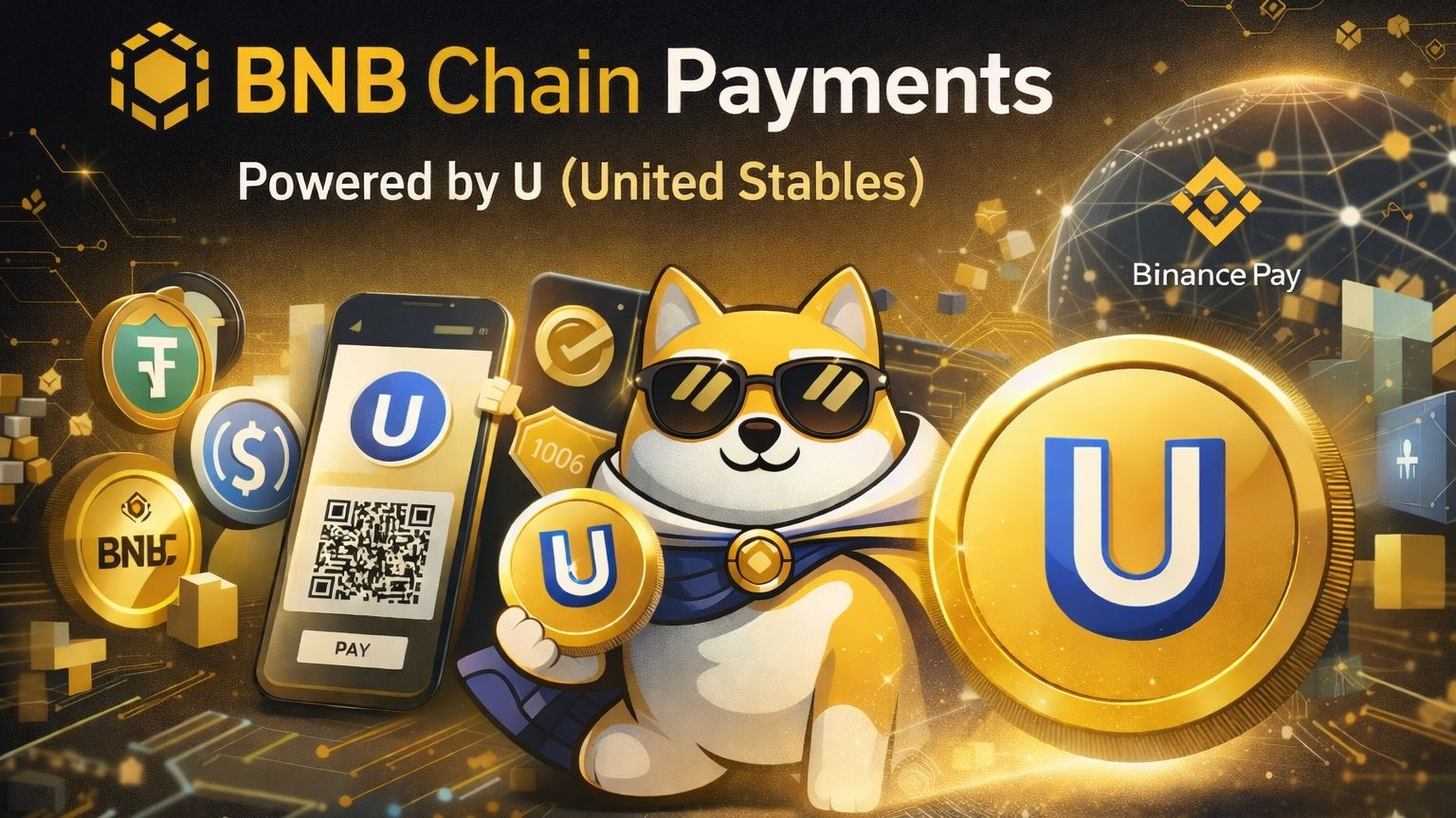
Article
BNB Chain Is Building the Future of Payments — Powered by UBNB Chain’s payment infrastructure (formerly Binance Smart Chain – BSC) is now highly advanced, focusing on high speed, low fees (near-zero gas in some cases), stablecoins, and seamless on-chain/off-chain integration.
Official page: bnbchain.org/en/payment
1. Binance Pay (Core & Most Important)
Borderless crypto payments, supporting 100+ assets (BNB, USDT, USDC, BTC, ETH, and U)
Zero gas fees for users, instant settlement for merchants
Over 45M users + 2M merchants (KYC)
Supports merchant tools, QR payments, cross-border, and on-chain integration
Latest: Merchants can directly accept U (United Stables)
2. Trust Wallet Pay / QR Pay
(Official wallet payment solution)
25M+ users
Integrated QR Flash Pay & Crypto QR Pay
FlexGas (pay gas using USDT / USDC / U instead of BNB)
In-app buy/sell, instant transfers
Direct connection with Binance Pay and dApps
Full support for U (gasless + instant)
3. Payment Gateways & Partners
Alchemy Pay (fiat on/off-ramp)
NOWPayments (merchant gateway)
Lunu Pay
StraitsX (stablecoin payments)
Better Payment Network (BPN – cross-border stablecoin network)
Oobit / MugglePay / AEON / Allscale
👉 U (United Stables) is deeply integrated and can be accepted directly by merchants
4. Technical Infrastructure (Payment Layer)
opBNB (Layer 2): ultra-low fees + high throughput → ideal for mass adoption
Stablecoins (core backbone):
USDT / USDC / FDUSD
U (United Stables) – native stablecoin of BNB Chain
U (United Stables) Highlights
1:1 backed (cash + major stablecoins), with on-chain Proof-of-Reserve
Gasless transfers (EIP-3009)
Prioritized by BNB Chain with 0 fees (0 Carnival Fee)
AI-native payment asset (AI agents, machine-to-machine payments)
Designed for cross-border, DeFi, and everyday payments
Core vision: Unify liquidity across stablecoins
Key Features
Gasless + QR payments
Crypto debit cards
AI agent payments
24/7 low-cost cross-border transactions
Wallet Support
Binance Wallet, MetaMask, Bitget Wallet, SafePal — all support U
Summary
With U (United Stables), BNB Chain’s payment stack is stronger than ever:
👉 Faster
👉 Cheaper (near-zero gas)
👉 AI-ready
Positioning it as a key infrastructure layer for merchants, dApps, cross-border payments, and AI-driven economies 🚀
#UDOG
BNB Chain Is Building the Future of Payments — Powered by U
BNB Chain’s payment infrastructure (formerly Binance Smart Chain – BSC) is now highly advanced, focusing on high speed, low fees (near-zero gas in some cases), stablecoins, and seamless on-chain/off-chain integration.
Official page: bnbchain.org/en/payment
1. Binance Pay (Core & Most Important)
Borderless crypto payments, supporting 100+ assets (BNB, USDT, USDC, BTC, ETH, and U)
Zero gas fees for users, instant settlement for merchants
Over 45M users + 2M merchants (KYC)
Supports merchant tools, QR payments, cross-border, and on-chain integration
Latest: Merchants can directly accept U (United Stables)
2. Trust Wallet Pay / QR Pay
(Official wallet payment solution)
25M+ users
Integrated QR Flash Pay & Crypto QR Pay
FlexGas (pay gas using USDT / USDC / U instead of BNB)
In-app buy/sell, instant transfers
Direct connection with Binance Pay and dApps
Full support for U (gasless + instant)
3. Payment Gateways & Partners
Alchemy Pay (fiat on/off-ramp)
NOWPayments (merchant gateway)
Lunu Pay
StraitsX (stablecoin payments)
Better Payment Network (BPN – cross-border stablecoin network)
Oobit / MugglePay / AEON / Allscale
👉 U (United Stables) is deeply integrated and can be accepted directly by merchants
4. Technical Infrastructure (Payment Layer)
opBNB (Layer 2): ultra-low fees + high throughput → ideal for mass adoption
Stablecoins (core backbone):
USDT / USDC / FDUSD
U (United Stables) – native stablecoin of BNB Chain
U (United Stables) Highlights
1:1 backed (cash + major stablecoins), with on-chain Proof-of-Reserve
Gasless transfers (EIP-3009)
Prioritized by BNB Chain with 0 fees (0 Carnival Fee)
AI-native payment asset (AI agents, machine-to-machine payments)
Designed for cross-border, DeFi, and everyday payments
Core vision: Unify liquidity across stablecoins
Key Features
Gasless + QR payments
Crypto debit cards
AI agent payments
24/7 low-cost cross-border transactions
Wallet Support
Binance Wallet, MetaMask, Bitget Wallet, SafePal — all support U
Summary
With U (United Stables), BNB Chain’s payment stack is stronger than ever:
👉 Faster
👉 Cheaper (near-zero gas)
👉 AI-ready
Positioning it as a key infrastructure layer for merchants, dApps, cross-border payments, and AI-driven economies 🚀
#UDOG
Official page: bnbchain.org/en/payment
1. Binance Pay (Core & Most Important)
Borderless crypto payments, supporting 100+ assets (BNB, USDT, USDC, BTC, ETH, and U)
Zero gas fees for users, instant settlement for merchants
Over 45M users + 2M merchants (KYC)
Supports merchant tools, QR payments, cross-border, and on-chain integration
Latest: Merchants can directly accept U (United Stables)
2. Trust Wallet Pay / QR Pay
(Official wallet payment solution)
25M+ users
Integrated QR Flash Pay & Crypto QR Pay
FlexGas (pay gas using USDT / USDC / U instead of BNB)
In-app buy/sell, instant transfers
Direct connection with Binance Pay and dApps
Full support for U (gasless + instant)
3. Payment Gateways & Partners
Alchemy Pay (fiat on/off-ramp)
NOWPayments (merchant gateway)
Lunu Pay
StraitsX (stablecoin payments)
Better Payment Network (BPN – cross-border stablecoin network)
Oobit / MugglePay / AEON / Allscale
👉 U (United Stables) is deeply integrated and can be accepted directly by merchants
4. Technical Infrastructure (Payment Layer)
opBNB (Layer 2): ultra-low fees + high throughput → ideal for mass adoption
Stablecoins (core backbone):
USDT / USDC / FDUSD
U (United Stables) – native stablecoin of BNB Chain
U (United Stables) Highlights
1:1 backed (cash + major stablecoins), with on-chain Proof-of-Reserve
Gasless transfers (EIP-3009)
Prioritized by BNB Chain with 0 fees (0 Carnival Fee)
AI-native payment asset (AI agents, machine-to-machine payments)
Designed for cross-border, DeFi, and everyday payments
Core vision: Unify liquidity across stablecoins
Key Features
Gasless + QR payments
Crypto debit cards
AI agent payments
24/7 low-cost cross-border transactions
Wallet Support
Binance Wallet, MetaMask, Bitget Wallet, SafePal — all support U
Summary
With U (United Stables), BNB Chain’s payment stack is stronger than ever:
👉 Faster
👉 Cheaper (near-zero gas)
👉 AI-ready
Positioning it as a key infrastructure layer for merchants, dApps, cross-border payments, and AI-driven economies 🚀
#UDOG
1
1
2
12
Log in to explore more content
Join global crypto users on Binance Square
⚡️ Get latest and useful information about crypto.
💬 Trusted by the world’s largest crypto exchange.
👍 Discover real insights from verified creators.
Email / Phone number