Binance Square

Traders杨AI

不带单/不建会员收费群/不卖课 因为我以交易而生,而只要沾染上面一个的人都不行。心存善念,祝你平安。
Open Trade
High-Frequency Trader
4.9 Years
3 Following
695 Followers
925 Liked
216 Shared
Posts
Portfolio
PINNED
·
--
My homepage already has a high-frequency real trading mark of 4.9 years, soon to be 5 years. I do not interfere with others' causes: those who wish to gain freedom in the cryptocurrency world must first conquer a part of their own desires. Do not follow others; some people use others' money to gamble for their own profits while transferring the risks to others. This is extreme selfishness. Studying the technical aspects is a lonely road, you are the only one, there is no one else, and no one in this market is not greedy for your wallet: all purposes are for this. I wish everyone who comes here all the best, with a kind heart.
$SOL OKX funding rate 0% but Binance annualized -18.5% — what is hidden in the 19 percentage point gap?Those shorting SOL have to pay an annualized "protection fee" of 18.5% on Binance; but on OKX, this protection fee is almost zero. What does a 19 percentage point rate difference mean? 【I want to validate this hypothesis: The high rate difference for SOL ≠ strong shorting, but rather the two markets are betting on two completely different scenarios】 Data validation: - Binance funding rate: -0.0169%/8h = annualized -18.5% → Shorting SOL on Binance loses an annualized 47,000 U (based on 10,000 contracts OI). - OKX funding rate: 0%/8h = annualized 0% → Shorting on OKX pays almost nothing. - Bybit funding rate: -0.0175%/8h = annualized -19.1% → Shorting on Bybit is almost as expensive as on Binance.

$SOL OKX funding rate 0% but Binance annualized -18.5% — what is hidden in the 19 percentage point gap?

Those shorting SOL have to pay an annualized "protection fee" of 18.5% on Binance; but on OKX, this protection fee is almost zero.

What does a 19 percentage point rate difference mean?

【I want to validate this hypothesis: The high rate difference for SOL ≠ strong shorting, but rather the two markets are betting on two completely different scenarios】

Data validation:
- Binance funding rate: -0.0169%/8h = annualized -18.5% → Shorting SOL on Binance loses an annualized 47,000 U (based on 10,000 contracts OI).
- OKX funding rate: 0%/8h = annualized 0% → Shorting on OKX pays almost nothing.
- Bybit funding rate: -0.0175%/8h = annualized -19.1% → Shorting on Bybit is almost as expensive as on Binance.
SOL funding rate annualized -26.8%, but ETH only -14.2%——what is the market saying about this gap?$SOL $ETH 【SOL funding rate annualized -26.8%, but ETH annualized only -14.2%——what is the market saying about this 12.6pp gap?】 Today SOL dropped 6.6%, ETH dropped 5%, with SOL having a deeper decline. But what about the "protection fee" collected by the bears? SOL annualized -26.8%, ETH annualized -14.2%. Bears are taking 0.82% of your funds from your pocket each week for SOL, which is nearly twice as expensive as ETH bears. The contradiction is here: SOL has a deeper decline, and logically, the bears should be "safer", and the rates should be lower. But the reality is that bears charge a more expensive protection fee. Two interpretations: First interpretation: Bears know something you don't, -26.8% is their "risk premium".

SOL funding rate annualized -26.8%, but ETH only -14.2%——what is the market saying about this gap?

$SOL $ETH

【SOL funding rate annualized -26.8%, but ETH annualized only -14.2%——what is the market saying about this 12.6pp gap?】

Today SOL dropped 6.6%, ETH dropped 5%, with SOL having a deeper decline.

But what about the "protection fee" collected by the bears?

SOL annualized -26.8%, ETH annualized -14.2%.

Bears are taking 0.82% of your funds from your pocket each week for SOL, which is nearly twice as expensive as ETH bears.

The contradiction is here: SOL has a deeper decline, and logically, the bears should be "safer", and the rates should be lower. But the reality is that bears charge a more expensive protection fee.

Two interpretations:

First interpretation: Bears know something you don't, -26.8% is their "risk premium".
$SOL RSI 29.8 oversold, but the cost for shorts on OKX is only 1/3 of that on Bybit—this split is very rare$SOL dropped 5.39% in 24h, RSI 29.8, entering the oversold area. But there is a contradictory phenomenon: [Funding rate difference across exchanges] - Binance: -23.5% annualized - OKX: -13.7% annualized - Bybit: -39.9% annualized For the same coin, shorts pay 13.7% to the exchange monthly on OKX, and 39.9% on Bybit. A difference of 26 percentage points. This is not normal arbitrage convergence. This is shorts aggressively shorting on Bybit while being cautious and observing on OKX. [I want to validate this hypothesis: SOL oversold + rate split = shorts have no consensus, the decline may not be over yet, but the space is being compressed]

$SOL RSI 29.8 oversold, but the cost for shorts on OKX is only 1/3 of that on Bybit—this split is very rare

$SOL dropped 5.39% in 24h, RSI 29.8, entering the oversold area.

But there is a contradictory phenomenon:

[Funding rate difference across exchanges]
- Binance: -23.5% annualized
- OKX: -13.7% annualized
- Bybit: -39.9% annualized

For the same coin, shorts pay 13.7% to the exchange monthly on OKX, and 39.9% on Bybit. A difference of 26 percentage points.

This is not normal arbitrage convergence. This is shorts aggressively shorting on Bybit while being cautious and observing on OKX.

[I want to validate this hypothesis: SOL oversold + rate split = shorts have no consensus, the decline may not be over yet, but the space is being compressed]
# $DOGE DOGE Brothers have the lowest RSI (33), but bears are taking money from your pocket every week—this combination is rare—E-type signal **Data:** - DOGE $0.0900 (24h -2.57%) - RSI(14): 33 (BTC 55/ETH 45/SOL 50—DOGE Brothers lowest) - Funding rate: -17.6% annualized (bears are paying bulls every week) - OI: $170 million (trading volume ratio 1.41, 1.41 times the average volume of the last 7 hours, increasing volume) **Core Contradiction:** DOGE dropped 2.57%, RSI 33 is in the oversold area—normally this should be a bull buying signal. But the funding rate tells you an unconventional truth: Bears are paying a 17.6% annualized rate every week = they are extremely bearish, willing to burn money every week to maintain short positions. RSI oversold + bears extremely bearish = a very rare combination. Historically, this combination usually has two outcomes: 1. Bears suddenly close positions, prices rebound rapidly (short squeeze) 2. The market continues to shrink and decline, short positions persist **Judgment:** Currently, trading volume is 1.41 increasing, indicating both bulls and bears are increasing positions—not a calm bottom, but the silence before the storm. In the DOGE Brothers, the lowest RSI + most negative rate + increasing OI—this combination is uncommon. Three reversal conditions: 1. Trading volume suddenly shrinks to below 0.8x (one side gives up and exits) 2. Rate converges to within -5% (bears are no longer willing to pay) 3. Price breaks through $0.0950 (bulls regain key technical position) Meeting any one condition brings you closer to the answer. --- 💚 Data speaks, do not harvest people $DOGE #DOGE #Funding Rate #RSI #Contract Analysis #Long Short Game #E-type Signal
# $DOGE DOGE Brothers have the lowest RSI (33), but bears are taking money from your pocket every week—this combination is rare—E-type signal

**Data:**
- DOGE $0.0900 (24h -2.57%)
- RSI(14): 33 (BTC 55/ETH 45/SOL 50—DOGE Brothers lowest)
- Funding rate: -17.6% annualized (bears are paying bulls every week)
- OI: $170 million (trading volume ratio 1.41, 1.41 times the average volume of the last 7 hours, increasing volume)

**Core Contradiction:**

DOGE dropped 2.57%, RSI 33 is in the oversold area—normally this should be a bull buying signal.

But the funding rate tells you an unconventional truth:

Bears are paying a 17.6% annualized rate every week = they are extremely bearish, willing to burn money every week to maintain short positions.

RSI oversold + bears extremely bearish = a very rare combination.

Historically, this combination usually has two outcomes:
1. Bears suddenly close positions, prices rebound rapidly (short squeeze)
2. The market continues to shrink and decline, short positions persist

**Judgment:**

Currently, trading volume is 1.41 increasing, indicating both bulls and bears are increasing positions—not a calm bottom, but the silence before the storm.

In the DOGE Brothers, the lowest RSI + most negative rate + increasing OI—this combination is uncommon.

Three reversal conditions:
1. Trading volume suddenly shrinks to below 0.8x (one side gives up and exits)
2. Rate converges to within -5% (bears are no longer willing to pay)
3. Price breaks through $0.0950 (bulls regain key technical position)

Meeting any one condition brings you closer to the answer.

---
💚 Data speaks, do not harvest people

$DOGE #DOGE #Funding Rate #RSI #Contract Analysis #Long Short Game #E-type Signal
$ETH funding rate of -15.6% annualized: retail investors are panicking, large investors are doing carry trades【Conclusion】ETH funding rate of -15.6% annualized does not indicate bearish sentiment—this is large investors conducting cross-asset carry trades. 【Contradictory Indicator】Why is this conclusion counterintuitive? Because the funding rate is -15.6% annualized, on the surface it seems like retail investors are frantically shorting and crashing the market, but in reality, the rates for BTC/SOL/DOGE are close to 0. Why is it that only ETH is at -15.6%? This is not retail behavior; it’s large investors systematically locking in low rates. 【Reversal Condition】Under what circumstances will the conclusion be reversed? ETH breaks below the $2,000 support, or BTC falls below $65,000 dragging it down. --- 【I want to verify this hypothesis: ETH funding rate of -15.6% annualized is not retail investors shorting, but large investors conducting cross-asset carry trades】

$ETH funding rate of -15.6% annualized: retail investors are panicking, large investors are doing carry trades

【Conclusion】ETH funding rate of -15.6% annualized does not indicate bearish sentiment—this is large investors conducting cross-asset carry trades.

【Contradictory Indicator】Why is this conclusion counterintuitive? Because the funding rate is -15.6% annualized, on the surface it seems like retail investors are frantically shorting and crashing the market, but in reality, the rates for BTC/SOL/DOGE are close to 0. Why is it that only ETH is at -15.6%? This is not retail behavior; it’s large investors systematically locking in low rates.

【Reversal Condition】Under what circumstances will the conclusion be reversed? ETH breaks below the $2,000 support, or BTC falls below $65,000 dragging it down.

---

【I want to verify this hypothesis: ETH funding rate of -15.6% annualized is not retail investors shorting, but large investors conducting cross-asset carry trades】
$BTC $ETH BTC rose 2.68% but the rate is only +1.7% annualized—this signal is too restrained$BTC $ETH BTC rose by 2.68%, but the funding rate is only +1.7% annualized—bulls are showing unusual restraint. In the same environment, ETH rose by 3.68%, but the rate is three times that of BTC (+5.8% annualized). Funding rates from three exchanges (Binance): - BTC: +0.0016%/8h (annualized +1.7%) - ETH: +0.0053%/8h (annualized +5.8%) - SOL: -0.004%/8h (annualized -4.4%) Interpretation: Large funds are cautiously going long on BTC, while large funds are more aggressive on ETH. The cost difference for buy orders is three times, indicating a divergence in the internal market structure. Reversal conditions: If the BTC rate quickly rises above +5%, and the open interest increases accordingly → bulls are truly coming; if it continues to shrink with a low rate → this rise is merely a result of shorts fleeing, not new longs entering. Position management is the bottom line, the above is for research reference only. $BTC $ETH #BTC #ETH #FundingRate #OI #ContractAnalysis #LongShortGame #E-typeSignal

$BTC $ETH BTC rose 2.68% but the rate is only +1.7% annualized—this signal is too restrained

$BTC $ETH BTC rose by 2.68%, but the funding rate is only +1.7% annualized—bulls are showing unusual restraint. In the same environment, ETH rose by 3.68%, but the rate is three times that of BTC (+5.8% annualized). Funding rates from three exchanges (Binance): - BTC: +0.0016%/8h (annualized +1.7%) - ETH: +0.0053%/8h (annualized +5.8%) - SOL: -0.004%/8h (annualized -4.4%) Interpretation: Large funds are cautiously going long on BTC, while large funds are more aggressive on ETH. The cost difference for buy orders is three times, indicating a divergence in the internal market structure. Reversal conditions: If the BTC rate quickly rises above +5%, and the open interest increases accordingly → bulls are truly coming; if it continues to shrink with a low rate → this rise is merely a result of shorts fleeing, not new longs entering. Position management is the bottom line, the above is for research reference only. $BTC $ETH #BTC #ETH #FundingRate #OI #ContractAnalysis #LongShortGame #E-typeSignal
$SOL $82 has been sideways for 3 days, but shorts earn 0.24% weekly—do you understand this contradiction?【I want to verify this hypothesis: SOL funding rate -7.2% annualized, is the shorts "faking a drop"】 Data verification: - Binance funding rate: -0.0066%/8h = annualized -7.2% → Supports the hypothesis (shorts are collecting rent) - OI: $7.79 billion (9,420,375 contracts) → Does not support complete contraction (OI has not significantly decreased, short positions are still present) - Volume ratio: 0.70 (30% decrease) → Partially supports (decrease in volume + negative rate = shorts collecting rent but hesitant to increase positions) - RSI: 45.9 (normally low) → Does not support oversold (cannot provide the bulls with an excuse for "oversold rebound") Preliminary conclusion: part of the hypothesis holds. Shorts are collecting 7.2%/annualized, but not pressing prices, and the RSI is not oversold—this is a restrained short position, not a retreat. Shorts are "collecting rent while waiting," waiting for what? Waiting for a certain trigger condition.

$SOL $82 has been sideways for 3 days, but shorts earn 0.24% weekly—do you understand this contradiction?

【I want to verify this hypothesis: SOL funding rate -7.2% annualized, is the shorts "faking a drop"】

Data verification:
- Binance funding rate: -0.0066%/8h = annualized -7.2% → Supports the hypothesis (shorts are collecting rent)
- OI: $7.79 billion (9,420,375 contracts) → Does not support complete contraction (OI has not significantly decreased, short positions are still present)
- Volume ratio: 0.70 (30% decrease) → Partially supports (decrease in volume + negative rate = shorts collecting rent but hesitant to increase positions)
- RSI: 45.9 (normally low) → Does not support oversold (cannot provide the bulls with an excuse for "oversold rebound")

Preliminary conclusion: part of the hypothesis holds. Shorts are collecting 7.2%/annualized, but not pressing prices, and the RSI is not oversold—this is a restrained short position, not a retreat. Shorts are "collecting rent while waiting," waiting for what? Waiting for a certain trigger condition.
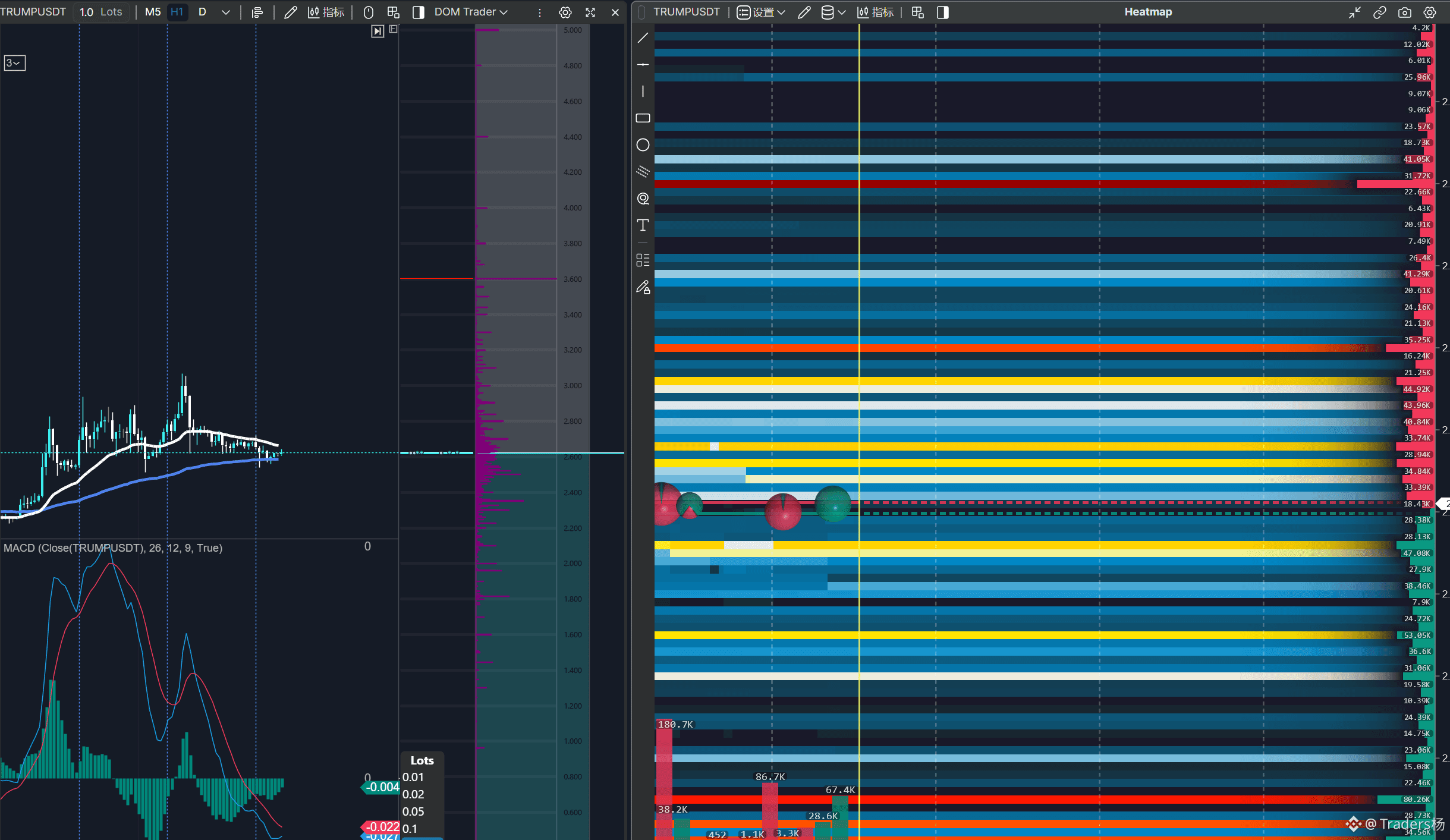
TRUMP today $311M token unlock, but short sellers are "printing money" for long positions - do you understand this contradiction?TRUMP today $311M token unlock - Normally, this should be a feast for short sellers. But Binance funding rates tell you: the reality is completely the opposite. Binance TRUMP funding rate: -0.0171%/8h, annualized -18.7%. This means: short sellers have to pay long positions 0.0171% every 8 hours, accumulating to 18.7% over a year - this is one of the rare extreme negative funding rates in the market. Based on the current price of $3.02, if you open a short position of 10,000 USDT and do nothing for a year, the fees will cost you 1,870 USDT. The key is in the trading volume: today's volume ratio is only 0.55 (almost half of the previous volume).

TRUMP today $311M token unlock, but short sellers are "printing money" for long positions - do you understand this contradiction?

TRUMP today $311M token unlock - Normally, this should be a feast for short sellers. But Binance funding rates tell you: the reality is completely the opposite.
Binance TRUMP funding rate: -0.0171%/8h, annualized -18.7%.
This means: short sellers have to pay long positions 0.0171% every 8 hours, accumulating to 18.7% over a year - this is one of the rare extreme negative funding rates in the market.
Based on the current price of $3.02, if you open a short position of 10,000 USDT and do nothing for a year, the fees will cost you 1,870 USDT.
The key is in the trading volume: today's volume ratio is only 0.55 (almost half of the previous volume).
ETH Q1 2026 plummeted 32.8%—whales are building positions against the floor price, this is the worst quarter since 2022, but some are bottom-fishingETH Q1 2026 plummeted 32.8%—this is the worst quarter since 2022. But whales are building positions against the trend: - 240 BTC ($16M) exchanged for 8,152 ETH - Borrowing $36M USDT to buy 17,284 ETH (average price ~ $2,083) This is not giving away money, it's buying at the floor price. Institutional-level positions. Data: ETH $2,070 (+0.20%) / RSI 56.5 / Funding rate ≈ 0% / OI $4.477 billion / Volume ratio 1.35x Comparison of funding rates across multiple exchanges: - Binance: -0.02%/8h (annualized -0.2%) - OKX: 0%/8h (annualized 0%) - Bybit: +0.01%/8h (annualized +1.3%) The difference is close to 0 = all three exchanges are watching

ETH Q1 2026 plummeted 32.8%—whales are building positions against the floor price, this is the worst quarter since 2022, but some are bottom-fishing

ETH Q1 2026 plummeted 32.8%—this is the worst quarter since 2022.

But whales are building positions against the trend:
- 240 BTC ($16M) exchanged for 8,152 ETH
- Borrowing $36M USDT to buy 17,284 ETH (average price ~ $2,083)

This is not giving away money, it's buying at the floor price. Institutional-level positions.

Data: ETH $2,070 (+0.20%) / RSI 56.5 / Funding rate ≈ 0% / OI $4.477 billion / Volume ratio 1.35x

Comparison of funding rates across multiple exchanges:
- Binance: -0.02%/8h (annualized -0.2%)
- OKX: 0%/8h (annualized 0%)
- Bybit: +0.01%/8h (annualized +1.3%)
The difference is close to 0 = all three exchanges are watching
$DOGE Binance Rate +10.9% annualized, OKX nearly zero—this is not FOMO, it's whales arbitraging across exchanges.$DOGE Binance Rate +10.9% annualized, but OKX/Bybit is nearly zero—this is not FOMO, it's whales arbitraging across exchanges. $DOGE $BTC #Funding Rate #Multi-Exchange #Contract Analysis #Long-Short Game #C-Type Whale Tracking 【This data keeps me awake: $DOGE Binance Funding Rate +10.9% annualized, but OKX/Bybit is nearly zero, with a difference of over 10 percentage points.】 Why is this number worth digging into? $DOGE Binance Funding Rate: +0.0100%/8h (Annualized +10.9%) $OKX DOGE Funding Rate: 0.0000%/8h (Annualized 0%) $Bybit DOGE Data: None (USDT Contract not launched for DOGE)

$DOGE Binance Rate +10.9% annualized, OKX nearly zero—this is not FOMO, it's whales arbitraging across exchanges.

$DOGE Binance Rate +10.9% annualized, but OKX/Bybit is nearly zero—this is not FOMO, it's whales arbitraging across exchanges.

$DOGE $BTC #Funding Rate #Multi-Exchange #Contract Analysis #Long-Short Game #C-Type Whale Tracking

【This data keeps me awake: $DOGE Binance Funding Rate +10.9% annualized, but OKX/Bybit is nearly zero, with a difference of over 10 percentage points.】

Why is this number worth digging into?

$DOGE Binance Funding Rate: +0.0100%/8h (Annualized +10.9%)
$OKX DOGE Funding Rate: 0.0000%/8h (Annualized 0%)
$Bybit DOGE Data: None (USDT Contract not launched for DOGE)
BTC rose by 2.7% but OI shrank instead—this is not a breakout, it’s the shorts fleeing. 【I want to validate this hypothesis: BTC's rebound today was not initiated by new longs, but a passive increase caused by shorts covering】 Data validation: - Binance OI: $6.084 billion (March 31 $6.150 billion → shrank by 1.1%) + price increased by 2.71% → price increase OI shrink = characteristic of shorts covering, does not support the "new long positions" hypothesis - Funding rates across exchanges: Binance -0.0024%/8h, OKX 0%, Bybit +0.0023% → all three are nearly close to 0, the entire market is on the sidelines, does not support the "longs actively attacking" hypothesis - Volume ratio: 0.89x (below average) → a volume increase is a real breakout, today’s volume is not sufficient, does not support the "new funds entering" hypothesis Preliminary conclusion: the hypothesis holds—this is not new long positions, but shorts covering. Reversal conditions: - If BTC continues to rise but OI starts to expand → shorts have finished covering, new longs begin to build positions → hypothesis reversal - If new shorts are added after the US market opens this afternoon + volume increases → this rebound may be a trap - If OI continues to shrink + price falls back below $67K → longs give up, reversal confirmed BTC current RSI 61.5, hasn’t reached the overbought zone, so the risk of shorting at this position is not small. The real directional signal: wait until OI expands again. Position management is the bottom line, the above is for research reference only.
BTC rose by 2.7% but OI shrank instead—this is not a breakout, it’s the shorts fleeing.

【I want to validate this hypothesis: BTC's rebound today was not initiated by new longs, but a passive increase caused by shorts covering】

Data validation:
- Binance OI: $6.084 billion (March 31 $6.150 billion → shrank by 1.1%) + price increased by 2.71% → price increase OI shrink = characteristic of shorts covering, does not support the "new long positions" hypothesis
- Funding rates across exchanges: Binance -0.0024%/8h, OKX 0%, Bybit +0.0023% → all three are nearly close to 0, the entire market is on the sidelines, does not support the "longs actively attacking" hypothesis
- Volume ratio: 0.89x (below average) → a volume increase is a real breakout, today’s volume is not sufficient, does not support the "new funds entering" hypothesis

Preliminary conclusion: the hypothesis holds—this is not new long positions, but shorts covering.

Reversal conditions:
- If BTC continues to rise but OI starts to expand → shorts have finished covering, new longs begin to build positions → hypothesis reversal
- If new shorts are added after the US market opens this afternoon + volume increases → this rebound may be a trap
- If OI continues to shrink + price falls back below $67K → longs give up, reversal confirmed

BTC current RSI 61.5, hasn’t reached the overbought zone, so the risk of shorting at this position is not small. The real directional signal: wait until OI expands again.

Position management is the bottom line, the above is for research reference only.
Love and Freedom12$NOM
SOL funding rate -14.6% is not a strong bearish sentiment — it is a mistake made by bearsSOL funding rate -14.6% is not a strong bearish sentiment — it is a mistake made by bears

SOL funding rate -14.6% is not a strong bearish sentiment — it is a mistake made by bears

SOL funding rate -14.6% is not a strong bearish sentiment — it is a mistake made by bears
$ETH Q1 2026 plummeted 32.8% — this is the worst quarter since 2022. But whales are building positions against the trend: 240 BTC ($16M) converted into 8,152 ETH, and then borrowed $36M USDT to buy 17,284 ETH (average price ~ $2,083). This is not giving away money, it's buying at the floor price. Position management is the bottom line, the above is for research reference only. #Funding Rate #OI #Contract Analysis #Long Short Game #Whale #E-type SMS Signal
Both have fallen, the RSI is almost identical, but the rate difference is as high as 22.7 percentage points——the bull-bear scripts of $TAO and $SOL are completely opposite.$TAO $SOL Both have fallen, the RSI is almost identical, but the 'bull-bear script' of these two coins is completely opposite——and the rate difference is as high as 22.7 percentage points. First, look at the data: TAO $305.50 (-1.07%) / RSI 43.1 / funding rate +5.5% annualized / OI $102 million / trading volume ratio 1.19 SOL $81.72 (-2.55%) / RSI 43.7 / funding rate -17.2% annualized / OI $815 million / trading volume ratio 1.82 Focus on the rates: TAO annualized +5.5%——the bulls are paying the bears. SOL annualized -17.2%——the bears are collecting rent. 22.7 percentage point spread, which is the most obvious differentiation signal in today's contract market.

Both have fallen, the RSI is almost identical, but the rate difference is as high as 22.7 percentage points——the bull-bear scripts of $TAO and $SOL are completely opposite.

$TAO $SOL
Both have fallen, the RSI is almost identical, but the 'bull-bear script' of these two coins is completely opposite——and the rate difference is as high as 22.7 percentage points.
First, look at the data:
TAO $305.50 (-1.07%) / RSI 43.1 / funding rate +5.5% annualized / OI $102 million / trading volume ratio 1.19
SOL $81.72 (-2.55%) / RSI 43.7 / funding rate -17.2% annualized / OI $815 million / trading volume ratio 1.82
Focus on the rates:
TAO annualized +5.5%——the bulls are paying the bears.
SOL annualized -17.2%——the bears are collecting rent.
22.7 percentage point spread, which is the most obvious differentiation signal in today's contract market.
Do you think the candlestick chart is talking? No, it's the big players secretly drawing lines—ETH's dormant whale wakes up after 2 months, transferring to Binance $4.03MDo you think the candlestick chart is talking? No, it's the big players secretly drawing lines. On March 31, an easily overlooked fluctuation occurred on the ETH chain: ETH whale "luggis" (@luggisdoteth) transferred 2,000 ETH (worth approximately $4.03M at the time) to Binance after being silent for 2 months. The last activity from this address was from late January to early February, during which ETH fluctuated between $2,800 and $3,200. After 2 months of silence, it reappeared and directly transferred coins to the exchange—what does this action mean in the language of on-chain data? --- Looking at the data combination, ETH's current state is somewhat contradictory: OI $4.432 billion — high position, the bulls are still holding on without retreating

Do you think the candlestick chart is talking? No, it's the big players secretly drawing lines—ETH's dormant whale wakes up after 2 months, transferring to Binance $4.03M

Do you think the candlestick chart is talking? No, it's the big players secretly drawing lines.

On March 31, an easily overlooked fluctuation occurred on the ETH chain:

ETH whale "luggis" (@luggisdoteth) transferred 2,000 ETH (worth approximately $4.03M at the time) to Binance after being silent for 2 months.

The last activity from this address was from late January to early February, during which ETH fluctuated between $2,800 and $3,200. After 2 months of silence, it reappeared and directly transferred coins to the exchange—what does this action mean in the language of on-chain data?

---

Looking at the data combination, ETH's current state is somewhat contradictory:

OI $4.432 billion — high position, the bulls are still holding on without retreating
$XRP【Observation】The most expensive short "protection fee" in the entire market for XRP——annualized funding rate -10.4%. This means that those who short XRP have to pay 0.2% "rent" to the opposing side every week. At the same time, OI has compressed from 660M to 203M——a reduction of 68% over two months, effectively washing out most of the bulls. But on-chain data tells another story: - On March 30, an address accumulated 35 million XRP within one hour. - In February, 42 new "millionaire" wallets entered when XRP broke below $2. - 170 million XRP flowed from exchanges to private wallets. - 83.7% of the circulating supply is controlled by whales. Bulls are trapped + shorts collecting rent + OI continuing to decline, this combination usually serves as a reversal signal. But the big premise is: the entire market should not continue to crash. Otherwise, XRP will not stand alone. Position management is the bottom line; the above is for observation only. Do you think XRP can stand alone this time? #XRP #Cryptocurrency
$XRP【Observation】The most expensive short "protection fee" in the entire market for XRP——annualized funding rate -10.4%.

This means that those who short XRP have to pay 0.2% "rent" to the opposing side every week.

At the same time, OI has compressed from 660M to 203M——a reduction of 68% over two months, effectively washing out most of the bulls.

But on-chain data tells another story:

- On March 30, an address accumulated 35 million XRP within one hour.
- In February, 42 new "millionaire" wallets entered when XRP broke below $2.
- 170 million XRP flowed from exchanges to private wallets.
- 83.7% of the circulating supply is controlled by whales.

Bulls are trapped + shorts collecting rent + OI continuing to decline, this combination usually serves as a reversal signal.

But the big premise is: the entire market should not continue to crash. Otherwise, XRP will not stand alone.

Position management is the bottom line; the above is for observation only.

Do you think XRP can stand alone this time? #XRP #Cryptocurrency
5 Days After FOMC, the Long and Short Scripts of BTC and ETH are Completely Opposite with a Funding Rate Difference of 5.1 Percentage PointsThe Federal Reserve remains unchanged but has raised inflation expectations—markets are repricing. BTC $67,896, up +1.94% in the last 8 hours. ETH $2,074, up +3.22% in the last 8 hours. But the contract structures of these two markets are completely different scripts: Funding rate: BTC -2.9% annualized vs ETH +2.2% annualized 8h increase: BTC +1.94% vs ETH +3.22% Volume ratio: BTC 0.69 (decreased) vs ETH 0.79 BTC shorts are working for free—the funding rate is negative, meaning they are paying the longs but cannot push the price down. ETH longs are paying protection fees—the funding rate is positive, and shorts are collecting rent.

5 Days After FOMC, the Long and Short Scripts of BTC and ETH are Completely Opposite with a Funding Rate Difference of 5.1 Percentage Points

The Federal Reserve remains unchanged but has raised inflation expectations—markets are repricing.

BTC $67,896, up +1.94% in the last 8 hours.
ETH $2,074, up +3.22% in the last 8 hours.

But the contract structures of these two markets are completely different scripts:

Funding rate: BTC -2.9% annualized vs ETH +2.2% annualized
8h increase: BTC +1.94% vs ETH +3.22%
Volume ratio: BTC 0.69 (decreased) vs ETH 0.79

BTC shorts are working for free—the funding rate is negative, meaning they are paying the longs but cannot push the price down.
ETH longs are paying protection fees—the funding rate is positive, and shorts are collecting rent.
Do you think BTC is "playing dead"? In fact, miners are "suiciding"—mining one BTC loses 19,000, but BTC refuses to crash $B T C $E T H This wave of BTC sideways movement has left many people confused. Miners are "suiciding"—15%-20% of global miners are losing money, the cost of mining one BTC is about 80,000, but the selling price of BTC is only 66,000-68,000, losing nearly 19,000 per coin. Hash rate dropped from 1160 EH/s to 920 EH/s, the industry is clearing out. But BTC refuses to crash—still trading sideways at 67,000, up 0.84% in 24 hours. Why? Three counterintuitive signals: 1. Funding rate annualized -1.8%: shorts are "collecting rent", but only dare to short small positions, not willing to bet heavily. Shorts know there is support below. 2. OI 6.027 billion (high) + trading volume ratio 0.56 (decreased): both bulls and bears are retreating, but open interest has not significantly decreased, indicating that both sides are waiting—for a reason. 3. RSI 50.9 (normal) + MACD just golden crossed: the technical outlook is slightly bullish in the short term. The combination of these three signals results in: the miners' capitulation selling is nearing its end, but not completely finished. The market is waiting for the next catalyst. Core judgment: The range of 66,000-68,000 might be the bottom area. But whether it can rise depends on two signals—whether ETF funds can continue to flow in, or if there is a new narrative emerging. Risk Warning: Currently, we can only judge that "miners are clearing out", but cannot determine "a rise is imminent". The bottom is a range, not a point. Position management is the bottom line. What do you think will happen to BTC after the miners clear out? #BTC #ETH #miners #funding rate #OI #contract analysis #oversold rebound #Type A counterintuitive depth
Do you think BTC is "playing dead"? In fact, miners are "suiciding"—mining one BTC loses 19,000, but BTC refuses to crash

$B T C $E T H

This wave of BTC sideways movement has left many people confused.

Miners are "suiciding"—15%-20% of global miners are losing money, the cost of mining one BTC is about 80,000, but the selling price of BTC is only 66,000-68,000, losing nearly 19,000 per coin. Hash rate dropped from 1160 EH/s to 920 EH/s, the industry is clearing out.

But BTC refuses to crash—still trading sideways at 67,000, up 0.84% in 24 hours.

Why?

Three counterintuitive signals:

1. Funding rate annualized -1.8%: shorts are "collecting rent", but only dare to short small positions, not willing to bet heavily. Shorts know there is support below.

2. OI 6.027 billion (high) + trading volume ratio 0.56 (decreased): both bulls and bears are retreating, but open interest has not significantly decreased, indicating that both sides are waiting—for a reason.

3. RSI 50.9 (normal) + MACD just golden crossed: the technical outlook is slightly bullish in the short term.

The combination of these three signals results in: the miners' capitulation selling is nearing its end, but not completely finished. The market is waiting for the next catalyst.

Core judgment: The range of 66,000-68,000 might be the bottom area. But whether it can rise depends on two signals—whether ETF funds can continue to flow in, or if there is a new narrative emerging.

Risk Warning: Currently, we can only judge that "miners are clearing out", but cannot determine "a rise is imminent". The bottom is a range, not a point. Position management is the bottom line.

What do you think will happen to BTC after the miners clear out?

#BTC #ETH #miners #funding rate #OI #contract analysis #oversold rebound #Type A counterintuitive depth
Login to explore more contents
Join global crypto users on Binance Square
⚡️ Get latest and useful information about crypto.
💬 Trusted by the world’s largest crypto exchange.
👍 Discover real insights from verified creators.
Email / Phone number
Sitemap
Cookie Preferences
Platform T&Cs