
作手梁老师meta_推X特
525 Posts

作手梁老师meta_推X特
Report
Block User
半天暴富过,大起大落。2022年币coin实盘推荐榜前五,百倍收益博主。技术指标理论知识扎实,趋势理论扎实,月线周期趋势分析超准。大部分人认为的方向都是错的。关注我带你穿越牛熊周期。注册币安填写邀请码NEWCORE2026 即可享受手续费减免,并可以私下咨询我帮忙分析。
4 Following
1.0K+ Followers
1.7K+ Liked
Posts
All
Quotes
PINNED
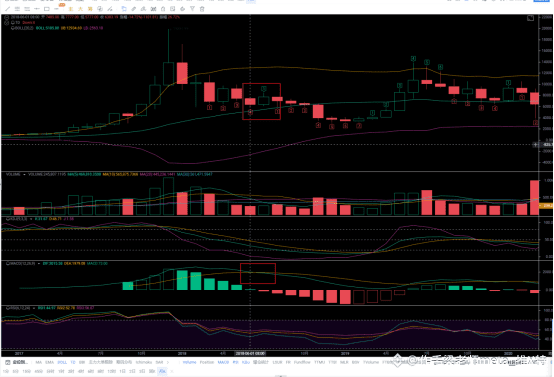
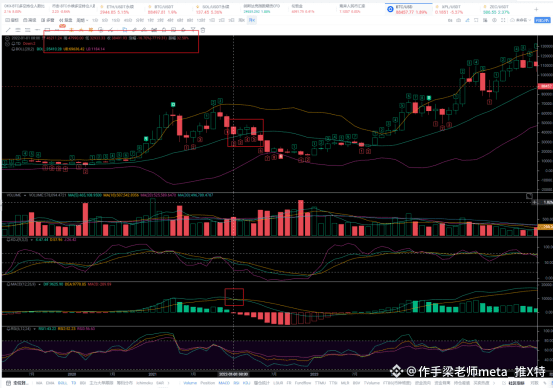
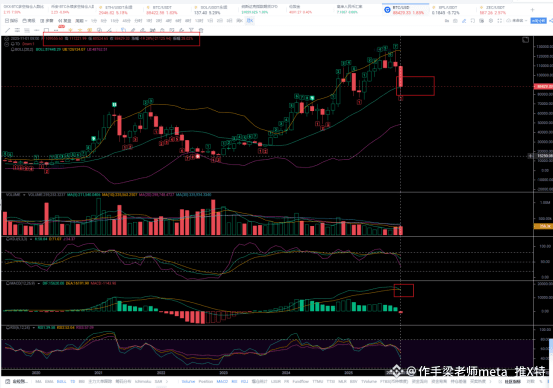
Historically, the MACD death cross on the Bitcoin monthly chart has occurred only 3 times, and each time it has nearly dropped to the middle band of the Bitcoin monthly Bollinger Bands before rebounding for 1-2 months, then entering a major bear market. In June 2018, it fell from 8000 to half by the end of the year, and in December 2021, it dropped from 48000 to 16000. How much will it drop from 110000 this time? This is the third time; history is always so rhythmic and similar. Will it be the same? A gentleman does not stand under a dangerous wall; if I feel danger, I will be the first to run away. This is a notice, I will return to dig the grave and whip the corpse in six months to take a look.
Historically, the MACD death cross on the Bitcoin monthly chart has occurred only 3 times, and each time it has nearly dropped to the middle band of the Bitcoin monthly Bollinger Bands before rebounding for 1-2 months, then entering a major bear market. In June 2018, it fell from 8000 to half by the end of the year, and in December 2021, it dropped from 48000 to 16000. How much will it drop from 110000 this time? This is the third time; history is always so rhythmic and similar. Will it be the same? A gentleman does not stand under a dangerous wall; if I feel danger, I will be the first to run away. This is a notice, I will return to dig the grave and whip the corpse in six months to take a look.
18
3
42
3.7k
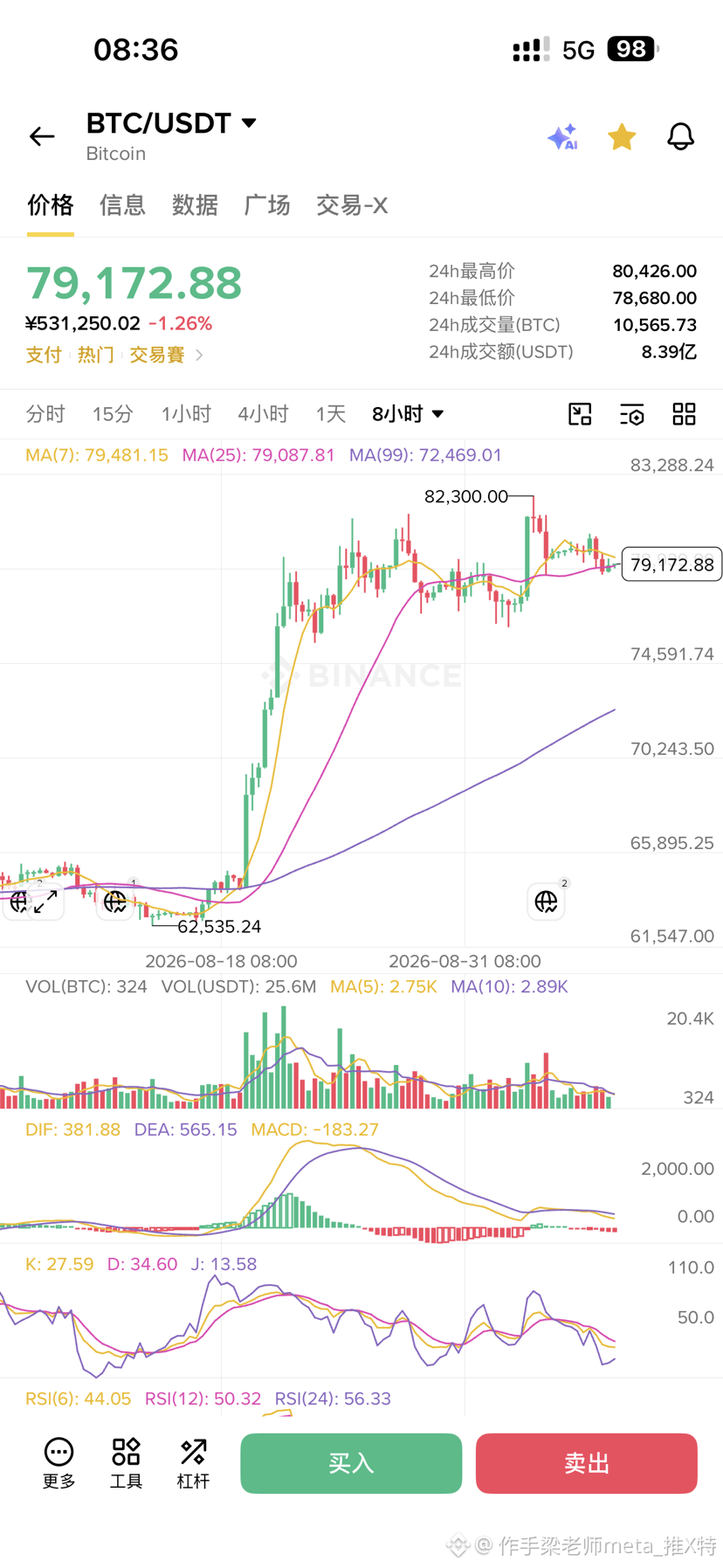
Bitcoin’s eight-hour chart still seems to be in a state of consolidating and topping in a range. Last week’s false breakout was set up to force a short squeeze, aiming to trigger the longs. Once the stop-losses of the shorts above the “doors” (levels) are hit and they cut their positions, it will move downward according to my previous prediction. The target price remains $72,000.
Bitcoin’s eight-hour chart still seems to be in a state of consolidating and topping in a range. Last week’s false breakout was set up to force a short squeeze, aiming to trigger the longs. Once the stop-losses of the shorts above the “doors” (levels) are hit and they cut their positions, it will move downward according to my previous prediction. The target price remains $72,000.
263
It’s been a day already—if things move fast, within two days Bitcoin will crash, just waiting for Trump to go crazy
It’s been a day already—if things move fast, within two days Bitcoin will crash, just waiting for Trump to go crazy
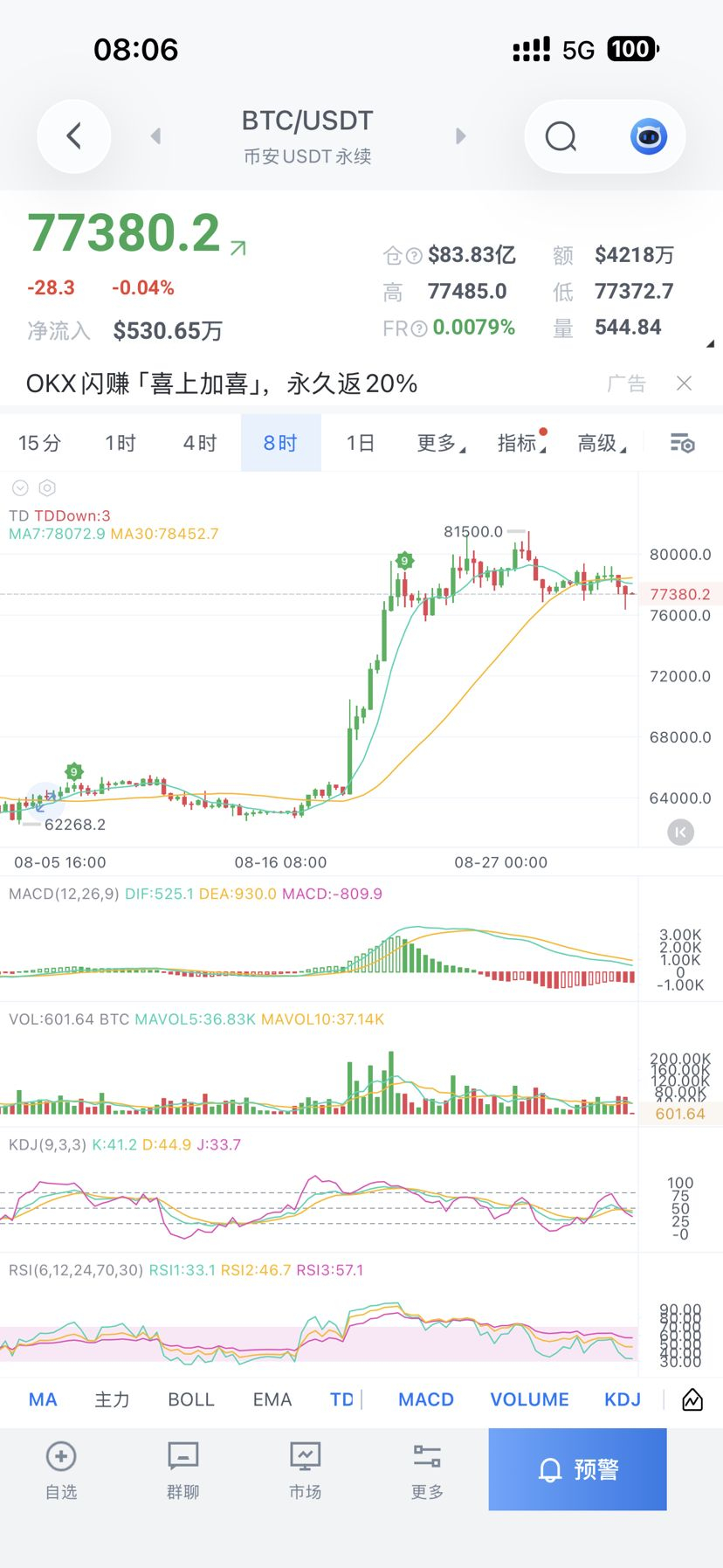
454
With a head-and-shoulders pattern this big over an eight-hour period for Bitcoin, at minimum you need to draw a move to 72,000 to complete this cycle; it should drop within about 3 days.
With a head-and-shoulders pattern this big over an eight-hour period for Bitcoin, at minimum you need to draw a move to 72,000 to complete this cycle; it should drop within about 3 days.
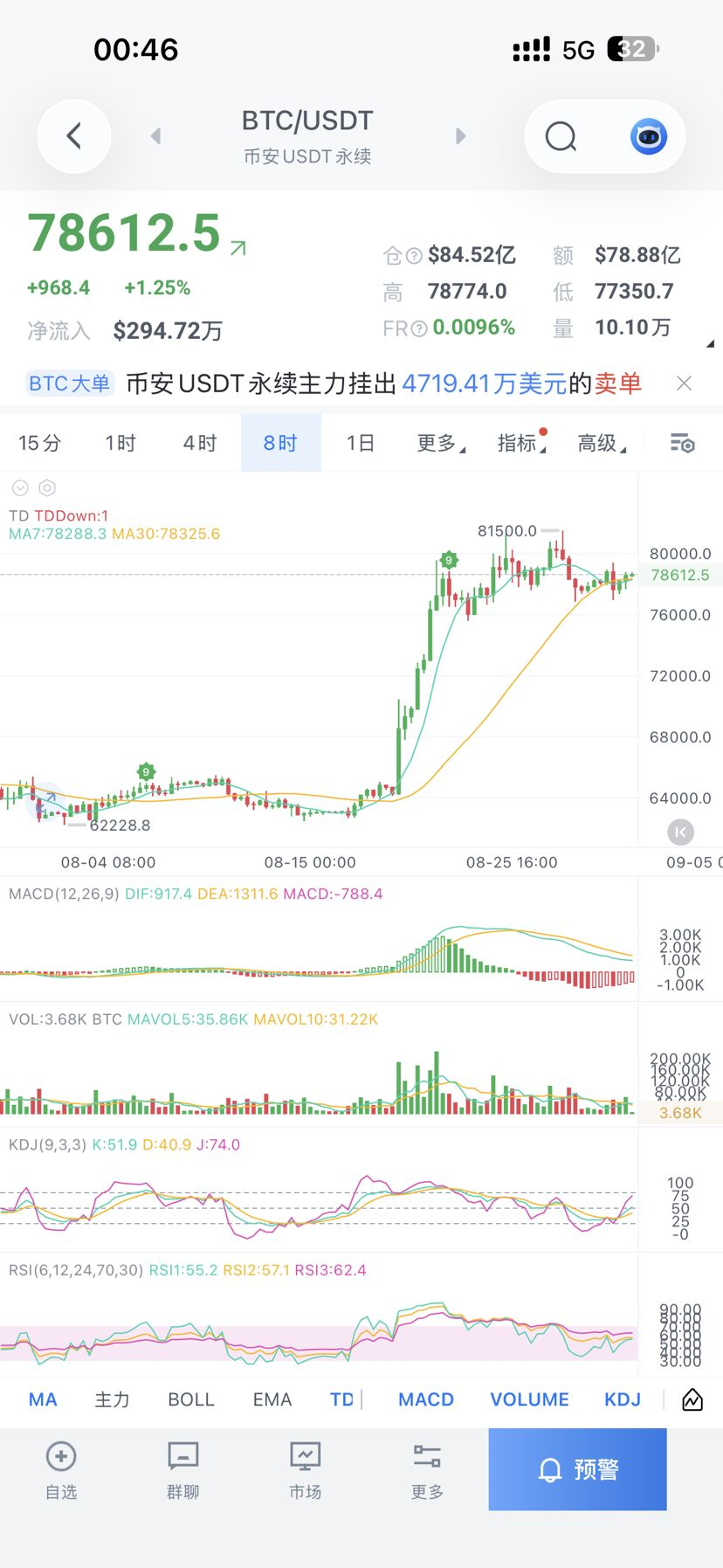
3
457
Everyone is eating the瓜 about Sun Ge and Jing Tian, little knowing that Bitcoin has already topped out in the short term around $81,500. Over the past few days, it has been forming a short-term top. It’s estimated that later it will pull back to around $70,000, and then continue with box-range (range-bound) trading. The cycle will likely take about a dozen or so days at minimum. Stay safe—eat the瓜 rationally. $BTC
Everyone is eating the瓜 about Sun Ge and Jing Tian, little knowing that Bitcoin has already topped out in the short term around $81,500. Over the past few days, it has been forming a short-term top. It’s estimated that later it will pull back to around $70,000, and then continue with box-range (range-bound) trading. The cycle will likely take about a dozen or so days at minimum. Stay safe—eat the瓜 rationally. $BTC
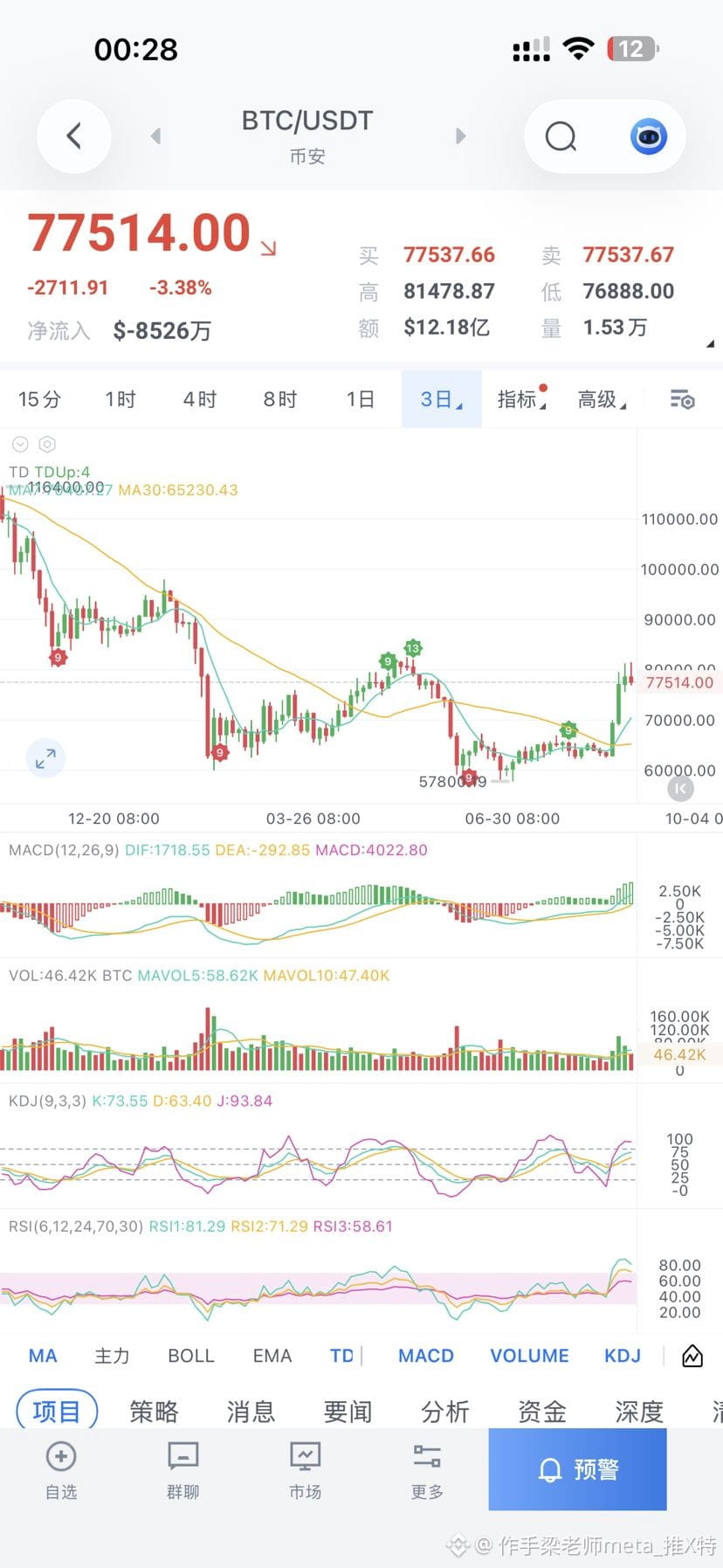
2
21.3k
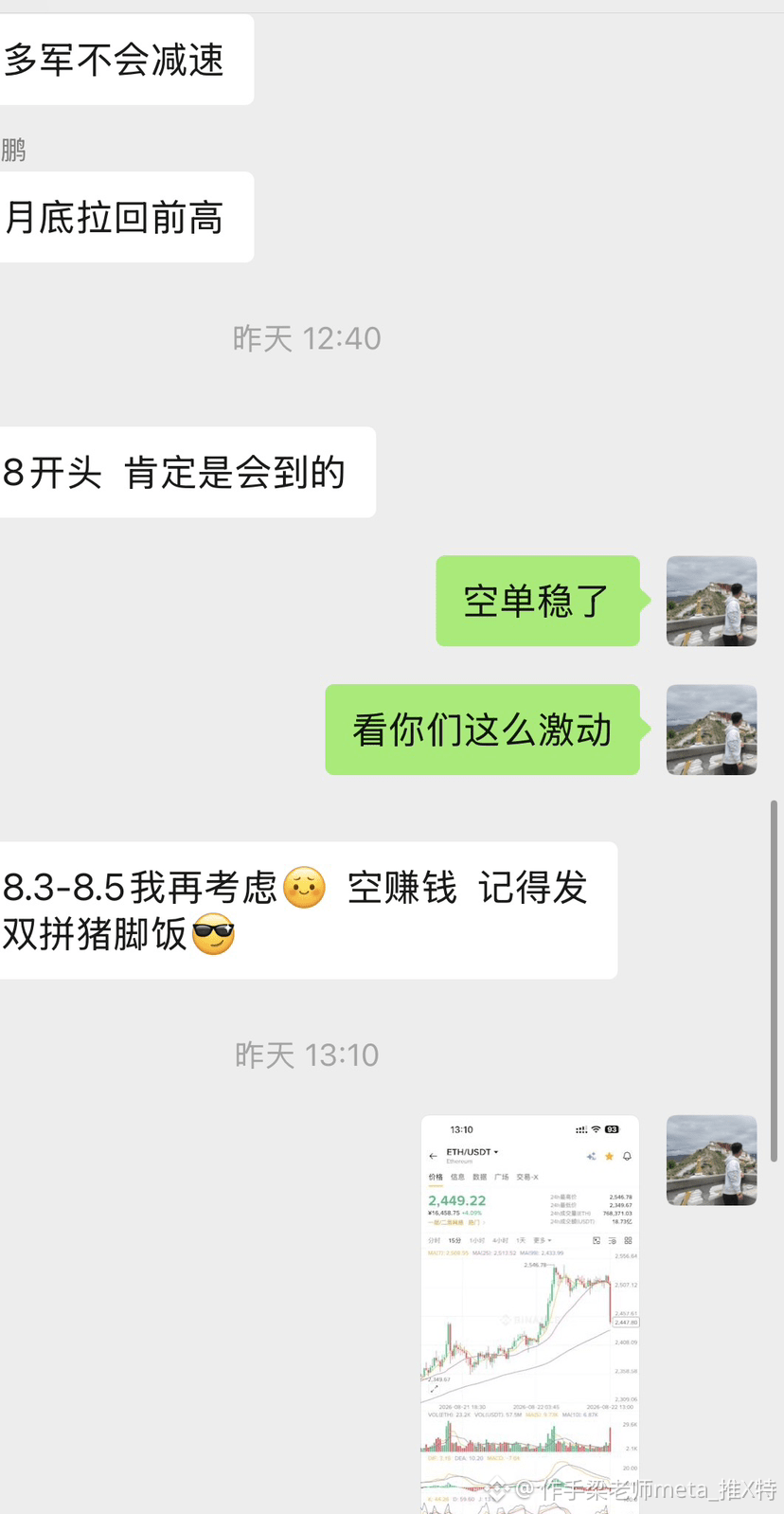
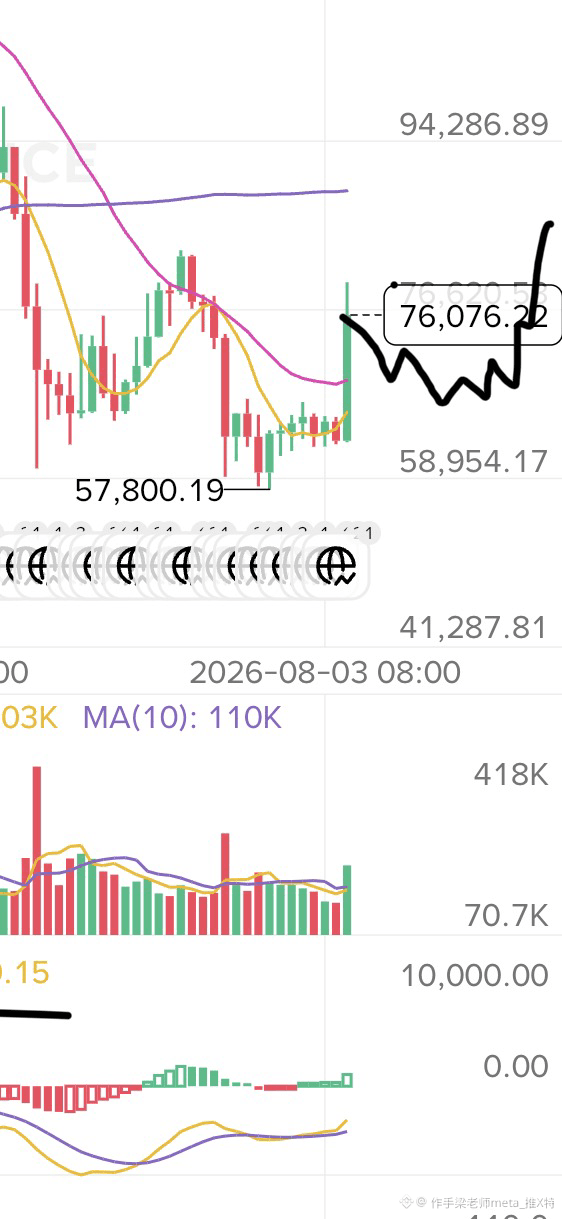
In the last round, the Bitcoin weekly chart rebounded to around 82,000 before crashing down. Back then it had been ranging for a long time around 80,000 before collapsing—this created a huge overhead selling pressure zone. Without sustained positive catalysts, it’s hard to break through at once. Yesterday I saw the entire朋友圈 and various groups celebrating and going crazy over the rally, so I knew it had probably already been pumped up enough. I estimate that yesterday’s 79,500 was the peak of this short-term rebound. Going forward, it will most likely drift downward slowly between 79,500 and 68,000 while repeatedly oscillating. For the medium to long term over the next three months, I’d estimate the trading range will be 80–60 thousand dollars, repeatedly bouncing as it builds a base. At least half a year is needed within this range before the conditions are right for a subsequent sustained rally. Otherwise, it will only be a sharp pump followed by a sharp sell-off, making it difficult to break above $80,000—unless there are massive, ongoing positive catalysts.
In the last round, the Bitcoin weekly chart rebounded to around 82,000 before crashing down. Back then it had been ranging for a long time around 80,000 before collapsing—this created a huge overhead selling pressure zone. Without sustained positive catalysts, it’s hard to break through at once. Yesterday I saw the entire朋友圈 and various groups celebrating and going crazy over the rally, so I knew it had probably already been pumped up enough. I estimate that yesterday’s 79,500 was the peak of this short-term rebound. Going forward, it will most likely drift downward slowly between 79,500 and 68,000 while repeatedly oscillating. For the medium to long term over the next three months, I’d estimate the trading range will be 80–60 thousand dollars, repeatedly bouncing as it builds a base. At least half a year is needed within this range before the conditions are right for a subsequent sustained rally. Otherwise, it will only be a sharp pump followed by a sharp sell-off, making it difficult to break above $80,000—unless there are massive, ongoing positive catalysts.
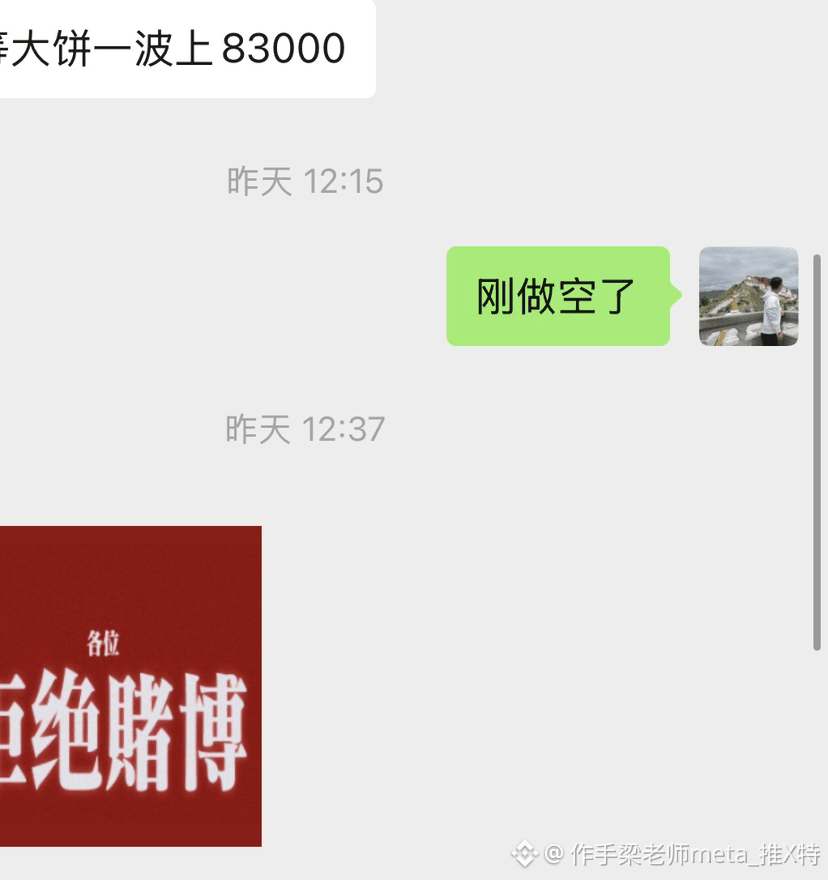
2
1
1.7k
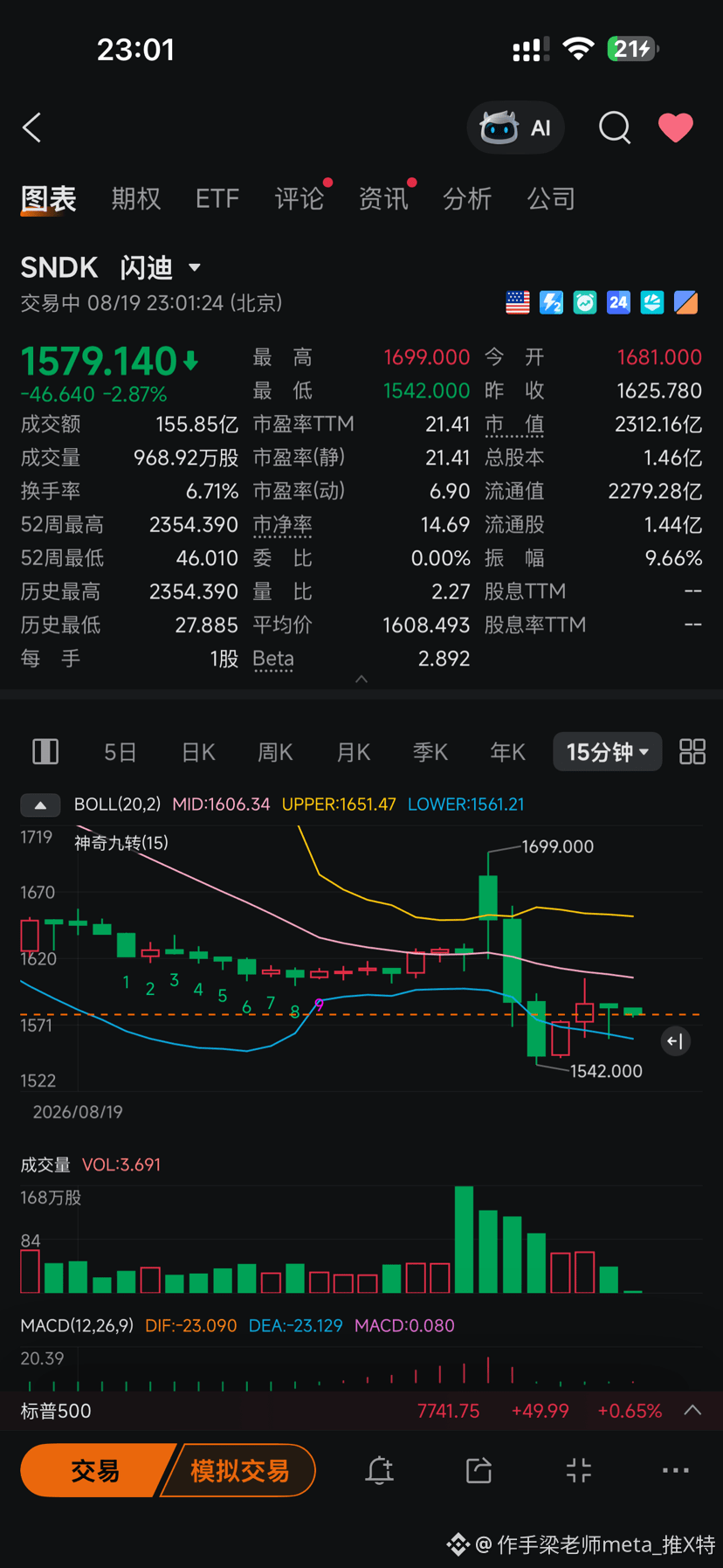
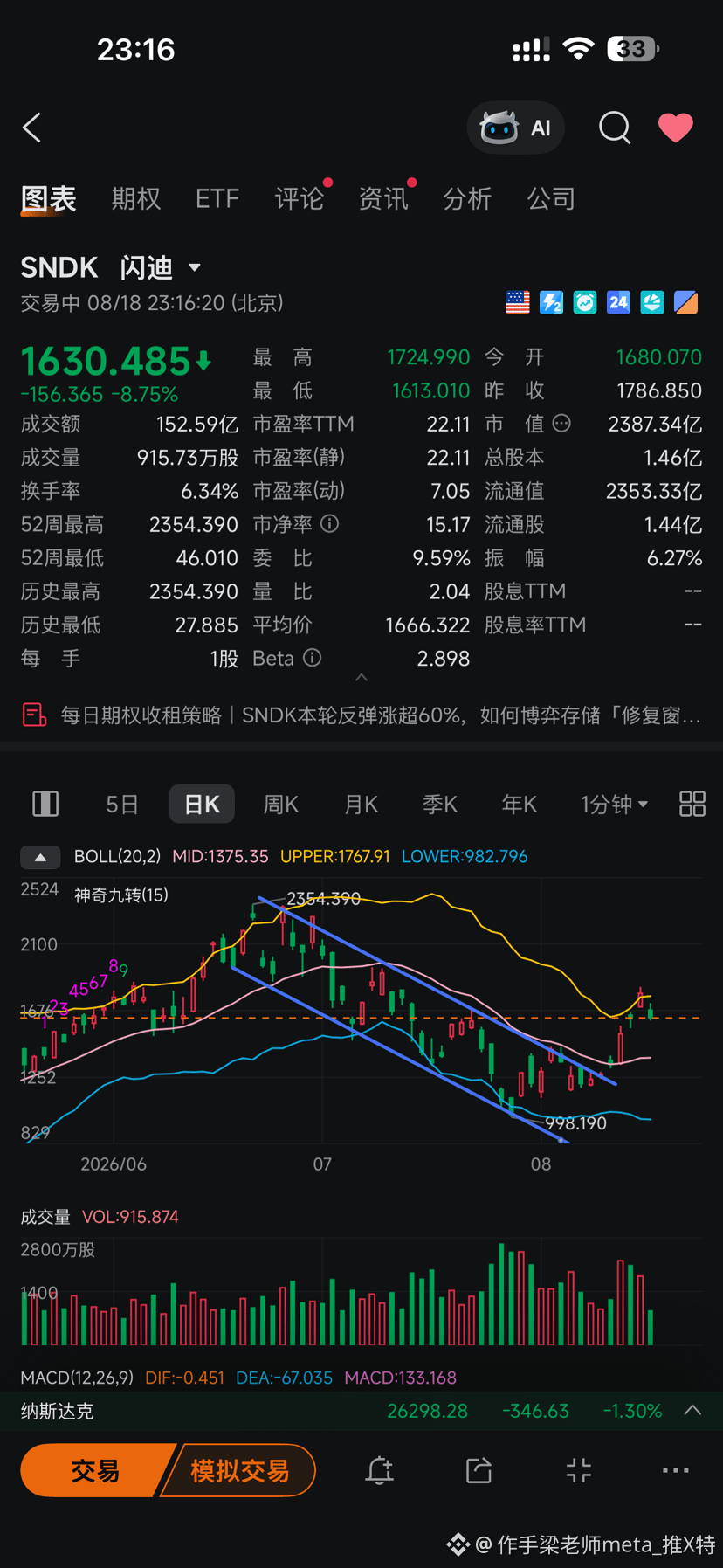
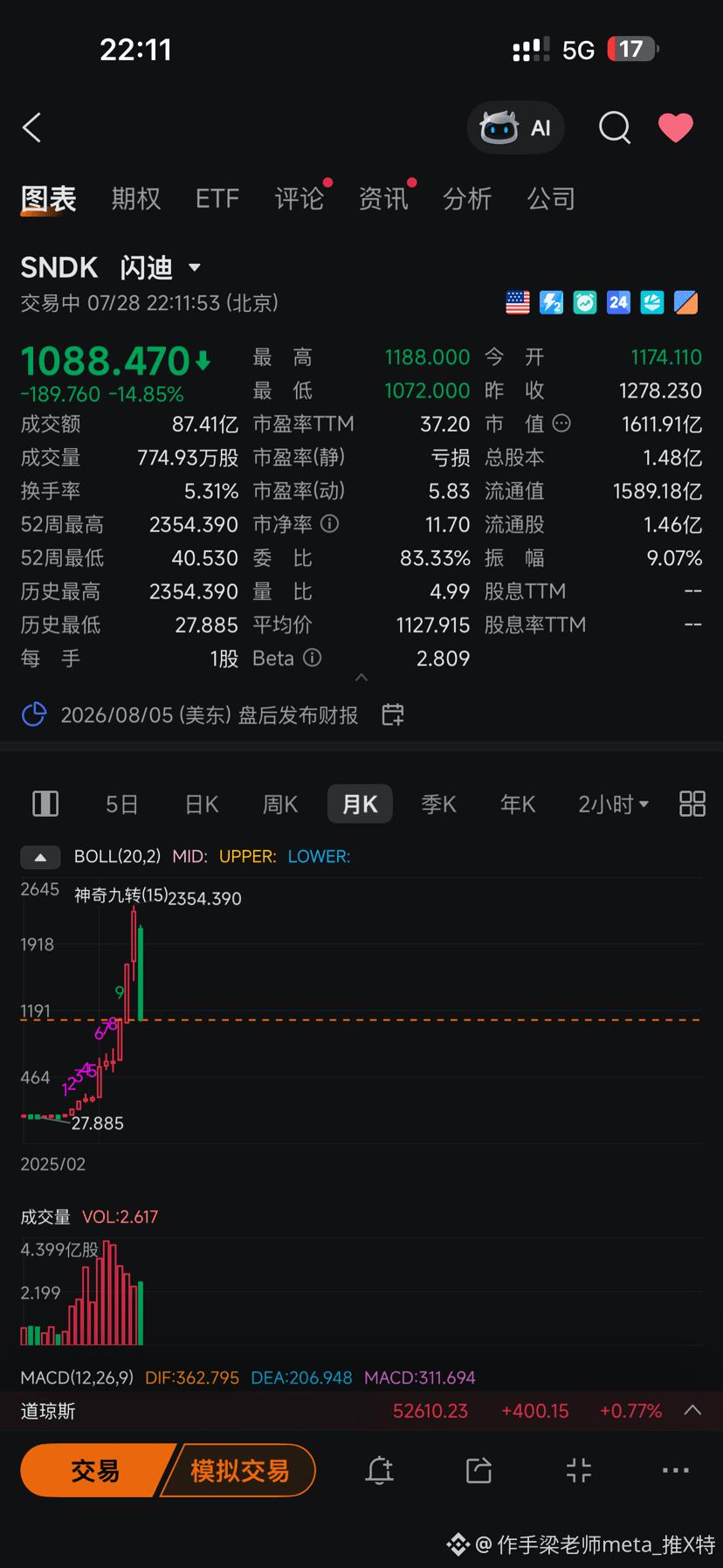
$SNDK $ SanDisk (SNDK.US) $ Just now, SanDisk’s opening low was $1542. By the 17th, I predicted it would fall to my target price of $1550—hit it precisely. Sometimes market timing is just that magical, especially when you can think calmly without anyone distracting you—it’s incredibly accurate.
$SNDK $ SanDisk (SNDK.US) $ Just now, SanDisk’s opening low was $1542. By the 17th, I predicted it would fall to my target price of $1550—hit it precisely. Sometimes market timing is just that magical, especially when you can think calmly without anyone distracting you—it’s incredibly accurate.
SNDK-1.05%
SNDKUS+0.44%
2
7.4k
$SNDK Yesterday made me short SanDisk, and today it indeed dropped. This trading sentiment analysis is really accurate.
$SNDK Yesterday made me short SanDisk, and today it indeed dropped. This trading sentiment analysis is really accurate.
898
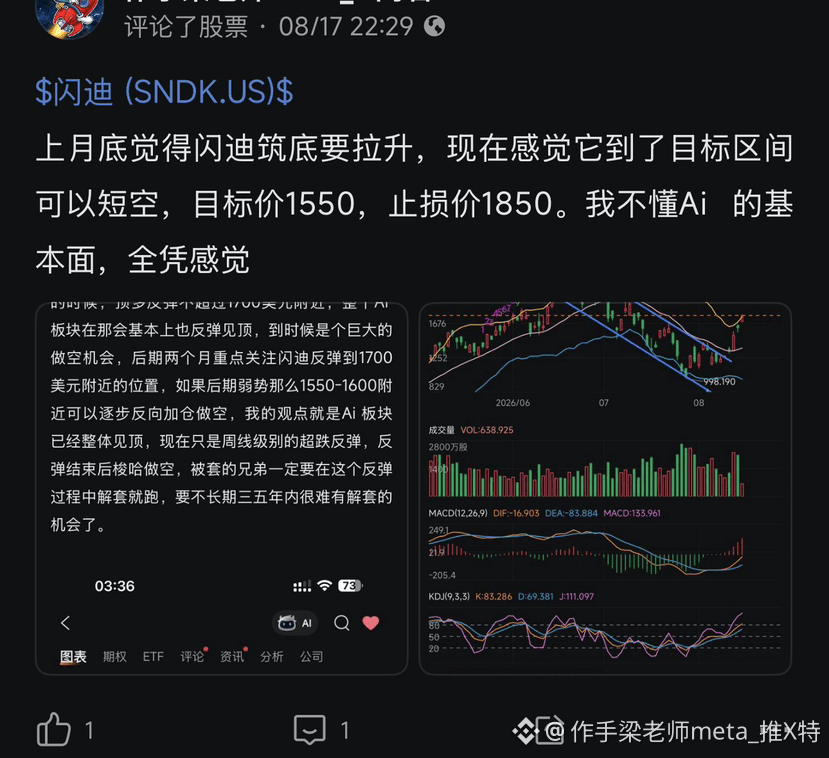
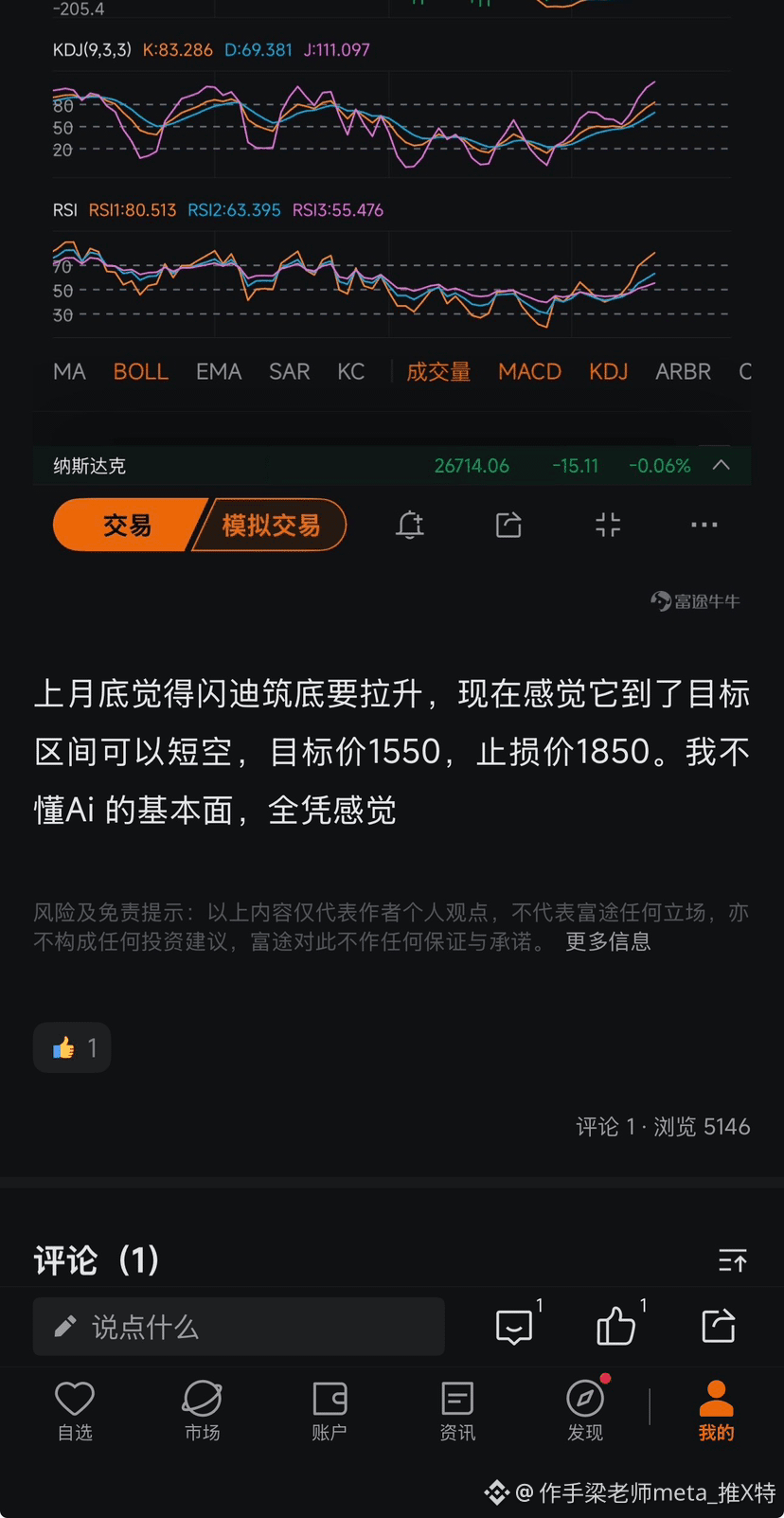
$SNDK last month I felt SanDisk was bottoming out and would move up; now it seems it has reached the target range, so I can consider a short position briefly. Target price: 1550. Stop-loss: 1850. I don't understand AI's fundamentals—I’m relying purely on my hunch.
$SNDK last month I felt SanDisk was bottoming out and would move up; now it seems it has reached the target range, so I can consider a short position briefly. Target price: 1550. Stop-loss: 1850. I don't understand AI's fundamentals—I’m relying purely on my hunch.
400
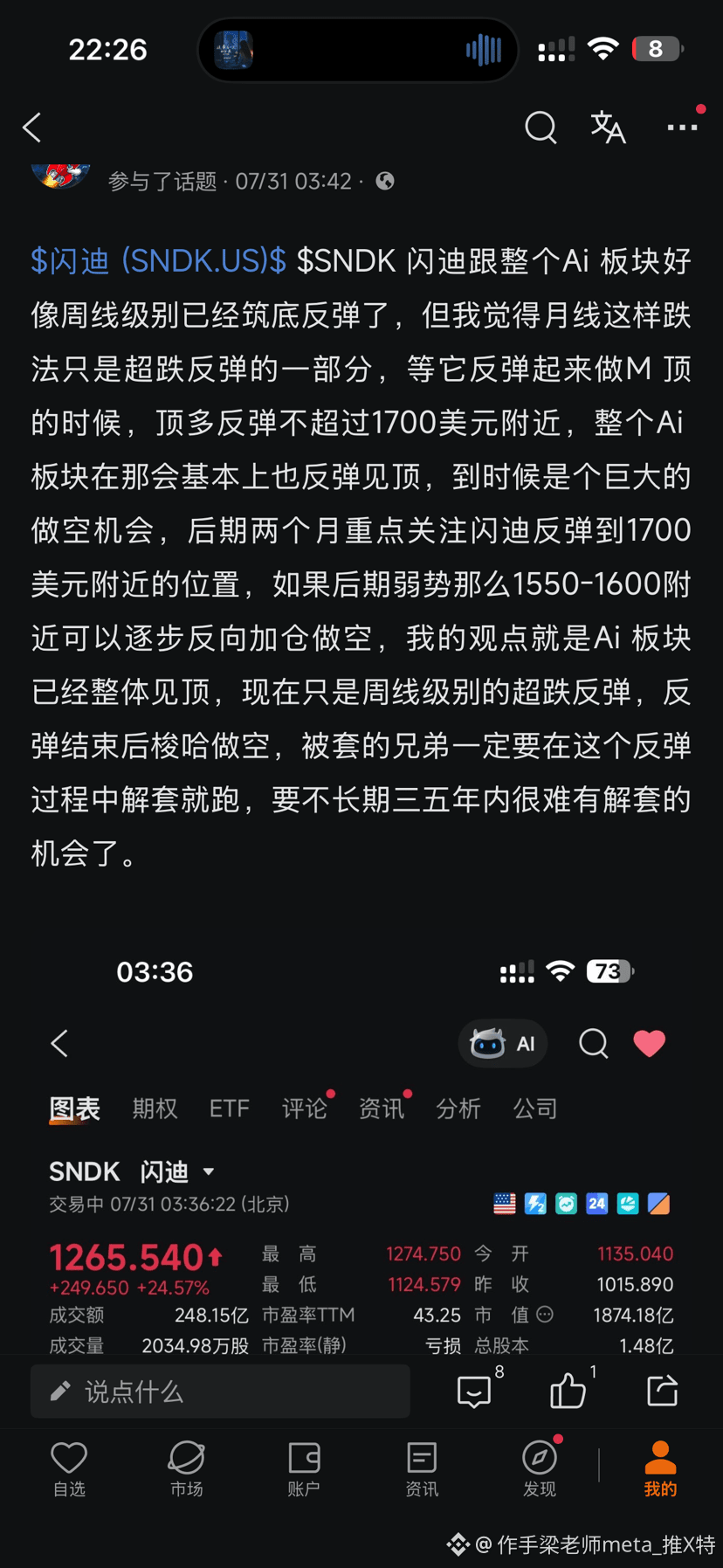
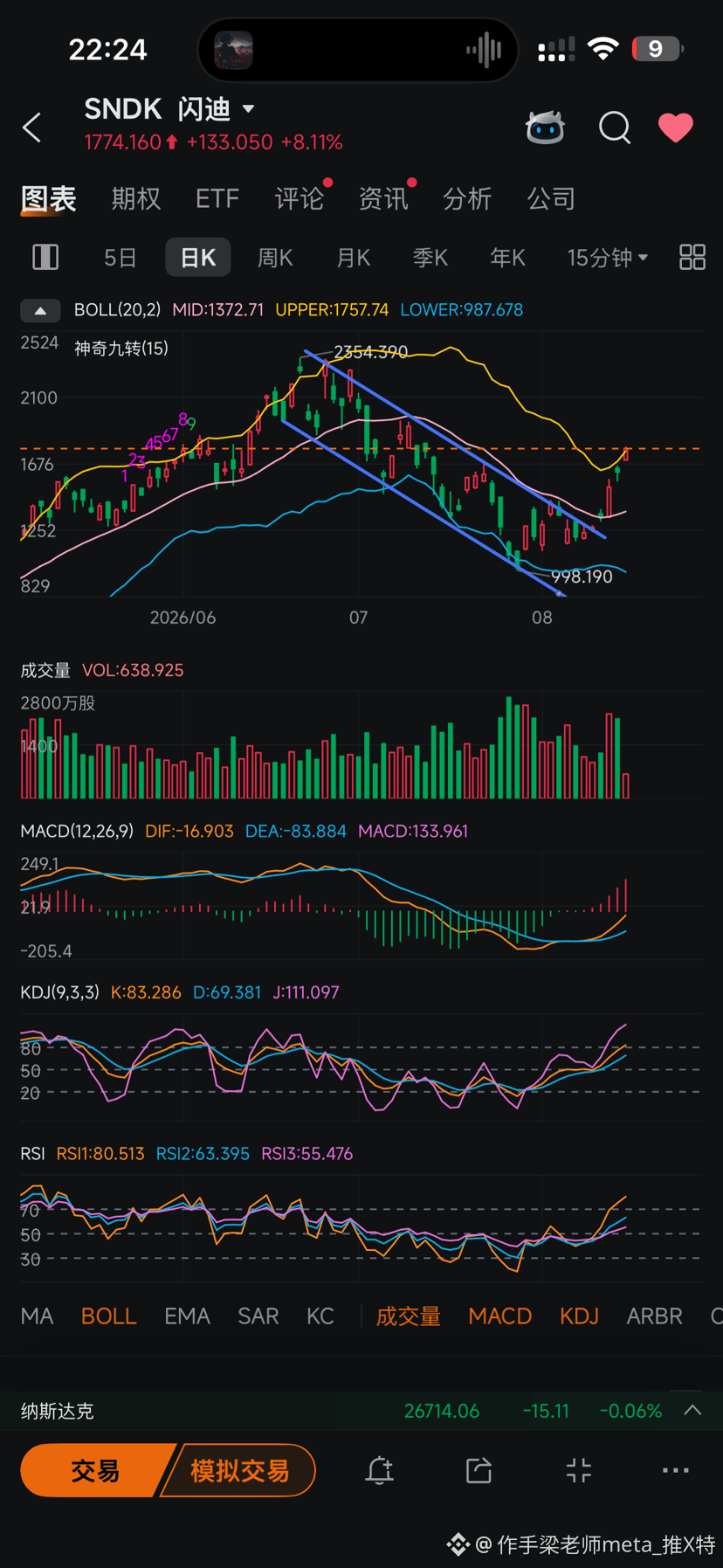
$SNDK Sandisk seems like the entire AI sector has already bottomed out and rebounded on a weekly level, but I think this kind of monthly chart decline is only part of an oversold rebound. When it rebounds and then forms an M top, at most it will rebound to around the $1,700 area. The whole AI sector will likely also rebound and top out around then, which would be a huge opportunity to short. In the following two months, focus on whether Sandisk rebounds to the $1,700 area. If it’s weak later on, then around $1,550–$1,600 you can gradually add to a short position in the opposite direction. My view is that the AI sector has already topped out overall; what we’re seeing now is just an oversold rebound at the weekly level. After the rebound ends, go all-in on the short. Brothers who get stuck in the trade must get out and break even during this rebound; otherwise, it may be very hard to get out with a profit within the next three to five years.
$SNDK Sandisk seems like the entire AI sector has already bottomed out and rebounded on a weekly level, but I think this kind of monthly chart decline is only part of an oversold rebound. When it rebounds and then forms an M top, at most it will rebound to around the $1,700 area. The whole AI sector will likely also rebound and top out around then, which would be a huge opportunity to short. In the following two months, focus on whether Sandisk rebounds to the $1,700 area. If it’s weak later on, then around $1,550–$1,600 you can gradually add to a short position in the opposite direction. My view is that the AI sector has already topped out overall; what we’re seeing now is just an oversold rebound at the weekly level. After the rebound ends, go all-in on the short. Brothers who get stuck in the trade must get out and break even during this rebound; otherwise, it may be very hard to get out with a profit within the next three to five years.
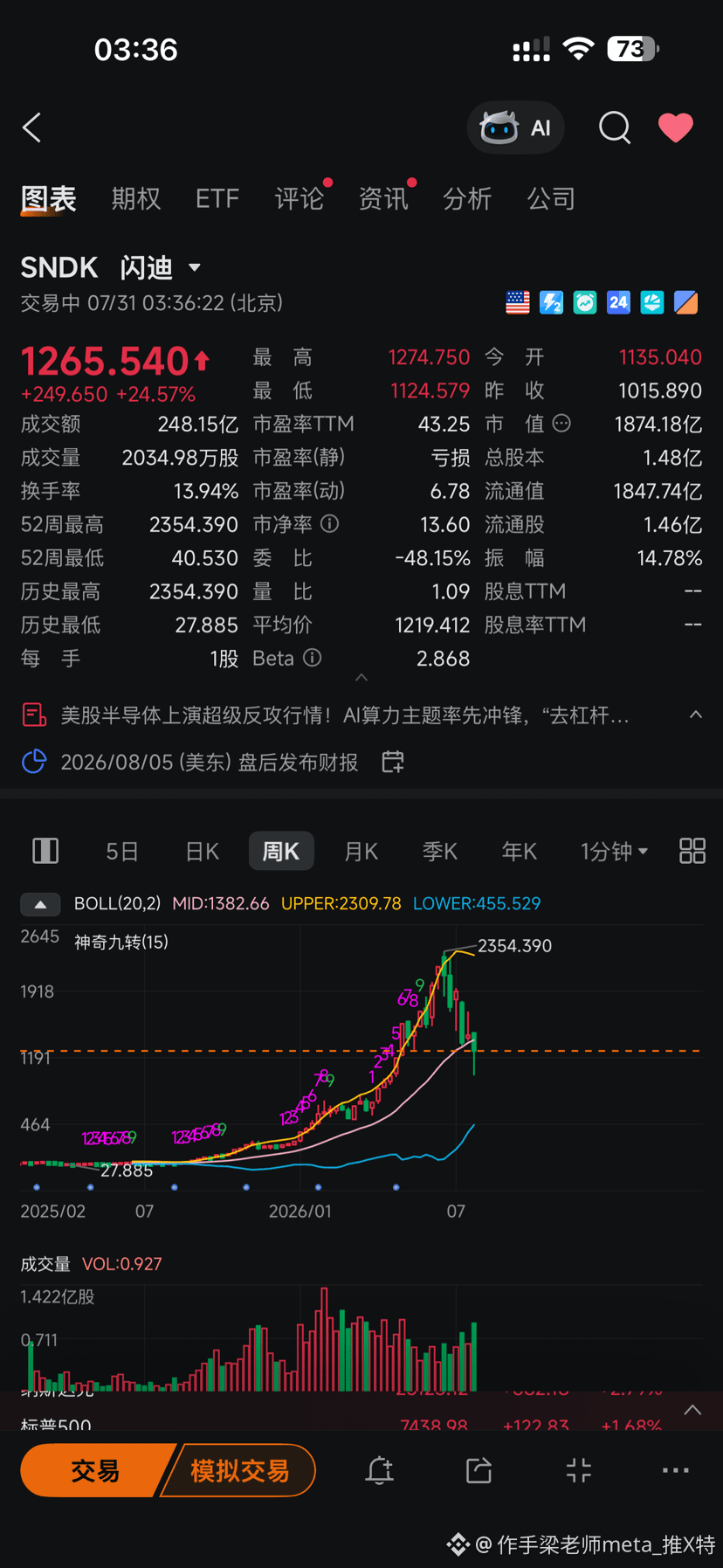
2
1
2.8k
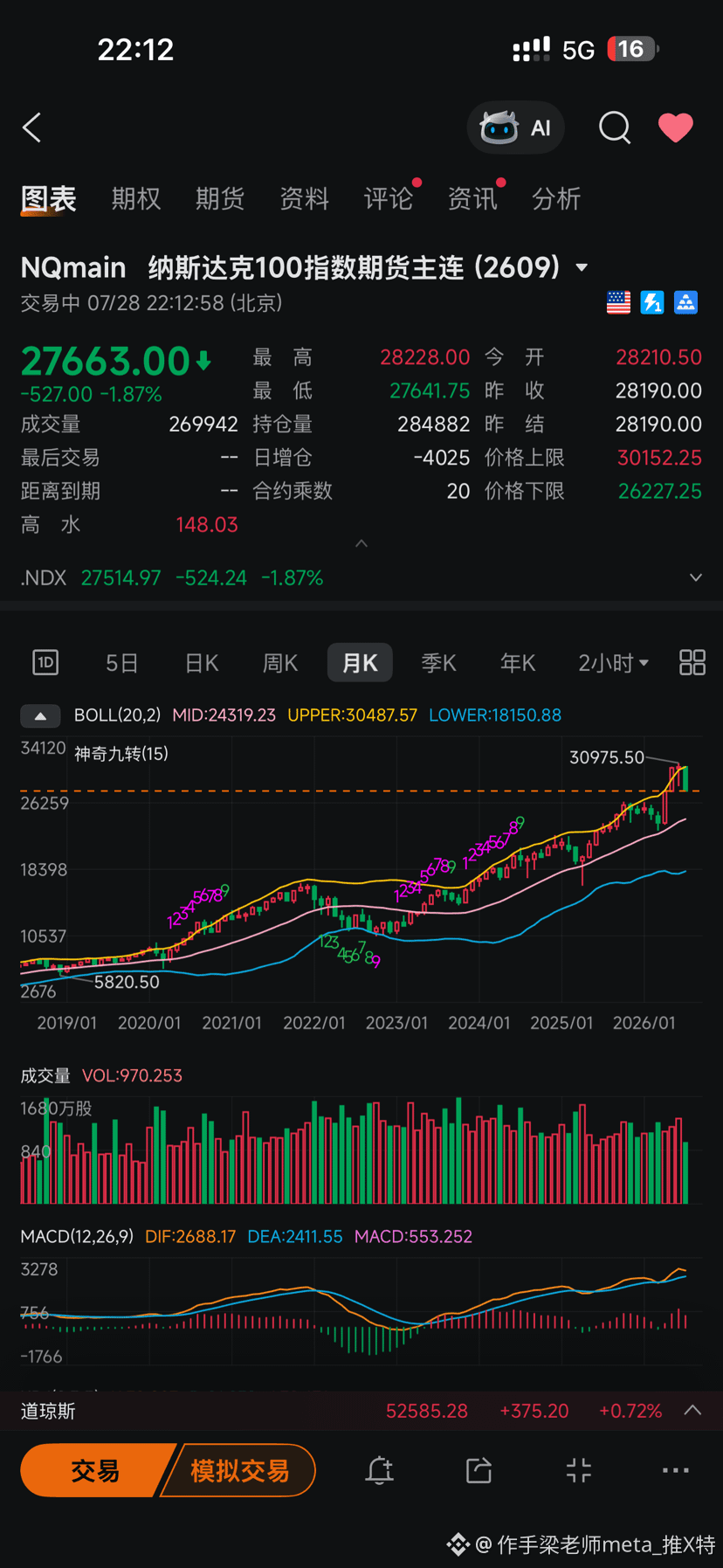
Nasdaq 100 index futures, the main continuous contract, at the line level, has essentially topped out—this is basically a foregone conclusion. I expect another waterfall-like drop next month. Keep looking for opportunities to short. The financial crisis is already here—stay safe.
Nasdaq 100 index futures, the main continuous contract, at the line level, has essentially topped out—this is basically a foregone conclusion. I expect another waterfall-like drop next month. Keep looking for opportunities to short. The financial crisis is already here—stay safe.
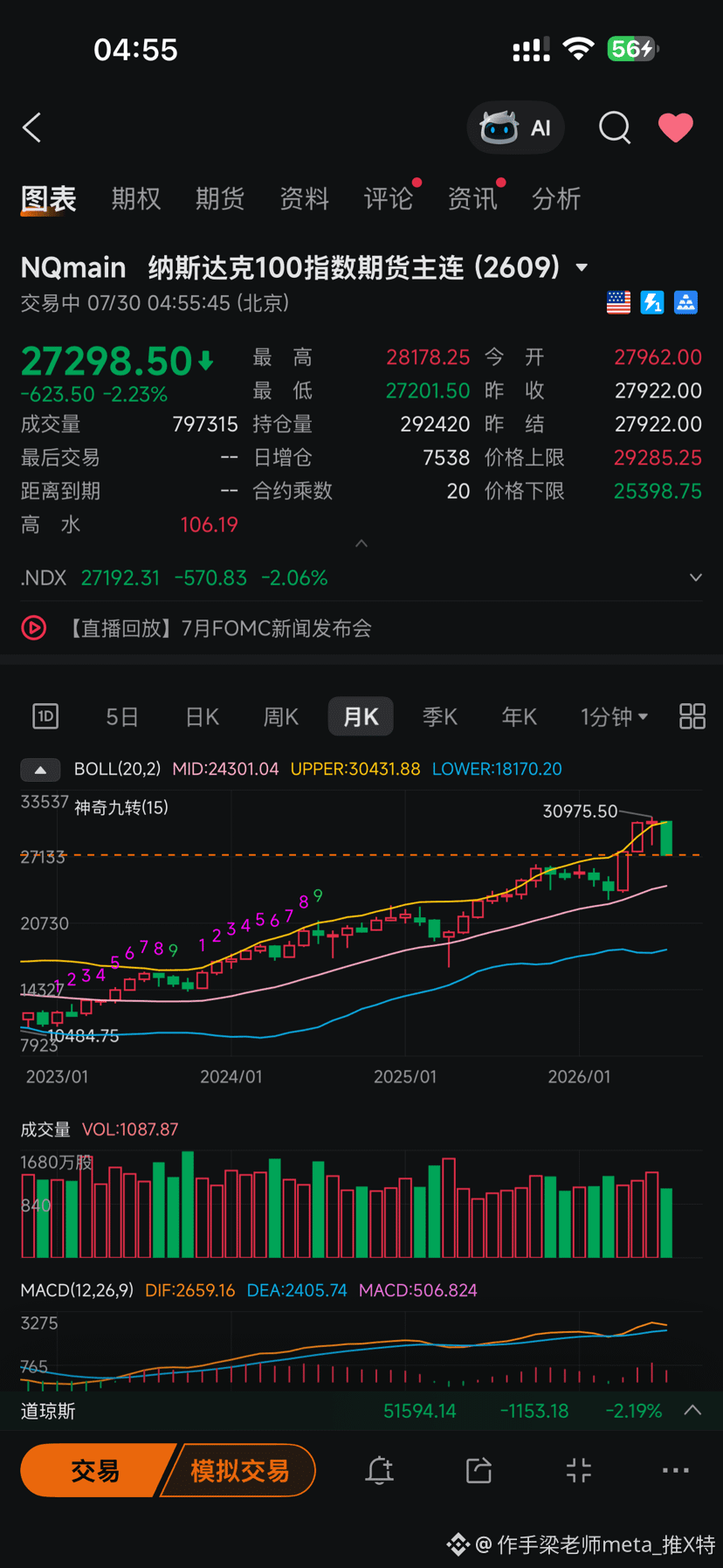
2
398
The Nasdaq index monthly line top fractal pattern has finally appeared. The global stock market's support anchor point—the AI sector—has also completely collapsed. The economic and stock market structure, which was originally going through an A/K-type (K-shaped) divergence, is now turning into an L-shape. Everyone is the same—no one is spared. Next month, take a momentum short position on the Nasdaq and its component weighted stocks.
The Nasdaq index monthly line top fractal pattern has finally appeared. The global stock market's support anchor point—the AI sector—has also completely collapsed. The economic and stock market structure, which was originally going through an A/K-type (K-shaped) divergence, is now turning into an L-shape. Everyone is the same—no one is spared. Next month, take a momentum short position on the Nasdaq and its component weighted stocks.
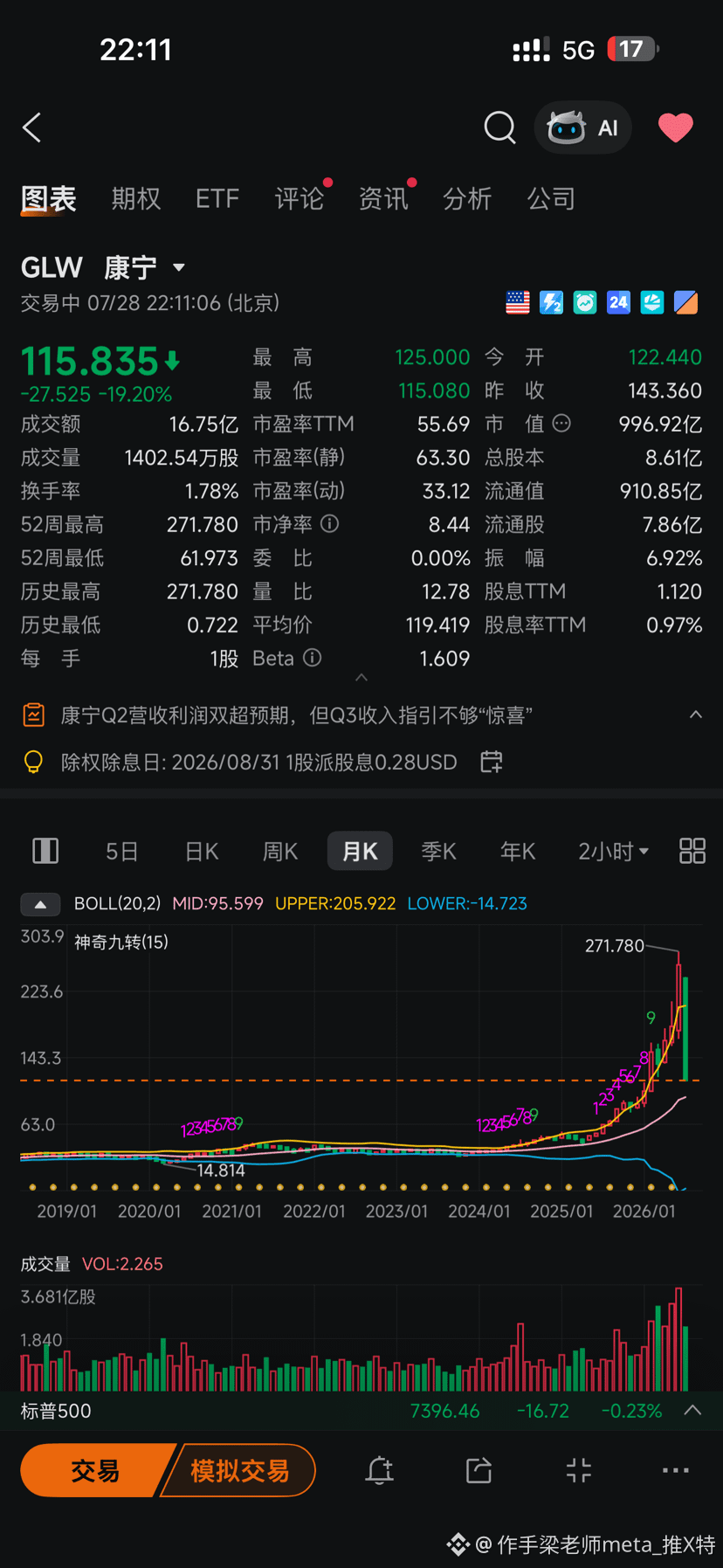
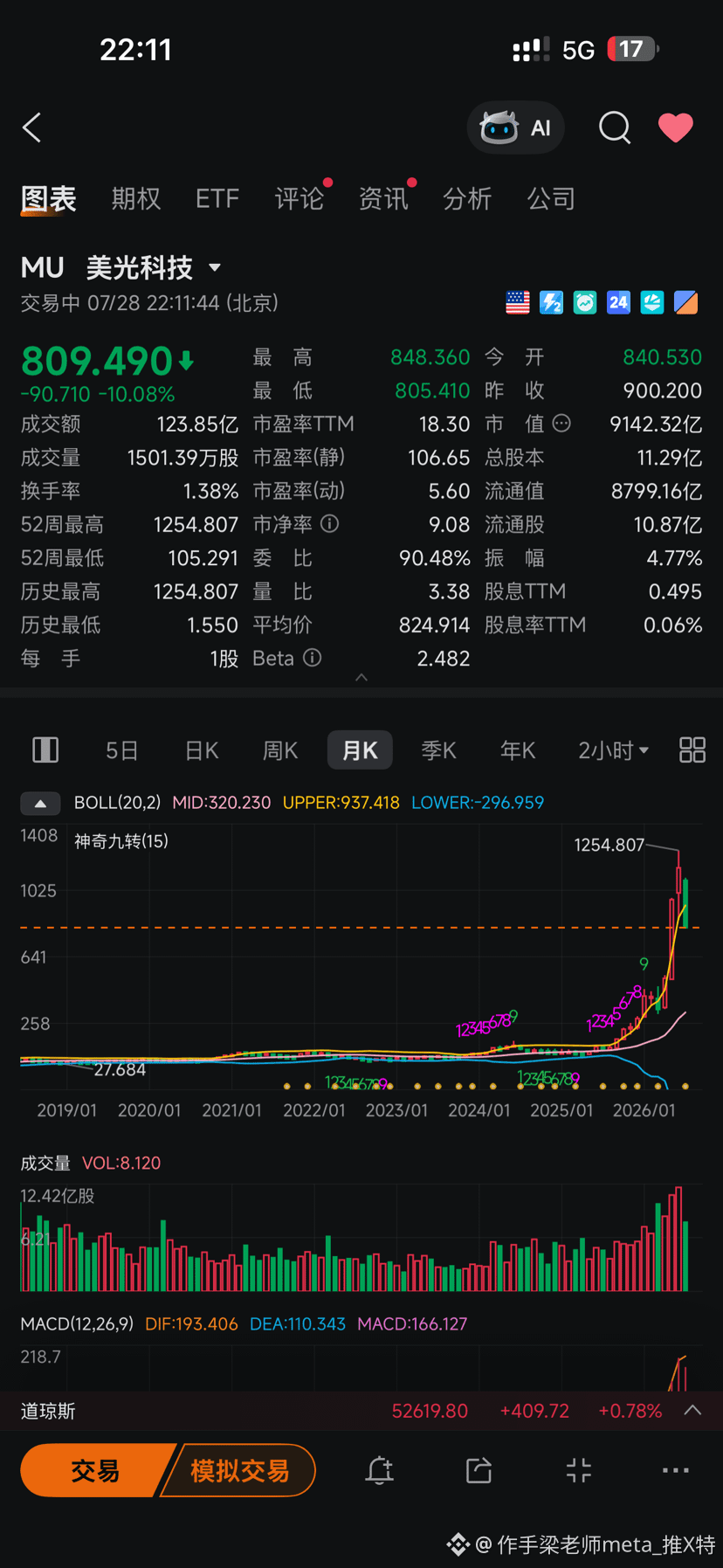
674
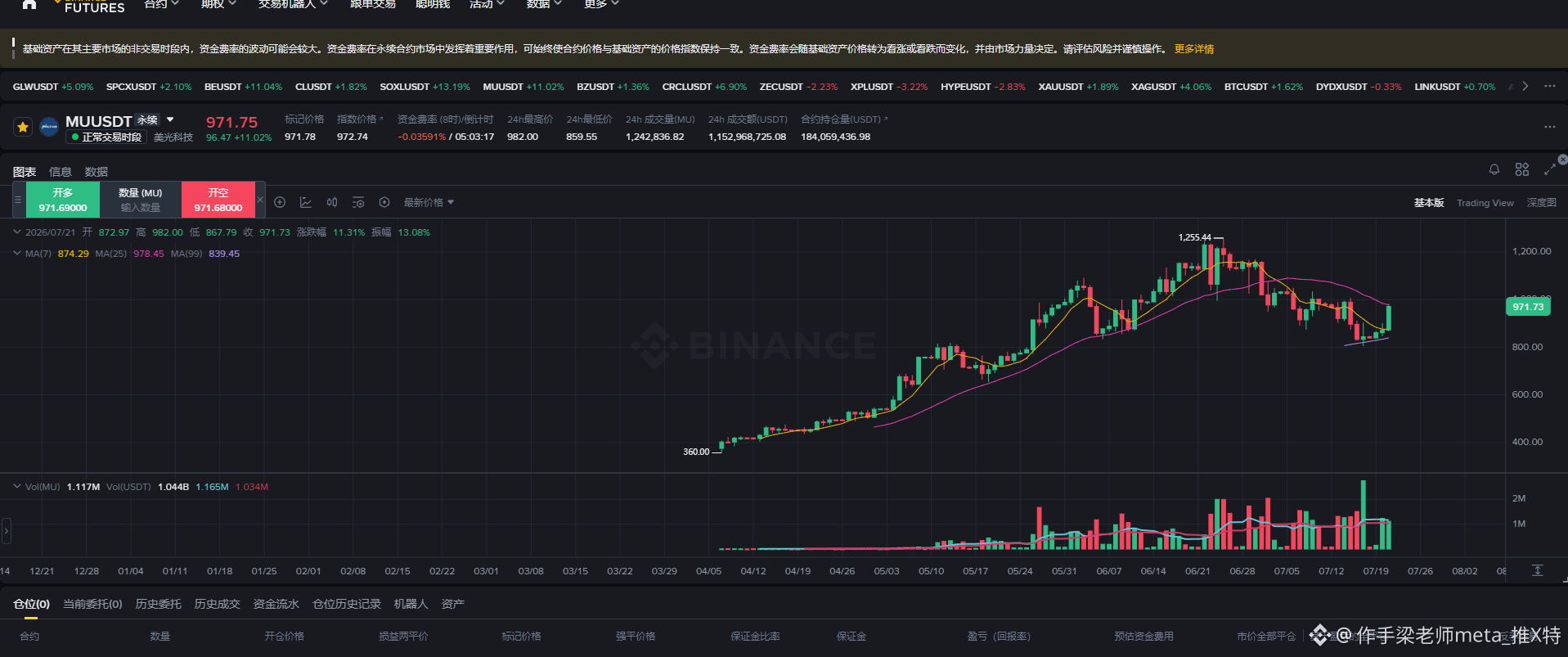
Last week’s analysis review suggested that MU is very strong, and today it rose by 11%, with 100% accuracy. It’s likely that MU will pause and consolidate at this level. At that time, you can check again whether it will continue to break out. For friends holding short-term long positions, you can continue to take profit here and wait and see whether it will keep breaking out.
Last week’s analysis review suggested that MU is very strong, and today it rose by 11%, with 100% accuracy. It’s likely that MU will pause and consolidate at this level. At that time, you can check again whether it will continue to break out. For friends holding short-term long positions, you can continue to take profit here and wait and see whether it will keep breaking out.
作手梁老师meta_推X特
·
--
In-depth Review of the US AI Sector Last Week: Causes of the Plunge, Technical Analysis, and Next Week’s Strategy
Last week, the US AI sector saw a broad pullback. This downturn was not triggered by a single negative catalyst; rather, it resulted from a combination of market sentiment, valuation pressure, and shifts in expectations for fundamentals. First, after months of sustained gains, the valuations of AI chip stocks represented by Nvidia, AMD, Broadcom, and others had already reached historical highs. Some institutions and large funds chose to take profits, which then led to concentrated selling pressure across the semiconductor sector. Second, the market began to reassess the return on investment (ROI) of AI: tech giants have continued to pour tens of billions of dollars into building AI data centers and buying GPUs, but whether these investments can translate in the near term into revenue and profit growth that matches the scale of spending—and whether capital expenditures (CapEx) have approached a phase peak—has become a new focus for Wall Street.
1
251
Hong Kong film circle mourns the loss of a legendary figure! “Fourth Brother” Tony Leung — as “Forever Four” — news of his sudden death has reportedly emerged today at the age of 89. While his son, Nicholas Tse, is currently preparing for singing concerts on July 25 and 26 with great intensity in Mainland China, he immediately rushed back to Hong Kong quietly and urgently to handle arrangements for his father. Their deep father-son bond moves many to tears. #NicholasTse #TonyLeung
Hong Kong film circle mourns the loss of a legendary figure! “Fourth Brother” Tony Leung — as “Forever Four” — news of his sudden death has reportedly emerged today at the age of 89. While his son, Nicholas Tse, is currently preparing for singing concerts on July 25 and 26 with great intensity in Mainland China, he immediately rushed back to Hong Kong quietly and urgently to handle arrangements for his father. Their deep father-son bond moves many to tears. #NicholasTse #TonyLeung

2
503
·
--
Bullish
Hong Kong dollar stablecoins are finally moving from concept to reality.
According to a report by the South China Morning Post on July 20, the issuance of stablecoins in Hong Kong is about to begin. Anchorpoint, a fintech company led by Standard Chartered Bank (Hong Kong), will, at the soonest, issue a joint announcement with Standard Chartered within the next two weeks, announcing the launch of a Hong Kong dollar–pegged stablecoin, “HKDAP.”
The company was one of the first recipients of stablecoin issuer licences from the Hong Kong Monetary Authority in April this year.
Previously, the Hong Kong Monetary Authority had announced granting the first stablecoin issuer licences to Anchorpoint and HSBC Bank. Hong Kong’s Web3 financial industry roundtable may really be starting to move.
Hong Kong dollar stablecoins are finally moving from concept to reality.
According to a report by the South China Morning Post on July 20, the issuance of stablecoins in Hong Kong is about to begin. Anchorpoint, a fintech company led by Standard Chartered Bank (Hong Kong), will, at the soonest, issue a joint announcement with Standard Chartered within the next two weeks, announcing the launch of a Hong Kong dollar–pegged stablecoin, “HKDAP.”
The company was one of the first recipients of stablecoin issuer licences from the Hong Kong Monetary Authority in April this year.
Previously, the Hong Kong Monetary Authority had announced granting the first stablecoin issuer licences to Anchorpoint and HSBC Bank. Hong Kong’s Web3 financial industry roundtable may really be starting to move.
According to a report by the South China Morning Post on July 20, the issuance of stablecoins in Hong Kong is about to begin. Anchorpoint, a fintech company led by Standard Chartered Bank (Hong Kong), will, at the soonest, issue a joint announcement with Standard Chartered within the next two weeks, announcing the launch of a Hong Kong dollar–pegged stablecoin, “HKDAP.”
The company was one of the first recipients of stablecoin issuer licences from the Hong Kong Monetary Authority in April this year.
Previously, the Hong Kong Monetary Authority had announced granting the first stablecoin issuer licences to Anchorpoint and HSBC Bank. Hong Kong’s Web3 financial industry roundtable may really be starting to move.

165

Article
In-depth Review of the US AI Sector Last Week: Causes of the Plunge, Technical Analysis, and Next Week’s StrategyLast week, the US AI sector saw a broad pullback. This downturn was not triggered by a single negative catalyst; rather, it resulted from a combination of market sentiment, valuation pressure, and shifts in expectations for fundamentals. First, after months of sustained gains, the valuations of AI chip stocks represented by Nvidia, AMD, Broadcom, and others had already reached historical highs. Some institutions and large funds chose to take profits, which then led to concentrated selling pressure across the semiconductor sector. Second, the market began to reassess the return on investment (ROI) of AI: tech giants have continued to pour tens of billions of dollars into building AI data centers and buying GPUs, but whether these investments can translate in the near term into revenue and profit growth that matches the scale of spending—and whether capital expenditures (CapEx) have approached a phase peak—has become a new focus for Wall Street.
In-depth Review of the US AI Sector Last Week: Causes of the Plunge, Technical Analysis, and Next Week’s Strategy
Last week, the US AI sector saw a broad pullback. This downturn was not triggered by a single negative catalyst; rather, it resulted from a combination of market sentiment, valuation pressure, and shifts in expectations for fundamentals. First, after months of sustained gains, the valuations of AI chip stocks represented by Nvidia, AMD, Broadcom, and others had already reached historical highs. Some institutions and large funds chose to take profits, which then led to concentrated selling pressure across the semiconductor sector. Second, the market began to reassess the return on investment (ROI) of AI: tech giants have continued to pour tens of billions of dollars into building AI data centers and buying GPUs, but whether these investments can translate in the near term into revenue and profit growth that matches the scale of spending—and whether capital expenditures (CapEx) have approached a phase peak—has become a new focus for Wall Street.
1
3
718
[Middle East war flames fully reach Jordan: Iran launches night raid on US military base; situation is sliding toward a more dangerous edge]
On the 18th local time, Iran’s Islamic Revolutionary Guard Corps announced that it carried out missile and drone strikes on the US military base in Azraq, Jordan, on the night of the 17th.
Iran stated that the attack destroyed at least 2 US military fighter jets and 3 aircraft, and severely damaged several other aircraft.
From Iran’s mainland to Gulf sea routes, and to US military bases inside Jordan, the scope of the conflict is continuously expanding. If the US retaliates, the situation in the Middle East may enter a more difficult-to-control phase.
[Middle East war flames fully reach Jordan: Iran launches night raid on US military base; situation is sliding toward a more dangerous edge]
On the 18th local time, Iran’s Islamic Revolutionary Guard Corps announced that it carried out missile and drone strikes on the US military base in Azraq, Jordan, on the night of the 17th.
Iran stated that the attack destroyed at least 2 US military fighter jets and 3 aircraft, and severely damaged several other aircraft.
From Iran’s mainland to Gulf sea routes, and to US military bases inside Jordan, the scope of the conflict is continuously expanding. If the US retaliates, the situation in the Middle East may enter a more difficult-to-control phase.
On the 18th local time, Iran’s Islamic Revolutionary Guard Corps announced that it carried out missile and drone strikes on the US military base in Azraq, Jordan, on the night of the 17th.
Iran stated that the attack destroyed at least 2 US military fighter jets and 3 aircraft, and severely damaged several other aircraft.
From Iran’s mainland to Gulf sea routes, and to US military bases inside Jordan, the scope of the conflict is continuously expanding. If the US retaliates, the situation in the Middle East may enter a more difficult-to-control phase.
158
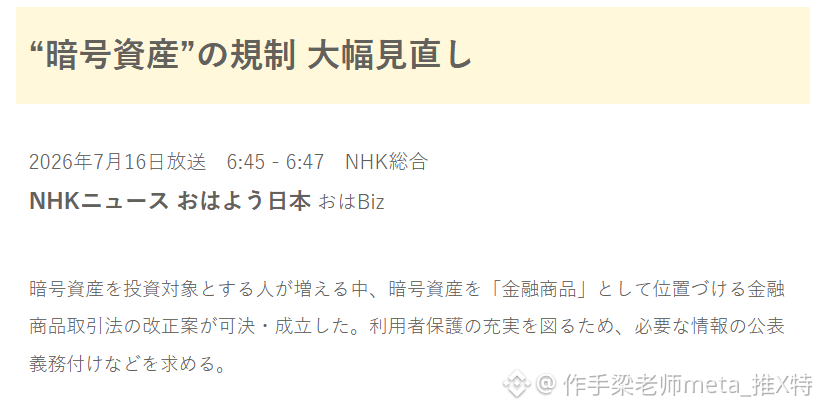
【Japan’s Crypto Market Completely Turns Over: The Coin Community Is Officially Included as “Financial Assets,” and the Era of Insider Trading Is Set to End】
According to NHK, on July 16, Japan’s parliament passed a legislative amendment that officially reclassifies cryptocurrencies as “financial assets.”
Previously, crypto assets were mainly regulated under the Payment Services Act. After the new rules take effect, Japan will impose even tighter regulatory constraints on the crypto market. Not only will it introduce restrictions on insider trading for the first time, but it will also impose heavier penalties for unregistered trading activities.
At present, the number of users on Japan’s crypto exchanges continues to grow, and major crypto companies are also accelerating their plans for the domestic market. The new regulations are expected to formally take effect within a year, and the stage of the “brutal” growth of Japan’s coin community may come to an end for good.
【Japan’s Crypto Market Completely Turns Over: The Coin Community Is Officially Included as “Financial Assets,” and the Era of Insider Trading Is Set to End】
According to NHK, on July 16, Japan’s parliament passed a legislative amendment that officially reclassifies cryptocurrencies as “financial assets.”
Previously, crypto assets were mainly regulated under the Payment Services Act. After the new rules take effect, Japan will impose even tighter regulatory constraints on the crypto market. Not only will it introduce restrictions on insider trading for the first time, but it will also impose heavier penalties for unregistered trading activities.
At present, the number of users on Japan’s crypto exchanges continues to grow, and major crypto companies are also accelerating their plans for the domestic market. The new regulations are expected to formally take effect within a year, and the stage of the “brutal” growth of Japan’s coin community may come to an end for good.
According to NHK, on July 16, Japan’s parliament passed a legislative amendment that officially reclassifies cryptocurrencies as “financial assets.”
Previously, crypto assets were mainly regulated under the Payment Services Act. After the new rules take effect, Japan will impose even tighter regulatory constraints on the crypto market. Not only will it introduce restrictions on insider trading for the first time, but it will also impose heavier penalties for unregistered trading activities.
At present, the number of users on Japan’s crypto exchanges continues to grow, and major crypto companies are also accelerating their plans for the domestic market. The new regulations are expected to formally take effect within a year, and the stage of the “brutal” growth of Japan’s coin community may come to an end for good.
1.2k
[France suddenly strikes hard: Polymarket faces nationwide blocks, prediction markets see another regulatory storm]
The French National Betting Management Authority (ANJ) has announced that it has asked local internet service providers to fully block the prediction market platform Polymarket.
Regulators accuse the platform of promoting illegal betting services. Not only could it cause users to suffer massive losses, some betting markets are also believed to be at risk of being manipulated.
Until Polymarket meets France’s betting regulatory requirements, it will remain under a blockade.
[France suddenly strikes hard: Polymarket faces nationwide blocks, prediction markets see another regulatory storm]
The French National Betting Management Authority (ANJ) has announced that it has asked local internet service providers to fully block the prediction market platform Polymarket.
Regulators accuse the platform of promoting illegal betting services. Not only could it cause users to suffer massive losses, some betting markets are also believed to be at risk of being manipulated.
Until Polymarket meets France’s betting regulatory requirements, it will remain under a blockade.
The French National Betting Management Authority (ANJ) has announced that it has asked local internet service providers to fully block the prediction market platform Polymarket.
Regulators accuse the platform of promoting illegal betting services. Not only could it cause users to suffer massive losses, some betting markets are also believed to be at risk of being manipulated.
Until Polymarket meets France’s betting regulatory requirements, it will remain under a blockade.
82
JPMorgan Sends a Major Signal: $3 Billion in Cash to Stabilize the Base—Institutional Money Is Reflowing Back to Bitcoin
On July 18, according to a report by The Block, JPMorgan analysts said that Strategy has recently increased its dollar reserves further, while the Bitcoin futures market has again recorded inflows. These developments are releasing “positive signals” for Bitcoin’s outlook. Although spot Bitcoin ETF inflows remain volatile, institutional market risk appetite appears to be quietly recovering.
Data show that spot Bitcoin ETFs were net inflows last week but switched rapidly to net outflows this week. By contrast, leverage ETFs linked to Strategy have maintained relatively stable net inflows for seven consecutive weeks. JPMorgan believes that this buying pressure mainly comes from retail investors and may continue to prop up Strategy’s share price, preventing its common shares from falling below the company’s bitcoin-related net asset value.
At the same time, Strategy has increased its dollar reserves from $2.55 billion to $3.0 billion, enough to cover roughly 20 months of preferred stock dividends. JPMorgan previously warned that the biggest market concern is Strategy being forced to sell Bitcoin in the future to pay dividends. If its cash reserves can cover 2 to 3 years of dividend payments, this potential “dumping bomb” would be clearly defused.
The analysts emphasized that it is still too early to say that increasing cash reserves has completely reversed Bitcoin investors’ sentiment. However, it is worth noting that while spot ETFs continue to face outflows, this week the CME Group Bitcoin futures and perpetual contracts have still recorded net inflows. This suggests that the futures market, which is truly institution-driven, is seeing demand pick back up.
Previously, Strategy’s President and CEO, Phong Le, stated clearly that the company will continue to buy Bitcoin long term and plans to remain the world’s largest Bitcoin buyer in the foreseeable future. After the STRC preferred shares return to a $100 per-share face value, the company may also continue to issue more shares. The proceeds would be used to buy additional Bitcoin and further expand its dollar reserves.
JPMorgan Sends a Major Signal: $3 Billion in Cash to Stabilize the Base—Institutional Money Is Reflowing Back to Bitcoin
On July 18, according to a report by The Block, JPMorgan analysts said that Strategy has recently increased its dollar reserves further, while the Bitcoin futures market has again recorded inflows. These developments are releasing “positive signals” for Bitcoin’s outlook. Although spot Bitcoin ETF inflows remain volatile, institutional market risk appetite appears to be quietly recovering.
Data show that spot Bitcoin ETFs were net inflows last week but switched rapidly to net outflows this week. By contrast, leverage ETFs linked to Strategy have maintained relatively stable net inflows for seven consecutive weeks. JPMorgan believes that this buying pressure mainly comes from retail investors and may continue to prop up Strategy’s share price, preventing its common shares from falling below the company’s bitcoin-related net asset value.
At the same time, Strategy has increased its dollar reserves from $2.55 billion to $3.0 billion, enough to cover roughly 20 months of preferred stock dividends. JPMorgan previously warned that the biggest market concern is Strategy being forced to sell Bitcoin in the future to pay dividends. If its cash reserves can cover 2 to 3 years of dividend payments, this potential “dumping bomb” would be clearly defused.
The analysts emphasized that it is still too early to say that increasing cash reserves has completely reversed Bitcoin investors’ sentiment. However, it is worth noting that while spot ETFs continue to face outflows, this week the CME Group Bitcoin futures and perpetual contracts have still recorded net inflows. This suggests that the futures market, which is truly institution-driven, is seeing demand pick back up.
Previously, Strategy’s President and CEO, Phong Le, stated clearly that the company will continue to buy Bitcoin long term and plans to remain the world’s largest Bitcoin buyer in the foreseeable future. After the STRC preferred shares return to a $100 per-share face value, the company may also continue to issue more shares. The proceeds would be used to buy additional Bitcoin and further expand its dollar reserves.
On July 18, according to a report by The Block, JPMorgan analysts said that Strategy has recently increased its dollar reserves further, while the Bitcoin futures market has again recorded inflows. These developments are releasing “positive signals” for Bitcoin’s outlook. Although spot Bitcoin ETF inflows remain volatile, institutional market risk appetite appears to be quietly recovering.
Data show that spot Bitcoin ETFs were net inflows last week but switched rapidly to net outflows this week. By contrast, leverage ETFs linked to Strategy have maintained relatively stable net inflows for seven consecutive weeks. JPMorgan believes that this buying pressure mainly comes from retail investors and may continue to prop up Strategy’s share price, preventing its common shares from falling below the company’s bitcoin-related net asset value.
At the same time, Strategy has increased its dollar reserves from $2.55 billion to $3.0 billion, enough to cover roughly 20 months of preferred stock dividends. JPMorgan previously warned that the biggest market concern is Strategy being forced to sell Bitcoin in the future to pay dividends. If its cash reserves can cover 2 to 3 years of dividend payments, this potential “dumping bomb” would be clearly defused.
The analysts emphasized that it is still too early to say that increasing cash reserves has completely reversed Bitcoin investors’ sentiment. However, it is worth noting that while spot ETFs continue to face outflows, this week the CME Group Bitcoin futures and perpetual contracts have still recorded net inflows. This suggests that the futures market, which is truly institution-driven, is seeing demand pick back up.
Previously, Strategy’s President and CEO, Phong Le, stated clearly that the company will continue to buy Bitcoin long term and plans to remain the world’s largest Bitcoin buyer in the foreseeable future. After the STRC preferred shares return to a $100 per-share face value, the company may also continue to issue more shares. The proceeds would be used to buy additional Bitcoin and further expand its dollar reserves.
145
Log in to explore more content
Join global crypto users on Binance Square
⚡️ Get latest and useful information about crypto.
💬 Trusted by the world’s largest crypto exchange.
👍 Discover real insights from verified creators.
Email / Phone number
Trending Topics
FedRateWatch
765,415 views
3,629 Discussing
Share & Win Traffic Reward in our Trending Hashtag Campaign
✨Topic: FOMC September, What's The Fed's Next Move?
👉How to Join:
Publish a short post or article with hashtag #FedRateWatch
Create content based on the below angles:
- August core CPI rose 0.3% month-over-month, and the odds of a 25bp hike this week are now close to 90%. Do you anticipate a rate hike this week? Is it a one-off, or the start of a longer hiking cycle?
- If the hike lands, how does it play out for BTC, tech stocks, and gold? Bullish or bearish?
- How are you planning to trade next? Share your BTC, stocks or gold trade/holdings with our trade sharing widget.
⏰Campaign Period:
- 2026-09-15 11:00 - 2026-09-17 3:00 UTC
🎁Reward:
- Qualified posts that comply with the above guidelines and contain more than 100 words will be reviewed and may receive a random traffic boost of 500 to 3,000 views. You will receive a notification from your feed secretary if your post is selected.
- Get a chance to have your article featured on Binance Square Official
Need ideas for your post? Visit the topic page #FedRateWatch or the Square Guide on How to Post for Better Reach.
Binance Square Official
·480 Likes
·1M views
BitcoinFalls4%
0 views
2 Discussing
ArgentinaCommitsToOECDCryptoReportingBy2029
3,492 views
114 Discussing