

ToroDataFi
108 Posts

ToroDataFi
Report
Block User
15 Following
25 Followers
87 Liked
Posts
·
--

Article
China’s purchase of 15 tonnes of gold boosts the focus on scarce assets.China increased its official gold reserves by approximately 15 tonnes during June, according to the latest data published by the People’s Bank of China. The purchase is equivalent to about 480,000 fine troy ounces and represents the largest month-on-month increase recorded since October 2023. With this update, official reserves reached 75.44 million troy ounces, extending to twenty consecutive months the country’s accumulation of gold.
The move occurred in a month marked by a sharp correction in the precious metals market. The spot price of gold fell by nearly 11.6% in June, its worst monthly performance since 2008, in a context influenced by the strength of the US dollar and developments in expectations regarding Federal Reserve monetary policy.
China’s purchase of 15 tonnes of gold boosts the focus on scarce assets.
China increased its official gold reserves by approximately 15 tonnes during June, according to the latest data published by the People’s Bank of China. The purchase is equivalent to about 480,000 fine troy ounces and represents the largest month-on-month increase recorded since October 2023. With this update, official reserves reached 75.44 million troy ounces, extending to twenty consecutive months the country’s accumulation of gold.
The move occurred in a month marked by a sharp correction in the precious metals market. The spot price of gold fell by nearly 11.6% in June, its worst monthly performance since 2008, in a context influenced by the strength of the US dollar and developments in expectations regarding Federal Reserve monetary policy.
The move occurred in a month marked by a sharp correction in the precious metals market. The spot price of gold fell by nearly 11.6% in June, its worst monthly performance since 2008, in a context influenced by the strength of the US dollar and developments in expectations regarding Federal Reserve monetary policy.
2
312
·
--
Verified

Article
U.S. Attacks Increase Regional TensionsThe situation in the Middle East has escalated again after the United States confirmed a new military offensive against Iranian targets, an operation that follows recent attacks on three commercial vessels transiting the Strait of Hormuz, one of the most important maritime routes for global energy trade.
According to the U.S. Central Command (CENTCOM), U.S. forces struck more than 80 targets linked to Iranian military capabilities. These included air defense systems, coastal radars, anti-ship missile installations, command and control centers, infrastructure related to drones, and more than 60 vessels belonging to the Islamic Revolutionary Guard Corps.
U.S. Attacks Increase Regional Tensions
The situation in the Middle East has escalated again after the United States confirmed a new military offensive against Iranian targets, an operation that follows recent attacks on three commercial vessels transiting the Strait of Hormuz, one of the most important maritime routes for global energy trade.
According to the U.S. Central Command (CENTCOM), U.S. forces struck more than 80 targets linked to Iranian military capabilities. These included air defense systems, coastal radars, anti-ship missile installations, command and control centers, infrastructure related to drones, and more than 60 vessels belonging to the Islamic Revolutionary Guard Corps.
According to the U.S. Central Command (CENTCOM), U.S. forces struck more than 80 targets linked to Iranian military capabilities. These included air defense systems, coastal radars, anti-ship missile installations, command and control centers, infrastructure related to drones, and more than 60 vessels belonging to the Islamic Revolutionary Guard Corps.
249
·
--
Verified
Article
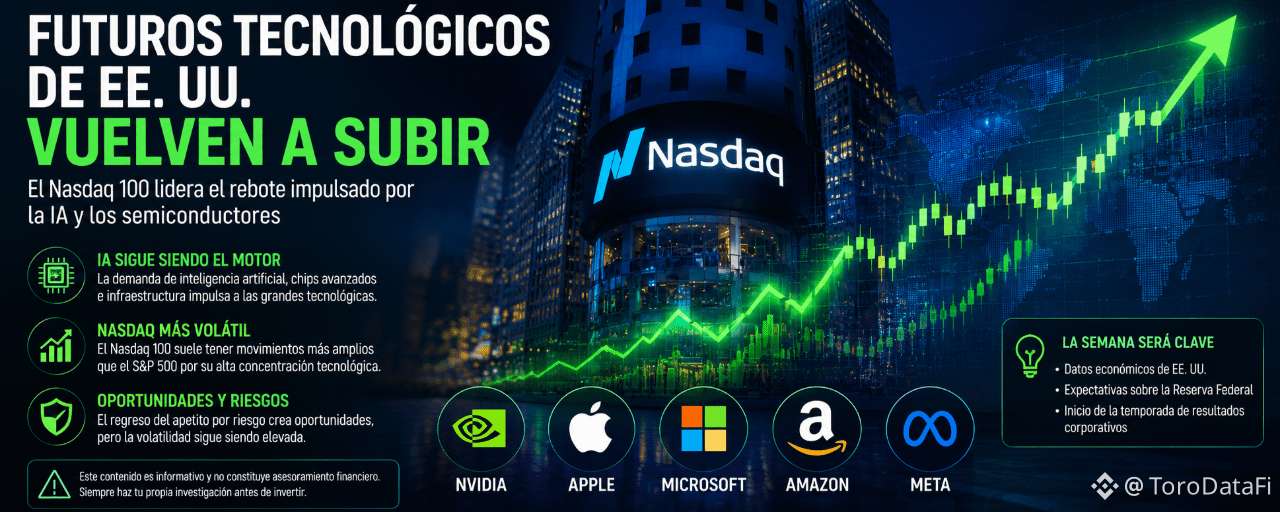
Wall Street turns its attention back to AI: tech futures start the week in the greenThe U.S. market kicked off the new week with a signal that did not go unnoticed by investors. After the Independence Day holiday, Nasdaq 100 futures returned to positive territory, driven by renewed interest in companies tied to artificial intelligence and the semiconductor sector.
The recovery comes after several sessions marked by profit-taking and growing caution about the valuations of large tech companies. However, buyers showed up again in a segment that remains the main driver of the U.S. market in 2026.
Wall Street turns its attention back to AI: tech futures start the week in the green
The U.S. market kicked off the new week with a signal that did not go unnoticed by investors. After the Independence Day holiday, Nasdaq 100 futures returned to positive territory, driven by renewed interest in companies tied to artificial intelligence and the semiconductor sector.
The recovery comes after several sessions marked by profit-taking and growing caution about the valuations of large tech companies. However, buyers showed up again in a segment that remains the main driver of the U.S. market in 2026.
The recovery comes after several sessions marked by profit-taking and growing caution about the valuations of large tech companies. However, buyers showed up again in a segment that remains the main driver of the U.S. market in 2026.
154
·
--
Verified
The End of False Promises: Why Trading AI Must Be Verifiable
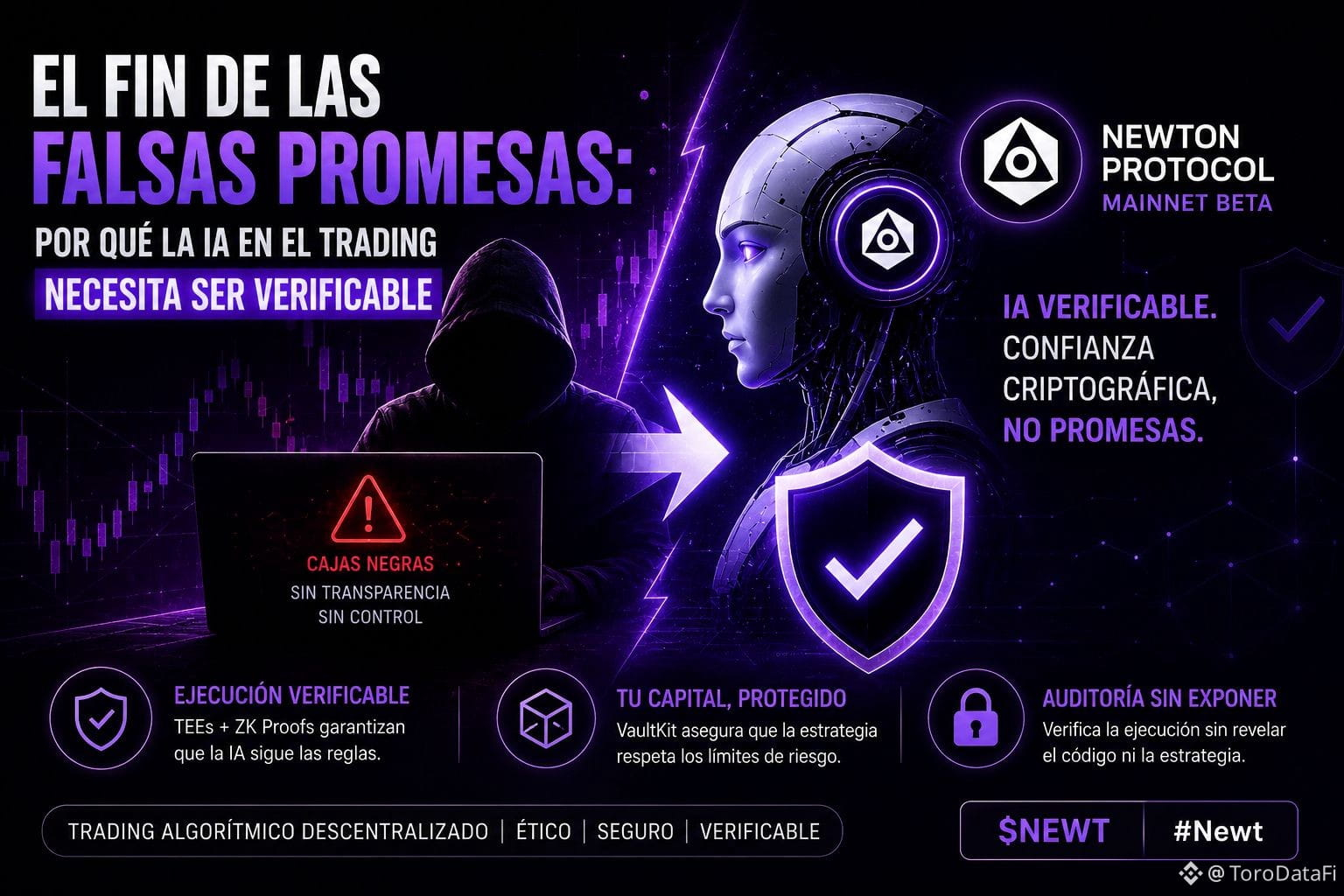
Lately, the crypto market has been flooded with projects and Telegram bots that promise to use “Artificial Intelligence” to trade your capital and generate magical returns. As experienced traders, we know that 99% of these tools are simply centralized “black boxes.” You have no way to know what code they’re actually running, whether they’re taking disproportionate risks with your liquidity—or, worse, whether they’re using your own funds to trade against you (front-running). Newton Mainnet Beta comes to dismantle this model of blind trust by introducing the concept of Verifiable Artificial Intelligence.
What @NewtonProtocol proposes in its documentation is a total paradigm shift. By integrating Trusted Execution Environments (TEEs) alongside Zero-Knowledge Proofs (ZK Proofs), they enable AI agents not only to execute smart trades, but to mathematically prove that they followed the rules without revealing their code. By using tools like VaultKit, you allocate your capital to an algorithmic strategy, and the network cryptographically guarantees that the AI did not deviate from the established risk parameters. You no longer have to trust the bot developer’s good intentions; you trust the immutability of the math. This ability to audit AI execution without compromising privacy is what gives the network its fundamental value. The ecosystem of $NEWT is building the ethical and technical standard that decentralized algorithmic trading has been calling for.
#newt $NEWT @NewtonProtocol
The End of False Promises: Why Trading AI Must Be Verifiable
Lately, the crypto market has been flooded with projects and Telegram bots that promise to use “Artificial Intelligence” to trade your capital and generate magical returns. As experienced traders, we know that 99% of these tools are simply centralized “black boxes.” You have no way to know what code they’re actually running, whether they’re taking disproportionate risks with your liquidity—or, worse, whether they’re using your own funds to trade against you (front-running). Newton Mainnet Beta comes to dismantle this model of blind trust by introducing the concept of Verifiable Artificial Intelligence.
What @NewtonProtocol proposes in its documentation is a total paradigm shift. By integrating Trusted Execution Environments (TEEs) alongside Zero-Knowledge Proofs (ZK Proofs), they enable AI agents not only to execute smart trades, but to mathematically prove that they followed the rules without revealing their code. By using tools like VaultKit, you allocate your capital to an algorithmic strategy, and the network cryptographically guarantees that the AI did not deviate from the established risk parameters. You no longer have to trust the bot developer’s good intentions; you trust the immutability of the math. This ability to audit AI execution without compromising privacy is what gives the network its fundamental value. The ecosystem of $NEWT is building the ethical and technical standard that decentralized algorithmic trading has been calling for.
#newt $NEWT @NewtonProtocol
Lately, the crypto market has been flooded with projects and Telegram bots that promise to use “Artificial Intelligence” to trade your capital and generate magical returns. As experienced traders, we know that 99% of these tools are simply centralized “black boxes.” You have no way to know what code they’re actually running, whether they’re taking disproportionate risks with your liquidity—or, worse, whether they’re using your own funds to trade against you (front-running). Newton Mainnet Beta comes to dismantle this model of blind trust by introducing the concept of Verifiable Artificial Intelligence.
What @NewtonProtocol proposes in its documentation is a total paradigm shift. By integrating Trusted Execution Environments (TEEs) alongside Zero-Knowledge Proofs (ZK Proofs), they enable AI agents not only to execute smart trades, but to mathematically prove that they followed the rules without revealing their code. By using tools like VaultKit, you allocate your capital to an algorithmic strategy, and the network cryptographically guarantees that the AI did not deviate from the established risk parameters. You no longer have to trust the bot developer’s good intentions; you trust the immutability of the math. This ability to audit AI execution without compromising privacy is what gives the network its fundamental value. The ecosystem of $NEWT is building the ethical and technical standard that decentralized algorithmic trading has been calling for.
#newt $NEWT @NewtonProtocol
2
94
·
--
Verified

Article
The GLMR migration is already underway: what the market is watchingOne of the most relevant news stories of the week within the crypto market features Moonbeam as its protagonist. The project officially confirmed that it will migrate its GLMR token from Polkadot to Base, the Layer 2 network driven by Coinbase—marking the beginning of a transformation that goes far beyond a simple infrastructure change.
The established deadline is July 31, 2026. Until then, holders will be able to migrate their tokens with a direct conversion of 1 GLMR to 1 GLMR, keeping the asset’s supply intact. For those operating via centralized exchanges, it is expected that the platforms supporting the migration will handle the process automatically, while users with self-custody will need to make the transition using the official tools enabled by the project.
The GLMR migration is already underway: what the market is watching
One of the most relevant news stories of the week within the crypto market features Moonbeam as its protagonist. The project officially confirmed that it will migrate its GLMR token from Polkadot to Base, the Layer 2 network driven by Coinbase—marking the beginning of a transformation that goes far beyond a simple infrastructure change.
The established deadline is July 31, 2026. Until then, holders will be able to migrate their tokens with a direct conversion of 1 GLMR to 1 GLMR, keeping the asset’s supply intact. For those operating via centralized exchanges, it is expected that the platforms supporting the migration will handle the process automatically, while users with self-custody will need to make the transition using the official tools enabled by the project.
The established deadline is July 31, 2026. Until then, holders will be able to migrate their tokens with a direct conversion of 1 GLMR to 1 GLMR, keeping the asset’s supply intact. For those operating via centralized exchanges, it is expected that the platforms supporting the migration will handle the process automatically, while users with self-custody will need to make the transition using the official tools enabled by the project.
194
·
--
Verified
Article
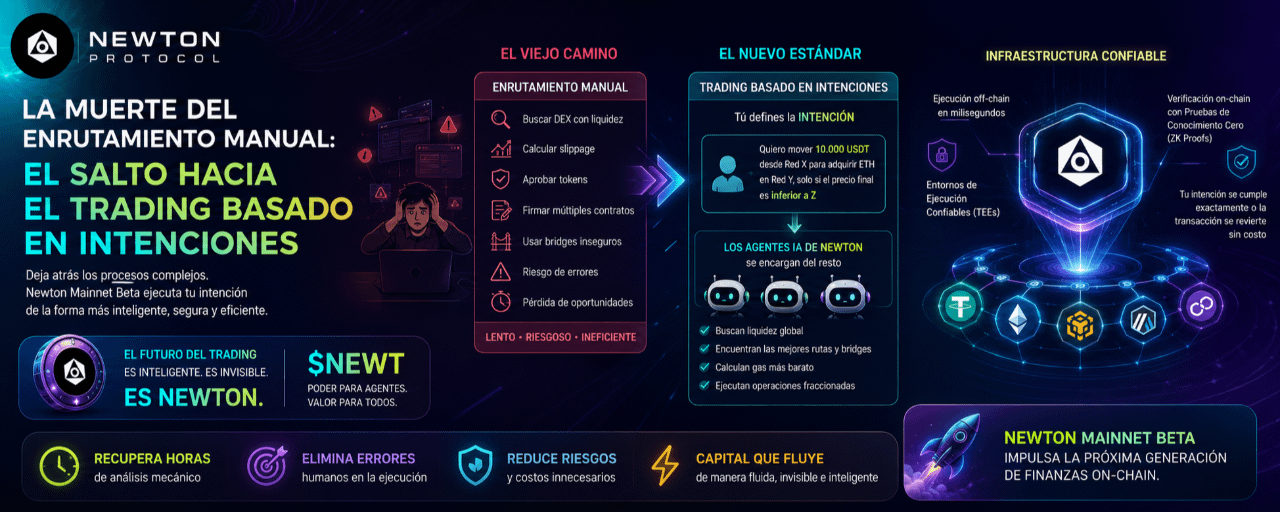
The Death of Manual Routing: The Leap to Intent-Based Trading with NewtonWhen we analyze the user experience and operational execution in the current DeFi ecosystem, we realize that we are still operating in the prehistoric era. As traders, if we want to execute a complex strategy across multiple chains, we have to do the dirty work: find the decentralized exchange with the best liquidity, calculate slippage by hand, approve tokens, sign multiple contracts, use bridges that are often slow or unsafe, and finally pray that the arbitrage opportunity hasn’t disappeared in those crucial minutes. It’s a cumbersome process that destroys agility. The technical proposal brought by the Newton Mainnet Beta changes this outdated paradigm by introducing an architecture based on “intentions.”
The Death of Manual Routing: The Leap to Intent-Based Trading with Newton
When we analyze the user experience and operational execution in the current DeFi ecosystem, we realize that we are still operating in the prehistoric era. As traders, if we want to execute a complex strategy across multiple chains, we have to do the dirty work: find the decentralized exchange with the best liquidity, calculate slippage by hand, approve tokens, sign multiple contracts, use bridges that are often slow or unsafe, and finally pray that the arbitrage opportunity hasn’t disappeared in those crucial minutes. It’s a cumbersome process that destroys agility. The technical proposal brought by the Newton Mainnet Beta changes this outdated paradigm by introducing an architecture based on “intentions.”
103
·
--
Article
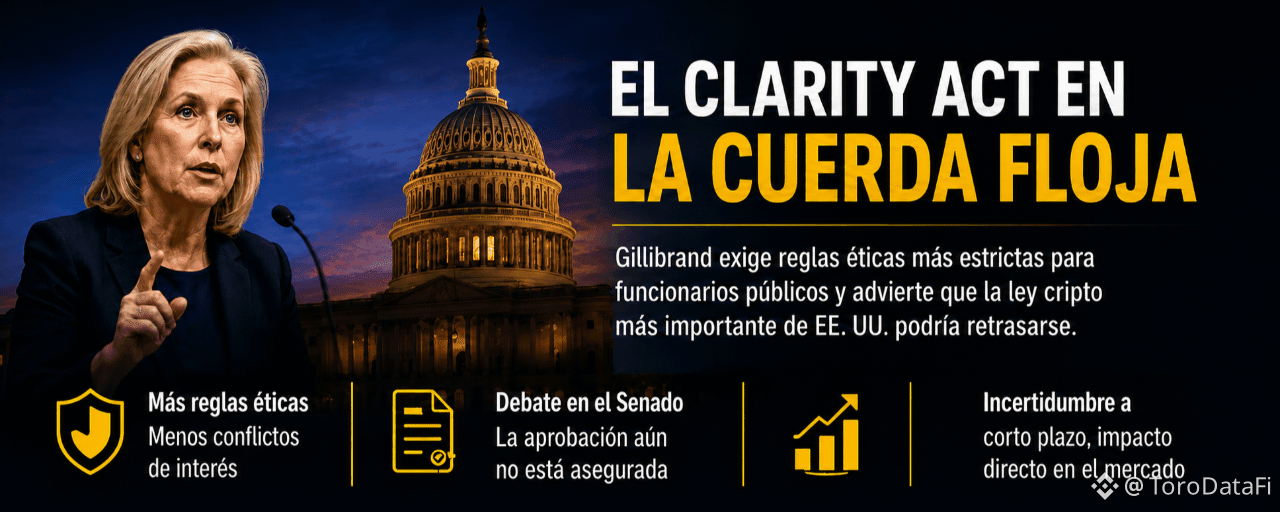
CLARITY Act: pressure grows as the market awaits definitionsCryptocurrency regulation has once again become one of the main focuses of attention for investors this week. The debate surrounding the CLARITY Act, considered one of the most important legislative proposals for the digital industry in the United States, added a new element of uncertainty after Senator Kirsten Gillibrand called for stricter ethical rules for public officials connected to the sector.
The proposal seeks to prevent senior government officials from being able to issue, promote, or financially benefit from digital assets while carrying out public functions. Although the measure is related to ethical issues, its impact goes far beyond politics: it could directly affect the timelines for approval of the law and, by extension, the market’s expectations.
CLARITY Act: pressure grows as the market awaits definitions
Cryptocurrency regulation has once again become one of the main focuses of attention for investors this week. The debate surrounding the CLARITY Act, considered one of the most important legislative proposals for the digital industry in the United States, added a new element of uncertainty after Senator Kirsten Gillibrand called for stricter ethical rules for public officials connected to the sector.
The proposal seeks to prevent senior government officials from being able to issue, promote, or financially benefit from digital assets while carrying out public functions. Although the measure is related to ethical issues, its impact goes far beyond politics: it could directly affect the timelines for approval of the law and, by extension, the market’s expectations.
The proposal seeks to prevent senior government officials from being able to issue, promote, or financially benefit from digital assets while carrying out public functions. Although the measure is related to ethical issues, its impact goes far beyond politics: it could directly affect the timelines for approval of the law and, by extension, the market’s expectations.
6
2
31
9.6k
·
--
Partly True
Leverage for giants: Solving capital inefficiency in DeFi
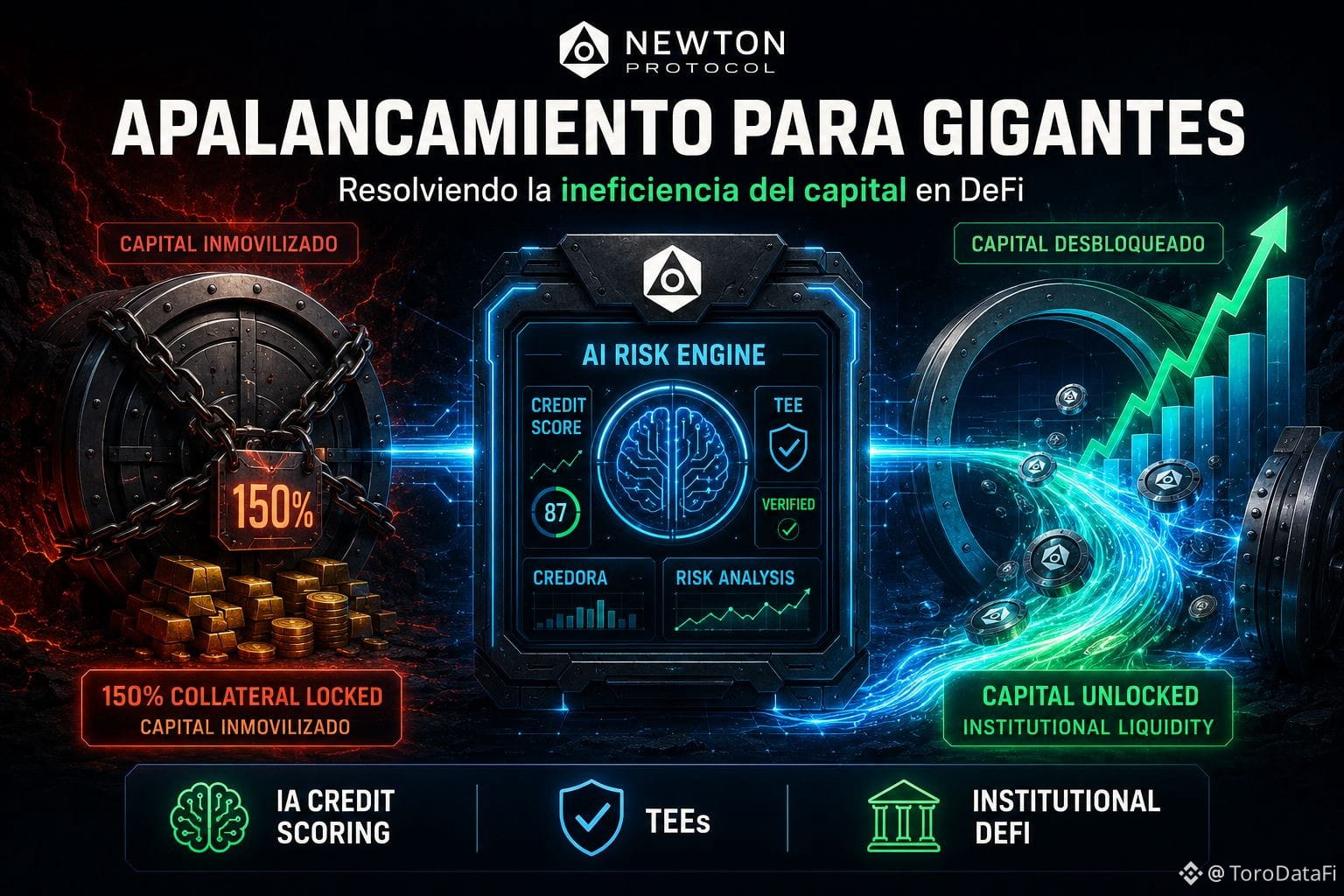
If you ask any fund manager or a crypto “whale” why they don’t move all of their treasury to decentralized protocols, the answer is always the same: extreme capital inefficiency. The current ecosystem forces you to overcollateralize aggressively. If you want access to a line of liquidity, you must lock up 150% of your capital as blind collateral. For a retail investor this may be acceptable, but for an institutional actor that needs every dollar to perform at its maximum, keeping millions immobilized completely destroys any margin for operational profitability.
This is precisely where the technical architecture of the Newton Mainnet Beta proves to be tailor-made to attract real institutional money. Through its advanced infrastructure and its integration with rating systems like Credora, @NewtonProtocol it introduces a revolutionary concept: real-time credit risk assessment using Artificial Intelligence agents. Instead of requiring paralyzing collateral, the system uses Trusted Execution Environments (TEEs) to analyze, fully privately, the operator’s operational history, solvency metrics, and behavior.
This opens the door to the decentralized finance holy grail: access to operating lines and subcollateralized leverage (with reduced collateral) inside secure vaults. Whales can now operate massive positions and execute complex hedging strategies without draining their core liquidity. By allowing institutional capital to flow with the same freedom and efficiency as in traditional markets, but under an infallible cryptographic infrastructure, $NEWT is positioned as the standard on which the next cycle of mass adoption will be built.
#newt $NEWT @NewtonProtocol
Leverage for giants: Solving capital inefficiency in DeFi
If you ask any fund manager or a crypto “whale” why they don’t move all of their treasury to decentralized protocols, the answer is always the same: extreme capital inefficiency. The current ecosystem forces you to overcollateralize aggressively. If you want access to a line of liquidity, you must lock up 150% of your capital as blind collateral. For a retail investor this may be acceptable, but for an institutional actor that needs every dollar to perform at its maximum, keeping millions immobilized completely destroys any margin for operational profitability.
This is precisely where the technical architecture of the Newton Mainnet Beta proves to be tailor-made to attract real institutional money. Through its advanced infrastructure and its integration with rating systems like Credora, @NewtonProtocol it introduces a revolutionary concept: real-time credit risk assessment using Artificial Intelligence agents. Instead of requiring paralyzing collateral, the system uses Trusted Execution Environments (TEEs) to analyze, fully privately, the operator’s operational history, solvency metrics, and behavior.
This opens the door to the decentralized finance holy grail: access to operating lines and subcollateralized leverage (with reduced collateral) inside secure vaults. Whales can now operate massive positions and execute complex hedging strategies without draining their core liquidity. By allowing institutional capital to flow with the same freedom and efficiency as in traditional markets, but under an infallible cryptographic infrastructure, $NEWT is positioned as the standard on which the next cycle of mass adoption will be built.
#newt $NEWT @NewtonProtocol
If you ask any fund manager or a crypto “whale” why they don’t move all of their treasury to decentralized protocols, the answer is always the same: extreme capital inefficiency. The current ecosystem forces you to overcollateralize aggressively. If you want access to a line of liquidity, you must lock up 150% of your capital as blind collateral. For a retail investor this may be acceptable, but for an institutional actor that needs every dollar to perform at its maximum, keeping millions immobilized completely destroys any margin for operational profitability.
This is precisely where the technical architecture of the Newton Mainnet Beta proves to be tailor-made to attract real institutional money. Through its advanced infrastructure and its integration with rating systems like Credora, @NewtonProtocol it introduces a revolutionary concept: real-time credit risk assessment using Artificial Intelligence agents. Instead of requiring paralyzing collateral, the system uses Trusted Execution Environments (TEEs) to analyze, fully privately, the operator’s operational history, solvency metrics, and behavior.
This opens the door to the decentralized finance holy grail: access to operating lines and subcollateralized leverage (with reduced collateral) inside secure vaults. Whales can now operate massive positions and execute complex hedging strategies without draining their core liquidity. By allowing institutional capital to flow with the same freedom and efficiency as in traditional markets, but under an infallible cryptographic infrastructure, $NEWT is positioned as the standard on which the next cycle of mass adoption will be built.
#newt $NEWT @NewtonProtocol
70
·
--
🔥 The story against the surprise. The favorite versus the dreamer.
Argentina arrives with the goal of continuing to build another memorable chapter in its World Cup legacy. With a squad full of talent, experience, and leadership, it knows that every match is a new test on the road to glory.
Cabo Verde, on the other hand, represents the spirit of this World Cup: a team that defied expectations, earned everyone’s respect, and now wants to prove that dreams can also challenge giants.
A match where prestige goes head to head with hope, and where any detail can change the fate of both teams.
Do you already have a favorite? Turn your prediction into an entry for Binance Pick & Win 2026 and get more chances to access a share of the prize pool of up to $4 million.
[🎯 Haz tu predicción ahora](https://www.binance.com/activity/pick-and-win/2026-football-challenge?ref=52684685)
#BinancePickAndWin2026 #BinancePickAndWin #Binance #sport
🔥 The story against the surprise. The favorite versus the dreamer.
Argentina arrives with the goal of continuing to build another memorable chapter in its World Cup legacy. With a squad full of talent, experience, and leadership, it knows that every match is a new test on the road to glory.
Cabo Verde, on the other hand, represents the spirit of this World Cup: a team that defied expectations, earned everyone’s respect, and now wants to prove that dreams can also challenge giants.
A match where prestige goes head to head with hope, and where any detail can change the fate of both teams.
Do you already have a favorite? Turn your prediction into an entry for Binance Pick & Win 2026 and get more chances to access a share of the prize pool of up to $4 million.
🎯 Haz tu predicción ahora
#BinancePickAndWin2026 #BinancePickAndWin #Binance #sport
Argentina arrives with the goal of continuing to build another memorable chapter in its World Cup legacy. With a squad full of talent, experience, and leadership, it knows that every match is a new test on the road to glory.
Cabo Verde, on the other hand, represents the spirit of this World Cup: a team that defied expectations, earned everyone’s respect, and now wants to prove that dreams can also challenge giants.
A match where prestige goes head to head with hope, and where any detail can change the fate of both teams.
Do you already have a favorite? Turn your prediction into an entry for Binance Pick & Win 2026 and get more chances to access a share of the prize pool of up to $4 million.
🎯 Haz tu predicción ahora
#BinancePickAndWin2026 #BinancePickAndWin #Binance #sport

211
·
--
Article
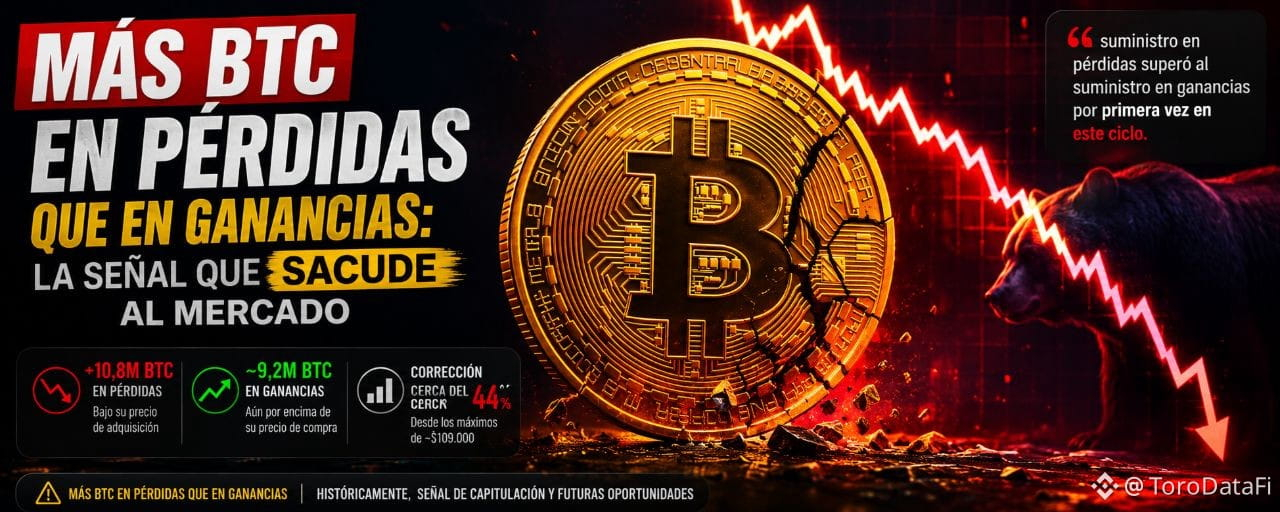
More BTC in losses than in gains: the signal that shakes the marketBitcoin is going through one of the most analyzed moments of the year. After reaching highs close to USD 109,000 in early 2026, the cryptocurrency corrected by about 44%, a drop that triggered massive liquidations, increased volatility, and a sharp deterioration in market sentiment.
However, while much of the news focuses on the price pullback, on-chain data shows signals that professional traders are paying close attention to. According to recent Glassnode metrics, the amount of Bitcoin supply held at a loss surpassed the supply in profit for the first time during this cycle. Currently, more than 10.8 million BTC are trading below their cost basis, compared with roughly 9.2 million that still remain in profit.
More BTC in losses than in gains: the signal that shakes the market
Bitcoin is going through one of the most analyzed moments of the year. After reaching highs close to USD 109,000 in early 2026, the cryptocurrency corrected by about 44%, a drop that triggered massive liquidations, increased volatility, and a sharp deterioration in market sentiment.
However, while much of the news focuses on the price pullback, on-chain data shows signals that professional traders are paying close attention to. According to recent Glassnode metrics, the amount of Bitcoin supply held at a loss surpassed the supply in profit for the first time during this cycle. Currently, more than 10.8 million BTC are trading below their cost basis, compared with roughly 9.2 million that still remain in profit.
However, while much of the news focuses on the price pullback, on-chain data shows signals that professional traders are paying close attention to. According to recent Glassnode metrics, the amount of Bitcoin supply held at a loss surpassed the supply in profit for the first time during this cycle. Currently, more than 10.8 million BTC are trading below their cost basis, compared with roughly 9.2 million that still remain in profit.
126
·
--
Verified
The End of Hype in Crypto-AI: Why Algorithmic Verification Is the Real Standard
Over the past year, we’ve seen hundreds of projects add the words “Artificial Intelligence” to their whitepapers just to capture market attention and generate artificial volume. But for those of us who manage capital seriously, an AI that operates like a black box is an unacceptable risk. We can’t put our liquidity into algorithms we can’t audit or control in real time. That’s why the approach presented by the Newton Mainnet Beta is essential for understanding where the real evolution of decentralized finance is headed.
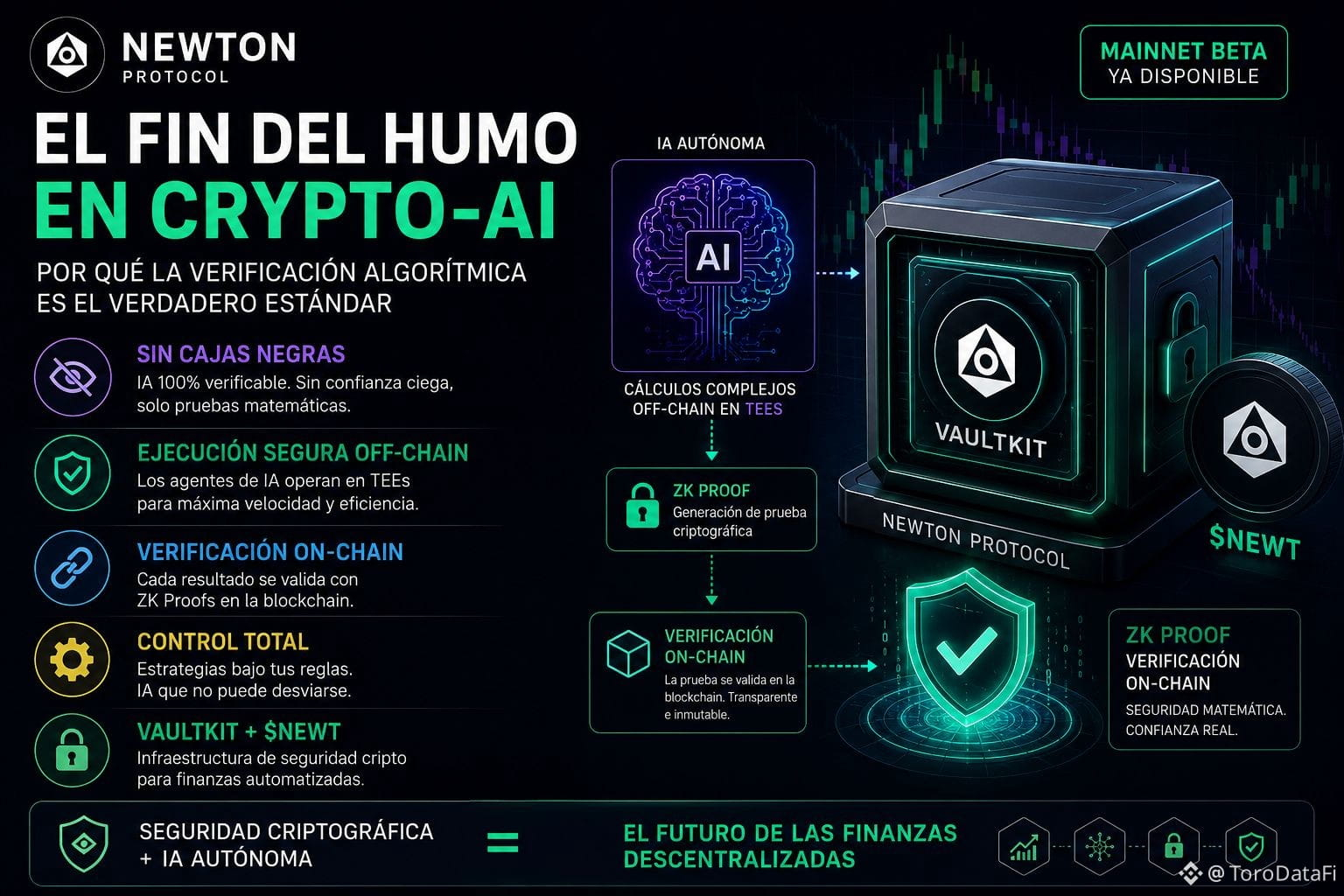
What makes @NewtonProtocol unique isn’t the use of AI by itself, but its ability to make it fully verifiable. By combining Trusted Execution Environments (TEEs) and Zero-Knowledge Proofs (ZK Proofs), the protocol allows autonomous agents to execute complex calculations off-chain with the highest speed and the lowest cost. But here’s the key for operators: the result of that execution is verified mathematically on-chain.
This means you can program advanced liquidity-provision or rebalancing strategies knowing that the AI agent can’t deviate from the established parameters or be manipulated. With tools like VaultKit, cryptographic security replaces blind trust. Token $NEWT doesn’t just support a fast network—it powers an infrastructure where financial automation finally reaches the technical rigor that professional operators demand when moving our capital.
#newt $NEWT @NewtonProtocol
The End of Hype in Crypto-AI: Why Algorithmic Verification Is the Real Standard
Over the past year, we’ve seen hundreds of projects add the words “Artificial Intelligence” to their whitepapers just to capture market attention and generate artificial volume. But for those of us who manage capital seriously, an AI that operates like a black box is an unacceptable risk. We can’t put our liquidity into algorithms we can’t audit or control in real time. That’s why the approach presented by the Newton Mainnet Beta is essential for understanding where the real evolution of decentralized finance is headed.
What makes @NewtonProtocol unique isn’t the use of AI by itself, but its ability to make it fully verifiable. By combining Trusted Execution Environments (TEEs) and Zero-Knowledge Proofs (ZK Proofs), the protocol allows autonomous agents to execute complex calculations off-chain with the highest speed and the lowest cost. But here’s the key for operators: the result of that execution is verified mathematically on-chain.
This means you can program advanced liquidity-provision or rebalancing strategies knowing that the AI agent can’t deviate from the established parameters or be manipulated. With tools like VaultKit, cryptographic security replaces blind trust. Token $NEWT doesn’t just support a fast network—it powers an infrastructure where financial automation finally reaches the technical rigor that professional operators demand when moving our capital.
#newt $NEWT @NewtonProtocol
Over the past year, we’ve seen hundreds of projects add the words “Artificial Intelligence” to their whitepapers just to capture market attention and generate artificial volume. But for those of us who manage capital seriously, an AI that operates like a black box is an unacceptable risk. We can’t put our liquidity into algorithms we can’t audit or control in real time. That’s why the approach presented by the Newton Mainnet Beta is essential for understanding where the real evolution of decentralized finance is headed.
What makes @NewtonProtocol unique isn’t the use of AI by itself, but its ability to make it fully verifiable. By combining Trusted Execution Environments (TEEs) and Zero-Knowledge Proofs (ZK Proofs), the protocol allows autonomous agents to execute complex calculations off-chain with the highest speed and the lowest cost. But here’s the key for operators: the result of that execution is verified mathematically on-chain.
This means you can program advanced liquidity-provision or rebalancing strategies knowing that the AI agent can’t deviate from the established parameters or be manipulated. With tools like VaultKit, cryptographic security replaces blind trust. Token $NEWT doesn’t just support a fast network—it powers an infrastructure where financial automation finally reaches the technical rigor that professional operators demand when moving our capital.
#newt $NEWT @NewtonProtocol
38
·
--
Verified
Article
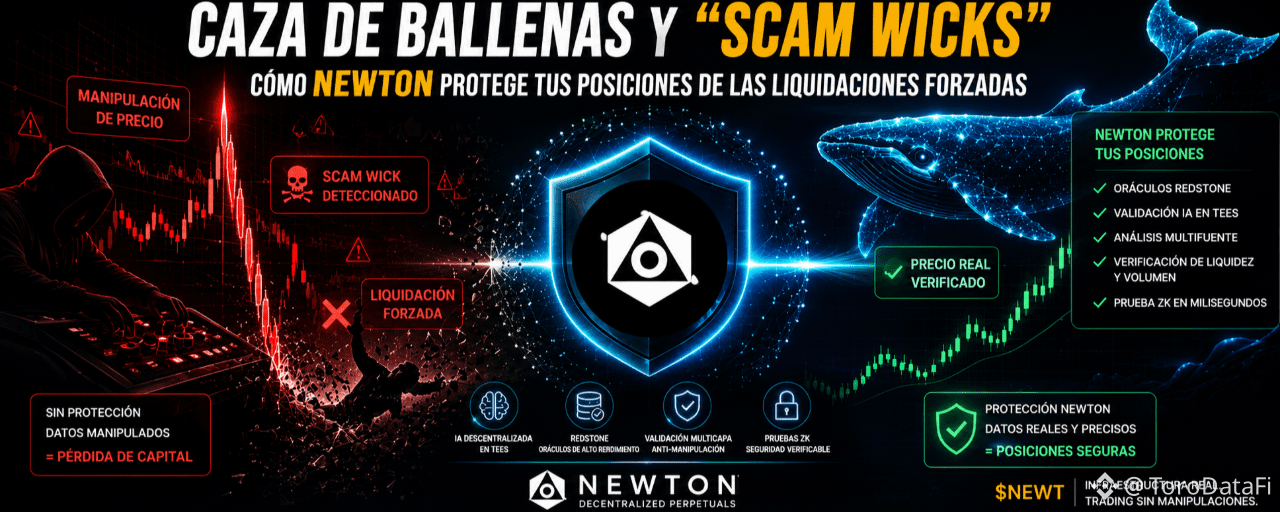
Whale Hunting and "Scam Wicks": How Newton Protects Your Positions from Forced LiquidationsThere is nothing more frustrating for a trader than being liquidated by a "ghost wick" or scam wick. A malicious actor temporarily manipulates the price of an asset in a low-liquidity pool, delayed or inefficient oracles replicate that incorrect price across the network, and the smart contract automatically liquidates your position. A second later, the price returns to normal and you’re left out of the market, having lost capital due to a technical failure unrelated to your strategy. In decentralized trading, the precision and freshness of price data are, literally, a matter of survival. The Newton Mainnet Beta addresses this risk directly through its integration with RedStone, designing a feed-validation system that shields operators from manipulation.
Whale Hunting and "Scam Wicks": How Newton Protects Your Positions from Forced Liquidations
There is nothing more frustrating for a trader than being liquidated by a "ghost wick" or scam wick. A malicious actor temporarily manipulates the price of an asset in a low-liquidity pool, delayed or inefficient oracles replicate that incorrect price across the network, and the smart contract automatically liquidates your position. A second later, the price returns to normal and you’re left out of the market, having lost capital due to a technical failure unrelated to your strategy. In decentralized trading, the precision and freshness of price data are, literally, a matter of survival. The Newton Mainnet Beta addresses this risk directly through its integration with RedStone, designing a feed-validation system that shields operators from manipulation.
8
1
136
·
--
⚽ Portugal wants to keep moving forward. Croatia is looking to break the odds.
Two teams with history, talent, and ambition face off today in a match where every detail can make the difference.
The excitement is building, and only one will take the next step.
🔥 Do you already have a favorite? Turn your prediction into an entry for Binance Pick & Win 2026 and get more chances to access a share of the prize pool of up to $4 million.
[🚀 Elige tu resultado aquí](https://www.binance.com/activity/pick-and-win/2026-football-challenge?ref=52684685)
#BinancePickAndWin2026 #BinancePickAndWin #Binance
⚽ Portugal wants to keep moving forward. Croatia is looking to break the odds.
Two teams with history, talent, and ambition face off today in a match where every detail can make the difference.
The excitement is building, and only one will take the next step.
🔥 Do you already have a favorite? Turn your prediction into an entry for Binance Pick & Win 2026 and get more chances to access a share of the prize pool of up to $4 million.
🚀 Elige tu resultado aquí
#BinancePickAndWin2026 #BinancePickAndWin #Binance
Two teams with history, talent, and ambition face off today in a match where every detail can make the difference.
The excitement is building, and only one will take the next step.
🔥 Do you already have a favorite? Turn your prediction into an entry for Binance Pick & Win 2026 and get more chances to access a share of the prize pool of up to $4 million.
🚀 Elige tu resultado aquí
#BinancePickAndWin2026 #BinancePickAndWin #Binance

21
·
--
Article
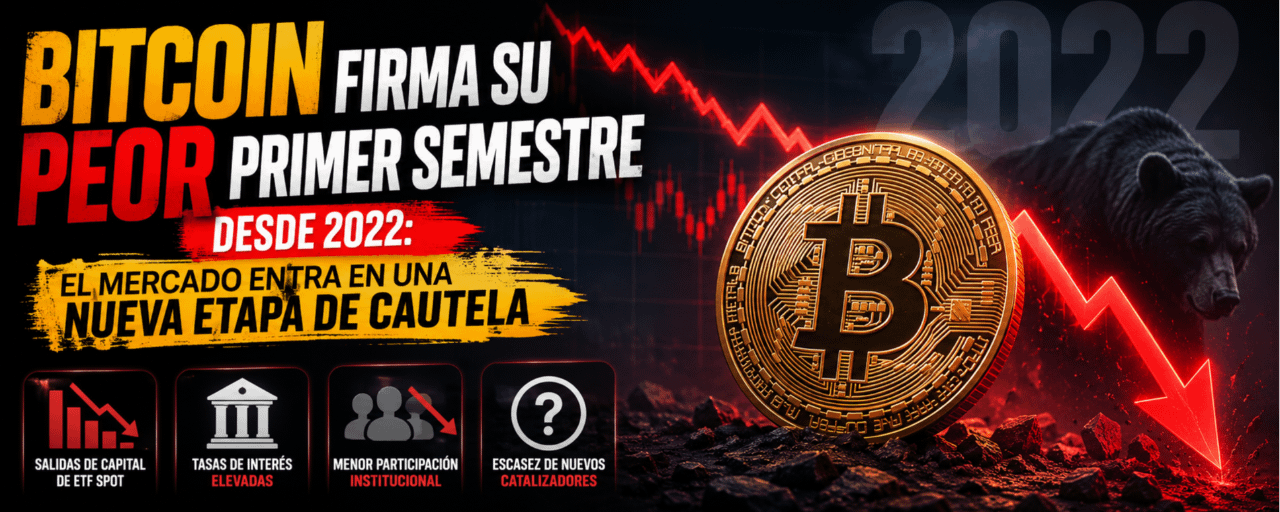
Bitcoin posts its worst first half since 2022: the market enters a new stage of cautionBitcoin closed the first half of 2026 with its worst performance since the 2022 bear market, marking a significant shift in investor sentiment. After reaching all-time highs in 2025, the leading cryptocurrency saw a correction of close to 30–38%, depending on the calculation methodology used by different analysts and financial media.
Several factors explain this performance:
🔹 Capital outflows from Spot Bitcoin ETFs, reducing one of the main drivers of institutional demand.
Bitcoin posts its worst first half since 2022: the market enters a new stage of caution
Bitcoin closed the first half of 2026 with its worst performance since the 2022 bear market, marking a significant shift in investor sentiment. After reaching all-time highs in 2025, the leading cryptocurrency saw a correction of close to 30–38%, depending on the calculation methodology used by different analysts and financial media.
Several factors explain this performance:
🔹 Capital outflows from Spot Bitcoin ETFs, reducing one of the main drivers of institutional demand.
Several factors explain this performance:
🔹 Capital outflows from Spot Bitcoin ETFs, reducing one of the main drivers of institutional demand.
2
10
5.3k
·
--
Verified

Article
The market is looking for a key signal: U.S. employment is back in the spotlightGlobal financial markets received an unexpected signal from the United States. The latest ADP private employment report showed the creation of 98,000 new jobs during June, a figure below analysts’ consensus, which expected around 118,000 jobs, and one of the lowest readings in recent months.
The data comes at a particularly relevant time for investors, who are looking for signs about the strength of the U.S. economy and the Federal Reserve’s next steps. Although the labor market continues to show resilience overall, the June result suggests a possible moderation in the pace of hiring, which could influence expectations for monetary policy during the second half of the year.
The market is looking for a key signal: U.S. employment is back in the spotlight
Global financial markets received an unexpected signal from the United States. The latest ADP private employment report showed the creation of 98,000 new jobs during June, a figure below analysts’ consensus, which expected around 118,000 jobs, and one of the lowest readings in recent months.
The data comes at a particularly relevant time for investors, who are looking for signs about the strength of the U.S. economy and the Federal Reserve’s next steps. Although the labor market continues to show resilience overall, the June result suggests a possible moderation in the pace of hiring, which could influence expectations for monetary policy during the second half of the year.
The data comes at a particularly relevant time for investors, who are looking for signs about the strength of the U.S. economy and the Federal Reserve’s next steps. Although the labor market continues to show resilience overall, the June result suggests a possible moderation in the pace of hiring, which could influence expectations for monetary policy during the second half of the year.
101
·
--
Verified
Article
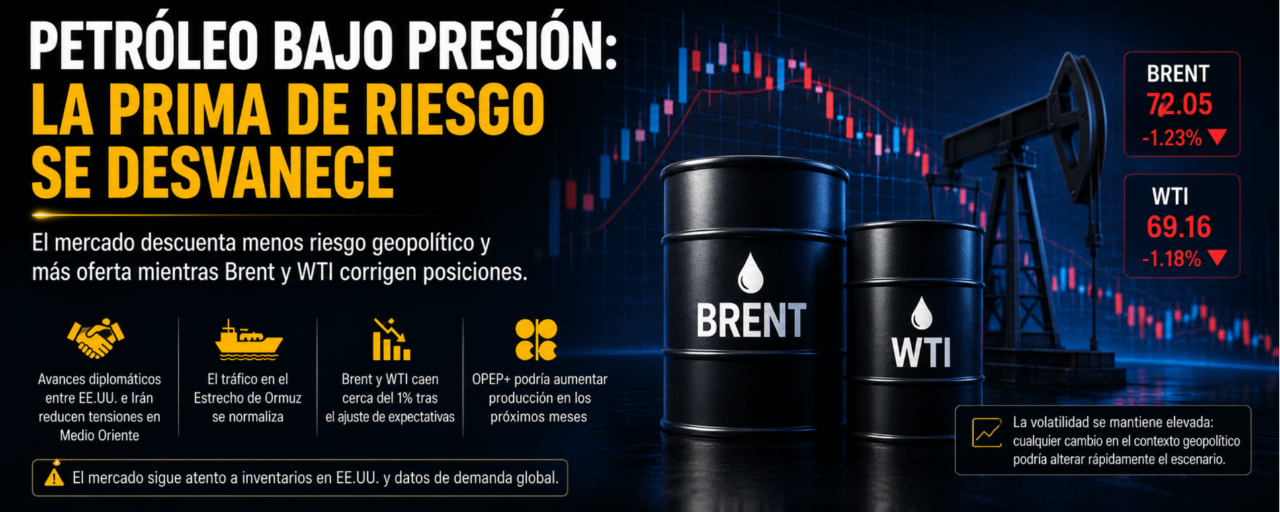
Oil under pressure: the market shifts its narrativeJust weeks ago, participants in the market feared a prolonged crisis in global energy supply. Today, the narrative is different.
Oil prices fell after talks between the United States and Iran moved toward technical aspects related to maritime transit and regional stability. The gradual restart of transportation flows through the Strait of Hormuz significantly reduced the risks perceived by investors.
Oil under pressure: the market shifts its narrative
Just weeks ago, participants in the market feared a prolonged crisis in global energy supply. Today, the narrative is different.
Oil prices fell after talks between the United States and Iran moved toward technical aspects related to maritime transit and regional stability. The gradual restart of transportation flows through the Strait of Hormuz significantly reduced the risks perceived by investors.
Oil prices fell after talks between the United States and Iran moved toward technical aspects related to maritime transit and regional stability. The gradual restart of transportation flows through the Strait of Hormuz significantly reduced the risks perceived by investors.
8
1.7k
·
--
Verified
Article
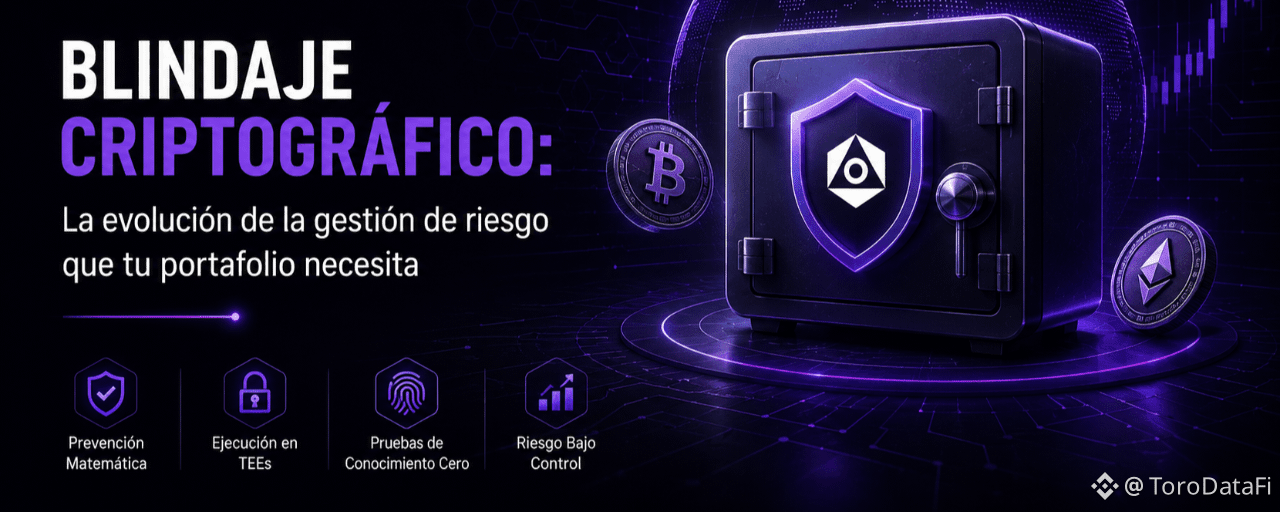
Cryptographic Shielding: The Risk Management Evolution Your Portfolio NeedsIf you analyze the evolution of trading tools over the past few years, you’ll notice that almost all of them have focused on giving us more leverage or flashier interfaces, but very few have solved the underlying problem: risk management at the infrastructure level. Putting a stop-loss on an exchange is one thing, but protecting capital in a decentralized way requires a completely different approach. That’s exactly what makes Newton Mainnet Beta such a crucial development for those of us who manage liquidity.
Cryptographic Shielding: The Risk Management Evolution Your Portfolio Needs
If you analyze the evolution of trading tools over the past few years, you’ll notice that almost all of them have focused on giving us more leverage or flashier interfaces, but very few have solved the underlying problem: risk management at the infrastructure level. Putting a stop-loss on an exchange is one thing, but protecting capital in a decentralized way requires a completely different approach. That’s exactly what makes Newton Mainnet Beta such a crucial development for those of us who manage liquidity.
1
103
·
--
Verified
The end of bottlenecks: How the Newton Protocol is redefining automated liquidity
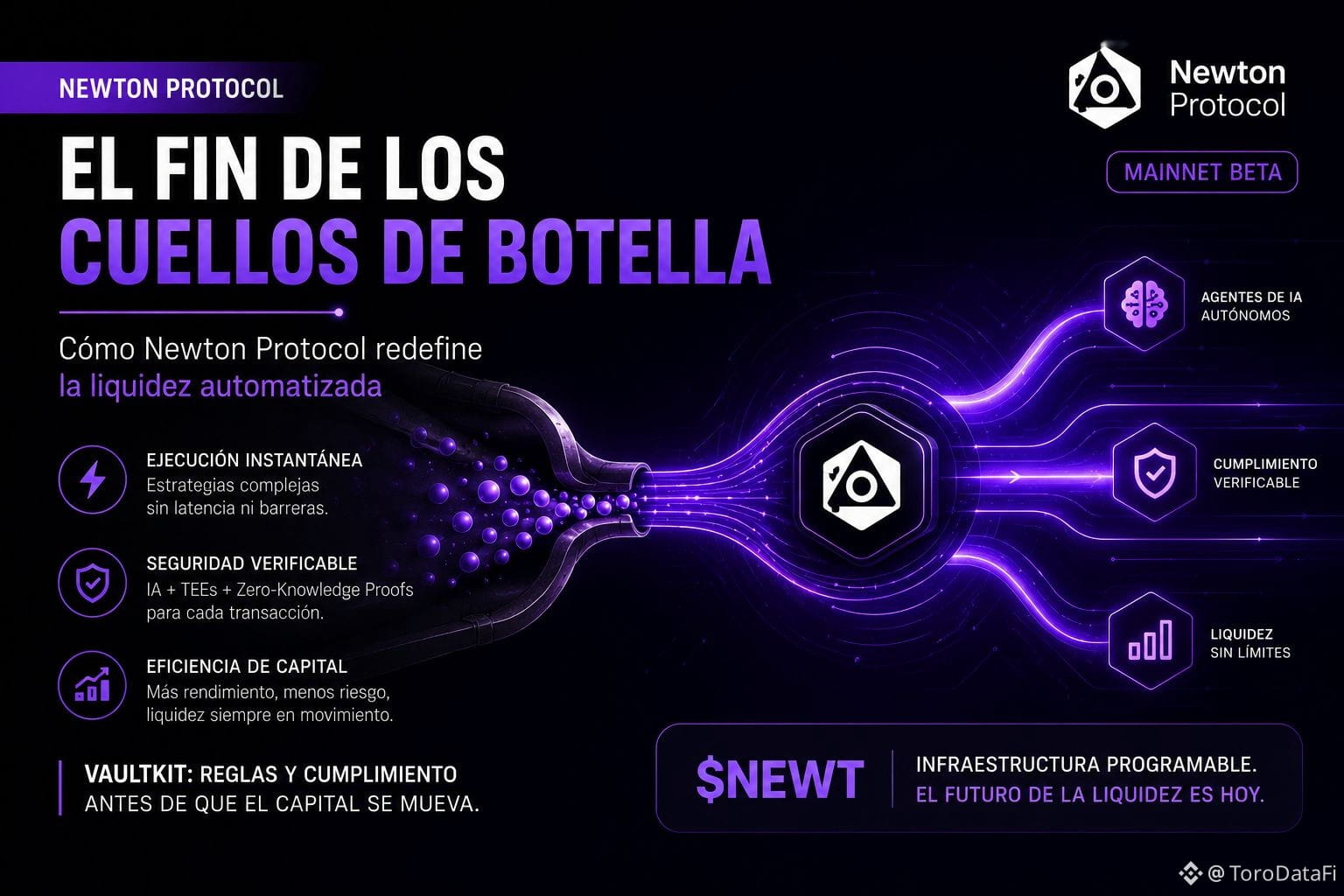
In the day-to-day of decentralized finance and the constant movement of capital, the biggest enemy of profitability is latency and manual intervention. Anyone managing liquidity on an ongoing basis knows that idle capital—or capital waiting for an order to execute—is capital that loses value. This is exactly where the Newton Mainnet Beta is making a before-and-after difference in Web3 infrastructure.
What @NewtonProtocol no proposes is not just another fast network, but an architecture built for extreme efficiency through verifiable automation. By deploying Artificial Intelligence agents that operate within Trusted Execution Environments (TEEs) and are backed by Zero-Knowledge Proofs, the protocol enables complex financial strategies to be executed instantly. No more relying on intermediaries or centralized bots that add risk and unnecessary delays.
Using tools like VaultKit allows operators to set clear compliance and execution rules before the capital even moves. That means that every transaction, no matter how complex, is validated in an algorithmic and secure way. For the operating ecosystem, this translates into unprecedented capital efficiency. Token $NEWT is thus positioned at the center of a revolution where the flow of liquidity no longer depends on human speed, but on programmable infrastructure that is mathematically secure and autonomously executing. The future is now.
#newt $NEWT @NewtonProtocol
The end of bottlenecks: How the Newton Protocol is redefining automated liquidity
In the day-to-day of decentralized finance and the constant movement of capital, the biggest enemy of profitability is latency and manual intervention. Anyone managing liquidity on an ongoing basis knows that idle capital—or capital waiting for an order to execute—is capital that loses value. This is exactly where the Newton Mainnet Beta is making a before-and-after difference in Web3 infrastructure.
What @NewtonProtocol no proposes is not just another fast network, but an architecture built for extreme efficiency through verifiable automation. By deploying Artificial Intelligence agents that operate within Trusted Execution Environments (TEEs) and are backed by Zero-Knowledge Proofs, the protocol enables complex financial strategies to be executed instantly. No more relying on intermediaries or centralized bots that add risk and unnecessary delays.
Using tools like VaultKit allows operators to set clear compliance and execution rules before the capital even moves. That means that every transaction, no matter how complex, is validated in an algorithmic and secure way. For the operating ecosystem, this translates into unprecedented capital efficiency. Token $NEWT is thus positioned at the center of a revolution where the flow of liquidity no longer depends on human speed, but on programmable infrastructure that is mathematically secure and autonomously executing. The future is now.
#newt $NEWT @NewtonProtocol
In the day-to-day of decentralized finance and the constant movement of capital, the biggest enemy of profitability is latency and manual intervention. Anyone managing liquidity on an ongoing basis knows that idle capital—or capital waiting for an order to execute—is capital that loses value. This is exactly where the Newton Mainnet Beta is making a before-and-after difference in Web3 infrastructure.
What @NewtonProtocol no proposes is not just another fast network, but an architecture built for extreme efficiency through verifiable automation. By deploying Artificial Intelligence agents that operate within Trusted Execution Environments (TEEs) and are backed by Zero-Knowledge Proofs, the protocol enables complex financial strategies to be executed instantly. No more relying on intermediaries or centralized bots that add risk and unnecessary delays.
Using tools like VaultKit allows operators to set clear compliance and execution rules before the capital even moves. That means that every transaction, no matter how complex, is validated in an algorithmic and secure way. For the operating ecosystem, this translates into unprecedented capital efficiency. Token $NEWT is thus positioned at the center of a revolution where the flow of liquidity no longer depends on human speed, but on programmable infrastructure that is mathematically secure and autonomously executing. The future is now.
#newt $NEWT @NewtonProtocol
2
2
114
·
--
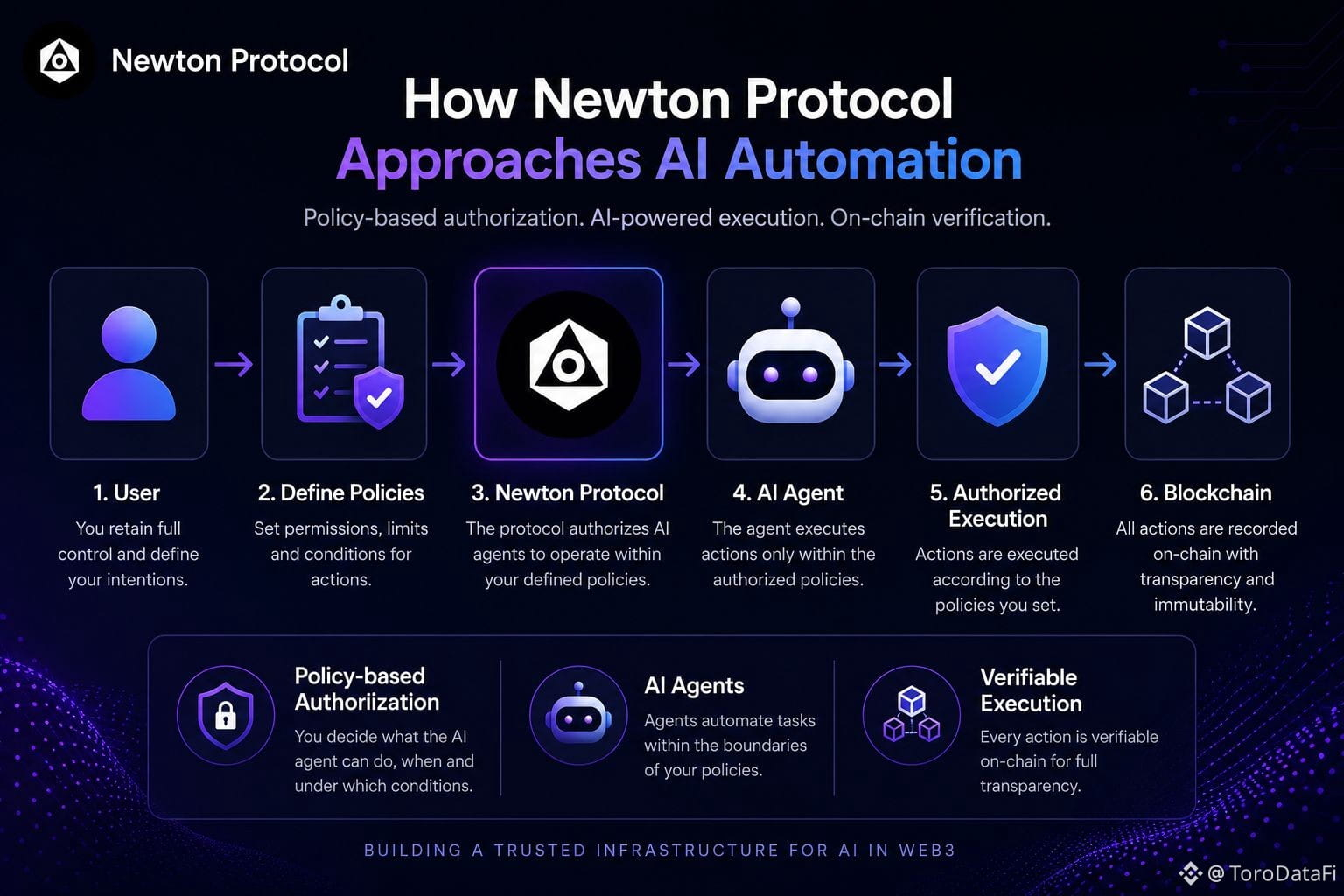
When discussing artificial intelligence in blockchain, the conversation often revolves around everything an AI could do. However, after reading about @NewtonProtocol , I believe the most important question is different: what limits should an AI have when interacting with digital assets?
That's what caught my attention most about the project. Instead of proposing an AI with unlimited access, Newton Protocol offers an approach where actions can be executed within policies and permissions previously defined by the user. Automation doesn't aim to replace human decisions, but rather to facilitate repetitive tasks while respecting pre-established rules.
Imagine a task within the Web3 ecosystem that needs to be executed only when certain conditions are met. Instead of manually reviewing and approving each step, an AI agent could act only if authorized policies allow it. If those conditions aren't met, it simply doesn't execute the action. This approach is interesting because it combines automation with verifiable rules and a clear authorization framework.
One of the aspects that distinguishes Newton Protocol is precisely its focus on programmable policies and authorization for AI agents. As these types of tools evolve, having mechanisms that define what an agent can do and under what conditions can provide greater confidence for both users and developers.
With the progress of Newton Mainnet Beta , it will be interesting to see how the community explores new use cases built on this policy-based automation model. Rather than focusing on AI that does everything on its own, I believe the challenge lies in creating systems where every action responds to predefined and verifiable rules.
Do you think this permissions- and policy-based approach could be an important step towards the adoption of AI agents in Web3?
@NewtonProtocol
#newt $NEWT
When discussing artificial intelligence in blockchain, the conversation often revolves around everything an AI could do. However, after reading about @NewtonProtocol , I believe the most important question is different: what limits should an AI have when interacting with digital assets?
That's what caught my attention most about the project. Instead of proposing an AI with unlimited access, Newton Protocol offers an approach where actions can be executed within policies and permissions previously defined by the user. Automation doesn't aim to replace human decisions, but rather to facilitate repetitive tasks while respecting pre-established rules.
Imagine a task within the Web3 ecosystem that needs to be executed only when certain conditions are met. Instead of manually reviewing and approving each step, an AI agent could act only if authorized policies allow it. If those conditions aren't met, it simply doesn't execute the action. This approach is interesting because it combines automation with verifiable rules and a clear authorization framework.
One of the aspects that distinguishes Newton Protocol is precisely its focus on programmable policies and authorization for AI agents. As these types of tools evolve, having mechanisms that define what an agent can do and under what conditions can provide greater confidence for both users and developers.
With the progress of Newton Mainnet Beta , it will be interesting to see how the community explores new use cases built on this policy-based automation model. Rather than focusing on AI that does everything on its own, I believe the challenge lies in creating systems where every action responds to predefined and verifiable rules.
Do you think this permissions- and policy-based approach could be an important step towards the adoption of AI agents in Web3?
@NewtonProtocol
#newt $NEWT
That's what caught my attention most about the project. Instead of proposing an AI with unlimited access, Newton Protocol offers an approach where actions can be executed within policies and permissions previously defined by the user. Automation doesn't aim to replace human decisions, but rather to facilitate repetitive tasks while respecting pre-established rules.
Imagine a task within the Web3 ecosystem that needs to be executed only when certain conditions are met. Instead of manually reviewing and approving each step, an AI agent could act only if authorized policies allow it. If those conditions aren't met, it simply doesn't execute the action. This approach is interesting because it combines automation with verifiable rules and a clear authorization framework.
One of the aspects that distinguishes Newton Protocol is precisely its focus on programmable policies and authorization for AI agents. As these types of tools evolve, having mechanisms that define what an agent can do and under what conditions can provide greater confidence for both users and developers.
With the progress of Newton Mainnet Beta , it will be interesting to see how the community explores new use cases built on this policy-based automation model. Rather than focusing on AI that does everything on its own, I believe the challenge lies in creating systems where every action responds to predefined and verifiable rules.
Do you think this permissions- and policy-based approach could be an important step towards the adoption of AI agents in Web3?
@NewtonProtocol
#newt $NEWT
55
·
--
🤔 Do you think France wins without problems... or Sweden will spring the surprise?
Whatever your answer, use it to participate in Binance Pick & Win 2026.
You only need to predict the match result and complete the event tasks to get more opportunities to participate in a prize pool of up to $4 million.
[🔥 Predice el resultado y participa aquí.](https://www.binance.com/activity/pick-and-win/2026-football-challenge?ref=52684685)
#Binance #BinancePickAndWin #BinancePickAndWin2026
🤔 Do you think France wins without problems... or Sweden will spring the surprise?
Whatever your answer, use it to participate in Binance Pick & Win 2026.
You only need to predict the match result and complete the event tasks to get more opportunities to participate in a prize pool of up to $4 million.
🔥 Predice el resultado y participa aquí.
#Binance #BinancePickAndWin #BinancePickAndWin2026
Whatever your answer, use it to participate in Binance Pick & Win 2026.
You only need to predict the match result and complete the event tasks to get more opportunities to participate in a prize pool of up to $4 million.
🔥 Predice el resultado y participa aquí.
#Binance #BinancePickAndWin #BinancePickAndWin2026

193
Log in to explore more content
Join global crypto users on Binance Square
⚡️ Get latest and useful information about crypto.
💬 Trusted by the world’s largest crypto exchange.
👍 Discover real insights from verified creators.
Email / Phone number
Trending Topics
BinancePick
3.3M views
160,753 Discussing
Join #EarningsSeason: Predict Earnings on Binance Pick, Share Your Take on Binance Square!
Binance Square Official
·417 Likes
·344.4k views
EarningsSeason
5.4M views
26,482 Discussing
StrategySkipsBitcoinPurchasesSpends$205MOnSTRCBuybacks
6 views
4 Discussing